
Offseason Outlook: Minnesota Twins
The Twins parlayed a series of short-term pickups from the 2018-19 offseason, some key prospect arrivals and a series of step-back moves from the Indians into their first American League Central title since Target Field’s inaugural season back in 2010. They also continued a mind-boggling run of postseason futility and are now faced with glaring holes in their rotation as the offseason begins.
Guaranteed Contracts
- Max Kepler, OF: $29MM through 2023 (including buyout of 2024 club option)
- Jorge Polanco, SS: $21.8MM through 2023 (including buyout of 2024 club option; contract also contains 2025 club option)
- Nelson Cruz, DH: $12MM through 2020
- Marwin Gonzalez, INF/OF: $9MM through 2020
Arbitration-Eligible Players (arbitration projections via MLBTR contributor Matt Swartz)
- Sam Dyson – $6.4MM
- Ehire Adrianza – $1.9MM
- C.J. Cron – $7.7MM
- Trevor May – $2.1MM
- Eddie Rosario – $8.9MM
- Miguel Sano – $5.9MM
- Byron Buxton – $2.9MM
- Taylor Rogers – $3.9MM
- Tyler Duffey – $1.1MM
- Jose Berrios – $5.4MM
- Non-tender candidates: Cron, Dyson
Option Decisions
- Martin Perez, LHP: $7.5MM club option with a $500K buyout
- Nelson Cruz, DH: $12MM club option with a $300K buyout (the Twins have not formally announced the move, but Cruz’s option will reportedly be exercised, as was widely expected)
Free Agents
Juiced ball or not, no one would’ve predicted the 2019 Twins to set Major League Baseball’s single-season home run record, but Minneapolis’ resident “Bomba Squad” did just that when they belted 307 long balls and won the American League Central by a a decisive eight-game margin. Five different Twins — Nelson Cruz, Miguel Sano, Eddie Rosario, Max Kepler and even Mitch Garver — belted 30-plus home runs in 2019, and the Twins will return nearly that entire lineup for the 2020 season.
The only (semi-)regulars likely to depart are Jonathan Schoop — who figures to be replaced by standout rookie Luis Arraez — and perhaps C.J. Cron, who battled a thumb injury late in the season and could be a non-tender candidate. Jason Castro, who bounced back from 2018 knee surgery with a solid year at the plate (101 OPS+) and his typically strong defense, also could be in search of a new home. The Twins could explore the possibility of retaining him in a reduced role, but Garver’s out-of-nowhere breakout has vaulted him to the top of the organizational depth chart and Castro is both young enough (32) and good enough (1.6 fWAR in 79 games/275 plate appearances) to merit consideration as a starter elsewhere.
That nearly the entire lineup is not only under control but is either in arbitration or signed to affordable contracts bodes well for chief baseball officer Derek Falvey and general manager Thad Levine this winter. It sounds strange to say, but the Twins may have more financial flexibility than any contender in baseball. Minnesota currently has $31MM committed to the quartet of Nelson Cruz, whose $12MM team option was a no-brainer to exercise, Marwin Gonzalez, Max Kepler and Jorge Polanco. They have another $46.2MM in projected arbitration salaries to 10 players, but that number will assuredly shrink.
Sam Dyson, acquired at the trade deadline, aggravated an existing shoulder injury following that swap and underwent surgery that’ll keep him out for up to a year. The Twins did their due diligence on the situation and found no evidence that the Giants knew of the ailment, so it seems a case of poor luck that leaves them with a thinner bullpen than they’d hoped. He’s a lock to be non-tendered, which immediately slashes $6.4MM off that arbitration tab.
As previously mentioned, Cron could also be jettisoned this winter. Eleven teams passed on the slugger via waivers last winter when he was projected to make a bit more than $5MM and was coming off a healthier, superior season at the plate. Cron hit .266/.326/.495 with 17 homers in the season’s first half but floundered to a .229/.280/.420 line following the All-Star break. He underwent surgery to repair his problematic thumb last week, which could sideline him for up to two months. While Cron is expected to be ready for Spring Training, that notable raise, poor second half and the uncertainty associated with any surgery all line up to make him a viable non-tender candidate.
If Cron and Dyson are cut loose, the Twins will have about $63.18MM committed to 12 players. That’s barely more than half the $120MM mark at which this year’s Opening Day payroll sat and nearly $66MM shy of 2018’s record $129MM payroll. The Twins won’t necessarily spend $66MM this winter, of course, but the “Falvine” front office duo has given reason to believe that they’ll at least be willing to enter record territory if the right opportunities present themselves.
“I think we feel like we’re getting to a place now where we feel a little bit more emboldened to sit down with [owner] Jim Pohlad and [President] Dave [St. Peter] and talk about being a little bit more aggressive,” Levine said in this year’s season-end postmortem (link via La Velle E. Neal III of the Minneapolis Star Tribune). Falvey, in that same press conference, said the Twins will be in the market for “impact pitching” both in free agency and via trade.
In that regard, it’s a fairly good offseason to be hunting for big-name rotation help. Gerrit Cole will hit the market in search of the largest contract ever awarded to a pitcher, while Nationals co-ace Stephen Strasburg has gone from long shot to virtual lock to opt out of the remaining four years and $100MM on his contract. Also reaching free agency will be Zack Wheeler, Madison Bumgarner, Hyun-Jin Ryu and the Twins’ own Jake Odorizzi.
Minnesota isn’t going to be considered any type of favorite for Cole, who many believe will land with his hometown Angels, but it’d be a surprise if they weren’t in the mix for him to some extent. Cole seems likely to break David Price‘s $217MM record for a pitcher, and even with this type of payroll space and a front-office tandem speaking of increased aggression and “impact” pitching, it’s hard to envision the Twins winning that bidding. But the remainder of the offseason’s top pitching talent will all fall into a more plausible price range for Minnesota. The Twins have never signed a pitcher for more than Ervin Santana‘s four-year, $55MM contract five winters ago, but they did offer Yu Darvish a reported $100MM contract prior to the 2018 season (and they of course paid Joe Mauer a franchise-record $184MM on an eight-year contract).
From a purely financial standpoint, the Twins shouldn’t face any limitations in addressing their rotation. They should also be among the winter’s most motivated buyers, as the only starter they’re returning is right-hander Jose Berrios. Odorizzi, Michael Pineda and Kyle Gibson are all free agents, and the Twins seem likely to buy out Martin Perez’s $7.5MM club option. There are some internal candidates to fill a spot, including top prospect Brusdar Graterol and right-hander Randy Dobnak, who had a meteoric 2019 rise after going undrafted and signing with the Twins out of indie ball in 2017. The Twins’ starting pitching was a glaring weakness against the Yankees in the ALDS, however, and relying on internal arms fill that void won’t cut it. Odorizzi should get a qualifying offer and could either be back on that one-year pact or a multi-year arrangement, but it’s easy to see why the Twins are motivated to add multiple starters even if the 29-year-old returns.
Looking to the trade market, there aren’t many surefire trade targets to pursue. Matthew Boyd will again be discussed throughout the winter, and speculatively speaking, it’s not difficult to see how either Pittsburgh’s Chris Archer or Colorado’s Jon Gray could become available. Depending on the direction things go in Boston, Eduardo Rodriguez could surface in trade rumblings as well. Specific targets aside, the Twins have a deep farm system and could put together an enticing offer for the majority of the trade candidates on this year’s offseason market. Whether the additions come via trade or free agency, it’d be rather stunning if Minnesota fails to add at least two rotation arms — if not three.
The bullpen also represents a potential area for upgrade. Taylor Rogers has emerged as a strong late-inning option, and the Twins enjoyed dominant stretches from Tyler Duffey, Trevor May and rookie Zack Littell down the stretch. But Dyson’s injury and the impending free agency of Sergio Romo leave the Twins with some spots to fill. Minnesota doesn’t have a left-handed setup piece to Rogers, and even if the Twins add a closer to push him down the pecking order a bit, a second lefty would be worth pursuing.
Minnesota had interest in Will Smith at the deadline, and perhaps no free-agent reliever did more to boost his stock following the trade deadline than Drew Pomeranz, who is suddenly a potential multi-year deal candidate. If the Twins prefer more affordable stability, Tony Watson would fit the bill without breaking the bank. Righty options like Will Harris, Chris Martin and Steve Cishek are multi-year deal candidates, but even more so than with starters, there’s really no pitcher on the market that should be considered too expensive (again, from a purely financial standpoint). It should be noted, though, that Addison Reed is the lone free-agent reliever to ever receive a multi-year deal from the Twins.
Looking to the lineup, there’s no glaring need, but the Twins have some intriguing flexibility. A straightforward approach could be to pursue an upgrade over Cron at first base, though the free-agent market is hardly teeming with great options there. A trade pursuit of Baltimore’s Trey Mancini or the Mets’ Dominic Smith would be interesting for the Twins. Alternatively, though, Minnesota could slide Sano across the diamond and pursue one of the many third-base options available. Anthony Rendon isn’t likely to be a priority even if they can technically afford a competitive offer, but the Twins make some sense as a dark-horse candidate to pursue names like Josh Donaldson and Mike Moustakas. Adding a corner infielder would allow the team to continue deploying Marwin Gonzalez in the super-sub role at which he has become so proficient.
Outfield depth doesn’t seem to be an immediate need, but the Twins could at least entertain the idea of shopping Eddie Rosario around. He’s a fan favorite at Target Field, but Rosario’s defensive ratings plummeted in 2019 as his arbitration price is rising — and he’s never been an on-base threat (.309 career OBP; .300 in 2019). It’s likelier that they maintain the status quo, but the sheer bulk of corner options on the market would present opportunities to capably replace Rosario if another team holds him in high regard. Beyond that, the Twins will likely look to add a backup catcher, relegating Willians Astudillo to utility status again. The GIF-able nature of “La Tortuga” and his “zero true outcomes” approach has made him something of a social media darling, but Astudillo hit just .268/.299/.379 when all was said and done. He could be best suited to fill a part-time, 26th man role.
The Twins almost certainly won’t hit 300-plus home runs again in 2020 — the ball seems unlikely to be so hitter-friendly, and even if it were, banking a repeat isn’t realistic — but they’ve firmly announced their presence as contenders in a woefully noncompetitive division. The Tigers and Royals won’t be threats next season, and while the White Sox figure to aggressively seek upgrades this winter, they’ve got a lot of work to do to improve on this year’s 72-win season. The Indians remain in the fold, but there’s already speculation about Cleveland marketing Francisco Lindor and/or Corey Kluber this winter. Pardon the hackneyed phrasing, but the Twins’ window is wide open.
Falvey and Levine have spoken in the past of being aggressive when that metaphorical window finally does open, and as Levine joked in the aforementioned press conference, the Twins are “feeling a breeze” at the moment. With no luxury tax concerns, $66MM in payroll space separating their likely slate of commitments and their 2018 Opening Day mark, three rotation vacancies and ample flexibility in the lineup, the Twins appear poised for their most aggressive offseason ever.
Phillies To Decline 2020 Option On Pat Neshek
The Phillies will decline their $7MM club option on right-hander Pat Neshek, per MLB Network’s Jon Heyman (Twitter link). The veteran sidearmer will instead be paid a $750K buyout and return to the free-agent market.
Neshek, 39, missed nearly a month with a shoulder strain before a hamstring tear in late June put an end to his 2019 campaign (and ultimately required surgery). That pair of injuries limited Neshek to just 18 innings of 5.00 ERA ball and capped off an injury-plagued Phillies tenure, though it’s worth noting that he was excellent when healthy in 2018. Shoulder trouble hampered him again that season, but Neshek pitched to a strong 2.59 earned run average in 24 1/3 innings when he was able to take the ball.
Broadly speaking, Neshek enjoyed a seven-year run as an outstanding setup piece and occasional closer from 2012-18. Over that span, he logged 315 1/3 innings with a 2.51 ERA (3.26 FIP), 8.3 K/9, 1.8 BB/9 and 0.91 HR/9. Along the way he tallied 13 saves and 106 holds while making a pair of All-Star teams and pitching in high-leverage spots for the A’s, Cardinals, Astros, Rockies and Phillies. The 2002 sixth-rounder boasts a sub-3.00 ERA and nearly a strikeout per inning in 488 Major League innings.
Yu Darvish Won’t Exercise Opt-Out Clause
In a decision that won’t surprise anyone, right-hander Yu Darvish will not opt out of the remaining four years and $81MM on his contract, MLB Network’s Jon Heyman tweets. The 33-year-old had the right to re-enter the open market but will now remain with the Cubs for the final four seasons of that deal.
The first year of Darvish’s six-year, $126MM contract was an abject bust, as the former Rangers ace only pitched 40 innings while battling a series of injuries. Unsightly as the deal looked entering the season, though, Darvish did restore some credibility with a solid 3.98 ERA, 11.5 K/9 and 2.8 BB/9 over the life of 31 starts (178 2/3 innings). Digging a bit deeper, Darvish’s final 20 starts were downright vintage form; he averaged 6 1/3 innings per outing while working to a 3.35 ERA with 11.8 K/9 and the best control of his big league career (1.3 BB/9).
Encouraging as that season was — his final four months, in particular — no one expected that Darvish would again test the open market. He’d surely have fallen shy of that $81MM guarantee, and as the pitcher himself explained in September, he and his family enjoy living in Chicago.
Darvish will return to a Cubs rotation that also includes Jon Lester (in the final season of his seven-year, $161MM deal), Kyle Hendricks and Jose Quintana. Righty Kendall Graveman could factor into the fifth spot in the rotation, as could Tyler Chatwood, but the Cubs will likely be in the market to reshape their pitching staff to some extent this winter.
Yankees Decline 2020 Option On Edwin Encarnacion
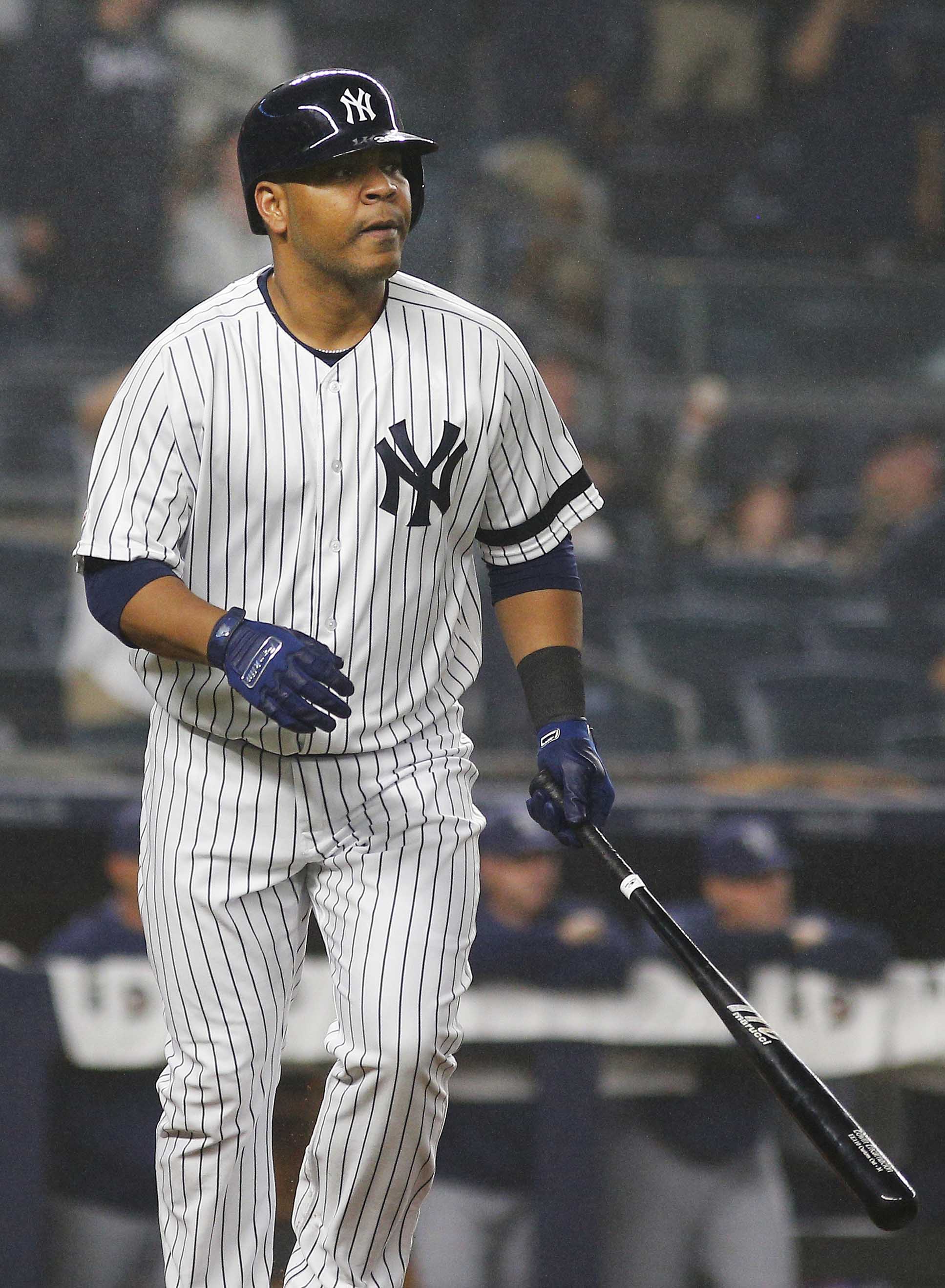
The Yankees announced Thursday that they’ve declined their $20MM option on first baseman/designated hitter Edwin Encarnacion. He’ll instead be paid a hefty $5MM buyout and enter the free-agent market.
This has long been viewed as the likeliest outcome; while the size of the buyout at least created a plausible scenario where the Yankees could deem a net $15MM decision worthwhile, doing so would’ve meant tacking on a $20MM luxury tax hit from day one of the offseason. The Yankees would’ve also been paying Encarnacion at an extremely premium rate, as that $20MM salary and net $15MM decision both would’ve topped the $14.3MM guarantee that Nelson Cruz secured in free agency a year ago.
Encarnacion, 37 in January, showed minimal signs of slowing down at the plate in 2019. While he did miss time owing to a wrist fracture and an oblique issue, he turned in a strong .244/.344/.531 batting line with 34 home runs and 18 doubles in just 486 plate appearances. The veteran slugger also slightly pared back his strikeout rate (22.8 percent in 2018, 21.2 percent in 2019) while enjoying a modest uptick in walk rate (10.9 percent in ’18, 11.9 percent in ’19). Pedestrian batting average aside, Encarnacion’s knack for getting on base and his enormous power made his 2019 offensive contributions about 30 percent better than that of a league-average hitter by measure of OPS+ (132) and wRC+ (129).
Even as he’s progressed into his late 30s, Encarnacion has been a consistent middle-of-the-order force. However, the lack of win-now teams with a clear DH opening around the league do somewhat cloud his market. The Astros (Yordan Alvarez), Angels (Shohei Ohtani/Albert Pujols), Athletics (Khris Davis), Twins (Nelson Cruz) and Red Sox (J.D. Martinez) all have their DH spots largely set. Encarnacion could technically fit with the Indians, but they’re unlikely to spend at a high level — particularly not on a DH when they already acquired Franmil Reyes back in July.
The White Sox and Rays stand out as a pair of hopeful contenders who could find DH work for Encarnacion, and a lower-cost deal with the Yankees shouldn’t be expressly ruled out. If Encarnacion is open to signing with a rebuilding team, perhaps a Blue Jays reunion would make some sense. Alternatively, if a team views him as a viable option at first base over the course of a full season, some NL clubs and perhaps an AL club or two (e.g. Twins) would factor into his market.
Even with Encarnacion off the books in the Bronx, the Yankees still have a hefty $204MM committed to next year’s payroll (including projected arbitration salaries and that $5MM buyout). As currently constructed, the Yankees are already projected to be over the luxury tax line. With Encarnacion back on the market, they’ll now likely look to a combination of Luke Voit, Greg Bird and Mike Ford at first base, with the others joining Aaron Judge and Giancarlo Stanton in a rotation through the DH spot,
Royals Name Mike Matheny Manager
The Royals announced Thursday that they’ve hired Mike Matheny as the 17th manager in club history. It’s not exactly a surprise, given that Matheny has been rumored to be the likely successor to Ned Yost since joining the Royals organization as a special advisor to GM Dayton Moore last offseason. Matheny replacing the recently retired Yost has looked all the more like a fait accompli with the Kansas City organization opting not to interview any external candidates for the position.
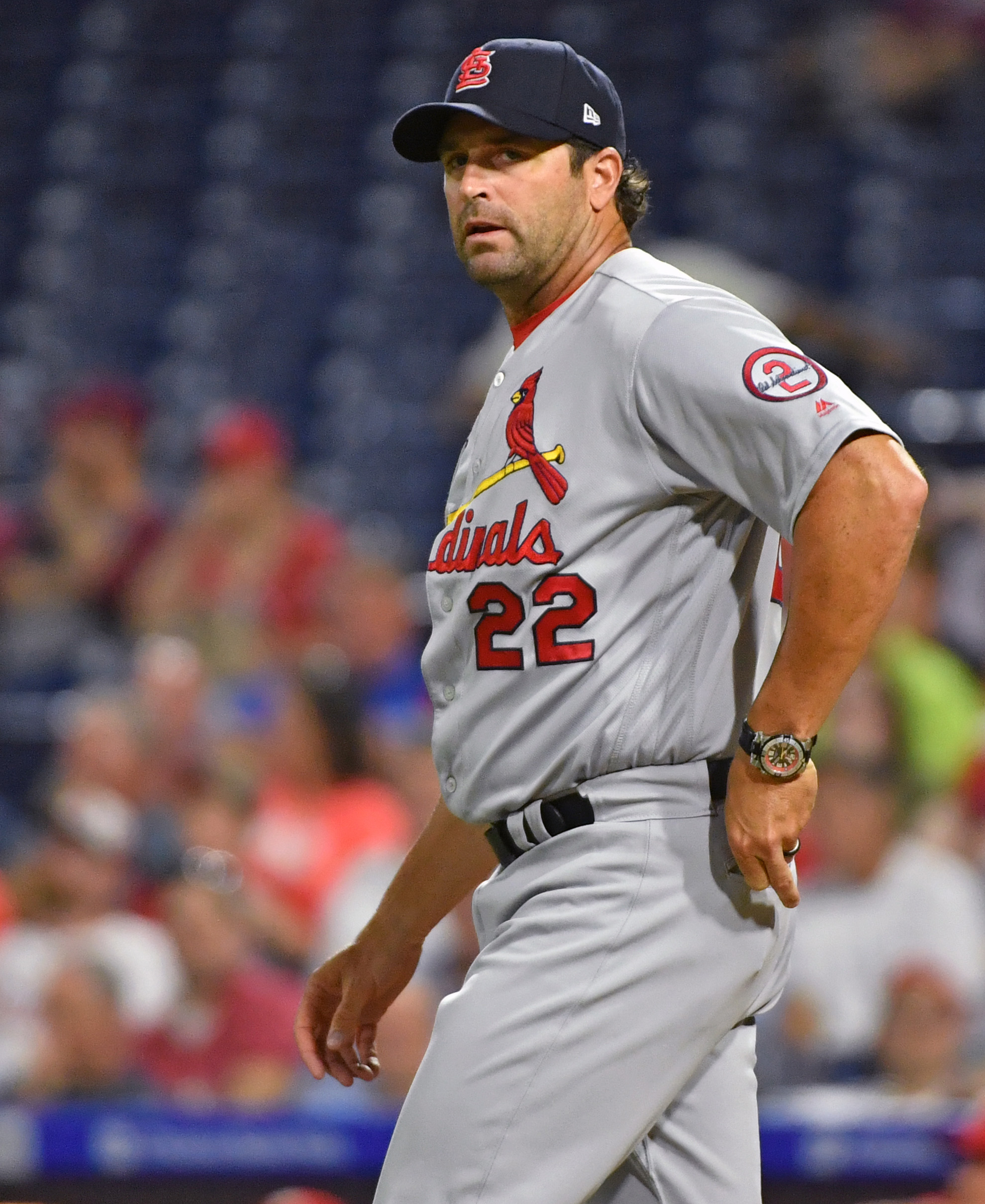
“Our entire organization is delighted to announce and celebrate the hiring of Mike Matheny,” Moore said in a statement announcing the hiring. “Every department has had the pleasure to work and interact with him this past season. Through this interaction, it became very clear to our leadership team that Mike is the obvious person to lead our baseball team. Mike Matheny is a passionate leader with strong virtues, intelligence, and a relentless commitment to help players reach their full potential.”
Matheny, 49, spent 13 seasons as a big league catcher with the Brewers, Blue Jays, Cardinals and Giants and was hired to manage in St. Louis following the 2011 season despite a lack of coaching/managerial experience. Matheny took the reins from retiring Hall of Fame skipper Tony La Russa, inheriting a roster that had just won the 2011 World Series.
St. Louis went on to post a winning record in each of Matheny’s six full seasons as a manager and even had a 47-46 record when he was fired midway through the 2018 campaign. In all, he posted a 591-474 record in St. Louis and was at the helm for three consecutive NL Central titles from 2013-15. Matheny’s 2013 Cardinals advanced to the World Series before falling to the Red Sox in six games, and the 2014 Cards made it as far as the NLCS before falling victim to the Giants’ “even year” dynasty that captured World Series titles in 2010, 2012 and 2014. The 2015 Cardinals won 100 games but were bounced in the NLDS by the division-rival Cubs.
The Cardinals didn’t make the postseason again under Matheny, who was ousted by the organization in a radical shakeup near the midpoint of the 2018 season. For all of his success in terms of wins and losses, Matheny also drew criticism for his bullpen management and an aversion to modern data trends. He was known as a manager who rode the “hot hand” frequently — often at the expense of providing consistent playing time to younger players. Shortly before his 2018 dismissal, reports of clubhouse strife between veterans and rookies emerged, although then-rookie right-hander Jordan Hicks quickly downplayed them when asked by reporters.
At the time of his firing, the Cardinals were a game above .500 but also looked to be in danger of missing the postseason for what would be a third consecutive season. That hadn’t happened in 20 years in St. Louis, giving the organization understandably higher expectations than most organizations throughout the league — particularly in the era of the ever-trendy rebuild.
Those standards won’t apply in Kansas City — at least not in the early stages of Matheny’s tenure. The Royals are still in the midst of what looks to be a lengthy rebuilding process and aren’t expected to return to contention until at least 2021, if not the 2022 season. Rather, Matheny’s focus with his new club will be on helping to develop young players and helping them to maximize their potential at the MLB level.
Rising talents like Adalberto Mondesi, Jorge Soler and Hunter Dozier will join steady veterans such as Salvador Perez and Whit Merrifield as the top players on a 2020 roster that will ideally see several top prospects graduate from the minors for their first taste of MLB action. Pitchers Brady Singer, Jackson Kowar and Daniel Lynch could all debut this coming season, as could outfielder Khalil Lee. The 2020 season will also be a pivotal year for former prospects like Nicky Lopez, Bubba Starling and Brett Phillips, who’ve had some experience in the big leagues but have yet to establish themselves.
Jeffrey Flanagan of MLB.com first reported that Matheny was being hired (via Twitter).
Derek Dietrich Changes Representation
Free-agent infielder/outfielder Derek Dietrich will be represented by All Bases Covered Sports Management moving forward, MLB Network’s Jon Heyman reports (via Twitter). He’d previously been repped by SportsMeter, the same company that represents Craig Kimbrel, Ozzie Albies and Francisco Lindor.
Dietrich, 30, was non-tendered by the Marlins last offseason and was unable to secure a big league deal, ultimately signing a minor league pact with the Reds that paid him a $2MM base salary (with another $500K available via incentives) when he made the team out of Spring Training following an injury to Scooter Gennett. That looked to be a substantial bargain for the Reds through the season’s first couple of months; Dietrich maintained an OPS north of 1.000 into June and at one point belted a dozen home runs in a span of just 68 plate appearances.
Not long after that otherworldly power surge, however, Dietrich’s production fell off a cliff. The utilityman found himself in an increasingly limited role and ended the season in a dreadful 1-for-39 slump. Dietrich posted just a .071/.257/.179 in 70 plate appearances after the All-Star break, and while a .086 average on balls in play over that stretch surely didn’t help his case, Dietrich’s end-of-season .187/.328/.462 batting line nevertheless leaves plenty to be desired. To his credit, Dietrich’s 9.2 percent walk rate was a career-best, and his his season-long .176 BABIP should be in line for some positive regression even in spite of his pull-happy, fly-ball-heavy approach.
Dietrich will add another free agent to the offseason ledger over at All Bases Covered, who will also have the likes of Brian Dozier and Stephen Vogt hit the open market again. The switch continues a tough year for Dietrich’s now-former agency. Kimbrel’s trip to the open market lingered beyond the June draft, while former client Nicholas Castellanos jumped ship back in April.
Dietrich’s change in representation will be reflected in MLBTR’s Agency Database, which contains agent info on thousands of Major League and Minor League players. If you see any errors or omissions within, please let us know: mlbtrdatabase@gmail.com.
Giants Have Interviewed Bob Geren
The Giants have interviewed Dodgers bench coach Bob Geren in their search for a new manager, Andrew Baggarly of The Athletic reports (via Twitter). At present, the only candidates reported to have received a second interview are Astros bench coach Joe Espada and recently dismissed Phillies manager Gabe Kapler.
Like Kapler, the 58-year-old Geren is plenty familiar with Giants president of baseball operations Farhan Zaidi from the pair’s days with the Dodgers. However, Geren’s connection with Zaidi predates their Dodgers tenure, as Geren also managed the Athletics from 2007-11. At the time Geren was hired in Oakland, Zaidi was a burgeoning baseball operations analyst with the Athletics, and he was the club’s director of baseball operations by the time Geren was dismissed in June 2011.
Geren, who played in parts of five Major League seasons as a catcher (mostly with the Yankees), has managed at coached extensively both in the at the Major League and Minor League level. He managed two different Athletics affiliates from 1999-2002 before being added to the Major League staff as a bullpen coach and eventually a bench coach. Since that five-year run as Oakland’s skipper, he’s spent four seasons apiece as the bench coach with the Mets and the Dodgers, working alongside managers Terry Collins and Dave Roberts.
Ryon Healy, Keon Broxton Elect Free Agency
Mariners corner infielder Ryon Healy and outfielder Keon Broxton both elected free agency rather than accept an outright assignment, the team announced. Both players went unclaimed on waivers and will be free to sign with any club this winter.
Healy, 28 in January, underwent August hip surgery that was expected to sideline him for four to six months. That makes the decision to outright him all the more understandable, though he’d have been at risk even if he were healthy. The OBP-challenged slugger spent two seasons in Seattle but managed just a .236/.280/.423 batting line with 31 home runs in 711 trips to the plate after being traded to the A’s in a now-regrettable deal for righty Emilio Pagan. (Oakland also cut bait on Pagan and traded him to Tampa Bay, where he blossomed into one of the league’s best relievers in 2019.)
A clear timetable on Healy’s return to baseball activities isn’t known, but he could draw interest from clubs looking for some right-handed pop this winter. Healy doesn’t walk often (just 4.7 percent of the time) but also doesn’t strikeout at an egregious rate (22.2 percent in his career). He has experience at both infield corners but is best-suited for first base/designated hitter work, making him a bit redundant for a Mariners team that has Daniel Vogelbach on the big league roster and first base prospect Evan White looming in the upper minors.
The 29-year-old Broxton, meanwhile, played on three different teams this season but couldn’t find success with the Mets, Orioles or Mariners. Broxton turned some heads with the Brewers back in 2016-17 when he showed an intriguing blend power, speed and center field defense while hitting .227/.318/.424 (including a 20-20 campaign in 2017). But strikeouts have been an enormous issue for Broxton, who punched out in an astonishing 45.6 percent of his 228 plate appearances this past season. Given that lack of contact, his ensuing .167/.242/.275 slash is hardly surprising.
Broxton has 17 Defensive Runs Saved, a 9.6 Ultimate Zone Rating and rates in at a whopping 34 Outs Above Average, per Statcast, over the past four MLB seasons. There’s little doubt that his glove is outstanding, but his 61.4 percent contact rate is the second-lowest among all MLB hitters in that same span.
Twins Claim Matt Wisler
The Twins have claimed right-hander Matt Wisler off waivers from the Mariners, per an announcement from the Seattle organization. Minnesota opened three roster spots yesterday when outrighting Ronald Torreyes, Ian Miller and Ryan LaMarre, so a corresponding move wasn’t necessary.
Wisler, 27, was once one of the game’s top pitching prospects and was even a key piece in the trade that sent Craig Kimbrel from Atlanta to San Diego. The 2011 seventh-rounder has never really found his footing in the big leagues, though, and was shifted from a starting role to a bullpen setting back in 2017. That change didn’t prove fruitful, however, and he’s since bounced from Atlanta, to Cincinnati, back to San Diego, to Seattle and now to Minneapolis.
This past season, Wisler totaled 51 1/3 innings between the Padres and Mariners but struggled to a 5.61 ERA in that time. Home runs were his primary undoing, as the former top prospect yielded an average of 1.75 long balls per nine innings pitched.
Be that as it may, however, Wisler nonetheless provided cause for optimism. He averaged a hefty 11.1 K/9 against 2.8 BB/9 while posting a gaudy 14.9 percent swinging-strike rate and 37.7 percent chase rate on pitches outside the strike zone. Wisler’s curveball ranked in the 72nd percentile among MLB pitchers in terms of spin rate, and while his 92.8 mph average fastball velocity isn’t exactly formidable in today’s game, it’s only slightly below the league average 93.1 mph.
If the Twins want to get a look at Wisler in Spring Training, though, likely need to be prepared to carry him on the 40-man roster all winter, as they can’t pass him through waivers themselves and be assured of keeping him. Even if he goes unclaimed on waivers a second time, he has the requisite service time to elect free agency. Wisler is also out of minor league options, so he’d need to break camp with the Twins or another club next year or else be designated for assignment.
Blue Jays Claim Anthony Bass, Designate Ryan Dull
The Blue Jays announced Tuesday that they’ve claimed right-hander Anthony Bass off waivers from the Mariners. In a corresponding roster move, Toronto designated fellow right-hander Ryan Dull for assignment.
Swapping out Dull for Bass on the 40-man roster is an upgrade for the Blue Jays, who pick up a 31-year-old veteran fresh off a 3.56 ERA through 48 innings of relief with this move. Bass has been inconsistent at the MLB level but has been sharp across the past two seasons with the Cubs and Mariners and is the owner of a career 4.38 ERA in 347 1/3 MLB innings. This past season marked his largest workload in the Majors since a 2015 run with Texas. In addition to his solid ERA, Bass averaged 8.1 K/9, 3.2 BB/9 and 0.94 HR/9 to go along with a quality 51.6 percent ground-ball rate. His 11.1 percent swinging-strike rate was the second-best of his career, and his 31.1 percent opponents’ chase rate on out-of-zone pitches was a career-high.
Dull, who turned 30 earlier this month, has bounced all over the league (and the continent, for that matter) since the beginning of August. He’d spent his entire eight-year career in the Athletics organization until being designated for assignment on Aug. 3. Since then, he’s bounced to the Giants, to the Yankees and to the Blue Jays via a series of waiver claims. Toronto actually passed him through waivers unclaimed in September but quickly selected his contract again when needing some ‘pen depth late in September. Players who have more than three years of service or have been previously outrighted can elect free agency in lieu of accepting an outright assignment; Dull meets both criteria and will surely elect free agency if another club doesn’t claim him.
Dull was one of Oakland’s best relievers back in 2016 but has battled injuries over the ensuing three years and wasn’t particularly effective in 2019. He surrendered 18 runs in just 12 2/3 Major League innings this season and was also tagged for an ERA north of 5.00 in Triple-A. That said, he entered the 2019 campaign with a career 3.63 ERA and 155-to-44 K/BB ratio in 158 2/3 MLB innings and only just turned 30, so a return to form isn’t out of the question. He’ll just likely need to prove himself to a new club in the form of a minor league pact (again — if he clears waivers).