
Arbitration Information
MLB Trade Rumors is the only website you need to track the progress of the 100+ arbitration eligible players this month, a list that includes Tim Lincecum, Cole Hamels, Hunter Pence, Clayton Kershaw, and David Price. January 17th is a date to keep in mind; that is the deadline for players and teams to exchange salary figures. Important links:
- MLBTR's arbitration tracker, which shows all arbitration eligible players and their salary submissions, midpoints, and settlement amounts while allowing you to filter by team and signing/hearing status.
- Matt Swartz's projected 2012 salaries for all arbitration eligible players. You won't find anything else like this on the web.
- MLBTR's arbitration eligible series with breakdowns by team.
- Ben Nicholson-Smith's arbitration primer.
- Important arbitration-related dates.
Indians Sign Robinson Tejeda
The Indians signed right-handed reliever Robinson Tejeda to a minor league deal with a spring training invite, reports MLB.com's Jordan Bastian. The 29-year-old entered the 2011 season as the Royals' setup man, but quickly lost the job partly due to a shoulder injury. He was removed from the team's 40-man roster in June and elected free agency in October.
When healthy Tejeda spent most of the 2011 season at Triple-A, posting a 3.80 ERA, 8.6 K/9, 3.0 BB/9, and 1.60 HR/9 in 45 relief innings. Tejeda did some solid work for the Royals at times in 2009-10, with a 9.6 K/9 and an average fastball around 94 miles per hour. His heater was down to 90.2 in 2011, probably in relation to his injury. The Indians' press release says he finished the season healthy at Omaha.
The Indians' other non-roster invitees so far include Luke Carlin, Michel Hernandez, Matt Pagnozzi, Andy LaRoche, Jose Lopez, and Felix Pie.
Extension Candidate: Asdrubal Cabrera
It's difficult to argue with the selection of Jacoby Ellsbury as the American League's 2011 Comeback Player of the Year, but Indians shortstop Asdrubal Cabrera belonged in the discussion. A broken left forearm cost Cabrera much of the 2010 season, but he posted a career year in 2011, winning a Silver Slugger with a 25 home run campaign. What would a fair extension look like?
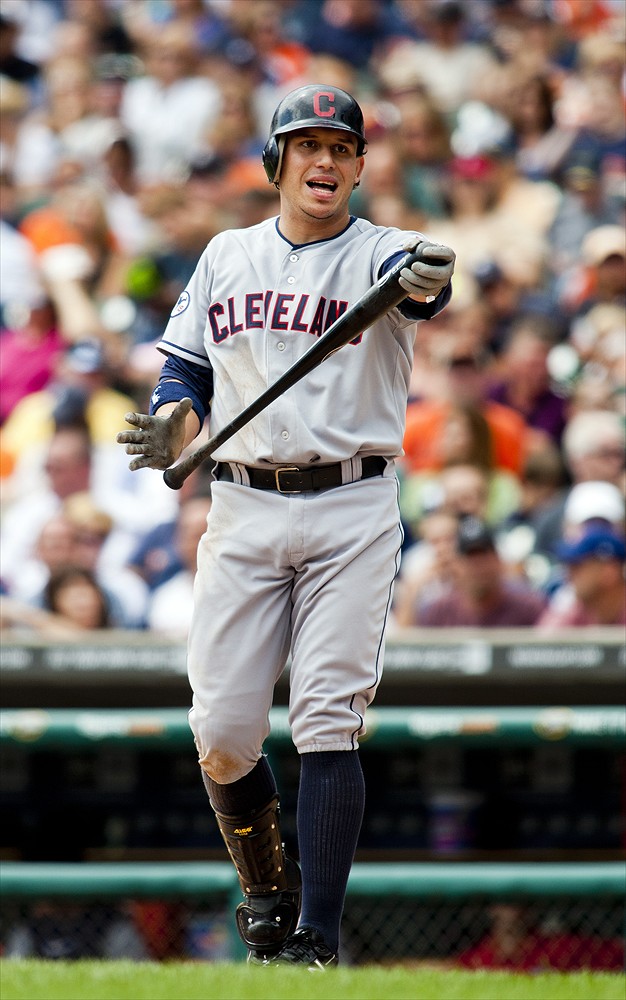
First we must address the question of whether the Indians or Cabrera would be interested in a multiyear deal. The Indians have to note Cabrera slumped to .244/.310/.419 in the second half. That's useful for a shortstop, but not star territory. Then there's the matter of Cabrera's defense, which UZR rates as consistently below-average.
On the other hand, Cabrera played in 151 games last year and hit .289/.344/.486 over the season's first four months. He may have worn down toward the tail end of the season. He hit more flyballs than ever and may truly be a perennial 20 home run threat now. And it's possible the Indians prefer other defensive metrics that present Cabrera in a better light. Jason Donald doesn't profile as an everyday shortstop; the Indians don't have anyone nipping at Cabrera's heels.
Cabrera, a client of Octagon, has a bit more than four years of Major League service. Matt Swartz's projections call for a raise of nearly $3MM in his second arbitration year, bringing Cabrera to approximately $4.8MM for 2012. As a comparison, J.J. Hardy's 2008 season, in which he hit 24+ home runs for a second consecutive year, earned him a $2MM raise heading into his second arbitration year.
Hardy had a couple of injury-plagued years before fully bouncing back in 2011. His three-year, $22.25MM extension was signed in July, and the $7.4MM average annual value feels well light of what he could have earned on the open market. Generally players, even shortstops, are compensated more for offense than defense. Although Jhonny Peralta and Clint Barmes are superior defenders to Cabrera, Cabrera's 25 home run, 92 RBI campaign probably puts him ahead of the $5.5MM-range average annual values they scored on two-year free agent deals. Of course, Cabrera is two full seasons away from the open market.
Toronto's Yunel Escobar doesn't have the power of any of those players, but he is a shortstop who signed an extension prior to his second arbitration year. The contract is probably too team-friendly to be instructive, with $5MM salaries for each of the last two arbitration years and two club options for free agent years at the same amount. Stephen Drew is a point of reference on the other end of the spectrum; he's under contract for $15.75MM for his last two arbitration years alone.
What would be a fair offer for Cabrera? I'm thinking $4.25MM for 2012, $6.5MM for 2013, and $8MM apiece for two free agent years. That'd put him around $27MM over four years, a nice guarantee for a player who had never topped six home runs in a season prior to 2011. The Indians would probably prefer a club option on the last year or two, but with Cabrera within spitting distance of free agency they might not be able to get that. It's possible the Indians don't value Cabrera's free agent years at that level, but I think a reasonable four-year extension would benefit his trade value.
Photo courtesy of Icon SMI.
Orioles Eyeing Chen, Jackson, Maholm
Wei-Yin Chen, Edwin Jackson, and Paul Maholm are among the pitchers of interest to the Orioles as they seek to further upgrade their rotation, writes Ken Rosenthal of FOX Sports. Their interest in Chen has been known for a while, and last Thursday Dan Connolly of the Baltimore Sun linked the Orioles to Jackson and Joe Saunders. I added Hisashi Iwakuma to the list yesterday.
Last week, Connolly wrote that Jackson's upside intrigues the Orioles, though Duquette and the team have historically been reluctant to give pitchers four-year deals. Today, Rosenthal writes that the Orioles expect Jackson will be beyond their price range. He notes that Roy Oswalt and Hiroki Kuroda are not realistic for Baltimore given their desire to sign with contenders.
Nationals Emerge As Favorite For Fielder?
5:11pm: The Nationals’ local TV revenue is about to “double, triple or more,” a source tells Ken Rosenthal of FOX Sports. Owner Ted Lerner is already the wealthiest in MLB, according to Forbes. One of Rosenthal’s sources expects the Nationals to sign Fielder, though the first baseman will want a full no-trade clause. LaRoche’s presence on the roster wouldn't stop the team from making a move, Rosenthal writes.
2:17pm: Adam Kilgore of the Washington Post has quotes from the always-colorful Scott Boras:
"As I’ve told many, there’s a lot of passengers on the PF Flyer. I keep having discussions with teams, and they keep coming back after those discussions. We are having a very robust and constant communication with many teams. We’ve had an opportunity over the last 10 days to certainly get more definition, I would say. Normally in free agency, after a period of time you have teams that move to the background. When we think that’s happened, those teams have called back and they’ve changed their position."
The Lerner family's stance against a big-money splash has thawed, writes Kilgore. Who better to pursue than a man Boras describes as "a combination of Henry Kissinger and Frank Howard?"
10:34am: One MLB official told Tom Haudricourt of the Milwaukee Journal-Sentinel recently that "word is spreading in the industry that the Washington Nationals have emerged as the favorite" to sign Prince Fielder.
What to make of this rumor? Haudricourt is reliable, but he made it clear that he is relaying the opinion of "the industry" as passed through one MLB official. So the source doesn't appear to be from Scott Boras' camp, nor from the Nationals. Still, the rumor echoes something ESPN's Buster Olney wrote on Thursday: "Some rival executives strongly believe that Washington will be the eventual landing place for Fielder." That same day, a Nationals player suggested to Jon Heyman the team was in the mix.
The biggest obstacle to the Nationals signing Fielder seems to be having Adam LaRoche under contract for one year, which did not seem like a major impediment prior to the offseason. GM Mike Rizzo left the door open a crack for Fielder last Wednesday when talking to Mike Ferrin on MLB Network Radio, speaking at length about LaRoche but adding, "As far as, are we going to dabble our toe in that [Fielder] water? Those are decisions that we make early on in the process and we've more or less decided that Adam is going to be our first baseman unless something extraordinary, out of the ordinary happened, that's how we're going to go to Spring Training."
Mariners, Orioles In On Hisashi Iwakuma
2:28pm: The Orioles are in on Iwakuma, MLBTR has learned. New GM Dan Duquette has been active internationally, signing Tsuyoshi Wada and showing interest in Wei-Yin Chen, Yoenis Cespedes, and Chong Tae-Hyon.
2:03pm: The Mariners and two other American League teams are in the hunt for free agent starter Hisashi Iwakuma, tweets Jon Heyman of CBS Sports.
The Mariners rumor has been kicking around in Japanese reports since Friday. A week ago, Susan Slusser of the San Francisco Chronicle wrote that four teams inquired on Iwakuma, with the Athletics in that mix but with "lukewarm" interest. Iwakuma may have been on the Twins' radar, though they added Jason Marquis in late December. Both teams bid on him in 2010 via the posting process. The A's won with a $19.1MM bid, but could not work out a contract with Iwakuma.
Iwakuma, a member of the Rakuten Golden Eagles in 2011, posted a 2.42 ERA, 6.8 K/9, 1.4 BB/9, and 0.45 HR/9 in 119 innings, battling a shoulder injury.
The 6 Most Surprising Trades Of The Offseason
Every offseason has a few trades most people didn't see coming. Here are my picks so far:
- Reds acquire Mat Latos from Padres for Yonder Alonso, Edinson Volquez, Yasmani Grandal, and Brad Boxberger. The Reds have clearly been in the hunt for a front-of-the-rotation starter since last summer, but Latos' availability was surprising. Latos is a 24-year-old with a 3.37 career ERA and 93 mile per hour fastball, and he's under team control for four more seasons. He's the type of pitcher even non-contending teams are usually looking to acquire. As with the Rockies and Ubaldo Jimenez, perhaps Padres GM Josh Byrnes believed Latos was at peak value. Or maybe he just couldn't resist a chance to acquire the team's future first baseman, catcher, and closer, an intriguing wild card in Volquez, and the depth to move Anthony Rizzo to fill another need.
- Blue Jays acquire Sergio Santos from White Sox for Nestor Molina. Most assumed the White Sox would move some players close to free agency, but Santos recently signed a contract that allows team control through 2017. He won't see his first $4MM+ salary until 2015, and only then if the first of three club options is exercised. The arguments for trading Santos: relievers have short shelf lives, the White Sox had good bullpen depth, and a top closer is a luxury on a potentially rebuilding club. Still, it's surprising Molina was the sole return. Baseball Prospectus' Kevin Goldstein believes Molina projects as "a future No. 4 starter with some chances of being a three." The White Sox are banking on the righty to buck the industry opinion.
- Padres acquire Huston Street from Rockies for Nick Schmidt at $1MM, Padres acquire Carlos Quentin from White Sox for Simon Castro and Pedro Hernandez. These two deals sandwiched the Padres' Latos trade and suggest a win-now mentality that doesn't mix with moving an ace. However, the commitments in prospects was minor for the Padres and both players are only under contract for one more year. Street and Quentin likely created surplus trade value for Byrnes, and the price for Quentin was surprisingly low. Plus, we can't say for sure the Latos trade worsened the 2012 Padres until we see how Byrnes sorts out his current logjams.
- Red Sox acquire Mark Melancon from Astros for Jed Lowrie and Kyle Weiland. Melancon, the former Astros' closer, is under team control for five more seasons and therefore was generally assumed unavailable. The Santos and Melancon trades suggest a newfound willingness to move relievers in their prime, which makes you wonder what a Kenley Jansen or Greg Holland could fetch.
- Diamondbacks acquire Trevor Cahill, Craig Breslow, and cash from Athletics for Jarrod Parker, Collin Cowgill, and Ryan Cook. Most people assumed Gio Gonzalez would be moved rather Cahill, and instead A's GM Billy Beane traded both. The Santos and Cahill trades remind us that long-term extensions don't take players off the trade market. It was also surprising that the D'Backs targeted Cahill and were willing to surrender Parker. GMs are less attached to top prospects they didn't acquire, though — Parker wasn't a Kevin Towers draft pick, and Rizzo wasn't a Byrnes acquisition.
- Angels acquire Chris Iannetta from Rockies for Tyler Chatwood. Here's another example: Jerry Dipoto didn't draft Chatwood. Dipoto was willing to move six years of the 22-year-old righty for the more immediate impact brought by one year of Iannetta. The Rockies, meanwhile, may feel there's little difference between Iannetta and new catcher Ramon Hernandez for 2012.
Remaining One-Year Deal Starters
So far this offseason, starting pitchers Erik Bedard, Freddy Garcia, Chien-Ming Wang, and Jason Marquis have signed one-year deals. On average, they're guaranteed just under $4MM apiece. This type of starter can return great value, as Dave Cameron of FanGraphs recently explained. Who are the remaining free agent starters expected to sign one-year deals?
As our free agent tracker shows, the starting pitching market is rife with one-year deal candidates. Wei-Yin Chen, Bartolo Colon, Jeff Francis, Jon Garland, Rich Harden, Hisashi Iwakuma, Edwin Jackson, Hiroki Kuroda, Paul Maholm, Roy Oswalt, Brad Penny, Joel Pineiro, and Joe Saunders should all be in line for Major League deals. Jackson is a lock for a multiyear deal, while Chen, Maholm, and Saunders have good shots. Kuroda and Oswalt seem to prefer one year, and are popular targets. Guys like Colon and Francis are coming off solid seasons and have cases for multiyear deals, since Aaron Harang, Chris Capuano, and Bruce Chen were able to get two years. Francis has a better chance than Colon, but those two-year offers are going to dry up shortly.
Starters such as Aaron Cook, Kyle Davies, Zach Duke, Livan Hernandez, Kevin Millwood, Ross Ohlendorf, Tim Wakefield, and Chris Young are also on the market. Hernandez and Millwood have the best arguments for big league deals. In January, 40-man rosters generally have some room, but not so much once we hit February.
Extension Candidate: Justin Masterson
The Indians have extended starting pitchers C.C. Sabathia, Jake Westbrook, Cliff Lee, and Fausto Carmona in the last decade, in most cases getting cost savings and extra free agent years in the process. Fresh off a breakout season, could 26-year-old Indians righty Justin Masterson be next?
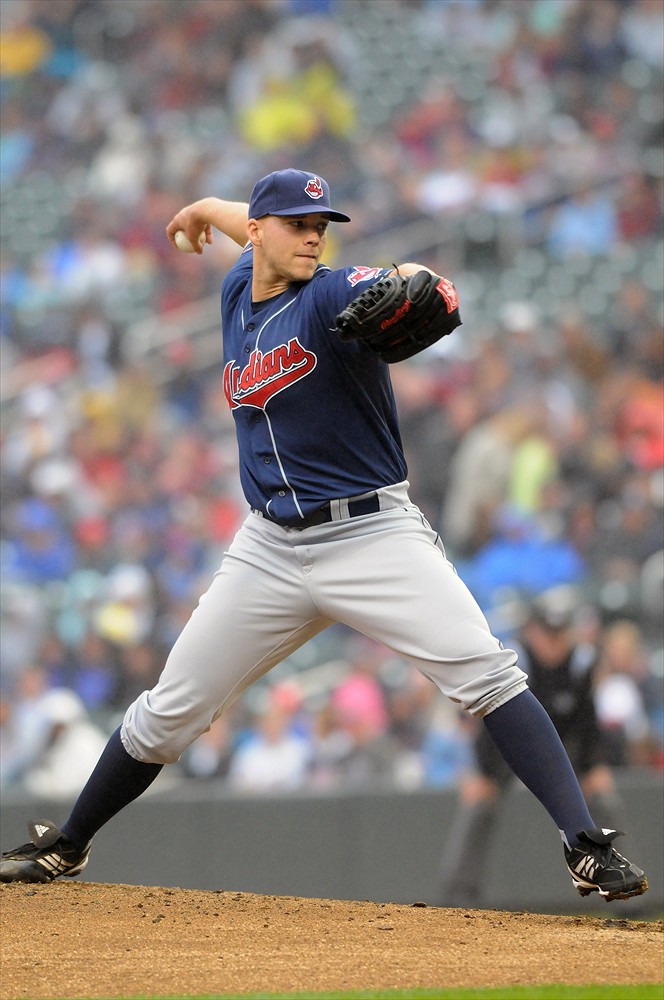
Masterson's 2011 season featured career-bests in innings (216), ERA (3.21), walk rate (2.7 per nine), home run rate (0.46 per nine) and wins (12). His always-strong groundball rate held up, and his 6.6 K/9 was acceptable. The knock on Masterson has always been his difficulty retiring left-handed batters. Though he wasn't able to put them away with strikeouts, Masterson limited his walks against left-handed batters and posted a 3.88 xFIP against them. In general, he might not be able to maintain 2011's 6.3% home run per flyball rate, but Masterson still remains capable of a sub-4.00 ERA.
Masterson has three years and 108 days of Major League service, so he's arbitration eligible for the first time this winter. Matt Swartz's projections call for a $3.6MM salary in 2012. Masterson's arbitration case may be tied to the fates of other first-time starters such as Jeff Niemann, Max Scherzer, and Matt Harrison this year, among others.
In recent times, extensions for pitchers with three to four years of service have been rare. Perhaps once a player is on the cusp of his first big payday through arbitration, he prefers to see that through for at least one year. If an extension is preferable to Masterson, his agent Randy Rowley could look to Johnny Cueto's contract, signed a year ago with the Reds. At an even three years, Cueto had less service time than Masterson, one reason Masterson bests Cueto by 82 2/3 innings. Cueto still managed four more wins, but they're otherwise comparable, with the career and platform year ERA edge going to Masterson. The numbers converge further if we only look at Masterson's 87 career starts.
Cueto signed a four-year, $27MM deal. He received $16.2MM for his three arbitration years and $10MM for his first free agent year, with a club option at the same price for another. The same contract would be a reasonable target for Masterson, perhaps with a few hundred thousand tacked on so he could top Cueto.
Photo courtesy of Icon SMI.
Matt Garza Talks Heating Up
5:12pm: The Cubs and Blue Jays continue to discuss a Garza deal, Jim Bowden of MLB Network Radio and ESPN.com tweets. The Cubs seem to be prioritizing young starting pitching in talks about Garza, tweets Jon Heyman of CBSSports.com. One executive told Heyman that the Yankees and Blue Jays have what it takes to acquire Garza.
12:53pm: Trade talks for Cubs starter Matt Garza are heating up, writes David Kaplan of Comcast Sportsnet Chicago. Kaplan says the Blue Jays, Yankees, and Red Sox are involved, but the Cubs' asking price is "incredibly high."
Yesterday, MLBTR's Ben Nicholson-Smith took an in-depth look at Garza's contract situation; he's under team control through 2013. Cubs president Theo Epstein said on Friday that Garza is "exactly type of pitcher we want to build around," but he'll listen on everybody. So far this winter trade values have been established for Gio Gonzalez, Mat Latos, and Trevor Cahill, but all of them came with at least four years of team control.