
J.T. Realmuto Talks In “Advanced Stages”
The Marlins’ trade talks centering around J.T. Realmuto have reached “advanced stages,” reports Joe Frisaro of MLB.com, who lists four possible suitors still in the mix: the Padres, Reds, Dodgers and Braves.
While the report seems to advance things from previous levels, it should be pointed out that this isn’t the first time talks have reportedly gained momentum. In fact, that exact terminology (“gaining momentum”) was used last Friday with no deal yet coming to fruition. Earlier this week, the Reds were said to have “made progress” on a Realmuto swap before those reports were walked back, and it’s now been three weeks to the day since the Marlins were first reported to be in “substantive” trade talks regarding Realmuto.
Whatever is going on behind the scenes, it seems clear that there has at times been a concerted effort to convey the idea that talks have been more productive than is the case in actuality. Perhaps that’s the Miami organization trying to pressure other clubs to inch their offers toward the reported sky-high asking price, but with all due respect to those involved, it’s become difficult to determine just how close a deal is to reality. For instance, MLB Network’s Jon Heyman tweets that the Dodgers aren’t even active in their pursuit at the moment but adds the Rays to the list of current pursuers; Frisaro’s report, in contradictory fashion, says the Rays and Astros look to have largely bowed out of the race while listing the Dodgers as a factor. MLB.com’s Jon Morosi tweeted last night that the Padres are more involved than the Dodgers.
The greatest cause for optimism regarding a terminus in this exhausting saga could be the latest column from The Athletic’s Dennis Lin (subscription required), wherein he writes that there are “signs that [the asking price] has come down in recent days.” The Padres have reportedly sought an extension with Realmuto as a contingency in any trade, though Lin now writes that the organization remains confident it could sell the catcher on its promising future even though the Marlins have denied interested teams a window to negotiate a long-term deal.
Over the past week, the Padres and Reds have been the two teams most strongly linked to Realmuto, with Atlanta, Los Angeles and Tampa Bay oft rumored to be involved to varying extents. The continually conflicting depiction of the extent to which each is (or isn’t) interested makes individual updates perhaps worth taking with a grain of salt. However, the pronounced increase of rumors surrounding Realmuto does seem to lend credence to the notion that the Marlins have upped their efforts to find a palatable deal.
Twins Sign Martin Perez
8:07pm: The Associated Press reports that Perez’s contract has a $7.5MM option for a second season that comes with a $500K buyout, bringing his actual guarantee to $4MM.
Furthermore, MLBTR has learned that Perez will earn an additional $100K for reaching each of 135, 145, 155, 165 and 175 innings pitched. His option value would rise to $8MM if he reaches 170 innings and to $8.5MM upon reaching 180 innings.
Jan. 30, 5:34pm: The Twins have announced the signing.
Jan. 19, 5:04pm: Perez’s deal is worth approximately $3.5MM, Jon Heyman of MLB Network tweets.
3:01pm: Per The Athletic’s Ken Rosenthal, the Twins have agreed to a one-year deal with free agent lefty Martin Perez. The deal reportedly includes a club option for 2020.
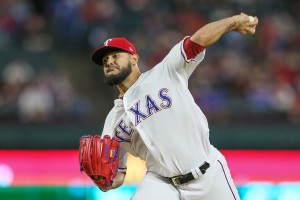
Perez, 27, appeared in parts of seven seasons with the Rangers, posting a career 4.63 ERA/4.44 FIP/4.51 xFIP in 761 1/3 IP. A once-prized farmhand under the guiding hand of former Rangers assistant GM (and current Twins GM) Thad Levine, Perez dealt with an assortment of injuries during his tenure with the club, and never quite fulfilled the tantalizing bat-missing potential he displayed in the minors. Perez’s 5.46 K/9 ranks as one of the league’s lowest during that span, and it isn’t much offset by a career 3.19 BB/9, which swelled to 3.80 in 2018.
Perez, though, has long hung his hat on his knack for inducing the ground ball. Indeed, his 50.9% career grounder rate places 12th among all starters with at least 700 IP from 2012-18, aided in large part by a heavy sinker that hasn’t much slowed down despite recent-season struggles. His worm-burning tendencies, too, have helped him keep the ball in play – a 0.96 career HR/9 (even with last season’s 1.69 homer-per-nine anomaly) ranks, when adjusting for the homer-happy confines of Arlington’s Globe Life Park, as one of the league’s best of the decade, and should play very well within a park around which the club has a tailored a lineup rife with right-handed power.
2018 was an awful one for Perez, as the lefty posted career worsts in walk rate, HR/9, ERA (6.22) and FIP (5.72). He was demoted to the bullpen in late summer, where he still struggled with command, eventually making his $7.5MM option a foregone rejection. Both Steamer and ZiPS though, remain mostly on board, with the former projecting a 4.48 FIP and the latter a 4.51, each of which rated around league-average in the decidedly hitter-friendly environs of Texas.
Perez will join a rotation that includes Jose Berrios, Kyle Gibson, Jake Odorizzi, and the rehabbing Michael Pineda, and figures to have inside track for the rotation’s fifth and final spot at current. Lefties Stephen Gonsalves and Adalberto Mejia will contend, and the club could also look to Zack Littell, Kohl Stewart, or Fernando Romero, should injuries surface.
Marlins Sign Neil Walker
7:12pm: Walker will receive a $2MM salary on the contract, tweets Ken Rosenthal of The Athletic. Walker’s primary role will be platooning with Peter O’Brien at first base, president of baseball ops Mike Hill told reporters (Twitter link via Wells Dusenbery of the South Florida Sun Sentinel, but he’ll also see action at second base and third base from time to time.
5:02pm: The Marlins announced Tuesday that they’ve signed free-agent infielder Neil Walker to a one-year contract. Miami has reportedly been seeking a left-handed bat, and the switch-hitting Walker can offer additional flexibility both at the plate and in the field. It stands to reason that Walker, 33, could be slotted in at multiple infield positions or even in the corner outfield after seeing time all over the diamond in a utility role with the Yankees in 2018. He’s represented by Excel Sports Management.
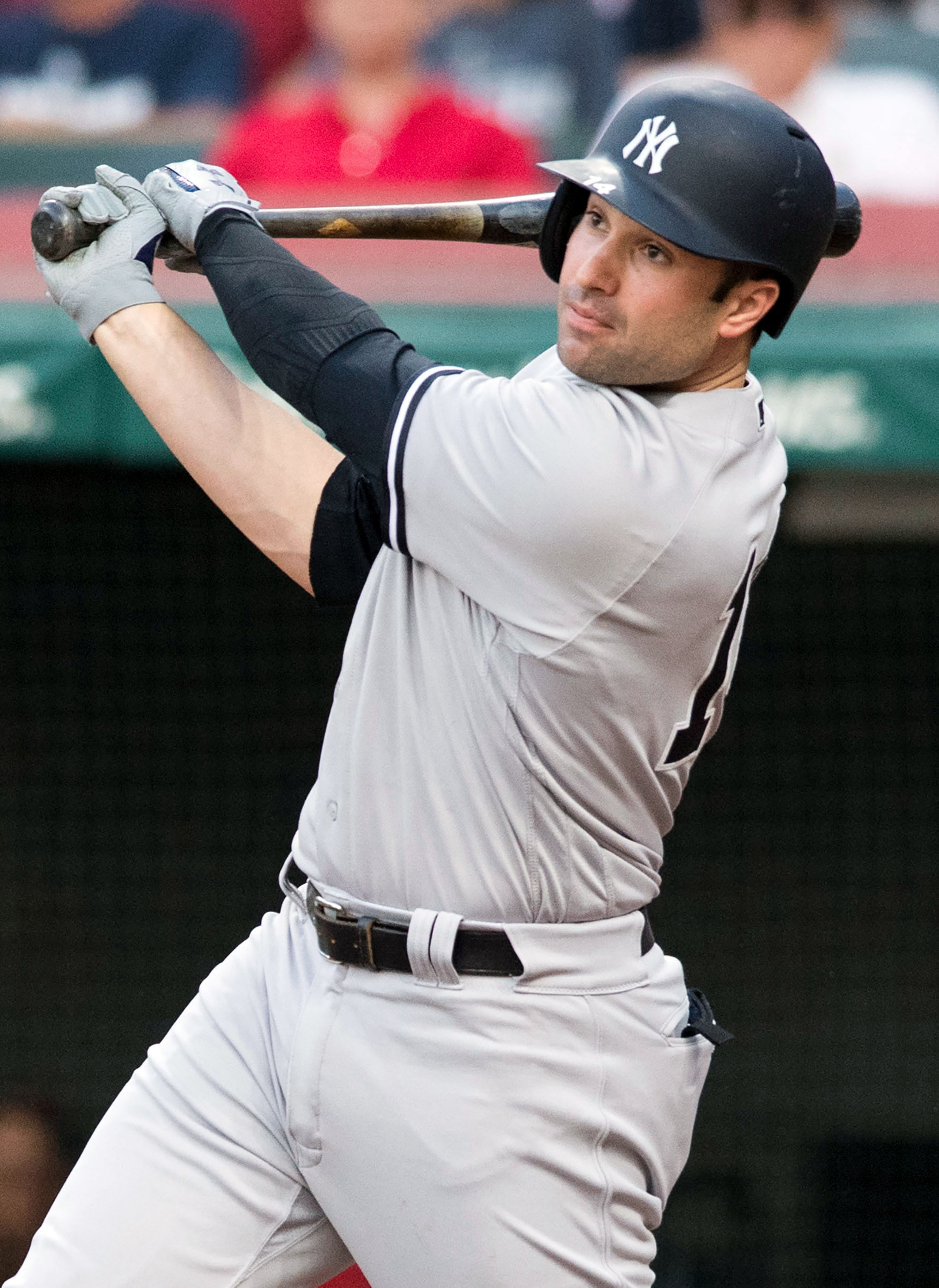
Walker’s overall .219/.309/.354 slash from last season certainly doesn’t look appealing, though the veteran posted a more palatable .235/.335/.403 slash from May 1 through season’s and enjoyed a generally solid second half (.247/.346/.442). Much of his 2018 struggles were confined to a disastrous showing through the end of April (.402 OPS), and while there’s no direct evidence of causation, it’s worth noting that Walker didn’t sign with the Yankees until March 12 last year.
Walker was one of many free agents to sign after Spring Training was well underway, and it’s perhaps telling that a number of those players struggled through awful starts to the 2018 season. Lance Lynn, Logan Morrison, Alex Cobb, Greg Holland and Jonathan Lucroy were among the March signees who had underwhelming 2018 seasons — particularly early in the year.
This time around, Walker will look to rebound with the benefit of a full spring workload to ramp up for what will be his 11th Major League season. Last year’s struggles aside, Walker was one of the game’s more consistent hitters from 2010-17, as I outlined in depth at the time. If he’s able to get back to those previous levels, the Marlins will find themselves with a bargain on their hands and, quite likely, a summer trade chip.
While adding Walker makes plenty of sense for Miami, it’s nevertheless confounding that the organization elected to move on from Derek Dietrich only to sign a 33-year-old player with a similar skill set. Granted, Walker is a switch-hitter, but he’s not a massive defensive upgrade over Dietrich and for all his past success, is still four years older. The financial savings figure to be minimal, as well, as Dietrich had been projected to earn a rather modest $4.8MM salary. It’s likely that Walker’s salary will check in lower than that, of course, but going from Dietrich to Walker still seems like somewhat of a lateral move.
Rangers Sign Shawn Kelley
Jan. 29: The Rangers have formally announced the signing. Heyman tweets that Kelley will earn an extra $62,500 for reaching his 50th, 55th, 60th and 65th appearance in both seasons of the contract. It’s worth pointing out that Kelley has only appeared in 60 games once in his career, so the top end of those incentives could be difficult to achieve.
Jan. 28, 5:55pm: The two sides are in agreement on a one-year contract with a club option for a second season, reports ESPN’s Jeff Passan (Twitter links). MLB.com’s Mark Feinsand tweets that Kelley will earn $2.5MM in 2019, and his 2020 option is also for $2.5MM with a $250K buyout. As such, his total guarantee will be $2.75MM. There are incentives packages in each season that can boost his annual salary to $3MM, and Kelley has already passed his physical, Feinsand adds.
5:49pm: The Rangers are closing in on a contract with free-agent right-hander Shawn Kelley, reports MLB Network’s Jon Heyman (via Twitter). Kelley was said late last week to be choosing among three potential suitors as he neared a decision. The veteran reliever is represented by Frye McCann Sports.
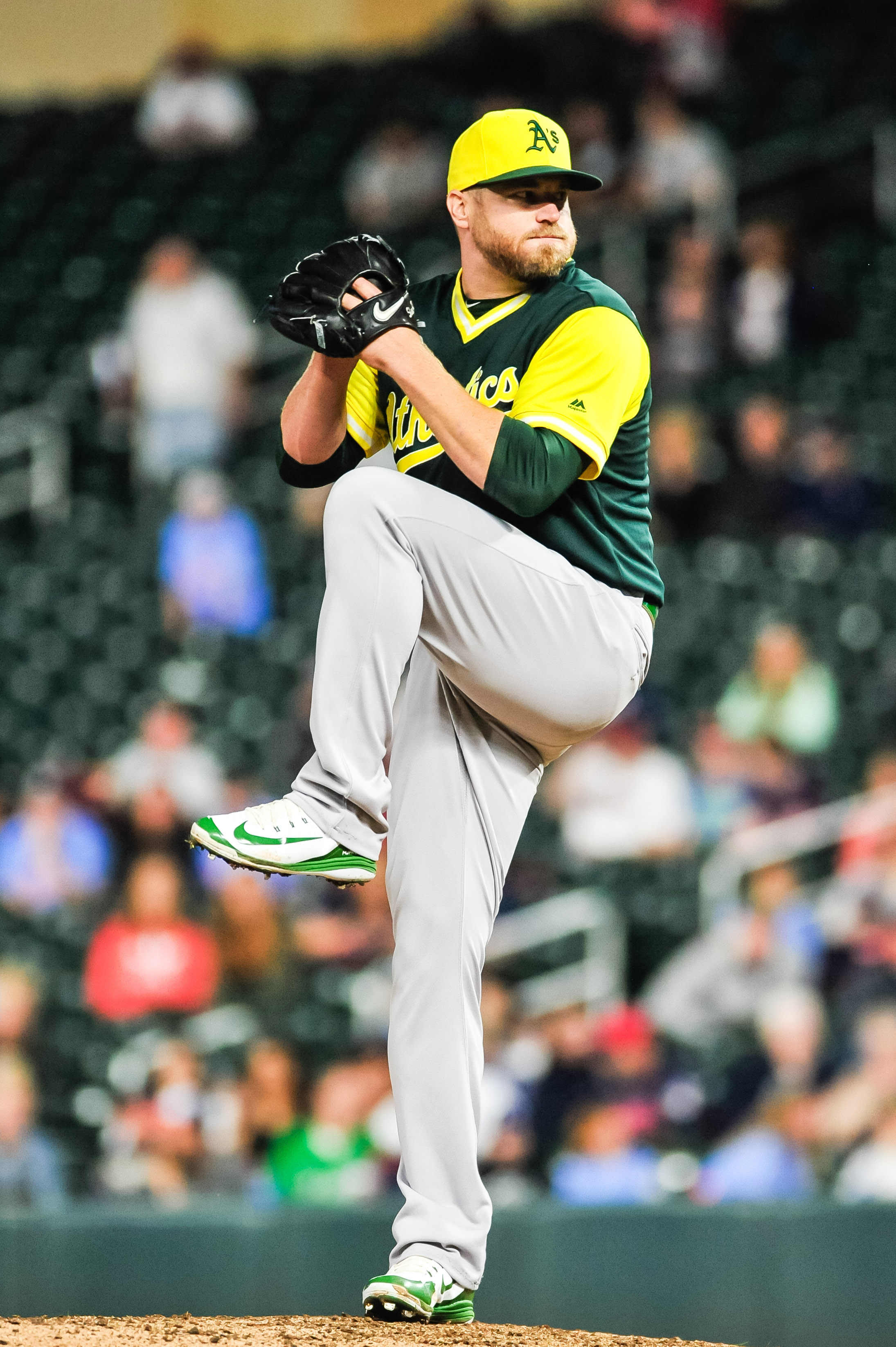
Kelley, 35 in April, just wrapped up a three-year, $15MM deal originally signed with the Nationals (though he finished it out in Oakland). In the final season of that pact, Kelley posted a 2.94 ERA with 9.2 K/9, 2.0 BB/9, 1.29 HR/9 and a 30.2 percent grounder rate in 49 innings — his third sub-3.00 ERA in the past four seasons. The interim season was an ugly one, as Kelley limped to a 7.27 ERA in 26 innings as part of a season in which he was hampered by a lower back strain, a trapezius strain and eventually bone chips in his right elbow — each of which sent him to the disabled list.
Texas hasn’t made much in the way of large-scale splashes this offseason, with Lance Lynn‘s three-year, $30MM contract and the trade of Jurickson Profar to Oakland standing out as the largest moves to date for president of baseball operations Jon Daniels. However, the Rangers have steadily added a bevy of affordable veteran arms on short-term commitments, with Kelley joining a list that also includes Shelby Miller (one year, $2MM), Drew Smyly (acquired in a trade with the Cubs), Jesse Chavez (two years, $8MM) and Zach McAllister (one year, $1MM). Texas also picked up veteran infielder Asdrubal Cabrera on a one-year pact to help offset the departure of Profar. It’s unlikely that all of those moves will pan out, but the bulk nature of value additions should yield some smaller-scale trade assets for Daniels & Co. this summer.
Kelley will now join Chavez and McAllister as somewhat new additions — Chavez was with the Rangers on a one-year deal last season before being traded to the Cubs, so he’s not all that new to the organization — who will hope to comprise a setup core for electric young reliever Jose Leclerc. Durability will be the chief concern for Kelley, who has never reached 60 innings in a Major League season, but he’s generally been a quality bullpen piece when healthy enough to take the hill.
Diamondbacks Extend Torey Lovullo
5:30pm: Lovullo’s contract will run through the 2021 season, tweets Mark Feinsand of MLB.com.
5:07pm: The Diamondbacks announced this afternoon that they’ve agreed to a contract extension of undisclosed length with manager Torey Lovullo. His previous contract had run through the 2019 season.
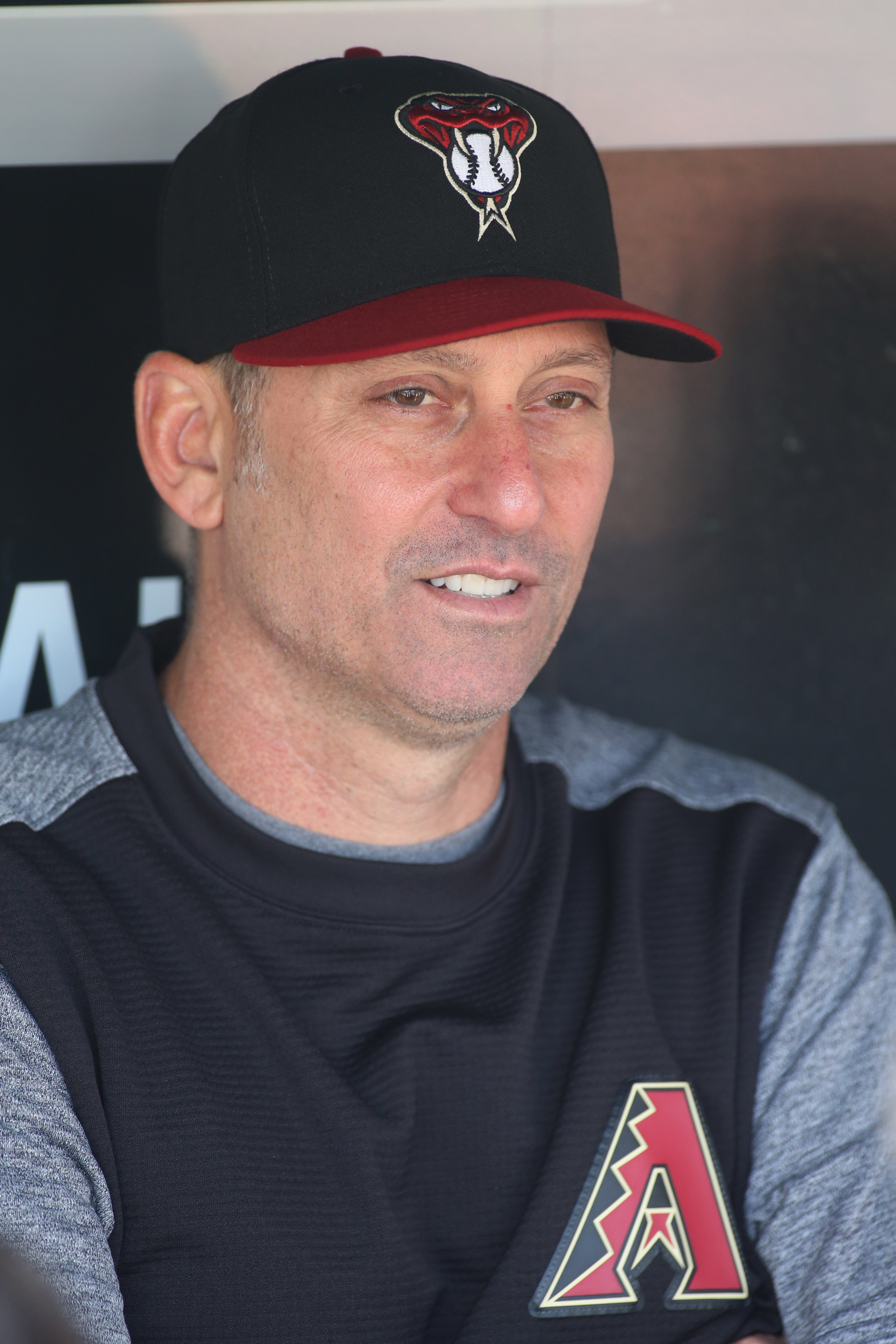
“Torey’s leadership and ability to connect with people, specifically our players and coaches, provides the foundation for the culture we continue to cultivate and grow in Arizona,” said D-backs general manager Mike Hazen in a statement accompanying the announcement. “This is an exciting day for Torey, his family and the D-backs. We can’t wait to get started at Salt River Fields at Talking Stick in two weeks.”
Lovullo, 53, is entering his third season as the Diamondbacks’ skipper after having previously served as a bench coach to John Farrell in Boston. That time with the Red Sox surely played no small part in his ultimate hiring in Arizona; Diamondbacks general manager Mike Hazen and assistant GMs Amiel Sawdaye and Jared Porter were all with the Red Sox prior to being named to their current positions.
In two seasons at the helm of the Diamondbacks, Lovullo has overseen a 175-149 club. That includes a second-place finish in the NL West in his rookie season — one that resulted in a Wild Card victory and a trip to the National League Division Series. Few pegged the D-backs as contenders heading into the 2017 season, and the manner in which the team exceeded expectations led to Lovullo being named 2017 National League Manager of the Year.
Things didn’t play out as nicely in 2018, as the Diamondbacks were unable to meet the lofty expectations placed on them following that surprise playoff run. The D-backs dealt with several notable injuries and saw some key players take a step back in ’18, ultimately resulting in a solid but unspectacular 82-80 record — a finish that left them 8.5 games back of the second-place Rockies and 9.5 games behind the division-winning Dodgers.
Clearly, however, that disappointing finish did little to make Hazen and the rest of the Arizona front office question Lovullo’s status as the person they prefer to lead the dugout. The Diamondbacks will again enter the season with little in terms of expectations. Face of the franchise Paul Goldschmidt to the Cardinals, while top starter Patrick Corbin and center fielder A.J. Pollock have signed elsewhere in free agecy. Lovullo, then, will be tasked with helping to maximize the potential of a new core group as the D-backs enter a transitional phase. The continued development of right-hander Luke Weaver and catcher Carson Kelly, acquired in the Goldschmidt trade, will be keys to the organization’s long-term outlook, as will the manner in which prospects like Jon Duplantier, Jazz Chisholm, Daulton Varsho and Taylor Widener adjust to the Majors (particularly in the case of Duplantier and Widener, who are on the cusp of MLB readiness).
Blue Jays Sign Freddy Galvis
The Blue Jays announced today that they have signed veteran infielder Freddy Galvis. It’s a one-year deal that includes a club option for 2020.
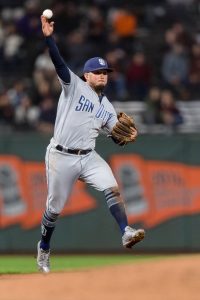
Galvis receives a $5MM guarantee, per MLB.com’s Mark Feinsand (via Twitter). That includes a $4MM salary for the coming season and $1MM buyout on a 2020 option that can instead be exercised at $5.5MM. Righty Danny Barnes was designated for assignment to create 40-man roster space.
Galvis, 29, has logged a ton of innings at shortstop over the past several seasons for second-division clubs. In fact, he appeared in all 162 games in 2017 with the Phillies and in 2018 with the Padres. He was rumored to be a target of the Pirates after talks for a return to San Diego seemingly fizzled earlier in the offseason.
As it turns out, Galvis will join a Toronto club that doesn’t seem to have much hope of contention but is interested in bolstering its infield situation. It remains to be seen whether he’ll be given an everyday role at short or will instead share time there with Lourdes Gurriel Jr. while also moving around the field.
The 2018 season turned out to be Galvis’s most productive overall effort at the plate, with his .248/.299/.380 slash and 13 long balls translating to a personal-high 85 wRC+. That’s still not much offense, obviously, but it’s a tick above his lifetime output (.246/.290/.374).
How to explain the fact that Galvis has been a steady regular for the past four seasons? Beyond the fact that he’s obviously a respected and dedicated professional, with the benefit of being a switch-hitter with both pop and speed, glovework obviously represents the carrying tool here.
Galvis is quite sure-handed, having been charged with just 24 total errors over the past three campaigns. Metrics are not unanimous on Galvis’s abilities at short, but generally reflect a positive view of his glovework. Oddly, he started out as a Ultimate Zone Rating darling who wasn’t as well-loved by Defensive Runs Saved, but the two systems flipped on him last year (-3.8 UZR, +7 DRS).
While he’s primarily a shortstop now, it probably doesn’t hurt that Galvis has a good bit of experience elsewhere as well. Previously, he has spent time at second base, third base, and left field (along with a one-game stint in center).
As for Barnes, the 29-year-old righty had a strong 2017 showing in Toronto, working to a 3.55 ERA with 8.5 K/9 and 3.3 B/9 through 66 innings of relief. His extreme proneness to fly-balls, penchant for surrendering homers and an unsustainable 81.6 percent strand rate made him a clear regression candidate, though, and that proved to be the case. Barnes was clobbered for a 5.71 ERA with 8.4 K/9 against 4.8 BB/9 in 41 innings this past season.
Photo courtesy of USA Today Sports Images.
Dodgers Sign A.J. Pollock
JANUARY 29: Bob Nightengale of USA Today has further details on the contract (Twitter links).
Pollock receives a $12MM signing bonus followed by salaries of $1MM, $12MM, $15MM, and $10MM. That sums up to $50MM over four years.
The 2023 player option can escalate up to $15MM if he takes 600 plate appearances in the season prior and can move all the way to $20MM based upon the 2022 MVP voting.
Pollock could alternatively opt out after the third campaign — and keep his $5MM buyout — if he reaches one thousand total plate appearances in 2020 and 2021 or if he tallies 1,450 from 2019 through 2021.
The deal also includes a $1.5MM assignment bonus, per Jon Heyman of Fancred (via Twitter).
JANUARY 26: The Dodgers added a big piece to their new-look outfield by officially signing free agent outfielder A.J. Pollock, to a four-year contract. The Excel Sports Management client receives a $60MM guarantee.
Pollock stands to pick up an opt-out opportunity after the 2021 season if he reaches plate-appearance thresholds. If he stays past that point, the deal will pay him $50MM over its four promised campaigns. There’s also a player option for a fifth season. Pollock will choose between a $10MM salary (which can also escalate further) and a $5MM buyout for the 2023 campaign.
Pollock hit .257/.316/.484 with 21 homers and 61 runs scored over 460 plate appearances with the Diamondbacks last season. Between these numbers at the plate and a solid defensive showing (+6 Defensive Runs Saved, though a -1.6 UZR/150 for his first negative UZR/150 total in six years), it was a decent platform year for Pollock as he entered the free agent market, despite downward trends in his swinging strike and contract rates.
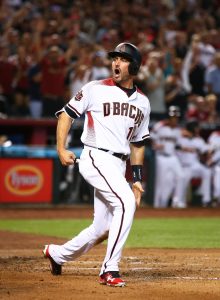
The biggest issue, however, was that Pollock had another lengthy stint on the disabled list, missing roughly six weeks due to a fractured thumb. This makes it four out of five seasons that Pollock has missed significant time, with a laundry list of injuries (fractured thumb, broken hand, groin strain, and a fractured elbow that sidelined him for much of 2016). It was during his one healthy season, 2015, that Pollock exhibited his high ceiling, hitting .315/.367/.498 over 673 PA, while also racking up 20 homers, 39 steals, a Gold Glove, and his lone All-Star appearance.
With this injury history in mind, perhaps it isn’t surprising that Pollock wasn’t able to land the $80MM contract he reportedly sought at the start of the offseason, despite a solid amount of interest from the Reds, Mets, Braves, and Astros at various points this winter. MLB Trade Rumors projected Pollock to land a four-year, $60MM contract in our Top 50 Free Agents rankings, with Pollock ranked eighth in the Top 50 list.
Pollock was linked to the Dodgers earlier this week, and his signing helps solidify a Dodgers outfield that already underwent one shakeup when Yasiel Puig and Matt Kemp were traded to the Reds. While Pollock could end up seeing time as a corner outfielder depending on how the Dodgers shuffle their versatile lineup, the expectation is that Pollock will spend the large majority of his time in his usual center field position, flanked by some combination of Chris Taylor, Max Muncy, Cody Bellinger, Enrique Hernandez, Joc Pederson, Andrew Toles, and/or top prospect Alex Verdugo in left and right field. Perhaps more importantly than just his position, Pollock also gives the Dodgers an everyday right-handed bat to help balance out their lefty-heavy lineup.
Perhaps just as notably, adding Pollock would seem to put to rest any chance of Bryce Harper landing in the Los Angeles outfield. The Dodgers were long seen as potential suitors for Harper, particularly after they cleared some extra payroll space in the Puig/Kemp trade. Adding approximately $12MM in average annual value on Pollock’s reported contract terms, however, would keep L.A. slightly under the $206MM Competitive Balance Tax threshold, as per Roster Resource’s calculations of the Dodgers’ salary commitments.
This doesn’t mean the Dodgers ultimately won’t end up crossing the luxury tax line this winter, depending on what other moves could still be in the offing. (For instance, Nightengale reports that the team is in “intensive ongoing talks” with the Marlins about J.T. Realmuto.) Given the Dodgers’ reported reluctance to again cross the CBT line, however, they could only surpass the $206MM threshold by a minimal amount. Spending between $206MM and $226MM would subject the Dodgers to only a first-timer penalty of a 20% tax on every dollar spent in overage, so it could be that $226MM is the real barrier for the team this offseason, and they could then duck back under the $206MM line next offseason once some big contracts come off the books.
Since Pollock rejected the Diamondbacks’ qualifying offer and signed a deal for more than $50MM, Arizona will receive a compensatory draft pick that will fall after the first round of next summer’s draft. The D’Backs have already received such a compensation pick when Patrick Corbin signed with the Nationals, giving Arizona a whopping six picks in the first 79 (or so, depending on what other compensatory picks are awarded) selections in the draft.
For signing a qualifying offer free agent, the Dodgers give up $500K from their international draft bonus pool, as well as their second-highest selection in the 2019 draft. That pick will be the 31st overall selection, which the Dodgers received as compensation for failing to sign 2018 draft pick J.T. Ginn.
The Athletic’s Ken Rosenthal was the first to report (via Twitter) on an agreement between the two sides, with USA Today’s Bob Nightengale reporting the four-year contract length and Fancred Sports’ Jon Heyman (Twitter link) noting the deal was worth at least $55MM. ESPN.com’s Buster Olney (Twitter link) had the specifics on Pollock’s contract breakdown and the player option details.
Photo courtesy of USA Today Sports Images
Royals Extend Whit Merrifield
The Royals have announced a four-year deal with second baseman/outfielder Whit Merrifield, as Jon Morosi of MLB.com first reported. The contract will guarantee him $16.25MM, Morosi tweets, and includes a club option for a fifth year
Merrifield earns salaries of $1MM, $5MM, $6.75MM, and $2.75MM, per MLB.com’s Jeffrey Flanagan has the breakdown (Twitter links). While that may seem like an odd order at first glance, the front-loaded structure benefits the player by moving up his earnings (notably, in this case, in advance of the expiration of the current collective bargaining agreement). The contract also comes with a $750K buyout on the club option, which can be exercised at $10.5MM. Rather than incentive pay, the deal includes $2MM in possible escalators in its final two guaranteed seasons, based upon plate appearances and awards.
Since Merrifield was already under control through 2022, his new deal will cover his final pre-arbitration season and his three arb-eligible years. Merrifield, a client of The L. Warner Companies, will also give up the rights to one prospective free-agent season via option. Of course, that’ll come after he has already reached his 34th birthday — a critical factor in understanding this agreement.
[RELATED: MLBTR Extension Tracker]
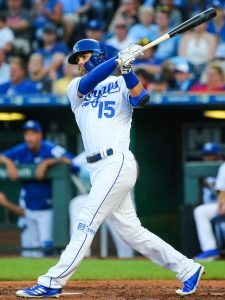
MLBTR profiled Merrifield as an extension candidate last March, explaining that he was a non-traditional, but nevertheless intriguing, potential target for a deal. The concept was rather simple, and remains largely the same now, though he has one more year of service and has further boosted his on-field value in the interim. For Merrifield, a deal offers a chance to ensure he locks in significant career earnings, cutting off the risks associated with his relatively advanced age — a factor that also significantly limits his future free agent upside. For the team, it’s an opportunity to achieve cost certainty and some savings for the arbitration seasons while also picking up control over an additional season of the two-time All-Star’s services.
In terms of the financial figures involved, there’s not a ton of cash at stake. For a player who remains a league-minimum earner even after hitting his 30th birthday, though, it’s a big chunk of change. Merrifield might have anticipated topping $16.25MM in his three seasons of arb to come, but not by a massive amount. Even reaching that level of pay would assume he’s at full health and continues at least to be worthy of regular playing time. Looking at a few recent second base comps, DJ LeMahieu earned exactly at that level ($16.3MM) over his three arb years. It’s certainly possible that Merrifield could have topped that with more campaigns like his 2018 effort. On the other hand, despite a higher first-year starting salary than LeMahieu, Joe Panik is now on track to earn a good bit less (he’s at $7.25MM through two seasons) after experiencing a setback season.
From the Royals’ perspective, the risk is limited and there are some clear benefits to this new pact. The broader state of the franchise is also an important consideration, though. Although the club is coming off of a 58-win season and figures to miss the playoffs for the third straight year in 2019, it has consistently turned away trade interest in Merrifield. General manager Dayton Moore declared prior to last summer’s non-waiver trade deadline that the Royals “need [Merrifield] in our city and on our team.” Thus, the late-blooming standout’s extension will serve as the organization’s latest vote of confidence not only in Merrifield, but in its broader slate of MLB and near-MLB talent.
Cashing in on the affordable club control over Merrifield through a trade surely had its appeal as well. Indications are that such an approach was at least explored at the 2018 trade deadline and perhaps in the offseason as well, though Moore made clear more recently to rival orgs that Merrifield was staying put. Of course, the pact may not preclude the Royals from trading him in the relatively near future. The Padres, for instance, awarded reliever Brad Hand a team-friendly extension last January and then traded him to the Indians in July for an offer they simply couldn’t pass up. Such a quick flip seems less likely in this case, considering the Royals’ faith in Merrifield and the team’s desire to avoid a full-blown rebuild. Generally, though, the contract shouldn’t hurt Merrifield’s marketability, even if it doesn’t vastly increase the value of his control rights.
So, what are the Royals getting for their money? A ninth-round pick of the K.C. org back in 2010, the 30-year-old Merrifield has likely emerged as the Royals’ premier player in the club’s post-Lorenzo Cain/Eric Hosmer/Mike Moustakas era. Merrifield debuted with a respectable showing in 2016, albeit over just half a season (81 games, 332 plate appearances), before truly breaking out the next year. Since 2017, the righty-hitting Merrifield has accrued 8.1 fWAR (including 5.2 in 2018, tying him for 15th among position players) and slashed .296/.347/.449 with 31 home runs and 79 stolen bases in 1,337 PAs.
Merrifield didn’t offer much power in 2018 (12 home runs, .134 ISO), but he still logged a terrific 120 wRC+ on the strength of a league-leading 192 hits, a .304 batting average and a .367 on-base percentage. When Merrifield did reach base, he terrorized opposing clubs, evidenced in part by his league-high 45 steals on 55 attempts. He was also eminently durable, appearing in 158 games, and effective in the field. Merrifield earned plus defensive marks in 900-plus innings at the keystone and upward of 300 frames in the outfield, including 241 in center.
The broad profile is of a versatile, multi-functional player who’d clearly be of interest to every single team in baseball. That’s a remarkable state of affairs given where Merrifield’s career stood entering the 2016 season, which he opened at the Triple-A level for a third-straight time, on the heels of a mediocre .265/.317/.364 showing for Omaha in the prior campaign. The intervening development is a credit both to the Royals and Merrifield, so it’s only appropriate that team and player each seem to have a path to benefit from this new contract — modest though it may be in its overall impact.
Photo courtesy of USA Today Sports Images.
Mariners Sign Hunter Strickland
JAN. 27: Strickland will earn a $1.3MM salary this year and could end up making nearly $2.6MM via incentives based on appearances and games finished, Greg Johns of MLB.com reports.
JAN. 24: The Mariners have agreed on a one-year contract with righty reliever Hunter Strickland, Ken Rosenthal of The Athletic reports (via Twitter). Though only a one-year contract, Seattle still retains control over Strickland through the 2021 season, via Strickland’s two remaining arbitration-eligible seasons.

Strickland was something of a surprise addition to the free agent relief market when the Giants designated him for assignment in November, effectively releasing him prior to the non-tender deadline. MLBTR contributor Matt Swartz projected Strickland for a modest $2.5MM salary in 2019, so combined with the team control through 2021, it raised some eyebrows when the Giants parted ways with the 30-year-old.
2018 was, however, the weakest of Strickland’s four full MLB seasons. He posted career-worst totals in ERA (3.97), homer rate (9.1%), grounder rate (38.1%), strikeout rate (7.35), and swinging strike rate, while allowing far more hard contact than in past years — Strickland’s 42.3% hard-hit ball rate dwarfed his 31.7% career rate. The real lowlight was a two-month DL stint due to a fractured hand, an injury suffered when Strickland punched a door in anger after a blown save.
The Giants may have simply felt that a change in scenery was necessary, so the Mariners now get the opportunity at a potential bargain if Strickland returns to his old form. Over 173 2/3 innings and 195 appearances from 2015-17, Strickland was a quality part of San Francisco’s bullpen, posting a 2.75 ERA, 2.84 K.BB rate, and 8.6 K/9. He could find himself in line for saves as part of the Mariners’ drastically overhauled bullpen, with Cory Gearrin and Anthony Swarzak also in the mix for closer duty.
Photo courtesy of USA Today Sports Images.
Padres Pursuing Manny Machado
TODAY: The Padres are considering a face-to-face meeting with Machado, The Athletic’s Dennis Lin tweets. Machado held some well-publicized meetings with the Yankees, White Sox, and Phillies last month, and it isn’t known if he has sat down with any other mystery suitors. As Lin and Ken Rosenthal wrote yesterday (subscription required), however, multiple sources said they’d be “shocked” if San Diego signed Machado or Bryce Harper, with another source describing the Padres as a “longshot” for either player.
FRIDAY: The Padres have jumped into the Manny Machado derby as a late entrant and hope to sign the four-time All-Star as their primary third baseman, reports Kevin Acee of the San Diego Union-Tribune. While the Friars weren’t one of the early “mystery teams” for Machado, Acee notes, they’ve recently entered the bidding given the unexpectedly quiet market for Machado to this point.
The extent to which the Padres are willing to go in order to sign Machado remains to be seen, though the Friars did sign Eric Hosmer to an eight-year contract that came with a $144MM guarantee just a year ago. Machado is two years younger than Hosmer was when he signed that contract and, of course, has a vastly superior overall track record.
Signing Machado would give the Padres a premium third baseman to pair with fast-rising prospects Fernando Tatis Jr. and Luis Urias. If a Machado agreement does come to fruition, that quartet (Hosmer included) would seemingly comprise San Diego’s infield of the future, as both Tatis and Urias figure to receive the opportunity to cement themselves as regulars at some point in the 2019 season.
San Diego stood out as a plausible “mystery team” for Machado, as noted yesterday at MLBTR, given the team’s wealth of young talent, relatively open long-term payroll outlook and lack of a premier third-base prospect. While paying Machado at an annual rate upward of $30MM would clearly be a steep price for a Padres team that not long ago had a collective team payroll only a bit north of that ($37.9MM in 2010), the organization has just $64.25MM on the books in 2020 and $44MM in 2021. Beyond that, Hosmer’s contract was actually front-loaded, meaning his $21MM salary will actually drop to $13MM per year in the final three seasons of the contract.
Add to those circumstances that the Padres have a veritable tidal wave of young talent on the cusp of the Majors, all of which will be pre-arbitration for at least three seasons and arb-eligible for three years after that, and the team looks like it can support a few sizable annual salaries even if it continues to operate on a fairly restricted budget. Bringing Machado into the fold could slash the team’s 2019 profitability — though adding him to the mix would surely boost ticket sales, at least early on — but the money they still owe to Phil Hughes, Jedd Gyorko and Kazuhisa Makita will all be off the books after 2019 (none of the three are on the 40-man roster any longer). Similarly, the Padres will see their commitment to Hector Olivera finally evaporate after the 2020 campaign.
Payroll could be manipulated/reduced in other ways, as well. Certainly, the first season of Machado’s contract could come at a discounted rate, with higher salaries put into place in the forthcoming seasons. Additionally, the Padres are known to have been seeking a trade partner for Wil Myers, and if they can successfully move the remaining $64MM on his contract (or a portion of it), that’d also go a long way toward clearing room on the ledger for Machado.
At a certain point, given the reportedly tepid interest in Machado was bound to lead to some unexpected clubs jumping into the mix (if, in fact, interest ever was tepid; agent Dan Lozano had plenty to say on the to-date reporting regarding his client in a statement issued last week). The Phillies and White Sox are still known to be serious suitors for Machado’s services, with the Yankees lurking on the periphery at the very least. There were reportedly multiple “mystery” teams in the mix for Machado as well, however, so it’s quite possible that another suitor or two will emerge before he puts pen to paper and brings finality to his long-running free-agent saga.