
Athletics Sign Joakim Soria
Dec. 21: The Athletics have officially announced Soria’s two-year contract. Their 40-man roster is up to 38 players.
In addition to salaries of $6.5MM (2019) and $8.5MM (2020), Heyman tweets, Soria can earn $250K apiece upon finishing 35 and 40 games. He’ll also have a one-time, $750K assignment bonus in the event of a trade.
Dec. 20, 11:38pm: Soria’s deal will pay him exactly $15MM over two years, tweets Jon Heyman of Fancred.
11:05pm: USA Today’s Bob Nightengale tweets that the two sides do indeed have an agreement, in principle. Soria’s contract will check in with a total value in the $15-15.5MM range, tweets Jesse Sanchez of MLB.com.
10:51pm: The Athletics are closing in on a two-year contract with free-agent reliever Joakim Soria, reports Ken Rosenthal of The Athletic (Twitter link). The right-hander still has to pass a physical, per Rosenthal, and there are still some final details to be ironed out before the deal comes to fruition. Soria is represented by Oscar Suarez.
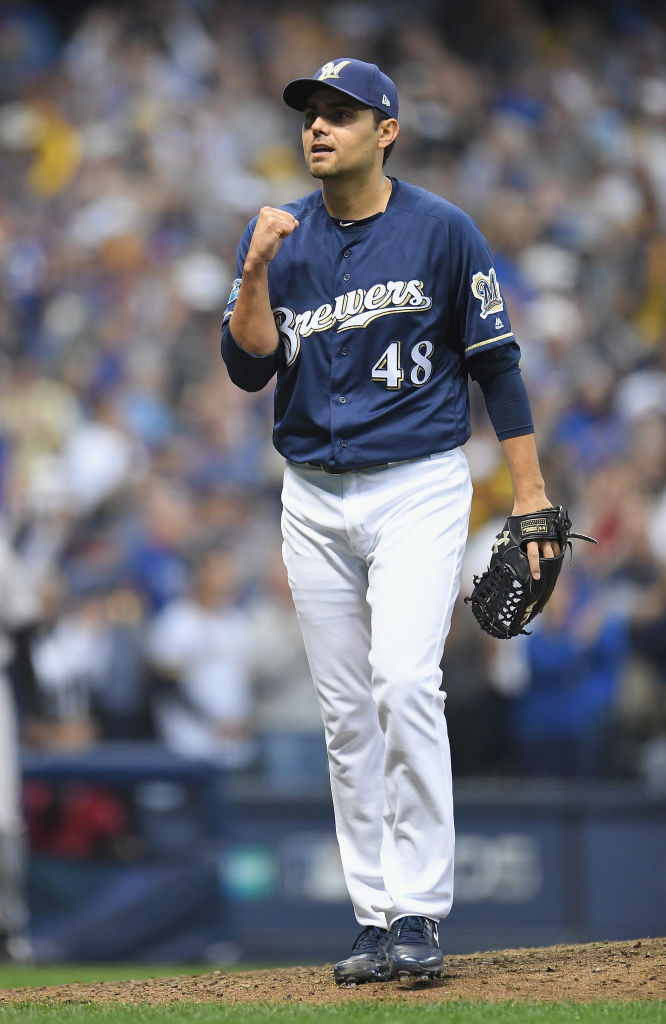
The 34-year-old Soria just wrapped up a three-year, $25MM contract with the Royals — a pact which didn’t pan out well in year one of the deal but took a turn for the better in years two and three. This past season, Soria tossed 60 2/3 innings of 3.12 ERA ball between the White Sox and Brewers, averaging 11.1 K/9, 2.4 BB/9 and 0.59 HR/9 along the way.
In many respects, in fact, the 2018 season was one of the best, if not the best of Soria’s impressive big league career. He averaged personal bests in swinging-strike rate (14.4 percent) and opponents’ chase rate (34.3 percent), and his 2.44 FIP and 2.88 SIERA were among the best marks of his 12-year MLB career as well. Perhaps most impressively, the 83.6 mph average exit velocity that Soria allowed to opponents registered as the lowest of any pitcher in baseball (min. 150 batted ball events), per Statcast.
Much of the emphasis for the A’s this offseason has centered around the team’s rotation needs (with good reason), but adding Soria to the mix will give Oakland another quality reliever to join the likes of Blake Treinen, Yusmeiro Petit, Lou Trivino, Fernando Rodney and Ryan Buchter. That’s a solid collection of relievers, which figures to be more important for the A’s than most other clubs, assuming they plan to continue utilizing “the opener” tactic and piecing together the occasional game via “bullpenning.”
While Soria unequivocally improves the pitching staff as a whole, the A’s still have a clear, pressing need for some pitchers who can offer more innings than the aforementioned bunch. Oakland will be without Sean Manaea for the entire 2019 season due to shoulder surgery, while right-handers Jharel Cotton and Daniel Gossett will be on the mend from Tommy John surgery early in the season. The same is true of top pitching prospect A.J. Puk, and another rotation option, Andrew Triggs, will be recovering from thoracic outlet surgery.
At present, the Oakland rotation is a muddled mess, with the likes of Daniel Mengden, Frankie Montas, Paul Blackburn, Chris Bassitt, Aaron Brooks, Tanner Anderson and Grant Holmes among the options from which the organization can choose. The A’s, somewhat unthinkably, managed to win 97 games in a season where their most prominent starters beyond Manaea were Trevor Cahill, Brett Anderson, Edwin Jackson and Mengden. That, however, seems highly unlikely to be a repeatable feat, and the A’s are expected to add some more experienced rotation pieces as the winter progresses.
A two-year commitment to Soria in the $15.5MM range is within reasonable proximity, albeit a bit shy, of the two-year, $18MM contract MLBTR estimated when ranking the game’s top 50 free agents in early November. Among participants in MLBTR’s Free Agent Prediction Contest, just 3.2 percent correctly pegged Soria to land in green and gold this winter.
Athletics Acquire Jurickson Profar In Three-Team Trade With Rangers, Rays
11:45am: The Rangers are receiving $750K worth of international allotments in the trade, tweets Mark Feinsand of MLB.com.
11:22am: The teams have formally announced the trade. The international bonus allotments that the Rangers are receiving are coming over from the Athletics; the amount was not specified, though international allotments must be traded in increments of at least $250K, per the collective bargaining agreement.
10:15am: The Athletics, Rangers and Rays have reportedly come to an agreement on a three-team trade that will send infielder Jurickson Profar from Texas to Oakland. Yahoo’s Jeff Passan first broke the story. Right-handed reliever Emilio Pagan is headed from the A’s to the Rays in the swap, as is Oakland’s Competitive Balance Round A selection in next year’s draft (currently slotted in at No. 38 overall). The Rangers will send minor league right-hander Rollie Lacy to the Rays, as well.

In exchange for Profar and Lacy, the Rangers will receive minor league infielder Eli White from the A’s. Additionally, the Rays will send minor league left-handers Brock Burke and Kyle Bird and minor league right-hander Yoel Espinal to the Rangers. Texas will also receive international bonus allotments in the trade.
Presumably, the trade signals that Jed Lowrie‘s time with the Athletics has come to a close. The Oakland infield is currently full with Matt Chapman at third base, Marcus Semien at shortstop and Matt Olson at first base, meaning Profar’s likeliest spot with the A’s will be second base. The addition of Profar also brings into question prospect Franklin Barreto‘s immediate future with the organization, as he’d been the presumptive heir apparent at second base in the event that Lowrie signed elsewhere.
Profar, 26 in February, once rated as the game’s top overall prospect but saw is promising future put on hold when a pair of shoulder injuries cost him both the 2014 and 2015 seasons. He struggled in his 2016 return and was a seldom used utility piece in 2017, but Profar finally enjoyed a full, productive season with the Rangers in 2018. Last year, the switch-hitter appeared n a career-high 146 games and tallied a career-high 594 plate appearances, hitting .254/.335/.458 with 20 homers, 35 doubles, six triples and 10 stolen bases along the way.
Because Texas optioned Profar to Triple-A for much of the 2017 season, his overall level of Major League service time was suppressed a bit. As such, he has just under five years of service time, meaning the Athletics will be able to control Profar for both the 2019 and 2020 seasons before he reaches free agency. Profar is projected by MLBTR contributor Matt Swartz to earn just $3.4MM in 2019, so he’ll be an affordable means of filling the team’s second base need for the next two years — a key factor for the perennially cost-conscious A’s, who still need to address their rotation.
The only other Major League piece involved in the trade is the 27-year-old Pagan, who is joining his third organization in three years. He spent just one year in Oakland after being acquired in the trade that sent first baseman Ryon Healy to the Mariners in the 2017-18 offseason. Though he’s moved around a fair bit, Pagan has generally had useful big league results. In 112 1/3 innings a a Major Leaguer, he’s notched a 3.85 ERA with 9.5 K/9 and 2.2 BB/9.
Though Pagan shows good control and is able to miss plenty of bats, however, he’s not without his red flags. The right-hander is among the game’s most extreme fly-ball pitchers and has yielded an average of 1.6 home runs per nine innings at the Major League level — neither of which figures to become any easier when moving to the American League East and its cavalcade of hitter-friendly parks (though Tampa Bay’s Tropicana Field doesn’t necessarily fit that description). For the Rays, the fact that Pagan is well-versed in multi-inning appearances was likely appealing, though. Pagan’s 112 1/3 MLB frames have come across 89 total appearances, and the Rays aggressively lean on multi-inning relievers as part of the burgeoning “opener” strategy that worked quite well for them in 2018.
The 23-year-old Lacy will join the Tampa Bay organization after spending only a brief time with the Rangers. Texas acquired Lacy in the July trade that sent Cole Hamels to the Cubs, though his results with the Rangers dropped off a bit from the numbers he posted in the Cubs’ minor league system. Some of that surely coincides with a move from Class-A to Class-A Advanced, and it’s worth noting that Lacy only totaled 28 1/3 innings in the Rangers’ system before the season ended, so it’s also a small sample of data. On the season as a whole, the right-hander worked to a 2.97 ERA with 10.0 K/9, 3.1 BB/9 and a ground-ball rate of nearly 60 percent through 109 innings between those two levels this season.
Looking to the Rangers’ return, Burke may well be the headliner in the deal. A third-round pick in the 2014 draft, the 22-year-old Burke was the Rays’ minor league pitcher of the year this past season and pitched to a 3.08 ERA with 10.4 K/9 and 2.9 BB/9 in 137 1/3 innings between Class-A Advanced and Double-A. The Rays protected Burke from the Rule 5 Draft last month by selecting him to the 40-man roster, and he’ll now be added to the Rangers’ 40-man in place of Profar.
Bird, 26 in April, split the year between Double-A and Triple-A, where he pitched to a combined 2.39 ERA with 88 strikeouts against 35 walks in 75 1/3 innings of relief work. Like Burke, he was selected to the Rays’ 40-man roster last month, meaning he’ll join the Rangers’ 40-man and give the organization an immediate left-handed bullpen option for the upcoming season. Even if he doesn’t break camp with the club, it seems likely that Bird will get an opportunity at some point in 2019.
The 26-year-old Espinal spent the bulk of the ’18 season in Double-A Montgomery, where he boasted a huge strikeout rate but demonstrated his share of control issues as well. In 54 2/3 innings at the Double-A level, Espinal notched an impressive 1.98 ERA with 11.7 K/9 but 4.8 BB/9 and a below-average 32.2 percent ground-ball rate. He won’t be as immediate of an option as Burke or Bird, but with some Double-A experience already under his belt, he’s likely not that far off from MLB readiness.
White, meanwhile, is the lone piece headed from Oakland to Texas in the swap. An 11th-round pick by the A’s back in the 2016 draft, White took his already-strong OBP skills to new heights in at the Double-A level in 2018. In 578 plate appearances this past season, the second baseman/shortstop hit .306/.388/.450 with nine home runs, 30 doubles, eight triples and 18 steals.
Yahoo’s Jeff Passan reported that Profar had been traded to Oakland and eventually followed up with all of the names and pieces involved in the deal (all Twitter links). USA Today’s Bob Nightengale, The Athletic’s Ken Rosenthal and the Dallas Morning News’ Evan Grant all added some details along the way (all Twitter links).
Cardinals Sign Andrew Miller
10:50am: The Cardinals have officially announced the signing of Miller to a two-year contract with a vesting/club option for a third season.
10:41am: Rosenthal tweets that Miller will be guaranteed $25MM over the next two seasons with a $12MM vesting/club option for the 2021 campaign. Miller will be paid $11MM in 2019 and $11.5MM in 2020, and the option carries a $2.5MM buyout. He’ll receive a full no-trade clause as well — something Heyman suggested was a priority for the left-hander last week.
Per Rosenthal, the option will vest if Miller pitches a combined 110 games between the 2019-20 seasons. He can earn another $500K annually based on incentives.
Dec. 21, 10:34am: The Cardinals and Miller do indeed have an agreement, tweets Fancred’s Jon Heyman. Frank Cusumano of KSDK News in St. Louis tweets that it’s a two-year deal with a vesting option for a third season.
Dec. 20, 6:55pm: Yahoo’s Jeff Passan reports that the two sides are close to a multi-year deal (Twitter links). Miller, according to Passan, has received multiple two-year offers but has been seeking a three-year deal. It’s not yet clear whether the Cards went to three years or made a sizable increase to the value of a two-year offer. USA Today’s Bob Nightengale tweets that the Cardinals could announce a deal with Miller as soon as tomorrow.
6:49pm: The Cardinals are closing in on a contract with left-handed reliever Andrew Miller, reports Ken Rosenthal of The Athletic (Twitter link). Derrick Goold of the St. Louis Post-Dispatch had reported shortly beforehand that the Cards were still looking at Miller and Zach Britton, and that there could be some movement in the market before the holiday week (Twitter link). Miller is represented by Frontline’s Mark Rodgers.
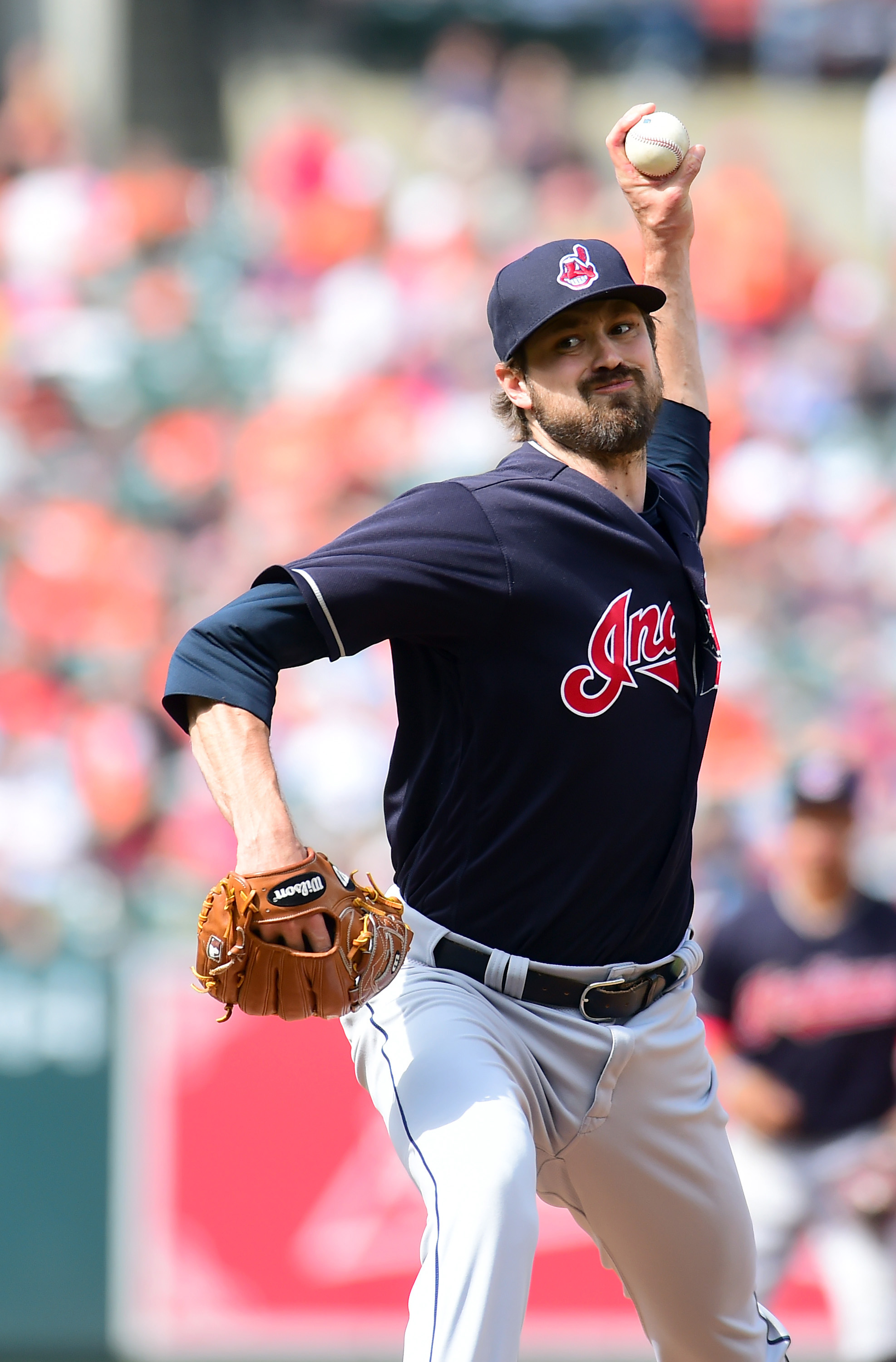
Miller, 34 in May, had a down season in 2018 as he missed brief stints due to hamstring and shoulder issues while also spending a more substantial period on the 60-day disabled list owing to a right knee injury. The result was a 4.24 ERA with somewhat diminished K/BB numbers in just 34 innings of work.
Of course, in the four preceding seasons, Miller was arguably the game’s best reliever, pitching to a ridiculous 1.72 ERA with averages of 14.5 strikeouts and 2.3 walks per nine innings pitched from 2014-17. With the exception of the 2017 season, he’s posted at least average ground-ball tendencies on an annual basis, and dating back to the 2013 season, the only pitchers in all of baseball with a better swinging-strike rate than Miller’s 15.7 percent are Aroldis Chapman, Craig Kimbrel and Kenley Jansen.
A healthy Miller would give the Cardinals the high-end left-handed presence they’ve been seeking at the back end of their bullpen in recent seasons. St. Louis’ four-year contract with fellow southpaw Brett Cecil has yet to pay dividends halfway through the life of that contract. Tyler Lyons, meanwhile, showed promise in 2017 but was cut loose this past summer after struggling badly early in the season. The Cards have been linked to both Miller and Britton on multiple occasions this offseason, and it’s long seemed that bolstering the relief corps (ideally with a southpaw) was high on the team’s wish list.
If and when the deal is completed, Miller will join a bullpen that was completely overhauled on the fly over the summer. Frustrated by his bullpen’s inconsistency, Cardinals president of baseball operations John Mozeliak released Greg Holland, outighted Lyons and traded Sam Tuivailala to the Mariners within a matter of days in late July. That shakeup, combined with some late-season promotions, gives the Cards a potential relief corps consisting of Jordan Hicks, Dakota Hudson, John Brebbia, Chasen Shreve, Luke Gregerson and Dominic Leone. Top prospect Alex Reyes and veteran Adam Wainwright, too, could both be options in manager Mike Shildt’s bullpen.
Both Gregerson and Leone were 2017-18 offseason additions but, like Cecil before them, underwhelmed in their initial run with the team. This’ll be the third consecutive offseason in which Mozeliak, GM Michael Girsch and the rest of the front office do some heavy lifting in the bullpen, with the organizational clearly hoping that the “third time’s charm” adage rings true.
The addition of Miller will mark another aggressive, high-profile signing for the Cardinals, who have already acquired Paul Goldschmidt from the D-backs in a trade that sent young MLB-ready assets to Arizona in the form of Carson Kelly and Luke Weaver. After three straight postseason misses, it’s no surprise to see Cardinals brass acting aggressively in an effort to surpass the NL Central champion Brewers and a perennially contending Cubs team. Cardinals fans have come to expect postseason-caliber rosters on an annual basis, and the three-year absence from October baseball is the organization’s longest “drought” since missing the playoffs each season from 1997-99. As such, it won’t be the least bit surprising if the Cardinals continue adding to what already looks to be a much-improved roster as the offseason progresses.
Padres Sign Ian Kinsler
The Padres announced Thursday that they’ve bolstered their infield depth with the addition of veteran second baseman Ian Kinsler on a two-year contract with a club option for a third season. The BBI Sports Group client will reportedly take home an $8MM guarantee in the form of a $3.75MM salary in both 2019 and 2020, as well as a $500K buyout on a $3.5MM option for the 2021 season.
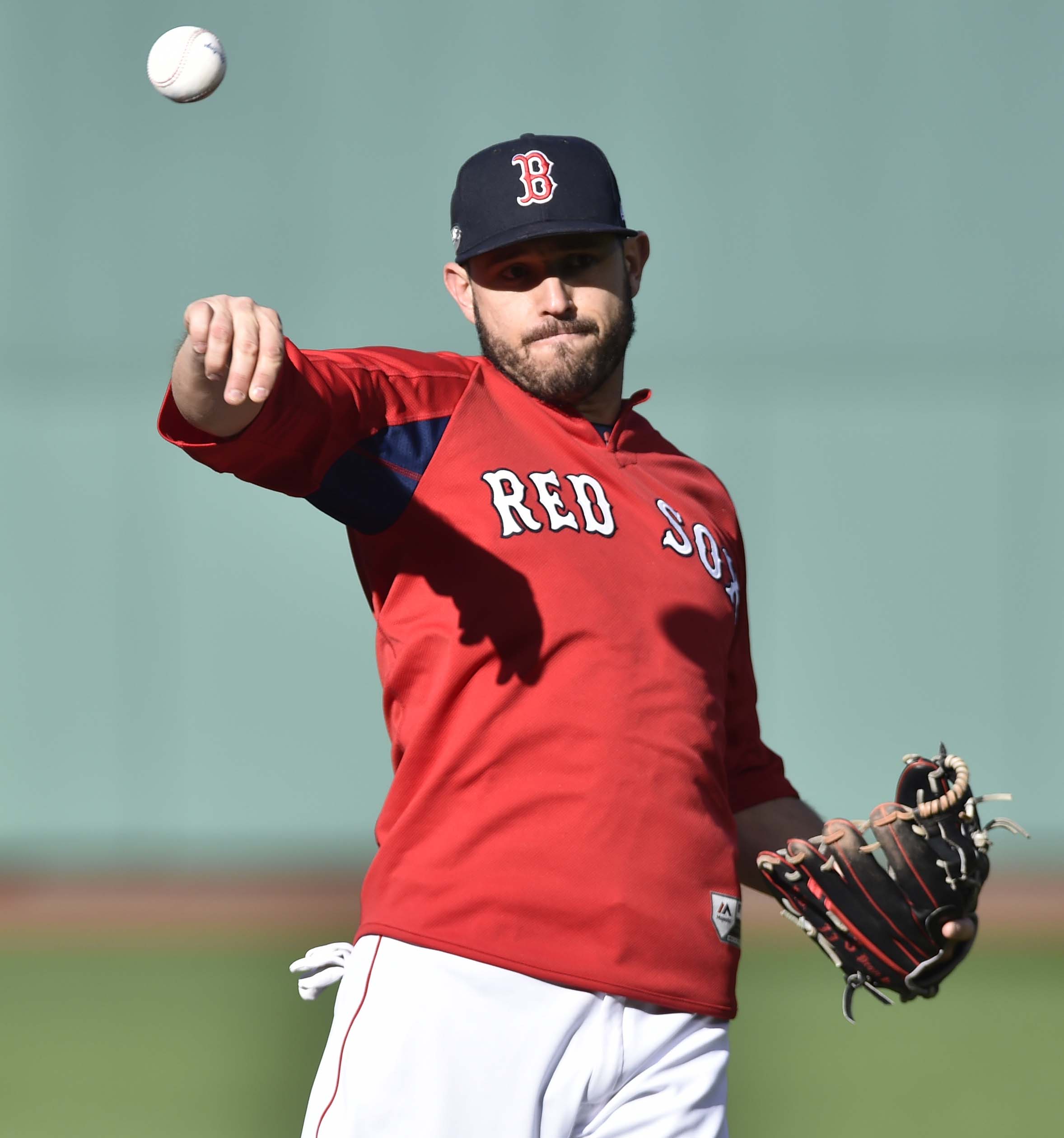
Kinsler, 36, is a known commodity for Padres GM A.J. Preller, who was an assistant GM with the Rangers during Kinsler’s tenure in Texas. Kinsler will bring to the San Diego organization one of the game’s premier defensive players, though his once-potent offense has tailed off in recent seasons. Since Kinsler’s debut in 2006, only six players in all of Major League Baseball have topped his mark of +118 Defensive Runs Saved. That’s not just a case of longevity, either, as Kinsler ranks fourth in DRS even over the past half decade and turned in a strong +10 DRS in 2018 alone. Ultimate Zone Rating has been similarly bullish on his defensive aptitude.
The 2018 campaign, however, saw Kinsler post a career-worst .240/.301/.380 batting line through 534 plate appearances between the Angels and Red Sox. His bat was only a bit below the league average with the Halos prior to the swap, though his production diminished greatly in 137 PAs with the Red Sox (.242/.294/.311). Overall, however, Kinsler’s premium defense and quality baserunning still led both Baseball-Reference and Fangraphs to peg him at a bit more than two wins above replacement. A move to the spacious Petco Park probably won’t help Kinsler’s offense, but his glove and speed give him a fairly high floor at what looks to be a palatable price point.
[Related: Updated San Diego Padres depth chart and Padres payroll outlook]
Kinsler steps onto a Padres roster that, since season’s end, has jettisoned both Cory Spangenberg and Carlos Asuaje. He could get the early bulk of the work at second base in the event that Luis Urias heads to Triple-A for further development or, as MLB.com’s AJ Cassavell suggests (via Twitter) should Urias open the year at shortstop. In somewhat contradictory fashion, though, Ken Rosenthal of The Athletic tweets that the Friars still consider Urias their primary second baseman, adding that Kinsler could work at third base early in the year.
Suffice it to say, the organization may not yet have a defined role in mind for Kinsler, whose ultimate position is likely somewhat dependent on the moves that San Diego makes between now and Opening Day. The Padres do have one of the game’s best overall prospects in shortstop Fernando Tatis Jr., though once Tatis and Urias are both in the Majors, Kinsler could slide over to third base on a full-time basis or assume a utility role off the bench. In any event, it seems clear that Kinsler will be counted upon to appear at multiple positions over the life of his Padres tenure.
Kinsler’s addition further calls into question Jose Pirela‘s role with the team, though it’s worth noting that the Friars have a full 40-man roster and will need to subtract someone in order to make the contract official. From a payroll standpoint, Kinsler should push the Padres to somewhere in the $83-84MM range for the coming season. The fact that there’s an option year on the deal suggests there’ll be a buyout, and therefore the annual salaries will both likely check in a bit south of $4MM. And the Padres only had about $60.5MM on the books for the 2020 season prior to adding Kinsler.
Ken Rosenthal of The Athletic first reported the agreement (via Twitter). MassLive.com’s Chris Cotillo reported the option value (Twitter link). Fancred’s Jon Heyman tweeted the annual breakdown of the deal.
Angels Sign Trevor Cahill
The Angels have added their second starting pitcher of the week, announcing on Thursday that they’ve signed righty Trevor Cahill to a one-year contract for the 2019 season. Cahill, a client of John Boggs & Associates, will reportedly earn a $9MM base salary and can secure an additional $1.5MM via an incentives package. Specifically, the deal is said to pay him $250K for reaching each of 100, 110, 120 and 130 innings, and he’d notch another $500K upon reaching 170 innings. He’d also reportedly land a $250K assignment bonus in the event that he’s traded.
Cahill will now join the also recently signed Matt Harvey as a rental starter in Anaheim. That seems to be a good outcome for the team, which will promise the pair a combined $20MM without extending its obligations past the 2019 season.
Entering the winter, MLBTR predicted that both Cahill and Harvey would command two-year, $22MM contracts. While the early returns on the rotation market were relatively promising, the more recent market markers have been suboptimal from the players’ perspective, with several hurlers securing less years than might have been anticipated.
Cahill, who’ll open the 2019 season at 31 years of age, has certainly not been the steadiest option in recent years, but he has shown some fascinating skills. Since returning to the rotation following a bounceback 2016 in a relief capacity, Cahill has struck out nearly a batter per inning while drawing grounders near his career 55.0% rate.
Outside of some late-’17 struggles, Cahill has been quite productive of late. He ended up giving the A’s 110 innings of 3.76 ERA ball last year, with peripherals to match — including a career-high 11.7% swinging-strike rate. Of course, DL stints again left cause for concern, which surely hurt Cahill’s bid for multiple seasons in free agency.
It’s certainly possible to look at the Angels rotation mix now and imagine a solid, cost-efficient unit. Andrew Heaney and Tyler Skaggs both showed well last year, while Jaime Barria and Felix Pena established themselves as solid options as well. Nick Tropeano is still around and will hope for a bounce back after some struggles upon returning from Tommy John surgery. JC Ramirez could return from the same procedure at some point. Luke Farrell, Miguel Almonte, and Dillon Peters represent depth pieces.
That said, it’s tough to see that as a high-grade unit even in the most optimistic of scenarios. And all of the team’s most-accomplished starters come with major recent health issues, including the two newest acquisitions. In a sense, it’s a continuation of last year’s approach of hoping to get enough innings from enough worthwhile pitchers to add up to a quality overall staff. It didn’t really work out in the aggregate. And now the highest-upside pieces are gone, with Garrett Richards and Matt Shoemaker out of the organization and Shohei Ohtani getting comfortable with a new ulnar collateral ligament.
The Halos reportedly pursued more notable targets, reportedly falling short in bids for both Patrick Corbin and Nathan Eovaldi earlier this winter. It’s still possible the club will continue angling for other arms, with Dallas Keuchel available in free agency and a few potential notable trade candidates, but it could also be that the club is now done with its rotation-building efforts. If that’s the case, then perhaps GM Billy Eppler will turn to other avenues to improve. The bullpen, catching unit, and position-player bench mix could all stand to be improved. Perhaps it’s not out of the question to imagine a surprise run at a high-level bat, though we’ve seen no real indication of that to this point.
Ken Rosenthal of The Athletic first reported the agreement and the terms (via Twitter). Mark Feinsand of MLB.com and Jon Heyman of Fancred added details on the incentives and assignment bonus (Twitter links).
Photo courtesy of USA Today Sports Images.
Joe Smith Undergoes Surgery For Torn Achilles Tendon
The Astros announced today that righty Joe Smith has undergone surgery for a ruptured Achilles tendon in his left leg. (H/t Chandler Rome of the Houston Chronicle, via Twitter.) It will sideline him for an estimated six-to-eight month stretch, putting a large chunk of his 2019 season in jeopardy.
Needless to say, that’s most unwelcome news for both player and team. Smith, 34, is said to have suffered the injury in a recent workout. The 34-year-old is slated to earn $8MM for the 2019 campaign, his second in Houston since signing a two-year deal last winter.
Smith, a crafty sidearmer who has held opposing right-handed batters to an anemic .215/.280/.311 batting line over his dozen MLB campaigns, would surely have been a part of the ‘Stros pen again in 2019. Last year, he worked to a 3.74 ERA with 9.1 K/9 and 2.4 BB/9. He was tough to square up, as usual, but did allow nearly 1.4 homers per nine — about twice his career average.
Of course, it’s only fair to note that the organization will have a bevy of alternatives, particularly if it makes some rotation additions that bump other players into relief contention. Smith, in fact, was not much of a factor in the club’s postseason mix, cracking the roster but making just one appearance (which did not go well). Still, he’s a quality veteran performer and it always hurts to carry a salary commitment that doesn’t provide production. The Astros will have to hope that Smith is able to recover relatively quickly and provide a mid-season boost.
MLB, Cuban Baseball Federation Reach Agreement On Posting System
9:30pm: The league’s formal announcement of the system indicates that only players under contract with the FCB are eligible for the posting system. Others are eligible to sign with MLB teams under the same system as other international amateurs. Cuban professionals will be made eligible to MLB clubs each offseason and are free to sign with any MLB team willing to pay a release fee on said player.
A professional player’s release fee will be determined based on the same scale as in the NPB and KBO posting systems. That is to say that, on top of the bonus paid to the player, a Major League team will pay a release fee equal to 20 percent of the first $25MM of a bonus, 17.5 percent of the next $25MM and 15 percent for anything beyond that point. Notably, today’s announcement indicates that Cuban players who’ve been released into the posting system “will be scouted and signed in Cuba by MLB clubs.”
The agreement runs through Oct. 31, 2021, unless there is an agreement of an extension of the system prior to that point. Full details of the arrangement can be seen in the league’s announcement.
3:23pm: MLB and the FCB have indeed reached an agreement, as Romero reported last night and as Passan now details in a new column. An announcement could come as soon as today. While the agreement is significant, the newly agreed-upon system could be dashed if the current presidential administration opts to scale back on regulations installed under the previous administration that loosened restrictions on business interactions with Cuba.
As Castillo tweets, however, the new system doesn’t require immediate government approval before going into place, as MLB already has a license in place. That does not preclude future legislation from throwing a wrench into the system.
The specifics of the new system aren’t yet fully clear, though Passan does detail some of the financial elements of the arrangement. Major League teams signing a Cuban player would pay the FCB a release fee on top of the money promised to that player — a 25 percent tax on amateur players (i.e. players under 25 and/or with fewer than six years of experience) and a 15 to 20 percent fee for professional players (i.e. players 25 or older and with more than six years of pro experience). The exact release fee on a professional player is determined based on a sliding scale — the specifics of which are not yet publicly available but will presumably come to light when the league makes a formal announcement.
Interestingly, Castillo suggests (via Twitter) that players who qualify as professionals (25 years of age, six-plus years of pro experience) will all be “released” by default, allowing them to pursue opportunities with MLB clubs. Presumably, those who do not wish to leave Cuba in pursuit of a big league deal will be able to continue playing on the island.
The new system leaves Cuba with an overwhelming amount of control over its native talent. Players who defect will indeed be subject to the punishment of an additional waiting period, per Passan. Professionals who defect would need to wait until the start of the next free-agent period (i.e. the week after the conclusion of the World Series). Amateur players who defect will be forced to sit out an entire signing period. As Passan spells out, that’d mean a player who defects after July 2 next year would sit out not only for the 2019-20 signing period but also the 2020-21 signing period before becoming eligible to sign in the 2021-22 period. Obviously, then, those regulations were put forth in an effort to severely punish those who wish to defect from the island and circumvent the newly created system.
11:50am: It seems there could soon be a new arrangement to allow Cuban ballplayers to move to MLB organizations, though the timeline for a formal agreement remains unclear. Francys Romero of CiberCuba.com reported (Spanish language link) on the prospective deal, which Jorge Castillo of the Los Angeles Times says was presented to teams at the Winter Meetings, though Jeff Passan of Yahoo Sports (via Twitter) emphasizes that a deal is not yet completed.
Details are not fully clear, but generally it seems the concept under contemplation is a kind of posting system not unlike those already in operation with professional leagues in Japan and Korea. In this case, the Cuban Baseball Federation (FCB) would evidently recoup the fees paid by MLB teams for the right to acquire talent from the island nation.
The approach would seemingly do away with the current process, in which Cuban players who wish to play with affiliated organization have been forced to defect from their homeland and establish residency elsewhere. Needless to say, it’s far from an ideal system (if that’s even a fair term), and one that has resulted in some highly problematic trafficking situations.
Under the proposal, the reporting of Romero and Castillo suggests, MLB teams would pay a release fee of a varying amount, tied to the value of the bonus. Fees for minor-league signings would be set at 25%, while MLB deals would require 15% or 20% payouts. While the bonuses themselves would presumably continue to count against teams’ international bonus pools, the fees would not.
The new system would seem to open the door to a more open and accessible transfer system. Of course, there are still some concerns and also some hurdles. It seems the Cuban organization would control the pipeline to no small extent. Per Castillo, there’d be no provision to allow for scouting in Cuba. More importantly, any players who defect would not only face a penalty “waiting period” but would still be subject to the fee requirements.
Obviously, there’ll also need to be some governmental machinations before any deal can be finalized. It seems reasonable to presume that the commissioner’s office has been operating in conjunction with the relevant federal authorities, but broader political forces could presumably still influence the outcome. After all, there’s still ample uncertainty in the broader United States-Cuba relationship.
Astros Sign Michael Brantley
DECEMBER 19: The deal is now official.
Brantley will receive a $2MM signing bonus and $15MM salaries in each year of the deal, per Rosenthal (via Twitter).
DECEMBER 17, 6:01pm: The terms have been agreed to, per Jeff Passan of Yahoo Sports, who tweets that the deal will not come with any options.
5:48pm: The Astros are “closing in” on a deal with veteran outfielder Michael Brantley, according to Ken Rosenthal of The Athletic (Twitter link). It’s expected to promise Brantley something in the range of two years and $32MM if completed, per the report.
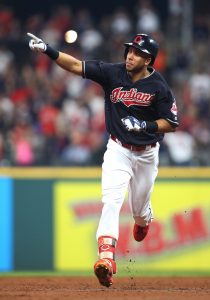
Entering the offseason, MLBTR graded Brantley the tenth-best free agent on the market. We predicted both he and Andrew McCutchen would secure three-year deals at $15MM average annual values. If today’s rumored pact goes through, though, McCutchen will have topped Brantley handily with his own three-year, $50MM agreement with the Phillies.
For the ‘Stros, this signing would deliver another veteran, left-handed-hitting corner outfield to a mix that already includes Josh Reddick. Both Brantley and Reddick are best with the platoon advantage, as is younger lefty-swinging outfielder Tony Kemp, which will make it interesting to see how the remainder of the roster is structured.
Brantley is certainly a polished offensive piece. The 31-year-old slashed .309/.364/.468 last year and is among the game’s best pure hitters, as reflected in his lifetime .295 batting average. He’s good for fifteen to twenty long balls annually, which is useful but hardly elite for a corner outfielder, but makes up for any shortcomings in that regard by rarely striking out (10.7% career K rate).
It certainly doesn’t hurt, either, that Brantley contributes in the running game. He swiped a dozen bags last year and has typically graded out as an above-average to excellent overall baserunner. In the field, Brantley has mostly drawn average marks for his work in left field.
The largest demerit, clearly, involves health. Brantley was limited significantly in 2016 and 2017 owing to a string of injuries and related surgeries. That, perhaps, is the most significant point of distinction between Brantley and McCutchen.
Even if the Houston club has its qualms about Brantley’s health outlook, it’ll have more flexibility than its peers to keep him rested and make the most of his skillset. Brantley can spend time at DH and perhaps even at first base, with the right-handed-hitting Yuli Gurriel potentially operating in a similar fashion but as a right-handed hitter.
The broader slate of Houston stars definitely hues right-handed, so it’s not as if there’s an over-abundance of lefty bats generally. Still, as hinted above, this acquisition poses some interesting questions regarding the outfield mix, in particular. Brantley, Reddick, and Kemp aren’t the only pieces to consider, after all. In terms of righty bats, George Springer will continue to get regular time while Jake Marisnick could work as a platoon piece.
That works well enough on its own, particularly if we assume Brantley will see action in other areas, but leaves two players (both left-handed hitters) unaccounted for. 25-year-old Derek Fisher struggled badly last year in the majors, but is still an intriguing talent. And Kyle Tucker is widely viewed as one of the better all-around prospects in baseball. The 21-year-old had a forgettable first attempt at the big leagues, but laid waste to Triple-A pitching in 2018 and could well be a major factor next season.
It’s tough to know exactly how this’ll all shake out. For now, suffice to say, the Astros still have plenty of options. It’s not hard to imagine another significant bat fitting on the roster. And it’s also not difficult to picture a trade — whether a blockbuster or one of lesser significance — that’d make use of the backlog of lefty outfield bats.
Photo courtesy of USA Today Sports Images.
Angels To Sign Matt Harvey
7:16pm: It’s a one-year deal for Harvey, Feinsand tweets. Fancred’s Jon Heyman tweets that the deal will guarantee Harvey $11MM, and Yahoo’s Jeff Passan tweets that Harvey can earn an additional $3MM worth of incentives. Per Heyman (Twitter link), those incentives are based on games started and kick in at 15 starts before maxing out at 26 starts. Harvey’s deal is still pending a physical.
7:07pm: The Angels have agreed to a deal with free-agent right-hander Matt Harvey, reports Mark Feinsand of MLB.com (via Twitter). Harvey is represented by agent Scott Boras.
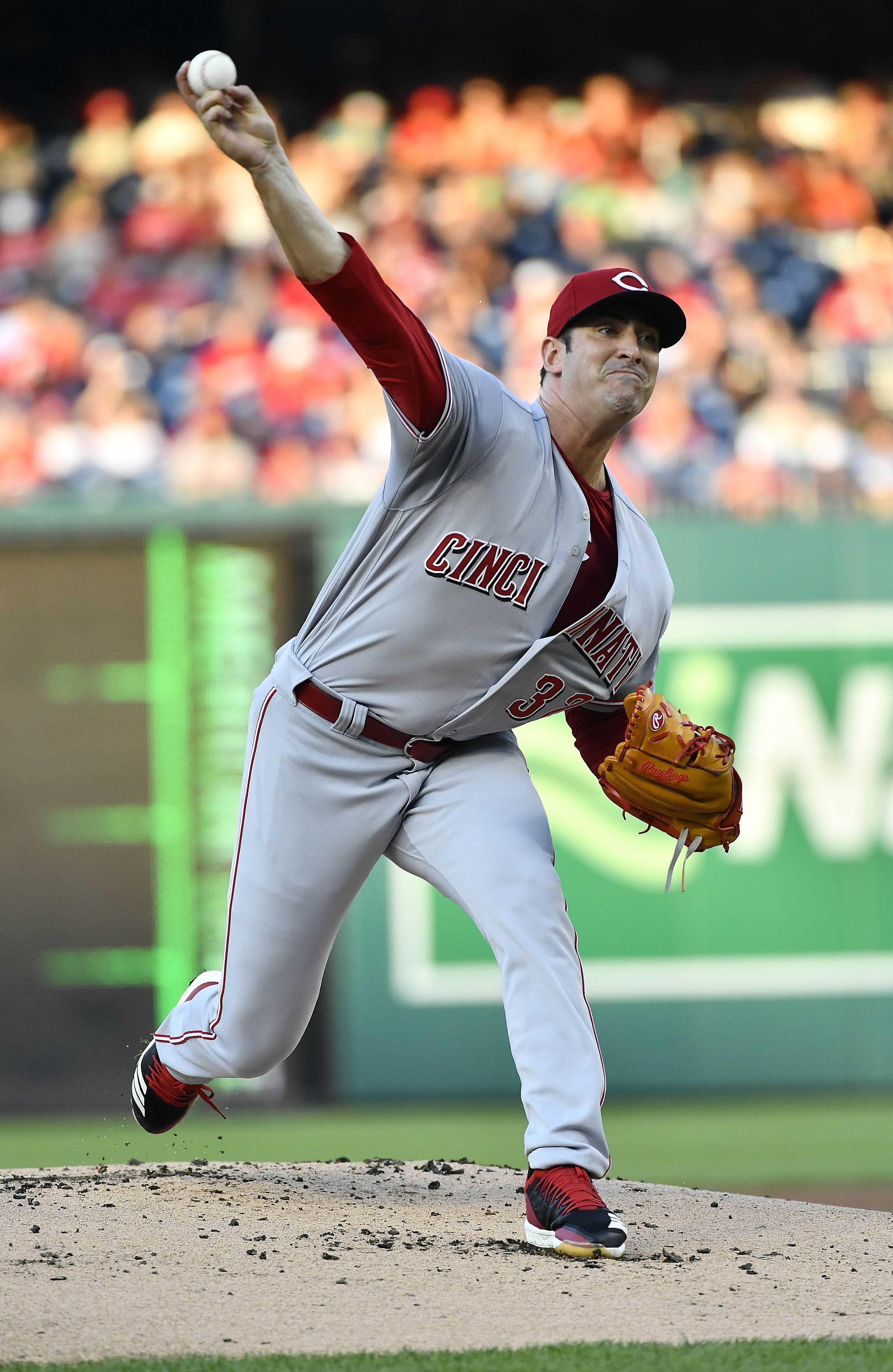
Harvey, 29, will be the first rotation addition for an Angels club that entered the winter in significant need of innings. The 2018 Angels were decimated by injuries, as Garrett Richards, Shohei Ohtani and J.C. Ramirez each underwent Tommy John surgery, while others such as Matt Shoemaker and Nick Tropeano missed substantial time on the disabled list.
Harvey will join lefties Andrew Heaney and Tyler Skaggs as locks to start games for the Halos, but the rest of the rotation is still somewhat unsettled. Tropeano, Jaime Barria, Felix Pena and Dillon Peters are among the other candidates to start for newly hired manager Brad Ausmus, though the names to which the Angels were connected prior to the Harvey agreement perhaps underscore the remaining work that GM Billy Eppler and his staff have ahead.
Jeff Fletcher of the Orange County Register recently reported that the Angels made a two-year, $28MM offer to J.A. Happ before he returned to the Yankees, and USA Today’s Bob Nightengale tweets that the Halos also made a “strong” offer to Patrick Corbin before he signed a whopping $140MM contract with the Nationals. Given those targets and the still-palpable uncertainty in the Angels’ mix of starters, it’s reasonable to expect that they’ll continue pursuing upgrades to the top portion of their starting staff.
The $11MM guarantee for Harvey suggests that the Angels are not only buying Harvey’s turnaround with the Reds in 2018 but anticipating that he can take another step forward. Harvey’s Mets career was torpedoed by Tommy John surgery and the even more ominous thoracic outlet surgery — the lingering effects of which caused the Mets to ultimately cut the cord and flip the right-hander to Cincinnati in exchange for catcher Devin Mesoraco. Harvey gave the Reds 128 innings of 4.50 ERA ball with more encouraging secondary metrics: 7.8 K/9, 2.0 BB/9 and a 42.6 percent ground-ball rate. ERA alternatives like FIP, xFIP and SIERA all pegged Harvey in the low 4.00s.
With the Reds, Harvey saw his average fastball velocity trend up from 92.6 mph in New York to 94.4 mph, and his swinging-strike rate improved from 8.2 percent to 9.9 percent. Neither of those marks are close to Harvey’s peak levels from his “Dark Knight” days, but the positive trends were encouraging enough for the Angels to bet a fairly notable sum that the beleaguered right-hander can hold up over the course of a full season. If that proves to be the case, Harvey could eventually emerge as a candidate to receive a qualifying offer, creating a bit of additional upside for the Halos.
By adding Harvey on an $11MM salary, the Angels push their projected Opening Day payroll up to about $156.2MM — a sum that falls roughly $10MM shy of the $165.8MM Opening Day payroll the team has averaged over the past three seasons. MLBTR contributor Rob Huff recently took a deep dive into the Halos’ payroll, estimating that the team could have as much as $36MM to spend this winter, assuming ownership approval of a slight uptick in payroll. With only Harvey and Justin Bour (one year, $2.5MM) as new additions to the books thus far, there’s certainly room for at least one more notable rotation addition — be it via the free-agent market or via trade.
The pairing of Harvey and the Angels, in some respects, has been more than a decade in the making. The Halos selected Harvey in the third round of the 2007 draft but were unable to sign him despite offering a bonus widely reported to be greater than $1MM in total. That decision, of course, proved to be a good one for Harvey, who was selected seventh overall out of UNC in 2010 and received a considerably heftier $2.5MM bonus from the Mets. Much has changed in the decade-plus since that offer was made, but Harvey is in many ways an upside play, just as he was as a draft prospect in 2007 — albeit a far more expensive one this time around.
For Harvey, the one-year term gives him a further opportunity to distance himself from his disastrous 2016-17 results and re-enter the open market after spending a year in a relatively pitcher-friendly environment. Though he’s moving from the National League to the American League, he’ll also move from one of the game’s most homer-friendly parks to the much more spacious Angel Stadium, which could help him pare back the 1.48 HR/9 he averaged following his trade to Cincinnati. Harvey’s ultimate contract aligns with the annual value we at MLBTR predicted in our Top 50 free agents list, though our rankings projected a two-year term for the former Mets ace. Meanwhile, Harvey’s landing with the Angels won’t do favors to many who participated in MLBTR’s free-agent prediction contest; only 2.9 percent of respondents correctly pegged Harvey to the Halos.
Cubs Sign Daniel Descalso
3:54pm: Descalso’s contract comes with a small incentives package as well, Heyman tweets. He’ll earn $50K for reaching each of 425, 450 and 475 plate appearances in a given season, plus another $100K upon reaching 500 PAs.
2:02pm: The signing has now been announced. Descalso will earn salaries of $1.5MM and $2.5MM, per MLB.com’s Jordan Bastian (via Twitter).
10:42am: The Cubs have agreed to terms with veteran utilityman Daniel Descalso, according to reports from Ken Rosenthal of The Athletic (Twitter link) and Jon Heyman of Fancred (via Twitter). Descalso, a client of Pro Edge Sports, will be promised $5MM over two seasons, per Rosenthal (Twitter links). There’s a club option as well for the 2021 season, with a $3.5MM price tag and $1MM buyout.
This move, if completed, promises to deliver the Cubbies some of the veteran grit they felt they were missing in a 2018 season in which they came up a bit short of their own lofty expectations. It would also bring Descalso back to the NL Central division after a four-year foray into the NL West.
Descalso will help the Cubs cover for the absence of Addison Russell over the first month or so of the season, likely seeing quite a bit of action at second while Javy Baez plays short. Once Russell returns to the club from his domestic abuse suspension, as now seems to be the plan, Descalso will in all likelihood step back into the utility role to which he’s best suited.
If that’s all that takes place, the Cubs would feature a variety of versatile position players to work with. Russell and especially Baez would occupy a fair bit of the middle-infield action, with Descalso filling in there and at third base. Presumably, Ben Zobrist and Ian Happ will spend the majority of their time in the outfield, though both have ample experience on the dirt as well. Just where David Bote will fit in all of this isn’t clear, but the Cubs certainly won’t mind having the depth and he’s optionable as well.
Of course, there could yet be further roster tweaks still to come. The Cubs have engaged the market in a surprisingly spartan manner thus far, with the club sending signal after signal that it’s not going to add much payroll. But there could still be trade possibilities to work through and it’s still reasonable to wonder whether the Chicago organization has a big strike still in it if the right opportunity arises.
Descalso, of course, spent the early portion of his career with the bitter-rival Cardinals. He earned his playing time as a gritty, pesky, versatile player who did enough in the field and on the bases to overlook his generally subpar bat.
In recent years, though, the 32-year-old Descalso has opened up some new aspects to his game. Beyond getting acquainted in the corner outfield, he has become an increasingly aggressive flyball hitter. The initial returns have been impressive, as Descalso has turned into a lite version of a three-true-outcomes hitter.
Last year, in 423 trips to the plate, Descalso popped 13 long balls. He struck out and walked at career-high rates, 26.0% and 15.1% respectively, while turning in a productive overall .238/.353/.436 slash. That was good for a 111 wRC+, a nice number for a player who had never before topped 90 in a given season. With quality baserunning added in, Descalso clocked in at 1.6 fWAR — easily a career-high.
Descalso hasn’t played much shortstop in recent seasons, though that is in part no doubt a reflection of the needs of his former teams. It’s also not a primary concern for the Cubs, who can utilize Baez and Russell at the position.
Photo courtesy of USA Today Sports Images.