
Cubs Avoid Arbitration With Kris Bryant
The Cubs have reached a record-setting deal with star third baseman Kris Bryant, according to Gordon Wittenmyer of the Chicago Sun-Times (via Twitter). He will earn $10.85MM, setting a new high-water mark for first-time arb-eligible players.
Previously, Ryan Howard held the record for the biggest arbitration payout to a player entering the process for the first time. His $10MM mark had held sway since 2010. MLBTR contributor Matt Swartz broke down Bryant’s case recently, suggesting he felt it somewhat more likely that Bryant would not quite top Howard.
Of course, there could be other factors weighing on the situation, including the controversy over Bryant’s initial promotion timeline and the fact that the Cubs would no doubt like to work out an extension if possible. Paying a bit extra and giving Bryant a record-setting deal may end up working to Chicago’s benefit. And it was no doubt preferable for the club to steer clear of a hearing.
In the spring of 2015, Chicago decided not to take Bryant north with the MLB club when it broke camp, instead waiting a few weeks to bring him up for his first big league action. That delay left the Cubs free to control him through 2021, rather than 2020, but spurred a grievance action and also left Bryant eligible to qualify for arbitration in 2018 — meaning he’ll get four bites at the apple through the arb process.
The Cubs’ approach still clearly favors the organization in the long run. But Bryant nevertheless now stands to take down some massive earnings throughout the arbitration process. He’ll have three more seasons to tack raises on top of his hefty $10.85MM starting point.
Blue Jays, Josh Donaldson Agree To Record Arbitration Deal
The Blue Jays and third baseman Josh Donaldson have avoided an arbitration hearing by agreeing to a $23MM salary for the 2018 season, reports Shi Davidi of Sportsnet (via Twitter). That massive payday represents an all-time record payout for an arbitration-eligible player on a one-year contract. Donaldson, a client of MVP Sports Group, is entering his final year of team control and will be a free agent following the season.
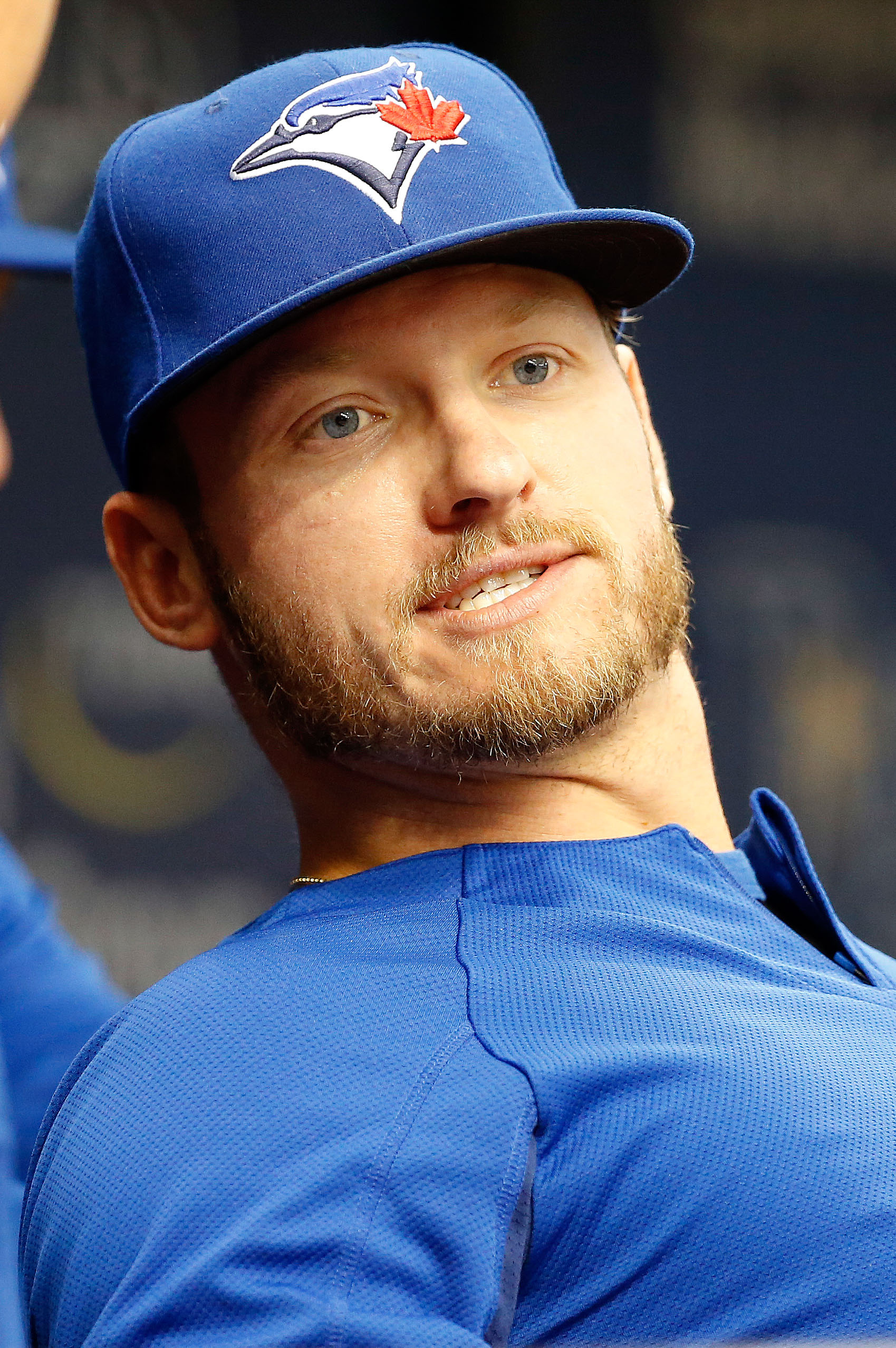
Donaldson, 32, recovered from a slow (by his lofty standards) start to the 2017 season and closed out the year on a blistering hot streak, during which he was one of baseball’s best hitters (if not the very best). From Aug. 1 through season’s end, Donaldson batted a ridiculous .302/.410/.698 batting line with 22 homers in 227 plate appearances. That Herculean stretch took his season batting line from .243/.364/.442 on the morning of Aug. 1 all the way to his final slash of .270/.385/.559.
The record payday handily tops the projected arbitration salary from MLBTR contributor Matt Swartz, whose arbitration projection algorithm had pegged Donaldson at $20.7MM. Recognizing the unique nature of Donaldson’s case, Matt took a lengthier look at the factors that could’ve factored into negotiations in an Arbitration Breakdown piece on Donaldson, explaining the reasoning behind the $20.7MM figure as well as some ways in which the projection could’ve been off target.
That ultimately proved to be the case, as Donaldson now has his name in the arbitration record books. Prince Fielder‘s $15.5MM contract was the largest one-year offseason payout for an arbitration-eligible position player, while David Price‘s $19.75MM salary in his last year before free agency was the largest one-year, offseason payout on record to date. (The “offseason” distinction is of note, as the Nationals bought out Bryce Harper‘s final year of arbitration eligibility for a hefty $21.65MM back in May, though Donaldson’s contract obviously tops that mark as well.)
Over the past three seasons in Toronto, Donaldson has been one of baseball’s elite players, posting a .285/.387/.559 slash (150 OPS+) while playing excellent defense at third base. Though he’ll hit the open market in advance of his age-33 season next winter, the 2015 American League MVP will have a strong case for a nine-figure contract in free agency, assuming good health and a characteristically excellent season in 2018.
Photo courtesy of USA Today Sports Images.
Luhnow Refutes Report That Astros Have Deal For Gerrit Cole
2:44pm: The Astros are still engaged with the Pirates on Cole but are also still looking at alternatives, per Bob Nightengale of USA Today (via Twitter).
11:15am: Recent chatter of a possible trade that would send right-hander Gerrit Cole from the Pirates to the Astros intensified early today, with multiple reports indicating the sides were gaining momentum. And Jon Morosi of MLB Network (via Twitter) reported that a deal was in place between the organizations that would send Cole to Houston.
Ensuing reports, though, cast doubt and then fully refuted that agreement had been reached. Astros GM Jeff Luhnow said that there was “nothing imminent” in any of the team’s trade talks, per Jake Kaplan of the Houston Chronicle (Twitter link). And Jeff Passan of Yahoo Sports reported (Twitter links) first that the deal had not yet fully been completed and ultimately that the apparent news of an accord was simply a “false rumor.”
All told, it seems there’s no reason at this time to believe a deal is particularly close to coming to fruition, beyond the fact that the sides have evidently engaged in serious discussion. Passan says a trade “is not happening” right now, while noting “talks could pick back up quickly.” And Jon Heyman of Fan Rag (via Twitter) suggests a trade “isn’t necessarily close.” Indeed, he also hears of another suitor being involved beyond the Yankees (the organization that once seemed likely to land Cole before those talks fizzled). With the necessary proviso that the situation can always change, then, it appears we’re mostly back to the status quo ante on Cole’s trade status.
Cole, now 27, remains a top trade candidate. He was the first overall pick in the 2011 draft. He ascended quickly to become Pittsburgh’s top pitcher, though he has not exactly been at his peak of late. In 2017, he worked to a 4.26 ERA in 203 frames. While that represented a promising return to full health after some limitations in 2016, it also was hardly the output that had come to be expected.
In 2015, after all, Cole had fully emerged as a staff ace, turning in 208 frames of 2.60 ERA ball with 8.7 K/9 and 1.9 BB/9. While his velocity and key peripherals have largely held steady, Cole was tagged for 1.37 home runs per nine — over twice the rate he had maintained previously. As Travis Sawchik of Fangraphs explains, Cole’s heater surrendered quite a bit of added pop in 2017, but there’s reason to believe he can refine his offerings to regain his standing. Cole will cost a projected $7.5MM in 2018 with one more season of arbitration control thereafter.
For the ‘Stros, we’ve seen clear indication of late that the organization wishes to boost an already-strong rotation unit that was already boosted late last year with the addition of Justin Verlander. With Dallas Keuchel, youngster Lance McCullers, and the increasingly interesting Charlie Morton already on hand, along with breakout righty Brad Peacock, it seems Houston’s interest in starters is a want moreso than a need.
On the Bucs’ side, it’s still hard to know how things will play out this winter. Even if the team deals away Cole and other veteran trade candidates (most notably Andrew McCutchen), it may still have some designs on competing in ’18. But parting with Cole would unquestionably mean delivering a major blow to the team’s expectations for the coming season.
More broadly, questions persist about just when and how the player market will get moving in earnest. A deal involving Cole might have given some clarity to the outlook for free agent starters, while perhaps leaving the Astros free to dedicate financial resources to other needs (most notably, the bullpen). But with this prospective swap not occurring — at least at this time — we’re left with the same overall market landscape.
Astros, Pirates Gaining Momentum Toward Gerrit Cole Swap
10:51am: A deal is “imminent,” Jon Morosi of MLB Network tweets.
10:29am: Whitley is likely to be considered “untouchable” by the ‘Stros, per Bill Brink of the Pittsburgh Post-Gazette (via Twitter), though it seems the two young outfielders could still be in play in discussions.
10:17am: The Astros and Pirates appear to be “picking up steam” in talks involving Pittsburgh righty Gerrit Cole, MLB.com’s Jesse Sanchez reports. Negotiations on Cole were reported recently, as Astros owner Jim Crane has made clear his organization is interested in adding a major starter.
Cole, 27, has long been seen as a front-line power starter, though he has had some stumbles in the past two seasons. While he topped two hundred innings and threw as hard as ever in 2017, he only managed a 4.26 ERA.
As always, contract rights are a key component of value. Cole is controllable for two more seasons via arbitration. MLBTR’s arbitration projections suggest he could earn $7.5MM for the 2018 season after a $3.75MM salary in 2017.
It remains unclear just what kind of trade package would suffice to pry Cole free from the Bucs, who originally selected him with the first overall pick of the 2011 draft. Yahoo Sports’ Jeff Passan has suggested (Twitter link) that Pittsburgh is holding out for a headliner such as outfielder Kyle Tucker or righty Forrest Whitley, while the ‘Stros are understandably hoping to hold on to their two top-rated prospects. The sides are also said to have discussed young outfielder Derek Fisher.
Also of note is the fact that, per Sanchez, Cole “was Houston’s top target last summer” when the organization was searching to bolster its rotation. It seems the prior interests has carried into the offseason. Of course, other organizations may also still be involved. At one point, the Yankees were said to be gaining momentum toward a deal for Cole, though that chatter evidently cooled down. Other organizations surely also have interest in the righty.
MLB Arbitration Tracker For 2018
If a team has a player on its 40-man roster with at least three and less than six years of Major League service time, who is not signed to a multiyear extension, that player is eligible for MLB’s arbitration process. Some players with less than three years are eligible as well; these are called Super Two players. The arbitration process is used to determine the player’s salary, generally by looking at how the player’s traditional statistics stack up with previously established precedents. About 200 players are eligible for arbitration for 2018, including Josh Donaldson, Manny Machado, and Kris Bryant. For many players, the arbitration process is the first major step up in salary prior to free agency.
A player’s agent, with the help of the Players Union, is pitted against the team as they try to settle on a salary. Friday marks the deadline for players and teams to exchange figures, with each side submitting what they think the player’s 2018 salary should be. Many players will agree on a salary in advance of this date; more than a dozen have already. From what I’ve heard, all teams now treat Friday’s deadline as a hard one, meaning if they don’t have a salary agreement by then, they’ll automatically go to a hearing (barring a multiyear extension). Last year, 15 players went to hearings, which occur in February. In an arbitration hearing, each side makes a case for its salary figure in front of an independent panel, and the panel chooses a winner.
For seven years now, MLBTR has been using a proprietary algorithm to project arbitration salaries. We also have a constantly-updated MLB arbitration tracker for 2018, which allows you to filter by team, service time, Super Two status, signing status, and whether the player went to a hearing. You can see and sort by the player and team submissions for those who get to that point, and sort by settlement amount. The tracker has everything you need to keep up with each team’s arbitration class.
Astros “Actively Pursuing” High-End Starters, Have Discussed Gerrit Cole With Pirates
12:27pm: Jeff Passan of Yahoo Sports reports (via Twitter) that the Astros have had talks with the Pirates about a trade that would send Cole to Houston. Young outfielder Derek Fisher‘s name has come up in negotiations, though Passan notes that the Pirates “almost certainly would need Kyle Tucker or Forrest Whitley” to headline the deal.
The 24-year-old Fisher entered the 2017 season as a well-regarded outfield prospect and elevated his status with a .318/.384/.583 batting line in 384 Triple-A plate appearances. That led to Fisher’s first MLB promotion, though he struggled to a .212/.307/.356 slash in a small sample of 166 PAs with Houston.
Tucker and Whitley, by most accounts, two of the top prospects in Houston’s system (if not the two very best). Each is a former first-round pick, with Tucker going fifth overall in 2015 and Whitley being tabbed with the 17th selection in the 2016 draft. Both reached Double-A in 2017 despite being four to five years younger than the league average in the Texas League. Whitley displayed some of the most intriguing strikeout numbers of any starter in the minors, while Tucker posted a composite .874 OPS between Class-A Advanced and Double-A.
11:25am: The Astros have been connected to Yu Darvish at various points throughout the offseason, and owner Jim Crane confirmed to reporters today that his club is in the market for a top-shelf pitching addition (Twitter links, with video, from MLB.com’s Alyson Footer). Crane didn’t suggest that his front office is zeroed in on one particular target, instead suggesting that an upgrade could come either via free agency or trade.
“[General manager] Jeff [Luhnow] and his team are actively pursuing a high-end starter,” said Crane. “We don’t have anything done yet, and it may not come to be, but we’re constantly looking to improve the team. … We’re always trying to upgrade the team, so it would have to be a significant upgrade. We’re happy where we’re at. I’ve been told that on paper we have the best team in baseball, but paper doesn’t win titles.”
Darvish has been the most prominently mentioned name in connection with the Astros, though the free-agent market also features Jake Arrieta while the trade market could bear names such as Gerrit Cole and Chris Archer (among other, potentially yet unforeseen candidates).
Houston, of course, already boasts a stacked starting rotation. Justin Verlander looked arguably better than ever following an Aug. 31 trade from Detroit to Houston, and he’ll return to front a rotation that includes 2015 AL Cy Young Winner Dallas Keuchel, high-upside young righty Lance McCullers, and 2017 breakout stars Charlie Morton and Brad Peacock. The ‘Stros also have veteran Collin McHugh on hand as a solid back-of-the-rotation option and a number of high-end prospects waiting in the upper minors (including Francis Martes and David Paulino, each of whom has already made his MLB debut).
However, the Astros could also be on the verge of losing Keuchel and Morton to free agency, as each has just one year of team control remaining. While the development of Martes and/or Paulino could lead to the emergence of some internal replacements, Houston could very well see Verlander depart after the 2019 season. As such, adding a top-end starter right now would not only give the Astros an even more formidable collection of starters, it’d also serve as insurance against the possibility of losing arguably their top three starters over the course of the next two years (although Cole, it should be noted, only comes with two years of team control himself).
Blue Jays Acquire Yangervis Solarte
The Blue Jays have acquired infielder Yangervis Solarte from the Padres in exchange for two prospects – outfielder Edward Olivares and reliever Jared Carkuff – per announcements from both teams.
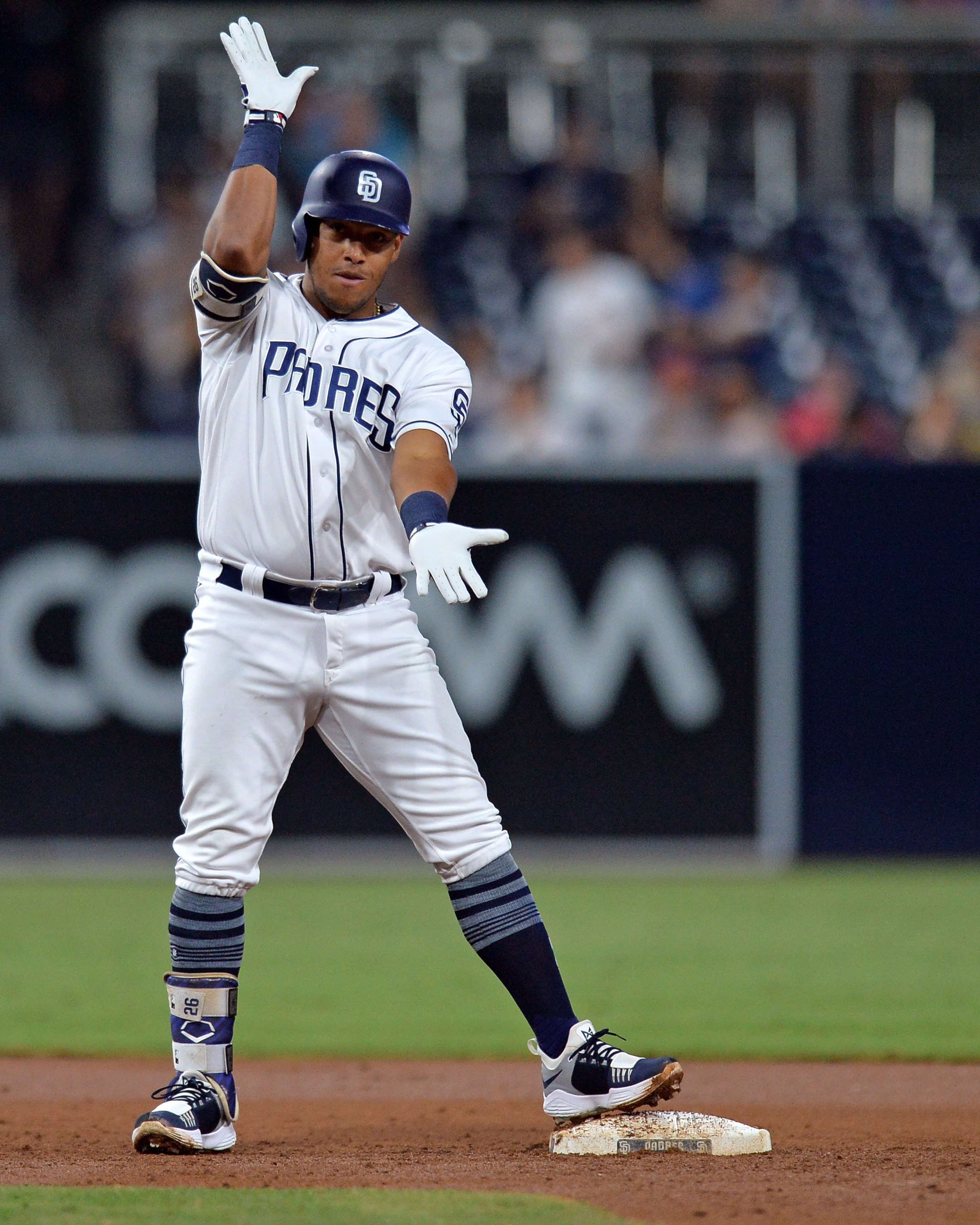
The 30-year-old Solarte is the second infielder the Blue Jays have landed via trade this winter, joining Aledmys Diaz, whom they acquired from the Cardinals last month. The area was a clear point of emphasis for Jays entering the offseason, given that neither second baseman Devon Travis nor shortstop Troy Tulowitzki have been able to stay consistently healthy during their careers. Solarte may end up as a multiyear piece for Toronto, as he’ll make an affordable $4MM in 2018 before the club will have to decide on options totaling $13.5MM over the next two offseasons.
[Updated Blue Jays Depth Chart]
Solarte brings experience at all four infield positions, with the majority of his work having come at third base. He’s unlikely to see much action there next season, however, unless the Jays trade superstar Josh Donaldson between now and the summer or Donaldson misses time with injuries. Solarte spent the majority of last year at second base, where he has posted minus-3 Defensive Runs Saved and a minus-1.1 Ultimate Zone Rating across just over 1,000 career innings, and that figures to be his primary position in 2018.
The switch-hitting Solarte is known mostly for his bat, having slashed a respectable .267/.327/.419 over 2,061 plate appearances since debuting with the Yankees in 2014. Solarte experienced a drop-off in production last year, though, as both his .255/.314/.416 line and .161 ISO underwhelmed. However, he did strike out in just 11.9 percent of PAs (in line with his career rate of 11.5) and belt a personal-high 18 home runs.
This trade brings an end to a decent tenure in San Diego for Solarte, whom the Padres acquired from the Yankees for third baseman Chase Headley in 2014. Solarte had been an oft-speculated trade piece over the past couple years, and with Headley having returned to the team in a deal with the Yankees this winter and shortstop Freddy Galvis also now in the mix after a swap with the Phillies, the Padres had a glut of infielders. As a result, they’d been shopping Solarte, whose exit leaves the Pads with Headley, Carlos Asuaje, Cory Spangenberg and Christian Villanueva among their current third/second base options (though Headley may be on his way out soon).
In Olivares, the Padres are getting a soon-to-be 22-year-old whom MLB.com ranked as the Blue Jays’ 18th-best prospect. The outlet notes that Olivares, a Venezuelan who signed with the Jays as an international free agent in 2014, “began to tap into his above-average raw power” last season, when he batted .277/.330/.500 with 17 homers in 464 Single-A plate trips, and has further potential on that front. He also possesses “well above-average speed” and the ability to play all three outfield positions. That skillset could make Olivares a major league regular down the line, per MLB.com.
Carkuff, 24, did not rank among Toronto’s top 30 prospects at MLB.com. The right-hander, a 35th-round pick in 2016, is coming off a year in which he pitched to a 3.86 ERA and recorded 7.3 K/9 against 2.1 BB/9 in 63 innings divided among the Single-A, High-A and Triple-A levels.
Jeff Passan of Yahoo Sports reported that Solarte was headed to the Jays. Robert Murray of FanRag reported the Padres would get Olivares. Dennis Lin of the San Diego Union-Tribune reported the Pads would receive Carkuff (all Twitter links). Photo courtesy of USA Today Sports Images.
Dodgers Acquire Scott Alexander In 3-Team Swap With Royals, White Sox
Three teams have announced a swap that will send lefty Scott Alexander from the Royals to the Dodgers. Infielder Jake Peter will also end up in Los Angeles, by way of the White Sox.
Meanwhile, Kansas City will pick up righty Trevor Oaks and infielder Erick Mejia in the deal. The White Sox will end up with veteran relievers Joakim Soria and Luis Avilan, the former from the Royals and the latter from the Dodgers. Kansas City is sending $1MM to the White Sox, the Kansas City Star’s Rustin Dodd tweets. Chicago will also receive $2MM from the Dodgers, per Ken Rosenthal of The Athletic (via Twitter).
For the Dodgers, the move is all about bolstering a relief unit that lost Grant Dayton to injury (and a subsequent waiver claim) and midseason acquisition Tony Watson to free agency. While Tony Cingrani remains on hand, Los Angeles was obviously interested in adding another southpaw to the pen.
[RELATED: Updated Dodgers Depth Chart]
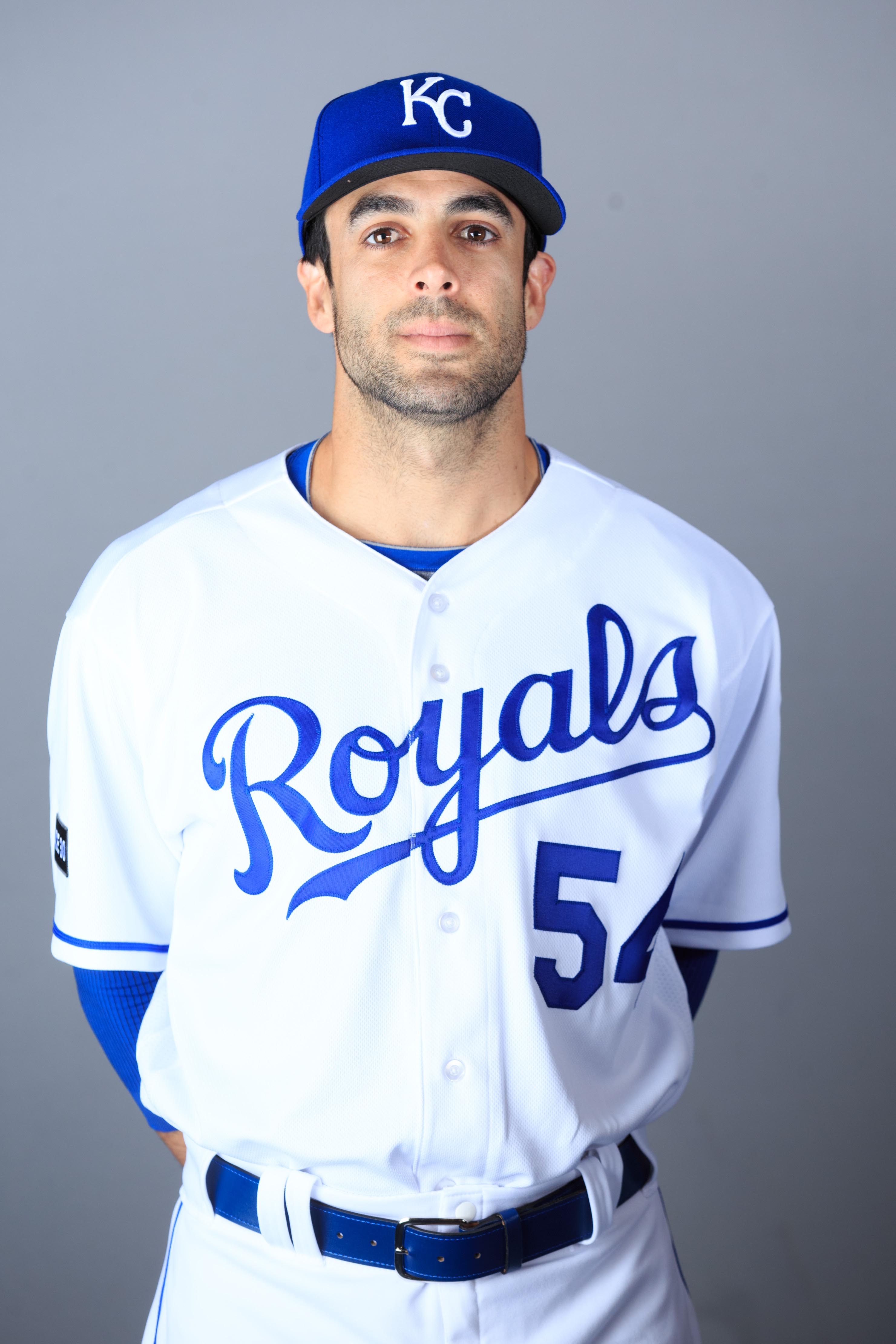
Alexander, 28, has accrued just over one year of MLB service, so he’s not even slated to reach arbitration eligibility until 2020. While he’s hardly a household name, he did turn in 69 innings of 2.48 ERA ball in 2017, his first full season at the game’s highest level.
While he recorded just 7.7 K/9 against 3.7 BB/9 on the year, Alexander generated an eye-popping 73.8% groundball rate (and an above-average 12.8% swinging-strike rate, too). Despite relying almost exclusively on his power sinker — he utilized a breaking ball less than ten percent of the time — Alexander generated excellent results against hitters on both sides of the plate. In fact, he spent most of his time dominating righties, who strode to the plate against him 202 times and managed only a .240/.313/.317 batting line.
The move also delivers a young, upper-level infielder to the Dodgers system. The 25-year-old Peter split time at the two highest levels of the minors over the past two years. He thrived in particular upon earning his way back to Triple-A in 2017, slashing .292/.351/.506 over 194 plate appearances.
For the Royals, meanwhile, this is mostly about shedding salary obligations. The club will move all of Soria’s $9MM salary for 2018, while covering the $1MM buyout on a 2019 mutual option. While doing so will entail parting with a quality, affordable young reliever, the team will at least pick up some prospect assets as well.
[RELATED: Updated Royals Depth Chart]
Oaks is the highest-rated young asset in the deal; he could even compete for a rotation spot in camp. Last year, he worked to a 3.64 ERA in 84 Triple-A frames, carrying 7.7 K/9 against 1.9 BB/9 along with a 50.8% groundball rate. (Typically, the sinkerballer has induced even more worm burners than that.) Oaks will head onto the K.C. 40-man roster; he had been added by the Dodgers in November to protect him from the Rule 5 draft.
The switch-hitting Mejia, 23, slashed a useful .289/.357/.413 in his 403 Double-A plate appearances in 2017. He also contributed seven home runs and 25 stolen bases on the year while spending time at short, second, and third. Mejia originally signed with the Mariners organization out of his native Dominican Republic; he landed with the Dodgers by way of a 2016 trade that sent righty Joe Wieland to Seattle.
The involvement of the White Sox is geared mostly toward securing some veteran relief pieces at reasonable prices. Avilan projects to earn $2.3MM in his second-to-last season of arbitration eligibility, but most of that will be covered by the Dodgers. (Of course, that characterization depends upon perspective; L.A. essentially passed through Soria’s contract in the deal, so part of the money could be considered as allocated to his 2018 guarantee.)
[RELATED: Updated White Sox Depth Chart]
Having dealt and acquired a whole host of relievers in 2017, the White Sox will now secure two experienced hurlers to bolster an unproven unit and perhaps also provide the organization with some new trade chips. The right-handed Soria rang up 10.3 K/9 and allowed only a single home run in his 56 innings in 2017, ending the year with a 3.70 ERA. He could now be the favorite to step into the White Sox’ closer role. As for Avilan, a 28-year-old southpaw, he managed a 2.93 ERA in his 46 frames while carrying 10.2 K/9, 4.3 BB/9, and a 53.8% groundball rate.
Rustin Dodd of the Kansas City Star reported (Twitter links) that Alexander was going to the Dodgers and Soria to the White Sox. Andy McCullough of the Los Angeles Times (Twitter link) and ESPN.com’s Jerry Crasnick (in a tweet) had other components of the deal.
Photo courtesy of USA Today Sports Images.
Eric Hosmer Has Reportedly Received Multiple 7-Year Offers
9:43am: Sam Mellinger of the Kansas City Star reports that the Royals have not made an offer worth $147MM over seven years to Hosmer, though they remain interested in re-signing him. Mellinger’s report doesn’t specifically refute the length of the offer or that one has been made. Nightengale did stress in yesterday’s report that the length of the offer was confirmed by at least one “high-ranking” member of the Royals, though it’s certainly possible that the overall guarantee has been overstated.
Jan. 4, 9:20am: Boras dismissed Nightengale’s numbers as “inaccurate” when speaking to Ken Rosenthal of The Athletic (subscription required and highly recommended), though he offered no further detail beyond that point. Rosenthal agrees with Nightengale’s assessment that Hosmer is seeking a larger contract both in length and total guarantee, noting that Hosmer is younger than the bulk of free agents that have received contracts of seven or more years in length.
Jan. 3, 1:25pm: San Diego’s offer is at seven years but has not reached $140MM, a source tells Dennis Lin of the San Diego Union-Tribune (via Twitter).
8:25am: The market for Eric Hosmer appears to be heating up, according to a report from Bob Nightengale of USA Today. He cites sources “close to Hosmer” that say the first baseman has received nine-figure offers from both the Padres and the Royals.
San Diego, per the report, has dangled a seven-year deal at a healthy $140MM price tag — about $20MM more than had previously been suggested. But the incumbent Kansas City club is said to have topped that bid with a contract that would include a $147MM guarantee. Notably, Nightengale says he was able to confirm the length of the proposed contract terms with both organizations.
Entering the offseason, MLBTR predicted that Hosmer would only be able to secure a six-year guarantee at a $132MM price tag. That said, we noted that the 28-year-old was seeking more and could drive bidding northward if he found a few organizations that placed a particularly high value on his services.
It seems that’s just what has happened, as Hosmer is now evidently sitting on two appealing offers from two small-market teams that aren’t even expected to contend in 2018. The Royals, of course, are quite familiar with the first baseman and obviously feel his value outstrips the assessment of measures such as wins above replacement. And it seems that’s an opinion shared by the Pads, who must see Hosmer as a potential building block for a young roster that’s expected to bloom in the coming seasons.
For Kansas City, bringing back the team’s core star would not necessarily mean pushing the pedal down for 2018. Rather, the club has indicated throughout the winter that it’ll be drawing back payroll and looking to reload. But such a move would surely impact the team’s overall planning for the coming seasons and might impact its willingness to trade longer-term assets such as Danny Duffy.
Meanwhile, the Padres — whose interest has long been known — would clearly need to bump Wil Myers back into the outfield to make room for Hosmer. Making this deal might also mean dealing away some other assets to make the roster work, though again a signing wouldn’t necessarily be accompanied by other win-now moves. San Diego did recently pick up a short-term veteran at shortstop in Freddy Galvis, though that move is hardly a committing one and the team has mostly endeavored to fill its gaps with low-cost signings. It’s doubtful the organization would drastically alter its timeline in other areas, though certainly adding such a significant salary to the payroll would have a major impact on the options moving forward.
Notably, Hosmer is not just assessing which of these two contracts to take at this point. Rather, Nightengale says that Hosmer and his agent, Scott Boras, are “seeking at least an eight-year or nine-year deal.” Whether or not there’s further room for those offers to grow is not immediately clear, and it’s not entirely evident whether any other teams will enter the bidding in earnest. (The Cardinals have recently been suggested as having ongoing interest, though.) Regardless, it seems that Hosmer is in position to secure a massive contract that meets or exceeds most expectations.
Rockies Sign Wade Davis
The Rockies have officially agreed to a contract with free-agent closer Wade Davis, as Jeff Passan of Yahoo Sports first reprted. Davis, a client of Jet Sports Management, receives a three-year, $52MM contract that includes a vesting player option for a fourth season which could take the deal’s value to $66MM over four years. That contract’s $17.33MM annual value is a record among relievers, Passan notes.
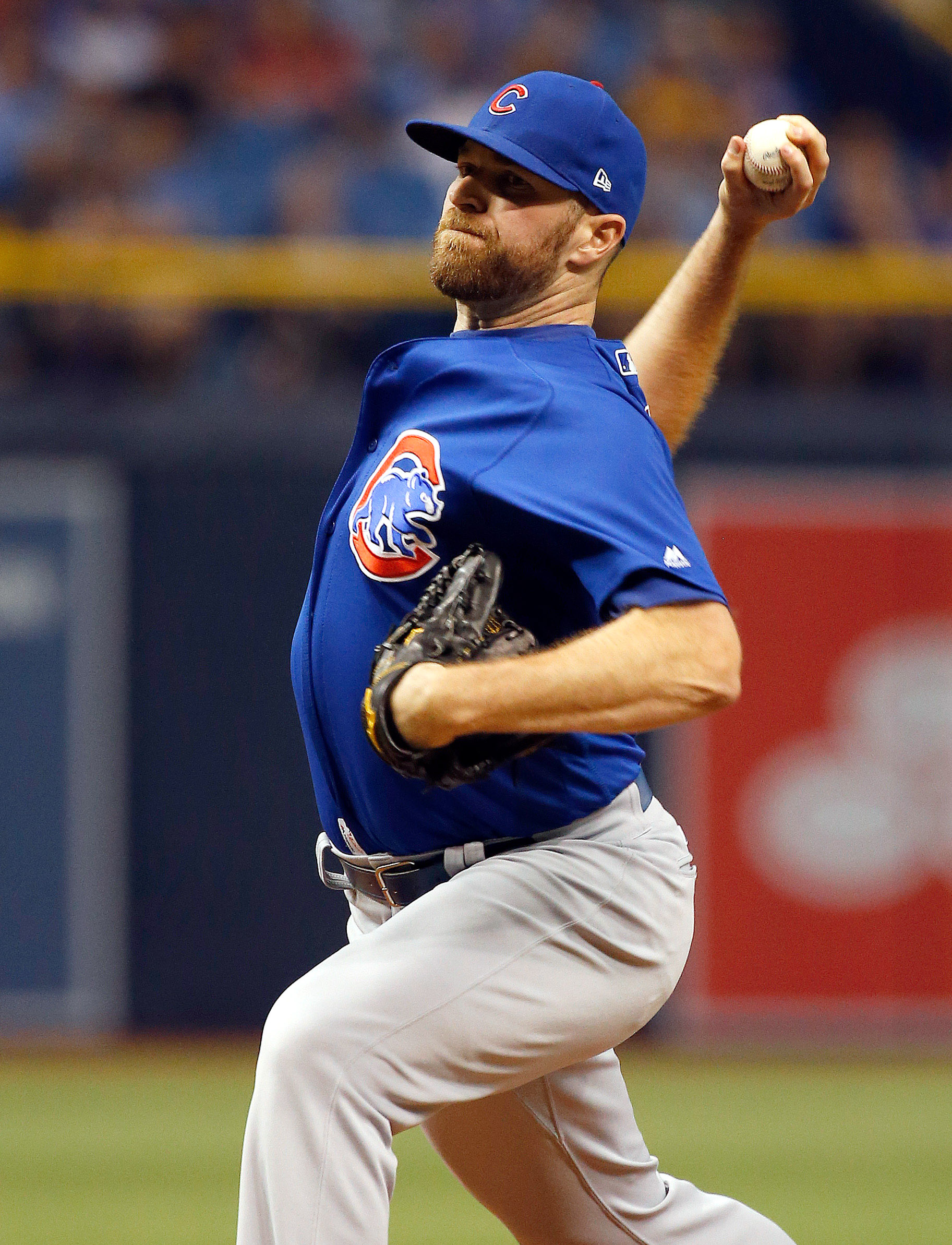
The fourth-year option, worth $15MM, will vest as a player option for the 2021 season if Davis finishes 30 games in 2020. If it does not vest, it’ll instead be a mutual option with a $1MM buyout, per Passan. Joel Sherman of the New York Post reports (via Twitter) that Davis will earn $16MM in 2018, $18MM in 2019 and $17MM in 2020. FanRag’s Jon Heyman tweets that Davis’s deal includes a $1MM assignment bonus if he is traded, adding that he’ll also pick up full no-trade rights after being traded once.
The addition of Davis seems likely to end the Rockies’ pursuit of a reunion with 2017 closer Greg Holland, who declined a $15MM player option and rejected a $17.4MM qualifying offer following the season. Davis, too, rejected a qualifying offer, meaning he’ll cost the Rockies a pick in the 2018 draft.
As a team that benefited from revenue sharing and did not exceed the luxury tax in 2017, the Rockies will forfeit their third-highest selection in next year’s draft. For the Rockies, who have a selection in Competitive Balance Round A, their third-highest pick will be their second-round selection in 2018. The Cubs, meanwhile, will secure a compensatory pick after Competitive Balance Round B. (While Davis’ contract is north of $50MM, the Cubs are a revenue sharing payor, thus disqualifying them for compensation after the first round of the draft.)
[Related: Updated Colorado Rockies depth chart and Rockies payroll outlook]
Colorado has clearly identified the bullpen as an area of focus this offseason, as they’ve now dished out more than $100MM worth of guarantees in the form of Davis’ $52MM and the respective three-year, $27MM deals given to lefty Jake McGee and right-hander Bryan Shaw. That continues the aggressive bullpen spending the team began last winter when signing Mike Dunn and Holland in free agency.
Davis, of course, will capably step into the void left by Holland’s departure and could very well serve as an upgrade. In 58 2/3 innings with the Cubs last year, Davis pitched to a 2.30 ERA with 12.1 K/9, 4.3 BB/9 and a 40.5 percent ground-ball rate while collecting 32 saves. Those excellent run-prevention numbers continued an impressive run of dominance for Davis, who owns a 1.45 ERA in 241 1/3 innings since converting to a reliever on a full-time basis in 2014.
The 2017 season wasn’t without red flags, though. Davis’ 40.5 percent grounder rate marked a significant drop-off from the 48.5 percent clip he posted in 2016, and his 94.3 mph average fastball velocity was his lowest since moving to the bullpen. That velocity drop is all the more troubling when juxtaposed with a 2016 season in which Davis landed on the disabled list with a forearm strain.
There’s risk in any long-term deal for a reliever, though, and the Rockies’ aggressive spending in this market has demonstrated less aversion to those perils than most clubs throughout the league. For a Colorado team that features a very young and largely inexperienced rotation, the stockpiling of quality relief arms will help manager Bud Black to lessen the workload of his young arms by leaning more heavily on a group of experienced late-inning options.
Of course, it’s worth bearing in mind that the three additions won’t necessarily enhance the Rockies’ 2018 unit beyond the one it possessed in the season prior. By the end of the season, the relief corps included Holland, McGee, and midseason trade acquisition Pat Neshek. At a minimum, though, the organization can likely now anticipate that it’ll enter the coming season with a relief group that’s as good or better than its productive ’17 outfit.
Photo courtesy of USA Today Sports Images.