
Zach Britton To Undergo Surgery For Ruptured Achilles
10:16am: Britton will undergo surgery tomorrow, per Dan Connolly of BaltimoreBaseball.com (via Twitter). The hope is the nature of the injury will allow for a somewhat shorter-than-typical recovery time, as Ghiroli tweets.
9:37am: In a stroke of terrible luck for lefty Zach Britton and the Orioles, the closer has suffered a ruptured Achilles tendon during offseason workouts, according to Ken Rosenthal of The Athletic (links to Twitter). Britton is expected to be sidelined for at least four to six months — a more precise expectation will only be known after surgery — so it seems the best-case scenario will be a return over the summer.
As Rosenthal notes, there are several layers of misery to unpack here. Most immediately, Britton was preparing and hoping for a healthy 2018 campaign after dealing with arm issues in the just-completed season. Instead, he’ll need to rehabilitate this unexpected injury — which is to his right Achilles, per MLB.com’s Britt Ghiroli (via Twitter) — before building back up into pitching form.
MLBTR projected that Britton would command $12.2MM in his final trip through the arbitration process. While it’s too late for the O’s to pull back their decision to tender him a contract, the club could end up releasing Britton to avoid paying him the full contract value. So long as he’s released before the 16th day of Spring Training, the O’s can avoid all but thirty days worth of salary.
Of course, the lost cash is only a small part of the problem here from the team’s perspective. Baltimore has toyed with the idea of trading Britton ever since last summer, when the club nearly did just that. The idea was to cash in the former ace closer to address other needs — namely, a still-glaring dearth of starters. Of course, the club was also reluctant to part with a pitcher that had been one of the game’s most dominant relievers in 2015 and 2016.
Instead of making that tough call, the O’s will seemingly be left with nothing to show for their final season of control over Britton. Perhaps it’s still conceivable the organization will retain him and hope he’s able to return late in the year, though that’d mean dedicating cash that could instead go to filling out the rotation. And it’s somewhat hard to imagine a scenario where Britton returns in time to turn into a trade chip, so there’s not really any downside protection if his recovery is slowed.
At this point, then, making the best of the situation for the Orioles could mean pursuing some kind of multi-year arrangement with Britton. The southpaw is still reasonably young — he’s just days away from his 30th birthday — so can still hope to find a major free agent payday in the future. And if he goes onto the open market, he’d likely be looking at a two-year rehab deal anyway (such as those signed recently by Drew Smyly and Michael Pineda). Since Baltimore is already on the hook for some cash, perhaps there’s an avenue for the sides to find a mutually agreeable deal that will allow Britton to work back to health with the only organization he has ever played for.
Even if there’s some lemonade to be crafted from this lemon, the news represents a big hit to the Orioles’ hopes for the coming season. It’ll certainly be interesting to see whether the loss of Britton will increase the organization’s willingness to trade away star third baseman Manny Machado, another key player who’s entering his final season of contract control. Of course, it now seems unlikely that righty Brad Brach will end up on the move, as he’s the obvious replacement for Britton in the ninth inning.
Meanwhile, teams that had been weighing pursuit of Britton will now need to adjust their strategies. There are some high-end late-inning arms left in free agency, though not top-tier lefties remain. Organizations that wish to add a closing-capable southpaw will now surely turn their gaze to the Padres’ Brad Hand, who already came with a justifiably lofty trade value.
Phillies Sign Carlos Santana
DECEMBER 20: The Phillies have announced the deal. Sanchez has the full breakdown (via Twitter): Santana receives a $10MM signing bonus, with annual salaries of $15MM, $17MM, and $17.5MM. The math would suggest that there’s a $500K buyout on the option year.
DECEMBER 15, 1:28pm: Santana’s contract is still pending a physical, tweets Jim Salisbury of NBC Sports Philadelphia. Salisbury also tweets that Hoskins will indeed play a significant amount of left field, freeing up the possibility of the trade of an outfielder. Aaron Altherr and Nick Williams had been slotted in as the Phillies’ corner outfielders, with Odubel Herrera lined up as the center fielder.
12:52pm: Jesse Sanchez of MLB.com reports that Santana’s deal also comes with a $17.5MM club option for a fourth season (Twitter link).
12:32pm: In a surprising move, the Phillies have agreed to a deal with first baseman Carlos Santana, reports FanRag’s Jon Heyman (Twitter links). It’s a hefty three-year, $60MM contract, according to Heyman. Santana is represented by Octagon.
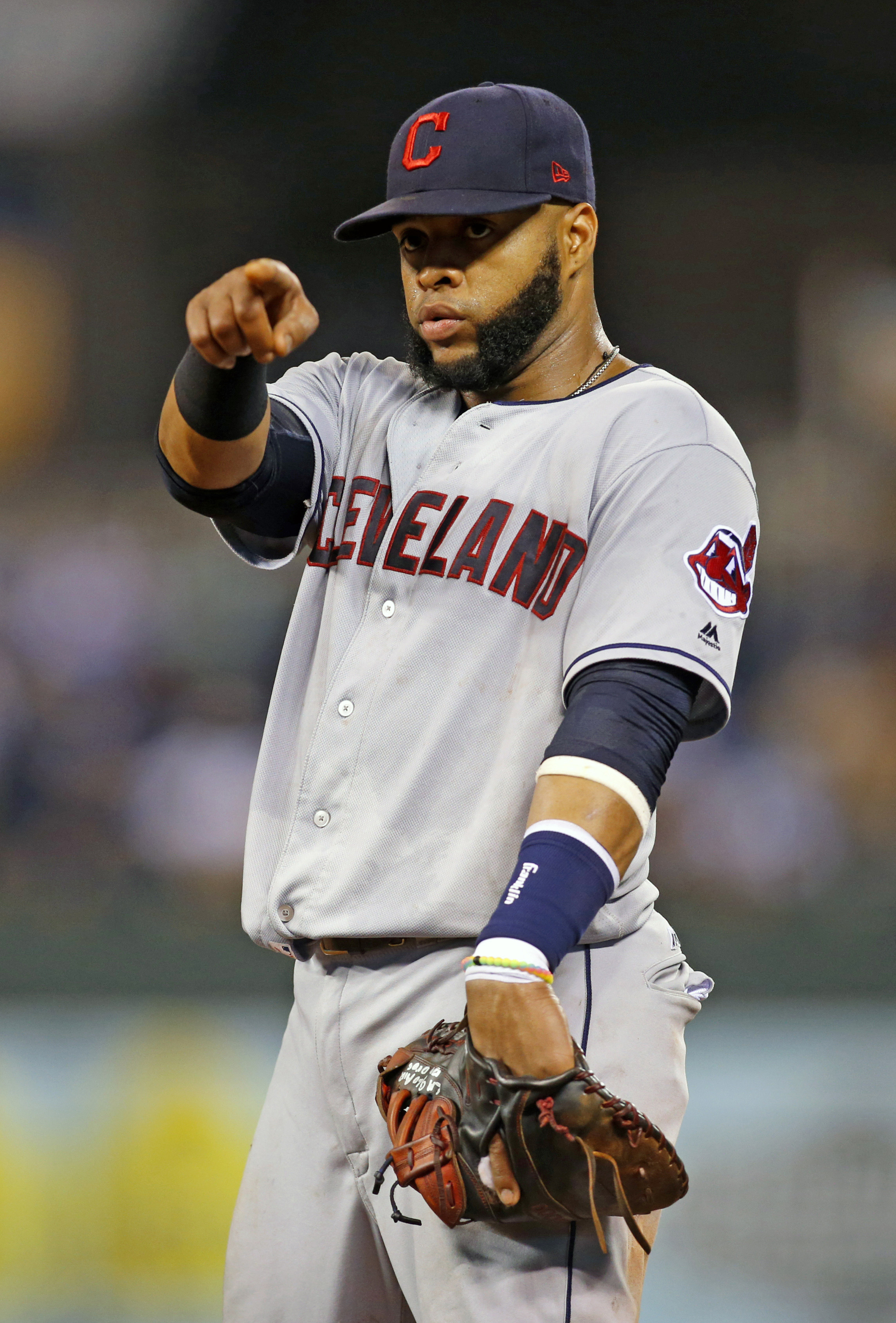
Philadelphia has been linked to Santana on multiple occasions, though it’s long seemed like a curious fit given the emergence of Rhys Hoskins as the presumptive starter at first base. However, the Phils deployed Hoskins in left field last season, and he turned in passable results in a small sample of 237 innings there (-1 Defensive Runs Saved, scratch defense per Ultimate Zone Rating).
The Phillies could opt to continue utilizing Hoskins in the outfield in order to get Santana’s bat into the lineup. Santana does have 225 innings of experience at third base, though he received poor defensive ratings there, and his superlative glovework at first base is a significant component in his value. Santana, of course, broke into the Majors as a catcher but hasn’t suited up behind the dish since the 2014 season and hasn’t played more than 100 innings there since 2013, owing in part due to concussion issues.
[Related: Updated Philadelphia Phillies depth chart]
Santana jumps out as the most significant position player to come off the board and does so in impressive fashion, matching the dollars that his now-former teammate, Edwin Encarnacion, received with the Indians just one offseason ago. Santana landed a considerably stronger average annual value than many pundits predicted — MLBTR pegged him at three years and $45MM in total on our Top 50 free agent list — though the Phillies likely had to pay a premium to convince a top-tier free agent to sign with a club that has spent the past several seasons rebuilding.
The 31-year-old Santana (32 in April) should play no small part in helping the Phils further their efforts to return to contention in the National League East, though. He’s coming off a strong .259/.363/.455 batting line in 667 plate appearances last season and turned in a career year in 2016 when he hit .259/.366/.498 with 34 homers.
Overall, the switch-hitting Santana has turned in a .363 OBP in nearly 4600 plate appearances since establishing himself as a Major League regular back in 2011, averaging 153 games played and 24 homers per season along the way. One would think that a move to a much more hitter-friendly environment, Philadelphia’s Citizens Bank Park, should help to improve his power output as well (though his .196 ISO in that time is already plenty strong).
Because Santana rejected a one-year, $17.4MM qualifying offer from the Indians, he comes with draft compensation in the form of the Phillies’ second-highest draft pick — in this case, their second-round pick — and a $500K hit to their 2018-19 international bonus pool. The Phils will lose not only that second-round pick, but also the slot money that would’ve come along with it, thus noticeably shrinking next year’s draft pool.
The Indians, meanwhile, will secure a compensatory pick between the end of the first round and the start of Competitive Balance Round A due to the fact that Santana’s contract exceeded $50MM in total guarantees.
Photo courtesy of USA Today Sports Images.
Red Sox Re-Sign Mitch Moreland
The Red Sox announced today that they’ve re-signed first baseman Mitch Moreland to a two-year deal that runs through the 2019 season. Moreland, a client of BASH Baseball, will receive a guaranteed $13MM, tweets ESPN’s Jerry Crasnick. Evan Drellich of NBC Sports Boston tweets that Moreland will earn $6.5MM in each of the next two seasons. He can earn another $1MM worth of incentives, per Crasnick.
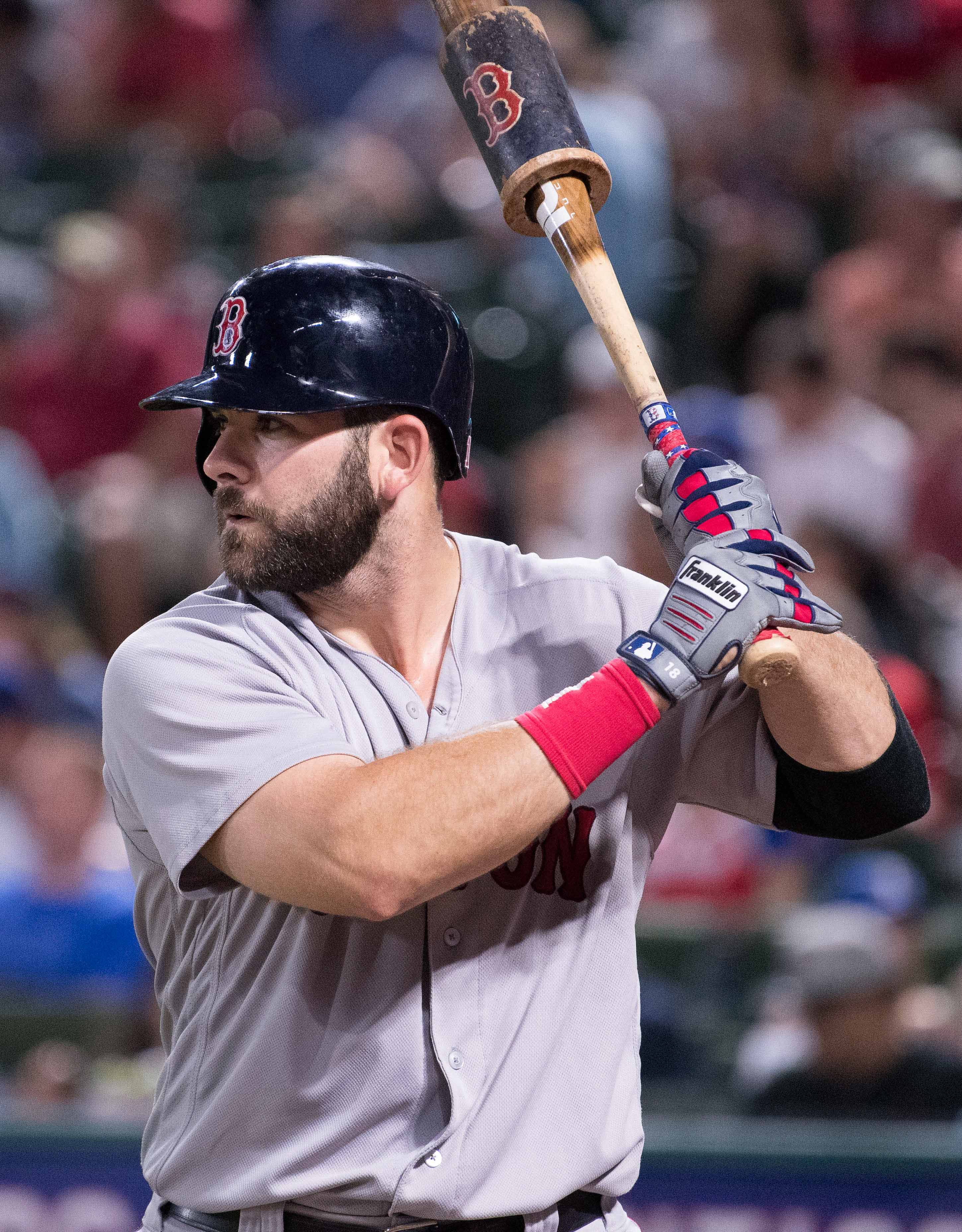
It’s a surprising move for a Red Sox team that has been linked to Eric Hosmer and J.D. Martinez thus far on the free-agent market. The return of Moreland now makes a Hosmer signing decidedly unlikely, while a match with Martinez would now require an additional move elsewhere in the starting lineup (though that has long seemed likely to be the case). With Moreland back in the fold, he and his excellent defensive reputation figure to be at first base on a regular basis. The Sox will likely turn to Hanley Ramirez as their primary designated hitter once again in 2018.
While Moreland isn’t the big bat for which many Sox fans were pining, he’s coming off a decent season at the plate and another strong year with the glove. In 576 trips to the dish, Moreland slashed .246/.326/.443 with 22 homers and 34 doubles. He also turned in a stellar +10 mark in Defensive Runs Saved and drew a +4 rating from Ultimate Zone Rating for his efforts in 1170 innings at first base this past season. As always, Moreland was heavily shielded from lefties, though he held his own against them in 2017, hitting .247 with a .341 OBP against them in a small sample of 73 plate appearances.
Fitting Martinez or another slugger into the equation in Boston would now likely mean either trading an outfielder or cutting bait on the final season of Ramirez’s four-year, $88MM contract. Ramirez’s initial experiment as a left fielder in Boston was a flop, and the team quickly shifted him from the outfield to first base and DH, where he’s spent the past couple of seasons. Shoulder troubles limited Ramirez almost exclusively to DH duties in 2017, when he hit .242/.320/.429 in 553 plate appearances. The Sox have suggested that he’s healthy enough to play first base again in 2017, though his diminished offensive output suggests that there’s clearly room for an upgrade if the Sox are willing to eat the $22MM he’s owed this year.
If the Sox do ultimately stick with Ramirez, then the encouraging reports on his health likely mean that he could play first base on days when the Sox face a left-handed starter, shielding Moreland from those matchups once again. That’d create room for a right-handed bench bat to slot in at DH those days. Currently, Bryce Brentz would probably be in line to fill that role, though presumably that’s another area Boston will look to upgrade, whether with a dramatic splash (e.g. Martinez) or a more complementary approach (as they took two years ago when signing Chris Young).
From a payroll perspective, Moreland will push the Sox north of the $207MM mark (including arbitration projections and pre-arb players). The Sox, clearly, are in line to pay the luxury tax, though president of baseball ops Dave Dombrowski has previously stated that he didn’t consider staying under the threshold to be a priority this winter. How much they’re comfortable blowing past that $197MM barrier remains to be seen, though Boston doesn’t figure to simply bring back the same club it trotted out in 2017, so it stands to reason that they’ll continue to push past that point between now and Opening Day.
As for Hosmer, the move eliminates one of his primary landing spots, leaving the Padres now as the primary team that’s been connected to him this winter. Kansas City reportedly still hopes to retain Hosmer even as it embarks on a rebuild, so it would seem that there are at least two clubs yet vying for his services.
Photo courtesy of USA Today Sports Images.
J.T. Realmuto Reportedly Requests Trade
11:15am: Per USA Today’s Bob Nightengale (Twitter link), the Marlins say they understand the reasoning behind Realmuto’s desire to be traded (the same goes for Christian Yelich), given the scope of the team’s recent rebuilding efforts. However, the Marlins still do not have any intention to trade Realmuto at present, Nightengale adds.
10:51am: Ken Rosenthal of The Athletic tweets that Realmuto does indeed want to be traded out of Miami.
10:46am: The Marlins haven’t been shy about blowing up the active roster, having traded away Giancarlo Stanton, Dee Gordon and Marcell Ozuna. Those trades, obviously, aren’t likely to sit well with the remaining talent on the roster, and it seems that catcher J.T. Realmuto can be counted among that camp. Craig Mish of MLB Network Radio on SiriusXM tweets that Realmuto has requested a trade out of Miami; FanRag’s Jon Heyman, meanwhile, more softly suggests that Realmuto has simply told the team that he “wouldn’t mind” a trade of his own, given what has transpired in recent weeks (Twitter link).
It doesn’t come as much of a surprise that one of the remaining top-tier young talents in Miami would, to whatever degree, express to the front office and ownership that he’s amenable to a trade (or, more strongly, that he would definitively like to be traded). The Marlins’ moves to shed payroll and the unlikeliness that the saved resources will be invested into the 2018 product leave little chance that the team will be competitive next year.
Realmuto, 26, might not be a household name but has quietly emerged as one of the better all-around catchers in the game over the past couple of seasons. In 1124 plate appearances dating back to Opening Day 2016, Realmuto has slashed .290/.337/.440 with 28 homers, 62 doubles, five triples and 20 stolen bases.
He’s also thrown out 33.7 percent of would-be base thieves — well above the league average of 27 percent — and in 2017 ranked as an above-average pitch framer (after a pair of negative seasons in that regard). Realmuto also ranked among the game’s best in terms of blocking pitches in the dirt, and Baseball Prospectus’ overall Fielding Runs Above Average metric pegged him as MLB’s sixth-best defensive catcher in 2017.
Realumuto’s value, though, goes well beyond the fact that he’s established himself as an above-average contributor on both sides of the ball. He’s also highly desirable from a contractual standpoint, as he’s entering his first offseason of arbitration eligibility and remains under team control through the 2020 season. Realmuto will turn 27 in March, so any team acquiring him would be acquiring three affordable years of his physical prime; he’s projected by MLBTR contributor Matt Swartz to earn an eminently affordable $4.2MM in 2018.
Heyman notes that the team’s response to Realmuto’s suggestion/request isn’t yet known. It’s worth noting that the Marlins are under no obligation to trade him even if he wants out. However, ticket sales in Miami already figure to be in the tank after their aggressive moves to pare back the payroll, and from a pure baseball standpoint, there’s an easy argument to be made that they should deal him now to continue adding young talent to what entered the offseason as perhaps baseball’s worst farm system. Three years of Realmuto should come with quite a bit of value even if there aren’t too many contending clubs in dire need of an everyday catcher. Speculatively, though, the Nationals, D-backs and Rockies are among the expected contenders that could use an upgrade behind the dish.
Dodgers Acquire Matt Kemp For Adrian Gonzalez, Kazmir, McCarthy, Culberson
In a stunning swap of big contracts, the Dodgers have traded first baseman Adrian Gonzalez, left-hander Scott Kazmir, right-hander Brandon McCarthy and infielder Charlie Culberson to the Braves in exchange for outfielder Matt Kemp. The Braves will also receive $4.5MM in cash. Ken Rosenthal of The Athletic was the first to report news of the trade. Furthermore, Mark Bowman of MLB.com adds that the Braves have already designated Gonzalez for assignment. A source close to Rosenthal tells him that the Dodgers are likely to trade or release Kemp (Twitter link).
There’s a ton to unpack here, but the biggest motivator of the trade appears to be money, and more specifically luxury tax implications for the Dodgers. Rosenthal notes in another tweet that the trade is “effectively cash-neutral overall,” but adds that the swap will put the Dodgers below the $197MM luxury tax threshold for the 2018 season. That will allow the Dodgers to reset the escalating luxury tax penalties, which seems to have been a significant objective for the club this offseason. The money owed to Kemp is spread out across the 2018-2019 seasons, while Gonzalez, Kazmir and McCarthy all have just one year remaining on their contracts.
Rosenthal offers further clarification yet, as he points out that the Dodgers have paid the luxury tax for five consecutive seasons. Their penalty for 2017 was over $30MM, but if they keep their payroll below $197MM, their penalty will drop from 50% on the overage to 20% the next time they exceed the luxury tax threshold.

Joel Sherman reports in his own tweet that the Braves are planning to release Gonzalez, but can’t do so until Monday since MLB teams can’t release players on weekends during the offseason. Gonzalez actually had to waive his no-trade clause in order to make this trade possible, and Bob Nightengale of USA Today Sports reports that he did so mainly because the Dodgers told him he’d be buried on the bench and receive limited at-bats.
[RELATED: Updated Dodgers Depth Chart; Updated Braves Depth Chart]
As for the Braves, the $4.5MM they’ll get in the deal will even out the overall dollars swapped in the trade (hat tip to Jon Heyman of FanRag Sports). GM Alex Anthopoulos says that McCarthy satisfies the team’s “desire to add a veteran starter,” while Culberson fills their need for a bench player (via Mark Bowman of MLB.com). Kazmir has some upside as a rotation piece too.
Not insignificant is the fact that the Dodgers have opened up multiple spots on their 40-man roster, including one that was already earmarked for Tom Koehler, with whom the Dodgers have recently agreed to a one-year deal.

Kemp, 33, was a sixth-round selection of the Dodgers back in 2003. He made his major league debut in 2007, and went on to have some great seasons for Los Angeles, including a 2011 campaign in which he finished as the runner-up in the MVP voting. Later that year, the club signed the outfielder to an eight-year, $160MM extension. Not long after that, his performance began to decline; Kemp has only topped 1 WAR once in the past four seasons as his contract has been tossed between the Padres, Braves and Dodgers. For the 2017 season, Kemp hit .276/.318/.463, making him a roughly average major league hitter (100 wRC+). However, his poor defense in the outfield dropped his overall value to -0.5 fWAR.
Gonzalez, now 35 years of age, went to the Marlins with the number one overall pick in the 2000 draft. His breakout season came with the Padres in 2006; that year began a streak of ten consecutive seasons wherein the left-handed-hitting first baseman posted at least 2.9 fWAR. Across those years, he posted a .292/.366/.501 slash line and mashed 283 homers. This past season, however, Gonzalez battled injuries throughout the year and didn’t hit well when healthy; he amassed only 252 plate appearances across 71 games with the Dodgers and managed a career-worst .355 slugging percentage. All told, Gonzalez was valued at 1.1 wins below replacement level.
Kazmir’s story is a roller coaster of sorts; he was a great pitcher during his early years with the then-Devil Rays, including a 2007 season in which he posted a 3.48 ERA with 239 strikeouts across 206 2/3 innings. However, Kazmir began to struggle with injuries and ineffectiveness in 2009, and though he experienced a resurgence in July that prompted a trade to the Angels, his ERA during the 2009 postseason was an ugly 7.59. Those struggles continued into the 2010 season, and by 2011 Kazmir was pitching for the Angels’ Triple-A affiliate and was cut before June was over. After spending 2012 out of MLB entirely, the Indians took a chance on him in 2013, and he rewarded them with a 4.04 ERA (and 3.51 FIP) campaign that earned him the Comeback Player of the Year Award. He signed a two-year deal with the Athletics the following offseason, and seemed to be “back.” The Dodgers signed Kazmir to a three-year, $48MM deal, but the injury bug struck once again, marring his 2016 performance and keeping him off the field entirely in 2017.
The 34-year-old McCarthy has a career 4.15 ERA across 1,145 big league innings with the White Sox, Rangers, Athletics, Diamondbacks, Yankees and Dodgers. He’s generally provided value while on the field, but has only topped 140 innings twice in his twelve-year career. Part of that can be attributed to injuries, including a 2015 Tommy John surgery when he famously noted on Twitter that “31 years is a lot to ask for from a ligament.” During the past two seasons, he’s put up a 4.27 ERA while striking out 116 batters in 132 2/3 innings.
Based on his age and team control, the soon-to-be 29-year-old Culberson is the one player in this deal who looks capable of being a long-term piece. The Georgia native won’t even be eligible for arbitration until next winter, meaning the Braves could control him for the next four seasons. The righty-hitting Culberson hasn’t found much big league success since debuting in 2012, though, having hit just .229/.269/.321 in 443 PAs with three NL West clubs – the Giants, Rockies and Dodgers. Culberson racked up a mere 83 trips to the plate in two seasons with the Dodgers, but he did swat a couple dramatic homers during his LA tenure.
Photos courtesy of USA Today Sports Images.
Cubs Sign Steve Cishek
Dec. 16: The Cubs have announced the signing. Mark Gonzales of the Chicago Tribune reports that the two-year deal is worth $13MM. Chris Cotillo of MLB Daily Dish adds that the deal includes up to $1MM in performance escalators based on appearances.
Dec. 14: The Cubs have agreed to terms with righty Steve Cishek, according to Ken Rosenthal of The Athletic (via Twitter). Once he passes a physical, the Jet Sports Management client is expected to receive a two-year deal worth somewhere in the range of $12MM to $14MM, per ESPN.com’s Jerry Crasnick (via Twitter).
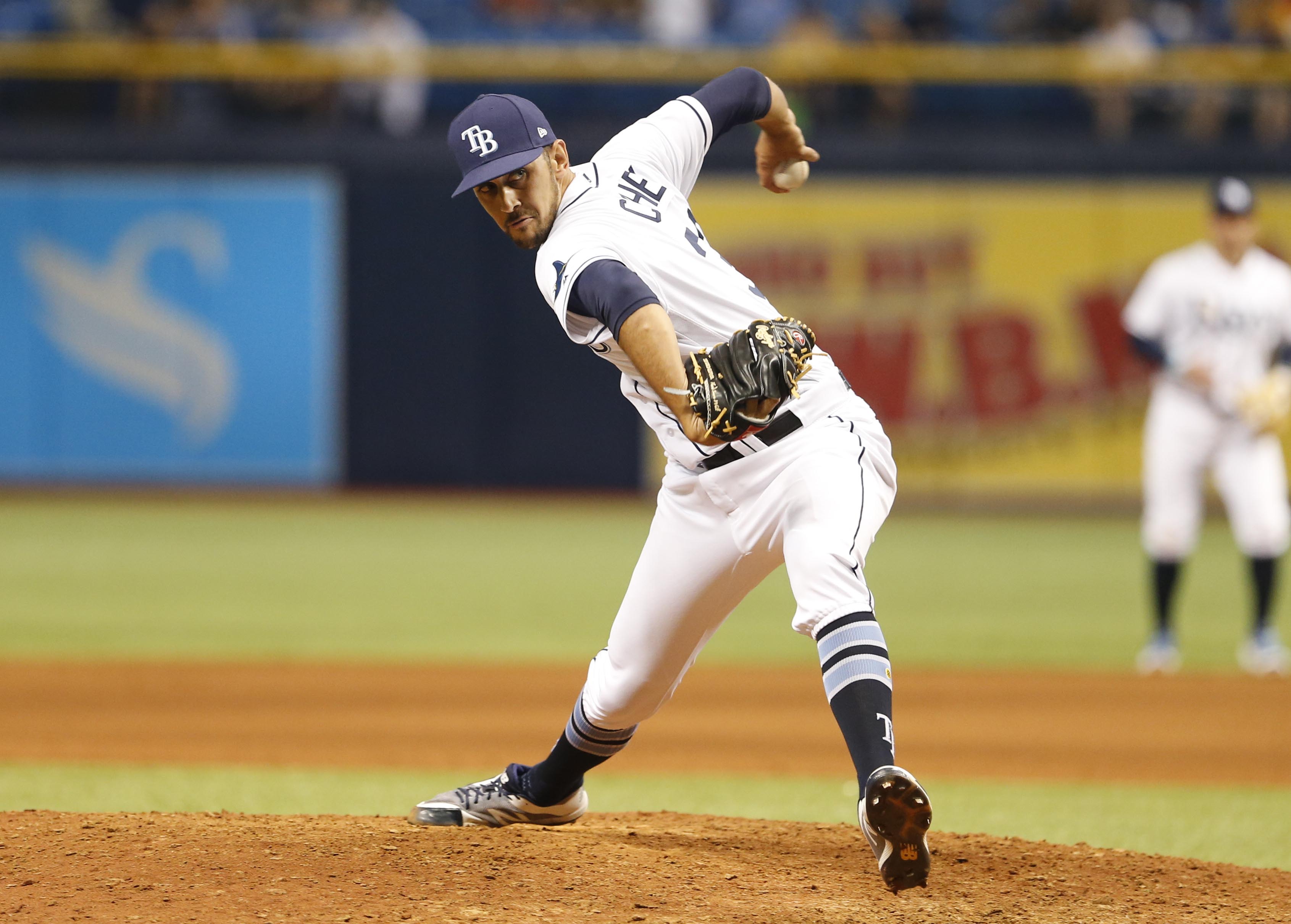
Cishek, 31, has had a few ups and downs at times in recent years and has played with four organizations in the past three seasons. For the most part, though, he has continued to function as a quality setup option.
In the 2017 campaign, Cishek opened with the Mariners and ended up moving to the Rays via mid-season trade. With an excellent push down the stretch in Tampa Bay, he ended the season with 44 2/3 innings of 2.01 ERA ball and 8.3 K/9 with 2.8 BB/9. As usual, Cishek was tough to square up; he permitted just 26 base hits and three total home runs on the season.
Those results came despite a notable velocity drop from Cishek, who delivered his two-seam fastball at less than 91 mph for the first time in his career. His slider came in eight ticks slower than it did in his debut season, continuing a trend, though it also gained horizontal movement.
The sidearming Cishek will offer a different look out of a re-worked Cubs pen. He joins Brandon Morrow as multi-year free agent additions for Chicago thus far. It still seems likely the organization will look for additional pieces over the coming weeks.
Photo courtesy of USA Today Sports Images.
Twins Sign Fernando Rodney
Dec. 16: Bob Nightengale of USA Today tweets some updated details on Rodney’s contract, noting that his $4.5MM guarantee comes in the form of a $4.25MM 2018 salary and a $250K buyout on a 2019 club option. Rodney will also earn an additional $1.5MM if he finishes 55 games in the upcoming season, or $1MM if he makes 65 appearances. In a subsequent tweet, Nightengale further specifies that the reliever will make $300K per five games finished, starting with his 35th game and ending at 55 games.
Dec. 15: The Twins have announced the signing. Rodney told reporters in a conference call that he was indeed told that he’d have the opportunity to step into the Twins’ ninth-inning vacancy (Twitter link via MLB.com’s Rhett Bollinger).
Dec. 14, 10:35am: Mish now corrects his report (via Twitter): Rodney is only promised $4.5MM and can earn another $1.5MM via incentives, it turns out. There’s also an option for the 2019 season, Rhett Bollinger of MLB.com tweets.
10:28am: The Twins have struck a deal with free agent righty Fernando Rodney, according to Craig Mish of MLB Network Radio (Twitter links). He’ll receive a $4.5MM guarantee on a one-year term upon passing a physical, becoming the latest in a long line of relievers to secure significant annual salaries in an otherwise sluggish free agent market.
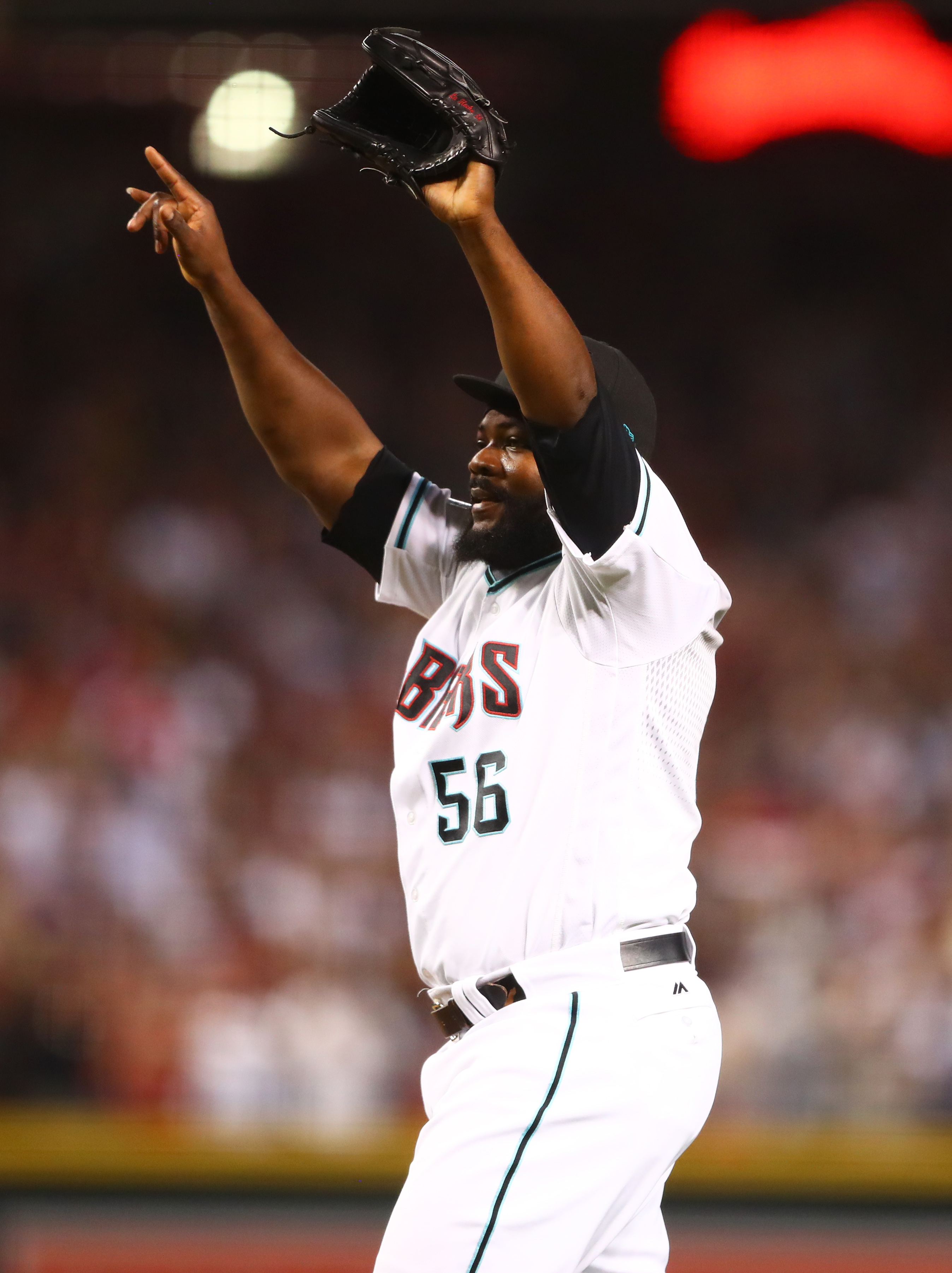
Rodney is nearing his 41st birthday but still brings a power arsenal to the table and drew interest from multiple organizations. And he has ample experience in the late innings, making it seem likely that he’ll step into the Twins’ open closer role.
While the veteran hurler managed only a 4.23 ERA on the season in 2017, he did save 39 games for the Diamondbacks. The runs tended to come in bursts, too, as Rodney gave up three or more on five separate occasions but did not allow an opponent to cross the plate in fifty of his 61 appearances.
Those clean frames don’t often come without baserunners, of course, as Rodney has a long-established penchant for doling out quite a few free passes. He averaged 4.2 per nine in two of the past three seasons and 5.1 per nine in 2016.
That often makes for an adventure — as it’s familiarly known, The Fernando Rodney Experience — but there are reasons that Rodney is still often effective. He continues to generate strong groundball numbers (52.2% in 2017), doesn’t allow many long balls (0.67 per nine for his career), and still generates a healthy number of swings and misses (12.2% in 2017) with an arsenal predicated on mid-nineties heat and a devastating change.
[Related: Updated Minnesota Twins depth chart]
For the time being, Rodney projects to join impressive sophomore Trevor Hildenberger, Ryan Pressly and Tyler Duffey as right-handed options at the back of the Minnesota bullpen, with Taylor Rogers serving as the primary left-handed setup option. Of course, there’s still plenty of room for the Twins to supplement that relief corps both in free agency and on the trade market.
Photo courtesy of USA Today Sports Images.
Mets Sign Anthony Swarzak
The Mets have announced their deal with righty Anthony Swarzak, as Marc Carig of Newsday first reported (via Twitter). It’ll be a two-year, $14MM contract for the Jet Sports Management client, according to Carig. Swarzak will take home a $1MM signing bonus and then salaries of $5MM and $8MM, per Jon Heyman of Fan Rag (via Twitter).

Swarzak, 32, will bolster the late-inning mix for the Mets, who had stated all winter long that the bullpen was a priority. He was the option chosen after New York failed to land a few other targets, Carig notes.
Of course, the veteran looks to be a nice consolation prize. After all, he turned in 77 1/3 innings of 2.33 ERA ball, with 10.6 K/9 against 2.6 BB/9, in a strong 2017 campaign.
That was a notable breakout for a reliever that had only once previously allowed less than four earned runs per nine over a full MLB campaign. The eight-year veteran owns a lifetime 4.22 ERA in 561 1/3 career frames.
While it’s easy to raise an eyebrow at the idea that Swarzak can sustain the improvement, there was more to it than sample fortune. The veteran clearly found something, as he turned in a personal-best 95.0 mph average fastball and a 14.0% swinging-strike rate that dwarfed anything he had shown previously. The velo boost was also evident in Swarzak’s slider, which was quite a different pitch than it was in most of his prior work. He was equally effective against lefties and righties in his sparkling campaign, MLB.com’s Anthony DiComo notes on Twitter.
For the Mets, the move gives new skipper Mickey Callaway one more arm to call upon when the game is on the line. Deepening the relief corps as much as the organization hopes may still require further acquisitions, though perhaps not at this contractual magnitude. Since the club was chasing some higher-priced pieces that have since signed elsewhere, it’s also possible that there could be some extra cash available for further relief moves or to address other needs.
Photo courtesy of USA Today Sports Images.
Rangers Acquire Matt Moore
The Rangers have officially acquired lefty Matt Moore from the Giants. Texas will also add $750K of international bonus pool spending capacity while shipping minor-league righties Sam Wolff and Israel Cruz to San Francisco.
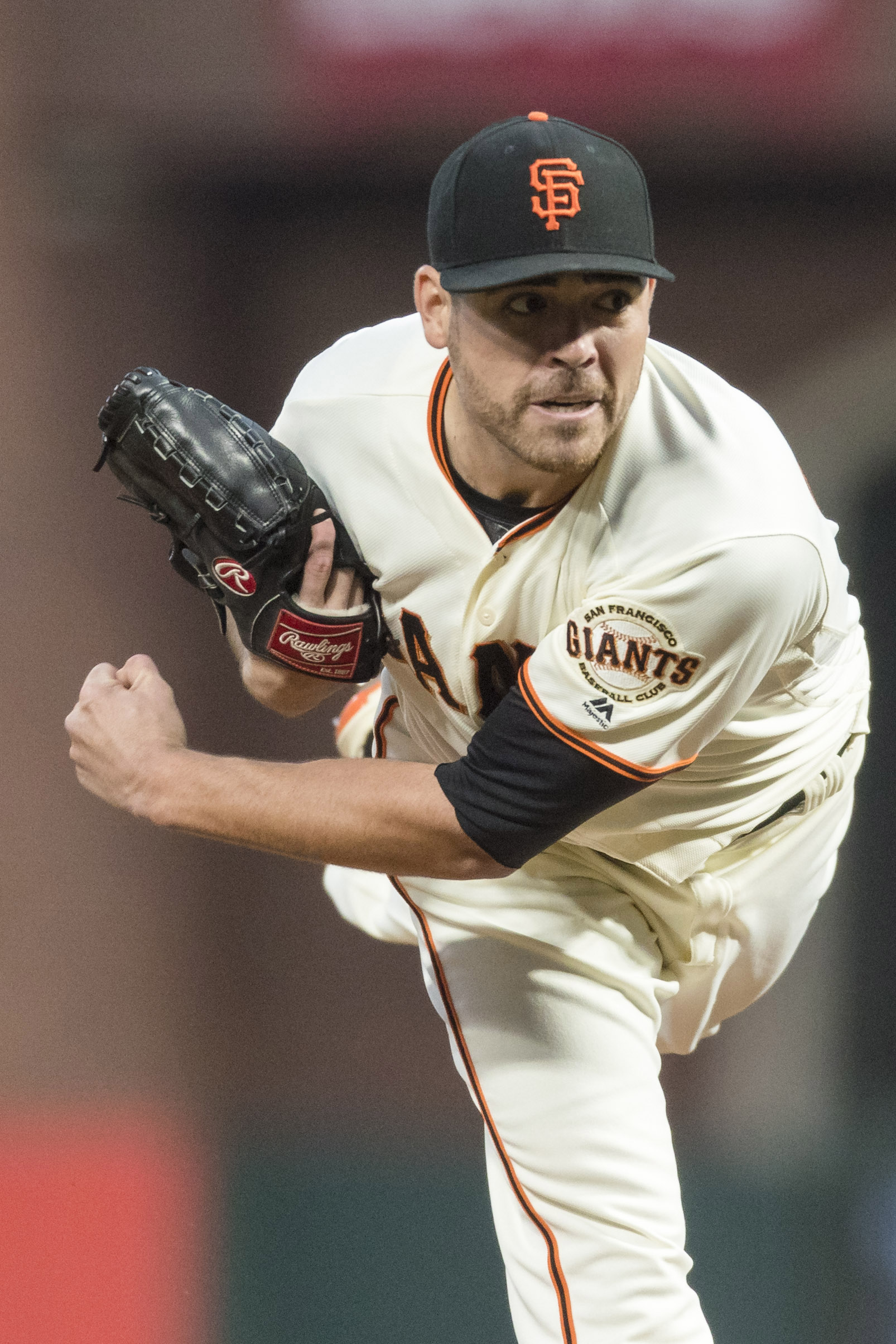
With the move, the Giants have cut loose a pitcher that was slated to open the season as part of the organization’s rotation. As a peak at the club’s depth chart shows, the organization doesn’t exactly have an established player ready to step in, though there surely are options. Chris Stratton and Ty Blach will likely enter camp as the favorites to round out the starting unit, with pitchers such as Tyler Beede, Andrew Suarez, and Joan Gregorio also in the picture in the near future.
GM Bobby Evans says that his organization will reallocate Moore’s $9MM salary to upgrade elsewhere. (H/t Alex Pavlovic of NBC Sports Bay Area, via Twitter.) Certainly, the organization has been looking to add power bats all offseason long, and it’s evident now that the goal is to do so without running afoul of the $197MM luxury tax line. Evans says the club’s “focus remains to strengthen our outfield defense and our everyday lineup.” Of course, there are limits to what kind of asset can be had for the level of payroll capacity that was freed with this trade, though further dealing could open more space.
For the Rangers, Moore will fill out a southpaw-heavy starting staff — now and, perhaps, in 2019, as he can be kept at a $10MM price (or turned onto the open market with a $750K buyout). The organization has aggressively pursued pitching this offseason, with this acquisition following earlier moves that brought in Mike Minor, Doug Fister, Chris Martin, and Tony Barnette. Click here to see the updated depth chart after the move. While the Rangers have given some indication of pursuing a higher-end rotation option, at this point the staff seems mostly set unless a new opportunity arises and the organization finds a way to make all the pieces fit.
In Moore, they’ll add a hurler who seemed on his way to establishing himself as a top-end starter before Tommy John surgery intervened. Moore looked to rebound somewhat in 2016, the year in which he was shipped from the Rays to the Giants in a deadline deal that sent Matt Duffy and prospects to Tampa Bay. The southpaw ended the year with a 4.08 ERA over 198 1/3 innings, with 8.1 K/9 and 3.3 BB/9.
The Giants’ belief at that point was surely that Moore would at least continue to provide quite a few solid innings, with perhaps some hope that he’d make yet further strides. But his 2017 follow-up effort fell flat, as Moore’s velocity trended down and his swinging-strike rate sat at a full-season-low 8.6% rate. He ended the year with 174 1/3 frames of 5.52 ERA ball. Though he managed a fairly typical 7.6 K/9 and 3.5 BB/9, Moore was harmed by a 1.39 HR/9 rate.
While the primary motivation here is likely financial, the Giants will add two arms in the process. The 26-year-old Wolff had some success upon moving to the bullpen in 2017, posting a cumulative 2.93 ERA with 12.3 K/9 and 4.0 BB/9 over 43 innings split about evenly between Double-A and Triple-A. That said, he is expected to miss significant time due to injury in 2017, per ESPN.com’s Keith Law (via Twitter). Cruz, 20, has yet to advance past the Rookie ball level, where he struggled to a 5.91 ERA but did manage 11.8 K/9 against 4.5 BB/9 in 32 innings in 2017.
John Shea of the San Francisco Chronicle reported the deal (Twitter link). Alex Pavlovic of NBC Sports Bay Area (via Twitter), ESPN.com’s Jerry Crasnick (via Twitter), and Jeff Wilson of the Fort Worth Star-Telegram (via Twitter) all added components of the return. Evan Grant of the Dallas Morning News (via Twitter) reported the amount of international bonus pool capacity.
Photo courtesy of USA Today Sports Images.
Astros Sign Hector Rondon
The Astros have inked free-agent righty Hector Rondon to a two-year, $8.5MM pact. Rondon, an Octagon client, was non-tendered by the Cubs earlier this month. Now, he’s lined up for successive $4MM and $4.5MM salaries in Houston, where he’ll represent an arm with closing experience to help fortify the back of the bullpen.
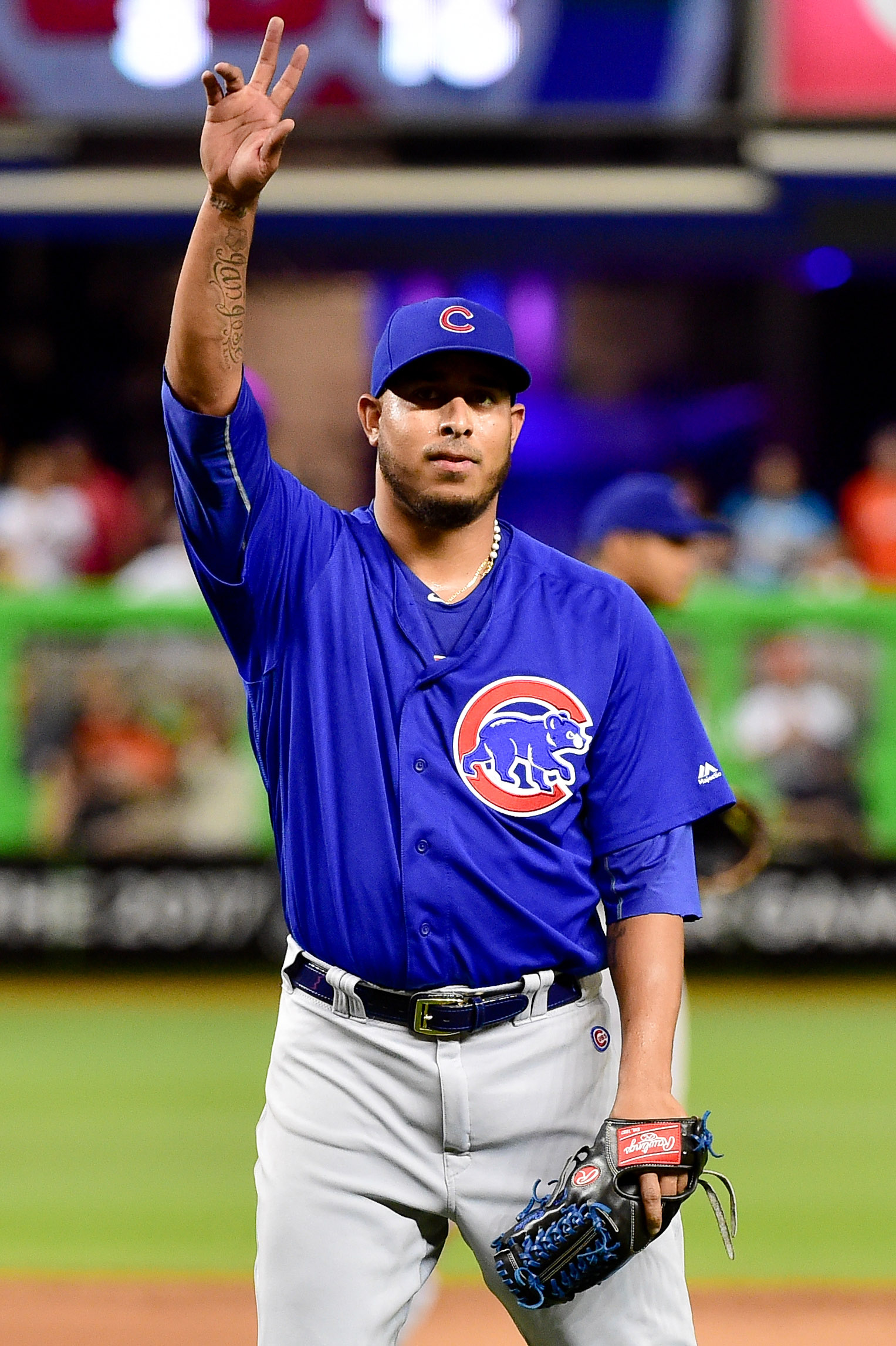
Rondon, 30 in February, saved 77 games with a 2.44 ERA, 9.3 K/9 and 1.9 BB/9 with the Cubs fro 2014-16. He initially lost the closer’s role in Chicago through little fault of his own, as he was bumped from that spot when Chicago acquired Aroldis Chapman from the Yankees prior to the 2016 non-waiver trade deadline.
The 2017 season was Rondon’s worst since the 2013 campaign (when he was a Rule 5 pick out of the Indians organization), as he turned in a 4.24 ERA with a 3.1 BB/9 mark — both his highest levels since that rookie season. However, Rondon also logged a career-high 10.8 K/9 and 29.1 percent overall strikeout rate in 2017 while maintaining excellent fastball velocity (average of 96.4 mph) and an above-average ground-ball rate (48.3 percent).
Like many pitchers throughout the league, Rondon has become increasingly susceptible to home runs across the past two seasons, averaging 1.5 HR/9 despite being extremely stingy in that regard throughout the first three seasons of his career. His increased vulnerability to the long ball obviously made the uptick in walks this past season all the more damning, though metrics like xFIP (3.43) and SIERA (3.20) remained generally bullish on his abilities.
Houston has already reportedly added to its supply of late-inning arms by striking a deal for sidearm righty Joe Smith, and Rondon will give them another option to pair with the likes of Ken Giles, Chris Devenski and Will Harris in the late innings. Giles, who served as the team’s closer throughout the season, struggled in the playoffs, though the addition of Rondon wouldn’t seem to supplant him from that ninth-inning role. If Giles’ struggles carry over into the 2018 campaign, though, Rondon would certainly be a plausible alternative for manager A.J. Hinch to get the final few outs of a game, given his extensive experience in Chicago.
Ken Rosenthal of The Athletic reported the signing on Twitter. Rosenthal (in a tweet), SB Nation’s Chris Cotillo (via Twitter), and Jon Heyman of Fan Rag (via Twitter) had contract details.
Photo courtesy of USA Today Sports Images.