
Mets Re-Sign Jerry Blevins
The Mets have reached agreement with free agent lefty Jerry Blevins on a deal that will bring him back to New York, MLB Network’s Matt Yallof reports on Twitter and Blevins himself confirms in a tweet. Per Yallof, the veteran southpaw will earn $4MM and can tack on another $1MM through incentives.
Blevins, 32, came to New York from the Nationals last winter via trade and posted five hitless frames to open the year. But successive arm fractures ended his season at that early juncture, breaking up a three-year run in which he averaged 61 frames annually.
The Nats shipped Blevins to their division rivals after he put up an ugly 4.87 ERA in 2014. But by some measures, that was actually the most productive season of his career. He put up career bests that year in strikeouts (10.4 K/9), FIP (2.77), xFIP (3.25), and SIERA (2.93).
Obviously, the Mets like the outlook for Blevins, both in terms of his ability and his health. He certainly has put up strong run prevention numbers in the past — including a 2.80 ERA over 125 1/3 innings from 2013-14 — and has dominated left-handed hitters to the tune of a career .206/.257/.322 slash.
While the arm troubles are concerning, it isn’t as if they were the typical elbow/shoulder problems that could prove persistent. Blevins was simply unlucky, first taking a line drive to the forearm and then re-fracturing it in an ill-timed fall.
Latest On Hyun-Soo Kim
TODAY: Kim has strong offers in his native Korea and appears likely to remain there, a source tells Rich Dubroff of CSNmidatlantic.com (via Twitter).
But there are other MLB clubs in pursuit also, tweets Connolly. He says that the Padres may also have made an offer.
YESTERDAY: The Orioles appear to have serious interest in Korean outfielder Hyun-Soo Kim, according to report from Dan Connolly of the Baltimore Sun (Twitter links). Baltimore has already extended Kim a two-year offer that would likely guarantee him $3MM to $4MM per season and is continuing to negotiate with his representatives.
Kim, who’ll soon turn 28, just reached free agent eligibility after nine seasons with the KBO’s Doosan Bears. He has reportedly received offers from multiple MLB clubs, though it appears that Baltimore is the first club to be publicly tied to an actual offer.
The Orioles have long been said to be looking for one or more outfielders, and a commitment of that magnitude would suggest that Kim would slot into at least a semi-regular role. Baltimore utilized a variety of platoon options in the corner last year, but Kim would “likely” feature in left if signed, Connolly adds via Twitter.
Kim has put up a big .318/.406/.488 slash in the offensively robust KBO, and last year had his best-ever showing. Not only did he slash .326/.438/.541, but Kim also banged a career-best 28 home runs. But Kim’s real calling card is in the on-base arena. Unlike some other KBO players who have moved over to MLB (or have shown interest in doing so), Kim is a master of plate discipline. Last year, he struck out only 63 times while drawing 101 free passes.
While the money that the O’s have reportedly put on the table certainly represents a significant figure, it’s not the kind of cash that teams generally must part with to add regular or semi-regular players. Jeff Passan of Yahoo Sports had suggested at one point that Kim might slot in “toward the top of the next tier of corner outfielders” behind the four major free agents, but that does not appear to be the case — unless Baltimore’s offer is wholly non-competitive.
Orioles Sign Darren O’Day
DECEMBER 14: The team has announced the signing.
DECEMBER 10, 10:37pm: Dan Connolly of the Baltimore Sun (Twitter links) has more details. O’Day will earn $5MM in 2016, $6MM in 2017, and $8MM apiece in 2018 and 2019. He’ll then take home $1MM annually for each of the next four years (though obviously won’t be obligated to play for the team in that stretch).
The no-trade clause allows him to designate seven clubs per season, though Connolly notes that he stands to reach ten-and-five rights during 2018.
8:35pm: The deal is “official,” Jon Heyman of CBSSports.com tweets, though it has yet to be announced by the club. $1MM of O’Day’s salary each year will be deferred, per the report.
DECEMBER 7: A deal is in place between the O’s and O’Day, pending only a physical, per Connolly (via Twitter). It is indeed for four years and $31MM, he adds.
O’Day will pick up some limited no-trade protection, Connolly adds on Twitter.
DECEMBER 6, 7:30pm: The matters being worked out involve “language/stipulations,” ESPN.com’s Buster Olney tweets. From the report, it certainly does not sound as if the sides expect any serious difficulty in finalizing the arrangement.
6:29pm: O’s executive VP Dan Duquette said today that there’s more work to be done to complete any deal with O’Day, as Rich Dubroff of CSNmidatlantic.com tweets.
12:16pm: O’Day himself tweets that the deal is not yet complete. “Contrary to the news, I have not reached an agreement with the O’s yet,” he says. “I am flattered by all the attention, but reports are premature.” Heyman clarifies (Twitter links) that one explanation might be that O’Day hasn’t yet taken a physical, and physicals given by the Orioles have sometimes not turned out as the players taking them have imagined. (For example, Grant Balfour and the O’s had a disagreement with the Orioles over a physical two years ago.) O’Day and the Orioles do have a deal in place, Heyman writes.
11:21am: Details of the deal have yet to be finalized, Connolly tweets. Also, obviously, O’Day will still have to take a physical for the deal to be complete. MASNsports.com’s Roch Kubatko tweets that the deal might not officially be done until the end of the week, since team doctors are attending the Winter Meetings.
8:48am: Righty reliever Darren O’Day has agreed to terms on a four-year deal with the Orioles, FOX Sports’ Ken Rosenthal tweets. Jon Heyman of CBS Sports (who originally tweeted that a return to the Orioles was likely) says O’Day will receive $31MM. O’Day is a client of the Ballengee Group.
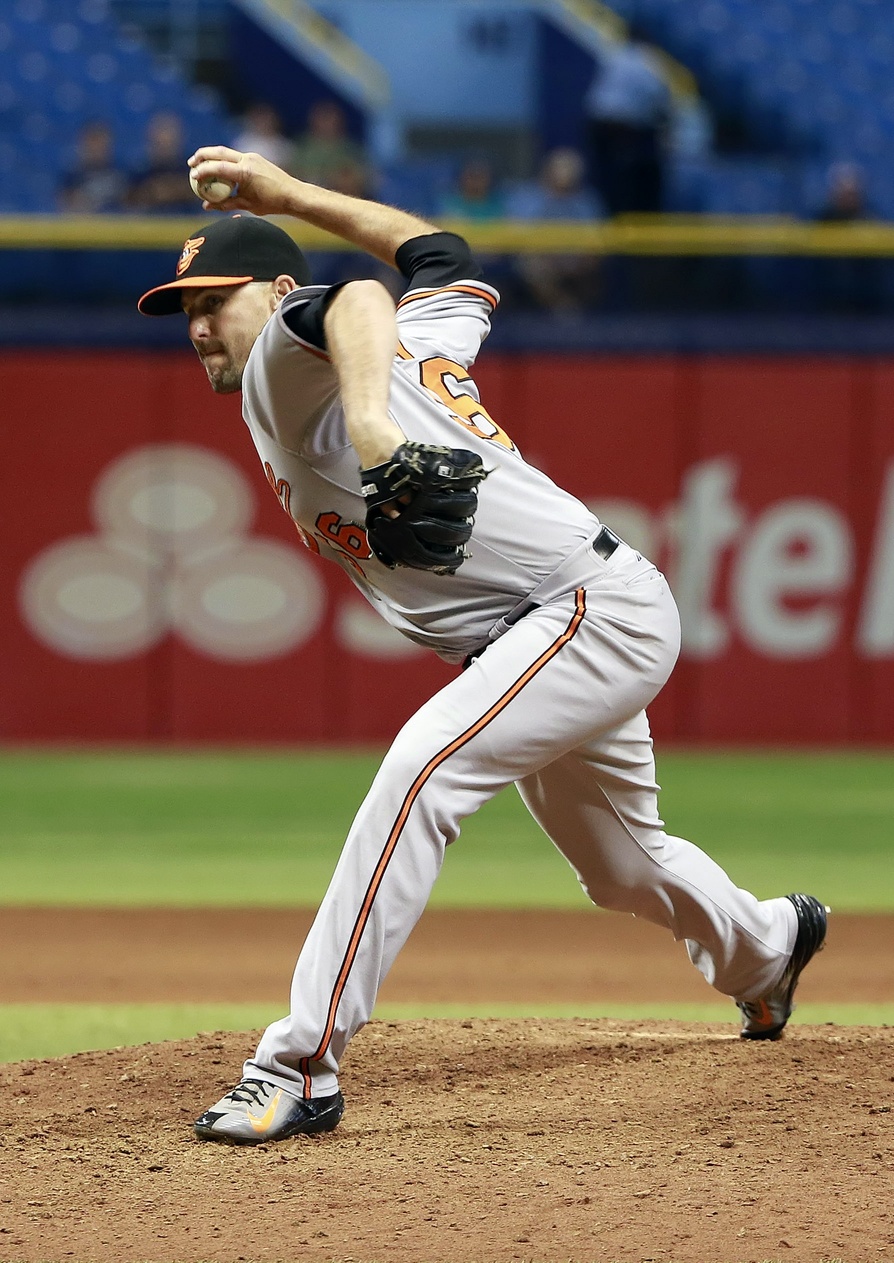 O’Day had reportedly been deciding between the Orioles and Nationals. He had also been connected to the Braves and Dodgers, but O’Day’s wife is a reporter based in Washington DC, and it had been thought that influenced his preference to stay in the DC area. Dan Connolly of the Baltimore Sun tweets that O’Day came close to agreeing to terms with the Nationals on Friday, but that the Orioles made a last-second bid of four years, sealing O’Day’s decision to return to Baltimore.
O’Day has been a major part of Baltimore’s bullpen in the past four seasons, never more so than in 2015, when he pitched 65 1/3 innings with a 1.52 ERA and a terrific 11.3 K/9 and 1.9 BB/9. He’s effective against both righties and lefties, making him far more than a situational pitcher, despite his funky delivery and modest velocity. He will likely return to an eighth-inning role with the Orioles.
O’Day was the top reliever on Tim Dierkes’ list of the top 50 free agents, so retaining him looks like a coup for Baltimore, at least in the near term. The $7.75MM average annual value of his new contract is reasonable, although its four-year length is interesting, given O’Day age (33) and the fact that he isn’t a closer (although perhaps it isn’t that surprising — last week, ESPN’s Jerry Crasnick noted that the expectation within the industry was that O’Day would get a four-year deal in the $32MM-$34MM range). Last offseason, only two relievers, Andrew Miller and David Robertson, received four-year deals, and both of them were considerably younger than O’Day is now. And as Eduardo A. Encina of the Sun tweets, the Orioles don’t often give pitchers four-years — the only free-agent pitcher who’s ever received a four-year deal from them is Ubaldo Jimenez. That they’re giving a four-year deal to a 33-year-old setup man suggests they think O’Day can continue to be a crucial part of their bullpen.
Photo courtesy of USA Today Sports Images.
Mariners Sign Steve Cishek
The Mariners’ bullpen overhaul continued on Monday, as the team announced, via press release, that it has signed free-agent reliever Steve Cishek to a two-year deal. Cishek, who will serve as the club’s closer, is reportedly guaranteed $10MM over the two years — $4MM in 2016 and $6MM in 2017. He can also earn up to $3.5MM in each season for games finished.
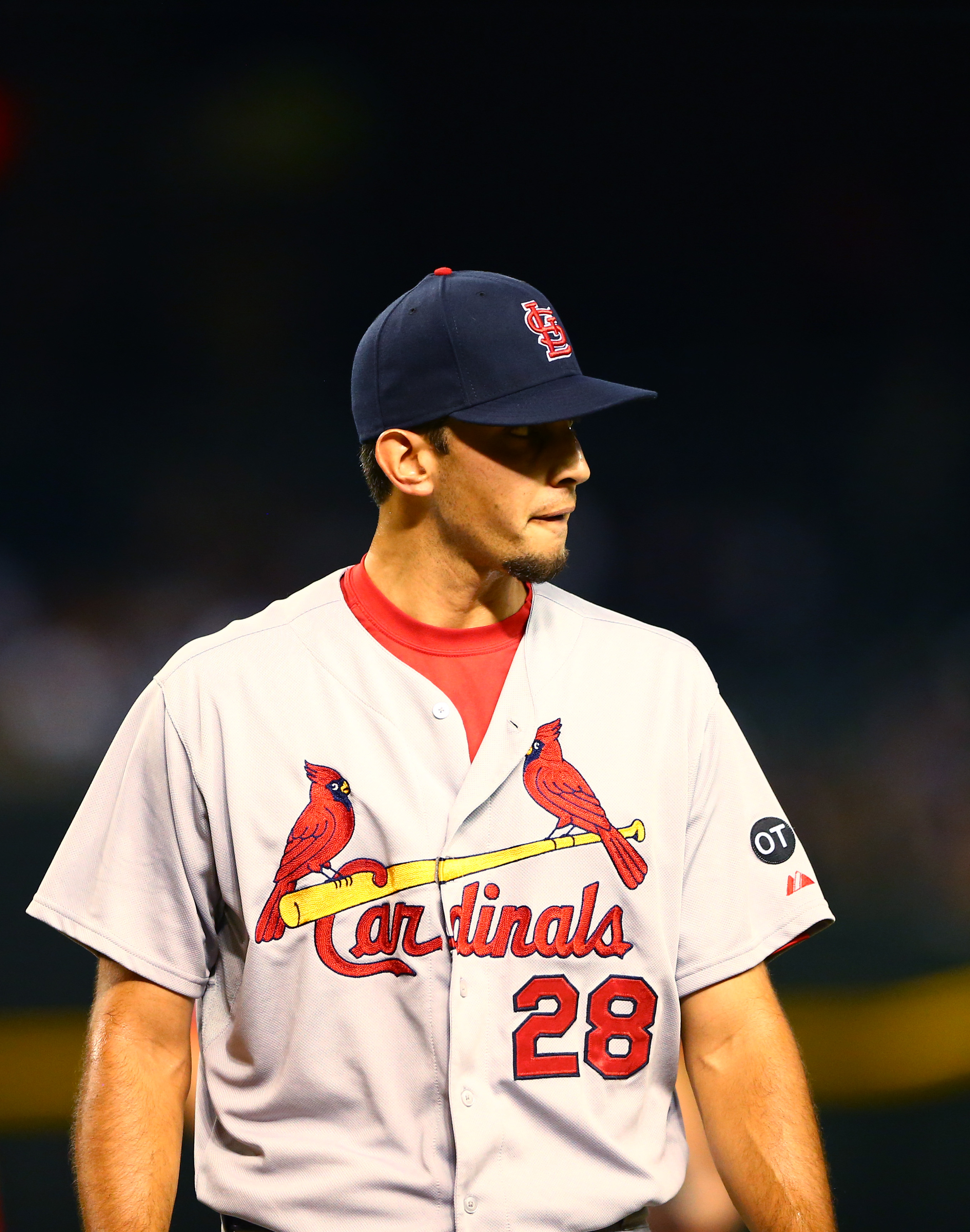
Cishek, a client of Jet Sports Management, will reportedly earn $250K for 25 and 30 games finished, and he’ll take home $500K for reaching 35, 40, 45, 50, 55, and 60 games finished in each year of the deal. Typically, only about five relievers per season finish 60 games, so it will be a stretch for Cishek to earn the full $7MM incentive over two years. Cishek finished 62 games in 2013 and 55 games in 2014.
GM Jerry Dipoto teased the addition on 710 ESPN Seattle a night before the agreement was reported, saying he expected to make a bullpen addition before the end of the weekend. In today’s press release, Dipoto spoke highly of his new right-hander: “Steve gives us a proven bullpen presence with significant experience closing games. He’s a character guy who adds a new angle and fresh look to our pen.”
Cishek, 29, was non-tendered by the Cardinals earlier in the offseason. MLBTR projected a $7.1MM salary via the arbitration process. Of note, Cishek was arbitration eligible for two more seasons. The two-year contract will guarantee those seasons while granting the Mariners some protection if he doesn’t stick in the ninth inning.
Over parts of six seasons, the former Marlins closer has a 2.82 ERA, 9.55 K/9, 3.42 BB/9 and 95 saves in 313 innings. He experienced a shaky 2015 split between Miami and St. Louis. While with the Marlins, he lost his ninth inning duties early in the year to A.J. Ramos. In 32 innings, Cishek struggled with a 4.50 ERA, 7.88 K/9, 3.94 BB/9, and an uncharacteristically high .350 BABIP. He also posted a career low 90.6 mph fastball.
The Cardinals acquired Cishek in late July for right-handed pitcher Kyle Barraclough. While his 2.31 ERA through 23 innings was encouraging, he lost control of the strike zone (5.01 BB/9). ERA estimators like SIERA (4.43) and xFIP (4.55) suggest he experienced some good fortune in St. Louis.
With the signing, Seattle is betting that Cishek can recover the form that made him one of the best closers in the league from 2013 through 2014. Over those two seasons, Cishek was among the 10 best relievers in baseball with 3.5 WAR and a 2.35 FIP.
Dipoto has been busy this offseason. As ESPN’s Jerry Crasnick notes (tweet), Dipoto has now completed nine trades, eight signings, and five waiver claims. The bullpen in particular has undergone a dramatic restructuring. Former temporary closers Tom Wilhelmsen, Carson Smith, and Danny Farquhar were all sent packing. To replace them, Dipoto acquired Cishek, Joaquin Benoit, Evan Scribner, and Justin De Fratus.
ESPN’s Jerry Crasnick first reported the agreement. Yahoo’s Jeff Passan (Twitter link) and FOX Sports’ Ken Rosenthal reported the financial terms (via Twitter). Jon Heyman of CBS Sports reported the incentives structure (Twitter link).
Photo courtesy of USA Today Sports Images.
Astros To Acquire Ken Giles
SATURDAY 12:06pm: The Phillies have announced the trade. However, several components have changed. The Phillies will receive Velasquez, Oberholtzer, Eshelman, Mark Appel, and Harold Arauz. Derek Fisher, who was originally rumored to be headed to Philadelphia, is not part of the trade. The Astros will also receive infielder Jonathan Arauz from the Phillies. Although both are Panamanian prospects, the Arauz’s are not related.
Appel, the number one pick in the 2013 draft, has experienced mixed success in the minors. The 24-year-old reached Triple-A and posted a 4.48 ERA with 8.03 K/9 and 3.69 BB/9. MLB.com ranked Appel as the Astro’s second best prospect between 2015 draft picks Alex Bregman and Daz Cameron. He’s also ranked 43rd overall. His fastball velocity has been inconsistent in the minors, ranging from the low-90s to 98 mph. He also throws a slider and a changeup.
Harold Arauz, 20, pitched in Low-A last season with a 5.75 ERA, 9.06 K/9, and 3.14 BB/9 in 51 innings. Per Baseball America’s Ben Badler, Arauz leans heavily on a low-90s cutter. Badler also commented on Jonathan Arauz. The newly acquired Astro was ranked the 20th best prospect in the Gulf Coast League. The 17-year-old middle infielder was also considered the best Panamanian prospect in the 2014 international market.
In a related move, the Phillies have designated reliever Dan Otero to make room for Velasquez and Oberholtzer on the 40-man roster, tweets Todd Zolecki of MLB.com.
THURSDAY 12:13am: The final player in the deal will be righty Thomas Eshelman, who will head from the Astros to the Phillies, the Houston Chronicle’s Evan Drellich tweets. The 21-year-old Eshelman, a second-round pick this past June out of Cal State Fullerton, pitched just 10 1/3 innings in the Astros organization. Before the draft, MLB.com characterized him as a polished pitcher who could move through the minors quickly but might end up as a back-of-the-rotation type of starter. At the time of the trade, he ranked as the Astros’ 13th-best prospect.
WEDNESDAY 7:52pm: MLB.com’s Todd Zolecki tweets that a fourth player is headed to the Phillies in the deal as well.
7:38pm: The Astros and Phillies are in agreement on a trade that will send right-hander Vincent Velasquez, lefty Brett Oberholtzer and another prospect to Philadelphia in exchange for young closer Ken Giles, reports Mark Berman of FOX 26 Houston (Twitter link). Outfielder Derek Fisher will also head to Philadelphia in the deal, Berman clarifies (on Twitter). The trade is pending medical reviews. CSNPhilly.com’s Jim Salisbury first broke news that the two sides were nearing an agreement, and he added details along with ESPN’s Jayson Stark as they emerged.
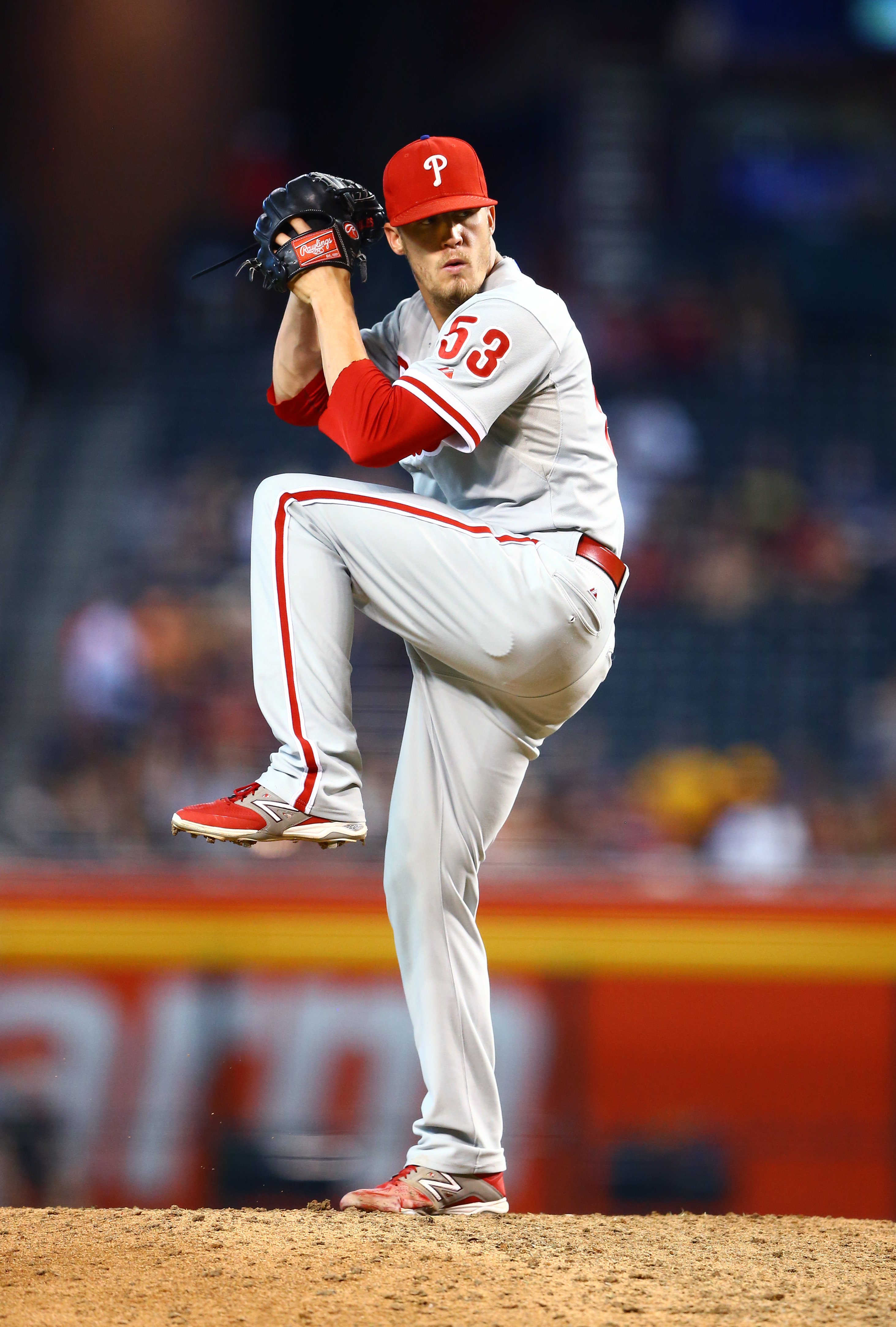
Giles, who turned 25 in late September, took over as closer in Philadelphia following the trade of Jonathan Papelbon and continued to display the dominance he’s exhibited since breaking into the Majors upon being moved to a more prominent role. In 115 2/3 career innings, the former seventh-round pick has a masterful 1.56 ERA with 11.8 K/9, 2.8 BB/9 and a 44.6 percent ground-ball rate. Giles’ fastball has averaged just a shade under 97 mph in the Majors (96.8), so he’ll satisfy Houston GM Jeff Luhnow’s previously stated interest in adding a hard-throwing arm that the back end of the Astros’ bullpen had been missing.
By adding Giles, the Astros will deepen their bullpen considerably. Luke Gregerson, who performed well as the club’s primary closer in 2015, will return to the setup capacity in which he thrived for much of his career. He’ll be joined there by side-arming Pat Neshek, the quietly excellent Will Harris and Josh Fields in 2016. Houston will still need to address its dearth of left-handed relief options, however, as its two primary southpaws — Tony Sipp and Oliver Perez — both departed as free agents. Perez has since signed with the Nationals, though a reunion with Sipp remains a possibility, as he’s still a free agent and there has reportedly been mutual interest between the parties.
Houston will control Giles through at least the 2020 season if all goes well. With one year, 113 days of Major League service time, Giles will fall shy of Super Two designation and thus will not be arbitration eligible until the 2017-18 offseason. He’ll earn scarcely more than the league minimum in each of the next two seasons (barring an extension), providing Houston with financial flexibility to address needs elsewhere on the roster.
The centerpiece of the deal for the Astros is Velasquez — a 23-year-old righty who entered the 2015 season as a consensus Top 100 prospect and made his big league debut after performing exceptionally well at the Double-A level. Velasquez logged a 1.91 with a 45-to-13 K/BB ratio in 33 innings at Double-A in addition to posting a 4.37 ERA in 55 2/3 innings at the Major League level where he struck out 58 and walked 21. He’ll immediately be in the mix for a rotation spot with the Phillies, though it’s possible that Philadelphia may want to get Velasquez some time at Triple-A, where he has yet to throw so much as a single inning.
While Velasquez may need some additional development before slotting into the Phillies’ rotation on a full-time basis, Oberholtzer should be able to step into the starting five from day one. The 26-year-old has been up and down with the Astros over the past three seasons but has totaled 45 appearances (42 starts) and recorded a solid, if unspectacular 3.94 ERA with 5.9 K/9, 2.1 BB/9 and a 38.5 percent ground-ball rate. That ground-ball rate, though, isn’t fully representative of Oberholtzer’s new skill set, as he began using a cutter in 2015 that upped his rate to 48.8 percent in his sample of 34 2/3 big league innings. He’ll give the Phillies an option at the back of their rotation that can be controlled for up to five years — the same as Giles — if he’s able to consistently perform in the Majors.
Fisher, meanwhile, was the 37th overall pick in the 2014 Draft and rated as the No. 8 prospect in a deep Houston farm system, per MLB.com. The Virginia product, whom Baseball America ranked 13th among Houston farmhands entering the season, is said in their scouting report to be a toolsy outfielder with plus-plus raw power that has yet to fully manifest. He draws praise for his bat speed and above-average running, though BA noted that he has a below-average arm and has questionable route-running, so left field is probably his ultimate home.
Still just 21 years old, Fisher split the season between Class-A and Class-A Advanced, hitting .275/.364/.483 with 22 homers and 31 stolen bases before going on to bat .254/.397/.424 in 17 games in the Arizona Fall League. He’s at least a full season away from the Majors and possibly two, but Fisher gives the Phillies a potential everyday outfielder down the line if he can keep hitting the way he did in 2015. MLB.com calls him a potential “impact hitter,” even if he isn’t believed to have a future as a strong defender.
Photo courtesy of USA Today Sports Images.
Phillies Acquire Charlie Morton From Pirates
11:35am: Yahoo’s Jeff Passan brings to light an “interesting wrinkle” in Morton’s contract (tweet). The trade triggered a clause that converts his $9.5MM 2017 team option into a mutual option. As Passan notes, Morton is now very likely to hit the free agent market after the season.
9:39am: The Phillies have acquired right-handed starting pitcher Charlie Morton from the Pirates, reports FOX Sports’ Ken Rosenthal on Twitter. The Pirates will pick up right-handed pitcher David Whitehead in the swap. The Phillies will pick up the tab for Morton. He is signed for $8MM in 2016 with a $9.5MM club option for 2017 ($1MM buyout). In a related move, the Phillies designated pitcher A.J. Achter to make room on the 40-man roster, per MLB.com’s Todd Zolecki (tweet).
Morton, 32, is a veteran of eight major league seasons. He has a career 4.54 ERA with 6.28 K/9, 3.38 BB/9, and a 55 percent ground ball rate. Phillies fans will find his delivery uncannily familiar – Morton almost perfectly mimics the throwing motion of former Phillies star Roy Halladay.
The ground ball specialist has struggled with health in recent seasons, but he’s been modestly effective when on the field. Although he posted a 4.81 ERA in 129 innings last season, ERA estimators like xFIP (3.87) and SIERA (3.89) were more positive. While Morton had a rocky start to his early career, he’s actually projected to contribute a sub-4.00 ERA in 2016.
Morton joins a suddenly deep Phillies rotation that includes Aaron Nola, Jerad Eickhoff, Jeremy Hellickson, Vincent Velasquez, Brett Oberholtzer, and Matt Harrison. It’s unclear what, if any, role Harrison can fill. Even if Harrison spends the season on the disabled list, the club seems prepared to avoid forcing an unready pitcher like David Buchanan or Alec Asher from making regular starts.
In Whitehead, the Pirates acquired a former 34th round pick from the 2013 draft. Last season at High-A, Whitehead pitched to a 4.44 ERA with 6.24 K/9 and 3.38 BB/9 in 25 starts. Scouting reports describe him as a ground ball pitcher with a low-90’s sinker. He may have a back-of-the-rotation ceiling.
For Pittsburgh, this deal was mostly about escaping the $9MM guaranteed to Morton over the next two seasons. After dealing Neil Walker last week, the club has the necessary resources to pursue a starting pitcher in free agency. The Pirates are often tied to inexpensive reclamation projects like Justin Masterson or Mat Latos.
The swap necessitated the Phillies to make a 40-man roster move. Achter drew the short straw. The right-handed reliever was acquired off waivers from the Twins earlier in the offseason. The 27-year-old has a 90 mph fastball. He’s posted strong numbers are Triple-A but has yet to succeed at the major league level.
Mets Sign Asdrubal Cabrera
FRIDAY: The signing is official, per a team announcement. His option year is valued at $8.25MM, Heyman tweets.
WEDNESDAY, 8:38pm: Jim Duquette of MLB Network Radio on SiriusXM reports that Cabrera will receive $8.25MM in each of the next two seasons, plus a $2MM buyout on his 2018 club option, making a total guarantee of $18.5MM (Twitter link). Ken Rosenthal of FOX Sports tweets that Cabrera will be used mostly at shortstop but will also play some third base and second base in New York.
8:26pm: Jon Heyman of CBS Sports tweets that the Mets are indeed getting Cabrera.
8:19pm: The Mets and infielder Asdrubal Cabrera are finalizing a contract, reports SB Nation’s Chris Cotillo. Considering the fact that the Mets picked up Neil Walker in a trade earlier today, it would seem that Cabrera will take over as the team’s everyday shortstop. Cotillo adds that the deal is “expected to be” for two years with a club option.
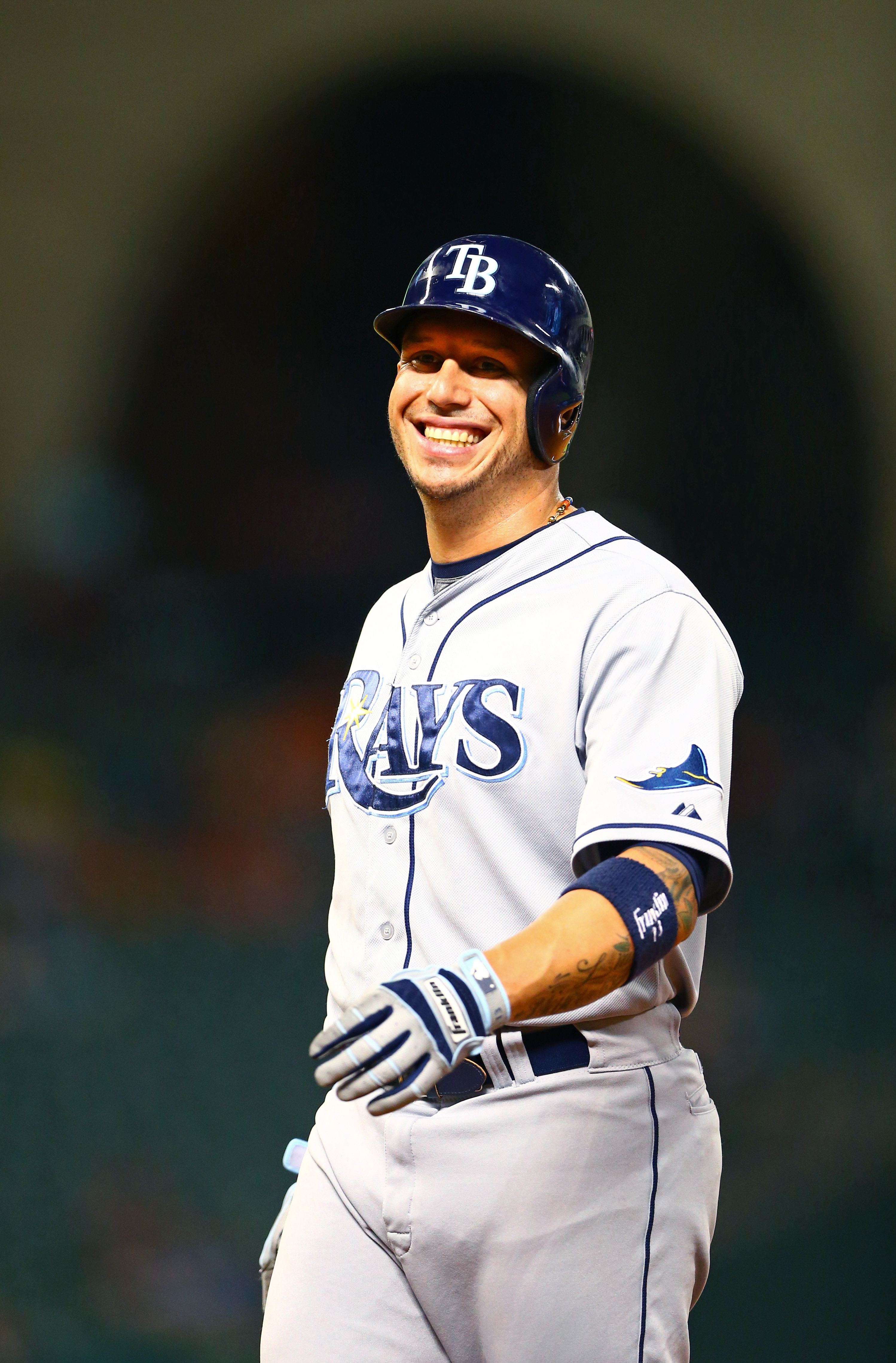
Cabrera, 30, is coming off a quality season with the Rays in which he batted .265/.315/.430 with 15 home runs and six stolen bases while serving as Tampa Bay’s everyday shortstop. The switch-hitter showed little in the way of a discernible platoon split and has indeed handle lefties and righties nearly equally throughout his entire big league career (.737 OPS vs. right-handers, .748 versus left-handers).
Cabrera will team with Walker to form a new double-play tandem, albeit one with considerable defensive question marks. Cabrera has never rated particularly well as a shortstop in the eyes of defensive metrics or in the general consensus of scouts, although the Mets reached the World Series in 2015 with poor overall defense up the middle as well. In 2015, Cabrera posted -7 Defensive Runs Saved and a -6 Ultimate Zone Rating. Though neither of those marks is positive, each represents an upgrade over the Mets’ collective efforts at shortstop from Wilmer Flores and Ruben Tejada last year — especially in the estimation of DRS (where Flores received a -10 and Tejada a -15). If Cabrera can serve as a somewhat below-average defender with above-average offense (especially relative to his peers) as he did with the Rays, he stands to rank as an overall upgrade.
The signing does bring into question the future of both Flores and Tejada, each of whom is recovering from a leg fracture. (Flores’ was suffered in the offseason and Tejada’s, of course, was suffered on Chase Utley‘s now-notorious takeout slide.) The Mets could carry each as utility players, similarly to the way that Kelly Johnson and Juan Uribe were on last year’s second-half roster, though the odds of that outcome would be greater were one or both men experienced in the outfield (as Johnson was). Dilson Herrera, too, figures to be impacted by today’s moves. The top second base prospect is believed by many to be nearly ready for the Major Leagues, but he’ll be blocked at least for the 2016 season (barring injuries) if not for the 2017 campaign (in the event that the Mets slide Cabrera over to second base once Walker is a free agent next offseason).
Any of Tejada, Flores or Herrera could draw trade interest from other clubs. Most will of course remember that Flores was nearly traded to the Brewers in a Carlos Gomez deal that fell through, so it stands to reason that other teams would have interest in acquiring him. However, there’s been nothing thus far to indicate that any of that trio will be shopped, and the Mets could simply head into the year with the whole group, providing the organization with a good deal of versatility.
Cabrera entered the offseason ranked 37th in terms of earning power on MLBTR’s free agent rankings, and his $18.5MM guarantee comes in $500K north of the two-year, $18MM pact projected back in early November.
Photo courtesy of USA Today Sports Images.
Michael Cuddyer To Retire
Mets outfielder Michael Cuddyer has decided to retire, Adam Rubin of ESPNNewYork.com reports on Twitter. Needless to say, that’s a major surprise, particularly as Cuddyer stands to earn $12.5MM this year in the second and final season of his contract.
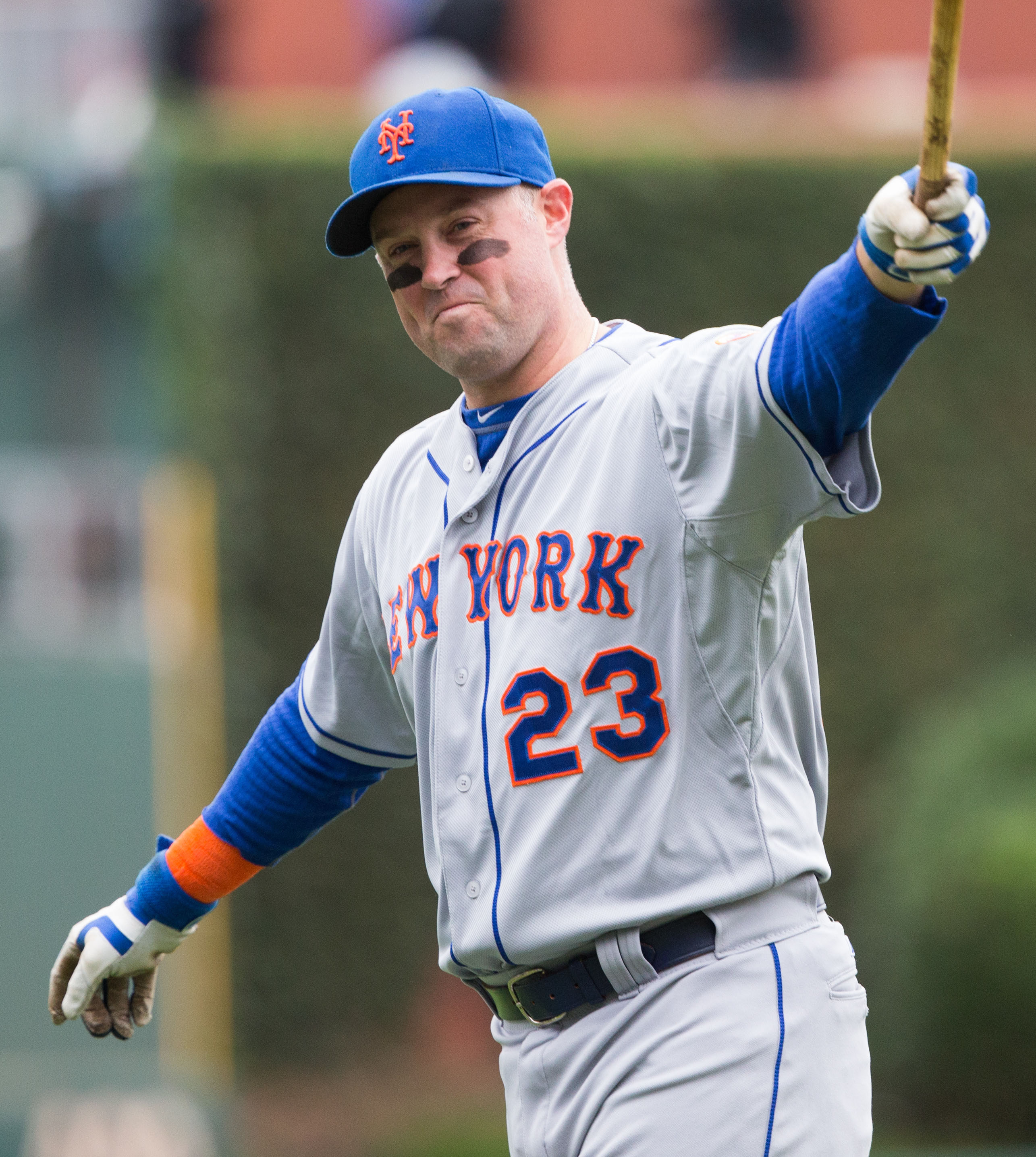
It has not yet been reported whether Cuddyer, 36, will receive any portion of his 2016 salary, though Rubin adds on Twitter that some kind of buyout seems likely. Cuddyer turned down a qualifying offer (then valued at $15.3MM) to sign with the Mets for two years and $21MM.
Cuddyer joined New York after two consecutive seasons of huge offensive numbers with the Rockies. Even after adjusting for altitude, Cuddyer was impressive at the plate, running up a 139 OPS+ over 2013-14. But awful defensive metrics and injury issues — combined with advanced age — limited his appeal.
That all caught up to Cuddyer in 2015, as he managed only a .259/.309/.391 slash line in 408 plate appearances. With his poor glovework counted in the tally, Cuddyer contributed at or just slightly above replacement level last year.
A tough season at the end of the line doesn’t detract from an outstanding career, of course. Over parts of 15 seasons in the majors, all but four of which came with the Twins, Cuddyer put up an excellent .277/.344/.461 batting line and swatted 197 home runs. He earned All-Star nods in 2011 and 2013.
While it would be unfair to lose focus on Cuddyer’s own accomplishments, it’s hard not to consider the impact of this news on the defending NL pennant winners. There was plenty of reason to believe that Cuddyer would have been a useful contributor in 2016, but his hefty salary stood to represent more than 10% of New York’s 2015 Opening Day payroll.
It remains to be seen how much spending capacity the Mets will have to reallocate, but there will surely be some added funds to disburse. And with Michael Conforto joining Curtis Granderson as the presumptive starters in the corners, those dollars won’t necessarily need to go directly to a replacement. Instead, after having already beefed up the team’s infield ranks, the Mets can either up their allocation to a new center fielder (with Juan Lagares becoming an oft-used fourth outfielder) or put the dollars toward another bench bat or reliever.
Photo courtesy of USA Today Sports Images.
Reported Runner-Up Offers For Heyward And Greinke
The most important numbers involved in any free agent scenario are, obviously, the final deal terms. But the offers made by other clubs are not only interesting but also potentially tell us something about the market — both at the time of the signing and even moving forward.
We heard plenty of discussion today about how much cash was dangled in front of two of this year’s three biggest free agent pieces: Jason Heyward and Zack Greinke. Heyward reportedly agreed with the Cubs for eight years and $184MM, with a contract provision allowing him two separate opportunities to opt out of the deal and re-enter the market. Meanwhile, after exercising just such a clause to jump back into the free agent waters, Greinke inked a mind-blowing six-year, $206.5MM deal with the Diamondbacks (which included some very significant deferrals).
Before entering those arrangements, both players considered multiple other arrangements. For Heyward, the elusive $200MM barrier was reportedly met or exceeded by both the Nationals and the Cardinals. (Per Derrick Goold of the St. Louis Post-Dispatch — here and here — and Ken Rosenthal of FOX Sports, on Twitter.) And at least one other team, possibly the Angels, also beat Chicago’s total guarantee with its bid. (That’s per Jeff Passan of Yahoo Sports, Twitter links; see here for the Halos’ late interest.)
Notably, though, we’ve not been told how many years Washington and St. Louis covered in their offers, and Bob Nightengale of USA Today tweets that it seems neither met the $23MM AAV that Heyward will reportedly receive. And as Keith Law of ESPN.com stresses on Twitter, it’s even more important to bear in mind that the opt-out opportunities carry significant value and that Heyward will owe less in state taxes in Illinois than he would have in the other locales.
While acknowledging the opt-out value, Passan notes that it’s nevertheless “uncommon” for a player to turn down a greater overall guarantee, and that’s largely true in the abstract. But it’s important to remember, too, that Heyward’s unique market placement — he hasn’t even reached the halfway point between 26 and 27 years of age — makes his situation quite a bit different from that of most free agents.
For one thing, Heyward’s age arguably increases the worth of those bail-out clauses even further, since he’ll gain the right to re-enter the market in advance of his age-29 season. That’s still early for a free agent, and might give Heyward a chance not only to step up his AAV (if his performance increases and/or salary inflation continues) but also to tack on more years down the line. Greinke pulled exactly that trick despite turning 32 before signing his new deal, and the upside for Heyward is even greater.
Also, gaining two opt-out points will allow Heyward to assess his market timing while keeping the future guarantee in his back pocket. That not only adds to the value going to him in this deal but also increases the uncertainty and risk for the Cubs.
It’s worth noting, too, that even if Heyward does play out the full eight years in Chicago, he’ll stand to hit the market again before he turns 35. That’s exactly the point in his career that Ben Zobrist finds himself as he joins the Cubs on a four-year, $56MM contract. There’s good reason to believe that Heyward will be plenty capable of continuing to earn money on the open market at the end of his deal, which makes it much easier (and arguably wise) to forego another year (or two) of commitment for a relatively marginal bump in the overall guarantee — all at the cost of annual earning power.
Simply put, without knowing whether the other bidders were willing to include similar opt-out terms, and without knowing the length of their proposals, it’s impossible to compare the offers. From my perspective, though, the deal that Heyward ultimately agreed to is a better contract for him than the straight ten-year, $200MM deal that we at MLBTR thought Heyward could command (see here and here).
As for Greinke, the veteran righty said today in his introductory press conference that he was literally minutes away from signing with some unknown other club before Arizona swept in. ESPN’s Molly Knight tweeted that the Giants were actually the runners up, making Greinke a six-year, $195MM offer.
But San Francisco’s president of baseball operations Brian Sabean has said publicly that the club was not comfortable promising Greinke a sixth year. And both Alex Pavlovic of CSN Bay Area (Twitter link) and John Shea of the San Francisco Chronicle (also on Twitter) strongly disputed the notion that the Giants had come anywhere near the D-Backs’ offer.
The Dodgers, too, are said to have balked at going to six years on Greinke, as MLB.com’s Mark Saxon was among those to note recently (Twitter link). It remains unclear how high the Los Angeles offer was, and whether it or another team was the one that nearly struck a deal with Greinke.
Looking at all of those reported offers, it seems clear that there are several clubs that have the capacity and willingness to spend much more money this winter than they have so far. That’s not to say that all will actually put that cash right back into free agency. But the potential is there, and it’s also notable that an unexpected team (the Diamondbacks) put so much cash onto the market.
All said, there’s plenty left to be spent. And that makes sense: more than half of MLBTR’s top fifty free agents — including six of the top ten — remain unsigned at present.
Cardinals Expected To Pursue Alex Gordon
With Jason Heyward set to join the division-rival Cubs, the Cardinals are expected to make a push to add fellow free agent outfielder Alex Gordon, Bob Nightengale of USA Today reports on Twitter. Of course, Gordon has also reportedly drawn interest from deep-pocketed clubs like the Giants, Angels, and others, so his market promises to be robust.
St. Louis has also been rumored to have some interest in slugger Chris Davis, who might not be seen as an outfielder but could still fit in St. Louis, and Ken Rosenthal of FOX Sports posits on Twitter that he could still be an option. Going for Gordon, meanwhile, might also leave the team with some free capacity to add a starter, Rosenthal suggests.
It should be noted that it remains entirely unclear whether the Cards will plan to reallocate any cash that might have gone to Heyward (or to David Price) directly back into free agency. After all, the organization has not traditionally been one of the biggest factors in free agency. And while, owner Bill DeWitt Jr. has said that the Cards will “stretch” in the right situation, it’s not clear whether any such opportunities remain.
Of course, Gordon promises to command a far more limited commitment than did Heyward and Price. MLBTR’s Tim Dierkes predicted a $105MM commitment over five years, which is a hefty sum for a player who’ll soon turn 32 but is nowhere near the overall outlay needed to land the other two. It also still seems likely he’ll fall shy of Justin Upton and Yoenis Cespedes, the other top outfielders remaining on the market.