
Nick Punto’s 2015 Option Vests
Athletics infielder Nick Punto‘s $2.75MM option has vested, the infielder himself told Susan Slusser of the San Francisco Chronicle (Twitter link). As the switch-hitting utility man explained to Slusser, he had a fairly complicated formula that would determine whether or not the option would kick in, but he’ll indeed be back with the club next season.
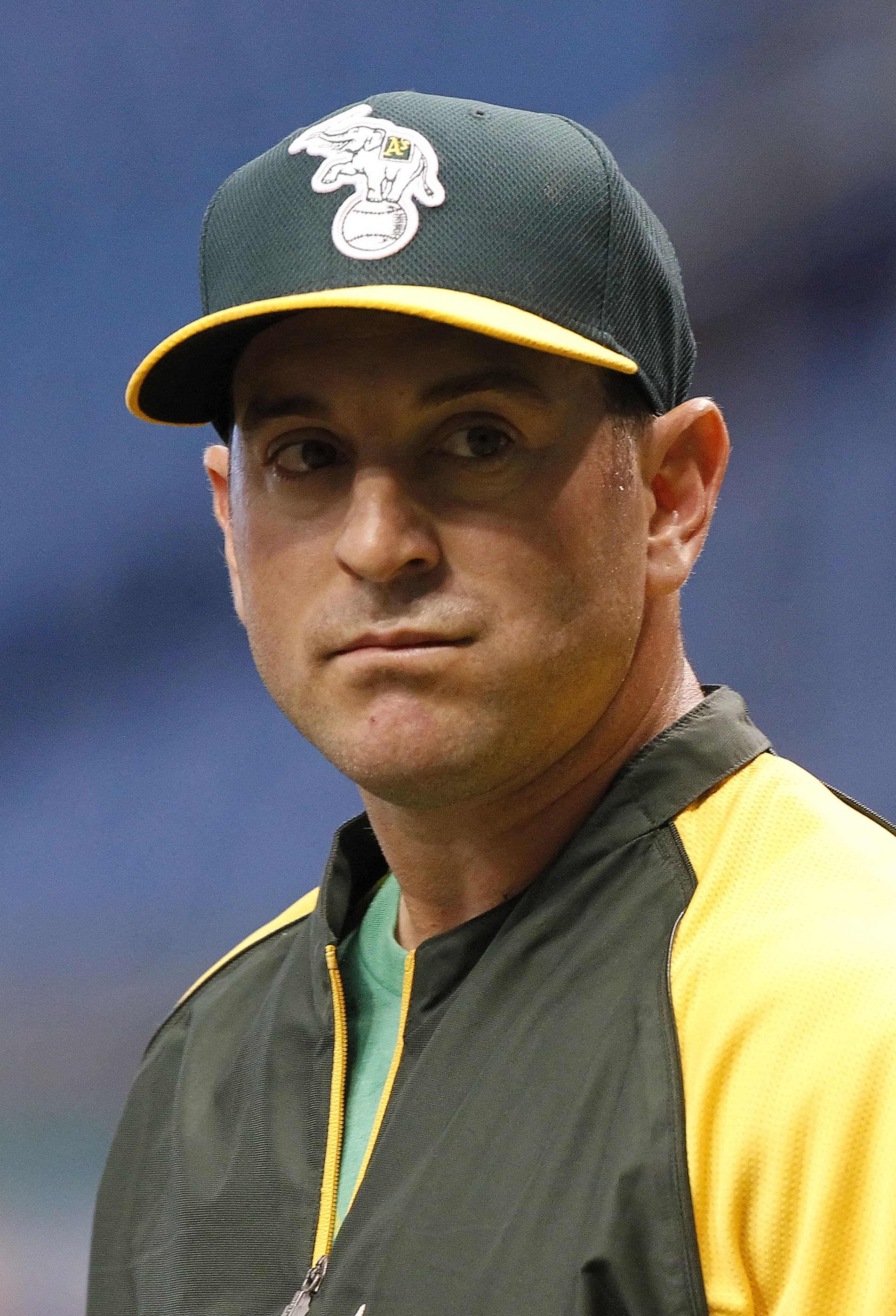
Punto, who turns 37 next month, signed a one-year, $3MM contract that guaranteed him $2.75MM in 2014 in addition to a $250K buyout of the aforementioned $2.75MM option. All told, the Jeff Caulfield client will end up earning $5.5MM over his two seasons with the A’s — a figure that is in line with contracts inked by other veteran utility types such as Willie Bloomquist (two years, $5.8MM) and Skip Schumaker (two years, $5MM).
The defensively versatile Punto has never hit much, but he struggled through one of his worst offensive seasons to date in 2014, batting .207/.296/.293 in 224 plate appearances. However, he did help the A’s by logging 363 quality innings at second base, and he also filled in at shortstop (118 2/3 innings) in addition to brief cameos in right field and at third base.
Originally drafted by the Phillies, Punto was sent to the Twins along with Carlos Silva and Bobby Korecky in a trade for Eric Milton back in 2003. After a seven-year stretch with Minnesota, he’s bounced around to four other teams: the Cardinals, Red Sox, Dodgers and A’s. In 3734 career plate appearances between the six teams mentioned, Punto is a .245/.323/.323 hitter that has logged more than 2400 innings at shortstop, second base and third base with positive defensive marks at each.
Photo courtesy of USA Today Sports Images.
Agency Notes: A.J. Pollock, Carlos Correa
As always, you can find information on player representation in MLBTR’s Agency Database. Here’s the latest on notable agency changes:
- Diamondbacks outfielder A.J. Pollock has changed representatives, moving to Brian Peters of the Legacy Sports Group, according to a tweet from Ken Rosenthal of FOX Sports. Pollock had been represented by Icon Sports Management. The 26-year-old dealt with some injuries this year, but that did not detract much from the sparkling .302/.353/.498 line, with 7 home runs and 14 stolen bases, that he put up in 287 plate appearances. With sparkling defense in center factored in, Pollock was worth a rather remarkable 3.9 rWAR and 3.3 fWAR in that stretch. Though he is not arb-eligible until after the 2015 season, Pollock certainly looks like an extension candidate.
- Top Astros prospect Carlos Correa is shopping around for a new agent, leading to a major chase to add him as a client, ESPN.com’s Jerry Crasnick reports (Twitter links). Among the contenders are such familiar outfits as the Legacy Agency, the Boras Agency, Excel Sports Management, and Dan Lozano. The shortstop, who just turned 20, is currently represented by Kinzer Management Group. Correa had his season cut short by a broken leg, but nevertheless saw his star continue to rise with a .325/.416/.510 campaign at High-A. He also swiped 20 bags and contributed six long balls. The first overall pick in the 2012 draft, Correa currently rates as the second-best prospect in all of baseball in the eyes of MLB.com.
Yasmany Tomas Declared Free Agent
Cuban slugger Yasmany Tomas has been granted free agency by Major League Baseball, according to a tweet from his agent, Jay Alou. The 23-year-old outfielder had already been cleared by OFAC, meaning he is now free to sign with any club.
As MLBTR’s Tim Dierkes recently wrote in his free agent profile of Tomas, the soon-to-be 24-year-old offers a rare opportunity for clubs to buy an early-prime power hitter on the open market. While the intriguing prospect is not without his risks, every team in baseball is said to have put eyes on him at a recent showcase. And the success of several countrymates’ recent transitions to the majors has opened the ceiling of the market for Cuban emigres. All said, Dierkes expects Tomas not only to beat the recent contract inked by Rusney Castillo (seven years, $72.5MM) but to land a deal that reaches a nine-figure guarantee over a seven-year term.
Recently, Ben Badler of Baseball America compiled a full, updated scouting report on Tomas, based in large part on his own scouting. Badler says that Tomas delivers 70-grade power (on the 20-80 scale), explaining that his hit tool is the major question regarding his future potential. While difficult to gauge with certainty, Badler offers that Tomas has surprisingly okay speed and should be at least a passable corner outfield defender.
Given his age and skillset, it is easy to imagine widespread interest developing in Tomas. Indeed, reports already abound of clubs that could be in on the bidding.
Lyle Overbay Likely To Retire
With his 14th big league season in the books, Brewers first baseman Lyle Overbay sounds ready to call it a career. The first baseman said on MLB Network Radio (Twitter link) that he is “99.9 percent” certain that he will retire this offseason.
If that indeed holds true, he’ll finish as a lifetime .266/.347/.429 hitter with 151 homers. Those numbers were compiled over stretches with the Blue Jays, Brewers, and Diamondbacks along with shorter stints with the Pirates, Yankees, and Braves. Overbay’s best season, perhaps, came in 2006 with Toronto, when he slashed a robust .312/.372/.508 over 640 plate appearances and hit a career-high 22 long balls.
In his second run with the Brewers this year, Overbay served as a platoon mate to Mark Reynolds. On his left-handed side of the ledger, Overbay put up a .233/.328/.333 line in 296 plate appearances. After starting his career as an 18th-round draft pick, the University of Nevada, Reno product has managed to rack up $36MM in career earnings.
Offseason Outlook: Minnesota Twins
After an extended run atop the AL Central last decade, the Twins turned in their fourth consecutive 90-loss season and saw many of their top prospects sidelined by injury.
Guaranteed Contracts
- Joe Mauer, 1B: $92MM through 2018
- Ricky Nolasco, RHP: $37MM through 2017
- Glen Perkins, LHP: $18.15MM through 2017
- Phil Hughes, RHP: $16MM through 2016
- Kurt Suzuki, C: $12MM through 2016
- Mike Pelfrey, RHP: $5.5MM through 2015
Arbitration Eligible Players (service time in parentheses; projections via Matt Swartz)
- Trevor Plouffe, 3B, (3.162): $4.3MM projected salary
- Tommy Milone, LHP, (2.164, Super Two): $2.8MM
- Brian Duensing, LHP, (5.104): $2.5MM
- Jordan Schafer, OF, (4.121): $1.5MM
- Anthony Swarzak, RHP, (4.038): $1.4MM
- Eduardo Nunez, SS/3B, (3.090): $1.2MM
- Casey Fien, RHP, (2.143, Super Two): $1.1MM
- Non-tender candidates: Duensing, Swarzak, Nunez
Contract Options
- Jared Burton, RHP: $3.6MM club option with $200K buyout
Free Agents
- None
The Twins’ offseason began with what was a surprising move for many, given the team’s loyalty to its front office and coaching staff, as Ron Gardenhire was dismissed from his managerial role and offered another position within the organization. While Gardenhire weighs that decision, the coaching staff will look markedly different next season, as none of the coaches are guaranteed a spot in 2015. The coaching staff will be determined by the new manager and by GM Terry Ryan once Gardenhire’s successor is appointed. Paul Molitor is the primary internal candidate, though Terry Steinbach is another option. Other names floated from outside the organization have been Red Sox bench coach Torey Lovullo, White Sox third base coach Joe McEwing, Rays bench coach Dave Martinez and former Pirates skipper John Russell.
As Ryan told Mike Berardino of the St. Paul Pioneer Press in late September, the rotation will be the focus of the offseason for the Twins. Hughes has been an unquestionable bright spot — one of the best free agent signings from the 2013-14 offseason — but his acquisition was the only of Minnesota’s three rotation expenditures that paid dividends in 2014. The re-signing of Pelfrey to a two-year, $11MM contract has been an abject failure, and a 5.38 ERA in 159 1/3 innings wasn’t what the Twins had in mind when signing Nolasco to a four-year deal. Perhaps there’s some reason for optimism with him, however, as Nolasco’s .351 BABIP is tied for the eighth-highest single-season mark since 1900 (among pitchers with 150+ IP), and metrics such as FIP (4.30) and xFIP (3.97) feel that his performance wasn’t as bad as that ERA would suggest. Nolasco does have a low career strand rate, which typically keeps his ERA higher than his FIP, but not to this extreme.
The Twins’ internal options didn’t exactly pan out either. Former top prospect Kyle Gibson improved upon a rough debut season but logged a 4.47 ERA in 179 1/3 innings and endured a particularly rough patch from mid-August to mid-September before finishing strongly. Kevin Correia struggled all season before being sent to the Dodgers for a PTBNL, and trade acquisition Tommy Milone didn’t perform any better. Prospect Trevor May posted a cringe-worthy 7.88 ERA, though he showed a propensity for strikeouts and was plagued, to an extent, by a .377 BABIP. Top prospect Alex Meyer didn’t make it to the show but did post solid Triple-A numbers before some shoulder discomfort sidelined him in late August.
The Twins’ rotation problems are tied directly to another team deficiency — their defense. Minnesota’s collective .315 BABIP was the highest in all of baseball this season, and their defense ranked near the bottom of the league in terms of both Ultimate Zone Rating and Defensive Runs Saved. While the infield defense was mostly passable (albeit unspectacular), the team’s -36.2 UZR in the outfield ranked 29th of 30 teams, and no MLB club posted an uglier outfield DRS mark than Minnesota’s -50. The departure of Josh Willingham (via an August trade) and the likely return of converted shortstop Danny Santana to the infield — something the organization has expressed a desire to see — create the opportunity for better outfield defense. (The pitching staff, of course, compounded the defensive shortcomings by finishing with the worst K/9 rate in all of baseball for the fourth consecutive season.)
Minnesota’s bullpen was a relative strength for much of the season, but late swoons by Fien and Perkins, plus some questionable performances from September call-ups, submarined the unit’s collective numbers. Perkins was particularly out of sorts, and his season was eventually cut short due to a forearm strain and some nerve irritation (his UCL is reportedly fine). The Twins will be able to retain the entire group if they wish, though names like Duensing and Swarzak could be non-tender candidates, and I’d expect Burton’s option to be declined. Minnesota drafted Louisville closer Nick Burdi in the second round of this year’s draft, and it’s very possible that he and his 100-102 mph fastball eventually claim a bullpen spot next year. Stephen Pryor, acquired from the Mariners in exchange for Kendrys Morales, could fight for a spot as well. A veteran addition is possible, but the Twins don’t seem likely to spend extravagantly on the relief corps this offseason.
Looking at the team’s arbitration eligible players, Plouffe, Milone, Schafer and Fien seem like locks to be retained, while the others — Duensing, Swarzak and Nunez — are less certain. Cutting ties with those three players would leave Minnesota with about $69MM committed to the 2015 payroll. That would be well south of the team’s $85.5MM Opening Day payroll in 2014 — a figure that grew significantly after adding Morales on a one-year deal in June — so it seems fair to suggest that Ryan could have $20-25MM to spend, should he choose.
History has taught us that the Twins will not be serious players for the likes of Max Scherzer and Jon Lester, both of whom have legitimate shots at landing seven-year contracts. James Shields, the next-best arm on the market, seems too much of a stretch as well. The Twins seem more likely to explore the second tier of starting pitchers, which will include one name they pushed for late last offseason: Ervin Santana. The Twins reportedly made Santana a three-year offer in the $30-33MM range in Spring Training, but Santana preferred a one-year deal in the National League in hopes of cashing in on a bigger deal this offseason. It would make sense, then, to see Minnesota again express interest. Brandon McCarthy‘s excellent finish to the 2014 season could make him a desirable target for Ryan as well.
If the team is looking at a buy-low candidate, longtime division rival Justin Masterson seems like a good fit. The Twins’ infield defense was markedly better than the outfield defense in 2014, and Masterson’s gaudy ground-ball rate would minimize the impact of a potentially questionable outfield defense in 2015. His strikeout rate remained strong as well, but the Twins would need to be convinced that the knee injury which plagued Masterson’s 2014 season (and likely played a large role in his fastball velocity dropping from 91.6 mph to 88.9 mph) is now healed. Brandon Morrow and Brett Anderson are another pair of high-upside names that come with injury risk but could make sense on one-year deals. The Twins did show interest in Anderson last year before he was dealt to Colorado. Each of these three arms would give the Twins a legitimate trade chip in July should they remain healthy on a one-year deal and should the Twins again fail to contend. The success experienced by Hughes in 2014 could cause pitchers in this vein to give a bit of a longer look at the benefits of pitching in Target Field.
Looking to the outfield, it’s clear that the Twins could use at least one upgrade. While top prospect Byron Buxton — whose season was all but lost due to wrist injuries and a frightening concussion — will eventually claim center field, Aaron Hicks has failed to do so in the short term. Schafer impressed the Twins after being claimed on waivers and figures to have locked up a spot as a fourth outfielder. A run at Cuban slugger Yasmany Tomas doesn’t seem realistic; the Twins have never bid that highly on an international free agent, and Tomas could clear $100MM.
If the Twins move Santana back to shortstop and non-tender Nunez (leaving the utility role to Eduardo Escobar), they could pursue options at any of the outfield positions (with Oswaldo Arcia occupying one of the two corner spots). Colby Rasmus is an interesting buy-low candidate, but if he’s looking to rebuild value, a pitchers’ park like Target Field probably isn’t the best setting. Melky Cabrera‘s price tag could preclude a serious pursuit from Minnesota, and while they had interest in Nelson Cruz late last offseason, his price tag figures figures to be prohibitive as well. A trade for a defensively gifted outfielder such as Peter Bourjos would make sense for Minnesota, in my mind. He could provide elite center field defense while Buxton develops, and he would also improve results for the team’s pitching staff. Bourjos’ modest salary would allow Ryan to focus his resources on improving the rotation.
Other areas such as catcher and designated hitter likely don’t need to be addressed. The Twins opted to sign Suzuki to a two-year extension rather than trade him this summer when a market failed to materialize, and switch-hitting slugger Kennys Vargas looked impressive in a second-half call-up, batting .274/.316/.456 with nine homers in 53 games. It’s possible that the Twins could receive trade interest in Suzuki this offseason, given the weak market for catchers after Russell Martin. The team does have an interesting alternative in Josmil Pinto, but Suzuki is well-liked in the organization and it’d be somewhat surprising to see him moved so quickly after signing that contract. Suzuki doesn’t seem to be worried about the idea, as he said in August that he and his agents at MVP Sports Group didn’t think it was necessary to try for a no-trade clause.
One interesting point to consider (a topic which Andrew Bryz-Gornia noted at SB Nation’s Twinkie Town) is the future of Plouffe. The former first-rounder quietly had an excellent season (3+ rWAR and fWAR) and looks to have found a home at third base. The only problem is that Miguel Sano is the Twins’ heir apparent at third and could force his way onto the Major League roster next season. It’s possible that the Twins could once again shift Plouffe’s position to a corner outfield spot (they employed a similar trajectory with Michael Cuddyer early in his career), but with an in-house stopgap such as Escobar under control, Plouffe strikes me as an under-the-radar trade target for teams in need of help at the hot corner.
The Twins will first have to determine who will succeed Gardenhire, and when they do, improving the rotation as well as the outfield defense should be priorities in what will be a busy offseason for Ryan and assistant GMs Rob Antony and Wayne Krivsky.
Pirates Willing To Stretch Payroll To Retain Martin
OCT. 1: Pirates owner Bob Nutting has now also voiced a willingness to stretch the payroll to retain Martin, writes Sawchik’s colleague Rob Biertempfel. He quotes Nutting:
“As we’ve made priorities, we’ve found opportunities to stretch. He’s an example of a player we’re going to need to do what we can. We’re going to need to stretch. We’re probably going to go beyond what a rational deal is. He’s a player who we love and respect and we hope he’s back.”
SEPT. 24: While the Pirates have previously had a philosophy of not allocating more than 18 percent of the team’s payroll to one player, the team is rethinking that strategy in anticipation of Russell Martin‘s free agency, Travis Sawchik of the Pittsburgh Tribune-Review reports. General manager Neal Huntington tells Sawchik that the Pirates are prepared to “stretch beyond our normal comfort zone” in order to retain their standout catcher.
Martin’s potential departure from the Pirates has become an increasingly large story, particularly in the Pittsburgh media, given Martin’s dynamic impact on the game and importance to the Pirates’ success. Martin is enjoying a career year at the plate, as he entered play Wednesday with a brilliant .294/.405/.437 batting line. Martin is one of just four players in the Majors with at least 400 plate appearances and an OBP north of .400 (the others being Jose Bautista, Victor Martinez and Martin’s teammate, Andrew McCutchen). Beyond that, he’s regarded as one of the best defensive catchers in the game; he’s caught 39 percent of opposing base-stealers and rates as one of baseball’s best catchers in terms of pitch-framing via both Baseball Prospectus and StatCorner.com.
The 18 percent benchmark was a factor last offseason in determining whether or not the team could retain A.J. Burnett last offseason, Sawchik notes, and it stems from a study to which Huntington contributed when working with the Indians. The study found that no team that has committed 18 percent of its payroll to a single player had won a World Series. That study was done a decade ago, however, and Huntington conceded that it could be outdated.
The Pirates do maintain that they can only pay for a player’s future performance, rather than their past merits, and Martin will be 32 in February. Huntington said that Martin’s offensive performance has even exceeded the Pirates’ highest expectations, and the GM acknowledged that other clubs may be able to one-up the Pirates in the end: “There are other clubs in other markets don’t have to worry about the extra years, or the extra two or four or six million dollars to get a deal done. … That’s the realities of the market and the market size. It’s not the first time we’ve faced, and it is not the last time we will face it.”
Nonetheless, while Huntington has previously noted that the team would “do everything it can” to keep Martin, this is the likely the most encouraging report for Pirates fans to date, as it’s the first that the team has publicly stated a willingness to stretch payroll. MLBTR’s Tim Dierkes recently speculated (on Twitter) on the possibility of Martin topping $50MM. While I personally thought that was aggressive at first, it does seem like an increasingly likely possibility.
Rule 5 Draft Roundup
With the regular season in the books, it’s worth assessing how things ultimately shook out from last winter’s Rule 5 draft. Only nine players were taken in this year’s draft. Here’s where things stand:
Remember, players are eligible for the Rule 5 Draft if they aren’t on the 40-man roster four or five years after signing, depending on the age at which they signed. If a team makes a selection, it pays the former team $50K and must keep that player on the Major League roster all season or offer him back to his original team for $25K. (Note that Rule 5 selections can change hands like any other player, with an acquiring team stepping into the shoes of the original selecting club. Click here for more details.)
- Patrick Schuster, LHP (taken first overall by the Astros from the Diamondbacks): Returned to Arizona. But not before a somewhat eventful tour. He was first dealt to the Padres, then placed on waivers and claimed by the Royals before finally being sent back. He never ended up throwing a big league inning, and ultimately struggled to 4.50 ERA in 18 frames at Triple-A once back with the D’backs.
- Adrian Nieto, C (taken third overall by the White Sox from the Nationals): Retained by Chicago. The switch-hitting, 24-year-old backstop hung on all year, posting a .236/.296/.340 line in his first 118 MLB plate appearances. He is now White Sox property.
- Kevin Munson, RHP (taken fourth overall by the Phillies from the Diamondbacks): Returned to Arizona. Munson never made it onto the active roster, and was sent back in mid-March. Though he never saw MLB action this year, he did post a rather dominant campaign at Triple-A: 2.60 ERA, 11.8 K/9, 3.2 BB/9.
- Tommy Kahnle, RHP (taken eighth overall by the Rockies from the Yankees): Retained by Colorado. The 25-year-old was an oft-used bullpen piece for the Rockies, posting a 4.19 ERA in 68 2/3 frames with 8.3 K/9 against 4.1 BB/9. Colorado owns his rights moving forward.
- Brian Moran, LHP (taken ninth overall by the Blue Jays from the Mariners): Still in limbo after season-ending surgery. Moran was dealt by Toronto to the Angels on the day of the draft, and opened the season DL’ed on the active roster. But his left elbow ultimately required Tommy John surgery, meaning that he ended up on the 60-day DL. The Halos do not yet own Moran’s rights permanently: to keep him, the club will need to carry him on the active roster without a DL stay for at least 90 days.
- Seth Rosin, RHP (taken tenth overall by the Mets from the Phillies): Returned to Philadelphia. Dealt immediately after the draft to the Dodgers, Rosin was claimed by the Rangers late in the spring and made three appearances before his roster spot was needed and he was returned. Back at Triple-A with the Phillies, he worked to a 3.86 ERA over 58 1/3 rames.
- Wei-Chung Wang, LHP (taken eleventh overall by the Brewers from the Pirates): Retained by Milwaukee. It took some doing, but a contending Brewers club was able to hold onto Wang for the entirety of the season. Though he did miss 45 games with a DL stint, Wang ultimately made only 14 appearances for the club. The 22-year-old will presumably be stretched out as a starter again as he returns to his development track in the lower minors.
- Marcos Mateo, RHP (taken fifteenth overall by the Diamondbacks from the Cubs): Returned to Chicago. Mateo was the first player to be returned, heading back in mid-March. The 30-year-old threw to a 3.86 ERA in 37 1/3 innings upon his return to Triple-A with his original team.
- Michael Almanzar, 3B (taken sixteenth overall by the Orioles from the Red Sox): Returned to Boston … but ultimately traded back to Baltimore. Shelved with injury for much of the year, Almanzar was returned to the Red Sox in the middle of the summer after a rehab stint. But the O’s obviously wanted him back, and added him as part of the Kelly Johnson deal. Over 233 minor league plate appearances on the year, Almanzar posted a .245/.322/.389 slash.
Adam Dunn To “Probably” Retire After Season
OCTOBER 1: After last night’s difficult loss, Dunn said he still intends to retire but did not slam the door shut entirely, as MLB.com’s Jane Lee tweets. “That’s it probably,” he said.
SEPTEMBER 1: Dunn kept the door slightly open for a 2015 return, telling Susan Slusser of the San Francisco Chronicle (Twitter link) that he only said he will “probably” retire following the season. He has no intention of continuing his career to chase the 500-homer mark unless he’s on a contending team.
AUGUST 31: Adam Dunn says he will retire after the season, Bruce Levine of 670theScore.com tweets. The news comes in the wake of the slugger being traded to Oakland, and comes as no great surprise — he’s in the last season of his $56MM contract, and he’s discussed the possibility of retiring before.
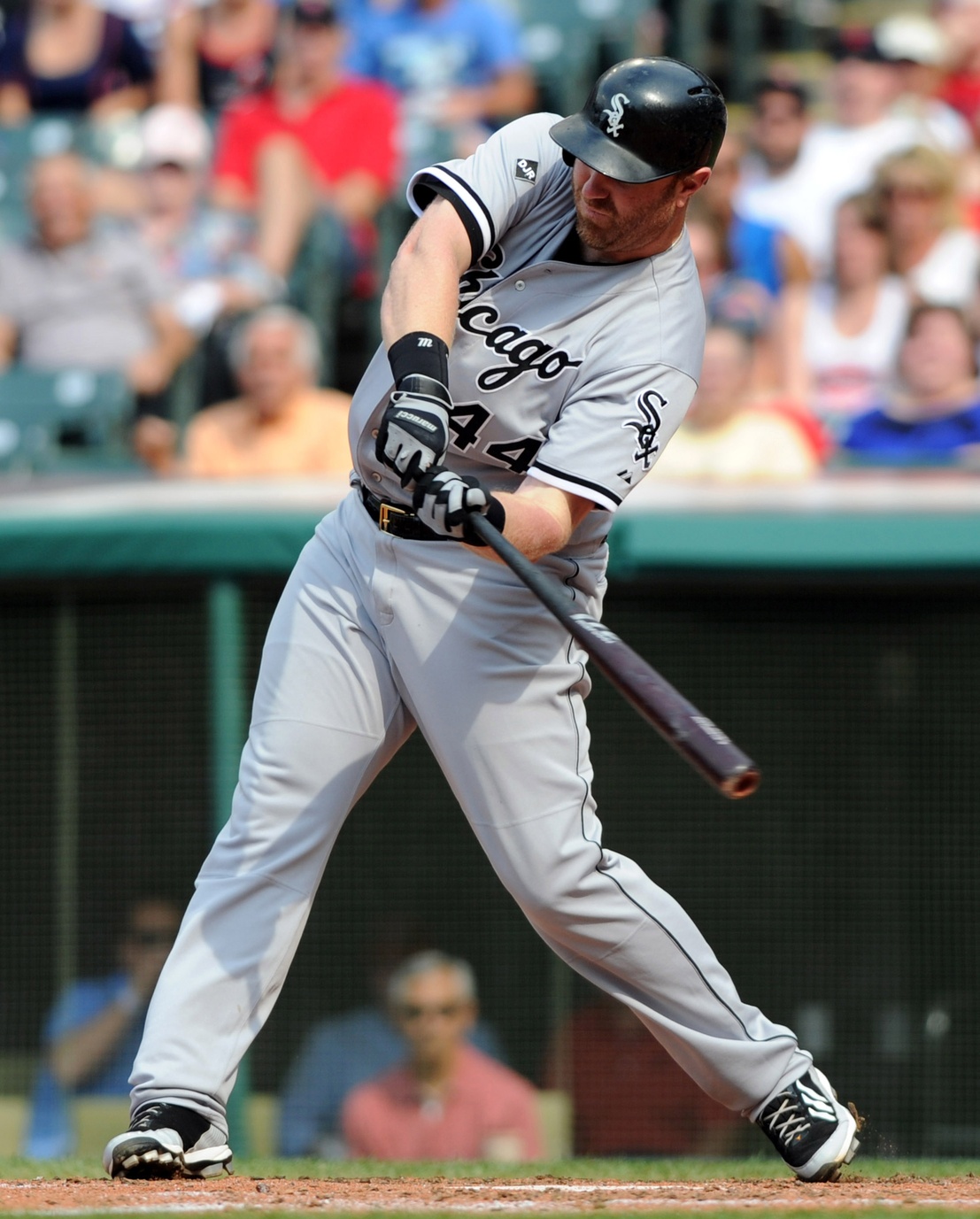 He’s also 34, and his best days as a player seem to be behind him. He remains a prolific power hitter, with 20 home runs in 435 plate appearances this year, and he’s always drawn more than his share of walks. But his batting average has fallen to very low levels — he hasn’t batted above .220 since 2010. And his defense, while never good, has gotten so poor that he’s a liability anywhere other than DH, even considering his obvious offensive skills.
Nonetheless, Dunn will leave behind an impressive body of work, and his extreme homers/walks/strikeouts offensive game makes him an historically unique player. He has 460 career home runs (good for 36th all-time), including at least 38 in seven consecutive seasons from 2004 through 2010. He’s also drawn an impressive 1,311 walks in his career, fourth among active players (behind Bobby Abreu, Jason Giambi and Manny Ramirez). Of course, he’s been one of the game’s most frequent strikeout victims — five of his seasons are in the top 20 all time in strikeouts, and he ranks third all-time in whiffs, behind Reggie Jackson and Jim Thome.
Dunn made his mark on Major League pitching immediately, finishing fourth in NL Rookie of the Year voting in 2001 (despite only playing half the season in the bigs) and emerging as a poster boy for the sabermetric movement with his “Three True Outcomes” (homers, walks and strikeouts) offensive style. He then blossomed into one of the game’s most feared power hitters as an outfielder and then a first baseman with the Reds, Diamondbacks and Nationals.
Photo courtesy of USA Today Sports Images.
Epstein Says Cubs Intend To Compete In 2015
Cubs president of baseball operations Theo Epstein said today that he believes the club is prepared to compete in the NL Central next year, as MLB.com’s Carrie Muskat reports. “I think we’ve proved we can be very competitive in this division,” said Epstein, “and when you have a chance to compete, you should set your sights high and that means our goal is the Central title next year.”
While those words would appear to indicate that Chicago will increasingly be willing to dedicate resources to improve the production of its current roster, Epstein cautioned that the team would not “sell out just for 2015.” It will, however, look to add talent — in particular, some starting pitching, a pen lefty, and new outfield options — through all available mechanisms, including free agency.
Epstein says, unsurprisingly, that the team remains committed to relying on its young talent to drive a resurgence. In spite of his struggles, Javier Baez is expected to open the season as the starter at second. Other less experienced players will presumably keep or expand their roles as well. Epstein specifically addressed relievers Neil Ramirez and Justin Grimm, who he said would stay in the pen rather than being stretched out as starters.
Certainly, the Cubs are a fascinating team to watch as free agency approaches. Many of the club’s best prospects have already reached or are nearing the major league level. Future salary obligations are minimal. And long-anticipated Wrigley Field renovations — which have often been connected to payroll capacity by ownership and the front office — are now underway.
Emilio Bonifacio Changes Agents
Super-utility player Emilio Bonifacio has decided to change agents in advance of his coming free agency, MLBTR’s Tim Dierkes reports on Twitter. Bonifacio has moved from Paul Kinzer to Gene Mato, according to Dierkes.
The 29-year-old switch-hitter delivers much of his value through baserunning and defensive versatility. A consistent threat to swipe thirty bags, Bonifacio ranks 12th in all of baseball since 2011 in the baserunning component of Fangraphs’ WAR calculation. In his eight seasons of MLB action, Bonifacio has seen extensive time at both middle infield spots, center field, and third base.
Bonifacio is somewhat less accomplished with the bat, of course. His 2014 production — .259/.305/.345 over 426 plate appearances — is not far off from his career line of .262/.319/.341, which is approximately 20% below the league average rate. Bonifacio put up a .753 OPS in his best season as a hitter, his 2011 campaign with the Marlins, though that was fueled by a .372 BABIP. (His career mark is .331.)
Mato will face an interesting challenge in finding Bonifacio a new home. In the aggregate, he seems likely to draw wide interest given his age and broad skillset. It is easy to see any number of expected contenders seeking to add Bonifacio as a bench piece, while other clubs may want to move him around as they introduce young players — with the added bonus that he could once more be a summer trade chip.
As always, be sure to reference MLBTR’s Agency Database for the most up-to-date information on current player representatives. If you see any errors or omissions, please let us know via email: mlbtrdatabase@gmail.com.