
Blue Jays Notes: Ryu, Boras, Shapiro
The Blue Jays have remade their pitching staff this winter with the additions of Hyun-Jin Ryu, Tanner Roark, Chase Anderson and Shun Yamaguchi. Along with the return on Matt Shoemaker and the development of Anthony Kay, Trent Thornton, Ryan Borucki and Nate Pearson, the Blue Jays have plenty of options for their 2020 rotation. It doesn’t come together, however, without Ryu at the top. With that in mind, let’s check in on some of the factors that brought the Korean southpaw to Toronto…
- To remember the last time one of Scott Boras’ clients signed with the Blue Jays, he had to go all the way back to the mid-eighties. Bill Caudill signed a two-year, $2.37MM deal to play the 1985 and 1986 seasons in Toronto. Caudill is now one of a couple ex-clients to work for Boras. But until Hyun-Jin Ryu‘s four-year, $80MM deal, the Blue Jays were one of Boras’ favorite teams to pick on, per the Athletic’s John Lott. It wasn’t personal, of course, Boras simply believes Toronto’s market should make them a top-10 team capable of signing top free agents while retaining their own homegrown stars – a trend he’s starting to see with the current Toronto regime. And of course, it behooves Boras to push potential large market teams to open their wallets.
- As for Ryu’s choice to join the Blue Jays, the decision largely came down to where he wanted to raise his young family. That said, Toronto’s early and persistent interest also helped bring Ryu north of the border, per the Athletic’s Kaitlyn McGrath. Long-term security wasn’t necessarily a driving factor for Ryu, though securing a four-year deal for the 32-year-old certainly counts as a win for Boras. Team President Mark Shapiro spoke on Ryu’s importance to the community, saying: “It was more recognizing what an incredibly international city Toronto is, very aware of the Korean population here, both in students and business and what a tightknit community it is. And so feeling like it would be a great place for Ryu and his family to be and feeling like it would be a great synergy with Toronto and Canada, in general. That was a consideration — not a driving factor, but certainly something that we thought would make for a great alignment in the relationship moving forward.”
AL Notes: Red Sox, Peraza, Mariners, Dipoto, Royals, Marklund
Jose Peraza was almost a full win worse than replacement in 2019 (-0.9 bWAR, -0.6 fWAR), but the Red Sox signed him to a one-year, $3MM deal anyhow. The reason being the Red Sox see a speedy player who can play five positions who proved his competence against left-handed pitching even in a down year, per Alex Speier of the Boston Globe. His .269 xBA in 2019 also points to some bad luck (he finished with an actual batting average of just .239). Overlaying his spray chart over the Fenway Park map also suggests Peraza might benefit from the dimensions in Boston. All in all, the Red Sox don’t have the financial freedom this offseason to add a sure-thing superstar, and in Peraza they see a player coming off a down year capable of reaching another gear with a fresh start in Boston. Now, with a couple days left to lock in our new year’s resolutions, let’s check in elsewhere in the American League…
- Seattle Mariners GM Jerry Dipoto did not let a blood clot scare keep him from swinging trades at last year’s winter meetings, but a year after the fact, those close to him do see changes in the man known as “Trader Jerry,” as told in this story from The Athletic’s Corey Brock. Since his stint in a Las Vegas hospital, Dipoto is taking better care of himself, sleeping more and better regulating a once-vigorous workout routine. He’s also been more collaborative with his assistant GMs, trusting them with more of the day-to-day trade discussions with other clubs. As when Jim Hendry signed Ted Lilly from his hospital bed, Dipoto’s bedside dealing has entered Mariners’ lore – but the reality is that Dipoto’s life was in danger, and without his co-workers there to help him to the hospital, there could have been a much more harrowing tale coming out of last year’s winter meetings.
- Brandon Marklund has significantly improved his stock since signing up to play baseball in New Zealand for the Aukland Tautara, per The Athletic’s Alec Lewis. Marklund caught the eye of a number of different organizations while pumping a 96mph heater for the Tautara, but it was the Royals’ Neil Burke who made the biggest push. Burke sums up his surprise in finding Marklund by saying, “What the heck is this Canadian kid who went to school somewhere in the States, who made his way out to New Zealand, who I’m watching pitch in Sydney, doing all the way out here in Australia?” The 23-year-old right-hander put up a sparkling 0.46 ERA in his first pro season stateside for the Royals’ Single-A affiliate.
Free Agent Faceoff: Castellanos Vs. Ozuna
The elite class of free agents – those capable of landing significant multiyear contracts – has shrunk to almost nothing since the market opened at the beginning of November. Third baseman Josh Donaldson, who could wind up with a contract in the $80MM vicinity (if not more) before next season begins, stands out as by far the No. 1 player available. For the most part, impact players without teams are a lot harder to find thereafter, though there are a couple other hitters who should join Donaldson in cashing in during the coming weeks.
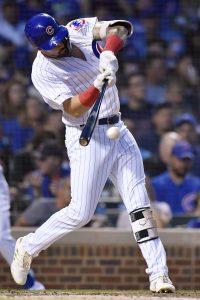
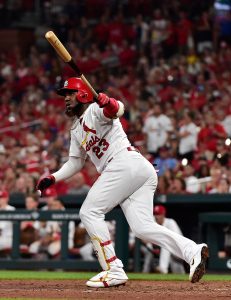
Outfielders Nicholas Castellanos and Marcell Ozuna entered the offseason as two of the top outfielders sans contracts. Almost two months later, they’re still looking for jobs. At the outset of the winter, MLBTR predicted a four-year, $58MM guarantee for Castellanos and a three-year, $45MM guarantee for Ozuna. Several teams have been connected to the two since, but neither player has found an offer to his liking. Now, it’s worth wondering who’s the more desirable player of the pair.
Castellanos, who will turn 28 in March, broke out with the Tigers in 2016 and has been a well-above-average offensive player since. During that four-year, 2,454-plate appearance span spent with the Tigers and Cubs, Castellanos slashed .286/.336/.504 with 94 home runs, a 6.5 percent walk rate and a 22.3 percent strikeout rate en route to a 121 wRC+ (meaning his production came in 21 percent above the average hitter’s) and 9.7 fWAR.
As has been covered time and again, Castellanos’ defensive limitations have somewhat offset his work at the plate. Castellanos couldn’t hack it at third base, which led the Tigers to move him to right field late in 2017. He has also endured no shortage of troubles in the outfield, having accounted for minus-35 Defensive Runs Saved and a minus-25.7 Ultimate Zone. Although Castellanos did show some improvement last season, he still stumbled to a minus-9 DRS with a minus-5.2 UZR. So, if you’re adding him to your team, you’re probably not expecting much in the field.
On the other hand, DRS (plus-28) and UZR (plus-28.3) have given high marks to Ozuna in the outfield (primarily left) since his career began with the Marlins in 2013. Dating back to then, Ozuna has batted .273/.329/.455 with 148 homers (112 wRC+), a 21 percent strikeout rate against a 7.5 walk percentage, and 20.3 fWAR over 3,861 trips to the plate divided between Miami and St. Louis.
The 29-year-old Ozuna has been a more valuable player overall than Castellanos, though the latter has closed the gap in the past couple years. Castellanos was clearly the more productive batter in that span, as his 126 wRC+ trumped Ozuna’s 108 mark. But both players have been perennial Statcast favorites, evidenced in part by Castellanos’ .364 expected weighted on-base average and Ozuna’s even better .382 figure from 2019.
Bottom-line production aside, Castellanos and Ozuna have shown themselves to be pretty durable throughout their careers. Since his first full year in 2014, Castellanos has put up seasons of 148 games or more five times (including 151 in 2019). While Ozuna did miss 32 games because of broken fingers last season, he does have four years of 148-plus games on his resume.
Castellanos and Ozuna have looked similarly valuable of late, though the comparison between the two is admittedly imperfect. After all, they do line up at different positions, and Castellanos – unlike Ozuna – had the benefit of reaching free agency without a qualifying offer hanging over his head. Still, as the two top outfielders on the market, it at least makes some sense to group Castellanos and Ozuna together. Which player would you rather sign?
(Link for app users)
Who's the more appealing free-agent outfielder?
-
Nicholas Castellanos 50% (6,089)
-
Marcell Ozuna 50% (6,025)
Total votes: 12,114
Photos courtesy of USA Today Sports Images.
Remaining Needs: NL Central
We’re nearly halfway through what has been a vastly more active offseason than we saw in either of the past two winters. We’ve already checked in on the NL East, AL West, and AL Central. Next up: the National League Central.
Chicago Cubs
Welp … it’s hard to know what to say here. If the baseball operations department is as hard up for cash as reports indicate, then it’s difficult to pinpoint opportunities that ought to be pursued. To this point, the Cubs have made only the cheapest of additions — Hernan Perez, Ryan Tepera, Brandon Morrow, Trevor Megill — while exploring significant trades — Kyle Schwarber? Willson Contreras? Yu Darvish? Kris Bryant?! Anthony Rizzo?!?! — that could set the stage for greater roster maneuverability. We don’t know where talks stand, but there’s no indication that a blockbuster is close to happening.
If and when the Cubs are able to free some resources, then they’ve certainly got holes to be filled. The team ought to bolster the back of the rotation, add one or more pieces to a highly uncertain bullpen mix, improve in center field, and figure out a way to put another big bat in the lineup. No doubt such a swap would accomplish one or more of those goals. Trouble is, any deal involving a highly paid, core player would create another opening — or, at least, inject some new uncertainty. It’s a tight balancing act that will put president of baseball ops Theo Epstein and co. to the test.
Cincinnati Reds
Sensing some vulnerability at the top of the division and tired of bringing up the rear, the Reds are pressing hard to win now. The club has done all it can in the rotation and filled its second base opening by signing Mike Moustakas. But it rather clearly hasn’t reached a stopping point if it really wants to maximize its chances at a 2020 postseason bid.
The Reds have irons in quite a few fires. They’ve already shown they can pull off a significant swap, having added Trevor Bauer at over the summer. But that cost a top prospect in Taylor Trammell, so it may be hard for the club to give up more significant young talent in trades. Trouble is, what’s left in free agency may not perfectly suit the Reds’ needs. Adding Nicholas Castellanos, Marcell Ozuna, or Corey Dickerson could make some sense, but the club has options in the corner outfield mix and may not see enough marginal gain to justify the cost.
What this team needs most is star-level performers up the middle. Nick Senzel is a valuable asset but may be mis-cast as a center fielder. Tucker Barnhart has a sterling defensive reputation behind the dish but doesn’t do much with the bat. And shortstop Freddy Galvis is better suited to utility work for a team with designs on winning a division. It’s possible to imagine marginal improvements in these areas through the addition of quality, semi-regular players — Shogo Akiyama, Jason Castro, Jose Iglesias — but that will also mean pushing other useful players off of the roster. Swinging a blockbuster may prove tricky, but will surely be the focus of the rest of the winter. It also wouldn’t hurt to add a veteran setup arm.
Milwaukee Brewers
Roster churn is all part of the plan for GM David Stearns. The value-hunting Milwaukee baseball operations department didn’t chase the market on several departing free agents, preferring instead to seek the next buy-low opportunities while also swinging a pair of notable asset-shifting trades. The initial additions look solid from a value perspective. And they’ve been so voluminous that it’s fair to wonder how much work is really left to be done.
The Brewers aren’t overly focused on pitching roles, but could probably still stand to add arms. Hurlers such as Corbin Burnes, Brent Suter, Eric Lauer, Freddy Peralta, and Jake Faria could operate as short-outing starters, long-inning relievers, or as typical one-inning bullpen arms. That’s a fine strategy, but it’s one that depends upon digging up as many cost-efficient assets as possible. And it’s arguable the club ought to punctuate the unit by finding a way to add another premium pitcher to go with top starter Brandon Woodruff and ace reliever Josh Hader.
The Brewers currently project to come in well under last year’s $120MM+ payroll level. But you can bet they won’t spend money just to use up their budget. Stearns may at this point largely sit back, building out trade scenarios and scanning the bargain bin for finds.
Pittsburgh Pirates
Incoming GM Ben Cherington finds himself in a position not so different from the one that Stearns inherited a few years ago in Milwaukee. The Bucs don’t spend much, but they do have legitimate talent at the MLB level and in the upper levels of the pipeline, much like the pre-2016 Brew Crew. Cherington may follow the paths of Stearns and (former Cherington understudy) Mike Hazen of the Diamondbacks, both of whom have to this point found success — if not postseason glory — by eschewing both dramatic rebuilding and wild spending phases in favor of diligent, value-oriented roster maneuvering.
Presuming that sort of conceptual approach … well, we still don’t know what to expect. Cherington may not blow things up, per se, but he also surely won’t hesitate to move high-quality veteran players when it makes sense. Center fielder Starling Marte, reliever Kone Kela, and starter Chris Archer are the most obvious candidates; utilityman Adam Frazier and righty Joe Musgrove have reportedly drawn interest. If the trade offers meet or exceed the prices being paid in free agency, maybe Cherington will unleash an early-2020 onslaught of deals. But he really doesn’t have any veterans that he absolutely must move this winter.
As for additions, the team needs a long-term catcher first and foremost. It hasn’t settled on players at the 4-5-6 positions, but has plenty of internal options at or near the majors. Improving the rotation and bolstering the bullpen are theoretically desirable, but the focus will be on achieving value coming off of a rough 2019 campaign. Other buy-low desires will be dictated by which (if any) players are moved out via trade.
St. Louis Cardinals
At the moment, the Cards look exactly as they did when the 2019 season wrapped up, except without outfielder Marcell Ozuna and with lefty Kwang-Hyun Kim stepping into the shoes of Michael Wacha. There are, as always, a dozen or so outfield possibilities on hand. Perhaps it’s not unreasonable to expect some number of them — including, eventually, top prospect Dylan Carlson — to fill in adequately for Ozuna. This mix worked to the tune of a division title in 2019, so there’s no particular reason to think it can’t succeed again.
It’s a bit difficult to pick out a remaining free agent (Josh Donaldson aside, anyway) and say that the St. Louis roster would be improved drastically through that player’s addition. Sure, the team would rather have Nicholas Castellanos than not, but at what price would it make sense over the existing pieces? If there’s a specific position that feels unresolved, it’s probably center field and its questionable combination of Harrison Bader, Randy Arozarena, and Lane Thomas. But that’s precisely the wrong area to add this winter, with the aforementioned Marte leading a meager list of good possibilities.
What the Cards could use more than anything, it seems, is something we’ve mentioned previously with regard to this roster: to consolidate some of their solid MLB assets into really good ones. As it stands, only Paul DeJong finished the 2019 season with 4 or more fWAR (in his case, driven by glovework). Getting quality for volume is a tricky thing to pull off; it’s more or less what the team attempted, with still-questionable results, in last year’s Paul Goldschmidt deal. But it’s what president of baseball ops John Mozeliak ought to be seeking to swing — at more or less any area of the roster — over the next two months.
MLBTR Poll: How Good Are The Angels?
Coming off their fifth straight non-playoff season and their fourth consecutive sub-.500 campaign, the Angels were expected to be one of the majors’ most active teams this winter. They haven’t disappointed.
Not only did the Angels sign free agency’s No. 1 position player – former Nationals third baseman Anthony Rendon – to a seven-year, $245MM contract, but they’ve also strengthened their much-maligned starting rotation. Granted, the Angels’ acquisitions of ex-Oriole Dylan Bundy and former Brave Julio Teheran haven’t bowled anyone over, but at least the two of them have shown themselves to be durable, major league-caliber starters in recent years. That’s more than can be said for the majority of starters the Angels have run out over the past couple seasons.
With Rendon in the mix, an Angels position player group that finished 2019 middle of the pack in fWAR (16th) and runs scored (17th) suddenly looks imposing. Rendon and three-time AL MVP-winning center fielder Mike Trout could be the best one-two punch in baseball. Beyond them, there’s shortstop Andrelton Simmons, designated hitter Shohei Ohtani, left fielder Justin Upton and second baseman David Fletcher. Brian Goodwin‘s the team’s starting right fielder for the moment, but his days at the top could be numbered with super-prospect Jo Adell not far from making an impact in the bigs.
While the Angels clearly have a legitimate offensive core, there are concerns, namely at catcher – which they need to address before the offseason’s out – as well as at first base. Unfortunately for the Angels, they could be stuck with a deteriorating Albert Pujols (he of the bloated $29MM salary) playing a key first base role.
Meanwhile, even with Bundy and Teheran in the mix, the Angels’ rotation still appears to need work. Neither one of those right-handers is a world-beater. Ohtani, a fellow righty, has front-end ability, but he only threw about 50 innings in 2018 before Tommy John surgery kept him off a mound last season. Like Ohtani, Andrew Heaney, Griffin Canning and Patrick Sandoval – although promising – haven’t really established themselves so far. Another problem for the Angels: They don’t seem likely to land a bona fide front-end type before the season, as Gerrit Cole, Stephen Strasburg and Zack Wheeler are gone from free agency, and nobody’s aggressively shopping a No. 1 or 2 starter via trade.
Elsewhere, there’s a case the Angels need to better their bullpen, which finished last season in mediocre territory. Aside from claiming righty Mike Mayers from the Cardinals last month, they haven’t done much to address that area. Hansel Robles, Ty Buttrey, Noe Ramirez and Cam Bedrosian will all be back, however, and the Halos should get a full year from Keynan Middleton after he missed most of 2019 while recovering from Tommy John surgery.
It’s hard to argue that the Angels haven’t taken significant steps forward this offseason. Plus, the two front-runners in the AL West – the Astros and Athletics – have been pretty quiet since last season ended. That said, after going 72-90 and finishing 35 games back of the Astros and 25 behind the A’s in 2019, the Halos still look as if they have more ground to make up if they’re going to be any better than a third-place team in 2020. With $20-some million left in spending room before they reach the first level of the luxury tax, the Angels just might make another splash or two before the offseason’s out. Right now, though, how many games do you expect the Joe Maddon-led club to win next year?
(Poll link for app users)
As of now, how many games do you expect Angels to win?
-
80-84 37% (6,782)
-
85-89 34% (6,077)
-
76-79 12% (2,125)
-
90-94 11% (1,988)
-
75 or fewer 4% (706)
-
95 or more 3% (460)
Total votes: 18,138
Reds, Padres Reportedly Leading Shogo Akiyama Bidding
DECEMBER 27, 7:42pm: Aside from the Reds and Padres, it’s “thought” that the Diamondbacks, Cubs and maybe even the Blue Jays still have interest in Akiyama, Jon Heyman of MLB Network tweets.
6:55pm: The bidding is largely down to the Reds and Padres, according to a Sports Hochi report (Japanese language link; h/t Patrick Newman of NPB Tracker, on Twitter). It seems the expectation is that he’ll reach a decision before the new year.
5:50am: The Reds have a multi-year offer to Akiyama on the table and are the likeliest landing spot for the 31-year-old, per a Friday report from Nikkan Sports (Japanese language link).
DECEMBER 26: When he declared his intentions to come to the majors, Japanese center fielder Shogo Akiyama entered an interesting place on this winter’s market. With so few viable center fielders available, and no shortage of demand, he offered an intriguing new possibility.
Interest has been fairly robust from the outset for the long-time Seibu Lions standout. And the chatter — at least, in Japanese outlets — has increased of late after Yahoo Japan reported (Japanese language link) that the left-handed-hitting 31-year-old would reach a decision in late December. If Akiyama has settled on a contract, it’s not yet known. But there are a few new hints to chew on. And other recent developments have had an impact on his market.
Yahoo Japan (Japanese language link) cites the Padres as a leading new contender. While it’s tough to assess the merits of those reports, they’re each rather notable for the impact on the market at large. The Pads only just added a somewhat similar player in Trent Grisham; it’d seem a move on Akiyama might portend a trade of another left-handed-hitting outfielder. Plus, adding salary would increase the team’s desire to move some of the money owed Wil Myers.
Then again, Nikkan Sports (Japanese language link) labels the Reds the likeliest landing spot for Akiyama, citing the organization’s persistent interest. The possibilities are all the more interesting with regard to the Reds, who have seemingly been preparing to utilize Nick Senzel in center but could take any number of different directions upon adding Akiyama. There certainly could be implications for the club’s interest in right-handed-hitting corner bats such as Nicholas Castellanos and Marcell Ozuna. With six left-handed-hitting outfielders on the 40-man, the Cincinnati club would at minimum have to do some roster maintenance.
The Cubs and Diamondbacks have long been known to have interest. But it’s worth wondering to what extent either club is a legitimate possibility at this stage. The Cubs are reportedly sifting through pocket change and don’t appear to have any salary-freeing swaps on the immediate horizon. And the Arizona organization just added Kole Calhoun, which gives the team two well-compensated, left-handed-hitting corner outfielders around switch-hitting center fielder Ketel Marte (although he could shift back to second base if Akiyama lands in Arizona).
Another team long known to have interest, the Rays, also made a significant new left-handed-hitting addition to its outfield mix. Fellow Japanese standout Yoshitomo Tsutsugo secured a relatively surprising two-year, $12MM deal (plus a $2.4MM release fee) with the Tampa Bay organization. To what extent the Rays are involved at the moment isn’t entirely clear. But the team reportedly remains interested in Akiyama, even with multiple other left-handed-hitting options — including regular center fielder Kevin Kiermaier — still on hand.
While there’s still quite a lot of uncertainty, the foregoing discussion does indicate the layers of intrigue at play. In all likelihood, an Akiyama signing will be preceded by and/or will trigger some potentially notable corresponding transactions.
MLBTR Chat Transcript: 12/27/19
Click here to read a transcript of today’s chat with host Jeff Todd.
Trade Candidate: Matthew Boyd
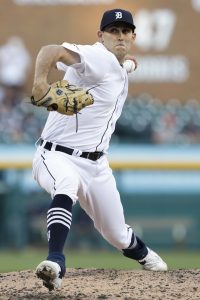
Left-hander Matthew Boyd has been one of the most talked-about trade candidates in baseball dating back to last season, yet the Tigers haven’t been willing to part with him thus far. Boyd seemed to come up on MLBTR’s pages every day last July leading up to the trade deadline, though rumors centering on him have been few and far between this offseason. As of a few weeks ago, Tigers general manager Al Avila wasn’t “actively” looking to move Boyd, one of the most valuable players on a Detroit team that has little chance to push for contention in the near term.
Since that report on Boyd broke, the upper end of the free-agent class for starting pitchers has emptied out. Gerrit Cole, Stephen Strasburg, Zack Wheeler, Madison Bumgarner, Hyun-Jin Ryu, Dallas Keuchel and Cole Hamels, among others, have come off the board in recent weeks. That leaves … Alex Wood (?) as the best starter left in free agency. Needless to say, if you didn’t sign any of the top starters on the open market but still need help in your rotation, a trade’s likely your best bet at this point. So, there should be plenty of teams clamoring for Boyd.
As MLBTR’s Jeff Todd explained earlier this week, when combining trade value and trade probability, Boyd may be the likeliest starter in the game to wind up on the move before the season. As was mentioned before, the Tigers figure to stay close to the bottom of the league for at least a little while longer, which is one reason it makes sense to give up Boyd now. Likewise, the lack of better starters on the open market ought to help Detroit’s cause if it tries to deal him. The soon-to-be 29-year-old Boyd does have three seasons’ arbitration eligibility left, so the Tigers could be content to keep him. However, Boyd’s getting more expensive (he’s due a projected $6.4MM in 2020) and might be difficult to extend with Scott Boras as his agent.
All things considered, the next several weeks look like an opportune time for the Tigers to cash in Boyd. Keep in mind this is the same club that held once-coveted righty Michael Fulmer when several teams were interested in him, and after undergoing Tommy John surgery last March, his trade value’s almost nil right now. If the Tigers go the other way with Boyd, there should be plenty of teams willing to offer enticing packages. To name several examples, the Angels, Astros, Phillies, Padres, Dodgers and Braves were all reported to have expressed interest in Boyd over the summer. All of those clubs could still stand to add someone of his ilk to their starting staffs right now.
So, if you’re going to trade for Boyd, what would you be getting? Well, there’s nothing particularly impressive about his career 4.92 ERA/4.66 FIP across 645 1/3 innings. Similarly, neither Boyd’s lifetime 91.4 mph average fastball velocity nor his 92 mph mean from 2019 will scare anyone. But Boyd did find another gear last season in terms of generating swinging strikes, racking up strikeouts and limiting walks. Hitters whiffed on 14 percent of his pitches, up from the 9 to 10 percent range during prior seasons. Moreover, Boyd took down 11.56 batters per nine via the K and handed out free passes at a personal-best 2.43 per nine. In all, his 4.76 K/BB ratio ranked 10th in the majors, barely trailing NL Cy Young winner Jacob deGrom and placing him just above the likes of Bumgarner and Clayton Kershaw.
Despite his K/BB brilliance, Boyd still concluded last season with an unspectacular 4.56 ERA/4.32 FIP over 185 1/3 innings. One problem? A lack of ground balls. Boyd induced grounders at a subpar 35.6 percent clip, which rivaled his lifetime mark (34.5) but also helped lead to an unpalatable home run tally. He surrendered long balls on 18.2 percent of flies, up from the 10 to 11 range over the previous two seasons. Of course, teams that are especially sanguine about Boyd could attribute those struggles to a leaguewide increase in HRs. As such, it may not have a negative effect on their interest in swinging a deal for him.
All told, 2019 was a tale of two halves for Boyd. He recorded a terrific 3.57 ERA/3.38 FIP in advance of the All-Star break, which helped fuel one trade rumor after another, before plummeting to a 5.35 ERA/4.57 FIP thereafter. In retrospect, maybe the Tigers should’ve sold high on Boyd in July, but it still seems likely he’d bring back a quality return for the rebuilding club in the coming weeks.
Photo courtesy of USA Today Sports Images.
Taking Stock Of The First Base Market
We’ve seen a few teams plug needs at the first base position thus far. But others have unfilled openings — or, alternatively, could pursue upgrades as a means of plugging in some desired offense. On the supply side … well, if you just glance at the list of free agents, you may be disappointed. But a closer look shows quite a few more possibilities.
If you want an established bat coming off of a good season, you’ll have to head onto the trade market. Josh Bell of the Pirates and Trey Mancini of the Orioles are each 27-year-old, first-time arb-eligible sluggers. They’re the cream of the crop … unless the Cubs are open to listening to offers on Anthony Rizzo. There’s no clear indication of that, but the club has said it’s willing to consider anything and spurned Rizzo’s interest in pursuing an extension.
Prefer a rental? It’s not clear where the dealing will end for the Indians, but Carlos Santana and his $20MM salary could well be available (even if the Mariners are covering a piece of it already). He had quite a nice season last year, marrying typically exceptional plate discipline with a power rebound.
There are also a few other, subtler possible targets that aren’t true first basemen but could be seen as options there. Kyle Schwarber of the Cubs and free agent Nicholas Castellanos are each somewhat awkward in the corner outfield. But with their backgrounds coming in more challenging infield spots (catcher and third base, respectively), it stands to reason they’d be capable of wielding the leather at first.
Outside of Castellanos, free agency is a bit limited. Left-handed hitters Eric Thames and Mitch Moreland were each productive in 2019 and look like good options, particularly for clubs that have platoon partners in mind. Yonder Alonso and Matt Adams have had their moments in recent years but will each be looking to bounce back. Ditto Adams teammate Ryan Zimmerman, who’ll either re-sign with the Nationals or retire. Wilmer Flores is a bit of an under-the-radar possibility. He had a nice season with the bat last year but hasn’t been terribly valuable elsewhere in the infield. Perhaps he’d be seen as an option at first by some clubs.
If a team would rather land a younger, longer-term option, the Mets have a pair of possibilities on offer. Dominic Smith doesn’t appear to have anywhere to play in New York with Peter Alonso hogging all the action at first. While J.D. Davis is capable of playing third base or the corner outfield, which boosts his appeal, some teams would surely rather stash his bat (if they believe in it) at first base rather than exposing him to the more difficult defensive positions.
There are some other relatively youthful possibilities out there. The Mariners’ Daniel Vogelbach and Marlins’ Garrett Cooper have shown intriguing skills at times and ought to be available. The Rays have a loaded deck of lefty sluggers after signing Yoshitomo Tsutsugo. Indications are he’ll be used in the outfield and at third base, but it’s hypothetically possible the club could consider offers on Ji-Man Choi and Nate Lowe. Bounceback targets include Ronald Guzman of the Rangers and free agent Greg Bird.
Teams that would rather a veteran bat and aren’t afraid of talking big dollar signs have a few other candidates to consider. The Padres (Wil Myers), Giants (Brandon Belt), and Cardinals (Matt Carpenter, Jose Martinez) could all have interest in structuring deals. If the preference is for veteran depth without any commitment, then Mark Reynolds, Kendrys Morales, and Lucas Duda should all be available for little more than a non-roster invite.
Remaining Needs: AL Central
We’re nearly halfway through what has been a vastly more active offseason than we saw in either of the past two winters. We’ve already checked in on what’s left to do for the five clubs in the NL East and the five in the AL West. Let’s turn the focus to the AL Central as we continue moving through the game’s six divisions…
Minnesota Twins [Offseason Outlook]
Baseball’s most-improved team from 2018 to 2019 entered the offseason in need of a rotation upgrade, and nothing has changed on that front. Several months after broadcasting an intent to pursue “impact” pitching, Minnesota’s rotation is led by a familiar trio: Jose Berrios, Jake Odorizzi and Michael Pineda. Kyle Gibson has departed for the Rangers. Martin Perez signed with the Red Sox. The Twins’ rotation, at present, is thinner than it was for much of the 2019 season, and the top free agents are all off the board to other teams. The Twins will have to get creative in order to make good on that promise of adding an impact arm — particularly since few look to be clearly available on the trade market.
The other question facing the Twins is whether they’ll succeed in their ongoing pursuit of former AL MVP Josh Donaldson. Third base isn’t a “need” for the Twins, but penciling in Donaldson at the hot corner and shifting Miguel Sano to first base deepens the lineup while simultaneously improving the infield defense. And the Twins still have ample funds to spend, even after signing Odorizzi, Pineda, Sergio Romo, Tyler Clippard and Alex Avila. If they miss out on Donaldson, too, president of baseball operations Derek Falvey and GM Thad Levine could be all the more motivated to line up an impact trade.
Cleveland Indians [Offseason Outlook]
The Indians might already have succeeded in their primary goal, as ownership looks intent on further paring back payroll after spending at club-record level in the wake of 2016’s World Series run. Gone is Corey Kluber, and the fact that Cleveland moved him for what is widely regarded as a light return (rather than hanging onto him and exploring the midseason market) suggests that clearing his salary was a key piece of the deal.
The Indians reallocated a bit of the money earmarked for Kluber when they agreed to terms with Cesar Hernandez to serve as the new second baseman. But it’s been radio silence from the Cleveland front office otherwise, despite the team’s reported desire for an outfield upgrade. (Delino DeShields, acquired in the Kluber deal, does not fit that description.) It’s tough to see the Indians ponying up for one of Nicholas Castellanos or Marcell Ozuna, but they could still try to play for someone like Corey Dickerson or perhaps explore a Yasiel Puig reunion. The trade market may be the likelier path.
One would expect that the main narrative around the Indians would be “how can they return to the top of the division,” but it’s instead on whether they’ll trade anyone else after clearing Kluber’s salary. Francisco Lindor‘s name is dominating the rumor mill in recent weeks, and even Mike Clevinger has seen his name pop up. A deal of either player might not be likely but could bring back some MLB-ready talent (while creating another enormous hole to fill). At this point, Cleveland could stand to add an outfielder, a bullpen arm or another starting pitcher, but it’s not clear how much they’re willing to spend to do so.
Chicago White Sox [Offseason Outlook]
Far and away the most active club in the division — if not in all of baseball — the White Sox have overhauled a roster that now includes Yasmani Grandal, Edwin Encarnacion, Dallas Keuchel, Gio Gonzalez and Nomar Mazara (all after agreeing to an extension with Jose Abreu). You can debate the extent to which those moves have improved the roster, but there’s no denying that the South Siders will enter 2020 with a markedly better club (especially when considering the looming promotions of center fielder Luis Robert and second baseman Nick Madrigal).
Frankly, the heavy lifting is mostly complete for GM Rick Hahn and his staff — but don’t expect them to just sit back and wait for Opening Day. The Sox could still look to add a low-cost veteran in center or at second to bridge the gap to those aforementioned top prospects (and to serve as insurance, should they sustain an injury or struggle to adapt to the Majors). The team’s bench looks quite thin at the moment as well. In the bullpen, there’s little certainty beyond the top two names (Alex Colome and Aaron Bummer), so it’s only sensible to add a reliever or two to the fray as they look to build a deeper club capable of postseason contention. It’ll be worth keeping an eye out for some Spring Training extensions for younger players as well.
Kansas City Royals [Offseason Outlook]
The Royals have hired a new manager (Mike Matheny) and bought low on some former top prospects (Maikel Franco, Chance Adams). The signing of Franco and acquisition of Adams are both perfectly sensible moves for a rebuilding club to make, and a few more pickups along those lines wouldn’t be a surprise. But the Royals never figured to be aggressive in free agency this winter, as they’re clearly more focused on winning in 2021-22 than they are in 2020. There’s clearly room to add to the rotation or bullpen later in the offseason, should a good value present itself, but the Royals are also hopeful that several of their best pitching prospects will surface in the Majors in 2020.
Given the team’s current long-term approach, it’s surprising that the soon-to-turn-31 Whit Merrifield isn’t more available on the trade market. However, general manager Dayton Moore has steadfastly maintained that he expects Merrifield to be a part of the Royals’ next competitive club and has resisted all offers dating back to last offseason. The Royals locked Merrifield up to a very affordable extension last winter, and the club could conceivably explore long-term arrangements with the likes of Adalberto Mondesi or Jorge Soler this spring.
Detroit Tigers [Offseason Outlook]
Rebuilding or not, the Tigers opted to add some thump to their lineup earlier this month when they signed both C.J. Cron and Jonathan Schoop to matching one-year deals. Scooping up the Twins’ right-side infield tandem gives the Tigers some lineup depth and a pair of potential trade chips to flip this summer; a few other short-term moves along those lines could very well play out.
The pitching staff, in particular, looks ripe for short-term upgrades (both in the ‘pen and in the rotation). A one-year flier on an Alex Wood or Jimmy Nelson type could pay dividends. Last year’s attempts at turning Tyson Ross and Matt Moore into coveted trade pieces didn’t pan out, but those results shouldn’t push the club away from trying what was a sound strategy once again.
The biggest question surrounding the Tigers is whether Matthew Boyd will be with the club to open the season. Boyd is widely known to be available and has drawn interest from plenty of clubs dating back to the July trade deadline. He’s controlled for another three seasons and emerged as one of the game’s premier strikeout pitchers in 2019, though home runs inflated his ERA. Some teams are surely hopeful, though, that if there’s a correction to last season’s juiced ball, Boyd can take another step forward and cement himself as a high-end rotation cog. There’s no urgency to trade him, but the Tigers will continue to explore the market to see if someone will overwhelm them.