
Boras Challenges Cubs Regarding Kris Bryant
Agent Scott Boras had strong words today for Cubs ownership regarding the timeline of the promotion of top prospect Kris Bryant, as Ken Rosenthal of FOX Sports reports. In the view of Boras, the team — and, in particular, its final decisionmakers — must decide whether to prioritize winning over long-term contractual matters.
At base, the issue revolves around service time and major league readiness. By keeping the 23-year-old Bryant in the minors even for just two weeks to start the 2015 campaign, the club can prevent him from accruing a full year of service and thus delay his free agency by a full season. The controversy over Bryant is not a new one, of course; we saw similar debates last year, for example, involving players such as Gregory Polanco. It is, however, in particularly sharp focus given the player’s massive potential — as exhibited in his outstanding spring performance thus far (six home runs in 23 plate appearances) — and the club’s own emergent competitiveness.
“Cubs ownership has a choice,” said Boras. “Are they going to present to their market that they are trying to win? [Cubs owner] Tom Ricketts said they were all about winning.” In addressing the issue, Boras compared Bryant to several other top prospects who were allowed to start the year with their clubs in spite of service considerations, often with successful results. He had particular criticism for the team’s decision not to call up Bryant late last year, saying: “I believe the issue with Kris Bryant is not whether he should be on the 2015 team. The issue is, why wasn’t he called up in September of last year when he could have prepared for the 2015 season?” In comments to USA Today’s Bob Nightengale, Boras was even more strident, saying that holding Bryant down is tantamount to “damaging the ethics and brand of Major League Baseball.”
In response, club president of baseball operations Theo Epstein said that the decision whether to include Bryant on the active roster to start the year was his alone, upon consultation with his front office team. “Comments from agents, media members, and anybody outside our organization will be ignored,” he said.
Epstein emphasized that there is more at play than contract status. “As I told Kris last September and again at the start of spring training, we view him as nearly big league ready,” Epstein said. “The remaining area for improvement is his defense — something Kris agrees with. Kris is 6-foot-5 and a half and therefore faces obstacles other third baseman don’t face.”
Though Epstein held out the possibility of Bryant heading north with the team, he noted that lingering shoulder soreness was playing a role in the decision:
“More than anything, we want him to get in a good rhythm defensively before he makes his major-league debut. That has not happened yet, in part due to some shoulder fatigue that is not a concern but has limited the amount of game action he’s been able to have at third base. If enough time remains to get Kris into a good rhythm defensively at we may consider putting him on the club. If not, we see nothing wrong with using the early part of the season at Iowa to get him in that rhythm.”
As for the notion that Bryant should have received a September call-up to prepare him to start 2015 in the bigs, Epstein tells Nightengale that the decision was made in part based upon the fact that Bryant had just experienced his first full professional season. “When we talked after the season,” Epstein said, “he was really happy how he held up physically, but he’s an honest kid, and said that he was little mentally drained from the grind of the long season. I think it was the right thing, let a guy go through his first full season, and feel good about the numbers he put up.”
Bryant entered the year as a consensus top-three prospect league wide after destroying the upper minors last year in his first full season as a professional. Over 594 plate appearances split evenly between Double-A and Triple-A, he slashed .325/.438/.661 and hit 43 home runs. Of course, as Epstein notes, observers agree that there remains some polish to be applied to his work at the hot corner.
As for the Cubs roster, one major impediment to significant early playing time for Bryant was removed over the offseason when the team dealt away the solid Luis Valbuena. But Chicago traded for Tommy La Stella as another cheap, youthful option and also has former prospect Mike Olt in camp.
Nationals Release Jeff Kobernus
The Nationals announced that they released utilityman Jeff Kobernus today. The 26-year-old was once rated a top-twenty organizational prospect in D.C.
Kobernus, a second-round pick back in 2009, has seen limited big league action in each of the last two seasons. With just 44 MLB plate appearances to his name, most of his time over 2013-14 was spent at the Triple-A level, where he owns a .296/.356/.378 slash with 57 steals in 647 total turns at bat.
Primarily a second baseman, Kobernus has diversified his defensive repertoire by spending time in the outfield of late. As with outfielder Eury Perez and infielder Zach Walters, both of whom were parted with last year, Kobernus was an upper-level depth piece who no longer had a place in the organization.
Giants Acquire Jackson Williams From Angels
The Giants have acquired catcher Jackson Williams from the Angels in exchange for cash considerations, Angels director of communications Eric Kay announced on Twitter. Williams had spent his entire professional career in San Francisco prior to 2014.
Last year was the first in which Williams cracked the big leagues, picking up 16 plate appearances with the Rockies. He also enjoyed his best campaign at the plate at the Triple-A level, slashing .256/.353/.368 with four home runs. The former late-first round pick made his way to the Halos on a waiver claim early last fall.
Presumptive backup catcher Andrew Susac has been dealing with wrist inflammation, which may have led San Francisco to pursue another depth option. While Williams is slated to head to minor league camp, as Alex Pavlovic of CSNBayArea.com tweets, he represents another link in the chain alongside names like Hector Sanchez and Guillermo Quiroz.
Extension Candidate: Gerrit Cole
The Pirates have recently been amongst the game’s most aggressive teams in pursuing early-career extensions. Since taking the GM seat in Pittsburgh back in the fall of 2007, Neal Huntington has locked up deals with ten players for a total of 37 years and $182.9MM. Only two of those contracts went to players with four or more years of service.
Among the team’s most recent efforts were successful pacts with star outfielders Andrew McCutchen (six years, $51.5MM) and Starling Marte (six years, $31MM), with the former inking with 2.123 years of service and the latter signing with just 1.070 years to his credit. While those deals haven’t all been successful — neither Jose Tabata nor Nate McLouth, for instance, delivered value on their deals, though neither did they hamstring the club — the aggregate benefit to the organization is undeniable.
Pittsburgh, riding high on two straight postseason appearances, spent a relatively large amount through free agency this last offseason and seems in good position to stay competitive for years to come. The team has continued to explore ways to add value to its player assets through extensions: in particular, it made a long-term offer to then-untested outfielder Gregory Polanco last year, though those negotiations seemingly stalled. In spite of their relatively meager spending capacity, the Pirates appear to have plenty of future flexibility, with less than $12MM on the books for 2018 and even less thereafter.
While another run at Polanco obviously remains possible, it is fair to wonder whether the team might turn its sights elsewhere this spring. Josh Harrison remains an intriguing possibility, as MLBTR’s Steve Adams discussed last fall. Beyond that, there is one obvious potential candidate who brings immense upside — and, given the nature of his craft, risk: young ace Gerrit Cole.
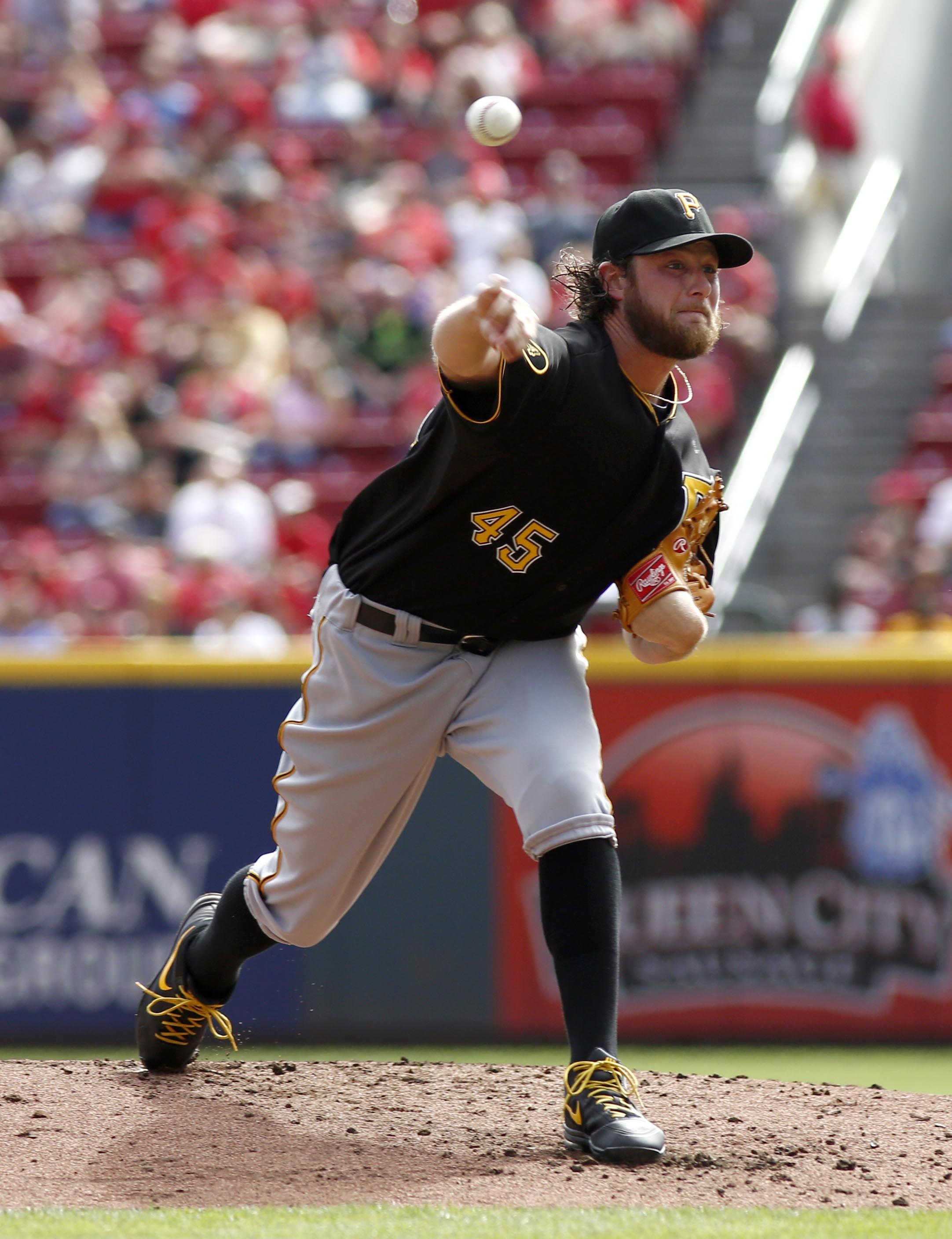
Cole, 24, has done exactly what the Bucs hoped when they made him the first overall pick in the 2011 draft, reaching the bigs in 2013 and establishing himself as a quality starter off the bat. To date, he has thrown 255 1/3 big league innings with a 3.45 ERA and 8.4 K/9 against 2.4 BB/9. Advanced metrics suggest he’s been even better, as he owns a career 3.09 FIP, 3.20 xFIP, and 3.28 SIERA. Cole consistently works in the mid-90s with his fastball and has averaged a strong 49.1% groundball rate thus far. Needless to say, the outlook is positive.
If there is one red flag on Cole, it is health. First and foremost, he is a pitcher; as we are constantly reminded, any arm is at risk of injury at any time. But there is some additional cause for concern in his case, as Cole missed significant time last year owing to shoulder issues. He returned and posted good results late in the season, and does not have any significant history of problems prior to 2014. And he has reportedly worked to smooth out his mechanics and incorporated exercises to maintain his shoulder health.
With just 1.111 years of service to his name entering the 2015 season, Cole will not qualify as a Super Two and is set to hit arbitration eligibility in 2017. That means he will not reach free agency until 2020. Despite his rapid ascent to the bigs, Cole will reach the open market at age 29 — still relatively young, but not as early as some quick-to-the-bigs phenoms. Those factors, along with the risk of injury and performance, generally transfer significant leverage to a team, of course.
In this case, though, there are some significant offsetting considerations. For one, Cole was signed to an $8MM deal out of college, meaning he has already secured life-changing money. For another, he is represented by agent Scott Boras. Contrary to popular opinion, Boras has overseen pre-free agent deals for his clients, many of those contracts have not sacrificed free agent seasons. And, on balance, he certainly carries a deserved reputation for bringing his players onto the open market in search of huge paydays.
To be sure, it is far from a sure thing that Cole would be receptive to contract talks at this stage. If he is, however, both sides will have plenty of precedent to work from. Looking in at recent extensions for starters with between one and two years of service, one finds a host of comparables. First on the list has to be Madison Bumgarner, who got five years and $35MM from the Giants while giving up two option years back in 2012. More recently, Julio Teheran and the Braves linked up on a six-year, $32.4MM deal that conveyed one option year to Atlanta.
The Bumgarner comp, in particular, appears to be a good one; indeed, he was perhaps slightly more accomplished — and significantly younger — at a similar point in his service timeline, and had already put up a fully healthy season of over 200 frames. Teheran signed before his age-23 season, coming off of a 185 2/3 inning season of the sort that Cole has yet to accomplish. Cole’s representatives would no doubt point to the $200MM+ contracts that have been given to free agent starters in recent years as evidence of salary growth, though Cole’s shoulder concerns and additional age would serve as counterpoints. While it is, perhaps, possible to argue that Cole possesses greater upside than Teheran, or at least more than he did at the time his deal was struck, projection systems seem to hold the two righties in approximately the same regard heading into 2015.
What is most interesting about Cole’s situation, perhaps, is what it could theoretically tell us about where pre-arb extensions are headed. Somewhat unlike other areas of the market, early-career pitching extensions have not exhibited much growth. In addition to the Bumgarner and Teheran examples, which came two years apart, extensions for pitchers with between two and three years of service have largely followed a script for some time: Gio Gonzalez (five years, $42MM, two options) holds the record in that class, but Chris Sale‘s 2013 deal (five years, $32.5MM, two options) was not substantially different from, say, the 2011 Trevor Cahill contract (five years, $30.5MM, two options).
As I explained in breaking down last year’s notable Freddie Freeman extension, and as the Mike Trout and Giancarlo Stanton extensions further demonstrate, the position player extension market has seemingly broken out of any molds. On the pitching side, the most significant recent deals have gone to players on the verge of free agency (Clayton Kershaw and Homer Bailey, for instance). Locking up Cole could require a market-resetting deal; it remains to be seen, of course, whether either team or player are willing to make that happen.
Offseason In Review: Minnesota Twins
The Twins have spent four years in the cellar of the AL Central, but they’ve begun to spend on free agents in the past two offseasons in anticipation of the arrival of some of the game’s most highly touted prospects.
Major League Signings
- Ervin Santana, SP: Four years, $54MM
- Torii Hunter, OF: One year, $10.5MM
- Tim Stauffer, SP/RP: One year, $2.2MM
- Total spend: $66.7MM
Trades and Claims
- None
Extensions
- Phil Hughes, SP: Three years, $42MM
Notable Minor League Signings
Notable Losses
Needs Addressed
The Twins finished seventh in the Majors in runs scored last season and batted a combined .254/.324/.389, making them one of 10 teams in baseball to outproduce the production of a league-average hitter, per Fangraphs’ wRC+ metric (102). However, while scoring runs wasn’t a problem for Minnesota, preventing them certainly was, as their pitching and defense were each among the league’s worst.
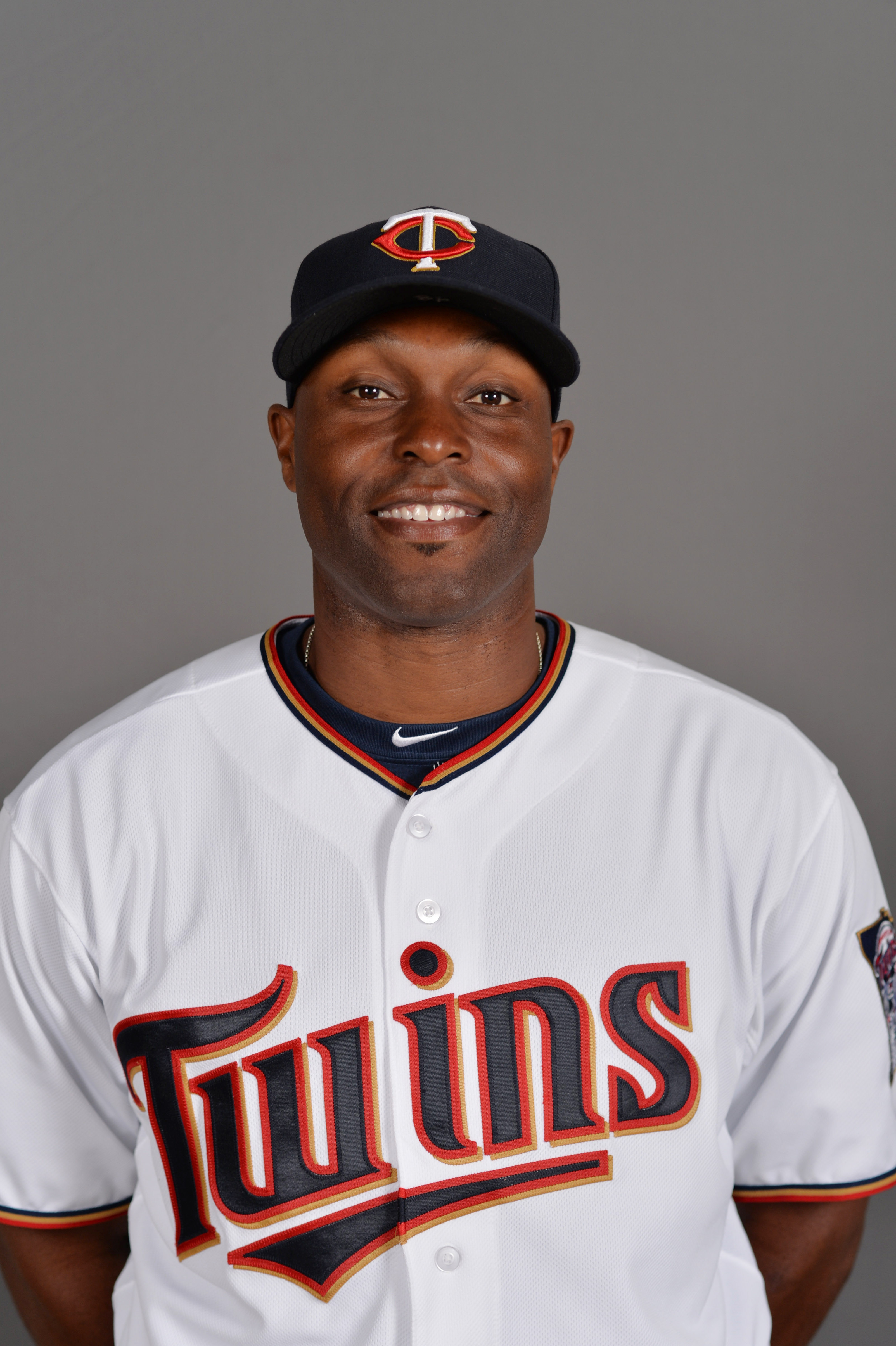 The Twins explored multiple options on the starting pitching market this offseason before eventually agreeing to a four-year, $54MM contract with Ervin Santana. Minnesota had interest in Santana last year in Spring Training, so it wasn’t a shock to see them pursue the righty again. Santana should provide the team with 200-ish league-average or slightly better innings — something it has been lacking in recent years. That’s much the same role that Ricky Nolasco was supposed to fill when he was signed prior to 2014, but Santana has a superior track record and has already demonstrated recent success in the American League.
Though the Twins have a number of outfield prospects rising through the system, none are quite ready to make the leap to the Majors just yet. Understandably then, they sought to find a stopgap, and the Twins made a sentimental play to bring back franchise favorite Torii Hunter on a one-year deal. The 39-year-old Hunter was the Twins’ first-round pick back in the 1993 draft, and he emerged as a star and a core player for the Twins in the mid-2000s as the team perennially contended for the AL Central crown. Hunter can still hit — .286/.319/.446 last year — but his defense has deteriorated significantly. Though he’s on a one-year deal, he’s expressed an openness to returning beyond this season if he’s still productive. With top prospect Byron Buxton fast approaching the Majors alongside other well-regarded prospects like Eddie Rosario, I would think that Hunter may have to accept a reduced role, perhaps as soon as 2016, in order for that to occur.
The Twins also quietly added Tim Stauffer on a one-year deal with a reasonable $2.2MM base salary. He’ll compete for a spot in the rotation, but the likelier outcome is that Stauffer will end up in the bullpen to pick up some of the innings that Jared Burton, now with the Yankees, had accounted for in previous seasons. (The Twins elected to buy out Burton’s $3.6MM option rather than retain him.)
For a team that finished in last place once again, this is a relatively brief “Needs Addressed” section, but the Twins will likely be counting on their farm system to fill in many of the holes around the roster. Oswaldo Arcia, Danny Santana, Kennys Vargas, Josmil Pinto, Trevor May and Alex Meyer are all eventually to contribute in varying capacities this season. Top prospects Buxton, Miguel Sano and Jose Berrios could also debut in 2015 as well.
Questions Remaining
The Twins have spent aggressively on the starting pitching market over the past two offseasons, giving a combined $138MM to Nolasco, Mike Pelfrey, Phil Hughes and now Santana. While they struck gold on Hughes, who set the Major League record for single-season K/BB ratio last year (11.63) and parlayed that into a three-year, $42MM extension, Nolasco and Pelfrey contributed nothing in 2014. It remains to be seen whether Santana will live up to his deal, but certainly given the expenditure they’ve put forth, one would hope their rotation would have a better outlook. As it is, however, Hughes, Santana and former first-round pick Kyle Gibson will likely be joined by Nolasco and one of Pelfrey, Tommy Milone, Alex Meyer or Trevor May in the fifth slot. While there’s some depth there and Meyer has top-of-the-rotation upside, the unit as a whole looks underwhelming.
As I opined in my Offseason Outlook for the Twins, perhaps the best way to help the pitching may have been to improve an outfield defense that ranked as one of the worst in baseball last season (-36.2 UZR, -50 Defensive Runs Saved). Someone such as Peter Bourjos or Craig Gentry, for instance, could have had their relatively light bat hidden in an otherwise-serviceable lineup while drastically improving the defense. The Twins went another route by bringing back Hunter, who, as mentioned before, has plenty of life in his bat but has seen his once-sterling defensive reputation tarnished with age. Hunter was worth -18 runs per both UZR and DRS last season, so the Twins will again employ a pair of range-challenged corner outfielders in Hunter and Arcia, who will shift to left field with Hunter taking right.
Between them will likely be Aaron Hicks, a former first-round pick and Top 30 prospect that has yet to pan out at the plate or in the field. Though Hicks possesses an incredible throwing arm and is fleet of foot, poor route-running has led to sub-par defensive marks in center field. This will be the now-25-year-old Hicks’ third crack at establishing himself after originally skipping Triple-A to open the 2013 season as the team’s center fielder. He’s batted just .201/.293/.313 in 150 big league games. Hicks could be pushed for playing time by Jordan Schafer, who impressed the Twins after being claimed on waivers last year. Schafer is a lock to make the team either as a fourth outfielder or in a more regular role, but he, too, is a former top prospect that has never realized his offensive potential.
The Twins’ bullpen will be anchored by Minnesota native Glen Perkins, though the 32-year-old ended last season with a minor elbow issue that caused his ERA to balloon in the final month. That’s cleared up now, but he’s been battling an oblique problem in Spring Training as well. It seems minor enough, but the Twins’ bullpen group is thin on established arms. Casey Fien has been nothing short of brilliant in the first half of each of the past two seasons before wilting in each second half, but he’ll be the primary setup man. I’d imagine that Stauffer will take one bullpen slot, and Brian Duensing, who had struck me as a non-tender candidate, will be back in the fold from the left side. If manager Paul Molitor deploys him primarily against southpaws, he should be effective. Pelfrey seems likely to end up in the bullpen as well if he doesn’t win the final rotation spot.
Beyond that mix, names like Michael Tonkin, Caleb Thielbar, Ryan Pressly, Aaron Thompson, A.J. Achter, Logan Darnell and Lester Oliveros will get looks. Non-roster invitee Blaine Boyer would seem to have a good chance as well following a nice comeback effort with the Padres last year. Still, it’s a thin group, and with Perkins ailing somewhat, I wouldn’t be surprised if Scott Boras were trying to sell GM Terry Ryan on Rafael Soriano to come in and solidify the bunch.
For all of the questions elsewhere on the roster, the infield is relatively set. The Twins will hope that better health means a rebound to some degree for Joe Mauer. Brian Dozier emerged as the team’s regular second baseman over the past two seasons and may yet land a long-term deal this spring. Danny Santana had an excellent rookie season playing mostly center field, but he’ll be back at his natural shortstop in 2015. He won’t repeat his preposterous .405 BABIP, but his strong line-drive rate and speed do suggest that he can maintain a mark well above the league average in that regard. Trevor Plouffe continues to see year-to-year improvement and was quietly worth 3.5 fWAR/4.0 rWAR last season. Still, he may be a placeholder until Sano’s massive bat surfaces in the Majors.
Kurt Suzuki signed a two-year, $12MM extension last summer, but as a slow-footed catcher, his .310 BABIP will be tough to repeat, so he may see some regression at the plate. If Pinto hits like he did in 2013 rather than in 2014, the two may eventually flip. Vargas will be the team’s everyday DH after an impressive .274/.316/.456 debut, but he’ll need to refine his approach and improve his abysmal 63-to-12 (5.25) K/BB ratio.
The biggest question surrounding the Twins may simply be if/when Buxton, Sano, Meyer and possibly Berrios arrive in 2015. That group of lauded top prospects is widely believed to be a quartet of potential core players, and Twins fans have long been awaiting their arrival.
Deal of Note
Though the Twins were willing to give Santana three years and $30-33MM this time last year, Santana preferred to bet on himself and take a one-year deal in the NL with the hope of securing a better deal a second time around. (Had he taken the Twins’ offer, he’d have essentially given away the 2015-16 seasons for $16-19MM total.) The Twins reeled him in this time around, however they did so by offering an extra year and another $20MM or so despite the fact that Santana is now a year older.
Santana was often used as an example of why players should accept qualifying offers throughout the 2014 season, but this contract shows that the more likely culprit in his 2013-14 offseason woes was an unreasonable asking price. It’s worth noting that he’ll come away with a combined $68.1MM over his age-31 to age-35 seasons, so he ultimately did well despite having to take a one-year deal in his first foray into free agency.
The greater note, however, is that the signing signals that the Twins do believe they can compete within their division this season. Next year’s market features a wealth of starting pitching options, so it would have made some sense for the Twins to lay low this winter and pounce in six months’ time, adding a premium starter rather than a middle-of-the-road arm to complement a young core that is transitioning to the Majors. Minnesota may still play in free agency next year, depending on how things pan out with Gibson, Nolasco, Milone, Meyer, Berrios and May, but Ryan has said that the Santana signing was made to compete in 2015.
Additionally, it has to be pointed out that the Twins surrendered a high second-round pick (their first-rounder is protected) in order to land Santana. The No. 47 overall pick in last year’s draft was worth $1.188MM, and it could be worth around $1.29MM in the coming draft. That’s a significant amount of bonus money, which might have been used to add to an already excellent farm system.
Overview
The Twins seem likely to be a better club than they were in 2014. The addition of Santana will improve what was, but may still be, a below-average pitching staff. For Minnesota, the 2015 season will be expected to be one in which a corner is turned; looking around the lineup, three spots — shortstop, left field and DH — will be occupied by top organizational prospects that have graduated to the Majors and already begun to realize some of their potential. In the rotation, Gibson will be asked to take a step forward, and the Twins can only hope for some degree of breakout from Hicks in center field. If he’s not able to contribute, he may not factor into their plans much longer, with outfielders Buxton, Arcia and Eddie Rosario presenting a possible trio to build upon.
Reinforcements will be on the way throughout the season, but it still seems a stretch to peg this team as a wild card or division contender. Stranger things have happened, and the talent is there if some prospects make a greater-than-expected impact, but 2016-17 seems like a more realistic timeframe for the Twins to again find themselves in a playoff hunt.
Photo courtesy of USA Today Sports Images.
Yu Darvish Undergoes Tommy John Surgery
March 17: The surgery was conducted today and Dr. Andrews says that it went “as expected,” as club executive VP of communications John Blake tweets.
March 13: Rangers ace Yu Darvish will undergo Tommy John surgery next Tuesday, the team announced. Dr. James Andrews will perform the operation in Pensacola, Fla., and Darvish will miss the entire 2015 season.
Clearly the news is a crushing blow to a Rangers team that saw its 2014 hopes dashed by injuries to an unthinkable amount of key players throughout the roster. Prince Fielder, Shin-Soo Choo, Derek Holland, Matt Harrison, Martin Perez, Mitch Moreland and Alexi Ogando all spent the better part of the season on the disabled list, while elbow inflammation limited Darvish himself to just 144 innings.
Speculation will of course surface that the Rangers could make a play for a big-ticket starter such as Cole Hamels, but GM Jon Daniels has already said that the club’s plans are to “fill from within” in an attempt to replace Darvish. While an external addition cannot be entirely ruled out, it seems more likely that Texas would add someone at the end of Spring Training that is either out of options or has failed to make a different team on a minor league deal (similar to the Braves’ signing of Aaron Harang last year).
While the Rangers can fill Darvish’s roster spot, it’s unlikely that they’ll be able to replace his production. Over the past two seasons, Darvish has pitched to a 2.92 ERA with 11.7 K/9 and 3.3 BB/9 in 354 innings of work out of the Texas rotation. The 28-year-old had established himself as one of the game’s most dominant arms, finishing second in the 2013 AL Cy Young voting. The injury does essentially guarantee that Darvish will not be able to turn the final season of his contract into a player option, which he could have done based on Cy Young incentives, but the outlook for this year’s rotation becomes significantly bleaker. Offseason acquisition Yovani Gallardo will join Holland and Colby Lewis in the rotation. Candidates for the final two slots include Ross Detwiler, Nick Tepesch, Nick Martinez and Anthony Ranaudo. Top prospect Alex Gonzalez may get a crack at the rotation as well.
Out Of Options Players: AL Central
The following 40-man roster players have less than five years service time and are out of minor league options. That means they must clear waivers before being sent to the minors, so the team would be at risk of losing them in attempting to do so. I’ve included players on multiyear deals. This list was compiled through MLBTR’s sources. Today, we’ll take a look at the AL Central.
White Sox: Maikel Cleto, Conor Gillaspie, Javy Guerra, Dan Jennings, Hector Noesi
The White Sox claimed Cleto off waivers from the Royals in February 2014, removing him from their 40-man roster in May and re-adding him in August. He and Guerra are among those vying for a couple of spots in the team’s revamped bullpen, which features new additions David Robertson, Zach Duke, and Jennings. Opening the season with an eight-man pen is possible. In a Saturday post, Jim Margalus of South Side Sox ranked Cleto ahead of Guerra.
Indians: Trevor Bauer, Carlos Carrasco, Nick Hagadone, Zach McAllister, Brandon Moss
Carrasco and Bauer have rotation spots locked down for the Indians. McAllister is competing with a pool of others for two open spots, with Gavin Floyd‘s injury creating an opening. About a month ago, Indians manager Terry Francona implied McAllister will make the club, either as a starter or reliever. Also about a month ago, MLB.com’s Jordan Bastian described Hagadone as a “virtual lock” for the Tribe’s pen.
Tigers: Jose Iglesias, Hernan Perez, Andrew Romine
Perez and Romine were thought to be in competition for one bench spot, writes James Schmehl of Mlive.com, but Tigers manager Brad Ausmus said recently the team could break camp with both on the roster. If healthy, Iglesias will be the everyday shortstop.
Royals: Louis Coleman, Jarrod Dyson, Erik Kratz
Andy McCullough of the Kansas City Star broke down the Royals’ bullpen situation yesterday. Relievers Greg Holland, Wade Davis, Kelvin Herrera, Jason Frasor, and Chris Young are locked into a pen that could break camp with eight. At present, it seems likely they’ll be able to find a spot for Coleman.
As McCullough noted in an earlier article, Kratz is competing with Francisco Pena for the backup catcher job. He feels that the 34-year-old Kratz is a better fit for the gig than Pena, who is 25. Dyson will be the team’s fourth outfielder.
Twins: Eduardo Escobar, Eduardo Nunez, Trevor Plouffe, Jordan Schafer
Escobar seems assured a utility infield job on the team, but Nunez’s status is uncertain. A trade seems possible. Schafer’s all but certain to be Minnesota’s fourth outfielder.
Red Sox Notes: Rotation, Middlebrooks, Moncada
The Red Sox are one of the most oft-discussed teams in Spring Training, with a logjam of outfield options and a persistent stream of rumors linking to pitching upgrades. Here’s a look at the latest talk surrounding the team…
- Rival evaluators are beginning to raise red flags about Boston’s rotation, writes ESPN’s Buster Olney, in today’s Insider-only blog post. Clay Buchholz‘s velocity is down from earlier this spring, while Justin Masterson and Wade Miley have looked underwhelming in recent starts. As Olney points out, the Boston rotation has little track record of logging innings as well. Joe Kelly has never topped 124 1/3 innings, Rick Porcello hit 200 innings for the first time in 2014, Buchholz has never reached that mark and Masterson’s been limited by injuries over the past two seasons.
- Kelly left yesterday’s start with tightness in his right biceps, but he’ll throw today and won’t require an MRI on his arm, tweets Peter Abraham of the Boston Globe. As Olney notes in the above piece, the Sox do have nice depth with Eduardo Rodriguez, Matt Barnes and Brian Johnson, among others, but the fact that they don’t have to add Kelly to a growing list of Spring Training casualties among pitchers is nonetheless a positive outcome for the Sox.
- Will Middlebrooks explained to Richard Justice of MLB.com how hard it was to see the Red Sox sign Pablo Sandoval, then spend a month in limbo before being dealt to the Padres. Middlebrooks had nothing but glowing things to say about his time in Boston and the organization, and he said he ultimately understands the move from Boston’s end. “It stung a little bit, just because I cared so much about being a part of that team,” said Middlebrooks. “I’d be lying to you if I said it didn’t bother me. But at the same time, I like to think I have an idea of the business of baseball. You have a guy that keeps getting hurt, and they’re an organization that wants to win now. I understand that.” Middlebrooks called the trade to San Diego a “great opportunity” and ultimately expressed excitement to be healthy and have a chance to be a big part of the new-look Padres.
- Josh Norris of Baseball America writes that new Red Sox top prospect Yoan Moncada looked sharp in infield drills with the club and provides video of the infielder in action in a Red Sox uniform.
AL West Notes: Hamilton, Angels, Street, Kirkman, A’s
Josh Hamilton‘s recovery from shoulder surgery has lowered the urgency felt by commissioner Rob Manfred to reach a quick decision on a potential suspension, writes Mike DiGiovanna of the L.A. Times. “Because Josh isn’t in a position where he’s going to be on the field, it has made the timing a little more relaxed,” Manfred told reporters. Manfred and the MLBPA have debated how many times it should be ruled that Hamilton has violated the Joint Drug Agreement, and at this point, the commissioner said that Hamilton’s fate is in his hands. “I’m the decision-maker on this one,” he said.
More from Hamilton’s team and division…
- Within that same piece, DiGiovanna writes that both Matt Joyce and C.J. Cron have expressed desires to be more than platoon players. While that could be possible with Hamilton through at least May, DiGiovanna notes that Collin Cowgill will likely get some starts in left versus tough lefties, which will likely cost Joyce some at-bats. Manager Mike Scioscia said that the team “definitely” want Cowgill and Cron in the lineup against lefties. The situation figures to intensify by the time Hamilton is back, though at least at that point, the Halos will have had more time to make some determinations.
- Angels closer Huston Street won’t be speaking with the media any more about his extension talks until the deal is complete or almost complete (if one is agreed to at all), writes Jeff Fletcher of the Orange County Register. Street is seeking a four-year deal worth between $36MM and $46MM, beginning this year and running through the 2018 season. To this point he’s been very open with the media, but it sounds like there won’t be any further updates until something more final can be revealed.
- MLB.com’s T.R. Sullivan tweets that the release of Michael Kirkman by the Rangers was the biggest surprise in camp so far, but the team wanted to give him the opportunity to hook on with another club. Kirkman still has three weeks to land somewhere and impress enough to position himself for a bullpen spot.
- A’s manager Bob Melvin didn’t know anything about right-hander Kendall Graveman when he was acquired in the Josh Donaldson trade, writes Barry M. Bloom of MLB.com, but the skipper went right to work on researching his new rotation candidate. Now, Melvin knows plenty about Graveman and offered strong praise for the righty, who, as Bloom notes, is making a strong case to make the Oakland rotation out of camp.
Rangers Release Michael Kirkman
The Rangers have released left-hander Michael Kirkman, tweets Stefan Stevenson of the Fort Worth Star-Telegram. Kirkman had been non-tendered by the Rangers in December and then re-signed to a minor league deal with an invite to Spring Training.
The 28-year-old Kirkman has spent his entire career with the Rangers but saw just 5 2/3 innings with the team in 2014. In 106 2/3 innings, Kirkman has worked to a 4.98 ERA 8.7 K/9, 4.6 BB/9 and a 39.4 percent ground-ball rate. Kirkman’s career has been slowed by a battle with skin cancer that limited his time on the field over the past few seasons, but he was able to take the mound again last season and pitched an inning and two-thirds in Spring Training this year before today’s release.
A number of clubs will likely be on the lookout for left-handed depth over the course of Spring Training, so it wouldn’t be a surprise to see Kirkman get an audition with another team in the next few weeks. The Mets are one team in particular known to be looking for left-handed relief help, following the news that Josh Edgin will undergo Tommy John surgery.
It’s worth noting, though, that lefty hitters have had more success against Kirkman in his career than right-handed hitters. He does, however, possess much better K/BB numbers against lefties, and his FIP/xFIP marks against same-handed hitters (3.65 and 3.72, respectively) are much better than those same marks against righties (4.80, 4.86) in spite of the bottom-line results.