
Rays To Extend Blake Snell
2:00pm: Marc Topkin of the Tampa Bay Times reports the yearly breakdown (Twitter link). Snell will be paid a $3MM signing bonus and earn $1MM in 2019. He’ll then be paid salaries of $7MM, $10.5MM, $12.5MM and $16MM in the subsequent four seasons. That $16MM salary in 2023 can increase by up to $2MM based on his placement in the Cy Young race.
1:50pm: The Rays have formally announced the contract as well as the terms of the deal. Snell can earn an additional $2MM via incentives, per the team.
1:43pm: The Rays have reached an agreement on a five-year, $50MM contract with reigning Cy Young winner Blake Snell, Jeff Passan of ESPN reports (on Twitter). There are no options included on the contract, which will buy out all of Snell’s arbitration seasons and what would have been his first free-agent year. Joel Sherman of the New York Post tweets that Snell’s deal does not include a no-trade clause. Snell is represented by Sosnick, Cobbe & Karon.
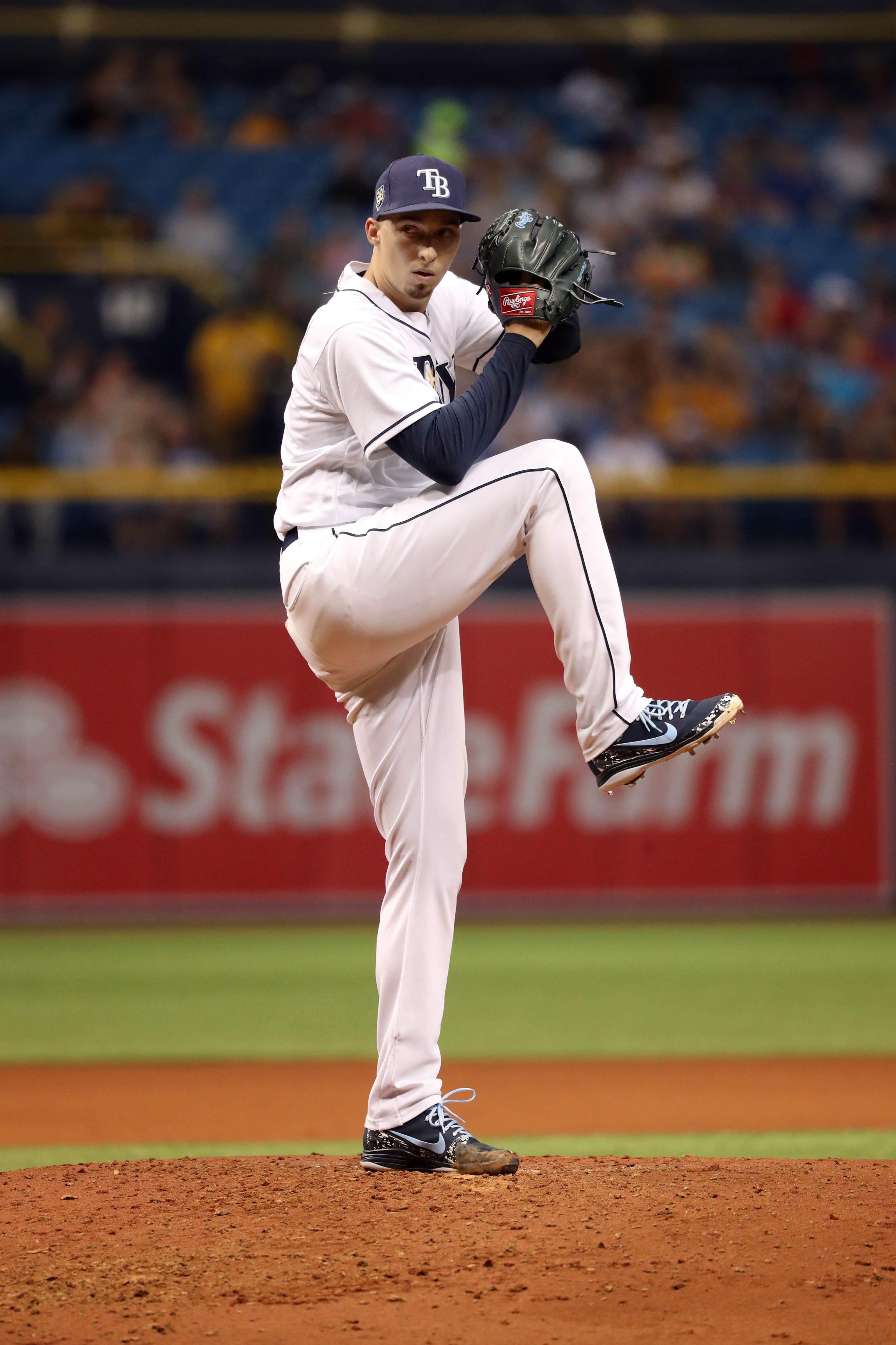
Snell, 26, will receive the largest contract ever guaranteed to a pitcher with between two and three years of service time, breaking the previous record held by Gio Gonzalez, as can be seen in MLBTR’s Extension Tracker. (Miles Mikolas could technically be considered in that category, though as a player who had established himself overseas and would’ve otherwise been eligible for free agency, his extension was under wholly different circumstances.) Despite the fact that he has less service time and was not yet eligible for arbitration, Snell rode that Cy Young Award to a guarantee that tops the sums promised to both Luis Severino (four years, $40MM) and Aaron Nola (four years, $45MM) earlier this offseason.
Because Snell was still a year from arbitration, he was still a year from cashing in on his first seven-figure payday. Even if one were to aggressively forecast what he’d make in arbitration by suggesting he’d top Dallas Keuchel‘s record $7.25MM first-time arbitration salary for a pitcher, Snell likely would’ve topped out around $35-40MM between now and the end of his arbitration eligibility. He’s possibly trading as much as $20MM in that would-be first year of free agency in exchange for the up-front payday, but that’s in a best-case scenario for his performance. A more realistic forecast of his future would need to account for the downside of injury and regression/decline.
The contract for Snell comes just weeks after the left-hander took umbrage with the organization’s decision to renew his 2019 contract for $573,700 — a raise of just $15K over the preceding season (at a time when the league-minimum salary increased by $5K).
“The Rays have the right under the collective bargaining agreement to renew me at or near the league-minimum salary,” Snell told Topkin at the time. “They also have the ability to to more adequately compensate me, as other organizations have done with players who have similar achievements to mine. The Rays chose the former.” At this point, one would imagine that renewal amounts to little more than water under the bridge with a new record-setting extension locked into place.
Snell, the No. 52 overall pick by the Rays back in 2011 and a longtime top prospect, solidified himself as an MLB-caliber starter in 2017 season with 24 starts of 4.04 ERA ball. However, he thrust himself into the ranks of the game’s elite pitchers in 2018 when he overpowered opponents with a 1.89 ERA with 11.0 K/9 against 3.2 BB/9 in 31 starts. Snell’s 15.1 percent swinging-strike rate was the fourth-best mark among all qualified MLB starters, trailing only Max Scherzer, Patrick Corbin and Carlos Carrasco while tying him with NL Cy Young winner Jacob deGrom. His 33.1 percent opponents’ chase rate on pitches out of the strike zone ranked 18th among MLB starters.
It’s the second extension of the week for the Rays, who also locked up promising young infielder/outfielder Brandon Lowe on a six-year, $24MM pact. Looking ahead, Snell joins Lowe and center fielder Kevin Kiermaier as the only players on the Rays’ roster to have a guaranteed contract beyond the 2020 season. Kiermaier’s deal will come off the books after the 2022 season, while Snell is controlled through 2023 and Lowe through 2024 (plus a pair of club options). That trio won’t combine for more than $34.2MM in any single season in which their contracts overlap, leaving even the cost-conscious Rays with a bit of flexibility.
Angels Extend Mike Trout
March 21: Trout will make $36MM in 2019 and 2020 before earning $35.45MM annually over the remainder of the contract, Bill Shaikin of the L.A. Times reports (via Twitter).
March 20: The Angels have formally announced Trout’s extension. The contract was announced as a 12-year deal, though that term also includes the two years for which he was already under contract.
The Orange County Register’s Jeff Fletcher tweeted today that it is technically being structured as a new 12-year deal and that the Angels have discussed moving some of the money he’s owed in 2019-20 back into the 2021-30 portion of the deal. Regardless of the exact structuring, the bottom-line numbers haven’t changed; Trout will be paid a total of $426.5MM over the next dozen years, effectively making the contract a 10-year, $360MM extension on top of the $66.5MM he was already set to earn in 2019-20.
March 19: The Angels are nearing agreement on a record-setting contract with superstar outfielder Mike Trout, according to ESPN.com’s Jeff Passan. Trout will be promised $360MM in new money over a ten-year term, according to reports from Bill Shaikin of the Los Angeles Times (on Twitter) and Jeff Fletcher of the Orange County Register.
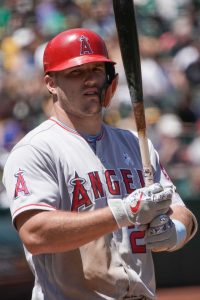
Trout stands to earn $36MM in each of those ten seasons. The deal leaves in place his preexisting $33.25MM salaries for the 2019-20 seasons, which he agreed to under a previous extension that was also negotiated by agent Craig Landis.
Trout will turn 39 during the final season (2030) of his new contract. In all likelihood, he and the deal will still be with the Halos at that time. The new agreement will not include any opt-outs, per Shaikin (via Twitter), and provides Trout with full no-trade protection, Bob Nightengale of USA Today adds on Twitter.
From one perspective, it’s a record-setting contract befitting Trout’s status as a player of historic excellence. But the salary numbers pale in comparison to Trout’s own productivity on the ballfield. Since his first full season of play, in 2012, the peerless center fielder has vastly outproduced every other player in the game with a tally of 64.2 fWAR and 63.8 rWAR. Others have approached and even bettered Trout in single seasons — somehow, he has only twice been awarded the American League Most Valuable Player award — but none of his contemporaries has maintained anything approaching his unfathomably consistent level of top-end output.
Viewed in that light, there’s an argument to be made that this deal actually underpays Trout — perhaps by a significant amount. It’s important to bear in mind that he was still two years shy of free agency, which he’d have reached at 29 years of age owing to his earlier contract. Nolan Arenado, just one season away from the open market when he new contract with the Rockies, had more leverage relative to his own abilities. But it’s still notable that Arenado — an outstanding player whose best season nevertheless lags Trout’s worst — commanded a then-record $33.4MM AAV over seven new contract seasons. Trout’s deal promises to be longer and larger, but to be sure, but not by a margin that reflects the gap in these players’ established performance levels. Unsurprisingly, Trout’s new deal also easily tops the previous record for total guarantee that was recently set by Bryce Harper and the Phillies. That was a free agent deal; Harper took a longer term (13 years) to briefly reach a new high-water mark in total guarantee ($330MM). Still, in terms of new money, the gap between the contracts is only $30MM. The Harper vs. Trout prospect debate has been resolved conclusively to this point: the former is a heck of a player and the most marketable commodity in baseball; the latter has somehow already compiled numbers that warrant placement in Cooperstown.
It’s hard to overstate the immensity of Trout’s on-field output to this stage of his career. He has only once finished a full season with less than eight fWAR: the 2017 campaign, in which he was limited to 114 games due to a broken wrist and nevertheless posted 6.9 fWAR. While he’s no longer quite as dynamic in the field and on the bases as he was when he first cracked the majors — he’s merely very good or excellent in those areas — Trout’s offensive ability has morphed and risen over the years. He’s now as likely to take a walk as he is to strike out and might hit forty home runs in any given season. He has reached .300+ isolated power and .600+ slugging percentage tallies in each of the past two seasons. Frighteningly, Trout was never better with the bat in hand than he was in 2018, when he slashed an immense .312/.460/.628 — nearly twice the productivity of a league-average hitter (191 wRC+).
We can safely presume that Trout will age and decline like most players. But he still promises to be a hugely productive player for many years to come. There’s always risk in a long-term deal, but you couldn’t pick a better or more durable player to stake a bet on than Trout. All things considered, the Halos certainly seem to have secured quite a lot of promised future output for their money.
Even beyond the value the team can hope to achieve, the Angels have now locked in one of the game’s best-ever players for his entire career. The L.A./Anaheim organization has had its share of difficulties with sizable contracts and hasn’t yet produced a consistent core of talent to supplement Trout. But it also has only three more years left to pay aging slugger Albert Pujols and has steadily rebuilt its farm system over the past several years under GM Billy Eppler. It’s easy to dream on Jo Adell joining Trout and Justin Upton to form the game’s best outfield and tantalizing to envision Shohei Ohtani returning fully from Tommy John surgery to make an iconic superstar pairing. Whatever happens with the club’s other players, though, the Halos have certainty regarding the task at hand. The Angels and Trout are now bound together in pursuit of an elusive World Series title.
Photo courtesy of USA Today Sports Images.
Marlins Select Contract Of Curtis Granderson
The Marlins announced Thursday that they’ve selected the contract of veteran outfielder Curtis Granderson while optioning fellow outfielder Austin Dean to Triple-A New Orleans. Three non-roster players — lefty Mike Kickham, righty Hector Noesi and catcher Rodrigo Vigil — were all reassigned to minor league camp, too. Miami now has a full 40-man roster.
Granderson, who turned 38 last week, split the 2018 season between the Blue Jays and the Brewers and posted a combined .242/.351/.431 batting line with 13 home runs, 22 doubles and a pair of triples in 403 plate appearances. He’s had a rough Spring Training, but Granderson was reportedly likely to make the club from the beginning of camp.
The Marlins surely value having a veteran with his level of experience working with what figures to be a very young outfield mix, but he won’t be an everyday option for them in the outfield. Granderson’s numbers against left-handed pitching have continually deteriorated, rendering him as a strict platoon and pinch-hitting option at this point in his career. Defensively, he’ll be limited to the outfield corners.
The exact composition of Miami’s outfield is beginning to come into focus now that Dean has somewhat surprisingly been optioned out. Lewis Brinson looks locked into the center field job on the heels of a torrid spring, while Garrett Cooper, Peter O’Brien and Rosell Herrera are all still outfield options on the 40-man roster who remain in camp and on the 40-man roster. Gabriel Guerrero is also still in camp as a non-roster player who could yet crack the Opening Day roster.
Phillies Release Trevor Plouffe, Gregorio Petit
The Phillies announced Thursday that they’ve released four non-roster invitees to Spring Training: infielders Trevor Plouffe and Gregorio Petit as well as left-handers Edward Paredes and Jeremy Bleich. The Phils also optioned lefty James Pazos and right-hander Drew Anderson to Triple-A.
Plouffe, 32, was the Twins’ primary third baseman from 2013-16 and provided a solid bat with some pop for them during that time. However, he’s struggled with the A’s, Rays and Phillies across the past two seasons, hitting a combined .200/.271/.325 with 10 homers in 325 trips to the plate. He’s picked up some experience playing first base in recent years and has traditionally been a strong right-handed bat against left-handed opponents. In 27 spring plate appearances, Plouffe collected five hits (two homers, two doubles) and drew four walks.
Petit is a more versatile infielder, capable of playing both middle-infield slots, but he doesn’t have near the track record that Plouffe carries. Another former Twins/A’s infielder, the 34-year-old Petit is a career .249/.294/.342 hitter in 493 plate appearances. He went 4-for-15 with the Phils in his limited time in camp.
Paredes, 32, appeared briefly with the Dodgers in both 2017 and 2018, pitching a combined 16 innings with a 4.50 ERA but an outstanding 19-to-2 K/BB ratio. He’s been an extreme fly-ball pitcher in Triple-A and particularly in his limited big league time. Paredes was lights-out in camp, tossing 6 1/3 innings without allowing an earned run while recording an 11-to-2 K/BB ratio.
Bleich made his big league debut last season at the age of 31, though he faced only four batters (retiring one of them). A supplemental first-round pick by the Yankees back in 2008, Bleich is a 10-year minor league veteran with a career 3.64 ERA at the Triple-A level. In nine spring innings, Bleich allowed three runs on six hits and seven walks with 11 strikeouts.
Braves Sign Josh Tomlin To Minor League Deal
7:25am: MLB.com’s Mark Bowman tweets that Tomlin will start Saturday’s Grapefruit League game for the Braves and could potentially break camp with the club as a long reliever. If not, it appears he’ll head to Triple-A Gwinnett.
7:04am: The Braves announced Thursday that they’ve signed right-hander Josh Tomlin to a minor league contract. He’ll be in Major League camp for the remainder of Spring Training and add some depth to a pitching staff that is currently dealing with numerous injuries both in the rotation and in the bullpen. Tomlin, a Meister Sports client, opted out of a minor league deal with the Brewers yesterday.
Tomlin, 34, has spent the entirety of his big league career with the Indians to this point and was a fairly regular member of the Cleveland rotation from 2011-17. During that time, he posted a combined 4.66 ERA with 6.2 K/9 against 1.2 BB/9 over the life of 755 1/3 innings. He’s a quintessential soft-tosser, averaging 88.7 mph on his fastball in his career (87.8 mph over the past three seasons) but also demonstrating pinpoint control. Tomlin has averaged just 1.3 walks per nine innings pitched and has never allowed an average of more than 2.3 BB/9 in any single season.
Last season was a rough one for the veteran Tomlin, who pitched to a 6.14 ERA and yielded a stunning 25 home runs in 70 1/3 innings of work. The long ball has always been an issue for Tomlin, though certainly never to that extent. Tomlin’s homer-to-fly ball ratio leaped more than seven percentage points to a fluky 21.4 percent last year. That mark seems highly likely to regress, and a move to the National League figures to help to an extent as well.
The Braves had great success with a similar late-spring signing last year when another AL Central castoff, Anibal Sanchez, revitalized his career in Atlanta. Expecting that level of resurgence wouldn’t be reasonable for any pitcher, but Tomlin does seem to have a chance to log some innings for the Braves early in the season. Atlanta’s top starter, Mike Foltynewicz, will open the season on the injured list, and fellow righty Kevin Gausman could do the same. Right-hander Mike Soroka was optioned to Triple-A yesterday after shoulder troubles limited him for most of camp. Even if the Braves opt to deploy a number of younger options in the rotation, Tomlin could provide some support in a long relief role for a bullpen that will be without both A.J. Minter and Darren O’Day.
In 15 innings with the Brewers this spring, Tomlin allowed eight earned runs on 12 hits (three homers) and two walks with nine strikeouts.
Ryan Flaherty Opts Out Of Indians Deal; Wilson, Grimm Won’t Make Roster
The Indians announced Wednesday that a pair of veteran non-roster invitees have been informed that they will not make the Opening Day club: right-hander Justin Grimm and infielder Ryan Flaherty. While the club indicated that the pair is weighing opt-out clauses, MLB Network’s Jon Heyman tweets that Flaherty has already declared his intent to exercise his opt-out provision and will become a free agent.
Ryan Lewis of the Akron Beacon Journal tweets that Alex Wilson is also not going to make the roster and is currently exploring options with his agent. The Indians made clear to all three veterans that they hoped to retain them in Triple-A, though that won’t happen with Flaherty at the very least. Lastly, Cleveland announced that right-hander Tyler Clippard has been released but re-signed to a new minor league deal.
Flaherty, 32, hit .217/.298/.292 through 182 plate appearances with the Braves last year and was long a versatile but light-hitting utility piece for the Orioles prior to his lone season in Atlanta. The left-handed hitter is a career .216/.286/.347 batter in 1452 plate appearances and has experience playing all over the infield as well as in the outfield corners.
Wilson, also 32, has been a steady member of the Tigers’ bullpen over the past four seasons, working to a combined 3.20 ERA with a below-average 5.8 K/9 mark but a quality average of 2.1 BB/9. He’s averaged 6.3 punchouts per nine innings pitched over the past two seasons and logged the second-best grounder rate of his career in 2018 (49.2 percent), but his general lack of strikeouts has led fielding-independent pitching metrics to view him less favorably than his generally solid earned run average. This spring, he allowed just two runs on five hits and two walks with seven stirkeouts in 8 2/3 innings.
The 30-year-old Grimm, meanwhile, allowed one earned run on eight hits and four walks with nine punchouts in 8 1/3 innings with Cleveland this spring. He was once a high-quality setup option for the Cubs but has stumbled to a 6.69 ERA over his past 72 2/3 big league innings. That said, Grimm has continually showed an ability to miss bats in the Majors and in the upper minors.
As for Clippard, the 34-year-old has been sidelined for the past five days by a pectoral injury that was originally believed to come with a roughly two-week timeline. The exact reason for his newly structured minor league pact could come down to a matter of altered opt-out clauses or even altered base salary/incentives, but the Indians reportedly made clear at the time of his injury that they hoped to work out a deal to retain him. It would appear they’ve reached an agreement to do so, and it seems quite likely that assuming Clippard’s injury heals as expected, he’ll emerge as a big league option for the Indians early in the year. For now, he’ll remain in MLB camp and continue rehabbing, per the team’s announcement.
Orioles Release Alcides Escobar
The Orioles announced this afternoon that veteran shortstop Alcides Escobar, who had been in camp as a non-roster invitee, has been granted his release. He’s now a free agent.
Escobar went 7-for-32 with a pair of doubles, four strikeouts and four walks in his brief time with the Orioles this spring before exercising an opt-out clause in his contract. He’ll now search for another club in need of some infield depth. With Escobar now out of the picture, both of Baltimore’s Rule 5 picks — Richie Martin and Drew Jackson — stand an increased chance of breaking camp with the team.
The 32-year-old Escobar has spent the past eight seasons with the Royals organization, generally providing Kansas City with quality defense and baserunning but significantly below-average offensive output. He’s a carer .258/.293/.343 hitter in 5702 Major League plate appearances, including a dismal .242/.275/.338 slash in 1160 PAs over the past two seasons. Given that lack of offense, Escobar isn’t likely to land another shot as a regular, but his speed-and-defense approach to the game could make him a useful bench piece — particularly if he is amenable to moving around the diamond a bit, as he did in his final season with the Royals.
Angels Outright Kaleb Cowart
The Angels announced that infielder/relief pitcher Kaleb Cowart has cleared waivers and been assigned outright to Triple-A Salt Lake, thus clearing a spot on the 40-man roster.
Cowart has bounced around the league a bit since the end of the 2018 campaign. The Mariners claimed him from the Angels back in December but lost him to the Tigers via a late-January waiver claim. A month later, the Angels claimed him back off waivers and brought him to big league camp. He’s now been reassigned to minor league camp.
Cowart, a first-round pick back in 2010, has never established himself as a credible bat at the Major League level, batting just .177/.241/.293 in 380 trips to the plate. The former top prospect has had his share of success in Triple-A (.298/.361/.469 in parts of four seasons), and he’s recently sought to improve his versatility by functioning as a two-way player. Each of the teams who has rostered Cowart since the end of the ’18 campaign has done so with a willingness to try him out as a two-way player, but that’s a tough experiment to conduct at the MLB level. And, given that Cowart is out of minor league options, exposing him to waivers was a necessity in order to allow him to work on that new role in Triple-A.
Giants Sign Matt Joyce
The Giants announced Wednesday that they’ve signed Matt Joyce to a minor league contract. He’ll be in camp for what’s left of Major League Spring Training. Joyce is represented by ACES.
The Giants will be the second stop for Joyce this spring, as he spent the bulk of camp with the Indians before being granted his release after being informed that he wouldn’t crack the big league roster. He’ll now head to an organization with a similarly undefined outfield mix in hopes of a clearer path to the Majors.
Joyce, 34, had a rough 2018 season with the A’s (.208/.322/.353 in 246 PAs) and didn’t hit much in his limited time with the Indians this spring (5-for-27 with three walks and seven strikeouts). However, he’s only one season removed from batting .243/.335/.473 with the Athletics in 2017 and is a career .250/.351/.451 hitter in 3373 plate appearances against right-handed pitching.
San Francisco’s outfield seems likely to consist of sophomore center fielder Steven Duggar, out-of-options slugger Mac Williamson and veteran Gerardo Parra, who like Joyce is in camp on a minor league contract. Rule 5 pick Drew Ferguson is also an outfielder and could be in mix if he breaks camp, though he’s just 3-for-27 on the spring. Cameron Maybin is also in camp on as a non-roster player, but his DUI arrest earlier this month surely didn’t help his chances of landing a roster spot.
Even if Joyce doesn’t crack the 25-man roster out of camp, he could potentially head to Triple-A and serve as an early-season depth option given the Giants’ lack of established outfielders at present.
Twins Release Lucas Duda
The Twins have released first baseman Lucas Duda, as Dan Hayes of The Athletic was among those to report (Twitter link). The move comes in advance of the opt-out clause his contract provided on Saturday.
Duda, 33, has long been quite a productive MLB hitter, though he hit a wall late in the 2017 season and hasn’t recovered since. He’ll head back out onto an unforgiving free agent market for defensively limited sluggers.
While he hasn’t hit anywhere near his prior levels of late, Duda has remained an approximately league-average bat. That’s not enough, clearly, for a player who’s likely to be viewed at most as a platoon first baseman. But there’s still some reason to hope that he can be a useful member of the right roster.