
Rays Acquire Brandon Eisert
The Rays have acquired left-hander Brandon Eisert from the Blue Jays, according to announcements from both clubs. The Jays, who designated Eisert for assignment earlier this week when they signed Anthony Santander, receive cash considerations in return. The Rays had an open 40-man spot and don’t need to make a corresponding move.
Eisert, 27, joins the second club of his career. Selected by the Blue Jays in the 18th-round of the 2019 draft, he worked his way up to make his major league debut last year. To this point, his big league track record is minimal. He tossed 6 2/3 innings for the Jays last year, allowing three earned runs.
The Rays are surely more interested in the southpaw’s minor league numbers, which have generally been strong. Over the past four years, he has logged 264 2/3 innings on the farm with a 3.76 earned run average, 29.1% strikeout rate and 7.7% walk rate.
Despite the strong minor league results, Eisert lacks the power arsenal clubs are usually looking to get from relievers these days. His fastball only averaged 91.2 miles per hour during his brief major league work. It was a tick lower in Triple-A, coming in at 90.2 mph last year. Perhaps the Jays expected that the relatively lower velocity would prevent him from succeeding in the majors as much as he did in the minors.
The Rays had an open roster spot and will use it to get a close-up look at Eisert. He still has options, which is surely appealing for a club that regularly rotates arms on and off its roster throughout the season. Garrett Cleavinger is the top lefty reliever on the club right now. They gave Mason Montgomery some work in the big league bullpen last year but he’s mostly been a starter in the minors. Eisert and Montgomery both have options, so it wouldn’t be a surprise for Tampa to have them taking turns on the big league roster as the second lefty behind Cleavinger, while shuttling to Triple-A from time to time.
Yankees Claim Allan Winans
The Yankees have claimed right-hander Allan Winans off waivers from the Braves, who designated him for assignment earlier in the week, as first reported by Chase Ford of MiLB Central.
The 29-year-old Winans saw big league time with the Braves in both 2023 and 2024. He’s been hit hard in the majors, yielding a 7.20 ERA in 40 frames, but has a strong track record in Triple-A. Through 256 innings at the top minor league level, Winans sports a 3.26 ERA, 21.8% strikeout rate and 6.9% walk rate. He has a minor league option remaining, making him a candidate to give the Yankees some depth in the starting staff or length out of the bullpen.
Winans sits just 90-91 mph with his four-seamer and 89-90 mph with his sinker, coupling those offerings with a low-80s changeup and upper-70s slider. He’s excelled at limiting walks and piling up weak contact throughout his time in Triple-A, which has helped to offset below-average velocity and bat-missing capabilities. Major league hitters haven’t made hard contact with much frequency, but the hard contact he does allow tends to be quite loud; he’s averaged 1.80 homers per nine frames and allowed 10% of his batted balls to be barreled up, per Statcast.
The Yankees have multiple open spots on their 40-man roster, so they won’t necessarily need to make a corresponding move to accommodate Winans. He’ll compete for a spot on the Opening Day roster this spring, but with a crowded rotation that could lead to a trade of Marcus Stroman and a generally veteran bullpen, the Yankees seem likelier to open the year with Winans in Triple-A — assuming he remains on the 40-man roster for the rest of the offseason.
Cubs Sign Jon Berti
The Cubs are in agreement with infielder Jon Berti, reports Robert Murray of FanSided. It’s a one-year, $2MM guarantee that includes another $1.3MM in performance bonuses, reports Mark Feinsand of MLB.com. Berti is a client of Ball Players Agency.
President of baseball operations Jed Hoyer said last week that the front office was looking to upgrade the bench. A multi-positional infielder seemed the likeliest target. Chicago has already added Carson Kelly as a backup catcher and has a strong outfield. Their infield was much less settled after they included Isaac Paredes in the Kyle Tucker trade.
Berti, who turns 35 today, is a sensible depth pickup. He’s a good athlete who has ample experience at each of second base, third base and shortstop. He has decent defensive grades at all three spots. Berti topped 100 games for the Marlins in both the 2022 and ’23 seasons. He combined for a .268/.334/.373 batting line with solid strikeout and walk rates. While he has minimal power, he’s an excellent runner. Berti stole 41 bases in 46 attempts back in 2022 and continues to grade highly for his overall baserunning acumen.
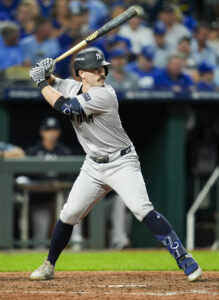
The Yankees acquired the righty-hitting infielder from Miami just before last season got underway. Berti would have had an opportunity to push DJ LeMahieu for the third base job had he stayed healthy. That wasn’t to be, as he landed on the injured list with respective groin and calf problems early in the year. The latter — a significant strain of his left calf — shelved him between May and September. Berti was limited to 25 regular season appearances and played four times during New York’s run to the AL pennant. He hit .273 with one extra-base knock (a homer) in 74 plate appearances.
Berti finished the season just shy of six years of big league service. New York could’ve kept him for his final year of arbitration eligibility. They opted not to tender him a contract, which MLBTR contributor Matt Swartz projected around $3.8MM. He falls shy of that number as a free agent but secures a guaranteed deal and an MLB roster spot. As a player with over five years of service time, he can’t be sent to the minors without his consent. He’ll be on Chicago’s big league team.
It will likely be in a bench role. Dansby Swanson is locked in at shortstop. Nico Hoerner will play second base once he’s healthy. Hoerner is rehabbing from flexor surgery and might start the season on the injured list. That’d leave Berti as the favorite to handle the keystone. Prospect Matt Shaw is expected to get everyday run at third base. He’s coming off a monster year in the upper minors (.284/.379/.488 with 21 homers between Double-A and Triple-A). Shaw has significant offensive upside, but plenty of top prospects have struggled in their first look at major league pitching.
Berti offers insurance for Hoerner’s injury and adds a high-floor fallback at third base if Shaw doesn’t hit the ground running. The acquisition is likely to push at least one of Vidal Bruján or Gage Workman off the roster. Workman is a Rule 5 pick, while Bruján is a former top prospect whom the Cubs acquired from Miami last month. Bruján is out of options and cannot be sent down without clearing waivers. It’s highly unlikely that the Cubs carry each of Berti, Bruján and Workman on the Opening Day roster, especially if Hoerner is healthy.
Berti’s modest base salary pushes the Cubs’ luxury tax number to roughly $200MM, as calculated by RosterResource. They’re still more than $40MM below the tax line and should have ample space for another acquisition. Hoyer has called the bullpen a priority and they’ve been tied to a number of high-leverage relievers on the trade and free agent fronts.
Image courtesy of Imagn.
Cubs, Reese McGuire Agree To Minor League Deal
The Cubs and catcher Reese McGuire have agreed to a minor league deal, reports Aram Leighton of Just Baseball. The Apex Baseball client will presumably receive an invite to major league spring training as well.
McGuire, 30, has appeared in the past seven big league seasons as a part-time catcher. Spending time with the Blue Jays, White Sox and Red Sox, he has appeared in 355 games and stepped to the plate 1,038 times. He has a .252/.300/.364 batting line in that time, which translates to a wRC+ of 80.
Though that puts him 20% below the league average hitter, it’s actually not terrible production for his position, since catchers usually produce about 10% less than par. Unfortunately, the last two years have seen him slide down a bit. With the Red Sox over 2023 and 2024, he slashed .242/.297/.331 for a wRC+ of 70.
Defensively, he’s generally gotten good marks. Outlets like Baseball Prospectus and Statcast consider him to have been a strong framer, while his blocking and work with the running game have been close to average.
When the offense was a bit stronger, McGuire was a useful player. FanGraphs considered him to have been worth least 1.2 wins above replacement in each full season from 2019 to 2022. But as his bat dropped off over the past two years, his value slid along with it. Boston outrighted him off their roster in August and McGuire became a free agent at season’s end.
The Cubs only have two catchers on their 40-man roster now in Miguel Amaya and Carson Kelly. Prospect Moisés Ballesteros should be pushing his way into the mix eventually but he’s only 21 years old and has only 68 Triple-A games under his belt, so perhaps he’ll spend a bit more time in the minors. McGuire will give the club a bit of extra depth without taking up a roster spot for now. If he gets added at any point, he is out of options but his service clock is just below the five-year line, meaning it’s theoretically possible for him to be retained via arbitration for 2026 if he has a roster spot at season’s end.
Guardians Sign Paul Sewald
The Guardians announced Wednesday that they’ve signed free agent reliever Paul Sewald to a one-year contract with a mutual option for the 2026 season. He’s represented by ISE Baseball. The righty is reportedly guaranteed $7MM on the deal, which will be paid out in the form of a $1MM signing bonus, a $5MM salary, and a $1MM buyout on a $10MM mutual option. Sewald can also earn an extra $100K for reaching each of 40, 45, 50, 55 and 60 relief appearances in 2025, giving him the opportunity to earn a total of $7.5MM on the deal.
Righty Pedro Avila has been designated for assignment to open a spot on the 40-man roster, per the club announcement. Cleveland also signed right-hander Riley Pint to a minor league deal. The Excel client will be invited him to spring training.
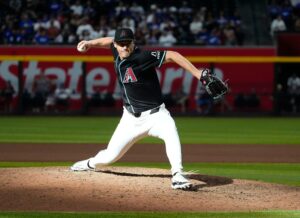
Sewald, 35 in May, is coming off a bit of a frustrating year. He opened the 2024 season on the injured list due to a left oblique strain and missed a bit more than a month, getting reinstated by the Diamondbacks on May 7. Once back on the mound, the results weren’t up to his previous standard, which got him bumped from Arizona’s closing gig in August. He landed back on the IL in September due to neck discomfort and wrapped up the campaign there.
In the end, he tossed 39 2/3 innings on the year, allowing 4.31 earned runs per nine. His 26.1% strikeout rate and 6.1% walk rate were still good numbers but were worse than his previous form. From 2021 to 2023, between the Mariners and Diamondbacks, he threw 189 1/3 innings with a 2.95 ERA, 33.9% strikeout rate and 8.6% walk rate.
The Guardians are seemingly making a bet on a bounceback, which there is some justification for. Most of his struggles last year were during a short period of time where he seemed to be a bit unlucky. In the month of July, he allowed 12 earned runs in 10 innings, just before losing the closer’s job. Since he only allowed 19 earned runs all year, that was the majority of them. During that month, he allowed a .469 batting average on balls in play and had a 56.2% strand rate, which are both on the unfortunate side. That’s why his 3.94 SIERA was miles better than his 10.80 ERA that month.
Sewald averaged 91.4 miles per hour on his fastball last year, which was down from being in the 92-93 mph range in the previous three seasons, but it’s possible that his two injuries played a role there. With a bit better health, perhaps the Guards can get more of the 2021-23 Sewald than the ’24 version.
Though betting on Sewald is a perfectly sensible thing to do, it’s a bit of a curious path for the Guards at first glance. Cleveland had the best bullpen in the majors in 2024 and it wasn’t close. Their relief corps had a collective 2.57 ERA in 2024, with the Brewers coming a distant second at 3.11. They traded Nick Sandlin to the Blue Jays as part of the Andrés Giménez deal last month but still have Emmanuel Clase, Cade Smith, Hunter Gaddis, Tim Herrin and others.
Given that the team doesn’t usually run huge budgets, the most straightforward way for them to allocate their resources this winter would be to upgrade the offense. The Guards hit .238/.307/.395 as a team last year, which was exactly league average. They are going into 2025 with a fairly similar group of position players. They traded Josh Naylor to the Diamondbacks and then signed Carlos Santana, a roughly cash-neutral move since Santana’s salary will be fairly close to Naylor’s this year. They subtracted Giménez, who is more of a glove-first player, but now second base projects to go to a fairly unproven player like Juan Brito or Ángel Martínez.
Perhaps the Guardians will line up a trade with one of their other relievers but it’s also possible that they see the value in leaning into their strength by further upgrading the relief corps. Relievers tend to be the most volatile part of a roster these days, with regression and/or injuries entirely possible, so having another experienced arm in the mixes hedges against that.
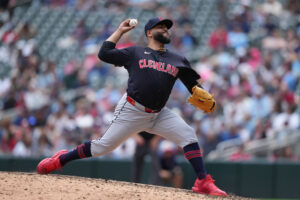
Avila, 28, has posted some solid but not outstanding results in his career thus far. Between the Padres and Guardians, he has thrown 146 1/3 innings in his career with a 3.51 ERA, 23.8% strikeout rate, 10.6% walk rate and 49.2% ground ball rate.
He exhausted his final option year with the Friars in 2023, which gave him a tenuous hold on a roster spot. He struggled out of the gate last year, which led to him being flipped to Cleveland. He ultimately finished the year with a 3.81 ERA in 82 2/3 innings.
Despite a solid campaign, Avila’s out-of-options status and a crowded Cleveland bullpen were going to make it hard for him to keep a roster spot all year, so he’s been nudged off today. The Guards will now have a week of DFA limbo to figure out what’s next, whether that’s a trade or a fate on waivers. Since the waiver process takes 48 hours, any trades would have to come together in the next five days.
Any acquiring team would have to deal with the same lack of options, though a team with a less-elite bullpen might be more able to manage that. Avila’s results have been decent and he still has less than two years of service time, meaning he hasn’t yet qualified for arbitration and could be cheaply controlled for as many as five seasons.

Pint, 27, was taken by the Rockies with the fourth overall pick in 2016. He was a top 100 prospect for a while but struggled badly with control in the minors and decided to retire in 2021. At that point, he had thrown 166 2/3 innings on the farm with a 5.56 ERA, 20.5% strikeout rate and 16.8% walk rate.
He un-retired in 2022 and posted decent results that year. He threw 45 2/3 innings across multiple levels with a 4.53 ERA, 56.6% ground ball rate and 29.1% strikeout rate, though the walks were still high at 15.6%. The Rockies were encouraged enough to give him a roster spot to keep him out of the Rule 5 draft.
He spent most of the past two years as optionable depth for Colorado. He has just 3 2/3 major league innings on his track record, having allowed nine earned runs for an unseemly 22.09 ERA. He has struck out seven opponents but given out eight walks and plunked another two batters. Obviously, the minor league numbers have been better. He had a 3.92 ERA in 41 1/3 innings on the farm last year, striking out 36.3% of batters faced but also giving out walks at a massive 20.7% clip. He was outrighted by the Rockies in August and elected free agency at season’s end.
Pint is obviously still a project but the Guardians have a strong reputation for working with pitchers, so it’s understandable why they’d take a shot on a former top prospect without having to give up a roster spot. If he gets added to the roster at any point, he still has an option remaining and just a few days of service time.
With Sewald now added to the books, RosterResource estimates the club’s total commitments at $96MM for this year. They opened last year at $98MM, per Cot’s Baseball Contracts. After making the postseason last year, perhaps there’s a payroll bump coming. But on the other hand, the club has no broadcast deal for this year. Their deal with Diamond Sports Group, now known as Main Street Sports, expired last year. MLB is going to be handling the broadcasts this year, an arrangement that is sure to lead to less revenue.
Jeff Passan of ESPN first reported Sewald’s $7MM salary, with Zack Meisel of The Athletic reporting the specific breakdown.
Blue Jays Sign Christian Bethancourt, Richard Lovelady To Minor League Deals
The Blue Jays announced Wednesday that they’ve signed catcher Christian Bethancourt and left-hander Richard Lovelady to minor league contracts. Both players have been invited to major league camp during spring training.
Bethancourt, 33, had a decent showing at the plate as recently as 2022, when he slashed .252/.283/.409 (99 wRC+) with 11 homers in 101 games between the A’s and Rays. His bat has tanked since that time, with a combined .220/.250/.377 between Tampa Bay, Miami and Chicago (Cubs).
Once one of the game’s top-100 prospects, Bethancourt has never really found his footing as a big league regular. He moved on from catching entirely at one point, attempting to reinvent himself as a reliever, but he’s now spent several years back behind the plate. He’s a lifetime .229/.259/.367 hitter in the big leagues.
While that offense (or lack thereof) leaves plenty to be desired, Bethancourt has controlled the running game quite nicely thanks to a rocket arm that received 80 grades (on the 20-80 scale) during his prospect days. As the average caught-stealing rate has dropped to just 20.3% leaguewide following tweaks to the size of the bases and limits on pickoff attempts, Bethancourt has excelled. He thwarted 30% of stolen base attempts against him last year. Dating back to 2022, Bethancourt boasts a gaudy 29.9% caught-stealing rate. Over the past four seasons, only J.T. Realmuto, Patrick Bailey and Gabriel Moreno have contributed more value with their throwing, among catchers, per Statcast.
Bethancourt won’t be in the mix for the starting job in Toronto. That belongs to Alejandro Kirk. But the Jays’ only other catcher on the 40-man roster right now is journeyman Tyler Heineman, who has a .212/.298/.273 slash in 299 career plate appearances in the majors. Bethancourt could very well be in the mix for that spot, though time will tell if the Jays bring in a more established veteran to solidify that critical role. As it stands, an injury to Kirk would leave Toronto with Heineman and one of Bethancourt or fellow non-roster invitee Ali Sanchez as manager John Schneider’s top options behind the dish.
Lovelady, 29, split the 2024 season between the Cubs and Rays, struggling with the former but pitching pretty well for the latter. The southpaw gave Tampa Bay 28 2/3 innings of 3.77 ERA ball, albeit with a sub-par 16.8% strikeout rate. Lovelady’s 7.6% walk rate and 53.5% ground-ball rate were both strong marks, however, and the lefty has long shown an interesting blend of missed bats and grounders to go along with solid command.
Even with a decent showing for Tampa Bay, Lovelady was cut loose in November. The Rays designated him for assignment to open roster space for outfielder Jake Mangum, whom they wanted to protect from the Rule 5 Draft. Lovelady was non-tendered rather than traded or placed on waivers, immediately making him a free agent.
In 99 1/3 big league innings, Lovelady has a 21.1% strikeout rate, 8.4% walk rate and 50.9% grounder rate. He’s still been tagged for a 4.98 earned run average, thanks in large part to a 66% strand rate, but metrics like xFIP (4.27) and SIERA (4.02) have been more bullish than ERA. He’ll now try to catch on in Toronto, where the only lefty relievers on the 40-man roster are the inexperienced trio of Brendon Little, Easton Lucas and Josh Walker. Prospect Adam Macko also throws left-handed, but the Jays hope his future is in the rotation.
Angels, Tim Anderson Agree To Minor League Deal
The Angels and former All-Star shortstop Tim Anderson are in agreement on a minor league contract, reports Bob Nightengale of USA Today. He’ll be in camp with the Halos as a non-roster invitee this spring.
Anderson, still just 31 years old, experienced a precipitous decline at the plate in 2023. After posting an outstanding .318/.347/.473 batting line in the four prior seasons, the former AL batting champ, two-time All-Star and Silver Slugger winner posted an anemic .245/.286/.296 in a lost season with the the White Sox. That prompted the South Siders to decline what at one point looked to be a no-brainer $14MM club option for the 2024 season.
Anderson signed a one-year, $5MM deal with the Marlins last winter, landing himself a starting job in hopes of a rebound campaign. Instead, his offense declined even further. In 65 games and 241 plate appearances with Miami, Anderson mustered only a .214/.237/.226 batting line while striking out in a career-worst 28.2% of his turns at the plate. Overall, he’s taken 765 plate appearances since Opening Day 2023 and connected on just one homer with a composite .235/.271/.274 output.
Given the suddenness and magnitude of Anderson’s surprising decline, it’s natural that he’s limited to a minor league deal this winter. He was widely considered a bat-first shortstop in his final seasons with the White Sox anyhow, and his decline in the box now mirrors the decline in the field he’d experienced from 2020-23.
With the Angels, Anderson isn’t likely to unseat 24-year-old Zach Neto — the Angels’ quietly emerging everyday shortstop. Neto, the No. 13 overall pick in 2022, has quality defensive tools and turned in a .249/.318/.443 batting line with 23 homers and 30 steals last year during his first full big league season. His breakout didn’t garner as much attention as it deserved, presumably due to a slow start and the Angels’ standing as one of the game’s worst teams last year. However, Neto could miss time early in the year following November shoulder surgery, which could give Anderson an opportunity to win a job in camp.
Elsewhere in the infield, there could be other opportunity. Anthony Rendon has been injured more than he’s been healthy since signing with the Angels. If he heads back to the IL, second baseman Luis Rengifo could slide over to third base and open a spot for Anderson — if he earns that type of consideration with a decent spring training. Anderson himself could also get a look at third base. Kevin Newman and Scott Kingery are both on hand as utility options on the bench, though Kingery has minor league options remaining.
Anderson might face long odds of getting back to the majors and securing an everyday role in Anaheim, but there’s no risk in the Halos bringing him to camp to see if they can catch a glimpse of his prior All-Star form. If Anderson can indeed bounce back, he’ll be a bargain contributor on a team hoping to reverse course and get back into contention after yet another finish well below .500. If he can rebound and the team struggles as it’s tended to do in recent years, Anderson could be a summer trade chip. And, if he simply continues to look overmatched this spring, the Angels can cut him loose and won’t owe him anything.
Dodgers Sign Roki Sasaki
Jan. 22: The Dodgers have formally announced Sasaki’s signing. Baseball America, unsurprisingly, ranked Sasaki as the new No. 1 prospect in baseball this morning.
Jan. 17: The Dodgers have landed another star out of Japan. Roki Sasaki announced on Friday evening that he’s signing with Los Angeles. The Wasserman client will reportedly receive a $6.5MM signing bonus. The Dodgers have not officially announced the deal, which can be finalized at any point until the evening of January 23.
As an international amateur, Sasaki is limited to a minor league contract with a hard-capped signing bonus. He won’t immediately occupy a 40-man roster spot, though the team will certainly select him onto the MLB roster by Opening Day. In the end, it’s a fairly unsurprising result, though other outcomes seemed somewhat possible at times. The Dodgers have long been seen as the most logical landing spot for Sasaki, and though the Padres and Blue Jays tried to make surprising runs, the most likely outcome has now come to pass.
Sasaki’s free agency has been hotly anticipated for some time. He made his debut in Japan’s Nippon Professional Baseball in 2021 at the young age of 19 and went on to post outstanding results over the past few years. Thanks to triple-digit velocity on his fastball and a deadly splitter, he has managed to post a 2.10 earned run average in 394 2/3 innings over the past four years. He struck out 32.7% of batters faced and limited walks to a 5.7% clip.
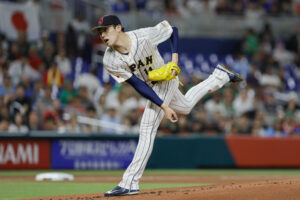
That performance would have made him one of the top free agents of this or any offseason, which normally would have lined him up for a massive payday. However, Sasaki seemed determined to start his major league career as soon as possible, without much regard for money.
If he had waited until he turned 25, he would have been considered a professional under MLB rules, and thus able to sign for any amount the market would bear. That was the route taken by Yoshinobu Yamamoto, who secured a $325MM guarantee from the Dodgers last offseason.
But Sasaki is making the move now, having just turned 23 years old, meaning he is considered an amateur and thus subject to MLB’s international bonus pool system. Under that system, each team gets a set amount to spend on international amateurs annually. This year, each team gets between $5-8MM, a paltry amount compared to what Yamamoto secured. That at least made it theoretically possible that any club could sign him, since the big-spending clubs couldn’t outmuscle the smaller clubs like with many other free agents.
However, despite that theoretical even playing field, there were still many good reasons to expect the Dodgers to emerge victorious. Sasaki and his agent Joel Wolfe didn’t reveal much about the player’s preferences, but logically, the Dodgers are an attractive landing spot. They play on the West Coast, which is often appealing for players coming over from Asia simply due to the relative proximity. They have a strong track record of on-field success, having made the playoffs in each year going back to 2013 now and having just won the World Series a few months ago. They also roster a couple of other Japanese stars in Yamamoto and Shohei Ohtani.
It wasn’t known how much Sasaki would weigh those factors compared to others. Wolfe pushed back on the notion that Sasaki cared about the presence of other Japanese players. He also suggested last month that Sasaki might prefer a smaller market, on account of some friction with the media during his time in Japan.
There were some arguments to possibly consider scenarios where he would prefer to go elsewhere. The Padres could have offered a smaller market than the Dodgers and it was reported that Sasaki has a strong relationship with current Padre Yu Darvish. The Blue Jays are owned by Rogers Communications, the club’s primary broadcaster, potentially giving them the ability to lower Sasaki’s access to the media. The fact that they are the only MLB team in Canada also theoretically opened up more endorsement opportunities from Japanese companies, as opposed to sharing the L.A. market with Ohtani and Yamamoto. The Jays also had a larger international bonus pool than the Dodgers and added to it by acquiring more pool space from the Guardians in a trade earlier today.
But despite any short-term drama that played out this offseason, the most obvious thing has happened. Sasaki has joined a team that is already loaded with stars like Ohtani, Yamamoto, Mookie Betts and Freddie Freeman. 2005 was the last time the Dodgers won fewer than 80 games and now they are adding another hugely talented player into the mix.
Adding Sasaki’s talent is a huge boost to the roster but it’s also massive from a financial point of view. As an amateur, Sasaki will only be able to make the league minimum this year and until he qualifies for arbitration or signs an extension. That’s a massive thing for a club like the Dodgers, who already owe big sums of money to their aforementioned stars as well as Blake Snell, Tyler Glasnow, Teoscar Hernández and plenty of others.
It also gives them an embarrassment of riches in the rotation, at least in terms of pure talent. Their rotation mix now includes Sasaki, Ohtani, Yamamoto, Glasnow, Snell, Tony Gonsolin and Dustin May. It’s a near inevitability that Clayton Kershaw will eventually re-sign. Even with each of Gavin Stone, Emmet Sheehan, Kyle Hurt and River Ryan set to miss most or all of next season, the Dodgers’ rotation should run eight or nine names deep. Landon Knack, Justin Wrobleski, Nick Frasso and formerly touted rookie Bobby Miller are all on hand as depth starters.
It’s a staggering amount of talent for one team. The Dodgers won the World Series last year in spite of their playoff rotation. This year, the rotation should be a strength going into October. That’s despite the injury risk associated with essentially everyone in the group. Glasnow has never surpassed 134 MLB innings in a season. Yamamoto was limited to 18 starts in his first MLB season by a rotator cuff strain. Snell has only topped 130 frames twice. Kershaw, Gonsolin and May all missed most or all of last season recovering from major surgeries. Ohtani underwent elbow surgery late in 2023 and didn’t pitch last year.
Sasaki comes with plenty of durability questions in his own right. He averaged fewer than 100 innings per season over his four years in NPB. He never reached 130 innings and was limited to 111 frames across 18 appearances a year ago. Sasaki had a pair of injuries in 2024: an oblique tear and shoulder fatigue.
The Dodgers will happily take the tradeoff of some IL stints for rate dominance. Los Angeles doesn’t place much value on bulk innings. They’re content to embrace injury risk as they chase pitchers with top-of-the-rotation upside. That’s enabled in part by their resources, of course, though money isn’t a factor for Sasaki.
Every team would have been thrilled to sign Sasaki for $6.5MM. The Dodgers will also owe a $1.3MM posting fee to the pitcher’s NPB team, the Chiba Lotte Marines. The posting fee is proportional to the size of the player’s signing bonus. As Sasaki’s bonus was capped at a few million dollars, the Marines were limited to 20% of whatever he received.
It comes out to a $7.8MM investment to land Japan’s most talented pitcher. The Dodgers have signed arguably NPB’s best pitcher in consecutive offseasons. They’ll have Sasaki for the standard six-year window of team control associated with the promotion of any prospect. He’ll be slated for salaries around the league minimum for the next three seasons. He’d then go through three years of the arbitration process. MLB rules prohibit the Dodgers and Sasaki from reaching any kind of understanding regarding a contract extension to circumvent the bonus pool limits. While there’s no official cutoff for when the Dodgers could look to extend Sasaki, they cannot have any sort of unofficial long-term deal in the works right now.
The Dodgers opened this signing period tied with the Giants for the lowest bonus pool. They had $5.1462MM to spend on international amateurs on January 15. The Dodgers allowed a few of their verbal agreements with teenage prospects to lapse to keep open funds for Sasaki. They added to their pool by dealing minor league outfielder Dylan Campbell to the Phillies and sending outfield prospect Arnaldo Lantigua to Cincinnati tonight. Their precise bonus allotment isn’t known, but Sasaki will take the vast majority of the pool. That’s a trade every team would happily make for a potential plug-and-play ace.
It’s a brutal blow for fans of the other two finalists. The Padres found out this morning that they were out of the mix. They have multiple holes in their rotation and now face an even tougher challenge in the NL West. The Blue Jays finish as the runner-up on yet another marquee free agent talent. Toronto has lost out on Ohtani, Juan Soto, Corbin Burnes and Sasaki (among others) within the past two offseasons alone.
Jack Harris of the Los Angeles Times first reported the signing bonus. Image courtesy of USA Today Sports.
Rays, Taylor Walls Avoid Arbitration
The Rays announced Wednesday that they’ve signed infielder Taylor Walls to a one-year deal with a club option for the 2026 season. In doing so, the two parties avoided an arbitration hearing. Marc Topkin of the Tampa Bay Times reports that Walls will earn a $1.4MM guarantee: a $1.35MM salary this coming season with a $50K buyout on a $2.45MM option for the ’26 campaign. The price of that option would be bumped by $50K, to $2.5MM, if Walls tallies 450 plate appearances, Topkin adds. Walls is represented by Vayner Sports.
Walls and Tampa Bay had exchanged figures last week, with the shortstop filing for a $1.575MM salary to the team’s $1.3MM submission. (MLBTR contributor Matt Swartz had projected a $1.3MM salary for Walls.) It’s the first trip through the arbitration process for the infielder, who’s under team control through 2027 regardless of the outcome of that 2026 option.
The 28-year-old Walls had a brutal season at the plate in 2024 but is a talented infield defender capable of handling multiple positions. In 252 plate appearances, he slashed only .183/.282/.248 with one homer, five doubles, three triples and 16 steals (in 20 attempts). Walls did continue to show a disciplined approach, walking in 12.3% of those 252 turns at the plate — right in line with his career 12.1% mark. His contact profile was sub-par, however. Walls averaged only 86.2 mph off the bat with a bleak 24% hard-hit rate, and he punched out in 26.6% of his plate appearances.
Defensive metrics are divided on Walls, who’s primarily been a shortstop (1983 big league innings) but also has ample experience at second base (524 innings) and the hot corner (419 innings). Defensive Runs Saved and Ultimate Zone Rating think he’s a flat-out plus with the glove. DRS, in particular, credits Walls with a whopping career mark of +35 at shortstop alone (plus another 15 DRS between second and third). Statcast has generally favored his work at third base but is down on Walls at shortstop, pegging him at two outs below average in each of the past two seasons.
The Rays clearly feel Walls is better than Statcast measures him to be. At least insofar as making the plays he’s supposed to, there’s good evidence to back that up. Walls was charged with only three errors in last year’s 625 innings of defense. He made a combined eight errors across three positions in 792 innings in 2023.
Even if the Rays decline Walls’ option for the 2026 season, he’d be under team control and arb-eligible a second time. They’d likely only do so if they felt Walls comfortably projected for less than the 75% raise his option value represents — although in that scenario, he’d be a potential non-tender candidate as well.
For now, Walls is the favorite to open the 2025 season at shortstop, though he’ll have some competition from fellow middle infielder Jose Caballero. In all likelihood, one will start the year at short and the other will fill a utility role, although Osleivis Basabe could get himself back into the mix if he shows signs of a rebound from a dreadful 2024 season this spring.
The Opening Day assignment doesn’t necessarily carry as much weight as who’ll finish the season at shortstop, though. Walls, Caballero and to a lesser extent Basabe will all be in the mix, but all eyes will be on 2021 first rounder Carson Williams, whom Baseball America just this morning tabbed as MLB’s No. 11 overall prospect. Williams, regarded as a plus defender at short, posted a .256/.352/.469 slash in a pitcher-friendly Double-A setting this past season, putting him about 42% better than average in that league, by measure of wRC+. The 21-year-old (22 in June) is likely ticketed for Triple-A to begin the season and could make his MLB debut at some point this summer, depending on how he fares early on.
Beau Sulser Signs With CPBL’s Rakuten Monkeys
The Rakuten Monkeys of Taiwan’s Chinese Professional Baseball League announced that they have signed right-hander Beau Sulser. Yihsuan Wang of Yahoo Taiwan reported a few weeks back that the Sulser was in negotiations with a CPBL team. The righty is represented by Full Circle Sports Management.
Sulser, 31 in May, pitched in the majors in 2022. Splitting his time between the Pirates and Orioles, he tossed 22 1/3 innings over 10 appearances, allowing 3.63 earned runs per nine innings. He struck out 19.2% of batters faced and gave out walks at a 9.1% clip.
His minor league numbers that year were a bit more interesting. Over 56 2/3 Triple-A innings between those two clubs, his 4.13 ERA was pretty middling but his 24.3% strikeout rate and 5.7% walk rate were both strong numbers.
Going into 2023, he headed to Asia by signing with the KT Wiz of the KBO League in Korea. That move didn’t work out for him, as he posted a 5.62 ERA in 49 2/3 innings, getting released in June. For the latter half of 2023 and then the 2024 season, he was back in North America, bouncing around on minor league deals. Between the Pirates and Blue Jays, he had a 5.63 over that year and a half, throwing 112 minor league innings. His 6.6% walk rate was still good but he only struck out 17.9% of hitters.
Had he stayed in affiliated ball for 2025, Sulser surely would have been limited to another minor league deal and an uphill battle back to the majors. Instead, he’ll head overseas again for a clearer opportunity and likely a guaranteed salary above what he would make while pitching in Triple-A.