
MLBTR Podcast: Lincecum, Rotations, Fantex
On this week’s show, Steve Adams joins host Jeff Todd to discuss whether the Tim Lincecum hype makes sense and what alternatives there might be for teams looking for rotation help. After touching upon what the Phillies’ impressive pitching could mean for that organization’s near future, Steve and Jeff delve into the increasing array of financial mechanisms (in particular, the Fantex model) that players may be able to use to lock in guaranteed cash while retaining future earning upside.
Click here to subscribe to the podcast on iTunes, and please leave a review! The podcast is also available via Stitcher at this link.
Additional PED Suspensions Expected
On the heels of several recent PED suspensions, several additional players are expected to receive 80-game bans as a result of positive tests, according to a report form ESPN.com’s T.J. Quinn. Player identities are not known, but Quinn notes on Twitter that no major names are believed to be involved.
Interestingly, he notes, several of the recently busted players were caught with the steroid turinabol. That substance is known more for its role in pumping up eastern bloc Olympic athletes in the seventies than for cutting-edge performance enhancement.
It’s not entirely clear why that’s occurred, but Quinn notes that advances in testing have almost certainly played a role. While it used to be that turinabol could only be detected within about one week of its use, traces can now be found in a much larger window. With several players caught during Spring Training, when testing would be anticipated, it could simply be that drug handlers were not caught unprepared.
Beyond that link, though, Quinn says the recent run of suspensions — which has included, most notably, Dee Gordon and Chris Colabello — doesn’t appear to revolve around any single nexus, as occurred in the Biogenesis case.
Looking forward, Quinn says that the unnamed players who triggered positive tests have been informed of their pending suspensions and are in various phases of the “administrative process.” While it’s unclear how many of those names currently appear on big league rosters, any 40-man members would have the chance to initiate a grievance to challenge any suspension, potentially adding more delay before any bans are officially applied and announced.
MLBTR Podcast With Guest Chuck Wasserstrom
On this week’s show, Chuck Wasserstrom joins the show to share some of his experiences as a veteran of the Cubs’ front office and how it has shaped his writing for MLBTR and other outlets.
Click here to subscribe to the podcast on iTunes, and please leave a review! The podcast is also available via Stitcher at this link.
The MLB Trade Rumors Podcast runs weekly on Thursday afternoons.
Blake Rutherford (Chaminade Prep) Interview: Draft Prospect Q&A
MLBTR continues its Draft Prospect Q&A series in order to give our readers a look at some of the top names on the board in this year’s draft. MLBTR will be chatting with some of the draft’s most well-regarded prospects as they prepare for the 2016 draft on June 9-11; we’ve already spoken with Mercer’s Kyle Lewis, Oklahoma’s Alec Hansen and Louisville’s Corey Ray.
It’s wait-and-see time for Blake Rutherford. The left-handed-hitting centerfielder has been at the top of the prospect ranking charts all year – and figures to be among the first high school players selected in the June draft.
Rutherford, who attends Chaminade College Preparatory School in West Hills, CA, has been known in scout circles for years. In fact, he committed to UCLA as a freshman and played on the international stage last summer – earning a Gold Medal as a member of USA Baseball’s 18U world championship-winning team in Japan.
The 6’2 ½”, 195-pound Rutherford was recently called “the most advanced pure bat in the class, college or high school” by ESPN.com’s Keith Law – who ranks him as the draft’s No. 4 prospect. Rutherford began the spring as Baseball America’s No. 3 prospect, while MLB.com’s Jonathan Mayo has him coming in at No. 6. Rutherford took some time out to talk with MLBTR:
Chuck Wasserstrom: Your brother, Cole is a first baseman at Cornell University. What have you been learning about college from your brother?
Blake Rutherford: “He’s told me that college is a great experience. Obviously, it’s hard sometimes to juggle both school and baseball, and he’s at a real prestigious school in Cornell. But he’s having a great time … he loves it. He just said it’s a really good experience for him, and he’s happy that he went across the country to go play baseball so that he could get a whole other perspective on life.”
How much of that is going to play in your decision as to whether you’re going to go to UCLA?
“It probably won’t. I’m going to have to make my own decision as to what’s best for me. He made the decision what’s best for him. He got into a good school like Cornell to play baseball. UCLA is another amazing school where you can get a great education. But I’m going to have to wait and see what happens with the draft. I’ll talk to him about it. We’ll talk about everything. When it comes down to it, I’m going to sit down with my family and make a decision that’s best for me – like he did when he made the decision to go to Cornell.”
I want you to describe your game for me. I don’t want a scouting report that I can read online. I want to hear you tell me about your game. So, Blake, how would you describe Blake?
“I would describe my game as someone who can do all things on a baseball field. I truly believe I’m a five-tool player who has a very overall strong game. I feel like the main thing people have always talked about is my hitting, but I really feel like my fielding, my running and my throwing have all taken a huge step this year. I’m also someone who’s super competitive, and I’m not going to stop until I get what I want – which is winning. I’m just someone who’s passionate and loves to play the game, but stays calm and cool during all situations.”
For most readers not in California, you’re a name. What do you do on the field that makes you unique, or at least makes you stand out?
“The thing that makes me stand out is I can try to change the game with my bat, on the base paths or in the field. I can make a diving catch that can save runs or save a game. I can steal bases consecutively; I’ve stolen home a couple times. I have the ability to hit a home run, hit a ball in the gap or get the base hit to get a rally started.”
Your high school was selected to the play in the National High School Invitational last month in North Carolina – where you went 9-for-14 facing some of the elite high school pitchers in this country. What was that experience like?
“That experience was unbelievable. USA Baseball did an amazing job putting us up and getting us around and getting the fields ready. But the competition out there was crazy. Every team had a couple guys on the mound that could deal. A lot of teams had hitters 1-through-9 that could absolutely mash. We knew going into it that we were going to have to play our best games. We did for three games, but in the fourth game we kind of ran out of energy and a couple things went the other way. I was really happy with how we did as a team. My performance individually … I was pretty happy with it because it helped my team win a couple of those games.
Baseball-wise, you’ve played on some pretty big stages already and done some pretty neat things like playing overseas. What stands out for you?
“This last summer, going to Japan (with the 18U USA Baseball national team) – I think that really stands out. We faced some adversity. We lost a couple exhibition games. We lost an earlier game to Japan. So we were kind of down a little bit. Then we came together as a team and bonded. We really got super close and we were able to pull it off. We came from behind in three or four of those games. And then to be able to defeat Japan in their big stadium in front of all their fans for the Gold Medal – that’s something I’ll probably never forget.”
To get there, you needed a 9th-inning rally against South Korea in the tournament opener – and you hit a clutch go-ahead three-run homer.
“We started the inning with a Will Benson walk. And then Hagen Danner had a pinch-hit double to set it up. Second-and-third, no outs … I knew somehow I had to get one run in. Their pitcher had thrown me all fastballs. I fouled a couple off. It got to 3-and-2, and I just got the barrel to the ball and it took off. At first, I didn’t know if it was gone; it’s kind of hard to hit the ball out of the park there. I never saw it go over. I just heard the crowd go crazy. And I saw the runners stop running – so I knew it must have gone out. I remember that I felt happy because we were now winning, but I wasn’t out of control or too excited because I knew South Korea still had to come up to hit – and they had a couple good hitters. Luckily, we were able to get a couple more insurance runs.”
You won the Gold Medal there, and as a result – your team was honored prior to Game Four of the World Series last fall (at Citi Field in New York). How amazing was that?
“That was so exciting. Not only were we at the World Series, but it was the first time the USA players had gotten together (since Japan). So we were just hanging out and loving every second of it. But just going on the field and meeting a lot of the guys and seeing the atmosphere of the World Series. It made all of us want to make it that much more.”
Growing up in Southern California, what are your favorite things to do?
“Obviously, going to the beach … Hanging out with my friends … Anything competitive. We might go hit on the local baseball field or go laser tagging. Me and my brother always grew up super competitive. We have a lot of friends who are competitive. So we ended up playing baseball or football. There was always some activity going on outside.”
Read on for more after the break …
Seeking Producer For MLB Trade Rumors Podcast
The MLB Trade Rumors Podcast has been going strong for over a year now. You can check out our Soundcloud page to listen to past episodes. Unfortunately, our podcast producer has to step down, which means we are in the market for a replacement.
We are seeking a new producer to put together each week’s episode and ensure the best possible sound quality. If you’re interested and have relevant experience, please email mlbtrhelp@gmail.com explaining your qualifications and technical setup/process. Please also include links to sample shows that you have produced, and don’t hesitate to let us know if you have any ideas about how to improve the current show.
MLBTR Podcast: Prospect Chatter With Ben Badler
On this week’s show, Ben Badler of Baseball America joins host Jeff Todd to share his prospect expertise. Among the players considered are Trevor Story of the Rockies and Nomar Mazara of the Rangers. Badler also discusses some of the most intriguing names to watch on the international market — with a particular focus on near-to-the-majors players from Cuba and Japan.
Click here to subscribe to the podcast on iTunes, and please leave a review! The podcast is also available via Stitcher at this link.
The MLB Trade Rumors Podcast runs weekly on Thursday afternoons.
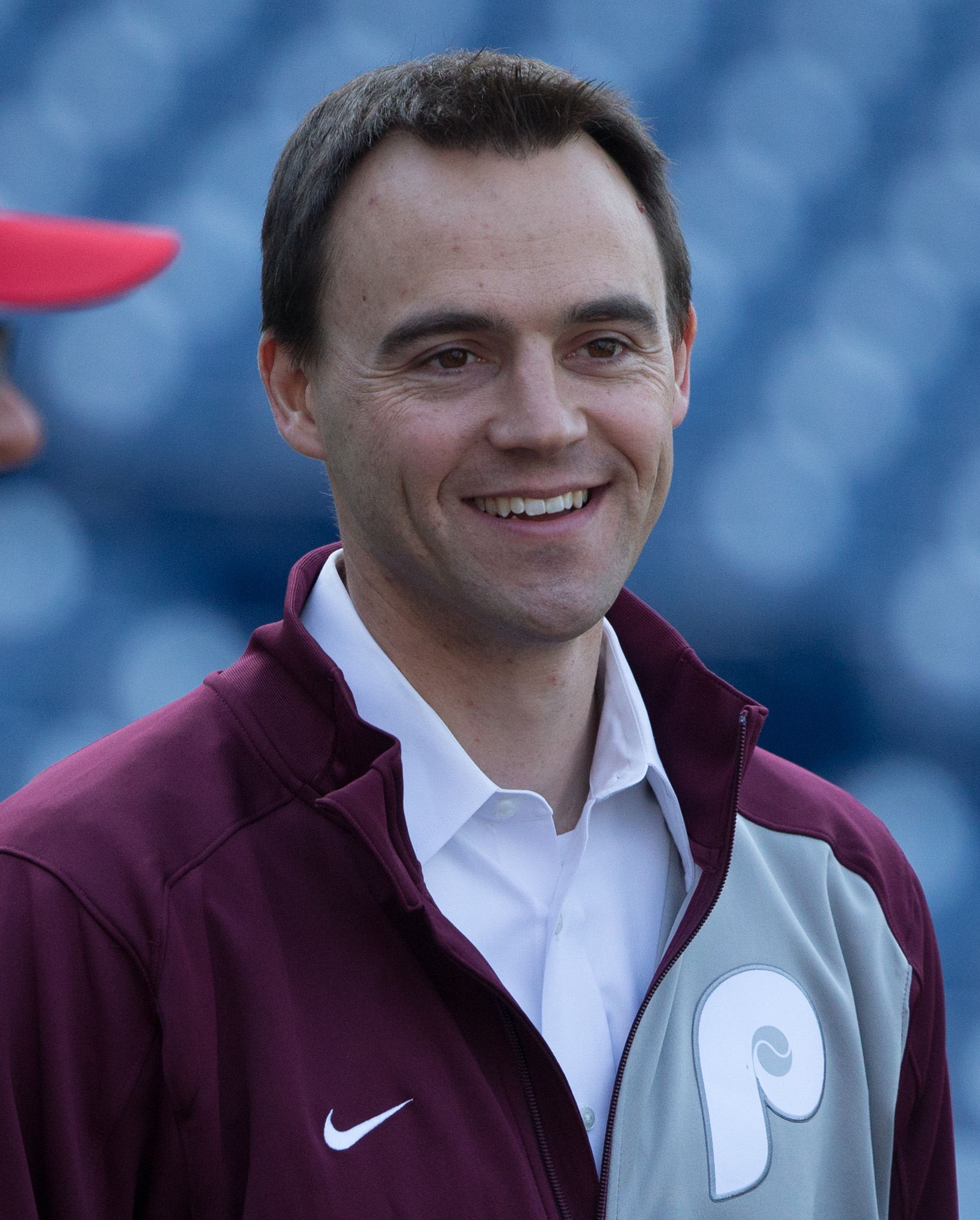
Matt Klentak Discusses Dartmouth College: MLBTR College Series
MLBTR continues a series of interviews with top baseball executives about their college years. We’ll ask about why those chose their school, memorable moments, their favorite professor, important connections made, college learnings they still use today, etc.
We’ve already spoken to Reds GM Dick Williams and Cubs GM Jed Hoyer. Next up in our question-and-answer series is Philadelphia Phillies Vice President and General Manager Matt Klentak – a graduate of Dartmouth College.
* * * * *
Matt, thanks for talking to MLBTR. You earned an economics degree from Dartmouth College in 2002. Why did you choose Dartmouth?
“There were a few things about Dartmouth that jumped out right away. No. 1, just walking around campus – it’s one of the most beautiful campuses in the country. On top of that, it obviously had a very strong academic reputation. And Coach (Bob) Whalen did an excellent job recruiting me and selling me on their baseball program. So it was really a combination of the three factors – the campus and the community environment, the academics, and the baseball program.”
What other schools were you considering?
“I looked at a few different schools. I initially looked at some schools down south with top baseball programs, but I ultimately realized I wasn’t going to play much there. I might have been able to go there and make the team, but I wasn’t going to see a lot of action on the field. Once I realized that, I started to shift my focus to programs in the northeast where I might be able to play more regularly. I looked at a variety of the schools in the northeast, but ultimately settled on Dartmouth.”
Being in an Ivy League school, academics definitely took precedence over athletics. What was it like playing in that type of an environment – where it was school first?
“My dad always talked to me about the fact that baseball wasn’t – by itself – going to open up doors for me. It was going to be a combination of baseball and academics. He said it to encourage me to take school seriously back in junior high and high school. It turned out that he was right. Ultimately, my success at Dartmouth was a combination of baseball and academics. Managing the Dartmouth workload and playing Division I baseball – that was a challenge. It really forced the student-athletes to be disciplined and to prioritize their time management. The academic demands required a great deal of studying and homework. And the baseball program had its own demands. But I think that the student-athletes learned about the importance of time management.”
Thinking back to your freshman campaign, what do you remember about your first year on campus?
“It was exciting. It was the first time I was living away from home, and everything was new. Meeting lots of new people. Learning about what it takes to play baseball at the Division I level. Learning how to manage academics and baseball at the same time. Everything was new. Everything was exciting. And there were challenges you were facing for the first time in your life that you never experienced living at home. Ultimately, it can be very satisfying when you find you achieved some success.”
You earned your degree in economics, and that has suited you well in baseball. If you had to choose all over again, would that have been your major – or would you have gone another route?
“I think I would have chosen economics. I think any major is going to teach a student to think critically and to improve their writing skills. There were a lot of majors that would have interested me. I think economics was the right balance for me of objective thinking and mathematics. It was the right balance for my interests and my skill set.”
What important connections did you make at Dartmouth that helped you as moved forward into a baseball career?
“First and foremost, I’m still to this day very close to my college coach, Bob Whalen – and I stay in touch with him. Whenever I can, I get out to see the Dartmouth baseball team play. While I was there, I was teammates with Bryn Alderson – who works for the Mets. His father is Sandy Alderson. I had a chance to get to know the Alderson family, and they have been helpful to me in my baseball career. I met Jim Beattie while I was there; at the time, he was a general manager. As importantly as anything, I became friends – and in many cases, best friends – with my teammates, who I’m still in touch with to this day. A number of them work in the baseball industry.”
Any players on opposing teams that you came across that went on to become important connections for you?
“There’s a nice group of baseball executives that played in the Ivy League at the same time. I’m not trying to just name GMs, but there’s (Colorado GM) Jeff Bridich, who played at Harvard. (Cleveland GM) Mike Chernoff played at Princeton. (Oakland GM) David Forst was at Harvard. (Boston GM) Mike Hazen was at Princeton. (Oakland assistant GM) Dan Kantrovitz was at Brown. And (MLB senior VP) Peter Woodfork was at Harvard as well. That’s a pretty good group.”
***Read more after the break …
MLB-Related Job Opening
From time to time, as a service to our readers, MLB Trade Rumors will post job opportunities of possible interest that are brought to our attention. MLBTR has no affiliation with the hiring entity, no role in the hiring process, and no financial interest in the posting of this opportunity. The following information was provided by the hiring entity:
Baseball Research Position
We are a well-known sports entity hiring an analyst in our MLB research group. You will be working in an office-based setting with other members of a research staff and will be responsible for handling a variety of statistical and other informational needs. The ideal candidate is a recent college graduate with a genuine interest in a career in the baseball industry. This position is located in Southern California (relocation not provided).
Minimum qualifications
- Bachelor’s degree from an accredited university (or sufficient relevant experience)
Preferred qualifications
- Prior baseball or team sports experience
- Proficient in Microsoft Excel, PowerPoint, Keynote, Photoshop
bcresearchposition@gmail.comIn the subject line of the email, please put “Research Position”. The body of your email should first contain your resume, appropriately formatted. In addition to the traditional resume information, please be sure to include any details about athletic experience or ability to speak a second language.
Below your resume, please put 1) your full contact information, 2) how you obtained this listing, and 3) your minimum annual salary requirement. The salary requirement needs to be a specific dollar figure. Applications without that information will not be considered.
Alec Hansen (Oklahoma) Interview: Draft Prospect Q&A
MLBTR continues its Draft Prospect Q&A series, which gives readers a look at some of the top names on the board in this year’s draft. MLBTR will be chatting with some of the draft’s most well-regarded prospects as they prepare for the 2016 draft on June 9-11.
University of Oklahoma right-handed pitcher Alec Hansen hasn’t played up to his potential in 2016, but remains an intriguing prospect. At the beginning of the spring, he was rated third on MLB.com’s Draft Prospect Watch and No. 9 on Baseball America’s Top 100 in March. But ESPN’s Keith Law recently wrote that “Hansen was a potential 1-1 guy (top draft pick) going into the school year, missed fall ball with a forearm injury, lost his rotation spot after a dismal start to the season and now could slip out of the first round.”
Hansen says he’s healthy – and that his junior year struggles could turn out to be a blessing in disguise. He’s still going through the growing pains of pitching – as he’s still getting bigger. Despite an uneven season, teams are interested in pitchers who stand 6-foot-8 and can throw 99 MPH. He took some time out of his busy schedule to talk with MLBTR earlier this week and was honest about his 2016 campaign – after a little family talk:
Chuck Wasserstrom: I’m going to start out by throwing some names at you. Nick Hansen swam at Iowa State and later coached at Wisconsin. Debbie Hansen swam at Wisconsin. Eric Hansen swam at Iowa State and later coached at the University of Arizona. Brooke Hansen is a freshman swimmer at Texas. Obviously, if Dad, Mom, Uncle and Sister have all done it, then it’s a family business. How did you miss out on that?
Alec Hansen: “I was a big-time swimmer growing up, and when I got to middle school I was playing other travel sports, too. I started liking the other sports better. I played baseball. I played basketball. I played football. Swimming was one of those sports where it’s the same thing every day. It was monotonous. So by the time I was in middle school I just was more interested in football, basketball and baseball.”
Back in 2013, you were selected by the Rockies in the 25th round of the draft, but you’re the son of a pair of one-time Division I athletes. Was there ever really a chance you would have turned pro, or did Mom and Dad sort of make it a slam dunk that you would be going to college?
“With them both being college athletes, they got to experience it. That’s what they wanted for me – to experience going to college and being part of a team. That’s why they wanted me to go to college. That’s an experience that lasts a lifetime, and you learn a lot from it. I’m really glad that I went to college after high school. Especially OU. I love OU.”
Did you really give much consideration about signing out of high school?
“I talked to my parents about it. We came up with an amount of money that – if I got that offer – that I should take it and play professionally. It would have been worth it if I got that much money. If I didn’t that offer, I would go to school. I didn’t get the amount of money that I was asking for, so I went to school. Now that I went to school, I see why they wanted me to go to college. Now that I look back at it, I should have asked for even more money, because you can’t put a dollar amount on the experience and the people you meet in college.”

Why did you pick Oklahoma?
“Of all the choices I had, the one that stood out to me was Oklahoma. It was a school that I always liked and wanted to go to growing up. Things just fell into place and worked out. Once I came out and visited OU, I made my decision pretty quickly.”
Turning to 2016 … obviously, this hasn’t been the easiest year for you.
“Not everything is always perfect. I’m not a person who gets too up or down about anything in life. Yes, it’s been frustrating. But it hasn’t changed who I am. I still work hard. I know this is all a process, and I’m still going to get a lot of opportunities to develop. My overall goal is not to be a first-round draft pick … it’s to make it to the big leagues.”
Can you talk about this year, and how much you’ll be able to grow off it?
“I think this is just something a lot of guys go through at any level. I know it happens at the professional level. You have expectations, but you’re not performing. It just becomes a battle – and you have to learn to overcome it. Maybe this could be a blessing in disguise. It could be a good thing for me. I haven’t pitched a lot now, so I’ll be able to go out and throw a lot this summer.”
I’d like to talk about your game a little bit. The scouting report is a plus fastball sitting 94-97 and touching 99, plus slider, above average curveball, makings of average changeup. How accurate would you call that report?
“I’d call that accurate. I’ve always thrown hard. My off-speed has always been pretty good. It’s just a matter of putting it all together. I think the more opportunities and experience I get to pitch in game settings, then it will all fall into place.”
[Continue reading after the break for more.]
Photo courtesy of OU Athletics Communications.
MLBTR Podcast: Barry Svrluga Talks Nationals
Washington Post national baseball writer Barry Svrluga — who recently authored The Grind, which is now available on paperback — joins the show to discuss the Nationals’ biggest stories heading into the season. Among the items of discussion are GM Mike Rizzo, new manager Dusty Baker, and the contract status of Stephen Strasburg and Bryce Harper.
MLBTR’s own Charlie Wilmoth then hops on the line to cover the latest with the Pirates. (And it’s only fair to note that he has written his own volume on the Bucs.) Charlie breaks down the addition of David Freese and the team’s overall infield mix, addresses the uncertainty in the rotation, and talks about the possibility of an extension with one or more of the team’s candidates for a new deal.
Click here to subscribe to the podcast on iTunes, and please leave a review! The podcast is also available via Stitcher at this link.
The MLB Trade Rumors Podcast runs weekly on Thursday afternoons.