
Guardians Manager Stephen Vogt Signed Multi-Year Extension
When the Guardians originally hired Stephen Vogt as their new manager following the 2023 season, it was announced that he’d signed a three-year contract covering the 2024-26 seasons. Vogt, however, isn’t coming up on the final year of his contract as it might have seemed. ESPN’s Jeff Passan reports that the Guardians quietly signed Vogt to a multi-year extension following the 2024 campaign. The new contract was never announced, nor was it reported at the time.

Vogt, 41, has been named American League Manager of the Year in each of his two seasons as Cleveland’s skipper. Under his watch, the Guardians have twice enjoyed late-season rallies to force their way into the postseason. The ’24 Guardians won 88 games and topped the Tigers in the ALDS before falling to the Yankees in the ALCS. In 2025, Cleveland won 92 games but lost to the Tigers in a 2-1 Wild Card series defeat. Overall, Vogt is 180-143 as a big league manager.
It’s not entirely clear how long Vogt’s new contract runs, but he’s likely signed through at least the 2028 season now. He’ll continue overseeing a club that’s anchored by perennial MVP candidate José Ramirez and is on the cusp of welcoming a new wave of top prospects who could comprise the Guardians’ long-term core.
Outfield prospect Chase DeLauter made his big league debut in 2025. He’ll be joined by 2024 No. 1 overall pick Travis Bazzana at some point in 2026, and fellow top prospects like infielder Angel Genao and catcher Cooper Ingle could make their debuts this coming season as well. Bazzana and Ingle both reached Triple-A in 2025; Genao held his own as a 21-year-old in Double-A. Pitching prospect Khal Stephen, acquired from the Blue Jays in the deadline deal sending Shane Bieber to Toronto, dominated up through the Double-A level in ’25 and could be an option to join Vogt’s rotation in 2026.
Though the Guardians are unlikely to ever field a payroll that’s consistently in the top half of the league, the presence of Ramirez, some quality arms (e.g. Gavin Williams, Tanner Bibee), looming young prospects and a perennially successful player development department should continue to put Vogt and the Guardians organization in position for success within the American League Central.
Blue Jays President Mark Shapiro Signs Five-Year Extension
Blue Jays president and CEO Mark Shapiro has signed a five-year contract extension, Rogers Communications (which owns the Jays) announced Friday.

“The opportunity to lead the Blue Jays organization over the past 10 years has been incredibly fulfilling,” Shapiro said in a statement within today’s announcement. “Together we have built an organization with people who care deeply about baseball and take immense pride in being Canada’s team. I am grateful and honoured to be able to continue that work.”
Shapiro, 58, has spent the past decade as the Blue Jays’ president and CEO. He’d previously been the general manager and, eventually, team president in Cleveland. His past contract ran through the end of the calendar year. Current Jays general manager Ross Atkins was hired away from Cleveland by Shapiro; he’d previously been their vice president of player personnel.
Both Shapiro and Atkins have now signed multiple long-term extensions to remain in place as the top decision-makers for the Jays. Shapiro is now locked in through the 2030 season. Atkins signed a five-year extension back in 2021 and is currently signed through the end of the 2026 campaign. Given the Jays’ run to Game 7 of the World Series, it stands to reason that Atkins could be in line for an extension of his own at some point in the coming months.
Under Shapiro and Atkins, the Jays have won 89 or more games in four of the past five seasons. They hadn’t had any playoff success — save for the 2016 season, though that was a largely inherited club from the prior regime — but broke through in a major way in 2025 when they toppled the Yankees and Mariners in the ALDS and ALCS before coming just two outs away from the franchise’s first World Series victory since the 1992-93 repeat.
While the Jays have often been runners-up for prominent free agents in recent seasons (e.g. Juan Soto, Shohei Ohtani), this year’s World Series push and the team’s $500MM investment in Vladimir Guerrero Jr. have perhaps helped to establish the Jays as more of a free agent destination. Right-hander Dylan Cease just inked a seven-year contract, and Toronto has shown interest in both Kyle Tucker and in re-signing star infielder Bo Bichette, who reached the open market for the first time in his career this offseason. Ownership’s decision to commit to another extension with Shapiro is both a vote of confidence in the team’s current core and vision, as well as a signal that Toronto will be continuing in win-now mode for the foreseeable future.
Braves Sign Robert Suarez
The Braves further solidified the back of their bullpen Thursday, announcing the signing of former Padres closer Robert Suarez on a three-year, $45MM contract. Suarez, a client of Primo Sports Group, became a free agent at season’s end when he opted out of the final two years and $16MM on his five-year contract with San Diego. He’ll be paid $13MM in 2026 and $16MM in both 2027 and 2028, per the team. There are reportedly no deferrals in the contract. Atlanta designated lefty Ryan Rolison for assignment to open a spot on the 40-man roster (more on that move here).

The 34-year-old Suarez (35 in March) went directly from Mexico to Japan’s Nippon Professional Baseball late last decade and, after establishing himself as one of the top relievers in NPB, has broken out as a top-tier reliever in the majors. Originally signed on a two-year deal with the Padres, he opted out after one year and inked a five-year, $46MM extension that afforded him another opt-out provision after the third year, which he took last month.
Now Atlanta-bound, Suarez has consistently posted quality numbers in high-leverage spots for the Friars. Dating back to his 2022 MLB debut, he’s posted a 2.91 ERA with a 26.5% strikeout rate and 7.6% walk rate in 210 innings. Suarez sits just under 99 mph with his four-seamer and complements the pitch with a changeup that got great results in ’22-’23 but has been hit hard the past two seasons. It hasn’t led to poor results, however, because Suarez’s fastball and sinker both grade out as dominant offerings.
Suarez joins right-hander Raisel Iglesias, who re-upped on a one-year, $16MM contract earlier in the offseason, to form a potent one-two punch at the back of new manager Walt Weiss’ bullpen. Notably, Ken Rosenthal of The Athletic reports that Iglesias will continue to serve as the closer in Atlanta. Suarez will operate as his primary setup man (and, of course, can handle save opportunities in the event that Iglesias is unavailable or suffers an injury). Setup work is nothing new for Suarez, who in 2022 helped set up for Taylor Rogers and in 2023 was a key setup arm for Josh Hader.
On the surface, a three-year, $45MM contract for a high-end reliever feels fairly well in line with contractual norms around the game. However, Suarez’s camp did quite well to get him the third guaranteed year. As shown in MLBTR’s Contract Tracker, this is the first deal of three or more years for a 35-year-old (or older) reliever since Will Harris signed for $24MM with the Nationals prior to the 2020 season. Before that, you’d have to go all the way back to Ryan Madson‘s three-year pact with the A’s back in 2015 to find another example of a bullpen arm being paid for this long of a term at Suarez’s age.
Adding Suarez brings Atlanta’s 2026 payroll up to about $241MM. RosterResource estimates that the team is carrying more than $236MM worth of luxury-tax considerations, which places them within $8MM of the 2026 season’s $244MM first-tier luxury threshold. President of baseball operations Alex Anthopoulos has already checked several items off his winter to-do list, though Atlanta still figures to be open to additions at shortstop, on the bench and/or on the pitching staff. That said, re-signing Iglesias, acquiring utilityman Mauricio Dubon and bringing in both Suarez and outfielder Mike Yastrzemski (on a two-year, $23MM deal) has removed some of the urgency to make further additions.
ESPN’s Jeff Passan first reported the agreement and the terms of the contract. The Athletic’s Will Sammon first reported the year-to-year breakdown.
Elvin Rodriguez Signs With KBO’s Lotte Giants
Free agent right-hander Elvin Rodriguez has signed with the Lotte Giants of the Korea Baseball Organization, the team announced. He’ll receive $1MM for the 2026 campaign. Lotte also announced the re-signing of outfielder Victor Reyes at $1.4MM and the signing of right-hander Jeremy Beasley for $1MM.
Rodriguez, 27, spent the 2023-24 seasons with the Yakult Swallows in Japan’s Nippon Professional Baseball, parlaying that into a big league deal with the Brewers last winter. He wound up pitching 19 2/3 innings in the majors between Milwaukee and Baltimore but was tagged for 20 runs in that time. The 2025 season was Rodriguez’s second with at least some MLB work. He also briefly appeared with Detroit back in 2022. He’s surrendered 55 runs in 52 2/3 MLB frames but notched a sub-2.00 ERA in 45 1/3 innings as a reliever during his 2024 season in NPB.
Reyes, another former Tiger, is entering his third season with the KBO’s Giants. The 31-year-old has slashed .339/.390/.493 in 1275 plate appearances without missing a game during his first two KBO campaigns. Reyes previously played in parts of five seasons with Detroit from 2018-22, hitting a combined .264/.294/.379 in a nearly identical sample of plate appearances (1280) to his KBO workload thus far. While he didn’t carve out a role as a big league regular, this year’s deal with Lotte brings him up to $3.35MM worth of guaranteed earnings during his three years in South Korea (not including some incentives that he’s surely unlocked along the way).
Beasley, 30, pitched in the majors with the D-backs and Blue Jays from 2020-22, tossing a combined 24 2/3 innings with a 5.84 ERA. The right-hander has a solid track record in Triple-A and has spent the past three seasons pitching for the Hanshin Tigers in Japan’s Nippon Professional Baseball. He’s pitched to a 2.82 ERA in his three seasons with Hanshin but spent the bulk of this past season with the Tigers’ farm club. As with Rodriguez and Reyes, Beasley never really found his footing in the majors but has carved out a nice living pitching professionally overseas. He’s still young enough that an eventual MLB comeback can’t be entirely ruled out, but he’ll need to take a step forward after last year’s rocky showing in Japan.
Cubs, Collin Snider Agree To Minor League Deal
Former Mariners and Royals reliever Collin Snider has agreed to a minor league deal with the Cubs, as Snider himself and the staff at Tread Athletics (where he works out in the offseason) indicated on Instagram. Presumably, he’ll be in big league camp next spring. Snider is represented by agent Jack Toffey.
The 30-year-old Snider has pitched in the majors in each of the past four seasons, spending the 2022-23 campaigns with Kansas City and 2024-25 with Seattle. In 122 2/3 major league innings, he carries a 4.48 earned run average with a 19.5% strikeout rate and an 8.8% walk rate.
Snider’s best year came with the ’24 Mariners, when he logged 41 2/3 innings with a 1.94 ERA, 27.8% strikeout rate and 7.7% walk rate. The lanky 6’4″ right-hander slipped to a 5.47 ERA in 26 1/3 big league frames this past season and lost nearly two miles per hour off his fastball — presumably in part due to a flexor strain that sent him to the injured list in early June.
Snider didn’t return to the majors after that IL placement. He struggled badly over a three-week rehab stint with Triple-A Tacoma, at which point the Mariners designated him for assignment and passed him through waivers. He spent the remainder of the season trying to get back on track in Tacoma but couldn’t recapture that 2024 form; in 25 2/3 Triple-A frames, Snider allowed 23 runs (8.06 ERA).
The Cubs traded Andrew Kittredge back to the Orioles following the season but have since signed veterans Phil Maton and Hoby Milner to support young closer Daniel Palencia. There’s still plenty of work to do in the ‘pen, with Kittredge, Brad Keller, Drew Pomeranz and Caleb Thielbar all out the door. Chicago struck gold with their minor league addition of Keller last offseason, and while it’s not realistic to expect that level of success from subsequent minor league signees, that turnaround could make them more appealing to previously successful relievers in search of a rebound, like Snider. He’ll vie for a job next spring, but the Cubs’ bullpen scene should become more crowded in the weeks/months ahead.
Orioles Sign Pete Alonso
Pete Alonso is an Oriole. Baltimore announced the five-year deal on Thursday and will formally introduce their new slugger at a press conference on Friday morning. The Boras Corporation client reportedly receives a $155MM guarantee. He’ll collect a $12.5MM signing bonus and an $18.5MM salary in 2026. He’ll then earn $31MM per year over the next four seasons. There are no deferrals or opt-outs in the contract, and Alonso receives a limited no-trade clause. Catcher Maverick Handley has been designated for assignment as a corresponding 40-man roster move.
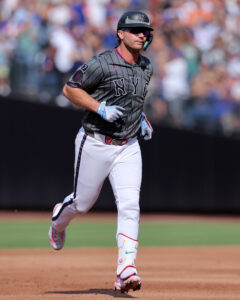
It’s the second major defection from the Mets in as many days. Edwin Diaz spurned Queens for a three-year, $69MM deal with the Dodgers just yesterday. Alonso now heads to the Orioles, with whom he met in person at this week’s Winter Meetings (which are being held in Orlando, not all that far from Alonso’s Tampa-area home).
Although bolstering the rotation has been the obvious goal for Baltimore all offseason, the O’s have also been in pursuit of a major upgrade to the lineup. They offered Kyle Schwarber the same five-year, $150MM terms to which he agreed in his return to the Phillies and have now pushed incrementally further to give Alonso a record-setting average annual value for a first baseman over that same five-year term.
Alonso, who turned 31 over the weekend, famously rejected a reported seven-year, $158MM extension offer from the Mets back in 2023. He drew a fair bit of criticism for that decision, particularly when his market didn’t develop as hoped during last offseason’s initial foray into free agency. Alonso wound up returning to the Mets on a two-year, $54MM deal that was frontloaded with a $30MM salary in 2025 and allowed him to opt back into free agency this winter.
Between that $30MM, the $20.5MM he earned in his final season of arbitration eligibility and the newly promised $155MM from the Orioles, Alonso will end up with $205.5MM over the same seven years that would’ve been covered under the extension offer he turned down.
In Alonso, the Orioles are adding one of the steadiest power hitters on the planet. He’s slugged at least 34 home runs in every 162-game season since his 2019 debut, plus another 16 round-trippers in the shortened 2020 campaign. Dating back to 2019, Schwarber (268) and Aaron Judge (285) are the only players with more home runs than Alonso’s 264.
Steady as his power output has been, Alonso needed a “rebound” campaign of sorts in order to get this type of long-term deal. While his market last offseason was surely weighed down by a qualifying offer — players can only receive one QO in their career, so that wasn’t an issue this time around — Alonso had slugged a career-low 34 home runs with an increase in strikeouts and a downturn in his batted-ball metrics. His .240/.329/.459 output in 2024 was more good than elite.
The 2025 campaign brought improvements across the board. Alonso belted 38 homers and 41 doubles (up from 31 the year prior) while slashing .272/.347/.524 (141 wRC+). He lopped two percentage points off his strikeout rate, cutting it to a roughly average 22.8%, and saw enormous upticks in his average exit velocity (93.5 mph in ’25, 89.8 mph in ’24), barrel rate (18.9% vs. 13.2%) and hard-hit rate (54.4% vs. 46.4%). Alonso struggled through a poor month of July, but as the Mets were fighting for their postseason lives (and ultimately falling short), Alonso put the team’s offense on his back alongside fellow stars Juan Soto and Francisco Lindor. From Aug. 1 onward, the “Polar Bear” raked at a .297/.339/.584 clip (153 wRC+) with 16 home runs and 15 doubles in 239 plate appearances.
Despite that Herculean finish to the season, Alonso received tepid interest from the only club he’s ever known. The Mets were reportedly reluctant to go beyond three years in their talks with Alonso, and the New York Post’s Joel Sherman reported in the aftermath of today’s agreement that they never made a formal offer once it became clear where Alonso’s market was headed. That’s surely a point of frustration for the majority of Mets fans but also shouldn’t come as a major surprise; if the Mets were going to commit to Alonso long-term under president of baseball operations David Stearns and owner Steve Cohen, that likely would have happened last winter. The Mets were only comfortable with a short-term deal then and clearly didn’t change that thinking this time around.
Alonso is the second 30-homer slugger acquired by Baltimore president of baseball operations Mike Elias this winter. The O’s also picked up outfielder Taylor Ward (36 homers in 2025) in a trade sending talented but oft-injured righty Grayson Rodriguez to the Angels. The additions of Alonso and Ward should both add an influx of right-handed power to a team that hit just .231/.297/.364 against left-handed pitching in 2025 and also create myriad trade possibilities for Elias and his staff.
It’s feasible that the Orioles simply add a prominent starting pitcher via free agency as their primary means of addressing the rotation, but their newly acquired thumpers open the space for more creativity. Alonso’s addition could make it easier to trade young corner infielder Coby Mayo, while plugging Ward into a corner outfield spot makes one of Dylan Beavers or Colton Cowser easier to include in a trade for pitching help. Baltimore’s decision to tender a contract to Ryan Mountcastle, a defensively limited right-handed slugger coming off a poor season, now looks like all the more of a head-scratcher, though. The O’s could try to find a taker willing to buy low on him or, alternatively, hope that he can bounce back and be part of the solution between first base and designated hitter.
Payroll-wise, there was always clear runway to add a major contract to the books. The Orioles have spent the better part of the past decade in a rebuild and thus haven’t been handing out multi-year deals very often. The only players guaranteed anything beyond the upcoming 2026 season are Tyler O’Neill, Ryan Helsley and Samuel Basallo. O’Neill and Helsley are only signed through 2027, and Helsley can opt out of his contract following the 2026 season. (O’Neill’s $16.5MM salary in 2027 is all but immovable after his ugly 2025 showing.) Basallo’s eight-year, $67MM extension has just an $8.375MM average annual value. His salary will sit at just $1MM in each of the next three seasons and won’t top $10MM until 2031, at which point Alonso’s contract will have already wrapped up.
Alonso adds $31MM per year to the ledger — assuming an even distribution of his $155MM — but the rest of the books are so clean that it shouldn’t impede the Orioles from future additions of note and/or extensions for prominent young players. RosterResource now projects them for a payroll just under $148MM in 2026, but the 2027 books only have $62.5MM in guaranteed money ($48.5MM if Helsley turns down his player option). By 2028, Alonso and Basallo are the only players guaranteed anything.
Alonso’s contract becomes the second-largest in Orioles history, trailing only the seven-year, $161MM contract given to first baseman Chris Davis under a prior ownership and front office regime. That contract was laden with deferrals, too, which considerably weighed down the net present value.
When considering that wrinkle, the investment in Alonso can be considered the most significant expenditure in franchise history — but it’s also just one of several steps the Orioles will take this winter. Elias is still angling to upgrade his team’s rotation, and the O’s could still use help in the bullpen. This could very well end up being viewed as the signature move of the offseason — if not the entire Elias era to date — but the O’s aren’t likely to coast from here to spring training. There’s more on the horizon.
ESPN’s Jeff Passan first reported the sides were finalizing a five-year, $155MM deal. Andy Kostka of The Baltimore Banner was first on the limited no-trade protection. Jon Heyman of The New York Post had the salary structure.
Preller: Fernando Tatis Jr. Not Available In Trade Talks
The Padres’ payroll reduction (relative to its 2023 peak) and limited of financial flexibility this offseason has led to plenty of hope from other clubs about the possibility of prying star right fielder Fernando Tatis Jr. away from San Diego. However, president of baseball operations A.J. Preller decisively stated at the end of this week’s Winter Meetings that the three-time All-Star won’t be changing hands.
“He’s one of the best players in baseball, is a two-time Platinum (Glove) winner,” Preller told Kevin Acee of the San Diego Union-Tribune in response to Tatis speculation. “The guy has taken over portions of seasons and games and playoff series and everything like that. … Every one of the different versions and iterations of the team and roster we put up there, it’s ‘Tati’ right in the middle. Hopefully, he is one of the top players on our team this year. He’s somebody that we’re not talking about, however you want to say that. If you want to say that’s ‘untouchable,’ you can say that.”
A trade of Tatis has never seemed particularly likely, though some around the industry have wondered whether it’ll eventually be necessary, given the uncertainty surrounding Padres ownership and the ongoing efforts to scale back payroll. San Diego has reduced its spending considerably since the passing of late owner Peter Seidler. Earlier this offseason, Seidler’s brother, John, who has since been named the team’s control person, announced that his family will explore a sale of the franchise.
That announcement came less than one year after a tumultuous and very public-facing quarrel between Sheel Seidler — Peter’s widow — and the other two Seidler brothers, Bob and Matt. Back in February, Sheel filed suit against Bob and Matt Seidler, alleging that they’ve breached fiduciary duty and committed fraud as successors of Peter’s trust. She accused her brothers-in-law of selling assets to themselves “far” below market prices in an effort to consolidate control of the franchise and of violating Peter’s wishes that she serve as interim control person before passing ownership onto the couple’s children at a later date. Matt Seidler contested the suit in a formal response wherein he accused his sister-in-law of attempting to “manufacture claims against the Trustees in pursuit of the control that Peter intentionally chose not to give her.” To date, the suits have not been litigated, nor is there any indication that a settlement has been reached.
For the time being, none of that off-field tension seems to have an impact on Tatis’ status with the club. Certainly, an eventual ownership change could create a different financial outlook in San Diego one way or another, particularly considering the remaining nine years and $286MM on Tatis’ contract.
Hefty as that sum may be, it bears emphasizing that it’s still a “bargain” relative to what Tatis would command on the open market. Had Tatis never penned that extension, he’d be a first-time free agent right now, having accumulated his sixth year of MLB service in 2025.
Tatis would be a 26-year-old (27 in January) coming off a .268/.368/.446 showing (131 wRC+) with 25 home runs, 27 doubles two triples, 32 steals (in 39 tries) and career-best walk and strikeout rates (12.9% and 18.7%, respectively). As Preller referenced, he’s a two-time Platinum Glove winner (and three-time Gold Glove winner). Tatis has hit at least 21 home runs in every 162-game season he’s played (plus 17 in the shortened 60-game season back in 2020).
Given his youth, borderline elite production at the plate and superlative defense, Tatis would have been the clear top free agent in this offseason’s class, likely in line for a contract running into his late 30s or even age-40 season. He may not have matched Juan Soto‘s jaw-dropping $765MM guarantee, but Tatis would very likely have been in line for a contract even larger than the 14-year, $500MM extension signed by fellow second-generation star Vladimir Guerrero Jr. last spring. He’s been worth an average of about 6.5 wins above replacement (6.4 fWAR, 6.6 bWAR) per 162 games played in his career to this point.
Though the Padres won’t be moving Tatis anytime soon, San Diego is exploring other ways to create more financial flexibility. As was reported earlier in the month, the Friars are at least listening on Jake Cronenworth, if not shopping him, and have been willing to hear out clubs who’ve expressed interest in right-hander Nick Pivetta. RosterResource projects the Padres for a payroll of about $201MM right now. Ownership wants to keep the 2026 payroll roughly in line with last year’s mark, around $224MM, which is down from the team’s rough $255MM peak in 2023 but considerably higher than spending levels under prior ownership groups.
Brewers Sign Akil Baddoo To Major League Deal
The Brewers added some outfield depth Thursday, announcing the signing of Akil Baddoo to a one-year, major league contract. It’s a split deal that pays Baddoo at a $1.25MM rate while he’s in the majors and $845K for time spent in the minor leagues, according to an Associated Press report. Milwaukee already had an open 40-man spot. Their roster is now full following the addition of Baddoo, a client of Apex Baseball.

Baddoo, 27, was the No. 74 overall pick in the 2016 draft by the Twins. He never appeared in a big league game with Minnesota but landed in Detroit by way of the 2020 Rule 5 Draft. Baddoo showed plenty of promise in that rookie season, hitting .259/.330/.436 with 13 homers and 18 steals in only 461 plate appearances. The Tigers looked to have a steal on their hands, as the lefty-swinging Baddoo at least looked the part of a platoon corner outfielder with some speed, modest power and plate discipline.
Unfortunately, he’s never returned to that same level of production. Baddoo has been an up-and-down member of the roster in four seasons since that time, hitting a combined .201/.288/.323 in 682 plate appearances — primarily against right-handed pitching. He runs well and draws strong grades for his defensive acumen in left field, but Baddoo has well below-average marks in batted-ball metrics like average exit velocity (87.5 mph), barrel rate (5.9%) and hard-hit rate (34.6%) over the past four seasons.
Baddoo has one minor league option year remaining, so he doesn’t necessarily need to break camp with the Brewers. If he doesn’t make the Opening Day club, they can send him to Triple-A Nashville without needing to pass him through waivers. He’ll jump into a competition for reps in an outfield that’ll feature Jackson Chourio in right field and Sal Frelick in center.
Isaac Collins was the Brewers’ leader in left field innings last season, though he can play all over the diamond. Jake Bauers is also in the mix, but he has ample experience at first base and could always see time at designated hitter on days that Christian Yelich is in left or is out of the lineup. (Yelich played only 19 games in left field last year and was otherwise a DH.) Blake Perkins, too, will see time on the grass but is more of a fourth outfielder/backup center fielder than an everyday option. Former first-round pick Garrett Mitchell missed most of the 2025 season due to injury and will need to hit his way back into consideration for a more prominent role.
If Baddoo ends up playing a meaningful role of any sort on the 2026 Brewers, he could be a relatively long-term addition. He currently has just 3.021 years of major league service time, meaning he can be controlled via arbitration for at least three more seasons (including 2026). Depending how much time he spends on the big league roster, that window of control could extend an extra season. Baddoo would need 151 days of MLB service this year to reach four years. Of course, that’s putting the cart before the horse; he’ll need to play his way onto the roster and then show some staying power before that’s a real consideration, but it’s a nice theoretical bonus — particularly for a club with a reputation for maximizing the performance of its low-cost acquisitions.
Ken Rosenthal of The Athletic first reported that the Brewers were signing Baddoo to a major league contract.
Mets, Carl Edwards Jr. Agree To Minor League Deal
TODAY: In an interesting twist, the Mets may utilize Edwards as a starter at Triple-A, according to Sammon and Ken Rosenthal. Edwards has never started a big league game, but he made 19 Triple-A starts over the last two seasons with the Rangers, Angels, and Padres’ top affiliates, plus he made 14 starts in the Mexican League in 2025.
DECEMBER 8: The Mets have agreed to a minor league contract with free agent reliever Carl Edwards Jr., reports Will Sammon of The Athletic. Edwards, a client of the Ballengee Group, will be in major league camp next spring as a non-roster invitee.
Edwards, 34, pitched just six big league innings last season between the Angels and Rangers, allowing three runs on four hits and three walks with six punchouts. He’s pitched for eight teams across parts of 11 major league seasons, totaling a 3.56 ERA, 28% strikeout rate and 12.7% walk rate in 286 frames.
Once regarded as a top pitching prospect, the 6’3″, 165-pound Edwards settled in as an important reliever with the Cubs back in their 2016 World Series run and in subsequent seasons. From 2016-18, the “Stringbean Slinger” tossed 154 1/3 innings of 3.03 ERA ball with a huge 34.2% strikeout rate but a hefty 13.5% walk rate.
Edwards slipped into journeyman status shortly thereafter, as his command troubles worsened and his struggles became untenable. He had a resurgence with the Nats in 2022-23, however, combining for 93 2/3 innings with a 3.07 earned run average. His 20.1% strikeout rate was a far cry from his Cubs peak, although his 10.6% walk rate was also an improvement.
Edwards spent the bulk of last season in Triple-A, working to a 4.44 ERA through 50 2/3 frames in an extremely hitter-friendly environment. He set down 25.8% of his opponents on strikes and posted a 7.2% walk rate that stands as the best mark of his career in any notable sample. He also induced grounders at a hearty 54.9% rate in Triple-A. He’ll be a veteran depth option with the Mets — one of several such additions surely on the docket this winter.
Brewers’ Nick Mears Garnering Trade Interest
The Brewers are getting calls about right-handed reliever Nick Mears as teams around the league look for under-the-radar bullpen help, per Ken Rosenthal and Will Sammon of The Athletic. Milwaukee has also gotten plenty of interest in closer Trevor Megill and ace Freddy Peralta this winter. There’s no indication the Brewers are especially motivated to part with any of the bunch.
Mears, 29, landed with the Brewers ahead of the 2024 trade deadline in a deal sending pitchers Bradley Blalock and Yujanyer Herrera back to the Rockies. An undrafted free agent signed by the Pirates following the 2018 draft, Mears was traded to the Rockies for Connor Joe, claimed off waivers by the Rangers and reclaimed by the Rockies before settling into a bullpen role in Denver during that 2024 campaign.
At the time of the trade, Mears had an ERA in the mid-5.00s but had shown quality swing-and-miss ability. He struggled to a 7.30 ERA down the stretch in Milwaukee, but the Brewers kept him for the 2025 season anyhow. Mears rewarded that faith by breaking out as a solid setup arm.
In 56 2/3 innings this past season, Mears notched 16 holds and a save while pitching to a 3.49 earned run average. The 6’3″, 217-pound righty scaled back his fastball usage and ramped up his slider usage with the Brewers. He actually struck out fewer hitters in 2025 than in 2024 but continued to post terrific swinging-strike and opponents’ chase rates. Mears has also dramatically improved his command as a Brewer; after walking more than 12% of his opponents in parts of two seasons with the Rox, he’s issued a free pass to only 5.8% of his opponents with the Brew Crew.
Mears is under club control through the 2027 season. MLBTR contributor Matt Swartz projects a modest $1.6MM salary for the well-traveled righty after that 2025 breakout. Given that modest salary expectation, there’s little to no financial incentive for the Brewers to move him. However, Milwaukee is always open-minded about trading players as they inch closer to free agency. Mears has the potential to be an important piece of manager Pat Murphy’s late-inning relief corps this season, but he could also fetch a modest prospect if the Brewers feel confident that they can weather his loss.
Megill, Abner Uribe, Grant Anderson, Jared Koenig and Aaron Ashby all pitched to earned run averages of 3.23 or better in 2025 — each of them with a better-than-average strikeout rate. No one from that group walked more than Anderson’s 9.7% of opponents, so there aren’t many command issues with the quintet, either. Lefties Rob Zastryzny and DL Hall logged solid ERA marks as well, albeit with less impressive strikeout and walk rates. The Brewers also have 26-year-old Craig Yoho, who posted video-game numbers in the upper minors this season, as well as a plethora of young starters who could move to relief roles due to the depth in the system (e.g. Tobias Myers, Coleman Crow).
Notably, Mears is one of just two out-of-options relievers the Brewers have (in addition to Zastryzny). That fact could make him slightly easier to pry loose than some of his optionable bullpen counterparts, who inherently provide more flexibility to a Brewers team that often takes an all-hands-on-deck approach to its pitching usage and regularly shuffles up the lower-leverage portion of its relief corps. Time will tell whether the depth they possess ultimately leads to a trade, of course, but Mears is at least a name for fans of payroll-conscious clubs in need of bullpen help to keep in the back of their minds.