
Red Sox Notes: Durbin, Infield, Coulombe
The Red Sox have told Caleb Durbin he’ll be the primary third baseman, the infielder told reporters (including Tim Healey of The Boston Globe). Things had clearly been trending in that direction throughout camp, though manager Alex Cora held off on making any formal declarations.
Durbin remains at the position where he started 119 games for the Brewers last year. He’d made three starts at second base for Milwaukee. Durbin started a trio of games at the keystone against 10 starts at third base this spring.
The 26-year-old is coming off a third place finish in NL Rookie of the Year voting. He stole 18 bases and connected on 11 homers with a .256/.334/.387 line across 506 plate appearances. The Red Sox acquired him last month in a six-player trade built around Durbin and left-hander Kyle Harrison, who has a good chance to open the season in Milwaukee’s rotation. He has made a strong impression on his new team in camp, batting .394 with five walks and only three strikeouts over 40 plate appearances.
Cora said the Sox prefer to have Durbin playing one position rather than bouncing around the infield. Locking him in at the hot corner leaves second base as the spot up for grabs. Marcelo Mayer has been the favorite throughout the spring. The Red Sox have yet to commit to carrying Mayer on the Opening Day roster after he hit .228/.272/.402 with a 30% strikeout rate in his first 44 MLB games.
Isiah Kiner-Falefa and Andruw Monasterio (who came over from Milwaukee in the Durbin trade) would be the alternatives if the Sox want Mayer to open the season in Triple-A. Kiner-Falefa and Monasterio fit best as utility players. They’re each right-handed hitters and could take short side platoon bats if the Sox want to keep the lefty-hitting Mayer away from tough southpaws.
Romy Gonzalez could be back in that role midseason, but he’ll miss at least the first two months. Gonzalez underwent arthroscopic surgery on his left shoulder last week. The Sox placed him on the 60-day injured list when they finalized their $1MM free agent deal with lefty reliever Danny Coulombe.
Coulombe had been a Sox target dating back to the Winter Meetings. The team wanted a more established player than Jovani Moran to serve as their top lefty bullpen arm in front of closer Aroldis Chapman. They ultimately added Coulombe for a guarantee marginally above the $780K league minimum, though his deal was initially going to be a little pricier.
Chris Cotillo of MassLive reports that the Red Sox had agreed to terms with Coulombe at a higher number before flagging something in the medical review process. Jen McCaffrey and Ken Rosenthal of The Athletic added specifics, reporting that it would have been a $2.25MM base salary with $750K available in appearance-based incentives.
Coulombe’s actual deal comes with the same appearance incentive package. It also includes up to $1.25MM in roster bonuses, as first reported by The Associated Press. He’d earn $250K apiece at 30, 60, 90, 120 and 150 days on the active roster or MLB injured list — so long as any IL stint isn’t related to his pitching arm.
In each case, the maximum value of the contract would be $3MM. If Coulombe stays healthy and holds his roster spot all year, he’ll come out just as well as he would have if not for the health concern. It’s not clear what specifically the medical staff flagged, though it’s evidently related to his arm in some form. In 2024, Coulombe underwent surgery to remove bone chips from his elbow. He missed time in May and June last year with a forearm strain and had a minimal IL stay in September due to shoulder fatigue.
Red Sox Have Not Discussed Long-Term Deal With Marcelo Mayer
The Red Sox have done a few extensions in recent years but it doesn’t seem like there’s anything imminent with infielder Marcelo Mayer. Chris Cotillo of MassLive reports that the club has not approached Mayer to discuss a long-term deal to this point in time.
It may seem obvious to some that the Sox haven’t looked to lock up Mayer. He is still only 23 years old and hasn’t found major league success just yet. He got into 44 big league games last year but hit just .228/.272/.402.
But teams have been aggressive in signing players to early-career extensions lately. The Sox have also shown a penchant for signing players to extensions generally, regardless of experience, so it’s noteworthy that there’s no progress here.
According to MLBTR’s Contract Tracker, extensions for players with less than a year of service time have become more common. (Link showing guys with no service time; link showing some service time but less than a year.) From 2006 to 2016, there were five. From 2017 to the present, there have been 21, with 11 since July of 2022.
The Red Sox have been involved there. Roman Anthony, Kristian Campbell and Ceddanne Rafaela make up three of the data points in that set of 11. Those represent three of the six total extensions Craig Breslow has signed since taking over as chief baseball officer. He also extended Garrett Crochet, Brayan Bello and Aroldis Chapman in deals of varying sizes.
Taking all that into account, extension talks are plausible but it seems the Sox are happy to wait a bit longer in this case. It could be health related, as Mayer has had some trouble staying on the field. He has five professional seasons under his belt but hasn’t topped 91 games played in any of them due to various ailments. Last year, his big league debut was interrupted by a right wrist issue that ultimately required surgery.
“[Getting stronger] will just help him manage the workload of a full season and just be able to withstand the demands of a full season, which is, frankly, something that he hasn’t been able to do,” Breslow said of Mayer in November. “And some of those have been just kind of these freak injuries, but others seem to maybe just be the accumulation of workload.”
Despite the the lack of contract talks, the Sox are showing some faith in Mayer, as they seem to be planning on him being the everyday second baseman this year. It had been reported that they preferred him at third but then they acquired Caleb Durbin from the Brewers. Durbin and Mayer have both been playing second and third this spring but Durbin spent most of his time at third base last year.
“Caleb, he’s playing third base today, again,” manager Álex Cora said this week, per Jen McCaffrey of The Athletic. “We’ll probably decide that next week, but I feel very comfortable with him at third base.” Cora stopped short of making any firm declarations but it seems Mayer will end up at the keystone.
If Mayer is able to stay healthy and have a breakout season in 2026, perhaps the Red Sox would be more willing to start extension talks. He has 128 days of service time right now and would be at 1.128 if he earns a full service year in 2026. Players generally get more earning power as they accrue service time and move closer to free agency, but even in that scenario, Mayer would still be five years from the open market and at least one year from arbitration.
Photo courtesy of Jonathan Dyer, Imagn Images
MLBTR Podcast: The Tigers’ Rotation, A Brewers-Red Sox Trade, And Late Free-Agent Signings
The latest episode of the MLB Trade Rumors Podcast is now live on Spotify, Apple Podcasts, and wherever you get your podcasts! Make sure you subscribe as well! You can also use the player at this link to listen, if you don’t use Spotify or Apple for podcasts.
This week, host Darragh McDonald is joined by Anthony Franco of MLB Trade Rumors to discuss…
- Tarik Skubal winning his arbitration hearing against the Tigers (1:30)
- The Tigers loading up the rotation by signing Framber Valdez and also Justin Verlander but losing Reese Olson for the year (13:25)
- The six-player trade between the Red Sox and Brewers headlined by Caleb Durbin and Kyle Harrison, with Milwaukee then signing Luis Rengifo (24:15)
- The Orioles signing Chris Bassitt and losing Jackson Holliday to injury (35:35)
- The Diamondbacks signing Zac Gallen and potentially losing Corbin Carroll to the injured list (44:30)
- The Braves losing Spencer Schwellenbach and maybe Hurston Waldrep while showing little urgency about bolstering the rotation (52:20)
- Tony Clark stepping down as MLBPA executive director, recorded as the news was still trickling out (59:15)
Check out our past episodes!
- Twins Front Office Shake-Up, The Brendan Donovan Trade, Eugenio Suarez, And More! – listen here
- Examining MLB’s Parity Situation – Also, Bellinger, Peralta, Robert, And Gore – listen here
- What The Tucker And Bichette Contracts Mean For Baseball – Also, Nolan Arenado And Ranger Suarez – listen here
The podcast intro and outro song “So Long” is provided courtesy of the band Showoff. Check out their Facebook page here!
Photo courtesy of Junfu Han, Imagn Images
Red Sox Acquire Caleb Durbin In Six-Player Trade
The Red Sox and Brewers pulled off a six-player trade on Monday. Boston acquired infielders Caleb Durbin, Andruw Monasterio and Anthony Seigler, as well as Milwaukee’s Competitive Balance Round B pick in exchange for pitchers Kyle Harrison and Shane Drohan and infielder David Hamilton. All six players in question were on their clubs’ 40-man roster, so no corresponding moves were necessary.
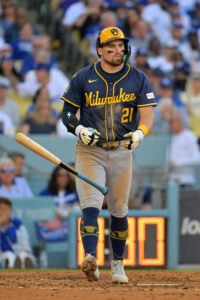
Durbin is a notable pickup for the Boston infield and should be penciled in for everyday at-bats — presumably at third base, though he can also handle second base if the Red Sox prefer Marcelo Mayer at the hot corner from a defensive standpoint. The 25-year-old Durbin (26 in a couple weeks) finished third in National League Rookie of the Year voting in 2025 after he batted .256/.334/.387 with 11 home runs, 25 doubles, 18 steals (24 attempts), a 5.9% walk rate and a tiny 9.9% strikeout rate. He turned in above-average marks for his glovework at third in the estimation of both Defensive Runs Saved (5) and Outs Above Average (2).
He’s not the big middle-of-the-order presence many Sox fans have coveted, but Durbin is an affordable, controllable and versatile defender who’ll further the Red Sox’ pivot toward run prevention and help to lower a team strikeout rate that was 10th-highest in the sport last year at 22.9%. He’s a right-handed hitter whose pull percentage (43.3%) is a bit higher than league average (40.6%), which should play well with the Green Monster at Fenway Park. Durbin comes to the Red Sox with five full seasons of club control and two minor league option years remaining (not that there’ll be any thought of optioning him to the minors anytime soon after last year’s strong performance).
If Durbin is ticketed for the hot corner, that’ll leave second base to a combination of the left-handed-hitting Mayer and righty-swinging Romy Gonzalez. Recently signed utilityman Isiah Kiner-Falefa can back up both those positions as well as shortstop.
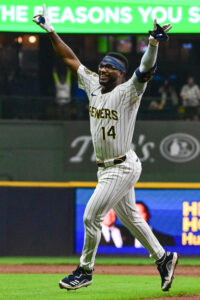
The 28-year-old Monasterio could also factor in at either second or third base, although like Gonzalez and Kiner-Falefa, he’s a right-handed hitter. As is the case with Gonzalez, Monasterio also carries notable platoon splits. He’s a career .255/.352/.375 batter against lefties but a .246/.303/.338 hitter against fellow righties. He’s coming off a career-best showing in the majors — albeit in a limited sample of 135 plate appearances — having slashed .270/.319/.437 (111 wRC+) with four homers. He’s controllable for another four seasons and won’t be arbitration-eligible until at least next offseason (possibly later, depending on how much time he spends in the minors this year).
Monasterio also has nearly 3500 professional innings at shortstop under his belt, so he gives Boston another backup option to oft-injured Trevor Story at shortstop (alongside Kiner-Falefa). He also has a full slate of three minor league option years remaining, so there’s no guarantee he’ll open the season on Boston’s major league roster. He’ll have the opportunity to win a role in camp, but barring injury and/or trade, Boston’s bench seems likely to include Gonzalez, Kiner-Falefa, catcher Connor Wong and outfielder/designated hitter Masataka Yoshida.
All of that assumes that Mayer makes the Opening Day roster, but it’s possible that the former No. 4 overall pick could open the season in Triple-A Worcester, too. Mayer’s .228/.272/.402 slash was well below league-average in 2025, but he only turned 23 in December and has an impressive minor league track record. That includes a .271/.347/.471 showing in Triple-A last year. He’ll have every opportunity to win a starting job in camp with the Red Sox, but late additions of Durbin and Kiner-Falefa lessen the team’s reliance on the still largely untested top prospect.
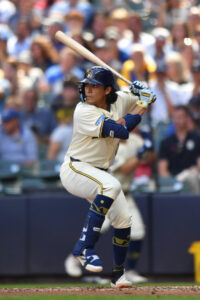
Boston also picks up the 26-year-old Seigler, who’ll provide some depth in the upper minors and could be a frequently used bench piece over the course of the coming season. He’s batted just .194/.292/.210 in an insignificant sample of 73 major league plate appearances, but Seigler hit .285/.414/.478 with eight homers, 16 doubles, four triples, 23 steals (27 attempts), a 16.9% walk rate and a 19.2% strikeout rate in 307 Triple-A plate appearances this past season. He’s been used as an infielder (second base, specifically) far more frequently than a catcher in recent seasons due to troubles controlling the run game and a susceptibility to passed balls.
Even if he’s rarely deployed behind the plate, Seigler is at the very least an interesting third catcher option who also is comfortable at second base and third base. He has two minor league option years remaining and doesn’t even have a full season of major league service, making him controllable for at least the next six full seasons.
The Red Sox also add a Competitive Balance draft choice — the only picks permissible to be traded under MLB rules. Milwaukee’s Round B selection is the first in that round, currently 67th overall (although that could change by a spot or two depending on what happens with Zac Gallen, the final remaining free agent who rejected a qualifying offer and is thus subject to draft pick compensation). They’ll not only get to add an extra player but will also add that selection’s slot value to their draft bonus pool. Last year’s No. 67 selection came with a $1.285MM value. This year’s should be up from that a bit. The Red Sox don’t need to spend that amount on this pick specifically; the slot value will be added to their bonus pool, which they can freely divide up among their picks how they see fit.
Turning to Milwaukee’s side of the swap, it feels like a precursor to another acquisition. The Brewers not only traded their incumbent starter at third base — they traded two of the top depth options behind him in the same swap. Perhaps there’s some infield shuffling on the horizon, but it feels like the Brewers will need to add some help on the dirt. Hamilton could see reps at the hot corner this spring but has spent far more time at second base in the Red Sox organization. Shortstop Joey Ortiz and second baseman Brice Turang are plus defenders who could both slide one position over to the left, but doing so might weaken the overall defensive aptitude of the group.
Bringing in some help at third base seems prudent, but options there are few and far between. Time will tell if president of baseball operations Matt Arnold has another move up his sleeve, but for right now, the Brewers look thin at third base.
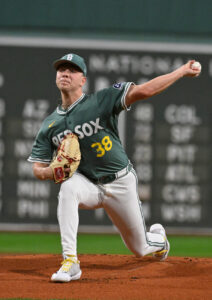
Their pitching depth, however, continues to grow — even after trading ace Freddy Peralta to the Mets last month. Today’s trade brings in a pair of big league-ready arms. Harrison, 24, already has 42 big league games (37 starts) under his belt. He’s pitched to a 4.39 ERA with a 22.9% strikeout rate and 8% walk rate in that time.
At the moment, Harrison profiles as a fifth starter option for the Brewers, but he carries more upside than most back-of-the-rotation candidates. The 2020 third-round pick ranked as one of the top minor league talents in all of baseball for several years, peaking as the No. 26 prospect in the entire sport on Baseball America’s top-100 prior to the 2023 season. He’s yet to put it all together in the majors, but Harrison has fanned better than 30% of his opponents in parts of two Triple-A seasons.
The Brewers have developed a reputation as one of the sport’s top “pitch labs.” They worked wonders with righty Quinn Priester in 2025 and have helped to facilitate turnarounds or breakouts from relievers like Trevor Megill, Joel Payamps, Bryse Wilson, Colin Rea, Nick Mears, Jared Koenig and others. There are plenty of parallels between Priester’s trajectory and that of Harrison; both were former top prospects traded to Boston and quickly buried on the Red Sox depth chart. The Brewers will hope to convert on that same profile for a second consecutive season now.
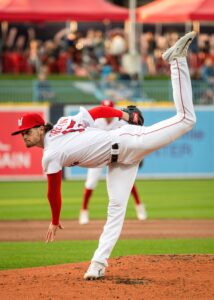
Drohan just turned 27 last month, making him old for a “prospect,” but he nonetheless sat 15th on Baseball America’s recent update of Boston’s system. His path to big leagues has been slowed both by injury and a selection in the Rule 5 Draft. The White Sox took Drohan back in 2023 after Boston left him unprotected. He required a nerve decompression surgery in his shoulder that spring, however, which limited him to 16 1/3 rehab innings that season. A forearm injury in 2025 limited him to 54 minor league frames.
When he’s been healthy, Drohan has looked the part of an interesting prospect. His Triple-A numbers are skewed by a rough showing late in 2023 and during some rehab work in 2024 — both potentially impacted by his shoulder — but he was excellent last season, tossing 47 2/3 innings with Worcester and recording a 2.27 ERA, a 35.3% strikeout rate, an 8.4% walk rate and a massive 17.3% swinging-strike rate. He also posted a 2.17 ERA in parts of two Double-A seasons and was part of the 2023 Futures Game. Drohan sat 93.3 mph with his four-seamer in Triple-A in 2025, complementing the pitch with an 84.7 mph slider, an 88.8 mph cutter, an 84.3 mph changeup and a 77.9 mph curveball (listed in order of usage rate).
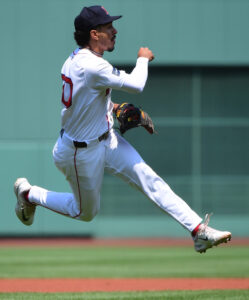
Hamilton, 28, returns to the club that originally drafted him but traded him to Boston as part of 2021’s Hunter Renfroe swap. He’s played in parts of three seasons with Boston and totaled 550 plate appearances with a .222/.283/.359 batting line.
Hamilton hasn’t hit much but is a plus runner with 95th percentile sprint speed, per Statcast, and 57 career steals in 68 attempts (83.8%). On a rate basis, he’s been one of the game’s elite defensive second basemen during his time in the majors, piling up 16 Defensive Runs Saved and 8 Outs Above Average in only 679 innings.
The Brewers originally drafted Hamilton in the eighth round of the 2019 draft out of the University of Texas. Arnold and top lieutenants like AGMs Matt Kleine, Will Hudgins and Karl Mueller were all in the Milwaukee front office when they first signed Hamilton out of the draft. That familiarity with him both as a player and as a person presumably played a role in this morning’s trade.
Adam McCalvy of MLB.com reports that Hamilton will see plenty of reps at third base this spring. Whether his stellar second base defense carries over to third base and whether Hamilton performs well enough to secure a job will determine his roster status come Opening Day. He has a minor league option year remaining, so if the Brewers do make another acquisition or if Hamilton simply struggles to a great enough extent this spring, he can be sent to Triple-A Nashville without needing to pass through waivers. The Brewers can control him for at least four additional seasons — five if he spends more than 25 days in the minors this year.
For the Red Sox, today’s trade seems to largely round out the infield. With Kiner-Falefa also aboard as a glove-first utility option, there doesn’t appear to be much more room to add. Durbin should be an upgrade of a couple wins, and his extreme put-the-ball-in-play approach and defensive aptitude should help to raise Boston’s floor quite a bit, even if the offense as a whole looks suspect beyond the top few hitters.
The Brewers are now 10 to 12 deep in their rotation mix, which could set the stage for another trade. They could also simply hold onto that depth, knowing they’ll need an army of pitchers to get through a 162-game season and that many of their current arms have less than a full year of experience in the majors, but some form of additional infield depth seems likely to be on the horizon after today’s trade thinned them out.
Jeff Passan of ESPN was first to report Durbin, Harrison, Drohan and Hamilton’s inclusions. Will Sammon of The Athletic first reported Seigler, Monasterio and the draft choice.
Red Sox Notes: Infield, Gonzalez, Abreu
This morning’s surprise acquisition of Caleb Durbin in a six-player trade with the Brewers gave the Red Sox the additional infielder they’ve been coveting but also created questions about the infield alignment. Durbin can play both second base and third base. Both positions are generally unsettled for the Red Sox.
Manager Alex Cora touched on the matter in his first media session of spring, indicating that for the time being, the team isn’t going to commit to one defensive setup just yet (link via Alex Speier of the Boston Globe). Each of Durbin, touted prospect Marcelo Mayer and veteran utilityman Isiah Kiner-Falefa can play either second base or third base.
The situation is further muddied by the fact that infielder Romy Gonzalez is behind schedule due to a shoulder issue that bothered him throughout the offseason (links via MassLive.com’s Chris Cotillo and the Globe’s Tim Healey). Gonzalez suffered the injury in Boston’s 160th game of the season. He rested it and rehabbed it throughout the winter and believed the issue to be behind him but instead aggravated it when starting a hitting program last month. He’s since received a platelet-rich plasma injection and is aiming to be ready for Opening Day, but that’ll depend on how his shoulder progresses (or does not progress) during the Grapefruit League schedule.
Whether at second base or third base, Durbin figures to be in the lineup every day. He’s a fine defender at either position and had relatively neutral platoon splits in 2025. Neither he nor Mayer will work at shortstop, per Cora. Trevor Story was always going to get the majority of reps there, but it seems Kiner-Falefa is the primary backup at the moment. If both Story and Kiner-Falefa were to go down with an injury, perhaps the Sox would rethink utilizing Mayer and/or Durbin there, but that’s not in the cards for the time being.
Ideally, Gonzalez would be healthy enough to take regular at-bats against left-handed pitching. He decimated southpaws at a .331/.378/.600 clip in 2025 and owns a lifetime .302/.345/.527 slash against them. Against lefties, the Sox could theoretically go with Gonzalez at second base and Durbin at third base, then switch to a combination of Mayer and Durbin against right-handed opponents. Mayer hit .260/.333/.462 against righties in 2025 (majors and minors combined) but just .230/.260/.378 against left-handers.
Utilitymen Andruw Monasterio and Anthony Seigler, both acquired alongside Durbin, could both factor into the mix as well. Monasterio swings from the right side of the plate and can play all four infield positions. Seigler is a lefty-swinging catcher/infielder who’s played far more second base than catcher in recent seasons. It’s a long shot that either would claim a starting role, but both will be in the mix for bench jobs.
There are still questions in the outfield as well. Much has been made of Boston’s outfield group, which consists of Jarren Duran, Ceddanne Rafaela, Roman Anthony, Wilyer Abreu and, to a lesser extent, Masataka Yoshida. There are more bodies than at-bats to go around. Cora plainly said today that the Red Sox view Abreu as an everyday player and plan to get him at-bats against both lefties and righties (via MassLive.com’s Christopher Smith). They want to keep Rafaela in the outfield as often as possible, too, due to his superlative center field defense.
That’s a departure from the manner in which Abreu has been deployed in the past. The 26-year-old has logged just 145 of his 849 major league plate appearances against lefties (17%) and turned in a bleak .205/.271/.318 slash in that time. A poor spring showing could always change that plan, but it’d be a notable role change for Abreu. If he can improve to even passable but below-average output against southpaws with more exposure, it’d be a boon for the Sox on the defensive side of things, given that Abreu grades out as one of the better right fielders in the game.
If both Rafaela and Abreu are in the outfield most days, that leaves Duran, Anthony and Yoshida in the mix for left field and DH work. Presumably, the bulk of that time will go to Duran and Anthony. Both are superior defenders to Yoshida, and both have performed better at the plate as well.
Yoshida remains a square peg for the Sox’ roster, but he’s owed $36MM over the next two seasons and no team is taking on that sum (or even a notable portion of it). The former NPB star hit .266 last year but with a paltry .307 on-base percentage and just a .388 slugging percentage. By measure of wRC+, he was 12% worse than average at the plate. The Sox could still try to find him some occasional at-bats against right-handed pitching. He’s a career .295/.345/.451 hitter in those spots but has hit lefties at only a .237/.310/.340 pace since coming to MLB. In 755 innings in left field, he’s been dinged for negative marks by both Defensive Runs Saved (-4) and Outs Above Average (-8).
Drake Baldwin Wins National League Rookie Of The Year, Earns Braves PPI Pick
Braves catcher Drake Baldwin is the 2025 National League Rookie of the Year, the Baseball Writers Association of America announced. Cade Horton of the Cubs and Caleb Durbin of the Brewers finished second and third in the voting, respectively. Baldwin’s win will net Atlanta a bonus draft pick after the first round in 2026, via the Prospect Promotion Incentive. Horton earns a full year of service time from his top two finish. The full voting results can be found here.
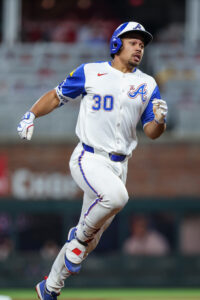
Baldwin came into the year as one of the top prospects in baseball. Since he finished the 2024 season at Triple-A, he had a shot at a big league job to start 2025. However, Atlanta was set to open the season with Sean Murphy as the primary backstop. Rather than be a backup at the major league level, there was an argument for Baldwin to stick at Triple-A and get regular reps.
In early March, Murphy suffered a rib fracture, an injury with a timeline of four to six weeks. That opened the door for Baldwin to get an Opening Day job. He hit well in the spring and Atlanta added him to the roster prior to Opening Day. Though Murphy got healthy by early April, Baldwin had already started producing and he never really stopped. The two shared the catching duties fairly evenly for a few months, though Murphy returned to the injured list in September due to a right hip labral tear.
Baldwin finished the year with 446 plate appearances over 124 games. He hit 19 home runs and slashed .274/.341/.469 for a wRC+ of 125. That means he was 25% better than the league average hitter, though that’s even further above par for a catcher. Most outlets considered his defense to be a bit below average, but not by much. FanGraphs credited him with 3.1 wins above replacement on the year.
While Baldwin’s win is surely gratifying for him personally, it also benefits the team. The current collective bargaining agreement introduced measures to combat service time manipulation. If a team promotes a top prospect early enough for him to earn a full service year, then that player meets certain awards criteria, the team is awarded with an extra pick just after the first round in the next draft. Since Baldwin was a consensus top prospect who was up all year, his Rookie of the Year win gives Atlanta a PPI bonus pick in 2026.
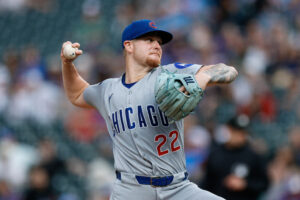
Horton also came into the season as one of the top prospects. He had finished 2024 at Triple-A but with just five appearances at that level. He was sent back to Triple-A to start 2025 but the Cubs needed rotation help fairly early on, as Justin Steele and Shota Imanaga were both on the injured list by early May.
Horton was called up on May 10th. He stayed up with the club the rest of the way, though a rib fracture put him on the injured list late in September. He finished the season with 118 innings pitched, having allowed 2.67 earned runs per nine.
There was probably some luck in there. Horton’s 20.4% strikeout rate was subpar, though his 6.9% walk rate was good and his 42.3% ground ball rate right around average. His .258 batting average on balls in play and 78.3% strand rate were both to the fortunate side. ERA estimators like his 3.58 FIP and 4.26 SIERA feel his ERA should have been around a run higher, though the performance was still good enough for a second-place finish in the voting.
That is significant for Horton, as there’s a flipside to the aforementioned PPI bonuses for teams. If a top prospect is not promoted early enough in the season to get a full service year, he can earn one retroactively with a top-two finish in the Rookie of the Year voting. Horton only earned 142 service days this year, 30 shy of the 172 needed for a full season, but this vote result will get him bumped up to the one-year mark. That means he will be on pace to become a free agent after 2030 instead of 2031.
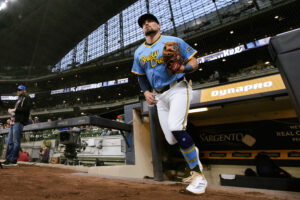
Durbin was not a top prospect to open the year, meaning PPI wasn’t a factor for him, but he had a good season regardless. Acquired from the Yankees last offseason, he was called up in April and took over the third base job in Milwaukee. He appeared in 136 games and stepped to the plate 506 times. He hit just 11 home runs and didn’t walk much but rarely struck out, leading to a .256/.334/.387 line and 105 wRC+. He also stole 18 bases and was credited with five Defensive Runs Saved and two Outs Above Average at the hot corner.
Several other players also received some recognition from the voters. Isaac Collins of the Brewers finished fourth, followed by Daylen Lile of the Nationals, Agustín Ramírez of the Marlins, Chad Patrick of the Brewers, Jakob Marsee of the Marlins, Jack Dreyer of the Dodgers, Matt Shaw of the Cubs, Jacob Misiorowski of the Brewers, Nolan McLean of the Mets and Heriberto Hernández of the Marlins.
Photo courtesy of Geoff Burke, Jordan Godfree, Isaiah J. Downing, Jeff Hanisch, Imagn Images
Brewers Announce Injury Updates: William Contreras, Caleb Durbin, Sal Frelick
Milwaukee announced health news for several players on Thursday. Catcher William Contreras may be facing a corrective procedure for his finger, while infielder Caleb Durbin is expected to have elbow surgery, reports Adam McCalvy of MLB.com, among others. Outfielder Sal Frelick was cleared of any concern, as were pitchers Trevor Megill, DL Hall, and Logan Henderson.
Contreras played through a fractured left middle finger for the majority of the season. The injury was announced in early May, but it was believed to have occurred during the 2024 season. Contreras is meeting with a hand specialist next week for a “potential correction,” noted McCalvy.
The 27-year-old backstop endured his worst season in his three-year tenure in Milwaukee. Contreras slashed .260/.355/.399 with a 113 wRC+. Those would be solid marks for most catchers, but Contreras had set quite the standard since coming over from Atlanta. He posted back-to-back seasons with a batting average above .280 and a slugging percentage over .450. Contreras didn’t miss any time with the finger injury, but it seemed to inhibit his power. He totaled 35 extra-base hits this past season after exceeding that mark in doubles alone in both 2023 and 2024.
Durbin is slated for arthroscopic elbow surgery next week. The infielder dealt with elbow irritation near the end of the season, reports Curt Hogg of the Milwaukee Journal Sentinel. He’s expected to be healthy for the 2026 campaign.
Durbin came to the Brewers this past offseason in the trade that sent closer Devin Williams to the Yankees. He opened the season at Triple-A Nashville, but was promoted to the big-league club a few weeks into the season. Durbin hit well enough to hold down the third base job for the rest of the year. He also made appearances at second base and shortstop. Durbin slashed a respectable .256/.334/.387 while recording double-digit home runs and stolen bases. He hit safely in six of Milwaukee’s nine postseason games, including two doubles and a triple.
Frelick battled knee soreness over the final months of the regular season. He missed a handful of games in early August, but never went to the IL. Offseason imaging on the knee came back clean, with the team describing the findings as “unremarkable.” Frelick is expected to have a normal offseason.
Megill and Hall both returned from injuries just in time for the playoffs. Megill’s flexor strain and Hall’s oblique issue were deemed fully recovered. Henderson’s season was cut short by a flexor strain of his own, but he’s also good to go now.
Quinn Priester is expected to have a normal offseason after dealing with wrist soreness. He never went to the IL with the injury and was available for a pair of postseason appearances. The issue will be managed with treatment and rehab heading into the 2026 season.
Brewers To Use Caleb Durbin As Regular Third Baseman
Caleb Durbin is making his big league debut tonight, as he’s hitting ninth against A’s right-hander J.T. Ginn. The Brewers promoted Durbin from Triple-A Nashville this morning, optioning out Oliver Dunn in the process. Manager Pat Murphy confirmed before the game that the Brewers will use Durbin as their primary third baseman (relayed by Todd Rosiak of The Milwaukee Journal-Sentinel).
Durbin joined the Brewers alongside Nestor Cortes in the Devin Williams trade. The righty-hitting infielder was coming off a .275/.388/.451 batting line over 90 minor league games during his final season in the Yankees system. New York added him to the 40-man roster rather than risk losing him in the Rule 5 draft. They traded him a couple weeks later.
The 25-year-old hit .259 with a pair of homers and 10 steals over 16 games during Spring Training. Milwaukee optioned him, tabbing Dunn and Vinny Capra to split time at the hot corner. They haven’t produced. Brewers third basemen have hit an MLB-worst .150/.188/.233 with one longball in 67 plate appearances. Dunn had a .205 on-base percentage without a home run in 41 trips to the plate. Capra, who is out of minor league options, has three hits without a walk and 10 strikeouts in 13 games.
Durbin has been out to a much better start in Nashville. He hit .278/.316/.481 with a couple homers over 13 games. He’s not going to provide much power, but he has excellent bat-to-ball skills and plus speed. Durbin stole 31 bases in 35 attempts last year. He joins Joey Ortiz, Brice Turang and Rhys Hoskins on Murphy’s infield. Jake Bauers can spell Hoskins at first base, while Capra is on hand as a utility option.
Brewers Recall Caleb Durbin For MLB Debut
April 18: Milwaukee has made it official, announcing that Durbin has been recalled from Triple-A Nashville.
April 17: The Brewers are set to recall infield prospect Caleb Durbin tomorrow, reports Adam McCalvy of MLB.com. Milwaukee announced this morning that infielder Oliver Dunn had been optioned to Triple-A Nashville but did not provide a corresponding move. Durbin, whom the Brewers acquired in the trade sending Devin Williams to the Yankees, is already on the 40-man roster, so a corresponding move will not be necessary. He’ll make his MLB debut the first time he’s in the lineup (presumably tomorrow).
A 14th-round pick by the Braves in 2021, Durbin has already been traded twice in his career. He went from Atlanta to New York in exchange for lefty Lucas Luetge, and the Yankees coupled him up with Nestor Cortes in a trade bringing Williams to the Bronx this past offseason. He’ll now get the first big league opportunity of his career with his third organization.
The 25-year-old Durbin has hit at every stop in his minor league career. Listed at a stocky 5’7″ and 183 pounds, he has below-average power but plus contact skills and plus speed. The righty-swinging speedster is out to a .278/.316/.481 start in Nashville, where he’s already tallied a pair of homers, five doubles and three steals in 58 plate appearances. His premium contact ability has been on full display; Durbin has fanned only five times in those 58 plate appearances (8.6%). He’s walked more than he’s fanned (or posted identical walk and strikeout totals) and tallied at least 31 steals in every full season of his professional career thus far.
Second base has been Durbin’s primary position in pro ball, but he has 733 career innings at third base, which has been his most frequent position this season in Nashville. He’s also played 370 innings at shortstop and has a handful of appearances both in center field and in left field. He’s likely to slot in as a regular or semi-regular at third base in the short term, but depending on future acquisitions or player development success stories, Durbin has the skill set to be a versatile and valuable utility option.
Enough of the season has elapsed that Durbin can’t earn a full year of major league service time in 2025. If he’s in the majors to stay, he’d be controllable all the way through 2031. He’d finish out the current season with 150 days of service, putting him on pace for Super Two status and four trips through arbitration rather than the standard three (the first of which would come following the 2027 season).
Dunn, 27, is a quality defensive player but hasn’t provided value at the plate in parts of two MLB seasons with Milwaukee. He’s a .206/.260/.291 hitter in 145 big league plate appearances, including just a .167/.205/.222 output in 41 plate appearances this season. Dunn and journeyman Vinny Capra have handled all of the Brewers’ reps at third base this season, though the latter has struggled even more than Dunn (and is out of minor league options, meaning he couldn’t be sent down without being designated for assignment and clearing waivers). Brewers third basemen are batting a combined .150/.188/.233 on the season, placing them 29th in batting average, last in on-base percentage, 25th in slugging percentage and 29th in wRC+ (18).
Brewers Release Manuel Margot, Option Caleb Durbin
The Brewers announced a series of roster moves earlier today as they optioned infielders Caleb Durbin and Tyler Black to minor league camp and released outfielder Manuel Margot. In addition, Curt Hogg of the Milwaukee Journal Sentinel writes that non-roster invitee Jake Bauers has an upward mobility clause in his contract and that the Brewers are “close” to a decision on whether to roster him themselves or offer teams around the league the opportunity to do so.
The decision to option both Durbin and Black to the minors is a surprising one, as both had been in the conversation for playing time at third base. Durbin came to the Brewers this winter alongside Nestor Cortes as part of the Devin Williams trade, while Black was the club’s first-round pick back in 2021 and made his big league debut last year. With both Durbin and Black now ticketed for Triple-A to open the season, it appears duties at the hot corner will fall to a platoon of Vinny Capra and Oliver Dunn, with Dunn getting the lion’s share of playing time.
While Black has just 49 plate appearances at the MLB level and Durbin has yet to make his big league debut, neither of the club’s alternatives at the hot corner have substantial big league experience either. Dunn appeared in 41 games for the Brewers in his rookie year last season, slashing a lackluster .221/.282/.316 in 104 trips to the plate. Capra, meanwhile, has bounced between the Blue Jays, Pirates, and Brewers while appearing in each of the last three MLB seasons but has just 20 games and 37 plate appearances total at the big league level under his belt, with a career .156/.250/.219 slash line in that time.
Turning to Margot, the 30-year-old experienced the worst season of his career with the Twins last year as he hit just .238/.289/.337 while splitting time primarily between the outfield corners. That lackluster production led him to sign a minor league deal with the Brewers last month, though it appears his .250/.314/.375 slash line in 35 trips to the plate this spring wasn’t enough to convince Milwaukee to carry him on the roster entering the year, even after the loss of Blake Perkins to the injured list. With Margot no longer in the fold, the job of fifth outfielder behind Jackson Chourio, Christian Yelich, Garrett Mitchell, and Sal Frelick appears likely to fall to infielder/outfielder Isaac Collins. Collins, 27, made his big league debut with the Brewers last year and hit just .118/.211/.118 in 11 games with the club. He posted strong numbers at the Triple-A level, however, and has flashed the versatility in the minors to not only play both outfield corners but also handle both second and even third base. That versatility should allow Collins to offer depth to the Brewers both in the outfield and at the hot corner as the season begins.
As for Bauers, it seems likely that the Brewers will keep the first baseman in the fold given that, as noted by Hogg, the club now has just 13 healthy position players in camp after optioning Durbin and Black to the minor leagues today. It’s at least plausible that the club could make an external addition, but said addition could just as easily bump a player like Collins or Capra off the roster. If Bauers does break camp with the Brewers, he’ll do so on the heels of a 2024 season where he appeared in 116 games for Milwaukee, though he struggled to a lackluster .199/.301/.361 slash line in 346 trips to the plate as he did so. Despite those pedestrian numbers, Bauers still offers the Brewers a lefty bat off the bench and a complement to the right-handed hitting Rhys Hoskins at first base, which could be particularly useful if Hoskins doesn’t bounce back from his own down 2024 campaign this year.