
Rockies Extend Bud Black Through 2023
2:01pm: The Rockies have formally announced the extension.
11:22am: The Rockies have signed manager Bud Black to a one-year contract extension, reports Patrick Saunders of the Denver Post. Black had previously been set to enter the final year of his deal, but he’s now signed through the conclusion of the 2023 campaign.
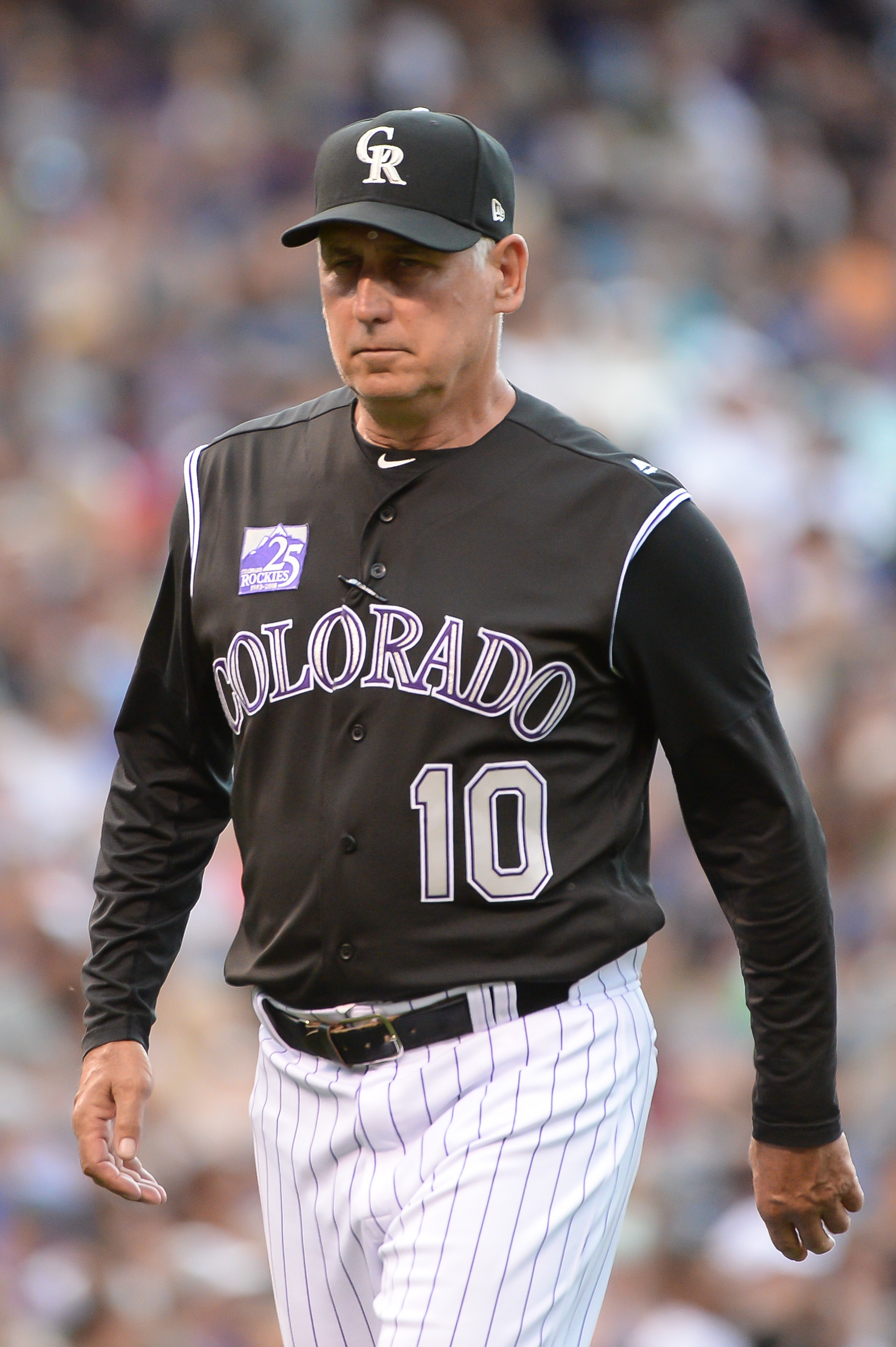
The 2022 season will be Black’s sixth with the Rockies and 15th managing at the big league level. The 2010 National League Manager of the Year in San Diego, Black was hired by now-former general manager Jeff Bridich heading into the 2017 season. His first two years on the job resulted in Wild Card berths, with Black’s Rockies going 1-1 in those one-game postseason showdowns. The division-rival D-backs toppled Colorado in 2017, but Black and the Rockies took down the Cubs in 2018 — albeit before falling to the Brewers in a three-game NLDS sweep.
Since their last postseason appearance, the Rockies have posted three straight losing seasons. With a 171-212 record in that time (.446 winning percentage) and a change at the top of the baseball operations staff, there’d been at least some speculation as to whether Black would remain with the Rockies beyond the current season. Owner Dick Monfort is generally regarded as one of the most loyal executives in the sport (often to a fault), and new GM Bill Schmidt was a prominent figure in the front office even at the time of Black’s original hiring by Bridich and Monfort. In spite of the losing ways in recent year, it appears Black will receive the opportunity to turn the ship around.
Frankly, that’s a defensible stance for the Rockies to take. Black’s rosters haven’t exactly been set up for success, after all, as the Rockies didn’t spend anything in free agency in either of the past two offseasons. Perhaps Monfort and the front office were still reeling from an ill-fated series of free-agent foibles that saw Ian Desmond, Wade Davis, Bryan Shaw and Jake McGee sign for a combined $176MM with very little in terms of a return on investment. Perhaps Monfort truly believed that the 2020-21 Rockies were capable of producing 90-plus wins as constructed and needed little to no augmentation, as he previously implied.
Beyond the lack of roster upgrades, of course, was the organizational turmoil that eventually led to Nolan Arenado‘s departure. Signed to an extension that ostensibly set him up as the face of the franchise moving forward, Arenado quickly grew frustrated with the front office’s lack of additional moves. Rockies brass had reportedly promised that his contract would be the first in a series of moves aimed at putting a perennial contender on the field, but the team instead repeatedly stood pat. A rift between Arenado and the front office/ownership grew, with Arenado famously going on record to state that he felt “disrespected” by the Rockies — Bridich in particular.
Whatever the reasoning, the lack of upgrades and the eventual trade of their clear best player makes it difficult to have set much in the way of expectations for Black. Managers are evaluated on far more than their wins and losses in today’s age of aggressive tanking and rebuilds anyhow, and there’s no indication Black has ever lost his grip on the clubhouse. He’s also known as a manager who specializes in helping young pitchers — Black himself is a former Major League pitcher — and Monfort and Schmidt surely have to be pleased with the manner in which Colorado’s rotation performed in 2021.
Coors Field will always prove problematic for the home pitching staff, but the Rockies’ rotation was generally durable and dependable. The quintet of Jon Gray, German Marquez, Kyle Freeland, Antonio Senzatela and Austin Gomber combined to start 135 of the Rockies’ games (83.3%), and each posted an ERA in the mid-4.00s with an average or better ground-ball rate. The Rockies weren’t necessarily a powerhouse rotation, but for a team that often ranks at the bottom of the league in terms of pitching performance, it was encouraging to get such volume and fairly consistent results from the top five arms.
The Rockies face an uphill battle if they hope to return to contending in a deep NL West that is currently headed up by the No. 1 and No. 2 win totals in all of baseball from 2021 (Giants and Dodgers). The Padres remain squarely in win-now mode as well, and the Rockies will be tasked with improving the club despite a bottom-tier farm system and the likely loss of two more top players (the aforementioned Gray and shortstop Trevor Story). Whether they have a Cinderella run in them can’t be known, but Black will now have another pair of chances to coax that out of this group.
Gerald Williams Passes Away
Former Yankees, Mets, Devil Rays, Braves, Brewers and Marlins outfielder Gerald Williams passed away today at 55 years of age, former teammate and close friend Derek Jeter announced (via the Players’ Tribune).
“Gerald Williams passed away this morning after a battle with cancer,” Jeter said in his statement announcing the saddening news. “To my teammate and one of my best friends in the world, rest in peace, my brother. My thoughts and prayers are with his wife, Liliana, and their whole family.”
Williams, originally a 14th-round pick by the Yankees back in 1987, debuted as a 25-year-old during the 1992 season — the first step in what would become a 14-year career at the MLB level. That journey took him to six different organizations and spanned 1168 games. Williams, nicknamed “Ice,” posted a career .255/.301/.410 batting line with 85 home runs, 183 doubles, 18 triples, 106 stolen bases, 474 runs scored and another 365 runs driven in. Yankee fans may fondly remember an impressive first-inning grab by Williams back in May or 1996, which seemed innocuous at the time but wound up proving a pivotal play in what would eventually become a Doc Gooden no-hitter (YouTube link).
Williams and Jeter were teammates for the Yankees’ postseason appearance in 1995, and he returned to the playoffs with Atlanta in both 1998 and 1999. He played a huge role in the Braves’ 3-1 National League Division Series win over the Astros in ’99, going 7-for-18 (.389) with a double, a pair of runs scored, three RBIs and a stolen base in that four-game set. A member of both the 1996 Yankees and 2003 Marlins, Williams received a pair of World Series rings (even though the Yankees traded him to the Brewers in August of ’96).
Williams’ two best seasons came with the ’98 Braves, when he hit .305/352/.504 with 10 homers in a part-time role, and in 2000 with Tampa Bay, when he saw regular action in the outfield. Williams logged a career-high 682 plate appearances in his first of two seasons with the then-Devil Rays, adding in a career-best 21 home runs, 30 doubles, a pair of triples and 12 steals.
Most pro ball players can only dream of a 14-year run at the game’s top level — and that’s particularly true among players selected well down the draft board, as was the case with Williams. We at MLBTR offer our condolences to Williams’ family, his friends, his former teammates and the thousands of fans who took joy in rooting him on over the course of his decade-plus in the Majors.
Let’s Find A Shortstop For The Twins
The utter dearth of starting pitching for the Twins has been well-documented by now. Out of the 2022 equation are longtime top starter Jose Berrios and 2020 AL Cy Young runner-up Kenta Maeda; Berrios was flipped to Toronto in exchange for a pair of touted prospects at last summer’s deadline, while Maeda underwent Tommy John surgery late last year and hopes for a September return — in a best-case scenario. Also out the door is righty Michael Pineda, a free agent who could yet return but remains unsigned. Thus far, the extent of the Twins’ offseason shopping was a roll of the dice on Dylan Bundy. He’ll join rookie/top prospect Joe Ryan and sophomore Bailey Ober in a thin Twins rotation mix.
For all the focus on the team’s starting pitching, however, Minnesota also lacks an obvious starter at shortstop. Andrelton Simmons‘ one-year stint proved largely underwhelming. By measure of wRC+, Simmons ranked second-worst among hitters with at least 450 plate appearances last season (56). His .223/.287/.274 batting line negated much of his defensive wizardry and was one of many reasons the Twins’ 2021 season went south so quickly. Simmons was never brought in to be an offensive force, but he’d at least been competent (and occasionally above average) in the five preceding seasons, posting a combined .281/.328/.394 slash.
In a perfect world, 2017 No. 1 overall pick Royce Lewis might’ve been ready for a run at shortstop this year. An immensely gifted athlete who’s been ranked among the sport’s top 100 prospects since the moment he was drafted — peaking in the top ten, heading into 2019 — Lewis is seen as a major building block for the organization. Unfortunately for both the Twins and Lewis, he sustained a torn ACL while ramping up for Spring Training last year and wasn’t able to make it back to the field in 2021. Couple that with a 2020 season spent at the Twins’ alternate site during the canceled minor league campaign, and Lewis has missed some crucial development time.
By all accounts, the future is still bright — Lewis clocks in at No. 82 on Baseball America’s latest Top 100 ranking — but the lack of recent playing time and a major surgery have both added some extra risk to his profile and slowed his timeline to the Majors. There was always some question as to whether Lewis would settle in at shortstop or wind up playing third base, center field or second base, anyhow, and even if shortstop is still his future home, he’s not ready just yet.
There are similar defensive questions about fellow top prospect Austin Martin, the headliner of the Berrios trade. Martin, the No. 5 overall pick in 2020 who was viewed as a candidate to be drafted first overall himself, is a gifted hitter and on-base machine whose defensive home is less certain. The Twins will continue getting him work at shortstop, though some scouting reports believe he’ll end up at second base or in the outfield. Martin is considered among the 50 or so best prospects in MLB, but he’s had just one pro season and did not advance beyond Double-A last year. Perhaps he’ll be an option this summer if he mashes out of the gate in Triple-A and looks sound at shortstop, but like Lewis, he needs more time.
Up on the big league roster, the Twins have one well-known option who could slide back to the position. Jorge Polanco spent four years as Minnesota’s primary shortstop, hitting a combined .277/.335/.435 in 418 games from 2017-20. However, Polanco was never a good defender there, hence the move to second base and the subsequent signing of Simmons.
The 28-year-old Polanco turned in the best season of his career following the move to the other side of the bag, so the Twins may not want to tinker with a decision that yielded one of 2021’s few bright spots. Polanco erupted with a 33-homer campaign, hitting .269/.323/.503 through 644 plate appearances. He also turned in a positive showing in Defensive Runs Saved (3) and was only slightly below par in Statcast’s Outs Above Average.
[Related: Jorge Polanco’s Bounceback Season]
One could argue that the Twins should focus on pitching, move Polanco to back to shortstop and play Luis Arraez everyday at second base. However, doing so would weaken the defense (thus diminishing the returns on some of the pitchers they do inevitably add). And, whether it was correlation or causation, Polanco seemed more comfortable once freed from shortstop — a position where his -39 Defensive Runs Saved from 2016-20 ranked second-worst in Major League Baseball.
The Twins made some depth additions recently, picking up former No. 1 pick Tim Beckham and former Rays/Brewers utilityman Daniel Robertson on minor league deals. Neither is on the 40-man roster and neither should be seen as a candidate to step up as their primary shortstop. Either could vie for a bench spot, competing against Nick Gordon — a former top-10 draft pick who made his big league debut with Minnesota last season. However, Gordon mustered just a .240/.292/.355 output in 216 plate appearances and was used all around the diamond. A full-time run at shortstop isn’t likely for any of this trio.
Whoever suits up at shortstop on Opening Day for the Twins probably isn’t in the organization yet, so let’s look at some options.
The Big Free Agents
There’s probably not much point in pondering whether the Twins could or will sign Carlos Correa. Minnesota currently projects to about a $91MM payroll next season (per Roster Resource’s Jason Martinez). That drops to $61MM in 2023 and $27MM in 2024. Technically, they have the payroll space to sign Correa to a mega-deal. However, starting pitching is likely a bigger focus, and the Twins have never gone anywhere near the Correa stratosphere on a contract. Joe Mauer‘s $184MM extension is the largest deal in franchise history, and Josh Donaldson‘s $92MM pact is the biggest free-agent splash they’ve made. Signing Correa for north of $300MM would be a legitimate shock.
Trevor Story is more plausible, financially speaking, but it’s likely he’s seeking a nine-figure deal of his own. A salary in the $20-25MM range isn’t the dealbreaker it once was for the Twins, and Story would give them quality defense with far more offensive output than Simmons. Story seems more likely as a fit here if his market just doesn’t come together as hoped. There are teams who might swoop on a one-year deal in that scenario (e.g. Yankees), but if Story isn’t able to secure a five- or six-year deal and still wants to max out, a Donaldson-esque, four-year offer at least seems feasible. A lot of pieces need to fall into place in this scenario, though.
The Remaining Free Agents
The Simmons deal didn’t work out, but the dismal nature of his 2021 season reduces his 2022 price tag substantially. If the Twins simply want to sign the best glove available and focus on pitching, a cheap Simmons reunion makes sense. There have also been rumors connecting Simmons to the Yankees, who looked into the possibility of acquiring Simmons last summer.
Once upon a time, Jose Iglesias would’ve been viewed in a similar capacity to Simmons. Some may still see him in that light. However, Iglesias’ 2021 season was punctuated by a rather shocking downturn with the glove. Defensive Runs Saved pegged him at a staggering -22, and he posted the first negative Ultimate Zone Rating (-6.1) of his career. Outs Above Average was the most forgiving metric, but even OAA only pegged him as an average defender. Iglesias’ .271/.309/.391 output in 2021 confirmed that his outrageous 2020 season (.373/.400/.556 in 150 plate appearances) was more small-sample fluke than late-blooming breakout. He could be had on an affordable one-year deal himself, but there’s no guarantee the glove bounces back.
Switch-hitting Jonathan Villar remains unsigned, and he’d probably offer the best hope of offensive production from this group. The 32-year-old carries a .259/.327/.408 slash with 58 homers and 104 steals through 497 games over the past four seasons, but Villar isn’t regarded as a strong defender at shortstop. He’s also hit well in two of the past three seasons — 2020’s small sample being the exception — so he could justifiably seek a two-year deal.
There are a handful of other free agents with recent shortstop experience — Josh Harrison, Phil Gosselin, Matt Duffy, old friend Ehire Adrianza — but they profile as bench options (or, perhaps in Harrison’s case, as a starter at second or third base, where the Twins aren’t looking for solutions).
The Trade Market
There are a handful of interesting names to consider if, as seems to be the case with their pitching needs, the Twins deem the trade market a more palatable path to finding a shortstop. The Rangers, for instance, have already inked two of the “big five” shortstops this winter, pushing Isiah Kiner-Falefa to third base — at least until top third base prospect Josh Jung debuts in 2022. Minnesota GM Thad Levine was an assistant GM in Texas when Kiner-Falefa was selected in the fourth round of the 2013 draft. There’s no urgency for the Rangers to move Kiner-Falefa, who’s controlled through 2023, but it’d probably behoove the Twins to inquire. Kiner-Falefa owns a .273/.316/.361 batting line with elite defensive contributions over the past two seasons.
The Twins are a natural trade partner for the Reds, who’ll have several starting pitchers available. Minnesota could conceivably look to double dip, adding a shortstop as well as a pitcher. In Cincinnati, that could be utilityman-turned-starter Kyle Farmer, who figures to cede playing time to top prospect Jose Barrero before long. Farmer, 31, hit .263/.316/.416 with solid glovework in a career-high 529 plate appearances in 2021. He’s controlled through 2024.
Some might argue there’s a similar approach to be taken with Oakland, as the Twins could offer to take back some of Elvis Andrus‘ contract to help grease the wheels on a trade for a starter. However, as I explored back in December, there are plenty of obstacles in a potential Andrus deal (namely a no-trade clause and a problematic vesting option). He also just hasn’t hit since 2017, and his defensive ratings have cratered. It’d be more sensible to just sign Simmons or Iglesias and focus solely on a starting pitcher in trade talks with the A’s.
Over in Arizona, the D-backs have a well-regarded defender in Nick Ahmed, but the 31-year-old limped through a career-worst year at the plate. The glove still plays, and outside of 2021, he’s “only” been a below-average hitter (.248/.307/.421, 89 wRC+ from 2018-20). The Snakes owe Ahmed $17.5MM combined from 2022-23, and they’ll want to open a spot for top prospect Geraldo Perdomo before too long. If you want to consider two-for-one possibilities here, as with the Reds, perhaps the Twins could try to pry Merrill Kelly away. He’ll be a free agent next winter.
If the Twins and Guardians are both comfortable dealing within the division, Cleveland has a bevy of middle infielders while the Twins are deep in outfield options. Both have a deep supply at an area the other is lacking. Amed Rosario is two years from free agency, while Andres Gimenez is more controllable but less proven offensively. Cleveland has so many middle-infield prospects bubbling up toward the Majors behind that pair, that there’s a natural on-paper fit here. (The Guardians are also deeper in starting pitching than the Twins, setting up additional possibilities.) It’s always tougher to envision division rivals dealing with one another, but Twins president of baseball operations Derek Falvey was hired out of the Cleveland front office back in 2016.
As with any offseason need, there are boundless possibilities to consider even beyond this list. The Twins could try to buy low on KBO star Ha-Seong Kim — a square peg in a round hole with the Padres — or look into defensive standout Kevin Newman over in Pittsburgh (though he was the only shortstop who was less-productive at the plate than Simmons last season). You can mix-and-match the possibilities to your liking — what else is there to do with no end to the lockout in sight? — but it’s likely the Twins’ next starting shortstop hasn’t yet been acquired.
MLB Owners Set To Meet As MLBPA Awaits Counteroffer To Last Week’s Proposal
As the ongoing MLB lockout continues at a snail’s pace, the sport’s owners are convening at their quarterly meetings from Tuesday to Thursday. MLB Network’s Jon Heyman tweets the expectation among players is that a counterproposal will be among the topics discussed, and that a new offer from the league should be forthcoming in the days ahead (perhaps not until the owners’ meetings conclude, however).
It’s been nearly a week since the MLBPA made its latest proposal to the league — an offer that was met with the promise of a counter but instead resulted in MLB’s request for a federal mediator to intervene. The union outright rejected the notion of mediation, instead repeating a desire to head back to the negotiating table with MLB.
That was the widely expected route, as the mediation request always smacked as more of a public relations move than an earnest request. To that end, veteran left-hander Andrew Miller, one of the eight players on the MLBPA executive subcommittee, spoke with ESPN’s Jesse Rogers about the decision to reject mediation.
“…[W]e don’t think it speeds up the process at all,” Miller told Rogers when asked about the union’s rationale. “History tells us in our sport it hasn’t been favorable to reaching a deal and our staff and outside council guide us on things like this. That is what they are for. Our position is that it is quite the opposite from negotiating and being ready to negotiate. We are there and our proposals and desire to meet at the table show that. The league is refusing to counter, the league is the side that has stalled and not been willing or ready to meet.”
Miller’s point about history is likely a nod to federal mediator Bill Usery, who was brought in for just such a purpose in the 1994 labor stoppage. Usery provided very little utility in negotiations as he was not sufficiently up to speed on the intricacies and complexities of the issues at hand, and his presence ultimately did not result in an agreement being reached.
Further, as Giants lefty Alex Wood points out (Twitter link), it would likely take weeks to bring a federal mediator into the fold, and the basis for a new deal would be largely rooted in the existing CBA, from which the players are trying to create some distance. Wood’s usage of quotation marks when describing an “‘impartial’ mediator” and his characterization of the current CBA as an “already broken system” underscore both the MLBPA’s distrust of any measures put forth by the league and of the union’s current dissatisfaction with the status quo.
That said, it’s still worth noting that United States labor secretary Marty Walsh has expressed a willingness to get involved in the lockout, as first reported by Politico’s Jonathan Lemire (Twitter link). Walsh later removed any doubt on the matter, issuing the following statement to Lemire:
“I have spoken to both the MLBPA and MLB about the ongoing contract negotiations and encourage both sides to continue engagement. Like any contract negotiation in any industry, I stand ready to help facilitate productive conversations that result in the best outcome for workers and employers.”
While the league may continue to hold out hope for outside mediation, it’s clear the players have no desire to traverse that path. A large number of Major Leaguers have taken to social media in recent days to express their frustration and their desire to negotiate a new deal. Twins catcher Mitch Garver, for instance, tweeted that key members of the union “want to meet every day until a deal is done,” contesting that “the other side does not.”
Former Tigers lefty Matthew Boyd, a union representative who’s currently a free agent, struck a similar chord to Miller in telling Evan Petzold of the Detroit Free Press that the union feels resorting to mediation would only further prolong matters. The clearest path to resolving matters, Boyd added, is to continue meaningful negotiations with the league.
Banding together to voice a unified set of goals has been a clear tactic for the MLBPA over the past week. Miller and fellow executive subcommittee member Max Scherzer have been vocal, as have the likes of Wood, Garver, Whit Merrifield, Jameson Taillon and many others. The talking points remain largely the same, as hammered home by Miller and Scherzer. Various players have reiterated that the MLBPA wants to eliminate the incentives for teams to tank (i.e. access to better draft picks, larger draft and international bonus pools), bring about better compensation for young/inexperienced players, put an end to service-time manipulation and, to use Scherzer’s exact terminology, create “a system where threshold and penalties don’t function as caps” (in reference to the current luxury/competitive balance tax).
It should be noted that not every player has spoken so strongly. Cardinals ace Adam Wainwright clearly shares the frustration of his union-mates, but he also at least rhetorically suggested that if the league were to propose “the exact same deal that we have right now, we would probably go play baseball” (link via Jeff Jones of the Belleville News-Democrat). Those comments were made off the cuff at a charity fundraiser, but they’re still a notable departure from other recent, public statements from the union.
That said, Wainwright agreed with his peers that a “good and fair deal” doesn’t appear likely as things presently stand. “That’s not even close to happening, honestly,” he added. “It’s pretty one-sided. And [MLB] are not really willing to talk right now. That makes it tough.” Wainwright further told Jones that MLB’s most recent offer “is far from a place we could even start negotiations.”
Whether a third party is ultimately brought on board or not, the ball is in MLB’s court as the union continues to wait for a counter to last Tuesday’s latest offer. It remains to be seen exactly when the league will make its next move.
Rangers Hire Nick Hundley As Special Assistant
The Rangers announced Monday that they’ve hired former big league catcher Nick Hundley as a special assistant to general manager Chris Young. The 12-year MLB vet had been working in league offices as a senior director of baseball operations.
While Hundley’s title with the league was a bit nebulous, MLB’s press release at the time of his hiring in 2020 indicated that he would serve “as an MLB liaison to Major League Clubs, players and umpires” in addition to aiding “in the administration of on-field discipline and will provide insights regarding on-field rules, initiatives, technology, instant replay and other topics.” Hundley’s role with the league also included working to promote youth baseball initiatives in somewhat of an ambassadorial capacity.
Hundley, 38, is no stranger to Young. The two were not only teammates but batterymates with the Padres from 2008-10, worked together in the league offices in 2020, and surely still enjoy a strong relationship to this day. Hundley spent the first six and a half seasons of his career in San Diego and also appeared with the Orioles, Giants, Rockies and A’s throughout his dozen years in the Majors.
Hundley received few starting opportunities but was typically used more heavily than a standard backup catcher. He appeared in 974 Major League games and racked up 3373 plate appearances over his 12-year career, batting .247/.299/.405 with 93 home runs, 169 doubles, 20 triples, 319 runs scored and 376 runs knocked in from 2008-19.
The Rangers’ press release did not specify which areas of baseball operations will be Hundley’s primary focus, but he represents the latest in a growing number of former players the organization has hired as special assistants. Michael Young, Colby Lewis, Brandon McCarthy, Darren Oliver and Ivan Rodriguez are also listed as special assistants in the Rangers’ baseball ops department.
Matthew Boyd Targeting Early June Return From Flexor Surgery
Free-agent lefty Matthew Boyd, who underwent flexor tendon surgery late last September, tells Evan Petzold of the Detroit Free Press that he’s progressing nicely through his rehab program and is aiming for an early June return to a big league mound. Boyd recently began throwing from 75 feet, and he expects to begin throwing full bullpen sessions in the final weeks of March.
The 2021 season was shaping up to be a strong one for the 31-year-old Boyd, who started 15 games for Detroit and worked to a 3.89 ERA through 78 2/3 innings. Boyd switched his pitch selection up slightly, leaning on his changeup at a career-high rate while dropping his fastball usage to its lowest levels since 2018. The results were generally favorable, even as his strikeout rate dipped to 19.9% — its lowest mark since 2017. Despite the limited number of innings thrown, Boyd’s 285 changeups last year were the second-most he’s ever thrown in a big league season; opponents struggle, hitting just .247/.275/.351 with one homer in 80 plate appearances that ended with a Boyd changeup.
Boyd has, at various points in his career, shown flashes of brilliance and looked to be on the cusp of a breakout. He carried a 3.44 ERA through 13 starts last year before exiting his June 14 start after 2 1/3 innings and heading to the injured list. He returned for a brief spell in late August/early September but lasted just eight innings combined between two starts, yielding seven runs in that time. He underwent surgery later that month, and the Tigers non-tendered him rather than him one final arbitration raise (which MLBTR contributor Matt Swartz had pegged at $7.3MM).
In 2019, Boyd had a 3.08 ERA and 2.98 FIP with elite strikeout and walk rates through mid-June, prompting him to be regarded as one of the most sought-after trade candidates on the market that season. He was sitting on a 3.94 ERA, a 3.26 SIERA, a 32.5% strikeout rate and 5.3% walk rate by the time the trade deadline rolled around, but he ultimately remained in Detroit.
Throughout his career, Boyd has at times demonstrated tantalizing skills, but he’s never pieced them all together in the same season. He ranked ninth in the Majors in strikeout rate and eighth in K-BB% back in 2019, for instance, but also served up home runs at a rate of 1.89 per nine frames. This past season, he held the long ball in check (1.03 HR/9) with excellent command but saw his strikeout rate dip. Given Boyd’s 4.96 ERA in 784 1/3 innings, many are perplexed by the repeated level of intrigue surrounding the southpaw, but there’s a general belief that his raw abilities point to another gear he simply has not yet reached for a sustained period.
Boyd, like other Major League free agents, isn’t able to sign right now with the lockout ongoing. Whenever the transaction freeze lifts, however, he’ll represent an appealing gamble — likely on a short-term deal — for a team that’s OK with waiting until the summer to see how his rehab has panned out. Petzold writes that Boyd and agent Scott Boras received interest from teams on both coasts and, a bit more specifically, from one of of Boyd’s former AL Central rivals.
Speculatively speaking, the Twins have the most glaring need for pitching within the division, although the dire nature of that need is enough to wonder whether they’d allocate resources to a pitcher who, at best, could only help for two-thirds of the season. The Royals would seem another sensible fit from the AL Central; they have plenty of young, in-house options to help bridge the gap to Boyd’s return, and he could in turn allow the team to manage the workloads of those young arms once he’s healthy.
Wherever Boyd lands, he’ll be hoping that a change of scenery brings about a prolonged stretch of the sporadic excellence that has punctuated his inconsistent career. If he’s able to pitch well this summer on a one-year deal, he could re-enter the market next winter in a much better position as he heads into his age-32 season. Alternatively, if Boyd and Boras prefer a more risk-averse approach, it’s relatively common for teams to give rehabbing pitchers of this nature a somewhat backloaded two-year contract. That’d provide Boyd with more up-front earning power but could potentially cost him money if he comes out of the gate throwing well whenever he does return.
Cubs, John Hicks Agree To Minor League Deal
The Cubs have agreed to a minor league contract with veteran catcher/first baseman John Hicks, as first indicated on the team’s official transactions log. Hicks, a client of Full Circle Sports Management, figures to be in big league camp whenever the lockout ends. The Cubs haven’t formally announced the move or a non-roster invite, but a player with Hicks’ track record and experience generally warrants such an offer.
Hicks, 32, has spent parts of six seasons in the Majors, mostly coming with the Tigers. He’s also had brief appearances with the Mariners, for whom he made his MLB debut in 2015, and with the Rangers, for whom he played in 10 games this past season.
While Hicks doesn’t have a sterling offensive track record in the big leagues, he’s been more productive than the average backup catcher. He slugged four homers and a double in just 31 plate appearances with the Rangers this past season and, for the better part of the 2017-18, was a semi-regular in Detroit while hitting a combined .263/.317/.417 with 15 round-trippers and 24 doubles in 502 plate appearances.
Those numbers don’t include a dismal 2019 season, however, wherein Hicks logged a career-high 333 plate appearances but posted a career-worst .210/.240/.379 slash with a sky-high 32.7% strikeout rate. On the whole, he’s a lifetime .236/.279/.401 hitter in 902 plate appearances at the MLB level, and he’ll also carry a .275/.314/.438 career batting line in parts of five Triple-A seasons into his fourth organization.
Defensively, Hicks has split his time in nearly even fashion between catcher (928 innings) and first base (924 innings) in the Majors. He’s thwarted a hefty 32% of stolen-base attempts against him in the big leagues, but Hicks also has generally poor framing numbers behind the dish and negative overall marks in Defensive Runs Saved (-5 at both catcher and first base).
As things currently stand, Hicks is a ways down the depth chart in Chicago. Two-time All-Star Willson Contreras is slated to reprise his role as the team’s starter, and Chicago also brought Yan Gomes into the mix on a two-year, $13MM deal earlier this winter. The size of the commitment to Gomes and the fact that Contreras is slated to become a free agent at season’s end only further fueled longstanding trade speculation regarding Contreras. If a deal were to ultimately come together, Hicks and P.J. Higgins would vie for a backup job behind Gomes, but for now, Hicks is likely ticketed for Triple-A Iowa.
Latest On Mariners’ Infield Pursuits
It’s already been a fairly active offseason for the Mariners, who before the league-implemented lockout by signing reigning Cy Young winner Robbie Ray to a five-year contract and acquiring second baseman/left fielder Adam Frazier in a trade with the Padres. Whenever the transaction freeze lifts, the M’s are expected to resume that aggressive approach as they look to capitalize on a top-ranked farm system and take the next step from last year’s 90-win showing to their first playoff berth in two decades.
The checklist, in some ways, looks similar to early in the offseason. Even with Ray on board, Seattle is likely to add some veteran innings to the back of the rotation. The big right-handed bat sought by president of baseball operations Jerry Dipoto has not yet been acquired. As such, it’s hardly a surprise that the M’s have been linked extensively to all three of Kris Bryant, Trevor Story and Seiya Suzuki in recent weeks.
Perhaps more interesting is the idea that the Mariners could potentially add two of those names to the fold. Ryan Divish of the Seattle Times suggests that it’s at least possible for Seattle to add both Bryant and Story, adding not to “underestimate the possibility” that Frazier could be traded before ever playing a game for the Mariners.
That’s a new and yet-unexplored topic by and large, so it’s worth taking a bit of time to unpack — after establishing a few points up front. For starters, it’s certainly possible that even if Seattle were to pull off an unlikely stunner and sign both Bryant and Story, Frazier could still be deployed as a multi-position super utility player. That’d cut into the available playing time for switch-hitting Abraham Toro, but Toro could conceivably rotate between multiple infield positions (third base, second base and perhaps even first base) and designated hitter himself. He also has minor league options remaining.
Secondly, it should be emphasized that there’s no indication in the report that a blockbuster addition of both Bryant and Story is at all likely, nor does Divish suggest that Frazier will be actively shopped by the Mariners. Some would question the logic of acquiring Frazier in the first place if the end result were only for him to be traded just a couple months later. However, in the (very) hypothetical event that scenario plays out, it surely wouldn’t have been the plan at the time of the deal. Any further activity involving Frazier would quite likely stem from the Mariners unexpectedly landing some big-ticket items they originally didn’t anticipate being possible. And, as Divish notes, a Frazier deal would likely only come together if he were to bring back some form of immediate big league help (perhaps pairing him with some minor league talent).
While Frazier’s time with the Padres didn’t go as either player or team hoped, the 2021 season was nevertheless a strong one for the 30-year-old veteran. In 639 trips to the plate, Frazier slashed .305/.368/.411 — good for a 114 wRC+ — adding in five home runs, five triples and career-highs in doubles (36) and steals (10). His 10.8% strikeout rate was also the lowest of his career by a good margin.
That said, Frazier is a free agent after the 2022 season and is projected by MLBTR contributor Matt Swartz to earn a $7.2MM salary this year. It’s certainly plausible that the Mariners, with a deep outfield mix and the more cost-effective Toro as an option at both second and third base, might not relish the idea of relegating Frazier to a rather pricey bench piece — if they were able to add a pair of bats. Furthermore, a team with a need at second base (e.g. White Sox) or in the outfield (e.g. Guardians) could potentially show interest were Frazier’s trade market to be rekindled. Dipoto has already made clear he has no intention of trading his top prospects this offseason, but some mid-range talents plus a win-now piece like Frazier could theoretically net some needed pitching help from a trade partner.
Again, it’s safest to assume this is all a long shot and that Frazier will end up playing a notable role with the Mariners this coming season. But with no end in sight to the lockout, it’s also hard not to think about some outside-the-box possibilities and what might lie ahead when baseball returns to brighter days. A second Frazier swap or the Mariners shocking the baseball world with a pair of big-name additions might feel like a reach, but with just $87MM in projected 2022 payroll and only $37MM in 2023, the money is there for Dipoto & Co. to at least consider some ambitious possibilities.
AL Central Notes: Buxton, Delmonico, Baddoo
Chatting with SportsGrid’s Craig Mish earlier this week, Byron Buxton spoke about his decision to re-sign a seven-year extension with the Twins rather than play out the 2022 season and enter the free-agent market next winter. Reports dating back to July have indicated that the Twins and Buxton both hoped to work something out, and the 28-year-old tells Mish that “loyalty was a big thing for my family and me” when it came to contract talks. Buxton expressed appreciation for the Twins sticking with him and wanting to build around him despite a litany of injuries. He added that since being selected with the No. 2 overall pick in the 2012 draft, his goals have been to reach the Majors, play for a long time, and to spend his career with one team.
There’s no guarantee that last part will come to fruition, but in addition to a $100MM guarantee, Buxton’s contract came with a full no-trade clause. He can also boost his annual salary considerably with incentives tied to plate appearances and MVP voting. There’s a good bit of risk involved in the deal, given Buxton’s injury history, but as his .277/.321/.575 line and 42 home runs through his past 684 plate appearances show, Buxton is one of the game’s best in terms of raw talent. A hip flexor strain and then a broken hand sustained on a hit-by-pitch limited him to 254 plate appearances in 2021, but Buxton turned in a mammoth .306/.358/.647 slash with 19 home runs in that time.
More from the division…
- Former White Sox outfielder Nicky Delmonico returned to the organization as a minor league hitting coach earlier this week. He told reporters that he hopes this will be just the first step in a lengthy career on the other side of the game (link via Daryl Van Schouwen of the Chicago Sun-Times). Delmonico, 29, said he would “love to manage” one day and has long felt that would be his calling in his post-playing days. Delmonico might’ve continued his playing career were it not for some recent injury troubles, but he revealed in that media session that he’d have required shoulder surgery and a lengthy rehab process to continue on the field (Twitter link via James Fegan of The Athletic). Fegan notes that Delmonico spent the 2021 instructional league with the White Sox’ club there, learning under the organization’s hitting coordinator, Andy Barkett.
- Akil Baddoo is coming off one of the more successful showings by a Rule 5 draftee in recent years. Selected by the Tigers despite having never appeared above High-A during his time in the Twins system, the left-handed hitter made an immediate splash by hitting four home runs over his first eight MLB games. The sailing obviously didn’t remain quite so smooth, but Baddoo generally impressed over the course of the year. Not only did he stick on the active roster all year, he started more than half of Detroit’s games and posted slightly above-average offensive numbers (.259/.330/.436, 108 wRC+) across 461 plate appearances. Cody Stavenhagen of the Athletic looks back on Baddoo’s season as part of a wide-ranging feature on the 23-year-old outfielder. Baddoo discusses his personal background and ascent to the majors, his offseason routine, and some goals for the 2022 season — including improving against same-handed pitching and strengthening a throwing arm that he says had still felt residual effects from a May 2019 Tommy John surgery. Tigers fans, in particular, will want to give Stavenhagen’s piece a full read.
MLBPA Rejects MLB’s Request For Federal Mediation
4:07 pm: Next steps remain unclear. Bob Nightengale of USA Today reports that there’s no set date for negotiations, but it’s possible discussions resume next week. Key league personnel will be in Orlando from Tuesday through Thursday for a scheduled quarterly owners meeting. Union representatives are expected to be available if a date for the next set of sessions is finalized. Commissioner Rob Manfred has a press conference scheduled for Thursday, and Nightengale writes he’s likely to formally announce a delayed start to Spring Training at that point.
2:25pm: Major League Baseball has offered the following response to the MLBPA’s statement:
“Our goal is to have players on the field and fans in the ballparks for Spring Training and Opening Day. With camps scheduled to open in less than two weeks, it is time to get immediate assistance from the Federal Mediation and Conciliation Service to help us work through our differences and break the deadlock. It is clear the most productive path forward would be the involvement of an impartial third party to help bridge gaps and facilitate an agreement. It is hard to understand why a party that wants to make an agreement would reject mediation from the federal agency specifically tasked with resolving these disputes, including many successes in professional sports. MLB remains committed to offering solutions at the table and reaching a fair agreement for both sides.”
While the league maintains it is committed to “offering solutions at the table,” it has yet to respond to the proposal issued by the MLBPA on Tuesday or provide a timeline as to when such an offer might be put forth.
12:45pm: One day after Major League Baseball declined to issue a counteroffer to the MLBPA’s latest proposal in collective bargaining talks and instead requested federal mediation, the MLBPA issued a statement rejecting that request. It reads as follows:
“Two months after implementing their lockout, and just two days after committing to Players that a counterproposal would be made, the owners refused to make a counter, and instead requested mediation.
After consultation with our Executive Board, and taking into account a variety of factors, we have declined this request.
The clearest path to a fair and timely agreement is to get back to the table. Players stand ready to negotiate.”
It’s a wholly unsurprising outcome, given the manner in which meetings between the two sides have played out thus far. Major League Baseball’s suggestion for a federal mediator was always eyebrow-raising, given their lack of any kind of new proposal. There’s nothing to mediate, after all, when one side declines to even bring an offer to the table. As Sheryl Ring points out (Twitter thread), mediation of this nature is generally a measure taken when both sides have submitted a good-faith proposal to resolve a dispute, and a third party then helps foster progress toward a resolution.
The MLBPA submitted its most recent proposal on Feb. 1, wherein they offered only a marginal drop from a proposed $105MM pre-arbitration bonus pool to $100MM but also agreed to a league-proposed framework regarding changes to service time for young players. Specifically, MLB suggested awarding compensatory draft picks to teams that rostered young prospects who went on to finish well in Awards voting. That, in theory, would give teams some incentive to carry top prospects on their Opening Day roster rather than hold them in the minors for three weeks to secure an additional year of club control, as is so often the case. The union, in addition to its extremely modest drop in the pre-arbitration bonus pool, reportedly made some yet-unspecified tweaks to the league’s latest service-time proposal.
While details remain unclear, it’s evident that the league was nonplused by whatever ostensible were put forth by the players. A counter-offer was said to be in the works, but MLB instead shifted the onus back to players in a different and unexpected manner when it made its mediation request.
The end result is another several days with no progress, little to no actual negotiation, and a narrower window to conclude matters before the season begins. It’s already a foregone conclusion that Spring Training won’t be starting on time, and a best-case scenario now appears to be a truncated version of spring camps that still leaves enough time for players to ramp up for the regular season. There’s no guarantee that’ll happen, however, and the longer the interminable deadlock in negotiations lingers, the likelier it becomes that the regular season will be impacted.
As things stand, it’s not at all clear when talks will resume. Several players — James Paxton, Zack Britton and Whit Merrifield among them — have taken to social media to express some frustration with the lack of an MLB counterproposal (all Twitter links). They’ve joined up in offering a unified message that “a significant part of collective bargaining is… actually bargaining” — a message that other players are continuing to echo in greater number.
Now that the mediation request has been denied, one would assume a league counteroffer to be the next logical step, though MLB has yet to offer a rebuttal to the union’s latest statement.