
Athletics Sign Trevor Rosenthal
TODAY: The A’s have officially announced the signing.
FEB. 18, 8:37pm: While it’s only a one-year pact, the Athletics will pay Trevor Rosenthal for three seasons, Ken Rosenthal of The Athletic tweets. He’ll earn $3MM in both 2021 and ’22 and another $5MM in ’23.
8:59am: In a surprising move, the A’s have agreed to a one-year deal with free-agent righty Trevor Rosenthal, reports MLB Network’s Jon Heyman (via Twitter). The Boras Corporation client will earn $11MM in 2021 and presumably slot in as Oakland’s primary closer before returning to the open market next winter.
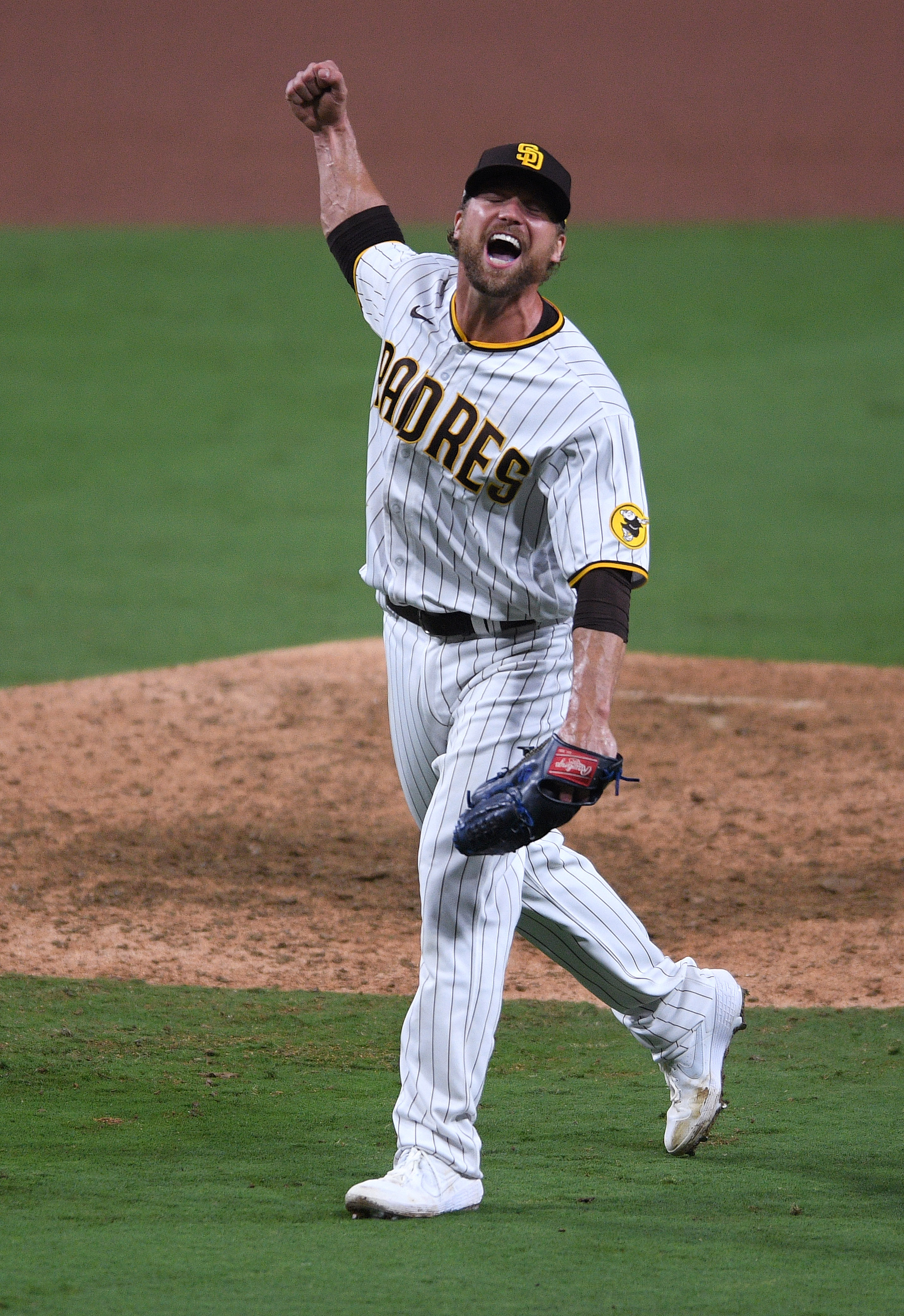
It’s a rather stunning development to see the Athletics of all clubs strike this pact. Oakland has spent the offseason in a veritable state of dormancy, only jumping into the free-agent market after first shedding a notable chunk of cash in the deal that shipped Khris Davis and his $16.75MM salary to Texas. Even then, the additions made by the club have been small-scale in nature: one-year deals with Yusmeiro Petit ($2.55MM), Sergio Romo ($2.25MM) and Mitch Moreland ($2.25MM).
The only indication to date that the A’s have been willing to spend near this level on a single player has been their $12.5MM offer to shortstop Marcus Semien, although The Athletic reported that offer came with as much as $10MM deferred over the course of an entire decade. The extent of deferrals in the Rosenthal deal isn’t yet known, but ESPN’s Jeff Passan tweets that a portion of that $11MM is indeed deferred beyond the 2021 season. Passan adds that Rosenthal and agent Scott Boras initially set out seeking a four-year pact, but when the multi-year interest they received didn’t meet those lofty expectations, Rosenthal eventually opted for a higher-value one-year deal.
Rosenthal, 30, was among the game’s most dominant relievers in 2020 — a remarkable rebound from a 2018-19 downturn that had brought his very future in the game into question. From 2012-17, Rosenthal was one of the National League’s best relievers, tossing 325 innings of 2.99 ERA ball and punching out 31.2 percent of his opponents while closing down games in St. Louis. He underwent Tommy John surgery in 2017, however, causing him to miss the entire 2018 season.
When he returned in 2019 with the Nationals, Rosenthal walked 15 of the 43 batters he faced and plunked another three while mixing in five wild pitches. He went to the Tigers and walked more than a quarter of his opponents there, too, before landing with the Yankees’ Triple-A club. Rosenthal faced five batters with the Yankees’ Scranton affiliate, walking three of them and hitting another.
The sudden case of the yips had many questioning whether he’d ever make it back from Tommy John surgery, but Rosenthal parlayed a minor league deal with the the Royals into the aforementioned dominant 2020 campaign that brought about this sizable one-year arrangement. Armed with a triple-digit heater and a rediscovered control of the strike zone, Rosenthal tossed 13 2/3 innings of 3.29 ERA ball as Kansas City’s closer before being traded to the Padres, where he closed out the year with 10 shutout innings of relief. Overall, the flamethrowing righty posted a 1.90 ERA and 2.31 SIERA with a powerhouse 41.8 percent strikeout rate and a strong 8.8 percent walk rate.
If Rosenthal can replicate that success in 2021, he could hit the market as a 31-year-old on the heels of a similar resurgence to that of the man he’ll effectively replace in Oakland: Liam Hendriks. The Aussie buzzsaw went from clearing outright waivers in 2018 to breaking out as one of MLB’s most dominant relievers in 2019-20. Hendriks cashed in on a $54MM guarantee this winter, and it stands to reason that another dominant year will position Rosenthal for that type of commitment and the lengthy multi-year deal he coveted as well.
It’s been a remarkable week for the Oakland bullpen, which not long ago looked to be a collection of question marks anchored by veteran lefty Jake Diekman. In the past seven days, however, they’ve acquired ground-ball machine Adam Kolarek from the Dodgers, re-signed iron man Yusmeiro Petit and inked slider specialist Sergio Romo as well. The A’s bullpen now looks like a deep, formidable group with the highly underrated J.B. Wendelken and the talented-but-still-inconsistent Lou Trivino now sliding down the ladder into lower-leverage spots.
The Athletics’ payroll, meanwhile, will rise to nearly $85MM — a fraction of what many clubs will spend in 2021 but at least within striking distance of their 2019-20 levels of spending. It’s hard to praise ownership too much when this recent spending spree was preceded by a salary dump and an insulting offer to their longtime clubhouse leader, but it’s better late than never to act like the contenders they should be.
Oakland won the American League West in 2020 and captured Wild Card berths in both 2018 and 2019. However, they’ve yet to ride this talented core — anchored by Matt Chapman, Matt Olson, Ramon Laureano and Semien — beyond the divisional round of postseason play. The core group is morphing a bit, with Semien now in Toronto and Jesus Luzardo perhaps emerging to lead the Oakland rotation, but the A’s still have control of Chapman, Olson and Laureano for multiple years. Adding Rosenthal, Petit, Romo, Moreland and Kolarek in a week’s time only supplements that core and gives the club a shot at its first full-season division crown since 2013.
Cubs Sign Jake Marisnick
TODAY: Marisnick’s deal has been officially announced.
FEB. 11, 9:12am: Marisnick and the Cubs have agreed to a one-year Major League deal with a mutual option for the 2022 season, tweets MLB Network’s Jon Heyman. The contract guarantees Marisnick $1.5MM. USA Today’s Bob Nightengale tweets that the guarantee will be paid out in the form of a $1MM salary in 2021 and a $500K buyout on a $4MM mutual option. He can earn another $500K in 2021 via incentives, Heyman adds.
8:15am: The Cubs and free-agent outfielder Jake Marisnick are in agreement on a contract, Jon Morosi of MLB.com reports (via Twitter). Marisnick is represented by Reynolds Sports Management.
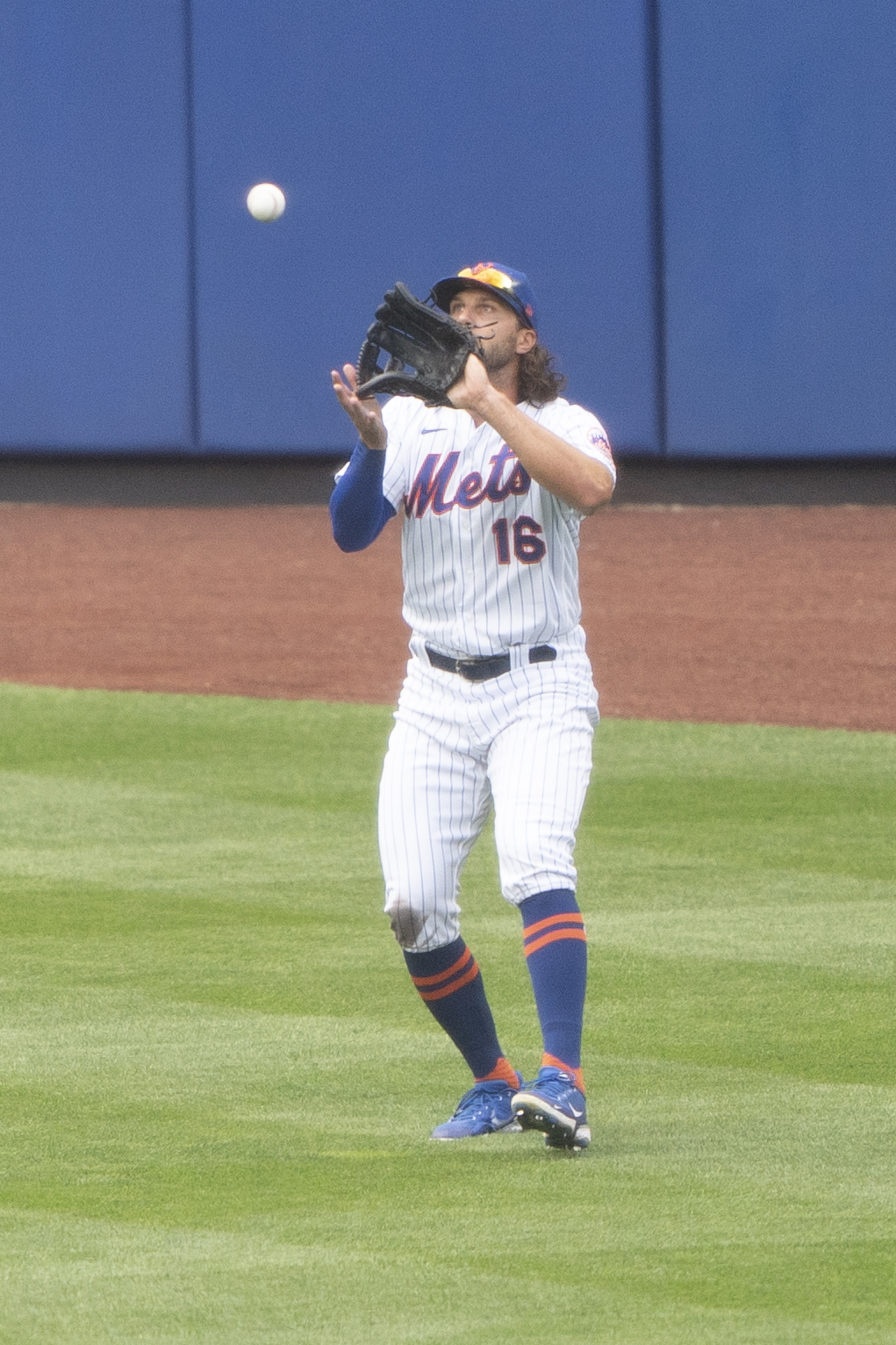
Marisnick, 30 in March, has spent the bulk of his career with the Astros but was with the Mets in 2020. A pair of hamstring injuries limited the fleet-footed outfielder to just 16 games, although Marisnick was quite productive in his tiny sample of 34 plate appearances, hitting .333/.353/.604 with a pair of homers and three doubles.
That level of production, of course, shouldn’t be expected moving forward. Marisnick has been a below-average hitter for most of his time in the Majors, though he’s offset that sub-par bat with well above-average speed and excellent glovework. Over the past four years he’s a .234/.297/.441 hitter overall, though he’s fared better when facing left-handed pitching (.247/.313/.443).
Marisnick’s speed was down a bit in 2020, though the pair of hamstring strains surely contributed to that fact. Statcast measured his sprint speed at 29.2 feet per second from 2016-19 but had him down to 28.2 last year. That still ranked in the 84th percentile of MLB players, however, and Marisnick typically sits in the 94th percentile or better with those wheels. He also ranked among the 20 best outfielders in the game in Statcast’s Outs Above Average each year from 2016-19, and he’s been viewed as a similarly elite defender by Defensive Runs Saved and Ultimate Zone Rating.
The Cubs already had a right-handed-hitting option to platoon with fellow newcomer Joc Pederson and right fielder Jason Heyward in the form of Phil Ervin, so it’s possible Marisnick will bump him out of the plans. Ervin is a much better hitter against lefties than Marisnick but doesn’t stack up as well defensively. Chicago could certainly carry both players on the roster and more aggressively utilize a platoon setup in the outfield. At the time of the Pederson signing, it was reported that he’d be given near-everyday at-bats, although playing him against lefties would mitigate much of his value.
However it shakes out, the Cubs are a much better defensive team now with Marisnick on board. Somewhat amusingly, they’ve also now in effect swapped fourth outfielders with the Mets. Albert Almora Jr., non-tendered by the Cubs earlier in the winter, signed with New York this past week.
Mets Sign Taijuan Walker
TODAY: The Mets have officially announced Walker’s deal. Noah Syndergaard has been placed on the 60-day injured list to open up a roster space for Walker.
FEB. 19, 8:14am: It’s a two-year, $20MM deal with a player option for a third season, Joel Sherman of the New York Post reports (Twitter links). The deal, which is still pending a physical, will pay Walker $10MM in 2021 and $7MM in 2022. The player option is at a base of $6MM and can rise to $8.5MM via escalator clauses based on Walker’s performance. There’s a $3MM buyout on the option, should Walker decline, making for a total of $20MM in guarantees.
7:04am: The Mets and free-agent right-hander Taijuan Walker have agreed to terms on a contract, tweets SNY’s Andy Martino. The Excel Sports client will step into the rotation alongside Jacob deGrom, Carlos Carrasco, Marcus Stroman and David Peterson.
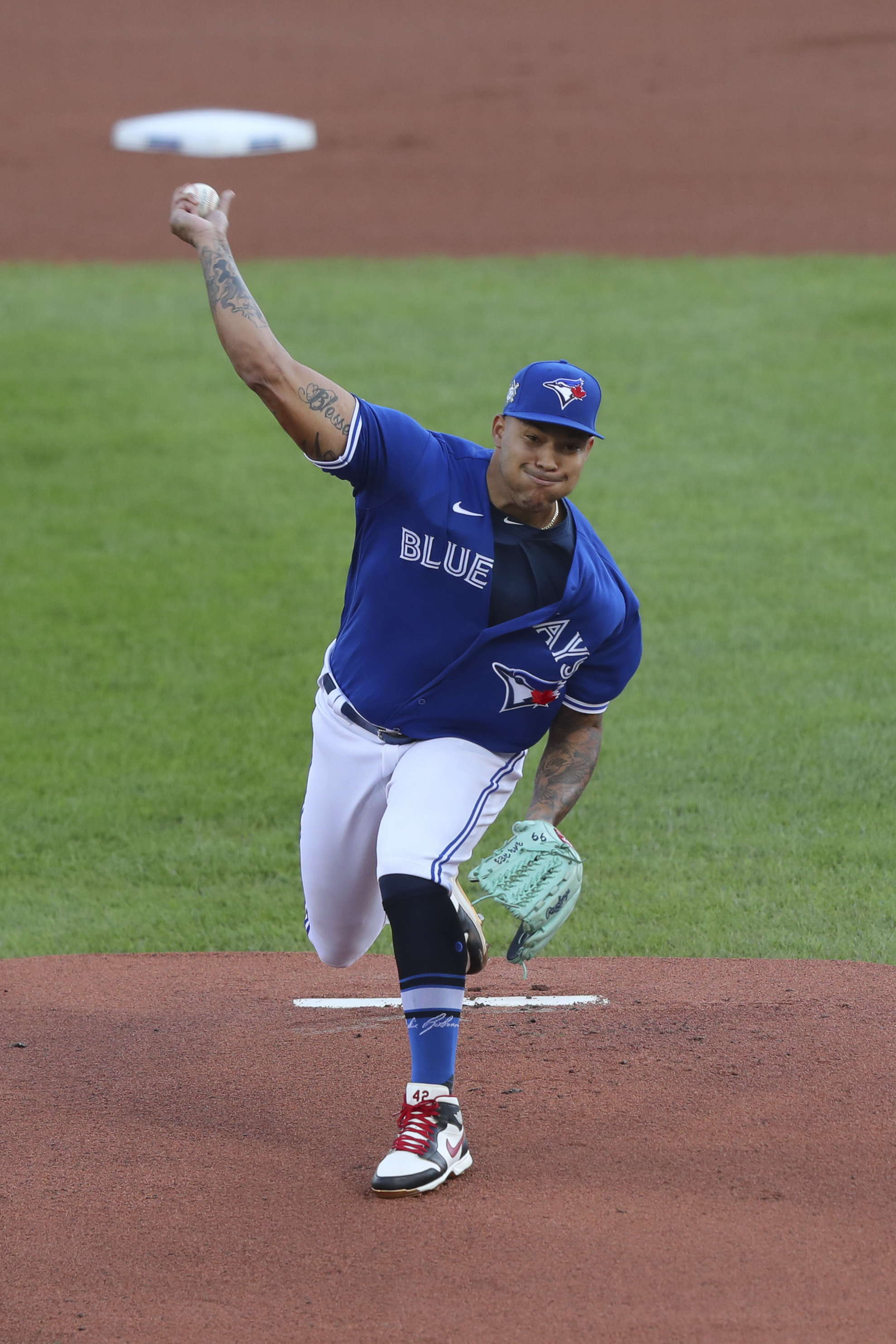
Heading into his age-28 season, Walker was the youngest established starter available in free agency. The former top prospect made his big league debut with the Mariners just two weeks after his 20th birthday back in 2013 and solidified his place in the Seattle rotation in 2015 at 22 years of age. The M’s traded Walker to the D-backs in a high-profile 2016 deal also including Ketel Marte, Jean Segura and Mitch Haniger, and he went on to have his best season in 2017: 157 1/3 innings of 3.49 ERA ball.
Walker went down with a torn ulnar collateral ligament in 2018, however, and the resulting Tommy John surgery wiped out nearly his entire season. He was on the comeback trail in 2019, but those efforts were derailed by a strained shoulder capsule that limited him to one inning. After pitching a combined 14 innings in 2018-19, Walker was non-tendered by the D-backs and returned to the Mariners on a low-cost, one-year deal in free agency.
The signing worked out well for the Mariners, who parlayed five solid starts from Walker into a deadline trade with the Blue Jays that netted outfield prospect Alberto Rodriguez (currently Seattle’s No. 24 prospect at Baseball America). Walker made six starts with the Blue Jays and pitched to a pristine 1.37 ERA with a 25-to-11 K/BB ratio over the life of 26 1/3 innings.
Overall, Walker’s 2.70 earned run average in 53 1/3 innings last year looked quite sound. However, despite that impressive mark, his age and his former top prospect pedigree, Walker appears to have had a difficult time finding a club willing to meet his asking price this winter. There’s likely some good reason for that, as once looking past the ERA, the numbers aren’t nearly as appealing.
On his way to that 2.70 ERA, Walker benefited from a .243 average on balls in play and a slightly elevated 78.5 percent strand rate. His 22.2 percent strikeout rate was below the league average, as was his 39.1 percent ground-ball rate. The righty’s 93.5 mph average heater was down from its 95.1 mph peak, and his swinging-strike rate was among the lowest in the league (13th percentile, per Statcast). Fielding-independent marks like SIERA (4.60) and Statcast’s xERA (4.87) aren’t as bullish on Walker, who averaged just 4 2/3 innings per start in 2020.
Add in the elbow and shoulder injuries in 2018-19, and some trepidation from interested teams is understandable — but only to an extent. We’ve seen the free-agent market regularly pay upwards of $10-12MM per year on mutli-year deals to fourth starter types, and Walker ought to be at least that moving forward. His prospect pedigree, youth, velocity and raw stuff give him the upside to become quite a bit more than that as well.
With the Mets, Walker needn’t perform like anything more than a fourth starter, thanks to the talent they already have atop their starting staff. Of course, if he does take a step forward and pitch closer to last year’s ERA marks, an already impressive rotation will only look all the more formidable. With the newest agreement in place, the Mets have an enviable quintet of deGrom, Carrasco, Stroman, Walker and Peterson. Beyond that looms the return of Noah Syndergaard, who’ll ideally be ready for a summer return following his own Tommy John surgery last May.
Unlike in 2020, that group is backed up by considerable depth. Joey Lucchesi, Jordan Yamamoto, Sean Reid-Foley and Sam McWilliams were added to the 40-man roster via trade and free agency this winter, and prospects Franklyn Kilome and Thomas Szapucki will be able to work toward minor league readiness in a game setting. The Mets also added lefty Mike Montgomery and righty Jerad Eickhoff on minor league deals, and it’s conceivable that they could yet bring in some additional non-roster depth in Spring Training.
While it may not be quite the offseason Mets fans envisioned, it’s hard to look at the current roster and consider the offseason anything other than a substantial step in the right direction. New York’s marquee acquisition of Francisco Lindor and Carrasco will go down as its largest strike of the offseason, with free-agent acquisitions of Walker, James McCann, Trevor May, Jonathan Villar, Kevin Pillar, Aaron Loup and Albert Almora have deepened the roster.
The Mets didn’t shatter the luxury tax threshold as many expected when Steve Cohen purchased the team — they’d have done so had their near-deal with Trevor Bauer been completed — but Walker’s deal pushes their baseline payroll and their luxury-tax ledger both just shy of $200MM. It’s a franchise record for Opening Day payroll by a magnitude of roughly $40MM, setting the tone for future offseasons under Cohen’s ownership.
Pirates, Todd Frazier Agree To Minor League Deal
FEB 20: The Pirates have formally announced the signing of Frazier. He has received an invite to spring training.
FEB 19: The Pirates and veteran corner infielder Todd Frazier are in agreement on a minor league contract, longtime New York Post scribe Kevin Kernan reports (via Twitter). Kevin Williams of the Shore Sports Network writes that Frazier himself confirmed the agreement to him. Frazier, a CAA Baseball client, will head to Major League camp with the Pirates as a non-roster invitee. Frazier will earn a $1.5MM salary if he makes the club, Rob Biertempfel of The Athletic tweets. The deal is pending a physical.
Frazier, who turned 35 last Friday, is a 10-year veteran who has appeared with the Reds, White Sox, Yankees, Mets and Rangers since his 2011 debut. He has consistently been an above-average producer at the plate, having slashed .242/.319/.448 (108 wRC+) with 218 home runs and 73 stolen bases in 4,909 trips. Frazier has also twice hit at least 35 homers in an individual season, earned a pair of All-Star nods and been a plus defender at third, where he has put up 20 Defensive Runs Saved and a 24.6 Ultimate Zone Rating across almost 9,100 innings at the position.
While Frazier has enjoyed an impressive career thus far, he had to settle for a minors deal with the bottom-feeding Pirates because of subpar production between the Mets and Rangers in 2020. Frazier hit a mere .236/.302/.382 (89 wRC+) with four HRs and a career-worst .146 ISO in 172 PA. Frazier also notched rather ugly Statcast numbers, evidenced in part by a .295 expected weighted on-base average that ranked in the league’s 15th percentile and barely outpaced his real wOBA of .281.
Although his production fell off last year, there’s no harm in taking a low-risk chance on Frazier from the Pirates’ perspective. Frazier could at least be a bench option for the team behind the projected third-first tandem of Ke’Bryan Hayes and Colin Moran if he earns a roster spot. If Frazier performs well in that role, the Pirates may be able to flip him elsewhere prior to the trade deadline.
White Sox Notes: Vaughn, Fry, Crochet, Kopech, Roster
White Sox general manager Rick Hahn met with reporters yesterday as pitchers and catchers reported to camp, touching on a number of topics pertaining to a bolstered 2021 roster. Perhaps most notably, Hahn indicated that top prospect Andrew Vaughn, the No. 3 overall pick from the 2019 draft, is “very much in the mix” to make the Opening Day roster (Twitter link via Daryl Van-Schouwen of the Chicago Sun-Times). Chicago was at times connected to potential DH candidates throughout the winter, but part of the reason the Sox opted not to bring in a dedicated DH was due to their belief that Vaughn could emerge as early as this season.
While the 22-year-old still has just 55 professional games under his belt thanks to the absence of minor league play in 2020, Vaughn fared well in that time, slashing a combined .278/.384/.449 with six homers, 17 doubles and nearly as many walks (30) as strikeouts (36). Vaughn’s numbers at Cal teetered on absurd, as he batted .374/.495/.668 with 50 long balls in 745 plate appearances. He’s universally ranked among the game’s Top 30 or so prospects, and once he makes the roster he could split time with Jose Abreu between first base and designated hitter.
More on the South Siders…
- The White Sox will be without lefty Jace Fry for the first month of the season, Hahn also announced this week (Twitter link via James Fegan of The Athletic). The 27-year-old underwent a back operation over the offseason and isn’t expected to be an option until at least May 1. Fry has been a high-strikeout, high-walk part of the Chicago ‘pen for the past few seasons, working to a combined 4.43 ERA and 3.92 SIERA with a 29.6 percent strikeout rate but a 13.7 percent walk rate. Between Aaron Bummer and 2020 first-round pick Garrett Crochet, the Sox should still have a pair of lefties to put in the bullpen.
- Speaking of Crochet, while the organization views him as a starter in the long run, Hahn indicated that the lefty could be used in multiple roles, including a bullpen setting, for the coming season as the club monitors his workload (via MLB.com’s Scott Merkin, on Twitter). The same is true of top prospect Michael Kopech, who’ll be back in the mix for a spot on the pitching staff this spring. Kopech, also regarded as one of the game’s best pitching prospects, underwent Tommy John surgery late in the 2018 season, missed all of 2019 and opted out of the 2020 campaign.
- Though there are still more than a few unsigned players of note, Hahn suggested that the bulk of the White Sox’ offseason work is complete, Merkin tweets. While the Sox are still in touch with several free agents, Hahn said that the “expectation is that any additions would be more of the non-roster invite variety if at all.” The ChiSox added Liam Hendriks and Adam Eaton via free agency over the winter and also swapped out righty Dane Dunning for Lance Lynn in a trade with the Rangers. While they’ve been connected to other potential free agents along the way, though, it seems their roster is largely set.
Rangers Sign Tyson Ross
The Rangers have signed right-hander Tyson Ross to a minor league contract, per a club announcement. The Wasserman client won’t be in Major League camp and will instead report to Spring Training with the minor league rehab group, per the announcement.
Ross, 33, opted out of the 2020 season and hasn’t pitched at the big league level since an ugly 2019 run with the Tigers (35 1/3 innings, 6.11 ERA). He’s battled shoulder and elbow troubles throughout his career, including a thoracic outlet procedure back in 2016. This’ll be the second Rangers stint for Ross, who was with the club in 2017 as well.
While injuries have derailed much of Ross’ career, there was a point where he was one of the better young starters in the National League. From 2013-15, Ross tallied 516 2/3 innings with the Padres and turned in a tidy 3.07 ERA with a 24.6 percent strikeout rate. That mark was more impressive at that point, as the league-average strikeout rate for hitters in that three-year span was 20.2 percent — a good bit lower than today’s average 23.4 percent.
Ross hasn’t had much success since that first Padres run, thanks primarily to injuries, but he did mix in a solid 2018 showing amid a series of injury-marred seasons. He returned to the Padres as a free agent in the 2017-18 offseason and gave them 22 starts of 4.45 ERA ball before being traded to the Cardinals and pitching well out of their bullpen. All in all, that 2018 season resulted in 149 2/3 innings of 4.15 ERA output — a far cry from his 2013-15 peak but still plenty useful for both clubs whose uniform he donned.
It’s anyone’s guess whether Ross can shake off the rust and the persistent injuries and return to form in a second go-around in Arlington. That he won’t report to big league camp indicates that he’ll be more of a mid-season option than a candidate to crack the Opening Day roster, but Ross is a no-risk veteran depth stash with a fair bit of MLB success under his belt. There’s no harm in seeing what he can bring to the table at this point, and if he does regain his form, he’s a versatile pitcher familiar with multiple roles who can help the Rangers navigate a 162-game slate that will prove challenging after last year’s 60-game schedule.
Ian Happ Wins Arbitration Hearing
Ian Happ won his arbitration hearing over the Cubs and will earn the $4.1MM salary for which he and his reps at Excel Sports filed rather than the team’s proposed $3.25MM figure, MLB.com’s Mark Feinsand reports (via Twitter).
Happ, 26, has played all three outfield spots, second base, third base and a little bit of first base through his first four seasons as a Cub, batting a combined .248/.344/.481 along the way. He’s connected on 62 homers, 54 doubles and seven triples through 1262 plate appearances, adding in 19 steals on the bases (albeit with a questionable success rate, as he’s also been caught 11 times).
Happ succeeded in spite of one of the game’s highest strikeout rates in his first two seasons, but he’s lowered that mark from 33.8 percent in 2017-18 to a more tolerable 26.4 percent in 2019-20. He could certainly still stand to further pare back that punchout rate, but for a player with his well above-average power and walk rates, the strikeouts are a little easier to overlook.
Over the past two seasons, Happ has made some offensive gains at the plate, hitting at a combined .260/.350/.530 through a relatively small sample of 387 plate appearances. That’s good for 30 percent better than the league average overall, by measure of wRC+, and if it’s a sign of things to come then Happ ought to be positioned quite nicely from a financial standpoint. His subsequent raises next winter and in the 2022-23 offseason will now be based upon a higher starting point thanks to today’s ruling. He’ll be a free agent following the 2023 season.
With Happ’s salary now set in stone, the Cubs’ 2021 payroll is set at about $157.8MM, per Roster Resource’s Jason Martinez. It’s possible that they’ll make another late addition or two — the Cubs inked Brandon Workman to a $1MM deal earlier in the week — but substantial changes appear unlikely. President of baseball ops Jed Hoyer stated early in the week that he’s not engaged in any trade talks and generally expects the current core group to remain intact come Opening Day.
Mariners Designate Robert Dugger For Assignment
The Mariners announced that they’ve designated right-hander Robert Dugger for assignment in order to open a spot on the roster for righty Ken Giles, whose two-year contract is now official.
Dugger, 25, was an 18th-round pick of the Mariners back in 2016 who was traded to the Marlins in the deal that brought Dee Strange-Gordon to Seattle. Dugger made his big league debut in Miami but didn’t find much success in parts of two seasons there, posting a 7.40 ERA with a 13.7 percent strikeout rate and 9.4 percent walk rate in 45 innings. Dugger’s struggles have persisted in Triple-A, although he had a solid track record up through the Double-A level, where he owns a 3.60 ERA with solid strikeout and walk numbers through 180 innings of work.
Seattle claimed Dugger back from the Marlins in early December when Miami designated him for assignment, and the Mariners will now have a week to trade him or pass him through outright waivers. If he goes unclaimed, Dugger would remain with the organization (without the 40-man spot) and likely return to big league camp as a non-roster invitee.
The pair of moves leaves Seattle’s 40-man roster at capacity, although since Giles is recovering from Tommy John surgery, he could be placed on the 60-day injured list to open a spot if the Mariners make another late addition.
Twins Outright Ian Gibaut
The Twins announced Friday that right-hander Ian Gibaut went unclaimed on waivers and has been assigned outright to Triple-A St. Paul. His spot on the 40-man roster goes to righty Matt Shoemaker, whose previously reported one-year, $2MM deal is now official. Gibaut will be in Major League camp as a non-roster invitee for Spring Training.
Minnesota claimed Gibaut, 27, off waivers from the Rangers back on Oct. 30 and held onto him throughout the winter before utilizing his roster spot for a late-offseason addition to the 40-man. He’s spent time in the big leagues both with Texas and Tampa Bay over the past two years, pitching to an ugly 6.08 ERA in 26 2/3 frames. However, Gibaut has also fanned nearly a quarter of the batters he’s faced while showing a heater that averages 95.3 mph. He’s also pitched to a combined 2.53 ERA with a 30.7 percent strikeout rate in 124 2/3 innings between Double-A and Triple-A.
Gibaut is the third offseason waiver claim the Twins have now managed to pass through waivers in the past week, joining righty Ian Hamilton and lefty Brandon Waddell. That’ll help keep the Twins’ upper minors stocked with some depth that has experience at the big league level to call upon as needed throughout the season. If he ends up being added back to the 40-man roster, he does have a minor league option remaining, which will allow the Twins to shuttle him from Target Field to their new Triple-A affiliate in St. Paul without being required to place him back on waivers.
Tigers, Rick Porcello Have Discussed Reunion
The Tigers have discussed a potential reunion with right-hander Rick Porcello, Jason Beck and Jon Morosi of MLB.com report (Twitter link), although the two sides are still “a ways apart.” Tigers general manager Al Avila said earlier this week that he was still looking for arms and that adding “at least one more starter would be ideal.”
It’s been a rough couple years for the now-32-year-old Porcello, who turned in an ERA north of 5.00 during his final year in Boston and again in 2020 after signing a deal with the Mets. Over his past 233 1/3 frames in the big leagues, Porcello carries an ugly 5.55 ERA.
That said, there’s also reason to think he should’ve fared better in 2020 than he did in 2019. Porcello halved his 2019 home run rate as a member of the Mets last year and also improved upon both his strikeout and walk percentages while allowing less hard contact than in 2019.
A woeful Mets defense didn’t do him any favors, however, as reflected in his opponents’ .373 average on balls in play. That’s nearly 70 points higher than his career mark, and while some of it is attributable to allowing more line drives, the porous defense undoubtedly played at least some role. Fielding-independent metrics like SIERA (4.45) and xFIP (4.38) pegged Porcello’s 2020 campaign more in the mid-4.00s range that he’s lived throughout the bulk of his career.
Porcello also remained durable in Queens, making a dozen starts and soaking up 59 innings even as he struggled through those poor results. He hasn’t been on the injured list since missing three weeks with a triceps strain late in the 2015 season, so at the very least he could be expected to give the Tigers some bulk innings during a season in which they’ll likely be extra-cautious with the workloads of vaunted young arms like Casey Mize, Tarik Skubal and Matt Manning.
At the moment, the Tigers have lefty Matthew Boyd and right-handers Spencer Turnbull, Michael Fulmer and Jose Urena locked into spots in the 2021 rotation. Skubal, Mize, Manning, Daniel Norris and non-roster arms like Derek Holland and Erasmo Ramirez will all be vying for opportunities in the rotation. Avila noted this week that the club could roll out with a six-man rotation in 2021 (link via Evan Petzold of the Detroit Free Press), so there could be multiple starting jobs up for grabs.
It’s an important year for the Tigers’ lengthy rebuilding effort, as they’ll want to get a chance to evaluate Mize, Skubal, Manning and others from their improved farm system at the MLB level. At the same time, there’s a fine line to walk; the Tigers surely don’t want to get to a point where injuries elsewhere on the roster force them to be overly reliant on that group to turn over the rotation, thus potentially inflating their workloads. Adding Porcello, who spent six seasons as a Tiger and won a Cy Young Award with the Red Sox in 2016, to help manage workloads and mentor younger starters has some appeal to the club.
From a payroll vantage point, the Tigers can clearly afford just about anyone they want. Their offseason investments to date have been a two-year, $10MM deal for Robbie Grossman and one-year deals for Jonathan Schoop ($4.5MM), Urena ($3.25MM), Wilson Ramos ($2MM) and Nomar Mazara ($1.75MM). Their current payroll sits at about $82MM — more than $110MM shy of its peak levels in 2016-17. That’s not likely to go up much in 2021, but they could still spend on a couple more veterans in the Porcello mode as they await a return to more prominently playing in the free-agent market next winter and beyond.