
Angels To Sign Phil Gosselin
The Angels have agreed to a minor league deal with veteran infielder Phil Gosselin and invited him to Major League Spring Training, per The Athletic’s Fabian Ardaya (Twitter link).
Gosselin, 32, spent the 2019-20 seasons with the Phillies and batted .255/.312/.363 with three homers and eight doubles in 170 trips to the plate. The well-traveled utilityman has seen MLB time with the Braves, D-backs, Rangers, Reds and Pirates in addition to his work in Philadelphia. Defensively, Gosselin has spent the bulk of his MLB time at second base, although he has experience at all four infield spots and has seen time in the outfield corners as well.
The Angels have a full infield, with David Fletcher at second base, offseason trade acquisition Jose Iglesias at shortstop and Anthony Rendon at third base. Gosselin will compete with former top prospect Franklin Barreto, waiver claim Robel Garcia and 24-year-old Luis Rengifo for backup time around the infield. Barreto is out of minor league options, which likely helps his case, but it’s possible the Halos could carry more than one backup infielder.
Tigers, Greg Garcia Agree To Minor League Deal
The Tigers and infielder Greg Garcia are in agreement on a minor league pact, tweets MLB Network’s Jon Heyman. The Meister Sports client will be invited to Major League Spring Training and compete for a roster spot.
Garcia, 31, has spent the bulk of his career as a utility player with the Cardinals, though he was with the Padres in 2020. That pairing didn’t pan out for either party, as Garcia stumbled with a .200/.279/.250 batting line in 71 plate appearances over the course of 35 games. A year prior, however, he logged a career-high 372 plate appearances and batted .248/.364/.354 with St. Louis.
The left-handed-hitting Garcia carries a career .245/.354/.339 batting line in 1303 plate appearances, and while his OBP has perhaps benefited at times from batting eighth in front of a pitcher in the National League, it’s worth noting that he boasts a strong walk rate at virtually every lineup position in which he’s been placed (including a 13.7 percent mark in 327 plate appearances as a leadoff man). Garcia has experience at second base, shortstop and third base, in addition to brief cameos at first and in left field.
The Tigers re-signed Jonathan Schoop to a one-year deal over the weekend, adding him to an infield mix that also includes Willi Castro, Niko Goodrum and Isaac Paredes. Garcia will compete for a backup spot in camp, but Goodrum’s versatility and the youthful pairing of Paredes and Castro could impede his chances.
Brewers Sign Jordan Zimmermann To Minor League Deal
The Brewers have signed veteran right-hander Jordan Zimmermann to a minor league contract and invited him to Major League Spring Training, per a team announcement. It’s a homecoming for the Auburndale native and UW-Stevens Point product. He’s represented by ISE Baseball.
Zimmemann, 35 in May, had a much different free-agent experience this time around than his he did in his first foray into the open market, when he was one of the top names available in the 2015-16 offseason. He’d put together an excellent five-year run with the Nationals leading up to that free-agent venture, but the resulting five-year, $110MM investment from the Tigers proved to be a disaster for the Detroit organization.
Three of Zimmerman’s five seasons in Detroit ended with an ERA north of 6.00, including a 2020 season in which he was limited to just 5 2/3 innings. The right-hander’s best year with the Tigers came in 2018, when he tossed 131 1/3 roughly average innings — far from the No. 2/No. 3 type of starter the Tigers hoped to be getting in signing him to that nine-figure deal. On the whole, Zimmermann’s time with the Tigers produced 514 1/3 innings of 5.63 ERA ball with a similarly discouraging 4.80 SIERA and a lackluster 16.3 percent strikeout rate.
For the Brewers, however, there’s no risk in taking a speculative flier on a pitcher who, at least from 2011-15, was one of the game’s more underrated arms. A return to that form shouldn’t be expected — not when his average fastball has dipped about four miles per hour as he’s weathered forearm, back, shoulder and UCL injuries in the past half decade. But Zimmermann’s control remained excellent throughout his Tigers tenure, and he can still generate above-average spin on that depleted four-seamer. If he indeed makes the Brewers’ roster, it’s unlikely to be with the expectation of serving as anything more than a fifth starter or swingman.
Mets Sign Jonathan Villar
8:15am: Villar is guaranteed $3.55MM from the Mets, Heyman tweets. The contract contains additional incentives that can boost that salary.
8:02am: The Mets have agreed to a deal with infielder Jonathan Villar, reports MLB Network’s Jon Heyman (via Twitter). Enrique Rojas of ESPN Deportes hears the same, adding that it’s a one-year, Major League deal for the Wasserman client.
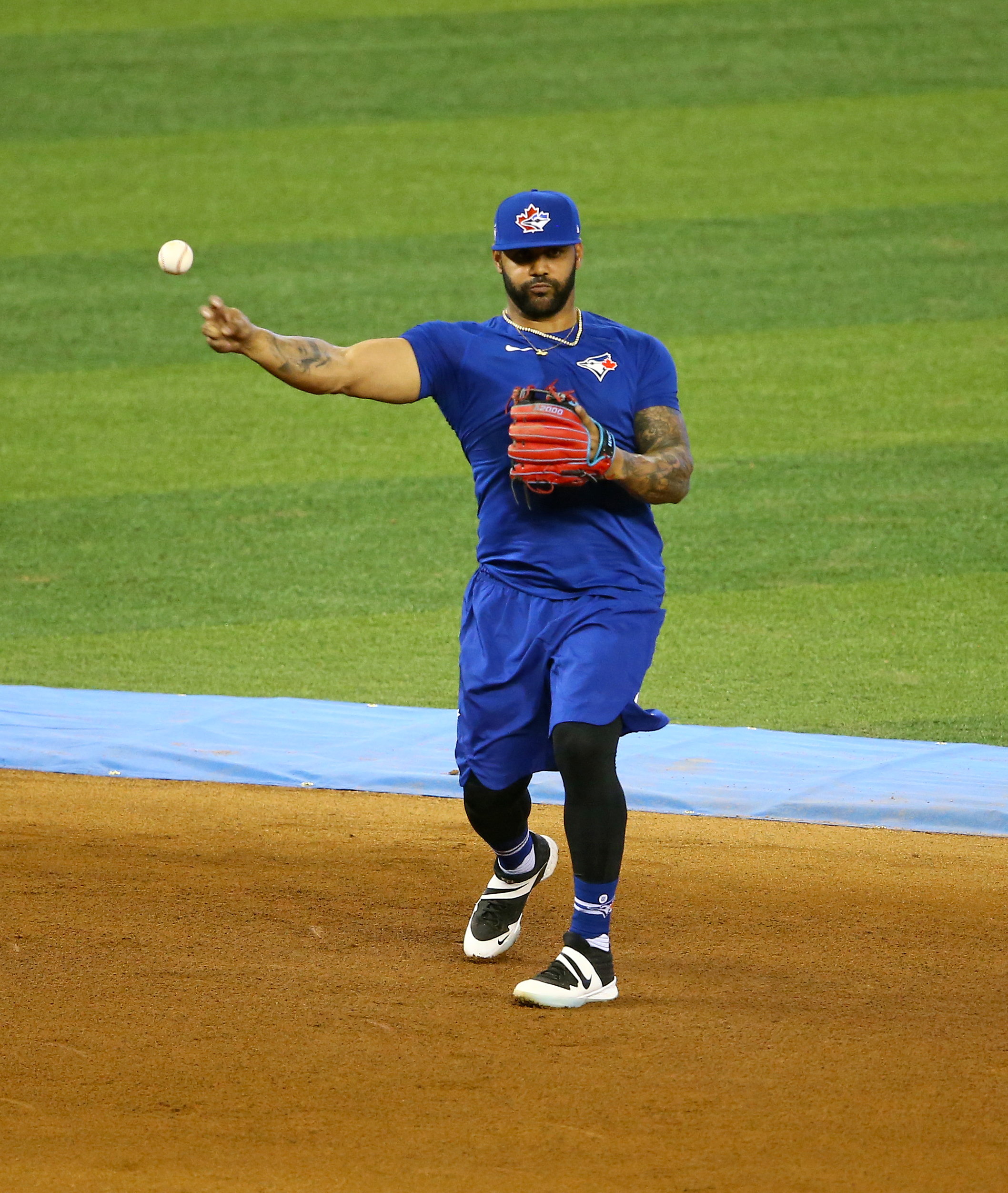
Over the weekend, Villar was reported to be in talks with the Reds about a contract, but it seems New York made a better offer to the former Astros, Brewers, Orioles, Marlins and Blue Jays speedster. Bobby Nightengale of the Cincinnati Enquirer tweets that Cincinnati’s efforts were likely focused on a minor league deal.
The Mets have a full infield and crowded outfield mix as well, but the fleet-footed Villar will likely give them a super-utility option who can bounce around the multiple spots on the diamond. While Villar spent the bulk of his career at shortstop and second base, he’s also logged action at third base, in center field and in left. The Marlins originally planned to use him as their primary center fielder last year when they acquired him from the Orioles, but the team’s early Covid-19 outbreak threw the roster into a state of chaos and landed Villar back in the infield.
The 2020 season was an ugly one for Villar, who underwhelmed in Miami before completely cratering in a 22-game stint with Toronto. Villar’s overall batting line last season checked in at a disastrous .232/.301/.292, but his track record prior to that showing was generally solid.
From 2015-19, Villar batted at a combined .269/.336/.423 with 70 homers and 167 steals in 2472 plate appearances. Villar was quite arguably the best player on a lousy Orioles roster in 2019 when he hit .274/.339/.453 with 24 home runs and 40 stolen bases.
There’s some clear power and speed upside with the switch-hitting Villar, and while he doesn’t play any one position particularly well, his ability to fill in at a variety of spots on the diamond only serves to further deepen a much-improved Mets roster in 2021. He’s also been a productive regular recently enough that one could envision him stepping into an everyday role and capably holding down the fort in the event of an injury to second baseman Jeff McNeil, shortstop Francisco Lindor or third baseman J.D. Davis. Villar joins Albert Almora Jr. and Jose Martinez on an increasingly veteran Mets bench.
Phillies Sign Chase Anderson
FEB. 8: The Phillies have announced the signing.
FEB. 3, 9:55am: Anderson will be guaranteed $4MM, tweets Scott Lauber of the Philadelphia Inquirer.
9:40am: It’s a one-year, Major League deal for Anderson, MLBTR has learned.
9:10am: The Phillies are in agreement on a contract with free-agent righty Chase Anderson, reports Fansided’s Robert Murray (via Twitter). The Hub Sports Management client will join a growing stockpile of experienced arms vying for innings at the back of the Philadelphia rotation. His deal is pending the completion of a physical.
Anderson, 33, spent the 2020 season with the Blue Jays but missed the beginning of the shortened season by an oblique strain. He returned and pitched well in August before scuffling through a rough month in September. Overall, he totaled just 33 2/3 innings with a 7.22 ERA.
That unsightly mark notwithstanding, there are plenty of reasons to expect that the Anderson pickup could be a worthwhile, low-cost investment. From 2014-19, Anderson was a durable source of average or better innings, pitching to a 3.94 ERA and 4.43 SIERA over the life of 857 frames between the D-backs and the Brewers. Anderson’s only IL stints in that time were a minimum stay for triceps tightness in 2015 and then brief absences due to an oblique strain and a laceration on his finger. His arm held up nicely in the rotation both in Arizona and Milwaukee, and even last year’s absence had nothing to do with his elbow or shoulder.
Digging a bit deeper into his 2020 work, there’s cause for optimism there as well. Anderson decreased the use of his four-seamer in favor of more cutters and changeups, and the results were encouraging in some regards. He posted a career-high 24.7 percent strikeout rate that checked in above the league average, and his 6.5 percent walk rate was an improvement over his Brewers days, coming in well south of the league average. Anderson was plagued by a .362 average on balls in play and a home-run rate so lofty that positive regression is nearly inevitable (2.94 HR/9).
Anderson has been somewhat homer-prone throughout his career, but there’s little reason to expect such pronounced struggles to continue. Fielding-independent metrics that normalize home-run rate, such as xFIP (4.09) and SIERA (4.01), were quite a bit more bullish on him than his baseline ERA.
Anderson will join lefty Matt Moore on the big league roster as a cost-effective option at the back of the rotation behind top starters Aaron Nola, Zack Wheeler and Zach Eflin. His addition could allow the Phillies to give top prospect Spencer Howard more time in Triple-A and to move Vince Velasquez to the bullpen, but it’s likely that each of Moore, Anderson, Howard and Velasquez will start games for the Phils in 2021. Teams are going to be more cautious than ever with workloads after last year’s shortened slate of games, so having multiple starting options is of increased importance. The Phils have also added Ivan Nova and Bryan Mitchell on minor league pacts.
Reds, Sean Doolittle Agree To Deal
FEB 8: Doolittle has officially signed with the Reds, per MLB.com’s Mark Sheldon (via Twitter).
FEB 2: The Reds are moving toward an agreement with free-agent reliever Sean Doolittle, according to C. Trent Rosecrans and Ken Rosenthal of The Athletic (Twitter link). The two sides are in agreement on a one-year deal for the 2021 season, reports MLB.com’s Jon Morosi (via Twitter). Doolittle’s deal is worth $1.5MM in guaranteed money, according to Jon Morosi, plus performance bonuses.
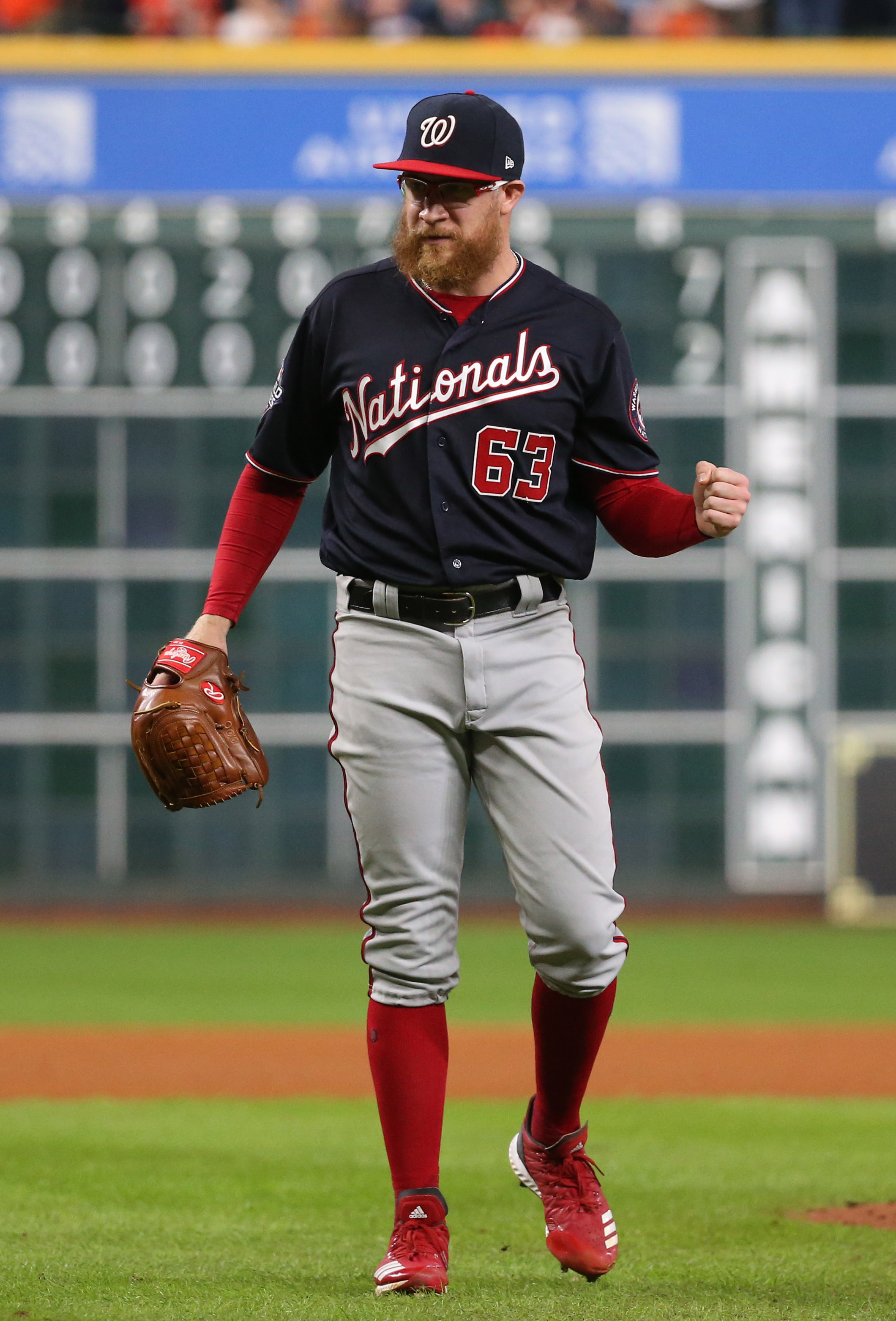
Doolittle, 34, has spent the past three and a half seasons with the Nationals, leading the team with 75 saves over that stretch. Along the way, he’s pitched to a 3.03 ERA and 3.40 SIERA with very strong strikeout and walk rates: 28.2 percent and 5.7 percent, respectively.
The 2020 season didn’t go well for Doolittle, as he was hampered by both a knee injury and an oblique strain. That pair of injuries combined to limit Doolittle to just 7 2/3 innings, during which time he yielded five earned runs on nine hits and four walks (two intentional) with six punchouts. His average fastball velocity dropped from 93.5 mph in 2019 to 90.7 mph in 2020.
While it was an ugly year for the lefty, Doolittle is still a two-time All-Star with a lengthy track record of success. A converted first baseman, Doolittle made debuted on the mound with the A’s in 2012 and went on to log 398 innings with a composite 3.02 ERA and 2.71 SIERA through the end of the 2019 season.
Doolittle played an integral role in the Nationals’ World Series run that year, standing out as one of the few members of the bullpen that manager Dave Martinez trusted in high-leverage spots. Doolittle pitched 10 1/3 innings in the 2019 playoffs, allowing just two runs on six hits and a walk with eight strikeouts. He held the Astros scoreless in three innings of work during the World Series.
If a deal ultimately comes together, Doolittle would provide the Reds with some badly needed left-handed help in the bullpen. It’s possible that he could be in the mix for saves in Cincinnati, given his track record, but he’ll more importantly give manager David Bell a second southpaw alongside Amir Garrett (another closer candidate). Doolittle and Garrett would be the only two left-handed locks for the bullpen, though recently acquired Cionel Perez could be a third option if they opt to use him out of the ‘pen rather than as a starter. The Reds will also have Josh Osich and Jesse Biddle in camp this spring, but they’re on minor league deals and would need to earn a spot on the 40-man roster.
More broadly, a deal with Doolittle would be the first Major League addition to the Reds’ roster all winter. The club technically added right-hander Noe Ramirez as well, but they only did so in the trade that more or less dumped former closer Raisel Iglesias‘ $9.125MM salary on the Angels. The Reds have also non-tendered Archie Bradley and Curt Casali in somewhat surprising fashion.
General manager Nick Krall has spoken of reallocating the savings from that series of subtractions, although the prevailing wisdom until recently had been that the Reds would try to do so at the shortstop position. Top free agents Ha-Seong Kim, Marcus Semien, Andrelton Simmons and Didi Gregorius all signed elsewhere, however, leaving the free-agent market without a clear, starting-caliber option at the position. The Reds could still look to the trade market for an option at short, but it seems that with the top names at that position off the market, they’ll at least spend a bit cash to address other areas of need.
Diamondbacks Sign Joakim Soria
The Diamondbacks have agreed to terms with free-agent reliever Joakim Soria, reports Ken Rosenthal of The Athletic (via Twitter). Soria, a client of agent Oscar Suarez, will receive a one-year deal. He’ll earn a $3.5MM salary and can earn an additional $500K worth of bonuses based on his total number of appearances, Nick Piecoro of the Arizona Republic tweets.

Soria, 36, is a two-time All-Star and 13-year big league veteran who spent the past two seasons with the A’s under a two-year, $15MM contract. He fared well for the most part in Oakland, working to a combined 3.94 ERA, a 3.46 FIP and a 3.69 SIERA. Soria’s strikeout and walk rates went the wrong direction in 2020, but he managed a 2.82 ERA in 22 1/3 innings due largely to the fact that he held opponents to just one home run.
While many pitchers see their velocity erode as the move into their mid-30s, Soria’s 92.4 mph average heater in 2020 was right in line with his career marks. He’s not a flamethrower and never has been — his career-high average fastball in a season is 92.7 mph — but that hasn’t stopped Soria from missing bats at a high level. He’s faced 2987 batters in his Major League career and punched out 26.5 percent of that group despite average or slightly below-average velocity.
Arizona lacks a set closer at the moment, having traded Archie Bradley to the Reds back at the 2020 trade deadline. Soria becomes the most experienced member of manager Torey Lovullo’s bullpen and, at least for now, would appear to be the favorite to close games. He’s handled ninth-inning work for multiple teams in his career — most recently for the 2018 White Sox, where he saved 16 games. Soria has piled up 223 saves over his decade-plus in the big leagues.
Soria is the first player of much note added by a D-backs club that has been in a dormant state throughout the offseason. Questions about how much the team would be willing to spend have dated back to the trade deadline, when Arizona shipped Starling Marte to the Marlins — a trade reportedly fueled by the team’s uncertainty regarding an eminently reasonable $12.5MM club option. D-backs owner Ken Kendrick has been among the most vocal owners in lamenting lost revenue from 2020, however, and the team’s actions (or lack thereof) so far this offseason are reflective of that.
Cubs To Sign Joc Pederson
FEB. 5: The mutual option includes a $10MM salary or a $2.5MM buyout, Jon Heyman of MLB Network tweets. Pederson could also earn an extra $125K for 500, 525, 550 or 575 plate appearances.
JAN. 29, 9:05am: There’s a mutual option for the 2022 season on the contract as well, Sherman tweets. As with many mutual options, it comes with a notable buyout, so Pederson’s actual 2021 salary will come in a ways south of that $7MM sum. (Option buyouts are always included in the “guaranteed” portion of a contract.)
Mutual options are typically used as accounting measures more than anything else. A player who overperforms his contract will generally decline his half of the option in favor of a return to market in search of a more lucrative deal; similarly, a player who underperforms may opt into his side of the deal, but the team will turn down its half in those settings. It’s not unprecedented for both sides to exercise a mutual option, but it is quite rare. In other words, the overwhelming likelihood is that Pederson will again be on the open market next winter.
8:30am: It’s a one-year, $7MM deal for Pederson, tweets ESPN’s Jeff Passan. The contract carries an additional $500K of available incentives, tweets Joel Sherman of the New York Post. Passan suggests that the Cubs will give Pederson an opportunity to play on an everyday basis rather than platooning him — a component of the deal that was particularly appealing for Pederson.
7:24am: The Cubs are in agreement on a deal with free-agent outfielder Joc Pederson, reports Ken Rosenthal of The Athletic (via Twitter). The Excel Sports Management client’s contract is still pending the completion of a physical.
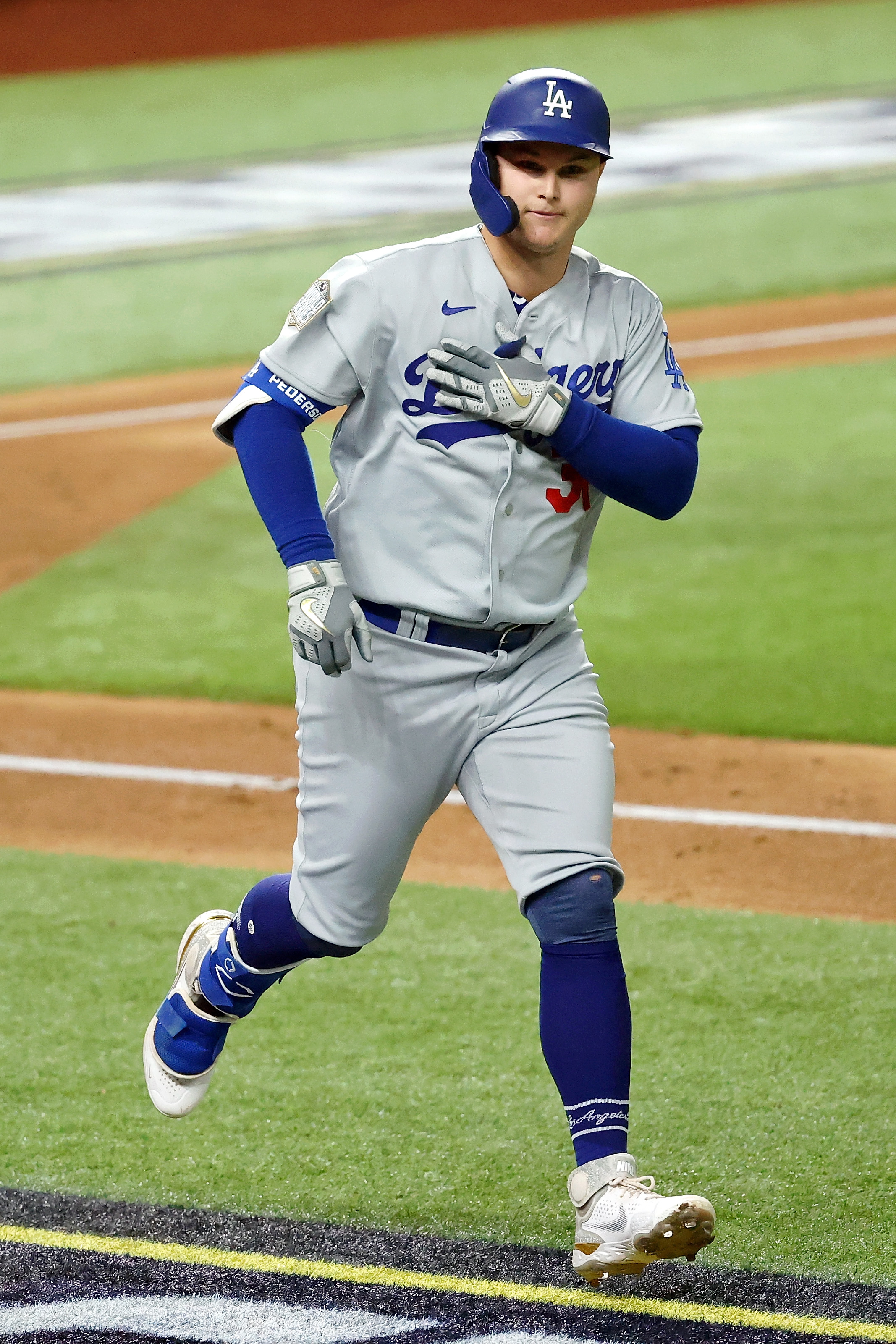
Pederson, 28, represents the first notable addition of the offseason for a Cubs team that has otherwise been quiet on the free-agent front this winter (small deals with Austin Romine and Kohl Stewart notwithstanding). Pederson, in fact, will become the most prominent name to sign a free-agent deal with the Cubs since Craig Kimbrel. The team has generally eschewed the pursuit of notable free agents in each offseason since signing Yu Darvish to a six-year deal, as owner Tom Ricketts has openly lamented a lack of resources and declared 2020’s revenue losses to be “biblical” in proportion.
Chicago, of course, traded Darvish and Victor Caratini to the Padres earlier this season and non-tendered Kyle Schwarber as well. They’ll reinvest some of those savings into this deal with Pederson, though it’s at least something of an odd fit given the vast similarities he has to Schwarber. Pederson is a career .230/.336/.470 hitter to Schwarber’s .230/.336/.480 batting line, though Pederson has put up that nearly identical line in a more pitcher-friendly setting (hence the gap in their respective 118 and 113 wRC+ marks).
Both left-handed hitters are largely considered to be platoon bats, and as is the case with their overall numbers, their splits against righties are nearly identical: .238/.349/.501 for Pederson against .239/.345/.514 for Schwarber. The same five-point gap in wRC+ (128 vs. 123) leans in favor of Pederson because of his home park. The primary difference seemingly comes down to defense, where Pederson has a solid track record in left field and Schwarber has been consistently below average. Still, it’s rather surprising to see the Cubs go out and sign a player whose offense is a near-mirror image of an established clubhouse presence they cast aside not two months ago.
With Pederson on board, the Cubs’ projected payroll jumps to about $152MM for the upcoming season, although future dealings could still impact that number. Both Willson Contreras and Kris Bryant are still candidates to be moved prior to Opening Day, with Bryant in particular standing out as a candidate given his lone remaining year of club control (at a hefty $19.5MM salary). The Cubs also figure to explore extensions with Anthony Rizzo and Javier Baez as the season approaches.
Cubs Claim Sergio Alcantara
The Cubs have claimed infielder Sergio Alcantara off waivers from the Tigers, per announcements from both clubs. Detroit designated him for assignment last week to make roster space for Wilson Ramos. Chicago’s 40-man roster is up to 38 players.
Alcantara, 24, made his big league debut with the Tigers last season and had three hits, including a homer, in 23 trips to the plate. The long ball was a bit surprising, as Alcantara has shown virtually no power in seven minor league seasons (nine home runs in 2611 plate appearances).
Lack of pop notwithstanding, Alcantara is regarded as a slick-fielding option at shortstop and can handle second and third base as well. He’s yet to play in Triple-A, thanks to the lack of a minor league season in 2020, but is a .261/.340/.317 hitter in parts of two Double-A campaigns. Alcantara is out of minor league options, so he’ll need to either break camp on the Cubs’ Opening Day roster as a defensive-minded utility piece, or else again be exposed to waivers (or traded).
Trevor Bauer Announces He Will Sign With Dodgers
The Dodgers have agreed to a deal with top free agent starter Trevor Bauer, reports MLB Network’s Jon Heyman (via Twitter). It’s a three-year deal with opt-outs after year one and year two, per ESPN’s Jeff Passan. MLB.com’s Mark Feinsand adds that Bauer is guaranteed a total of $102MM on the deal, which includes a $40MM salary in 2021 and a $45MM salary in 2022. Both marks establish new records for the highest single-season salary, though the contract’s overall $34MM average annual value is still a bit shy of Gerrit Cole‘s record $36MM. Bauer himself has confirmed the signing on YouTube.
The Mets offered Bauer more than the Dodgers did in the end, Joel Sherman of the New York Post tweets, but the Santa Clarita native and UCLA product was drawn both to Southern California, the opportunity to help defend a World Series championship and to the Dodgers’ “cutting edge,” technologically and data-driven pitching practices, per Sherman.
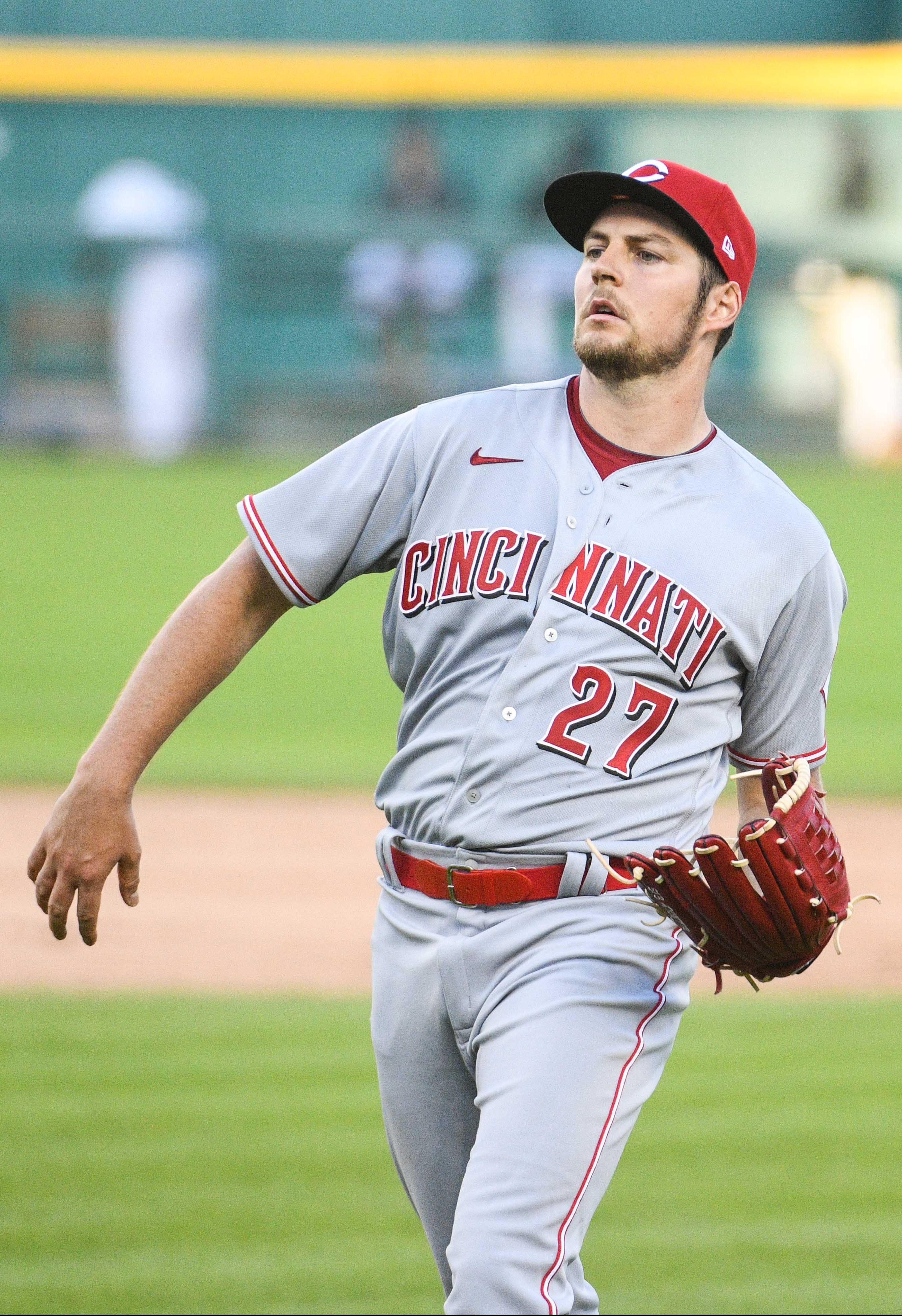
By landing Bauer, the Dodgers will be able to boast one of the more imposing rotations in recent memory. The reigning NL Cy Young winner will join a starting staff that already includes Walker Buehler, Clayton Kershaw, Julio Urias and David Price, with youngsters Dustin May and Tony Gonsolin available to soak up some innings as well as the club tries to manage workloads after a shortened 2020 schedule.
Bauer is a polarizing arm among MLB fans, both for his social media presence and for the volatility of his on-field performance. The right-hander was the No. 3 overall pick out of UCLA back in 2011, and while he was always billed as a potential top-of-the-rotation arm as a prospect, he settled in as more of a mid-rotation starter with tantalizing stuff for much of his early career.
Things changed in 2018 when Bauer broke out with a brilliant, Cy Young-caliber season. He may well have won the AL Cy Young with the Indians that year had a stress fracture in his right tibia not cut his season short by a month. Bauer started 27 games in 2018 and pitched to a pristine 2.21 ERA and 2.94 SIERA while striking out 30.8 percent of his opponents against just a 7.9 percent walk rate. Bauer posted a 13.3 percent swinging-strike rate that year, averaged 95 miles per hour on his four-seamer and, at age 27, looked to be breaking out as the ace he’d long been expected to become.
The pendulum swung back in the opposite direction early in 2019, however. Bauer got out to a fine start, pitching to a 3.49 ERA and racking up 152 1/3 innings through his first 23 starts before he was blown up for eight runs in a now-infamous start that saw him hurl the ball over the center field fence at Kansas City’s Kauffman Stadium upon being removed from the game. Bauer was surprisingly traded to the Reds just days later, and his initial stint in Cincinnati didn’t go well, to say the least. In 10 games with the Reds down the stretch in 2019, Bauer was hammered for a 6.39 ERA.
That bloated mark was due largely to a fluky home run rate, however, and Bauer saw both his strikeout and walk rates remain strong. Fielding-independent pitching metrics were more bullish on his work, and his velocity held up. Entering the 2020 season, he looked like a potential rebound candidate, and he achieved that feat and then some.
Bauer’s 1.73 ERA paced the National League and was second in all of MLB to Shane Bieber, while his 2.94 SIERA ranked fourth behind Bieber, Jacob deGrom and Kenta Maeda. Bieber and deGrom were the only two starters in the game to top Bauer’s 36 percent strikeout rate, and that same pair were the only two starters with a better K-BB% than Bauer’s 29.9.
Obviously, the historic contracts that both the Dodgers and Mets were willing to put forth in order to sign Bauer are bets not necessarily on his career marks but on his ability to continue pitching at his 2018 and 2020 levels. His detractors will regularly point out that Bauer has “only” had 1.5 elite seasons, while supporters can point to the fact that outside his final 11 starts in 2019, Bauer has been pitching at a front-of-the-rotation level since Opening Day 2018. Even with that brutal finish to the 2019 season, he owns a 3.18 ERA and 3.61 SIERA with premium strikeout and walk rates over the past three years combined.
Fans can — and will — debate whether that’s worth a record-setting investment, but it should also be noted that the reason for his sky-high AAV is that both the Dodgers and Mets were willing to pay a premium to limit the length of the contract. Had Bauer sought a contract of five, six or seven years in length, as most pitchers of his age and with his track record would have done, he’d have commanded a strong but decidedly smaller annual salary. The Dodgers have previously pursued this type of arrangement with other premier free agents, most notably including Bryce Harper, whom they reportedly offered roughly $45MM annually over a four-year term during his free agency a few years ago.
The Bauer contract will send the Dodgers skyrocketing past the $210MM luxury-tax barrier, making them the lone club in baseball this winter that has been willing to surpass that mark. While many owners have treated that threshold as a salary cap, the reality is that the Dodgers’ penalty for signing Bauer won’t be particularly heavy. They’d dipped south of the luxury line in 2019 and 2020, so they’ll be considered a first-time offender.
The Dodgers owe a 20 percent tax on the first $20MM by which they exceed the $210MM mark and a 32 percent tax on the next $20MM. Roster Resource’s Jason Martinez projects the team’s luxury obligations at roughly $239.5MM — meaning the Dodgers’ tax penalty, at present, will be a hair north of $7MM. That’s assuming no further additions or subtractions to the payroll, of course, but it’s certainly possible they could look for some creative trades to alter that financial outlook — particularly if they still hope to bring back franchise cornerstone Justin Turner.
We also can’t forget the Reds when talking about Bauer’s signing. While Cincinnati never looked like a realistic option to re-sign the Cy Young winner, the Reds did make him an $18.9MM qualifying offer, meaning they’re entitled to draft compensation. They’ll receive a pick at the end of the first round of next year’s draft, whereas the Dodgers will forfeit their second-highest selection in next year’s draft and also lose $500K of next year’s international bonus pool.
The last-minute Bauer strike by the Dodgers only further boosts what was already one of the game’s deepest and most talented pitching staffs. It also serves as counterpunch of sorts to an uber-aggressive winter from the division-rival Padres, who’ve added the likes of Blake Snell, Yu Darvish and Joe Musgrove to their own staff. With the Rockies dealing away Nolan Arenado, the Giants making rather minimal additions and the D-backs largely sitting out the offseason, the stage is set for a two-team race for NL West supremacy.
While Bauer’s three-month free-agent saga has drawn to a dramatic close, it’s quite possible a similar cycle will play out again next winter. Tempting as the $45MM salary in 2022 would be, he’ll “only” have two years and $62MM remaining on his contract next winter. A $31MM annual value over a two-year term makes for quite the safety net, but if Bauer again pitches at an ace-caliber level, he’d surely be able to command a larger guarantee over a lengthier term — or at least secure a similar three-year deal with ultra-premium annual salaries once again.
Opting out of the $45MM salary in 2022 may seem unthinkable to some, but remember that as recently as 2019, Bauer was planning to only ever sign one-year contracts in his career, believing strongly in furthering the market for future pitchers, maintaining control over his career and maximizing his earnings through a series of year-to-year arrangements wherein he was taking on more risk than teams. Bauer obviously softened his stance and displayed a willingness to consider multi-year pacts this winter, but the opt-out provisions in this contract give him all the flexibility of a one-year pact, and he could look for a similar opportunity next winter if he has earning power beyond that $62MM guarantee.