
Rockies Claim Troy Johnston
The Rockies announced Wednesday that they’ve claimed infielder/outfielder Troy Johnston off waivers from the Marlins. Colorado also reinstated Kris Bryant and righty Jeff Criswell from the 60-day injured list, adding both back to the 40-man roster.
Johnston, 28, was a 17th-round pick by Miami back in 2019 and has been a career-long Marlin to this point. He made his big league debut this season after a lengthy run of productive campaigns n the upper minors. The Gonzaga product hit .277/.331/.420 with four home runs in 121 plate appearances during his first run at the MLB level.
In Johnston, the Rockies are adding an older but controllable player with a strong minor league track record. Johnston is a career .281/.367/.458 hitter in seven minor league seasons. His .267/.345/.438 slash in parts of four Triple-A campaigns is weighed down a bit by an awful debut there back in 2022 (116 plate appearances), but he’s been an above-average hitter with the Marlins’ top affiliate in Jacksonville each season since.
Though Johnston has primarily been a first baseman in the minors, with more than 4300 innings logged at the position, he’s also suited up for 826 innings in left field and 492 innings in right field. Since his contract was selected to the 40-man roster for the first time this season and he wasn’t optioned back down thereafter, he’ll join the Rox with a full slate of three minor league option years remaining.
It’s not entirely clear who’s making roster calls in the Colorado front office at the moment. The Rockies fired GM Bill Schmidt shortly after the season, and longtime assistant GM Zack Rosenthal left the club shortly thereafter. Owner Dick Monfort and his son, executive vice president Walker Monfort, have been conducting a search for a new baseball operations leader over the past month but have yet to announce a hire. It’s possible they’re making calls with input from some of the still-remaining midlevel baseball operations executives while continuing through a hiring process that as of last week was down to two finalists but once again appears more wide open.
Pirates Place Ji Hwan Bae, Liover Peguero, Jack Little On Waivers
The Pirates have placed three players on waivers. One of them is outfielder Ji Hwan Bae, per Danny Demilio of Pittsburgh Baseball Now. The other two are infielder Liover Peguero and right-hander Jack Little, per Colin Beazley of the Pittsburgh Post-Gazette.
At one point, the now-26-year-old Bae was a high-profile international signing who ranked among the organization’s better farmhands. He’s appeared in parts of four big league seasons but has never found his stride. The South Korea native carries a meek .223/.294/.293 line in 514 trips to the plate at the MLB level. He’s a good runner, swiping 37 bags in 49 tries (75.6%) and sitting in the 82nd percentile of MLB players in terms of average sprint speed, but Bae has fanned in more than one-quarter of his plate appearances and sits well below average in terms of exit velocity, hard-hit rate and other batted-ball metrics.
Originally a middle infielder, Bae never developed into a passable option at shortstop due in large part to subpar arm strength. The Bucs have given him plenty of run at second base and in center field — more the latter in recent seasons — but he hasn’t drawn quality grades at either position. He’s continually posted strong numbers in Triple-A (.305/.389/.451 in 1109 plate appearances) and has a minor league option remaining.
Peguero was an even more highly touted prospect than Bae. Originally acquired from the D-backs in exchange for Starling Marte, he’s a former top-100 prospect whom the organization at one point viewed as a possible shortstop of the future. In an all-too-common refrain for Pirates position prospects, however, his bat never came around. Peguero has seen action in four big league seasons but has mustered only a .227/.278/.368 slash line in 315 turns at the plate.
Unlike Bae, Peguero has also looked overmatched at the top minor league level. Outside of a late-2023 cameo in Triple-A where he smacked a pair of homers in 30 promising plate appearances, Peguero has produced well below-average numbers with the Pirates’ top affiliate in Indianapolis. He’s a .253/.317/.403 hitter in 888 plate appearances there, including a career-worst .247/.313/.375 showing in 75 games with Indy this season. Baseball America and other outlets have lauded his quality defensive tools but also noted a penchant for slipping into poor mechanical stretches that lead to far too many throwing errors. Peguero is out of minor league options.
The 27-year-old Little came to the Pirates via waivers in August. He made his MLB debut with the Dodgers in 2025. Los Angeles selected Little out of Stanford with its fifth-round pick back in 2019. He’s pitched only three MLB innings and posted a 4.06 ERA with a 20.2% strikeout rate and 8.4% walk rate in 62 relief innings between the two organizations’ Triple-A affiliates in 2025.
Little sits 94 mph with his four-seamer and complements the pitch with a slider and splitter — both in the mid-80s. He’s never been a top-ranked prospect in L.A.’s system but does have a pair of minor league options remaining and decent track record in the minors.
Krall: Reds’ 2026 Payroll Will Be “Around The Same” As 2025 Levels
The Reds enter the offseason likely to seek bullpen help and multiple upgrades within the lineup, but they won’t have an especially lofty budget for achieving those goals. President of baseball operations Nick Krall said Tuesday that 2026’s budget “will be around the same as our payroll from 2025” (link via C. Trent Rosecrans of The Athletic).
Cincinnati opened the 2025 season with a roughly $112MM payroll and finished around $116MM, per Cot’s Contracts. RosterResource pegs their end-of-season number a bit higher, at about $119MM.
Regardless, running back the same payroll gives the Reds a bit of spending power but not all that much. They’re currently projected for a payroll around $91MM, per RosterResource. That’s before option decisions on relievers Scott Barlow and Brent Suter. Barlow’s $6.5MM option seems likely to be bought out. Suter is a bit more of a borderline call at $3MM but could still be cut loose (or re-signed to a restructured deal with lighter immediate payroll implications, as was the case for the Cincinnati native this time last year).
The 2025 Reds nabbed the final NL Wild Card spot and saw an attendance increase of about 147,000 over their 2024 levels. However, the 2025 payroll was up about $20MM over the prior season, so much of the increased attendance revenue was offset by a more expensive on-field product. Reds ownership has never trotted out an Opening Day payroll north of roughly $127MM — though their prorated $55.5MM Opening Day payroll in 2020 indicates they’d have set a new franchise-high were it not for that year’s shortened schedule.
Cincinnati currently has just three players signed to guaranteed contracts for the 2026 season. Ace Hunter Greene will earn $8MM, while third baseman Ke’Bryan Hayes is owed $7MM and catcher Jose Trevino is owed $5.25MM. Assuming the options on Barlow, Suter and outfielder Austin Hays (a $12MM mutual option) are bought out, their only other financial commitments will be in arbitration. The Reds already outrighted infielder Santiago Espinal and reliever Ian Gibaut, sparing themselves a projected $4.6MM in salary between the two of them.
The Reds still have 12 arbitration-eligible players even after that pair of outrights (effectively non-tenders), but the only players projected to earn more than $5MM are right-hander Brady Singer ($11.9MM) and catcher Tyler Stephenson ($6.4MM). Any of Gavin Lux ($5MM), Sam Moll ($1.2MM) or Will Benson ($1.7MM) could be non-tendered or traded to buy a little extra breathing room. Speculatively, the pitching-rich Reds could swap out Singer for a comparably priced veteran bat to plug into their outfield (e.g. Taylor Ward).
Krall has downplayed the possibility of trading a starter, but the quintet of Greene, Singer, Andrew Abbott, Nick Lodolo and top prospect Chase Burns is strong as it is, and well-regarded young arms like Chase Petty and Rhett Lowder loom as rotation possibilities as well.
Adding to the bullpen also figures to be on Krall’s to-do list. Closer Emilio Pagan is a free agent. Holdovers Tony Santillan, Graham Ashcraft and Connor Phillips all showed well in 2025 (Phillips in a fairly small 25-inning sample), while young flamethrowers Luis Mey and Zach Maxwell provide some upside. Still, there’s not much end-of-the-game certainty among the group, making a few reasonably priced bullpen pickups seem likely.
Depending on further non-tenders and some potential trades, it seems the Reds probably have room for one big-ticket item. A major bat like Pete Alonso or Cincinnati native Kyle Schwarber would be highly out of character, but there’s probably enough payroll flexibility to make that type of splash if the other moves are minimally priced. The likelier outcome would be a handful of more measured, mid-range additions to the roster, likely with a bit of wiggle room left for in-season maneuverings like we saw with this summer’s acquisitions of Zack Littell and Miguel Andujar.
Braves To Exercise Club Option On Ozzie Albies
The Braves are going to pick up their club option on infielder Ozzie Albies. The club hasn’t announced the decision yet but president of baseball operations Alex Anthopoulos confirmed the move in a radio appearance, per Mark Zinno of 92.9 The Game. Atlanta will pay him a $7MM salary instead of the $4MM buyout. There’s also a $7MM club option for 2027 but with no buyout.
Even coming off a down season, there was never any scenario where Atlanta would turn down what’s a net $3MM option to keep Albies in the fold. The 28-year-old switch-hitter (29 in January) posted a career-worst .240/.306/.365 batting line (87 wRC+) in 157 games/667 plate appearances this past season, but he’s also not far removed from a 33-homer campaign and .280/.336/.513 output back in 2023. Plus, Albies finished the season looking far more like his typical self; over his final 264 turns at the plate, he produced a .272/.330/.439 line that sat about 11% better than league average.
Albies is now entering year six of what can max out as a seven-year contract. He inked a five-year, $35MM extension that has long stood as one of baseball’s great bargains. That deal contained a pair of $7MM club options, the first of which is now guaranteed bringing the total to six years and $38MM. (The $4MM buyout was included in the original $35MM guarantee.)
Even if Atlanta brass had soured on Albies’ long-term outlook — and, to be clear, there’s no indication that’s the case — picking up the option was a no-brainer. Albies’ bargain-rate salary and matching club option (with no buyout) would still hold appeal to teams seeking second base upgrades on the trade market.
As things stand, Albies can be reasonably expected to serve as the Braves’ everyday second baseman again in 2026. He’ll return to a lineup that’s set at most positions. Drake Baldwin and Sean Murphy will split catching duties. Matt Olson is locked in at first base. Third baseman Austin Riley is signed through 2032. Ronald Acuña Jr. is heading into the final guaranteed season on his contract but, like Albies, has a pair of no-brainer club options (his covering 2027-28). Jurickson Profar is signed through 2027. Michael Harris II, who like Albies had a terrible three months followed by a strong second half, is signed through at least 2030.
Shortstop is the lone position where the Braves aren’t set at the moment. They’ll need to upgrade their bench and have plenty of work to do on the pitching staff — both in the rotation and the bullpen — but that only makes the affordable nature of Albies’ contract all the more appealing. Atlanta’s projected payroll checks in at a hefty $214MM, assuming the club options for Chris Sale, Tyler Kinley and Pierce Johnson are exercised.
The Braves have several non-tender candidates, and cutting anyone from that group will trim next year’s total outlay and their luxury-tax ledger by a few million dollars. But the Braves have only crossed the tax threshold once during the current core group’s time together (2023), so if the aim it to again stay under that line ($244MM in 2026), they’ll need to be judicious in how they address the remaining holes on the roster.
Jack Flaherty Exercises Player Option
Tigers right-hander Jack Flaherty will not opt out of his contract, reports ESPN’s Jeff Passan. He’ll exercise a $20MM player option and head back to Detroit for a third season. The Tigers formally announced the move just a minute or two after Passan’s initial report.
Flaherty, who turned 30 in October, had an uneven season, but it’s still a mildly surprising decision to pick up the player option. It’s unlikely he’d have commanded a $20MM annual value on the open market, but a multi-year deal at a slightly lesser rate doesn’t seem far-fetched. Middle-of-the-road starters like Luis Severino ($67MM), Taijuan Walker ($72MM), Jameson Taillon ($68MM) and Eduardo Rodriguez ($80MM) have all garnered notable three- or four-year contracts at this age or older.
That said, had Flaherty turned the option down, this would’ve been the third straight season in which he was a free agent. Perhaps there’s an element of fatigue there, particularly given that he lingered in free agency until early February last time around. Turning down the player option would probably also have emboldened the Tigers to make a qualifying offer (only $2.025MM more than Flaherty’s $20MM option). The prospect of another trip to the open market, this time with a QO hanging over him, may not have been especially appealing.
Flaherty started 31 games and pitched 161 innings for manager A.J. Hinch in 2025. He was tagged for a pedestrian 4.64 ERA, though there are plenty of encouraging rate stats that suggest he’s in line for better results moving forward. The right-hander struck out a well above-average 27.6% of his opponents, was slightly better than league-average in terms of swinging-strike rate (11.3%), and sat barely north of average in walk rate (8.7%).
Flaherty’s 92.9 mph average fastball was roughly in line with the prior season’s 93.2 mph mark. He was plagued by a slightly elevated average on balls in play and a lower-than-usual strand rate; metrics like FIP (3.85) and SIERA (3.67) felt that Flaherty was far better than his more rudimentary earned run average would suggest. The 18.9-point differential between his strikeout and walk percentages ranked 16th among the 53 MLB pitchers who tossed at least 160 innings, sandwiching him right between Freddy Peralta and Kevin Gausman.
The return of Flaherty provides some additional stability in Detroit’s rotation. Tarik Skubal will of course lead the staff again, taking aim at what would be a third consecutive Cy Young win (as he’s all but certain to win his second straight award in a couple weeks). He and Flaherty will be joined by Casey Mize and Reese Olson, health permitting, but the final spot is more up in the air. Rookie Troy Melton looked sharp down the stretch but hasn’t pitched a full season in the majors yet. Top prospect Jackson Jobe will miss most of next year after undergoing Tommy John surgery in mid-June. Keider Montero, Sawyer Gipson-Long and Ty Madden join Melton as an option for that last spot, but no one in that group brings much certainty to the table.
If the Tigers were hoping to see Flaherty decline and sign elsewhere, thus sparing $20MM from the books and allowing them to pursue a bigger fish in free agency, they still ought to be able to line up on a trade. Flaherty’s $20MM might feel a bit steep, but the going rate for innings continues to escalate. The Tigers themselves gave Alex Cobb $15MM last winter after a season in which he made just three starts with Cleveland. Aging veterans Charlie Morton ($15MM), Justin Verlander ($15MM) and Max Scherzer ($15.5MM) were all paid similarly — Verlander coming off a 5.48 ERA in 90 1/3 innings as he headed into his age-42 season.
Flaherty’s $20MM salary isn’t a raucous bargain but also isn’t out of line with modern-day contractual norms — particularly if one believes his true talent level lay closer to his fielding-independent metrics than his earned run average. Even with Flaherty now under contract, the Tigers’ projected payroll, per RosterResource, sits around $121.5MM. That doesn’t account for potential non-tenders or trades from a huge class of 14 arbitration-eligible players. Detroit has previously pushed payroll up to the $200MM range, albeit under the watch of now-late owner Mike Ilitch. The Tigers’ top Opening Day mark under his son, Chris Ilitch, has been last year’s $145MM number, though deadline acquisitions pushed the end-of-year figure up into the $155-160MM range.
Royals Place Kyle Wright On Outright Waivers
The Royals have placed right-hander Kyle Wright on outright waivers, reports Jon Heyman of the New York Post. He’s missed each of the past two seasons following shoulder surgery performed in October 2023. Assuming he clears, he’ll have the right to reject an outright assignment and become a free agent based on his service time (4.151 years).
Wright, 30, came over from the Braves two years ago in exchange for a fellow change-of-scenery first-rounder, Jackson Kowar. He was just a month removed from surgery to repair the anterior capsule in his right shoulder at the time. Kansas City knew he wouldn’t pitch in 2024 but hoped that he could bounce back for the 2025 season. That didn’t happen. Wright’s recovery lingered into 2025, and he was pulled off a minor league rehab stint in May due to fatigue in his surgically repaired shoulder. He also eventually sustained an oblique injury, which further set him back.
Though he spent two years as a member of the Royals organization, Wright never pitched in the majors with Kansas City. He was projected for the same $1.8MM salary he earned in 2025, but the Royals weren’t comfortable making any form of commitment after two lost seasons. Perhaps another club will roll the dice — Atlanta has brought back several old friends as depth options over the past year — but if not he’ll become a free agent and sign a minor league deal somewhere.
Prior to his injury, Wright looked to have broken out. The former No. 5 overall draft pick took a good while to do so, but in 2022 he tossed 180 1/3 innings with a 3.19 ERA, a 23.6% strikeout rate and a 7.2% walk rate for Atlanta. Whether he can ever get back to that form is an open question. Wright hasn’t pitched in the majors in more than two years, and his once-95.1 mph average fastball was sitting at a flat 92.0 mph during his limited Triple-A work in 2025. There’s little harm in a team taking a flier on a minor league deal if and when he clears waivers, but he’s a pure depth option right now.
Tigers Decline Club Option On Randy Dobnak
The Tigers declined their $6MM club option on right-hander Randy Dobnak, reports Evan Petzold of the Detroit Free Press. He’ll receive a $1MM buyout and become a free agent.
It was the expected outcome for Dobnak, who came to the Tigers alongside fellow righty Chris Paddack in the trade sending catching prospect Enrique Jimenez to the Twins this past July. Dobnak, who was earning $3MM this year and had a $1MM buyout on that option (plus now-moot club options for 2027 and 2028), was included in the trade simply as a means of clearing salary for Minnesota. He wasn’t on the 40-man roster, having already been outrighted multiple times in the past, and never pitched in the majors with the Tigers.
The now-30-year-old Dobnak was a remarkable story back in 2017-19, going from an undrafted free agent playing in a tiny independent league (and driving Uber on the side to make ends meet) to pitching for the Twins in the postseason in less than two years’ time. After pitching for Division-II Alderson Broaddus University in his college days, Dobnak signed with the Utica Unicorns of the United Shore League. He started only six games before the Twins caught a look at him and signed him.
Dobnak was the Twins’ minor league pitcher of the year in 2019 after working to a combined 2.07 ERA across 135 innings. He logged a 1.59 ERA in his first nine MLB appearances that season, made the playoff roster, and gave the Twins 10 serviceable starts during the shortened 2020 season. Minnesota signed Dobnak to a five-year, $9.25MM contract in spring 2021. It hasn’t panned out, though obviously the financial risk was minimal, particularly given that the contract’s three option years bought out three free-agent seasons.
Unfortunately for both Dobnak and the Twins, his results tanked shortly after signing the extension. He was shelled for a 7.64 ERA in 50 2/3 innings in 2021 and has pitched only 15 big league innings since. Dobnak has now posted ERA marks north of 5.00 in three of the past four Triple-A seasons. He’s never missed many bats or thrown particularly hard, but his once-sterling walk rate has ballooned to around 12% over the past four seasons.
The Tigers were never going to pick up Dobnak’s option. They’ll pay him a $1MM buyout, and he’ll become a free agent who’ll look to latch on as a depth piece on a minor league deal — or perhaps garner some interest from a team overseas.
White Sox Exercise Club Option On Luis Robert Jr.
The White Sox are bringing Luis Robert Jr. back into the fold for 2026. Jesse Rogers of ESPN reports that the team is exercising its club option over the center fielder. Robert will make $20MM in 2026, rather being paid a $2MM buyout and heading into free agency. The White Sox hold an additional $20MM club option over him for the 2027 season.
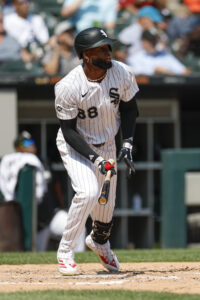
This was always the expected course of action once the White Sox opted not to trade Robert at the trade deadline. General manager Chris Getz has only reinforced that thinking in the months since, stating on multiple occasions that he expects the oft-injured center fielder to be a part of his club moving forward.
Two years ago, when the South Siders were in the earlier stages of their rebuild, Robert seemed like a potential big-ticket trade chip. His 2023 campaign was excellent. Robert made the All-Star team, garnered down-the-ballot MVP votes and won a Silver Slugger after raking at a .264/.315/.542 clip with 38 home runs. He also swiped 20 bags in 24 tries and played plus defense in center field.
At that point, the Sox had two guaranteed years remaining on Robert’s $50MM extension, plus a pair of club options. They didn’t deem any offers that offseason sufficient, and Robert was retained heading into the 2024 campaign. The next two years proved to be something of a worst-case scenario. Robert slashed a combined .223/.288/.372 in 856 plate appearances over the past two seasons and endured multiple trips to the injured list, missing time with a hip flexor strain and a pair of hamstring strains.
The hope heading into 2025 was that a healthier season would build trade value for Robert ahead of the deadline. He had perhaps the worst stretch of his career for the season’s first two-plus months but caught fire in early June. That sparked some trade interest, but not to the point that interested teams were willing to part with top-tier prospect talent. The Sox, not wanting to sell low on a player with All-Star, borderline MVP upside, held onto Robert. He posted middling offensive numbers in August before a hamstring strain late in the month ended his season.
Bleak as Robert’s overall season numbers were, he did post a solid .274/.335/.458 batting line (118 wRC+) with nine home runs, a 19.7% strikeout rate and a 7.6% walk rate in his final 198 trips to the plate. That’s a ways off his 2023 peak, but if Robert could manage that level of performance moving forward, he’d be a fine value at his $20MM price tag. Of course, that’s a colossal “if,” given both his frequent trips to the injured list and the awful 658 plate appearances he logged from Opening Day 2024 through early June 2025.
Robert’s name could well come back up in offseason trade chatter, but it’s hard to imagine the Sox moving him after hanging onto him at the deadline. Offers in July apparently weren’t appealing enough to make a move, and Robert’s .256/.287/.409 post-deadline production and subsequent season-ending hamstring strain didn’t do anything to boost his value.
Assuming Robert indeed heads to spring training as the center fielder for the ChiSox, he currently projects to be flanked by veterans Andrew Benintendi and Mike Tauchman. The Sox would love to find a way to move on from the final two years of Benintendi’s ill-fated five-year, $75MM contract, but that’s not likely unless they simply release him. Tauchman, like Robert, wasn’t moved at the deadline — but he’s a 34-year-old veteran coming off a solid enough season that an offseason trade is possible.
If Robert can turn in a big first half next year, it’s feasible that he could still command a notable trade return. There will always be injury concerns, but few center fielders possess such a dynamic set of raw tools. Center field upgrades are in short supply at any point of the calendar, and a $20MM price tag on both his 2026 season and 2027 option will look plenty reasonable if he’s healthy and productive next summer. There are a lot of ifs, and it’s certainly a risk to pick up his option, but the White Sox have virtually no money on the books and can afford to once again roll the dice on him bouncing back, even if it’s arguable that they should’ve taken the best return available in July and moved on entirely.
Orioles, Dietrich Enns Agree To New Deal
7:15pm: Per Kostka, this deal is worth a guaranteed $2.625MM. That breaks down as a $2.5MM salary in 2025 with a $125K buyout on a 2027 club option worth $3.5MM.
3:58pm: The Orioles announced Monday that they’ve agreed to a one-year contract with left-hander Dietrich Enns for the 2026 season. It contains a club option for the 2027 campaign as well. Baltimore previously held a $3MM club option over Enns, a client of the Beverly Hills Sports Council. This new contract overrides that deal, per Andy Kostka of the Baltimore Banner.
Enns, 34, signed a minor league deal with the Tigers after a three-year run pitching in Asia (two years in NPB, one in the KBO). Enns pitched well enough in the Tigers’ Triple-A rotation to get a call to the big leagues in Detroit — his first MLB work since 2021 and just the third season in which he’s logged at least some MLB time. He struggled in 17 2/3 innings for manager A.J. Hinch’s club and was flipped to the Orioles for cash just prior to the July 31 trade deadline.
The change of scenery paid dividends. Enns thrived with the O’s, turning in 28 2/3 innings of 3.14 ERA ball (17 relief appearances, one start). He fanned 27.6% of his opponents in Baltimore and only issued walks at an 8.9% clip. Enns showed plenty of bat-missing ability with both teams, logging matching 13.5% swinging-strike rates in his two stops and topping a 34% opponents’ chase rate with each club.
Enns is out of minor league options, making him likely to break camp with the club next year. It’s at least possible that the O’s could try to pass him through waivers and stash him in Triple-A as a depth option, knowing he wouldn’t elect free agency and forfeit the guaranteed money on his contract. They’ve made similar depth-driven signings in the past under the current front office regime. Given how well Enns pitched for them down the stretch, however, there’s a good chance he’d be claimed, so today’s deal simply seems like a means of locking in some cost certainty and establishing another year of club control at a fixed rate.
Lucas Giolito Declines Mutual Option
Red Sox right-hander Lucas Giolito has declined his end of a $19MM mutual option, reports Alex Speier of the Boston Globe. He’ll be paid a $1.5MM buyout and return to the open market in search of a new opportunity. The Red Sox will have the right to make him a $22.025MM qualifying offer, as Giolito has not previously received a QO in his career.
Giolito signed a two-year, $38.5MM deal with the Red Sox on the heels of a disappointing platform with the White Sox. He’d posted excellent results from 2019-21 and cemented himself as one of the sport’s most durable starters before logging back-to-back ERAs near 5.00 in 2022-23. Giolito, 32 next July, had hoped to bounce back in Boston and take an opt-out in his contract last offseason.
Instead, the clock struck midnight on the durable right-hander’s arm. He tore the UCL in his pitching elbow during spring training 2024 and didn’t pitch a single inning inning that year. Giolito naturally forwent the opt-out in his contract and returned to Boston for the 2025 season. He stumbled out of the gate, struggling so badly that for a few starts it looked like his entire two-year contract would go down as a bust. By early June, he had an ERA north of 6.00 through seven starts.
Giolito rebounded in terrific fashion, however. Beginning with six shutout innings against the Rays on June 10, he took off on an extended hot streak. From June 10 through season’s end, Giolito posted a 2.51 ERA in 111 1/3 innings. His 20.3% strikeout rate and 9.7% walk rate in that stretch were both worse than average, and his .244 average on balls in play showed plenty of good fortune. Even with some expected regression in his ERA, Giolito looked like a solid mid-rotation starter who’d take a place in Boston’s postseason rotation — at least until the next roadblock arose.
On Sept. 29, manager Alex Cora announced that Giolito was dealing with an elbow issue and would not be on the team’s roster in the Wild Card round of postseason play. The next day, the team indicated that Giolito was unlikely to return at all in 2025, regardless of how deep the Sox advanced in the postseason field. While his surgically repaired UCL was intact, the veteran righty was hobbled by flexor irritation and a bone issue in his elbow.
The Sox had a $14MM club option on Giolito for the 2026 season that they might still have exercised even after the elbow troubles, but when he completed his 140th frame of the season — Giolito totaled 145 innings overall — that option vested instead as a $19MM mutual option. Players tend to make the first call with regard to mutual options, and Giolito is seemingly confident enough in his health that he’ll turn down a net $17.5MM to once again test free agency.
His decision to decline the mutual option also forces the Red Sox into a decision on whether to issue a qualifying offer. They exceeded the luxury tax line in 2025, so they’d only net a compensatory pick after the fourth round of the 2026 draft if Giolito declined and signed elsewhere. That minimal compensation, coupled with more elbow troubles for Giolito, might be enough for the Sox to forgo extending a QO in the first place. If they do, however, Giolito will again have a decision to make — this time on a sum that clocks in a bit over $3MM north of his prior option price. Add in the buyout he’s owed for declining, and a QO could at least net him $4.525MM over the value of the option he declined today.
With Giolito headed toward the market — or at least somewhat up in the air — the Sox project for a rotation including Garrett Crochet, Brayan Bello and a handful of question marks. Top prospects Payton Tolle and Connelly Early impressed late in the season but only have a handful of MLB starts between them. Kutter Crawford missed the entire season due to knee and wrist injuries (the latter of which required surgery). Patrick Sandoval didn’t pitch in 2025 after signing a two-year deal on the heels of his 2024 UCL procedure, but he’ll be in the mix next year. Tanner Houck had Tommy John surgery in August and is likely a nonfactor in 2026.
Given all the uncertainty in the ‘pen, the Sox are expected to pursue rotation help this winter. That could include a reunion with Giolito, but there are plenty of options for them to peruse on both the free agent and trade markets.