
KBO Issues One-Year Suspension To Jung Ho Kang For Prior DUI Arrests
May 26: Kang has pledged to donate his salary to charity should he sign with a KBO club, Yoo reports today.
May 25: The Korea Baseball Organization has reached a ruling regarding infielder Jung Ho Kang, who starred for the KBO’s Nexen (now Kiwoom) Heroes and spent parts of four years with the Pittsburgh Pirates. Kang, who seeks reinstatement following a trio of DUI arrests, will be suspended for one year and will also be required to perform 300 hours of community service, Jee-ho Yoo of South Korea’s Yonhap News Agency reports.
Kang, 33, faced a ban of up to three years under the KBO’s stringent policies surrounding DUIs. However, his lawyers argued that because the latest policy was implemented in 2018 and Kang’s most recent arrest came in 2016 (when he was playing with the Pirates and thus not even in the KBO), he should not face a maximum penalty. Yoo noted last week that something along the lines of 90 games could be considered were Kang only punished for two of his DUI arrests, and the actual ban lies somewhere in between those two potential outcomes.
The suspension for Kang won’t come into effect until he signs with a club. When or if that takes place is a bit complicated given that his former team still holds his rights. Kang would either need the Heroes’ permission to sign with another team or would need the organization to reinstate him from the “voluntarily retired” list, where he was placed when he was first posted for MLB clubs back in 2014.
Kang’s most recent DUI scandal brought about a swift downfall for a player who looked every bit the part of a productive Major Leaguer. After spending seven seasons with the Heroes and peaking with an outrageous .356/.459/.739 batting line as a 27-year-old back in 2014, Kang was posted for MLB teams and landed with the Pirates on a four-year, $11MM contract. He finished third in NL Rookie of the Year voting in 2015 and was well on his way solidifying himself as a quality regular from 2015-16, batting a combined .273/.355/.483 (126 OPS+, 129 wRC+) with 36 home runs, 43 doubles, two triples, eight steals and respectable defensive marks at both third base and shortstop.
That third DUI arrest, though, prevented Kang from securing his work visa and eventually caused him to miss the entire 2017 season as well as much of the 2018 campaign. He returned to the Pirates on a one-year pact last season but turned in a ghastly .169/.222/.395. His strikeout rate exploded from 21 percent in 2015-16 to more than 32 percent last season as his defensive grades plummeted.
Kang was worth about six wins above replacement in his first two big league seasons despite only appearing in 229 games and taking 837 plate appearances. It’s easy to imagine another world where he would’ve settled in as the Pirates’ regular third baseman. Given what was an affordable contract and a seemingly productive trajectory on a losing club, he might well have even emerged as a viable trade chip for the former front office regime.
Instead, while Kang may yet be granted one more chapter in his baseball career (depending on the Heroes’ action and interest from others in the KBO), he’ll go down as a “what might’ve been” case.
Daniel Mengden “About 95 Percent” After February Elbow Surgery
Athletics righty Daniel Mengden underwent an arthroscopic procedure on his elbow back in February, but the right-hander told Brodie Brazil of NBC Sports Bay Area over the weekend that he’s now at “about 95 percent” in his recovery process.
Notably, Mengden also revealed to Brazil that he had two other procedures over the offseason — both to address an undiagnosed intestinal issue that had plagued him late in the 2019 season. He’d dropped 25 pounds at one point and reported to camp a bit below his typical weight, not having quite built back up. It seems now that despite the trio of surgeries, he should be ready to go. The 27-year-old has been throwing all of his pitches in bullpen sessions.
With a shortened ramp-up to the season and expanded rosters, a stockpile of quality pitching depth will be paramount for any contending club. A healthy Mengden should prove important for the A’s in that regard. While he wasn’t expected to crack the rotation barring injuries elsewhere — Sean Manaea, Mike Fiers, Frankie Montas, Jesus Luzardo, A.J. Puk and Chris Bassitt are all ahead on the depth chart — Mengden has functioned primarily as a starter in the big leagues. He’ll make a nice multi-inning piece for the A’s and could potentially make some spot starts, depending on what scheduling tactics the league utilizes to shoehorn as many games as possible into a narrowed schedule.
Mengden certainly isn’t a household name, but he’s quietly been a solid member of the Oakland staff in recent years. Dating back to 2017, the mustachioed right-hander has racked up 218 1/3 innings of 4.08 ERA ball with 5.9 K/9, 2.6 BB/9, 1.28 HR/9 and a 38.8 percent ground-ball rate. In a way, he’s the type of player who can find a silver lining amid the prolonged stoppage of play. In addition to the added recovery time, Mengden likely now has roster certainty that wasn’t present when players reported to camp. He’s out of minor league options, so under normal circumstances, he’d have had to win a spot in an already-deep Athletics bullpen or else be exposed to waivers.
Denard Span On His Future
It’s been nearly 20 months since Denard Span suited up in a big league game, and the former Twins, Nationals, Giants, Rays and Mariners outfielder suggests in an interview with Patrick Reusse of the Minneapolis Star-Tribune that he may not do so again. Span reveals that he received offers in the 2018-19 offseason, although they clearly weren’t compelling enough to leave his young family. Span adds that he worked out this winter with an eye toward a 2020 return and received “two or three” minor league offers — but they came from clubs without much of a path to the Majors even in the event that he played well in Triple-A.
“I haven’t announced it, officially, but maybe this is it,” Span said when asked about retirement. “…I still would have the ability to help a team. But 36-year-old outfielders who haven’t played in two years … not happening. I’m very satisfied pouring my life into our family, to Anne, a wonderful person, and our two boys.”
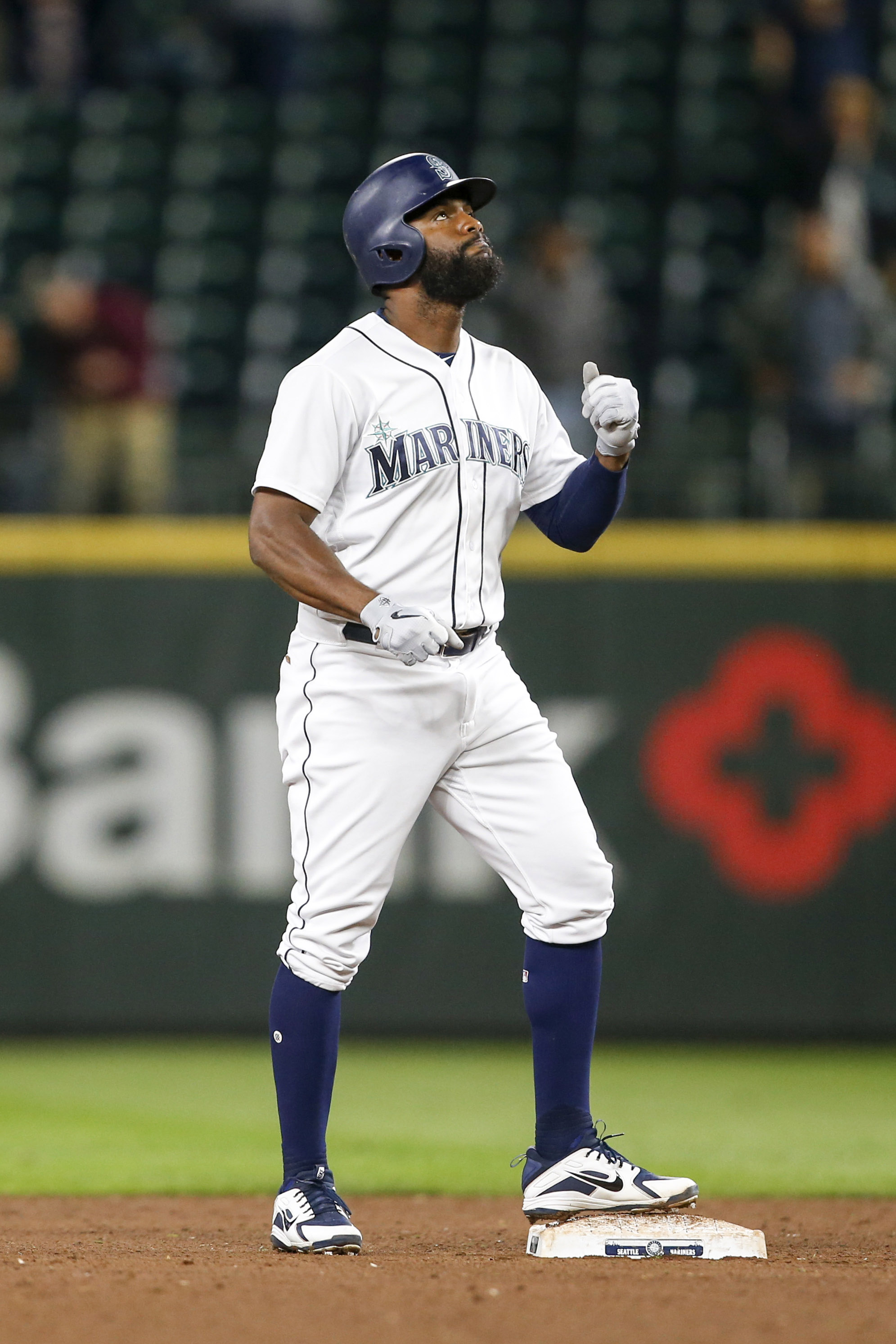
If this is indeed it for the amiable Span, it’s been quite a strong career. A first-round pick out of high school by the Twins back in 2002, Span took nearly six years to ascend to the big leagues, but he made an immediate impact upon arrival. Twenty-four years old at the time, Span finished sixth in AL Rookie of the Year voting in 2008 and hit .294/.387/.432 (122 OPS+ and wRC+ alike) through 487 plate appearances, helping push the Twins to a dramatic Game 163 showdown with the White Sox. Minnesota fell in a crushing 1-0 loss to the South Siders, but Span had announced his presence in the big leagues and would never look back.
Over the next four seasons, Span was the consummate leadoff man in Minnesota, hitting a combined .283/.351/.381 with a nine percent walk rate and just an 11.5 percent strikeout rate. In addition to a knack for working counts and putting the ball in play, Span showed off well above-average baserunning skills and the ability to play plus defense wherever he was slotted into the outfield (center field, more often than not). Heading into the 2010 campaign, Span signed a five-year, $16.5MM contract extension that contained an option for an additional $9MM.
Span provided excellent value over the course of that contract, but he only spent half of it in a Twins uniform. As the Twins fell from their status as a perennial AL Central contender and moved into a rebuild, Span had two guaranteed years and the club option remaining on that highly appealing deal. Minnesota flipped him to the Nationals in a straight-up swap for then-vaunted pitching prospect Alex Meyer — a deal that proved regrettable for Minnesota after repeated shoulder injuries torpedoed Meyer’s career.
The Nats had no complaints, though, and that may have been the case even if Meyer had eventually developed into a quality big leaguer. Span hit .292/.345/.404 in three seasons with Washington, continuing to add value on the bases and in the field along the way. By the time he reached free agency, Span was solidified enough to command a three-year, $31MM contract from the Giants. Even as his glovework deteriorated — San Francisco didn’t help matters by continuing to play him in center for lack of a better option — Span remained solid at the plate. However, he played out the final year of that deal between his hometown Rays and the Mariners after the Giants sent him to Tampa Bay in the Evan Longoria trade.
All told, Span has logged 11 seasons in the Major Leagues and batted a combined .281/.347/.398 with 71 home runs, 265 doubles, 72 triples, 185 stolen bases (in 244 tries — 76 percent), 773 runs scored and 490 RBIs. He was never an All-Star despite a strong career that checked in at 28 wins above replacement per both FanGraphs and Baseball Reference — a likely result of the understated manner in which he brought value to his teams (on-base percentage, baserunning, defense).
Clubs clearly saw the value in Span, though, as he was a regular from the moment he debuted up through the end of the 2018 season, and he inked a pair of multi-year deals that helped propel his career earnings north of $58MM (including his draft bonus). Best wishes to Span moving forward, whatever the future holds.
Japan’s Nippon Professional Baseball Sets June 19 Opening Day
Baseball is set to return in Japan. As Kaz Nagatsuka of the Japan Times reports, Nippon Professional Baseball commissioner Atsushi Saito announced Monday that the league plans to kick off its regular season on June 19 — nearly three months after the originally scheduled March 20 date. As has been the case in Taiwan and South Korea, where their top leagues are already underway, games will begin without fans in attendance. NPB teams will aim to play 120 games in their condensed season, which represents a reduction from the 143-game norm.
NPB has yet to formally release its schedule or its health/safety guidelines, although Saito made clear that the Japan Series — NPB’s championship series — will still be held. Other changes to the postseason format in Japan’s 12-team league are still possible, although commissioner Saito indicated the matter is still being discussed. Eliminating extra-inning play in 2020 is also under discussion, per Saito. (Ties are already possible in NPB in games that remain a stalemate through 12 innings.)
NPB has terminated interleague play between the Pacific League and the Central League in 2020, per Nagatsuka, and the schedule is expected to have other alterations aimed at lowering the risk of potential COVID-19 infections among players, staff and other gameday personnel. And while NPB will formally begin a new training camp that runs June 2-14, Nagatsuka adds that teams are already beginning intrasquad games at their home parks in an effort to build back up. The SoftBank Hawks and Orix Buffaloes are among the teams that have already begun to do so.
After announcing back on March 9 that the season opener would be delayed, NPB had targeted April 24 as a potential start date. However, by the end of March, league officials were already casting doubt on the feasibility of that plan. By April 8, NPB had announced that Opening Day was further delayed — this time indefinitely. No dates or plans were made public until today’s announcement from the league.
On the one hand, its encouraging for MLB fans to see another top-level professional league preparing to resume play, as it gives hope that Major League Baseball won’t be far behind. On the other hand, the fact that defined dates for a new training camp and season opener have been put forth to fans even as NPB continues to discuss some of the finer details is a reminder that other leagues don’t face the type of tension between ownership and labor that exists in MLB. It’s been clear for weeks now that MLB’s hope is to relaunch training games in mid-June with an eye toward an early July start, but MLB owners and the MLB Players Association have yet to agree to terms on health/safety protocols or on player compensation in a truncated 2020 campaign.
The MLBPA responded to MLB’s initial health and safety proposal late last week. MLB has yet to make an economic proposal to the union after MLBPA executive director Tony Clark wholly rejected the idea of a 50-50 revenue share before MLB could even formally present the offer. A new economic plan will reportedly be proposed to the union tomorrow.
Brent Honeywell Undergoes Ulnar Nerve Procedure
May 22: Rays pitching coach Kyle Snyder tells reporters that the organization hopes Honeywell will be cleared to throw off a mound prior to the offseason (Twitter link via Marc Topkin of the Tampa Bay Times). Suffice it to say, that seems to rule out any contributions in 2020.
May 21: The Rays announced Thursday that touted pitching prospect Brent Honeywell Jr. underwent a decompression procedure on his right ulnar nerve yesterday. He’ll start strength and mobility exercises next Monday, MLB.com’s Juan Toribio tweets.
It’s yet another arm-related setback for Honeywell, a 2014 second-round pick who has ranked among the game’s premier pitching prospects in each of the past five offseasons. The 25-year-old hasn’t pitched in a minor league game since 2017, however. He underwent Tommy John surgery after sustaining a UCL tear in spring 2018, and he fractured his elbow last June while rehabbing from that Tommy John procedure. Honeywell had returned to a mound early in Spring Training this year, but there’s now no clear timetable for when he’ll resume throwing.
Scouting reports on Honeywell tout him as a high-impact starter — one who possesses a legitimate five-pitch mix, with each offering carrying average or better potential. One of the few pitchers in today’s game tossing a legitimate screwball, Honeywell has long been considered a potentially vital cog to the Rays’ future pitching plans, but his arm simply hasn’t cooperated. When he’s been healthy enough to take the mound, Honeywell has turned in 416 innings of 2.88 ERA ball with 9.9 K/9, 2.0 BB/9, 0.58 HR/9 and a ground-ball rate near 41 percent.
The Rays obviously have ample pitching depth. Their five-man rotation would consist of Charlie Morton, Tyler Glasnow, Blake Snell, Yonny Chirinos and Ryan Yarbrough. Beyond that quintet lies a quality stock of secondary options including Brendan McKay, Anthony Banda, Trevor Richards and Jalen Beeks. Southpaw Shane McClanahan, the No. 31 pick in 2018, isn’t too far behind that group. That said, few arms in that bunch can match Honeywell’s ceiling, making the latest bout of uncertainty regarding his health all the more difficult for the organization.
Scooter Gennett On Why He Didn’t Sign Anywhere This Winter
Former Reds, Brewers and Giants second baseman Scooter Gennett remains unsigned, and the 2018 All-Star chatted with Doug Fernandes of the Sarasota Herald-Tribune this week about his decision not to accept an offer over the winter. Gennett details that he did receive some offers, but they were either non-guaranteed or not to his liking from a financial standpoint. The top offer he received was a $1.5MM guarantee with incentives, but he’d been targeting a deal in the $5MM range. That offer also came from a club with an everyday second baseman, it seems, so he’d likely have been viewed as a bench piece.
Many fans will bristle at Gennett’s candid comments on free agency and compensation, particularly given the current economic crisis that has been brought about by the COVID-19 pandemic. Gennett, though, has earned more than $19MM in his career to date and has clearly set a personal valuation both on his abilities and the level of compensation he’d require to spend another season on the road and away from his wife and family, as any player would. “You’re 220 days away from your family,” says Gennett.
The 2019 season was a tough one for Gennett, who tore a muscle in his groin during Spring Training and now acknowledges that he came back before he was ready. That was his own decision, he emphasizes, and his results clearly suffered. After hitting a combined .303/.351/.508 with 50 home runs for the Reds in 2017-18, Gennett limped to a .226/.245/.323 slash in 139 plate appearances last year. The Reds traded him to the Giants just prior to the trade deadline, receiving only cash consideration in return. San Francisco released him less than a month later.
Over the winter, Gennett reportedly drew interest from as many as six teams, with the Cubs known to be one suitor. The Cubs, however, have avoided major free agent signings over the past two offseasons and were looking for more of a low-cost pickup. Not long after being linked to Gennett, they instead signed Jason Kipnis to the same type of minor league contract to which Gennett expresses aversion in his interview with Fernandes.
Gennett is still just 30, so there’s certainly time for him to stage a comeback if he chooses to play again. He’s still working out, but he’s also frank in telling Fernandes that he is “fine with not playing.” If salary is the sticking point, it’s hard to envision his earning power on his next contract being higher than it was over the winter. A club doesn’t seem likely to top that offer once play resumes, given the revenue losses throughout the league, and sitting out for a year would surely limit him to a minor league deal if he did decide he wanted to return to the game.
Latest On Teams’ Plans For Second Spring Training
While the league and the MLBPA have yet to reach a formal agreement on either player compensation or health/safety protocols for a rebooted 2020 season, teams are still preparing for a shortened restart of “Spring” Training — ideally beginning in mid-June. The goal is for a three-week training period to lead into an 82-game season that kicks off in early July. The latest on plans for a few NL clubs…
- The Mets will likely hold their version of Spring Training 2.0 at their spring facility in Port St. Lucie, Fla. rather than at Citi Field in New York, Tim Healey of Newsday reports. New York City remains the U.S. epicenter for the coronavirus, and beyond the pure health aspect of the decision, staging their training camp in Florida gives the Mets access to multiple fields. As Healey notes, the Mets completed a $57MM renovation project at Clover Field back in February, which has improved the overall quality of the facilities and equipment available to Mets players — several of whom are already in Florida.
- The Phillies are likely to remain in Philadelphia for their second wave of Spring Training, per Jim Salisbury of NBC Sports Philadelphia. The Phillies’ Urban Youth Academy, across the street from Citizen’s Bank Park, has two full-size fields that could be made available, and Salisbury notes that the Phils have ownership stake in their nearby Triple-A and Double-A affiliates, which could allow those parks to be used as well. Both affiliates are fewer than 70 miles away from Citizen’s Bank Park.
- The Diamondbacks have opened Chase Field for individual workouts, USA Today’s Bob Nightengale tweets. Unlike other clubs, the D-backs have the luxury of their home field and spring facility being a mere 20 miles apart. Nightengale notes that in addition to Chase Field opening up, some players are also reporting to the Salt River Fields spring facility in preparation for a second Spring Training.
MLBPA Responds To League’s Health & Safety Proposal
The MLB Players Association has responded to the league’s proposed health and safety guidelines, Evan Drellich of The Athletic was among those to report on Twitter. Last week, MLB sent the union a 67-page document outlining suggested protocols for safely starting the 2020 regular season and minimizing the spread of COVID-19 once play is underway.
There’s no indication at present that there are any particular areas of tension, let alone intractable disagreements, in this arena. Matters of compensation remain to be discussed and carry much greater potential for serious clashes. (Indeed, the battle is already well underway.)
It seems the players are looking for a few changes after close review of the proposal. The players would prefer to have greater access to on-premises facilities (showers, etc.) as well as more frequent coronavirus testing, per Joel Sherman of the New York Post (Twitter links).
A spokesperson told ESPN’s Jeff Passan (Twitter thread) that the MLBPA has been conferring with health experts and, on Monday this week, held a 3.5-hour video conference with more than 100 players to discuss the league’s suggested guidelines. Some players had already pushed back against some of the suggested restrictions, both in on-record statements and anonymously.
Odds are the league will be amenable to discussing changes of this kind. Team executives told Ken Rosenthal and Evan Drellich of The Athletic that the 67-page, league-issued guidelines are viewed as a “first draft” — one that will need some workshopping as the two sides seek an amenable compromise that works for all parties involved.
Finding agreement on health and safety is obviously necessary if there’s to be a return to play in 2020. There’s plenty of optimism on that score.
Perhaps there’s even some hope that cooperation on this front will pave the way for better relations on the financial side. But we’ve yet to see evidence of that. As Jon Heyman of MLB Network reports today (Twitter links), an internal union memo derides “misinformation” from the league and says the MLBPA still hasn’t received information it requested in mid-March regarding the economic feasibility of playing without fans.
Former No. 3 Pick’s Path To MLB Would Be Accelerated With Universal DH
We’ve already sorted through the rest of the NL East (Braves, Nationals, Mets, Marlins) when looking at how the likely addition of a universal DH might impact the teams within. How might the Phillies react to the change? The Phils have a reasonably experienced lineup, with only presumptive center fielder Adam Haseley checking in at under a year of big league service time. The group was a middle-of-the-pack unit in the NL last year, ranking eighth in runs scored (774), tenth in wRC+ (91) and 11th in home runs (215).
Among in-house veterans, Jay Bruce leads the pack of DH candidates. Acquired last year shortly before Andrew McCutchen tore his ACL, Bruce continued to show off huge power but posted bottom-of-the-barrel OBP numbers: a .261 OBP and a career-low 5.7 percent walk rate. If his days an even passable OBP threat are behind him, perhaps he’s no longer suited for this role, but he’ll probably get some opportunities to bounce back. He’ll likely need a right-handed platoon partner. The Phils have no shortage of non-roster veterans who could factor into the mix, including Logan Forsythe, Josh Harrison and Neil Walker (although Walker is a much better left-handed hitter than he is right-handed).
The bigger question in Philly, though, is whether the advent of the NL DH and the likely expansion of rosters will push top prospect Alec Bohm to the big league level. Bohm hasn’t appeared above Double-A yet, but the former No. 3 overall draft pick clobbered High-A and Double-A pitching last year, hitting at a combined .305/.378/.518 clip in 540 plate appearances. Bohm walked in 10.6 percent of his plate appearances against a mere 13.5 percent strikeout rate. There’s no guarantee that any minor league games will be played in 2020, and he was widely expected to debut at some point in 2020 anyhow. Given Bohm’s status as a consensus top 60 prospect, the Phillies can’t be keen on him missing a year’s worth of games.
If Bohm holds his own in the Majors, the benefits to the Phillies are substantial. Jean Segura could move from third base to second base, freeing Scott Kingery up to embrace a super-utility role or simply allowing him to supplant Haseley as the everyday center fielder. Kingery rated well at virtually every position he played in 2019, and his bat is an upgrade over that of Haseley. With a DH spot added, there’s room for each of Bohm, Segura and Kingery to regularly factor into the lineup.
It’s true that Haseley’s glove graded out excellently last year, so perhaps the Phils would prefer to keep him in there as often as possible — particularly against righties. In that case, both Haseley and Kingery could log outfield reps on days when McCutchen is the DH, allowing his surgically repaired knee the occasional rest. Bohm could play third base on those days with Segura at second. At the very least, a productive debut from Bohm would give incoming skipper Joe Girardi the “good” types of problems/questions that every manager hopes to have.
There could be other options in the organization. Expanded rosters surely give Nick Williams a greater chance of making the club, though he’s rather buried on the outfield depth chart. The right-handed-hitting Kyle Garlick could see some increased opportunities, and while Nick Martini isn’t on the 40-man roster at present, he’s an OBP machine who would make for a nice bench bat or occasional DH versus righties. With Matt Szczur, Ronald Torreyes, Phil Gosselin, Mikie Mahtook and T.J. Rivera all in camp on minor league deals as well, the Phillies aren’t short on recognizable names. It’s doubtful any of that bunch would factor prominently into DH duties, but they give the Phillies plenty of options for a deepened bench.
News, Notes On Efforts To Resume Play In MLB
As states throughout the nation begin to lift or ease their stay-at-home ordinances, several teams have begun to open their facilities to 40-man players. The Yankees, Phillies and Blue Jays have been allowing limited workouts at their spring facilities in Florida, and the Rays this week are opening Tropicana Field to players on their 40-man roster, per Marc Topkin of the Tampa Bay Times. Rays players will be limited to small-group or individual workouts for the time being and won’t be in the weight room or clubhouse just yet. The Marlins this week also opened their spring facility in Jupiter, Fla., to players on the 40-man roster, as first reported by Andy Slater of Fox Sports 640 AM (Twitter link). As with the Rays, the Marlins are allowing a limited scope in terms of workouts. Miami players can use the facility’s batting cages and mounds but won’t be in the clubhouse, weight room or other areas. Teams throughout MLB seem likely to follow suit, as they continue to hope that the league and the Players Association can reach critical agreements on health protocol and salary structure in a shortened season.
On that note, a few more items pertaining to the potential restart of the season…
- Marc Carig and Andy McCullough of The Athletic spoke with six epidemiology experts about the league’s first draft of its health and safety protocols that were sent to teams (subscription required). All who reviewed the 67-page document praised its comprehensiveness, but questions arose about the lack of specifics surrounding positive tests among players and personnel — particularly when those positive tests occur on the road. The plan calls for saliva-based testing rather than nasal exams, which Dr. Michael Saag of the University of Alabama Birmingham explained is “in its infancy with this disorder” and not yet as accurate as the more intrusive nasal testing. He and several other interviewees acknowledged reservations regarding the plan could be lessened by June or July, but it’s impossible to know exactly where testing capabilities will lie at that point. Questions were also raised about the increased risk of clubhouse outbreaks several weeks into a rebooted season if and when players begin to let their guard down and lessen their adherence to the league’s guidelines.
- Tackling the plan from another angle, Ken Rosenthal and Evan Drellich of The Athletic spoke to five anonymous baseball operations leaders about the proposal (subscription also required). Most emphasized that the current plan is only a “first draft,” with one exec cautioning that the final protocols “will look way different” after feedback from teams and the MLBPA is incorporated. Teams are set to provide feedback on the document by week’s end, per Rosenthal, who adds that MLB also sent the guidelines to governors in every state where teams play. Multiple executives called for increased testing and pointed to that as a more critical area of need than the currently rigid guidelines players would be asked to follow at the field. Others have pushed back on restrictions of hydrotherapy pools, indoor batting cages and even showers at the park, suggesting players should be permitted to use them in shifts. Multiple players, including Cardinals shortstop Paul DeJong and Marlins reliever Brandon Kintzler, raised similar issues this week when speaking with Jesse Rogers of ESPN.com.
- Both Joel Sherman of the New York Post and Buster Olney of ESPN suggest that the MLBPA is in what has become a rare position in recent years — one in which it has leverage over the league and its owners. While the players needn’t simply accept the league’s 50-50 revenue split, both Sherman and Olney highlight the manners in which they could use the current stalemate as a means of negotiating longer-term wins (e.g. service time manipulation, anti-tanking measures) in exchange for a 2020 arrangement the owners deem more favorable.