
A One-Year Deal That Could Pay Off For A Decade
It’s been more than six years since the Braves inked righty Ervin Santana to a one-year, $14.1MM deal after Spring Training was already underway. Santana, then 31, was a free agent for the first time and entered the market as one of the more appealing starters available to teams in need of a rotation upgrade. He’d just wrapped up a strong season with the Royals that saw him rack up 211 frames with a 3.24 ERA and a 3.16 K/BB ratio.
But Santana hit the market aiming quite high, reportedly seeking a contract worth more than $100MM. A big payday wasn’t exactly far-fetched — we predicted a five-year deal at a more reasonable $75MM term that winter — but teams clearly balked at a nine-figure guarantee for a pitcher who struggled with year-to-year consistency. Kansas City, after all, had only acquired Santana in a salary dump from the Angels after the righty posted an ERA north of 5.00 in a sub-replacement-level 2013 effort.
By the time Santana’s asking price dropped into the four-year, $50-60MM range as Spring Training approached, it was too late. He reportedly received three-year offers from the Twins (who’d sign him a year later) and Orioles that spring but preferred a one-year deal to reenter free agency next winter. The Braves obliged, signing Santana at the exact $14.1MM value of the qualifying offer he’d rejected four months prior.
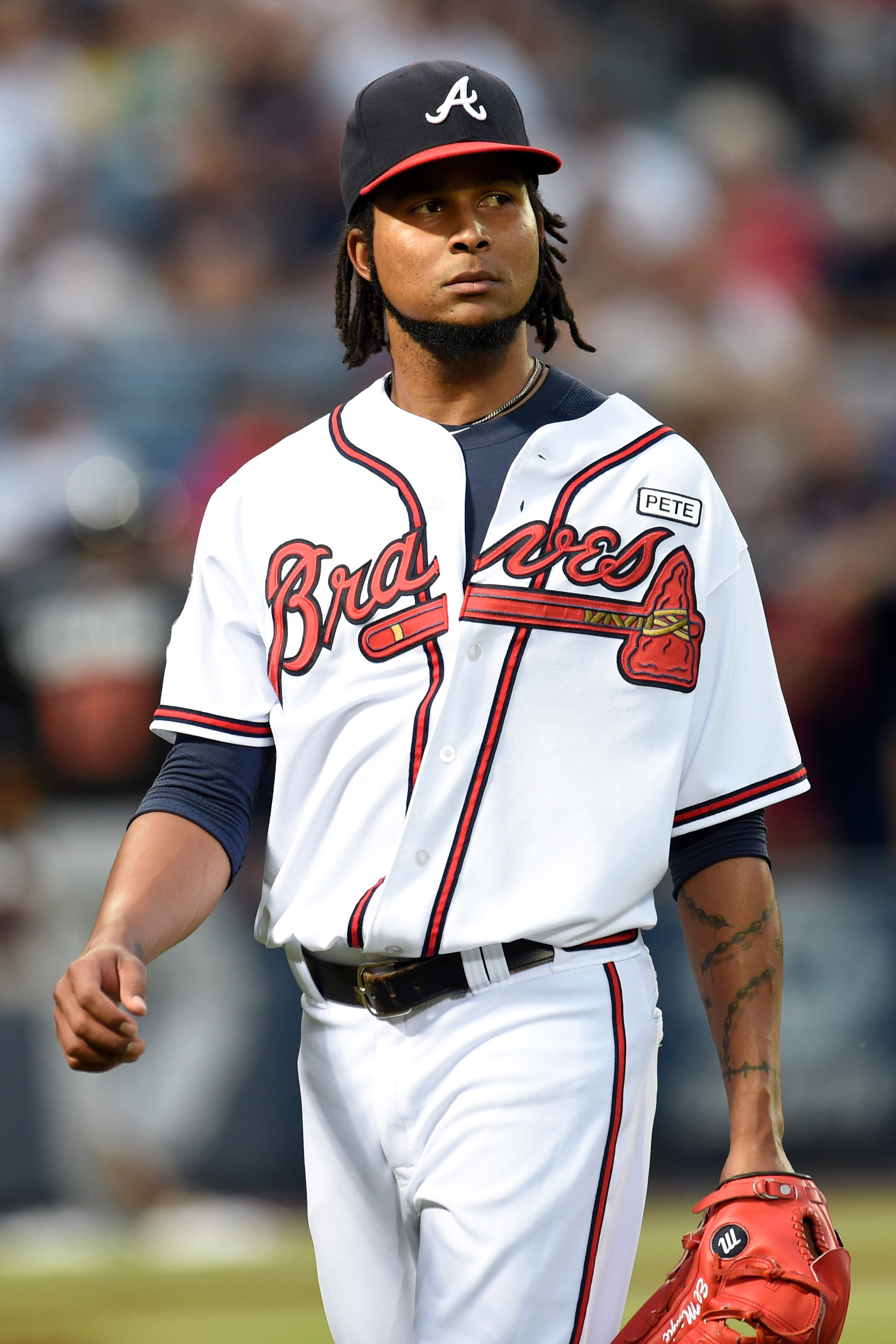
The signing worked out swimmingly for Atlanta. Santana made 31 starts, totaled 196 innings and logged a 3.95 ERA (3.39 FIP) with 8.2 K/9, 2.9 BB/9, 0.73 HR/9 and a 42.9 percent ground-ball rate. The Braves finished second in the NL East that year, but their playoff miss couldn’t be pinned on Santana, who largely held up his end of the bargain. At season’s end, Santana entered the open market a second time.
Unlike the 2016-21 collective bargaining agreement, the previous arrangement allowed players to receive multiple qualifying offers in their career. As such, the Braves issued a second qualifying offer, which Santana again rejected. This time around, his expectations were set a bit lower, and by the end of the Winter Meetings he’d landed a four-year deal with the Twins that guaranteed him $55MM. The Twins lost their second-round pick to sign Santana. The Braves received a compensatory pick at the end of the first round.
As readers have likely gleaned by now, that’s where the Atlanta organization struck gold. The Braves’ organic pick that year, No. 14 overall, saw them select lefty Kolby Allard, whom they traded to Texas last July to rent reliever Chris Martin. The compensatory pick they landed in exchange for Santana turned into Mike Soroka.
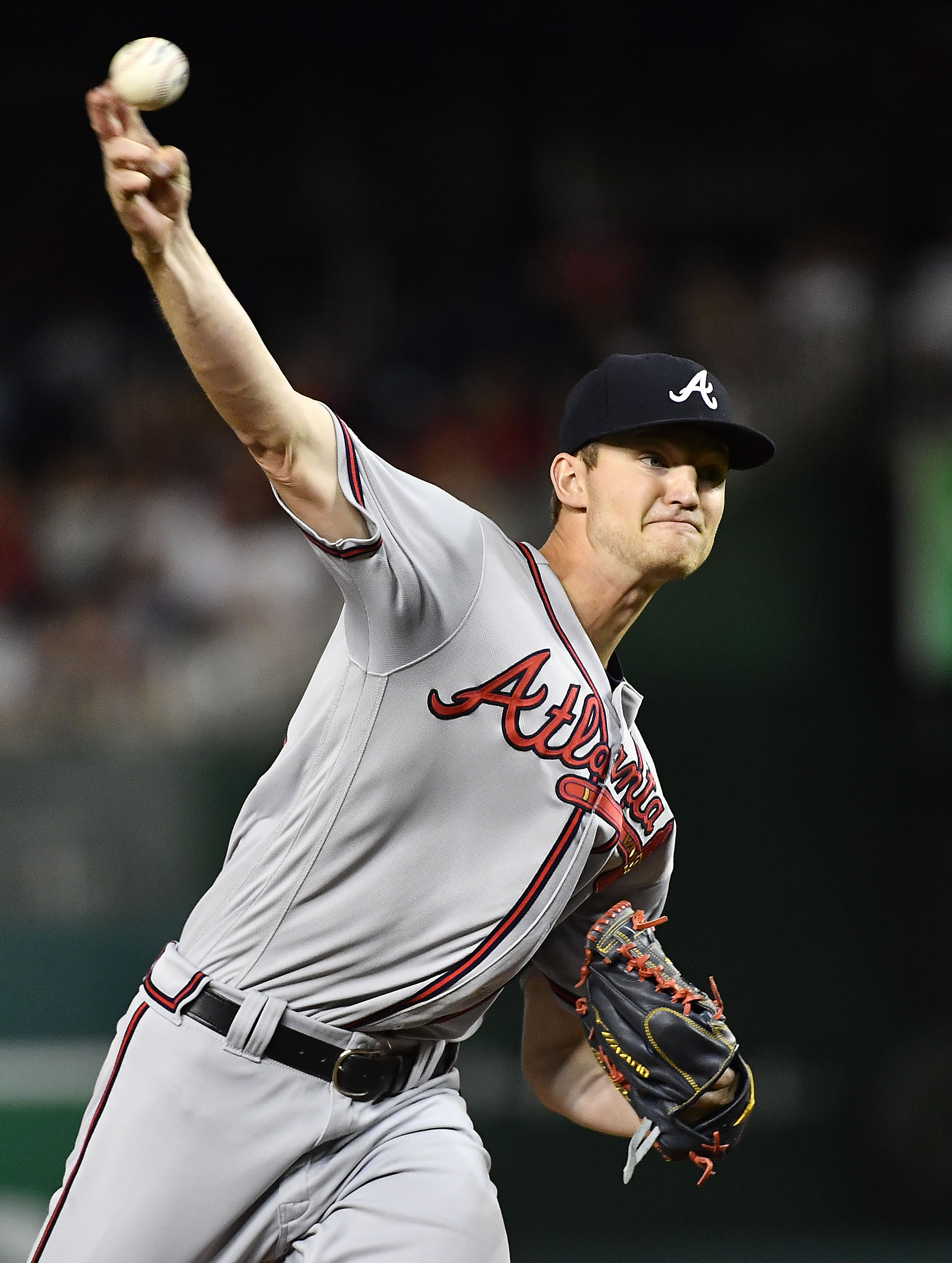
At the time of the selection, Soroka was an aggressive selection. Pre-draft rankings from MLB.com, Baseball America, FanGraphs and ESPN all had Soroka ranked in the 60 to 90 range among draft prospects. He was one of the youngest players in the draft and generally pegged as more of a second- or third-round pick. In their scouting report heading into the draft, Baseball America wrote: “There hasn’t been a player out of Alberta selected in the top 100 picks since the Red Sox picked Chris Reitsma 34th overall in 1996, and while Soroka probably won’t go that high, he should end up off the board in the first few rounds in June.”
Just 17 when he was selected, Soroka nonetheless rose quickly through the Braves’ system and steadily improved his prospect stock along the way. Soroka was at least three years younger than the average age of his competition at every minor league level he competed, and before he’d reached his 21st birthday he was suiting up for the Braves at SunTrust (now Truist) Park. Shoulder troubles in that debut campaign in 2018 limited Soroka to just 25 2/3 innings in the Majors another 30 2/3 frames in the minors.
This past season, of course, unfolded quite differently. Were it not for the outrageous power display put on by division rival Pete Alonso, Soroka might well have locked up Rookie of the Year honors. The 2019 NL runner-up pitched to a pristine 2.68 ERA with 7.3 K/9, 2.1 BB/9, 0.72 HR/9 and a 51.2 percent grounder rate. Soroka was worth 4.0 fWAR and 5.6 bWAR, and he ranked well above average in terms of Statcast metrics such as opponents’ barrel rate, average exit velocity, expected ERA and expected wOBA. Considering he was 21 for most of the 2019 season, optimism regarding Soroka abounds.
With Ronald Acuna Jr. and Ozzie Albies already locked up long term, Soroka stands out as an obvious candidate for a long-term deal of his own. At the very least, the Braves can enjoy Soroka for four full years beyond whatever semblance of a 2020 season we get, all the way through the 2024 season. So long as Soroka’s shoulder holds up, it seems the Atlanta organization will still be reaping the benefits of that Santana signing more than a decade after the ink on his contract dried.
Universal DH Should Push Pirates To Make A Change At Third Base
As we’ve run through various National League clubs and how they might handle the likely implementation of the universal designated hitter, a common theme has been that many of the league’s better clubs have ample depth that will allow them to piece together a solid DH rotation — even if there isn’t one dedicated masher to whom those at-bats would go.
That’s not the case in Pittsburgh, where a thin roster without much offensive upside is lacking in terms of serviceable DH options. A look at the Pirates’ projected bench at Roster Resource reveals catcher Luke Maile and a series of utility types including JT Riddle, Erik Gonzalez, Jose Osuna and Guillermo Heredia. None of that quintet has been anywhere close to a league-average hitter in his career. Osuna’s career 86 wRC+ leads the pack, and he’s the only one of the bunch who has even managed a .400 slugging percentage (.439). Heredia, meanwhile, is the only one with a career OBP above .300.
However, that doesn’t mean that a universal DH spot wouldn’t give Buccos fans something to watch. The Pirates reportedly explored a possible extension for top prospect Ke’Bryan Hayes earlier this year. There’s already been some thought about a 2020 debut, and with an uncertain minor league climate at the moment, it makes sense to plug Hayes into the lineup if the MLB season is indeed able to get underway.
Hayes shouldn’t see much (or any) time at DH himself, to be clear. He’s regarded as one of the game’s premier defensive prospects, and it just so happens that at his position, third base, the Pirates are in need of an upgrade. Colin Moran turned in an astonishing -21 Defensive Runs Saved, a -8.8 Ultimate Zone Rating and -6 Outs Above Average in just 882 frames at the hot corner. Hayes, on the other hand, received a 65 (on the 20-80 scale) for his defense in MLB.com’s scouting report and a future 70 over at FanGraphs.
Moran would give the Bucs a reasonably competent bat to install at DH. He’s not a prolific slugger, but the lefty’s career 103 wRC+ against right-handers represents a markedly better option than the previously projected bench bats.
Might the Pirates have other options down on the farm? Will Craig, a 2016 first-rounder, had a down year in Triple-A. The first baseman’s right-handed bat would make a natural pairing with Moran, assuming last year’s poor showing against left-handed pitching was more an aberration than the beginning of a downward trend. If Craig is able to bounce back at the plate, perhaps the club would consider giving Josh Bell additional time at DH and playing Craig in the field. Bell rates poorly from a defensive standpoint.
Shortstop Oneil Cruz — whom many project to move to the outfield eventually — receives huge grades on his raw power but has yet to see it manifest in games. He hasn’t played above Double-A yet. Would the Pirates consider bringing him to the big leagues if there are no minor league games played? He’s already on the 40-man roster.. Cole Tucker made his MLB debut in 2019, and while the shortstop is too good a fielder to be considered a primary DH, he’s blocked up the middle by Kevin Newman and Adam Frazier at the moment. The added DH spot could help him get a few more at-bats in the big leagues.
It seems unlikely that the Bucs would go outside the organization unless it’s a very cost-efficient pickup, but even if they stick with what they have, the added DH slot should open the door for some promising youngsters to get their feet wet in the Majors.
Latest On Salary Dispute Between MLB, MLBPA
May 20: The league is aiming to formally present the union with an economic plan by this Friday, USA Today’s Bob Nightengale reports.
May 19: As Major League Baseball and the MLB Players Association continue their standoff over player compensation in a shortened 2020 season without fans in attendance, it seems neither side is prepared to budge. MLB Network’s Jon Heyman tweets that some with the league believe they “have it cold in emails” from late March that the previously agreed-upon prorated salary arrangement was contingent on fans being in attendance. The MLBPA, of course, has contested that the standing agreement sufficiently addresses that scenario (i.e. that the players are entitled to prorated salaries even in a spectator-free setting).
Joel Sherman of the New York Post has obtained the email in question, which was sent from MLB senior vice president of labor relations/deputy general counsel Patrick Houlihan to deputy commissioner Dan Halem. Within the email, Houlihan details a conversation he had with MLBPA deputy general counsel Matt Nussbaum on the morning of March 26:
Matt asked what ‘economic feasibility’ meant in Section I. I told him it meant that we would only consider playing in neutral sites or without fans if it worked for us economically. I reminded him of [commissioner Rob Manfred]’s comments at the outset that playing in empty stadiums did not work for us economically. But I said, for example, that we might be willing to have a conversation about playing some limited number of games in empty stadiums if players agreed to reduce their daily salaries for those games, and if it was part of a larger plan that made economic sense. Matt confirmed that that is what he thought we meant, but appreciated the confirmation.
Of course, it can’t be gleaned from that email just how clearly and accurately the league’s stance was laid out by Houlihan, nor is there any direct quote or confirmation of that understanding from an MLBPA official. We also don’t know whether any additional discussions or negotiations surrounding the issue took place between that conversation and the actual ratification of the agreement. While this email certainly indicates that the two sides discussed the matter, its status as a true “smoking gun” is up for interpretation.
The league will surely seek to use this as ammunition to argue that the MLBPA represented a belief that spectator-less games would need to be accounted for in a separate negotiation. The MLBPA took a similar approach recently when agent Scott Boras ardently stated that ownership “represented during that negotiation that they could operate without fans in the ballpark,” ultimately declaring that there will be no renegotiation of the standing agreement.
Late last week, commissioner Manfred suggested that owners were facing a collective loss of as much as four billion dollars — a grim portrayal which the league argues as the driving factor in its reported proposal for a revenue-sharing plan with the players. However, Travis Sawchik of FiveThirtyEight reports that the players are of the belief that, based on what ownership has presented, they’d benefit from a season of prorated player pay much more than by simply canceling the season (Twitter thread). The league’s revenue projections, for instance, did not account for the expanded playoff format that has been suggested but not yet formally proposed, according to Sawchik. If that’s the case, the players likely feel they still have leverage.
To that end, MLBPA senior director of collective bargaining Bruce Meyer tells Sherman: “the contract itself is very clear that in the event of a partial season players will get paid pro rata salary — whether with fans or without.”
That much seems debatable based on the portions of the agreement that have been made public, but the MLBPA nonetheless appears set to stand firm on that assertion. Meyer also confirms multiple reports that the league has yet to formally propose a salary scale (presumably due to the union’s refusal to even consider the 50-50 revenue share that was reported last week).
“Rather than actually negotiating over these issues the league is focusing on leaking self-serving internal memos to the media,” Meyer tells Sherman. He goes on to add that the league has yet to provide the Players Association with any documentation to support that their revenue losses would actually align with the extent of their claims.
It’s frankly baffling that things have reached this point. The two sides swiftly worked out an agreement not two weeks after the league was shut down due to the COVID-19 pandemic, but the document produced by those negotiations inexplicably failed to address this very scenario in a decisive manner that left no room for other interpretation. The implementation of a prorated pay scale in a shortened season seemed straightforward, but a later clause stating that the two sides will “discuss in good faith the economic feasibility of playing games in the absence of spectators” has proven nebulous enough to bring about the current stalemate.
The optics of a billionaires-versus-millionaires standoff is always cringe-worthy but is particularly egregious at a time when so much of the country has been laid off or furloughed. As both sides squabble over enormous sums of money, many in the general public look on with frustration and resentment.
It’s understandable that the players feel they’ve already made concessions and have now had the aforementioned “good faith” violated by the league’s call for additional cuts, but it’s also confounding that first iteration of their agreement left the door open for this publicly unfolding drama. It’s not as though playing games without fans in attendance was a radical concept at the time of the agreement; it had been a heavily speculated-upon possibility. The fact that it wasn’t expressly accounted for is a staggering omission.
If both sides are indeed drawing a hard line and are entirely averse to renegotiated terms, it stands to reason that the eventual outcome could be litigation. At that point, an arbitrator would need to consider the language within the original agreement and the alleged representations made by the league, weighing those against the purported email proof and any other evidence ownership wished to present.
An Unpopular Trade Paying Off In Seattle
The Mariners’ rebuild began in earnest following a disappointing finish to the 2018 season, when GM Jerry Dipoto first began talk of re-imagining his roster. The M’s have added a bevy of prospects since that time, highlighted by Jarred Kelenic and Justus Sheffield, but one of their most important long-term pieces was acquired on July 21 in 2017, when the club was still aiming for immediate contention.
That day saw Seattle trade slugging minor league outfielder Tyler O’Neill to the Cardinals in exchange for left-hander Marco Gonzales. The now-28-year-old Gonzales has become a fixture in the rotation, but the trade wasn’t exactly well-received among M’s fans at the time. The club was below .500 but just 1.5 games back from a Wild Card spot at the time of the swap. Dipoto had been trying to acquire young pitching, hoping to add to his core while also remaining competitive in a top-heavy American League. (The 85-win Twins claimed the league’s second Wild Card position that year.)
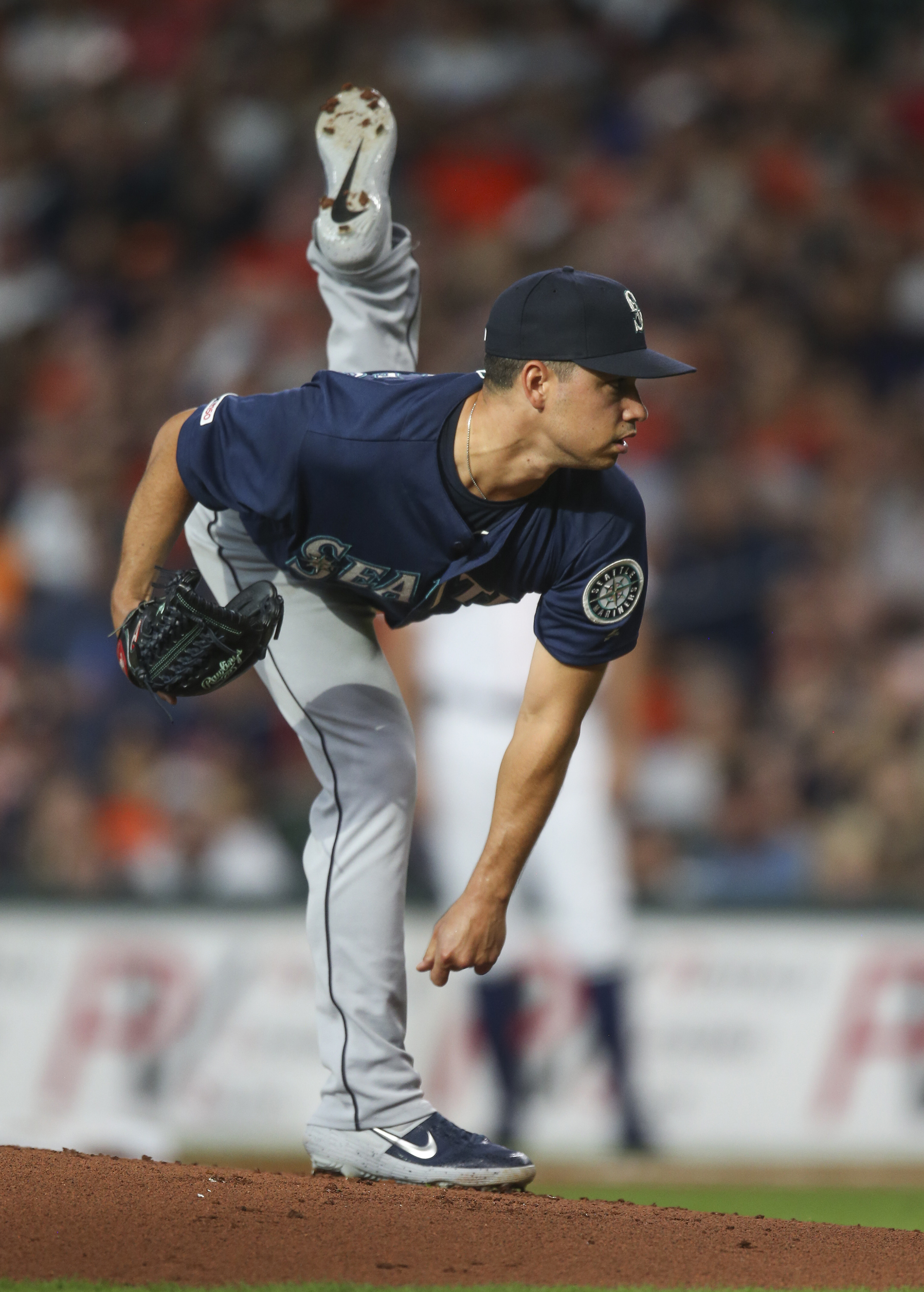
The consensus among Mariners fans at the time of the swap was, essentially, “Why would they do this?” Social media reactions to the deal weren’t favorable, and looking through the comments on the trade’s writeup at MLBTR, FanGraphs or most other sites reveals a similarly perplexed set of replies. O’Neill had entered that year as one of the game’s 100 best prospects and the second-best in the Mariners organization, while Gonzales had made just one appearance in the Majors since returning from 2016 Tommy John surgery. He was having a nice season in Triple-A, but most scouting reports on him pegged Gonzales as a mid-rotation arm, at best. In addition to that Tommy John surgery, he battled shoulder troubles in 2015.
Injury risk or not, Dipoto was undeterred. The Mariners’ GM spoke the day before the trade about only being willing to deal from his premium prospects if it meant acquiring a long-term rotation piece, and days after the swap he called Gonzales “about as big-league-ready as a Triple-A pitcher could be.” Sure enough, Gonzales was in the big leagues less than three weeks later.
The initial results did little to assuage the concerns of Seattle fans. Gonzales pitched just 36 2/3 innings of 5.40 ERA ball down the stretch as the Mariners again fell shy of the postseason. O’Neill hit .253/.304/.548 with a dozen homers in 37 Triple-A games following the trade that year. On-base questions notwithstanding, the power was still impressive and Mariners fans were skeptical of the lefty for whom O’Neill had been shipped out.
Despite that lackluster showing, Gonzales opened the 2018 season in the Seattle starting five. His early work didn’t inspire much confidence, but after four shaky starts, Gonzales settled into a groove and pitched to a 3.60 ERA over his final 150 innings, averaging 7.6 K/9 and 1.7 BB/9 along the way. In 2019, Gonzales posted a 3.99 ERA that was nearly identical to his 4.00 ERA from 2018 — but he did it in a larger sample of 203 frames.
Setting aside his rocky debut in 2018, Gonzales has given the Mariners 369 2/3 frames of 3.99 ERA ball with an even better 3.83 FIP, 7.1 K/9, 2.1 BB/9, 0.97 HR/9 and a 42.5 percent ground-ball rate. From 2018-19, he was worth 6.0 bWAR and 7.1 fWAR. The rebuilding Mariners made clear that they view Gonzales as a core piece back in February, signing the southpaw to a four-year, $30MM contract extension (2021-24) that also contains a $15MM club option for the 2025 season.
The trade would likely look like a solid one for the Mariners even if O’Neill had blossomed into an everyday corner outfielder. That hasn’t happened yet, however. While Gonzales was solidifying himself in the Mariners’ rotation, O’Neill was bouncing back and forth between Triple-A and St. Louis, hitting a combined .258/.307/.454 with 14 home runs in 293 plate appearances. The power has been good but not elite, and O’Neill’s contact struggles have indeed been magnified against MLB pitching; he’s punched out 110 times in those 293 plate appearances (37.5 percent).
To be fair to O’Neill, he hasn’t exactly been given a real opportunity to win an everyday job. Just months after he was traded to St. Louis, the Cardinals went out and acquired two years of control over Marcell Ozuna in a trade that sent Sandy Alcantara, Zac Gallen and Magneuris Sierra to the Marlins. With Ozuna, Dexter Fowler, Tommy Pham (in 2018) and Harrison Bader all logging considerable time in the St. Louis outfield, opportunities for O’Neill have been sparse. But the very fact that the Cards felt it necessary to pursue a Giancarlo Stanton acquisition and then pull off a deal for Ozuna speaks to some level of question in O’Neill’s readiness.
The Cards didn’t add a left fielder to replace the departing Ozuna this winter, but they also have uber-prospect Dylan Carlson nearing the Majors. Even if Carlson seizes an outfield spot, the likely implementation of the universal DH will give O’Neill some additional opportunities to get into the lineup, so perhaps he’ll finally get the chance to justify the deal from the St. Louis end. The Cards haven’t exactly been hurting for pitching even without Gonzales in the fold, but there’s no denying he’s been the more valuable piece of the straight-up swap to this point.
The Gonzales/O’Neill trade won’t be looked back upon as any time of blockbuster, but it offers some reminders when judging future trades:
- Prospect rankings are useful and entertaining, but it’s easy to overemphasize them. Prospect values are in a constant state of flux. Even a few weeks and certainly a couple months can change the opinion on a prospect. Whether it’s adding a new pitch, adding/losing velocity, outgrowing a position, altering mechanics at the plate or any number of other changes a player can exhibit, a prospect’s value can alter in a hurry.
- It’s too easy to write off post-hype prospects. Gonzales himself was a first-round pick and top-100 prospect prior to injury troubles. At the time of the O’Neill trade, he was less than two years removed from ranking as the game’s No. 50 prospect, per Baseball America. A recent top prospect with some big league experience and four to five years of control is generally still a valuable piece even if he’s not a star. MLBTR’s Connor Byrne recently looked at another player fitting this mold: Pittsburgh’s Joe Musgrove.
- Position scarcity matters. We’ve seen corner outfielders and first baseman go for smaller returns on the trade market and in free agency in recent seasons. Part of the Mariners’ calculus was surely that a corner outfielder with some on-base questions was easier to come by than an affordable mid-rotation starter, even if the latter carried considerably more risk.
In some regards, the end result of this trade is common. “Team gets one of its best pitchers by trading away key prospect” is hardly a unique storyline in baseball, but the manner in which the Mariners went about this particular instance of that narrative isn’t typical. The result speaks for itself right now, though. And while O’Neill can still change how we look at the deal in the long run, it’s worked out about as well as the Mariners could’ve hoped.
Rockies Release Tim Melville
TODAY: The reason the Rox were able to release Melville is that minor-league transactions are not presently frozen, MLBTR has learned. We haven’t seen any such deals of late, but they’re evidently permissible by rule.
YESTERDAY: The Rockies have released right-hander Tim Melville. The 30-year-old Melville posted a farewell message on Instagram, and the Denver Post’s Kyle Newman tweets that Melville confirmed he was indeed released today.
Normally, the release of a 30-year-old journeyman who had been in camp as a non-roster invitee wouldn’t be particularly surprising. But Melville’s release is indeed quite curious given the current circumstances throughout the league.
Not long after Spring Training was shut down and baseball was put on an indefinite hiatus, it was reported that rosters would be locked. Teams aren’t even permitted to discuss contract extensions with their players at the moment, so it’s rather peculiar to see a player confirm a recent release. It’s unclear at present just how to explain the circumstances surrounding his release.
Melville was a feel-good story for Rockies fans in a mostly miserable 2019 season. The 2008 fourth-rounder (Royals) had quick cups of coffee with the Reds, Twins and Padres in 2016-17 but didn’t find any success in his limited work. He spent time with the Long Island Ducks of the independent Atlantic League in both 2017 and 2019, which eventually led him to the Rockies organization. After a nondescript run with Triple-A Albuquerque last year, injuries on the big league roster opened the door for Melville in August, and he immediately turned in the two best performances of his professional career.
Over his first two outings with the Rox, Melville held the D-backs and Braves to just one run on seven hits and five walks with 10 strikeouts through 12 frames. He made five more starts down the stretch — a pair of brutal outings (10 combined runs in five innings) and three solid but less-spectacular outings. In all, he wound up with a 4.86 ERA in 33 1/3 frames — not bad for a depth pickup who made four of his seven starts at the daunting Coors Field.
Melville achieved folk hero status among Rox fans, both for his improbable success in his first two outings and his even more improbable return to the Major Leagues. As The Athletic’s Nick Groke wrote in a terrific profile of Melville (subscription required), the right-hander took a minimum wage job at Little Miss BBQ in Phoenix, Ariz., after the 2018 season, hoping to learn about barbecue. He left the club last April to join the Ducks and was back in pro ball after just two Atlantic League starts.
Melville returned to the Rockies on a non-roster deal over the winter but was slowed by a cracked rib in Spring Training. There’s virtually no certainty in baseball at the moment, so it’s hard to know whether he’ll latch on elsewhere or explore what’s next on his barbecue career path, but whatever route he takes, Melville is a pretty easy guy to cheer for.
Bartolo Colon Still Hopes To Pitch One More Year In MLB
Just days shy of his 47th birthday, Bartolo Colon isn’t quite ready to step away from the game. The big righty spoke to ESPN’s Marly Rivera this week, telling her that he’s holding out hope for one final run in the Majors — ideally with the Mets. “Big Sexy” praised the organization from top to bottom, lauding everyone from the front office to the clubhouse staff while delivering some heartfelt memories of the Amazins’ fanbase:
Mets fans are the best. In the beginning, when they laughed at me every time my helmet fell off, at first I felt uncomfortable. But when I saw how much the fans enjoyed it, I asked for a bigger batting helmet so that it would fall more because it was so much fun for them!
That said, Colon made clear that he’s willing to pitch with any team, in any role, so long as it means one more run in the Majors. The well-traveled righty has already suited up for 11 clubs to this point in his big league career: the Indians, Expos, White Sox, Angels, Red Sox, Yankees, Athletics, Mets, Braves, Twins and Rangers.
Colon didn’t pitch in the big leagues last season and last appeared with the 2018 Rangers, tallying 28 games (24 starts). However, he hasn’t had an above-average campaign on the mound since his age-43 season with the Mets back in 2016 (191 2/3 innings, 3.49 ERA, All-Star appearance). Over his past two seasons in the big leagues, Colon has worked to an ERA just north of 6.00 while soaking up 289 1/3 frames for Atlanta, Minnesota and Texas. To his credit, Colon had plenty of sharp outings with both the Twins and Rangers — they were just mixed in with numerous clunkers that outweighed much of the good he did when at his best.
Seeing Colon back in the big leagues is a long shot at this point, but teams will need more depth than ever as rosters expand to accommodate a shortened ramp-up period to the 2020 season. And Colon was already set to play in the Mexican League prior to the pandemic shutting down pro sports around the globe, so perhaps he’d explore alternatives if a deal with a big league organization can’t come together.
Giants’ Bargain Pickup Looks More Valuable With Universal DH
With the likely implementation of a universal DH in 2020, we’ve been taking a team-by-team trip through the NL and looking at how those clubs could handle the rule change. To this point, we’ve looked at the Dodgers, Reds, Diamondbacks, Cardinals, Braves, Nationals and Brewers. The Giants are up next.
When Hunter Pence bid farewell to the Giants after the 2018 season, there were questions about whether the affable slugger would ever have his name penciled into a big league lineup again. Heading into his age-36 season, he’d posted a combined .249/.297/.368 batting line in 787 plate appearances across the two prior campaigns.
Pence persevered, heading to the Dominican Winter League to work on a revamped swing and ultimately landing a minor league deal with his hometown Rangers. He parlayed that non-guaranteed pact into a prominent role with the Rangers, hitting .297/.358/.552 with 18 dingers in 316 plate appearances before an oblique injury cut his season short. That effort was enough to generate multiple offers, and late in the offseason, Pence signed up for a reunion tour in San Francisco.
The stage seemed set for Pence to hold down a part-time role — an occasional outfielder and frequent pinch-hitter who could serve as a mentor for some younger players as they graduated to the big leagues on a rebuilding club. That could still be the idea, but with the DH likely on its way to the NL, Pence could also be a more prominently used piece now. He started 46 games at designated hitter for Texas last season and surely would have been in that spot more, were it not for the presence of 37-year-old Shin-Soo Choo, who got the DH nod on 62 occasions of his own.
The Giants have other players they can rotate through the DH spot and might look at its addition as a means of getting longer looks at each of Mike Yastrzemski, Alex Dickerson and Jaylin Davis — each of whom is best suited for corner outfield work. Against left-handed opponents in particular, the Giants might favor using the DH spot as a means of getting righties Pence, Davis, Austin Slater and Wilmer Flores into the lineup together. Former first-rounder Chris Shaw logged a combined .294/.360/.559 slash with 28 homers in 492 plate appearances between Double-A and Triple-A last season. He’d add a lefty stick to the mix.
Let’s also not forget a pair of notable minor league signings made by San Francisco this winter: Pablo Sandoval and Darin Ruf. The Kung Fu Panda has batted .259/.311/.466 with 23 homers and 33 doubles in 548 plate appearances since returning to the Giants in 2018. He’s on the mend from Tommy John surgery but should be ready to go if play is able to resume in 2020. Ruf, 33, is returning stateside after dominating the Korea Baseball Organization with a .313/.404/.564 slash through three seasons with the Samsung Lions (2017-19).
Might the universal DH spur the Giants to finally take the plunge on a signing of Yasiel Puig? The two sides have been connected at numerous points over the past several months, and Giants president of baseball operations Farhan Zaidi is quite familiar with Puig after spending five years as the Dodgers’ general manager. Puig could potentially add some life to what was a listless Giants lineup in 2019, ranking in the bottom four of all MLB teams in terms of runs scored, home runs, batting average, on-base percentage, slugging percentage and wRC+. Of course, he’d also take playing time away from some more controllable pieces.
Even if the Giants don’t add to their current group, a new way to increase Pence’s at-bats while keeping him fresh should help that deal to pay dividends. And if there’s some form of updated trade deadline, the addition of a DH spot for the other 14 other NL clubs would only increase interest in acquiring an affordable veteran who is lauded as one of the game’s great clubhouse personalities. There’s also a scenario, as explored by the San Francisco Chronicle’s Henry Schulman, where ballyhooed catching prospect Joey Bart could make his debut and get some additional work thanks to the forthcoming DH slot in the NL.
Reds Expect Suarez, Senzel To Be “Full Go”
Third baseman Eugenio Suarez and center fielder Nick Senzel, both key figures in a bolstered Reds lineup, are expected to be “full go” whenever play is able to resume, president of baseball operations Dick Williams told MLB.com’s Mark Sheldon this morning. Both players were recovering from shoulder surgery.
Suarez, 28, went under the knife in late January after injuring his shoulder while swimming during an offseason workout. There was some hope that he’d be ready for Opening Day, but that was a best-case and rather aggressive scenario. He didn’t appear in a Spring Training game, although Sheldon notes that he was on the cusp of getting some DH work in Cactus League play when Spring Training was shut down.
The 24-year-old Senzel underwent a much more serious procedure last September to repair a torn labrum in his right (throwing) shoulder. He’d gotten into some spring games as a designated hitter as well but had yet to play in the field.
Given where both were in Spring Training, it’s not exactly a surprise that both are expected to be full strength when “spring” training relaunches — be it in mid-June under the current best-case scenario or a bit further down the road. Still, this is the first public update on the pair’s health provided by the Reds since late March, so the confirmation is of some note.
Both Suarez and Senzel will be prominent factors as the Reds look to snap a playoff drought that dates back to 2013, when they fell to the Pirates in the NL Wild Card game. Suarez took his game to a new level last year, clubbing a surprising 49 home runs — a figure that trailed only Pete Alonso for the NL lead. The slugger has five guaranteed seasons remaining (including 2020) on the seven-year, $66MM extension he inked two years ago, and the Reds control him for 2025 as well via a club option.
Senzel, the No. 2 overall pick in the 2016 draft, ranked among baseball’s elite prospects from the time he was drafted until last year’s rookie season. He didn’t exactly take baseball by storm, hitting .256/.315/.427 through 414 plate appearances, but between the September shoulder surgery, a March ankle injury and an elbow procedure that caused him to miss the Arizona Fall League in 2018, Senzel dealt with a number ailments that might’ve weighed down his performance.
Drafted as an infielder, Senzel has worked all over the diamond but was moved to center field last spring. He fared well there, particularly considering his inexperience, and the Reds envision him lining up there more often than not, with the likes of Jesse Winker, Nick Castellanos and Shogo Akiyama flanking him. Of course, as MLBTR’s Jeff Todd recently noted, if the Reds are comfortable bouncing Senzel all over the diamond in a super-utility role, that versatility and the likely implementation of the DH in the National League could leave skipper David Bell with innumerable mix-and-match opportunities on a daily basis.
Cardinals Notes: Mikolas, Freese, Molina
Cardinals right-hander Miles Mikolas tossed a bullpen session last Friday and expects to be ready to go whenever play resumes, per The Athletic’s Mark Saxon (subscription required). Mikolas feels he’ll have time to get in another “eight to ten” bullpen sessions between now and the reported mid-June target for a reboot of Spring Training, at which point he’d be able to kick things off with a two- or three-inning appearance. A flexor strain slowed the right-hander back in February and likely would’ve cost him a notable portion of the season under normal circumstances, but like many others, he’s been able to use the extended time off to heal up. Mikolas also chats with Saxon about the likely addition of the designated hitter in the NL and gives his reasons for welcoming that change.
More out of St. Louis…
- St. Louis native and postseason hero David Freese plans to be with the Cardinals’ fantasy camp next year, and the recently retired corner infielder tells Rick Hummel of the St. Louis Post-Dispatch that he’s open to coaching in the future but not fully committed to the idea. “I always think about it, just because baseball is a part of me,” says Freese, who goes on to marvel at the manner in which the workload of Major League coaches has expanded over the past several years. A managerial role, even at the minor league level, has a bit more appeal to Freese than a coaching job, but the 37-year-old is currently focused on his family, with a second child due next month. Cards fans will want to check out the interview to read Freese’s personal recollection of a legendary postseason showing in 2011, when he rallied back from an icy NLDS showing to hit a combined .444/.528/.889 with four homers, six doubles and an unforgettable triple in just 53 plate appearances between the NLCS and World Series. He was named MVP of both series.
- ESPN’s Marly Rivera recently spoke with Yadier Molina about his willingness to test free agency and sign elsewhere if a reunion with the Cardinals doesn’t work out. Those comments were understandably the focus of her initial piece from their talk, although a lengthier transcript of the interview was published last week — one in which Molina discusses his Hall of Fame aspirations, his journey from a “defensive catcher” to a well-rounded All-Star performer, his pursuit of the 2,000 hit milestone and the change in the way that catchers have been valued since his MLB debut. There’s no additional context or change in his thoughts on potentially playing elsewhere; those comments were published in their entirety from the get-go, and it’s clear that Molina hopes to remain in St. Louis but wants another two years whether as a Cardinal or not. Still, as with the Freese interview, Cards fans will surely enjoy the personal stories and recollections from a revered player looking back on his career and discussing his future in the game.
Latest On Jordan Hicks
Cardinals closer Jordan Hicks threw a pair of 20-pitch sets in a bullpen session at his home in Houston on Tuesday, president of baseball operations John Mozeliak tells Rick Hummel of the St. Louis Post-Dispatch. It’s the latest positive step in the rehab process for the flamethrowing Hicks, who underwent Tommy John surgery late last June.
The Cards aren’t putting a firm deadline on Hicks’ readiness to pitch in a big league game, but Mozeliak spoke in broad terms when he expressed “optimism that if we do have a season, he’ll have some way of being a key member of it.”
Under normal circumstances, the Cards would’ve been without Hicks for at least half the season, given the June 26 date of last year’s surgery. Now, with the season beginning no earlier than July 1 — and quite possibly later, depending on the input of government officials and health experts — Hicks could be in the ‘pen for the majority of the shortened season. The right-hander is a Type 1 diabetic but recently expressed to Ken Rosenthal of The Athletic that his condition wouldn’t impact his willingness to play in 2020 amid coronavirus concerns.
Hicks, 23, is the hardest-throwing pitcher in baseball, averaging an outrageous 101.5 mph on a sinker that helped him post a gaudy 67.2 percent ground-ball rate in 2019. The right-hander quickly ascended to the role of closer in St. Louis and had collected 14 saves while pitching to a 3.14 ERA, 9.7 K/9 and 3.5 BB/9 in 28 2/3 innings last year. Hicks made notable improvements in his ability to locate that blistering sinker last year, dropping his walk rate from a 5.2 BB/9 and 13.3 percent overall mark in 2018 to that 3.5 BB/9 and a 10 percent overall mark in 2019. His first-pitch strike rate jumped from 58.2 percent to 60.9 percent as well.
Hicks will be eligible for salary arbitration for the first time this winter and currently carries a 3.47 ERA, 20 saves and a 101-to-56 K/BB ratio in 106 1/3 career innings. He’s under club control through the 2023 season.