
Inside The Draft Room: The 2006 Yankees
It’s unrealistic to think that 10-plus years after a draft, a large group of players from one team’s draft class would still be intact and together with their original organization.
Face the reality … it’s rare for a group of pitchers to have sustained health and sustained success, period – let alone with one club.
But in a landscape when fantasy drafts rule the baseball world, it’s OK to dream. So imagine having the following relievers in the same big league bullpen – and don’t worry about their roles; this is only a dream (statistics are for the 2016 season) …
- Mark Melancon, who had 47 saves and a 5.42 strikeout-to-walk ratio as part of an All-Star campaign in 2016.
- David Robertson, who had 37 saves and a 3.47 ERA while fanning nearly 11 batters per nine innings pitched.
- Dellin Betances, with his high-90s fastball and 85 mph curveball, who struck out 126 batters in 73 innings while recording 12 saves and 28 holds.
- Zach McAllister, who had a 3.44 ERA and averaged a strikeout per inning – and pitched in the World Series.
- George Kontos, who had a 2.53 ERA in 57 appearances.
And to think … all were members of the New York Yankees’ draft class of 2006 – AFTER the team had already selected Ian Kennedy and Joba Chamberlain.
– – –
Every scouting director has a different story of how he arrived in a position to run a draft.
But it’s not every day when you can say a scout learned first-hand by following in his mother’s footsteps.
Growing up in San Diego, Damon Oppenheimer was a Padres fan at an early age. He lived a couple miles from San Diego Stadium (later known as Jack Murphy Stadium and Qualcomm Stadium); he could actually ride his bicycle there if he wanted to.
Oppenheimer’s affinity for the Padres and the sport grew leaps-and-bounds when his mother, Priscilla, was hired to work as a secretary in the scouting department. Priscilla Oppenheimer went on to a long and distinguished 24-year career with the Padres, rising to director of minor league operations – a position she held at the time of her retirement in 2006.
“When my mom was afforded the opportunity to get that job, it was really nice,” said Damon Oppenheimer, who is now the Yankees’ vice president of domestic amateur scouting – and in his 25th year in that organization. “We were baseball fans, I was into it, and it was neat to be able to talk to her boss. Sandy Johnson was a heck of a scout and a productive scouting director. That was her first boss there, so I learned a lot from just listening to him.”
In what had to be interesting dinner table conversation, the son – an aspiring baseball player – was educated about the inner workings of a baseball front office from his mom.
“I think a lot of the stuff I learned from her was how competitive it was … how many kids there were in a system … how you have to constantly perform while you’re being developed,” he said. “She was always talking about the amount of kids there are – and the amount of kids who didn’t see the window of opportunity closing on them and let it get away. She talked about these talented kids out there who didn’t handle their situations right and didn’t max out their potential.
“On top of the player stuff, she was great at reminding me to make sure you were always good to everybody in the organization. It wasn’t just about the people above you; it was more about the people that were working with you or were working around the game. You know what … that made a big impression on me. I think I’ve probably taken that as a leader and used a lot of her information that she was able to give me. I believe you need to include everybody and make everybody feel like they’re an important part of the process.”
When his playing career ended, Oppenheimer began working as a part-time scout with the Padres while finishing his college degree – and was hired on a full-time basis in 1988. He joined the Yankees as a Midwest cross-checker in 1993 and has been with that organization ever since (except for a nine-month stint in Texas’ scouting department from November 1995-July 1996). In 2005, after stints as the Yankees’ farm director and as the head of pro scouting, Oppenheimer took over the reins of running the team’s amateur draft.
– – –
Every scouting director has a different story of how he arrived in a position to run a draft.
But not every scout cut his teeth at evaluating pitching by squatting behind the plate to catch a Randy Johnson fastball.
Oppenheimer was a two-year letterwinner at USC en route to a brief professional career (he was selected by Milwaukee in the 18th round of the 1985 draft and played in 12 Class-A games before suffering a career-ending injury).
Along with earning honorable mention Pac 10 all-conference honors in 1985, he had the opportunity to catch both Johnson – the future Hall-of-Fame southpaw who was chosen in the second round of that year’s draft by Montreal – and Brad Brink, selected with the seventh overall pick by Philadelphia in the 1986 draft.
Being a catcher helped Oppenheimer in his future roles as a talent evaluator and scouting director.
“Catching is one of the jobs in baseball where, if you don’t really want to be back there, you’re going to fail,” he said. “I really wanted to catch. You had to want to be back there. You had to want to lead. You had to want to think the game through. The ‘thinking it through’ part – planning, how to read advance reports, how to figure out what you’re going to do – that was a big step in my own development as a planner for the scouting department.
“You were always critiquing pitchers as a catcher on how they were doing, where their arm was, what could be fixed, if they have their stuff that day or if they didn’t, and how they competed. I think as a catcher you were able to sit there and incorporate the mental side of a guy’s ability to pitch – along with his tools, his stuff for that day, and then his mechanical portion of pitching. For me at least, it turned me into an evaluator at a young age.”
At the same time, even though he was in uniform, he was able to learn about the way scouts performed their jobs. It put the little voice in his head that scouting might be a direction for him to consider.
“Since my mom was in the game and some of the scouts knew me, they’d seek me out and ask me questions about some of the guys on the team,” Oppenheimer recalled. “It was never about them as people or their personalities; they didn’t cross that line. But they would talk about what I thought of their stuff and what I thought about the way they pitched. So I did think about (scouting) some. To be honest, if you would have told me that Randy Johnson would have been better than Brad Brink, I would have never guessed that. Brad had great stuff, he had a great body, and he threw really good strikes. Randy was still a developing guy; he didn’t throw very many good strikes. In that way, looking at it, I gained some experience in learning more about projecting with Randy vs. Brad – and about how pitchers might develop.
“I’m sure glad it worked out for Randy the way it did. And it was too bad for Brad. The injury thing is such an epidemic in baseball. It’s so hard to figure out who that guy is going to be. Brad had great stuff.”
While Oppenheimer earned his stripes as a catcher in handling Johnson, he had to wait his turn the year before. Although he did see a fair amount of action in 1984 for USC, Oppenheimer often found himself on the bench watching Jack Del Rio work behind the plate – the same Jack Del Rio who is now the head coach of the NFL’s Oakland Raiders.
“It was pretty humbling, because he was quite a bit more athletic – and he was better,” Oppenheimer said. “Jack was really, really gifted. He probably could have been a longtime major league baseball player if that’s the route he wanted to go. But I think he was enamored with football; he liked playing in front of 60,000 to 100,000 people a lot more than he did thinking about playing in front of a couple thousand in minor league baseball to get there.
“From sitting there watching him and being around him – and now being in scouting – if he wanted to be a professional baseball player, he could have been a major league player. He was athletic. He was tough. He could hit. He could throw. He was a decent receiver … I think he’d probably agree with that. He could really run. He was really talented, and he had some kind of ability to compete. He was one of the better athletes that I’ve ever been around.”
– – –
Looking at it in its entirety, the 2006 draft can at best be labeled as average.
There were some big-name talents selected in the upper-half of the first round (Evan Longoria, Clayton Kershaw, Max Scherzer, Tim Lincecum) and a fair amount of lower-round finds (Doug Fister, Chris Archer, Daniel Murphy, Chris Davis and Jarrod Dyson come to mind), but overall, this wasn’t that strong of a draft class.
The Yankees, though, did really well. Despite not picking until No. 21 and being without a second-round selection (the choice went to Atlanta as compensation for the free agent signing of Kyle Farnsworth). The Yankees, in fact, picked only twice in the top 100, and yet they still selected 10 players that reached the majors – including eight pitchers who have combined to appear in more than 2,400 big league games.
“It wasn’t a direct strategy – ‘We’re just going after pitching’ – but off of the volume of what we saw, we thought it was going to be more of a pitching-heavy draft for us,” Oppenheimer said. “There was a little bit more of that to choose from. It was at a time when the organization really needed pitching, so that made it easier to go in that direction.”
The Yankees – as was often the case – did not have their own first-round pick. That selection (No. 28) went to Boston as compensation for the free-agent signing of Johnny Damon.
However, New York lost free agent reliever Tom Gordon to Philadelphia. As a result, the Yankees received the Phillies’ first-round selection (No. 21) and a supplemental first-round pick (No. 41).
Going into the year, USC starting pitcher Ian Kennedy was highly ranked by publications and highly rated on draft boards. The Yankees liked him quite a bit as a sophomore and watched him extensively when he pitched for Team USA.
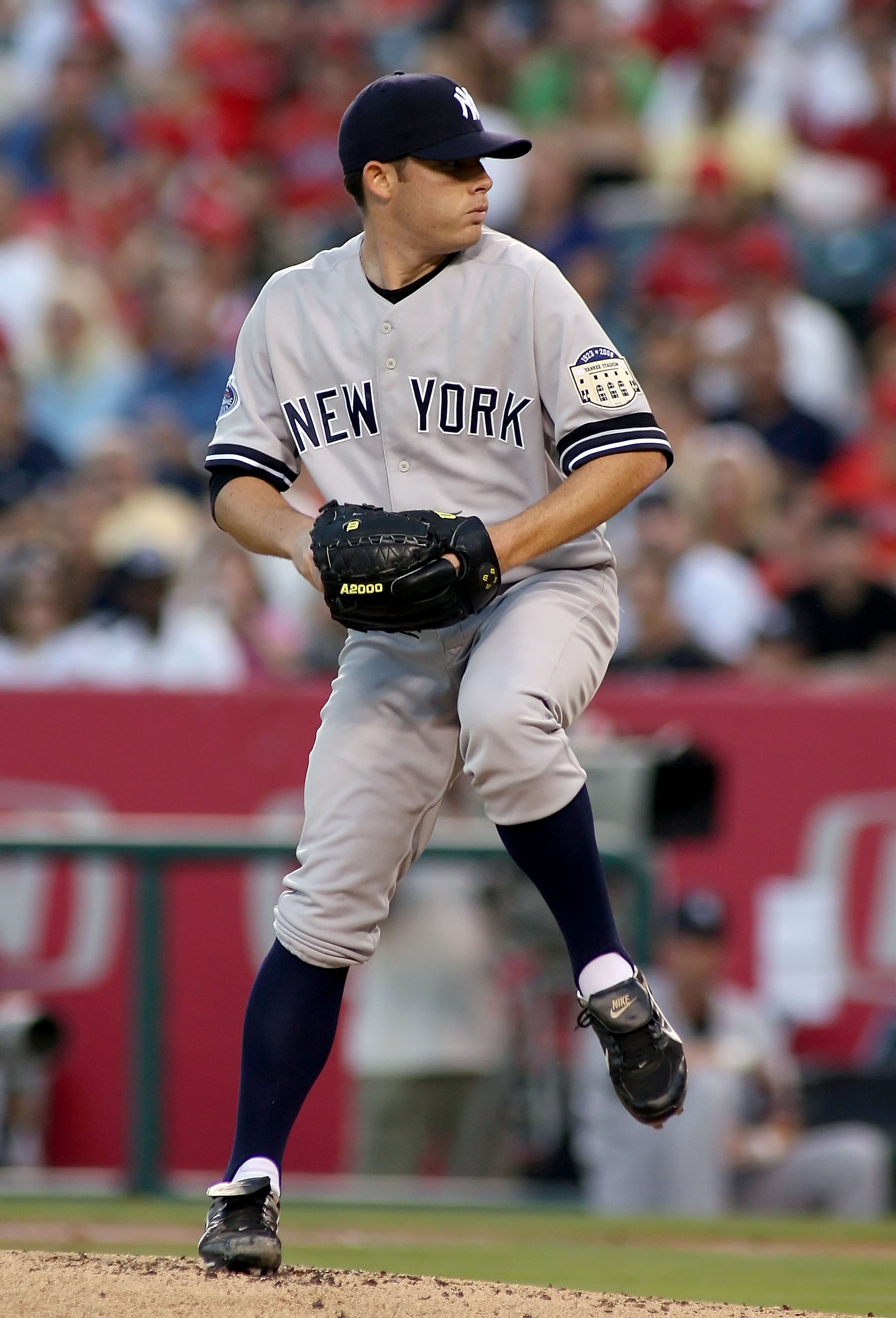
“It was one of those things … as the draft gets closer, you start to get a feel of who might get to you, and we thought there was a good chance he would get down to us,” Oppenheimer said. “We did our extra homework on him, and it turned out to be good. If he did get down to us at 21, we were prepared to take him. We had him higher on our board than his actual draft spot.”
In doing his homework on the right-hander, Oppenheimer reached out to some people at his old college campus.
“I was very close with (USC coach) Mike Gillespie, so I was able to get some pretty good information on what kind of person Ian was – and what kind of a competitor he was. That part of it was huge,” said Oppenheimer, who had played for Gillespie’s USC predecessor – the legendary Rod Dedeaux. “Watching what Ian had done for Team USA added to the comfort level of knowing what kind of a pitcher this kid was.
“I kind of had an idea that he was going to get to us. You’re always sweating it out a little bit when other teams are drafting, but with Ian … we just felt it was going to turn out our way.”
Twenty slots later, the Yankees stayed at the major-college level in selecting University of Nebraska right-hander Joba Chamberlain.
“Joba was a guy we had really close to 21,” Oppenheimer said. “A lot of teams had questionable medical on Joba, but our people were satisfied that his medical was fine, that he was going to be able to be durable, and that he’d be solid.
Rangers Claim Pete Kozma From Yankees
The Rangers have claimed infielder Pete Kozma off waivers from the Yankees, per an announcement from New York. Texas will make a corresponding move to create room for Kozma when he reports, tweets Evan Grant of the Dallas Morning News.
The 29-year-old Kozma had been in limbo since the Yankees designated him for assignment Friday, which came when the team activated shortstop Didi Gregorius from the disabled list. Kozma appeared in 11 games this month for the Yankees, though he only collected 10 plate appearances. The ex-Cardinal didn’t play in the majors at all last season, instead spending the year with the Yankees’ Triple-A affiliate. Kozma hit a non-threatening .222/.288/.293 in 693 plate appearances with St. Louis from 2011-15, but he did provide quality work at shortstop with 11 Defensive Runs Saved and a 9.9 Ultimate Zone Rating in 1,432 innings at the position.
For Texas, the addition of Kozma could lead to a minor league demotion for former star prospect Jurickson Profar, Grant suggests (on Twitter). In 15 games this year, most of which have come in left field, Profar has posted a .135/.289/.135 line across 46 PAs. He hasn’t appeared in a game since April 25.
East Notes: Yankees, Mets, Phillies, Rays
Yankees first baseman Greg Bird has followed a sensational spring training with a horrid April, having hit .107/.254/.214 with 21 strikeouts in 67 plate appearances, but the team will be patient with the 24-year-old. Asked Sunday if Bird is a candidate for a minor league demotion, general manager Brian Cashman said, “It’s not even an option for me in my mind right now, at all” (Twitter link via Bryan Hoch of MLB.com). The Yankees’ other first baseman, Chris Carter, hasn’t fared much better than Bird (.182/.222/.333 in 36 PAs), but their woes haven’t stopped the Bombers from posting a major league-best 15-7 record.
Even more surprising is that the Yankees’ success has come without arguably their best player, catcher Gary Sanchez, who landed on the disabled list April 8 with a right biceps strain. Fortunately for New York, Sanchez is nearing a return – he’ll start a Triple-A rehab assignment Tuesday and could rejoin the big club next weekend, reports Sweeny Murti of WFAN (on Twitter). The Yankees began 1-4 with Sanchez and have gone 14-3 without him, thanks in part to the fact that reserve backstop Austin Romine has filled in with aplomb. The normally light-hitting Romine has unexpectedly done a decent Sanchez impersonation with a .300/.339/.460 line in 56 PAs.
More from the East Coast:
- Mets first baseman Lucas Duda, on the disabled list since April 21 with a hyperextended left elbow, will stay on the DL beyond the 10-day mark. Duda felt a “twinge” in his elbow after playing a rehab game Friday, and the Mets have shut him down until Tuesday as a result, per Kristie Ackert of the New York Daily News. The Mets’ offense is just 17th in the majors in runs and 26th in wRC+, so a longer-than-expected absence for Duda isn’t optimal (especially with Yoenis Cespedes also out). With a .238/.360/.571 line in 50 trips to the plate, Duda has been one of the slow-starting club’s top performers this year.
- Given that the Phillies’ Tommy Joseph is off to a dreadful start this season (.190/.235/.270 in 68 PAs), he could lose time at first base to left fielder Howie Kendrick when the latter comes off the DL, writes Jim Salisbury of CSNPhilly.com. Kendrick got some work at first during batting practice in each of the past two days, and shifting him there would enable the Phillies to keep left fielder Aaron Altherr‘s bat in the lineup, notes Salisbury. First base isn’t foreign to the 33-year-old Kendrick, who has seen action in 89 games there. The offseason trade acquisition from the Dodgers slashed a stellar .333/.395/.487 in 43 PAs before going on the DL on April 18 with an abdominal strain.
- Outfielder Colby Rasmus is closing in on his Rays debut, according to Marc Topkin of the Tampa Bay Times (Twitter link). Rasmus, who’s working his way back from the hip and core muscle surgeries he underwent as an Astro last October, will play a Double-A rehab game Sunday and could be on the Rays’ 25-man roster by Tuesday or Wednesday. The Rays signed Rasmus to a one-year contract worth a guaranteed $5MM in January.
Yankees Designate Pete Kozma, Activate Didi Gregorius
The Yankees announced on Friday that they’ve activated shortstop Didi Gregorius from the disabled list and designated infielder Pete Kozma for assignment to clear a spot on the 25-man roster.
The 27-year-old Gregorius has missed the entire season to date due to a strained right shoulder. Kozma was added to the Yankees’ roster to serve as a backup to Ronald Torreyes, who has been filling in at short, though Torreyes will now presumably slide into that utility role that Kozma had held. In 11 plate appearances with the Yanks, Kozma collected one hit and a walk. Well regarded for his defense at shortstop, Kozma is a career .221/.286/.290 hitter in 699 plate appearances — the vast majority of which came with the Cardinals from 2011-15.
Offseason In Review: New York Yankees
This is the latest entry in MLBTR’s Offseason In Review series. The full index of Offseason In Review posts can be found here.
The Yankees entered the offseason with multiple holes to fill after trading away veterans at last year’s deadline, but following a couple of early splashes, the team remained quiet for the bulk of the winter.
Major League Signings
- Aroldis Chapman, LHP: Five years, $86MM
- Matt Holliday, OF/DH: One year, $13MM
- Chris Carter, 1B/DH: One year, $3.5MM
- Total spend: $102.5MM
Trades and Claims
- Traded C Brian McCann to the Astros in exchange for RHPs Albert Abreu and Jorge Guzman
- Traded RHP Nick Goody to Indians in exchange for cash or player to be named later
- Traded LHP James Pazos to the Mariners in exchange for RHP Zack Littell
- Claimed LHP Joe Mantiply off waivers from the Tigers (later outrighted and re-signed to minors deal)
Notable Minor League Signings
- Ruben Tejada, Jon Niese, Ernesto Frieri, Ji-Man Choi, Donovan Solano (re-signed), Nick Rumbelow (re-signed), Joe Mantiply (re-signed)
Extensions
- None
Notable Losses
- Mark Teixeira, Brian McCann, Nathan Eovaldi, Billy Butler, Dustin Ackley, Richard Bleier (waivers), Jacob Lindgren (non-tendered)
Needs Addressed
The Yankees managed to flirt with contention late into the 2016 season despite acting mostly as sellers at the non-waiver trade deadline. New York’s three-headed bullpen monster of Aroldis Chapman, Andrew Miller and Dellin Betances (often referred to as “No Runs DMC”) was the envy of clubs around the league early in the season and will be imitated (though not likely replicated) for years to come. However, GM Brian Cashman tore that trio apart just prior to the deadline, dealing Chapman to the Cubs and Miller to the Indians in exchange for a king’s ransom of prospects, thus creating a need in the ‘pen.
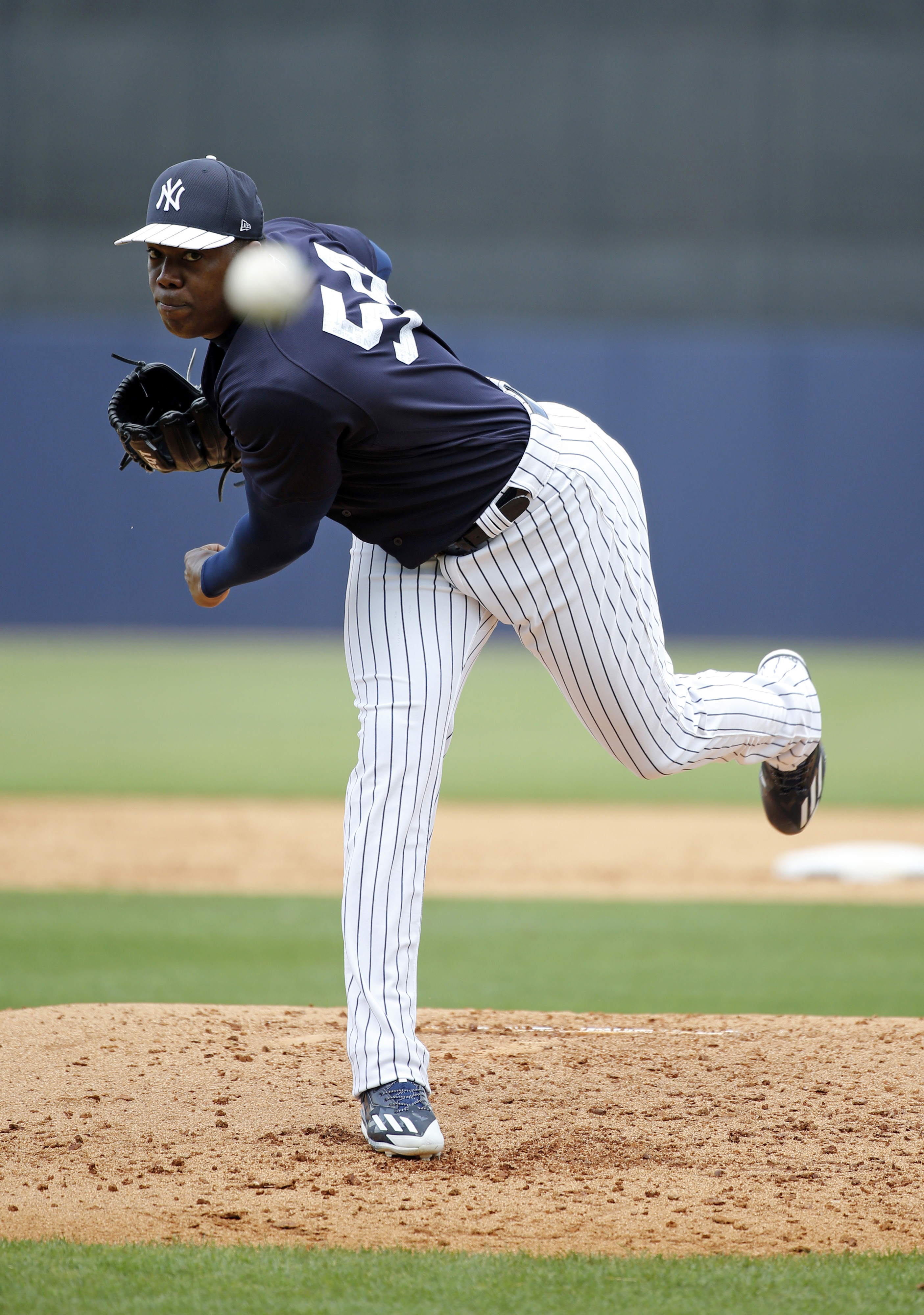
New York was linked to each of the “big three” closers on the market — Chapman, Kenley Jansen, Mark Melancon — but ultimately stuck with a known commodity by signing Chapman to a record-setting five-year, $86MM contract. The deal allows Chapman to opt out in three years, should he see fit. Following that addition, the Yankees were linked to countless other relievers, including Boone Logan, Jerry Blevins and Brett Cecil, but Chapman was their lone Major League signing.
Also changing hands at last year’s trade deadline was Carlos Beltran, who went to the Rangers in exchange for yet another pair of prospects. Cashman & Co. explored the possibility of re-signing Beltran and also looked into top slugger Edwin Encarnacion for the better part of a month as they sought to add a DH bat. Ultimately, they settled on a more affordable option, inking Matt Holliday to a one-year, $13MM deal. The Yankees hit just .254/.317/.391 as a collective unit against left-handed pitching last season, and while Holliday had his own troubles against southpaws in 2016, they were largely BABIP driven. He still showed good power and solid strikeout and walk rates against lefties and should help with that deficiency.
Of course, when looking for ways in which to improve performance against left-handed pitching, clearing space for young Gary Sanchez to see regular at-bats likely ranked near the top of the Yankees’ list of priorities. That goal was accomplished by shipping Brian McCann and $11MM to the Astros in exchange for a pair of low-level righties. That deal not only opened the door for Sanchez, who hit .299/.376/.657 as a rookie (albeit with a significant slump to end the year), it also cleared a fair bit of money off the Yankees’ luxury tax ledger. For a club that has sought to get younger not only to build a sustainable core but also to escape the annual luxury taxation penalties, the two-fold value of that trade shouldn’t be overlooked.
Following those three early moves, it was a fairly quiet winter for the Yankees. While they were linked to names like Jose Quintana, Chris Sale and numerous other trade targets, the Yankees elected to hold onto their recently acquired stockpile of prospects. On the other side of the coin, veterans like Brett Gardner, Starlin Castro and Chase Headley were all said to be available in trades but failed to generate interest and/or quality offers.
The Yanks did go bargain shopping late in the winter, poking around Travis Wood‘s market and eventually snagging defensively challenged/strikeout-prone NL home run king Chris Carter on a one-year, $3.5MM deal. Relative to the $37.5MM the division-rival Orioles spent on a comparable skill set (Mark Trumbo), that pickup looks like a nice value play for the Yankees.
Questions Remaining
When previewing the Yankees’ offseason back in mid-October, I wrote that adding a rotation arm that’s controllable beyond the 2017 season seemed “imperative” for a Yankees team that is poised to lose each of Masahiro Tanaka, Michael Pineda and CC Sabathia to free agency next winter. Clearly, the New York front office didn’t agree: the closest the team came to bolstering its rotation was the minor-league signing of long-time starter and reclamation project Jon Niese, who battled in camp for a pen spot.
It was a minor miracle that three players with the injury concerns that Pineda, Tanaka and Sabathia carried into the 2016 campaign combined to start 90 games for New York. With Nathan Eovaldi gone following Tommy John surgery, Luis Severino won the fourth spot in the rotation. He’s admittedly been very promising thus far, but Severino has yet to demonstrate that he’s capable of sustaining this level of play for a whole season.
While rolling the dice, so to speak, on a pitcher of his upside is a perfectly reasonable play in a vacuum, it’s considerably riskier when the rotation is led by three injury risks with four even more inexperienced arms on hand to round out the fifth slot. Southpaw Jordan Montgomery won the fifth spot and has looked solid through three starts, but the injury question marks and inexperience that permeate the Yankees’ rotation could bite the team later this season. Righties Chad Green, Luis Cessa and Bryan Mitchell are all on hand as reserve options, though that trio has combined for just 25 Major League starts.
Looking to the bullpen, the Yanks again possess a solid late-inning trio in Chapman, Betances and Tyler Clippard. Adam Warren, meanwhile, is a fine multi-inning/swingman option, though the remainder of the relief corps, as is the case in the rotation, is lacking in experience. Tommy Layne posted a terrific ERA in the Bronx after a midseason pickup, but his secondary stats paint a less impressive picture. Rookie right-hander Jonathan Holder posted video game numbers in the minors last season but entered the year with just 5 1/3 innings under his belt. Mitchell claimed the other bullpen spot, but the 26-year-old hasn’t yet shown the ability to miss bats on a consistent basis in the Majors. Chasen Shreve, Ben Heller, Green and Cessa are among the depth options in the upper minors, but it still looks like there was room to add another arm to the bullpen this winter.
Perhaps the lack of additions shouldn’t come as a surprise, however. The Yankees are a club that has oft stated a desire to get younger, and that’s played out both in the pitching staff and throughout the lineup. The early returns on both Aaron Judge and Aaron Hicks are both extremely encouraging — so much so that Gardner’s playing time could potentially take a hit. (Should that play out, expect to hear his name once again bandied about trade rumors.)
The results at first base have been far less encouraging, with Greg Bird and Carter both struggling. Tyler Austin was lost for all of Spring Training due to a fractured foot and has yet to get back into the Triple-A lineup, so the Yanks will have to hope for one of the current options to come alive at the plate. If no one from that group can get it going at the plate, this past offseason served as proof that the current supply of first basemen is larger than the demand, so perhaps an addition could be made.
From a larger-picture perspective, the future of several veteran Yankees is also worth speculating upon. Gardner, Headley and even Castro (despite his relative youth) were all prominently featured in trade rumors this winter. As previously noted, Judge and Hicks could diminish Gardner’s role if both stay productive, and Clint Frazier is waiting in the wings in Triple-A. Either Castro or the resurgent Headley could become expendable as well, once Gleyber Torres reaches the cusp of the Majors. And, of course, moving any of those veterans would further help the Yankees move away from the dreaded luxury tax threshold, as each is playing on a significant multi-year deal.
Deal(s) of Note
The Yankees will face obvious public relations issues for years to come for acquiring Chapman not once, but twice in the wake of his domestic violence allegations in the 2016-17 offseason. Some will move on and prioritize Chapman’s on-field contributions over his off-field issues, but there will be fans and industry folk alike that pass harsh judgment on the organization.
From a purely baseball standpoint, though, the Chapman contract was noteworthy for the Yankees themselves and for the future of free-agent relievers. Chapman was one of three relievers to break Jonathan Papelbon‘s fairly long-standing record (four years, $50MM) for a relief pitcher this winter. Beyond that, each of Chapman, Jansen and Melancon secured an opt-out provision in his contract, further boosting the premium that is placed on elite bullpen help.
That’s especially notable as we look ahead to the mega-class of free agents that looms in the 2018-19 offseason; Zach Britton will headline that year’s crop of relievers, with Cody Allen, Kelvin Herrera and Jeurys Familia all on the open market as well. While it’d be tough for any of them to top Chapman’s $86MM guarantee (Britton seemingly has the best chance), this offseason unquestionably helped to move the market forward for top-tier relief help.
And yet, despite the exceptional value placed on Chapman and other relievers in free agency, the arbitration system lags behind. There’s no greater evidence of that disconnect than the bizarre scenario that unfolded between the Yankees and setup man Dellin Betances.
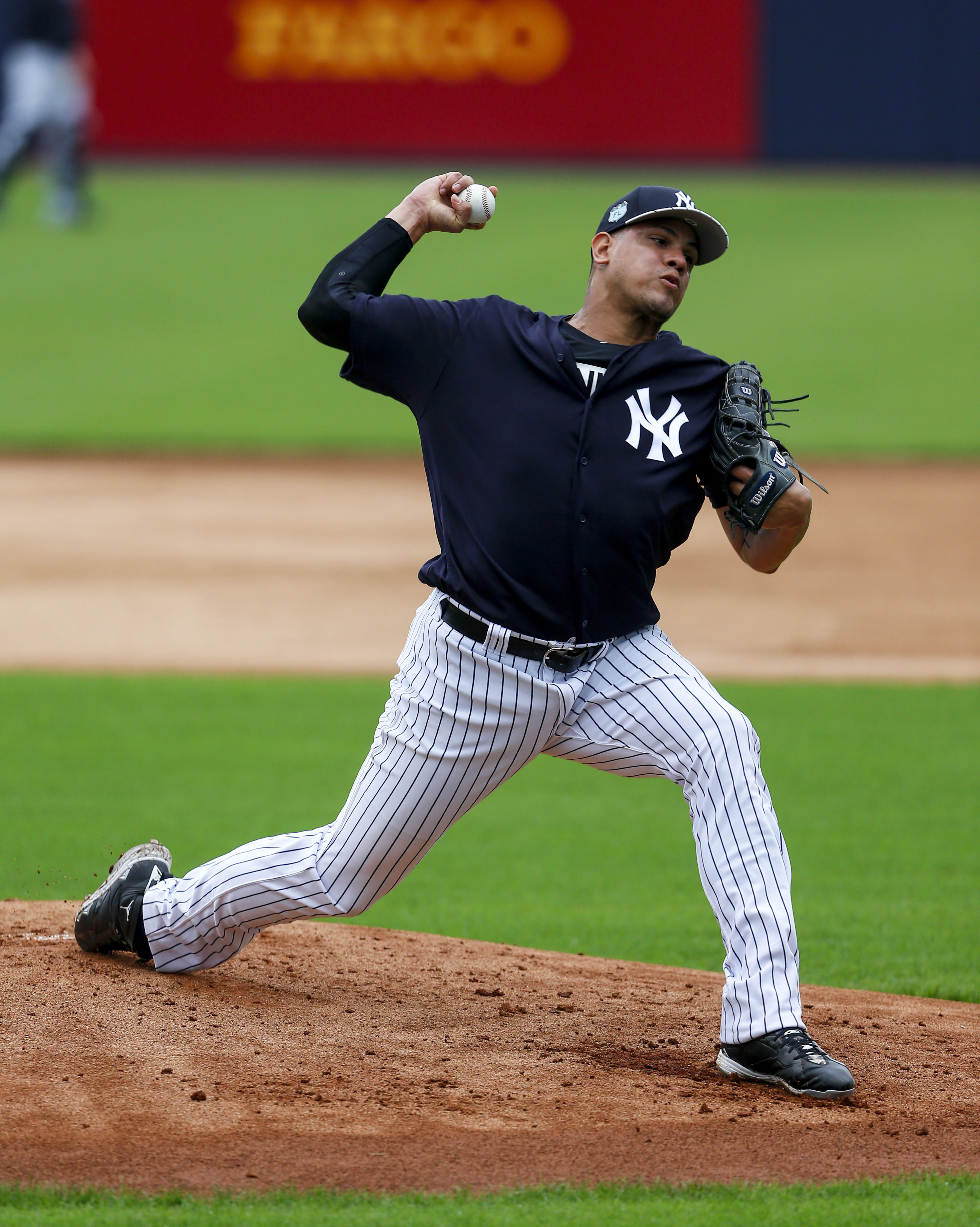
Betances carried one of the most unique arbitration cases in recent history into the hearing room this offseason, as he filed for a $5MM salary against the Yankees’ $3MM submission.
Saves are king in arbitration dealings, and Betances is lacking in that department, with just 22 in his career. However, few relievers hit their first trip through arb with anywhere near the combination of 22 saves and 78 holds that Betances carried, and none has done so with those totals and Betances’ rate stats. The 28-year-old, to date, has registered a career 2.16 ERA with 14.3 K/9 against 3.5 BB/9.
Betances ultimately lost his case, which was noteworthy on its own, but the bizarre tirade from Yankees president Randy Levine that followed the hearing was even more head-scratching. Seemingly unprovoked, Levine blasted Betances and his reps for attempting “to change a well-established market” by seeking a significant raise for a pitcher who had not been utilized as a pure closer. The unnecessary tirade may have damaged the relationship with Betances, as the righty said shortly thereafter that he thinks free agency “will be a little easier when the time comes.”
There’s admittedly little in the way of impact on the Yankees’ roster in the near future, and perhaps the two sides can bury the hatchet between now and the completion of the 2019 season, when Betances will be a free agent. But it’s nonetheless rare to see an executive so brazenly call out one of his players, especially with nothing to gain from the ordeal.
Overview
The Yankees broke the bank on arguably the most dominant reliever in the game, but the remainder of their moves were either short-term or made with an eye toward continuing to inject youth into the roster. For a team that won 84 games last season, a full year of Chapman in the ‘pen and Sanchez behind the plate seems like a recipe for improvement. However, the Yankees almost wholly ignored their lack of rotation depth, instead continuing to bank on a trio of injury-prone starters and a host of unproven young pitchers that may or may not prove to be capable rotation cogs in the long-term.
For a team with postseason aspirations, the contradictory nature of spending $86MM on a closer while simultaneously passing up the ability to add rotation help despite an abundance of affordable arms is confounding. The Yankees’ roster is teeming with young talent and upside, but a few extra arms in what wound up being a buyers’ market for pitching would’ve gone a long ways toward bolstering their playoff hopes. Moreover, the plan for 2018 remains cloudy, as there’s no one with an established Major League track record controlled beyond the current season
The Yankees are off to a strong start and may well return to the playoffs in 2017. Their minor league depth is impressive, to say the least, but I can’t help wondering if the top-heavy allocation of resources in the rotation and in the bullpen necessitated relying too heavily on that depth this year.
Cast your own vote on the Yankees’ offseason below (link to poll for Trade Rumors app users)…
How would you grade the Yankees' offseason?
-
B 51% (1,500)
-
A 22% (654)
-
C 18% (539)
-
D 4% (116)
-
F 4% (109)
Total votes: 2,918
Photos courtesy of USA Today Sports Images.
Central Notes: Cards, Hosmer, Rodon, Nova
The broad health arena appears to offer great potential for competitive advantage to individual MLB organizations. We have heard of medical and dietary advancements for various teams, for example, and there’s surely lots going on that isn’t being discussed fully in public. For the Cardinals, one area of focus is on training, but it’s all happening as part of a broader initiative, as Derrick Goold of the St. Louis Post-Dispatch writes. The club is building up a “department of performance” that will combine training, medical, and other related functions under one roof.
Here’s more from the game’s central divisions:
- Royals first baseman Eric Hosmer tells Rustin Dodd of the Kansas City Star that he’s not looking for changes to break out of his early-season slump. “I know I’ve been through it long enough now to realize you’ve just got to stick with your approach and it will change,” said Hosmer. Of course, the 27-year-old’s offensive malaise ties into a broader picture of uneven production over his seven-year MLB career, which has continued to raise questions about his earning power on the upcoming free-agent market. And as Dodd writes, Hosmer has several teammates who are also struggling quite a bit early on. If there’s a silver lining to the club’s 7-and-12 start, though, it’s the fact that the division leaders haven’t exactly sprinted out of the gates. Entering today’s action, the Indians and Tigers sit just 3.5 games up.
- The White Sox were able to get a look at lefty Carlos Rodon yesterday, as he played catch under the watch of pitching coach Don Cooper, as Dan Hayes of CSN Chicago writes. But that doesn’t mean there’s any further clarity to the question of when the talented southpaw will be back to the majors. Details are murky on Rodon, whose biceps injury initially seemed minor. As Hayes notes, the club had initially hoped to see Rodon push past 200 frames this year, but that’s obviously no longer a viable target.
- As righty Ivan Nova continues to produce good results for the Pirates, Ken Davidoff of the New York Post looks at why things didn’t quite turn out that way when he was pitching for the Yankees. Though Nova did have his share of success in New York, he was dealt last summer on the cusp of free agency and re-signed in Pittsburgh after eleven impressive outings. He doesn’t blame the Yankees’ handling for his uneven stint there, but does say that a lack of confidence in his standing in his old organization was partially at fault. “It’s very different when you know that you’re going to pitch every five days, that’s for sure,” says Nova. He continued to explain that he previously would worry about being dropped to the bullpen or Triple-A, explaining: “It wasn’t because they told me what’s going to happen after. It was something I put in my mind. It was my mistake, my fault, to think that way instead of keeping positive all the time.”
Injury Notes: Thornburg, Price, Sanchez, Wright, Turner, Mesoraco
Here’s the latest on some injury situations from around the game:
- Red Sox righty Tyler Thornburg has yet to progress to the point that he’s able to take the mound, manager John Farrell said today (via Jen McCaffrey of MassLive.com, on Twitter). It’s not clear whether he’s making much progress, but it seems he is still long tossing in an effort to rebuild lost shoulder strength. At present, it seems as if there’s no clear timeline for the reliever to appear in the majors for the first time with his new team.
- Meanwhile, the Red Sox seem to be slowing the rehab pace of lefty David Price, as Peter Abraham of the Boston Globe reports. It’s not believed to be related to any setbacks, but plans of letting Price face live hitters appear to be on hold for at least another week, per the report.
- The Yankees are still taking it slow with catcher Gary Sanchez, but there are some indications of progress, as Laura Albanese of Newsday writes. Sanchez, who is dealing with a biceps strain, was able to throw and take some dry cuts. He reported no issues, but the club isn’t planning to speed up his timeline, with manager Joe Girardi suggesting the original plan of a four-week absence hasn’t changed.
- In another corner of New York, the Mets are seeing some good signs from third baseman David Wright. As David Lennon of Newsday tweets. Wright was able to field balls and play catch today, though he hasn’t yet begun making throws from third base. The veteran is working back from a shoulder impingement (which was suffered as he recovered from a neck issue that arose while dealing with a serious back issue).
- Trea Turner could be back at shortstop for the Nationals sooner rather than later. As Mark Zuckerman of MASNsports.com tweets, Turner played in extended spring action and was even able to swipe a bag. That’s certainly promising news, particularly given that Turner is on the DL owing to a hamstring strain.
- After catching full games on consecutive days, Reds catcher Devin Mesoraco seems about ready to be activated, as MLB.com’s Mark Sheldon writes. It seems the club will wait to see how Mesoraco feels before making a call, though manager Bryan Price also hinted there’s more to the evaluation. “This is kind of the point in time where we’ll re-assess what he needs for any type of finishing touches or polish before he’s activated,” Price said of the backstop, who is working back from hip and shoulder surgeries. Mesoraco has struggled at the plate in limited action thus far.
Pirates Acquire Johnny Barbato From Yankees
The Yankees announced that they’ve traded right-hander Johnny Barbato to the Pirates in exchange for a player to be named later or cash. Barbato was designated for assignment by the Yankees last week. THe Bucs entered the day with a pair of open spots on their 40-man roster, so a corresponding move isn’t required. Pittsburgh announced that Barbato has been optioned to Triple-A Indianapolis.
[Related: Updated Pittsburgh Pirates Depth Chart]
The 24-year-old Barbato, originally acquired in the trade that sent right-hander Shawn Kelley to San Diego, struggled in his Major League debut with the Yanks last season, as he surrendered 11 runs in 13 innings of work. On the plus side, Barbato did post an impressive 15-to-5 K/BB ratio in that short time while averaging 94.6 mph on his fastball. Barbato’s numbers in Triple-A last season were solid as well: a 2.61 ERA with 9.1 K/9, 4.3 BB/9 and a 46.3 percent ground-ball rate in 48 1/3 frames.
There’s no immediate room in the Pittsburgh bullpen for Barbato, as manager Clint Hurdle’s relief corps is fairly well set with Tony Watson (the current closer), Daniel Hudson, Felipe Rivero, Juan Nicasio, Antonio Bastardo, Trevor Williams and long man Wade LeBlanc providing a nice blend of both left- and right-handed options. Bastardo has gotten off to a rough start, but his $6.5MM salary probably gives him a bit of a leash to right the ship. For now, Barbato will join relievers such as A.J. Schugel and Pat Light on a Triple-A pitching staff that is fairly well stocked with depth options for the big league pitching staff (both in the bullpen and in the rotation).
Quick Hits: Yankees, Braun, Bellinger, White Sox, Kang
For a team trying to get younger, this year’s Yankees have gotten plenty of mileage out of veterans, Tyler Kepner of the New York Times writes. Chase Headley, Jacoby Ellsbury, Starlin Castro, Matt Holliday, CC Sabathia and Aroldis Chapman have all played well, as have two veteran pitchers (Tyler Clippard and Adam Warren) who were acquired at last year’s trade deadline even as the Yankees were attracting more attention for trading away veteran pitchers like Chapman and Andrew Miller. “They made all the trades last year, but we still went out and got Clippard, who’s a big part of our team now. It’s always about winning here,” says Sabathia. “I’ve only got so many bullets left. It’s at the end. I’m not interested in playing for somebody that’s not trying to win.” Here’s more from around the game.
- On Saturday, it emerged that the Dodgers and Brewers had remained in touch about a potential Ryan Braun deal. But Bill Shaikin of the Los Angeles Times writes that the two sides are not currently discussing a trade. The Dodgers are, however, keeping tabs on one of their own prospects, 1B/OF Cody Bellinger, as a potential offensive upgrade. The 21-year-old Bellinger is batting .371/.436/.657 thus far for Triple-A Oklahoma City.
- The White Sox might have the best pitching available to deal this summer, Ken Rosenthal opines in a video for FOX Sports. There’s Jose Quintana, of course, but fellow veterans James Shields and Derek Holland have also pitched well in the very early going, and closer David Robertson has been terrific. The departures of veteran pitchers during trading season could create openings for newly acquired top prospects like Lucas Giolito and Reynaldo Lopez, along with 2015 first-rounder Carson Fulmer.
- Pirates third baseman Jung Ho Kang remains stuck in South Korea after his third DUI conviction resulted in his being unable to get a visa. The Bucs are hoping to get him back, but making other plans until he does, MLB.com’s Phil Rogers writes. The Pirates are hoping to send Kang a special hitting machine that delivers hard fastballs along with MLB-style breaking pitches. “We’re trying to get him a machine with velocity and spin, to help,” says Pirates manager Clint Hurdle. “He’s been more working indoors, doing everything he can to prepare. But in here, we’re moving on until he’s back.” David Freese has performed well at third in Kang’s absence, batting .344/.482/.594 thus far.
AL Notes: Blue Jays, Yankees, A’s, Red Sox
With Toronto off to a 2-9 start, executives from rival teams are already wondering which players the Blue Jays might shop in the coming months if they don’t turn their season around, according to Buster Olney of ESPN.com. Olney lists several possibilities, the most prominent being onetime MVP-winning third baseman Josh Donaldson, who’s currently on the disabled list with a calf injury. Three members of the Jays’ rotation – J.A. Happ, Marco Estrada and Francisco Liriano – as well as right fielder Jose Bautista and shortstop Troy Tulowitzki are also candidates to end up on the move, per Olney.
More from the American League:
- Designated hitter Matt Holliday hasn’t been a member of the Yankees for long, but the 37-year-old has quickly emerged as one of their strongest leaders, writes Andrew Marchand of ESPN.com. One important member of the organization Holliday has impacted is high-end outfield prospect Clint Frazier, who told Marchand the longtime Cardinal is “the best guy” he has met in baseball. “He is the nicest guy. He has a lot to offer about [how] to go about your business on the field and how to go about it after the game and how to handle things at home,” continued Frazier. “He is someone I want to emulate, to be like him on and off the field.” The addition of Holliday has also been a positive between the lines for the Yankees, as the free agent signing has thus far hit a productive .242/.419/.394 in 43 plate appearances.
- The Athletics have placed shortstop Marcus Semien on the 10-day disabled list, retroactive to Saturday, with a right wrist contusion and recalled infielder Chad Pinder from Triple-A (depth chart). It’s possible Semien has a fracture, but the A’s will know more after he undergoes a CT scan on Monday, tweets Joe Stiglich of NBC Sports California. Semien’s wrist has been acting up since last month, which has likely contributed to the 26-year-old’s lack of power early this season. After homering 27 times and posting a .197 ISO last year, Semien has shown almost no pop in his first 46 PAs of 2017 (zero HRs, .057 ISO).
- Red Sox center fielder Jackie Bradley Jr., on the DL with a right knee sprain, could return as early as Friday, reports Jen McCaffrey of MassLive.com. The 2016 All-Star is first slated to play five innings in center with Triple-A Pawtucket on Tuesday and then nine Wednesday, per manager John Farrell. Bradley hasn’t been in Boston’s lineup since April 8, leaving Chris Young to fill in during his absence. Young has handled left field, thus shifting Andrew Benintendi to center.