
Bryce Harper Undergoes Tommy John Surgery
4:50pm: The Phillies announced the surgery and provided this update about his timeline: “The prognosis is for Bryce to be returning as the designated hitter by the All-Star break of 2023 with a possible return to play right field towards the end of the regular season.”
4:10pm: Phillies outfielder/designated hitter Bryce Harper underwent Tommy John surgery today, according to Jim Salisbury of NBC Sports Philadelphia. Salisbury adds that it went “very well” and that Harper could be back into a competitive setting by mid-May.
Harper was diagnosed with a torn ulnar collateral ligament back in May, which prevented him from throwing. However, he was still able to hit and served as the Phillies’ designated hitter for the rest of the season, delaying treatment until the offseason. The UCL injury didn’t slow him down at all, as he finished the year with a batting line of .286/.364/.514 for a wRC+ of 138. He then went bonkers in the playoffs, hitting .349/.414/.746 for a wRC+ of 217 and helping the Phillies get to the World Series.
It was reported last week that Harper would undergo a surgery of some kind, though the extent of it wouldn’t be known until he was actually under the knife. One option would have been an internal brace procedure, which generally requires less recovery time than a full Tommy John procedure. However, the ligament damage was apparently significant enough that a full TJS was eventually required.
Of the two possible outcomes, this is certainly bad news for the Phillies. However, it’s not as dire as it would be for a pitcher. TJS usually requires a pitcher to miss about 12-18 months while recovering and regaining strength, but position players can return much quicker. For example, Shohei Ohtani underwent TJS in October of 2018 but was serving as the Angels’ designated hitter by early May of 2019.
Each player and each injury are unique, so it can’t just be assumed Harper will follow the same timeline. But it does illustrate that Harper’s 2023 isn’t doomed. As Salisbury mentions, it’s possible that Harper is playing in competitive games by mid-May, presumably on some sort of rehab assignment that will see him rejoin the team after that. The next question will be when Harper will be able to retake the field, which is also something that could happen in 2023. Didi Gregorius underwent TJS in October of 2018 and was playing shortstop by June of 2019, some eight months later.
The ongoing fallout from Harper’s injury has been and will continue to be mitigated by the designated hitter. The National League didn’t adopt the DH on a permanent basis until the 2022 season, which was good timing for the Phils since it allowed Harper to stay in the lineup for most of 2022 and will allow him to return quicker next year.
While Harper is out of action at the beginning of the season, that will open up the DH spot for some of the club’s lesser defenders, such as Kyle Schwarber and Nick Castellanos. Though the DH allowed the club to hang onto Harper’s bat, it also meant that Scharber and Castellanos had to play the field much more than they originally envisioned. For at least part of 2023, they will have more ability to use the DH slot for those guys. The club’s regular outfield mix is slated to consist of those two along with Brandon Marsh in center. If one of the corner outfielders is in the DH slot, it opens playing time for guys like Matt Vierling or Dalton Guthrie. Then again, the club could also use the DH slot to get Darick Hall into the lineup more, as the first baseman is currently block by Rhys Hoskins there.
Aaron Judge Meets With Giants
November 23: Jon Morosi of MLB Network says that the meeting went well and that the Giants are expected to make an offer to Judge soon.
November 21: The Giants are planning to sit down with the market’s top free agent this week, as Jon Morosi of MLB.com tweets they’re expected to meet with Aaron Judge. Mark Feinsand of MLB.com reports the parties have a sit-down scheduled for tomorrow (on Twitter).
It’s notable but entirely unsurprising to see the Giants in the market for Judge. They’ve long been speculated as perhaps the top threat to the Yankees for the reigning AL MVP’s services. That’s both a reflection of the slugger’s ties to Northern California and, more importantly, to the abundance of financial breathing room at the Giants’ disposal. As MLBTR’s Darragh McDonald explored this afternoon, the Giants are as well-positioned as any team to make a major splash on the open market.
San Francisco’s 2023 payroll commitments are presently estimated around $133MM, per Roster Resource. They’ve opened seasons with player spending upwards of $200MM in previous seasons, and while those heights were reached before the pandemic, they’re still well shy of last year’s $155MM Opening Day figure. The long-term books are almost bare, with just over $20MM in guaranteed commitments for 2024. By 2025, the club has only a $3.5MM player option for Wilmer Flores on the ledger. In that context, it’s easy to understand president of baseball operations Farhan Zaidi declaring at the GM Meetings earlier this month that “from a financial standpoint, there would be nobody that would be out of our capability.”
That includes Judge, who’s expected to land the largest deal of the offseason. He set the AL home run record with 62 home runs and hit .311/.425/.686 through 157 games. It’d have been nearly impossible to draw up a better platform season, and while Judge certainly can’t be expected to replicate that kind of production, he’s now a career .284/.394/.583 hitter in over 3000 MLB plate appearances. Few players are more imposing offensive forces. Judge also typically rates as an above-average defensive right fielder and played reasonably well over 632 2/3 innings of center field work for the Yankees this past season. He’d probably be a better fit for the corner in spacious Oracle Park, but his play in right field would upgrade an outfield defense that was among the league’s worst this year.
MLBTR predicts Judge to land an eight-year deal worth $332MM; the $41.5MM average annual value would rank second all-time, while it’d be the largest overall guarantee for a free agent in history. While the Yankees and Giants are generally perceived as the favorites in the bidding, he’s also been linked to the Dodgers. Feinsand first reported last month that L.A. was considering the possibility of jumping into the Judge market while contemplating kicking Mookie Betts into second base. Jon Heyman of the New York Post reiterated the Dodgers’ interest last week.
Of course, there are myriad possibilities for the Giants (and other big-spending teams) beyond Judge. San Francisco has also been connected to the top free agent shortstops available — Trea Turner, Carlos Correa, Dansby Swanson and Xander Bogaerts — as well as center fielder Brandon Nimmo. San Francisco also has needs in the bullpen and could look to make a splash at the top of the rotation. There are a number of avenues for Zaidi and his front office to explore, starting at the very top of free agency.
Red Sox Sign Joely Rodriguez
11:49am: Rodriguez will earn a $500K bonus for reaching each of 30, 60, 90 and 120 days on the active roster in 2023, MLBTR has learned.
10:28am: The Red Sox have signed left-handed reliever Joely Rodriguez to a one-year deal with a club option for the 2024 season, per a team announcement. Rodriguez, a client of L.A. Sports Management, will be guaranteed $2MM in the form of a $1.5MM salary in 2023 and a $500K buyout on a $4.25MM club option for the 2024 campaign, Chad Jennings of The Athletic reports (via Twitter).
MassLive.com’s Chris Cotillo tweets that Rodriguez can earn up to $2MM of bonuses based on time spent on the active roster in 2023, plus $250K in each season of the deal based on games pitched. In all, it can max out at $8.25MM over a two-year term. Boston’s 40-man roster is now up to 39 players.
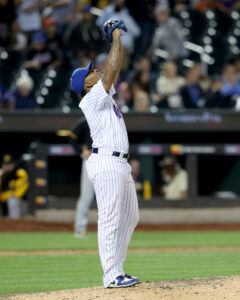
Originally signed out of the Dominican Republic by the Pirates as a teenager back in 2009, Rodriguez bounced to four different organizations before signing with the Chunichi Dragons of Japan’s Nippon Professional Baseball prior to the 2018 season. A strong two-year run with the Dragons (1.85 ERA in 87 2/3 innings) landed Rodriguez a big league deal to return to the Rangers.
Twice traded since that time, the now-31-year-old Rodriguez has spent a season with Texas and both New York clubs, pitching to a combined 4.28 ERA but more encouraging secondary marks. He’s averaged 94 mph on his heater, punched out an above-average 25.5% of his opponents and logged a huge 55.7% ground-ball rate. Despite a higher-than-average 10.3% walk rate, fielding-independent metrics like FIP (3.14) and SIERA (3.51) all feel that Rodriguez has pitched a fair bit better than his more rudimentary ERA would otherwise indicate.
In particular, Rodriguez has excelled at limiting hard contact. Last year’s paltry 85.3 mph average exit velocity, 3.8% barrel rate and 31.8% hard-hit rate were all among the lowest marks in the league. Statcast ranked each in the 91st percentile or better among big league pitchers. Rodriguez carried a notable platoon split with the Yankees in 2021 but, upon ramping up his usage of a sinker/changeup combination (at the expense of most of his four-seamers and sliders) was generally tough on lefties and righties alike in 2022. Left-handers hit .233/.320/.326 against him, while righties were actually even worse, at .220/.325/.300.
If Rodriguez can sustain those gains against right-handed opponents and simultaneously rein in his command a bit — he walked 12% of hitters in 2022 but just 8.7% in 2021 — there’s potential for him to elevate his profile and prove to be a quality bargain on this relatively modest deal.
Rodriguez will step into a Boston bullpen that had otherwise been slated to include just one lefty: Josh Taylor. It’s possible that Darwinzon Hernandez or one of recently selected Chris Murphy and Brandon Walter could eventually work their way into the mix, but left-handed bullpen help was a fairly clear area of need for the Sox. They’ve now made at least one move to address that — though others could certainly transpire — and done so in affordable fashion. With Rodriguez on the books, Boston’s payroll sits at a projected $133.8MM, while their luxury-tax ledger is just north of $153MM.
Angels Acquire Hunter Renfroe From Brewers
The Angels’ early-offseason aggressiveness continues. The Halos announced the acquisition of outfielder Hunter Renfroe from the Brewers on Tuesday night. Pitchers Janson Junk, Elvis Peguero and Adam Seminaris head to Milwaukee in return.
It’s the third early strike of the offseason for the Halos, who’ve already signed starter Tyler Anderson to a three-year free agent deal and acquired infielder Gio Urshela in a trade with the Twins. Now, they take a step towards fixing an outfield that had a major question mark alongside Mike Trout and Taylor Ward.
Renfroe should solidify the corner outfield spot opposite Ward. He’s been an above-average hitter in each of the past two seasons, with strikingly similar production for the Red Sox in 2021 and Brewers this year. The former first-rounder has combined for 60 home runs over the last two seasons, following up a 31-homer showing with the Sox with 29 more in Milwaukee. He had an identical .315 on-base percentage in each year but more than offset that modest number with big power production.
The right-handed hitter has hit between .255 and .260 in each of the last two years while slugging around .500 both seasons. He has a cumulative .257/.315/.496 line in just under 1100 plate appearances going back to the start of 2021. His 22.9% strikeout rate is right around average, while he’s walked at a slightly below-average 7.6% clip. He’s a lower-OBP slugger who has particularly decimated left-handed opposition. Renfroe carries a .269/.357/.508 line over that stretch while holding the platoon advantage. He’s had starker on-base concerns but hit for enough power to remain a decent option against right-handed pitching (.252/.292/.491).
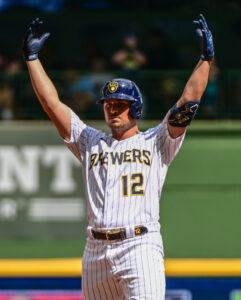
That power production is Renfroe’s calling card, but he’s also a viable defender. Defensive Runs Saved has pegged him right around league average in right field in each of the last three seasons. Statcast’s range-based metric has Renfroe a few runs below average annually, but he compensates for his fringy athleticism with top-tier arm strength. He’s picked up double-digit assists in each of the last two years, and he leads all MLB outfielders with 27 baserunners cut down in that time.
Renfroe’s excellent arm strength has kept him primarily in right field over the past few years, although he did log a number of innings in left earlier in his career. If he steps into right field at Angel Stadium, that’d push Ward over to left field. Former top prospect Jo Adell now looks as if he’ll be relegated to fourth outfield/bench duty after beginning his career with a .215/.259/.356 showing in roughly one full season’s worth of games. Adell is still just 23 years old and coming off a solid year in Triple-A Salt Lake, but the Angels don’t appear prepared to count on him for a regular role as they look to vault their way into the playoff picture in 2023.
As with last week’s Urshela trade, the Renfroe acquisition is about deepening the lineup with a productive but not elite veteran for a season. Renfroe turns 31 in January and is in his final season of club control. He’s projected by MLBTR contributor Matt Swartz for an $11.2MM salary, and he’ll be a free agent at the end of the year. That’s a reasonable sum for a player of this caliber, but one moderately expensive season of arbitration control over a lower-OBP corner slugger isn’t teeming with trade value. Renfroe is the second player of that ilk dealt in as many weeks.
The Blue Jays sent Teoscar Hernández to the Mariners for reliever Erik Swanson and pitching prospect Adam Macko. That trade came as a surprise to a number of Toronto fans, but each of Swanson and Macko are arguably more appealing players than any of the trio of pitchers Milwaukee received in this swap. Hernández is a better hitter than Renfroe is, but the gap between the former’s .282/.332/.508 line over the past two seasons and the latter’s production isn’t all that dramatic. Nevertheless, Renfroe has had a hard time sticking in any one spot as his price tag has escalated throughout his arbitration seasons. The Halos will be his fifth team in as many years, as he’s successively played for the Padres, Rays, Red Sox and Brewers going back to 2019.
Adding his projected arbitration salary pushes the Halos’ estimated 2023 payroll up to around $192MM, per Roster Resource. That’d be the highest mark in franchise history, narrowly topping their approximate $189MM figure from this past season. They’re up to roughly $206MM in luxury tax commitments, around $27MM shy of the $233MM base threshold. The franchise’s spending capacity this winter has been in question with owner Arte Moreno exploring a sale of the franchise. There’s still no indication the club is willing to approach luxury tax territory, but the acquisitions of Anderson, Urshela and Renfroe have tacked on an estimated $31.9MM in 2023 spending. The latter two players represent one-year investments, but it seems Moreno is affording general manager Perry Minasian and his group some leeway to add to the roster in advance of the club’s final season of control over defending AL MVP runner-up Shohei Ohtani.
The Brewers add a trio of pitchers, two of whom already have big league experience. Junk is a former 22nd-round pick of the Yankees. He went to the Halos in the 2021 deadline deal that sent southpaw Andrew Heaney to the Bronx. The right-hander has pitched in seven MLB games over the past two seasons, starting six. He’s allowed a 4.74 ERA through 24 2/3 innings, striking out a below-average 19.4% of opponents but posting a sterling 4.4% walk rate.
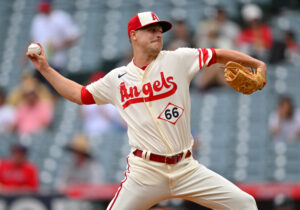
Junk, 27 in January, leans primarily on a low-80s slider which prospect evaluators suggest could be an above-average pitch. He has decent spin on his 92-93 MPH four-seam but hasn’t cemented himself on a big league staff to this point. He spent most of this year on optional assignment to Salt Lake, where he posted a 4.64 ERA through 73 2/3 innings as a starter in a hitter-friendly environment. His 22.1% strikeout percentage was a touch below average, but he only walked 5.8% of opponents. The Seattle University product still has a pair of minor league option years remaining and can bounce between Milwaukee and Triple-A Nashville as rotation or middle relief depth.
Peguero, on the other hand, is a pure reliever. The righty debuted with three appearances as a COVID replacement late in the 2021 season. He earned a permanent 40-man roster spot last offseason and appeared in 13 games this year. Tasked with low-leverage innings, Peguero put up a 7.27 ERA across 17 1/3 innings. He only struck out 15.6% of opponents but got swinging strikes on a more impressive 12% of his total pitches. The Dominican Republic native induced grounders on roughly half the batted balls he surrendered in the majors.
He also had an excellent year in Salt Lake, where he tossed 44 1/3 frames of 2.84 ERA ball. Peguero fanned 27.5% of batters faced against a quality 7.1% walk rate and racked up grounders at a huge 57.5% clip. Like Junk, Peguero leaned primarily on a slider during his MLB look, although he throws much harder. Peguero’s slider checked in at 91 MPH on average while his fastball sat just north of 96. He turns 26 in March and also has two options remaining, so the Brewers can deploy him as an up-and-down middle reliever while hoping he can translate his Triple-A success against big league opponents.
Seminaris went in the fifth round in the 2020 draft out of Long Beach State. A 6’0″ southpaw, he wasn’t ranked among the top 30 prospects in the Anaheim system at Baseball America. He traversed three minor league levels this year, showing well at High-A against younger competition but struggling as he climbed the minor league ladder. Altogether, he worked 101 2/3 frames of 3.54 ERA ball with a 22.1% strikeout rate and an 8.7% walk percentage. He’s not on the 40-man roster but will have to be added by the end of the 2023 season or be exposed in the Rule 5 draft.
While Milwaukee clearly likes all three mid-20’s hurlers, they’re each flexible depth options. Surely, a key motivator in the deal was reallocating Renfroe’s hefty arbitration projection. Slashing payroll wasn’t the sole impetus for the trade — the Brewers could’ve simply non-tendered Renfroe last week if they were committed to getting his money off the books — but GM Matt Arnold and his staff elected to clear some payroll room while bringing in a few depth arms of note.
The Brewers are projected for a salary around $115MM at Roster Resource thanks largely to an arbitration class that still includes Corbin Burnes, Brandon Woodruff and Willy Adames, among others. That’s about $17MM shy of this year’s Opening Day mark, and more roster shuffling figures to be on the horizon. Dealing a complementary player like Renfroe doesn’t suggest the Brewers are about to flip any of Burnes, Woodruff or Adames, but Milwaukee could consider moving second baseman Kolten Wong or a depth starter like Adrian Houser or Eric Lauer. They’ve already drawn some interest from the Mariners on Wong and are sure to contemplate a number of ways to try to balance the present and the future.
Milwaukee could now dip into the lower tiers of the free agent corner outfield market to backfill for Renfroe’s absence, with Tyrone Taylor standing as the current favorite for playing time alongside Christian Yelich and Garrett Mitchell in the outfield. Highly-touted young players like Sal Frelick and Joey Wiemer could play their way into the mix midseason, but it’d be a surprise if the Brewers didn’t add at least one veteran outfielder before Opening Day.
Images courtesy of USA Today Sports.
Phillies Extend Dave Dombrowski Through 2027
The Phillies have agreed to a three-year contract extension with president of baseball operations Dave Dombrowski, reports Jim Salisbury of NBC Sports Philadelphia (Twitter links). He was already signed through 2024, meaning Dombrowski will now run baseball operations in Philadelphia through the 2027 season. The team announced the extension shortly after Salisbury’s report.
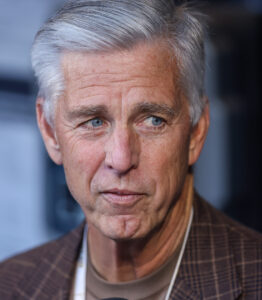
Hired as the first person to ever hold the “president of baseball operations” title for the Phillies back in 2020, Dombrowski is now set to be entrenched atop the Phillies’ baseball operations hierarchy for another half decade.
It’s been a short but thus-far successful run for Dombrowski, even if a majority of the Phillies’ 2022 World Series roster — including Bryce Harper, Zack Wheeler, Aaron Nola, Ranger Suarez, Rhys Hoskins, Jean Segura and Seranthony Dominguez — was inherited from the prior regime. Dombrowski was running the ship when the team agreed to re-sign catcher J.T. Realmuto to a five-year contract, and the first year of his four-year investment in Kyle Schwarber has paid considerable dividends. Trades made to acquire Jose Alvarado, David Robertson, Kyle Gibson, Garrett Stubbs, Noah Syndergaard and Edmundo Sosa have all worked out well thus far.
Beyond the players on the field, Dombrowski deserves credit for the leadership placed around them. The decision to fire veteran manager Joe Girardi, who was hired as skipper before Dombrowski joined the organization, and replace him with bench coach Rob Thomson was likely not one that was made lightly. Dombrowski also brought hitting coach Kevin Long into the fold in the 2021-22 offseason and has already extended him through the 2025 season.
As with any baseball operations leader, Dombrowski’s tenure in Philadelphia contains its share of both hits and misses. A two-year deal to re-sign Didi Gregorius proved regrettable, and the free-agent moves made to address the bullpen (Jeurys Familia, Brad Hand, Archie Bradley, Corey Knebel) haven’t panned out as hoped.
Looking specifically at the past year, the Phils entered the 2021-22 offseason with glaring holes both at shortstop and in center field, and neither was addressed heading into the 2022 season. Rather than addressing those areas and looking to improve a team known as one of the worst defensive clubs in the league over the past ten years or so, the Dombrowski-led Phillies instead inked Schwarber and Nick Castellanos to long-term contracts, committing to playing one in the field full-time in the process. Now, with Harper set for elbow surgery and likely in need of increased DH time in 2023, both Castellanos and Schwarber will again be thrust into regular defensive work. Castellanos’ first year with the Phils was a disappointment, and he’ll be looking for a rebound effort in 2023.
At shortstop, Dombrowski bucked the “farm system destroyer” narrative and held onto top prospect Bryson Stott, giving him a chance at the everyday job even in spite of a stacked free-agent class of shortstops last winter. Stott didn’t hit much and looked better at second base than at shortstop, though, and the Phillies now seem poised to be players in what is again a deep collection of shortstops.
Still, the decision to hang onto Stott and top pitching prospects Andrew Painter, Mick Abel and Griff McGarry runs somewhat counter to Dombrowski’s prior penchant for aggressive trades that thin out the top end of a farm system in the name of win-now moves. The only truly high-end prospect he’s traded away is catcher Logan O’Hoppe, who was facing a Realmuto-sized roadblock to playing time in Philadelphia. That swap brough Brandon Marsh to the Phils, and the early returns during the regular season were strong: Marsh slashed .288/.319/.455 with the Phillies, and the hope is that he can hold down the fort in center field on a long-term basis.
Setting aside the dissection of Dombrowski’s transactions in a still relatively limited tenure with the organization, it’s clear that owner John Middleton is comfortable working with Dombrowski and believes he and GM Sam Fuld are the right pairing to continue guiding the Phillies’ World Series aspirations. Dombrowski has won World Series titles with two different organizations and has now overseen World Series berths with a whopping four organizations. That type of success across multiple franchises is generally unparalleled, and Dombrowski now potentially has five more opportunities to secure his third World Series ring with his third different organization.
Dodgers Non-Tender Cody Bellinger
The Dodgers will not tender a contract to Cody Bellinger for his final year of arbitration eligibility, reports Ken Rosenthal of the Athletic (Twitter link). MLBTR contributor Matt Swartz had projected the 2019 NL MVP for a salary around $18.1MM. Bellinger will be a free agent once the team officially announces the decision.
It’s not a surprising move at this point, but it’s one nobody would’ve foreseen when Bellinger was collecting his MVP trophy three years ago. He blasted 47 home runs that season and posted an overall .305/.406/.629 line across 661 plate appearances. The left-handed hitter looked to have cemented himself as one of the sport’s preeminent sluggers, and he carried a career .278/.368/.559 mark in over 1800 plate appearances heading into 2020. At age 24, Bellinger seemed a budding superstar.
Unfortunately, things have gone south over the past few seasons. He stumbled a bit during the abbreviated 2020 campaign, putting up a .239/.333/.455 line in 56 games. That was still above-average production but a notable step back from the numbers of his first few seasons. A putrid .245 batting average on balls in play seemed to be a major cause of that, and one could certainly point to the anomalous circumstances that year in anticipating a bounceback.
That’s not how things have played out, seemingly in part due to an ill-advised celebration that postseason. Bellinger dislocated his right shoulder celebrating a crucial home run in Game 7 of the 2020 NLCS. While he played out the postseason, he underwent surgery in mid-November. Bellinger was healthy enough to open the 2021 campaign on the roster, but he battled a series of unrelated leg and rib issues. In between, his slash line plummeted to a meager .165/.240/.302 in 95 games.
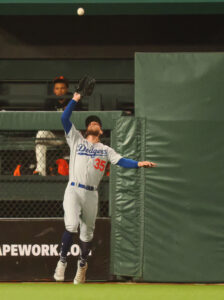
L.A. brought him back last winter, avoiding arbitration on a $17MM salary. Their hoped-for bounceback season didn’t really materialize, though. Bellinger’s 2022 numbers were improved from the prior year but nowhere near those of previous seasons. In 550 trips to the plate, he put up a .210/.265/.389 mark. That brings him to exactly 900 plate appearances over the past two years, in which he’s hit .193/.256/.355. His on-base percentage is lowest among the 151 hitters with 900+ trips to the dish, while his batting average bests only that of Joey Gallo. He’s sixth from the bottom in slugging.
Bellinger’s batted ball metrics and power output have taken a step back, which could indicate he’s never quite regained the explosiveness in his swing after the shoulder surgery. Yet he’s also seen a marked uptick in strikeouts, fanning 27.1% of the time after cutting his strikeout rate below 18% in 2019-20. His walk percentage fell to a below-average 7.7%, and manager Dave Roberts has increasingly dropped him further in the batting order.
With two full seasons of huge offensive struggles under his belt, the Dodgers have elected to move on rather than pay the two-time All-Star in the neighborhood of $18MM. That always looked to be more than even the high-spending franchise would be willing to pay, and it stands to reason no other club was willing to offer that kind of salary either. The Dodgers have presumably spent the past few weeks gauging the trade market for Bellinger, and that he’ll be cut loose for no return indicates there wasn’t much interest at that price point.
That said, there’s no question he’ll be of interest to teams as a bounceback target at a lower cost. Bellinger, to his credit, hasn’t allowed his offensive struggles to affect his work in the field. He’s an elite runner who has moved full-time to center field after coming up as a first baseman and corner outfielder. Defensive Runs Saved has rated him as a roughly average center fielder the last two years, but Ultimate Zone Rating and Statcast have pegged him above par. Statcast has been most bullish, rating him as seven runs above average in just under 1900 innings of center field work since the start of the 2021 campaign.
Slightly above-average center field defense and plus baserunning gives Bellinger a decent floor even if he’s not hitting well, although he’s obviously quite a bit more of an upside play than a traditional glove-only outfielder. He’ll look for a complete reset offensively but heading into his age-27 campaign, he could certainly still rediscover some of his old form at the plate.
Non-tendered players aren’t subject to waivers, so Bellinger will be a free agent. He and his representatives at the Boras Corporation will have the opportunity to gauge interest from other teams, and they’ll benefit from a lack of supply in center field. Excepting Aaron Judge, former Met Brandon Nimmo is the top center fielder available in free agency. Bellinger arguably becomes the next-best option in a class that also includes Kevin Kiermaier, Adam Duvall and Jackie Bradley Jr.
The Mets, Blue Jays, Marlins, Rangers, Rays, Rockies, Astros, Padres and Giants (a team run by former L.A. executive Farhan Zaidi) could all look externally for center help. They’re speculative fits for Bellinger, and the Dodgers themselves could remain in contact about a reunion at a lower price point.
Los Angeles could give Mookie Betts, Chris Taylor or Trayce Thompson increased center field run, but it stands to reason they’ll also scour the market for help outside the organization. Bob Nightengale of USA Today reports (on Twitter) they’re taking a look at Kiermaier as part of that search.
Subtracting Bellinger’s arbitration projection leaves L.A. with around $152MM in projected 2023 payroll, per Roster Resource, pending additional arbitration decisions. They’re estimated around $169MM in luxury tax obligations, leaving them well shy of next year’s $233MM base tax threshold. That doesn’t include an approximate $20MM salary for Clayton Kershaw, who’s reportedly nearing a deal to re-sign. Still, the Dodgers should have plenty of financial breathing room to address shortstop, center field, third base and rotation depth that look like the team’s biggest question marks early in the offseason.
Image courtesy of USA Today Sports.
Reds Acquire Kevin Newman
The Reds and Pirates agreed to an intra-divisional trade that sends infielder Kevin Newman to Cincinnati for reliever Dauri Moreta. Both teams have announced the deal.
Newman changes organizations for the first time in his career. Pittsburgh selected him with the 19th overall pick in the 2015 draft, and he reached the majors roughly three years later. He struggled in 31 games down the stretch as a rookie, but he had a solid sophomore showing. The University of Arizona product hit .308/.353/.446 across 531 plate appearances in 2019, securing the primary shortstop job in the process.
He held the role for the next couple seasons, but his offensive productivity wilted. Newman had well below-average numbers in both 2020-21, combining to hit just .226/.268/.302 through 726 plate appearances. Even with strong defensive metrics in 2021, his overall production hovered right around replacement level. The rebuilding Bucs continued to give him opportunities, however, and he righted the ship enough this year they managed to find a trade partner.
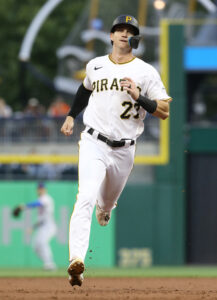
The 29-year-old posted a .274/.316/.372 mark over 309 plate appearances this past season. He lost over two months to a left groin strain mid-year, but his rate production was his best since 2019. The righty hitter’s overall offensive profile hasn’t much changed throughout his career. Newman makes a ton of contact, putting the ball in play early in counts to suppress both his strikeout and walk totals. He has very little power, with just 20 career home runs — 12 of which came during a 2019 season that saw arguably the liveliest ball in league history. He’s reliant on a quality batting average on balls in play to prop up his numbers but looks like a decent bottom-0f-the-lineup option when enough singles drop in.
Newman’s calling card is his ability to play up the middle. He’s logged over 2500 big league innings at shortstop, typically rating at or a bit below league average. He drew quality marks in 2021, but for his career, he’s been an estimated nine runs below average according to Defensive Runs Saved and six runs below par in the estimation of Statcast. Public metrics have rated him slightly below average in just under 800 career frames at second base as well.
The presence of Oneil Cruz in Pittsburgh displaced Newman at shortstop. The Bucs could’ve relied upon him at second base, but they may prefer to take a longer look at 23-year-old Rodolfo Castro with an eye towards eventually turning things to a prospect like Nick Gonzales or Liover Peguero.
Cincinnati has less clarity at shortstop with José Barrero thus far failing to seize the position. The Reds dealt Kyle Farmer to the Twins this evening and could use a stable option to hold down the position until the arrival of top prospect Elly De La Cruz, who turns 21 in January and finished this year in Double-A. Newman is arbitration-eligible for the second time this winter and projected by MLBTR contributor Matt Swartz for a $2.8MM salary; he’s controllable through 2024.
Moreta, 26, received his first big league call late in 2021. The 6’2″ righty pitched in four games down the stretch but got some decent run this past season. The Reds called upon Moreta 35 times in relief, and he worked to a 5.40 ERA through 38 1/3 innings. Moreta punched out a decent 24.4% of opponents against an average 8.1% walk rate, but he was done in by major home run issues. He surrendered 10 longballs (an average of 2.35 per nine innings), thanks in large part to a very low 32.7% ground-ball rate.
That extreme fly-ball propensity made him a rough fit for Cincinnati’s hitter-friendly home environment, but he could have a better go in the more spacious PNC Park. Moreta has a fastball that sits just under 96 MPH on average, and he missed bats on a solid 11% of his offerings this year. With a more favorable home park, it’s possible he translates those decent strikeout and walk numbers into viable middle innings work. He won’t reach arbitration until at least the end of the 2024 campaign, and he can still be optioned to the minor leagues in each of the next two seasons. He’s a big league ready middle relief depth option.
Ken Rosenthal and Rob Biertempfel of the Athletic first reported the Reds were acquiring Newman. Biertempfel was first to report Cincinnati would receive Moreta in return.
Image courtesy of USA Today Sports.
Twins Acquire Kyle Farmer
The Reds and Twins agreed on a Friday evening trade sending infielder Kyle Farmer from Cincinnati to Minnesota. The Reds landed right-hander Casey Legumina in return. Farmer is second year arbitration-eligible, and is projected to make $5.9MM, according to MLBTR contributor Matt Swartz’ predictions.
Farmer, 32, turned in a solid, if unspectacular, season for the Reds, batting .255/.315/.386 with 14 home runs. That was good for a wRC+ of 90, or ten percent worse than league average. He split time between short (98 games) and third base (36 games), grading out better at third where he was worth two Outs Above Average, against -3 at shortstop.
Originally drafted as a catcher in the eighth round of the 2013 draft by the Dodgers, Farmer made his debut 2017 with L.A. He’d go on to make 97 plate appearances over the next two seasons, working mostly at catcher and third base, before going to the Reds as part of a blockbuster deal involving Matt Kemp, Yasiel Puig and Alex Wood.
The Reds used him in 15 games at catcher in 2019, but he mostly bounced around the infield positions and that wound up being the last of his time behind the plate. He’d spent the next couple of seasons as a utility infielder before winning their starting shortstop job for 2021. While he turned in a .263/.316/.416 line with 16 home runs that year, he did play some above-average defense, earning six Outs Above Average.
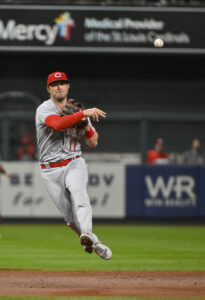
While Farmer’s numbers have never really stood out, he’s generally been a sound contributor and has been worth 3.3 fWAR across 292 games over the past couple of seasons. He can be controlled via arbitration for two more seasons, so he won’t reach free agency until after the 2024 campaign.
It’s the second major trade of the day for the Twins, after they shipped out Gio Urshela and his projected $9.2MM salary. Urshela was a bit more valuable for the Twins last year (2.4 fWAR), but Farmer offers a saving of around $3MM, and greater positional flexibility. It’s entirely possible Farmer returns to a utility role in Minnesota. With Urshela out the door, the Twins could well go with Jose Miranda and Luis Arraez at the corners, with Jorge Polanco at second. That’d mean either Farmer or an external addition at shortstop, but regardless, the arrival of Farmer gives them a bit more flexibility there.
Legumina started 2022 at High-A but spent much of the season at Double-A. He struggled as a starter, making 16 starts this year with a 5.23 ERA, striking out 8.5 batters per nine innings. As a result of his struggles, the Twins moved him to the bullpen and he immediately stood out. There, the 25-year-old threw 22 1/3 innings of 3.57 ERA, with his strikeouts rising to 12.7 per nine innings. Legumina has a four pitch mix, combining a mid-90s fastball with a slider, changeup and curveball.
The eighth round draft pick from 2019 was added to the Twins 40-man roster a few days ago ahead of the Rule 5 draft protection deadline, so he’ll take a spot on the Reds 40-man moving forward as well.
Ken Rosenthal and Dan Hayes of the Athletic first reported the Reds and Twins were in agreement on a trade sending Farmer to Minnesota. C. Trent Rosecrans of the Athletic was first to report Cincinnati would receive Legumina in return.
Image courtesy of USA Today Sports.
Marlins Non-Tender Brian Anderson, Nick Neidert
The Marlins have non-tendered third baseman Brian Anderson and right-hander Nick Neidert, reports Craig Mish of SportsGrid and the Miami Herald (Twitter links).
Anderson, 29, isn’t far removed from being a core contributor and potential extension candidate with the Marlins. The former No. 76 overall draft pick posted respectable numbers through 95 plate appearances at age 24 in his MLB debut back in 2017, and by the 2018 season he’d established himself as a fixture in the Miami lineup. From 2018-20, Anderson appeared in 341 games, tallied 1419 plate appearances and recorded a solid .266/.350/.436 slash line. He never posted huge home run totals — career-high 20 in 2019 — but showed plenty of doubles power in the Marlins’ spacious home park, logging 74 doubles in that time.
Originally a third baseman, Anderson spent much of the 2018 season in right field before beginning to split his time between right field and the hot corner in 2019. He’s logged average defensive grades across the board at third base in his career and been an above-average right fielder in the estimation of Defensive Runs Saved and Ultimate Zone Rating (though Statcast, notably, pegs him as a below-average defender in right).
The past two seasons haven’t been as productive. Anderson has been dogged by oblique, shoulder and back injuries dating back to Opening Day 2021. He’s still managed a .233/.321/.359 batting line in that time (93 wRC+), but Anderson has only been healthy enough to take the field for 165 games/647 plate appearances over the past two seasons. Coupled with a projected $5.2MM salary in arbitration (via MLBTR contributor Matt Swartz), Anderson was cut loose by a Marlins club that is seeking offense upgrades at multiple positions. He’d have been a free agent next winter anyhow, given his five-plus years of MLB service time, but Anderson will reach the market earlier than scheduled and now be able to field interest from all 29 other clubs.
Neidert, 26 on Sunday, was a more straightforward decision. While he once ranked as one of the better pitching prospects in Miami’s system, he’s totaled 49 big league innings across the past three seasons and worked to a 4.59 ERA with just a 13.3% strikeout rate against an 11.8% walk rate.
Neidert has posted strong numbers in Triple-A over the past couple seasons, so it’s possible the Fish will take advantage of the fact that today is the only time of year a player can be cut loose without having to be subjected to waivers — immediately removing him from the 40-man roster and quickly looking to re-sign him to a minor league contract. Neidert has one minor league option year remaining, though, and could appeal to some pitching-needy clubs around the league.
Tigers Non-Tender Jeimer Candelario
The Tigers are non-tendering third baseman Jeimer Candelario, reports Evan Petzold of the Detroit Free-Press (Twitter link). He’d been projected by MLBTR contributor Matt Swartz for a $7MM salary.
Candelario has been the Tigers primary third baseman for the past five seasons. Originally acquired from the Cubs in a 2017 trade, he was manning the hot corner at Comerica Park by the start of the following year. Candelario posted below-average numbers for his first two seasons, but the switch-hitting infielder showed some promise with a .297/.369/.503 line in 52 games during the abbreviated 2020 campaign.
It never looked likely he’d replicate quite that level of production over a full season, but Candelario backed up his numbers with another impressive year. Through 626 trips to the plate in 2021, he posted a .271/.351/.443 showing with 16 longballs and 42 doubles. That brought his two-year line to .278/.356/.458 in more than 800 plate appearances.
Candelario looked like an above-average regular at the hot corner, a productive middle-of-the-order bat with capable defensive marks. Like much of the Detroit lineup, he fell off sharply in 2022. Candelario’s .217/.272/.361 line across 124 games proved a major disappointment. He had some unfortunate batted ball marks, with a .257 average on balls in play well shy of both the .290 league figure and the career .308 BABIP which Candelario carried into the season.
A rebound in his ball in play results would go a long way towards getting things back on track, but the dip isn’t solely attributable to poor luck. Candelario’s 34.6% hard contact rate was almost five percentage points lower than his 2021 mark and down 12 points from where it sat in 2020. He saw a similar decline in his average exit velocity. He hit more ground balls and pop-ups than he had the previous two seasons, while his line drive rate sunk.
Whether to place a roughly $7MM bet on Candelario to right the ship for his final season of arbitration was a key early decision for new president of baseball operations Scott Harris. Detroit opted against doing so, and they could look for third base help this offseason as a result. The Tigers have Ryan Kreidler as an in-house option to play somewhere on the infield, with third base now standing as the clearest path to playing time. Should Detroit add depth at the hot corner in the coming months, Kreidler could push Jonathan Schoop for playing time at second base.
Further thinning their infield depth, Detroit non-tendered utility players Harold Castro and Willi Castro. Both were eligible for arbitration for the first time and projected for salaries in the $2MM range. They each have some infield versatility and bat-to-ball skills, but neither draws many walks or hits for power. The Tigers will look elsewhere for bench depth. Detroit also non-tendered a number of players — Michael Papierski, Miguel Díaz, Kyle Funkhouser and Brendon Davis — who’d previously been designated for assignment.
Candelario, despite his down year, is one of the better free agent options available in a weak third base class. Justin Turner is the top option after being bought out by the Dodgers, while players like Evan Longoria, Jace Peterson and fellow non-tender Brian Anderson make up the next tier.