
Angels Sign Cody Allen
Jan. 22: Allen will earn $250K upon reaching both 35 and 40 games finished, Heyman tweets. He’ll receive $500K for reaching 45, 50 and 55 games finished, and he’ll also receive a $500K assignment bonus in the event that he is traded.
Jan. 20: The deal is official, Jon Heyman of Fancred tweets. The incentives are for $2MM, not $2.5MM, Jeff Fletcher of the Southern California News Group reports.
Jan. 18: Allen will be guaranteed $8.5MM and can earn another $2.5MM based on his number of games finished, Rosenthal tweets. It’s a straight one-year deal with no options, which will allow Allen to re-enter the market next offseason — hopefully on the heels of a rebound campaign. The signing is still pending a physical.
Jan. 17: The Angels have reportedly secured a one-year deal with veteran reliever Cody Allen. Ken Rosenthal of The Athletic (Twitter link) first indicated that something may be in place, while ESPN.com’s Jeff Passan and Alden Gonzalez (Twitter links) reported that terms had indeed been agreed to.
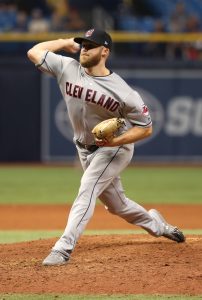
The Meister Sports Management client will need to pass a physical before the deal is official. If and when that comes to pass, it seems he’ll earn something in the realm of $9MM, though that’s not fully clear. Incentive pay could also be a feature, though that too has yet to be reported. Neither is it yet known whether the pact includes an option, though Passan suggests that’s also a possibility.
Notably, Rosenthal indicates that Allen was specifically seeking an opportunity to function as a closer — a role he has a rather clear path to in Anaheim. By prioritizing the opportunity over the total length and guarantee, he could hope to bounce back and reenter the market next winter in search of a bigger deal. Prior to his messy 2018 campaign, after all, Allen had seemed on track for a sizable, multi-year pact in free agency.
This time last year, Allen had just agreed to a $10MM deal to avoid arbitration in his final season with the Indians. He had long since laid claim to the team’s closer role. In total, as of the conclusion of the 2017 season, Allen had run up 373 2/3 innings of 2.67 ERA pitching with 11.7 K/9 against 3.4 BB/9 and 122 games saved.
With an immaculate record of durability, ample high-leverage experience, and consistently robust velocity readings and swinging-strike rates, Allen had all the makings of a top free agent closer. He was due to hit the market at a relatively youthful thirty years of age. That version of Allen might reasonably have looked to a contract like the Mark Melancon deal as a floor in free agency.
Instead, things went south in 2018. It was hardly a complete disaster, as Allen was healthy enough to make seventy appearances and save 27 ballgames while showing many of the same skills he always had. But it was a thoroughly diminished version of the hurler in many regards.
For starters, Allen averaged a career-low 94.0 mph with his fastball — a notable, though hardly monumental, decline from his typical levels. Whether that was the root cause isn’t entirely clear, but opposing batters seemingly found it easier to fight off his sliders; their contact rate on balls out of the zone jumped from below fifty percent (as low as 44.3% in 2017) all the way up to 56.9% last year. Ultimately, Allen recorded a 12.7% swinging-strike — his lowest since he became the closer for the Indians — while hard contact soared to 38.4% and he coughed up nearly a homer and a half per nine innings.
That’s not to say that all is lost. Perhaps Allen can rediscover a bit of juice on his heater, or otherwise adjust. He did end up being a bit unlucky, with Statcast crediting him with a .306 xwOBA that lagged the .323 wOBA that hitters produced against him. Things certainly didn’t end on a promising note, as Allen was bombed in two postseason appearances, but he may only be a mechanical adjustment or restful winter away from clicking back into gear.
The Halos, clearly, will take a roll of the dice on a return to form. As with rotation additions Matt Harvey and Trevor Cahill, the organization clearly hopes to unearth some gems — or, at least, pick up some solid innings at a reasonable price — without tampering with its post-2019 balance sheet. Allen is certainly a reasonable risk, with clear upside, though the pitching unit as a whole still underwhelms on paper.
Photo courtesy of USA Today Sports Images.
Mariano Rivera, Roy Halladay, Edgar Martinez, Mike Mussina Elected To Hall Of Fame
Mariano Rivera, Roy Halladay, Edgar Martinez and Mike Mussina have all been elected to the National Baseball Hall of Fame by the Baseball Writers Association of America, per tonight’s announcement from Hall of Fame president Jeff Idelson. Notably, Rivera becomes the first player in history to be unanimously selected into baseball immortality, as his name was checked on each of this year’s 425 ballots. Both Martinez and Halladay were selected on 85.4 percent of this year’s ballots, while Mussina narrowly made his way into Cooperstown with a 76.7 percent rate of selection.
Rivera was a lock to go into Cooperstown, though most expected that he’d still fall shy of unanimous enshrinement. That won’t be the case, however, as Major League Baseball’s all-time leader in saves (652), games finished (952) and ERA+ (205) was too clear a Hall of Famer for any voter to ignore. In addition to those three staggering numbers, Rivera retired with an 82-60 record, a 2.21 ERA, and an 1173-to-286 K/BB ratio in 1283 2/3 innings of regular-season work. Rivera was named to a whopping 13 All-Star teams over the course of a career that spanned parts of 19 seasons.
Of course, much of Rivera’s legacy is tied to his postseason heroics; the game’s premier reliever ratcheted up his penchant for domination in October (and November), pitching to a ludicrous 0.70 ERA with 110 strikeouts against 21 walks in 141 postseason innings. Rivera appeared in 96 postseason contests and racked up a workload that was roughly equivalent to two full regular seasons, and he somehow managed to limit opponents to just 11 earned runs in that time. He won five World Series rings with the Yankees and was named both an ALCS MVP and a World Series MVP during his illustrious career. It’s rare that players can be described with absolutism in a game as subjective as baseball, but it’s virtually unequivocal that Rivera is the best relief pitcher the game has ever seen.
Halladay, tragically, was taken from this world far sooner than his family, friends, former teammates and legions of fans could’ve imagined. The former Blue Jays and Phillies ace, a two-time Cy Young winner and eight-time All-Star, was killed when his single-engine plane crashed into the Gulf of Mexico on Nov. 7, 2017. Halladay’s widow, Brandy, offered the following statement on behalf of her late husband:
Being inducted into the Baseball Hall of Fame is every boy’s dream. To stand on that stage in Cooperstown and deliver your acceptance speech in front of baseball’s most enthusiastic fans is something that every baseball player aspires to achieve, and Roy was no exception. But that was not Roy’s goal. It was not his goal to have those three letters after his signature. His goal was to be successful every single day of his 16-year career. Tonight’s announcement is the end result of that effort. If only Roy were here to personally express his gratitude for this honor, what an even more amazing day this would be. I would like to extend special thanks to the baseball writers for the overwhelming percentage of votes that Roy received in his first year on the ballot. It means so much to me, Braden and Ryan.
It’d be difficult to argue that Halladay isn’t a deserving candidate. Beyond his Cy Youngs and All-Star nods, the right-hander pitched to a 203-105 record with a career 3.38 ERA, a 2117-to-592 K/BB ratio, 20 shutouts and 67 complete games. At a time when baseball was moving further and further away from allowing pitchers to throw a full nine innings, Halladay stood out as a throwback who led the league in complete-game efforts in seven of his 16 seasons — including five in a row from 2007-11. Baseball-Reference and Fangraphs both valued his brilliant career at 65 wins above replacement. And while Halladay doesn’t have the lengthy postseason track record of Rivera — he logged a 2.37 ERA in 38 playoff frames — I’d be remiss not to mention the masterful no-hitter he pitched against the Reds in his postseason debut back in 2010. Halladay issued just one walk in an otherwise perfect showing, putting on a masterful display and further establishing himself as a big-game pitcher on a national stage.
The 56-year-old Martinez will be a controversial addition for some onlookers, given that he spent the vast majority of his career as a designated hitter. There’s little denying, however, that the Mariners franchise icon is one of the best pure hitters Major League Baseball has ever seen. Martinez won two American League batting titles, thrice led the league in on-base percentage and hit better than .300 in 10 separate seasons.
In all, Martinez retired as a .312/.418/.515 hitter with 309 home runs, 514 doubles, 15 triples, 2247 hits, 1219 runs scored and 1261 runs batted in. While his counting stats fall shy of what some consider to be Hall of Fame benchmarks (e.g. 500 home runs, 3000 hits), Martinez was consistently elite on a rate basis right up until the final season of his career. The seven-time All-Star was 47 percent better than a league-average hitter in the estimation of park- and league-adjusted stats like OPS+ and wRC+ (147 in each). Beyond that, he was the pinnacle of consistency, tallying an OPS+ of 140 or better in all but three seasons from 1990-2003 (with those three seasons including an injury-shortened ’93 campaign, the strike-shortened ’94 campaign and a 2002 season in which he posted a 139 OPS+).
Like Martinez, the 50-year-old Mussina perhaps falls shy of some long-considered “standard” Hall of Fame benchmarks, but he was a consistently excellent pitcher during the game’s all-time offensive peak. “Moose” retired with a 270-153 record, a 3.68 ERA and a 2813-to-785 K/BB ratio in 3562 2/3 innings of regular-season ball. A five-time All-Star who won seven Gold Glove Awards and had six top-five Cy Young finishes, Mussina was a true workhorse for the Orioles and Yankees over an 18-year career that included a decade-long peak during which he posted a cumulative 129 ERA+. Mussina topped 200 innings in nine straight seasons from 1995-2003, and he padded his Hall of Fame resume with another 139 2/3 innings of 3.42 ERA ball in the postseason.
Some may be surprised to be reminded that Mussina never won a World Series, as he joined the Yankees for the first time in the season immediately following their 1998-2000 threepeat and retired a year before their ’09 return to the top of the mountain. Nevertheless, Mussina was a consistent rotation stalwart who thrived in the midst of the steroid era while spending the entirety of his career pitching in the game’s toughest division.
Braves Re-Sign Nick Markakis
The Braves have officially announced a one-year, $6MM deal to re-sign outfielder Nick Markakis, as first reported by Ken Rosenthal of The Athletic (Twitter links). That amount includes a $4MM salary for the coming season as well as a $2MM buyout on a 2020 club option that’s valued at $6MM. Markakis is a client of TWC Sports.
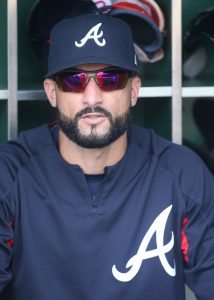
With the move, the Braves have evidently resolved their right field opening by returning to a known commodity. The 35-year-old Markakis just wrapped up a four-year, $44MM deal with the Atlanta organization, during which he appeared in all but a dozen of the team’s contests.
The last season of that pact was easily the best for Markakis, at least from an offensive perspective, as he posted his most productive campaign at the plate since way back in 2012. Ultimately, he slashed a healthy .297/.366/.440 through 705 plate appearances.
Despite the boost in output, Markakis will secure a good bit less than MLBTR had predicted (two years, $16MM). As Gabriel Burns of the Atlanta Journal-Constitution tweets, though, GM Alex Anthopoulos said that other teams put more years and dollars on the table. Markakis simply preferred to come back to Atlanta.
Regardless, the market was obviously well aware of the various qualifiers to the offensive numbers that Markakis put up in 2018. Most notably, he failed to sustain the eye-popping power surge he displayed to open the season, hitting just seven long balls over his final 545 plate appearances. Markakis finished with a .143 ISO that steadily topped his output over his first three seasons in Atlanta. It seems fair to say there’s good reason to question whether he’ll sustain that; odds are, he’ll regress back toward the league-average-ish overall batting productivity levels he had settled in at over the prior half-decade.
To be sure, a significant portion of Markakis’s reputation has been built on his abilities in the field (as well as his durability). Though metrics haven’t seen him as an extraordinary fielder of late, he did pick up his third Gold Glove award last year.
In the aggregate, though, Markakis seems to be more of a candidate to function as a platoon piece than a true regular — at least for a team that has designs on a repeat division title. He has a lifetime .808 OPS against right-handed pitching, 83 points higher than his output against southpaws.
That would line up nicely with Adam Duvall, supposing the right-handed hitter can rebound from a dreadful second-half run with the Braves. With the team also intending to utilize switch-hitter Johan Camargo at times in the outfield, and center fielder Ender Inciarte also perhaps a candidate to sit at times against southpaws, there should be plenty of mix-and-match opportunities — supposing, at least, that Markakis is asked to play a reduced role for the first time in his 13-year career.
Photo courtesy of USA Today Sports Images.
Reds Acquire, Extend Sonny Gray As Part Of Three-Team Trade
After several days of reporting and speculation, right-hander Sonny Gray has officially been traded from the Yankees to the Reds and also agreed to a contract extension with Cincinnati. It’s a three-team deal that also involves the Mariners. Second base prospect Shed Long and a Competitive Balance Round A pick go from the Reds to the Yankees in exchange for Gray and left-hander Reiver Sanmartin. New York, in turn, has flipped Long directly to the Mariners in return for center field prospect Josh Stowers — the Mariners’ second-round pick in the 2018 draft.
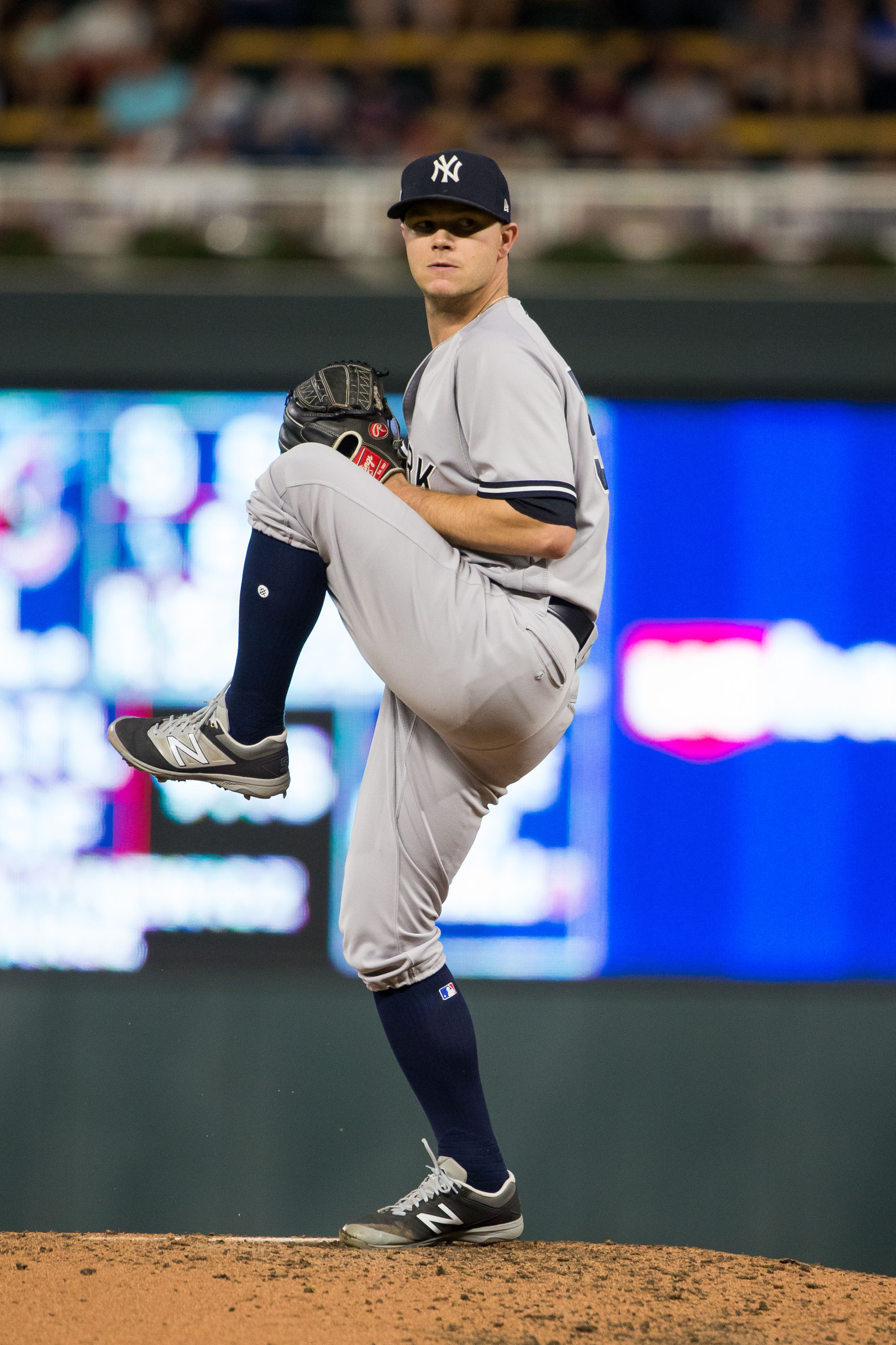
As part of the trade, Gray has agreed to a new, three-year contract extension with the Reds that’ll span the 2020-22 seasons. He’ll earn $30.5MM over those three campaigns — that’s in addition to his $7.5MM salary for the 2019 season. Along with a $500K signing bonus, the deal reportedly promises $10MM in each of its three years and also comes with a $12MM club option for the 2023 season. There are $500K worth of incentives in each new season of the deal, with that value achievable in full at 190 innings pitched, and his annual salaries can grow based on performance escalators. Gray’s contract doesn’t contain a no-trade clause but stipulates that he be paid a $1MM assignment bonus each time he is traded.
Cincinnati emerged as a front-runner to land Gray last Friday, and his addition will be the third such pickup of the Reds’ offseason, joining lefty Alex Wood and fellow righty Tanner Roark. That trio will be added to a new-look Cincinnati rotation that’s also projected to include holdovers Luis Castillo and Anthony DeSclafani. It’s a group that should give the Reds a vastly more competitive outlook in 2019 while likely pushing names such as Robert Stephenson, Brandon Finnegan, Tyler Mahle, Jackson Stephens and others out of the Major League rotation mix and either into bullpen roles or back to the minors (Stephenson, it should be noted, is out of options).
A change of scenery for Gray, 29, only makes sense after he struggled profusely with the Yankees in 2018 — particularly when pitching at Yankee Stadium. Gray posted a ghastly 6.98 ERA at home in 2018 compared to a 3.17 ERA on the road, and while there’s surely more at play in those splits than the surface-level numbers exhibit, the contrast between the two numbers is unequivocally jarring.
The Reds quite likely found it encouraging that Gray’s velocity remained consistent with its previous levels (93.8 mph average fastball), that his swinging-strike rate remained north of 10 percent and that his ground-ball tendencies (50 percent) remained above the league average. Gray actually allowed home runs at his lowest rate since 2015 as well (0.97 HR/9; 13.3% HR/FB), despite pitching more than 40 percent of his innings at the homer-friendly Yankee Stadium. Of course, he’ll be moving to a similarly hitter-friendly setting in the form of Cincinnati’s Great American Ball Park, though the move to the National League should prove beneficial.
With the extension now in place, the trade of Gray differs starkly from Cincinnati’s acquisition of Wood and Roark, each of whom is a pure one-year rental. In essence, it’s a bet that the move into a lower-pressure setting could help Gray in a similar manner that Matt Harvey seemed to benefit following his own trade over from the Mets this past May. Gray, it should be noted, is not far removed from an extended run as a high-quality arm; the former No. 18 overall draft pick entered the 2018 season with a career 3.45 ERA in 770 1/3 innings, highlighted by an All-Star nod and a third-place Cy Young finish in 2015.
While it may be too much to expect for Gray to return to those lofty heights, he at the very least has the potential to help comprise a radically improved Reds rotation and gives the team some long-term stability a a time when many of the pitching prospects acquired over the course of Cincinnati’s rebuild have yet failed to pan out.
Cincinnati will also add a left-handed option to the middle levels of its farm system in the form of Sanmartin. While he wasn’t considered to be one of the organization’s top prospects, Sanmartin reached Double-A for the first time last season, at the age of 22, and pitched to an overall 2.81 ERA with a 58-to-4 K/BB ratio in 67 1/3 innings between Class-A, Class-A Advanced and Double-A. New York originally acquired Sanmartin out of the Rangers organization in a swap that sent righty Ronald Herrera to Texas.
Long, meanwhile, will head to the Mariners in a surprise development and give Seattle a prospect that is not far from big league readiness. The 23-year-old Long was a 12th-round pick by the Reds back in 2013 but has vastly outperformed that draft billing, rising to the Double-A ranks and hitting at a .261/.353/.412 clip with a dozen homers and 19 stolen bases this past season. Kiley McDaniel and Eric Longenhagen of Fangraphs ranked Long seventh among Reds farmhands just last month, noting that the converted catcher still has some defensive question marks at second base. That said, he has the bat to profile as a regular there if he can improve his glovework, and if not, he could move to an outfield corner.
Stowers, in turn, is several years further from the point where he’d need to be added to the 40-man roster in New York. He went a round or two higher in the draft than many expected on the heels of a strong finish to his college season at Louisville, and it seems that given New York’s quick acquisition of him, the Mariners weren’t the only ones who hoped to snag him in the draft’s early rounds. The Yankees will also acquire a pick that is currently slotted in at No. 36 overall but could move a bit, depending on the outcome of the remaining free agents who rejected qualifying offers (and the subsequent draft pick compensation attached to them). The No. 36 slot last season came with a $1.967MM slot value, meaning the Yankees have likely added another $2MM+ to their bonus pool in the 2019 draft.
A trade of Gray has been expected since early in the offseason since Yankees general manager Brian Cashman openly spoke about his desire to find a change of scenery for Gray. Today’s swap gives the Yankees a rotation consisting of Luis Severino, James Paxton, Masahiro Tanaka, J.A. Happ and CC Sabathia. With Gray no longer in the fold, the Yankees’ top depth options are Domingo German, Jonathan Loaisiga, Luis Cessa and Chance Adams. The organization likely hopes to have lefty Jordan Montgomery, who underwent Tommy John surgery early last summer, can return late in the 2019 season, though it certainly possesses ample rotation depth even if he’s shelved into the 2020 season.
The Athletic’s Ken Rosenthal reported Friday that the Reds were closing in on a deal to acquire Gray. Fancred’s Jon Heyman tweeted over the weekend that Long and the draft pick would likely be involved in the deal, if completed. Rosenthal first added that the trade could hinge on an extension. ESPN’s Jeff Passan reported today that Gray had been traded, confirming Long’s inclusion and adding that he’d been flipped to Seattle for Stowers. Rosenthal reported the extension and the terms of Gray’s new contract, with Bob Nightengale of USA Today adding salary details. Bobby Nightengale Jr. of the Cincinnati Enquirer added Sanmartin’s inclusion in the swap. Heyman tweeted the trade assignment bonus.
Diamondbacks Sign Wilmer Flores
Jan. 21: The Diamondbacks have formally announced the signing.
Jan. 16, 3:00pm: Flores’ contract guarantees him $4.25MM, Passan tweets. He’ll earn a $3.75MM base salary in 2019 and have a $500K buyout on a $6MM option for the 2020 season.
2:22pm: The Diamondbacks are in agreement on a one-year contract with free-agent infielder Wilmer Flores, reports Jeff Passan of ESPN (via Twitter). The contract also contains a club option for a second season. Passan’s colleague, Pedro Gomez, had previously tweeted that the McNamara Baseball Group client was closing in on a deal with an NL West club, and Fancred’s Jon Heyman listed the D-backs as one of his suitors shortly thereafter. The deal is still pending completion of a physical.
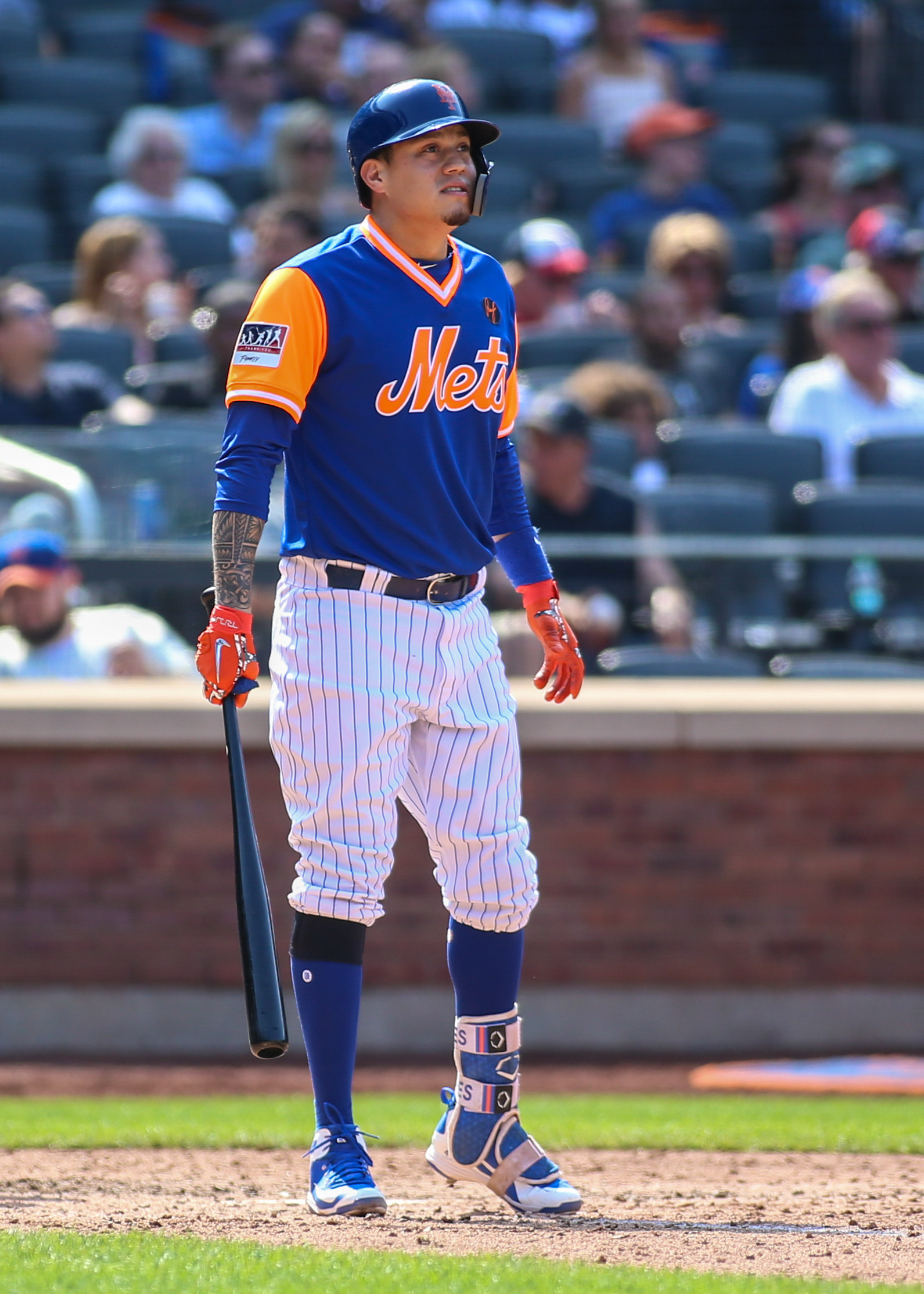
Flores, 27, was non-tendered by the Mets earlier this winter in his final offseason or arbitration eligibility. He’d been projected by MLBTR contributor Matt Swartz to earn $4.7MM, and the new-look Mets front office felt that sum to be too costly coming given the team’s crowded infield mix (which has since become more cluttered) and a diagnosis of early onset arthritis in both knees.
Last season, Flores hit .267/.319/.417 with 11 homers and 25 doubles in 386 trips to the plate while seeing time at first base, second base, third base and (during interleague play) designated hitter for the Mets. That production is more or less in line with what Flores had done in each of the past two seasons, but it’s worth noting that Flores’ output against left-handed pitching cratered last season.
Typically, Flores’ right-handed bat is a thorn in the side of opposing southpaws, but he instead mustered a timid .237/.284/.326 slash in 135 plate appearances with the platoon advantage. That’s a far cry from the .314/.349/.620 slash that Flores registered in 324 PAs against lefties from 2015-17 and was obviously a cause for concern among Mets decision-makers.
With the Diamondbacks, Flores can bounce around the infield, giving the Snakes a right-handed complement to Jake Lamb (who struggles mightily against lefties) while also spelling Ketel Marte at second base. There’s also been talk of moving Marte to center field, and the addition of Flores could make that transition easier on the Diamondbacks, should Marte prove adept in the outfield come Spring Training. At the very least, perhaps Arizona could play Marte in center field against lefties and deploy Flores at second base those days, thus giving Jarrod Dyson (who has also struggled against southpaws in his career) some protection from same-handed pitchers.
The D-backs may not done adding complementary pieces to their infield and outfield mix, so it’s possible, too, that future signings/acquisitions will further shed some light on the manner in which the organization plans to utilize Flores.
Dodgers Have Discussed Joc Pederson With Multiple Clubs
Jan. 21: The Braves have also “checked on” a trade involving Pederson, tweets Jon Heyman of Fancred. It’s still not clear how many teams have been in contact with L.A., nor is it clear whether there’s any momentum surrounding a potential Pederson deal. However, the connection with Atlanta is only logical. The Braves have an obvious corner-outfield vacancy at the moment, and Braves general manager Alex Anthopoulos spent the 2016-17 seasons as the Dodgers’ vice president of baseball operations before accepting his current position.
Jan. 20: The Dodgers are discussing outfielder Joc Pederson in potential deals, and the White Sox are among the teams they’re talking to, Ken Rosenthal of The Athletic reports. It’s unclear, though, whether the two sides are making progress in those conversations.
Speculatively, trading Pederson could further open up room in LA for free-agent center fielder A.J. Pollock, whom the team is pursuing. And essentially swapping the lefty-swinging Pederson for the right-handed Pollock would enable the Dodgers’ lineup to become more balanced, which is reportedly among their offseason objectives. At the same time, though, waving goodbye to Pederson would mean losing a productive, affordable player who’s under arbitration control through the 2020 season. He’ll earn a reasonable $5MM this year after avoiding arbitration earlier this month.
While the 26-year-old Pederson has never been effective versus left-handed pitchers, who have held him to a woeful .181/.266/.317 line since he debuted in 2014, it has been a different story against righties. Most recently, Pederson posted an overall .248/.321/.522 line (126 wRC+) in 2018 with 25 home runs and 2.7 fWAR over 443 plate appearances. Despite his limitations against same-handed hurlers, Pederson has approached or exceeded 3.0 fWAR in three of the past four seasons. That type of production would be welcome in Chicago, whose outfield ranked dead last in fWAR (minus-1.2) in 2018. The unit has since lost one of its regulars, now-Ray Avisail Garcia, who was merely a replacement-level player last season, though it did add Jon Jay in free agency. Jay had a subpar 2018 in his own right, however, and hasn’t offered particularly strong production over the past few years.
Jay’s now part of a group which also includes Daniel Palka, Adam Engel and Leury Garcia, though all three of those outfielders registered underwhelming results last year. Fortunately for the White Sox, they do have a premier outfield prospect in Eloy Jimenez, whom they figure to promote early in the season and who could make a significant impact from the get-go. But Jimenez’s presence isn’t going to prevent the White Sox from trying to upgrade elsewhere in the grass, evidenced by their interest in Pederson and their pursuit of free-agent standout Bryce Harper.
Mystery Teams Reportedly Pursuing Manny Machado
9:25pm: Machado has held an in-person meeting with one of the mystery clubs “in recent days,” Martino tweets. The report also indicates that Machado is expected to choose the biggest contract offer he’s presented, with other factors evidently taking a back seat.
8:03pm: The presence or absence of so-called “mystery teams” — unidentified but active pursuers of a given player — has long been a subplot of the market for Manny Machado this winter. With the Phillies, White Sox, and (to a lesser extent) Yankees known to be involved in the hunt, the question is whether other organizations would quietly help drive the bidding.
Now, on the heels of some suggestive comments from Machado’s father (via Dominican journalist Hector Gomez, on Twitter), there’s clear reporting indicating that is the case. Jon Heyman of Fancred tweets that not only is there a mystery team chasing Machado, but that it’s presently the high bidder. Andy Martino of SNY.tv adds on Twitter that there are actually two such clubs in the mix.
While this news is certainly vague in one sense, in that it doesn’t indicate what teams are now involved, it certainly is being presented as being firmly rooted in reality. Some may be skeptical, but it has always made sense for certain clubs to prefer to make their pursuit a quiet one. And the truly hard-to-fathom aspect of the market to date has been the lack of more teams publicly chasing one of the game’s best players, who’s hitting the market at just 26 years of age.
Last we checked in on Machado, a few days back, his agent Dan Lozano was forced to publicly comment on reports of a middling offer from the White Sox. Indeed, the level of money that had been suggested — seven years, $175MM — hardly seems to match Machado’s value when considering his established track record, age, and past open-market contracts. In any event, it seems at a minimum that those numbers may not have represented a full picture of the level of the Chicago organization’s interest.
The latest news puts a much better spin on the outlook for Machado. If there are indeed a pair of mystery teams, in addition to the three known to have interest, then that leaves quite a few more landing spots for Lozano to explore — and, presumably, a fair bit more leverage to work with in trying to move Machado’s earning level northward.
Agent Dan Lozano Issues Statement On Latest Manny Machado Reports
In the wake of this morning’s reports from ESPN’s Buster Olney (Twitter link) and USA Today’s Bob Nightengale (Twitter link), in which both suggested that the White Sox’ current offer to Manny Machado stands at $175MM over seven years, Machado’s agent, Dan Lozano of the MVP Sports Group, issued the following statement to MLBTR and other media outlets:
I have known Bob Nightengale and Buster Olney for many years and have always had a good professional relationship with both. But their recent reporting, like many other rumors in the past several months, have been inaccurate and reckless when it comes to Manny Machado. I don’t know if their sources are blatantly violating the Collective Bargaining Agreement by intentionally misleading them to try and affect negotiations through the public or are just flat out lying to them for other reasons. But the truth is that their reports on the details of the White Sox level of interest in Manny are completely wrong.
I am well aware that the entire baseball universe; fans, players, teams, and media members alike; are starved for information about this free agent market for all players, including Manny. But I am not going to continue to watch the press be manipulated into tampering with, not just with my client, but all of these players’ livelihoods as they have been doing this entire offseason. The absence of new information to report is no excuse to fabricate “news” or regurgitate falsehoods without even attempting to confirm their validity and it is a disservice to baseball fans everywhere when the media does just that.
Moving forward, I will continue to respect the CBA’s prohibition on negotiations through the media, and hope that others would do the same.
It’s an emphatic denial of this morning’s reports and a fairly rare step for an agent or team executive to take with regard to media reports. Lozano, though, clearly felt strongly enough to offer a firm rebuke of the information that has been put forth. The “White Sox level of interest” is in reference to the reported numbers on Machado’s offer this morning, rather than a commentary on Chicago’s desire to sign the player himself. At this point, there’s no clear timeline or indication as to when Machado’s free-agent saga will end.
Phillies “Expected” To Make Offer To Bryce Harper Soon
4:45pm: Machado was the Phils’ primary target at one point, per Fancred’s Jon Heyman (Twitter links), but it’s now much more even between him and Harper — if not slightly tilted in Harper’s favor. The Phillies, according to Heyman, are expected to make a formal offer to Harper in the near future.
Even if the Phillies won’t sign both Machado and Harper, Heyman notes that the goal is to sign one and then explore the market for other top free agents like Pollock, Keuchel and Kimbrel. To that end, USA Today’s Bob Nightengale cites team executives with the Phils in tweeting that organization has “visions” of signing the trio of Harper, Keuchel and Kimbrel. Paired with the prior acquisitions of Jean Segura and Andrew McCutchen, among others, that’d obviously be a seismic roster overhaul — the magnitude of which has been virtually unparalleled by any team in recent memory.
Of course, striving to add that trio and actually signing all three are two entirely separate animals, and it remains to be seen how feasible it is that the Phillies could win the bidding on three of the market’s top remaining free agents.
1:00pm: With a surprisingly small number of teams engaged on superstar free agents Bryce Harper and Manny Machado, it has at times seemed as if the big-budget Phillies are the favorites to land both players. Of course, even if the Philadelphia org is the likeliest single team to secure the services of each, that does not mean that it should be expected to come away with a pair of monster deals. Still, the possibility of hooking two free agent trophies has remained tantalizing to consider.
In the course of an interesting breakdown of the current situation, though, Matt Gelb of The Athletic (subscription link) strikes a blow to the idea of the Phillies making successive strikes for both Harper and Machado. The Phils, he reports, have “made this much clear during negotiations: They will not sign both players.”
Certainly, there was never anything approaching an expectation that the Phillies would land both, or even that they’d seriously consider taking on two huge salaries. But it’s still a notable bit of seemingly hard information in a market situation that has remained exceedingly fluid, so far as is known publicly.
As Gelb explains, moreover, that stance is perhaps a notable aspect of the Phillies’ strategy in approaching both Harper and Machado. If the club’s money is only there for one of the two players, that conveys no small amount of leverage. Even if both players would rather end up elsewhere, they surely can’t ignore the presence of the Phils’ ample pocketbooks in navigating a surprisingly barren field of pursuers.
Perhaps the best case scenario for the Philadelphia club would be for one of these two players to jump on a big but palatable offer to join on. Of course, their respective representatives — Scott Boras, for Harper, and Dan Lozano, for Machado — have played this game before. We’ve seen teams emerge from the woodwork in the past to land players of this quality with surprisingly massive contracts. As Gelb rightly suggests, the presence (or absence) of “mystery teams” — whether as active bidders or as conjured by the agents — may go a long way toward influencing the course of negotiations.
Gelb says the Philly club intends to continue exercising confident patience in talks. The situation seems ripe for that approach, though surely the team would be better-situated if Harper or Machado had a stronger personal desire to end up in Philly. Really, there seem only to be a few risks here (beyond those that are inherent to such a major investment, which the team has already largely resolved in favor of action).
Those risks seem manageable. One is simply that the team loses out on the player it prefers to land, which would appear to be Machado. Given that the roster is susceptible of upgrades at both the corner outfield and third base, that’s not a major worry. Another is that it ends up having to pay a bit more by allowing the bidding to get going in earnest. Paying a premium now to forestall that possibility seems unwise, when the Phillies can surely afford to cover a higher price if that ends up being required. (This is the point of the post where I quote owner John Middleton on his willingness to spend “stupid money” this winter.)
Finally, the Phils could end up missing on both players. Gelb says the team is confident it will land one of the two, though surely there’s some possibility that they’ll both head elsewhere. That is perhaps the most concerning outcome, though even then there are alternatives. A.J. Pollock, Dallas Keuchel, and Craig Kimbrel are the leading three alternative remaining free agents; all would be hypothetical fits. And the trade market is all but sure to have some intriguing targets still available, even if it means coughing up more prospect capital than the team might wish. Losing the star power would hurt, but it seems reasonable to think the Phillies could still back-fill the missing talent.
All things considered, there are still many ways in which things could shake out — with both Harper and Machado landing in Philadelphia evidently not among them. Today’s news may not be earth-shattering, but it does cabin the universe of foreseeable outcomes. With hundreds of millions of dollars at stake, in a slow-moving and increasingly tense market setting, it’s a signpost that’s at least worthy of keeping in mind.
Mets Sign Jed Lowrie
In a fascinating development, the Mets have agreed to a two-year, $20MM deal with veteran infielder Jed Lowrie, as first reported by Jeff Passan of ESPN.com (Twitter link). The Excel Sports Management client will receive a $5MM signing bonus along with salaries of $6MM and $9MM in the two years of the contract, Jon Heyman of Fancred tweets. The deal also includes a half-million-dollar assignment bonus in the event of a trade.
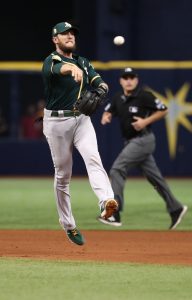
The Mets previously acquired Robinson Cano to play second base, bumping interesting rookie Jeff McNeil off of the position and into a utility role. With Todd Frazier already in place at third base, J.D. Davis representing another recently acquired corner piece, and youngster Amed Rosario at short, it’s not immediately apparent where Lowrie will fit in.
It could be that future moves will help clarify the situation. Alternatively, the Mets might conceivably utilize Cano and/or Frazier at first base for at least part of the season. Davis and McNeil also represent options in the outfield. It could be, then, that the org will mix and match with the players it has assembled. Lowrie could certainly be moved around the diamond, with the team leaving it to skipper Mickey Callaway to allocate playing time and manage the competing priorities. Regardless, it’ll certainly be interesting to see how things materialize from here.
Lowrie, 34, has played almost exclusively at second base over the past three seasons with the A’s. Before that, however, he had lined up at short for the bulk of his career, while also logging over a thousand innings at the hot corner.
A former first-round draft pick, Lowrie never really stuck with his first team, the Red Sox, but established himself as a solid regular over the 2012-14 campaigns. Things turned south in the two years that followed, though, as Lowrie dealt with injury issues. His 2016 campaign ended with a pair of procedures, one on his foot and the other to address a deviated septum.
Ever since, Lowrie has been a (switch-)hitter reborn. He has posted consecutive 120 OPS+ campaigns, slashing a combined .272/.356/.448 with 37 home runs while compiling 151 walks to go with 228 strikeouts. Meanwhile, he has graded out as an average-to-very good defender, making Lowrie one of the game’s better second baggers for two years running.
Lowrie now becomes the latest player to join his former agent, Brodie Van Wagenen, in Queens. It’s a hefty price tag for a utility player, if that’s how Lowrie is utilized, though odds are the salary will also reflect extensive intended usage, even if it is at multiple positions. Aided by a market chock full of second base options, the Mets will get Lowrie for the same $10MM AAV that MLBTR predicted entering the winter, but for one less guaranteed season than we guessed would be required. It’s a nice price for a player of this quality, even if he is set to turn 35 years old just after the start of the season to come.
Photo courtesy of USA Today Sports Images.