
Mets Sign Jed Lowrie
In a fascinating development, the Mets have agreed to a two-year, $20MM deal with veteran infielder Jed Lowrie, as first reported by Jeff Passan of ESPN.com (Twitter link). The Excel Sports Management client will receive a $5MM signing bonus along with salaries of $6MM and $9MM in the two years of the contract, Jon Heyman of Fancred tweets. The deal also includes a half-million-dollar assignment bonus in the event of a trade.
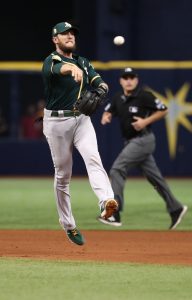
The Mets previously acquired Robinson Cano to play second base, bumping interesting rookie Jeff McNeil off of the position and into a utility role. With Todd Frazier already in place at third base, J.D. Davis representing another recently acquired corner piece, and youngster Amed Rosario at short, it’s not immediately apparent where Lowrie will fit in.
It could be that future moves will help clarify the situation. Alternatively, the Mets might conceivably utilize Cano and/or Frazier at first base for at least part of the season. Davis and McNeil also represent options in the outfield. It could be, then, that the org will mix and match with the players it has assembled. Lowrie could certainly be moved around the diamond, with the team leaving it to skipper Mickey Callaway to allocate playing time and manage the competing priorities. Regardless, it’ll certainly be interesting to see how things materialize from here.
Lowrie, 34, has played almost exclusively at second base over the past three seasons with the A’s. Before that, however, he had lined up at short for the bulk of his career, while also logging over a thousand innings at the hot corner.
A former first-round draft pick, Lowrie never really stuck with his first team, the Red Sox, but established himself as a solid regular over the 2012-14 campaigns. Things turned south in the two years that followed, though, as Lowrie dealt with injury issues. His 2016 campaign ended with a pair of procedures, one on his foot and the other to address a deviated septum.
Ever since, Lowrie has been a (switch-)hitter reborn. He has posted consecutive 120 OPS+ campaigns, slashing a combined .272/.356/.448 with 37 home runs while compiling 151 walks to go with 228 strikeouts. Meanwhile, he has graded out as an average-to-very good defender, making Lowrie one of the game’s better second baggers for two years running.
Lowrie now becomes the latest player to join his former agent, Brodie Van Wagenen, in Queens. It’s a hefty price tag for a utility player, if that’s how Lowrie is utilized, though odds are the salary will also reflect extensive intended usage, even if it is at multiple positions. Aided by a market chock full of second base options, the Mets will get Lowrie for the same $10MM AAV that MLBTR predicted entering the winter, but for one less guaranteed season than we guessed would be required. It’s a nice price for a player of this quality, even if he is set to turn 35 years old just after the start of the season to come.
Photo courtesy of USA Today Sports Images.
Rays To Sign Avisail Garcia
The Rays have reached agreement on a contract with free-agent outfielder Avisail Garcia. He’ll earn at least $3.5MM on the one-year deal, with the potential for more.
The 27-year-old, who was non-tendered by the White Sox just before the deadline earlier in the offseason, can achieve an additional $2.5M via incentive pay tied to his playing time. He’ll get $250K upon reaching 350 plate appearances and do the same for every fifty more thereafter, through his 600th PA. There’s another $1MM payout if he strides to the plate 650 times.
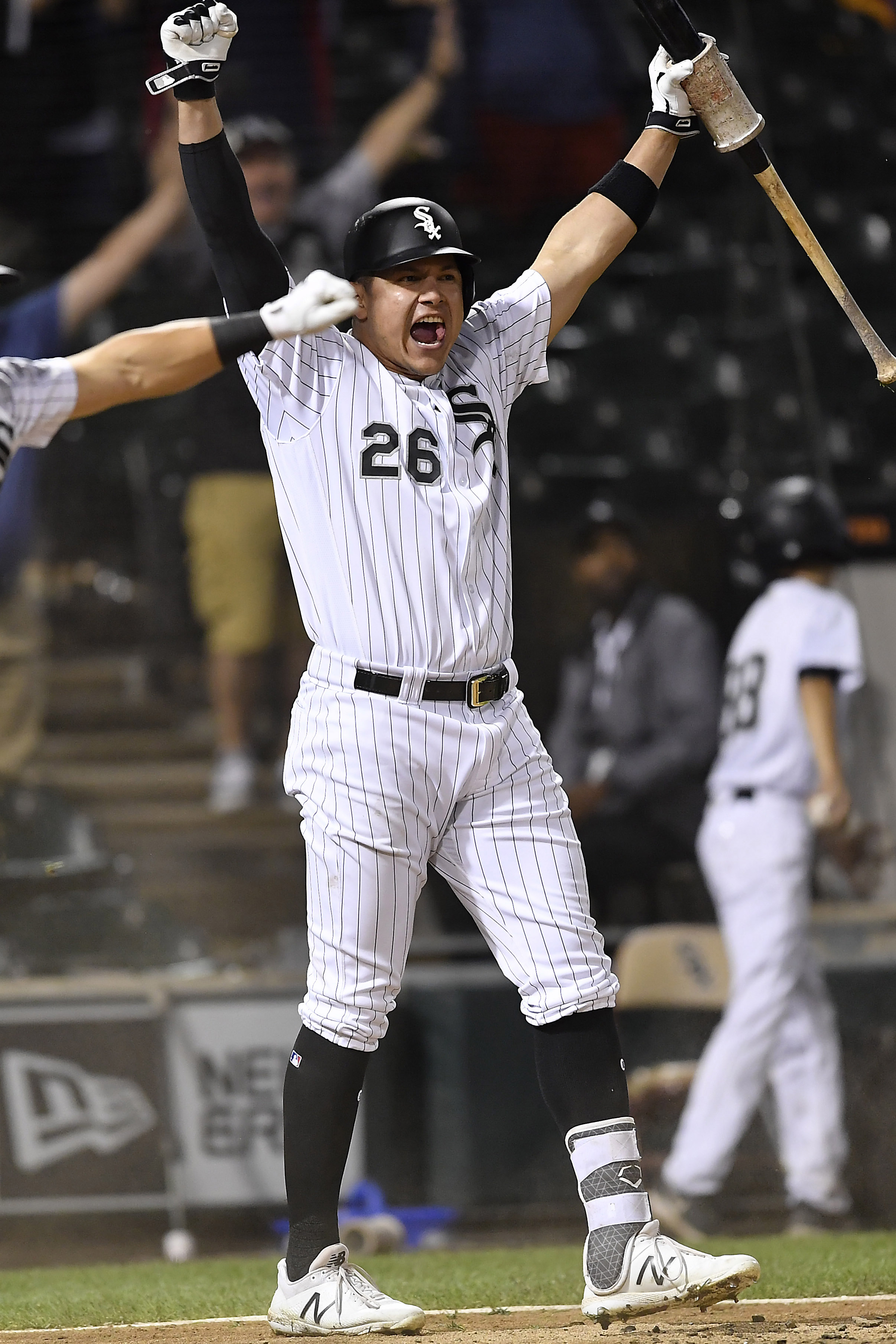
Tampa Bay has reportedly been in the market for a right-handed bat and, if finalized, will bring a buy-low candidate who fits that description into the fold with Garcia. Hamstring issues torpedoed Garcia’s 2018 season, as he was limited to just 93 games and managed just a .236/.281/.438 batting line in 385 plate appearances. A year prior, though, Garcia enjoyed a breakout campaign with a .330/.380/.506 slash through 561 plate appearances.
Truthfully, though, it’s difficult to know what to make of Garcia. His 2017 season was very clearly inflated to an extent by a .392 average on balls in play that he isn’t ever likely to repeat (or even approach). Garcia struck out at a career-low 19.8 percent clip that season, but he also hit the ball on the ground at a 52.2 percent clip — hardly a trend that is conducive to success for a plodding player who is listed at 6’4″ and 240 pounds.
Garcia seemed a prime regression candidate in 2018, and while that held true when looking at his bottom-line stats, there were actually a fair number of silver linings in an otherwise disastrous season. Garcia hit the ball in the air at a career-high 34.4 percent rate, resulting in a clear power surge. Despite having just 385 PAs last season, he clubbed a career-high 19 home runs, and his .202 ISO (slugging percentage minus batting average) was easily a career-high mark as well. Moreover, Garcia’s hard-hit rate jumped from 40.7 percent in 2017 to 43.2 percent in 2018, per Statcast. At the same time, though, Garcia also punched out in a career-worst 26.5 percent of his plate appearances.
Those past two seasons, in many ways, are a microcosm of Garcia’s career. He’s long been touted as a potential impact bat and clearly has some raw offensive capabilities, but he’s never been able to consistently tap into that talent. In fact, outside of that All-Star 2017 season, Garcia has essentially been a replacement-level player because of the fact that he’s graded out as a poor defender over parts of seven big league seasons.
The Rays have a strong defensive mix in the outfield with Tommy Pham, Kevin Kiermaier and Austin Meadows lined up for regular work, so it’s perhaps likelier that Garcia will see more time at designated hitter and play in the outfield corners only sparingly. Tampa Bay, then, is betting firmly on the offensive potential that has teased both the Tigers and White Sox so often in the past but rarely manifested itself over a consistent stretch in the Majors. If the Rays can cut back on Garcia’s strikeouts while helping him to maintain his hard-contact and fly-ball gains, however, he could prove to be a bargain source of pop in 2019 before returning to the open market next winter.
Tampa Bay already has Yandy Diaz lined up for some regular work at designated hitter, though he could also see time at first base with Ji-Man Choi as well. And given that neither Choi nor Diaz is a proven asset, it’s possible that either could struggle and thus further open at-bats for Garcia, who already figures to be in line for fairly regular playing time.
Ken Rosenthal of The Athletic first reported that a deal was close (via Twitter). Jon Heyman of Fancred (links to Twitter) reported that it was done and had financial details. The Athletic’s Jim Bowden first tweeted the total guarantee.
Photo courtesy of USA Today Sports Images.
Brewers Sign Yasmani Grandal
3:45pm: Grandal’s contract actually contains a 2020 option, per Fancred’s Jon Heyman (Twitter link). He’ll earn $16MM in 2019, and his option is also for $16MM with a $2.25MM buyout. It’s a mutual option, ESPN’s Jeff Passan tweets. As he notes, mutual options are virtually never exercised by both parties.
Jan. 14, 2:59pm: The Brewers have officially announced the signing.
Jan. 9, 10:16pm: Yahoo’s Tim Brown reports that Grandal will be guaranteed $18.25MM in 2019 (Twitter link).
10:06pm: The Brewers are in agreement on a contract with free-agent catcher Yasmani Grandal, reports Ken Rosenthal of The Athletic (via Twitter). It’s a one-year contract for Grandal, however, which pales in comparison to the four-year contract that was reportedly offered by the Mets earlier this offseason. Rosenthal adds that the deal is still pending the completion of a physical.
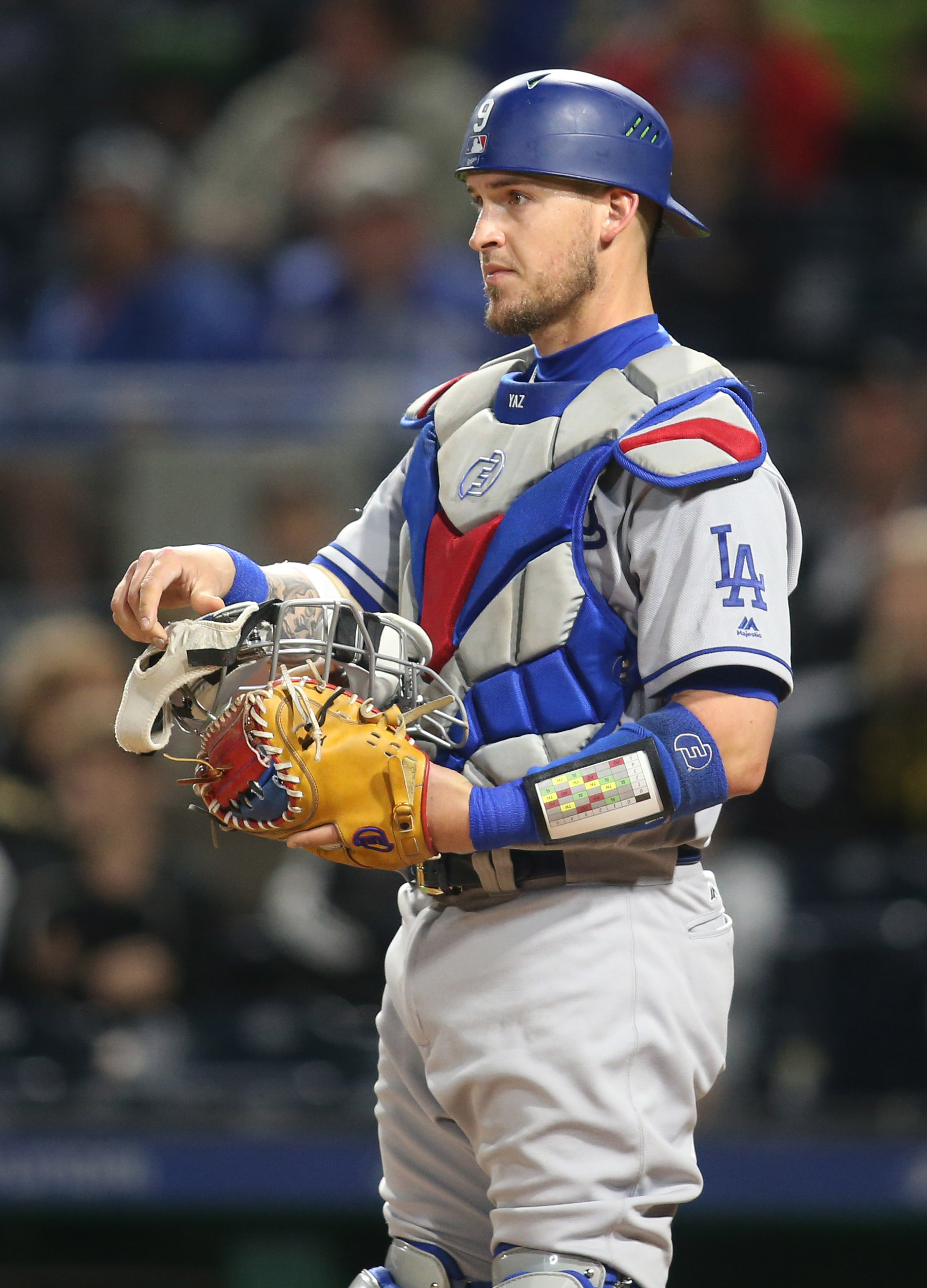
Clearly, the decision to spurn a four-year offer from New York looks especially regrettable now, even if, as Fancred’s Jon Heyman tweeted yesterday, the Mets’ offer was actually for a bit less than the initially reported $60MM figure. The exact size of the proposed guarantee isn’t known, but USA Today’s Bob Nightengale tweets it was in excess of $50MM, and Rosenthal tweets that the Mets’ offer could have reached $60MM in total value, presumably indicating that there were some incentives or escalator clauses at play.
It’s still possible, of course, for Grandal to come out ahead over the 2019-22 seasons. A strong showing with the Brewers could yet net him a lucrative multi-year deal in free agency next year — when he won’t have a qualifying offer attached to his name. A three-year offer in the range of $13-14MM per season next winter would effectively recoup the money Grandal’s camp turned away, and it’s hardly unthinkable that he could deliver a strong enough performance to land another four-year offer a year from now and actually earn even more.
For Milwaukee, getting an upgrade of Grandal’s caliber on a one-year pact was likely something they never envisioned as a possibility when the offseason began. Many expected him to land at least a three-year contract, and we at MLBTR predicted that he’d land a four-year, $64MM deal which apparently checks in just north of what the Mets offered him earlier this winter. A one-year deal simply never seemed likely.
As a revenue-sharing recipient, the Brewers will forfeit their third-highest selection in next year’s draft as penalty for signing Grandal. That’s a fairly small price to pay for a win-now club that has successfully upgraded one of its most glaring deficiencies, though, especially when considering the fact that they already traded their Competitive Balance pick (No. 39 overall) to acquire Alex Claudio in a trade with the Rangers. Because of that deal, Milwaukee’s third-highest selection is their third-round pick — currently No. 104 overall in the draft.
Milwaukee catchers combined to post a meager .237/.294/.363 batting line with 16 home runs in 637 plate appearances last season. Grandal, meanwhile, hit .241/.349/.466 in full-time duty with the Dodgers last season, meaning he should provide the Brew Crew with a substantial boost in terms of both on-base percentage and overall power. Salvador Perez was the only catcher in baseball with more home runs than Grandal’s 24 big flies last season, and no catcher (min. 300 PA) topped Grandal’s .225 ISO (slugging percentage minus batting average). In other words, the Brewers are quite arguably getting the game’s most powerful catcher.
On the defensive side of the coin, most casual onlookers will surely recall Grandal’s disastrous postseason, during which he yielded three passed balls before eventually ceding playing time to backup Austin Barnes for a second consecutive October. But Grandal has prevented stolen bases at a league-average or better rate in each of the past four seasons, and there’s no catcher in baseball who has consistently graded out as strongly as Grandal in terms of pitch-framing. The postseason passed-ball issues aren’t exactly a total hiccup for Grandal, who has thrice led the National League in passed balls allowed, but his adequate throwing and elite framing have nevertheless led to consistently top-shelf ratings in Baseball Prospectus’ Fielding Runs Above Average category. Grandal is also perennially among the league leaders in Defensive Runs Saved at catcher, with a collective +45 DRS across the past four seasons.
For the Brewers, he’ll serve as an unequivocal upgrade over the previously projected pairing of Manny Pina and Erik Kratz and deepen a lineup that already ranked sixth in the National League in on-base percentage and second in home runs. The Brewers aren’t set to lose any key members of the lineup with the exception of midseason acquisition Mike Moustakas, so they’ll essentially be adding Grandal to the same lineup that proved to be one of the NL’s best in 2018.
From a payroll perspective, Grandal will push the Brewers’ Opening Day projection to $123.5MM, as Jason Martinez outlines at Roster Resource. That mark would shatter the Brewers’ previous franchise record, as the organization has only twice had a $100MM+ payroll in its entire history — in 2014-15 when the Opening Day payrolls checked in at $103.5MM and $104.3MM. Of course, the Brewers have a bit more funds at their disposal having just completed a deep postseason run. That NLCS appearance also makes it easier for Mark Attanasio to spend aggressively, as his team is now firmly past its rebuilding phase and is a widely projected playoff contender.
The Dodgers, meanwhile, will stand to gain a compensatory draft pick after Competitive Balance Round B. Currently, that round runs through the 78th overall selection, though further free-agent machinations could slightly alter the exact placement of picks. Regardless, the Dodgers will add a pick in the late 70s or very early 80s as compensation for losing Grandal.
It’s at least somewhat curious that the Dodgers wouldn’t make an effort to bring Grandal back on a one-year deal, now knowing that was an option he was willing to consider. Perhaps Grandal simply wasn’t interested in returning to L.A., or perhaps the Dodgers soured on Grandal after his ongoing passed-ball issues. However, the catching position is still a glaring need in Los Angeles, where Barnes is currently lined up as the starter but neither of the organization’s top catching prospects, Keibert Ruiz and Will Smith, are ready for a look at the MLB level just yet. The Dodgers have myriad other options available to them, both in trade and on the free-agent market, but they were willing to risk Grandal accepting a $17.9MM salary just a few short months ago.
Yankees Sign DJ LeMahieu
Jan. 14: The Yankees have now announced the deal.
Jan. 11, 7:50pm: The deal promises LeMahieu $12MM in each of its two seasons, Jon Heyman of Fancred tweets.
11:43am: LeMahieu is heading to the Yankees, tweets Ken Rosenthal of The Athletic. His contract is believed to be a two-year deal with a guarantee in the range of $24MM.
11:40am: The Yankees are closing in on a two-year contract with free-agent second baseman DJ LeMahieu, reports Jack Curry of the YES Network (Twitter links). New York’s plan for LeMahieu is to use him as a multi-positional asset, where he’ll see time at second base, third base and even at first base, per Curry.
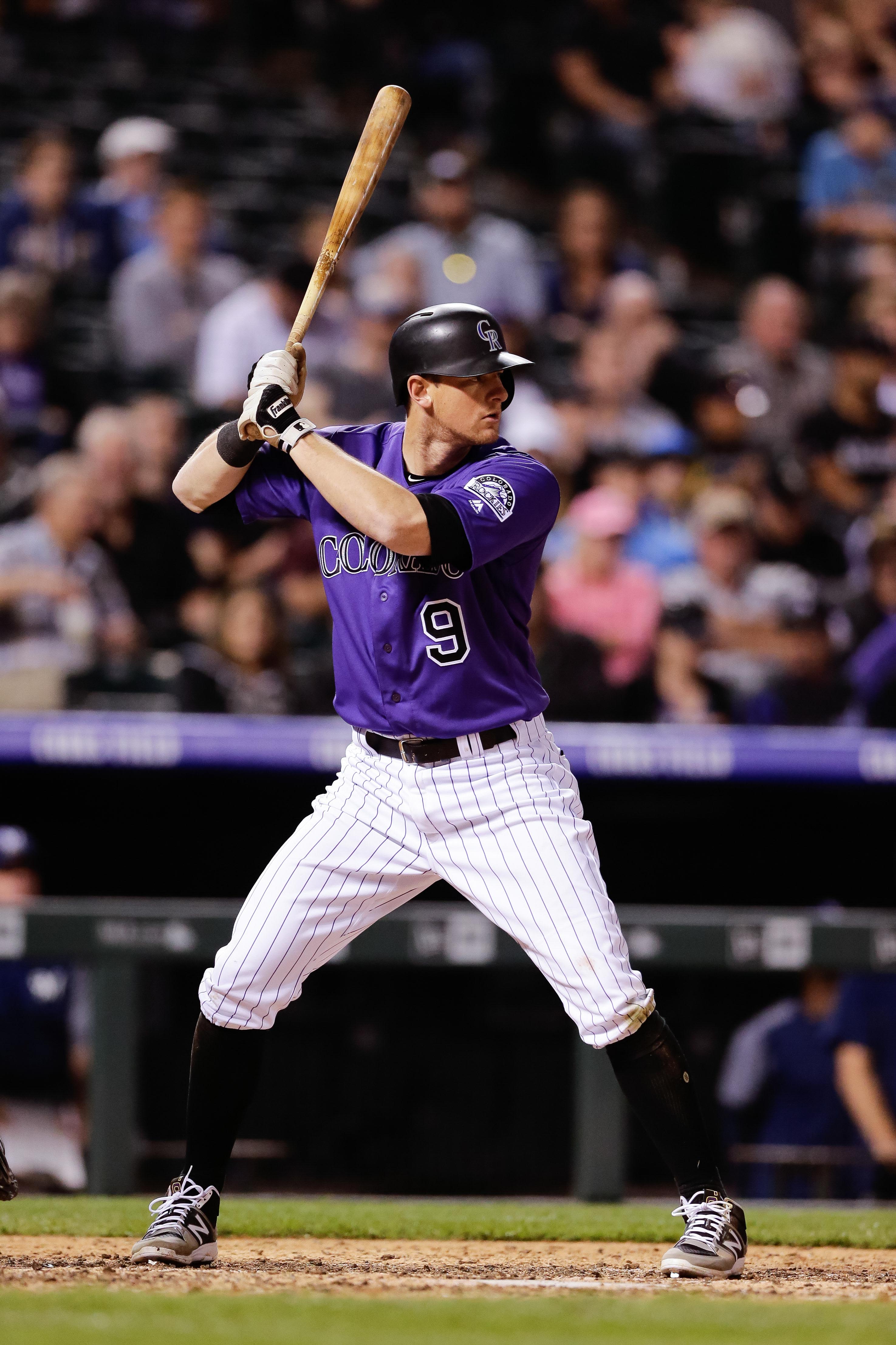
With LeMahieu and Troy Tulowitzki now in the fold, Manny Machado looks to be less of a fit in the Bronx than ever, although the addition of those two players certainly doesn’t preclude a signing. There’s been talk earlier this winter of the possibility that the Yanks could yet move an infielder, and Tulowitzki’s league-minimum salary doesn’t represent much of an impediment if the Yankees decide to alter their course. That said, there’s no denying that today’s agreement with LeMahieu does seem to make that long-speculated match with Machado considerably less plausible.
The Yankees’ infield now likely consists of Miguel Andujar at third base, Tulowitzki at short, Gleyber Torres at second base and Luke Voit at first, with LeMahieu filling in as a versatile super-sub and Greg Bird also on hand as an option at first base. Didi Gregorius, of course, will join that mix later this season when he is sufficiently recovered from Tommy John surgery. It’s a crowded mix but a deep and highly talented one that should provide the Yankees plenty of insurance against injury while also allowing them to field a strong lineup even on days when their top bats are resting.
LeMahieu, 29, is perennially among the game’s premier defensive second baseman and has consistently hit for average, though his overall production has wavered somewhat on a year-over-year basis. LeMahieu won a surprise National League batting title when he hit .348/.416/.495 in a career year back in 2016, but while he followed that up with a high-quality .310 average in 2017, his power fell off, as he slugged just .409 that season and posted a .099 ISO (slugging minus batting average). This past season, most of his pop returned, but his overall output checked in at .276/.321/.428 — rather pedestrian production when considering his hitter-friendly home setting (86 wRC+).
All in all, LeMahieu generally rates as an average or better overall hitter with premium defensive skills. He’s batted a combined .309/.369/.429 across the past four seasons and been one of the toughest strikeouts in the league over that span, punching out in just 14.2 percent of his plate appearances. And while some will make a point to note that his home/road splits are rather pronounced, he’ll be moving from Coors Field to yet another one of the game’s premier hitters’ parks, Yankee Stadium.
Kyler Murray Declares For NFL Draft
Athletics outfield prospect and Oklahoma quarterback Kyler Murray announced today that he has formally declared for the NFL Draft. While this is a largely procedural move that was widely anticipated and does not preclude him from opting to continue as a professional baseball player, ESPN’s Adam Schefter reports that Murray “has informed the Oakland A’s of his intention to follow his heart to the NFL” (Twitter link).
It’s not feasible for Murray to endure the rigors of playing quarterback in the NFL and then also playing baseball in the spring and summer; reports from the San Francisco Chronicle’s Susan Slusser and Henry Schulman indicated last week that there was no scenario in which Murray would play both sports professionally. Schefter tweets today that Murray’s mind “has been made up,” though there is of course still time for a late change of heart.
The Athletics have reportedly been discussing signing Murray to a Major League contract and adding him to the 40-man roster as a means of swaying him away from a football career. While ESPN’s Jeff Passan reported last night that the league would not stand in the way of Murray signing a Major League deal so quickly despite the fact that the collective bargaining agreement ruled out MLB contracts for draftees back in 2012, Schefter’s reports today suggest that Murray isn’t all that likely to be swayed. He does technically still have a few weeks to decide, and the Athletics, it seems, can continue to negotiate with agent Scott Boras in the meantime.
As I noted last week when looking at the situation, if Murray is drafted in the first round of the NFL Draft, he stands to earn more than double the $4.66MM signing bonus that the Athletics gave him when selecting him with the ninth overall pick in last year’s MLB Draft. Last year’s No. 32 pick in the NFL Draft, Lamar Jackson, signed for nearly $9.5MM and will earn every bit of that sum; beyond that, he quickly ascended to a starter’s role in the NFL. On the flip side, even after signing a theoretical Major League deal, Murray would still need to spend at the very least one to two seasons developing in front of sparse minor league crowds before reaching the big leagues.
Should Murray pursue his career in football, Slusser and Schulman reported last week that the Athletics will not receive a compensatory pick in this June’s draft. Murray would have to return that $4.66MM bonus to Oakland, though he’d quite likely be setting himself up to earn substantially more money in the very near future.
Giants Re-Sign Derek Holland
The Giants have made the first addition to their rotation under new president of baseball operations Farhan Zaidi, announcing on Monday that they’ve re-signed left-hander Derek Holland to a one-year deal with a club option for the 2020 season.
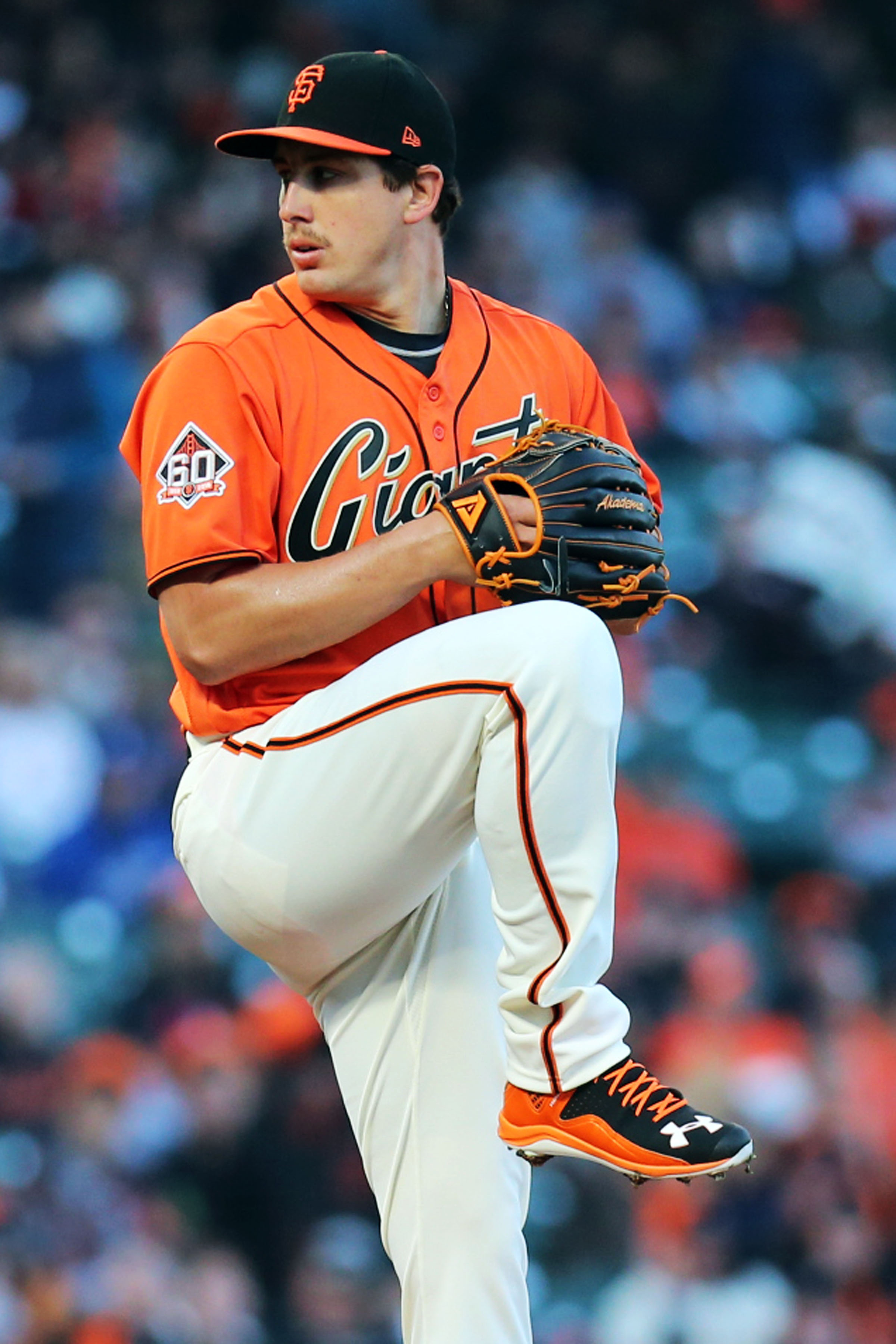
Holland’s contract reportedly comes with a $7MM guarantee in the form of a $6.5MM base salary for the 2019 season and a $500K buyout on a 2020 option that has the same $6.5MM base. The option year’s base salary will increase to $7MM if he makes 24 starts in 2019, $7.5MM if he makes 28 starts and $8.5MM if he makes 32 starts. All told, the Martini Sports Management client can earn $15MM over the next two seasons if he remains healthy and the option is exercised.
Holland, 32, enjoyed a career revival with the Giants last season. Once a promising young lefty with the Rangers, Holland missed the vast majority of the 2014 season due to microfracture surgery in his left knee, and shoulder issues plagued him in each of the next two seasons. A one-year deal to rebuild his stock with the White Sox in 2017 didn’t pan out, but last year’s minor league deal with the Giants proved to be one of the season’s most productive minor league signings.
Holland led Giants pitchers in games started (30) and in total innings (171 1/3), pitching to a 3.57 ERA with 8.9 K/9, 3.5 BB/9, 1.00 HR/9 and a 39.8 percent ground-ball rate. Holland’s velocity didn’t return to it peak levels (94.3 mph) and probably never will, as he averaged just 91.6 mph on his heater last season. However, that’s not to say his success isn’t sustainable; the lefty’s swinging-strike rate jumped from 7.1 percent to 10.1 percent from 2017 to 2018, and his opponents’ chase rate on out-of-zone pitches jumped by a hefty 5.6 percent (from 25 percent to 30.6 percent).
Mutual interest between the two sides was no secret, with Holland saying near the end of the season that he would like to return to the Giants in 2019 and beyond. The lefty also drew interest from other clubs, most recently including the Mets and the Reds, and the Rangers were also said to have interest in a reunion. Instead, he’ll return to one of the game’s premier pitchers’ parks — the recently re-named Oracle Park — for at least the forthcoming season.
With Johnny Cueto likely out for the season following Tommy John surgery, Holland will slot in behind top starter Madison Bumgarner and line up alongside the likes of Dereck Rodriguez, Andrew Suarez and a hopefully healthier Jeff Samardzija in 2019. Left-hander Ty Blach and righties Tyler Beede and Chris Stratton represent alternate rotation options on the 40-man roster, should the need arise.
The addition of Holland pushes the Giants’ projected Opening Day payroll north of $167MM and brings their luxury tax ledger north of $172MM. It seems likely that some additional moves — be they trades or further free-agent signings — will change that calculus, although Farhan Zaidi strongly downplayed the chances of an offseason Bumgarner trade over the weekend. Of course, if Holland is able to replicate last season’s success but the Giants are unable to rebound as a collective unit, then both he and Bumgarner could find themselves being marketed to contending clubs come July.
Ken Rosenthal of The Athletic first reported the agreement and the terms of the contract (Twitter links).
Phillies Reportedly Favorites To Sign Bryce Harper
SUNDAY: The Phillies are “clear-cut” favorites to sign Harper, USA Today’s Bob Nightengale hears from multiple sources. The Nationals, on the other hand, are fading in the sweepstakes, and team executives are calling it a “long shot” that he’ll re-sign with them. Nightengale reports. Washington isn’t prepared to pay Harper more than $25MM per year, Nightengale suggests. The Phillies, meanwhile, haven’t submitted a formal offer to Harper yet, but that should change during the upcoming week, according to Nightengale.
SATURDAY: After conducting a face-to-face meeting in Las Vegas with free-agent outfielder Bryce Harper on Saturday, the Phillies “remain optimistic” they’ll emerge from the offseason having signed him or free-agent infielder Manny Machado, Matt Breen of Philly.com reports. At the very least, the Phillies will be finalists for both Harper and Machado, Breen adds.
The Phillies entered the winter with owner John Middleton declaring that money wouldn’t stand in the way of upgrading a team which has missed the playoffs seven years in a row. And signing either Harper or Machado has always stood out as the clearest path to improving the Phillies’ roster, as the two 26-year-old superstars are easily the premier players on the open market. Given both the Phillies’ financial might and their need for at least one of those players, it’s “likely” they’ll put forth the richest offers for both Harper and Machado, according to Breen.
If the Phillies are only able to pick one, it’d be Machado, whom they “seem to prefer,” Breen writes. However, the Phillies have “signaled” to him that they are also interested in Harper – a move that Breen posits could pressure Machado to accept an offer from them. Notably, since the Phillies met with Machado in December, they’ve added one of his confidants to their staff, having hired former Orioles infield coach Bobby Dickerson in the same role. Dickerson was with the Orioles during Machado’s entire run with the team from 2012-18. Meanwhile, the White Sox – who look like the only other team seriously pursuing Machado – may have helped their chances this winter by acquiring the shortstop/third baseman’s brother-in-law, Yonder Alonso, and his friend Jon Jay. But if money, not personal ties, ends up being the deciding factor in where Machado goes, signs are pointing to Philadelphia. After all, the White Sox’s only known offer to date was reportedly worth closer to $200MM than $300MM, and it may take a proposal nearer to the latter amount to lure Machado.
As with Machado, Harper has fewer franchises going after him than expected this offseason. Still, at least four teams – the Phillies, White Sox, Nationals and Dodgers – look to be in the running. It seems the Nationals, with whom Harper has spent his whole career since going first overall in the 2010 draft, are particularly strong in the derby. As of earlier this week, the Nats were reportedly upping their efforts to re-sign Harper, to whom they’ve already extended at least one offer worth well north of $300MM. Reports have indicated the Dodgers aren’t keen on making a long-term commitment, on the other hand, meaning Harper may have to choose among the Phillies, White Sox and Nationals if he has any hope of landing a record-setting contract.
Nationals Sign Brian Dozier
JAN. 13: Dozier has passed his physical, making his one-year, $9MM deal official, Jesse Dougherty of the Washington Post tweets.
JAN. 10: An aggressive offseason for the Nationals continued Thursday, as the team reportedly agreed to a one-year contract with free-agent second baseman Brian Dozier. The All Bases Covered Sports Management client will reportedly receive a $9MM guarantee.
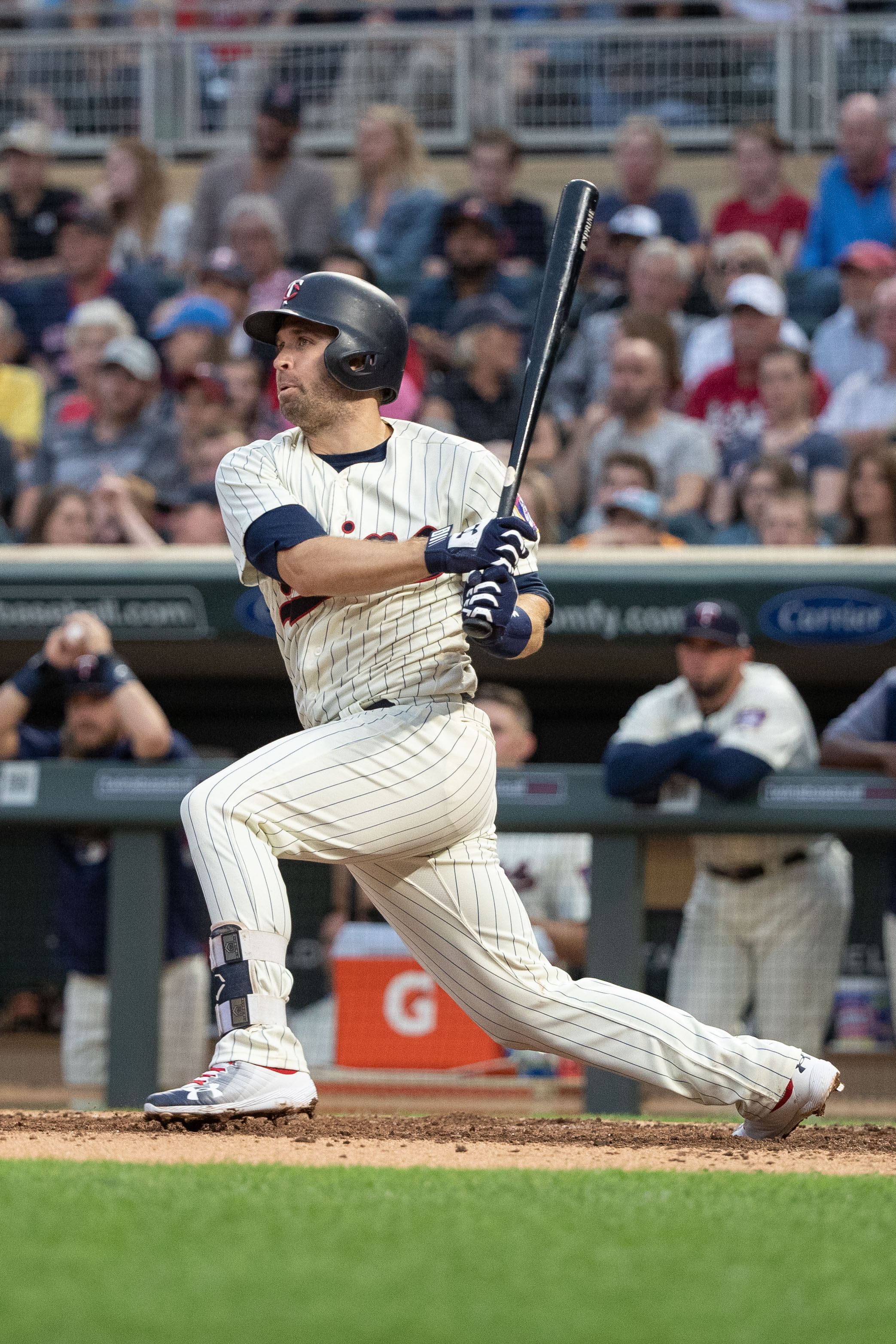
Dozier, 31, was one of the game’s premier second basemen from 2014-17, hitting a combined .254/.338/.476 with 127 home runs, 137 doubles, 14 triples, 67 stolen bases and a Gold Glove Award all under his belt in that time. He suffered a bone bruise in his knee early in the 2018 campaign but played through the injury, which may have impacted him at the plate; in 632 PAs split between the Twins and Dodgers last season, Dozier hit just .215/.305/.391 — including an especially anemic .182/.300/.350 slash with the Dodgers following a July 31 trade.
Washington represents something of a perfect fit for Dozier — a contending club that can offer everyday at-bats given the wide-open nature of their current second base situation. Prior to the agreement with Dozier, light-hitting Wilmer Difo and veteran Howie Kendrick looked to be in line for the lion’s share of work at the position.
Now, with Dozier in the fold, they’ll presumably revert to reserve roles for a Nationals club that has been aggressive in addressing weaknesses this offseason. Additionally, the Nationals needn’t feel any pressure to rush top prospect and presumptive long-term second baseman Carter Kieboom to the Majors. At the same time, the one-year term of today’s agreement allows them to address the second-base need without placing a longer-term roadblock in Kieboom’s path to the big leagues. And Dozier, meanwhile, will have the opportunity to rebuild his stock after a down season in 2018 before returning to the open market next winter. From that vantage point, it’s very much a win-win scenario for both the organization and Dozier himself.
If he’s able to bounce back to his previous levels of production, or even something close to it, he’ll provide the Nationals with a substantial upgrade over their incumbent options and deepen a lineup that has also added both Kurt Suzuki (a former teammate of Dozier’s) and Yan Gomes as options behind the plate. Washington has also signed the market’s best starter, Patrick Corbin, in addition to picking up righty Anibal Sanchez and adding relievers Trevor Rosenthal and Kyle Barraclough in what has been an exceptionally active offseason. The Nats reportedly haven’t entirely ruled out a reunion with Bryce Harper, either, so there could yet be some significant moves in the offing.
The addition of Dozier at a $9MM rate brings the Nationals ever closer to the $206MM luxury tax threshold, though as Jason Martinez projects at Roster Resource, the Nats are still about $3.5MM shy of that mark. Obviously, bringing Harper back into the fray would mean completely shattering that mark, though ownership likely views Harper as an exception and will ultimately make a determination on whether it’s worth incurring that penalty in order to retain the franchise icon.
Dozier entered free agency as a classic candidate to take a one-year “pillow” contract in an effort to restore his damaged stock, and the fit with the Nationals has long seemed a good one (as MLBTR noted when predicting that Dozier would land with the Nats on a one-year, $10MM deal at the outset of free agency). Now, with the Nationals just narrowly shy of the luxury threshold, he looks to be perhaps the final significant piece of the puzzle in D.C., barring a late push from ownership to re-sign Harper. The Nats have enough wiggle room that they could potentially add a particularly affordable reliever or bench piece if there’s a desirable veteran lingering on the market into Spring Training, but the team certainly can’t be keen on breaching the luxury tax barrier in order to add a complimentary piece.
Ken Rosenthal of The Athletic first reported that the two sides were close to a deal (via Twitter), and Jeff Passan of ESPN tweeted the agreement and terms of the contract.
Blue Jays Sign David Phelps
Jan. 12, 2:07 PM: Per a team announcement, the signing is now official.
Jan. 10, 10:25 PM: The Blue Jays have agreed to a contract with righty David Phelps, according to Shi Davidi of Sportsnet.ca (Twitter link). It’s said to be a one-year deal that comes with a club option.
Phelps will receive a $2.5MM guarantee, per Ken Rosenthal of The Athletic (links to Twitter). The deal also dangles a variety of incentives along with a floating option value depending upon how many frames Phelps throws in the season to come.
The terms reflect the fact that Phelps, a client of Jet Sports Management, is coming off of a season lost to Tommy John surgery. The 2020 option price will start at just $1MM. It goes up to $3MM if he appears in 30 games and hits $5MM if he makes his 40th outing. If Phelps reaches fifty appearances the option will jump to $7MM; it can climb by another $1MM if he also finishes forty games, which obviously would not take place unless he earns and keeps the Jays’ closer job for much of the season.
In terms of incentives, Phelps can boost his 2019 pay quite a bit if he’s able to get on the hill early and often. He’ll get a quarter-million boost upon throwing his 25th, 30th, and 35th games, then take home successive $350K payouts if he can reach appearances 40, 45, 50, 55, and 60. The option year also has available incentive pay.
All told, the contract generally reflects an optimistic view about Phelps’s outlook. The 32-year-old had been on a great run when he ran into arm troubles during the 2017 season. Unfortunately for him and the Mariners, the issues reached a breaking point last spring, when it was decided he’d require Tommy John surgery just before the start of the 2018 campaign.
Before things went south, Phelps had been on an excellent run of success. Something of a non-descript starter earlier in his career, Phelps caught fire in a relief role in 2016 and never really looked back. He ultimately threw 142 1/3 innings of 2.72 ERA ball, with 11.1 K/9 against 4.0 BB/9, over the 2016 and 2017 campaigns.
Looking ahead, it seems fair to presume that Phelps will be looked upon to play a significant role in a generally inexperienced Blue Jays bullpen. He joins veteran hurlers Matt Shoemaker and Clayton Richard as recent veteran additions who will head to Toronto in search of a rebound. Though Phelps has plenty of experience as a starter — including an intriguing but brief return to the rotation late in 2016 — it seems from his incentive structure that he will not be joining Shoemaker and Richard in the competition for a starting job.
Photo courtesy of USA Today Sports Images.
Dodgers Acquire Russell Martin
5:48pm: Los Angeles will take on $3.6MM of Martin’s salary, with the Jays paying the other $16.4MM of what’s still due, per Ben Nicholson-Smith of Sportsnet.ca (Twitter link).
1:30pm: The Blue Jays have formally announced the trade. They’ll send Martin and cash to Los Angeles in exchange for minor league shortstop Ronny Brito and minor league right-hander Andrew Sopko.
1:12pm: The Dodgers have reached an agreement on a trade with the Blue Jays that will bring veteran catcher Russell Martin back to Los Angeles, reports Arash Madani of Sportsnet (via Twitter). Martin will earn $20MM in 2019 — the final season of a five-year, $82MM contract with the Jays. Presumably, Toronto is paying down a hefty portion of that remaining salary as part of the trade.
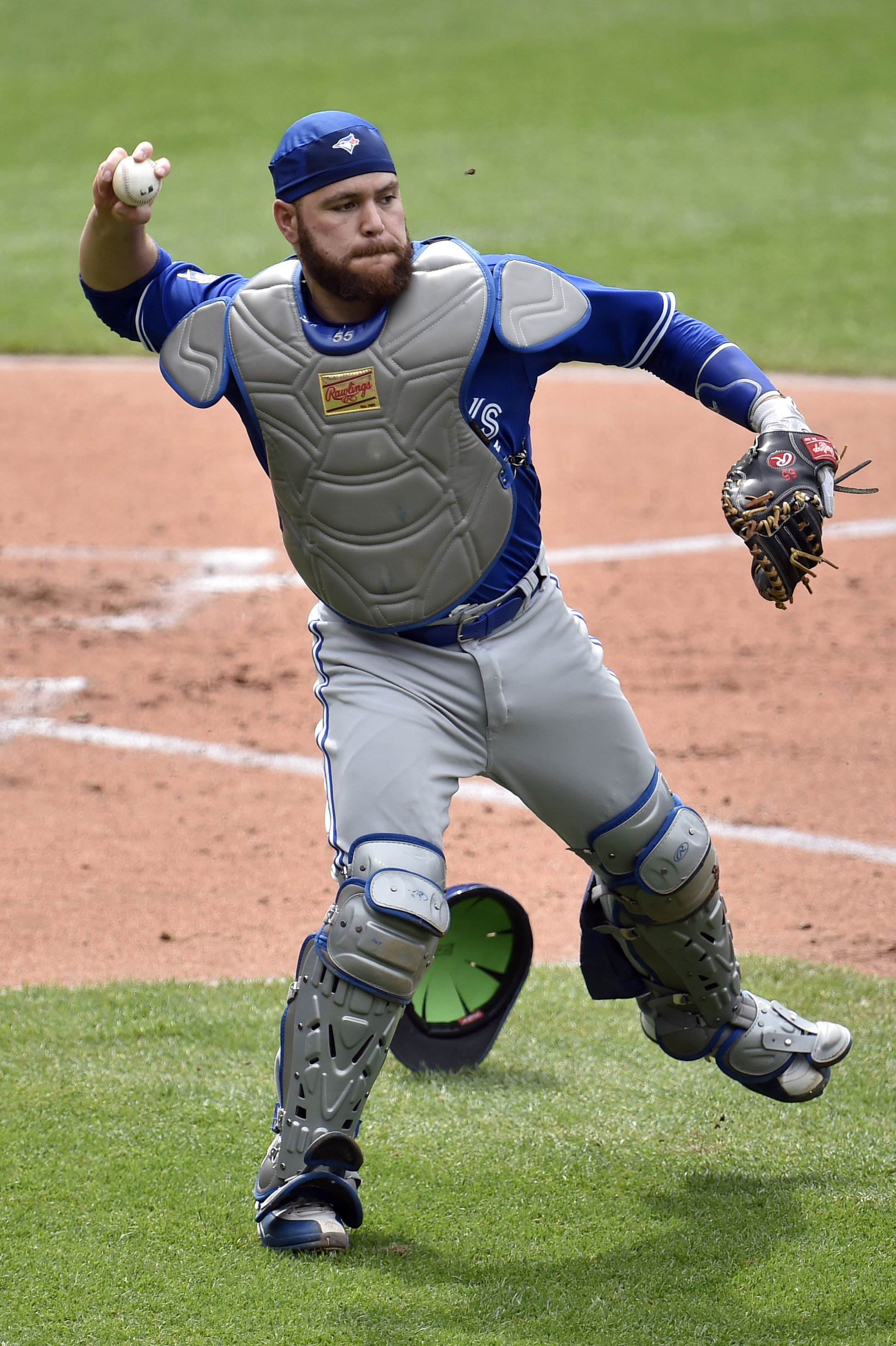
The addition of Martin shouldn’t strictly take the Dodgers out of the running for Marlins star J.T. Realmuto, though there’s certainly less urgency for Los Angeles to meet Miami’s lofty asking price with this deal in place. Still, it’s not inconceivable that president of baseball operations Andrew Friedman could make a strong offer for Realmuto even with Martin and Austin Barnes on the roster. Barnes has a minor league option remaining and is capable of playing the infield, and some reports have indicated that Miami would like a catcher with MLB experience as part of a Realmuto deal (in addition to multiple top prospects); Barnes could fit that description, speculatively speaking.
Soon to turn 36, Martin will bring a keen eye a the plate and strong defensive skills to the Dodgers, who of course originally drafted and developed the four-time All-Star. While last season’s .194/.338/.325 batting line obviously looks ugly, Martin walked at a nearly 16 percent clip, one of the highest rates in the league, and demonstrated that he still has a bit of pop — certainly enough to make him comparable to other catchers throughout the game. Martin hit 10 homers and recorded a .133 ISO (slugging percentage minus batting average), the latter of which checked in only slightly south of the mark of a league-average catcher (.141 ISO).
Martin did hit the ball on the ground (51.2 percent) and pop up (19.4 percent of his fly-balls were pop-ups) at career-high rates in 2018, so the .234 average on balls in play he posted last season may not be as much of a fluke as it would seem at first glance. But, if he’s able to correct either of those issues in a return to Chavez Ravine, he’ll give the Dodgers a high-quality defender with excellent on-base skills. Martin’s caught-stealing numbers have dwindled recently (22 percent in 2018), but he remains a premium pitch framer and was among the best in baseball at blocking pitches in the dirt, per Baseball Prospectus’ metrics.
The trade of Martin to Los Angeles will open the door for Jays catching prospect Danny Jansen to audition as a long-term piece behind the dish. The 23-year-old Jansen has long rated as one of the organization’s better prospects and enjoyed a solid late-2018 debut with a .247/.347/.432 slash and three homers in 95 plate appearances. Jansen will team with 27-year-old Luke Maile, a strong defensive backstop who had a career-best .248/.333/.366 batting line in 231 plate appearances last season.
Brito, 20 in March, signed with the Dodgers for a $2MM bonus as a 16-year-old amateur and has yet to ascend beyond Rookie ball. He split the 2018 season between the Dominican Summer League (eight games) and the Pioneer League (53 games), posting a combined .295/.359/.496 batting line with 11 homers and 14 doubles in 262 plate appearances. He’s quite a ways from big league relevance, but he did enjoy solid production against older competition in the Pioneer League this past season.
Sopko is a 24-year-old righty whom the Dodgers selected in the seventh round of the 2015 draft. He opened the 2018 season at Class-A Advanced and ascended to Double-A midway through the season. Between those two levels, Sopko notched a 3.52 ERA with 9.3 K/9 against 2.1 BB/9 and 1.1 HR/9. As a fly-ball righty with a low-90s heater who relies on control, his realistic ceiling is more along the lines of a back-end starter, but his success in Double-A means he shouldn’t be too far from getting a look at the big league level.