
Aroldis Chapman Receives 30-Game Suspension
Newly-acquired Yankees reliever Aroldis Chapman has been hit with a thirty-game suspension arising out of an investigation into domestic violence allegations, Billy Witz of the New York Times reports (links to Twitter).
The power lefty will not appeal the decision, which is the first issued by commissioner Rob Manfred under the domestic violence agreement entered into between MLB and the player’s association. In a statement, Manfred said that he determined Chapman’s behavior on the night in question to be “inappropriate … particularly his use of a firearm and the impact of that behavior on his partner.” He also expressed that he is pleased that Chapman chose to take responsibility and forgo an appeal.
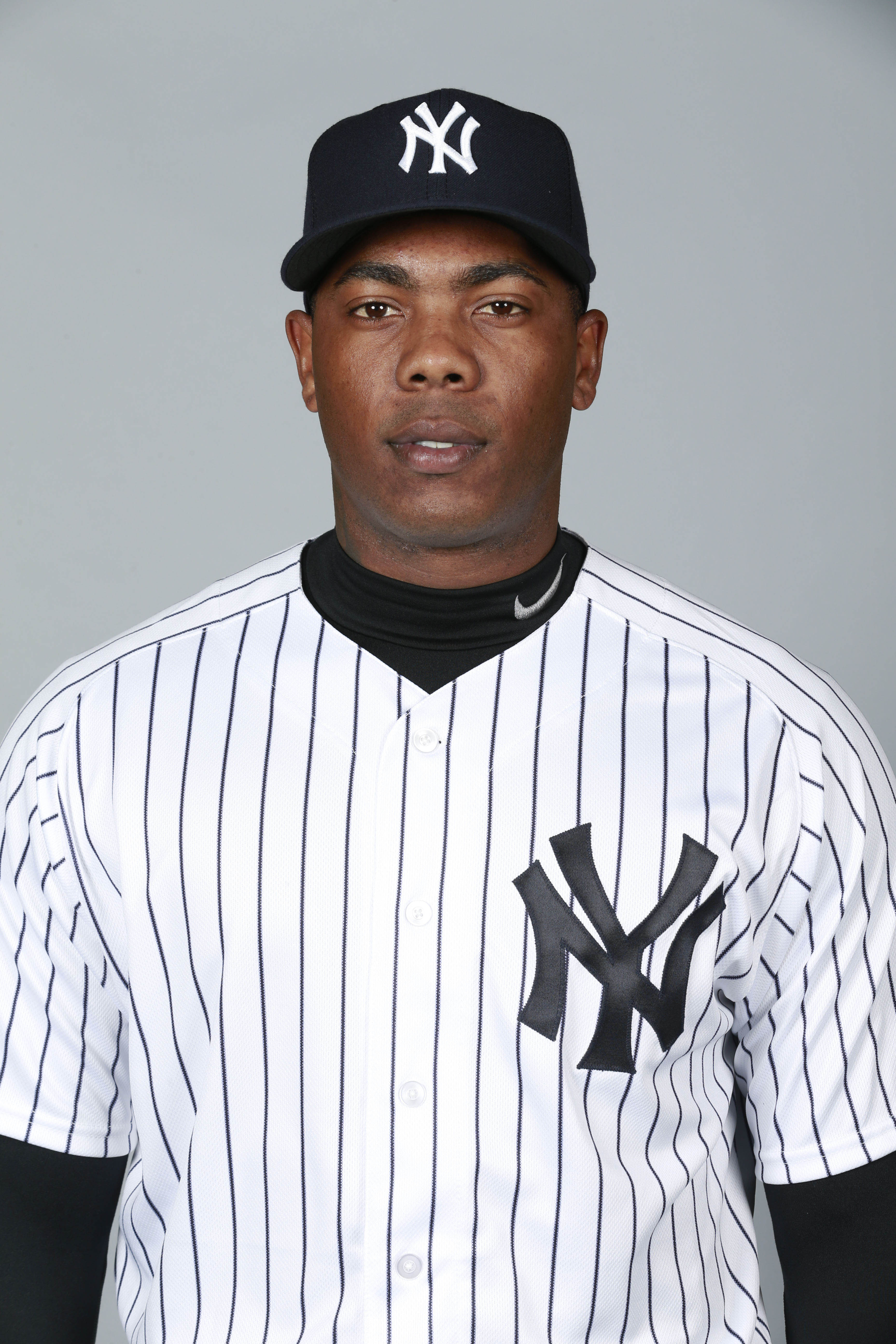
In his own statement, Chapman confirmed that he will not appeal. (Via Ken Rosenthal of FOX Sports, on Facebook.) He continued: “I want to be clear, I did not in any way harm my girlfriend that evening. However, I should have exercised better judgment with respect to certain actions, and for that I am sorry.” In deciding against appeal, said Chapman, he sought “to minimize the distractions that an appeal would cause the Yankees, my new teammates and most importantly, my family.”
The outcome represents an important marker as Major League Baseball seeks to be proactive in addressing the types of domestic violence incidents that have recently plagued the NFL. Certainly, it sets a notable precedent as the league goes on to consider the case of Rockies shortstop Jose Reyes, who is currently set for trial after allegedly striking his wife. Reyes was recently placed on paid leave while his case is resolved.
For its part, the MLBPA expressed support for Chapman’s “decision to forgo his right to an appeal” in a written statement. It noted that the union “and its members do not condone the mistreatment of others by playing or non-playing personnel,” but nevertheless “remains committed to protecting and ensuring the rights granted to Players” in the domestic violence policy.
Needless to say, it’s been an eventful winter for the Cuban fireballer, who was reportedly ticketed for the Dodgers until the swap was scuttled. Reports later emerged that he had been involved in a dispute with his girlfriend at his residence. He was not arrested at the time, and charges were not brought, but the league pursued an investigation under its new protocol.
Chapman was ultimately shipped from the Reds to the Yankees at a discounted rate. He avoided arbitration for $11.325MM, but he’ll lose $1.856MM of that sum over the life of his punishment. The length of the suspension will not, however, be enough to prevent the ace reliever from qualifying for free agency after the coming season. Chapman will be eligible to participate in Spring Training games, per the report. He will, however, be required to submit to ongoing meetings with a treatment board and could be required to submit to counseling and forfeiture of weapons (including firearms).
Photo courtesy of USA Today Sports Images.
Royals, Salvador Perez Agree To Extension
The Royals have officially agreed to a new contract with catcher Salvador Perez. The deal covers six years for the Beverly Hills Sports Council client, including the coming season, and does not include any options. It guarantees three preexisting club options and adds two new seasons at the back end, with a total guarantee of $52.5MM.
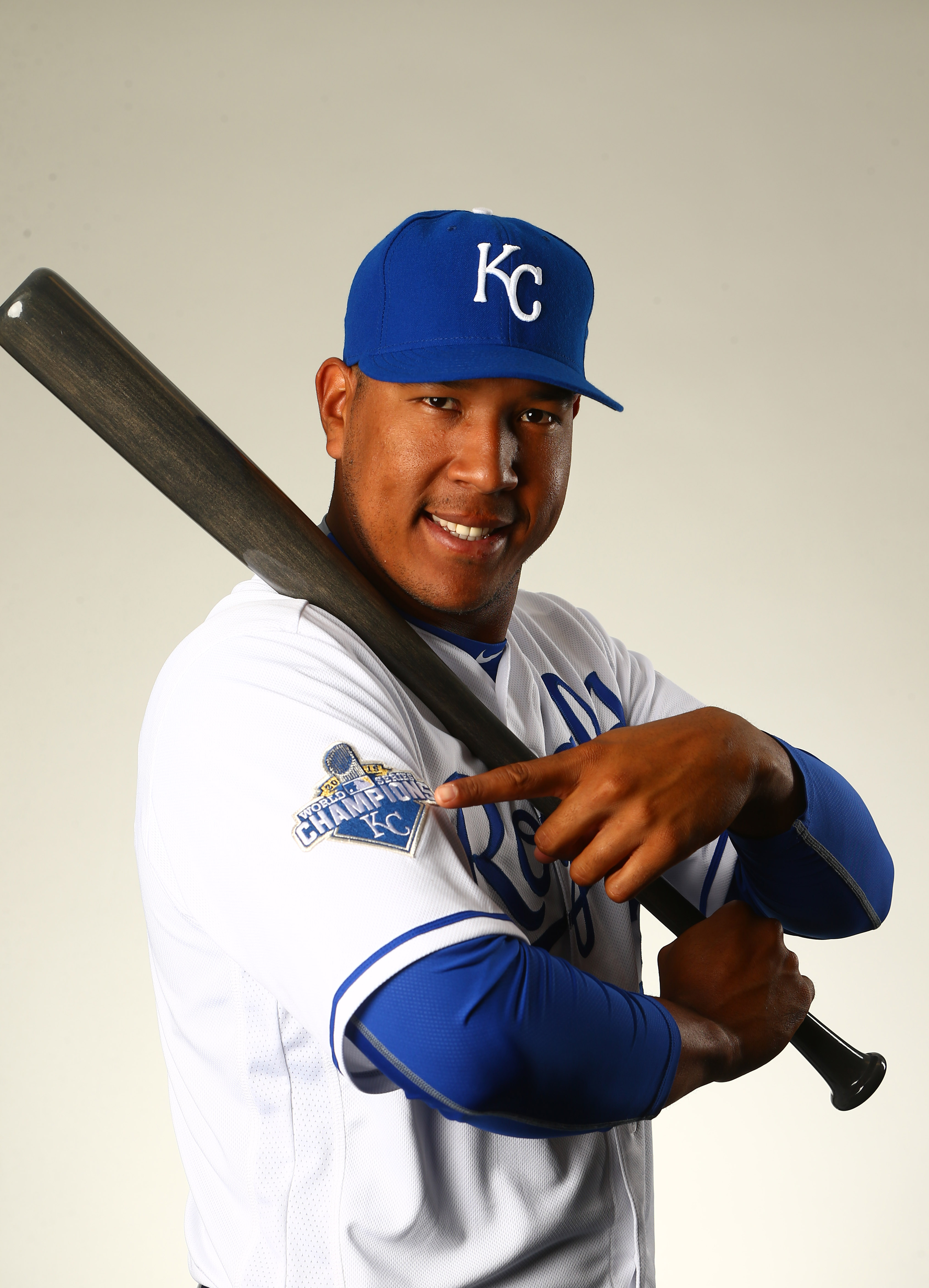
All told, then, Perez will be promised the payouts contemplated in his original extension in addition to receiving $36MM in new money. Part of that comes in the form of a $6MM signing bonus, so there’s some added cash coming to Perez up front. His new 2017 salary will be $3MM, and he’ll earn $7.5MM and then $10MM in the two seasons to follow before taking home $13MM annually in the two new years covered by the deal.
A contract restructuring has long been said to be in the works between the sides. Perez was playing under an early-career deal that allowed the club to control him through 2019, via club options, for the relatively meager sum of $16.5MM. The original contract, negotiated by his prior agents, promised him just $7MM over five years, though of course it was reached before he had even logged a full season in the majors.
While many players have worked out second extensions after originally signing team-friendly pacts, Perez’s situation was rather unique. His first deal turned out to be unusually tilted in the club’s favor, leaving him with little leverage and no contractual protection for the years to come. Though Perez won’t receive the kind of lengthy, high-dollar commitment that some others have achieved — most of them, superstar-level performers — the new deal represents a notable achievement under the circumstances.
With the agreement, Kansas City will be committed to Perez through his age-31 season. That’s still relatively youthful, of course, but the big-framed backstop has already logged 545 games behind the dish through his first five campaigns. That’s only increased over time, as he’s averaged 143 games over the past three seasons.
Of course, that workload also goes to show Perez’s durability. He’s battled through plenty of dings and dents along the way, providing ample proof of his willingness to push his body for the club. It remains to be seen whether he’ll be given some more opportunities for rest over the coming seasons, but certainly the club has a vested interest in ensuring his longevity.
Since taking over as the full-time receiver in 2013, Perez has compiled a .270/.297/.420 slash line with 17 home runs annually. He’s declined over the past two years to a below-average overall contributor at the plate, but has certainly shown the ability to put up at least league-average production offensively. Of course, Perez shines most notably with the mask on, as he has consistently rated as a quality defender in terms of blocking and throwing. He isn’t well loved by framing metrics, though obviously that doesn’t account for his game management abilities and broader contributions on and off the field.
All told, there’s plenty of risk in the deal for the defending champion Royals, particularly given that the organization already enjoyed risk-free contract control for three more seasons. But it’s hard not to appreciate the commitment to a player who has had a major role in the team’s recent rise to prominence.
The move represents the latest investment in what’s proven to be a busy offseason for K.C. The club had already struck a significant pact to keep star left fielder Alex Gordon, signed a big contract with free agent righty Ian Kennedy, inked reliever Joakim Soria, brought back another arm in Chris Young, and added yet another rehabbing starter in Mike Minor. It also worked out arbitration-only extensions with Lorenzo Cain and Mike Moustakas, though it remains to be seen whether lengthier pacts can be struck with either of those players or fellow young stalwarts Eric Hosmer and Alcides Escobar.
Jon Heyman of MLB Network first reported that a deal was close and added details on the contract structure (links to Twitter). Jeff Passan of Yahoo Sports said the deal was done and reported information on its value and allocation (links to Twitter). Ken Rosenthal of FOX Sports (in a tweet) and Jeffrey Flanagan of MLB.com (also on Twitter) added details on the breakdown.
Photo courtesy of USA Today Sports Images.
Rangers Sign Ian Desmond
Ian Desmond‘s drawn out free agency has come to a close, as the Rangers announced today that they’ve signed Desmond to a one-year contract that reportedly guarantees the longtime National $8MM for the 2016 campaign. Desmond, a client of Sports One Athlete Management, will reportedly serve as the everyday left fielder in Texas despite a lack of experience at the position, and the Rangers indeed announced him an an “infielder/outfielder” in their press release. Right-hander Tanner Scheppers has been placed on the 60-day disabled list in order to clear a 40-man roster spot for Desmond.
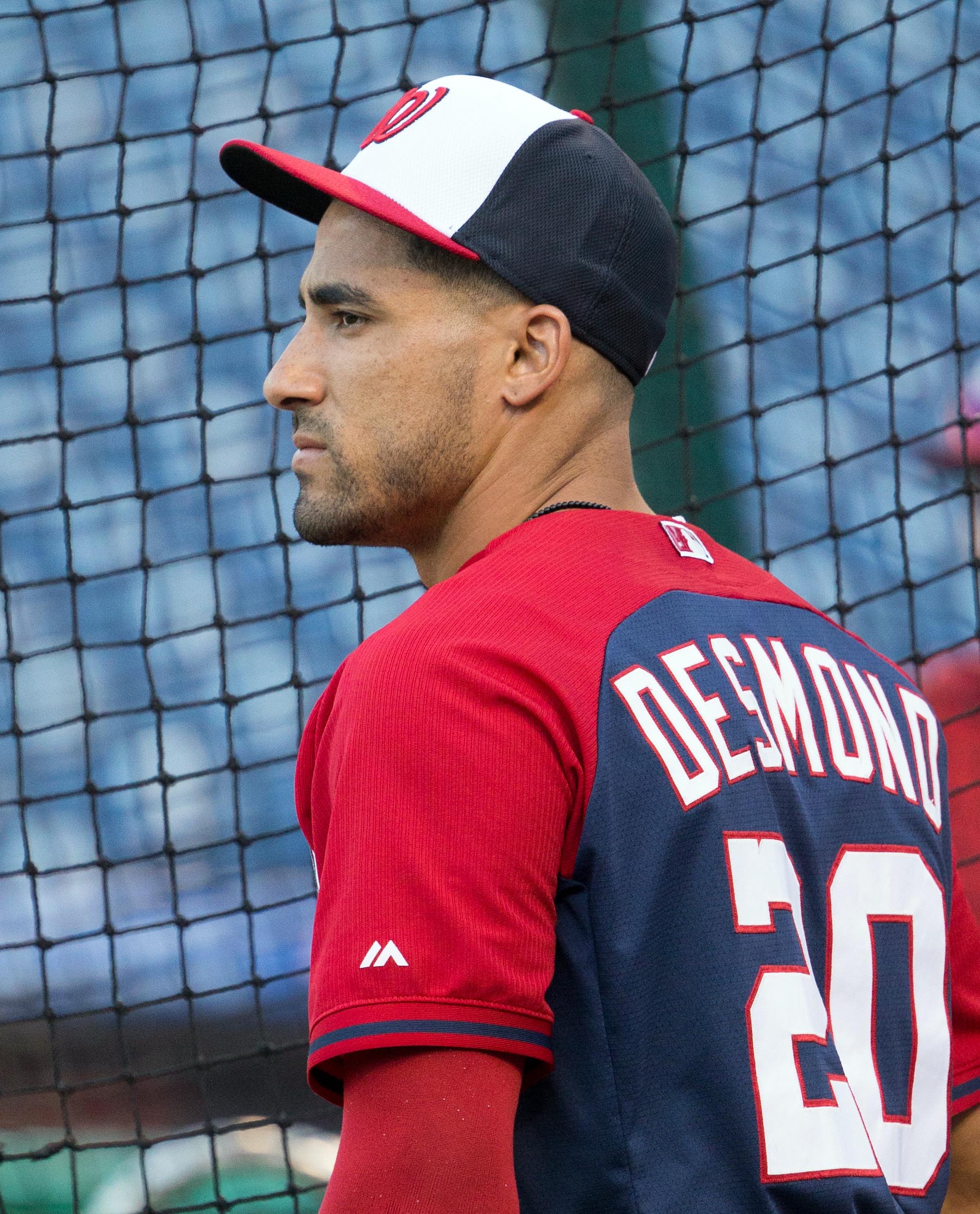
Critics will be quick to point out that Desmond infamously turned down a seven-year, $107MM extension with the Nationals in the 2013-14 offseason. While Desmond undoubtedly has some financial regrets about doing so, the money he apparently left on the table isn’t quite as much as many would assume at first glance. For starters, that contract included his final two arbitration years with the Nats, during which time he earned $17.5MM anyway. Secondly, the contract was also said to include deferred money (as has been the case with virtually every significant Nationals contract offer in recent history due to their ongoing television rights fees battle), further deflating the value of the deal. While Desmond unquestionably comes out behind for the time being, he’ll hope for a big year in Texas and a significantly better result in free agency next offseason.
Throughout the offseason, there’s been talk that Desmond could draw interest from clubs at a position other than shortstop, though there were a number of obstacles that seemed to be standing between Desmond and an agreement with the Rangers. For starters, Texas has repeatedly been said to be averse to adding further payroll, as they’re already looking at what projects to be a club-record payroll north of $145MM. Beyond that, the Rangers will have to surrender the No. 19 overall pick in the 2016 draft in order to sign Desmond. However, if the Rangers make Desmond a qualifying offer next offseason and he turns it down to sign elsewhere, Texas can recoup a first-round pick.
The Rangers picked up the No. 30 overall selection in the draft when Yovani Gallardo signed with Baltimore, though, so they will still have a relatively high draft pick even after coughing up their top selection for Desmond. In turn, the Nationals will now gain the No. 29 overall selection as compensation for the loss of Desmond, who turned down a $15.8MM qualifying offer at the onset of free agency.
That decision, of course, will be scrutinized as well, though it’s easy enough to see why Desmond would bet on himself in free agency. He finished the season one home run shy of delivering his fourth consecutive 20-homer campaign, displaying rare power for a shortstop. And while Desmond’s overall batting line was dragged down by a dismal first half, he did rebound with a .262/.331/.446 second half, during which he homered a dozen times and stole eight bases. Desmond’s defense also came under fire in 2015, but an abnormally large number of his errors (nine) came within the first two weeks of the season, and his glovework settled down from that point forward. While he’s not an elite defender at short, consensus on Desmond has been that he could handle the position, and his bat has typically overshadowed any defensive questions.
It’s easy to say that Desmond “should” have accepted the qualifying offer with the benefit of hindsight, but looking at the matter from a more objective standpoint, it’s often difficult to tell which free agents will thrive in spite of a qualifying offer and which will be hamstrung by the associated draft pick compensation. For instance, at the time qualifying offers were extended, there was little questioning whether Desmond should accept or reject. Even coming off a down season, many expected that Desmond would still secure a solid multi-year pact; conversely, there was an enormous amount of discussion as to whether or not right-hander Ian Kennedy should accept. Kennedy, like Desmond, had a dreadful run early in the season before righting the ship, but most felt it was a mistake for him to test the open market. In the end, though, he landed a five-year, $70MM contract with an opt-out clause — a staggering contract and a firm reminder that predicting the manner in which a qualifying offer will impact a player is no easy feat.
Desmond, then, will end up as yet another data point in CBA negotiations when the MLBPA and the league address the qualifying offer system in the upcoming wave of collective bargaining negotiations. This offseason, the likes of Desmond, Dexter Fowler and Howie Kendrick were all undoubtedly impacted by the draft picks attached to their names in free agency. In previous winters, players like Nelson Cruz, Ervin Santana and Kyle Lohse have each seen their stock dragged down by the qualifying offer as well. There’s a common refrain calling for players to simply accept the qualifying offer, but players spend a minimum of six years (usually more) working toward free agency for the right to no longer be beholden to one-year contracts, and the intent of the qualifying offer was never to drive down the stock of players, but rather to provide teams with compensation for losing their best Major League assets. In that light, the adverse impact on players has indeed been a negative (albeit likely unintended) byproduct.
Earlier this month, we heard that the White Sox, Rays, and Rockies all reached out to Desmond’s camp in recent weeks. In January, the Padres were reportedly giving heavy consideration to signing Desmond before inking Alexei Ramirez. Now, as is often the case with free agents that linger on the market, Desmond will end up with a team that didn’t even appear to be a fit, on paper. However, with Josh Hamilton opening the season on the disabled list, the Rangers saw an opportunity to add a bat with some upside at a relatively low price and will take the chance on Desmond’s glove converting to the outfield at an acceptable level as they look to defend their AL West title.
FOX’s Ken Rosenthal first reported the agreement and the terms (links to Rosenthal on Twitter). MLB.com’s T.R. Sullivan reported (also via Twitter) that Desmond had passed his physical.
Photo courtesy of USA Today Sports Images.
Indians To Sign Juan Uribe
FEB. 28, 11:27am: The Indians announced that the signing is official. He’ll earn a base salary of $4MM with another $1.5MM available via performance bonuses, as Jordan Bastian of MLB.com tweets.
FEB. 24, 7:34pm: Uribe’s base salary with the Indians is $4MM, Olney tweets. He can earn more via incentives.
5:31pm: Ryan Lewis of the Akron Beacon Journal tweets that the Indians are working through some visa issues with Uribe, and his contract is still pending a physical.
FEB. 19: The Indians have reached agreement on a deal with free agent third baseman Juan Uribe, Ken Rosenthal of FOX Sports reports on Twitter. Uribe will earn just under $5MM in the deal, ESPN.com’s Buster Olney reports on Twitter.
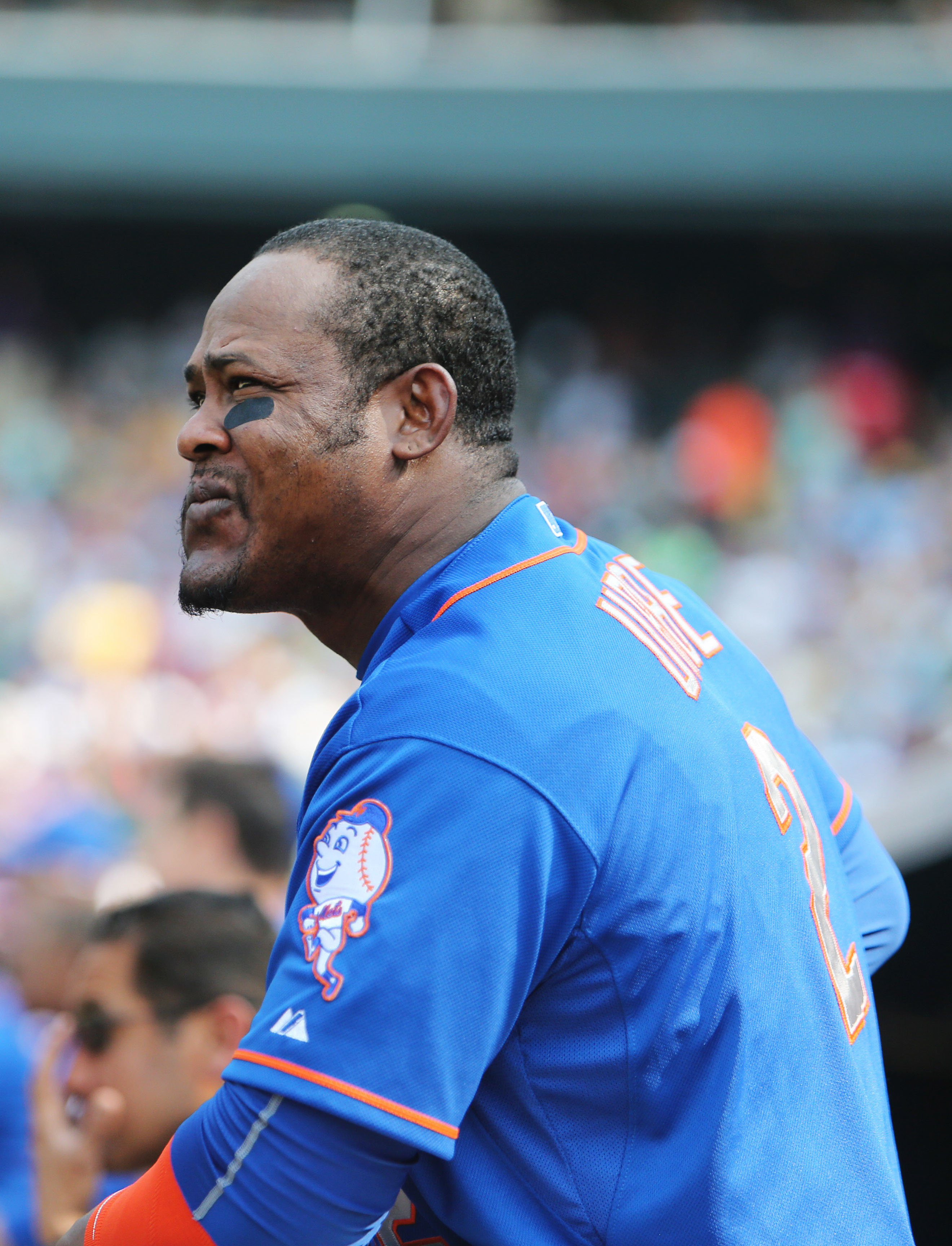
This match-up has long been rumored, so the reports don’t come as much of a surprise. But there still may be a few days to wait for official word, as several reports suggest that Uribe will need some time to obtain visa clearance. He still needs to complete a physical to make the deal official.
Uribe will turn 37 in March, but he’s shown no signs of slowing down in recent years. Coming off of a pair of rough campaigns in 2011-12, Uribe has run off three consecutive stellar efforts. Over 1,227 plate appearances since, he owns a .281/.329/.432 slash with 35 home runs.
Of course, Uribe is known more for his glove — and dynamic clubhouse presence — than for his bat. Once a high-quality middle infielder, Uribe has settled in as a top-shelf third baseman in recent seasons. Both UZR and DRS saw a dip in his glovework last year, but he was still a firmly average option and may well have some big contributions left.
It remains to be seen just how heavily Cleveland will rely on the veteran, but odds are he’ll see plenty of action. The club still has 24-year-old Giovanny Urshela on hand, of course, and he showed a quality glove at the hot corner last year. He wasn’t much use at the plate, but did have a strong 2014 campaign at Triple-A and could certainly have some growth ahead of him.
A strict platoon between Uribe and Urshela doesn’t make immediate sense given that both hit from the right side. It could be, then, that the younger player heads off for more seasoning to start the year. Jose Ramirez, a switch-hitter who’s generally been better against right-handed pitching, could be the more promising part-time tandem piece for the Indians — particularly since he doesn’t figure to spend much time filling in up the middle with Francisco Lindor and Jason Kipnis locked into everyday roles.
Photo courtesy of USA Today Sports Images.
Indians’ Abraham Almonte Suspended 80 Games For Failed PED Test
The Indians announced today that center fielder Abraham Almonte has received an 80-game suspension from Major League Baseball after testing positive for a banned substance (Boldenone, per a statement from MLB).
While he’s far from a household name, Almonte quietly enjoyed a strong 51-game run with the Indians this past season after being acquired from the Padres in exchange for left-hander Marc Rzepczynski. The switch-hitter batted .264/.321/.455 across 196 plate appearances with Cleveland, adding five homers, six steals and quality defensive contributions. He had been projected to get the bulk of the club’s playing time in center field.
For Cleveland, the loss of Almonte for half of the regular season further thins out what was already a questionable outfield picture. The Indians did reportedly bring veteran outfielder Will Venable into camp on a minor league deal today, but the team’s outfield depth chart is still perilously thin. Michael Brantley figures to begin the season on the disabled list, leaving the Indians with Rajai Davis, Collin Cowgill and Lonnie Chisenhall as its primary options on the 40-man roster (plus Venable and fellow non-roster invitees Shane Robinson, Michael Choice and Robbie Grossman).
The Indians have recently been tied to Austin Jackson but were said recently to be done spending on Major League free agents with their payroll nearly maxed out. Almonte’s suspension won’t provide Cleveland with any sort of financial relief, as he is not yet arbitration-eligible, but one has to wonder whether his absence will motivate the team to take some action on the free agent market. Jackson is the top name available, though other outfield options that have yet to sign include David Murphy, David DeJesus, Marlon Byrd, Alex Rios and former Indians cornerstone Grady Sizemore.
Dan Duquette, Agent Casey Close Comment On Dexter Fowler Situation
Fans and media members alike were shocked this morning when the Cubs announced that they had re-signed Dexter Fowler to a one-year deal, just days after the Baltimore media and a number of national reporters broke the news of a three-year agreement between Fowler and the Orioles. Fowler’s agent, Casey Close of Excel Sports Management, vehemently denies that an agreement was ever in place, however, and even went so far as to say that the two sides were ever even nearing a deal. Close felt strongly enough about what he terms “irresponsible behavior” on the team’s behalf to issue a release with the following statement:
“In my 25 years in this business, never before have I witnessed such irresponsible behavior on so many fronts. Both the Orioles front office and members of the media were so busy recklessly spreading rumors that they forgot or simply chose not to concern themselves with the truth. The Orioles’ willful disregard of collectively bargained rules governing free agency and the media’ eager complicity in helping the Orioles violate those rules are reprehensible. Dexter Fowler never reached agreement with the Orioles and did not come close to signing with the club; any suggestion otherwise is only a continuation of an already disturbing trend.”
Close’s comments are among the most scathing public-facing remarks from an agent or executive that I can recall seeing, and his clear intent is to communicate that his agency in no way contributed to any reports of Fowler’s alleged agreement with Baltimore. That, then, would imply that the information (or, rather, misinformation) came from the team’s side of the equation, though executive vice president and general manager Dan Duquette said today at Yovani Gallardo‘s introductory press conference that he was never under the impression that a deal was in place. Via MASNsports.com’s Roch Kubatko:
“We made a very competitive offer,” Duquette explained. “There was not an agreement to terms because they kept insisting on an opt-out. I don’t see, club ownership doesn’t see the value in that type of arrangement to the Orioles. If we are going to guarantee a contract, it should be a contract.”
The Orioles have reportedly been staunchly against opt-out clauses throughout the duration of the offseason, and while initial reports of talks with both Gallardo and Fowler included mention of opt-out provisions, the ultimately reported agreements (and, in Gallardo’s case, announced agreement) did not include opt-out clauses. Notably, Kubtako writes that while the Orioles will not publicly acknowledge that they believed an agreement to be in place, “multiple sources within the organization” confirmed to him earlier this week that there was an agreement in place, and other reporters followed suit with confirmation of the agreement.
Beyond all of that, the arguable face of the Orioles’ franchise, Adam Jones, went on record with multiple reporters (including ESPN’s Jayson Stark and the Baltimore Sun’s Eduardo A. Encina) discussing his excitement over the addition of Fowler. Jones went so far as to say that he spoke to Fowler himself. “I spoke to him,” Jones told Stark. “He’s excited. He should be on his way here now.” Whatever belief that the Orioles had that an agreement with Fowler had been reached, it trickled down out of the front office. And, if Jones’ comments are accurate, it would seem that Fowler himself at least seemed optimistic about the possibility of a deal being consummated.
What isn’t clear, then, is what specifically led those who believed a deal had been struck to come to that conclusion. Duquette’s comments today signified that the opt-out clause was a persistent sticking point from Fowler’s camp, and it should be noted that Close/Excel are the leaders in the opt-out charge; Close represents Zack Greinke, Masahiro Tanaka, Clayton Kershaw and Jason Heyward — each of whom has secured an opt-out clause in recent contracts (multiple opt-outs, in Heyward’s case). As such, it seems reasonable to expect that an opt-out clause was indeed a longstanding request from Fowler’s camp. However, reports today characterized the insistence on an opt-out as a last-minute wrench thrown into talks, thus serving as the impetus for Fowler’s return to Chicago.
Clearly, there’s no benefit for either involved party to have word of a deal leak out when it isn’t true, but something appears to have either been lost in translation during negotiations or been altered late in the game. The definitive level of transparency required to know exactly what transpired — if that level of clarity even exists one way or the other — isn’t likely to ever be publicly available, however.
Cubs Re-Sign Dexter Fowler
In a stunning reversal, the Cubs have re-signed outfielder Dexter Fowler to a one-year deal with a mutual option for 2017, tweets Mark Gonzales of the Chicago Tribune. He’ll receive $8MM in 2016. The mutual option is for $9MM with a $5MM buyout (tweet). The Cubs have placed Zac Rosscup on the 60-day DL to make room on the 40-man roster.
Recent reports had Fowler agreeing to a three-year, $33MM deal with the Orioles, but Fowler denies he ever agreed to terms per Gordon Wittenmyer of the Chicago Sun-Times (tweet). Jon Morosi of Fox Sports (tweet) confirms the Orioles did not believe they had a deal in place with Fowler.
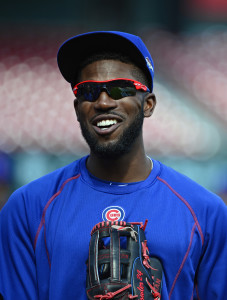
The signing reportedly fell through when Fowler demanded an early opt out after one season, tweets Bruce Levine of 670thescore.com. Per Jon Heyman (tweet), the Orioles did not want to lose a first round pick (compensation for Wei-Yin Chen) to sign a player for one season. When Baltimore balked, he turned down the $33MM guarantee for $13MM from Chicago.
The re-acquisition of Fowler also puts a new light on the Chris Coghlan trade which was announced about a half hour ago. The Cubs will now lose their second round draft pick for signing John Lackey. When Fowler appeared to be Baltimore-bound, they would have lost the associated compensation pick.
The addition of Fowler will give the Cubs plenty of outfield flexibility. They could opt to move Jason Heyward to his natural position of right field. Jorge Soler and Kyle Schwarber may share left field or another arrangement could be reached. Given that Fowler isn’t viewed as a positive defensive center fielder, it’s possible Heyward will remain penciled in up the middle. The club now has a wealth of outfield depth with Ben Zobrist and Javier Baez also in the mix for reps. At the press conference announcing the deal, GM Theo Epstein told reporters, “this is it. We’re not trading anyone else. We feel great about our outfield mix.”
Fowler’s high OBP profile should fit well anywhere within the Cubs lineup. Heyward and Zobrist are also candidates to bat first and second with Anthony Rizzo, Kris Bryant, Schwarber, and Soler as middle of the order threats. Fowler batted .250/.346/.411 with 17 home runs and 20 stolen bases in 2015. The switch-hitter has a history of better on base percentages including a career .363 OBP. His return takes pressure off Schwarber and Soler to perform at high levels.
It’s interesting to note that Fowler is now guaranteed less than the $15.8MM qualifying offer. The mutual option as structured appears very unlikely to be triggered by both sides. Way back in November, MLBTR’s Tim Dierkes predicted a four-year, $60MM contract for Fowler. Assuming the option is declined, Fowler will re-enter free agency prior to his age 31 season.
Photo courtesy of USA Today Sports Images.
Athletics Acquire Chris Coghlan From Cubs For Aaron Brooks
The Cubs have traded outfielder Chris Coghlan to the Athletics for pitcher Aaron Brooks, the Cubs announced via press release.
Coghlan, 30, won the Rookie of the Year award in 2009. Last season, he hit .250/.341/.443 in 503 plate appearances. The lefty hitter was mostly used against right-handed pitching. He has fairly substantial career platoon splits.
Owed $4.8MM in his final season of club control, Coghlan will add more depth to the A’s outfield. Khris Davis, Josh Reddick, and Billy Burns are penciled in as the starters with Coco Crisp, Mark Canha, and Sam Fuld in the mix too. Given his success against right-handed pitching, Coghlan could platoon with Canha as the team’s designated hitter. He also has experience at second and third base.
Brooks, 25, was acquired by the A’s late last season in the Ben Zobrist trade. He made nine starts for the A’s in 11 appearances with forgettable results. His 6.71 ERA was a sight worse than his 6.18 K/9 and 2.47 BB/9. The righty will likely serve as bullpen and rotation depth for the Cubs.
Interestingly, Coghlan appeared to be the Cubs fourth outfielder. Now Arismendy Alcantara and Matt Szczur are the top backup outfielders on the depth chart. Of course, that also overlooks Javier Baez who is expected to be used in a super utility role. The trade could indicate confidence in Baez’s conversion.
It’s possible the Cubs are narrowing on a free agent outfield acquisition. Top available names include Austin Jackson, David DeJesus, and Shane Victorino. Ian Desmond could also be viewed as an option.
Orioles, Yovani Gallardo Agree To Restructured Deal
7:54am: The Orioles have announced the deal. A press conference is scheduled for 1:45pm. In a related move, Baltimore has designated Efren Navarro for assignment.
FEB 24, 6:24pm: Ken Rosenthal of FOX Sports tweets that the option would bring the deal’s total value to $33MM, if exercised. Eduardo A. Encina of the Baltimore Sun reports that Gallardo will earn $9MM in 2016 and $11MM in 2017 (Twitter link). The option is a $13MM club option with a $2MM buyout.
6:14pm: Jon Heyman reports that the new contract will guarantee Gallardo $22MM over two years (Twitter link).
5:52pm: The Orioles and right-hander Yovani Gallardo have agreed to a restructured contract, reports MASNsports.com’s Roch Kubatko (links to Twitter). The new contract is a two-year deal that contains a club option for a third year, per Kubatko, who adds that the contract “is done.” The Octagon client had originally agreed to a three-year, $35MM pact, but his physical exam revealed a shoulder issue that reportedly gave the Orioles trepidation about those terms.
Gallardo, 30 on Saturday, will slot into an Orioles rotation that was in desperate need of some stability. While he won’t give Baltimore the front-end starter that many feel it requires (and that Gallardo looked to be earlier in his career), he’ll provide manager Buck Showalter with a durable arm to deploy alongside fellow right-handers Chris Tillman, Kevin Gausman, Miguel Gonzalez and Ubaldo Jimenez. The addition of Gallardo likely pushes right-hander Vance Worley out of the rotation, creating somewhat of a crunch in the bullpen, where T.J. McFarland had been poised to be the team’s long man.
The 2015 campaign marked Gallardo’s first season in the American League after having spent his entire career with the Brewers. The Mexican-born righty worked to a strong 3.42 ERA in 184 1/3 innings of work, though his strikeout rate (5.9 K/9) and walk rate (3.3 BB/9) each took notable steps back from his final season with Milwuakee. That decline in strikeout rate marked the third consecutive season in which Gallardo’s K/9 rate had dipped, having fallen all the way from 9.0 back in 2012 to last year’s rate; on a perhaps related note, the 90.4 mph which Gallardo averaged on his fastball in 2015 was a career-low and a considerable departure from the 92.4 mph he averaged from 2009-12.
Statistical red flags aside, Gallardo maintained the improved ground-ball rate that he’s displayed over the past three seasons and he once again avoided the disabled list. Gallardo has never been on the DL due to an arm injury — his most notable injury was a torn ACL suffered in 2008, though he recovered and pitched excellently in the four seasons to follow — and he’s made 30 or more starts in each season since 2009. Critics will note that Gallardo, while durable, doesn’t necessarily profile as an innings eater due to the fact that he doesn’t go particularly deep into games (indeed, he averaged just under 5 2/3 innings per start last year), the Orioles do possess a rather solid bullpen that can help to mask any per-start innings questions that arise with Gallardo.
Once official, the Gallardo signing and the reported agreement with outfielder Dexter Fowler will mean that the Orioles are forfeiting their top two picks in the 2016 Rule 4 Draft this June. (The Rangers, in turn, will receive a compensatory pick between the first and second round of the draft.) For a club that recently rated among the worst farm systems in the game according to ESPN and Baseball America, that’s a significant blow, but the Orioles’ clear offseason message is that present-day winning takes precedence over the club’s minor league system at time. Baltimore has re-signed Chris Davis to a seven-year, $161MM contract, re-signed Darren O’Day to a four-year, $31MM contract, agreed to a three-year, $33MM deal with Fowler, seen Matt Wieters accept a $15.8MM qualifying offer and signed Korean outfielder Hyun Soo Kim to a two-year, $7MM pact. Add in Gallardo’s $22MM, and that creates a total free-agent spend of $269.8MM, which doesn’t even include the $9.15MM in payroll that Baltimore absorbed in trading for presumptive designated hitter Mark Trumbo.
Much has been and will continue to be made of the Orioles’ stringent standards when it comes to the requisite physical exams that come along with free-agent signings, but their physical being tough to pass is nothing new. As recently as the 2013-14 offseason, the O’s scrapped a two-year deal for reliever Grant Balfour and a one-year deal for Tyler Colvin due to concerns that arose with the duo’s medical evaluations, and their history of either restructuring contracts or backing out of them entirely based on physicals dates all the way back to their 1998 pursuit of right-hander Xavier Hernandez. Kubatko took a lengthy look at the club’s history of controversial physical exams this morning.
Jose Bautista Reportedly Seeking More Than Five Years/$150MM
Yesterday, Jose Bautista denied a report from TSN’s Rick Westhead that his apparently non-negotiable asking price was an extension of five years and $150MM. What that figure raised eyebrows around the baseball world, it may actually have been too modest, as both the Toronto Star’s Richard Griffin and MLB Network’s Jon Heyman have reported that Bautista’s contract demand was actually higher. Griffin suggested that the number could be higher if Bautista’s $14MM salary for the coming season was included as well, though Heyman says that Bautista is looking for both more years and more money. FOX Sports’ Ken Rosenthal puts the dollar figure at less than $180MM, however, as the average annual value of a six-year deal wouldn’t have cracked the $30MM threshold.
Needless to say, this is high demand for any player and a stunning one coming from a player entering his age-35 season. When I looked at Bautista as an extension candidate last November, I reasoned that he would certainly land at least a $20MM average annual value in a new contract, perhaps even something in the range of a four-year/$100MM deal for his age 36-39 seasons (2017-2020). Only seven players in history have ever received an AAV north of $25MM per season, and six of those contracts began when the players were much younger than 36 years old. (The exception was Roger Clemens‘ one-year, $28MM deal with the Yankees when he was 44, an altogether unique situation.)
Given the size and unprecedented nature of this contract, it’s hard to see the Blue Jays meeting Bautista’s demand. The Jays already have expensive commitments to Troy Tulowitzki and Russell Martin on the books, Edwin Encarnacion is also a free agent this winter and the club will certainly at least explore extending Josh Donaldson before he hits free agency after the 2018 season. Bautista pointedly mentioned on Monday that Rogers Communications, the Jays’ parent company, has derived huge financial boosts from the team’s recent success, so he doesn’t seem willing to accept an argument that ownership couldn’t put more resources into re-signing him or into the club in general.
Payroll commitments aside, it could be argued that it would be unwise to sign any 36-year-old to such a massive deal. While Bautista is universally considered to be an excellent athlete who keeps himself in prime shape, he’s also had some injury issues in his career and his defensive metrics in right field took a sharp decline in 2015. If Bautista is already becoming the type of player who only provides value with his bat, then he’d have to keep his elite hitting numbers through his age-41 season to live up to the value of such a big contract.
Would Bautista land such a deal on the open market as a free agent? At first glance it would seem unlikely that any team would make such a huge commitment to a 36-year-old, and yet the 2016-17 free agent class is notably thin. Bautista’s performance in 2016 will obviously play a major factor in his next deal, and another superstar-level season would help boost his case. Bautista told reporters on Monday that he wasn’t going to budge from his asking price, though it’s possible that this was a negotiating tactic and that he’d be willing to go lower if the Blue Jays or another suitor countered with something at least in the ballpark of the initial demand.