
Aaron Crow To Undergo Tommy John Surgery
Marlins right-hander Aaron Crow is slated to undergo season-ending Tommy John surgery tomorrow, reports MLB.com’s Joe Frisaro (on Twitter).
The unfortunate reality has been the expected outcome for Crow for about a week’s time now. Losing Crow for the year and losing Preston Claiborne for at least one month has thinned out Miami’s bullpen bullpen depth, and those injuries are likely a driving factor behind the team’s reported interest in adding a bullpen upgrade.
The Marlins sent left-hander Brian Flynn and Minor League righty Reid Redman to the Royals to acquire Crow this winter, but the former first-round pick won’t throw a pitch in his new environment this season. Crow delivered generally strong ERA and strikeout marks for the Royals from 2011-13, working exclusively out of the bullpen, but he struggled in 2014; Crow’s ERA spiked to a career-worst 4.12, and he posted the worst K/9 (5.2) and ground-ball (43.2%) marks of his career.
Miami acquired Crow in the hope that it was buying low on a previously successful reliever with two years of team control remaining at a not-unreasonable price. Crow is earning $1.975MM this year after avoiding arbitration for the second time. Speculatively speaking, the injury presents the possibility that Crow will be non-tendered next winter. Miami’s payroll is among the league’s lowest, so the preference may be to cut Crow loose and try to re-sign him to a cheaper deal. However, that also poses the team with the risk of losing Crow and receiving nothing from the trade that brought him to Miami in the first place.
The Royals selected Crow with the 12th overall pick in the 2009 draft, and while he didn’t develop as they’d hoped in the rotation, he’s spent four full seasons in a Major League bullpen. In 233 2/3 Major League innings, Crow has a 3.43 ERA with 8.0 K/9, 3.8 BB/9, a 49.2 percent ground-ball rate and an average fastball of 94 mph.
Indians, Carlos Carrasco Agree To Extension
The Indians have announced yet another extension, this one with righty Carlos Carrasco. The contract guarantees him $22MM over the next four years and includes two club options.
Carrasco will earn $4.5MM next year, $6.5MM in 2017, and $8MM in 2018. The option years are for $9MM and $9.5MM, respectively, and can each be escalated by $4MM based on top-ten Cy Young finishes, bringing the total max value of the contract to $48MM. Those options come with $662.5K in total buyouts. Carrasco was already set to earn $2.337MM in his first of three arbitration years, which the new deal leaves in place — meaning that Carrasco nets just under $20MM in new money.
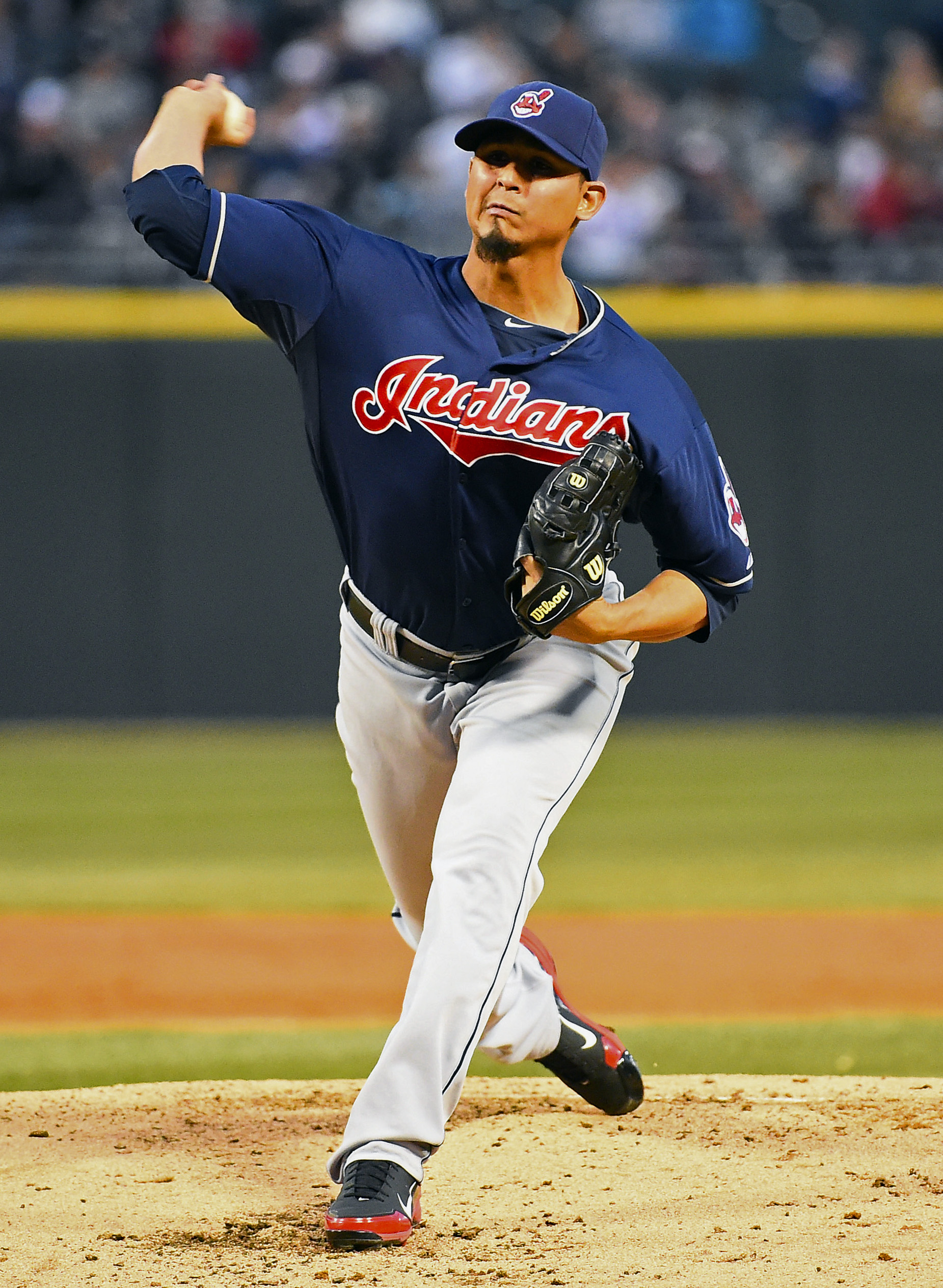
Carrasco, who just recently celebrated his 28th birthday, posted a 5.29 ERA over his first four seasons (238 1/3 IP) with the Tribe and struggled last April, losing his starting job and even getting designated for assignment last summer. However, he started to turn things around after a stint in the bullpen. As a reliever, he posted a 2.30 ERA with 43 relief innings.
When Carrasco came back to the starting five, he closed out 2014 and in a small sample size of ten games he looked like an absolute superstar. During that span, the hurler posted a 1.30 ERA and 78 strikeouts (against just 11 walks) over 69 innings.
Carrasco, an ACES client, now has financial security going forward despite a rocky career which included a lost 2012 season thanks to Tommy John surgery. Now, with Carrasco and Corey Kluber both under contract, the Indians could have a potent No. 1 and No. 2 locked in for years to come. The Cy Young winner’s deal looks different however as he’ll earn a reported $38.5MM across his guaranteed five seasons while Carrasco will get $22MM across his additional three years. Kluber receives additional years on his deal, but the difference in average annual value is a modest $400K.
Carrasco, in theory, could have rolled the dice with another solid season of pitching. Even though he could have secured a sizable arbitration raise and even more leverage in extension talks by building on his close to 2014, he understandably opted for security.
On Saturday night, Ken Rosenthal of FOX Sports reported that the two sides were discussing a deal. Rosenthal tweeted that the deal was done. Jeff Passan of Yahoo Sports (Twitter links) reported contract details, as did MLB.com’s Jordan Bastian (via Twitter) and Jon Heyman of CBSSports.com (on Twitter).
Photo courtesy of USA Today Sports Images.
Padres Looking For Shortstop Upgrade
The Padres are “scouring the shortstop market,” sources from other teams tell Bob Nightengale of USA Today (Twitter link). San Diego has been incredibly busy on the trade market under new GM A.J. Preller, and apparently is not stopping with the season underway.
The Padres currently feature a duo of Alexi Amarista and Clint Barmes at short, which obviously does not represent the most offensively potent pairing. Of course, they do form a strong defensive platoon partnership that could at least conceivably deliver reasonable production, but it is an underwhelming situation for a team that obviously has designs on contending.
As far as possibilities for a trade partner, the report does not give any hints. There are some established players that might be had, though the most obvious candidates are rather pricey. We just heard that the Cubs’ Starlin Castro could still be a trade candidate. The Rangers no longer have a pressing surplus up the middle, but Preller’s former employer is likely quite willing to discuss Elvis Andrus.
San Diego has been rather creative in formulating deals to add established talent, so nothing can be ruled out at this point. Of course, it could be that the team is primarily looking for a more modest upgrade.
Athletics Looking At Veteran Outfielders
The Athletics are looking outside the organization for outfield options to fill in while Coco Crisp is down, Susan Slusser of the San Francisco Chronicle reports.
Crisp is not expected to be out longer than two months to start the year, making a significant acquisition seem somewhat unlikely. Recent roster casualties may offer some value in the interim at no cost other than a league-minimum roster spot.
Among the possibilities, per Slusser, are Cody Ross, who was just released by the Diamondbacks, and recently-designated Padres-turned-Braves veteran Carlos Quentin. Both of those players would appear to be bat-first options — Ross struggled defensively last year after returning from hip surgery while Quentin has always been regarded as a poor defender — but the club has several good gloves in the mix already.
Of course, Ross and Quentin also face significant questions beyond their limitations in the field (and would not otherwise be freely available). The pair owned matching offensive production last year (75 OPS+) that hardly inspires confidence, though of course their longer-term track records show much greater ability at the plate if their bodies are still willing.
Matt Cain Undergoes MRI Due To Forearm Tightness
12:45am: After tonight’s win over the D-Backs, Bochy told reporters that there’s no torn ligament in Cain’s elbow and the injury is more of a “two week thing,” via Hank Schulman of the San Francisco Chronicle (Twitter links). Cain himself termed the injury a flexor strain but also noted that the team’s trainers are fairly optimistic about his prognosis. Based on the timeline suggested from Bochy, however, it sounds like a DL stint is in the cards.
8:23pm: Giants right-hander Matt Cain underwent an MRI today after experiencing pain in his right forearm, manager Bruce Bochy told reporters, including Alex Pavlovic of CSN Bay Area.
While the result is presently unknown, Cain’s 2014 season came to an end after he underwent surgery to remove bone spurs from his elbow, and Pavlovic writes that Giants officials privately expressed concern that the issue could eventually lead to Tommy John surgery. Forearm pain is often a precursor to Tommy John surgery, so it seems reasonable to have some legitimate concerns about Cain’s immediate future. Of course, there are a number of other, more minor issues, that could result in forearm pain for Cain. It sounds like Cain will miss his first scheduled start, at the very least, as Bochy said “There’s got to be some concern” and indicated that the team would withhold him on Wednesday if necessary.
To further complicate the team’s pitching outlook, Jake Peavy will miss his first start due to a back injury, although the hope is that he can make a start in the second series of the season in San Diego. Still, it’s troublesome for Giants fans that two of the team’s five projected starters are already facing injury issues of any magnitude.
The Giants’ pitching depth was called into question this offseason by many pundits. Beyond ace Madison Bumgarner, there was little certainty in San Francisco’s rotation picture. Cain’s recovery from surgery was a question mark, and 39-year-old Tim Hudson had ankle surgery this winter. Tim Lincecum has been ineffective for three years now, and Peavy’s own injury history is lengthy.
Such concerns may have played a role in the Giants’ decision to re-sign Ryan Vogelsong late in the offseason, and Bochy has already informed reporters that Vogelsong will start in place of Peavy. Beyond him, the next line of defense in the rotation is excellent swingman Yusmeiro Petit, who stepped into the rotation with aplomb late last year when Lincecum’s struggles became too great to ignore.
Rangers Sign Wandy Rodriguez To Minor League Deal
9:04pm: Rodriguez will earn the pro-rated portion of the league minimum upon promotion to the Majors, but his contract also contains up to $1.8MM worth of incentives for games started, reports Jon Heyman of CBS Sports (on Twitter).
7:01pm: The Rangers announced that they’ve signed left-hander Wandy Rodriguez to a Minor League contract. The veteran southpaw will be assigned to Triple-A to begin his Rangers career.
Rodriguez, 36, made a name for himself in the Astros rotation beginning in 2008, and from that season through 2013, he worked to a combined 3.48 ERA with 7.7 K/9 and 2.8 BB/9 in 997 1/3 innings between Houston and Pittsburgh. He was in the mix for a rotation spot with the Braves in March but wasn’t able to lock down a spot despite enjoying an excellent spring. In 23 innings this spring, Rodriguez notched a 3.13 ERA (eight earned runs) on 22 hits and eight walks with 23 strikeouts.
The Rangers’ pitching woes have been well documented, with the most notable blow coming earlier this spring when they learned that ace Yu Darvish required Tommy John surgery. Additionally, former rotation cornerstone Matt Harrison‘s career is in jeopardy after a series of back injuries, and lefty Derek Holland missed much of the 2014 season due to knee troubles. The Rangers are currently relying on a rotation of Yovani Gallardo, Holland, Colby Lewis, Ross Detwiler and Nick Martinez — a questionable group whose ranks could eventually be cracked by a healthy Rodriguez.
Red Sox Sign Rick Porcello To Four-Year Extension
The Red Sox announced that they’ve signed right-hander Rick Porcello to a four-year contract extension that covers the 2016-19 seasons. Porcello, a client of Excel Sports Management’s Jim Murray, will reportedly receive $82.5MM over the four-year term of the contract. He’ll first receive a $500K signing bonus before earning $20MM in 2016 and 2017 then $21MM in 2018 and 2019. Porcello was already slated to earn $12.5MM this season after avoiding arbitration this winter, and that salary remains intact.
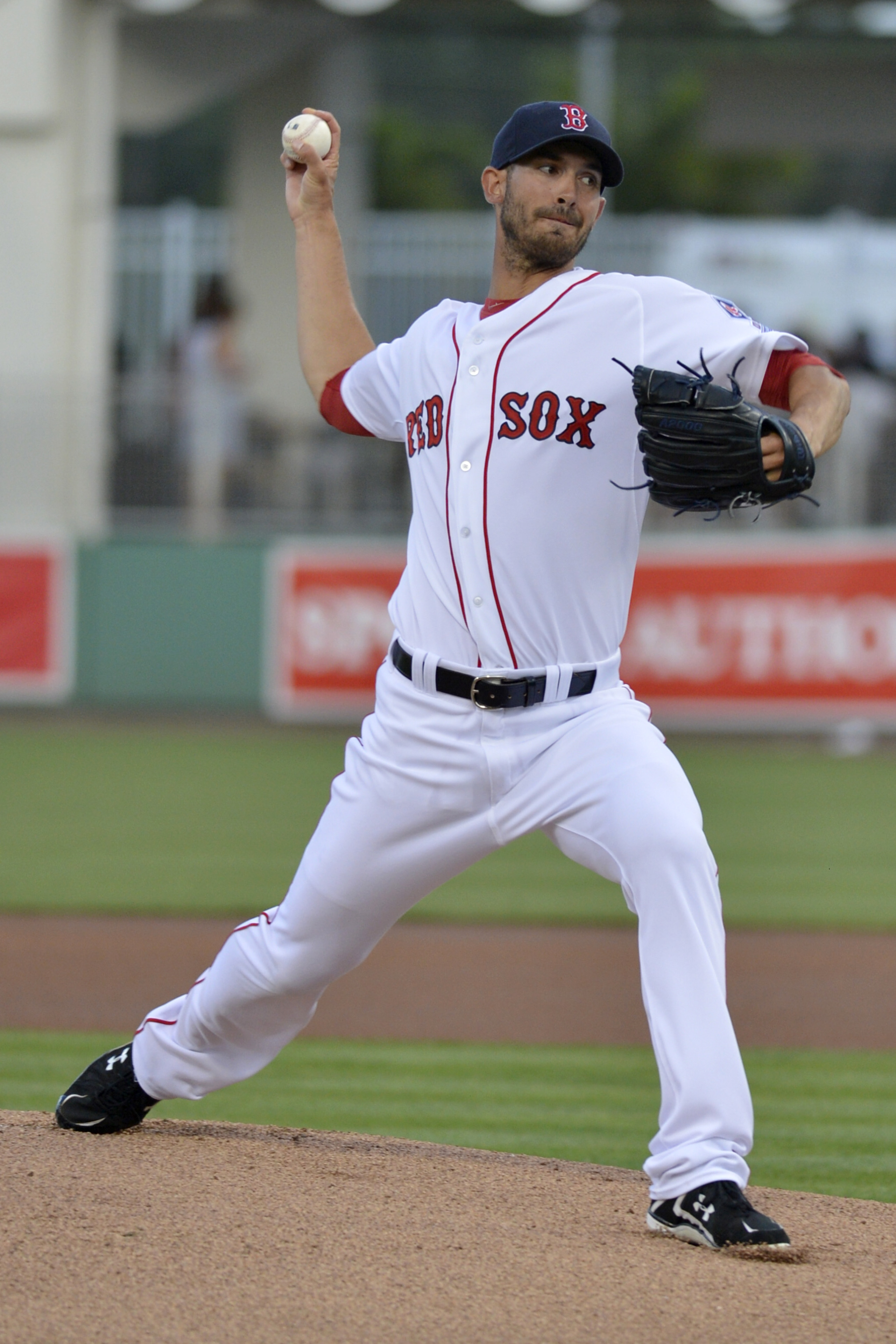
For the 26-year-old Porcello, there’s certainly risk involved in taking a long-term deal at this juncture, as he was set to hit the open market just six months from now at the age of 27. However, while he’d have had a chance at a lengthier deal, the $20MM+ annual salary is likely one that few would have foreseen a year ago, when the former first-round pick entered the season with a career 4.51 ERA and a career-high of 182 innings.
Last year’s excellent performance turned Porcello’s fortunes, however, as he worked to a career-best 3.43 ERA in a new career-high 204 2/3 innings. Porcello averaged 5.7 K/9, 1.8 BB/9 and posted a 49 percent ground-ball rate in 2014 — a significant step forward for a pitcher that many have believed to have untapped potential prior to last year’s breakout. Porcello will surrender his first four free agent seasons by signing this deal — and perhaps the ability to lock in a $100MM+ contract next offseason — but he’ll retain the right to hit the open market again at the age of 30, setting him up for another significant contract. Beyond that, however, is the fact that Porcello seems genuinely excited to be a member of the Red Sox. In a Players Tribune article that he penned himself, Porcello explains that the dedication to winning he’s seen since the day he joined the Red Sox played a major role in his decision to sign a long-term deal now, thereby forfeiting the exceptionally rare opportunity to be a 27-year-old free agent starting pitcher.
While the Red Sox will certainly hope the early stages of his contract go better than this comparison, the contract isn’t entirely dissimilar, philosophically, from the one signed by Homer Bailey a year ago. Cincinnati paid what most considered to be market value for Bailey, tacking five years and $95MM on top his final arbitration year, despite relatively underwhelming career statistics. The hope in that contract, as is the case with this deal, is that recent steps forward will be sustainable, if not a portent for even further development.
From the Red Sox’ perspective, the deal provides them with additional certainty in their rotation in the long-term. They’ll now have Porcello under control through 2019, Wade Miley and Joe Kelly under team control through 2018, and Clay Buchholz under team control through the 2017 season. It’s also another example of the Red Sox’ preference to avoid investing in pitchers in their 30s and their preference to limit the length of long-term contracts (in this case, likely at the expense of a higher average annual value).
That last item is probably the key to this deal. There will undoubtedly be detractors who focus on the contract’s average annual value as opposed to limiting the risk by minimizing the years and investing in prime seasons rather than potential decline years. It’s certainly possible that the contract will look poor at some point over the life of the deal, but it’s roughly the same figure for which James Shields signed, and Porcello is seven years Shields’ junior. And while Porcello clearly lacks the type of track record that Shields and other veteran free agents will typically sign for, such contracts typically begin at the time Porcello’s current deal will end. It wouldn’t be a surprise for a prime-aged Porcello to outperform an aging veteran that might be more typically expected to sign this size contract, and Boston certainly seems to be of the belief that betting on those prime years, particularly in terms of starting pitchers, is a better route than paying premium prices for potential decline years.
Alex Speier of the Boston Globe reported the financial details of the contract (Twitter links). Jon Heyman of CBS Sports reported the limited no-trade clause (also on Twitter).
Photo courtesy of USA Today Sports Images.
Braves Designate Carlos Quentin For Assignment
TODAY: The Braves have designated Quentin as planned, David O’Brien of the Atlanta Journal-Constitution tweets. Atlanta is said to be hoping that an American League team will be willing to take on some of his salary via trade.
YESTERDAY: The Braves plan to designate newly acquired outfielder Carlos Quentin for assignment, CBS Sports’ Jon Heyman tweets. Quentin is owed $8MM for 2015, so as Heyman notes, his presence in today’s Craig Kimbrel trade was merely to help the Padres offset the salary they agreed to take on when they acquired Melvin Upton Jr.
Quentin, 32, struggled with his hitting and his health last season and is limited defensively. Designating him for assignment could enable him to move to an American League team, where he might be able to help at DH.
Padres Acquire Kimbrel, Melvin Upton From Braves
The Padres are beginning the 2015 season with yet another blockbuster trade, receiving closer Craig Kimbrel and outfielder Melvin Upton Jr. from the Braves for outfielders Cameron Maybin and Carlos Quentin, pitching prospect Matt Wisler, outfield prospect Jordan Paroubeck and the 41st overall pick in the June draft.
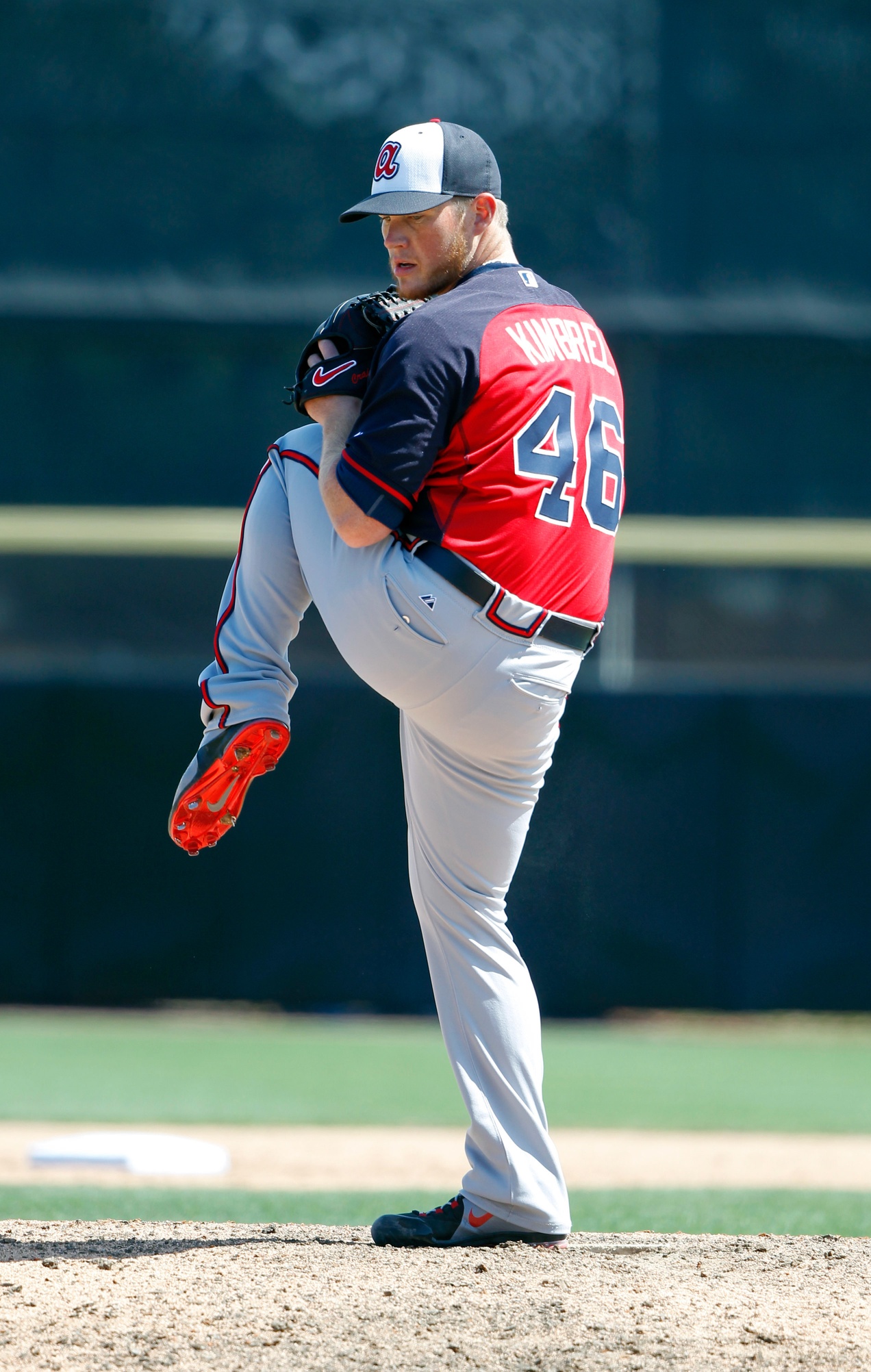 Kimbrel is obviously the centerpiece of the deal, an elite closer who has posted dominant numbers since arriving in the league in 2010. Kimbrel is signed through 2017 for $33MM plus a $1MM buyout on a $13MM option for 2018. It’s not easy for a reliever to be a bargain at that price, but Kimbrel clearly is. His 2014 season, in which he posted a 1.61 ERA with 13.9 K/9 and 3.8 BB/9, was a fairly typical one. At 26, it’s reasonable to hope he continue producing at a very high level for the next several years if he can remain healthy, even though relievers tend to have shorter shelf lives than other player types. The move will, presumably, bump Joaquin Benoit back into a setup role. Kimbrel’s addition gives the Padres yet another big-name player to go with Justin Upton, James Shields, Matt Kemp, Wil Myers, Derek Norris and Will Middlebrooks, all of whom they acquired in a transformative offseason.
The presence of the other Major League players in the deal has much to do with their contract statuses. None of them figure to help their new teams much. Melvin Upton is owed $46.35MM over the next three seasons. Even with the departures of Maybin and Quentin, the Padres have a full outfield and have no real use for Upton, who hit .208/.287/.333 in 2014 and also struggled the previous season. But taking on his contract surely helped persuade the Braves to part with a great player in Kimbrel. In San Diego, Upton will reunite with his brother Justin, who the Braves also recently sent west.
Quentin is owed $8MM in 2015. He hit .177/.284/.315 in 2014 and had no obvious role with the Padres. He has a no-trade clause, although it appears he waived it. The Braves plan to designate him for assignment, suggesting he was included in the trade purely to help offset salary. He could wind up with an American League team. Maybin, who will receive $15MM for the next two years plus a $1MM buyout for 2017, would have been an expensive reserve in San Diego. He hit .235/.290/.331 in 2015.
By parting with two players they didn’t figure to use much, the Padres will receive $24MM in salary relief to offset the salary they’re taking on with Upton. That means that they’ll add a total of about $56MM in salary as a result of the deal, continuing to aggressively increase their payroll after taking on big commitments in Kemp and Shields, in particular, this offseason.
Wisler is the most valuable property headed to Atlanta in the deal. Baseball America recently rated him the No. 34 prospect in baseball, with Baseball Prospectus ranking him No. 53 and MLB.com placing him at No. 69. MLB.com ranked him the Padres’ second-best prospect, praising his slider and the movement on his low- to mid-90s fastball. The 22-year-old righty posted a 4.42 ERA at Double-A and Triple-A in 2014, although he had a fine 8.3 K/9 and 2.6 BB/9, and most of his 146 2/3 innings were in the hitter-friendly Pacific Coast League.
Paroubeck was a second-round pick in the 2013 draft. The switch-hitting 20-year-old hit .286/.346/.457 in rookie ball in 2014, and MLB.com ranked him the Padres’ 19th-best prospect, noting his ability to hit to all fields, along with his good speed and the reasonable likelihood that his power will develop. He and the draft pick give the Braves a bit of extra value in the deal, even though Wisler and the salary relief were likely much more crucial. (The Padres could, of course, trade the draft pick because it’s a Competitive Balance selection, and the current CBA permits teams to trade such picks.)
On the surface, the trade appears to be a risky one for San Diego. Kimbrel is inarguably a great closer, but it remains to be seen whether he will prove to be worth parting with $56MM, a top prospect in Wisler and two additional prospects in Paroubeck and the draft pick. The Padres also had more pressing needs in their infield, and it’s unclear whether Kimbrel is the right player to get them over the hump. As Fangraphs’ Jeff Sullivan notes, the fact that the Padres optioned solid relievers in Brandon Maurer and Kevin Quackenbush today shows how good their bullpen already was. And as the New York Post’s Joel Sherman tweets, perhaps an easier course if the Padres wanted to upgrade the closer role would have been to keep Huston Street, who the team’s previous management traded last year. Still, the deal unquestionably adds another blue-chip player to a team that’s suddenly full of them.
The Braves, meanwhile, continued their rebuild, subtracting salary while adding additional upside, including a starting pitcher in Wisler who should be able to help this year. Kimbrel’s departure will surely be painful for Braves fans, particularly given the Alabama-born Kimbrel’s Southern roots, but it might have only been a matter of time, since an elite closer is more valuable to a contender than to a rebuilding team. With Kimbrel gone, one of Jason Grilli or Jim Johnson, both of whom have closing experience, could take over ninth-inning duties in Atlanta.
Ken Rosenthal of FOX Sports was the first to note that a trade was complete, and he also tweeted that the Braves would acquire Maybin, Quentin and the draft pick. Kiley McDaniel of Fangraphs tweeted that the Padres would receive Kimbrel and Upton, and that the Braves would receive Paroubeck. FOX Sports’ Jon Morosi tweeted that Wisler was involved.
Photo courtesy of USA Today Sports Images.
Indians Extend Corey Kluber
The Indians have announced signing reigning CY Young Award winner Corey Kluber to a five-year contract, which runs through the 2019 season and contains club options for 2020 and 2021. MLB.com’s Jordan Bastian tweets Kluber’s guaranteed five-year portion is worth $38.5MM while Ken Rosenthal of FOX Sports tweets the contract, plus its unique escalators and trade language, is the largest guarantee ever for a pre-arbitration pitcher. Kluber is represented by B.B. Abbott of Jet Sports Management.
“This is an exciting day for our organization, Corey and his family,” said Indians GM Chris Antonetti. “In his time with us, Corey has grown into a leader in our clubhouse and an exemplary teammate. His tireless work ethic, consistent preparation and fierce competitiveness set an example for our younger players, and his presence on our team is a key reason that we are prepared to compete for a championship in 2015 and beyond.”
Kluber can earn $77MM across the life of the deal if all escalators, which are based on where he finishes in the Cy Young race, are met, according to Rosenthal (Twitter links). Starting in 2015, Kluber will earn salaries of $1MM, $4.5MM, $7.5MM, $10.5MM, and $13MM. His fifth year can go from $13MM to $17MM with escalators (link). The 2020 option will be worth $13.5MM and can go to $17.5MM with escalators. In 2021, the option will be worth $14MM and can be as large as $18MM with escalators. That second option can be instead bought out for $1MM.
If traded, Kluber’s new club will have to decide on the 2020 and 2021 options within three days after the 2019 World Series. If the new club declines that option, Kluber must be given a $1MM buyout (link). He’ll also receive a $1MM bonus if traded and his 2021 club option will convert to a vesting option if he is traded in 2020 (link). The vesting option would call for him to pitch 160 innings and not finish the year on the DL, according to Rosenthal.
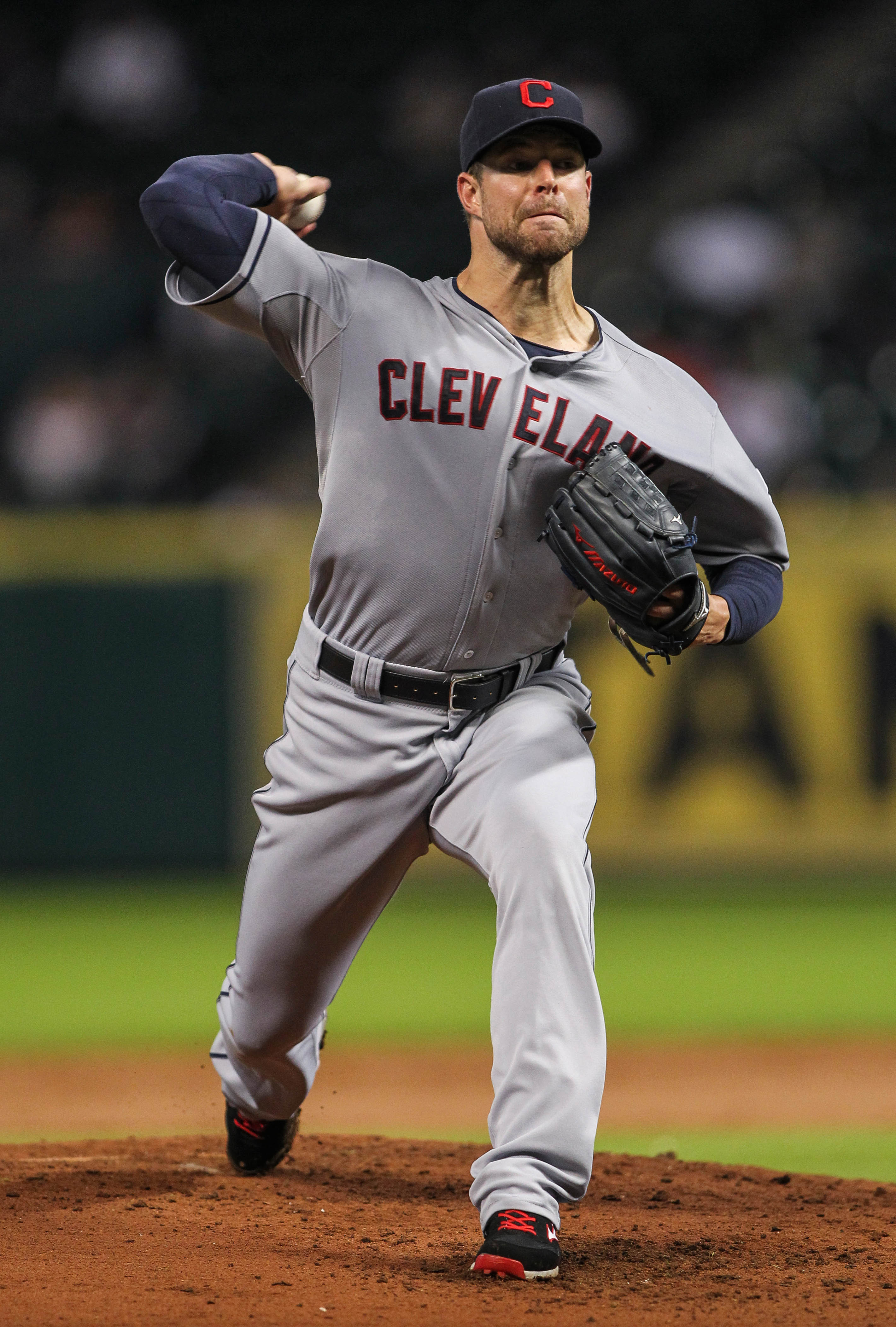
Kluber is coming off a Cy Young season in which he posted 18 wins, a 2.44 ERA, 10.27 K/9, and 1.95 BB/9 in 235 innings. As a Super Two player, he would have been eligible for arbitration from 2016 through 2019 and, with a similar performance to last season, would have been in store for strong earnings via arbitration. As such, he was in a position to earn more than Yordano Ventura netted from his similar extension.
The advanced metrics were also quite fond of Kluber in 2014. The right-hander pitched to a 2.57 xFIP, a figure that’s more or less in line with his 2.44 ERA on the season. That figure put him only second to Dodgers ace Clayton Kershaw, who pitched to an eye popping 2.08 xFIP last year.
Last week, Antonetti explained the team had “a clear preference” to conclude any contract talks before Opening Day in order to “minimize distractions” for the players. For a while, it seemed like an extension wouldn’t come together at all prior to the start of the 2015 season. Cleveland owner Paul Dolan, president Mark Shapiro, Antonetti and Abbott had a face-to-face meeting last month, but it seemed like the two sides were at an impasse due to the pitcher’s unique situation.
Kluber, who turns 29 on April 10th (the date of Cleveland’s home opener), was still under the Tribe’s control for four more seasons. While he ostensibly wanted some financial security ahead of free agency going into his age-33 season, the Indians weren’t necessarily under the gun to give him a long-term pact. Ultimately, the two sides appear to have found some middle ground: Kluber gets his security and the Indians gain cost certainty at a reasonable price.
Ken Rosenthal of FOX Sports first reported the two sides were nearing agreement on a long-term deal and it could be finalized before Opening Day (Twitter links). Jeff Passan of Yahoo! Sports first tweeted the length of the deal while Jon Heyman of CBSSports.com first tweeted a deal had been reached pending a physical. Photo courtesy of USA Today Sports Images.