
Josh Beckett To Retire
Dodgers righty Josh Beckett said today that he will retire from the game, as MLB.com’s Ken Gurnick reports. The 34-year-old was slated for surgery on his torn left hip labrum, but will not attempt to work back from the injury.
Beckett was having an excellent season before he was stricken with another significant injury. He owned a 2.88 ERA through 115 2/3 frames, striking out 8.3 and walking 3.0 batters per nine. Though his numbers were propped up somewhat by a .257 BABIP and 85.2% strand rate, Beckett’s stuff was good enough that he managed to record the first and only no-hitter of his career.
It has been a memorable career for Beckett, who won the 2003 World Series MVP with the Marlins at just 23 years of age. By that time, he had already established himself as one of the best young starters in baseball. But by the winter of 2005, he was headed to the Red Sox (along with Mike Lowell) in exchange for a package including future stars Hanley Ramirez and Anibal Sanchez.
Beckett had an up-and-down tenure in Boston. Over 2006-11, he averaged 185 innings a year with a 4.04 ERA and 8.2 K/9 against 2.4 BB/9. But he mixed in three All-Star campaigns, including a 2007 effort (3.27 ERA over 204 2/3) in which he was the Cy Young runner-up.
Beckett ultimately signed two extensions with Boston: a three-year, $30MM deal that included a $12MM vesting option and a four-year, $68MM pact that ran through 2014. Of course, the latter contract did not end as might have been hoped at the time. After playing a central role in the public’s dissection of Boston’s 2011 meltdown, Beckett was off to a rough start in 2012 when his contract became part of the massive Red Sox-Dodgers mid-season trade.
Though he may have delivered more value back to Los Angeles than seemed likely at the time of that swap, Beckett continued to be inconsistent. He threw well down the stretch in 2012 before scuffling through an injury-plagued 2013.
Things ended on a high note, of course, and Beckett will leave the game having contributed 35.3 rWAR and 39.0 fWAR to his clubs. For that production, he earned over $116MM. MLBTR wishes Beckett the best of luck in whatever endeavors he chooses to pursue now that his playing days are over.
Minor Moves: O’Sullivan, Jackson, Paterson, Wilson, Bianchi
As outrights pick up pace across the league, here are the latest minor moves:
- After outrighting him yesterday, the Phillies have released righty Sean O’Sullivan, the Philadelphia Inquirer reports. O’Sullivan was set to become a minor league free agent anyway, so this just moves up his appearance on the open market.
- After seeing three players fail to clear waivers today, the Diamondbacks did manage to get another trio through. Per the PCL transactions page, outfielder Brett Jackson, lefty Joe Paterson, and catcher Bobby Wilson have all cleared and been outrighted to Triple-A. Jackson, a 26-year-old former top prospect, had another disappointing season at Triple-A, posting a .208/.299/.350 line in 271 plate appearances. Paterson, 28, again posted solid numbers in Triple-A (2.95 ERA over 42 2/3 frames) but failed to return to the regular MLB pen role that he had in 2011. And Wilson, 31, saw his first MLB action since 2012 with the Angels, but spent most of his time putting together a .267/.324/.341 slash over 299 trips to the plate at Triple-A.
- Also clearing waivers and being outrighted was Jeff Bianchi of the Brewers. Bianchi, who turned 28 on Sunday, struggled in limited MLB action this year. The utility infielder owns a lifetime .534 OPS through 402 plate appearances in the bigs. Over three seasons at Triple-A, he has posted a more attractive .299/.349/.428 line.
Richards, Shoemaker, Castro, Furbush, And Morrison Change Agencies
Relativity Sports has added an even handful of new clients, Jerry Crasnick of ESPN.com reports (Twitter links). In addition to Garrett Richards and Matt Shoemaker of the Angels, Relativity has taken on Jason Castro of the Astros along with Charlie Furbush and Logan Morrison of the Mariners as clients. Each of those players had been with Octagon, but it appears that they followed agent Fred Wray to his new agency.
Among this group of players, only Shoemaker has yet to reach arbitration eligibility. He and fellow breakout Angels starter Richards (who will be entering his first arb year as a Super Two) could well become extension candidates if they maintain their form. Meanwhile, Castro could be a somewhat difficult-to-peg arbitration case, as he looks to improve on his $2.45MM salary after a rough year.
Morrison, too, could require some effort from his new firm. He managed to bridge a large gap in filing figures last year, settling on a $1.75MM deal. But Morrison’s future remains unclear after putting up a solid, if unspectacular, .262/.315/.420 slash over 365 plate appearances. He could be ready to go through another (relatively) high-stakes round of arbitration negotiations, find himself dealt to a new club, or even be set loose to find a new club on the open market.
Be sure to check out MLBTR’s Agency Database for the most up-to-date information on player representation.
Offseason Outlook: Philadelphia Phillies
The Phillies fell to the basement of the NL East with a 73-89 record in 2014. Ominously, the club received decent performances from many over-the-hill veterans, suggesting the presence of additional downside. Youngsters and the rotation take most of the blame for the poor season. If there’s one bright spot (and there is only one), it’s the bullpen.
Guaranteed Contracts
- Ryan Howard, 1B: $60MM through 2016
- Cliff Lee, SP: $37.5MM through 2015
- Cole Hamels, SP: $96MM through 2018
- Chase Utley, 2B: $15MM through 2015 (plus three $15MM vesting options from 2016-2018)
- Jonathan Papelbon, RP: $13MM through 2015 (plus $13MM vesting option for 2016)
- Jimmy Rollins, SS: $11MM through 2015
- Carlos Ruiz, C: $17.5MM through 2016
- Marlon Byrd, OF: $8MM through 2015
- Miguel Gonzalez, SP: $7MM through 2016 (plus unknown vesting option for 2017)
Arbitration Eligible Players (service time in parentheses; projections via Matt Swartz)
- Tony Gwynn Jr. (5.147): $900K projected salary
- Antonio Bastardo (5.054): $2.8MM
- Andres Blanco (4.007): $700K
- Ben Revere (3.149): $4MM
- Domonic Brown (3.078): $2.6MM
- Cesar Jimenez (3.020): $600K
- Non-tender candidates: Gwynn, Blanco, Jimenez
Contract Options
- A.J. Burnett: $15MM mutual option or $12.75MM player option ($1MM buyout)
- Mike Adams: $6MM club option
Free Agents
The Phillies entered the July trade deadline with few assets and an obvious need to retool. However, they opted to keep their most marketable pieces like Hamels, Papelbon, and Byrd. That trio were involved in a wide range of trade rumors, but a deal was never finalized. Philadelphia did swing a notable August trade, securing prospects Jesmuel Valentin and Victor Arano from the Dodgers for starting pitcher Roberto Hernandez. The Phillies also netted Gustavo Pierre for backup outfielder John Mayberry Jr.
GM Ruben Amaro Jr. may be on the hot seat due to a combination of bad contracts and a failure to turn veterans into future talent during the season. For example, several playoff-bound clubs like the Tigers, Giants, or Dodgers could have benefited from Papelbon, but Amaro was unable to unload him. For what it’s worth, former team president Dave Montgomery and interim team president Pat Gillick have issued multiple votes of confidence on behalf of Amaro. The club’s failure in 2014 should make it easier for the front office to accept a rebuilding process.
Philadelphia lacks near-ready position prospects beyond Maikel Franco. Their offense ranked 27th in baseball per wRC+, a context neutral advanced statistic. They barely outpaced the Padres, Reds, and Diamondbacks among the league’s worst offenses. A focus on finding new, long-term assets should be the top priority.
While it’s obvious the club should rebuild, the how of it is muddier. The outgoing free agents do not represent a substantial chunk of the payroll, so a Yankees-like spending spree isn’t a possibility. A quick turnaround will require shrewd moves on the free agent, trade, and waiver markets. When this club was last successful, they found Shane Victorino and Jayson Werth on the scrap heap. This time around Philadelphia needs to find even more hidden gems.
Before fixating on the Phillies myriad problems, let’s examine their biggest strength – the bullpen. Papelbon posted a fine season with 39 saves and a 2.04 ERA. His fastball velocity declined for a fourth straight season – now down to 91 mph. His peripherals are worrisome, especially his unusually low .247 BABIP and 2.7% HR/FB ratio. If both numbers regress to league average, we should expect a corresponding bump in ERA.
Papelbon found himself in the rumor mill this summer but ultimately stuck with the club. His contract, vesting option, and reputation as a distraction will make him difficult to trade. He can block deals to 17 clubs, but he’s said he will accept a trade to any contender who uses him as their primary closer. The emergence of Ken Giles – 1.18 ERA, 12.61 K/9, 2.17 BB/9, and 97 mph fastball – gives Philadelphia an alternative to their veteran star. However, Giles has struggled with command in the minors, so it may be prudent to confirm he can maintain a strong walk rate. Cardinals closer Trevor Rosenthal offers a cautionary tale.
Another reliever to emerge this season is Jake Diekman. The left-handed slinger dialed up the gas with an average fastball at 97 mph and the ability to touch triple digits. He improved throughout the season and finished with a 3.80 ERA, 12.68 K/9, and 4.44 BB/9. Diekman’s presence could make Bastardo expendable. The club’s longest tenured lefty reliever is entering his third and final season of arbitration eligibility and is expected to earn $2.8MM. The Phillies can also turn to right-hander Justin De Fratus to shorten games.
Papelbon is not the only player who should expect a swirl of trade rumors this winter. With several high profile players, the question is: will they return? Burnett may consider retirement rather than accept his side of the option (worth at least $12.75MM). Even if he does decide to continue playing, there’s no guarantee he won’t opt to serve with another franchise.
One reason Burnett chose Philadelphia was that he thought he could help them compete. Despite an 18-loss season, teams would probably be willing to bet on Burnett returning to a healthier and more productive state in 2015. He pitched nearly the entire season with a hernia and posted the highest walk rate of his career. A healthy Burnett could more closely resemble his strong 2012-13 seasons.
In many ways, it’s fortunate that outfielder Yasmany Tomas was declared a free agent last Thursday. The Phillies were the first club to organize a private workout with the Cuban and are said to have always preferred him over fellow countryman Rusney Castillo. The power hitter would fit the Phillies need of young talent without necessitating a trade. The outcome of the Tomas pursuit could accelerate the club’s rebuilding plans – assuming they can swallow a possible nine-digit price tag.
If payroll stays consistent around $175MM, Howard, Lee, and Hamels represent over 40 percent of expenditures. Currently, about $132.67MM is guaranteed in 2015 with another $10MM estimated through arbitration. Burnett’s $12.75MM player option will play a big role in available payroll. Depending on his decision, the Phillies appear to have about $20MM to $35MM to spend over the offseason. It’s possible declining attendance will lead to a lower payroll, or perhaps valuable opportunities like Tomas will lead to more spending.
Hamels is the club’s most valuable Major League asset. Amaro reportedly asked teams for their three top prospects in return for Hamels – a price at which many scoffed. Dave Cameron of FanGraphs confirmed that Hamels has some value with his current contract, but the financial cost does make it hard for another club to justify an exorbitant prospect fee.
As the Phillies’ most marketable trade commodity, the club will have trouble pulling the trigger on a Hamels deal. Most rebuilding franchises will conduct a fire sale and count on a quantity of well-regarded prospects to provide value down the road. The Phillies basically get to take one shot at finding their future. Prospect-rich teams like the Cubs, Red Sox, and Dodgers are expected to make a play for Hamels, who can block trades to 20 clubs.
The team has caught a lot of flak over the years for Howard’s contract, and the criticism seems well deserved. Since his current contract kicked in prior to 2012, Howard has provided -1.0 fWAR. That places him among the worst players over that time span despite collecting one of the highest annual salaries.
Philadelphia has tried to dump Howard to any AL franchise while assuming most of the remaining payroll. So far, the fish won’t bite. The club could opt to dismiss the former star and eat his salary, although that seems like a hasty measure without an alternative in place. Darin Ruf is the backup first baseman, with Franco in apparent need of more minor league seasoning.
Lee is another pricey player who might not live up to his contract. Whereas there is little hope of a resurgence from Howard, Lee could recover his past form if the flexor tendon in his left elbow heals over the offseason. This year, he pitched to a 3.65 ERA with 7.97 K/9 and 1.33 BB/9 in 81 innings while missing most of the second half.
Lee’s $27.5MM option for 2016 becomes guaranteed if he throws 200 innings next season without ending on the disabled list with a left arm injury. Otherwise, it becomes a club option with a hefty $12.5MM buyout. An offseason trade of Lee seems unlikely due to his injury, though it’s possible that a team like the Dodgers would be willing to assume some or all of the contract as a way to acquire a possible star at a minimal prospect cost.
With the Phillies’ top three starting pitchers uncertain to return and/or produce in 2015, rotation depth will be a priority for the club. Kendrick could be re-signed as a familiar face. He’s a reliable if unexciting option to absorb innings for a rebuilding club. Internal options include David Buchanan, 2014 draftee Aaron Nola, Miguel Alfredo Gonzalez, and Jonathan Pettibone. Prospect Jesse Biddle could figure as a mid-season addition.
Even if the Hamels, Lee, and Burnett remain in Philadelphia, the team may want to acquire two starters via free agency or trade. A top-flight free agent is an unlikely acquisition, and competition could keep them away from mid-market targets. Again, Tomas’ decision could affect the club’s direction in the rotation. It would be easier to justify signing a Brandon McCarthy if a quick path to contention was evident. Similarly, if Burnett declines his option, the Phillies may be more inclined to investigate other mid-market options.
The outfield is perhaps an area of consternation for the Phillies. Byrd performed as expected, as did Revere. However, Brown turned in a lousy season with just 10 home runs and a .235/.285/.349 line. The club may be ready to execute a change of scenery move. Certainly, Brown’s grasp on regular playing time has eroded.
The free agent market for outfielders is fairly thin, and trading for a notable outfielder could be difficult to balance with the club’s priorities. Philadelphia could still cash in on Byrd over the offseason to take advantage of the paucity of outfielders in free agency. As for depth pieces, the club received solid production from Sizemore and could consider another one-year deal. Perhaps they would consider recently designated outfielder Jose Tabata too. Most internal options like Cesar Hernandez and Gwynn are defense-oriented. The lone exception is prospect Kelly Dugan, but he’s struggled with injuries and has yet to show much in-game power.
On the face of it, the infield is stable. Howard, Utley, and Rollins have manned their respective positions since 2005 while Cody Asche or Franco will probably handle third base. If Howard isn’t back for 2015, the club has a few internal solutions. Utley could move to first base with either Asche, Hernandez, or Freddy Galvis serving at second base. Alternatively, Franco or Ruf could step directly into the first base job. Some speculate that playing first base could help Utley remain healthy and effective, although such claims are not accompanied by evidence.
While an external hire is unlikely, third base is an area of depth in free agency. If Philadelphia has its eyes on the postseason, Aramis Ramirez might be of interest – assuming he turns down his half of a mutual option. Ramirez is entering his age-37 season, which doesn’t appear to be a good fit for the Phillies. However, he could give Asche and Franco space to develop while improving the on-field product. He may come with a qualifying offer attached, but the Phillies’ first round pick is protected, meaning he would require forfeiture of a second-round selection.
Since he’s available to sign now, Tomas appears primed to be the first domino to fall in the free agent market. His decision may affect the direction of the Phillies offseason. If Philadelphia gambles on the Cuban, they might be more inclined to aim for a competitive roster in the next couple years. Unless they find a similarly high-ceiling youngster around which to build, the situation looks bleak.
Angels Claim Alfredo Marte, Roger Kieschnick; Designate John Buck, Brennan Boesch
The Angels have claimed outfielders Alfredo Marte and Roger Kieschnick off waivers from the Diamondbacks, the club announced. In a corresponding move, the team has designated catcher John Buck and outfielder Brennan Boesch for assignment.
Marte and Kieschnick have each seen fairly minimal time at the MLB level over the last two years, and neither has been productive in those short samples. But the 25-year-old Marte is fresh off of a .319/.407/.519 campaign at the Triple-A level, his best line as a professional. And while Kieschnick, 27, was less impressive in his first season in the D’backs organization (.260/.317/.461), he put up two productive Triple-A campaigns in the Giants system in the years prior.
Meanwhile, Buck was slated to become a free agent after the season. He signed on with the Halos after losing his backup job with the Mariners, with whom he signed a one-year, $1MM deal before the season. On the year, Buck slashed a meager .225/.289/.281 in his 97 big league plate appearances. Boesch, who could have been controlled through arbitration, will also get a slight head start on free agency. After joining the Angels on a minor league deal, Boesch struggled in 79 plate appearances with the big club but did tune up the PCL with a .332/.381/.636 slash over 407 plate appearances.
Commenting Policy
MLBTR is increasing efforts to enforce our commenting policy. The goal is to raise the level of discourse in the comments, part of which involves eliminating inappropriate language and insults.
Comments of this nature are not allowed:
- Attacks or insults towards other commenters, the post author, journalists, teams, players, or agents.
- Inappropriate language, including swearing and related censor bypass attempts, lewdness, insults, and crude terms for body parts, bodily functions, and physical acts. Overall, we don’t want any language that a parent would not want their kid to see.
- Juvenile comments or extensive use of text message-type spelling.
- Comments written mostly or entirely in capital letters.
- Spam-type links or self-promotion. Please submit to our weekly Baseball Blogs Weigh In feature if you have a website or blog. Currently, permissible links in the comments are limited to MLB.com, Cot’s Baseball Contracts, FanGraphs, Baseball-Reference, Baseball Prospectus, Baseball America, and MLB Trade Rumors. Comments linking to other sites will be deleted.
- Comments about how you’re sick of this topic or it’s not newsworthy.
- Anything else we deem bad for business may be removed.
Also keep in mind the following general guidelines:
- No inappropriate avatars or images are allowed.
- Comments should be kept to approximately 200 words or less.
- Corrections for errors made in our posts are welcome and appreciated. We ask that you be cordial in doing so.
If you see comments that violate our policy, please flag them and/or contact us. Bans may be handed out liberally by our moderators, without second chances or warnings. Remaining civil is not that difficult, though, and most commenters have no problems doing so as well as helping rein each other in. We at MLBTR are grateful for long-time commenters and readers, though this policy applies equally regardless of tenure. This policy is always available at the bottom of the site, and will be re-posted monthly.
Qualifying Offers To Be Worth $15.3MM This Offseason
Teams wishing to make one-year qualifying players to pending free agents will have to be willing to pay them $15.3MM, the Associated Press reports (via Sportsnet.ca; h/t to Ben Nicholson-Smith). That represents an 8.5% increase over least year’s $14.1MM price tag.
The qualifying offer value is arrived at by averaging the salaries of MLB’s 125 highest-paid players. Teams may extend qualifying offers to eligible free agents-to-be within five days after the end of the World Series. Players have seven days to weigh the offer. When a player rejects the offer, his former team becomes eligible to receive an additional “sandwich” round pick in the next amateur draft, while a new signing team must forfeit their highest non-protected pick. (No draft pick movement occurs if a player re-signs with his original team.)
In order for a player to be eligible to receive a qualifying offer, the CBA states that he must have spent the entire regular season on that team’s roster. For example, Brandon McCarthy is ineligible to receive a qualifying offer after beginning the season with the Diamondbacks and being traded to the Yankees. Click here for more details on how the qualifying offer system works.
Every player made a qualifying offer to date has declined it. In the 2012-13 offseason, the first year that the QO system was in effect, nine players were made a qualifying offer and seven ultimately signed with different clubs. Last year, thirteen players turned down qualifying offers and ten went to new clubs in free agency.
As MLBTR’s Tim Dierkes explained before the 2013 season, avoiding the qualifying offer can have a major impact on a free agent’s earning capacity. That became all the more clear during the latest round of free agency, when both Stephen Drew and Kendrys Morales declined qualifying offers but were unable to find multi-year offers to their liking. The pair of veterans ultimately waited months into the season before signing, settling for one-year deals before struggling badly over the rest of the year.
Blue Jays Claim Bo Schultz From D’backs
The Blue Jays have claimed righty Bo Schultz off waivers from the Diamondbacks, Toronto announced via press release. With the move, te Jays have two open slots remaining on their 40-man roster.
Schultz, who just turned 29, saw his first MLB action last year with Arizona, allowing seven earned runs on 13 hits and one walk (with five strikeouts) over eight innings of relief. While that limited sample does not say much about his future, it did allow Pitch F/X to get a look at his offerings. Schultz averaged just over 95 mph with his fastball, and relied on a slider and change as his primary off-speed offerings.
Schultz spent most of his time at Triple-A last year as a starter, scuffling to a 6.18 ERA over 135 1/3 frames with 5.5 K/9 against 3.1 BB/9. He threw 19 2/3 innings at the highest minor league level in 2013, with results that were just as poor in the earned runs department. But Schultz had nearly twice the strikeout rate in that stretch, during which he worked exclusively from the bullpen.
Free Agent Profile: David Robertson
Though he’s spent much of his career in the shadow of perhaps the greatest closer of all time, Mariano Rivera, Yankees right-hander David Robertson stepped onto the ninth-inning stage this season and excelled. The strong effort continued a four-year run of dominance that has positioned the former 17th-round pick quite well as he hits free agency for the first time.
Strengths/Pros
In today’s game, strikeouts are king for pitchers, and Robertson excels in that department. Though he’s not overpowering — he’s averaged 92 mph on his heater in his career — Robertson racks up strikeouts at a prolific rate in part because he releases the ball closer to home plate than most pitchers, causing his fastball to appear quicker (a trait which SI.com’s Tom Verducci examined in a 2011 article). He averaged 13.4 strikeouts per nine innings this season and has punched out 12.0 per nine in his carer, including 12.3 per nine over the past four seasons.
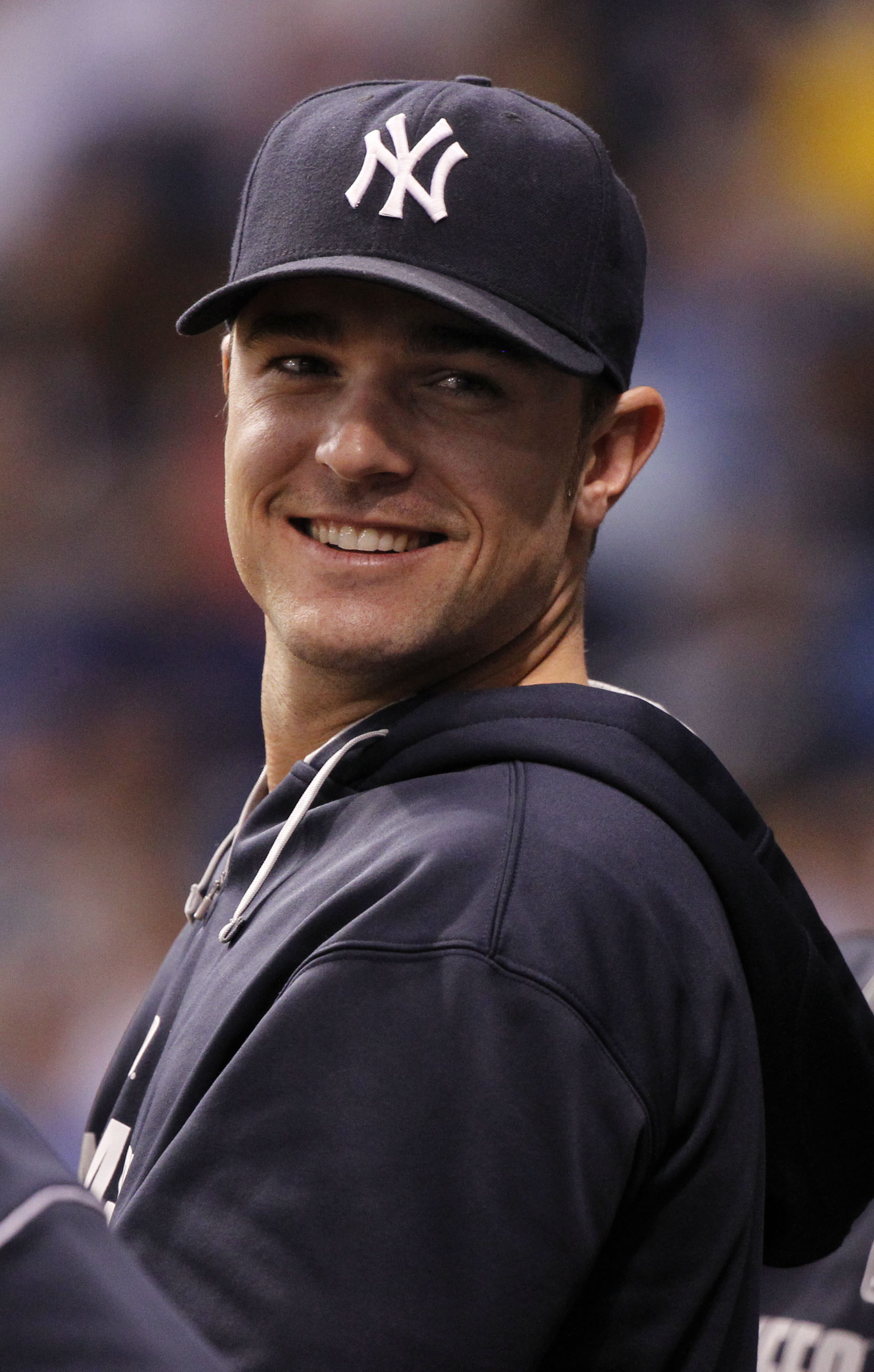 Those four seasons are where Robertson truly began to establish himself as one of the game’s elite relievers. From 2011-14, Robertson owns a 2.20 ERA with a 354-to-95 K/BB ratio in 258 innings of work. His 46.7 percent ground-ball rate in that time has been slightly above-average, and he’s shaken the command problems that he showed early in his career. He walked nearly five batters per nine innings from 2008-11, but since that time he’s averaged just 2.8 BB/9.
A look at the rest of the closer market reveals quite a few older options, but Robertson will turn 30 next April, giving a signing team control of some prime-aged seasons. The next-youngest competition is Sergio Romo (32), who is coming off a down season in which he lost his hold on the ninth inning. In fact, a large number of Robertson’s competitors on the open market lost their jobs this year, but he can point to the fact that his grip remained iron-clad on the ninth inning this season.
Robertson has thrived in a big-market setting and in a hitter-friendly ballpark/division, so there’s little reason to worry about inserting him into any setting. While his time spent behind Rivera could be seen by some as a means of pointing out his lack of experience as a true closer, the argument can also be made that there’s no one better to have served as a tutor/mentor for Robertson throughout the first six seasons of his career.
Weaknesses/Cons
Were Robertson on a different team, a qualifying offer of $15MM+ might not even be a consideration. Few clubs are comfortable paying relievers so extravagantly in this market, but the Yankees can certainly afford to. ESPN’s Buster Olney has written (subscription required) that it’s a virtual lock for Robertson to receive a QO, and as such, a signing team will have to forfeit its top unprotected pick in order to secure Robertson’s services. It’s nearly certain that no other reliever will come with this distinction.
Some may be surprised to learn that Robertson comes with somewhat of a platoon split — particularly because that split is of the reverse variety. While Robertson has completely flummoxed left-handed batters throughout his career and particularly in the past four seasons (.173/.254/.236), right-handed hitters have batted .230/.305/.373 against him dating back to 2011. Granted, that’s still not a particularly impressive batting line, but it’s closer to league-average production than one might think based on his otherwise elite stats.
Robertson dealt with what appears to have been a mild groin injury earlier this season. He required a trip to the disabled list — just the second of his career — though he only required the minimum 15-day stay and appeared healthy following that episode.
Personal
Laid back and reserved in nature, Robertson enjoys hunting and fishing in his free time. He also takes a great amount of pride in doing charity work for the community — a trait that is evident in looking at his High Socks for Hope charity. Robertson, an Alabama native, founded the nonprofit organization with his wife, Erin, after tornadoes ravaged his hometown Tuscaloosa area back in 2011. The charity seeks to benefit those whose lives have been impacted by tornadoes, hurricanes and other natural disasters.
Since founding the charity, Robertson has pledged to donate $100 for each strikeout he records, and he also pledged $200 for every save that he recorded in 2014. He’s been recognized with awards from Habitat for Humanity and has also been nominated for the Branch Rickey Award for community service in each of the past four seasons.
Market
We’ve seen in the past that it typically behooves relievers to sign early in the offseason rather than to wait for the market to develop. The best hope for Robertson is for a team to make an aggressive push early in the offseason after deciding that he’s “their guy” and making a strong offer. This method worked for Joe Nathan and Joaquin Benoit with the Tigers, and we saw Jonathan Papelbon take a similar route when he signed in Philadelphia. On rare occasion, relievers that wait (i.e. Rafael Soriano) have been paid handsomely, but typically the market is strongest early on.
Not many teams are forking over major dollars to relief pitchers these days, but some clubs might be willing to make an exception for a pitcher that has been worth 8 fWAR and 9.3 rWAR dating back to 2011. The Yankees, who will likely make a QO, will of course be involved. However, they have a ready-made replacement candidate in the form of Dellin Betances and do have other areas that need attention.
The Dodgers can never be ruled out on big-name free agents, although Kenley Jansen is currently entrenched as their ninth-inning man. The Tigers yet again endured bullpen struggles, but after watching their big-money investment in Joe Nathan go south, would they decide that the best solution is to throw even more money at the ninth inning? The White Sox don’t have a firm solution in the ninth, and they’re set at a number of positions with affordable contracts, but GM Rick Hahn recently downplayed the idea of spending heavily on the ninth inning. The Angels figure to be set with Huston Street and a repeatedly stated desire to stay under baseball’s luxury tax threshold. The Rangers have deep pockets and a weakened bullpen as well. Another logical landing spot could be the Nationals, who are set at many positions around the diamond and already have a strong rotation.
Expected Contract
Robertson has been nothing short of dominant, and in spite of the QO that’s likely to be attached to his name, I imagine that the goal for his camp will be to top Papelbon’s four-year, $50MM guarantee.
Given the fact that Robertson is the best player at his position in a free agent market that is thin on bats and features a number of talented but risky starters, a team may view Robertson as more of a sure thing than the rest of the market. A club looking to spend to improve but unwilling to take on the risk of an injury-prone starter or overpay for one of the few reliable bats may instead prefer to allocate its funds to shortening the game via a dynamic bullpen addition. It’s that line of thinking that leads me to believe it is indeed possible for Robertson to top Papelbon’s deal.
Aiming to set a new precedent is bold, but if there’s been a free agent reliever in recent history who can stake a legitimate claim to being able to do so, it’s Robertson. Based on his combination of age, strikeouts, command, ground-balls and success in a major market and hitter-friendly division, I’m predicting a four-year, $52MM contract for Robertson when all is said and done.
Photo courtesy of USA Today Sports Images.
Offseason Outlook: Chicago Cubs
The Cubs enter the 2014-15 offseason with the highest expectations since Theo Epstein took over as club president in October 2011. Starting pitching should be the team’s main focus this winter.
Guaranteed Contracts
- Starlin Castro, SS: $44MM through 2019
- Anthony Rizzo, 1B: $37MM through 2019
- Edwin Jackson, SP: $22MM through 2016
- Jorge Soler, RF: $20MM through 2020 (may opt for arbitration once eligible)
- Ryan Sweeney, OF: $2MM through 2015
Arbitration Eligible Players (service time in parentheses; projections via Matt Swartz)
- John Baker, C (5.141): $1.1MM projected salary
- Wesley Wright, RP (5.105): $2MM
- James McDonald, SP (5.074): $1MM
- Chris Coghlan, LF (4.148): $1.4MM
- Luis Valbuena, 3B (4.148): $3.1MM
- Justin Ruggiano, RF (4.019): $2.5MM
- Travis Wood, SP (4.004): $5.5MM
- Pedro Strop, RP (3.156): $2.4MM
- Jake Arrieta, SP (3.145): $4.1MM
- Felix Doubront, SP (3.120): $1.3MM
- Welington Castillo, C (3.009): $2.1MM
- Non-tender candidates: Baker, McDonald, Wood
Contract Options
- Kyuji Fujikawa, RP: $5.5MM club option with a $500K buyout
- Tsuyoshi Wada, SP: $5MM club option (no buyout)
- Jacob Turner, SP: $1MM club option (no buyout)
Free Agents
For a last-place team that finished 16 games under .500, the 2014 Cubs had several positive developments. 25-year-old Anthony Rizzo emerged as one of the best first basemen in baseball. 24-year-old shortstop Starlin Castro bounced back to his 2011-12 form. 22-year-old right fielder Jorge Soler battled hamstring injuries but still tore through Double and Triple-A and saw his success carry over for a month in the Majors. On the pitching side, Jake Arrieta emerged as a potential ace with a 2.53 ERA in 25 starts and Hector Rondon had a successful run as the team’s closer. A lot of building blocks fell into place under new manager Rick Renteria.
In March, I questioned the Cubs’ choices of position players Rizzo and Kris Bryant over power arms Andrew Cashner and Jon Gray. The Rizzo and Bryant choices, plus this summer’s acquisition of Addison Russell and drafting of Kyle Schwarber, suggest president Theo Epstein and GM Jed Hoyer have implemented a strategy favoring the stability of position players to begin their rebuild. The plan has come up smelling like roses so far, as the team’s collection of young hitters is the envy of baseball.
Rizzo has first base locked down for the Cubs potentially through 2021, on what’s become one of the game’s most team-friendly contracts. Though Luis Valbuena did an admirable job at the hot corner in 2014, third base belongs to Baseball America Minor League Player of the Year Kris Bryant. If the Cubs wait a few weeks into April to select Bryant’s contract, they’ll control him through 2021 as well.
The Cubs’ middle infield logjam represents a good kind of problem. Castro, signed potentially through 2020, was one of the game’s ten best shortstops in 2014 despite missing most of the season’s final month. Powerful 21-year-old Javier Baez made his big league debut in August, playing second base and then switching to shortstop when Castro went down. Baez struggled at his new level, as many prospects do, but has the second base job entering 2015. Then there’s Addison Russell, the key piece in the deal that sent Jeff Samardzija and Jason Hammel to Oakland. The 20-year-old Russell raked at Double-A and is knocking on the door to the Majors himself.
Valbuena, 28, had his first full season as a regular, posting a solid .249/.341/.435 line while playing third base and a bit at second. If we pencil in Rizzo, Castro, and Bryant at their respective positions for 2015, only second base is available for three players ranging from good (Valbuena) to potential All-Star (Russell and Baez).
Trading Castro, Russell, or Baez this offseason could be jumping the gun, since Baez has yet to succeed at the big league level and Russell has yet to reach Triple-A. A safe plan would be to begin 2015 with a Castro-Baez middle infield, and if Baez hits and Russell is knocking down the door come July, the team can more seriously consider trades at that point or even move someone to the outfield. Trading Valbuena this winter could make sense, though he’d be a good backup plan at second base. The Cubs need a backup plan for Baez, who struck out in 41.5% of his plate appearances as a rookie. Among players with 200 or more plate appearances, that’s easily the worst strikeout rate in baseball history.
Valbuena was one of the ten best offensive third basemen in the game this year and is under control through 2016; a team like the Red Sox could have interest. He could also be marketed as a second baseman, especially since the free agent market is weak at that position.
Soler should have the right field job locked down heading into 2015, but last year’s 86 games marked a career high. We won’t know if Soler’s hamstrings can hold up for 130+ games in the Majors until he does it. Over in left field, former 2009 Rookie of the Year Chris Coghlan had a resurgent year and should have the job heading into next season. The 2014 Cubs used a host of center fielders, the most interesting of whom is 22-year-old Arismendy Alcantara. A very good prospect in his own right, Alcantara took his first reps at the position this year after previously working as an infielder. As with Baez, Alcantara should get first crack at the 2015 job despite rookie growing pains.
The Cubs’ outfield has enough uncertainty that keeping veterans Sweeney and Ruggiano around makes sense. The team would be justified entering Spring Training with their current outfield pieces, though I’d consider an offseason run at Colby Rasmus on a one-year deal. Rasmus would bring power and upside with no long-term risk, and Alcantara could get further acquainted with center field at Triple-A or be an oft-used super-utility player in the Majors. Another outfielder who could fit is Yasmany Tomas, if the Cubs see star potential in the Cuban free agent, consider him worth a potential $100MM contract, and don’t mind creating something of a long-term surplus in the outfield.
Behind the plate, 27-year-old Welington Castillo played acceptably but saw his batting average and walk rate decline from 2013. The Cubs don’t have to make a long-term decision on Castillo, who is entering arbitration for the first time. The team does have a potential star catcher in the pipeline in 2014 first-rounder Kyle Schwarber, but he needs to prove he can stick at the position. In the spirit of adding position player talent now and worrying about a potential surplus later, the Cubs could make a run at the best free agent catcher, Russell Martin. Signing Martin would signal the Cubs intend to take a leap forward into contention in 2015, though he could require upwards of $50MM as well as the forfeiture of the Cubs’ second-round draft pick.
Epstein whiffed on the biggest expenditure thus far in his Cubs tenure, Edwin Jackson. Jackson now has two years and $22MM left on his contract. According to a late August report from Bob Nightengale of USA Today, the Cubs and Braves engaged in talks in July to swap Jackson and B.J. Upton. That could be revisited, but it’s not the best match since Upton has more than twice as much money remaining on his contract. Other disappointing contracts with between $16-30MM remaining include Cameron Maybin, Chris Johnson, Aaron Hill, Allen Craig, Michael Bourn, Nick Swisher, and Carlos Beltran. While those players have been letdowns, their teams may not be as close to the breaking point as the Cubs seem to be with Jackson.
Regardless of Jackson, the Cubs will need to explore adding starting pitching from all angles. The 2014-15 free agent class is rife with options for all parts of a rotation. The Big Three are Max Scherzer, Jon Lester, and James Shields. Lester is the most obvious fit for the Cubs, as a player who joined the Red Sox around the same time Epstein did and was a big part of the executive’s success there. That he isn’t eligible for a qualifying offer is helpful, but Lester’s price tag will probably exceed $150MM. If they prefer the trade market, the Cubs could try to swing a deal for the Phillies’ Cole Hamels, who is owed $96MM through 2018.
One big name starter alone probably wouldn’t be enough to push the Cubs into contention. Arrieta looked like an ace this year, but his 176 2/3 pro innings marked a career-high, and he missed the season’s first month recovering from a shoulder injury. Kyle Hendricks posted a sparkling 2.46 ERA in 80 1/3 innings as a rookie, but his scouting report and lack of strikeouts suggest a back of the rotation starter. Though his ERA bounced around in his three years with the Cubs, Travis Wood profiles at the back end of a rotation as well and could be non-tendered or traded. The other immediate options are projects who once showed potential: Jacob Turner, Felix Doubront, and Dan Straily. If the Cubs want to keep Turner they’ll pick up his $1MM club option, as renewing him would cost at least 80% of his 2014 salary, which comes to more than $1.5MM.
The Cubs would do well to add one or two mid-tier starting pitchers even if they sign one of the Big Three. Wada could be in that mix after a successful 13-start run, though the Cubs would probably want him for less than his $5MM club option. The Cubs will likely set their sights higher and go for Kenta Maeda, Brandon McCarthy, Francisco Liriano, or Justin Masterson. Masterson comes with the Epstein connection plus other helpful factors such as the lack of a qualifying offer and a likely short-term deal. Epstein has succeeded in the free agent starting pitcher bargain bin over the years, finding Hammel, Wada, Scott Feldman, and Paul Maholm on the cheap.
The Cubs’ bullpen has talent. Rondon is the incumbent closer, while Justin Grimm, Neil Ramirez, and Pedro Strop also pitched well. The Cubs could cut Wesley Wright loose and pursue a better option from the left side, with Andrew Miller profiling as the top southpaw reliever on the free agent market. Right-hander Kyuji Fujikawa is likely to have his option bought out after missing most of his two-year term with the Cubs due to Tommy John surgery. The 2014 Cubs led the NL in relief innings, and the ten pitchers who tossed 14 or fewer innings apiece accounted for a 6.91 ERA. The nine hurlers who had 21 or more relief innings tallied a cumulative 3.04 mark. Better starting pitching could have a significant trickle-down effect on the bullpen in 2015.
Alfonso Soriano is finally off the books for the Cubs, who owe $25.5MM to five players under contract for 2015. They could spend another $17MM or so on arbitration eligible players, bringing total commitments to around $43MM. What is an appropriate payroll for the 2015 Cubs? It seems they could reasonably sit around the middle of the pack with a $110MM payroll, and they could also roll over unspent money from 2014. A $70MM war chest would be more than enough money to add the players necessary to compete next season.
In the longer-term, the Cubs should raise their payroll to be top five in baseball, befitting of their status as a major market team. Though their short-term television rights are an open question, the Cubs’ potential TV deal for all their games following the 2019 season will be what Epstein called a “paradigm shifter” for club revenue, according to Gordon Wittenmyer of the Chicago Sun-Times. Improvements to Wrigley Field, which are now underway, will “move the needle,” according to Epstein. The Cubs have begun their renovation project despite a pending lawsuit between rooftop owners and the city of Chicago regarding the team’s plans to erect signs that will affect the rooftop view.
Regular season winning percentages in the Theo Epstein/Jed Hoyer Cubs era have increased from .377 to .407 to .451. Though he could sign an extension, Epstein only has two years left on his contract. Aggressive acquisition of starting pitching this offseason should mark the end of his three-year rebuilding plan.