
Blue Jays Sign Michael Ohlman, Jarrett Grube To Minors Deals
The Blue Jays announced on Monday that they’ve signed catcher Michael Ohlman and right-hander Jarrett Grube to minor league contracts and invited the pair to Major League Spring Training.
[Related: Updated Toronto Blue Jays Depth Chart]
Ohlman, 26 next month, has spent his career in the minor league systems of the Orioles and Cardinals. The former 11th-rounder reached Triple-A for the first time last season and turned in a strong performance for the Cardinals’ affiliate in Memphis, hitting .280/.333/.464 with six homers, nine doubles and a couple of triples in 186 plate appearances over the life of 54 games. Ohlman split the year between Double-A and Triple-A, hitting a combined .287/.344/.434. He’s thrown out 26 percent of runners and been about average in terms of framing pitches in the minors (per Baseball Prospectus). Baseball America rated him 30th among Cardinals farmhands last winter and wrote that while he’s large for a catcher at 6’5″, he’s improved enough behind the dish to profile as a backup if he can tap into his above-average raw power. The Jays don’t have a set answer at backup catcher next year, with A.J. Jimenez the current favorite to land that gig. Ohlman will be in the mix to compete for that role in Spring Training, though the Jays could add a more experienced option to back up Russell Martin as the winter progresses.
Grube, who turned 35 this month, has had a 13-year pro career but has reached the Majors in just one season, when he appeared in a single game for the 2014 Angels. Selected by the Rockies in the 10th round of the 2004 draft, Grube has also pitched in the minors for the Mariners and Indians in addition to a pair of indy ball stints with the Southern Maryland Blue Crabs of the Atlantic League. Grube’s overall numbers at the Triple-A level don’t immediately stand out, but he posted an excellent 2.26 ERA in 79 2/3 innings with Cleveland’s Triple-A affiliate in 2015 and a 3.92 ERA in 119 1/3 innings between the Triple-A affiliates for the Indians and Mariners last season. He typically averages just under eight strikeouts per nine innings and a bit less than three walks per nine and has totaled more than 1200 innings as a professional.
Poll: Will Blue Jays Re-Sign Edwin Encarnacion?
When the Blue Jays signed designated hitter Kendrys Morales to a three-year, $33MM contract last week, it appeared free agent Edwin Encarnacion‘s illustrious tenure with the franchise was all but over. Encarnacion is coming off back-to-back campaigns in which he spent more time at DH than first base, after all, and the soon-to-be 34-year-old will likely need to continue as a bat-first option as he keeps aging.
[RELATED: Encarnacion’s Free Agent Profile]
Although having two expensive DH types on a roster isn’t ideal, the Blue Jays are nonetheless interested in re-signing Encarnacion, FanRag’s Jon Heyman reported earlier this week. General manager Ross Atkins indicated after signing Morales that he could see a “good deal” of time in the field, which has been a rare occurrence over the past couple seasons, and that would seem to open the door to the possibility of him and Encarnacion coexisting.
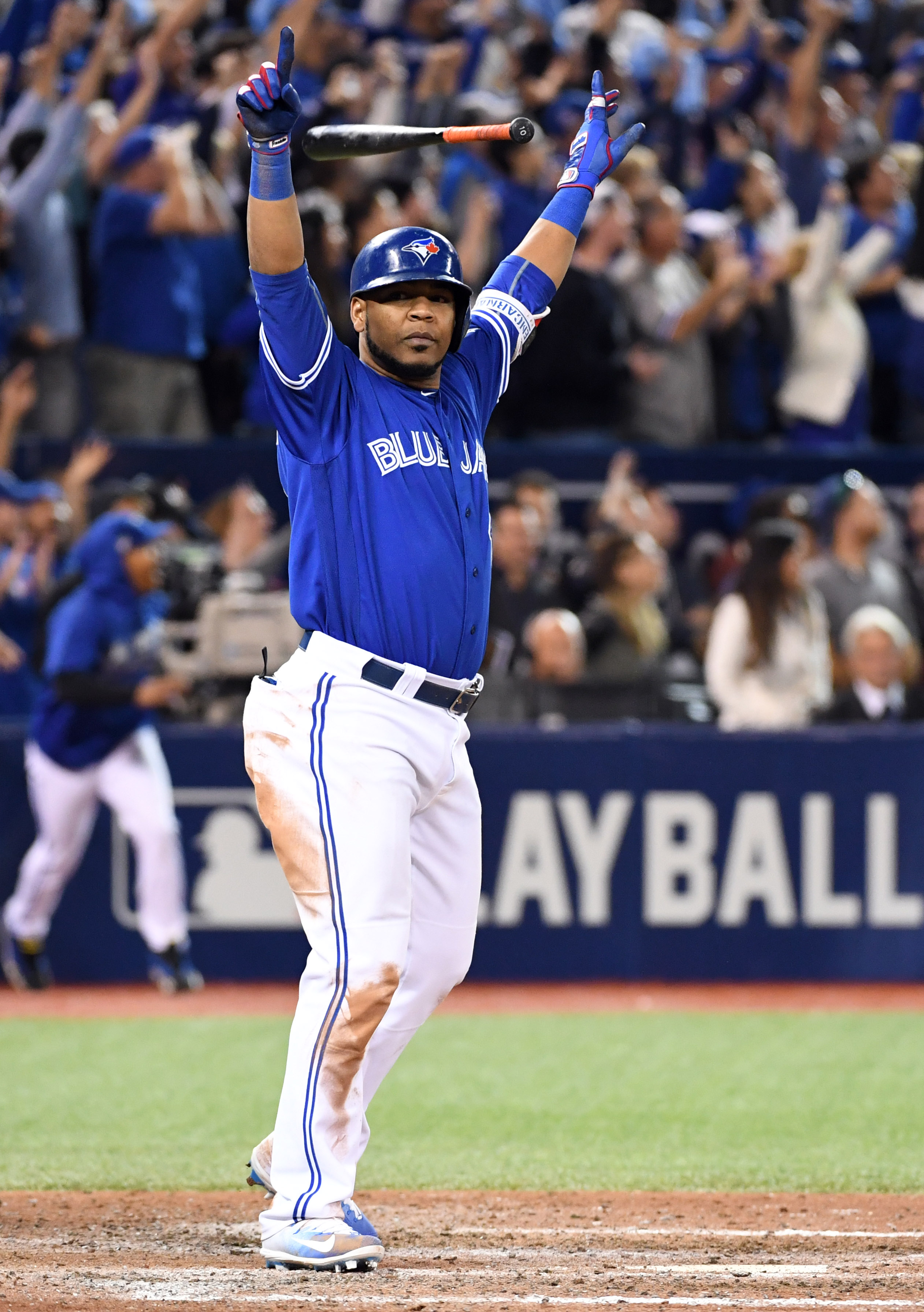
If necessary, the Blue Jays appear prepared to adjust to having Morales and Encarnacion divvy up time between DH and first, but it’ll obviously be a moot point if they’re unable to re-sign the latter. Before Toronto locked up Morales, it made a four-year offer in the neighborhood of $80MM to Encarnacion, who unsurprisingly rejected it. As arguably the premier hitter on the open market, Encarnacion seems like a shoo-in to exceed that dollar figure. MLBTR projects a $92MM deal for Encarnacion, though an accord worth upward of $100MM doesn’t seem out of the question with the the Yankees, Red Sox, Rangers, Astros and some National League teams reportedly chasing him.
Encarnacion has been a spectacular hitter since his 2012 breakout, having slashed .272/.367/.544 in 3,133 plate appearances. He also ranks second in the majors in home runs (193) and third in ISO (.273) over that five-year span, and has further impressed with a 12.5 percent walk rate against a 15.1 percent strikeout mark. Encarnacion is now coming off a year in which he hit a career-high-tying 42 homers and appeared in a personal-best 160 regular-season games, but his still-excellent .263/.357/.529 slash stands as his least productive line during his half-decade run as an elite offensive weapon.
Despite his tremendous output over the past several seasons, the fact that Encarnacion’s an aging, one-dimensional player could significantly weaken his value in the coming years and make his deal an albatross down the line, as both Dave Cameron and Craig Edwards of FanGraphs wrote earlier this month. The Blue Jays’ front office is likely mindful of the risks that would accompany re-signing Encarnacion, though losing him and replacing him with the likes of Morales and first baseman Justin Smoak (and perhaps an outside acquisition) would probably damage the team’s short-term chances on the heels of back-to-back playoff seasons.
With Encarnacion having rejected a qualifying offer from the Blue Jays, they’ll receive a first-round pick if he signs elsewhere, so they’re in position to walk away with a potentially useful long-term asset if the slugger departs. The question is: Will he leave Toronto?
(Poll link for Trade Rumors App users)
Will Edwin Encarnacion re-sign with the Blue Jays?
-
No 65% (12,640)
-
Yes 35% (6,765)
Total votes: 19,405
Photo courtesy of USA Today Sports Images.
Free Agent Profile: Edwin Encarnacion
Edwin Encarnacion delivered another big season in 2016 and even added a signature postseason moment (his walkoff homer in the Blue Jays’ wild card win over the Orioles) to his resume. After five straight years of excellent numbers, he is well-positioned to land one of the offseason’s biggest contracts.
Strengths/Pros
Encarnacion’s signature elbow extension during his home run trot has become known around Canada as “taking the parrot for a walk,” and Polly has gotten more than her share of exercise over the last five years. Since breaking out during the 2012 season, Encarnacion has been nothing less than one of the best hitters in baseball, batting .272/.367/.544 with 193 homers (the second-highest total in baseball in that span), 550 RBI (also second), a 146 wRC+ (seventh) and 451 runs scored (tied for eighth). He has generated 20.2 fWAR in that stretch based almost entirely on his potent right-handed bat. As one might expect, Encarnacion draws a large number of walks (12.5 percent since 2012). Unlike many sluggers, though, Encarnacion isn’t especially strikeout prone, as he’s punched out in just 15.1 percent of his plate appearances dating back to that 2012 breakout.
Encarnacion’s emergence as the plate more or less coincided with his being moved off third base and into a first base/DH role, as he was able to more completely focus on hitting and no longer had to worry about his infamous glovework. (When your actual nickname is “E5,” a position change is long overdue.) While Encarnacion posted subpar defensive metrics in his first few years at first, he has actually been a passable first baseman over the last two seasons as per the UZR/150 metric (+4.1). Paul Kinzer, Encarnacion’s agent, believes his client has proven himself as “a solid first baseman,” and a viable option for National League teams.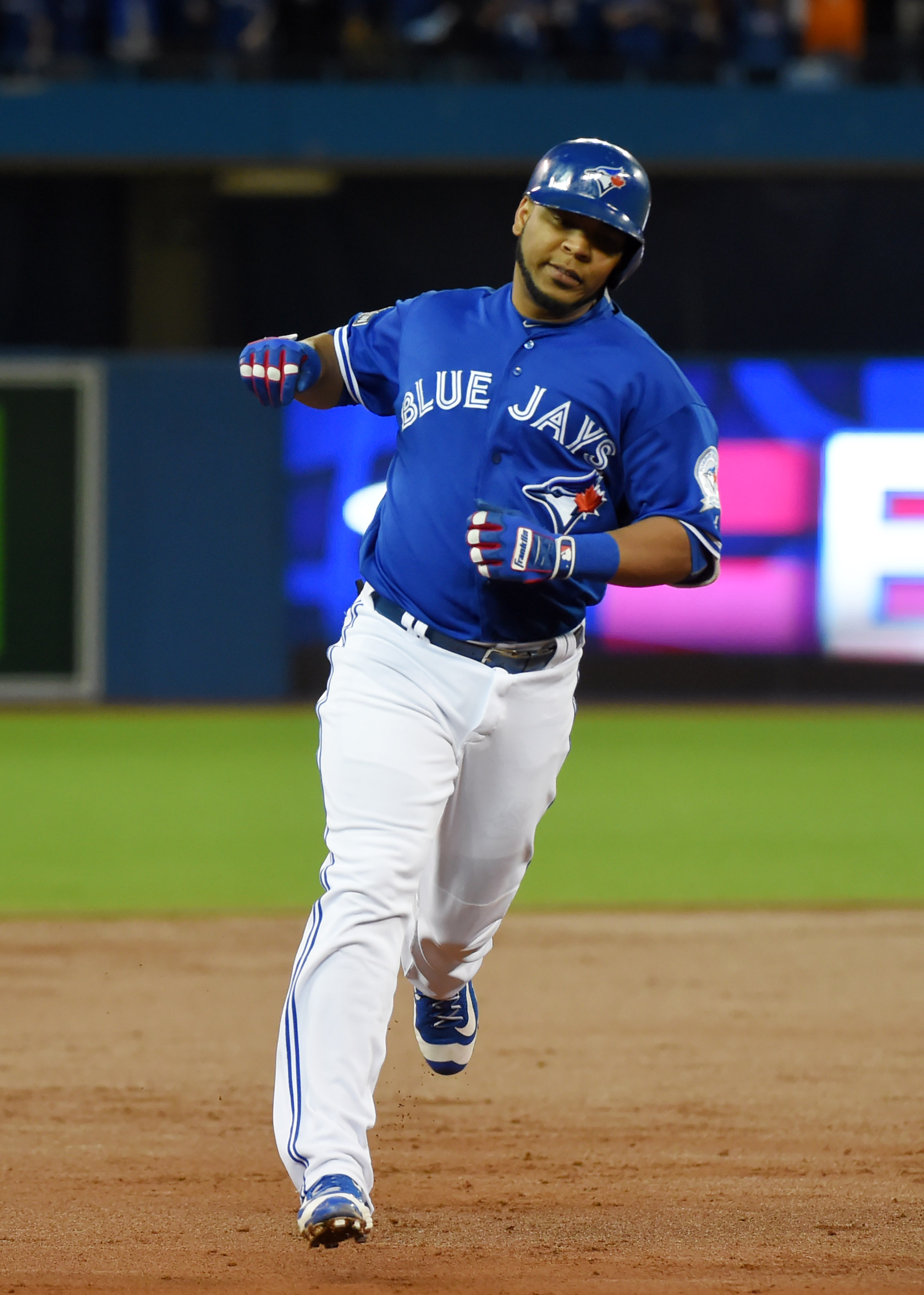
Yoenis Cespedes is three years younger than Encarnacion and has more defensive value as a left fielder, which is why he topped MLBTR’s list of the top 50 free agents of the 2016-17 offseason. Encarnacion, however, finished second on that list, a rarity for a player of his age.
Weaknesses/Cons
As Encarnacion enters his age-34 season, the most obvious question is simple: how long can he keep up his elite production? Traditionally quite good at putting the bat on the ball, Encarnacion’s contact rate has dropped rather sharply over the last two years while his swinging strike rate has risen. He posted the second-highest strikeout rate (19.7%) of his career last season, finishing well above his 16.2% career average. Encarnacion’s 134 wRC+ was also his lowest in five years, though obviously that’s still an excellent number and only a borderline sign of “decline.”
A sneaky-good stolen base threat early in his career, Encarnacion has been a below-average baserunner in each of the last two seasons. Without much speed and fringy defensive worth, Encarnacion’s value is almost entirely tied up in his bat. Teams need to decide if they’re willing to risk giving a $20MM+ average annual value to a player who may not be worth that money even in 2017 if he takes even a small step back at the plate.
His recent UZR/150 performance aside, it’s rather hard to imagine Encarnacion suddenly becoming a reliable defender at this point in his career, especially if he doesn’t have the security of the DH spot for regular rest. Many bat-first players gradually shift from being regular defenders to taking more and more time in the DH slot as they move into their mid-30s, so it would be rather unusual to see Encarnacion take the opposite route by signing with an NL team.
Encarnacion has undergone two wrist surgeries during his career, missed about five weeks with a quad strain in 2014 and has battled some shoulder and finger ailments. He did play in a career-high 160 games last season, though again, that was with the help of the DH spot to give him plenty of recovery time. An NL team would be taking a risk in counting on Encarnacion to stay both healthy and productive playing every day as a first baseman.
Personal
Encarnacion and his partner Jennifer have one child, who bears his father’s name. A native of the Dominican Republic, Encarnacion ended up attending high school in Puerto Rico, making him eligible for the draft. He was taken in the ninth round by the Rangers in 2000, ended up being dealt to the Reds in 2001, and broke into the bigs with Cincinnati in 2005.
Though he showed glimpses of his eventual power potential as a Red, Encarnacion’s lack of prowess at third base made him a liability (a move to first base wasn’t an option in Cincy thanks to Sean Casey and then Joey Votto). The Reds dealt Encarnacion to the Blue Jays as part of a three-player package for Scott Rolen at the 2009 trade deadline, though Encarnacion was included not because Toronto wanted him, but to offset Rolen’s salary. He wasn’t an immediate hit in Toronto, either. In fact, the Jays actually let Encarnacion go to the A’s on a waiver claim after the 2010 season, though Oakland non-tendered him a month later and the Jays re-signed the slugger.
Midway through his breakout 2012 season, Encarnacion signed a $27MM extension covering the 2013-15 seasons, plus a $10MM club option for 2016. That extension ended up being a marvelous bargain for the Jays, though given how unsettled Encarnacion’s career had been to that point, it’s hard to fault him for wanting to lock in a healthy guaranteed deal.
Last August, a lawsuit was brought against Encarnacion, alleging that he knowingly infected a woman with two sexually-transmitted diseases. Kinzer described the lawsuit as “completely inappropriate and meritless,” and Encarnacion’s attorneys sought to have the motion thrown out of court in October. As Blue Jays Nation’s John Lott noted, the incident could technically fall under the purview of MLB’s domestic violence policy, though it isn’t known whether or not the league is investigating the situation. Such lawsuits have been known to take years to be resolved or settled, so it’s hard to gauge whether or not the civil suit will have an impact on Encarnacion’s free agency.
Market
Encarnacion unsurprisingly rejected the Blue Jays’ qualifying offer, so any club that signs him will have to surrender a draft pick as compensation. That’s a small price to pay for a suitor, as players at the top of the market rarely have to worry about the QO’s effect on their asking price. While there are several notable first basemen and designated hitters on the open market this winter (Mark Trumbo, Carlos Beltran, Mike Napoli, Brandon Moss and perhaps even long-time teammate Jose Bautista if right field is no longer in Bautista’s future), Encarnacion is a clear cut above the pack in terms of recent production.
The Blue Jays reportedly made Encarnacion a four-year offer in the neighborhood of $80MM prior to their signing of Kendrys Morales, and even with Morales now in the fold for regular DH/first base duty, the Jays are still reportedly exploring the possibility of bringing Encarnacion back. The two sides discussed an extension during Spring Training, though since the Jays were reportedly only willing to give Encarnacion two guaranteed years (and multiple club options), talks didn’t get very far.
The Red Sox have long been linked to Encarnacion, who fits as either a straight replacement for David Ortiz at DH or rotating between both DH and first base with Hanley Ramirez so both sluggers can stay fresh. Boston, however, has yet to begin its rumored pursuit of Encarnacion, whether due to uncertainty about the luxury tax limit in the new collective bargaining agreement or perhaps simply out of a preference to not lock up the DH spot to an aging player on a long-term deal. MLBTR’s Tim Dierkes predicted that Encarnacion would wind up in a Red Sox uniform, and it’s hard to rule Boston out entirely until either the team makes an alternate move or Encarnacion puts pen to paper elsewhere.
The Yankees, Astros, Rangers (all with holes to fill at first and/or DH) have all reportedly made contact with Encarnacion. Looking at speculative fits, the Orioles or White Sox could also offer first base/DH time-shares, teaming Encarnacion up with Chris Davis and Jose Abreu, respectively. Chicago is probably a long shot, however, since the Sox could be a seller rather than a buyer this winter.
Looking to the National League, the Rockies and Marlins have needs at first but may not be able to meet Encarnacion’s asking price. There actually aren’t that many NL clubs that can both afford Encarnacion and have a need at first base, so the lack of a clear fit may be a bigger issue for Encarnacion in the Senior Circuit than the lack of the DH spot. A mystery NL team could emerge as a suitor due to a trade, injury or position switch, though for now, I’d expect Encarnacion to remain in the American League.
Expected Contract
Mid-30’s sluggers such as Victor Martinez and Nelson Cruz have managed to land pricey four-year deals in free agency, and Encarnacion should be no different, though his track record will score him significantly more guaranteed money than Cruz or V-Mart. A five-year deal isn’t out of the question, though with the majority of Encarnacion’s interest likely to be limited to just American League teams, it’s probably safer to just project a four-year deal that will take Encarnacion through his age-37 season. MLBTR projects Encarnacion to sign a four-year, $92MM deal.
Photo courtesy of Dan Hamilton/USA Today Sports Images
Free Agent Profile: Jose Bautista
Jose Bautista‘s offseason suitors will have to weigh his disappointing 2016 season against his track record as one of baseball’s top sluggers.
Strengths/Pros
While Bautista had a down year last season, it was far from being an actually “bad” year. Indeed, most players would be very satisfied hitting .234/.366/.452 with 22 homers and 24 doubles over 517 plate appearances. Bautista’s 122 wRC+ indicates that he still generated 22% more runs than a league average batter, and of all free agent hitters with at least 400 PA last year, only seven topped Bautista’s mark of 122.
With a career .266 BABIP, Bautista has never received too much luck from the batted-ball gods, though it could be argued that his .255 BABIP in 2016 was particularly lacking in fortune. Bautista had a career-high line drive rate of 18.8%, and he made hard contact on a whopping 41% of his balls in play, both of which were career-highs. Bautista’s vaunted batting eye made him productive even when he didn’t make contact, with a 16.8% walk rate that ranked third in all of baseball (behind only Bryce Harper and Mike Trout) and an 0.84% walk-to-strikeout rate that tied him for 12th among all hitters.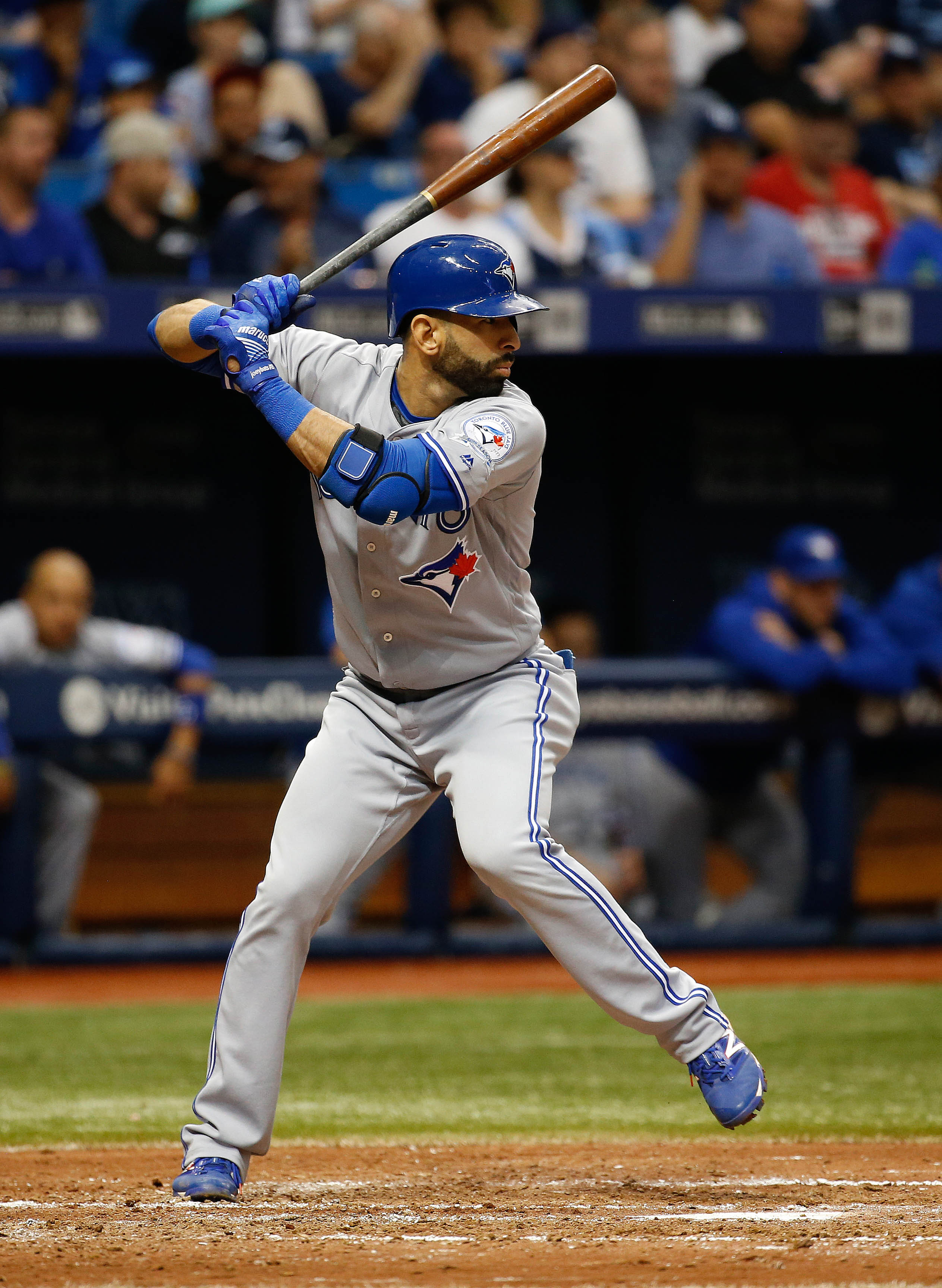
Bautista was bothered by a sore hip flexor in May and then had two separate DL stints (with turf toe and a left knee sprain, respectively) that limited him to 116 games. It could simply be that the nagging injuries and the somewhat stop-and-start nature of his season prevented Bautista from ever really getting into a groove. Bautista is known to keep himself in good physical condition, and he played in 308 of 324 games in 2014-15.
And of course, even with his 2016 season in mind, Bautista is still easily one of the decade’s best hitters. Since the start of the 2010 campaign, Bautista leads all hitters in home runs (249) and isolated power (.278), while ranking second in walk rate (16%), fourth in wRC+ (152) and eighth in fWAR (33.8). If 2016 was just an aberration, then Bautista’s next team could be signing him at a relative bargain.
Weaknesses/Cons
When a player is in his mid-30s, any signs of decline have to be taken as a red flag. For every stat indicating that Bautista was more or less his old self last year, there was another that showed significant dropoff. He posted his lowest batting average, slugging percentage, wRC+, wOBA (weighted on-base average) and isolated power numbers since his pre-breakout 2009 season, while also posting his highest strikeout rate since 2009. Between 2010-15, Bautista made contact 70.5% of the time when swinging at pitches outside the strike zone; that number plunged to just 60.4% in 2016.
Beyond just his issues at the plate, Bautista was only worth 1.4 fWAR (his lowest as a Blue Jay) last year in large part due to below-average baserunning and fielding metrics. Bautista posted his second straight year of rough numbers in right field, and now has -11 Defensive Runs Scored and -11.2 UZR/150 over the last two seasons.
Jay Alou, Bautista’s agent, has said that his client is open to a move to left field or the infield, which should help Bautista’s market. National League teams without the luxury of a DH spot, however, may be wary about signing a player entering his age-36 season without any guarantee that he can provide passable defense. Bautista has only played 154 MLB innings as a first baseman and 410 innings as a left fielder; a return to third base would seem very unlikely at this stage of his career.
Beyond this season’s two DL trips, Bautista was also limited to 92 games in 2012 due to a bad wrist that required post-season surgery, and 118 games in 2013 due to a bruised hip that prematurely ended his season. (In fairness to Bautista, both shutdowns were more than a little due to Toronto being miles out of the pennant race.) He also battled a bad shoulder in 2015 that required him to receive more DH at-bats than usual, though that injury didn’t appear to impact his offensive production whatsoever.
Personal
Originally a 20th-round pick for the Pirates in the 2000 draft, Bautista’s rise from journeyman to superstar is one of baseball’s more unlikely breakout stories. He played for five different organizations in the 2004 season (his rookie year) before settling back in Pittsburgh and posting middling numbers in semi-regular duty as a third baseman and outfielder. Dealt to the Blue Jays in August 2008 for catcher Robinzon Diaz, Bautista still didn’t entirely break out until a swing overhaul under the tutelage of Toronto manager Cito Gaston and hitting coach Dwayne Murphy. The results were incredible — after managing just 59 career homers over his first 2038 PA in the bigs, Bautista exploded for 54 homers in 2010 and the rest is history.
Bautista’s outspoken personality made him a clubhouse leader in Toronto but also ruffled some feathers around the league, whether it’s questioning the strike zones of several umpires, getting involved in the most memorable on-field brawl in recent memory or his iconic bat flip home run in Game Five of the 2015 ALDS. There hasn’t been any indication that Bautista’s attitude is necessarily impacting his free agent stock; if anything, Bautista has a reputation as an intense competitor.
Market
Needless to say, Bautista won’t be getting anything close to the massive asking price (five or six years for $150-$180MM) he reportedly floated during preseason extension talks with the Jays. In fact, given his disappointing year, Bautista could’ve been justified in accepting the one-year, $17.2MM qualifying offer in the hopes of rebounding in 2017 and testing the market again next winter in search of a bigger contract.
Instead, he rejected the Blue Jays’ offer, so any club that signs him will have to give up its top unprotected draft pick for Bautista’s services. As we’ve seen in the past, the qualifying offer can limit the market for anything less than superstar free agents. Between the draft pick compensation, Bautista’s age, his declining defense and hitting numbers and the number of other first base/DH types on the market, Bautista could have a tough time finding what he believes is fair value.
On the other hand, it’s hard to ignore Bautista’s performance prior to 2016. There will certainly be teams interested in seeing if Bautista can bounce back to his old form, and Bautista’s apparent willingness to shift out of right field will increase his list of suitors.
Teams like the Orioles, Red Sox, Astros or Mariners have multiple holes at DH, first base or the corner outfield slots that Bautista could fill, switching positions on a near-daily basis to accommodate other players on the roster. The Dodgers, and Giants have corner outfield slots that Bautista could fill, and conceivably the A’s and Phillies could be added to the list if Bautista’s price drops or if he isn’t set on joining a contender. The Rockies could sign Bautista as a first baseman with an eye towards giving him some time in the outfield if Carlos Gonzalez or Charlie Blackmon are traded. The Nationals somewhat surprisingly asked about Bautista at last summer’s trade deadline so they could be a suitor now; with Ryan Zimmerman still holding down first base in Washington, Bautista would have to play right, with Harper sliding to center. I don’t know if the bad blood between Bautista and the Rangers would preclude the two sides from doing business, though Bautista is at least an on-paper fit in Texas as a first baseman or designated hitter.
The Yankees and Mets have both already been linked to Bautista, though the Mets would need to deal one of Lucas Duda, Jay Bruce, Curtis Granderson or (less likely) Michael Conforto to make room. For the Yankees, Bautista would add veteran stability to their young first base/right field/DH mix of Greg Bird, Tyler Austin, Aaron Judge and Aaron Hicks, and left field could also open up if anything comes of trade inquiries about Brett Gardner.
While Blue Jays GM Ross Atkins recently said that the club’s signing of Kendrys Morales didn’t mean that Toronto couldn’t still bring back Bautista or Edwin Encarnacion, talks between Bautista and the Jays are reportedly not showing any signs of re-opening. Bautista could still technically fit playing right, first base and DH in rotation with Morales and Justin Smoak, though at this point, it seems like the Bautista era is Toronto is coming to a close.
Expected Contract
MLBTR’s Tim Dierkes ranked Bautista 12th on his list of the offseason’s top 50 free agents, projecting Bautista for a three-year, $51MM contract but with the potential for an opt-out clause after the first year or perhaps just a one-year deal altogether.
I would tend to think that a multi-year deal with an opt-out is the best scenario for all parties. Bautista already feels that he vastly outperformed his previous contract — he could see another modest multi-year deal as a missed opportunity at prime earning years in 2018 or 2019, as obviously he believes he’ll return to form next season. With an opt-out, Bautista can test the market again next winter if he has that rebound year, and the signing team might be satisfied to have gotten one big year from a 36-year-old and then let off the hook for his age-37 season and beyond.
This is a tough one to predict given Bautista’s lackluster platform year, though I believe Tim’s projection of a $17MM average annual value will end up being accurate. Whether Bautista gets a third year could depend on how the rest of the first base/DH market shakes out.
Photo courtesy of USA Today Sports Images
Blue Jays Offered Roughly $80MM To Edwin Encarnacion
The Blue Jays made a four-year contract offer to Edwin Encarnacion that was worth “about” $80MM before agreeing to a three-year, $33MM deal with Kendrys Morales, reports Jon Heyman of FanRag Sports. Sportsnet’s Shi Davidi first noted that the Jays’ offer to Encarnacion was “likely” in that vicinity. However, despite the addition of Morales, Toronto is still interested in re-signing Encarnacion and remains in the mix for his services, according to Heyman. The Jays feel that Encarnacion can play first base competently enough to coexist on the roster with Morales.
The $80MM offer to Encarnacion is a sizable step up from the team’s reported two-year offer back in Spring Training, though Encarnacion’s robust market seems likely to lead to greater offers. Heyman lists the Astros, Yankees, Rangers and Red Sox as other teams that have at least reached out to Encarnacion, and agent Paul Kinzer tells him that a couple of National League clubs have reached out as well. Certainly, there will be some who are scared off by the notion of playing Encarnacion at first base on an everyday basis, especially as he advances into his late 30s over the life of a four- or five-year deal, but it’s worth noting that Encarnacion has at least graded out as a roughly average defender at first in fairly limited action with the Jays over the past two seasons (0 DRS, +3.3 UZR in 1117 innings).
Toronto general manager Ross Atkins said this weekend that the door is still open for a new deal with Encarnacion, stating that the signing of Morales only “slightly” lessens the chances of a big splash for Encarnacion. However, Atkins also said the team would be aggressive in pursuing one, if not two outfield pieces to add to the mix, and the Jays are also known to be interested in adding left-handed relief help (especially now that Brett Cecil has signed in St. Louis). With so many needs across the board and a number of other clubs interested in Encarnacion’s bat, it’s not clear that the Jays will feel comfortable beating the market in order to retain their star slugger, especially considering the fact that the Morales deal brings another potential 30-homer bat to the table at a considerably more affordable rate.
Blue Jays Have Interest In Jerry Blevins
After seeing Brett Cecil agree to a surprising four-year, $30.5MM contract with the Cardinals over the weekend, the Blue Jays are turning their focus to other free-agent lefties and have interest in Jerry Blevins, according to Ben Nicholson-Smith of Sportsnet (Twitter link). Toronto had reportedly made a three-year offer to Cecil’s camp, though that ultimately didn’t prove sizable enough to get the job done.
Blevins, who turned 33 in September, has spent the past two years with the Mets. A pair of fractures to his non-throwing arm cost him most of the 2015 season, but he rebounded quite nicely in 2016, returning to log a 2.79 ERA with 11.1 K/9, 3.2 BB/9 and a 45.8 percent ground-ball rate in 42 innings of work. The Mets used Blevins sparingly against right-handed hitters this past season, though he held his own against them quite well, yielding just a .182/.266/.345 slash line to opponents that held the platoon advantage. Somewhat curiously, it was lefties who got the better of Blevins in 2016, as they batted .255/.313/.324 in 113 plate appearances against him. That, however, is most likely an aberration, as a look at Blevins’ career splits reveals a .588 OPS from opposing left-handers compared to a .713 mark from righties.
The definitive loss of Cecil leaves the Blue Jays with just Aaron Loup, Matt Dermody, Chad Girodo and Ryan Borucki as left-handed bullpen options on the 40-man roster. Loup has been inconsistent and very homer-prone over the past two seasons, though, while Girodo and Dermody have a combined 13 innings of Major League experience between the two of them. Borucki, meanwhile, was only added to the 40-man roster last week (to protect him from the Rule 5 Draft) and hasn’t pitched a game above Class-A Advanced.
With so much uncertainty in the Jays’ left-handed relief corps, the connection to Blevins is natural. They’ll undoubtedly face some competition for Blevins, who is one of the top remaining left-handed setup options on the market and has already been connected to the Mets on multiple occasions this winter. It also seems likely that other free-agent lefties such as Boone Logan and Mike Dunn would also be on Toronto’s radar, and it wouldn’t come as a surprise if the Jays also tried to add an experienced left-hander to their ‘pen via the trade market.
Ross Atkins On Morales, Encarnacion, Bautista, Saunders, Gurriel
The Blue Jays’ signing of Kendrys Morales became official yesterday, and GM Ross Atkins met with reporters (including Sportsnet’s Ben Nicholson-Smith) to discuss both Morales and other hot stove-related items…
- Though Morales has almost exclusively been a designated hitter over the last two seasons, Atkins said the veteran could receive a “good deal” of time at first base, or at least some time at first or in the outfield depending on other possible acquisitions. Morales has played 16 games at first and five games as a right fielder since the start of the 2015 season, and he has primarily served as a DH since infamously breaking his ankle celebrating a walkoff homer during the 2010 season. Given that Morales didn’t acquit himself well in his brief stint in the outfield, one would think Toronto would only use him as an emergency right fielder rather than even a part-time option for the position.
- Morales’ signing makes it “slightly less likely” that the Jays will re-sign Edwin Encarnacion, “but it by no means eliminates that possibility,” Atkins said. The Morales signing “doesn’t impact us on Jose [Bautista] in any way,” Atkins noted, as there is less of a positional overlap between Bautista and Morales as there is with Encarnacion. It didn’t seem likely that both free agents would return to Toronto even prior to Morales’ acquisition, though Atkins said that “we still feel that both are realistic for us.”
- Michael Saunders, another internal free agent, is still “squarely” on the Jays’ radar as the club looks to address its outfield situation. “We are going to be aggressive in trying to add one or two pieces to our outfield depending upon what’s available,” Atkins said. “We’re extremely active in trade discussions and free agent discussions…The outfield is certainly a need for us.” With Bautista and Saunders in free agency, the Blue Jays are left with Melvin Upton Jr., Ezequiel Carrera and Dalton Pompey as part-time or bench candidates in the corner outfield slots (plus defensive standout Kevin Pillar presumably continuing in center.)
- International signing Lourdes Gurriel Jr. could also be a candidate for the outfield when he’s ready for the majors, though Atkins said that Gurriel will probably be used at second, third and shortstop as he begins 2017 in the minors. “He’s a very, very good athlete and a lot of the (positional) decision will come down to how we view his athleticism once we get a more objective view of that,” Atkins said.
Free Agent/Trade Rumblings: Beltran, McCutchen, Guerra, Moreland
Quite a bit of competition is lining up for Carlos Beltran, who is now being pursued by both the Red Sox and Yankees, as Evan Drellich of the Boston Herald writes. The Blue Jays, too, have reached out, and the Astros seemingly remain a possibility, providing yet more evidence that multiple organizations currently have more interest in a limited commitment to Beltran than they do a lengthier pact with Edwin Encarnacion. While Toronto’s addition of Kendrys Morales has started the movement on sluggers, there are a wide variety still available, and it promises to remain an area of intrigue for much of the offseason.
A few more late-night notes from around the league…
- Pirates skipper Clint Hurdle certainly didn’t sound like he’s convinced center fielder Andrew McCutchen will remain with the organization when the 2017 season begins, as Rob Biertempfel of the Pittsburgh Tribune-Review reports. “I’ll take it one day at a time,” said Hurdle when asked about the possibility of a McCutchen trade. “I think any general manager that’s in a market similar to the one we’re in has to explore the possibility of (trading) players who have one or two years left on their contracts. You have to see what value is there to keep or to move.” While McCutchen is hopeful of spending his career in Pittsburgh, Biertempfel writes that the Pirates haven’t approached him about extending his current six-year, $51.5MM contract, which has one more guaranteed year (2017) and an affordable club option (2018).
- The Brewers are getting trade inquiries on right-hander Junior Guerra, reports Jon Morosi of the MLB Network (via Twitter). That Milwaukee would receive interest isn’t necessarily a shock, given Guerra’s controllable nature and the strong debut season he had in Milwaukee. It’ll be interesting to see if further reports emerge about GM David Stearns seriously entertaining offers on Guerra, whose 2016 success was certainly unique in nature. This past year marked Guerra’s rookie season, but unlike most first-year success stories, Guerra is a 31-year-old (32 in January) that was plucked off waivers by Stearns last offseason and enjoyed a terrific but somewhat out-of-the-blue debut. The former Braves, Mets and White Sox farmhand made 20 starts for Milwaukee and quietly pitched to a 2.81 ERA with 7.4 K/9, 3.2 BB/9 and a 45.3 percent ground-ball rate while averaging a tick over 93 mph on his fastball. Guerra still holds tremendous appeal for the the 2017 season, but it seems likely that the Brewers will at least listen to offers on him, as Milwaukee may not contend until 2018 or even 2019, at which point Guerra will be in his age-33 or age-34 season.
- First baseman Mitch Moreland is a free agent for the first time in his career, but he said in an appearance on MLB Network Radio on SiriusXM yesterday (Twitter link) that if things go his way, he’d be back with the Rangers in 2017 and beyond. “Texas would be my first choice,” said the 31-year-old. “I love it there.” Whether the Rangers reciprocate that interest isn’t yet known, but the team does have a need at first base and DH with Moreland hitting the open market and Prince Fielder‘s sudden retirement. Texas does have the option of letting the much-ballyhooed Joey Gallo take some of those at-bats in 2017, though there have been indications that the organization feels he’d benefit from opening next year in the minors. Texas has presently been focused on other matters and is reportedly on the verge of completing a one-year deal with righty Andrew Cashner. Moreland, meanwhile, turned in another 20-homer season in 2016 but saw his OBP dip as well. Overall, he hit .233/.298/.422 with 22 big flies in 503 trips to the plate.
Blue Jays Sign Kendrys Morales
With several question marks surrounding their lineup for the 2017 season, the Blue Jays have struck early to add some offense to the equation, formally announcing on Friday that they’ve signed free agent designated hitter/first baseman Kendrys Morales to a three-year, $33MM contract (as was first reported last week). Morales is represented by Wasserman.
[Related: Updated Blue Jays Depth Chart]
Entering last Friday, when the deal was first repored, the sides had been connected, but not in a particularly serious way. However, it quickly emerged that Toronto was making serious pursuit, and in fact it now seems clear that the club was finalizing a rather surprising early strike for the 33-year-old switch-hitter. That being said, it’s the timing that’s particularly eye-opening, as the match has long made a good bit of sense.
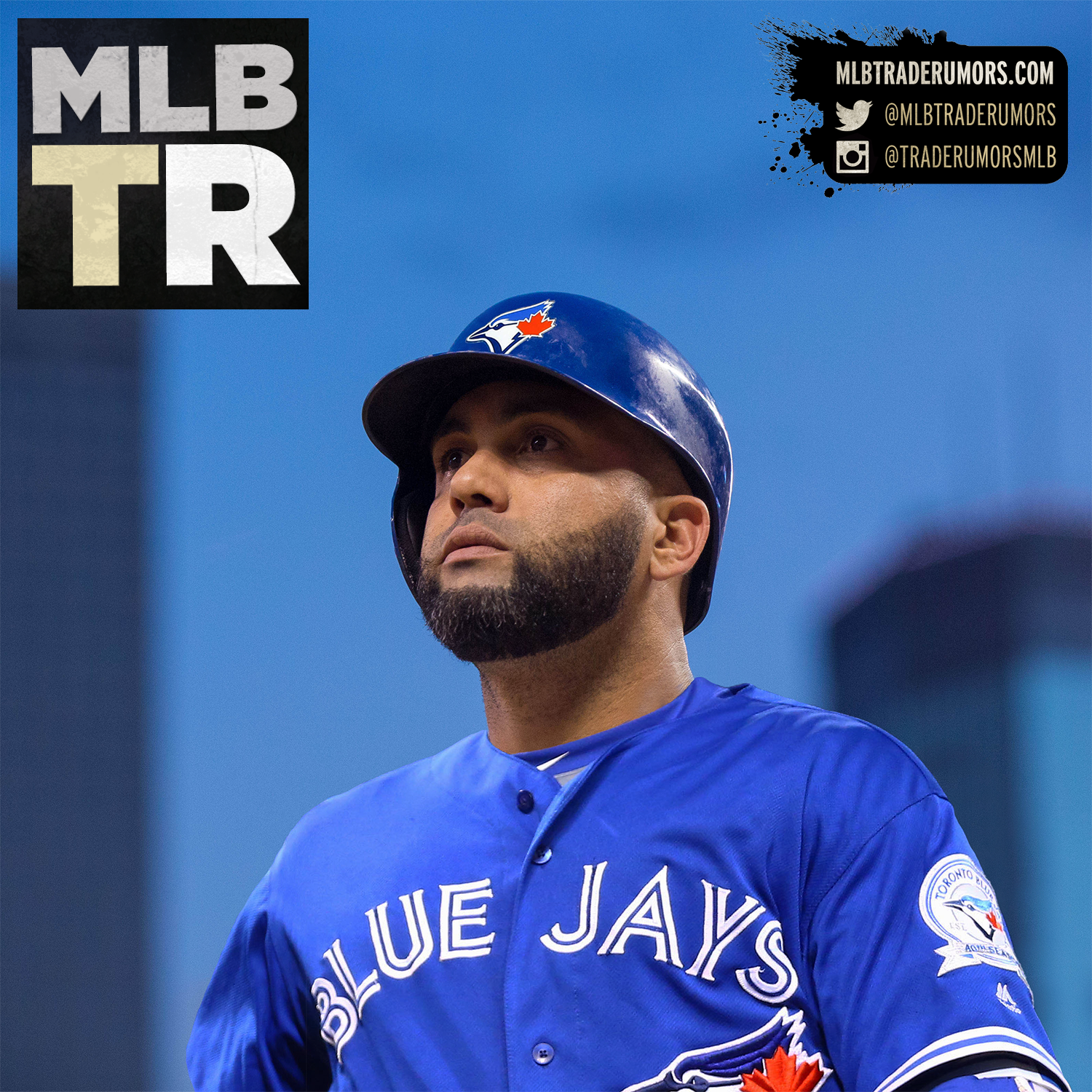
Indeed, Morales-to-the-Jays is just what MLBTR’s Tim Dierkes predicted in his ranking of the top fifty free agents. The third year went beyond expectations, though it comes with a fairly modest boost in what might have been anticipated in total compensation. Going to the extra year, but doing so at a palatable average annual value, may well explain why this deal was able to be completed so rapidly. Ultimately, Morales will earn a slight raise over the three year, $30MM pact signed two winters ago by another former Royals designated hitter, Billy Butler.
Though he’s coming off of a much better platform than was Butler, Morales is a fair sight older. This contract seems like a solid result for him. He slumped early in 2016 and finished strong, with the final result of a .263/.327/.468 batting line and thirty home runs over 618 plate appearances. He was even better in 2015, so there’s good reason to think he can continue to be an above-average offensive force, but Morales is a terrible baserunner and isn’t likely to be relied upon for regular work in the field.
It had seemed that Toronto would at least spend a bit more time looking into a return for Edwin Encarnacion, who had continued to express a preference to return. With this signing, though, he seems destined to head elsewhere. It is still theoretically possible that a reunion with Encarnacion could come together, as he’d be slated for first with Morales at DH. But that’s tough to imagine, as it would tie up a huge amount of the available payroll space and leave the team without any improvement in the corner outfield.
Instead, the Jays will likely go out looking for a few more assets with a good bit of their powder still dry. Whatever ongoing interest the team had in long-time star right fielder Jose Bautista could remain intact, as he’d make a cleaner fit at this point than would Encarnacion, though Morales’s presence at the DH slot for a three-year term complicates even that connection. If another hefty payroll hit isn’t in order, the club may instead aim further down the market and attempt to find some value in the corner outfield. Toronto is presumably also looking at adding some pitching, though perhaps that’s less of a priority.
Christopher Meola first reported the agreement and contract details (Twitter links).
Players Added To The 40-Man
We’ll use this post to keep track of the players being added to their teams’ respective 40-man rosters today, which is the deadline to protect players from the Rule 5 draft. Players must be added to the big league roster within either four years (if they were 19 or older at the time of their original signing) or five years (if 18 or younger) of their signing year in order to be shielded from selection.
MLB.com’s Jonathan Mayo took a look at some of the biggest names who face roster decisions, though most of those won’t be much in question. At the fringes, teams must also consider the major league readiness of the player, since that factors heavily into whether they’ll be taken and kept. Any drafting team, of course, must keep a player on its active MLB roster for the full season (with certain exceptions relating to the DL) in order for their control rights to vest. Adding a player to the 40-man too early can have its own risks, because it limits flexibility and could require a team to expose that player to waivers if a need arises. With 26-man rosters reportedly under consideration, the Rule 5 draft could be quite intriguing this year, and that may bleed into today’s decisions as well.
Below is a division-by-division rundown of the names that were added to each team’s 40-man roster (plus the various waiver claims that spawned from teams trying to outright players to protect Rule 5-eligible prospects). We won’t delve into each player’s background, but if you’re looking to a little more about the names that were added, I’d highly recommend this tremendous, in-depth examination of each team’s additions by Baseball America’s J.J. Cooper. If you want to see how the moves look in the context of a team’s roster, head over to Roster Resource for your club’s depth chart.
Onto the moves…
American League West
- Angels: Nate Smith (LHP), Keynan Middleton (RHP), Austin Adams (RHP) and Eduardo Paredes (RHP)
- Astros: None today
- Athletics: Paul Blackburn (RHP), Bobby Wahl (RHP), Franklin Barreto (SS), Yairo Munoz (INF) and Jaycob Brugman (OF)
- Mariners: Paul Fry (LHP), D.J. Peterson (1B/3B) and Thyago Vieira (RHP); Also acquired LHP James Pazos (link), 1B/OF Richie Shaffer and INF/OF Taylor Motter (link)
- Rangers: Ronald Guzman (1B); Also claimed RHP Tyler Wagner
American League Central
- Indians: Francisco Mejia (C); Also claimed LHPs Tim Cooney (link) and Edwin Escobar (link)
- Royals: Andrew Edwards (RHP), Jake Junis (RHP), Cam Gallagher (C), Samir Duenez (1B)
- Tigers: Sandy Baez (RHP)
- Twins: Felix Jorge (RHP), Fernando Romero (RHP), Zach Granite (OF), Daniel Palka (OF), Mitch Garver (C), Engelb Vielma (SS)
- White Sox: Brad Goldberg (RHP), Adam Engel (OF), Jacob May (OF)
American League East
- Blue Jays: Anthony Alford (OF), Ryan Borucki (LHP), Richard Urena (INF); Also claimed RHPs Dominic Leone (link) and Leonel Campos (link)
- Orioles: Joe Gunkel (RHP) and Jesus Liranzo (RHP)
- Rays: Chih-Wei Hu (RHP), Hunter Wood (RHP), Ryne Stanek (RHP), Austin Pruitt (RHP), Jaime Schultz (RHP), Willy Adames (INF), Daniel Robertson (INF) and Jose Alvarado (LHP)
- Red Sox: Kyle Martin (RHP) and Luis Ysla (LHP)
- Yankees: Miguel Andujar (INF), Dietrich Enns (LHP), Jorge Mateo (SS), Giovanny Gallegos (RHP), Ronald Herrera (RHP) and Yefrey Ramirez (RHP)
National League West
- Diamondbacks: Anthony Banda (LHP), Jimmie Sherfy (RHP), Dawel Lugo (SS), Jack Reinheimer (INF) and Ildemaro Vargas (2B)
- Dodgers: Chase De Jong (RHP), Jacob Rhame (RHP) and Kyle Farmer (C)
- Giants: Orlando Calixte (SS), Miguel Gomez (3B), Reyes Moronta (RHP), Dan Slania (RHP), Chase Johnson (RHP)
- Padres: Franchy Cordero (OF),Javier Guerra (SS), Walker Lockett (RHP), Jose Ruiz (C)
- Rockies: Yency Almonte (RHP), Shane Carle (RHP), Rayan Gonzalez (RHP), Zach Jemiola (RHP) and Sam Moll (LHP)
National League Central
- Brewers: Josh Hader (LHP), Taylor Williams (RHP), Lewis Brinson (OF), Ryan Cordell (OF) and Brett Phillips (OF); Also claimed 1B/OF Adam Walker
- Cardinals: Magneuris Sierra (OF), Eliezer Alvarez (INF), Edmundo Sosa (INF) and Rowan Wick (RHP)
- Cubs: Victor Caratini (C), Duane Underwood (RHP), Jacob Hannemann (OF) and Jack Leathersich (LHP); Also claimed LHP David Rollins
- Pirates: Clay Holmes (RHP)
- Reds: Barrett Astin (RHP), Keury Mella (RHP), Jackson Stephens (RHP), Nick Travieso (RHP), Aristides Aquino (OF), Phil Ervin (OF) and Jesse Winker (OF)
National League East
- Braves: Max Fried (LHP), Lucas Sims (RHP), Johan Carmago (INF); Also claimed C Tuffy Gosewisch
- Marlins: Luis Castillo (RHP), Drew Steckenrider (RHP), Austin Nola (INF), J.T. Riddle (INF); Also claimed LHP Elvis Araujo
- Mets: Amed Rosario (SS), Wuilmer Becerra (OF), Chris Flexen (RHP), Marcos Molina (RHP), and Tomas Nido (C)
- Nationals: Austin Voth (RHP), Rafael Bautista (OF), Raudy Read (C), Matt Skole (1B/3B) and Jose Marmolejos (1B/OF)
- Phillies: Drew Anderson (RHP), Mark Appel (RHP), Ricardo Pinto (RHP), Nick Pivetta (RHP), Alberto Tirado (RHP), Ben Lively (RHP), Dylan Cozens (OF), Nick Williams (OF), Andrew Knapp (C), Elniery Garcia (LHP) and Jesmuel Valentin (2B)