
Dodgers Defeat Joc Pederson In Arbitration
The Dodgers have won their arbitration case against outfielder Joc Pederson, according to MLB.com’s Mark Feinsand (via Twitter). He’ll earn $7.75MM to play in Los Angeles for the coming season, though it remains to be seen which uniform he’ll be wearing.
Pederson had sought a $9.5MM payday after a strong 2019 offensive campaign. MLBTR had projected that he’d earn $8.5MM, but both sides dug in their heels. Arbitration hearings are black-and-white propositions, with the panel simply choosing the number it deems closest to the player’s true value.
All indications remain that Pederson will earn his new salary with the cross-town Angels. But we’re still waiting for a fun intra-Los Angeles trade to be finalized. (That seems likely to occur once another, yet more notable swap goes in the books.) This is Pederson’s final arb-eligible campaign.
Pederson, 27, appears to have been knocked out of the Dodgers’ outfield mix due to the still-pending acquisition of Mookie Betts. But that’s not to suggest that Pederson isn’t an accomplished player in his own right. He carries a cumulative .249/.331/.530 batting line with 61 long balls in 957 plate appearances over the past two seasons. While Pederson carries yawning platoon splits over his career, he’s quite a weapon when deployed almost exclusively against right-handed pitching.
Indians Sign Cameron Rupp To Minor League Deal
The Indians have agreed to a minor league deal with former Phillies catcher Cameron Rupp, per a team announcement. The former Phillies backstop will be in Major League camp when Spring Training opens.
Rupp, 31, hasn’t been in the big leagues since the 2017 season. He’s bounced between the Triple-A affiliates for the Twins, Rangers, Mariners, Tigers and A’s over the past couple of seasons, hitting for some power but struggling to get on base or hit for average. That general description is well in line with the skill set that Rupp displayed with the Phillies from 2013-17, when he appeared in 296 games and hit .234/.298/.407 with 39 homers in 1127 plate appearances.
The Indians don’t have an immediate need for a backup option, as Sandy Leon was brought in to support starter Roberto Perez, who enjoyed a breakout 2019 season at the plate. The Cleveland organization is a bit thin on catching depth in the upper minors, though, so Rupp will give them an experienced option to pair with fellow offseason signee Beau Taylor in Triple-A Columbus if he shows well in Spring Training.
Blue Jays To Sign Jake Petricka
The Blue Jays have agreed to a minor league contract with right-hander Jake Petricka, per Robert Murray (Twitter links). The Platinum Sports client will be in Major League camp on a non-roster invitation to Spring Training. He’d earn $950K if he cracks the MLB roster, Sportsnet’s Shi Davidi adds. TSN’s Scott Mitchell tweets that he can make another $400K by way of performance bonuses.
Petricka, 31, split the 2019 season between the Brewers and Rangers organizations, allowing three runs in eight innings at the MLB level and tossing another 45 2/3 frames of 3.74 ERA ball in a very hitter-friendly Triple-A environment. He’s a familiar face for Jays fans, having spent the bulk of the 2018 season in Toronto’s bullpen. That year, the former White Sox setup man logged another 45 2/3 innings with a 4.53 ERA, 8.1 K/9, 3.2 BB/9, 1.18 HR/9 and a 51.8 percent ground-ball rate.
The veteran Petricka has pitched in parts of seven big league seasons and accumulated more than five years of MLB service time. He’s managed a 3.96 ERA in 231 1/3 total frames and has generally been a ground-ball machine (career 59.4 percent) thanks to a heavy sinker that has averaged 94.8 mph in his career.
Toronto has gone to great lengths to deepen its pitching staff in 2020, but there’s still some competition shaping up for the final few bullpen spots. Waiver claim Anthony Bass and offseason signees Shun Yamaguchi and Rafael Dolis could all be in the mix for high-leverage innings to bridge the gap between a rebuilt rotation and closer Ken Giles, but the other bullpen slots aren’t as clear cut. Whichever of Ryan Borucki or Trent Thornton misses out on the fifth starter’s spot could be in the mix alongside Sam Gaviglio, Thomas Pannone, Jordan Romano and the out-of-options Wilmer Font. At present, Petricka and Ryan Dull are the only veteran relievers who’ll be in camp as non-roster invitees.
Marlins Sign Sean Rodriguez
TODAY: The Marlins have officially announced the signing. Rodriguez’s minor league deal indeed contains an invitation to Miami’s big league Spring Training camp.
FEBRUARY 4: The Marlins have struck a minor-league deal with veteran utilityman Sean Rodriguez, per Jeff Passan of ESPN.com (via Twitter). Other terms aren’t yet known.
Presumably, the 34-year-old will receive an invitation to participate in MLB camp. Rodriguez has seen action in each of the past dozen years in the big leagues, though he has failed to produce league-average offensive numbers over the past three seasons.
Rodriguez slashed a robust .270/.349/.510 in 342 plate appearances with the Pirates in 2016. That was an remains his best campaign at the plate. He inked a two-year contract with the Braves in the ensuing offseason, but was never really able to get going in Atlanta. Rodriguez and his family were victims in a major automobile accident before camp opened in 2017.
Given the severity of the injury and the depth of his ensuing struggles on the field, Rodriguez’s 2019 season was actually something of a rebound. He took 139 plate appearances last year with the Phillies, slashing .223/.348/.375.
Cardinals Claim Ricardo Sanchez
The Cardinals have claimed left-hander Ricardo Sanchez off waivers from the Mariners, as announced by both teams. Infielder Ramon Urias was designated for assignment by St. Louis to create a 40-man roster spot for Sanchez.
Sanchez hit the waiver wire last week, when he was DFA’ed by the Mariners to make roster room for Yoshihisa Hirano. The southpaw has spent four of his six pro seasons in the Braves organization, sandwiched between his debut season with the Angels’ rookie ball affiliate in 2014 and a 2019 season spent with the Mariners’ Double-A club.
Sanchez has an unimpressive 4.52 ERA over 517 1/3 innings, though with some solid peripheral numbers (8.2 K/9, 2.25 K/BB rate) and youth still on his side, as he doesn’t turn 23 until April. There isn’t much risk for the Cards in seeing what Sanchez can do in a new system, as at worst, he can be a depth rotation in the minors. Sanchez has started 106 of 111 career games, so a turn to relief pitching could also be explored if Sanchez ultimately doesn’t develop as a starter.
Urias, a longtime veteran of the Mexican League, has spent the last two seasons in the Cardinals’ farm system. The bulk of that time has been spent at the Triple-A level, where the 25-year-old hit .262/.347/.426 with 14 homers over 524 plate appearances. Urias has played mostly as a second baseman while in the Cards’ organization, though he also has quite a bit of experience as a third baseman, and seen some time as a shortstop, first baseman, and left fielder over his nine professional seasons.
Dodgers Extend Max Muncy
1:00pm: The Dodgers have announced Muncy’s contract extension.
11:20am: Muncy’s deal will be paid out in the form of a $4.5MM signing bonus and a $1MM salary in 2020, followed by salaries of $7.5MM in 2021 and $11.5MM in 2022, DiGiovanna tweets.
10:44am: The Dodgers and slugging infielder Max Muncy have agreed to a three-year, $26MM extension that contains a club option for a fourth season, Ken Rosenthal of The Athletic reports (via Twitter). The $26MM guarantee will cover all three of Muncy’s would-be arbitration seasons (2020-22), while the fourth-year option will give the Dodgers the chance to control a free-agent year for an additional $13MM or take a $1.5MM buyout, per Mike DiGiovanna of the L.A. Times (Twitter link). Muncy is represented by Hub Sports Management.
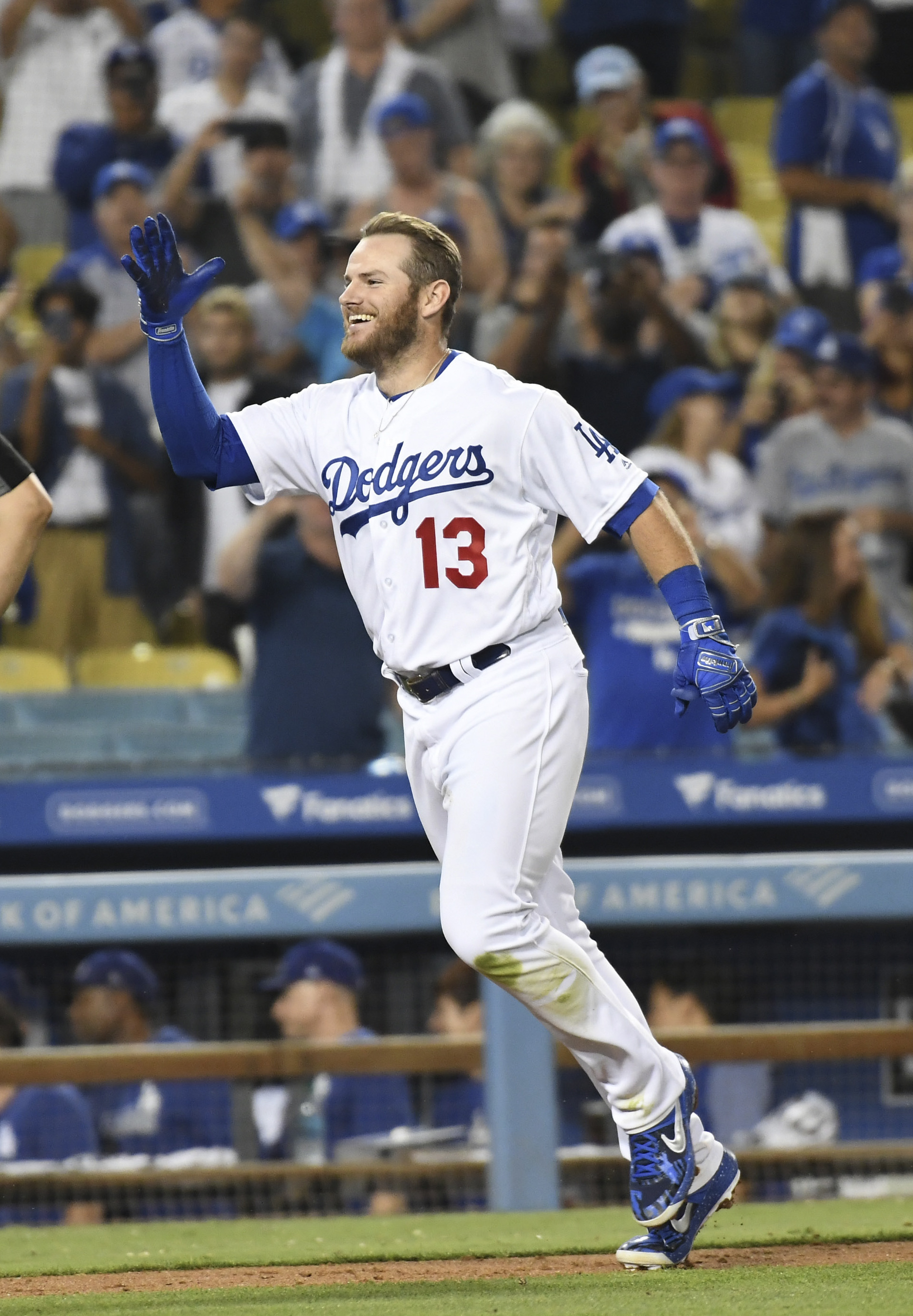
Muncy, 29, was eligible for arbitration for the first time this winter and had yet to settle on a salary for the upcoming season. His camp submitted a $4.675MM salary figure, while the Dodgers countered with a $4MM offer of their own (as shown in MLBTR’s Arbitration Tracker). Rather than go to a hearing, the two sides have instead agreed to a longer-term pact that’ll eliminate the need to ever deal with the arbitration process again while also prolonging the Dodgers’ control over the late-blooming slugger for an additional season.
Few took notice when Muncy was released by the Athletics at the end of Spring Training 2017 and quickly latched on with the Dodgers as a minor league free agent. But Muncy laid waste to Triple-A pitching in ’17 (.309/.414/.491) and found himself in the big leagues with the Dodgers early in 2018. Fast forward two seasons, and Muncy has turned in consecutive 35-homer campaigns while bashing big league pitching to the tune of a .256/.381/.545 slash with 70 home runs, 39 doubles and three triples in 1070 plate appearances (something to keep in mind when prepping the ever-clever “print the playoff tickets!” response to a minor league signing).
Not only has Muncy unexpectedly given the Dodgers a thunderous bat to add to the middle of an already deep and imposing lineup, he’s also proven to be at least a passable defender at each of first base, second base and third base, helping to give manager Dave Roberts some defensive versatility. And while he was initially used as more of a platoon player, the left-handed-hitting Muncy has seen increased opportunities against southpaws, crushing them at a .268/.365/.529 clip in 2019 and hitting a combined .263/.363/.529 in 259 plate appearances against same-handed opponents dating back to Opening Day 2018.
The guaranteed portion of Muncy’s contract runs through his age-31 season, and assuming he maintains anything close to this level of productivity, the $13MM option on his age-32 campaign will also be picked up. That’d position him to reach the open market at the relatively late age of 33, but for a player who didn’t solidify himself as a big leaguer until he’d already turned 27, it’s hardly a surprise to see a willingness to delay his path to free agency in exchange for that first enormous payday.
From the Dodgers’ vantage point, they’ll lock up a key asset on a deal that hardly breaks the bank for them, but it’s still worth noting that the extension could more than double Muncy’s luxury-tax price point in the short term. Muncy would’ve counted for either $4MM or $4.675MM against the luxury tax had he agreed to a one-year deal at one of the two submitted figures, but the average annual value of his extension ($8.667MM) will now be the figure that counts against that tax line.
Depending on how the chips fall in the yet-to-be-finalized trades centering around Mookie Betts, David Price and Joc Pederson, this extension could very well put the Dodgers slightly over the $208MM barrier. Adding Muncy’s extension, adding Betts/Price but subtracting the portion of Price’s contract paid by the Red Sox and subtracting Pederson’s salary would still place the Dodgers a couple million over the line, per the projections of Roster Resource’s Jason Martinez. Then again, the Dodgers would still have time to work to reduce that number if ownership’s goal is indeed to remain south of the tax ceiling. And, of course, as a first-time offender — the Dodgers didn’t exceed the tax threshold in 2019 — L.A.’s “penalty” would amount to a mere 20 percent slap on the wrist for every dollar north of $208MM.
Twins Win Arbitration Hearing Against Jose Berrios
The Twins have won their arbitration hearing against right-hander Jose Berrios, tweets MLB Network’s Jon Heyman. He’d filed for a $4.4MM salary but will now be paid at the $4.025MM figure submitted by Minnesota.
Berrios, 25, just wrapped up his first 200-inning season and turned in his third consecutive sub-4.00 ERA season, working to a career-best 3.68 ERA with 8.8 K/9, 2.3 BB/9 and 1.2 HR/9. The former No. 32 overall pick has emerged as Minnesota’s most effective starter since cementing himself as a big league regular, pitching to a combined 3.80 ERA with a strikeout per frame through 538 1/3 innings and earning a pair of All-Star bids along the way.
Berrios’ relatively affordable salary for the upcoming season only serves to underscore the difficulty that first-time-arbitration-eligible starters have had in moving the needle forward. Dallas Keuchel is still the only first-time-eligible starting pitcher to topple the $4.35MM benchmark set by Dontrelle Willis way back in 2006, and it took Keuchel winning a Cy Young Award to do so. Others starters who have been in position to best that mark (e.g. Clayton Kershaw, Tim Lincecum, Aaron Nola) have instead opted for multi-year deals.
That there’s only one example of a pitcher besting Willis’ mark — and that it took extraordinary circumstances — emphatically drives home the reason that teams are willing to go to hearings over what appear to be such trivial sums. The Twins, like other clubs that have drawn a hard line in comparable situations, surely care less about immediate cost savings than they do about preserving the standards that allow arbitration salaries to remain so manageable.
If the Twins (and every other club) simply conceded and met the player in the middle, those contractual agreements would be used as data points in future arbitration negotiations. Were it not for teams continually drawing a hard line, the Twins and Berrios would’ve been arguing over figures much greater than the ones discussed in today’s hearing. That’s not to suggest that teams are in the right or wrong to take such firm stances — even against their best players — but rather to point out that their motivation for doing so is rather obvious when considering the full breadth of the arbitration mechanism.
As for Berrios, he doesn’t hold any hard feelings toward the Twins organization, Darren Wolfson of SKOR North Radio tweets. Berrios has made it clear in the past that he’s keenly aware of the business side of the equation. He said as much when revealing last spring that he turned down an extension overture from the Twins, and it’s surely no coincidence that the number he filed would’ve bested the aforementioned Willis benchmark — even if only by a narrow margin of $50,000. Again, every slight step forward would factor into future negotiations for other first-time-eligible pitchers.
The Twins and Berrios can, of course, continue to discuss a long-term deal. Minnesota controls him through the 2022 season, leaving plenty of time to broker a deal. Given his previous quotes about the financial side of the game — “I have to manage my business, too. … We’re waiting for the best for both sides,” Berrios told Phil Miller of the Minneapolis Star Tribune last spring — it doesn’t seem likely that he’ll be signing on for a team-friendly discount.
Rockies Sign Ubaldo Jimenez, Tim Collins To Minor League Contracts
The Rockies announced a series of minor league signings Wednesday, most notably revealing a reunion with right-hander Ubaldo Jimenez, a new deal with righty Tim Melville and an agreement with veteran lefty reliever Tim Collins. They’ll all be in Major League camp with the Rockies during Spring Training, as will several other veterans whose signings have been previously reported (e.g. Chris Owings, Drew Butera, Elias Diaz).
It’s been more than two years since the now-36-year-old Jimenez appeared on a Major League mound and nearly a decade since he last donned a Rockies uniform. From 2008-10, Jimenez was a bona fide top-of-the-rotation arm for the Rox, pitching to a combined 3.43 ERA (3.42 FIP) with 8.2 K/9 against 3.9 BB/9 in 638 1/3 innings in Colorado. Given the hitter-friendly nature of Coors Field, Jimenez’s park-adjusted production was 37 percent better than that of a league-average pitcher (by measure of ERA+). Colorado eventually traded him to the Indians for a prospect packaged headlined by Drew Pomeranz.
After a rough year and a half in Cleveland, Jimenez peaked at the perfect time, tossing 182 2/3 innings of 3.30 ERA ball in his walk year with the Indians. He set out into free agency and landed a four-year, $50MM contract that quickly proved to be a misstep for the O’s. Jimenez gave Baltimore one season of league-average innings (184 innings, 4.11 ERA, 100 ERA+ in 2015) but was otherwise one of the least-effective starters in MLB throughout his time there. He hasn’t appeared in the Majors since throwing his final pitch for the Orioles in 2017.
Melville, meanwhile, started seven games for the Rockies just this past season, tallying 33 1/3 frames of 4.86 ERA ball with a 24-to-14 K/BB ratio. The 30-year-old journeyman was signed out of the independent Atlantic League and wound up making a combined 24 starts between Triple-A and the Majors, although his minor league numbers were rather unsightly. In 96 1/3 innings with Triple-A Albuquerque, Melville limped to a 5.42 ERA and yielded an average of 2.2 homers per nine innings pitched.
Collins, also 30, pitched 8 2/3 innings with the Cubs and surrendered three runs on nine hits and three walks with four strikeouts in that short time. His work in Triple-A similarly left plenty to be desired, as he walked 19 batters and served up seven homers in just 31 innings.
It’s of course worth noting that both the Triple-A International League and Pacific Coast League in 2019 were a nightmare for pitchers, as Triple-A hitters teed off on the same juiced ball that led to the massive home run spike we witnessed in the Majors. Collins, in particular, had a sharp Triple-A track record prior to 2019 and was at one point a quality reliever with the Royals (2011-14) before multiple Tommy John surgeries slowed his career.
Orioles Outright Branden Kline, Stevie Wilkerson
3:49pm: While Wilkerson had the option to elect free agency, he’s instead chosen to accept his assignment to Norfolk, the Orioles announced. Both Kline and Wilkerson will be in Major League camp as non-roster invitees during Spring Training.
12:37pm: The Orioles have outrighted righty Branden Kline and utilityman Stevie Wilkerson, per Dan Connolly of The Athletic (via Twitter). Both cleared waivers after recently being designated for assignment.
Kline, a former second-round draft pick, struggled to a 5.93 ERA in his first taste of the majors last year. He throws hard but didn’t fool many hitters, managing only 7.5 K/9 against 4.2 BB/9 while allowing nearly a fifty percent hard contact rate and 2.0 homers per nine innings. Kline will remain with the Baltimore organization, as he does not have the right to elect free agency.
As for the 28-year-old Wilkerson, he will have the right to choose a trip onto the open market. He has spent his entire career to date with the O’s after being selected in the eighth round of the 2014 draft. Wilkerson got a long look in 2019 but limped to a .225/.286/.383 batting line in 361 plate appearances. He has put up solid numbers at the plate in the upper minors and is capable of playing just about anywhere on the diamond
Braves Win Arbitration Hearing Against Shane Greene
The Braves have won their arbitration hearing against right-handed reliever Shane Greene, the Associated Press reports. He’ll now earn the $6.25MM salary figure submitted by the Braves rather than the $6.75MM salary for which he filed.
Acquired in a deadline deal that sent prospects Joey Wentz and Travis Demeritte to the Tigers, Greene was unable to replicate the dominance he’d shown in Detroit in his new setting. The 1.18 ERA he posted in 38 innings as a Tiger last year never appeared close to sustainable, as it was largely predicated on a .178 average on balls in play and a sky-high 85.2 percent strand rate, but the extent to which Greene regressed in Atlanta was nevertheless a bit surprising.
That’s not to say that Greene wasn’t a useful bullpen piece, but he punched out 28.5 percent of the hitters he faced with Detroit, only to see that number plummet to 20.8 percent with the Braves. Greene still notched a respectable 4.01 ERA with 7.7 K/9 and 1.8 BB/9 in 24 2/3 innings with the Braves, adding in another run allowed in 2 2/3 postseason frames in the NLDS.
This will be the final trip through the arbitration process for Greene, who is set to become a free agent at season’s end. The $500K gap over which the two sides argued seems trivial to most fans but is viewed in a vastly different light by teams and agencies. Hearings such as this one serve as a reminder that the actual immediate cost savings are typically trivial; rather, it’s in teams’ best interest to try to fight for every last dollar rather than make concessions, as future arbitration cases for similar players are based upon the cases of today. Conversely, if an agency is able to even push a client’s salary forward by a couple hundred thousand dollars, that becomes a data point for future comparables. MLBTR spoke to several league execs about the intricacies of arbitration a few years back, and the points discussed still ring true in 2020.