
Twins Claim Jake Jewell From Guardians
The Guardians have announced that right-hander Jake Jewell has been claimed off waivers by the Twins.
Jewell, 29, signed a minor league deal with the Guardians in the offseason and has had a nice showing in the minors this year. Through 43 1/3 innings in Triple-A, he had an ERA of 2.49 along with a 27% strikeout rate, 8.4% walk rate and 63.3% ground ball rate.
Based on that strong minor league showing, he got selected up to the big league club in early August but was optioned a few days later without getting into any game action and then designated for assignment after just over a week on the 40-man roster. That’s been something of a theme in Jewell’s career in recent years, as he’s often thrown quite well in the minors but without getting extended looks in the big leagues. He has 38 1/3 MLB innings thus far, spread out over three different campaigns.
For the Twins, they had an open spot on their 40-man roster, meaning no corresponding move will be necessary. Since Jewell has one option year remaining, they could send him to Triple-A as depth and keep him there for the final weeks of the season.
Pirates Designate Austin Brice For Assignment
The Pirates have made a series of roster moves prior to tonight’s game, with right-hander Roansy Contreras being recalled to the active roster and catcher Tyler Heineman being reinstated from the injured list. To make room for those two, catcher Jose Godoy has been optioned while right-hander Austin Brice has been designated for assignment.
For Brice, 30, this is the second time this year he’s been given a brief stay on the Pirates’ roster. Signed to a minor league deal in the offseason, he had his contract selected in late June and was designated in early July. After clearing waivers and accepting an outright assignment, he was selected back to the roster last week but has again lost his spot rather quickly. In between those transactions, he’s managed to throw 6 2/3 innings for the Bucs with a 4.05 ERA.
In 34 2/3 Triple-A frames for the year, Brice has a 4.41 ERA with a 27.2% strikeout rate, 8.6% walk rate and 47.8% ground ball rate. Despite those strong peripherals, the ERA is being inflated by the long ball, with Brice having allowed six in that time, a 19.4% HR/FB rate.
Brice will now be placed on waivers in the coming days, since the passing of the trade deadline eliminates the chance of any deal being made. If he clears waivers, he will be eligible to reject an outright assignment, though he forewent that right the last time he passed through waivers in July.
Rangers Designate Garrett Richards For Assignment
The Rangers announced that right-handed pitcher Joe Barlow has been activated from the 15-day injured list. To make room for Barlow on the active roster, righty Garrett Richards was designated for assignment. Additionally, outfielder Kole Calhoun has been sent on a rehab assignment.
Richards, 34, has largely been a starting pitcher for years, working exclusively out of the rotation from 2014 to 2019. He transitioned into more relief work over the past couple of seasons, showing some promise in that department last year. With the Red Sox last year, he had a 5.22 ERA as a starter but a 3.42 mark as a reliever.
Based on that showing, the Rangers grabbed Richards this offseason, hoping that a permanent bullpen role would unlock a new gear for him. He and the club agreed to a one-year deal with a $5.5MM guarantee, which came in the form of a $4.5MM salary and $1MM buyout on a $9MM club option for 2023.
Unfortunately, the bullpen breakout hasn’t emerged as hoped. Richards has thrown 42 2/3 innings over 32 appearances this season with a 5.27 ERA and a subpar 19.5% strikeout rate. Based on those poor results, the Rangers have decided to cut bait and remove Richards from the roster. With the trade deadline now passed, their only options will be to put Richards on waivers, either the outright variety or the release kind. There’s little distinction between the two in this case, as Richards has more than five years service time, meaning he could reject an outright assignment and elect free agency without forfeiting any salary.
There’s still about $1.18MM left to be paid out of that salary, along with the $1MM buyout on the 2023 option. It seems likely that he will go unclaimed on waivers and become a free agent, with the Rangers on the hook for paying out the remainder of that money. Once he is a free agent, however, interested teams could find some reasons for optimism in his work this year. His 7% walk rate is a couple ticks below the 9.1% league average for relievers this season. His 57.3% strand rate is unusually low and should be due for some positive regression. His 52.6% ground ball rate is also quite strong, much better than the league average rate of 43.3%. Perhaps a move to a better defensive team would be a better fit for his low-strikeout approach, as the Rangers rank 21st in the league with -1 Defensive Runs Saved, 18th with a -0.4 Ultimate Zone Rating and 23rd in Outs Above Average with a -12.
As for Barlow, he showed enough promise this year to get some work as the closer in Texas, racking up 13 saves. He landed on the injured list in the middle of July due to a blister, only now returning after over a month. Through 30 1/3 innings on the year, he has a 3.26 ERA with a quality 6.6% walk rate, though subpar strikeout and ground ball rates of 19% and 35.6%, respectively.
Yankees Place Clay Holmes On 15-Day Injured List
The Yankees have placed closer Clay Holmes on the 15-day injured list due to back spasms, as one of a series of transactions. Miguel Andujar and Tim Locastro were optioned to Triple-A, while Ron Marinaccio, Estevan Florial, and Oswaldo Cabrera were all called up from Triple-A. (Florial and Cabrera’s promotions were reported earlier today.)
Holmes’ placement is retroactive to August 14, and he hasn’t pitched since August 12. There was increasing expectation that Holmes would need an IL trip to fully recuperate from his back problem, though New York manager Aaron Boone told MLB.com’s Mark Feinsand and other reporters that the team is hopeful Holmes only misses the 15-day minimum.
Since being acquired from the Pirates prior to the 2021 trade deadline, Holmes has been outstanding in the pinstripes, posting a 2.10 ERA over his 77 innings in New York. This outstanding performance elevated Holmes to the closer’s job when Aroldis Chapman went on the IL himself earlier this season, and with Chapman struggling even before he got injured, the Yankees kept Holmes as the top ninth-inning choice even after Chapman’s return.
However, just as the Yankees have looked shaky over the last five weeks of play, Holmes has also come back to earth after his incredible start. The righty has a 9.00 ERA over his last 12 games and 11 innings pitched, and he has blown four of his last five save chances. As a result, it now appears quite possible that Chapman (who has pitched better since his return from the IL) will reclaim the closer’s job in Holmes’ absence, and perhaps for the remainder of the season. The Yankees could also essentially use both pitchers as closers or set-up men depending on the situation, rather than have a strict order to their late-game plans.
Pirates Injury Notes: Hayes, Keller
The Pirates placed third baseman Ke’Bryan Hayes on the 10-day injured list yesterday, retroactive to August 13. Hayes has missed the Bucs’ last four games due to a middle-back muscle strain, and he’ll now get a few more days to recuperate while the Pirates can play with a full roster. Kevin Padlo (recently claimed off waivers from the Mariners) was called up from Triple-A to take Hayes’ spot on the open roster.
Now in his third MLB season, Hayes has yet to fully live up to his top-prospect billing, at least at the plate. The 25-year-old is making plenty of hard contact, but it has translated to only a .251/.323/.358 slash line and six home runs over 434 plate appearances this season. After exploding onto the scene with a 1.124 OPS in 95 PA in his 2020 rookie campaign, Hayes has only a .685 OPS in 830 subsequent PA in the majors.
On the plus side, Hayes has already established himself as an elite defensive player. Hayes leads all players in the majors in Defensive Runs Saved (+16) and only four players have more Outs Above Average than Hayes’ +12 total. While Nolan Arenado is also up near the top of both lists, Hayes certainly looks like at least a finalist for this year’s NL Gold Glove at third base.
It doesn’t appear as though Hayes’ injury is too serious, so the Pirates can only hope he can return to action in short order and continue to garner more experience. A cornerstone piece of Pittsburgh’s rebuild, Hayes signed an eight-year, $70MM extension in April that stands as the largest contract in Pirates history.
Mitch Keller is another younger player the Bucs had tabbed as a key part of the future, and like Hayes, Keller’s early returns in his MLB career have been mixed. It also seems like Keller is facing some injury problems, as right shoulder fatigue forced him out of last night’s start against the Red Sox after two innings of work.
Keller’s average velocity was down on all of his pitches, yet the right-hander chalked the performance up as “just one of those days.” Speaking to MLB.com’s Justice delos Santos and other reporters, Keller said his shoulder was feeling better after the game, though it remains to be seen if the Pirates might at least skip or push back Keller’s next start, even if an IL trip isn’t necessary.
After a rough 2021 season that saw him post a 6.17 ERA/4.98 SIERA in 100 2/3 innings, Keller’s 2022 campaign has at least been an improvement in bottom-line numbers. The right-hander has a 4.49 ERA/4.29 SIERA in 114 1/3 frames this year, due in part to only a .329 BABIP (down from his sky-high .388 figure last year). However, any above-average BABIP isn’t a good sign for a pitcher who relies on grounders more than strikeouts, as Keller has only a 20.7% strikeout rate over his career and his walk rates have also been below average.
Keller will be arbitration-eligible for the first time this winter, and his relative lack of success at the MLB level should result in a pretty modest 2023 salary. Considering the number of question marks in Pittsburgh’s rotation, Keller probably isn’t likely to be non-tendered, though a trade might be a possibility if the Pirates no longer see Keller as a building block.
Giants Claim Andrew Vasquez, Designate Steele Walker
The Giants have claimed left-hander Andrew Vasquez off waivers from the Phillies. To create roster space, San Francisco has designated outfielder Steele Walker for assignment.
Vasquez was DFA’ed himself two days ago, and the southpaw will now be joining his third new organization since the start of August. The Blue Jays signed Vasquez just after the lockout ended, but he struggled to an 8.10 ERA in limited action (6 2/3 innings) in the big leagues, and Vasquez also missed over six weeks due to an ankle injury. Toronto designated Vasquez after the trade deadline and the Phillies put in a claim, and now Vasquez’s Philadelphia tenure will end after four appearances with Triple-A Lehigh Valley.
The Giants have assigned Vasquez to their own Triple-A affiliate for now, and given San Francisco’s tendency to cycle through players on the back end of their roster, it wouldn’t be surprising to see Vasquez either up in the majors soon or perhaps even back on the DFA treadmill in relatively short order. Vazquez has an 8.10 ERA over 13 1/3 career innings in the majors (21 total games with the Blue Jays, Dodgers, and Twins from 2018-22) but he has some very solid numbers and a lot of strikeouts over his minor league career. His Triple-A resume consists of a 3.72 ERA over 87 innings, though with a high walk rate.
Walker made his MLB debut this season, appearing in five games with the Rangers before the Giants claimed him off waivers on August 7. The White Sox selected Walker in the second round of the 2018 draft, but he has a modest .257/.329/.416 over 1405 career PA in the minor leagues. Chicago dealt Walker to the Rangers for Nomar Mazara in 2019, and thus Walker (a native of Prospect, Texas) eventually got his first taste of the majors while playing for his hometown team.
Athletics Release Elvis Andrus
The A’s announced Wednesday that they’ve released veteran shortstop Elvis Andrus. Infielder Sheldon Neuse is up from Triple-A Las Vegas to take his spot on the roster.
Once Andrus wasn’t traded either in the offseason or at the trade deadline earlier this month, the writing was on the wall for Andrus, whose contract contains a vesting player option for the 2023 season that would become kick in upon reaching 550 plate appearances. The rebuilding Athletics unsurprisingly had no interest in allowing that option to vest, and the mere presence of that option has made the possibility of trading Andrus seem both complicated and frankly unlikely since this past winter. Now that he’s been released, however, it’s a moot point; the option won’t vest an Andrus will simply become a free agent at season’s end.
[Related: Vesting Options Updates on Flexen, Maldonado, Carrasco, Andrus]
Andrus can now sign a new deal that does not require a new club to pay him $15MM in 2023 if he reaches 550 plate appearances on the season. (He’s currently at 386 trips to the plate and would’ve needed another 164 to reach that threshold.) Any team that signs Andrus would need only pay him the prorated league minimum for any time spent on the Major League roster; the A’s will remain on the hook for the rest of this year’s salary.
It’s been a decent season for Andrus at the plate and with the glove. The 33-year-old (34 next week) is no longer the hitter, but he’s turned in a respectable .237/.301/.373 batting line (97 wRC+) with eight home runs, 24 doubles and seven stolen bases. Defensive metrics on Andrus are something of a mixed bag this season; Defensive Runs Saved pegs him six runs below average, but neither Ultimate Zone Rating (2.6) nor Outs Above Average (-1) is quite so sour on his glovework. It’s fair to say that Andrus is clearly no longer the premium defender he was early in his career, when he was regarded as one of the sport’s top gloves at any position.
With Andrus out the door, the A’s will turn shortstop over to a player who has just that type of defensive prowess right now, in the early stages of his own career. Nick Allen, 23, has managed just a .215/.279/.316 slash through his first 173 trips to the plate in the big leagues, but he’s considered one of the best defensive shortstops in the minors and has a more palatable .266/.371/.358 slash in 206 plate appearances for Triple-A Las Vegas, where he’s walked almost as often as he’s struck out (13.1% versus 16.5%).
Allen will likely never hit for power in the big leagues, but with regular playing time, his walk rates, speed and bat-to-ball skills could lead to some 20-steal seasons with solid OBP marks and plus defensive contributions. If the lack of power proves too limiting for Allen to hit like an everyday player, the glove and above-average speed should make him a useful utility infielder who can provide excellent defense at shortstop, second base and third base.
Braves Acquire Tyler White From Brewers
The Braves have acquired first baseman Tyler White from the Brewers in exchange for cash, as first indicated on the MLB.com transactions log. White was eligible to be traded even after the Aug. 2 trade deadline passed because he hasn’t been on the 40-man roster at any point this season.
[Related: How to Acquire Players after the Trade Deadline]
The 31-year-old White is a veteran of four Major League seasons, mostly coming as a member of the Astros. From 2016-19, White hit .236/.315/.409 with 26 home runs, 48 doubles and three triples in a total of 859 plate appearances between Houston and a much briefer 2019 stint with the Dodgers.
White was very briefly with the KBO’s SK Wyverns (now the SSG Landers) down the stretch in 2020, though he appeared in just nine games there. He returned to North American ball in 2021, hitting at a .292/.424/.476 clip in 443 plate appearances with the Blue Jays’ Triple-A affiliate in Buffalo. He didn’t get a call to the big leagues, however, and White latched on with the Brewers on a minor league pact over the winter. So far in 2022, he’s posted a .230/.357/.431 batting line in 325 plate appearances for Milwaukee’s top affiliate in Nashville.
It’s a depth move for a Braves club that just designated for assignment and released a similar journeyman first baseman, Mike Ford. White will get regular or semi-regular at-bats in Triple-A Gwinnett between first base and designated hitter, and he’ll serve as an insurance policy against an injury to Matt Olson. It’s possible that he could work his way into consideration for a September promotion once teams are granted a pair of extra roster spots, but for now he’ll head to Gwinnett.
Rangers Release Spencer Patton
The Rangers released righty Spencer Patton from their Triple-A affiliate, MLB.com’s Kennedi Landry tweets. He’s a free agent who can now sign with any other club.
Patton, 34, made a return to the Majors in 2021 on the heels of a sharp four-year run in Japan’s Nippon Professional Baseball, where he pitched to a 3.68 ERA over the life of 205 2/3 innings with the Yokohama DeNA BayStars. He was a solid member of the Texas relief core last year, tossing 42 1/3 innings of 3.83 ERA ball with a strong 27.9% strikeout rate, an 8.7% walk rate and 41.3% grounder rate. Patton picked up his first two big league saves with the Rangers in 2021 and tacked on another 11 holds.
The 2022 season hasn’t gone as well, though Patton was mostly solid in seven big league frames back in April but missed several weeks with an oblique strain and was removed from the 40-man roster upon being activated from the injured list. The Rangers passed him through waivers back in May.
Patton yielded three runs on four hits and three walks with five strikeouts in the Majors earlier this year and, up until a week ago, was enjoying a fine season with Triple-A Round Rock. The right-hander worked to a 3.42 ERA with a 36-to-10 K/BB ratio through his first 26 1/3 innings in Triple-A but has unraveled in epic fashion over his past three appearances. Patton was shelled for six runs (four earned) in just an inning of work on Aug. 6 and has yielded another seven runs over his next two appearances. Overall, Patton has been rocked for 13 runs (11 earned) in his past three innings of Triple-A work.
That disastrous stretch has sent his Triple-A ERA soaring to 6.44 — nearly double the point at which it sat just 11 days ago. That said, there’s no indication of an injury, and Patton has performed at an otherwise solid level for the bulk of his time since returning from Japan. A team in need of some bullpen depth down the stretch could very well give him a look in the coming days in hopes of getting him back to his 2021 form.
Braves, Michael Harris II Agree To Eight-Year Extension
The Braves have moved swiftly to lock up yet another budding star on a contract extension, announcing on Tuesday night that they’ve signed rookie center fielder Michael Harris II to an eight-year, $72MM contract spanning the 2023-30 seasons. The contract contains club options for the 2031 and 2032 seasons as well.
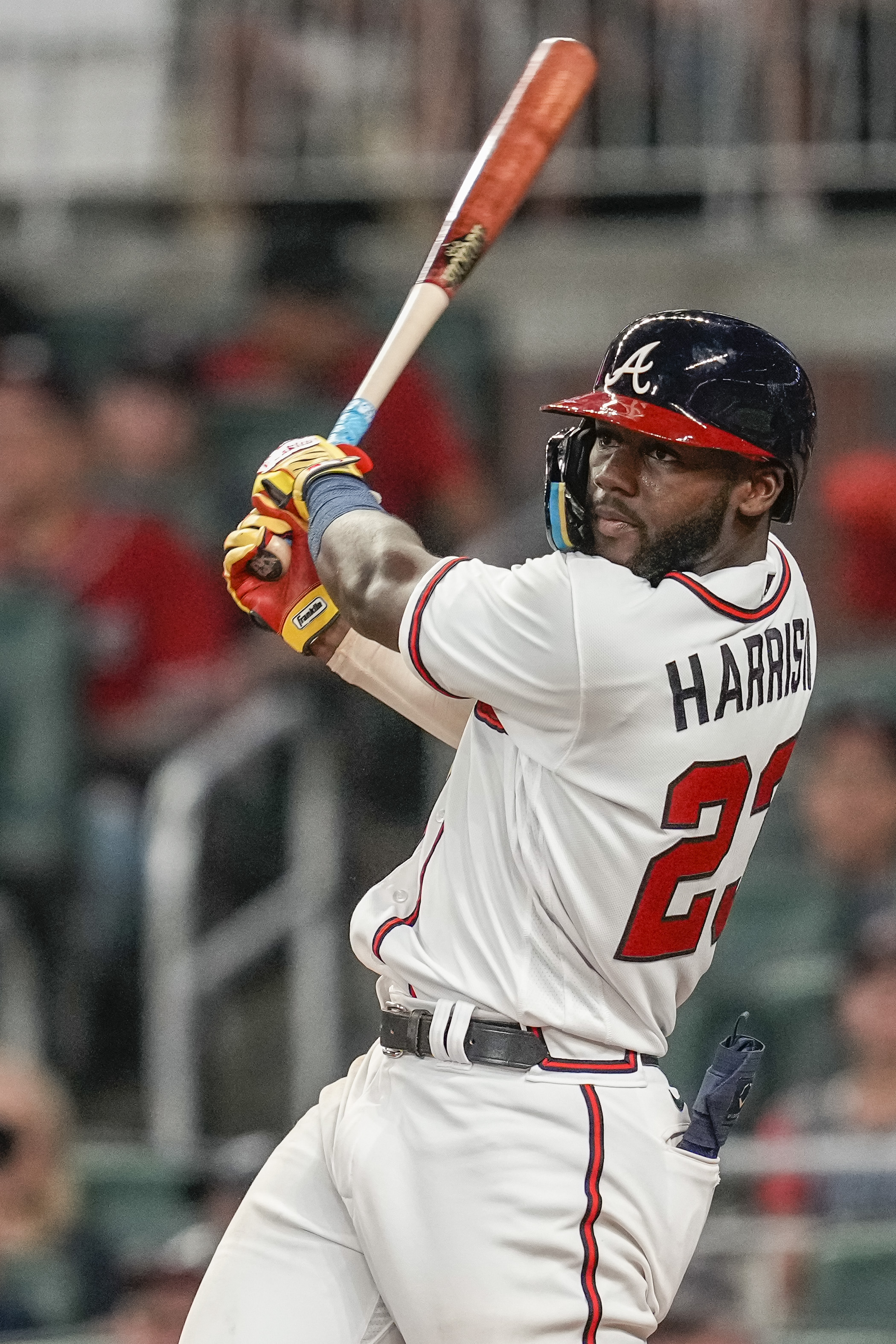
The Braves, one of the few Major League teams to publicly disclose terms of their contracts, added that Harris will earn $5MM per season in 2023-24, $8MM annually in 2025-26, $9MM in 2027, $10MM annually from 2028-29, and $12MM in 2030. The 2031 option is valued at $15MM, and the 2032 option is valued at $20MM. Both come with $5MM buyouts.
Harris, a frontrunner to finish in the top two of National League Rookie of the Year voting — perhaps alongside teammate Spencer Strider — would’ve been a free agent after either the 2027 (with a top-two Rookie of the Year finish) or after the 2028 season but will instead forgo a trip to the open market in his mid-20s to sign a long-term pact with his hometown team.
The eight-year pact continues an aggressive trend from an Atlanta front office that has been unafraid to pay sizable sums to its young stars early in their careers. Outfielder Ronald Acuna Jr. (eight years, $100MM) and second baseman Ozzie Albies (seven years, $35MM) both signed early, very club-friendly extensions that included a pair of club options beyond their guaranteed years. Acuna’s deal, like the one being discussed with Harris, was agreed upon before he even had a full year of Major League service time.
More recently, the Braves inked Matt Olson to an eight-year, $168MM extension the day after acquiring him in a five-player blockbuster with the A’s. And, this past summer, while so many teams were focused on the trade deadline in late July, the Braves hammered out a ten-year, $212MM extension for third baseman Austin Riley (before also making a handful of trades themselves, of course).
Harris, 21, was the No. 98 overall pick in the 2019 draft and bolstered his prospect stock with a torrid race through the minors that culminated in him skipping Triple-A entirely earlier this year. Despite being promoted right from Double-A, Harris hasn’t missed a beat in the Majors. He’s logged 268 plate appearances in the Majors, tonight’s performance included, and turned in a robust .287/.325/.500 batting line with a dozen homers, 14 doubles, two triples and 13 steals (in 13 tries). Couple that production with plus center field defense (5 Defensive Runs Saved and Outs Above Average alike), and it’s easy to see how the Braves have quickly become enamored of the dynamic young outfielder.
As with any extension for a young player, there’s certainly some risk to both sides. Harris has but 71 games of big league experience under his belt with no Triple-A seasoning of which to speak. In fact, he played only 43 games in Double-A prior to his promotion. And, as good as he’s been thus far in his big league career, the Braves would surely like to see him improve upon a dismal 3.7% walk rate. He’s currently sporting a .345 average on balls in play that’ll likely drop a bit, although players with Harris’ type of speed (94th percentile sprint speed, per Statcast) can often sustain BABIP numbers higher than the league average.
The risk for Harris, meanwhile, is the same that teammates such as Acuna and Albies took when inking their own deals. He’s locking in a life-changing sum of money, to be sure, but a top-two finish in Rookie of the Year voting would have put Harris on track for arbitration following the 2024 season (or, absent that top-two finish, after the 2025 campaign). As things stand, he could’ve either been a free agent following the 2027 season, heading into his age-27 season, or following the 2028 campaign (when he’d be heading into his age-28 season). Free agents who are that young are the sorts who tend to land decade-long contracts north of $200MM or even $300MM.
Certainly, we can’t know whether Harris will sustain his current pace for a full six years. We see players debut with great fanfare and fade from the spotlight somewhat regularly, and injuries can always impact a player’s development and open-market earning power. Harris is surely aware that any early-career extension like this has the potential to turn into an unmitigated bargain for the team, just as the Braves are aware that Harris isn’t necessarily a lock to cement himself among the game’s elite young outfielders. That’s the balance all teams and players strive to strike in early extensions like this, and it appears that in this instance, the Braves and Harris found a sweet spot that’ll clock in a ways short of the Acuna deal but line up nicely with the recent eight-year, $70MM extension signed by Pirates third baseman Ke’Bryan Hayes.
While these contracts tend to be bargains of significant nature when they hit — as they’ve done near universally for the Braves to this point — it’s also worth pointing out that they do inflate a team’s luxury-tax ledger earlier than might otherwise be the case. A $72MM contract for Harris will give him an immediate $9MM luxury hit (the contract’s average annual value) when he’d otherwise have counted for less than $1MM against the tax line.
Atlanta has a $207MM luxury payroll this year and $128MM already counting against next year’s ledger, and that’s before including a Harris contract or arbitration raises for any of Max Fried, A.J. Minter, Mike Soroka or Tyler Matzek (plus any free-agent or trade additions this winter). The extensions are still likely to be cost-effective moves for the team in the long run, but the Braves will have about $50MM of luxury commitments to Acuna, Albies, Riley and Harris alone next season if this deal indeed goes through.
None of that should serve as a deterrent, of course. Harris looks the part of a budding young star, and pairing him alongside Acuna in the outfield and alongside Acuna, Riley and Albies in the lineup for the foreseeable future gives the Braves the upside of an explosive quartet being controlled at a mere fraction of market value. The reduced nature of their salaries — relative to market pricing — ought to allow the team to continue to invest in free agents to supplement the core, keeping the Braves well positioned to contend in the National League East for the foreseeable future. That Harris grew up in the Atlanta area and attended high school just 37 miles south of Truist Park only makes him all the more marketable to the fan base, and surely only makes tonight’s deal sweeter for the latest homegrown, hometown star in Atlanta.
FanSided’s Robert Murray first reported that the two sides were “deep” in talks on an eight-year deal. Jon Heyman of the New York Post reported that the contract would contain at least one option and would be valued at $72MM (Twitter links).