
Free Agent Faceoff: Ervin Santana Vs. Ubaldo Jimenez
Now that both Masahiro Tanaka and Matt Garza are off the market, Ervin Santana and Ubaldo Jimenez are widely considered the top two starters in free agency. Some may argue in favor of Bronson Arroyo as well, but given the lack of draft pick compensation and his age relative to Santana and Jimenez, Arroyo figures to have a different market than the pair of early-30s Dominican right-handers.
Santana turned 31 in December and enjoyed an excellent rebound campaign with Royals in 2013 after he was acquired in a salary dump trade with the Angels. Similarly, Jimenez, who turned 30 last week, rebounded from a disastrous 18-month stretch that saw him post an ERA north of 5.00 and caused many fans around the game label him a lost cause.
Jimenez is more of a strikeout pitcher than Santana but also comes with worse control, as reflected in his 9.6 K/9 and 3.9 BB/9 rates in 2013. While he was once an extreme ground-ball pitcher, Jimenez turned in a slightly below-league-average mark of 43.9 percent in 2013 (44.5 percent was average). Santana, meanwhile, relied on pristine command but picked up strike three far less often than Jimenez. He averaged nearly three full strikeouts fewer than Jimenez on a per-nine-inning basis (6.9) but walked just 2.2 hitters per nine. His ground-ball rate has trended upward over the past three seasons, culminating in a career-best 46.2 percent in 2013.
However, the pair shares some similarities as well. For one, Santana and Jimenez have displayed durability, averaging 200 and 198 innings per season, respectively, dating back to 2008. And, despite the different ways in which they've prevented runs, they've done so at nearly an identical rate. Dating back to that same 2008 season, Jimenez's 3.90 ERA is just a hair lower than Santana's 3.93 ERA. Both have experienced significant swings in that time, and that inconsistency has played a part in the fact that they remain on the free agent market on Jan. 27.
Also playing a part has been the lengthy Tanaka saga and the fact that each hurler will require forfeiture of a draft pick. Despite strong rebound campaigns for each, neither pitcher has seen his market develop much. That figures to change in the next month, and the debate among pundits as to which pitcher is the better investment for a team in need of pitching will likely produce arguments for both sides. With all that said, let's see what the MLBTR readership has to say about this pair of high-upside but relatively inconsistent pitchers.
Which Pitcher Would You Rather Sign?
-
Ubaldo Jimenez 52% (11,658)
-
Ervin Santana 48% (10,872)
Total votes: 22,530
Rays Sign Grant Balfour
JAN. 27: Joel Sherman of the New York Post tweets some more specifics on the breakdown of Balfour's contract. Balfour's $5MM in 2014 will come in the form of a $1MM signing bonus and a $4MM salary. He will receive an additional $500K if traded, and $2MM is deferred in each year of his contract.
JAN. 23, 6:00pm: Marc Topkin of the Tampa Bay Times reports that Balfour will earn $5MM in 2014 and $7MM in 2015 (Twitter link).
3:19pm: The Rays have officially signed reliever Grant Balfour to a two-year, $12MM deal. Balfour returns to the organization with which he had both his best (2008, 1.54 ERA) and worst (2009, 4.81 ERA) seasons as a big leaguer.
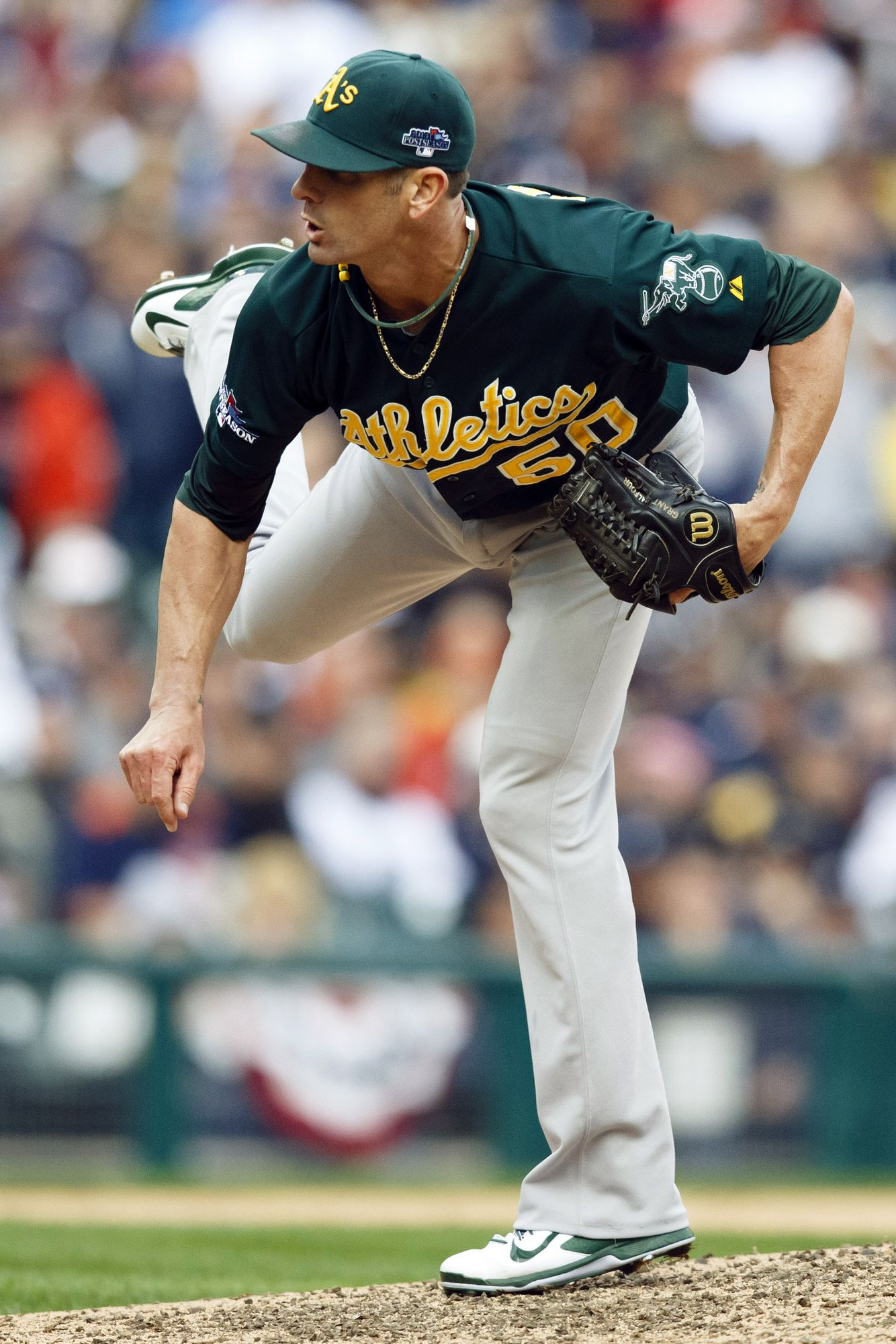
Of course, the ACES client had an earlier agreement in place with the Orioles for two years and $15MM, which was blown up when Baltimore found issues with the reliever's physical. The Aussie will nevertheless throw in the AL East after agreeing to terms with Tampa. (It is worth noting that the Rays' team doctor was one of those who said there were no issues with Balfour's right shoulder, though the Orioles apparently had different reasons for concern with the medicals.)
As MLBTR's Steve Adams wrote in profiling Balfour earlier in the offseason, the righty struck out batters at an impressive rate of 10.8 K/9 in 2013. Though the 36-year-old's fastball velocity has dipped since he worked around the 95 mph mark in his excellent 2008 season with Tampa, he still brings his heater at above 93 mph on average.
Ultimately, since a tough 2009, Balfour has been outstanding at keeping opposing runners from crossing the plate. Over the 2010-13 seasons, Balfour has maintained a 2.47 ERA in 254 2/3 innings, with an average of 9.2 K/9 against 3.3 BB/9. He has been a model of consistency over that time frame as well, as his ERA has not strayed above the 2.59 mark.
Balfour faced a tough market situation even before his ill-fated pact with Baltimore. With several other big-name, late-inning relievers on the market, it was clear early on that some good arms would be left unable to max out their earnings. As the list of free agent closers shows (via MLBTR's Free Agent Tracker), Balfour slots in between the two-year deals of Joaquin Benoit ($15.5MM from the Padres) and Edward Mujica ($9.5MM from the Red Sox). Interestingly, he falls well shy of the $19MM guarantee handed by the Dodgers to Brian Wilson, who only threw 19 2/3 innings last year (including the post-season) after missing almost all of 2012-13 due to Tommy John surgery.
Andrew Rickli of SportsReel Boston first reported the deal (via Twitter). Marc Topkin of the Tampa Bay Times first tweeted the final contract terms, while Jeff Passan of Yahoo Sports first tweeted that the deal was expected to land in the two-year, $12MM range.
Photo courtesy of USA Today Sports Images.
Reds Nearing Deal With Chris Nelson
The Reds are nearing a contract with infielder Chris Nelson, according to ESPN's Jerry Crasnick (on Twitter). The Williams & Connolly client split last season between the Rockies, Yankees and Angels.
The 28-year-old Nelson is a former No. 9 overall pick (by the Rockies in 2004) but hasn't displayed that pedigree at the Major League level to this point. Nelson is a career .268/.312/.399 hitter and has experience at both second base and third base, though defensive metrics such as UZR and DRS are down on his work at each position.
Nelson's best season came with the Rox in 2012 when he slashed .301/.352/.458 in 377 plate appearances, but that line was propped up by a .374 batting average on balls in play that was predictably not sustainable. Nelson saw his strikeout rate climb to 29 percent in 2013, and with the drop in BABIP (down to .313), the result was a combined .227/.273/.327 batting line in 227 PAs.
Rockies To Sign Paul Janish
The Rockies will sign shortstop Paul Janish to a minor league deal with an invitation to Spring Training, according to Jon Heyman of CBS Sports (on Twitter). Janish is a client of Moye Sports Associates.
Janish, 31, is the epitome of a glove-first player, as evidenced by the fact that he appeared in 52 games with the Braves in 2013 but received just 45 plate appearances. Janish batted .171/.222/.220 in that small sample and is a career .214/.284/.288 batter in 1206 PAs between the Reds and Braves. His defense is his calling card; in 2403 career innings at shortstop he's posted a +10.1 UZR/150, and Defensive Runs Saved has pegged him at +23 in that time.
West Notes: Darvish, Ubaldo, Hart, Fielder
Last night, the L.A. Times' Dylan Hernandez elaborated on reports that Michael Young is said to be weighing retirement, noting that if Young played in 2014, it can be considered a "safe bet" that it will be for the Dodgers. Young has been connected to a number of teams thus far, but to this point, there's yet to be a concrete indication as to whether or not he will play next season. Here's more out of baseball's Western divisions…
- Rangers GM Jon Daniels said over the weekend at the team's fan fest that he would approach ace Yu Darvish about an extension "at the right time," writes ESPNDallas.com's Richard Durrett. Daniels pointed out that Darvish is controlled for four more years, so there's no urgency in getting a new deal worked out. The team's current focus is on getting Darvish, who was unsurprisingly announced as the Opening Day starter, ready to make 33 starts in 2014. As Durrett reminds, Darvish's contract allows him to opt out of the final year if he wins a Cy Young or finishes No. 2-4 in the voting twice from now through 2016.
- Troy Renck of the Denver Post has still not heard of any interest from the Rockies in terms of a potential reunion with Ubaldo Jimenez (Sulia link). The relationship between the two sides ended poorly, says Renck, and it wouldn't make sense on Jimenez's behalf to spend the bulk of his career pitching at an altitude.
- Bob Dutton of the Tacoma News Tribune writes that the Mariners are comfortable using a rotation of Corey Hart, Justin Smoak and Logan Morrison at first base and DH, with Hart eventually getting more time in the outfield as his surgically repaired knees recover. Hart has been doing simulated ground-balls to work on his footwork and agility but has not yet progressed to taking fly-balls, he said at the Mariners' fan fest this weekend. The presence of all three first base/DH-type players led to trade speculation earlier in the offseason.
- Gerry Fraley of the Dallas Morning News writes that Prince Fielder will hit third ahead of Adrian Beltre in next year's Rangers lineup — a concept that caused Beltre to boldly proclaim that Fielder will win the American League MVP award. Though he's usually been the one in the No. 4 spot (behind Ryan Braun and Miguel Cabrera), Fielder said he's excited to hit in front of Beltre. New leadoff man Shin-Soo Choo's robust on-base percentage figures to help Fielder's counting stats as well, Fraley points out.
Quick Hits: Yankees, Santana, White Sox, Phillies
Even after the addition of Masahiro Tanaka, the Yankees' rotation is third-best in the AL East, behind the Rays and Red Sox, writes Scott Lauber of the Boston Herald. The Yankees' rotation lacks depth, Lauber writes, while the Rays have David Price (at least for now) and a strong collection of young pitchers, and the Red Sox have plenty of solid starters to back up Jon Lester and Clay Buchholz. Here are more notes from around the big leagues.
- Eight teams, including the Rockies, Orioles, Mariners, Yankees and Dodgers, have interest in Ervin Santana, Chris Cotillo of MLB Daily Dish writes. (Earlier today, Mariners GM Jack Zduriencik seemed to imply the Mariners would not be heavily involved on Santana.) Other teams could enter the picture as well. The Cubs also asked about Santana, but draft-pick forfeiture is a problem for them, even though their first pick is protected.
- The White Sox will meet with pitchers Texas high school pitcher Tyler Kolek, Vanderbilt pitcher Tyler Beede, and and California high school shortstop Jacob Gatewood as they prepare to pick third overall in the June draft, MLB.com's Scott Merkin writes. White Sox amateur scouting director Doug Laumann says, unsurprisingly, that he does not expect Carlos Rodon to fall to the White Sox at No. 3. They've already met with Rodon, East Carolina pitcher Jeff Hoffman and NC State shortstop Trea Turner.
- In the abstract, it might seem like the Phillies should rebuild from the ground up, but their situation is actually more complex than that, Brad Johnson of FanGraphs writes. Rebuilding efforts can fail, and memories of a streak of mostly poor play from 1987 through 2000 linger in the minds of Phillies fans, who Johnson says aren't a patient bunch. And even if the Phillies sold some of their big contracts, they would still have plenty of payroll obligations. Given the situation they've gotten themselves into, Johnson argues, simply trying not to lose too much might be the best strategy for them this year.
- Michael Young hasn't decided whether he will play in 2014, but if he does, it will be for the Dodgers, Dylan Hernandez of the Los Angeles Times tweets. A report earlier this month indicated that Young was thinking about retiring.
MLBTR Originals
A look back at the original reporting and analysis found on MLBTR the past seven days:
- Yankees GM Brian Cashman told Zach Links the Masahiro Tanaka signing demonstrates the Steinbrenners "intend to put a team on the field that can compete on a yearly basis" and the goal to remain under the $189MM luxury tax threshold "wouldn't come at the expense of putting together a championship team." Cashman also told Zach "much of the heavy lifting" has now been completed in regards to their offseason upgrades.
- Grady Sizemore told Zach he chose to sign with Boston because of his familiarity with some members of the coaching staff, their medical game plan for him, and "I thought the Red Sox gave me the best opportunity to succeed and that's why I went with these guys."
- Steve Adams posits the Brewers' status as a team not desperate for starting pitching allowed them to sit on the periphery of the free agent market and act quickly on Matt Garza following the resolution of the Masahiro Tanaka saga.
- Tim Dierkes was the first to report the financial details of Scott Kazmir's contract with the A's: $7MM in 2014, $11MM in 2015, a $4MM signing bonus, and a $500K bonus, if traded.
- Zach learned Ben Revere's one-year pact with the Phillies contains bonuses for being named an All-Star, Gold Glove, MVP, and World Series MVP.
- Zach also had the terms of Jose Mijares' minor league deal with the Red Sox: $1MM base, $1MM in incentives based on apperances, and a March opt-out.
- Steve broke the story of the Hanwha Eagles of the Korea Baseball Organization acquiring the rights to Twins left-hander Andrew Albers.
- Zach was the first to learn Jayson Nix's minor league deal with the Rays grants him a June 1 unconditional opt-out and allows him to seek a MLB job with another team, if he is not on Tampa Bay's 25-man roster.
- Zach was first with reliever Jon Rauch nearing a deal with a MLB club. The next day, the right-hander came to terms with the Royals on a minor league contract.
- Steve asked MLBTR readers what the outcome will be in the Braves' arbitration cases with Craig Kimbrel, Freddie Freeman, and Jason Heyward. You see Kimbrel (63%) and Freeman (57%) winning their arbitration hearings and Heyward losing his (46%).
- Zach spoke with right-hander Brett Tomko about trying a MLB comeback at age 40, his new perspective on the game, how long he envisions himself playing, and his post-career plans.
- Steve hosted this week's chat.
- Zach compiled the latest edition of Baseball Blogs Weigh In.
Extension Candidate: Jason Kipnis
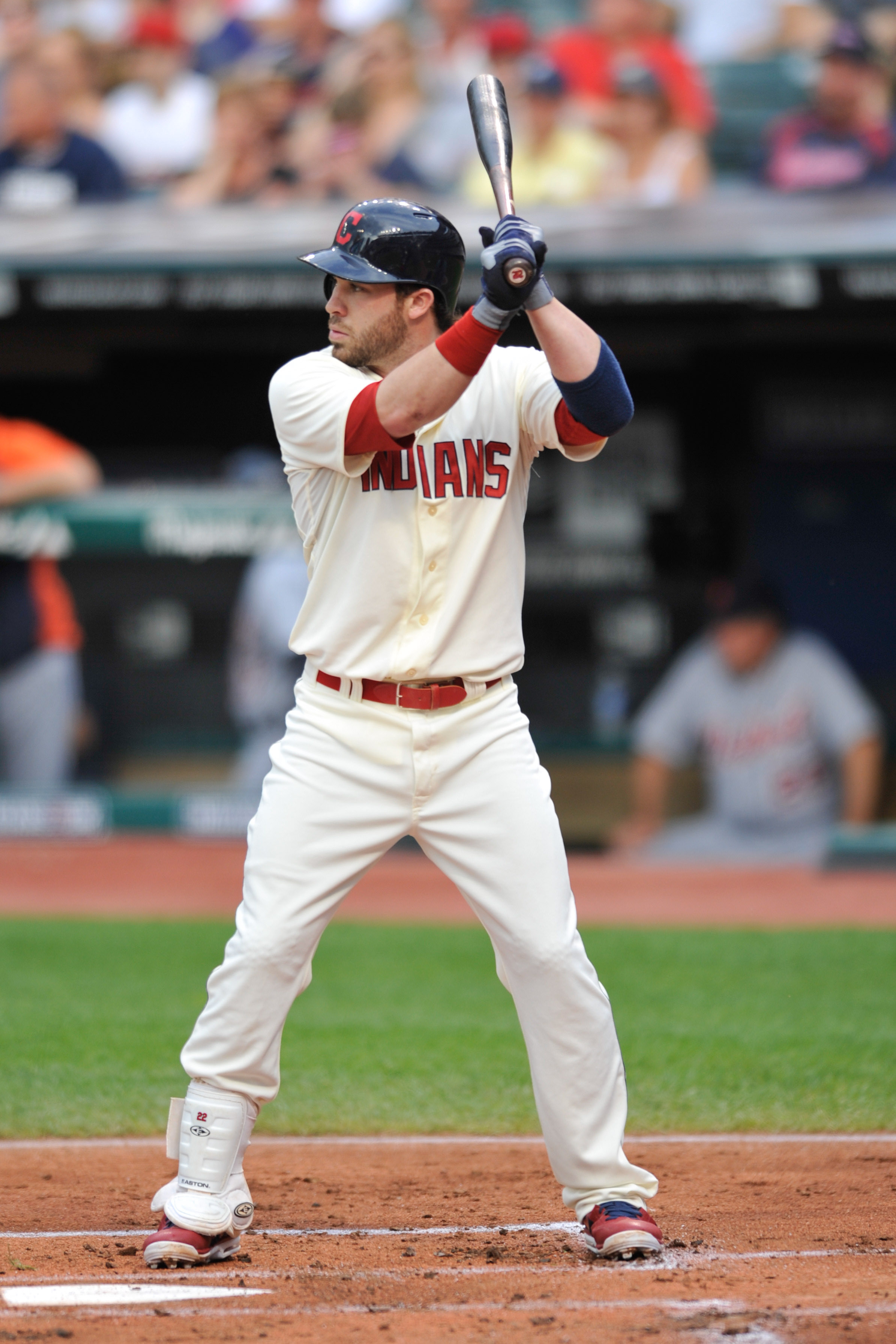 Second baseman Jason Kipnis and the Indians discussed the possibility of an extension last spring, but put those talks on hold when the 2013 season began. This year, Kipnis is again open to discussing an extension, as Paul Hoynes of the Plain Dealer reports. "Absolutely," Kipnis said when asked whether he would consider a multiyear deal. "We haven’t talked about it yet. My guess is if we started it would probably start in spring training when everyone reports. I think they have their hands full with arbitration cases right now."
Kipnis is the Indians' best player, and there are few holes in his offensive game. He hits for excellent power for a middle infielder, draws plenty of walks, and adds value on the bases. There's every reason to expect him to continue to be productive for the next few seasons. Those are seasons the Indians already control, however, which might make it tricky to negotiate a long-term deal with his representatives at Beverly Hills Sports Council.
Kipnis has 2.069 years of service time and will become arbitration-eligible next winter. He's eligible for free agency after 2017, which is his age-30 season. According to MLBTR's Extension Tracker, no second baseman with between two and three years of service time has signed an extension since Ben Zobrist in 2010. Expanding the field to include shortstops and third basemen doesn't yield many particularly revealing comparables, either, although Alexei Ramirez's four-year, $32.5MM contract, signed prior to the 2011 season, comes close. The deal did not kick in until 2012, however, which would have been Ramirez's second year of arbitration eligibility. Kipnis won't hit arbitration for the second time until two years from now.
To fashion a possible extension for Kipnis, let's look at recent arbitration cases to see what Kipnis might make in the 2015 through 2017 seasons. Via MLBTR's 2013 Arbitration Tracker, here are last year's arbitration results for players with between three and four years of service time. One that stands out is Ian Desmond, a shortstop who had been less consistent than Kipnis through that point in his career, but who had a similarly broad package of hitting and baserunning skills. Desmond made $3.8MM in his first year of arbitration eligibility. Neil Walker, another broadly-similar player, made $3.3MM, although that was as a Super Two.
Our starting point for Kipnis' 2015 season probably ought to be somewhat higher than Desmond's $3.8MM for 2013, compensating for Kipnis' greater consistency. If we guess that Kipnis might make $4.4MM in his first year of arbitration eligibility next winter, then he might make a total of about $20MM in his three arbitration seasons. Add in the $500K or so Kipnis is set to make this season, and we have a basic framework for an extension. The Indians might want to add in another guaranteed year, perhaps including an option. That might bring the total to something like five years and around $30MM-$35MM.
The main reason teams like pre-free agency extensions, however, is because they can control players beyond when they would have previously been eligible for free agency. How valuable Kipnis' free agent seasons will be, though, remains to be seen. Kipnis didn't debut until he was 24, and isn't eligible for free agency until he's about to turn 31.
Baseball history is filled with examples of good second basemen who faded quickly and/or at relatively young ages, including Edgardo Alfonzo, Brian Roberts, Jose Vidro, Chuck Knoblauch and former Indians great Carlos Baerga. Second basemen have to deal with hard slides around the bag, and because many of them (including Kipnis, who played shortstop in high school) are converted shortstops, they often don't represent the best athletes to begin with. Those concerns probably don't apply quite as readily to truly elite second basemen, as Dave Cameron of Fangraphs points out. That's one reason the Mariners and Red Sox have been willing to pay big bucks for Robinson Cano and Dustin Pedroia's thirty-something seasons. But Kipnis isn't in that category.
There is no reason for Kipnis to agree to an extension at a steep discount, either — he's only one season away from arbitration eligibility, and if he continues to produce, hitting free agency at age 30 rather than age 31 or 32 could make a significant difference in his first contract on the open market. Even though Kipnis is a star, then, the Indians could simply decide to take him year-to-year for now. They already control what are likely to be his prime years, and have limited leverage to get him to sign away seasons beyond 2017.
Photo courtesy of USA Today Sports Images.
Week In Review: 1/19/14 – 1/25/14
Here's a look back at this week at MLBTR:
- The Yankees signed pitcher Masahiro Tanaka to a seven-year deal.
- The Brewers signed pitcher Matt Garza to a four-year deal with a vesting option.
- The Rays signed closer Grant Balfour to a two-year deal.
- The Athletics signed reliever Eric O'Flaherty to a two-year deal.
- The Red Sox agreed to terms with outfielder Grady Sizemore.
- The Rays and Padres made a seven-player trade involving infielder Logan Forsythe and reliever Alex Torres.
- The White Sox extended manager Robin Ventura.
- The Giants signed infielder Joaquin Arias to a two-year extension, avoiding arbitration.
- The Giants acquired pitcher David Huff from the Yankees for cash considerations.
- The Rays designated pitcher Pedro Figueroa for assignment.
- The Red Sox designated pitcher Brayan Villarreal for assignment.
- The Athletics designated outfielder Corey Brown for assignment.
- The Dodgers signed utilityman Chone Figgins to a minor-league deal.
- The Marlins signed infielder Ty Wigginton to a minor-league deal.
- The Red Sox agreed to terms with reliever Jose Mijares on a minor-league deal.
- The Mets re-signed pitcher Daisuke Matsuzaka to a minor-league deal.
- The Braves signed pitcher Freddy Garcia to a minor-league deal.
- The Indians signed reliever David Aardsma to a minor-league deal.
- The Mariners re-signed outfielder Endy Chavez to a minor-league deal.
- The Royals agreed to terms with pitcher Jon Rauch on a minor-league deal.
- The Brewers signed infielder Lyle Overbay to a minor-league deal.
- The Phillies signed outfielder Bobby Abreu and pitcher Chad Gaudin to minor-league deals.
- The Twins agreed to send pitcher Andrew Albers to play for the Hanwha Eagles in Korea.
Mariners Focusing On Complementary Players
After an offseason highlighted by the signing of Robinson Cano, the Mariners may be done adding high-priced talent, MLB.com's Greg Johns reports. GM Jack Zduriencik is looking for another starting pitcher, but probably won't want to pay the prices necessary to sign Ubaldo Jimenez or Ervin Santana.
"I don't think we're going to jump in and invest where some of these dollars are going," Zduriencik says. "It just doesn't make sense when you take a 30-, 31-, 32-year old pitcher that wants five or six years and there is some history there of injury or inconsistencies."
Zduriencik said those risks were the reason the Mariners didn't strongly pursue Masahiro Tanaka (who is younger, but would have required a long commitment). He also suggests that it would have been difficult to outbid the Yankees. "We've made two major investments here in the last two years with Felix [Hernandez] and now Robinson," Zduriencik says. "To do that again would have been real challenging. And in the end, the numbers could have gone up. If we made that offer, who knows what the heck the Yankees would have done after that?"
Johns notes that the Mariners are "in the running" for starter Scott Baker, who missed all of 2012 and most of 2013 due to injury. Zduriencik also says the Mariners have had many talks with Nelson Cruz's representation, but the length and dollar value of the contract and the threat of losing a draft pick are all part of the Mariners' considerations.