
Reds Notes: Lorenzen, Antone, Trade Deadline
The Reds could welcome right-hander Michael Lorenzen back from the injured list this weekend, manager David Bell told reporters (including Bobby Nightengale of the Cincinnati Enquirer). The 29-year-old is on a rehab assignment with Triple-A Louisville.
Lorenzen hasn’t pitched all year on account of a right shoulder strain. While the Reds intended to give him a shot to earn a spot in the starting rotation entering the year, Lorenzen’s now expected to come back in his customary relief role. Bell told reporters last month Cincinnati didn’t feel it was worthwhile to try to build his workload up to a level sufficient to take on a starting job, given the injury.
His return will be a welcome development for a Cincinnati bullpen that has been among the league’s worst this season. Reds relievers have a cumulative 5.22 ERA; only the Rockies bullpen (5.44) has had a tougher time preventing runs. The peripherals look a bit better — Cincinnati relievers are eighteenth in strikeout/walk rate differential (14.5 percentage points) and 21st in SIERA (4.01) — but the bullpen has nevertheless been one of the weaker position groups on the roster.
The issues have been exacerbated by recent injuries to Lucas Sims and Tejay Antone. Sims suffered an elbow sprain in late June that came with an expected one-month recovery timetable, and it now seems Antone’s looking at a similar return date. Antone has yet to resume throwing after receiving a platelet-rich plasma injection on his ailing right forearm and isn’t expected back until late July, Mark Sheldon of MLB.com was among those to relay.
Presumably, the bullpen will be a key target area for the Reds to address in the next few weeks. In an interview with C. Trent Rosecrans of the Athletic on Friday, general manager Nick Krall said the club would be “aggressive” in acquiring help from outside the organization. Krall suggested then the front office wasn’t giving consideration to selling pieces off the big league roster, and that’s certainly all the more true after Cincinnati swept the Cubs in a three-game set to take over second place in the NL Central last weekend. At 43-40, the Reds still trail the division-leading Brewers by 6.5 games, and they’re 5.5 back of the Padres in the race for the league’s second Wild Card spot.
One question that remains is how much financial flexibility the front office has in exploring midseason upgrades. Krall told Rosecrans the team could add salary “within reason,” a bit of an equivocation that’s likely to concern some fans after payroll constrains led the Reds to trade closer Raisel Iglesias to the Angels for very little return over the winter.
Outrighted: Beasley, Bergen, Wade
A handful of players around the league have cleared waivers:
- Right-hander Jeremy Beasley and lefty Travis Bergen both went unclaimed on outright waivers, the Blue Jays announced. They’ve been subsequently assigned to Triple-A. Beasley, 25, appeared in eight games with the Jays this season and posted an impressive 27.7 percent strikeout rate in 9 1/3 frames. However, he also surrendered eight earned runs, walked 19.1 percent of his opponents and served up three home runs in that short time. Bergen was designated for assignment last week despite a 1.69 ERA in 10 2/3 innings, although the 27-year-old’s eight walks in that time make that ERA look rather dubious. Bergen has an excellent minor league track record but has been injured frequently throughout his pro career to date. If he can repeat his past minor league success and remain healthy, he could get another look before too long.
- The Orioles announced that righty Konner Wade cleared waivers and has been assigned outright to Triple-A Norfolk. The 29-year-old made a very brief MLB debut last week but was hit hard, surrendering six runs on seven hits and a walk with one strikeout in 1 2/3 innings. The former Rockies and Red Sox farmhand has been enjoying a solid season in Norfolk to date, having pitched to a 3.24 ERA through 33 1/3 frames. Wade has just a 16 percent strikeout rate there, but he’s also notched a tidy 6.1 percent walk rate and an above-average 48.5 percent ground-ball rate. While it obviously wasn’t the debut Wade had envisioned, there’s been a fairly steady churn on the Orioles’ pitching staff so far in 2021, so continued success in Triple-A could lead to another look in the Majors later this summer.
Marlins Have Made Extension Offer To Starling Marte
The Marlins have presented a multi-year extension offer to star center fielder Starling Marte, report Jordan McPherson and Craig Mish of the Miami Herald. Terms of the offer are unknown, although McPherson and Mish hear Marte and his representatives at Rep 1 Baseball are seeking a “three- or four-year deal in the $50 million range.”
Marte, who is playing out the season on a $12.5MM contract, is slated to hit free agency at the end of the year. Last month, he expressed a desire to work out a long-term deal to stay with Miami rather than test the market. Theoretically, the two sides have until the conclusion of the season to work out an extension, although McPherson and Mish suggest the July 30 trade deadline could function as a de facto extension deadline as well. If the Marlins and Marte don’t work out a long-term deal in the next few weeks, the 35-47 Marlins are expected to trade him, according to the Herald duo.
The Fish could also hold onto Marte through the end of the year and make him a qualifying offer going into the offseason. He’d almost certainly reject the QO, entitling Miami to 2022 draft pick compensation were he to sign elsewhere. However, Marte is playing well enough this season that a contender would likely offer the Marlins a prospect package more valuable than the compensatory pick they’d receive if he turned down a QO.
While a rib fracture cost Marte a month of action earlier in the year, he’s arguably playing at a career-best level when healthy. The right-handed hitter has slashed .294/.401/.453 across 202 plate appearances. His resulting 143 wRC+ (which suggests he’s been 43 percentage points better than the average hitter after park-adjustments) is the best mark of his ten-year career. That’s driven primarily by a demonstrably more patient approach, as Marte is walking at a 13.4% clip that’s nearly triple the 4.9% career walk percentage he carried into the season.
Considering Marte’s performance this year, his reported preference for a deal in the $50MM range seems more than reasonable. He’s set to turn 33 years old in October, which will cap the deal’s length. Still, he’s tracking as the unquestionable top center fielder on the market and has been among the top performers regardless of position.
Among position players scheduled to hit free agency, only Carlos Correa, Marcus Semien and Nick Castellanos (who’s almost certain to opt out of the final two years of his deal) have an fWAR greater than Marte’s 2.8. Castellanos, Correa, Nelson Cruz and J.D. Martinez (who has a player option) are the only members of that group (minimum 100 plate appearances) to have outhit Marte this season.
Twins Outright Matt Shoemaker
Twins right-hander Matt Shoemaker has cleared outright waivers and accepted an assignment to Triple-A St. Paul, reports Dan Hayes of the Athletic (Twitter link). Minnesota designated him for assignment last week.
The Twins signed Shoemaker to a one-year, $2MM deal over the winter in the hope he’d stabilize the back of the rotation. That’s not how things have played out, though, as Shoemaker has been one of the least effective pitchers in the league this season. The 34-year-old has taken the ball sixteen times (including eleven starts) but the results haven’t been there. Shoemaker has been tagged for an 8.06 ERA/5.37 SIERA across 60 1/3 innings. He has struck out just 14.1% of batters faced — by far the worst mark of his career — and he’s given up fifteen home runs. It’s the second consecutive season in which Shoemaker has given up more than two longballs per nine innings pitched, an untenable mark.
Nevertheless, there’s little harm for the Twins in giving Shoemaker a chance to try to work things out in Triple-A. Prior to 2020, he’d carved out a nice career as a solid back-of-the-rotation arm when healthy. His velocity is still in line with its range from recent seasons. Despite the lack of strikeouts, Shoemaker’s 10.3% swinging strike rate is only a little worse than league average.
As a player with more than six years of major league service, Shoemaker had the right to refuse a minor league assignment while still collecting the remainder of his guaranteed salary. He’s instead decided to stick around in the Twins system and hope to pitch his way back to Target Field before the end of the season.
Jerad Eickhoff Re-Signs With Mets
4:40 pm: Eickhoff is returning to the Mets on a new minor league arrangement, reports Mike Puma of the New York Post (Twitter link).
9:27 am: Right-hander Jerad Eickhoff went unclaimed on waivers and has elected free agency in lieu of an outright assignment to Triple-A, per the transactions log at MiLB.com. He can now sign with any club (or re-sign a new minor league deal with the Mets).
Eickhoff, who turned 31 on Friday, returned to the big leagues with a pair of starts for an injury-depleted Mets club last month. The righty saw Major League time with the Phillies each season from 2015-19, pitching to a combined 4.15 ERA with a 21.3 percent strikeout rate and a 6.8 percent walk rate. His best work, however, came in the first two years of that span, when he posted a 3.44 ERA in 248 1/3 frames. Eickhoff’s final three seasons with the Phils were marred by injuries — most notably surgery to address carpal tunnel syndrome in his pitching hand.
Eickhoff split the 2020 season between the Padres and Rangers organizations after signing a minor league deal with the Padres. San Diego even selected his contract to the MLB roster early in the 2020 campaign, but he was sent out before appearing in a game. He later inked a minor league pact with his original organization, the Rangers, but didn’t make it back to the big leagues before season’s end.
The 2020 season marked the first since 2015 in which Eickhoff didn’t pitch in the Majors. He’ll now look for a new opportunity after yielding five runs on 11 hits and four walks with six punchouts in 10 innings for the Mets. Four of the hits surrendered by Eickhoff in his brief time with the Mets’ big league club were home runs, which is cause for some concern, as are the struggles he had in Triple-A Syracuse before being called to the Majors: 44 innings, 5.32 ERA, 22.1 percent strikeout rate, 7.0 percent walk rate, 11 home runs allowed.
Cubs Sign Robinson Chirinos To Major League Deal
The Cubs announced they’ve signed catcher Robinson Chirinos to a one-year, major league contract. Fellow backstop Taylor Gushue has been designated for assignment to create space on the active and 40-man rosters.
Chirinos signed a minor league deal with the Yankees over the offseason. A Spring Training hit by pitch led to a right wrist fracture that required surgical repair, helping limit the 37-year-old to 45 plate appearances at Triple-A Scranton/Wilkes-Barre. New York, set behind the plate with a combination of Gary Sánchez and Kyle Higashioka, released Chirinos on Sunday.
It only took the veteran a day to land a big league opportunity elsewhere. He’ll immediately step in as Willson Contreras’s backup in Chicago, a role that has been in flux all season. In addition to Gushue, Tony Wolters, Austin Romine, José Lobatón and P.J. Higgins have all taken brief turns as the Cubs #2 catcher. Wolters struggled and was quickly designated for assignment, while each of Romine, Lobatón and Higgins has suffered some form of significant injury.
That turnover will lead to another opportunity for Chirinos. The MDR Sports Management client has seen action in parts of nine big league seasons, including every year from 2013-20. At his best, he was an above-average hitter with solid power from the right-handed batters box, serving as the primary catcher for the Rangers and Astros. Chirinos is coming off a disappointing 2020 campaign, but that only spanned 82 plate appearances and he’s not far removed from a strong .238/.347/.443 line with Houston in 2019. He’s returning to his original organization, having signed with the Cubs as an amateur from Venezuela back in 2000.
Chicago will have a week to trade Gushue or expose him to waivers. The Cubs selected the 27-year-old after Lobatón’s injury last week. He has since made his first two career major league appearances, going hitless in four trips to the plate. Signed to a minor league deal over the winter, the former Nationals prospect has hit a solid .272/.328/.440 with Triple-A Iowa this season.
Chip Hale Leaves Tigers For Head Coaching Position At University Of Arizona
Tigers third base coach Chip Hale is leaving his position to accept a job as head coach at the University of Arizona, per an announcement from the school’s baseball department. Michael Lev of the Arizona Daily Star tweeted this morning that there were “strong indications” Hale would be the program’s new head coach.
This, rather remarkably, is the second time in the past month that the Tigers have lost a member of their Major League staff to a college program. Assistant hitting coach Jose Cruz Jr. accepted a job as the head coach at Rice University back on June 9.
Both Hale and Cruz were in their first season as members of AJ Hinch’s coaching staff in Detroit. Hinch, of course, is also in his first year as Tigers skipper after serving his suspension on the heels of the Astros’ 2017 sign-stealing scandal. Prior to taking his now-former post with the Tigers, Hale was the bench coach for the 2019 World Series champion Nationals. He also spent two years as the D-backs’ manager and has served as a bench coach and/or third base coach with the D-backs, Mets and Athletics.
Hale, 56, played his college ball at Arizona and was a 17th-round selection of the Twins back in the 1987 draft. He spent parts of seven seasons in the Majors (six with Minnesota, one with the Dodgers), serving as a utility infielder and batting .277/.346/.363 in 333 MLB games.
“I am very honored and excited to be the new head baseball coach at the University of Arizona,” Hale said in a statement released by the Wildcats. “We will work tirelessly to build on the success that has been established here and continue to coach and develop our Wildcats to be champions on the field and in the classroom. With the help and support of the University of Arizona and the Wildcat Family, we plan on making many trips to Omaha!”
The Tigers have yet to announce who will be taking over as their new third base coach in the wake of Hale’s departure.
D-backs Claim Jordan Weems, Designate Ryan Buchter
The Diamondbacks announced Monday that they’ve claimed right-hander Jordan Weems off waivers from the Athletics. Veteran lefty Ryan Buchter was designated for assignment in a corresponding roster move.
Weems, 28, was designated for assignment himself over the weekend. He’s allowed three runs in 4 1/3 frames for Oakland this season and, dating back to last summer’s debut, has yielded a total of eight runs on 12 hits and 10 walks with 22 strikeouts in 18 1/3 frames.
A third-round pick of the Red Sox back in 2011, Weems never made it to The Show in Boston before reaching minor league free agency and latching on with the A’s. He posted solid numbers with Oakland’s MLB club last summer, albeit in 14 1/3 innings, but has been hit hard in a trio of brief stints at the Triple-A level: 6.67 ERA in 29 2/3 innings.
Weems averages better than 95 mph with his heater, however, and turned in a solid 13.1 percent swinging-strike rate in 2020. The Diamondbacks, starved for bullpen help, are surely hoping he can rediscover some of that 2020 form in a change of setting. Weems also has all three minor league options remaining, so he’s a flexible piece both for now and in future seasons if he indeed sticks on the 40-man roster.
As for the 34-year-old Buchter, he’ll now either be traded, placed on outright waivers or released in the next week. He’s tossed 14 2/3 innings of relief out of the Arizona bullpen so far but hasn’t had anywhere near the level of success he’s had for the majority of his big league career.
Buchter entered the season with a 2.90 ERA, a 26.8 percent strikeout rate and an 11.2 percent walk rate but has served up nine earned runs in 14 2/3 innings (5.52 ERA) with as many walks as strikeouts (19.1 percent apiece). His fastball, which averaged 92.6 mph in each of the past three seasons, is down to an average of 90.9 mph in 2021. Buchter’s 7.9 percent swinging-strike rate is also the lowest of his career.
Astros Outright Francis Martes
Right-hander Francis Martes went unclaimed on waivers after being designated for assignment by the Astros and will remain in the organization, tweets The Athletic’s Jake Kaplan. Houston designated him for assignment late last week.
Now 25 years old, Martes once ranked as one of the game’s premier pitching prospects. The big righty peaked at No. 15 overall on Baseball America’s Top 100 and also landed within the game’s Top 25 overall prospects at MLB.com and at FanGraphs as he rose through Houston’s minor league ranks.
That peak, however, came more than three years ago, and Martes has seen his stock plummet in the years since. He underwent Tommy John surgery in 2018 before being hit with not one but two bans after testing positive for performance-enhancing drugs. Martes was suspended for 80 games after testing positive for Clomiphene in March 2019, and less than a year later he was saddled with a 162-game ban after testing positive for boldenone.
Martes returned to the mound in 2021, but he’s been drilled for 14 runs (10 earned) on eight hits and a staggering 13 walks in just 8 1/3 frames. He hasn’t hit any batters but has unloaded three wild pitches as well.
Martes made his big league debut with the Astros as a 21-year-old back in 2017, though he struggled to a 5.80 ERA in 54 1/3 frames. In four years since that time, he’s only managed only 33 1/3 innings because of that injury and the pair of PED violations. It’s possible he’ll eventually work his way back into the mix for a big league spot, but given that he’s walked 29 percent of the batters he’s faced in his limited mound work so far in 2021, he has quite a ways to go before that happens.
The Mariners Have A Yusei Kikuchi Decision To Make
Yusei Kikuchi‘s first two seasons in the Major Leagues didn’t go as either the Mariners or the left-hander himself hoped. After establishing himself as one of the premier pitchers in Japan by pitching to a 2.77 ERA in parts of eight seasons (2.51 in his final three years), he tested international free-agent waters as one of the most coveted talents in recent memory.
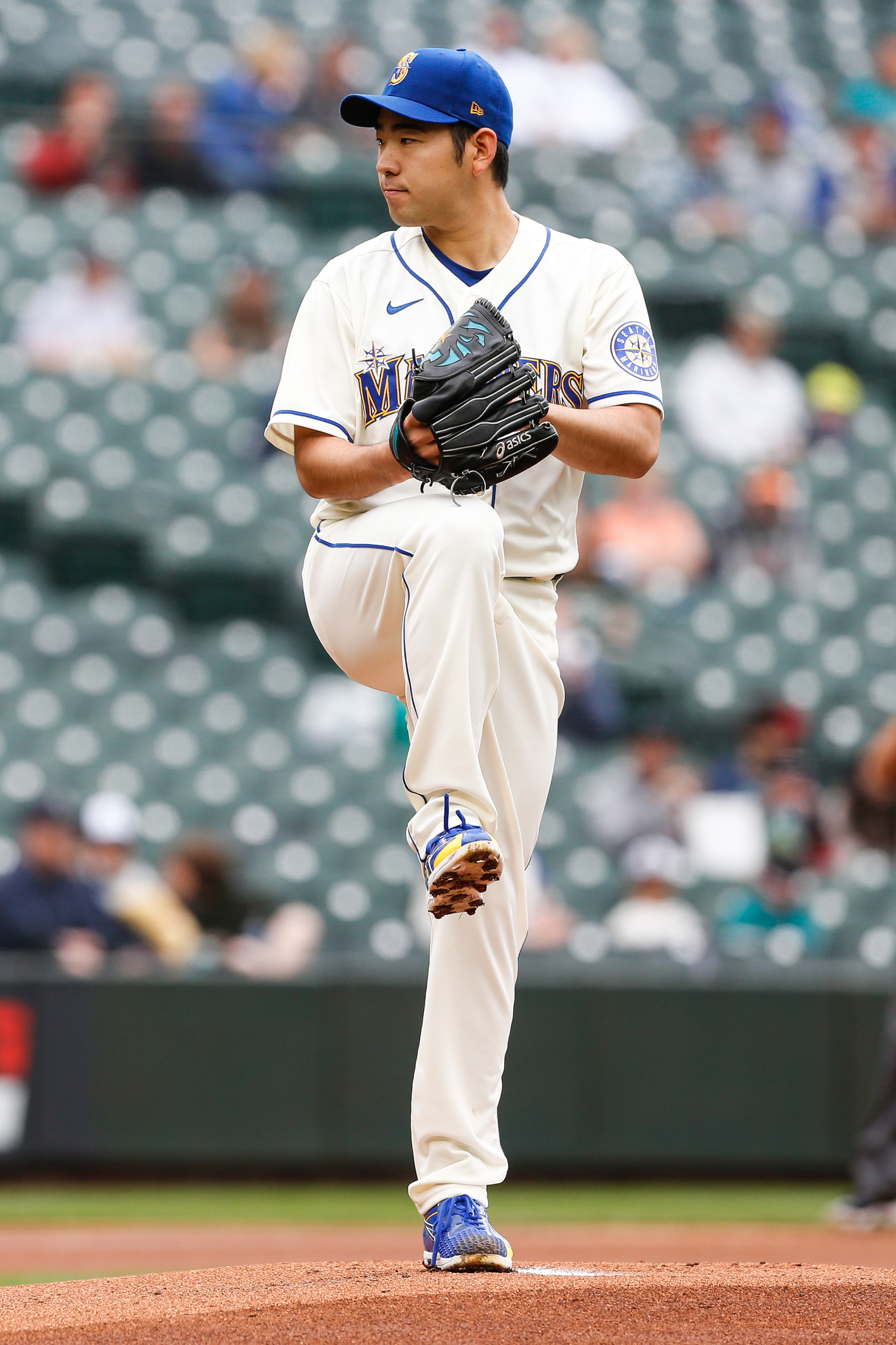
Beyond his excellent numbers in Japan and his arsenal of what many scouts believed to MLB-caliber offerings, Kikuchi was a free agent at just 27 years of age. Unlike many of his countrymen, he was seeking his first opportunity in North America while firmly in the midst of his prime seasons. The level of interest and intrigue in the left-hander was readily apparent both in the size and the structure of his contract. Kikuchi hired the Boras Corporation to represent him as he looked to jump to the big leagues and eventually secured a four-year, $56MM guarantee from the Mariners.
Put rather simply, Kikuchi’s first year in the Majors went poorly in just about every regard. He remained healthy, but Kikuchi struggled in adjusting from pitching every sixth day in NPB to every fifth in MLB. The Mariners did, at times, find ways to get him an extra day’s rest, and they even gave him a few starts that were short by design. (He tossed just one inning in an April 26 “start,” for instance, as he adjusted to his new workload.)
The numbers weren’t there. He made 32 starts but pitched to a 5.46 ERA and 5.17 SIERA. His 6.9 percent walk rate was a good bit better than league average, but Kikuchi also had a well below-average 16.1 percent strikeout rate and was tagged for a whopping 36 home runs in just 161 2/3 frames. It was not a great debut. Mariners fans might’ve hoped that a second season would produce better results as Kikuchi overcame his adjustment phase, but he came back with a 5.17 ERA in 47 innings (nine starts). He understandably drew a fair bit of criticism.
However, there was also good reason to believe that Kikuchi’s 2020 season marked something of a turning point. While the ERA wasn’t great, the signs of a forthcoming breakout weren’t exactly hidden.
Kikuchi’s average four-seam velocity jumped from 92.6 mph to 95.1 mph in 2020, and he began using an effective cutter that wasn’t in his 2019 repertoire. His strikeout rate jumped from 2019’s 16.1 percent to 24.2 percent, and his ground-ball rate spiked from 44 percent in ’19 to 52 percent in 2020. The home run troubles that plagued him in 2019 were gone; Kikuchi yielded just three round-trippers in those 47 innings. Despite the improvements in many of his underlying stats, however, Kikuchi was hindered by an elevated 10.3 percent walk rate and a 59.9 percent strand rate that looked rather fluky.
Just as many of those indicators suggested, Kikuchi looks like a different pitcher in 2021. He’s started 15 games and ridden a 3.18 ERA, 25.4 percent strikeout rate, 8.5 percent walk rate and career-best 53.8 percent ground-ball rate to his first career All-Star nod. Kikuchi has allowed three or fewer runs in 13 of his 15 starts, with the lone exception being a pair of five-run hiccups in his third and fourth starts of the season. Over his past 11 trips to the mound, Kikuchi has logged a 2.33 ERA while averaging 6 1/3 innings per start.
The transformation is striking, although it’s worth noting that similarly to 2020, when he pitched better than his ERA indicated, Kikuchi probably isn’t quite this good. He’s benefiting from a tiny .221 average on balls in play and a huge 82.9 percent strand rate that, like his 2020 mark, looks unsustainable (just in the other direction). Still, if you combine Kikuchi’s 2020-21 results, it’s a pretty nice-looking pitcher without too many red flags: 140 1/3 innings, 3.85 ERA, 3.97 SIERA, 25 percent strikeout rate, 9.1 percent walk rate, 53.1 percent ground-ball rate. The combined .251 BABIP is a bit lower than should be expected, but few pitchers can boast that combination of missed bats, solid control and strong ground-ball tendencies.
All of this is particularly notable given the aforementioned unique structure of Kikuchi’s contract. He’s technically guaranteed $56MM from 2019-22, but the Mariners will have a pivotal decision at season’s end. They can choose to exercise a quartet of one-year, $16.5MM options all in conjunction with one another — effectively a four-year, $66MM extension. If not, Kikuchi will have a $13MM player option that he can decline in order to test free agency. (Seattle could make him a qualifying offer at that point.)
The Mariners are in the late stages of a multi-year rebuild and will surely be aiming to contend beginning in 2022. But while they’ve begun to see a growing number of position prospects emerge at the MLB level, the pitching looks far less certain. Justus Sheffield is still looking to settle in as a consistent producer. Logan Gilbert has looked sharp after a few rocky outings early in his MLB career. Chris Flexen has proven to be a shrewd signing thus far. Marco Gonzales has battled injuries in 2021 and taken a step back. Top prospects George Kirby and Emerson Hancock shouldn’t be expected to be too far behind Gilbert in terms of MLB readiness, but the rotation could certainly use some stability — which Kikuchi has provided to this point in the season.
As such, there’s good reason for the Mariners to want to keep Kikuchi around, though the question will be whether that four-year, $66MM price point proves palatable. The team has just $19MM committed to the 2022 payroll beginning in 2022, so Seattle can certainly afford to keep Kikuchi around and still make another notable addition to the rotation either via free agency or trade this winter. The $66MM price point is roughly in line with recent deals signed by Nathan Eovaldi (four years, $68MM), Miles Mikolas (four years, $68MM), Dallas Keuchel (three years, $55.5MM) and Alex Cobb (four years, $57MM). If Kikuchi continues pitching near his current level, a deal in that range wouldn’t be unreasonable in free agency.
That’s particularly of note, too, because if the Mariners choose not to pick up their end of the arrangement, Kikuchi currently looks like a lock to turn down that $13MM player option, given how well he’s pitched. He’d quite likely reject a qualifying offer as well, based on the strength of his performance.
Other teams could try to pry Kikuchi away from the Mariners with a strong trade offer, but if he’s pitching well enough to carry substantial trade value, that probably means he’s also pitching well enough for the Mariners to look favorably on that four-year extension. Trading a player with such a virtually unprecedented conditional option would also be immensely complicated. It’d be tough for Seattle to extract considerable value when the best-case scenario is having the exclusive right to extend Kikuchi at a fairly notable rate.
There’s also downside for an acquiring team that can’t be overlooked; were Kikuchi to incur a substantial injury in the months following a trade, he’d likely exercise that $13MM player option. The Mariners have already taken that risk in issuing the initial contract — but they weren’t parting with young talent in addition to taking that risk. Another club would be doing just that, which would weigh down the potential return in a trade.
We’re only at the season’s halfway point, so there’s still time for Kikuchi to make this decision look more straightforward — either with a continued run of dominance or a return to his 2019-20 form. But the fact that he’s begun to make the four-year option/extension route look viable in and of itself is a testament to the strength of his season. He’s gone from looking like a possible front office misstep to the potential rotation cornerstone the Mariners envisioned when signing him in the first place.