
Romy Gonzalez Unlikely To Be Ready For Opening Day
Red Sox utilityman Romy Gonzalez has been behind in camp due to shoulder troubles. He received a platelet-rich plasma injection a couple weeks ago in hopes of being ready for Opening Day, but the righty-swinging infielder now tells Christopher Smith of MassLive.com that he doesn’t think it’s realistic. Gonzalez is running and doing agility work but isn’t fielding, throwing or swinging a bat yet. He says he won’t begin hitting until next Friday (March 6) at the earliest.
“At this point, I think the ramp-up would be a little too quick and it’d be a disservice I feel like to myself and the team if I’m not ready to roll and have a good build up,” Gonzalez tells Smith.
The 29-year-old Gonzalez suffered a shoulder injury in one of the final games of the 2025 regular season. He spent the offseason rehabbing the injury and thought he was in a good place when the calendar flipped to 2026, but he began experiencing renewed discomfort after ramping up his hitting program last month in preparation for spring training.
Gonzalez is a key part of Boston’s lineup, specifically against left-handed pitching. He’s fresh off a career-best .305/.343/.483 showing that saw him pop nine homers in a career-high 341 plate appearances. The overwhelming amount of Gonzalez’s damage came against left-handed pitching, which he torched for a .331/.378/.600 batting line (162 wRC+) in 143 plate appearances. His .286/.318/.400 line against righties (198 plate appearances) was solid as well, but even including that performance, Gonzalez is just a .243/.267/.349 hitter (65 wRC+) in 439 plate appearances versus fellow righties.
If Gonzalez is indeed unavailable when the Red Sox’ season opener rolls around on March 26, that would likely improve the chances that one of Nate Eaton, Andruw Monasterio, Kristian Campbell or Anthony Seigler makes the roster. Smith calls Monasterio the early favorite, but it’ll obviously hinge on spring performances from the group. They’re all vying for the final bench spot alongside backup catcher Connor Wong, veteran utilityman Isiah Kiner-Falefa and outfielder/designated hitter Masataka Yoshida.
A healthy Gonzalez perhaps renders that competition moot, but it increasingly sounds as though there’ll be at least one bench spot open — possibly more, depending on health or other transactions. The Red Sox have discussed their outfield glut in trades throughout the winter, with Jarren Duran standing as the most commonly cited trade possibility. However, Boston has established a high asking price — understandably so — which has not yet been met. There’s also been plenty of speculation about Boston trying to find a taker for a portion of Yoshida’s contract, but with two years and $36MM yet to be paid out, that’s a tall order.
While the potential loss of Gonzalez is a blow to the team’s depth and potency against lefties, there’s no indication he’s suffered any kind of setback or that he’s looking at an especially long-term absence. He’s making $1.6MM this season in the first of three arbitration seasons and is under club control through 2028.
The Red Sox open with three games in Cincinnati, where they’ll likely face a pair of lefties (Andrew Abbott, Nick Lodolo). They’ll then head to Houston, where the Astros will deploy an all-righty rotation, before playing host to a Padres team that also looks set for an entirely right-handed starting staff.
Red Sox Acquire Caleb Durbin In Six-Player Trade
The Red Sox and Brewers pulled off a six-player trade on Monday. Boston acquired infielders Caleb Durbin, Andruw Monasterio and Anthony Seigler, as well as Milwaukee’s Competitive Balance Round B pick in exchange for pitchers Kyle Harrison and Shane Drohan and infielder David Hamilton. All six players in question were on their clubs’ 40-man roster, so no corresponding moves were necessary.
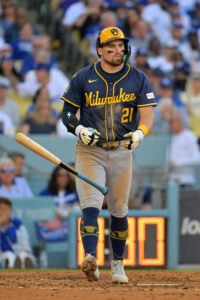
Durbin is a notable pickup for the Boston infield and should be penciled in for everyday at-bats — presumably at third base, though he can also handle second base if the Red Sox prefer Marcelo Mayer at the hot corner from a defensive standpoint. The 25-year-old Durbin (26 in a couple weeks) finished third in National League Rookie of the Year voting in 2025 after he batted .256/.334/.387 with 11 home runs, 25 doubles, 18 steals (24 attempts), a 5.9% walk rate and a tiny 9.9% strikeout rate. He turned in above-average marks for his glovework at third in the estimation of both Defensive Runs Saved (5) and Outs Above Average (2).
He’s not the big middle-of-the-order presence many Sox fans have coveted, but Durbin is an affordable, controllable and versatile defender who’ll further the Red Sox’ pivot toward run prevention and help to lower a team strikeout rate that was 10th-highest in the sport last year at 22.9%. He’s a right-handed hitter whose pull percentage (43.3%) is a bit higher than league average (40.6%), which should play well with the Green Monster at Fenway Park. Durbin comes to the Red Sox with five full seasons of club control and two minor league option years remaining (not that there’ll be any thought of optioning him to the minors anytime soon after last year’s strong performance).
If Durbin is ticketed for the hot corner, that’ll leave second base to a combination of the left-handed-hitting Mayer and righty-swinging Romy Gonzalez. Recently signed utilityman Isiah Kiner-Falefa can back up both those positions as well as shortstop.
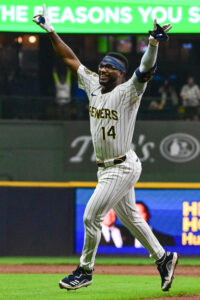
The 28-year-old Monasterio could also factor in at either second or third base, although like Gonzalez and Kiner-Falefa, he’s a right-handed hitter. As is the case with Gonzalez, Monasterio also carries notable platoon splits. He’s a career .255/.352/.375 batter against lefties but a .246/.303/.338 hitter against fellow righties. He’s coming off a career-best showing in the majors — albeit in a limited sample of 135 plate appearances — having slashed .270/.319/.437 (111 wRC+) with four homers. He’s controllable for another four seasons and won’t be arbitration-eligible until at least next offseason (possibly later, depending on how much time he spends in the minors this year).
Monasterio also has nearly 3500 professional innings at shortstop under his belt, so he gives Boston another backup option to oft-injured Trevor Story at shortstop (alongside Kiner-Falefa). He also has a full slate of three minor league option years remaining, so there’s no guarantee he’ll open the season on Boston’s major league roster. He’ll have the opportunity to win a role in camp, but barring injury and/or trade, Boston’s bench seems likely to include Gonzalez, Kiner-Falefa, catcher Connor Wong and outfielder/designated hitter Masataka Yoshida.
All of that assumes that Mayer makes the Opening Day roster, but it’s possible that the former No. 4 overall pick could open the season in Triple-A Worcester, too. Mayer’s .228/.272/.402 slash was well below league-average in 2025, but he only turned 23 in December and has an impressive minor league track record. That includes a .271/.347/.471 showing in Triple-A last year. He’ll have every opportunity to win a starting job in camp with the Red Sox, but late additions of Durbin and Kiner-Falefa lessen the team’s reliance on the still largely untested top prospect.
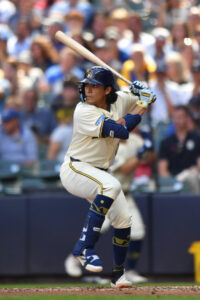
Boston also picks up the 26-year-old Seigler, who’ll provide some depth in the upper minors and could be a frequently used bench piece over the course of the coming season. He’s batted just .194/.292/.210 in an insignificant sample of 73 major league plate appearances, but Seigler hit .285/.414/.478 with eight homers, 16 doubles, four triples, 23 steals (27 attempts), a 16.9% walk rate and a 19.2% strikeout rate in 307 Triple-A plate appearances this past season. He’s been used as an infielder (second base, specifically) far more frequently than a catcher in recent seasons due to troubles controlling the run game and a susceptibility to passed balls.
Even if he’s rarely deployed behind the plate, Seigler is at the very least an interesting third catcher option who also is comfortable at second base and third base. He has two minor league option years remaining and doesn’t even have a full season of major league service, making him controllable for at least the next six full seasons.
The Red Sox also add a Competitive Balance draft choice — the only picks permissible to be traded under MLB rules. Milwaukee’s Round B selection is the first in that round, currently 67th overall (although that could change by a spot or two depending on what happens with Zac Gallen, the final remaining free agent who rejected a qualifying offer and is thus subject to draft pick compensation). They’ll not only get to add an extra player but will also add that selection’s slot value to their draft bonus pool. Last year’s No. 67 selection came with a $1.285MM value. This year’s should be up from that a bit. The Red Sox don’t need to spend that amount on this pick specifically; the slot value will be added to their bonus pool, which they can freely divide up among their picks how they see fit.
Turning to Milwaukee’s side of the swap, it feels like a precursor to another acquisition. The Brewers not only traded their incumbent starter at third base — they traded two of the top depth options behind him in the same swap. Perhaps there’s some infield shuffling on the horizon, but it feels like the Brewers will need to add some help on the dirt. Hamilton could see reps at the hot corner this spring but has spent far more time at second base in the Red Sox organization. Shortstop Joey Ortiz and second baseman Brice Turang are plus defenders who could both slide one position over to the left, but doing so might weaken the overall defensive aptitude of the group.
Bringing in some help at third base seems prudent, but options there are few and far between. Time will tell if president of baseball operations Matt Arnold has another move up his sleeve, but for right now, the Brewers look thin at third base.
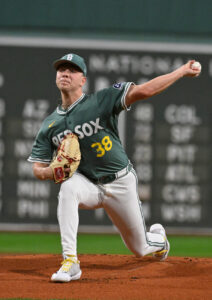
Their pitching depth, however, continues to grow — even after trading ace Freddy Peralta to the Mets last month. Today’s trade brings in a pair of big league-ready arms. Harrison, 24, already has 42 big league games (37 starts) under his belt. He’s pitched to a 4.39 ERA with a 22.9% strikeout rate and 8% walk rate in that time.
At the moment, Harrison profiles as a fifth starter option for the Brewers, but he carries more upside than most back-of-the-rotation candidates. The 2020 third-round pick ranked as one of the top minor league talents in all of baseball for several years, peaking as the No. 26 prospect in the entire sport on Baseball America’s top-100 prior to the 2023 season. He’s yet to put it all together in the majors, but Harrison has fanned better than 30% of his opponents in parts of two Triple-A seasons.
The Brewers have developed a reputation as one of the sport’s top “pitch labs.” They worked wonders with righty Quinn Priester in 2025 and have helped to facilitate turnarounds or breakouts from relievers like Trevor Megill, Joel Payamps, Bryse Wilson, Colin Rea, Nick Mears, Jared Koenig and others. There are plenty of parallels between Priester’s trajectory and that of Harrison; both were former top prospects traded to Boston and quickly buried on the Red Sox depth chart. The Brewers will hope to convert on that same profile for a second consecutive season now.
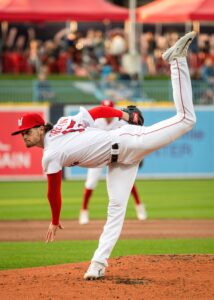
Drohan just turned 27 last month, making him old for a “prospect,” but he nonetheless sat 15th on Baseball America’s recent update of Boston’s system. His path to big leagues has been slowed both by injury and a selection in the Rule 5 Draft. The White Sox took Drohan back in 2023 after Boston left him unprotected. He required a nerve decompression surgery in his shoulder that spring, however, which limited him to 16 1/3 rehab innings that season. A forearm injury in 2025 limited him to 54 minor league frames.
When he’s been healthy, Drohan has looked the part of an interesting prospect. His Triple-A numbers are skewed by a rough showing late in 2023 and during some rehab work in 2024 — both potentially impacted by his shoulder — but he was excellent last season, tossing 47 2/3 innings with Worcester and recording a 2.27 ERA, a 35.3% strikeout rate, an 8.4% walk rate and a massive 17.3% swinging-strike rate. He also posted a 2.17 ERA in parts of two Double-A seasons and was part of the 2023 Futures Game. Drohan sat 93.3 mph with his four-seamer in Triple-A in 2025, complementing the pitch with an 84.7 mph slider, an 88.8 mph cutter, an 84.3 mph changeup and a 77.9 mph curveball (listed in order of usage rate).
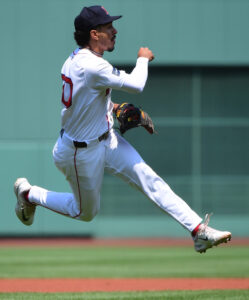
Hamilton, 28, returns to the club that originally drafted him but traded him to Boston as part of 2021’s Hunter Renfroe swap. He’s played in parts of three seasons with Boston and totaled 550 plate appearances with a .222/.283/.359 batting line.
Hamilton hasn’t hit much but is a plus runner with 95th percentile sprint speed, per Statcast, and 57 career steals in 68 attempts (83.8%). On a rate basis, he’s been one of the game’s elite defensive second basemen during his time in the majors, piling up 16 Defensive Runs Saved and 8 Outs Above Average in only 679 innings.
The Brewers originally drafted Hamilton in the eighth round of the 2019 draft out of the University of Texas. Arnold and top lieutenants like AGMs Matt Kleine, Will Hudgins and Karl Mueller were all in the Milwaukee front office when they first signed Hamilton out of the draft. That familiarity with him both as a player and as a person presumably played a role in this morning’s trade.
Adam McCalvy of MLB.com reports that Hamilton will see plenty of reps at third base this spring. Whether his stellar second base defense carries over to third base and whether Hamilton performs well enough to secure a job will determine his roster status come Opening Day. He has a minor league option year remaining, so if the Brewers do make another acquisition or if Hamilton simply struggles to a great enough extent this spring, he can be sent to Triple-A Nashville without needing to pass through waivers. The Brewers can control him for at least four additional seasons — five if he spends more than 25 days in the minors this year.
For the Red Sox, today’s trade seems to largely round out the infield. With Kiner-Falefa also aboard as a glove-first utility option, there doesn’t appear to be much more room to add. Durbin should be an upgrade of a couple wins, and his extreme put-the-ball-in-play approach and defensive aptitude should help to raise Boston’s floor quite a bit, even if the offense as a whole looks suspect beyond the top few hitters.
The Brewers are now 10 to 12 deep in their rotation mix, which could set the stage for another trade. They could also simply hold onto that depth, knowing they’ll need an army of pitchers to get through a 162-game season and that many of their current arms have less than a full year of experience in the majors, but some form of additional infield depth seems likely to be on the horizon after today’s trade thinned them out.
Jeff Passan of ESPN was first to report Durbin, Harrison, Drohan and Hamilton’s inclusions. Will Sammon of The Athletic first reported Seigler, Monasterio and the draft choice.
Brewers Outright Daz Cameron, Select Anthony Seigler
TODAY: Cameron cleared waivers and was outrighted off Milwaukee’s 40-man roster, according to Cameron’s MLB.com profile page. It isn’t yet known whether or not Cameron will accept the assignment or head for free agency.
JULY 1: The Brewers announced today that they have selected the contract of infielder/catcher Anthony Seigler. Francys Romero of BeisbolFR.com reported that move earlier this week. Outfielder Daz Cameron has been designated for assignment in a corresponding move.
Now 26 years old, Seigler was the Yankees’ first-round selection, No. 23 overall, back in 2018. He became a minor league free agent following the 2024 season and in November signed a minor league pact with the Brewers. He’s spent the season so far in Triple-A Nashville, where he’s turned in a strong .277/.416/.465 batting line with seven home runs, 11 doubles, four triples and 20 stolen bases in 23 attempts. Seigler has walked in a colossal 18.4% of his plate appearances against a 19.1% strikeout rate.
Seigler has split his time between second base (203 innings), catcher (201 innings) and third base (94 innings) during his time in Nashville. He’s unlikely to see much time at second base with Brice Turang enjoying a strong season there, and the left side of the infield has improved of late with Joey Ortiz and Caleb Durbin both enjoying productive months in June. Still, Seigler could be an upgrade over Andruw Monasterio on the bench. Monasterio has bounced between the four infield positions but is hitting just .192/.323/.269 this year.
His ability to crouch behind the plate could also be of value to the Brewers. It was reported a couple of months ago that William Contreras has been playing through a finger fracture. His performance on the year is around league average but has been declining. He had a .217/.337/.313 line and 87 wRC+ in the month of June, a far cry from his previous production. Perhaps having Seigler around will allow the Brewers to give Contreras some time off his feet. Eric Haase is also on the roster and is having a decent year at the plate, in a sense. His overall production is around league average but it’s been in a tiny sample of 54 plate appearances and with a big 40.7% strikeout rate.
Seigler’s call to the majors will be his first. He played in parts of six minor league seasons with the Yankees organization and is now midway through his seventh pro season. He has a full slate of options and can be controlled until he reaches six years of big league service time. That means he could be a depth piece for the Brewers for quite a long time, if his performance justifies his continued presence on the roster.
Cameron, 28, was added to Milwaukee’s roster just over two months ago. He has since been serving in a bench outfield role but with a tepid line of .195/.214/.293. He was once a notable prospect and has often performed well in the minors but never in the majors. He now has a .200/.258/.326 line in 472 big league plate appearances dating back to his 2020 debut.
He’s now out of options, so the Brewers have bumped him off the 40-man today. Given his performance, he’s likely to pass through waivers unclaimed. He has previously been outrighted in his career, which gives him the right to reject further outright assignments in favor of electing free agency.
Photo courtesy of Dave Kallmann, Imagn Images
Yankees Sign First-Rounder Anthony Seigler
The Yankees have signed their first-round pick, 23rd overall choice Anthony Seigler, George A. King III of the New York Post reports. The high school catcher’s bonus is worth $2.815,900, the exact value of the pick, Jim Callis of MLB.com tweets.
Seigler, an 18-year-old Georgia native, ranked among the top 50 prospects entering the draft, according to FanGraphs (28th), Baseball America (41st), ESPN’s Keith Law (43rd) and MLB.com (46th). Seigler’s “agile behind the plate, has a quick transfer that helps his arm play as plus at times and shows promise as a receiver and pitch framer,” per MLB.com, which likens him to Austin Barnes of the Dodgers. Barnes has shown an ability to play second base, and Seigler also has the athleticism to line up at the keystone, according to MLB.com.
Offensively, the switch-hitting Seigler is a contact hitter capable of using all fields, and he could develop into a double-digit home run threat, MLB.com notes. He’s also relatively fast for a catcher. Interestingly, like major leaguer Pat Venditte (also of the Dodgers), Seigler has switch-pitching capability. He brings upper-80s heat and equal effectiveness from both sides, though he’ll sink or swim in the pros as a catcher.