
Brewers Option Logan Henderson, Blake Perkins
TODAY: Lockridge and Sproat have been told they’re making the Opening Day roster, as per Adam McCalvy.
MARCH 19: The Brewers made a few camp cuts on Thursday. Starter Logan Henderson, outfielder Blake Perkins, and corner bat Tyler Black were all sent out and will open the season with Triple-A Nashville.
Two weeks ago, Henderson had seemingly been well positioned for a spot in the Opening Day rotation. There are at least two jobs up for grabs after the Freddy Peralta trade and with Quinn Priester beginning the season on the injured list. The Brewers have rotation roles committed to Jacob Misiorowski, Chad Patrick and (assuming he’s fully built up) Brandon Woodruff.
The 24-year-old Henderson was firmly in the mix after impressing over his first five MLB starts a year ago. His odds of breaking camp were set back when he reported minor elbow soreness last week. Henderson had finished the 2025 season on the injured list with elbow inflammation. The team didn’t consider this recent flareup especially alarming — he’s already throwing again — but he hasn’t appeared in a Spring Training game in two weeks.
Skipper Pat Murphy indicated the demotion is largely about giving Henderson a chance to build his workload in the minors. “Part of this move is to make sure he can go post regularly,” Murphy told reporters (link via Adam McCalvy of MLB.com). “We’re not going to immediately build him up to five innings. We’re going to let him go two innings and see how he responds, two innings and see how he responds. Just make sure he’s responding each time because he’s had (an injury) history.”
This probably paves the way for Brandon Sproat and Kyle Harrison to round out the rotation. Harrison left yesterday’s appearance with a blister, but it’s not expected to be an issue moving forward. Robert Gasser and Shane Drohan are also still in the mix, with Drohan having the far more impressive camp of those two.
Acquired from the Red Sox in the Caleb Durbin trade, Harrison has allowed 12 runs (eight earned) across 9 2/3 spring innings. That’s obviously not ideal, but he has struck out 15 opponents while averaging 95 mph on his fastball. Sproat came over from the Mets as part of the Peralta return. He has allowed five runs with a 10:2 strikeout-to-walk ratio over nine innings.
In any case, the Brewers will lean heavily on their bullpen while frequently shuttling starters up and down from Nashville. There’s more clarity on the position player side, which is down to 14 a week before Opening Day. The final camp cut will almost certainly be third catcher Reese McGuire, a non-roster invitee.
McCalvy notes that the Perkins option means Brandon Lockridge is heading north with the club. The speedster won the fourth outfield role by hitting .314 with four homers and three steals in 12 games this spring. He’ll join Gary Sánchez, Jake Bauers and utility infielder David Hamilton on the season-opening bench.
MLBTR Podcast: The Tigers’ Rotation, A Brewers-Red Sox Trade, And Late Free-Agent Signings
The latest episode of the MLB Trade Rumors Podcast is now live on Spotify, Apple Podcasts, and wherever you get your podcasts! Make sure you subscribe as well! You can also use the player at this link to listen, if you don’t use Spotify or Apple for podcasts.
This week, host Darragh McDonald is joined by Anthony Franco of MLB Trade Rumors to discuss…
- Tarik Skubal winning his arbitration hearing against the Tigers (1:30)
- The Tigers loading up the rotation by signing Framber Valdez and also Justin Verlander but losing Reese Olson for the year (13:25)
- The six-player trade between the Red Sox and Brewers headlined by Caleb Durbin and Kyle Harrison, with Milwaukee then signing Luis Rengifo (24:15)
- The Orioles signing Chris Bassitt and losing Jackson Holliday to injury (35:35)
- The Diamondbacks signing Zac Gallen and potentially losing Corbin Carroll to the injured list (44:30)
- The Braves losing Spencer Schwellenbach and maybe Hurston Waldrep while showing little urgency about bolstering the rotation (52:20)
- Tony Clark stepping down as MLBPA executive director, recorded as the news was still trickling out (59:15)
Check out our past episodes!
- Twins Front Office Shake-Up, The Brendan Donovan Trade, Eugenio Suarez, And More! – listen here
- Examining MLB’s Parity Situation – Also, Bellinger, Peralta, Robert, And Gore – listen here
- What The Tucker And Bichette Contracts Mean For Baseball – Also, Nolan Arenado And Ranger Suarez – listen here
The podcast intro and outro song “So Long” is provided courtesy of the band Showoff. Check out their Facebook page here!
Photo courtesy of Junfu Han, Imagn Images
Red Sox Acquire Caleb Durbin In Six-Player Trade
The Red Sox and Brewers pulled off a six-player trade on Monday. Boston acquired infielders Caleb Durbin, Andruw Monasterio and Anthony Seigler, as well as Milwaukee’s Competitive Balance Round B pick in exchange for pitchers Kyle Harrison and Shane Drohan and infielder David Hamilton. All six players in question were on their clubs’ 40-man roster, so no corresponding moves were necessary.
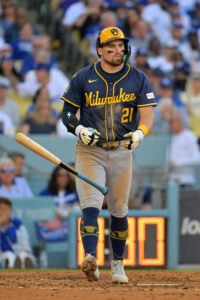
Durbin is a notable pickup for the Boston infield and should be penciled in for everyday at-bats — presumably at third base, though he can also handle second base if the Red Sox prefer Marcelo Mayer at the hot corner from a defensive standpoint. The 25-year-old Durbin (26 in a couple weeks) finished third in National League Rookie of the Year voting in 2025 after he batted .256/.334/.387 with 11 home runs, 25 doubles, 18 steals (24 attempts), a 5.9% walk rate and a tiny 9.9% strikeout rate. He turned in above-average marks for his glovework at third in the estimation of both Defensive Runs Saved (5) and Outs Above Average (2).
He’s not the big middle-of-the-order presence many Sox fans have coveted, but Durbin is an affordable, controllable and versatile defender who’ll further the Red Sox’ pivot toward run prevention and help to lower a team strikeout rate that was 10th-highest in the sport last year at 22.9%. He’s a right-handed hitter whose pull percentage (43.3%) is a bit higher than league average (40.6%), which should play well with the Green Monster at Fenway Park. Durbin comes to the Red Sox with five full seasons of club control and two minor league option years remaining (not that there’ll be any thought of optioning him to the minors anytime soon after last year’s strong performance).
If Durbin is ticketed for the hot corner, that’ll leave second base to a combination of the left-handed-hitting Mayer and righty-swinging Romy Gonzalez. Recently signed utilityman Isiah Kiner-Falefa can back up both those positions as well as shortstop.
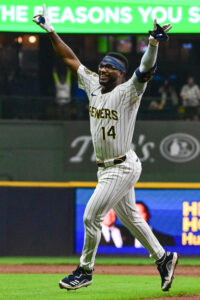
The 28-year-old Monasterio could also factor in at either second or third base, although like Gonzalez and Kiner-Falefa, he’s a right-handed hitter. As is the case with Gonzalez, Monasterio also carries notable platoon splits. He’s a career .255/.352/.375 batter against lefties but a .246/.303/.338 hitter against fellow righties. He’s coming off a career-best showing in the majors — albeit in a limited sample of 135 plate appearances — having slashed .270/.319/.437 (111 wRC+) with four homers. He’s controllable for another four seasons and won’t be arbitration-eligible until at least next offseason (possibly later, depending on how much time he spends in the minors this year).
Monasterio also has nearly 3500 professional innings at shortstop under his belt, so he gives Boston another backup option to oft-injured Trevor Story at shortstop (alongside Kiner-Falefa). He also has a full slate of three minor league option years remaining, so there’s no guarantee he’ll open the season on Boston’s major league roster. He’ll have the opportunity to win a role in camp, but barring injury and/or trade, Boston’s bench seems likely to include Gonzalez, Kiner-Falefa, catcher Connor Wong and outfielder/designated hitter Masataka Yoshida.
All of that assumes that Mayer makes the Opening Day roster, but it’s possible that the former No. 4 overall pick could open the season in Triple-A Worcester, too. Mayer’s .228/.272/.402 slash was well below league-average in 2025, but he only turned 23 in December and has an impressive minor league track record. That includes a .271/.347/.471 showing in Triple-A last year. He’ll have every opportunity to win a starting job in camp with the Red Sox, but late additions of Durbin and Kiner-Falefa lessen the team’s reliance on the still largely untested top prospect.
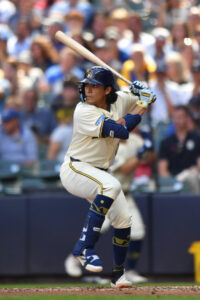
Boston also picks up the 26-year-old Seigler, who’ll provide some depth in the upper minors and could be a frequently used bench piece over the course of the coming season. He’s batted just .194/.292/.210 in an insignificant sample of 73 major league plate appearances, but Seigler hit .285/.414/.478 with eight homers, 16 doubles, four triples, 23 steals (27 attempts), a 16.9% walk rate and a 19.2% strikeout rate in 307 Triple-A plate appearances this past season. He’s been used as an infielder (second base, specifically) far more frequently than a catcher in recent seasons due to troubles controlling the run game and a susceptibility to passed balls.
Even if he’s rarely deployed behind the plate, Seigler is at the very least an interesting third catcher option who also is comfortable at second base and third base. He has two minor league option years remaining and doesn’t even have a full season of major league service, making him controllable for at least the next six full seasons.
The Red Sox also add a Competitive Balance draft choice — the only picks permissible to be traded under MLB rules. Milwaukee’s Round B selection is the first in that round, currently 67th overall (although that could change by a spot or two depending on what happens with Zac Gallen, the final remaining free agent who rejected a qualifying offer and is thus subject to draft pick compensation). They’ll not only get to add an extra player but will also add that selection’s slot value to their draft bonus pool. Last year’s No. 67 selection came with a $1.285MM value. This year’s should be up from that a bit. The Red Sox don’t need to spend that amount on this pick specifically; the slot value will be added to their bonus pool, which they can freely divide up among their picks how they see fit.
Turning to Milwaukee’s side of the swap, it feels like a precursor to another acquisition. The Brewers not only traded their incumbent starter at third base — they traded two of the top depth options behind him in the same swap. Perhaps there’s some infield shuffling on the horizon, but it feels like the Brewers will need to add some help on the dirt. Hamilton could see reps at the hot corner this spring but has spent far more time at second base in the Red Sox organization. Shortstop Joey Ortiz and second baseman Brice Turang are plus defenders who could both slide one position over to the left, but doing so might weaken the overall defensive aptitude of the group.
Bringing in some help at third base seems prudent, but options there are few and far between. Time will tell if president of baseball operations Matt Arnold has another move up his sleeve, but for right now, the Brewers look thin at third base.
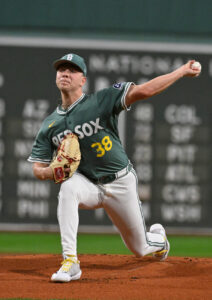
Their pitching depth, however, continues to grow — even after trading ace Freddy Peralta to the Mets last month. Today’s trade brings in a pair of big league-ready arms. Harrison, 24, already has 42 big league games (37 starts) under his belt. He’s pitched to a 4.39 ERA with a 22.9% strikeout rate and 8% walk rate in that time.
At the moment, Harrison profiles as a fifth starter option for the Brewers, but he carries more upside than most back-of-the-rotation candidates. The 2020 third-round pick ranked as one of the top minor league talents in all of baseball for several years, peaking as the No. 26 prospect in the entire sport on Baseball America’s top-100 prior to the 2023 season. He’s yet to put it all together in the majors, but Harrison has fanned better than 30% of his opponents in parts of two Triple-A seasons.
The Brewers have developed a reputation as one of the sport’s top “pitch labs.” They worked wonders with righty Quinn Priester in 2025 and have helped to facilitate turnarounds or breakouts from relievers like Trevor Megill, Joel Payamps, Bryse Wilson, Colin Rea, Nick Mears, Jared Koenig and others. There are plenty of parallels between Priester’s trajectory and that of Harrison; both were former top prospects traded to Boston and quickly buried on the Red Sox depth chart. The Brewers will hope to convert on that same profile for a second consecutive season now.
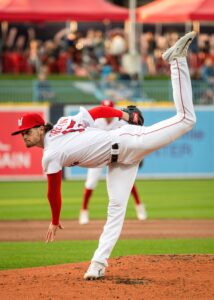
Drohan just turned 27 last month, making him old for a “prospect,” but he nonetheless sat 15th on Baseball America’s recent update of Boston’s system. His path to big leagues has been slowed both by injury and a selection in the Rule 5 Draft. The White Sox took Drohan back in 2023 after Boston left him unprotected. He required a nerve decompression surgery in his shoulder that spring, however, which limited him to 16 1/3 rehab innings that season. A forearm injury in 2025 limited him to 54 minor league frames.
When he’s been healthy, Drohan has looked the part of an interesting prospect. His Triple-A numbers are skewed by a rough showing late in 2023 and during some rehab work in 2024 — both potentially impacted by his shoulder — but he was excellent last season, tossing 47 2/3 innings with Worcester and recording a 2.27 ERA, a 35.3% strikeout rate, an 8.4% walk rate and a massive 17.3% swinging-strike rate. He also posted a 2.17 ERA in parts of two Double-A seasons and was part of the 2023 Futures Game. Drohan sat 93.3 mph with his four-seamer in Triple-A in 2025, complementing the pitch with an 84.7 mph slider, an 88.8 mph cutter, an 84.3 mph changeup and a 77.9 mph curveball (listed in order of usage rate).
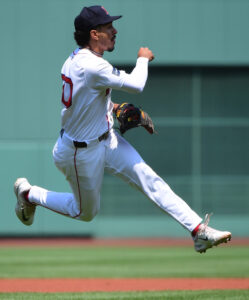
Hamilton, 28, returns to the club that originally drafted him but traded him to Boston as part of 2021’s Hunter Renfroe swap. He’s played in parts of three seasons with Boston and totaled 550 plate appearances with a .222/.283/.359 batting line.
Hamilton hasn’t hit much but is a plus runner with 95th percentile sprint speed, per Statcast, and 57 career steals in 68 attempts (83.8%). On a rate basis, he’s been one of the game’s elite defensive second basemen during his time in the majors, piling up 16 Defensive Runs Saved and 8 Outs Above Average in only 679 innings.
The Brewers originally drafted Hamilton in the eighth round of the 2019 draft out of the University of Texas. Arnold and top lieutenants like AGMs Matt Kleine, Will Hudgins and Karl Mueller were all in the Milwaukee front office when they first signed Hamilton out of the draft. That familiarity with him both as a player and as a person presumably played a role in this morning’s trade.
Adam McCalvy of MLB.com reports that Hamilton will see plenty of reps at third base this spring. Whether his stellar second base defense carries over to third base and whether Hamilton performs well enough to secure a job will determine his roster status come Opening Day. He has a minor league option year remaining, so if the Brewers do make another acquisition or if Hamilton simply struggles to a great enough extent this spring, he can be sent to Triple-A Nashville without needing to pass through waivers. The Brewers can control him for at least four additional seasons — five if he spends more than 25 days in the minors this year.
For the Red Sox, today’s trade seems to largely round out the infield. With Kiner-Falefa also aboard as a glove-first utility option, there doesn’t appear to be much more room to add. Durbin should be an upgrade of a couple wins, and his extreme put-the-ball-in-play approach and defensive aptitude should help to raise Boston’s floor quite a bit, even if the offense as a whole looks suspect beyond the top few hitters.
The Brewers are now 10 to 12 deep in their rotation mix, which could set the stage for another trade. They could also simply hold onto that depth, knowing they’ll need an army of pitchers to get through a 162-game season and that many of their current arms have less than a full year of experience in the majors, but some form of additional infield depth seems likely to be on the horizon after today’s trade thinned them out.
Jeff Passan of ESPN was first to report Durbin, Harrison, Drohan and Hamilton’s inclusions. Will Sammon of The Athletic first reported Seigler, Monasterio and the draft choice.
Red Sox Could Trade From Rotation After Suárez Deal
The Red Sox went big with their first free agent signing of the winter, adding Ranger Suárez for five years and $130MM on Wednesday. That followed trade acquisitions of Sonny Gray and Johan Oviedo, meaning the Sox could enter the season having replaced 60% of their rotation.
Even with Lucas Giolito departing in free agency, the Red Sox have eight to ten viable options. They’ll be anchored at the top end by Garrett Crochet, Suárez and Gray. It’s unlikely that Boston would flip Oviedo within a few months of giving up a reasonably well-regarded outfield prospect (Jhostynxon Garcia) to acquire him. Beyond that, the Sox could dangle any of their starters on the trade market.
Jen McCaffrey of The Athletic and Sean McAdam of MassLive each wrote this week that a rotation trade was a possibility. The Sox don’t need to force one unless overwhelmed by an offer. Starting pitching depth can quickly thin, and most of Boston’s back-end arms have minor league options remaining. They can load up the rotation at Triple-A Worcester to prepare for injuries over the course of a 162-game schedule.
On the other hand, dealing a starter could get the Sox their finishing piece in the infield. They lost the bidding for Alex Bregman, leaving them short at least one player on the dirt. Even if they’re comfortable turning the hot corner to Marcelo Mayer, they don’t have a clear answer at second base. They don’t want to take Ceddanne Rafaela out of center field, where he’s one of the best defenders in the sport. Kristian Campbell struggled defensively as a rookie, and it seems the organization prefers him in the outfield. A platoon of David Hamilton and Romy Gonzalez is underwhelming for a win-now team in a competitive division.
If the Suárez signing was their one big free agent move in the budget, the Red Sox should find a way to add an infielder on the trade front. The Sox were tied to Ketel Marte before the Diamondbacks pulled him from the market. They’ve been linked to Brendan Donovan, although Ari Alexander of 7 Boston News suggests they’d prefer a right-handed bat and thus may not be as motivated as some other teams on Donovan (e.g. Giants, Mariners).
The Red Sox have been tied to Houston third baseman Isaac Paredes throughout the winter. Astros GM Dana Brown has downplayed the club’s interest in moving an infielder, but that hasn’t stopped teams from calling. Brian McTaggart of MLB.com wrote this week that teams continue to engage the Astros to see if they can change their minds on Paredes. Houston has added a pair of potential mid-rotation starters, Mike Burrows and Tatsuya Imai, but they remain light on controllable starting pitching.
Let’s take a run through the possibilities if chief baseball officer Craig Breslow does move a starter.
If the Sox deal from their rotation, these would be their two most valuable trade chips. Tolle and Early both debuted late in the 2025 season. Early was very good over four abbreviated starts. Tolle struggled over seven appearances, but that’s not going to deter teams from having interest in a 23-year-old who pitched his way to the big leagues within his first full professional season.
Tolle and Early respectively rank as the Sox’s top and third-best prospects at Baseball America. Tolle has bigger stuff, averaging 97 MPH on a heater that plays up even further based on his excellent extension and above-average life at the top of the zone. Early also gets good extension and has fantastic secondary stuff, headlined by a plus changeup. His 94 MPH fastball is closer to average, but he’s a superior strike-thrower to Tolle.
Both pitchers have six years of club control and a trio of minor league options. Teams are loath to part with starters who have this level of talent. It’s unlikely the Sox would trade either pitcher for a player who is a year from free agency. Would they entertain it for a controllable star hitter? McCaffrey and McAdam both floated the possibility of the Sox trying to reengage with Arizona on Marte by dangling one of Tolle or Early alongside an outfielder like Jarren Duran or Rafaela. Even if the Diamondbacks are committed to moving forward with Marte, the general idea is that the Sox would only move one of their most talented starters for an impact bat.
Bello will make $6MM next season and is signed for a total of $50.5MM over the next four years. There’s a club option for 2030 that gives the Sox a fifth season of control. Bello would be locked into the fourth starter role if he’s not traded. The 26-year-old righty has briefly come up in conversations this offseason, albeit with uncertainty about how willing the Sox are to move him.
Last season, Bello ranked second on the team with 166 2/3 innings. He turned in a 3.35 earned run average but didn’t have as favorable reviews from estimators like FIP (4.19) and SIERA (4.55). That’s due to a career-low 17.7% strikeout rate. Bello’s 8.6% swinging strike percentage was also a personal low and ranked in the bottom 25 among all MLB pitchers (min. 100 innings pitched). It’s difficult to maintain mid-rotation results with that level of swing and miss.
Bello has good velocity, averaging 95 MPH on his sinker and four-seam fastball. The sinker is the better of the two offerings, and he leans on it more as a ground-ball pitch than one that gets a lot of whiffs. While Bello has missed more bats in previous seasons, he has always had more of a ground-ball approach. There’s volatility baked into that, and the Sox don’t project to have a great infield defense behind him. Bello is probably closer to a league average arm than the ERA would indicate. That’s still valuable at the remaining $12.625MM average annual value on his contract. Notably, if the Sox chose to move Bello, they’d be trimming what’s currently a $9.166MM luxury hit from their current books (the overall AAV of his extension, which covers the 2024-29 seasons).
Kutter Crawford/Patrick Sandoval
Both pitchers missed the entire 2025 season. Crawford, who is signed for $2.75MM in his second of four arbitration years, began the year on the shelf with right knee discomfort. He injured his right wrist a couple months later and underwent surgery. Crawford had been a swingman for his first couple seasons but stepped into a full-time rotation role in 2024. He pitched well for a few months until a second-half home run spike pushed his ERA to 4.36 across 183 2/3 innings.
Crawford had slightly above-average strikeout and walk marks a couple seasons ago. The home runs and injury history are concerns, but he’s cheaply controllable through 2028 and could be a league average starter if he’s healthy. He also has a pair of minor league options, so there’s a decent amount of roster flexibility for the Sox or any team that acquires him. He’s well behind Tolle, Early and Bello in terms of trade value but would have some appeal if the Sox tried to swap him for a utility infielder or controllable bullpen piece.
The Sox knew that Sandoval was unlikely to pitch much (if at all) in 2025 when they signed him to a two-year, $18.25MM contract early in his rehab from June ’24 Tommy John surgery. They backloaded the deal, paying $5.5MM for his rehab year and a $12.75MM salary for the upcoming season. The 29-year-old Sandoval was a mid-rotation starter over his final three seasons as a member of the Angels. He pitched to a 3.84 ERA with a 21.9% strikeout rate in nearly 400 innings between 2022-24. His command is fringy but he sits around 94 MPH and has above-average secondaries with his changeup and slider.
Boston may not want to trade Sandoval for a modest return after paying more than $5MM to cover his rehab year. The front office liked him enough to sign him to that deal in the first place. Yet the rotation picture has changed, and Sandoval’s five-plus years of service mean he can’t be sent to the minors. They might be better off trusting Oviedo or Crawford as the fifth starter and getting some of Sandoval’s contract off the books for a utility or bullpen pickup.
Of the players acquired from the Giants in the Rafael Devers trade, Harrison was probably the centerpiece. The deal was mostly about moving on from Devers and shedding his contract. The Sox kept Harrison in Triple-A for much of the ’25 season even as their rotation was being hit by injuries. They finally brought him up in September. Harrison pitched well over his first two outings before getting knocked around in his third. The Sox carried him on their Wild Card Series roster but didn’t use him, opting instead to go with the rookie Early in a must-win Game 3.
Harrison has a decent arm, sitting in the 94-95 MPH range. His secondary stuff and command have been inconsistent, and he owns a 4.39 ERA across 194 2/3 career innings. Harrison is under club control for at least five seasons and has a pair of options remaining. There’d be plenty of teams interested if the Sox shopped him, but his stock has dropped since he was one of the sport’s top pitching prospects a couple seasons ago. Boston is probably better served holding him and hoping for a step forward in his age-24 season.
An offseason Houck trade wouldn’t accomplish much and feels unlikely. He’s coming off a terrible year that culminated in an August Tommy John procedure. He’s expected to miss the ’26 season and would have minimal appeal to another team. Houck agreed to a $4.1MM salary to avoid arbitration and should make the same amount for his final year of club control . They can place him on the 60-day injured list once Spring Training opens.
Lucas Giolito Unlikely To Pitch Again This Season
9:02 pm: There is no structural damage to Giolito’s UCL, per Chris Cotillo of MassLive.com. He is dealing with flexor irritation as well as a bone issue, which will require rest for a while.
3:51 pm: Right-hander Lucas Giolito is likely out for the year with an elbow injury, manager Alex Cora told reporters at today’s media session (link via Jen McCaffrey of The Athletic). The elbow issue had already kept Giolito off the Wild Card roster. It will now seemingly cost him the rest of 2025. Cora told reporters that rookie Connelly Early will likely draw the starting nod in Game 3 against the Yankees, if needed.
The elbow injury will bring an untimely end to a resurgent season for Giolito. The 31-year-old shuffled between three different MLB organizations in 2023, posting a 4.88 ERA across 33 starts with the White Sox, Angels, and Guardians. He then missed the entirety of the 2024 season following surgery to repair his UCL. Giolito bounced back with a 3.41 ERA over 26 starts with the Red Sox this season. His 4.59 xFIP and 4.65 SIERA suggest he performed above his head, but his contributions helped solidify a staff that dealt with injuries all year.
Boston inked Giolito to a two-year deal ahead of the 2024 season, with the second season being a player option. After missing the entire year, Giolito picked up the option. By triggering that player option, he gave the club a $14MM option for 2026, though with a vesting clause that would convert it to a $19MM mutual option if Giolito reached 140 innings pitched. He exceeded that mark in his second-to-last outing of the regular season. Giolito seemed destined to decline his end of the option and return to free agency, but the elbow injury could lead Boston to reject it on their end.
If either side balks at the mutual option, Giolito would enter free agency in a peculiar position. He’d be coming off his best season in terms of run prevention since his breakout 2019. While he fell short of the above-average strikeout numbers he posted during his White Sox tenure, Giolito cleaned up the home run issues that plagued him in his wayward 2023 season. On the other hand, this is the second elbow problem in two years for Giolito. Even if this specific injury is minor, anything elbow-related is a red flag, especially for a pitcher who will be 32 years old next summer.
Early starting a playoff game would’ve seemed like a long shot heading into the season, but he’s now the clear top candidate to fill Giolito’s vacated spot. The rookie has impressed in four big-league starts, allowing two earned runs or less in every outing. He burst onto the scene with 11 strikeouts against the Athletics in his debut and has continued to rack up punchouts at an above-average clip. After posting a strikeout rate above 30% at each minor league stop, he’s at 36.7% through 19 1/3 innings with the Red Sox.
The Yankees will present a challenging task for the young lefty, especially in what would be a series-deciding game. New York led the league in OPS and wOBA against left-handed pitching in the regular season. They slugged 70 home runs off southpaws, matching the Dodgers for the league lead. The Yankees elected to roll out a lineup with just three left-handed hitters against Garrett Crochet in Game 1. That starting nine does not feature Jazz Chisholm Jr. While a strict platoon between Chisholm and righty Amed Rosario seems unlikely, New York appears willing to play matchups in this series. It’s a tiny sample, but Early has struck out an absurd 13 of the 22 lefties he’s faced this season. He’s held left-handed hitters to a meager .150/.227/.150 slash line.
Kyle Harrison and Payton Tolle are also on hand as potential options to replace Giolito. Tolle also impressed in his MLB debut, striking out eight Pirates over 5 1/3 innings. He’s posted a 7.36 ERA since that outing and has been used in a relief role in recent outings. Harrison came over from San Francisco in the Rafael Devers trade. He spent the majority of the season with Triple-A Worcester, but did make three appearances for Boston in September. Harrison tossed a quality start against Tampa Bay in his penultimate outing and is likely the most stretched-out member of the bullpen.
Latest On Red Sox’s Rotation
The Red Sox placed Richard Fitts on the 15-day injured list on Tuesday afternoon. The righty is dealing with arm neuritis. Fitts had stepped into a bulk role out of the bullpen on Monday. The Sox needed to replace Walker Buehler in the rotation after moving him to relief last week.
Fitts’ injury again leaves that spot in question. Manager Alex Cora confirmed they’re not going to reverse course on Buehler’s move to relief (link via Tim Healey of The Boston Globe). That means they’ll need to bring someone up for Saturday’s start against the Pirates. Cooper Criswell went on the minor league injured list last week. That leaves Kyle Harrison as the only healthy depth starter on the 40-man roster.
Harrison started tonight’s game with Triple-A Worcester. However, the Sox removed him after three innings and 38 pitches. That’d appear to tip their hand that they’re viewing Harrison as the choice for Saturday. He’d be on three days rest but that should be sufficient recovery time after today’s abbreviated outing.
The southpaw has been on optional assignment since the Sox acquired him as the centerpiece of the Rafael Devers return. He has a 3.65 ERA in 11 starts for Worcester, though he’s averaging less than five innings per appearance. Tonight’s deliberately brief outing is part of that, but Harrison has continued to struggle with pitch efficiency. That has been the question with Harrison, who has above-average stuff and strikeout potential while issuing a lot of free passes. The 24-year-old had started four of eight MLB appearances with San Francisco earlier this year, allowing a 4.56 ERA through 23 2/3 frames.
The most exciting alternative would be to turn to the organization’s top pitching prospect, Payton Tolle. Asked about a potential Tolle promotion, Cora said the Sox “haven’t talked about that” to this point (relayed by Christopher Smith of MassLive). Tolle is scheduled to start for Worcester on Thursday, so Boston would need to scratch him from that appearance to bring him up.
It’d be an aggressive promotion, as the 22-year-old was bumped up from Double-A less than three weeks ago. Tolle has recorded 17 strikeouts against two walks while allowing six earned runs across 15 innings through a trio of Triple-A starts. He has a cumulative 3.04 ERA while punching out nearly 37% of batters faced between three levels this year.
MLBTR Podcast: Reacting To The Devers Trade And Aaron Civale
The latest episode of the MLB Trade Rumors Podcast is now live on Spotify, Apple Podcasts, and wherever you get your podcasts! Make sure you subscribe as well! You can also use the player at this link to listen, if you don’t use Spotify or Apple for podcasts.
This week, host Darragh McDonald is joined by Steve Adams of MLB Trade Rumors to discuss…
- The shocking trade sending Rafael Devers from the Red Sox to the Giants (1:15)
- The Red Sox drama that led to the trade (4:25)
- The constant shuffling of deck chairs with the Red Sox over the past decade (7:40)
- The pieces the Red Sox got in return: Jordan Hicks, Kyle Harrison and James Tibbs (20:00)
- The fit with Devers and the Giants (recorded before the news of Devers getting work at first base) (30:55)
- Aaron Civale asking the Brewers for a trade and getting flipped to the White Sox for Andrew Vaughn (45:20)
Check out our past episodes!
- White Sox Ownership, Roman Anthony, And The Diamondbacks’ Rotation – listen here
- Jarren Duran Rumors, Caglianone And Young Promoted, And Pitching Injuries – listen here
- Bregman Injured, Marcelo Mayer Called Up, And Pirates Talk – listen here
The podcast intro and outro song “So Long” is provided courtesy of the band Showoff. Check out their Facebook page here!
Photo courtesy of D. Ross Cameron, Imagn Images
Giants Acquire Rafael Devers
In a shocking mid-June blockbuster, the Giants have acquired star slugger Rafael Devers from the Red Sox in exchange for right-hander Jordan Hicks, left-hander Kyle Harrison, outfield/first base prospect James Tibbs and right-handed pitching prospect Jose Bello. The teams subsequently announced the trade, and the Red Sox optioned Harrison to Triple-A Worcester. The Giants will absorb the remainder of Devers’s contract in its entirety as part of the deal.
It’s a stunning move that will have massive implications for both franchises as they both pursue their first playoff appearances since 2021 this year. The Red Sox, 37-36 after sweeping the division-leading Yankees this weekend, part with a player they signed to be the next face of their franchise just two years ago. The relationship between the two sides broke down quite publicly over the past few months, however. Devers has long made clear that he wants to play third base on a regular basis, but the Red Sox clearly had other plans this offseason as they sought to add a big right-handed bat to their lineup. After discussing a deal that would’ve sent Nolan Arenado to Boston with the Cardinals earlier in the winter, they ultimately pivoted and signed Alex Bregman to a three-year, $120MM pact that affords him the opportunity to opt out following the 2025 and ’26 seasons.
That proved to be the end of Devers’ time at third base, and though he initially resisted the move he eventually took up his new role as Boston’s regular DH. That seemed to settle the controversy at first despite reports that indicated Devers considered asking for a trade after the Bregman deal, but tensions erupted once again when Triston Casas was sidelined by knee surgery that will likely end his 2025 season. At that time, Chief Baseball Officer Craig Breslow asked Devers to move to first base to cover for the loss of Casas, a move that would have opened up DH at-bats for another player such as top prospect Roman Anthony. Devers refused and expressed frustration with team leadership for asking him to move to an unfamiliar position in the middle of the season, ultimately leading to a private meeting between Devers, manager Alex Cora, and club owner John Henry last month.
Since then, neither Devers nor Red Sox brass have spoken to the media about the situation beyond to affirm that Devers would remain the club’s DH going forward. That’s remained the case even in the weeks since Bregman went down with a significant quad strain that figures to sideline him until late July at the earliest. The discord between the sides over the past few months surely served as a catalyst for today’s shocking blockbuster from Boston’s perspective. Although Chris Cotillo of MassLive reports that Devers did not ultimately request a trade, Jon Heyman of the New York Post writes that the slugger is said by friends to be pleased with the change of scenery. For a club that’s under-performing expectations this year but remains on the periphery of the AL Wild Card race, moving on from a star player who was clearly unhappy could serve to improve morale going forward.
Of course, there are plenty of on-the-field justifications for making this trade as well. Boston is in dire need of pitching help, and the additions of Harrison and Hicks will go a long way to patching those holes. The two hurlers have pitched both out of the rotation and in relief this year as dictated by the needs of San Francisco, so it’s not entirely clear which roles they will take up now that they’re headed to Boston. Harrison, 24 in August, projects as a starter long-term and has a 4.91 ERA with a 4.22 FIP across four starts in the majors this year. Hicks, meanwhile, spent most of his career as a reliever in St. Louis before signing with the Giants as a starter in free agency. His time with the Giants has been fairly mixed as he’s bounced between the rotation and bullpen, and this year he has a 6.47 ERA across 48 2/3 innings of work despite fantastic peripherals including a 3.59 FIP.
Regardless of what roles those arms end up playing for the Red Sox, it could be a considerable boost to a Boston pitching staff that has struggled to find much stability outside of southpaws Garrett Crochet and Aroldis Chapman this year. Hicks could fill the role of right-handed, late-inning complement to Chapman that the Red Sox were rumored to be seeking over the winter before settling for a combination of Liam Hendriks and Justin Slaten (both of whom are presently on the injured list) to support Chapman. Harrison, meanwhile, is headed to Triple-A in the short-term but is a high-upside depth option who Boston could turn to if anyone in their current rotation mix gets injured or begins to struggle.
While neither is likely to help the Red Sox in 2025, the value of the two prospects in the deal cannot be ignored either. Tibbs, 22, was San Francisco’s first-round pick in last year’s draft and has looked excellent at the High-A level this year with a .245/.377/.480 slash line that features nearly as many walks as strikeouts. Ranked as San Francisco’s #4 prospect prior to the trade according to MLB Pipeline, Tibbs has above-average hit and power tools and was lauded for his swing decisions at Florida State, where he slashed a comical .363/.488/.777 in 66 games last year. As for Bello, the 20-year-old is unranked at MLB Pipeline after making just one stateside appearance last year but signed with the Giants out of the Dominican Republic prior to the 2023 season and has struck out an eye-popping 41.8% of his opponents across 18 innings in rookie ball this year. The pair should be a major infusion of high-upside talent for a system that has been depleted over the past few months by the Crochet trade and the graduations of Anthony, Kristian Campbell, and Marcelo Mayer to the big leagues.
For the Giants, acquiring Devers is a franchise-altering decision that doubles as a major vote of confidence in a 41-30 ballclub that has exceeded all preseason expectations to this point. A career .279/.349/.509 hitter who’s still just 28 years old, Devers is an elite hitter who’s still in his prime. This year’s move to a full-time DH may even be bringing out the best in the slugger, as he’s posting a career best 145 wRC+ so far despite a deep slump earlier in the season after spending most of Spring Training working his way back from a shoulder injury. Since May 1, Devers has posted an even better 170 wRC+. That makes him the eighth-best hitter in the entire sport since that date, and it goes without saying that sort of offensive production could be transformational for a San Francisco team that ranks 20th in the majors this year with a 95 wRC+.
Adding a bat of that caliber to a somewhat middling offense is virtually a no-brainer for San Francisco, particularly when the acquisition cost is a pair of prospects still far from the majors and two pitchers who have posted below-average results this year. Harrison and Hicks, valuable as they could be in the future, were ultimately luxury items for a Giants pitching staff that currently ranks as the third-best in baseball by ERA and should receive reinforcements in the relatively near future when Justin Verlander returns from the injured list. Arguably, the most substantial cost of the trade from San Francisco’s perspective is the financial burden they’re assuming in the deal. Cot’s Baseball Contracts notes that Devers is due to a $2MM assignment bonus from the Giants, though that’s obviously a drop in the bucket compared to the roughly $250MM the 28-year-old is owed across the eight-and-a-half years remaining on his contract, which is set to expire following the 2033 season. A portion of that money is deferred beyond the lifetime of the contract, but it’s still a massive financial burden for the Giants to take on going forward.
That financial outlay will leave plenty of pressure on Devers’s bat to remain among the best in the league going forward, particularly given that he’s unlikely to return to his old stomping grounds of third base in the long-term. Incumbent third baseman Matt Chapman is currently on the injured list due to a sprained right hand that’s expected to sideline him for at least a few weeks, but as one of the sport’s best defenders at the hot corner it’s difficult to see Devers getting any more than occasional time at his longtime position once Chapman is back in the lineup. First base is relatively open for the time being, but between Devers’s known reluctance to learn the position on the fly and the looming presence of top prospect Bryce Eldridge at Triple-A it’s hard to see him making a home for himself at that position in San Francisco, either.
Even if Devers seems ticketed to spend the next eight-plus years as a pricey DH for the Giants, it’s difficult to criticize the move from San Francisco’s perspective. After all, the organization’s difficulties wooing offensive talents are well-documented. Failed attempts to court players like Giancarlo Stanton, Bryce Harper, Carlos Correa, and Aaron Judge to the city over the past decade have created a reputation surrounding the club that they struggle to attract top offensive talents, and while recent deals for Chapman and Willy Adames have helped to put that narrative to bed somewhat it’s still understandable that president of baseball operations Buster Posey would turn to the trade market to land a middle-of-the-order force rather than pursue a top free agent and risk coming up empty. That’s especially true given that Devers’s contract looks fairly reasonable compared to some more recent deals, even for a player with limited defensive value. Setting aside Juan Soto‘s $765MM megadeal with the Mets from this past winter, even Vladimir Guerrero Jr.‘s 14-year, $500MM contract extension with the Blue Jays earlier this season makes Devers’s deal look like a steal by comparison.
With Devers presumably settling into a DH role for the Giants, that leaves some combination of Wilmer Flores, Dominic Smith, and Jerar Encarnacion to handle first base for San Francisco going forward. Flores had been acting as the club’s everyday DH this year with Smith and Encarnacion in a platoon at first base, but Flores has plenty of experience at first himself and the Giants are unlikely to be interested in dropping his 112 wRC+ bat from their lineup. As for the Red Sox, it’s unclear how they will replace Devers in their lineup in the short-term. The eventual return of Wilyer Abreu from an oblique strain should allow them to move Anthony to DH in Devers’s place, but it’s at least theoretically possible the club could turn to Masataka Yoshida to fill the short-term gap. Yoshida has spent the entire season on the injured list as he recovers from shoulder surgery that has not impacted his ability to hit but has left him unable to throw. That made him a tough fit for a Red Sox lineup that had Devers entrenched at DH, but perhaps the star’s departure could open the door for Yoshida to return earlier than previously expected.
Robert Murray of FanSided first reported that Devers had been traded to San Francisco, as well as the inclusion of Hicks and Harrison in the deal. Julian McWilliams of CBS Sports reported that two minor leaguers would be headed to Boston alongside Hicks and Harrsion, as well as that the Giants would take on Devers’s contract. Murray later identified those as Tibbs and Bello. Hunter Noll of Beyond The Monster first reported that Harrison was being optioned to Triple-A.
Giants Temporarily Moving Kyle Harrison Into Rotation
Kyle Harrison will make his first MLB start of the season this afternoon. The Giants southpaw is set to oppose Jake Irvin in the second game of this weekend’s set in Washington.
Manager Bob Melvin said Friday that the 23-year-old Harrison will take at lest two turns through the rotation (relayed by Justice De Los Santos of The San Jose Mercury News). Melvin wouldn’t commit to his role beyond that, saying that the “focus is on the next two starts. Then, we’ll see where we go from there.”
Harrison, once one of the game’s top pitching prospects, at least temporarily assumes the spot vacated by Justin Verlander. The three-time Cy Young winner went on the injured list with pectoral soreness earlier this week. Verlander expressed confidence that he’d be back right around when first eligible for reinstatement on June 3.
The Giants opted for Harrison to take the two starts that Verlander will definitely miss rather than pushing Jordan Hicks back into the rotation or promoting Carson Whisenhunt, whom they would have needed to add to the 40-man roster. He’d probably go back to the bullpen if Verlander makes it back as quickly as expected, but a setback or an injury to any other starter could lead to a more extended run.
Entering Spring Training, Harrison was the favorite to win the fifth starter job. He’d made 24 starts a year ago, posting a 4.56 ERA with league average strikeout and walk numbers across 124 1/3 innings. He was delayed in camp by lingering offseason shoulder soreness and an illness, however, allowing Landen Roupp and Hayden Birdsong to jump him on the depth chart. Roupp won the fifth starter role. Birdsong secured a multi-inning relief spot on Opening Day and has since been swapped into the rotation for Hicks. Harrison was optioned to Triple-A Sacramento to begin the season.
Harrison started six games in Triple-A, putting up a 3.46 ERA across 26 innings in a tough league for pitchers. He struck out a third of his opponents, the second-best mark for PCL pitchers with 20+ frames (behind only the A’s Jacob Lopez). Harrison also kept his walk rate to a solid 7% clip, earning him a recall to the majors in early May. The Giants have used him out of the bullpen four times since then. He has worked 5 1/3 innings of two-run ball, striking out seven while walking three. His fastball has averaged nearly 96 MPH in short stints after sitting in the 93-94 range during his minor league rotation work.
Giants Designate Lou Trivino, Call Up Kyle Harrison
7:57PM: Harrison will be used as a reliever, according to Alex Pavlovic of NBC Sports Bay Area.
7:08PM: The Giants announced that right-hander Lou Trivino has been designated for assignment. In the corresponding move, southpaw Kyle Harrison has been called up to the Giants’ roster for the first time in 2025. A 40-man roster spot has also been created with Trivino being DFA’ed, though no other transaction appears to be forthcoming to fill that spot.
Trivino threw a scoreless inning of relief in today’ 9-3 win over the Rockies, though his ERA still sits at 5.84 over 12 1/3 frames this season, with below-average strikeout and walk rates. The righty has been tagged for four home runs during his brief sample size of work, and it appears as though the Giants are ready to move on, or are at least comfortable in exposing Trivino to the waiver wire.
Some rust isn’t unusual given Trivino’s long layoff, as a Tommy John surgery and some other arm issues kept him from any MLB action at all during the 2023-24 seasons. Trivino’s only on-field action in the previous two years was 11 minor league innings with the Yankees last year, and some late-season shoulder soreness erased any hope Trivino had of making a late-season return to the Show before 2024 was over. He caught on with San Francisco on a minor league contract during the offseason, and getting selected to the active roster meant that Trivino locked in a $1.5MM guaranteed salary for the 2025 season.
Harrison’s last Triple-A start was on April 30, so he would be lined up to start in the majors as early as tomorrow, if San Francisco opts to remove Landen Roupp from the rotation. Roupp has a 5.10 ERA over six starts and 30 innings this season, and he hasn’t looked sharp in either of his last two outings. Jordan Hicks and his 6.03 ERA could also be a candidate to be moved to the bullpen, though Hicks just pitched on Saturday, making the timing slightly unusual if Harrison is indeed taking Hicks’ rotation spot.
The Giants might also be viewing Harrison as a bullpen candidate, to give the pen a long man and a second left-handed relief option behind Erik Miller. Should Harrison indeed be used as a reliever, he’ll join Hayden Birdsong as a fellow starting candidate being utilized in a bullpen role.
Over 159 Major League innings during the 2023-24 seasons, Harrison has a 4.47 ERA, 22.5% strikeout rate, and 7.8% walk rate. While not standout numbers, Harrison seemed set to have a rotation spot lined up heading into 2025, yet a shoulder impingement that cut his 2024 season short in September ended up lingering into the offseason, thus delaying his usual winter ramp-up work. Between that disruption to Harrison’s routine and a virus that hit him hard during Spring Training, the decision was made to have Harrison begin the season in Triple-A in order to let him get fully ready.
As one of the more highly-touted starting prospects in baseball prior to his first call-up, Harrison is a key part of the Giants’ future, and a pitcher the team naturally hopes can be a long-term cornerstone. That doesn’t necessarily mean Harrison will get another crack in the rotation immediately, but this call-up means that the Giants are eager to see how he further adjusts to take big league hitters.