
Brewers Place Jared Koenig On Injured List, Recall Shane Drohan
The Brewers put reliever Jared Koenig on the IL with a left elbow sprain, the team announced. Manager Pat Murphy told reporters, including Curt Hogg of the Milwaukee Journal Sentinel, that the plan is to try to rehab the injury. The estimated return timeline is two to four weeks. Murphy called it a “big concern,” per Adam McCalvy of MLB.com. The skipper also specified it’s a UCL sprain.
Left-hander Shane Drohan was recalled in a corresponding move. The 27-year-old came to the organization in the Caleb Durbin trade. If he appears in a game, it’ll be his big-league debut.
Koenig hits the injured list after a disastrous outing in the second game of Saturday’s doubleheader against the Royals. The veteran relieved starter Brandon Sproat with two outs and runners on first and second. Koenig allowed consecutive hits to plate both inherited runners. A Jake Bauers error, followed by a wild pitch, scored two more unearned runs.
Koenig’s velocity was down for the second straight game. After sitting at 96 mph with his sinker in his first outing of the year, the pitch averaged under 94 mph in two subsequent appearances. Koenig’s changeup was down more than a tick on Saturday, compared to its average velocity in 2025.
Milwaukee opened the year with a lefty-heavy bullpen that included Angel Zerpa, Aaron Ashby, and DL Hall, in addition to Koenig. The club will opt for another southpaw to replace him. Drohan made one appearance at Triple-A before getting the call. He allowed two earned runs over 3 1/3 innings with Nashville. Drohan racked up six strikeouts in the outing, continuing a theme from his time in the Red Sox organization.
The promotion of Drohan puts all three players acquired in the Durbin deal on the big-league roster. Left-hander Kyle Harrison and infielder David Hamilton both broke camp with the team. Drohan posted a 4.26 ERA across 12 2/3 innings during MLB Spring Training. He struck out opponents at a solid 28.8% clip.
Drohan missed a significant chunk of the 2025 season with forearm inflammation. The lefty was effective when available, delivering a 3.00 ERA with a 34.5% strikeout rate across 54 innings. Drohan scuffled in a few outings at High-A when he first returned from the forearm issue, skewing his final line. He closed the year on a high note, recording 29 strikeouts in 21 innings at Triple-A.
Photo courtesy of William Purnell, Imagn Images
Red Sox Acquire Caleb Durbin In Six-Player Trade
The Red Sox and Brewers pulled off a six-player trade on Monday. Boston acquired infielders Caleb Durbin, Andruw Monasterio and Anthony Seigler, as well as Milwaukee’s Competitive Balance Round B pick in exchange for pitchers Kyle Harrison and Shane Drohan and infielder David Hamilton. All six players in question were on their clubs’ 40-man roster, so no corresponding moves were necessary.
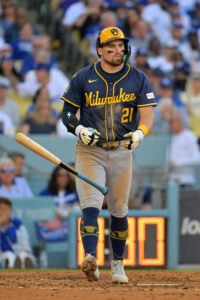
Durbin is a notable pickup for the Boston infield and should be penciled in for everyday at-bats — presumably at third base, though he can also handle second base if the Red Sox prefer Marcelo Mayer at the hot corner from a defensive standpoint. The 25-year-old Durbin (26 in a couple weeks) finished third in National League Rookie of the Year voting in 2025 after he batted .256/.334/.387 with 11 home runs, 25 doubles, 18 steals (24 attempts), a 5.9% walk rate and a tiny 9.9% strikeout rate. He turned in above-average marks for his glovework at third in the estimation of both Defensive Runs Saved (5) and Outs Above Average (2).
He’s not the big middle-of-the-order presence many Sox fans have coveted, but Durbin is an affordable, controllable and versatile defender who’ll further the Red Sox’ pivot toward run prevention and help to lower a team strikeout rate that was 10th-highest in the sport last year at 22.9%. He’s a right-handed hitter whose pull percentage (43.3%) is a bit higher than league average (40.6%), which should play well with the Green Monster at Fenway Park. Durbin comes to the Red Sox with five full seasons of club control and two minor league option years remaining (not that there’ll be any thought of optioning him to the minors anytime soon after last year’s strong performance).
If Durbin is ticketed for the hot corner, that’ll leave second base to a combination of the left-handed-hitting Mayer and righty-swinging Romy Gonzalez. Recently signed utilityman Isiah Kiner-Falefa can back up both those positions as well as shortstop.

The 28-year-old Monasterio could also factor in at either second or third base, although like Gonzalez and Kiner-Falefa, he’s a right-handed hitter. As is the case with Gonzalez, Monasterio also carries notable platoon splits. He’s a career .255/.352/.375 batter against lefties but a .246/.303/.338 hitter against fellow righties. He’s coming off a career-best showing in the majors — albeit in a limited sample of 135 plate appearances — having slashed .270/.319/.437 (111 wRC+) with four homers. He’s controllable for another four seasons and won’t be arbitration-eligible until at least next offseason (possibly later, depending on how much time he spends in the minors this year).
Monasterio also has nearly 3500 professional innings at shortstop under his belt, so he gives Boston another backup option to oft-injured Trevor Story at shortstop (alongside Kiner-Falefa). He also has a full slate of three minor league option years remaining, so there’s no guarantee he’ll open the season on Boston’s major league roster. He’ll have the opportunity to win a role in camp, but barring injury and/or trade, Boston’s bench seems likely to include Gonzalez, Kiner-Falefa, catcher Connor Wong and outfielder/designated hitter Masataka Yoshida.
All of that assumes that Mayer makes the Opening Day roster, but it’s possible that the former No. 4 overall pick could open the season in Triple-A Worcester, too. Mayer’s .228/.272/.402 slash was well below league-average in 2025, but he only turned 23 in December and has an impressive minor league track record. That includes a .271/.347/.471 showing in Triple-A last year. He’ll have every opportunity to win a starting job in camp with the Red Sox, but late additions of Durbin and Kiner-Falefa lessen the team’s reliance on the still largely untested top prospect.
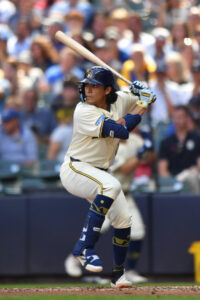
Boston also picks up the 26-year-old Seigler, who’ll provide some depth in the upper minors and could be a frequently used bench piece over the course of the coming season. He’s batted just .194/.292/.210 in an insignificant sample of 73 major league plate appearances, but Seigler hit .285/.414/.478 with eight homers, 16 doubles, four triples, 23 steals (27 attempts), a 16.9% walk rate and a 19.2% strikeout rate in 307 Triple-A plate appearances this past season. He’s been used as an infielder (second base, specifically) far more frequently than a catcher in recent seasons due to troubles controlling the run game and a susceptibility to passed balls.
Even if he’s rarely deployed behind the plate, Seigler is at the very least an interesting third catcher option who also is comfortable at second base and third base. He has two minor league option years remaining and doesn’t even have a full season of major league service, making him controllable for at least the next six full seasons.
The Red Sox also add a Competitive Balance draft choice — the only picks permissible to be traded under MLB rules. Milwaukee’s Round B selection is the first in that round, currently 67th overall (although that could change by a spot or two depending on what happens with Zac Gallen, the final remaining free agent who rejected a qualifying offer and is thus subject to draft pick compensation). They’ll not only get to add an extra player but will also add that selection’s slot value to their draft bonus pool. Last year’s No. 67 selection came with a $1.285MM value. This year’s should be up from that a bit. The Red Sox don’t need to spend that amount on this pick specifically; the slot value will be added to their bonus pool, which they can freely divide up among their picks how they see fit.
Turning to Milwaukee’s side of the swap, it feels like a precursor to another acquisition. The Brewers not only traded their incumbent starter at third base — they traded two of the top depth options behind him in the same swap. Perhaps there’s some infield shuffling on the horizon, but it feels like the Brewers will need to add some help on the dirt. Hamilton could see reps at the hot corner this spring but has spent far more time at second base in the Red Sox organization. Shortstop Joey Ortiz and second baseman Brice Turang are plus defenders who could both slide one position over to the left, but doing so might weaken the overall defensive aptitude of the group.
Bringing in some help at third base seems prudent, but options there are few and far between. Time will tell if president of baseball operations Matt Arnold has another move up his sleeve, but for right now, the Brewers look thin at third base.
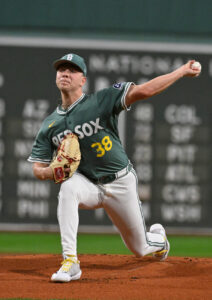
Their pitching depth, however, continues to grow — even after trading ace Freddy Peralta to the Mets last month. Today’s trade brings in a pair of big league-ready arms. Harrison, 24, already has 42 big league games (37 starts) under his belt. He’s pitched to a 4.39 ERA with a 22.9% strikeout rate and 8% walk rate in that time.
At the moment, Harrison profiles as a fifth starter option for the Brewers, but he carries more upside than most back-of-the-rotation candidates. The 2020 third-round pick ranked as one of the top minor league talents in all of baseball for several years, peaking as the No. 26 prospect in the entire sport on Baseball America’s top-100 prior to the 2023 season. He’s yet to put it all together in the majors, but Harrison has fanned better than 30% of his opponents in parts of two Triple-A seasons.
The Brewers have developed a reputation as one of the sport’s top “pitch labs.” They worked wonders with righty Quinn Priester in 2025 and have helped to facilitate turnarounds or breakouts from relievers like Trevor Megill, Joel Payamps, Bryse Wilson, Colin Rea, Nick Mears, Jared Koenig and others. There are plenty of parallels between Priester’s trajectory and that of Harrison; both were former top prospects traded to Boston and quickly buried on the Red Sox depth chart. The Brewers will hope to convert on that same profile for a second consecutive season now.
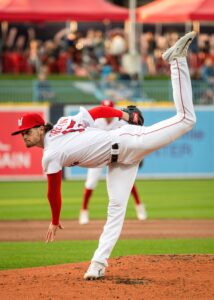
Drohan just turned 27 last month, making him old for a “prospect,” but he nonetheless sat 15th on Baseball America’s recent update of Boston’s system. His path to big leagues has been slowed both by injury and a selection in the Rule 5 Draft. The White Sox took Drohan back in 2023 after Boston left him unprotected. He required a nerve decompression surgery in his shoulder that spring, however, which limited him to 16 1/3 rehab innings that season. A forearm injury in 2025 limited him to 54 minor league frames.
When he’s been healthy, Drohan has looked the part of an interesting prospect. His Triple-A numbers are skewed by a rough showing late in 2023 and during some rehab work in 2024 — both potentially impacted by his shoulder — but he was excellent last season, tossing 47 2/3 innings with Worcester and recording a 2.27 ERA, a 35.3% strikeout rate, an 8.4% walk rate and a massive 17.3% swinging-strike rate. He also posted a 2.17 ERA in parts of two Double-A seasons and was part of the 2023 Futures Game. Drohan sat 93.3 mph with his four-seamer in Triple-A in 2025, complementing the pitch with an 84.7 mph slider, an 88.8 mph cutter, an 84.3 mph changeup and a 77.9 mph curveball (listed in order of usage rate).

Hamilton, 28, returns to the club that originally drafted him but traded him to Boston as part of 2021’s Hunter Renfroe swap. He’s played in parts of three seasons with Boston and totaled 550 plate appearances with a .222/.283/.359 batting line.
Hamilton hasn’t hit much but is a plus runner with 95th percentile sprint speed, per Statcast, and 57 career steals in 68 attempts (83.8%). On a rate basis, he’s been one of the game’s elite defensive second basemen during his time in the majors, piling up 16 Defensive Runs Saved and 8 Outs Above Average in only 679 innings.
The Brewers originally drafted Hamilton in the eighth round of the 2019 draft out of the University of Texas. Arnold and top lieutenants like AGMs Matt Kleine, Will Hudgins and Karl Mueller were all in the Milwaukee front office when they first signed Hamilton out of the draft. That familiarity with him both as a player and as a person presumably played a role in this morning’s trade.
Adam McCalvy of MLB.com reports that Hamilton will see plenty of reps at third base this spring. Whether his stellar second base defense carries over to third base and whether Hamilton performs well enough to secure a job will determine his roster status come Opening Day. He has a minor league option year remaining, so if the Brewers do make another acquisition or if Hamilton simply struggles to a great enough extent this spring, he can be sent to Triple-A Nashville without needing to pass through waivers. The Brewers can control him for at least four additional seasons — five if he spends more than 25 days in the minors this year.
For the Red Sox, today’s trade seems to largely round out the infield. With Kiner-Falefa also aboard as a glove-first utility option, there doesn’t appear to be much more room to add. Durbin should be an upgrade of a couple wins, and his extreme put-the-ball-in-play approach and defensive aptitude should help to raise Boston’s floor quite a bit, even if the offense as a whole looks suspect beyond the top few hitters.
The Brewers are now 10 to 12 deep in their rotation mix, which could set the stage for another trade. They could also simply hold onto that depth, knowing they’ll need an army of pitchers to get through a 162-game season and that many of their current arms have less than a full year of experience in the majors, but some form of additional infield depth seems likely to be on the horizon after today’s trade thinned them out.
Jeff Passan of ESPN was first to report Durbin, Harrison, Drohan and Hamilton’s inclusions. Will Sammon of The Athletic first reported Seigler, Monasterio and the draft choice.
Red Sox Select David Sandlin, Shane Drohan, Tyler Uberstine
The Red Sox announced that they have selected left-hander Shane Drohan as well right-handers David Sandlin and Tyler Uberstine to the roster. They opened 40-man spots by designating right-hander Josh Winckowski for assignment, trading left-hander Brennan Bernardino to the Rockies and trading left-hander Chris Murphy to the White Sox, moves which were previously reported. The three selections were reported by Chris Cotillo of MassLive prior to the official club announcement.
Boston already lost Drohan once in the Rule 5 Draft. The White Sox picked him back in 2023, but Drohan underwent a nerve compression procedure in his shoulder during spring training 2024 and began the season on the 60-day IL. He was hit hard when he was cleared for a rehab assignment, returned to the Red Sox, and finished the year back on the IL with shoulder troubles.
Unsurprisingly, that injury-wrecked season kept him from being selected in the 2024 Rule 5. That worked to Boston’s benefit. A healthy Drohan bounced back with 54 innings of 3.00 ERA ball. He struck out 34.5% of opponents against a 9.4% walk rate while sitting 93-95 with his four-seamer. Drohan still missed ample time on the injured list — this time due to a forearm issue — but he’s typically been productive when healthy, thanks largely to a plus changeup. He’ll turn 27 in January.
Sandlin, 25 in February, came to the Red Sox from the Royals in a 2022 swap sending righty John Schreiber to Kansas City. He reached a career-high 82 1/3 innings while pitching in Double-A this season and working to a tidy 3.61 earned run average with strong rate stats. The Sox moved him to a relief role upon bumping him to Triple-A, likely to manage his workload after pitching just 57 innings in 2024 and 66 innings in 2023. It was a struggle, as the righty was tagged for a 7.36 ERA while pushing his innings count far into uncharted territory. He wound up with an overall 4.50 ERA in 106 1/3 frames.
The 26-year-old Uberstine was Boston’s 19th-round pick in 2021. He split 2025 between Double-A and Triple-A, tossing 120 1/3 innings with a combined 3.58 ERA. Uberstine fanned 26.9% of opponents against an 8% walk rate. He’s a bit undersized at 6’1″ and 200 pounds, but he’s had success at nearly every minor league stop. Were it not for a Tommy John procedure that wiped out all of his 2023 season and most of his 2024 campaign, Uberstine may already have gotten a big league look. Now, coming off a healthy 120 innings with strong results, he figures to be in line for a call to Fenway Park at sometime in 2026.
Rule 5 Draft Update: September Edition
A few months ago, MLBTR’s Steve Adams took an early look at the progress of last winter’s Rule 5 draftees. Seven of those players were on their teams’ active rosters, while two more were rehabbing injuries. Only one 2023 Rule 5 pick was returned to his original organization before Opening Day — and he went on to be the headlining piece in a key deadline trade. With most of the season in the books, let’s take a look at their performances in a larger sample.
A quick refresh for those unfamiliar with the process: the Rule 5 draft is a means of getting MLB opportunities to players who might be blocked with their current organization. Teams can draft certain players who are left off their original club’s 40-man roster. The drafting team needs to keep that player on the MLB roster or injured list for their entire first season. If they do so, they’d gain the player’s contractual rights permanently.
If the drafting team decides not to carry the player on the roster at any point during his rookie year, they need to place him on waivers. If he goes unclaimed, the player is offered back to his original organization — which does not need to carry him on either the MLB or 40-man rosters to take him back. A team can keep an injured Rule 5 pick on the major league IL, but they’d eventually need to carry him on the active roster for 90 days. If the player misses the entire season, the Rule 5 restriction carries over to the following year.
We’re down to the final two weeks of the regular season, so it’s safe to presume the six players who have held an active roster spot will survive the year. One player has spent the entire season on the injured list, so his Rule 5 status will roll over into next season if he sticks on the 40-man over the winter. Two others were returned earlier in the summer.
On a Major League Roster
Mitch Spence, RHP, Athletics (selected from Yankees)
The A’s had MLB’s worst record in 2023. That gave them the first pick in the Rule 5 draft. They used it on Spence, who had turned in a 4.47 ERA across 163 Triple-A innings in the Yankees’ system. New York’s 10th-round pick in 2019 has been a solid contributor on a more competitive Oakland pitching staff.
Spence opened the year in the bullpen. He worked 25 1/3 innings over his first 11 appearances, pitching to a 4.26 earned run average behind a decent 22.2% strikeout rate and huge ground-ball numbers (54.4%). The A’s moved Spence into their rotation in the middle of May. He has been similarly effective as a starter. Spence has worked to a 4.34 ERA over 21 starts, which is tied for the second-most on the team. His strikeout and grounder rates have each dropped a few points, but he’s still getting worm burners at a solid 48.5% clip. Spence doesn’t issue many free passes and has looked the part of a durable fourth/fifth starter. That’d be a fantastic outcome for a Rule 5 pick. He should at least get to compete for a season-opening rotation job next spring.
Anthony Molina, RHP, Rockies (selected from Rays)
Molina, 22, has stuck with a rebuilding Colorado team despite a rough debut season. He’s allowing more than six earned runs per nine through 56 innings out of the bullpen. The Venezuelan-born righty has fanned 15% of opposing hitters with a meager 7.2% swinging strike percentage. While pitching in Coors Field should be a challenge for any rookie, Molina has actually fared much worse away from altitude. He carries a 3.13 ERA in 31 2/3 home innings against a ghastly 11.10 mark over 24 1/3 frames on the road. Molina’s strikeout and walk profile isn’t good no matter where he has pitched, but he’s done a much better job keeping the ball on the ground in Denver.
Tough results aside, the Rox don’t have a pressing need to push Molina off the roster. Their place in the standings and overall lack of bullpen talent affords them rope to continue giving him a chance to develop. He throws reasonably hard (94.7 MPH average fastball speed) and managed decent results as a starting pitcher in the upper minors last year.
Nasim Nuñez, SS, Nationals (selected from Marlins)
A glove-first middle infielder, Nuñez has been the 26th man in Washington all season. Manager Dave Martinez has used him primarily as a late-game substitute. Nuñez has made 13 starts at shortstop and 41 appearances overall. He has 10 hits (nine singles and a double) in 51 plate appearances with eight walks and ten strikeouts. Nuñez has stolen six bases and laid down four sacrifice bunts. There’s minimal offensive upside but he has probably done enough to stick on the 40-man roster as a depth infielder.
Ryan Fernandez, RHP, Cardinals (selected from Red Sox)
Fernandez has had one of the better debut campaign in this year’s class. The 26-year-old righty carries a 3.13 ERA over 63 1/3 innings out of the St. Louis bullpen. Fernandez is narrowly behind Andrew Kittredge for the team lead in relief innings. He has quickly pitched his way into Oli Marmol’s circle of trust. Fernandez is fourth on the team — behind closer Ryan Helsley, Kittredge, and JoJo Romero — in average leverage index (measuring how impactful the situation is when a pitcher enters the game) in the second half.
It hasn’t been completely smooth sailing. Fernandez’s command has come and gone, and he had an atrocious August. He’s capable of missing bats and handling hitters from both sides of the plate, though, and he has posted a nice rebound this month. Even if his command could push him into a sixth or seventh inning role, this was a good pick.
Justin Slaten, RHP, Red Sox (selected from Rangers via trade with Mets)
Losing Fernandez might’ve stung the Red Sox more had they not found a reliever who has been even better. Slaten owns a 3.16 earned run average through 51 1/3 innings with the peripherals to match. The New Mexico product has fanned more than a quarter of batters faced against a tidy 4.4% walk rate. He’s getting swinging strikes at a massive 14.4% clip while leading opponents to chase more than 35% of pitches outside the strike zone.
Aside from a six-week injured list stint because of elbow inflammation, Slaten couldn’t have made a much better first impression. He already looks the part of a late-game weapon and has been used as such by Alex Cora. With Kenley Jansen headed to free agency, Slaten could battle Liam Hendriks for the closer role next season. The Sox had one of the best Rule 5 picks in recent history when they snagged Garrett Whitlock a few years ago. It’s a new front office, but they look like they’ve had a similarly valuable hit on Slaten.
Currently On Major League Injured List
Stephen Kolek, RHP, Padres (selected from Mariners)
Kolek has occupied a low-leverage relief role for San Diego skipper Mike Shildt. The 27-year-old righty has allowed a 5.21 ERA across 46 2/3 innings. He’s getting ground-balls at a massive 55.9% clip but has a well below-average 18.5% strikeout rate. Kolek has done a nice job staying off barrels but hasn’t shown the bat-missing ability to push his way up the bullpen depth chart.
The Padres placed Kolek on the injured list just after the deadline due to elbow tendinitis. They moved him to the 60-day IL at the start of September. He’s eligible to return for San Diego’s playoff run, but his season could be over. Kolek surpassed 90 days on the active roster before the injury, so he won’t be subject to any restrictions next year.
Carson Coleman, RHP, Rangers (selected from Yankees)
Coleman underwent Tommy John surgery while he was a member of the Yankees system early in 2023. Texas had hoped he’d return in the middle of the season, but GM Chris Young announced in May that wouldn’t happen. He has spent the whole season on the 60-day IL. Texas would need to put Coleman back on the 40-man roster at the start of the offseason. If they carry him all winter, he’ll need to spend at least 90 days on the active roster whenever he’s healthy.
Returned to Original Organization
Matt Sauer, RHP, Royals (returned to Yankees)
Yankees minor leaguers went first and second in the draft. While Spence stuck around, the No. 2 pick didn’t last long in Kansas City. Sauer made the Opening Day roster and pitched 14 times in low-leverage relief. Opponents tagged him for 14 runs on 23 hits and 11 walks over 16 1/3 innings. The Royals couldn’t afford to stash him as a development flier in the bullpen, particularly once it became clear they had a real chance to make the playoffs.
Kansas City returned Sauer to the Yankees in late May. New York initially assigned him to Triple-A, but he was blitzed for 15 runs over just 8 1/3 innings in 10 appearances. New York demoted him to Double-A Somerset in early July. Sauer has found his footing there, pitching to a 2.63 ERA with 21 strikeouts and three walks over 17 outings. He’d qualify for minor league free agency this offseason if the Yanks don’t put him on the 40-man roster.
Shane Drohan, LHP, White Sox (returned to Red Sox)
Drohan never pitched in the majors with the White Sox. The southpaw underwent a nerve decompression surgery in his throwing shoulder in February. He began the season on the 60-day injured list. Drohan was hit hard in a limited sample after beginning a rehab assignment, so Chicago decided not to activate him to the MLB roster. They returned him to Boston in June. Drohan made two Triple-A starts, spent some time on the development list, and is now back on the IL with continued shoulder issues. It’s unfortunate that he wasn’t healthy enough to get a legitimate MLB opportunity, but Drohan at least collected major league pay and service time for a couple months while on Chicago’s injured list.
Deyvison De Los Santos, 1B/3B, Guardians (returned to Diamondbacks)
De Los Santos was a surprising pick, as the power-hitting infielder was coming off a mediocre season (.254/.297/.431) in Double-A. He didn’t hit at all in Spring Training and Cleveland returned him to the Diamondbacks before Opening Day. He had a monster first half for the Snakes, blasting 28 home runs in fewer than 400 plate appearances between the top two minor league levels. Within a few months, De Los Santos went from unsuccessful Rule 5 pick to the centerpiece of the Marlins’ trade package for controllable high-leverage reliever A.J. Puk.
He has cooled off substantially since the deal. De Los Santos has another 11 homers in 44 games with Miami’s Triple-A affiliate, but he’s striking out a lot and getting on base at a meager .283 clip. It’s a difficult profile to pull off — particularly since he’s not considered a strong defender who might end up at first base — but the Marlins are likely to put him on the 40-man roster rather than expose him to the Rule 5 for a second straight year.
White Sox Return Rule 5 Pick Shane Drohan To Red Sox
The White Sox have returned Rule 5 pick Shane Drohan to the Red Sox, with Chris Cotillo of MassLive among those to relay the news on X. Drohan won’t need to take up a spot on Boston’s 40-man roster.
Drohan, 25, was selected by the White Sox with the fourth pick in last year’s Rule 5 draft. Unfortunately, he underwent shoulder surgery in February and had to begin the season on the injured list. He started a rehab assignment about a month ago but struggled to get into good form, allowing nine earned runs in 9 1/3 innings. He struck out 15 opponents but gave out eight walks.
As a Rule 5 pick with his 30-day rehab window closing, Drohan needed to be added to the active roster but Chicago wasn’t willing to do that. The designated him for assignment last week and any club could have claimed him off waivers, but doing so would have meant taking on the same Rule 5 restrictions. Since they all apparently passed, the Red Sox are able to reacquire Drohan as non-roster depth.
He’ll now look to continue his development in the Red Sox’ system. Through May 10 of 2023, he had thrown 252 1/3 innings in the minors in 56 games, including 54 official starts. He had allowed 3.57 earned runs per nine frames in that time with a 26.3% strikeout rate and 9.9% walk rate.
Since then, things have been a bit shakier. He was promoted to Triple-A at that point but had a 6.47 ERA in 89 innings at that level, walking 14.9% of batters faced. The White Sox had him working relief outings on his recent rehab but it’s possible the Red Sox will stretch him back out now.
White Sox Designate Shane Drohan For Assignment
The White Sox announced a series of roster moves this morning, including that they’ve activated left-hander Shane Drohan from the 60-day injured list and designated him for assignment. In a separate move, the club selected the contract of left-hander Sammy Peralta. The club optioned right-hander Nick Nastrini to make room on the active roster. Chicago’s 40-man roster stands at 39.
Drohan, 25, joined the White Sox organization over the offseason when he was selected from the Red Sox in the Rule 5 draft. Chicago will have one week to either trade or waive Drohan, and if he clears waivers they must offer him back to Boston for $50K. If he lands with a new organization by trade or on waivers, Drohan’s Rule 5 obligations will carry over to that new club. Drohan underwent shoulder surgery back in February but began a rehab assignment on May 10. The 30-day window for Drohan’s rehab assignment ended today, meaning that he had to be activated from the IL and either placed on Chicago’s active roster in compliance with Rule 5 restrictions or designated for assignment.
The White Sox evidently chose to part ways with Drohan, and given his struggles during his rehab assignment it’s not hard to see why. In 9 1/3 innings of work over ten appearances spread across three levels of the minors, Drohan struggled to an 8.68 ERA with a 17.4% walk rate despite an excellent 32.6% strikeout rate. Those results worsened when he departed complex ball, as he yielded a 9.53 ERA with identical 20.7% strikeout and walk rates in seven appearances split between High-A and Triple-A. Even for a 17-48 club like Chicago, it’s difficult to justify dedicating an active roster spot to a player facing struggles that deep against minor league hitters.
Prior to the aforementioned shoulder surgery, Drohan had the look of an interesting pitching prospect in the Red Sox organization. The lefty dominated Double-A pitching to the tune of a 1.32 ERA with a 28.1% strikeout rate across six starts last year before being promoted to the Triple-A level. Drohan hit a wall during his time at Triple-A, however, as he walked 14.9% of batters faced across his 21 appearances (19 starts) while yielding a 6.47 ERA in 89 innings of work.
Those struggles were seemingly enough to convince Boston to leave Drohan off their 40-man roster this winter, although Chicago evidently believed that a move to short relief could help with Drohan’s control problems enough to make him a viable big leaguer. Should he wind up returning to Boston, it’s possible the Red Sox will keep Drohan in his new short relief role or perhaps look to stretch him back out as a potential depth option for the big league club in the event he manages to sort out his control issues.
As for Peralta, the lefty’s contract was first selected to the club’s roster back in May of 2023. He performed decently in a middle relief role for the club last year, with a 4.05 ERA and 4.41 FIP in 20 innings of work. Peralta’s lackluster minor league numbers and worrisome big league peripherals were enough to make him expendable for the White Sox as they sorted through their Opening Day roster crunch, and he was designated for assignment to make room for right-hander Jordan Leasure on the 40-man roster. That led to him being claimed off waivers by the Mariners, who then designated Peralta themselves to make room for righty Eduardo Salazar.
The White Sox then claimed him off waivers from Seattle to return him to the organization, only to designate him for a third time in two months in order to make room for righty Jake Woodford on 40-man roster. Peralta then finally cleared waivers and was outrighted to the minors in late May, but he spent less than two weeks there before being selected back to the roster today. Peralta’s rollercoaster first two months of the season have led him to a familiar role: that of a fill-in relief option who can pitch from the left side. The lefty struggled badly during his time in the Mariners organization but has 3 2/3 scoreless innings of work at the Triple-A level for the White Sox this year. He’ll hope to take that success into the majors with him as he joins the club’s bullpen alongside fellow lefties Tanner Banks, Jared Shuster, and Tim Hill.
As for Nastrini, the right-hander was a key component of the return for right-handers Lance Lynn and Joe Kelly after Chicago traded them to the Dodgers last summer. Nastrini has made six starts at the big league level so far this season and has generally struggled badly, with a 8.39 ERA and 7.92 FIP in just 24 2/3 innings of work. While he held the Red Sox to just one run over 4 1/3 innings last night, he walked five of the 19 batters he faced. That performance at the big league level has clearly indicated to the Sox that the 24-year-old needs more time in the minors before he can contribute on the south side on a more permanent basis.
2023 Rule 5 Update: April Edition
We’re three weeks into the 2024 season, and this year’s crop of Rule 5 picks has had an atypical amount of staying power. That’s perhaps in part due to the fact that only ten players were selected in the 2023 Rule 5 Draft, but as of this writing, only one Rule 5 selection has been returned to his original organization.
For those unfamiliar, in order to be eligible for the Rule 5 Draft, a player must not be on his team’s 40-man roster and must have played in either parts of five professional seasons (if they signed at 18 or younger) or four professional seasons (if they signed at 19 or older). The deadline to protect players from the Rule 5 by selecting their contracts to the 40-man roster typically falls in mid-November and spurs a good deal of player movement as teams jettison borderline players and non-tender candidates from their roster in order to protect younger prospects.
A player who is selected in the Rule 5 Draft must spend the entire subsequent season on his new club’s Major League roster and cannot be optioned to the minors. The player can technically spend time on the injured list as well, but at least 90 days must be spent on the active roster. If not, the player’s Rule 5 status rolls into the following season until 90 days on the active roster have been accrued. If a team at any point decides it can no longer carry a Rule 5 selection, that player must be passed through waivers and subsequently offered back to his original organization. Any other club can claim the player via waivers, but the same Rule 5 restrictions will apply to the claiming team.
Broadly speaking, the Rule 5 Draft rarely produces impact players. There are plenty of exceptions over the years, though, with names like Johan Santana, Dan Uggla, Shane Victorino, Joakim Soria, Josh Hamilton and, more recently, Garrett Whitlock and Trevor Stephan thriving in new organizations. The Rule 5 Draft dates back more than a century and has even produced a handful of Hall of Famers: Roberto Clemente, Hack Wilson and Christy Mathewson.
It’s unlikely we’ll see any Cooperstown-bound players come from this year’s crop, but the teams who opted to select a player will be content if any of these names become a viable reliever or role player for the next several seasons. Here’s a look at this year’s group of ten Rule 5 players and where they stand. We’ll do a few of these throughout the season, keeping tabs on which players survive the season and formally have their long-term rights transferred to their new clubs.
On a Major League Roster
Mitch Spence, RHP, Athletics (selected from Yankees)
Spence, 26 next month, was the first overall pick in this year’s Rule 5 Draft, and understandably so after the 2023 season he had. His 4.47 ERA might’ve been pedestrian, but the 2019 tenth-rounder led all Triple-A pitchers with 163 innings while delivering a nice blend of strikeouts (21.8%), walks (7.5%) and ground-balls (50%). For an A’s club desperately thin on starting pitching after the slew of rebuilding-driven trades for minor league arms have failed to produce much, adding a 25-year-old arm with that type of season held obvious appeal.
Spence made Oakland’s decision easy with a monster spring showing. He pitched 17 2/3 innings and allowed only six earned runs (3.06 ERA) on 15 hits and six walks with 21 punchouts. He’s worked out of the ‘pen so far in Oakland but could very well find himself making starts later in the year. Through his first 11 2/3 MLB frames, Spence has yielded four earned runs on 10 hits and four walks with a 48.4% grounder rate. He’s not in danger of losing his spot anytime soon.
Matt Sauer, RHP, Royals (selected from Yankees)
Another 25-year-old righty out of the Yankees organization, Sauer came to his new club with a much heavier draft pedigree than his now-former teammate, Spence. The Yankees selected the 6’4″ righty with the No. 54 overall pick back in 2017, but Sauer didn’t develop as quickly as hoped. He was set back by 2019 Tommy John surgery and the canceled 2020 minor league season. He’s never topped 111 innings in a season, but Sauer rebuilt some prospect pedigree with a nice 2023 season that saw him pitch 68 1/3 innings of 3.42 ERA ball in Double-A. He whiffed 29.5% of his opponents, albeit against a less palatable 10.3% walk rate.
Like his former teammate, Sauer had a nice spring that made the decision relatively easy for his new club. In 10 2/3 innings, he held opponents to three earned runs (2.53 ERA) on 13 hits and three walks with 13 strikeouts. He opened the season in the Kansas City bullpen and has thus far pitched five innings, allowing a pair of runs in that time. Sauer has walked four of his 25 opponents and fanned just two thus far. It’s a small sample, of course, but he’ll need to reverse that early trend to hang onto his roster spot — especially if the Royals continue their hot start and find themselves contending into the summer.
Anthony Molina, RHP, Rockies (selected from Rays)
The 22-year-old Molina worked as a starter in the Rays’ system last year, taking the ball 28 times (27 starts) and pitching 122 innings with a 4.50 ERA. The undersized righty has garnered praise for a solid-average heater and above-average changeup, and he showed good command in 2023 after struggling with walks earlier in his minor league career. Molina continued to show good command in spring training (in addition to a massive 60.5% grounder rate), but the regular season has been brutal for him thus far. In three appearances, he’s been tattooed for a dozen runs on 13 hits and four walks with just two strikeouts. The Rockies can afford to be as patient as they want. They’re 4-13 on the season and were never expected to contend. Still, Molina will need to improve on his early performance in order to stick on the roster.
Nasim Nunez, INF, Nationals (selected from Marlins)
The Nationals have effectively played the season thus far with a 25-man roster. Nunez made the Opening Day squad but has been M.I.A. since. He’s appeared in just five of Washington’s 16 games and received only two plate appearances, going hitless in that meaningless sample. Nunez is an all-glove and speed prospect who hit just .224/.341/.286 in Double-A last season. He did go 52-for-59 in stolen base attempts, and scouting reports have long touted his defensive excellence at shortstop. He hit just .152/.200/.182 in 35 spring plate appearances.
It’s fair to wonder how long the Nats can essentially punt a roster spot by keeping Nunez on the bench, but like the Rockies, they’re not expecting to contend this season anyhow. One would imagine that from a pure developmental standpoint, they need to find a way to get Nunez into some games and start getting him some playing time, but for now, the team appears content to just hide the 23-year-old on the bench.
Ryan Fernandez, RHP, Cardinals (selected from Red Sox)
Fernandez, 25, has just four appearances out of the St. Louis bullpen so far and has been understandably deployed in low-leverage spots while he acclimates to the majors. He’s pitched fairly well in sparse duty, holding opponents to three runs (two earned) in 5 2/3 innings. Fernandez has averaged just under 96 mph on his heater, fanned seven opponents and issued three walks. His swinging-strike rate isn’t close to where it’s been in his minor league work, but his wipeout slider has been strong thus far. Fernandez has finished off eight plate appearances with that pitch, picking up four strikeouts and yielding only one hit. Nothing he’s done so far makes it seem like he’ll be cut loose anytime soon.
Justin Slaten, RHP, Red Sox (selected by Mets from Rangers; traded to Red Sox for LHP Ryan Ammons)
While most Rule 5 relievers are eased into low-pressure spots, that hasn’t been the case with the Sox and Slaten. He held a four-run lead to pick up a seven-out save in the team’s fourth game of the season, and the 6’4″ righty has since tallied three holds out of Alex Cora’s bullpen. In 10 1/3 innings, Slaten has allowed only one run on three hits and a walk with eight strikeouts. Add in 6 1/3 shutout innings in spring training, and he’s looked more like a seasoned veteran than a 26-year-old who entered the season with all of 8 1/3 innings above the Double-A level. Slaten has immediately made himself an important part of Boston’s roster, and while a prolonged slump could always change things, he looks like a keeper right now.
Stephen Kolek, RHP, Padres (selected from Mariners)
Kolek, who’ll turn 27 tomorrow, began his big league tenure with four runs in 1 2/3 innings over his first two appearances. He’s since bounced back with 8 2/3 innings of one-run ball, fanning 11 hitters against three walks along the way. He punched out nearly a quarter of his opponents in Triple-A last year and did so with a huge 57.5% ground-ball rate. He hasn’t picked up grounders at such a strong level just yet (43.5%), but San Diego probably isn’t second-guessing their decision to select him. He’s already picked up a pair of holds, and his recent run of success has dropped his ERA to 4.35. Command has been a problem for Kolek in the past, but he’s only walked 8.9% of his opponents against a 26.7% strikeout rate so far.
On the Major League Injured List
Shane Drohan, LHP, White Sox (selected from Red Sox): Drohan underwent shoulder surgery in late February and is on the 60-day IL. There’s no telling yet when he’ll be medically cleared to return. As noted in the intro, Drohan needs 90 days on the active roster to shed his Rule 5 designation; even if he spends the entire 2024 campaign on the injured list, his Rule 5 status will carry over into 2025 until he picks up those 90 active days.
Carson Coleman, RHP, Rangers (selected from Yankees): Coleman is also on the 60-day injured list. Unlike Drohan, it was well known at the time of his selection that he’d be IL-bound to begin the year. Coleman had Tommy John surgery last year and is expected to be out until midsummer at the least.
Returned to Original Organization
Deyvison De Los Santos, INF, Guardians (returned to D-backs): De Los Santos has big raw power but a well below-average hit tool. The Guardians selected him on the heels of a 20-homer campaign in Double-A with the D-backs, but he hit just .227/.227/.318 in 44 spring appearances before being designated for assignment, clearing waivers and getting returned to the Snakes. He’s had a big performance in a return-trip to Double-A.
White Sox Select Bryan Shaw, Dominic Leone; Designate Sammy Peralta
The White Sox announced a series of Opening Day transactions, selecting the contracts of right-hander Jordan Leasure, Bryan Shaw and Dominic Leone. The news on Leasure was previously reported. In corresponding moves, they placed left-hander Shane Drohan and right-hander Jimmy Lambert on the 60-day injured list and also designated left-hander Sammy Peralta for assignment.
The White Sox have undergone a huge amount of roster churn since last year, as they kicked off a rebuild last summer and continued it this offseason. As pointed out by Jesse Rogers of ESPN, Michael Kopech is the only pitcher or catcher that remains from last year’s Opening Day roster. The additions of Shaw and Leone will give them some veteran arms to soak up some innings and serve as veteran mentors for some of the younger guys looking to get established.
Shaw, 36, has made 791 major league appearances with a 3.93 earned run average in a career that dates back to 2011. He was also with the Sox last year, tossing 45 2/3 innings with 4.14 ERA, 21.1% strikeout rate and 8.9% walk rate. He returned on a minor league deal and is now back on the roster.
Leone, 32, is barely halfway to Shaw in terms of major league appearances with 404, having posted an ERA of 3.82 in that time. He pitched for the Mets, Angels and Mariners last year with a 4.67 ERA, 23% strikeout rate and 11.9% walk rate. He had to settle for a minor league deal this offseason but is now back in the bigs.
Drohan underwent a nerve decompression procedure in his left shoulder about a month ago. It’s unclear when he’ll be able to return from a health perspective, but this transaction means he’s ineligible to be activated before late May. Lambert has been experiencing some shoulder soreness in recent weeks, per Scott Merkin of MLB.com. His situation isn’t clear either but it seems the Sox expect him to miss at least a couple of months.
Peralta, 26 in May, made his major league debut last year and tossed 20 innings with a 4.05 ERA, 20% strikeout rate and 12.2% walk rate. He also tossed 69 innings at Triple-A with a 5.09 ERA, 23.1% strikeout rate and 6.4% walk rate. The Sox will have one week to trade him or pass him through waivers. He still has a couple of option years remaining.
White Sox Rule 5 Pick Shane Drohan Undergoes Shoulder Surgery
White Sox left-hander Shane Drohan, whom they selected out of the Red Sox organization in the 2023 Rule 5 Draft, underwent a nerve decompression procedure in his left shoulder this morning, manager Pedro Grifol announced (X link via Sox Machine’s James Fegan). The Chicago skipper also revealed that free agent signee John Brebbia is dealing with a calf strain, but the team is hopeful he’ll still be ready for Opening Day.
The current hope is that Drohan will be able to begin a throwing progression by the end of camp, though that will obviously depend on how his shoulder responds in the early stages of his recovery. The 25-year-old southpaw posted excellent numbers with the Red Sox in Double-A to begin the 2023 season before struggling to a 6.87 mark in 89 frames upon being bumped up to Triple-A Worcester. That sample of 89 innings was the first point of real struggle for Drohan to this point in his professional career. He’d posted a combined 3.57 ERA up to that point, leaning heavily on a plus changeup that makes him particularly effective against right-handers.
The Sox haven’t provided a timeline for Drohan’s recovery, though he’ll certainly open the season on the injured list. He’ll accrue big league service time and pay during that time. His status as a Rule 5 pick prevents him from being optioned to the minors. Drohan will need to spend the entire season on the White Sox’ big league roster and/or injured list — with 90 days on the active roster — in order to shed his Rule 5 status for the 2025 season. If the White Sox want to drop him from the roster at any point, he’d need to be placed on waivers and, if he clears, offered back to the Red Sox for a nominal sum of $50K.
Brebbia, 33, signed a one-year, $5.5MM deal that contains a mutual option earlier this offseason. He’s expected to be in the late-inning mix in Chicago after the Sox dismantled the bullpen with offseason trades of Aaron Bummer and Gregory Santos (and, prior to the summer deadline, trades of Reynaldo Lopez, Kendall Graveman and Keynan Middleton).
Over the past two seasons in San Francisco, Brebbia has posted a 3.47 ERA with a 22.5% strikeout rate and 7.1% walk rate. He picked up 24 holds in that time and might’ve logged more, had it not been for his frequent usage as an opener on the team’s patchwork pitching staff.
If Brebbia is forced to the injured list to begin the season, an already unsettled Sox bullpen will be even more wide open. Veteran lefty Tim Hill signed a big league deal this offseason and is assured one spot. Righties Touki Toussaint, Jimmy Lambert and Deivi Garcia are out of minor league options and likely have an inside track on another three. Southpaw Garrett Crochet is an option, but GM Chris Getz spoke earlier this month about wanting to honor the southpaw’s desire to build up as a starter.
The Sox have a large stable of experienced veterans on minor league deals this spring, with Jesse Chavez, Corey Knebel, Dominic Leone, Bryan Shaw and Joe Barlow among their NRIs in camp. Trade acquisition Prelander Berroa, waiver claim Alex Speas and draftees Tanner Banks and Sammy Peralta are all on the 40-man roster as well.
2023 Rule 5 Draft Results
The 2023 Rule 5 draft will begin at 1pm Central time today at the Winter Meetings in Nashville.
As a refresher, the Rule 5 draft is a way for players potentially talented enough for the big leagues but blocked by their current clubs to find opportunities elsewhere. Any players that were 18 and under at the time of their original signing and have played five professional seasons, and any players who signed at 19 years of age or older at signing that now have four professional seasons, who are not on a club’s 40-man roster are eligible to be selected in the Rule 5 draft.
The clubs will draft in reverse order of the 2023 standings, with no club obligated to make a selection when it’s their turn. If they do make a pick, they will have to pay $100K to the team they select from. The selected players must stay on the active roster (or injured list) for the entire 2024 season or else be placed on waivers. If they clear waivers, they must be offered back to their original team. They cannot be optioned to the minors. Last year’s edition saw some key players change clubs, such as Ryan Noda going from the Dodgers to the Athletics and Blake Sabol going from the Pirates to the Giants.
This post will be updated as the draft continues. Here is the order…
1. Athletics: RHP Mitch Spence (Yankees)
2. Royals: RHP Matt Sauer (Yankees)
3. Rockies: RHP Anthony Molina (Rays)
4. White Sox: LHP Shane Drohan (Red Sox)
5. Nationals: SS Nasim Nuñez (Marlins)
6. Cardinals: RHP Ryan Fernandez (Red Sox)
7. Angels: pass
8. Mets: RHP Justin Slaten (Rangers); Mets later traded Slaten to the Red Sox for LHP Ryan Ammons* and cash considerations.
9. Pirates: pass
10. Guardians: 3B Deyvison De Los Santos (Diamondbacks)
11. Tigers: pass
12. Red Sox: pass
13. Giants: pass
14. Reds: pass
15. Padres: RHP Stephen Kolek (Mariners)
16. Yankees: pass
17. Cubs: pass
18. Marlins: pass
19. Diamondbacks: pass
20. Twins: pass
21. Mariners: pass
22. Blue Jays: pass
23. Rangers: RHP Carson Coleman (Yankees)
24. Phillies: pass
25. Astros: pass
26. Brewers: pass
27. Rays: pass
28. Dodgers: pass
29. Orioles: pass
30. Braves: pass
The minor league phase of the Rule 5 draft also occurred this afternoon. Those players will not go onto the selecting teams’ 40-man roster. A few former major leaguers changed uniforms. They include 1B Seth Beer going from the Diamondbacks to the Pirates while the Yankees took RHP Kervin Castro from the Astros.
* (Robert Murray of FanSided first reported that Ammons was going to the Mets. Joel Sherman of The New York Post added that Ammons and cash were being exchanged for Slaten.