
Athletics Claim Gabe Klobosits, Designate Luis Barrera For Assignment
The A’s announced Monday that they’ve claimed righty Gabe Klobosits off waivers from the Nationals and, in a corresponding move, designated outfielder Luis Barrera for assignment. Oakland’s 40-man roster remains at capacity.
Klobosits, a towering 6’8″ right-hander, made his big league debut with the Nationals last season and allowed seven earned runs on 13 hits and five walks with five strikeouts through 11 1/3 innings of relief. He averaged 94.8 mph on his heater during that time and induced chases on pitches outside the strike zone at a gaudy 35.6% clip, both of which surely hold some appeal to the A’s. The former 36th-round pick also posted a brilliant 1.64 ERA with a sizable 28.9% strikeout rate against a respectable 8.8% walk rate in a combined 38 1/3 innings between Double-A and Triple-A last year.
It’s an intriguing profile in the first place, and the fact that Klobosits still has a pair of minor league option year remaining makes it all the more appealing. The Athletics’ bullpen picture is pretty much wide open after the team let several veterans walk and did nothing to reinforce the group via free agency. Klobosits should have ample opportunity to make an impression on the A’s this year.
As for the also-26-year-old Barrera, he’s long rated as one of the better prospects in the Oakland system but has seen his stock dip in recent years. The left-handed-hitting, left-handed-throwing Barrera put the ball in play and drew plenty of walks in Triple-A last year, but he showed minimal power en route to a .276/.348/.393 batting line that checked in at 12% worse than league-average by measure of wRC+. Scouting reports on Barrera peg him as a capable defender at any of the three outfield spots with well above-average speed. He ranked 24th among A’s prospects at Baseball America and 32nd at FanGraphs.
Despite last year’s 10.1% walk rate in Triple-A, however, virtually every report on Barrera cites a need to be more selective at the plate. BA notes that he swung at 48% of the pitches he saw in 2021, which makes that walk rate both remarkable and, quite possibly, anomalous in nature. Still, Barrera has a solid track record up through Double-A, and even if his ceiling is ultimately that of a fourth outfielder, he’s a largely MLB-ready one. Viewed through that lens, it’s rather surprising to see the A’s jettison Barrera in this manner, but the organization must feel fairly confident in its outfield depth beyond him. The A’s will have a week to trade Barrera or try to pass him through outright waivers.
Lerner Family To “Explore” Possibility Of Selling Nationals
In what could be a franchise-altering moment, Nationals owner Mark Lerner tells Barry Svrluga of the Washington Post that the team has enlisted New York-based investment bank Allen & Company to explore the possibility of selling the franchise or adding new investors/partners to the current ownership group. Lerner emphasized that the process is “exploratory” in nature and added that there’s no “set timetable or expectation of a specific outcome.”
The Lerner family purchased the Nationals, formerly the Expos, from Major League Baseball for a sum of $450MM back in 2006 after the former Montreal franchise was folded and moved to Washington, D.C. Forbes recently estimated that the franchise is worth $2 billion — a four percent increase from last year and the 12th-most of any MLB franchise. Sportico placed that same $2 billion estimate on the franchise’s value back in March 2021. Longtime control person Ted Lerner, who’s now 96 years of age, ceded control of the franchise to his son, Mark, back in 2018. At the time, as Svrluga points out, the younger Lerner was adamant that the family would never consider selling the team. Clearly, that mentality has shifted.
The Nationals’ open willingness to explore a sale of the club comes at a time when the on-field product has been largely torn down following last summer’s fire sale, which saw Max Scherzer, Trea Turner, Kyle Schwarber, Daniel Hudson, Yan Gomes, Josh Harrison, Brad Hand and Jon Lester all traded for younger, more controllable players (and, in some cases, salary relief). Of that bunch, Turner was the only one who’d been controlled beyond the 2021 season. He’s now earning $21MM with the Dodgers. The rest of that group signed elsewhere in free agency (or, in Lester’s case, retired).
The Nats did reinvest some of those resources into the 2022 team, but their overall payroll is nearly $40MM lower than its 2021 level. Most notably, Nelson Cruz joined the club on a one-year deal worth a guaranteed $15MM. Cesar Hernandez ($4MM), Anibal Sanchez ($2MM), Steve Cishek ($1.75MM), Ehire Adrianza ($1.5MM), Sean Doolittle ($1.5MM) and Alcides Escobar ($1MM) all signed in the offseason as well, as did non-roster veterans Dee Strange-Gordon and Maikel Franco, who both made the club. None of those players are signed beyond 2022, though Cruz’s deal contains a mutual option for the 2023 season. That’s largely an accounting measure, as mutual options are very rarely exercised by both parties.
When looking at the potential sale of the franchise, there are various complicated factors to consider — even beyond the standard complexities associated with any multi-billion dollar sale of a team. Firstly, the Nationals have been mired in ongoing litigation with the Orioles regarding their television rights fees for the better part of a decade. The Mid-Atlantic Sports Network (MASN) broadcasts Nationals games but is owned and operated by the Angelos family — who also own the Baltimore Orioles. At stake are hundreds of millions of dollars in revenue.
The team’s long-term payroll outlook, of course, also impacts the sale price. That’s one reason that last summer’s broad-reaching sell-off was of some note, but it also shines a particular light on the Nationals’ thus-far unsuccessful efforts to extend superstar Juan Soto, who reportedly rejected a 13-year, $350MM extension this winter.
Of more concern to potential buyers than money that perhaps ought to be earmarked for extending a franchise cornerstone is the money that’s still owed to a host of players who no longer even play for the Nationals. The Lerner family has habitually included deferred money in deals for their free-agent signings as a means of tamping down present-day value. That overwhelming slate of deferrals, however, is beginning to mount.
For instance, the Nationals owe Max Scherzer $15MM in deferred salary each season from 2022-28 — even though he’s now pitching for the division-rival Mets. They’re paying Stephen Strasburg a third $10MM installment in deferred salary from his prior contract this year, before even considering the salary he’ll earn under the new $245MM deal he signed on the heels of his World Series heroics. That new deal for Strasburg calls for him to receive three equal payments of $26,666,667 each July from 2027-29 — the contract itself ends in 2026 — plus a final installment of $3,999,974 on Dec. 31, 2029 (hat tip to Cot’s Contracts for the specific figures).
Those are far from the only deferrals to consider. Patrick Corbin‘s $140MM contract contains $10MM in deferrals to be paid out from 2024 through 2026. The Nationals will pay Brad Hand a combined $6.5MM from 2022-24 as part of the one-year, $10.5MM deal he signed to pitch the 2021 season. They are, somewhat incredibly, still even on the hook for $2MM annually to Rafael Soriano through 2025. Soriano retired after the 2015 season.
The enormous slate of deferrals and messy television rights dispute notwithstanding, the Nationals’ franchise value has undeniably skyrocketed from the point at which the Lerner family purchased the team. And given the relative rarity with which Major League franchises are put up for sale, there ought to be considerable interest, whether from an entirely new ownership group or from some wealthy investors looking to get a foot in the door as minority stakeholders with an eye toward growing that share over the years.
Read The Transcript Of Today’s Fantasy Baseball Chat With Brad Johnson
Brad Johnson has been writing about fantasy baseball for more than a decade and has considerable experience in Roto, H2H, dynasty, DFS, and experimental formats. As an expert in the field, Brad participates in the Tout Wars Draft and Hold format and was crowned the league’s winner in 2020. Brad’s writing experience includes RotoGraphs, NBC SportsEDGE, and right here at MLB Trade Rumors. He’s also presented at the First Pitch Arizona fantasy baseball conference.
We’ll be hosting fantasy baseball-focused chats with Brad every other Monday at noon CT between now and September, so mark your calendars for those and feel free to drop him some questions on Twitter @BaseballATeam as well.
Click here to read the transcript of today’s chat with Brad!
Orioles Select Spenser Watkins
The Orioles have selected the contract of right-hander Spenser Watkins, manager Brandon Hyde announced to reporters Monday (Twitter link via Nathan Ruiz of the Baltimore Sun). Baltimore also recalled right-hander Alexander Wells from Triple-A Norfolk and placed righty Dean Kremer on the 10-day injured list due to an oblique strain. Outfielder DJ Stewart was optioned to Norfolk last night, so Watkins and Wells will fill the vacancies created by that move and by Kremer’s placement on the IL. Baltimore’s 40-man roster had previously been at 39 players, but it’s now full following Watkins’ selection.
This will be the second straight season that the 29-year-old Watkins has logged big league time in Baltimore. The longtime Tigers farmhand made his big league debut in Baltimore last year after signing a minor league deal in the 2020-21 offseason. Watkins had solid numbers in eight Triple-A games (six starts), pitching to a 3.53 ERA with a 20.4% strikeout rate and a 7.5% walk rate in that time.
The big leagues were another story, however. Opponents jumped on him for 49 runs in just 54 2/3 innings — an 8.07 ERA. Watkins started off his big league career with just three runs through his first 16 1/3 innings, and he closed out the 2021 season with a more solid stretch of three runs allowed in his final 7 2/3 frames. The middle stretch of games proved brutal, however, as he served up 43 runs in 31 innings over seven starts and one relief appearance. Watkins has a 3.86 ERA in 625 1/3 innings at the minor league level, and he’ll now aim to carry some of that success over in his second go-around in the Majors.
As for the 25-year-old Wells, he signed with the O’s as an international free agent out of Australia back in 2015. He, too, made his MLB debut in Baltimore last season and experienced a rough set of results, serving up 32 runs in 42 2/3 innings (6.75 ERA). As with Watkins, Wells has considerably better numbers in the minors, where he’s pitched to a 2.87 ERA in 529 2/3 innings. That includes a 3.29 ERA in 54 2/3 Triple-A frames last year. Wells has punched out just 19.6% of his minor league opponents in his career, but he also boasts an outstanding 3.9% walk rate.
Mariners Sign Nick Ramirez To Minor League Deal
The Mariners have signed lefty Nick Ramirez to a minor league contract, as first reported by Tacoma Rainiers broadcaster Mike Curto (Twitter link). Ramirez wasn’t formally signed until yesterday morning, but he’s already reported to the Rainiers and tossed a scoreless inning out of their bullpen last night.
The 32-year-old Ramirez spent the 2021 season in the Padres organization and logged 20 1/3 innings out of their bullpen — his third straight season with big league experience. He was hit hard in that time, yielding 15 runs (13 earnd) on 23 hits and seven walks with 14 strikeouts. The resulting 5.75 ERA wasn’t much to look at, and Ramirez cleared waivers last September before opting for minor league free agency following the season.
Though he hasn’t had strong results in either 2020 or 2021, Ramirez did toss 79 2/3 innings of 4.07 ERA ball with the 2019 Tigers. He carries a 4.55 ERA in 110 2/3 Major League innings, as well as a 20.4% strikeout rate, a 9.4% walk rate and a solid 46.1% ground-ball rate. Lefties, in particular, have had a hard time with Ramirez, as evidenced by a .234/.314/.333 batting line in 159 plate appearances. Right-handed hitters haven’t had nearly as much trouble, hitting him at a .255/.323/.466 clip in 326 tries.
While Ramirez was a fourth-round pick of the Brewers back in 2011, this is still only his sixth season as a pitcher. He spent the first five-plus seasons of his professional career as a first baseman before Milwaukee moved him to the mound in 2017. Ramirez carries a 2.96 ERA between Double-A and Triple-A, where he’s posted a combined 20.7% strikeout rate and an 8.8% walk rate.
Anthony Misiewicz and Justus Sheffield are the only two lefties currently in Seattle’s big league bullpen, though the team also has on the 40-man roster Nick Margevicius but down in Tacoma. Other recognizable southpaws on the Rainiers’ roster (but not on the Mariners’ 40-man) include Tommy Milone, Andrew Albers, Roenis Elias and Kyle Bird. Ramirez will give them some additional depth in that regard, and given that he’s pitched in the Majors each season from 2019-21, a strong showing performance could put him on the map for a fourth big league look.
Astros Outright Tyler Ivey
Astros righty Tyler Ivey went unclaimed on outright waivers and has been assigned to Triple-A Sugar Land, tweets Chandler Rome of the Houston Chronicle. Houston designated Ivey for assignment last week when selecting the contract of reliever Ronel Blanco — their final move before setting their Opening Day roster.
That Ivey, 25, went unclaimed is at least a moderate surprise, given his relative youth, his broader track record of minor league success and the fact that he has multiple minor league option years remaining. A team wasn’t going to claim Ivey and plug him directly into the rotation, but he’d have made a sensible enough depth option for another organization that is thin on big league-ready arms.
Instead, the Astros will be able to retain Ivey in hopes that he can recapture the form he showed in 2018 (112 innings of 2.97 ERA ball between two Class-A levels) and 2019 (1.57 ERA in 46 Double-A frames).
Ivey was limited to just 13 minor league innings and another 4 2/3 innings in the big leagues last season, thanks to a nerve issue in his pitching elbow that he detailed last June. That injury and the subsequent treatment — he underwent a non-surgical treatment for thoracic outlet syndrome, Rome reported last August — could well have played a role in Ivey passing through waivers. He was healthy enough to take the mound this spring, although he only logged one inning in one official game for the Astros.
Even with Lance McCullers Jr. on the injured list, Houston’s rotation is set for the foreseeable future. Justin Verlander, Framber Valdez, Jose Urquidy, Luis Garcia and Jake Odorizzi give the Astros a strong quintet upon which to lean while McCullers mends, and talented righty Cristian Javier gives them a sixth MLB-caliber option, though he’s currently in the bullpen. Triple-A righties Brandon Bielak and Peter Solomon are both on the 40-man roster and have MLB experience as well, and former top prospect Forrest Whitley is making his way back from a notable arm injury of his own (Tommy John surgery).
If Ivey is back to full strength at some point this year, it wouldn’t be a shock to see him work his way back into MLB consideration. In 215 1/3 career minor league innings, the 2017 third-rounder has a 3.13 ERA with a 29.5% strikeout rate and an 8.1% walk rate.
Yankees Outright Jeisson Rosario To Double-A
TODAY: Rosario has cleared DFA waivers and been outrighted to Double-A, the Yankees announced.
APRIL 7: The Yankees announced Thursday that they’ve designated outfielder Jeisson Rosario for assignment and formally selected the contract of veteran utilityman Marwin Gonzalez.
Rosario, 22, was claimed off waivers from the archrival Red Sox last month. He’s yet to make his big league debut or even take a plate appearance at the Triple-A level. Rosario spent the 2021 season with Boston’s Double-A affiliate and slashed .232/.335/.307 with three homers, 15 doubles, a triple and a 12.3% walk rate against a concerning 27.9% strikeout rate.
Acquired from the Padres in the trade that sent Mitch Moreland to San Diego, Rosario draws praise from scouts for his speed, plate discipline and defense in center field. Most scouting reports raise concerns about his hit tool, and his performance thus far in his minor league career has indeed reflected those red flags. Rosario could yet develop into at least a quality bench piece whose game is centered around value with the glove and on the bases, but he’ll need a good bit more refinement in the upper minors before that happens. The Yankees will have a week to trade Rosario or attempt to pass him through outright waivers.
The Yankees also announced Thursday morning that catcher Ben Rortvedt has been placed on the 10-day injured list due to a strained right oblique. It’s not an unexpected move, as Rortvedt has been ailing for some time now. Acquired in the trade that brought Josh Donaldson to the Bronx and sent Gio Urshela and Gary Sanchez to Minnesota, Rortvedt is a glove-first backstop who’ll give the Yankees a backup option to Kyle Higashioka. New York more recently acquired another defensive-minded catcher, Jose Trevino, in a trade with the Rangers. Given Rortvedt’s injury, Higashioka and Trevino will be the two catchers on the Yankees’ Opening Day roster.
Orioles Sign Matt Harvey To Minor League Deal
APRIL 8: Baltimore announced they’ve signed Harvey to a minor league contract. He’ll make a prorated $1MM salary for any time spent in the big leagues, reports Dan Connolly of the Athletic, with a $500K assignment bonus in the event of a trade.
APRIL 7: The Orioles are close to bringing right-hander Matt Harvey back to the organization on a minor league deal, tweets MLB Network’s Jon Heyman. The Boras Corporation client will report to extended Spring Training and build up toward a potential debut relatively early in the season.
Harvey, 33, spent the 2021 season in Baltimore and soaked up 127 2/3 innings while getting knocked around to the tune of a 6.27 ERA. His fastball, which once averaged 96.9 mph, sat at 93.6 mph, while his 16.3% strikeout rate was among the lowest marks of his career. Harvey’s 6.4% walk rate was considerably better than the league average, but the once-vaunted righty didn’t give much other reason to hope for a return to his “Dark Knight” form.
The Orioles, however, aren’t attempting to compete in 2022 anyhow and need some extra arms to eat innings in a similar role that Harvey held last season. He clearly made a solid impression on the organization and in the clubhouse, so he’ll have the opportunity to return for a second season.
Harvey was in the spotlight this offseason as a witness in the trial of former Angels communications director Eric Kay, who has been charged with providing opioids that led to the death of Tyler Skaggs. Harvey acknowledged on the stand that he has previously used opioids and other drugs, particularly during his time with the Mets, but the right-hander has by all accounts moved past that history of drug abuse. Orioles GM Mike Elias acknowledged to reporters that Harvey’s role in the Kay/Skaggs trial does make it a “very unique situation” (link via Nathan Ruiz of the Baltimore Sun).
Twins Acquire Chris Paddack, Emilio Pagan From Padres For Taylor Rogers, Brent Rooker
10:33am: The Padres are receiving $6.6MM from the Twins, tweets Ken Rosenthal of The Athletic. That effectively reduces Rogers’ $7.3MM salary to the new $700K league minimum.
10:00am: The Twins saved one more move in their whirlwind offseason for what was scheduled to be Opening Day (before said opener was pushed back to Friday due to weather). Minnesota announced Thursday the acquisition of right-handed starter Chris Paddack and righty reliever Emilio Pagan in exchange for closer Taylor Rogers and first baseman/outfielder Brent Rooker. The Twins will also receive a player to be named later and will send cash to San Diego in the deal. The Padres have also announced the trade.
Minnesota is acquiring a pair of arms under club control for multiple seasons, as Paddack, who is earning $2.25MM in 2021 is only in his first season of arbitration eligibility. He’s controlled through the 2024 campaign. Pagan, meanwhile, is earning $2.3MM this season and is controlled through 2023 via arbitration. Rogers, 31, is set to earn $7.3MM this season in his final year of club control before reaching free agency. Rooker, 27, doesn’t yet have a full year of Major League service and is controllable through the 2027 season.
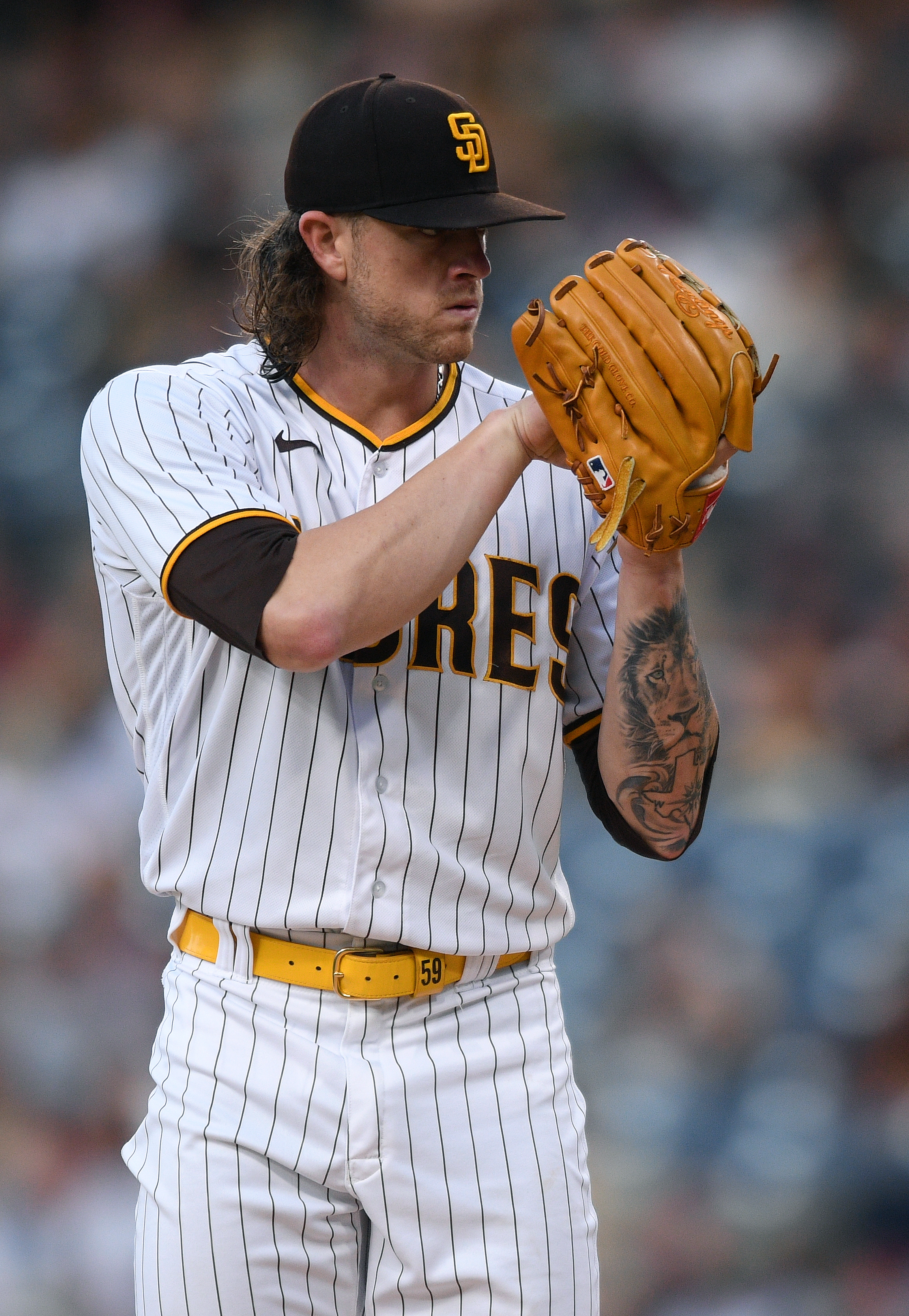
The 26-year-old Paddack and his three remaining seasons of club control headline the trade for Minnesota. The 2015 eight-rounder broke out as one of the sport’s top 100 prospects heading into the 2019 season and delivered on that hype when he posted a 3.33 ERA with a 26.9% strikeout rate and just a 5.5% walk rate through 140 2/3 innings as a rookie. At that point, Paddack looked like a cornerstone piece for the Friars, and any near-term trade involving him would’ve seemed nearly impossible to fathom.
Paddack, however, has been unable to repeat that brilliant rookie performance. His 2020 campaign resulted in a 4.73 ERA in with a diminished 23.7% strikeout rate. He still worked a “full” slate of 12 starts and 59 innings during the shortened 2020 season, but the results and the underlying metrics weren’t nearly as strong as his 2019 debut. Paddack’s 2021 season represented an even further step back; in 108 1/3 innings, he pitched to a 5.07 ERA with a career-low 21.6% strikeout rate. More concerning, though, was the fact that he ended the season with a low-grade tear of the ulnar collateral ligament in his pitching elbow.
The Twins are likely convinced that Paddack’s elbow is healthy enough to rely on him as a rotation piece not only in 2022 but for the next several seasons. If that’s the case, they’ll focus their work with Paddack on further developing a third pitch to help him recapture his 2019 form. Paddack averaged 94.9 mph on his fastball last season and has been lauded for his plus changeup since his prospect days, but his curveball has been a below-average pitch for him at the big league level. If the Twins are able to help Paddack establish that third pitch, it stands to reason that his heater and changeup can trend closer to their 2019 effectiveness. There’s potential for a (second) breakout with Paddack, particularly given that his command has remained elite even through his 2020-21 struggles. The extent to which Minnesota can refine that third pitch (or develop an entirely new one) will be telling.
Minnesota is also picking up two years of control over the 30-year-old Pagan — another 2019 standout (with the Rays) who has had harder luck in San Diego. Acquired by the Padres on the heels of a 2.31 ERA with a dominant 36% strikeout rate and 4.9% walk rate in 2019, Pagan hasn’t been nearly as effective since being shipped to southern California. In 85 1/3 innings with the Friars, he posted a 4.75 ERA with a 26.3% strikeout rate and 7.7% walk rate. Pagan has always been homer-prone, but that flaw ratcheted up to new levels in 2021 when he yielded an average of 2.27 long balls per nine frames.
Despite his recent struggles, however, Pagan has above-average strikeout rates and velocity. And, like Paddack, his command has been nothing short of outstanding (with the exception of the shortened 2020 season). He’s walked just 6.2% of his opponents at the big league level and has yielded only a .210 batting average and .264 on-base percentage in his career. A penchant for serving up home runs has been Pagan’s only real blemish, but if the Twins can clean up that issue — as the Rays did in 2019 and the Mariners did in 2017 — they’ll have a closing-caliber reliever on their hands for the next two seasons.
Coaxing a high-level performance out of Pagan will be all the more crucial for the Twins, as this morning’s trade sends their closer and one of the best left-handed relievers in all of baseball to San Diego. The 31-year-old Rogers has been a triumph in terms of player development for Minnesota, blossoming from a fairly nondescript back-of-the-rotation prospect to a late-inning buzzsaw who has overpowered opponents dating back to the 2018 season.
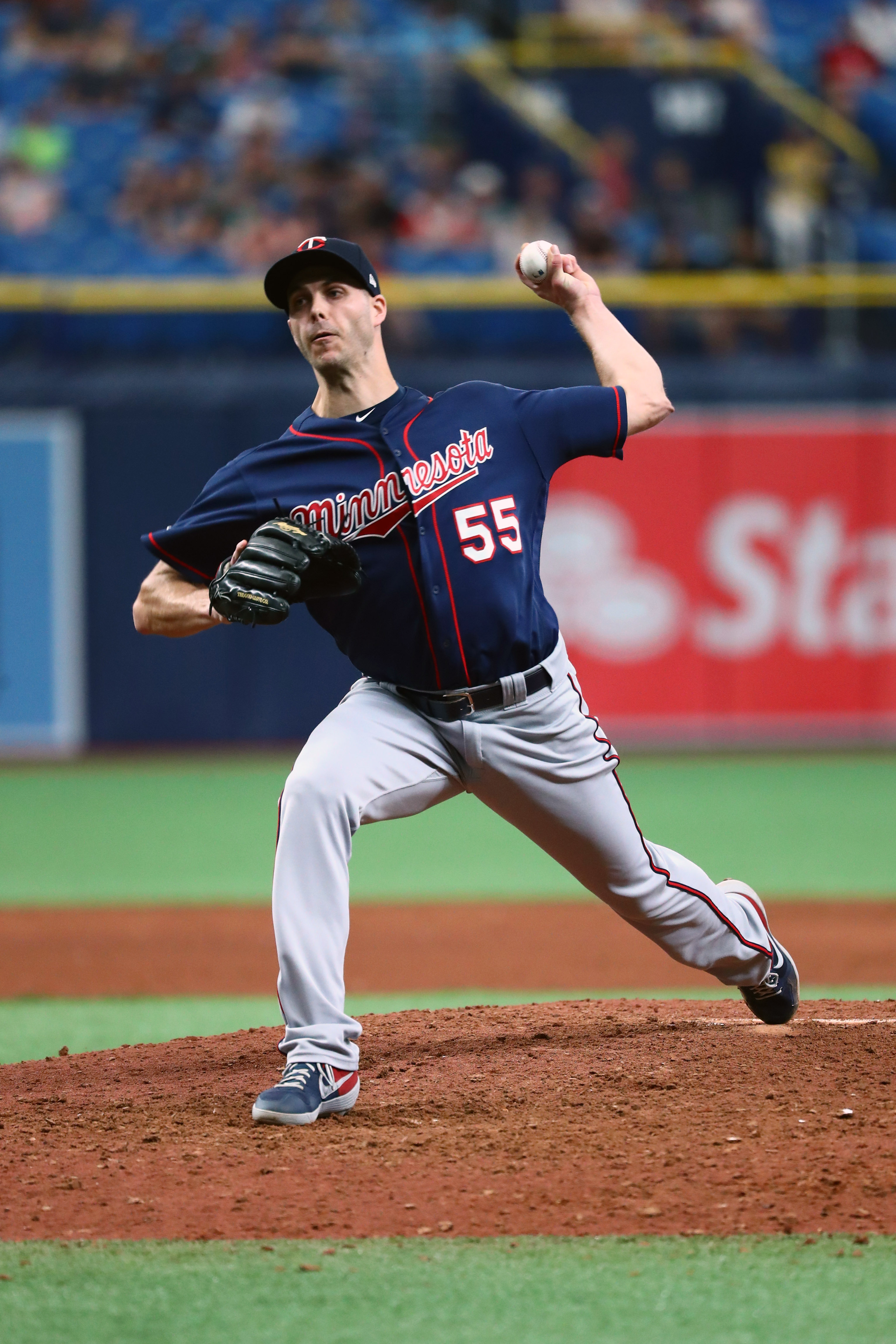
Rogers, whose twin brother Tyler pitches for his new division rival in San Francisco, added a slider to his repertoire back in 2018 — first debuting the pitch on Memorial Day weekend that year. The change in his results was stunning. Carrying a 5.48 ERA at the time, Rogers pitched to a 1.34 ERA for the remainder of the season and whiffed 57 hitters in 47 innings. There’s been no looking back for him, either. Since debuting that devastating breaking ball on May 31, 2018, Rogers has posted a 2.58 ERA (2.54 SIERA) with a massive 32.5% strikeout rate, a tiny 4.6% walk rate and a hearty 48% grounder rate. He’s been one of the absolute best relievers in MLB during that span, racking up 50 saves and, in 2021, making his first All-Star team.
Dominant as Rogers has been, however, he isn’t without his own medical concerns. The lefty’s 2021 drew to an abrupt close when he exited his appearance on July 26 with discomfort in his left middle finger. It was eventually determined that Rogers had a damaged ligament in his pitching hand. As the Twins are with Paddack, San Diego is clearly banking on the belief that Rogers is healthy and able to bounce back to his typical form. If that’s indeed the case, they’ll be able to turn leads over to one of the game’s more effective relievers for the 2022 season before Rogers reaches free agency in the offseason.
Rooker is the fourth known piece of the deal at this time and gives the Padres a power-hitting corner outfield option who has yet to piece things together at the MLB level. Selected with the No. 35 overall pick back in 2017, the former Mississippi State star breezed through the minor leagues, hitting .263/.359/.516 while showing off his plus raw power. Rooker’s bat will need to carry him at the MLB level, however, as he’s a college first baseman who the Twins tried rather unsuccessfully as a left fielder (-6 Defensive Runs Saved, -4 Outs Above Average, -9.7 UZR/150 in 268 career innings).
Rooker has a pair of minor league options remaining and isn’t necessarily an immediate fix to the Padres’ corner outfield woes. He’ll give them an option there, at first base and at designated hitter — one who has light-tower power but also one who has punched out in 32.1% of his 234 big league plate appearances (against just a 6.4% walk rate). The 6’3″, 225-pound Rooker gives San Diego an intriguing power bat but also something of a project, as he’s already 27 years of age and hasn’t yet proven that he can handle big league pitching. Given his lack of defensive value, it’s paramount for the Padres that they put the finishing touches on the development of Rooker’s bat.
The Twins have been on the hunt for starting pitching all winter, and while they didn’t add the marquee name many fans hoped, they’ve now acquired both Paddack and Sonny Gray while also signing Chris Archer and Dylan Bundy. That quartet will join rookie Opening Day starter Joe Ryan and under-the-radar sophomore Bailey Ober in comprising Minnesota’s main group of starters, but the Twins also have plenty of well-regarded prospects on the horizon. Jordan Balazovic, Josh Winder, Simeon Woods Richardson, Matt Canterino and Cole Sands are all getting close to the big leagues and could debut at some point in 2022.
As for the Padres, they’ll deal from a position of depth in order to strengthen the back end of their bullpen. Paddack has been a regular in the San Diego rotation for the past three seasons but was largely nudged out of the frame by a series of high-profile trade acquisitions. The Friars have added Yu Darvish, Joe Musgrove, Mike Clevinger and, most recently, Sean Manaea over the past year-plus, and they also signed righty Nick Martinez to a four-year deal this winter. Add in young arms like MacKenzie Gore, Ryan Weathers and Adrian Morejon (who’ll return from Tommy John surgery later this season), and it’s easy to see why they felt comfortable moving Paddack. It’s certainly a risk to sell low on a starter with his upside, but the Friars are adding one of the game’s more successful relievers and clearly have sufficient rotation depth to make a move of this nature.
Ken Rosenthal of The Athletic and Kevin Acee and Jeff Sanders of the San Diego Union-Tribune reported last night that the two teams were discussing trade scenarios involving Paddack and Rogers. ESPN’s Jeff Passan first reported this morning that a Paddack/Rogers trade was happening. Rosenthal reported that Pagan was in the deal, and The Athletic’s Dennis Lin first reported Rooker’s inclusion. La Velle E. Neal III of the Minneapolis Star-Tribune added that the Twins will receive a PTBNL, and Dan Hayes of The Athletic tweeted that Minnesota was including some cash in the swap.
Photos courtesy of USA Today Sports Images.
Astros Select Ronel Blanco, Designate Tyler Ivey For Assignment
The Astros set their Opening Day roster Thursday, announcing that they’ve selected the contract of right-hander Ronel Blanco and designated righty Tyler Ivey for assignment in order to open a spot on the 40-man roster. Houston also placed Lance McCullers Jr. (forearm strain), Jake Meyers (recovering from shoulder surgery) and Taylor Jones (lower back injury) on the 10-day injured list.
Once he appears in a game, Blanco will make his MLB debut at the age of 28. He spent all of last year at Triple-A, punching out 31.7% of hitters while walking 8.9% with a 40.4% groundball rate. According to Chandler Rome of Baseball America, Blanco would have been a “virtual lock” to be selected in the Rule 5 draft, had that event not been canceled. Rome notes that Blanco, who was signed out of the Dominican Republic six years ago for $5,000, surprisingly beat out several pitchers with MLB experience to make the Astros’ opening day bullpen. Houston’s 10-man crew also includes Ryan Pressly, Ryne Stanek, Hector Neris, Phil Maton, Blake Taylor, Pedro Baez, Rafael Montero, Bryan Abreu, and Cristian Javier.
Ivey, 26 next month, made his MLB debut with the Astros last May in a spot start against the Rangers. A few weeks afterward, his season ended due to a nerve issue in his elbow. At that time, Ivey admitted in an illuminating story by Rome for the Houston Chronicle that he’d been pitching through pain since 2019, concealing it from the team to maintain his shot at reaching the Majors. The injury turned out to be thoracic outlet syndrome, which the righty dealt with via rehab rather than surgery.
The Astros had optioned Ivey to Triple-A on March 24th. Baseball America assigned Ivey a 50 grade as a prospect, explaining that he’s “a potential middle-to-back-of-the-rotation starter candidate if he can stay healthy.” Having ranked as the Astros’ seventh-best prospect, it seems likely Ivey will be claimed off waivers by another organization.