
Rockies Extend Antonio Senzatela
October 6: According to Jon Heyman of MLB Network, Senzatela can increase his annual salary by meeting thresholds of innings pitched. By reaching 200 innings in 2022, he will add $1MM to his salary in each season from 2024 to 2027, and the same applies for 2023. That means Senzatela has the potential to add $8MM to his payout.
October 5: The Rockies announced this afternoon they’ve agreed to a five-year contract extension with right-hander Antonio Senzatela. He’ll be guaranteed $50.5MM, and the deal also contains a club option for the 2027 season. Senzatela, a client of Republik Sports, was headed into his second trip through the arbitration process and had previously been under club control through the 2023 season.
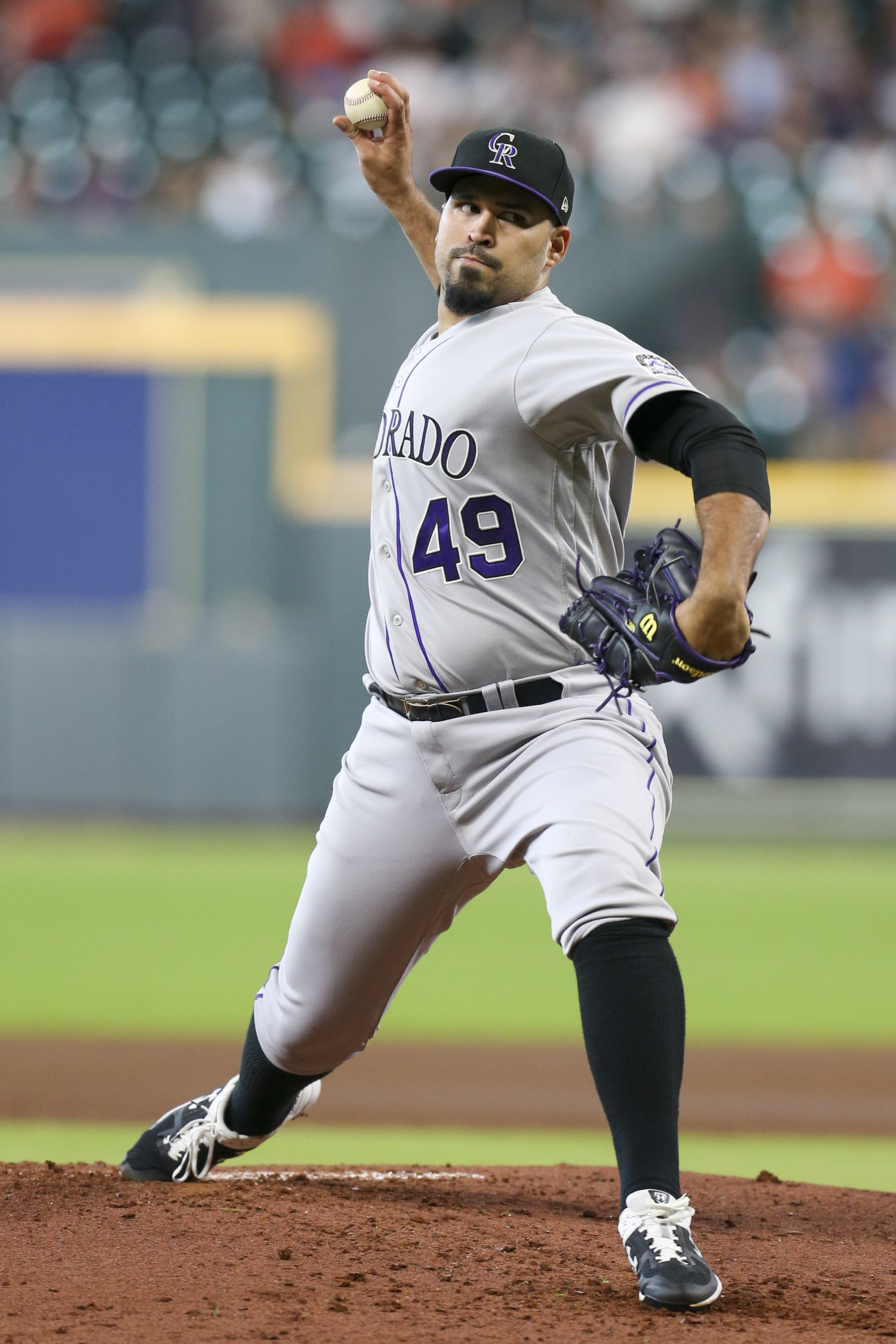
It’s a rather surprising first move for newly minted general manager Bill Schmidt, who shed the “interim” tag from his title over the weekend. Senzatela has, at times, looked the part of a durable innings eater with a grounder-heavy approach, but he also possesses one of Major League Baseball’s lowest strikeout rates and was only in line for a modest raise on this season’s $3MM salary in arbitration. He’ll now earn $7.25MM in both 2022 and 2023 before taking home $12MM annually from 2024-26. The 2027 option is valued at $14MM.
Senzatela, 26, has been a durable rotation cog for Colorado over the past few seasons, although it’s worth noting that as recently as 2019, he was optioned to Triple-A and finished the season with an ERA just shy of 7.00. The right-hander was hammered for a 10.34 ERA from July through September that season but has enjoyed much more success since returning.
In 40 starts and 230 frames dating back to Opening Day 2020, he’s worked to a combined 4.11 earned run average — albeit with a 15% strikeout rate that ranks 188th of the 198 starting pitchers to have thrown at least 100 innings in that time. Senzatela ranks on the opposite end of the pendulum with the 15th-best walk rate in that time (5.1%) and the 22nd-ranked ground-ball percentage (51.1%).
Clearly, the Rockies are betting that he’ll be able to continue to suppress runs at a roughly average rate, leaning heavily on his blend of strong control and knack for inducing grounders. The challenge for Senzatela will lie partly in his ability to reduce the rate at which he allows hard contact. Of the 98 qualified pitchers in Major League Baseball this season, Senzatela’s 90.6 mph average opponents’ exit velocity was sixth-highest. That’s driven in part by a propensity to allow hard contact on the ground; his exit velocity on ground-balls is fourth-highest in MLB, whereas on balls in the air it’s a slightly less-alarming 27th.
Historically speaking, there’s ample precedent for pitchers in Senzatela’s service bracket — more than four years, less than five — signing a deal in this range. Kyle Hendricks‘ 2019 extension with the Cubs, a five-year deal worth a guaranteed $55.5MM, is the most recent and closest parallel.
Notably, Hendricks also largely goes against today’s archetypical strikeout machine. He relies more on weak contact and pinpoint command to offset one of the game’s slowest fastballs, however, whereas Senzatela’s power sinker hovers in the 95 mph range but simply doesn’t miss many bats.
While both pitchers are grounder-heavy command artists, Hendricks had a vastly superior track record that included a prior third-place finish in NL Cy Young balloting. He’d already agreed to a $7.405MM salary for the forthcoming 2019 season, and Senzatela would’ve been hard-pressed to earn a second-time arbitration salary in that range. If Hendricks was indeed cited as a point of comparison in negotiations, it’s a strong deal for Senzatela’s camp to have come close to that same guarantee with a demonstrably worse statistical platform.
That said, while the price point may be a bit of a surprise, the Rockies surely place extra value on pitchers who’ve shown the ability — and the desire or willingness — to pitch effectively at Coors Field. Persuading any free-agent starting pitcher to sign on for multiple years pitching at altitude is a difficult endeavor. Beyond that, the Rockies have a fairly weak farm system, so trading for a controllable pitcher is easier said than done. Senzatela has had his share of success in recent seasons and, if he can continue on the same trajectory he showed from 2020-21, the deal will look reasonable enough.
From a payroll vantage point, the Rox can certainly afford the deal as structured. Colorado had just under $47MM in guaranteed salary on the 2022 books, and Senzatela’s salary bumps them to a bit more than $54MM. Charlie Blackmon will tack on another $21MM when he exercises a player option for the 2022 campaign, but even that subsequent $75-76MM is nowhere near the franchise-record $145MM payroll. Colorado is reported to be in agreement on an extension with first baseman C.J. Cron as well, but that shouldn’t drive up the bottom-line payroll in 2022 by too much.
Moreover, by the time Senzatela’s salary jumps to the $12MM range, the Blackmon contract will be off the books. The Rockies didn’t have a single guaranteed salary on the 2024 payroll prior to this long-term deal, though a $16MM club option on top pitcher German Marquez appears likely to be exercised, barring a significant injury or decline. An annual $12MM salary for an innings eater of Senzatela’s nature isn’t an egregious price to pay, although the downside with him is greater than with other arms who’ve signed in this price range — and it’s a bit surprising to see that price tag agreed upon so far in advance.
At the end of the day, the Senzatela extension serves as another reminder that the Rockies don’t view themselves nearly as far from contending as their 74-win season and -57 run differential would suggest. Colorado bucked conventional wisdom at the deadline when opting to hang onto Trevor Story, Jon Gray, Daniel Bard, Cron and other trade candidates, ultimately only moving Mychal Givens despite being buried in the division and lacking long-term control of those players.
Owner Dick Monfort has repeatedly stated in the past that he believes the current Rockies core is capable of contending, although that core will likely be turning over at least to an extent with the expected departure of Story. Competing in a division with the two best teams of 2021, plus a flawed-but-talented Padres squad in win-now mode would appear a daunting task for most teams, but the Rockies operate on an island and, in many ways, prefer their own unorthodox methodologies to more popular industry trends. The group of Marquez, Senzatela, Kyle Freeland, Gray (if he’s re-signed) and Austin Gomber certainly could form the nucleus of a competitive pitching staff, but the Rox are thin on depth behind that quintet and will need another year of uncanny health in the rotation just to repeat their 2021 output. Some additional roster augmentation will be needed this offseason.
Jeff Passan of ESPN was first to report the agreement and the deal’s terms.
Rockies Extend C.J. Cron
The Rockies are keeping their first baseman in the fold, announcing an agreement with C.J. Cron on a two-year contract extension. The deal guarantees the Moye Sports Associates client a total of $14.5MM.
It’s the second extension of the day for the Rox, who also just locked up righty Antonio Senzatela on a five-year contract. Unlike Senzatela, who was already under team control for two more seasons via arbitration, Cron was slated to become a free agent after the World Series. The two sides had publicly expressed interest in working out a reunion, however, and it seems they’ll do so before Cron ever hits the open market and hears from other clubs.
The extension will bring Cron some stability after pinballing around the league in recent seasons. The former Angels first-rounder was traded to the Rays in the 2017-18 offseason, claimed off waivers by the Twins in the 2018-19 offseason, signed by the Tigers (after being non-tendered by Minnesota) in the 2019-20 offseason, and signed a minor league with Colorado this past offseason.
That minor league pact proved to be an overwhelming bargain for the Rox, as Cron rebounded from last year’s season-ending knee surgery and raked at a .281/.375/.530 clip with 28 home runs — the second-highest total of his career. That said, there are some red flags to consider as well.
Beyond the fact that Cron will turn 32 in January, he displayed some eye-opening splits. The overwhelming amount of Cron’s damage came at Coors Field, where he batted .326/.412/.661 as opposed to .235/.337/.397 on the road. He was also, as is typically the case, much more productive against left-handed pitching (.311/.393/.583) than against right-handed opponents (.269/.368/.503). The Rockies clearly weren’t concerned by the splits, however, and for a fairly modest price tag of $7.25MM per season, that’s a defensible stance. Cron’s numbers against right-handed opponents, after all, were still strong. And while the home/road splits are glaring, he still managed an above-average on-base percentage on the road while maintaining a respectable isolated power mark.
That increased walk rate, it should be noted, is perhaps the biggest driving factor of this deal. Prior to the 2020 season, Cron had walked in just 5.5% of his career plate appearances. He walked nine times in just 52 plate appearances with Detroit before sustaining a season-ending knee injury, however, and the newfound patience largely carried over into the 2021 season. This year’s 11% walk rate effectively doubled his career mark and served to dramatically boost Cron’s offensive floor in the process. So long as the newfound plate discipline is here to stay, Cron ought to be a convincingly above-average bat over the next two seasons, even if he’s more of an average hitter on the road and a prodigious slugger at home.
Cron, like Senzatela, will be paid $7.25MM in each of the next two seasons. It’s a reasonable price to pay for a solid power bat who rates as an average or better defender at his position. From a bigger-picture standpoint, the Rockies now have about $61MM on next year’s payroll — a figure that’ll jump to about $82MM, assuming Charlie Blackmon exercises a $21MM player option. That’ll leave a pronounced gap between the currently projected payroll and the franchise-record $145MM mark, giving the Rockies some leeway to add to the roster under newly minted general manager Bill Schmidt.
Given the manner in which the open market has increasingly devalued free agents on the wrong side of 30, specifically first-base-only sluggers — there’s a reason Cron was effectively non-tendered twice, after all — one could argue that the Rockies shouldn’t have jumped the market. Taking a more patient approach could well have presented them with a “better” deal on a comparable player, or perhaps even a lower price tag on Cron. At the same time, they’ve now secured some cost certainty and ensured they’ll hang onto the specific person and teammate they clearly were targeting.
The broader issue for the Rockies will be one of how they supplement this roster next year. Extending Senzatela and Cron figure to be well-received moves among the Rockies’ fanbase, but all those moves accomplish for now is taking steps to ensure this same 74-win group can stay together. With Gray and Trevor Story both still ticketed for free agency — and Story widely expected to depart — the Rockies will need to add multiple pieces and/or see several big strides from young players just to get back to this year’s level of play. Actually improving the product and, more improbably, piecing together a contender that can jostle with the two best teams of the 2021 season (Giants and Dodgers) will require substantially more effort from Schmidt and his lieutenants.
Jeff Passan of ESPN was first to report the Rockies and Cron were in active extension discussions. Jon Heyman of the MLB Network was first to report the two sides were in agreement. Mark Feinsand of MLB.com reported the contract terms.
Nationals Re-Sign Alcides Escobar
The Nationals announced an agreement to re-sign veteran infielder Alcides Escobar to a one-year, Major League contract. The GSE Worldwide client will make $1MM for the 2022 campaign.
Acquired out of the Royals organization in a move that was originally intended to provide some stopgap depth, Escobar instead wound up turning in the most productive offensive season of his 12-year MLB career. The longtime defensive star and former World Series-winning Royals shortstop posted a .288/.340/.404 batting line through 349 plate appearances after coming over from the Kansas City organization.
In many ways, the decision to quickly re-sign Escobar mirrors last year’s approach with fellow infield veteran Josh Harrison. The Nats quickly re-signed Harrison to a one-year, $1MM contract that proved to be a bargain, and they’ll hope for similar results with Escobar, who’ll give them a multi-positional asset off the bench in 2022.
Looking ahead to next season, the Nationals are surely hopeful that well-regarded youngsters like Carter Kieboom (third base) and Luis Garcia (second base/shortstop) can stake a claim to long-term spots on the roster. Garcia has spent a bit of time at shortstop but was used much more at second base in both 2020 and 2021, even after the trade of Trea Turner this past summer. If that’s indeed Garcia’s long-term spot, there’s no clear heir-apparent at shortstop. Escobar’s return, then, makes some sense in providing a safety net, while still clocking in at an affordable enough rate that the Nats could pursue a more established option at short — be it via free agency or trade.
An eventual free-agent signing or swap of some note shouldn’t be firmly ruled out based on the Nationals’ deadline fire sale, either. While the club is clearly gearing up for what GM Mike Rizzo has termed a “reboot,” Rizzo has also pushed back on the notion of any sort of full-scale rebuild. The Nats’ intentions, by all accounts, are to return to competitiveness sooner than later, and adding a shortstop of note — even if it’s not one of the very top-of-the-market options this winter — would be a step in that direction. For now, Escobar provides some cover while retaining flexibility.
Jesse Dougherty of the Washington Post first reported the Nationals had agreed to a one-year deal with Escobar. Jon Heyman of the MLB Network reported Escobar’s salary.
Image courtesy of USA Today Sports.
Yankees Designate Andrew Heaney, Brody Koerner For Assignment
The Yankees announced Tuesday that they’ve designated left-hander Andrew Heaney and right-hander Brody Koerner for assignment. The moves clear a pair of spots on the 40-man roster for outfielder Greg Allen and catcher Rob Brantly, whose contracts have been selected from Triple-A Scranton/Wilkes-Barre.
Heaney, 30, was a deadline pickup for the Yankees whom the team hoped to turn around after a rough start to the season in Anaheim. New York sent minor league righties Janson Junk and Elvis Peguero to the Halos in return for the final couple months of control over Heaney, a free agent at season’s end, but the move didn’t pan out as hoped.
Heaney, long a solid starter with a penchant for missing bats, saw this year’s alarming home run troubles skyrocket following his trade to the Bronx. The Yankees eventually moved him from the rotation to the ‘pen, and it was clear he wasn’t a part of the team’s postseason plans when the team optioned him late in the season (a move that required the veteran’s consent).
In 35 2/3 innings with the Yankees, Heaney limped to a 7.32 ERA — due largely to an untenable 13 home runs allowed during that stretch. His 2021 season will come to a close with 129 2/3 frames of 5.83 ERA ball. To his credit, Heaney was markedly better than league-average in terms of strikeout rate (26.9%), walk rate (7.3%), swinging-strike rate (12.5%) and opponents’ chase rate (35.7%). Fielding-independent metrics like xERA (4.01), xFIP (4.12) and SIERA (3.84) all felt he pitched better than that ERA would suggest, but Heaney’s sky-high 2.01 HR/9 mark and 18.1% homer-to-flyball ratio torpedoed his earned run average. Given his mounting troubles keeping the ball in the yard, it’s not a surprise that the Yankees are electing to remove him from the postseason equation — particularly in advance of a sudden-death Wild Card showdown with the Red Sox.
Koerner, 27, had his contract selected for the final day of the season but was not used in a pivotal Game 162 matchup for the Yankees. He made a pair of appearances earlier in the season, allowing a run on two hits and two walks with one strikeout in a combined three innings of relief.
A former 17th-round pick (2015) who’s spent his entire career to date in the Yankees organization, Koerner pitched to a 3.39 ERA with a below-average 19.1% strikeout rate but better-than-average marks in terms of walk rate (7.1%) and ground-ball rate (45.8%) in 77 Triple-A frames this season. He’ll have the opportunity to become a minor league free agent if he goes unclaimed on waivers in the coming days.
The selection of Allen and Brantly from Triple-A gives the Yankees a pair of options on the bench for tonight’s Wild Card game. Allen provides manager Aaron Boone with a late pinch-running option and/or defensive replacement, while Brantly provides some insurance as an in-case-of-emergency third catcher.
Mets Decline Option On Manager Luis Rojas
The Mets have declined their option on manager Luis Rojas, per a team announcement. Decisions on the remainder of the coaching staff are still pending and expected in the coming days, according to the team. Rojas managed the Mets from 2020-21 under a two-year contract that contained a pair of club options for the 2022-23 seasons. He’s been offered a different position within the organization in a “yet to be determined capacity,” the Mets added.
“The entire Mets organization is grateful for the dedication and devotion that Luis has exhibited over the last two seasons as manager,” team president Sandy Alderson said in today’s press release. “He has shown a great commitment to the Mets over many years in multiple capacities. These decisions are never easy, but we feel a change is needed at this time.”
Rojas, who turned 40 last month, unexpectedly was elevated from quality control coach to manager after the team abruptly parted ways with Carlos Beltran in the wake of the Astros’ sign-stealing scandal. Beltran, who played with the Astros during that 2017 season and was named in the commissioner’s report at the conclusion of an investigation into the matter, had only been hired as skipper just months prior and did not manage a game with the Mets. Rojas had previously coached and managed in the Mets’ minor league system in addition to time spent as a manager in the Dominican Winter League.
The son of three-time All-Star and 1994 NL Manager of the Year Felipe Alou, and the half-brother of six-time All-Star Moises Alou, Rojas is a baseball lifer who’ll no doubt have ample opportunity to continue his career in the game whether he takes another role with the Mets or looks outside the organization.
“I want to share such heartfelt gratitude to so many in the Mets organization for not only the last two seasons as manager, but for the last 16 years in a variety of roles,” Rojas said in a prepared statement of his own. “In each and every position I held, striving for excellence was our daily mission. I will always hold the relationships and friendships, developed over the years, dear to my heart, and am forever grateful to have been able to wear the Mets uniform for so long. We live in a results oriented business, and am deeply disappointed for our staff and fans that we didn’t reach our goals this season.”
The Mets went 103-119 under Rojas, missing the postseason despite significant playoff aspirations in each of his two seasons as skipper. Injuries played a notable role in the failures of his club, and like any manager, he was oft-criticized for bullpen decisions. Rojas surely didn’t do himself any favors with his handling (and apparent lack of knowledge) of the Javier Baez “thumbs down” debacle, however, and as talk of sweeping changes throughout the organization continued to mount over the final weeks of the season, Rojas appeared to be on an increasingly hot seat.
With Rojas’ ousting now official, the Mets will remarkably begin their search for a fourth manager in five years. Terry Collins enjoyed one of the longest tenures of any manager in recent MLB history, but since the Mets moved on from him after the 2017 season, they’ve cycled through Mickey Callaway (fired and later reported to have committed repeated acts of sexual harassment during his tenure), Beltran (fired before he managed a game) and Rojas (out after two seasons). The Mets will also be in the market for a new baseball operations leader — their fourth since Alderson initially stepped away for health-related purposes in July 2018.
Cardinals, Adam Wainwright Agree To Extension
Adam Wainwright is staying in St. Louis. The Cardinals announced an agreement to bring the right-hander back for the 2022 season. Wainwright’s deal comes with a $17.5MM salary. The deal also includes a full no-trade clause, although Wainwright has long had guaranteed no-trade rights as a player with more than ten years of big league service, the last five of which have come with his current team. Wainwright is represented by Aegis Sports Management.
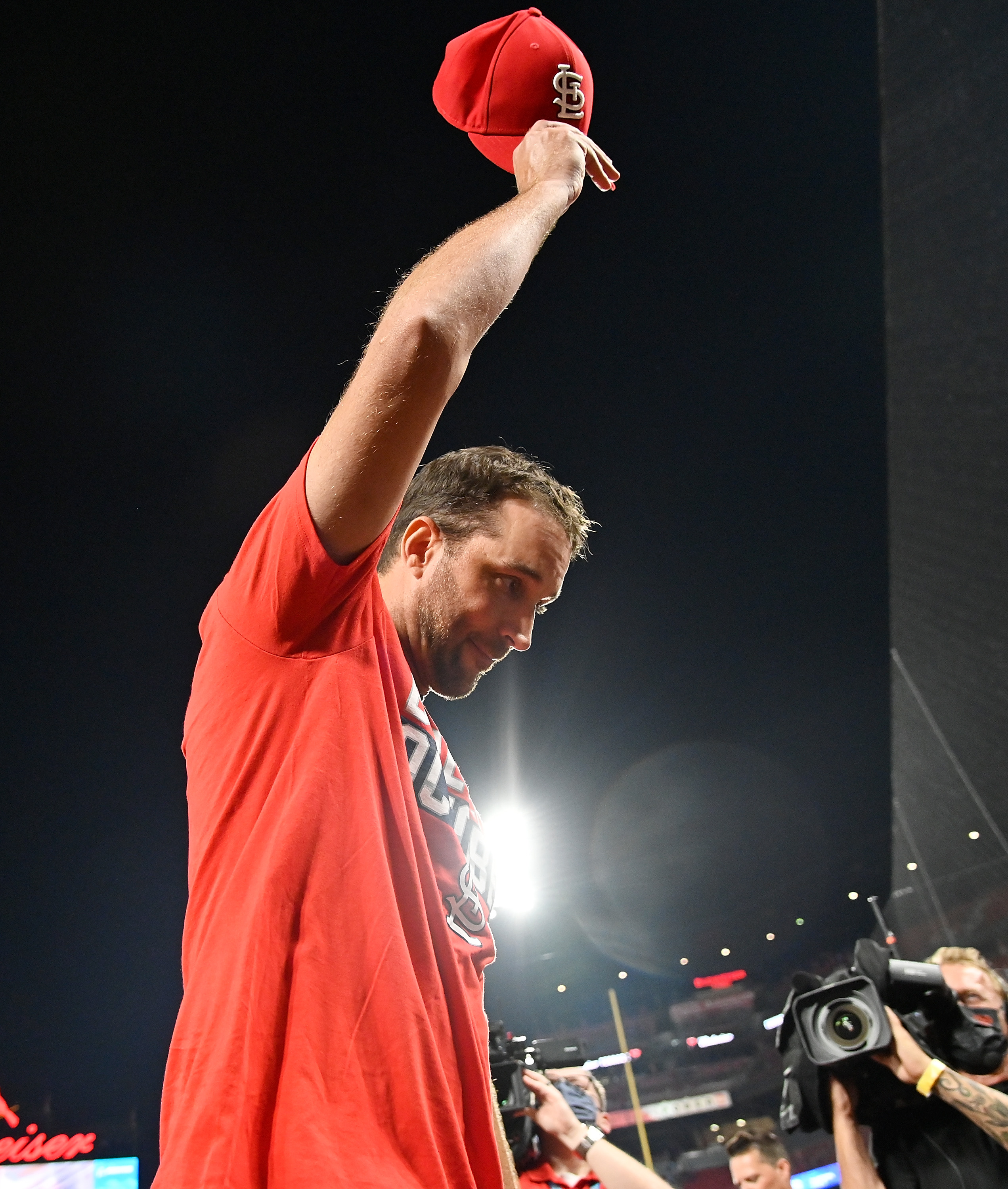
Wainwright, who turned 40 at the end of August, has turned back the clock to deliver one of the best seasons of his career in 2021. He’s second among all Major League pitchers with 206 1/3 innings pitched and has turned in a 3.05 ERA that stands as the fifth-best mark he’s ever notched over a full season.
Though he’s averaging just 89.3 mph on his heater this season, Wainwright has avoided hard contact, displayed strong command (six percent walk rate) and kept the ball on the ground at an above-average clip. That pairs nicely with the all-world infield defense in St. Louis and has helped Wainwright thrive even in spite of a below-average 21 percent strikeout rate. He’s also kept the ball in the yard at his lowest rate since 2014 (0.92 HR/9, 11.7 percent homer-to-flyball rate).
That excellent season will likely get Wainwright some votes in Cy Young balloting, even if he’s not favored to win it. (Corbin Burnes, Max Scherzer, Zack Wheeler and Walker Buehler are among the other top contenders.) It also positioned Wainwright to handily top this season’s $8MM salary, which has turned into a bargain for a scorching-hot Cardinals team that won 17 straight games to clinch a Wild Card berth — a sudden-death showdown for which they’ve already announced Wainwright as the starting pitcher.
Retaining Wainwright gives the Cardinals some additional certainty in the rotation next year. He’ll slot in alongside fellow righties Jack Flaherty, Miles Mikolas and Dakota Hudson, the latter of whom just returned from Tommy John surgery. Top pitching prospect Matthew Liberatore could be ready for his debut early in 2022, and the Cards have a handful of other in-house options, including Jake Woodford, Johan Oviedo and, if they want to move him from the bullpen to a starting role, Alex Reyes.
The Cards could of course dip their toes into the offseason market for starting pitching. They’re currently set to lose Kwang Hyun Kim, J.A. Happ and Jon Lester to free agency, and a lack of depth nearly sank their season earlier this summer when the majority of their rotation hit the injured list. St. Louis had under $90MM in guaranteed contracts on the books in 2022 before re-signing Wainwright — Matt Carpenter and Carlos Martinez will be off the books once their 2022 options are declined — so there’s certainly room to add to the payroll.
From a broader perspective, Wainwright’s return also sets the stage for an emotional season at Busch Stadium. He’s not yet made a declaration that the 2022 campaign will be his final season in the Majors, but given his age, that’s of course a possibility. Even if Wainwright sets his sights on pitching beyond next season, the 2022 campaign will be a farewell tour for Yadier Molina, who has announced his intention to retire following what will be his 19th season in St. Louis.
Wainwright and Molina are an iconic duo in St. Louis — a battery pairing emblematic of the repeated contenders put forth during this generation of Cardinals baseball. They’ve won a pair of World Series rings together, in 2006 and 2011, and there are few more memorable moments in recent Cardinals history than Wainwright buckling Carlos Beltran to close out the ’06 NLCS and then fanning Brandon Inge to clinch the organization’s first World Series in (at the time) more than two decades. Molina, naturally, was on the receiving end of both pitches.
Regardless of Wainwright’s future status, it’ll be the last season that Cardinals fans can root on a pair that seems destined to have their numbers retired and head into the team’s Hall of Fame. At 184 career wins, Wainwright will have a chance to cross the 200 mark next year as well — a milestone reached only by 119 players in big league history.
Derrick Goold of the St. Louis Post-Dispatch first reported that Wainwright and the Cardinals had agreed to an extension. Jon Heyman of the MLB Network reported the contract was worth more than $15MM. The Associated Press reported the $17.5MM figure and the presence of the no-trade clause.
White Sox “Optimistic” Carlos Rodon Can Contribute During Postseason
The White Sox only received 28 innings from Carlos Rodon over the season’s final two months, as the left-hander missed time due to a shoulder issue and was regularly pulled after five innings even when he was healthy enough to take the mound. Part of that is likely rooted in the White Sox’ runaway lead in the American League Central, which allowed them to take a cautious approach with the resurgent southpaw. Still, his health has been something of a question mark for the Sox in recent days.
General manager Rick Hahn told reporters today the club remains “optimistic” that Rodon “will be able to contribute and help us over the course of the next month” (Twitter link via Daryl Van Schouwen of the Chicago Sun Times). Rodon will only pitch once during the American League Division Series, per Hahn, and they’ll assess his workload and availability on a series-per-series basis throughout the duration of their playoff run. ESPN’s Jesse Rogers adds that Rodon will throw in the bullpen tomorrow, which will give the team additional clarity on his status.
White Sox brass is currently debating whether Lucas Giolito or Lance Lynn will start the first game of the ALDS against Houston, Hahn added (Twitter link via The Athletic’s James Fegan). The GM called his two standout righties virtually “interchangeable” and said the debate will likely boil down to which they feel is better equipped to start a second time in the Division Series, if needed. Hahn also provided an update on first baseman Jose Abreu, who missed time this weekend with a non-Covid illness but is expected to be ready for workouts leading up to Thursday’s Game 1 showdown against the Astros.
The uncertainty surrounding Rodon is not only significant with regard to the imminent playoffs but also with the offseason looming. Rodon signed a one-year, $3MM deal to return to Chicago after being non-tendered and, for much of the season, was one of the most dominant pitchers in baseball. The 28-year-old made his first All-Star team, pitched to a 2.31 first-half ERA in 89 2/3 innings, and looked to be in the midst of breaking out as the ace the Sox hoped he could be when selecting him third overall back in 2014.
Rodon blanked the Astros over seven near-perfect frames in his first post-All-Star appearance on July 18, punching out 10 batters and lowering his ERA to 2.14. That, however, was the last time he’d throw more than five innings in a single outing this season. Rodon was on the injured list from Aug. 10-26 due to fatigue in his left shoulder, and while he was effective in his return from that IL stint, he averaged just 73.6 pitches and 4 2/3 innings per outing upon activation.
Regardless of how the postseason goes, it’d be hard for the White Sox to not give strong consideration to a qualifying offer for Rodon, who demonstrated the extent of his upside with 132 2/3 frames of 2.37 ERA ball, a 34.6 percent strikeout rate and a 6.7 percent walk rate. That’ll present Rodon with an interesting decision. Accepting a qualifying offer and then repeating that success with greater health in 2022 would position him for a massive free-agent payday. On the other hand, he’d perhaps command interest on lower-cost multi-year deals right now, and taking the one-year qualifying offer comes with the risk that further injury would sap his future market.
For now, simply performing in the postseason and giving his club the best chance possible at a deep run will be the lefty’s obvious priority. That said, he’ll be a fascinating qualifying offer and free-agent case when the time does come.
Shohei Ohtani Open To Discussing Long-Term Deal With Angels
Shohei Ohtani created plenty of speculation when he recently revealed that there’d been no extension talks with the Angels front office and added that above all else, his priority moving forward is “to win.” With the Angels now officially posting a losing record in six straight seasons, fans and pundits alike have wondered about Ohtani’s future in Anaheim. The likely American League MVP emphasized following the conclusion of the Halos’ 2021 season, however, that he’d carry an open mind into any discussions regarding a long-term extension (link via Jack Harris of the Los Angeles Times).
“I think I would, of course, talk to them with feelings of openness,” Ohtani said via his interpreter. “Regardless of whether that leads to anything, I individually want to have a solid offseason to make sure we can win next year.”
The matter of Ohtani’s contract for the 2022 season is already settled. Back in February, he signed a two-year, $8.5MM contract that covered his first two arbitration seasons (2021 and 2022) — a decision for the Angels surely have to be thankful in retrospect. Ohtani’s outstanding season on both sides of the ball would have surely led to a much larger salary in arbitration than the $5.5MM he’ll receive next year under that two-year pact.
It was a historic season for Ohtani, who tallied 639 plate appearances as a hitter and also logged 130 1/3 innings on the mound. His 46 home runs at the plate were third in all of baseball, trailing only Vladimir Guerrero Jr. and Salvador Perez. Ohtani hit .257/.372/.592 with 46 long balls, 26 doubles, eight triples and 26 steals. He scored 103 runs, plated another 100 and posted the fourth-best walk rate among qualified hitters.
On the mound, his 29.3 percent strikeout rate on the mound was tied for 12th among the 96 pitchers who tossed at least 120 innings, and his 3.18 ERA ranked 22nd. Ohtani’s 8.3 percent walk rate was a half-percent higher than the average starting pitcher but his huge strikeout rate and above-average ground-ball rate (45 percent) helped to make him one of the more effective starting pitchers in the game on a per-inning basis.
If Ohtani proves at all capable of approximating that production in 2022, he’d set himself up for perhaps the most fascinating and complex arbitration case in Major League history. An extension, of course, would preclude that headache for the Angels — but his brilliant 2021 season has also made any potential negotiations as complicated as an arbitration hearing would be.
Ohtani has rather clearly cemented himself as one of the game’s greatest pure talents. He’s two years from free agency, so the first couple seasons of a theoretical extension wouldn’t pay him full market value (although a new deal could theoretically begin next season and replace his $5.5MM salary in favor of a larger sum). Beyond that, the question is just how highly the would-be free agent seasons might be priced. Ohtani’s teammate, Mike Trout, and Yankees right-hander Gerrit Cole received the largest average annual salaries in MLB history, $36MM per season, when signing their respective deals. (While Trout’s contract was technically restructured as a 12-year, $426.5MM deal, that includes the two years and $66.5MM he was already guaranteed at the time of his extension, which paid him $360MM in new money over 10 years — hence the $36MM AAV figure.)
Free-agent seasons that are bought out this far in advance are typically (but not always) discounted to some extent, but the inherent difficulty in assigning a value to Ohtani’s free-agent campaigns is multi-faceted. Not only is he two years from the market, he’s also only had one full, healthy season on the mound. It’s clear that he’s of top-of-the-rotation caliber from a pure talent perspective, but he pitched just 53 1/3 innings combined in his first three MLB seasons (thanks largely to Tommy John surgery).
That lack of durability is an obvious red flag and strike against him. At the same time, if the Angels wait another year to determine whether Ohtani can replicate or exceed that workload on the mound, he’ll only further drive up his price tag — both by proving his durability and moving closer to free agency. There’s also no precedent for a player with this skill set, so his representatives at CAA could argue that any valuations based on comparisons to other players and/or contracts are generally irrelevant.
Stepping back a bit, the Angels’ entire payroll needs to be considered when looking at the prospect of retaining Ohtani on what would presumably be a massive commitment. The Angels will have Justin Upton‘s contract come off the books following the 2022 season — which is no small sum given next year’s $28MM salary.
However, the Halos are already paying Trout a $35.45MM salary every year from 2022-30, and they’ll also pay Anthony Rendon $36MM in 2022 before paying him $38MM annually from 2023-26 under his backloaded $245MM contract. Trout and Rendon, like Ohtani, have proven to be MVP-caliber talents at their best. Trout has three MVPs and arguably ought to have more, and Rendon has a pair of top-five finishes, including a third-place finish as recently as 2019. We can’t know precisely what value would be placed on Ohtani’s free-agent seasons — the first of which would be his age-29 campaign — but that an extension would likely mean paying out more than $100MM annually to just three players, at least from 2024-26.
The Angels are a large-market club, but they also haven’t traditionally spent at the same level as other big-market teams like the Dodgers, Giants, Yankees, Red Sox, etc. This year’s $182MM Opening Day payroll was the largest in franchise history, and owner Arte Moreno hasn’t given his front office the green-light on exceeding the luxury tax threshold since way back in 2004 — his first full season as owner after purchasing the club in May 2003.
There’s no way of knowing just yet what will happen to the luxury tax system in the future, as it’ll be a hotly contested topic during ongoing collective bargaining talks between the league and the players association. Whatever alterations do come about will be key factors for Moreno and second-year general manager Perry Minasian to consider in negotiations with Ohtani’s camp, as paying Trout, Rendon and Ohtani on long-term arrangements would make filling out a roster behind that trio all the more difficult.
All of that comes before even considering other needs in the rotation and the absence of proven, cost-controlled starters on a team that has perennial rotation issues. The Angels have a handful of interesting young arms (e.g. Patrick Sandoval, Reid Detmers, Griffin Canning, Jaime Barria), but they’ll likely need to bring in some veteran arms as well. There’s also the matter of a lack of a long-term solution at shortstop and the looming, star-studded crop of free-agent shortstops to consider. It all makes for a fascinating long-term outlook in Anaheim, as should be expected with a talent as unique as Ohtani and a big-market club as starved for a postseason berth as the Angels, who haven’t appeared in a playoff game since 2014.
The original version of this post cited an Associated Press translation of Ohtani’s quote, which indicated he is “very open” to discussing an extension. Our post has since been updated to reflect what we are told is a more accurate but slightly different translation of his response, from the Los Angeles Times, that he would talk to the Angels “with feelings of openness.”
Zimmerman Undecided On Future, But Nats Would Welcome Him Back
The Nationals took the time to honor franchise icon Ryan Zimmerman yesterday, in what could have been the final appearance of the veteran corner infielder’s storied big league career (video link). After the game, Zimmerman told reporters that he’s not yet decided whether he’ll retire or come back for what would be a 17th season at the Major League level (link via MASNsports.com’s Mark Zuckerman).
Zimmerman, who turned 37 in late September, said he feels confident he could continue playing and felt he handled the role he was given this year well, but there are larger questions at stake. “Now it’s a decision of: Do I want to keep doing that or do I want to be around my family a little bit more?” Zimmerman wondered aloud. It’s a question that’s had onlookers wondering for some time now, as explored by MLBTR’s TC Zencka over the weekend.
One thing that became abundantly clear based on yesterday’s slate of interviews is that Zimmerman would be welcomed back to the roster next season with open arms. General manager Mike Rizzo made sure to plainly express as much, taking the extra step to emphasize that Zimmerman has a guaranteed Major League deal waiting for him if he wants to return.
“Ryan Zimmerman has a place on this roster as a player as long as Mike Rizzo is the GM,” said Rizzo. “So whenever he wants to take a major league contract, just call me up and we’ll give him one.”
While the 2021 season wasn’t as strong a year as Zimmerman had during his peak, the veteran slugger still tormented left-handed opponents and generally showed well above-average power. In 116 plate appearances against southpaws, Zimmerman turned in a .291/.319/.582 batting line with seven home runs and 11 doubles. His overall production was down against righties (.207/.261/.386), but Zimmerman still tagged same-handed opponents for seven homers and five doubles with a strong .179 isolated power mark (slugging percentage minus batting average).
On the surface, Zimmerman still carries appeal as a platoon option at first base or, assuming it is indeed implemented in the National League in 2022, at designated hitter. That’d be a fairly limited role, of course, but the organization surely values Zimmerman’s contributions well beyond his mere on-field production. After spending nearly two decades in the Majors — all of them coming as a member of the Nationals — Zimmerman’s leadership, his ability to connect with young players and his connection with the fan base are all factors that weigh into the team’s decision to effectively present him with a standing offer.
Looking to the 2022 season, that leadership and ability to mentor younger players could be valued even more heavily. After spending years as one of the older and more veteran-laden teams in the game, the Nationals embarked on what will likely be an accelerated rebuilding effort at this year’s trade deadline. Max Scherzer, Trea Turner, Kyle Schwarber, Daniel Hudson, Brad Hand, Yan Gomes, Josh Harrison and Jon Lester were all traded for younger, more controllable players. The likes of Keibert Ruiz, Josiah Gray, Riley Adams and Lane Thomas have all already debuted on the big league roster, and next year’s club figures to be a good bit younger than in recent seasons as a result.
To be clear, Rizzo already pushed back on the idea of prolonging this summer’s sale into a lengthy, years-long rebuild. That doesn’t seem to be in the cards, and the Nats have plenty of available payroll space with only three guaranteed contracts on the books next season (Stephen Strasburg, Patrick Corbin and Will Harris). It’s likely they’ll bring in some veteran talent whether Zimmerman is re-signed or not, but the front office clearly sees value in the continuity “Mr. National” would bring as the team transitions to a new core that can hopefully be built around superstar outfielder Juan Soto.
Padres Select Pedro Avila
6:06 pm: The Padres officially announced Avila’s promotion. Catcher Austin Nola was transferred to the 60-day injured list to open 40-man roster space. Nola underwent season-ending thumb surgery last week.
11:14 am: The Padres will select the contract of right-hander Pedro Avila and give him the start in tonight’s game, reports Daniel Alvarez Montes of El Extra Base (Twitter link). They’ll need to make a corresponding 40-man roster move.
Avila, 24, will be returning to the big leagues for his second stint. He first debuted as a 22-year-old back in 2019, making an April spot start in which he allowed just one run in 5 1/3 innings. San Diego optioned him back to Triple-A El Paso the next day, and he’d continue to pitch there until sustaining an elbow injury that eventually led to Tommy John surgery. The Padres removed him from the 40-man roster that winter as they made a series of transactions in advance of the Rule 5 Draft, but they re-signed Avila to a new minor league pact the day after he elected free agency.
Avila wasn’t in the Padres’ player pool during last year’s shortened season, but he’s returned to the mound in 2021 and split the season between Double-A and Triple-A. In a combined 74 2/3 frames, Avila has worked to a 4.22 ERA with a solid 25.1 percent strikeout rate but a lofty 11 percent walk rate.
San Diego’s rotation has been decimated by injury in 2021. Joe Musgrove and Vince Velasquez — the latter of whom was signed after being released by the Phillies — are the only healthy starters on the active roster at the moment (with Dinelson Lamet currently working out of the bullpen). Blake Snell, Yu Darvish, Chris Paddack and Adrian Morejon are all on the injured list. Top prospect Ryan Weathers, meanwhile, is down in Triple-A after struggling badly following an impressive two-month stretch to begin his MLB career.
All of that will lead to a late cup of coffee for Avila, who could function as a depth option for the Padres next year if he sticks on the 40-man roster all winter. Avila still has a pair of minor league option years remaining, which is critical for him given the lack of an obvious path to a rotation spot next season. Darvish, Snell, Musgrove, Lamet, Paddack, Morejon and Mike Clevinger are all either signed or under team control in 2022 and figure to be in the mix for rotation innings. Alternatively, Avila could vie for a spot in next year’s bullpen; he’s split his time in the minors as a starter and reliever in 2021.