
AL East Notes: Volpe, Caballero, Crochet, Gray, Berrios
Sunday is the final day of Anthony Volpe‘s 20-day minor league rehabilitation period, and Yankees manager Aaron Boone told reporters (including The Athletic’s Brendan Kuty) that Volpe will remain at Double-A Somerset for the entirety of the 20-man window, and “then we’ll kind of reevaluate where we are.” Once the rehab period is up, the Yankees must either reinstate Volpe to the active roster or option the shortstop to Triple-A.
As Volpe finishes up his recovery from October shoulder surgery, it can’t be ignored that the Yankees haven’t really missed him at shortstop. Jose Caballero has delivered strong defense at the position, speed (a league-best 12 stolen bases), and a .266/.310/.422 slash line over 116 plate appearances. The offensive numbers translate to an above-average 105 wRC+, which is significantly better than the 85 wRC+ Volpe has posted over 1886 PA in three seasons in the Bronx. While the Yankees didn’t make a bigger addition over the offseason to officially bump Volpe out of the starting shortstop role, Caballero might’ve simply pipped Volpe out of the job, leaving Volpe in something of an uncertain state within the organization.
Some other items from the AL East….
- An MRI on Garrett Crochet‘s left shoulder revealed only inflammation, Red Sox interim manager Chad Tracy told MassLive.com’s Chris Cotillo and other reporters. Crochet won’t start throwing until at least Monday, as the southpaw will work on shoulder-strengthening exercises over the weekend. While Tracy said there’s “no timetable on” when Crochet could be back in Boston’s rotation, it remains possible the left-hander may still miss only the minimum 15 days on the IL, though obviously the team won’t rush their ace until he is fully ready.
- In other Red Sox rotation news, Sonny Gray threw a three-inning live batting practice session on Friday, in what could be the last step before his activation from the 15-day IL. Gray hasn’t pitched since April 20 due to a hamstring strain, but the injury is seemingly minor enough that Gray could be back in Boston’s rotation as early as Wednesday.
- Jose Berrios will make his fourth rehab start on Sunday with Triple-A Buffalo, Blue Jays manager John Schneider told reporters (including Sportsnet’s Arden Zwelling). It is possible this may be Berrios’ final tune-up, as the right-hander tossed 70 pitches in his previous outing on April 28, and felt good after throwing a bullpen session yesterday. A stress fracture in his right elbow has kept Berrios from pitching in the majors this season, and he also dealt with biceps tendon inflammation late in 2025 that kept him from participating in the Jays’ playoff run.
AL East Injury Notes: Stanton, Rodón, Gray, Melton
Yankees designated hitter Giancarlo Stanton exited yesterday’s game against the Astros in the sixth inning with right calf tightness. Manager Aaron Boone downplayed the seriousness of this issue, telling Chandler Rome of The Athletic it was “too early” for him to be concerned. “Hopefully we got ahead of anything serious, but we’ll just see where he’s at tomorrow,” said Boone. Stanton is on the bench for today’s game, and no injury list move is pending as of now.
The 36-year-old missed the first half of last season with injuries to both his elbows. Dating back to the 2021 season, he has missed roughly one third of his team’s games, mostly due to lower body injuries. Even so, he remains a crucial part of the lineup. In last year’s half-season, Stanton hit 24 home runs and posted a .321 isolated slugging percentage, his highest mark since coming to New York in 2018. He is not quite at that level so far in 2026, though the team would obviously prefer him healthy and in the lineup. If he eventually misses time this year, that could result in DH at bats for role players like Paul Goldschmidt and Amed Rosario, neither of whom is an inspiring option in a larger role.
A few more injury notes out of the AL East:
- On the pitching side in New York, left-hander Carlos Rodón made his first rehab start yesterday for the Yankees’ High-A affiliate. According to Shanthi Sepe-Chepuru of MLB.com, the club anticipates he’ll need three rehab starts before rejoining the rotation. Assuming he stays on track, that could put him in line to start at the end of the May 8-10 series against the Brewers, or possibly against Baltimore from May 11-13. New York’s rotation has been exceptional to start the year, posting league-best marks in ERA (2.61) and K-BB rate (19.7%). Luis Gil has been the only weak spot, so he’s the likeliest candidate for a demotion when Rodón makes his return.
- Injured Red Sox starter Sonny Gray is traveling with the team and set to throw a bullpen session on Monday, per manager Alex Cora (link via Chris Cotillo of MassLive). That implies the right-hander, who was placed on the 15-day IL on Monday, will not require a rehab assignment and could return with a minimal absence. That would be welcome news for Boston, as their rotation has struggled to a 4.61 ERA through their first 26 games. Gray isn’t off to a great start himself, but he was a capable mid-rotation arm from 2023-25, so the club is unbothered by the results in a small sample size. His eventual return may spell a demotion for Payton Tolle, who struck out 11 hitters in six innings in his season debut on Thursday.
- Rays outfield prospect Jacob Melton has a Grade 2 left ankle sprain and is out of game action for 4-6 weeks, according to Marc Topkin of The Tampa Bay Times. Melton, who was acquired in a three-team trade in December, currently ranks as the club’s third-best prospect according to MLB.com. He is likely to see time in the Majors this year. The starting outfielders – Chandler Simpson, Jake Fraley, and Cedric Mullins – all have plus range or arm strength, but they are also below-average hitters. Melton’s scouting report mentions room for improvement on his hit tool, though he flashed plus power at Triple-A in 2024-25 and is a solid defender.
Photo courtesy of Maria Lysaker, Imagn Images
2026-27 Club Options: AL East
A couple weeks ago, MLBTR’s Darragh McDonald highlighted the players who could choose to return to the free agent market via opt-out clauses. We’ll now take a division by division look at those whose contracts contain club, mutual or vesting options. That kicks off tonight with the AL East.
Although it’s early in the season, a lot of these provisions are fairly easy to predict. The mutual options are almost certain to be declined by either the player or team (usually the latter). They’re accounting measures, essentially an unofficial deferral within the term of the contract itself. The player agrees to push back a percentage of the guaranteed money to the end of the deal in the form of an option buyout — which is paid after the end of the World Series rather than evenly distributed during the regular season as salary.
Baltimore Orioles
- RHP Zach Eflin: $25MM mutual option ($2MM buyout)
Eflin’s return to the Orioles was dashed by yet another injury: an elbow ligament that required Tommy John surgery. The O’s probably weren’t signing up for a $25MM salary even if he’d stayed healthy this year, but this is as obvious a buyout as these decisions get.
- LHP Dietrich Enns: $3.5MM club option ($125K buyout)
Enns pitched well for the O’s down the stretch after a deadline trade from Detroit. The 34-year-old southpaw worked to a 3.14 ERA while striking out 28% of batters faced across 28 2/3 innings. Although he’s nowhere close to six years of MLB service time, his contract contained a 2026 club option that presumably had a clause ensuring he’d become a free agent if the team declined. That’s fairly common for players like Enns who had spent the preceding couple seasons pitching in Asia.
The O’s restructured Enns’ contract to pay him a $2.5MM salary and guarantee a $125K buyout on a $3.5MM team option for the ’27 season. He has walked five batters over 4 1/3 innings to begin this season. Enns landed on the injured list a couple weeks ago with a foot infection. He began a rehab assignment in Triple-A on Saturday. This one is too early to judge.
- 1B Ryan Mountcastle: $7.5MM club option
Mountcastle agreed to tack on a $7.5MM option to avoid going to an arbitration hearing last offseason. Speculatively, that’s probably due to the CBA provision which doesn’t fully guarantee salaries determined at an arbitration hearing until Opening Day. Had Mountcastle not settled, the O’s might’ve released him for termination pay during Spring Training after making a splash on Pete Alonso earlier in the winter.
Although the O’s were surely happy to get the extra year of club control, it probably won’t be of much benefit. Mountcastle broke a bone in his left foot last week and will miss at least two months. It’s his second straight year with a significant injury. He lost a couple months to a hamstring strain in 2025. Mountcastle was already an odd roster fit who’d make more sense as a trade chip. Maybe he’ll return in the second half and hit well enough that the O’s feel the option price is too good to pass up, but it’s likelier this is getting declined.
Boston Red Sox
- LHP Aroldis Chapman: $13MM mutual option ($300K buyout); vests at $13MM at 40 innings pitched
Chapman’s option vests if he reaches 40 innings pitched this season and passes an end of year physical. He has surpassed 40 frames in three straight seasons. He’s at 7 2/3 innings thus far. It’d take at least one injured list stint — probably an absence of 6-8 weeks — for him to fall short of 40 innings.
In any case, the Sox would be happy to have him back at that price if he’s healthy. Chapman was probably the best reliever in MLB last season, firing 61 1/3 innings of 1.17 ERA ball with a 37% strikeout rate. The punchouts are down early this year in an exceedingly tiny sample, yet he has only allowed one run and is 4-4 in save opportunities. He remains at the top of his game at age 38.
- RHP Sonny Gray: $30MM mutual option ($10MM buyout)
Gray restructured his contract as a condition of the offseason trade that sent him from St. Louis to Boston. The deal initially came with a $35MM salary for this year and a $5MM option buyout. Gray agreed to move $4MM of salary back to the buyout while picking up an extra $1MM as a condition for waiving his no-trade clause. He’ll be a free agent.
- RHP Garrett Whitlock: $8.25MM club option ($1MM buyout)
Whitlock’s contract comes with an $8.25MM team option that includes $4MM in unspecified escalators. There’s also a $10.5MM club option for the ’28 season. Whitlock has been one of the best setup arms in MLB throughout his career. He rebounded from an injury-plagued ’24 season to fire 72 frames of 2.25 ERA ball with a 31% strikeout rate last year.
The righty’s command has been a little wobbly this year and his sinker velocity is down a couple ticks. Still, he’s only allowed two earned runs while striking out 11 through his first nine innings. No other Boston reliever is getting higher-leverage assignments on average. This is one of the likelier options to be exercised.
New York Yankees
- None.
Tampa Bay Rays
- 1B Yandy Díaz: $10MM club option; converts to $13MM option which automatically vests at 500 plate appearances
Tampa Bay preemptively locked in Díaz’s $12MM club option for the 2026 season during Spring Training ’25. In exchange, the first baseman gave the team a $10MM option for ’27 that would vest at $13MM as long as he stayed healthy enough to reach 500 plate appearances. Díaz is a little over 20% of the way there. Even if he suffers an injury that takes the vesting provision off the table, he’s been such a good hitter that Tampa Bay would probably be happy to exercise the $10MM option.
- RHP Nick Martinez: $20MM mutual option ($4MM buyout)
The mutual option in the Martinez contract was purely one of the aforementioned accounting mechanisms. The Rays aren’t paying him a $20MM salary even if he pitches to their expectations. He’ll be bought out.
- CF Cedric Mullins: $10MM mutual option ($500K buyout)
The same is very likely true for Mullins. A $10MM option price is rich for Tampa Bay unless the former All-Star outfielder has a resurgent season — in which case, he’d decline his end and look for a multi-year deal. The early returns aren’t encouraging, as Mullins is hitting .156 with two homers through his first 21 games. Over the past calendar year, he’s a .194/.257/.336 hitter.
- RHP Drew Rasmussen: $8MM club option ($500K buyout); option could escalate up to $20MM depending upon Rasmussen’s health and innings total
Before the 2025 season, the Rays signed Rasmussen to a two-year deal that bought out his final arbitration years. It included a complex club option for 2027 that was heavily dependent on his health. The option comes with an $8MM base value but includes up to $12MM in escalators based on starts and time spent on the injured list.
Rasmussen had only once topped 80 MLB innings at the time of his extension. He has undergone multiple elbow procedures and broke into the league as a reliever because of durability concerns. Rasmussen has stayed healthy over the past year-plus. He pitched a career-high 150 innings en route to a top 10 Cy Young placement in 2025. He’s out to a similarly excellent start to the ’26 campaign, allowing just four earned runs through his first 19 2/3 innings.
The option value will begin to climb before long. It’ll jump to $8.5MM once he reaches eight starts and includes additional escalators for every fourth start up through 28 appearances. If he makes 28+ starts, it’d jump to a minimum of $14MM. That’s just the beginning, as the number climbs if he avoids a long-term injured list stint. It’d get up to $20MM if he goes the entire season without an arm injury.
At $8MM, Rasmussen is an unmitigated bargain even for a low-payroll Rays club. The escalators will probably climb quickly enough that he’ll be a trade candidate. That could happen midseason if the team isn’t in the playoff hunt or early next offseason if they hold him at the deadline. If Rasmussen repeats last year’s production, he’s not going to be in any danger of being bought out — as closer Pete Fairbanks was when escalators pushed his option value from $7MM to $11MM.
Note: The Rays hold a $3.1MM club option on INF Taylor Walls. He’d remain eligible for arbitration if the team declines.
Toronto Blue Jays
- CF Myles Straw: $8MM club option ($1.75MM buyout); Guardians paying Toronto $1.75MM at season’s end as part of 2025 trade
The Blue Jays acquired Straw in a salary dump trade with the Guardians over the 2024-25 offseason. Toronto agreed to cover $11MM of the remaining two years and $14.75MM on Straw’s underwater contract. (He’d gone unclaimed on waivers that same offseason and was no longer on Cleveland’s 40-man roster.) In exchange, the Guards sent the Jays international bonus pool space. Toronto could then increase their offer to Roki Sasaki by an extra $2MM in a late, ultimately unsuccessful effort to sway the star NPB pitcher away from signing with the Dodgers.
Sasaki’s decision to join L.A. made this initially look like a complete bust for Toronto. To his credit, Straw has salvaged the move. He made the team in 2025 and did a nice job in a fourth outfield role, hitting .262/.313/.367 while playing his typically excellent outfield defense. He’s out to a good start this season as well and provides a high-floor depth option if Daulton Varsho misses any time.
Will that be enough to convince the Jays to keep Straw around? They certainly didn’t anticipate exercising an $8MM option at the time of the trade. That’s made clear enough by the teams’ agreement for the Guardians to send Toronto a $1.75MM payment — which matches the buyout value — at the end of the ’26 season. Cleveland is sending the money either way, though, so it’d amount to a $6.25MM call if the Jays want to bring Straw back.
That’s a little rich for a fourth outfielder, which is what Straw has been for the last few seasons. Varsho is an impending free agent and the Jays don’t have anyone waiting in the wings from the farm system. Straw’s play and the possibility of Varsho walking has made this a tougher call than even the Jays’ front office would have anticipated.
Red Sox Place Sonny Gray On Injured List
April 21st: This is now official, with Gray placed on the IL with a right hamstring strain and Samaniego recalled.
April 20th: The Red Sox will place Sonny Gray on the 15-day injured list tomorrow, reports Chris Cotillo of MassLive. The veteran righty left this morning’s start with right hamstring tightness and is slated for an MRI on Tuesday. Rookie southpaw Tyler Samaniego will be recalled as the corresponding move to give Boston an extra reliever for the next few games.
Although the Sox won’t know the severity of Gray’s injury until tomorrow, they’ve expressed optimism. The pitcher and skipper Alex Cora each said they don’t believe it’s a serious injury. Gray missed time with strains of the same hamstring in 2022 and ’24. That history adds some confidence to his feel that this isn’t a major issue but also incentivizes the Sox to be cautious. He’ll be eligible to return on May 6.
Gray’s first season in Boston has been a mixed bag. He owns a 4.30 earned run average with a much diminished 13% strikeout rate over 23 innings. Gray struggled in his team debut against Cincinnati, rebounded with consecutive quality starts against San Diego and Milwaukee, then was knocked around for five runs over four innings in Minnesota last week. He had allowed one run over 2 2/3 innings in today’s start.
The early exit forced the Sox to lean heavily on their bullpen. They used seven relievers to hang onto an eventual 8-6 win over Detroit. Long man Jack Anderson, who threw three innings and 41 pitches yesterday, was the only reliever who didn’t get into today’s game. Boston has divisional series against the Yankees, Orioles and Blue Jays before their next off day on April 30. Samaniego hasn’t pitched since Friday, so he should be available for a couple innings tomorrow. He was just optioned back to Triple-A last week but can be recalled to replace an injured pitcher.
Boston’s schedule will require them to turn to a fifth starter this weekend unless they want to run a bullpen game. Top prospect Payton Tolle seems the logical candidate after making a late-season debut in 2025. The big lefty has recorded 19 strikeouts while allowing eight runs (five earned) through 15 Triple-A frames this year.
Tolle hasn’t pitched since April 12. Cotillo notes that the Sox scratched Tolle from his Triple-A start over the weekend in case he was needed at the MLB level with uncertainty about potential weather postponements and doubleheaders. Connelly Early, Ranger Suárez and Brayan Bello are lined up for the series against the Yankees. Boston hasn’t announced a probable starter for Friday’s opener with Baltimore, but Garrett Crochet would be on regular rest for that outing. Gray’s next turn would have come on Saturday.
MLBTR Podcast: An Agent’s Perspective with B.B. Abbott – Also, Cease, Williams, Helsley, And Gray
The latest episode of the MLB Trade Rumors Podcast is now live on Spotify, Apple Podcasts, and wherever you get your podcasts! Make sure you subscribe as well! You can also use the player at this link to listen, if you don’t use Spotify or Apple for podcasts.
This week, host Darragh McDonald is joined by B.B. Abbott of Wasserman Baseball to discuss…
- Abbott’s approach to free agency (3:30)
- The impact of the media on free agency (10:00)
- The different levels of player involvement in free agency (17:00)
- The decision to sign an extension instead of going to free agency (20:15)
- Chris Sale and his extensions with the White Sox, Red Sox and Braves (23:00)
- Byron Buxton and his extension with the Twins (28:50)
- Representing young players going into the draft (32:10)
- The general state of baseball (35:50)
Plus, Anthony Franco of MLB Trade Rumors joins the show to discuss…
- The Blue Jays signing Dylan Cease to a seven-year deal, recorded prior to the Cody Ponce agreement (40:30)
- The Mets agreeing to a three-year deal with Devin Williams (50:50)
- The Orioles signing Ryan Helsley to a two-year deal (55:40)
- The Cardinals trading Sonny Gray to the Red Sox for Richard Fitts and Brandon Clarke (1:06:30)
Check out our past episodes!
- Some “Classic Baseball Trades,” Nimmo For Semien, And Ward For Rodriguez – listen here
- Offseason Preview Megapod: Top 50 Free Agents – listen here
- Surprising Option Decisions, Qualifying Offers, And Paul DePodesta – listen here
The podcast intro and outro song “So Long” is provided courtesy of the band Showoff. Check out their Facebook page here!
Photo courtesy of Jerome Miron, Imagn Images
Cardinals Trade Sonny Gray To Red Sox
The rebuild is underway in St. Louis. The Cardinals and Red Sox announced a trade sending right-hander Sonny Gray and cash considerations to Boston in exchange for righty Richard Fitts, left-handed pitching prospect Brandon Clarke and a player to be named later or cash. The Cardinals are reportedly including $20MM to help offset Gray’s salary.
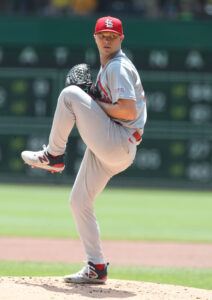
Gray, who turned 36 earlier this month, opted not to waive his full no-trade clause last offseason when the Cardinals laid out their plan to take a step back and focus on player development rather than their typical win-now mantra. Following the team’s playoff miss in 2025, however, Gray publicly acknowledged that he would “definitely” consider trade scenarios as the Cardinals lean even further into a multi-year rebuilding effort. “I signed here two years ago with the expectation of winning and trying to win, and that hasn’t played out that way,” he said in September. “I want to win.”
He’ll get that opportunity to win in Boston, joining a Red Sox rotation headlined by Cy Young runner-up Garrett Crochet and an offense anchored by budding superstar Roman Anthony. Boston secured a Wild Card berth in the American League this past season, and though they fell to the Yankees two games to one in that series, they’re a clear win-now club with postseason aspirations. The same cannot be said for the Cardinals.
Gray was heading into the final guaranteed season of a three-year, $75MM contract originally signed in St. Louis, when he was coming off his own Cy Young runner-up performance with the 2023 Twins. It was a heavily backloaded contract, paying the right-hander $35MM in 2026 plus a $5MM buyout on a $30MM club option for the 2027 season. The contract stipulated that even if the option was picked up, Gray could opt out and head back into free agency.
That deal has been slightly restructured. The new arrangement pays Gray $31MM in 2026 and includes a $10MM buyout on a $30MM mutual option for 2027. The amended deal reinforces the fact that Gray is a one-year rental — it’s been more than a decade since a mutual option was exercised by both parties in MLB — but it also comes with some perks for him.
Gray is now guaranteed an extra million dollars — likely a kicker for him to waive his no-trade protection — and he’ll now receive the full buyout on his 2027 option. Under the previous contract, if the Red Sox had picked up Gray’s option, he’d have forfeited the $5MM buyout by opting back into free agency. Now, he’ll receive a fully guaranteed $41MM for one year.
Because the Cardinals are kicking in $20MM, only $21MM of Gray’s $41MM guarantee will count against the Red Sox’ luxury tax total. Gray has already received a qualifying offer in the past (from the Twins in ’23), so he won’t be eligible to receive one from the Red Sox at season’s end.
Gray tossed 180 2/3 innings of 4.28 ERA ball in 2025 and had a more encouraging 26.7% strikeout rate and 5% walk rate. Metrics like SIERA (3.29) and FIP (3.39) feel he was far better than his earned run average.
By today’s standards, Gray is a workhorse. With the exception of the shortened 2020 season (when he made 11 of 12 possible starts), the former first-round pick has started at least 24 games every year since 2019, averaging 29 starts per 162-game season in that time. Gray hasn’t gotten back to the level of performance he displayed in that second-place Cy Young finish with Minnesota, but he posted a 4.07 ERA, 28.4% strikeout rate, 5.4% walk rate and 43.2% grounder rate in 347 innings across his two seasons in St. Louis.
Gray will join Crochet and Brayan Bello in the top three spots of manager Alex Cora‘s rotation. The remaining two places will be sorted out either later this offseason or next spring. Rotation candidates include veteran Patrick Sandoval (who signed a two-year deal last offseason while rehabbing Tommy John surgery), righty Kutter Crawford (who didn’t pitch in ’25 owing to oblique and wrist injuries, the latter requiring surgery), Payton Tolle, Connelly Early, Kyle Harrison, Hunter Dobbins and Luis Perales.
The Sox have several other starting pitchers on their 40-man roster, including a few just-added names (David Sandlin, Tyler Uberstine, Shane Drohan) ahead of the Rule 5 protection deadline. It’s a deep crop of arms that positions Boston well, both in terms of navigating inevitable injuries next year and in exploring the trade market for further roster upgrades.
Of course, the Red Sox don’t have to exclusively shop on the trade market for upgrades. Including Gray’s $21MM, the Sox are now projected for about $176.75MM in 2026 payroll, per RosterResource. That’s more than $30MM shy of last year’s spending, and it’s certainly feasible that ownership would push the envelope even further. Boston has trotted out Opening Day payrolls as high as $236MM in the past. The addition of Gray leaves them about $21MM shy of the first tier of luxury tax penalization. The Red Sox have paid the luxury tax in two of the past four seasons, including 2025. Simply put, there’s ample room for additional spending.
For the Cardinals, the trade trims $20MM off the books and brings in a pair of promising arms. Fitts is big league ready and could step right into the St. Louis rotation. The 25-year-old (26 next month) made 11 appearances for the Red Sox in 2025, including 10 starts. He was tagged for a 5.00 ERA in that time due to an extreme susceptibility to home runs (11 homers, or 2.20 HR/9). However, Fitts posted a respectable 20.5% strikeout rate and 8.2% walk rate in the majors, and he was solid in the minors as well (3.60 ERA, 21.3 K%, 8.7 BB% in 30 innings).
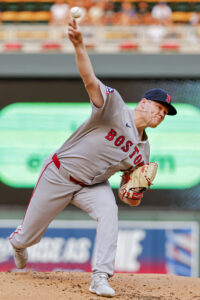
Originally a sixth-round pick by the Yankees back in 2021, Fitts landed in Boston by way of the 2023 Alex Verdugo trade. (Though new Cardinals president of baseball ops Chaim Bloom formerly ran the front office in Boston, he’d already been replaced by Craig Breslow by the time of that trade, so there’s no prior connection between Fitts and Bloom.) Fitts ranked 11th among Red Sox farmhands in 2024 and 12th in 2025, per Baseball America, whose scouting report pegged him as a back-of-the-rotation starter or multi-inning reliever.
Fitts averaged a hearty 95.9 mph on his four-seamer in 2025 and complemented the pitch with a slider, curveball and newly implemented sinker. BA’s scouting report on the righty noted that he struggles to miss bats within the zone, and the numbers have thus far borne that out. Fitts missed bats off the plate with his sweeper/slider, but opponents made contact on 87.5% of his pitches within the strike zone — a couple percentage points higher than the 85.4% league average. The addition of that sinker/two-seamer looks to have helped Fitts bolster his ground-ball rate, as it enjoyed a nice bump both in Triple-A and the majors, now sitting at 43.6% — just north of the 41.8% league average.
Whether Fitts settles in as a fourth starter or moves into a bullpen role, he should pitch plenty of innings in St. Louis this season. He’s controllable for a full six seasons, as he finished the year eight days shy of one full year of major league service. Fitts also still has a pair of minor league option years remaining, which only gives the Cardinals more flexibility with him in the years ahead.
Clarke, 22, was Boston’s fifth-round pick in 2024. He sat fourth among Red Sox prospects (and 86th in the game overall) on the midseason rankings from FanGraphs’ Eric Longenhagen. Clarke ranked fifth among Red Sox prosects on MLB.com’s midseason rankings. He was not included in Boston’s top 10 on yesterday’s latest prospect rankings from Baseball America.
Though he was drafted in ’24, Clarke didn’t make his pro debut until ’25. He split this past season between the Red Sox’ Low-A and High-A affiliates, working to a combined 4.03 ERA in 38 innings (14 starts). Clarke sits 97 mph with his heater and draws praise for a plus-plus (70-grade) slider. He currently lacks an average third pitch, however, and his command is clearly a work in progress. That velocity and slider combo blew hitters away in the low minors (34.5% strikeout rate), but Clarke also walked a whopping 15.5% of his opponents — including an 18.1% walk rate in High-A against more advanced hitters.
Listed at 6’4″ and 220 pounds, Clarke has a starter’s build and two potent weapons in his arsenal. The new Bloom-led Cardinals will be tasked with refining Clarke’s command and perhaps incorporating a third pitch to help him more capably combat right-handers, who drew a walk in nearly 18% of their plate appearances against Clarke. If Clarke can’t find a third pitch or hone his command any further, it’s easy to imagine that fastball/slider combo playing up in a late-inning relief role.
Overall, it’s a nice return for the Cardinals, who secure an MLB-ready arm and a high-risk but high-upside prospect — all while trimming $20MM off the books. Today’s trade only further cements that the Cardinals are shifting their focus to the future. Further trades are sure to follow, with Brendan Donovan, JoJo Romero, Willson Contreras, Nolan Arenado and Lars Nootbaar among the possibilities.
As for the Red Sox, they’ll pay a relatively steep price (both in terms of dollars and talent) to add a durable veteran starter with plus rate stats and a nice postseason résumé (3.26 ERA in 30 1/3 innings). Gray clearly makes them better, and the Boston front office seems comfortable paying a higher short-term price to maintain some long-term flexibility. Whether they pursue further upgrades in the rotation or now turn their attention to the infield corners, the bullpen or their oft-discussed outfield logjam, the Red Sox have payroll space and a nice stock of young pitching to give them plenty of options in further augmenting their 2026 roster.
Jon Heyman of the New York Post first reported that Gray was being traded to Boston. ESPN’s Jeff Passan first reported the Cardinals’ return. The Athletic’s Ken Rosenthal reported specifics surrounding the slight restructuring of Gray’s contract. MassLive.com’s Chris Cotillo reported the specific amount of cash Boston was receiving from St. Louis.
Latest On Cardinals’ Offseason Plans
With Chaim Bloom now officially at the helm of the Cardinals’ baseball operations department, the rebuilding phase that the team has been expected to undergo since it was announced that Bloom would take over for John Mozeliak this offseason now looks likely to begin in earnest. That means exploring possibilities on the trade market, and Derrick Goold of the St. Louis Post-Dispatch reports that the Cardinals told agents during the GM Meetings this past week that their interest in at least some free agents will hinge on the team’s ability to clear salary in trades.
The big name so far in this winter’s rumor mill has been super utility man Brendan Donovan. Donovan has already been connected to Royals, Guardians, and Astros with other teams expected to be involved as well. Robust as the market for the 28-year-old’s services appears to be, clearing his salary (which MLBTR contributor Matt Swartz projects to land at $5.4MM in 2026) off the books won’t do much for the team’s bottom line. Of course, Donovan is far from the only name on the trade market from St. Louis. Six Cardinals appeared on MLBTR’s list of the Top 40 Trade Candidates for this offseason.
That includes three veterans making significant money: right-hander Sonny Gray, third baseman Nolan Arenado, and catcher-turned-first baseman Willson Contreras. Ownership is reportedly willing to include cash in trades of higher priced veterans, and the club’s trio of veterans with no-trade clauses have all expressed a willingness to be more lax with their no-trade protections than they were last winter. Goold writes that the Cardinals are “actively seeking “fits”” for both Arenado and Gray on the trade market. That’s hardly a surprise between St. Louis’s efforts to move Arenado all throughout last winter and the $40MM payout that Gray is guaranteed between his $35MM salary in 2026 and a $5MM buyout on his 2027 option.
Even if some salary is retained, moving Gray and Arenado would open up the club’s finances considerably. RosterResource projects the Cardinals for a $124MM payroll in 2026. While that’s down about $20MM from last year and nearly $40MM from two years ago, ownership and the front office have been candid about the plan to scale back payroll in recent years. If trading both Gray and Arenado can clear $30MM to $40MM off the Cardinals’ books this year, however, that should give them a lot more flexibility when perusing free agency for short-term upgrades who could either help the club compete next year or become trade chips themselves over the summer.
Notably absent from Goold’s roundup of rumors is Contreras. That’s an interesting development, as Contreras would likely be the easiest of the three to move in theory. With that being said, he’s also the one most hesitant to waive his no-trade protection. While he’s indicated he would be willing to consider possible trades, his preference remains to stay in St. Louis and serve as a veteran leader in a clubhouse that figures to get a lot younger as the team retools the roster. A surprise trade of Contreras could lessen the pressure to move both Gray and Arenado or open up even more possibilities on the trade market for St. Louis, but it’s fair to expect that the Cardinals will spend most of their energy on trying to move the veterans most willing to waive their no-trade clauses.
Looking beyond the club’s pricey veterans, Donovan is joined by players like Lars Nootbaar and JoJo Romero as potential trade chips Goold writes that the Cardinals told rival clubs they were willing to listen on. Goold notes all three of those players are within two years of free agency, a fact that’s also true of both Gray and Arenado. The only other players with less than three years of team control remaining in the organization are John King, who was reportedly a trade candidate over the summer, and post-deadline waiver claim Jorge Alcala. It wouldn’t be a surprise to see King’s name come back up in the rumor mill at some point, though Alcala seems unlikely to have any real trade value after posting an ERA north of 6.00 this past year.
In terms of the return for the players they look to deal, Goold adds that the Cardinals have made clear to rival clubs that they’re prioritizing pitching help and looking towards the future. Kansas City and Cleveland, as previously mentioned, are already known to be in the mix for Donovan and have the sort of young, controllable pitching available that could intrigue the Cardinals. The same could be true of teams like the Yankees and Dodgers who have previously expressed interest in Donovan as well. One intriguing fit could be with the Pirates.
In-division trades typically aren’t especially common, but Pittsburgh GM Ben Cherington has shown himself to be comfortable dealing with the Cardinals in the past, such as when the sides came together on a trade involving Jose Quintana and Johan Oviedo at the 2022 trade deadline. The Pirates have plenty of young pitching and are in need of help in the outfield that both Donovan and Nootbaar could potentially provide. Bloom’s old stomping grounds of Boston also have a rich collection of young pitching, though their existing glut of left-handed outfield talent could make them a less than ideal fit for someone like Donovan and especially Nootbaar.
Royals, Guardians Among Teams Interested In Brendan Donovan
Cardinals infielder/outfielder Brendan Donovan figures to be one of the most sought after trade candidates this offseason. Derrick Goold of the St. Louis Post-Dispatch reports that the Royals and Guardians are two of the clubs interested in acquiring him. Goold also mentions that the Yankees and Dodgers had interest prior to the deadline, which perhaps indicates they would be interested again.
Donovan, 29 in January, has a strong major league track record. He has appeared in 492 games and stepped to the plate 2,006 times. His 9.1% walk rate is solid while his 13.5% strikeout rate is much better than par. He has slashed .282/.361/.411 for a 119 wRC+, indicating he’s been 19% better than league average overall. He has also bounced around the diamond, having played all four infield positions as well as the outfield corners.
He is now two years from free agency. MLBTR contributor Matt Swartz projects him for a $5.4MM salary in 2026. He’ll be due a raise in 2027 before hitting the open market. The Cards are reportedly planning to engage in a multi-year rebuild and likely won’t be competitive in Donovan’s window of control.
Today, a report from Ken Rosenthal, Will Sammon and Katie Woo of The Athletic says the Cards are willing to entertain offers on many of their players but would prefer to hold Alec Burleson and Iván Herrera. Burleson is controlled for three more seasons and Herrera four. That perhaps gives some insight into what the Cards are envisioning as their rebuilding timeline.
That situation alone makes Donovan a trade candidate but there’s also the club’s broader infield picture to consider. Infielder JJ Wetherholt is one of the top prospects in the sport and is knocking on the door of the majors. Masyn Winn, controlled for four more years, is a strong glove-first shortstop. Wetherholt is also a shortstop but his defense is not at Winn’s level, so he’s likely to be moved to second or third base. The Cards also have Donovan, Nolan Arenado, Nolan Gorman and Thomas Saggese in the mix for playing time at those spots.
Arenado and Gorman are coming off some poor seasons and don’t have huge trade value right now. That’s especially true for Arenado, considering his contract, which features a large salary and a no-trade clause. Trading Donovan is the best path for the Cards to both recoup some meaningful young talent, likely on the pitching side, while also freeing up more playing time for others.
President of baseball operations Chaim Bloom admitted to Goold this week that he would likely be focused on acquiring rotation options. That could be controllable young guys or even veterans to eat innings. That will be especially true if they trade Sonny Gray, who is getting interest.
“We’ve definitely been listening on him,” Bloom said. “And definitely, as you would imagine, any time you have a good player, you’re probably going to get some attention and people who are interested. That’s not a surprise. He’s still one of the better pitchers in the league. We value him very highly. Just where we are and thinking long term, we’ve talked to him and we feel there might be something that makes sense. We’ll continue to explore that.”
Without Gray, the projected rotation includes Andre Pallante, Matthew Liberatore, Michael McGreevy and Kyle Leahy. Even a rebuilding club will want to do better than that. Bloom also spoke of a desire to add a veteran or two to the bullpen, though that would likely come via free agency rather than trade.
Given Donovan’s defensive flexibility, he could make sense for almost any contending club, but the Royals are certainly a good fit. “Right now we don’t have somebody who can play infield and right field, and that’s something we’ve got to look at,” Royals president of baseball operations J.J. Picollo said to Goold, speaking generally, not of Donovan specifically. “If we had somebody who could go from the infield to the outfield that’s very beneficial.”
The Royals have had problems in the outfield for years. In 2025, they got a collective .225/.285/.348 line from their outfielders. That resulted in a wRC+ of 73, dead last in the majors. Second base was also a problem this year. Jonathan India and Michael Massey were the primary options at the keystone. India hit .233/.323/.346 on the year for a wRC+ of 89. Massey was even worse, with a .244/.268/.313 line and 57 wRC+. India is going into his final arbitration season, with a projected $7.4MM salary. Massey is projected for just $2MM and can be controlled through 2028.
The payroll appears to be tight in Kansas City but moving on from India and replacing him with Donovan would actually save money. It would, however, require the Royals to give up something of value to the Cardinals. Thankfully, the Cards need controllable pitching more than anything and that’s something the Royals have. Kansas City currently projects to have a rotation of Cole Ragans, Seth Lugo, Kris Bubic and Michael Wacha. That leaves just one spot for Noah Cameron, Stephen Kolek, Ryan Bergert, Luinder Avila or Ben Kudrna.
Since pitching injuries are inevitable, the Royals would presumably prefer to hang onto that depth. However, without a lot of money to spend, there’s an argument for using those arms on the trade block to address their needs on the position player side. Mark Feinsand of MLB.com reports that they are also looking for a left fielder and righty-swinging guy to platoon with Jac Caglianone.
Donovan swings from the left side and wouldn’t help with the latter need, though he could help in left field if he is acquired and either Massey, India or someone like Nick Loftin takes hold of the second base job. Some righty platoon bats who wouldn’t break the bank include Lane Thomas, Miguel Andujar, Randal Grichuk, Austin Hays, Rob Refsnyder and Austin Slater .
The Guards are also a sensible fit. Similar to the Royals, they have been struggling to get strong production from their outfield. As mentioned, the Royals had the worst outfield production in the league in 2025. The Guards were barely above them on that list with a .225/.288/.341 line and 77 wRC+. Second base was also a weak spot, with Brayan Rocchio and Daniel Schneemann getting most of the playing time this year. Rocchio finished the season with a .233/.290/.340 line and 77 wRC+, with Schneemann posting a .206/.283/.354 line and 79 wRC+.
For both the outfield and second base, there are some potential in-house solutions. Travis Bazzana, one of the club’s top prospects, is a second baseman who is closing in on his major league debut. In the outfield, Chase DeLauter and George Valera both got late promotions in 2025. Given Donovan’s versatility, he could move around the field depending on which of those young guys are healthy and productive. His modest projected salary is also an obvious highlight for a low-spending club like the Guardians.
There’s often an abundance of controllable pitching depth in Cleveland but that’s less the case than usual right now. Their rotation was middling in 2025, but they did just bolster their pipeline by adding Khal Stephen in the Shane Bieber trade.
For the Yankees and Dodgers, their situations have changed since their reported interest in Donovan in July. The Yanks grabbed Ryan McMahon from the Rockies ahead of the deadline, moving Jazz Chisholm Jr. to second. They could still fit Donovan in the outfield but they will probably try to reunite with Cody Bellinger and/or Trent Grisham, while perhaps pursuing Kyle Tucker as well.
The Dodgers, they had Max Muncy on the injured list in July and Tommy Edman was banged up as well. Muncy got healthy by the end of the year. Edman recently underwent surgery to address his ankle and should be good to go by spring training. Both Edman and Donovan are capable of playing both second base and the outfield, so perhaps there’s a way they can co-exist. Donovan’s two-year window of control would line up with recent reporting that the Dodgers might look for a short-term outfield solution since they have so many prospects on the way. Donovan could fit into that plan but the Dodgers could also target more of a straightforward outfielder.
Photo courtesy of Jeff Curry, Imagn Images
Looking For A Match In A Sonny Gray Trade
The Cardinals are entering what could be a multi-year rebuilding period where they focus more on strengthening their farm system and player development apparatus than winning games at the major league level. That’s a pivot that started last winter, but a number of key veteran players with no-trade clauses wanted to stick with the organization for the 2025 season and try to win in St. Louis. With a 78-84 season in the books and Chaim Bloom having now officially taken over John Mozeliak’s spot atop the baseball operations department, however, those same veterans are softening their stance about the possibility of a trade.
Perhaps the most interesting of those veteran is right-hander Sonny Gray, who is entering the final year of his contract in 2026. Gray is coming off a down season and will turn 36 in November, but his 4.28 ERA in 32 starts this year was still right around league average with much stronger peripheral numbers than that. He struck out 26.7% of his opponents, walked just 5.0%, and had the sixth-lowest SIERA in baseball among qualified starters this year with a 3.29 figure that clocked in behind only Tarik Skubal, Garrett Crochet, Cristopher Sanchez, Paul Skenes, and Logan Webb.
That’s good company to keep, considering that all five of those players well might end up as finalists for their respective league’s Cy Young award this year, and should help to assuage concerns about Gray’s ability to compete at a high level in his mid-30s. Few pitchers have a recent track record more impressive than the veteran right-hander, all things considered. In 116 starts since the beginning of the 2022 season, Gray has a 3.53 ERA, a 26.6% strikeout rate, and a 3.17 FIP in 650 2/3 innings of work. It’s the sort of production that virtually any team could use in their rotation, but there are complicating factors in considering a trade for Gray.
The right-hander has a full no-trade clause that he has the ability to wield as he sees fit, and Gray is due a $35MM salary in 2026 with a $5MM buyout on a 2027 mutual option. That’s a hefty salary that a good number of clubs simply won’t be able to stomach, and the fact that Gray has shown a preference for pitching in smaller markets throughout his career could mean he’d wield his no-trade clause against some of the larger market franchises that could stomach his salary. The Cardinals are open to paying down salary in trades this winter, but it’s unclear if they’d be willing to pay down enough of it to get smaller market clubs into the mix for Gray’s services.
Which clubs are the best fits for St. Louis’s veteran hurler? Here’s a look at nine potential suitors, listed alphabetically within tiers:
Best Fits
- Braves: One of the clear best fits for Gray’s services is Atlanta, who were reportedly in on Gray when he was a free agent two offseasons ago. Since then, the Braves have struggled to stay healthy and even fell out of the playoff picture this year due in large part to a rotation that was desperately missing Max Fried‘s stabilizing presence after he left for the Yankees last winter. Atlanta has never been the sort of club to go out and spend hundreds of millions on an ace in free agency, so unless they change course this year they’ll need to get creative to add some certainty to a rotation that saw all of its established starters spend significant time on the injured list this year. Bringing Gray into the fold could be just that sort of creativity, and Alex Anthopoulos has long been comfortable bringing in veterans (like Marcell Ozuna, Josh Donaldson, and Charlie Morton) on short-term deals with high salaries.
- Giants: The Giants are going to need more than just Logan Webb, Robbie Ray, and Landen Roupp in their rotation next year, and Gray would make plenty of sense for that role. Gray was actually connected to San Francisco back in September as a potential trade target. Some of that report was based on Gray’s connection with former Giants manager Bob Melvin, who has since been fired, but the Giants are still one of the few clubs that could stomach most of Gray’s salary within their expected budget. Gray also had plenty of success pitching for the A’s in Oakland, so a return to the Bay Area might have appeal to him even without Melvin in the fold.
- Orioles: The Orioles, much like the Braves, found themselves pushed out of contention early this year due in large part to a lack of pitching depth. There’s virtually no certainty in the club’s 2026 rotation outside of Trevor Rogers, and president of baseball operations Mike Elias has shown a strong preference towards short-term additions when bringing in players who make significant dollars. That could make Gray a sensible fit following a season where Baltimore paid more than $41MM combined to Tomoyuki Sugano, Zach Eflin, and Morton for lackluster performances. While the Orioles are a lower budget club than most of the teams mentioned here, St. Louis’s willingness to eat salary could make Gray less of a financial burden than comparable arms in free agency.
Next Tier Down
- Athletics: Gray played for the Athletics in Oakland for parts of five seasons after they took him 18th overall in the 2011 draft. In that time, he posted a 3.42 ERA and 3.56 FIP across 705 innings of work. Gray was eventually dealt to the Yankees, and in the years since then the A’s have been uprooted from Oakland and moved to West Sacramento. That move came with a raised payroll and a more sincere attempt to compete than previous rebuilding years, however, and a hitting core of Nick Kurtz, Jacob Wilson, Brent Rooker, Shea Langeliers, and Tyler Soderstrom looks ready to compete in the playoffs. What they’ll need to make that happen is pitching, and Gray has front-of-the-rotation upside and experience playing in unfriendly pitching environments like Cincinnati’s Great American Ballpark. Perhaps if Gray was available last offseason, the A’s would’ve been a more sensible fit, but as it stands it’s unclear if the A’s intend to continue scaling up payroll after last season’s spending brought them an 86-loss campaign.
- Padres: No team comes to mind more quickly than the Padres when discussing creative trade proposals, and that’s entirely thanks to the efforts of president of baseball operations A.J. Preller. Preller is by far the most active and aggressive executive in baseball, and this winter he’ll be tasked with replacing Dylan Cease and Michael King at the top of the rotation despite a relative lack of budget space. Adding someone like Gray to the rotation alongside Nick Pivetta, Joe Musgrove, Yu Darvish, Randy Vasquez, and JP Sears would be a huge help in stabilizing things, but there are clear obstacles here. For one thing, the Cardinals would likely need to be willing to eat the overwhelming majority of Gray’s salary in order to facilitate a deal with San Diego. That would mean a rather high prospect cost for the Padres, and while Preller is never shy about trading prospects his push at this summer’s trade deadline has left those cupboards somewhat barren. What’s more, Gray would be controlled for just the 2026 season, and Preller usually prioritizing trades for controllable players over rentals.
- Dodgers: When it comes to spending money, there are few (if any) teams in baseball who can do so with the same reckless abandon as the Dodgers. Their payroll this season approached $400MM and it should surprise no one if it ends up in a similar place next season. While their rotation of Blake Snell, Tyler Glasnow, Yoshinobu Yamamoto, and Shohei Ohtani is currently powering them through the postseason, the injury concerns in that group are obvious and the depth behind that quartet is taking a hit with Clayton Kershaw‘s impending retirement. Adding a reliable workhorse like Gray would make plenty of sense, and the Dodgers are one of the few clubs that could reasonably take on most if not all of Gray’s salary without much issue. On the other hand, the Dodgers aren’t exactly the sort of small market club Gray has typically preferred to play for over the years, which could be a problem depending on how aggressive he is in using his no-trade clause.
Long Shots:
- Cubs: On paper, the Cubs might seem like an excellent fit for Gray. The club appears likely to pursue pitching help this winter after injuries to Justin Steele and Cade Horton left them shorthanded this postseason, president of baseball operations Jed Hoyer has shown a proclivity towards shorter-term additions with higher salaries, and Chicago’s status as a midwest city could be attractive to Gray for the purposes of his no-trade clause considering his previous decisions to sign in Cincinnati, Minnesota, and St. Louis. With all of that said, the biggest obstacle to this sort of trade is that the Cubs and Cardinals have one of the biggest rivalries in the sport and very rarely trade with each other. Perhaps Bloom taking over as president of baseball operations could help thaw that trade embargo, given that he and Brian Cashman executed what was then just the second Yankees/Red Sox trade of the 21st century back in 2021, but it would still be a shock to see the teams line up on a trade of this magnitude.
- Mets: The Mets are a team with plenty of willingness to spend money, a major need in the rotation, and a strong preference for bringing pitchers in on relatively short-term contracts. That all would make them seem like an obvious fit for Gray, but it’s fair to wonder how the right-hander’s previous stint in New York could impact interest on both sides. Gray’s 4.51 ERA in parts of two seasons with the Yankees was the worst stretch of his career. It would be understandable if Gray wasn’t interested in returning to New York at this point in his career, even for a different franchise, and it’s equally possible that the Mets would shy away from a pitcher who previously struggled in the sport’s largest media market.
- Reds: It was with the Reds that Gray turned his career around after leaving New York, and he pitched to a 3.49 ERA across three seasons in Cincinnati. He signed an extension with the club once before, so his no-trade clause would likely be a non-issue, and the Reds were connected to him both during his last trip through free agency and even on the trade market last year. It would stand to reason that there could be some interest between the two sides once again, but the Reds’ limited budget makes a trade hard to envision given that they already have a rotation of Hunter Greene, Andrew Abbott, Brady Singer, and Nick Lodolo locked in for 2026 with youngsters like Chase Burns and Rhett Lowder also in the mix for starts. Whatever budget space Cincinnati has available this winter seems likely to be better used elsewhere on the roster, barring a trade of another arm that creates an opening.
Report: Cardinals Ownership More Willing To Include Money In Trades
Everything coming out of St. Louis suggests that the Cardinals are at a major pivot point for the franchise. They are entering what could be a multi-year rebuild period as they focus on player development more than short-term contention. That has been the case for about a year already but all signs suggest the club will be leaning harder in that direction. Katie Woo of The Athletic reports that the ownership will now be more willing to eat money in trades, in order to extract greater returns.
That reporting aligns with comments this week from Chaim Bloom, the new president of baseball operations. “As far as cash being a lever on the trade front, that should never be off the table,” he said, per Woo. “Obviously, you’d prefer not to do that, but you could end up in a situation where adding cash to make a preferred deal work just makes sense.”
Between Bloom’s comments and Woo’s reporting about ownership, it seems the franchise is aligned. That should only add to the sense that highly-paid players like Nolan Arenado and Sonny Gray are more likely to be moved this offseason than they were last winter.
A year ago, the Cards made it clear that they were beginning this reset period. That initially made it seem likely that veteran players like Arenado, Gray and Willson Contreras could be logical trade candidates. However, Gray and Contreras quickly indicated that they wanted to stay in St. Louis. Arenado was a bit more open to a trade but had a narrow list of five clubs he considered acceptable landing spots and ultimately wasn’t traded.
The club’s rebuilding plans now seem to be more firmly in place and both Arenado and Gray have publicly expressed a greater willingness to waive their no-trade clauses this time around. Contreras seems less interested in leaving but didn’t completely discount the possibility.
That’s a good start for the Cardinals but eating money will be helpful to getting deals done. Gray is still a good pitcher and just wrapped a solid season, middling earned run average notwithstanding. Though he allowed 4.28 earned runs per nine over 180 2/3 innings, his .329 batting average on balls in play probably inflated that a bit. His 26.7% strikeout rate, 5% walk rate and 43.9% ground ball rate were all strong marks. ERA estimators like his 3.39 FIP and 3.29 SIERA suggest he was more his old self than the ERA itself would indicate.
Even if clubs are willing to overlook the ERA, the contract is an obstacle. His three-year, $75MM deal with the Cardinals was heavily backloaded. He made just $10MM in 2024 and $25MM this year. He’ll then make $35MM next year, followed by a $5MM buyout on a $30MM club option. If that option is picked up, Gray can then opt out.
At this point, there is just one more guaranteed season left on the deal but with $40MM still to be paid out. The option doesn’t really add any extra upside because of that opt-out. Despite Gray’s talents, $40MM for one year of a pitcher is a lot. That kind of average annual value has been reserved for ace-type pitchers. Even if it were a fair price for Gray’s services, eating more money to extract more prospect capital is a sensible tactic for a club focused on the long term.
Arenado is going to make $27MM next year, though the Rockies are going to pay $5MM of that and $6MM is deferred. He’ll then make $15MM in 2027. That works out to less than $20MM annually but his stock is down after some rough years at the plate. He hit just .237/.289/.377 for a wRC+ of 84 this year and was barely above league average in the prior two campaigns. He still gets good grades for his glovework but isn’t the MVP candidate he once was.
Other teams will have different valuations of what they expect from him going forward, but as mentioned with Gray, any money that the Cardinals are willing to eat should increase what teams are willing to give up.
With Contreras, as mentioned, a trade seems less likely before even considering the money but it could happen. He is still owed $41.5MM over the next two years. That’s an $18MM salary next year, $18.5MM in 2027, and then a $5MM buyout on a $17.5MM club option for 2028.
He has been moved from the catcher position to first base. He got decent grades for his glovework there this year, getting credit for six Outs Above Average, while Defensive Runs Saved had him just below par at -1. The bat is still strong, as he hit .257/.344/.447 this year for a 124 wRC+. Those numbers are all close to his career marks, where he has a .258/.352/.459 batting line and 122 wRC+.
Though he’s going into his age-34 season, the deal isn’t bad. Christian Walker just got $60MM over three years from the Astros going into his age-34 campaign. But even if the Contreras deal isn’t underwater, other teams may not give up much for it unless the Cards pay it down somewhat.
Last winter, the Cards seemed to be more motivated by salary relief. Arenado was still owed roughly $60MM over three years when they lined up a trade with the Astros. Arenado vetoed that deal but reporting indicated the Cards were only going to eat about $5MM per season, leaving the Astros on the hook for about $45MM. It’s unknown what the Cards were going to receive in that trade but is was likely going to be a salary dump deal. Cardinals chairman Bill DeWitt Jr. later said they would have to find cuts elsewhere if they didn’t move Arenado, though that didn’t really end up happening.
Per RosterResource, the Cardinals had a $144MM payroll in 2025. Thanks to some trades and some expiring contracts, they are projected for just $75MM next year. Arbitration salaries for players like Brendan Donovan and Lars Nootbaar could push that up but those players are themselves candidates to be traded this winter. Perhaps that lighter payroll is what opened the path for the Cards to worry less about cost savings this time, which could increase their chances of adding meaning young talent to their pipeline.
There will be non-payroll expenditures, however. Woo reports that the club is planning to make more investments in the fields of analytics, player development and scouting. There’s also some uncertainty with the club’s TV deal. The Cards reached a new agreement with Main Street Sports, formerly known as Diamond Sports Group, to be on the FanDuel Sports Network in 2025. Woo writes that the deal contains option provisions after each season. She says that no major shake-up is expected but that some renegotiations could take place.
Photo courtesy of Isaiah J. Downing, Imagn Images