
Ryan Jeffers, Emmanuel Rodriguez To Undergo Surgeries
Twins general manager Jeremy Zoll provided some updates on injured players to reporters, including Aaron Gleeman as well as Dan Hayes of The Athletic. Catcher Ryan Jeffers will undergo hamate surgery and has an expected return timeline of six to eight weeks. Outfielder Emmanuel Rodriguez will also undergo surgery, in his case to address the torn ulnar collateral ligament in his left thumb.
Neither procedure is surprising but both are disappointing. It was reported earlier today that Jeffers had suffered a fracture of his hamate. That situation usually leads to surgery and that will indeed be the case in this instance.
Jeffers has been Minnesota’s primary catcher for a while now and has been one of the better offensive backstops in the league. Dating back to the start of 2023, he has a .258/.346/.445 line and 122 wRC+. Only four qualified catchers have a better wRC+ mark for that span and one of them, Willson Contreras, isn’t even a catcher anymore. That leaves Cal Raleigh, William Contreras and Will Smith as the active backstops ahead of Jeffers.
The production from Jeffers includes a huge .295/.408/.541 showing this season. That has helped the Twins hang in the playoff race, as they are currently only half a game out of a Wild Card spot in the American League. For now, Minnesota will have Victor Caratini and Alex Jackson handling the catching duties, which will surely be a downgrade. Caratini has a strong track record but is hitting only .192/.299/.231 this year. Jackson has a career batting line of .153/.239/.288.
The injury also interrupts a platform year for Jeffers, as he is an impending free agent. He was on pace to be the top available catcher and one of the top available bats regardless of position. That could still end up being the case but he’ll now have to deal with this lengthy absence and then try to get back on track after. The timeline with a hamate surgery isn’t massive in the grand scheme of things but players often struggle with a lack of power when they return.
As for Rodriguez, it’s also not a shocking development, as this thumb issue put him on the IL a couple of weeks ago. Though his timeline is still to be determined, the timing stings, as he is on the 40-man roster and could have been up in the big leagues right now if he were healthy.
The Twins have sent outfielder Matt Wallner and third baseman Royce Lewis to the minors this month, opening up some big league at-bats. Rodriguez wasn’t going to play third base but the demotion of Lewis could lead to other guys getting moved around. The Jeffers injury could also indirectly open up some designated hitter at-bats, as Caratini and Josh Bell have been splitting first base and DH. If Caratini is going to be behind the plate more regularly, there are extra DH at-bats available.
Though Rodriguez is very talented, injuries are becoming an annoying recurrence, perhaps giving Twins fans some déjà vu after years of watching Lewis and Byron Buxton. In the minors, Rodriguez has dealt with knee, abdominal, right thumb, left thumb and hip injuries. Due to all those ailments, he hasn’t topped 99 games in a season, which was back in 2023. He was capped at 45 games in 2024 and 65 last year. Now he is once again hurt and facing a notable absence.
When on the field, the talent is there and is also unique. Rodriguez has one of the most extreme approaches of any player. In his minor league career, he has a huge 30.2% strikeout rate but also a massive 21.6% walk rate. He has big power, speed and is considered a good defender. The strikeouts may become a problem but he also offsets those with the free passes.
Rodriguez has been on the Minnesota 40-man roster since November of 2023, getting added to keep him out of the Rule 5 draft. That means he has already burned two option seasons and is currently burning the third. That could put him out of options going into 2027, unless he can qualify for a fourth option, though that may not be possible.
A player is eligible for a fourth option if he hasn’t played five “full” professional seasons, where a full season is defined as one in which the player is active for 90 days, or is active for at least 30 with a 90-day total of active/IL time. This is basically to discount short-season rookie ball campaigns or seasons totally lost to injury. Despite all his issues, Rodriguez has been in full-season ball since getting promoted to Low-A at the start of 2022. He played 40-plus games from 2022 to 2025, so that would seemingly hit the 30-day/90-day threshold in each and count as four full seasons. Here in 2026, he has only played 26 games thus far but was active from late March to early May, getting to at least 30 days again.
Photo courtesy of Matt Blewett, Imagn Images
Ryan Jeffers Diagnosed With Hamate Fracture
11:47am: The Twins have now announced the full slate of moves. Righty Garrett Acton has been moved to the 60-day IL to open roster space for Jackson. Acton has been out since late April due to a shoulder strain, and he’ll now be sidelined into late June at the earliest.
11:20am: It’s shaping up to be quite a day for the Twins — and not in a good way. Not only are the Twins optioning former No. 1 pick and top prospect Royce Lewis to Triple-A, they’ll also lose their starting catcher for an extended period. Ryan Jeffers has been diagnosed with a fractured hamate in his left wrist, Bobby Nightengale of the Minnesota Star Tribune reports. Jeffers broke his bat on a foul ball in the eighth inning last night and motioned for trainers a couple pitches later. He exited mid-at-bat. The Twins will select the contract of journeyman catcher Alex Jackson to replace Jeffers, per Aaron Gleeman. Victor Caratini will presumably shoulder the starting workload behind the plate.
It’s a brutal injury for Jeffers, a free agent at season’s end, and for the Twins. Jeffers has been not only one of the Twins’ best hitters in 2026 but one of the most productive players in the game. He’s hitting .295/.408/.541 with seven homers and as many walks as strikeouts (15.6% apiece). Jeffers’ 165 wRC+ (indicating he’s been 65% better than a league-average hitter) ranks seventh among the 186 major league players who’ve logged at least 140 plate appearances in 2026.
Jeffers, 29 next month, has somewhat quietly been one of baseball’s best-hitting catchers for several seasons now. Dating back to 2023, he sports a .258/.346/.445 batting line with 51 homers and 70 doubles in 1411 plate appearances. Strikeouts were once an issue for him, but he’s dropped his rate of punchouts in three straight seasons. Jeffers had an uncharacteristic power outage last year, hitting just nine homers, but he slugged 35 homers in 800 trips to the plate from 2023-24 and was on pace for 20-plus again in 2026. This year’s .246 ISO (slugging minus batting average) is a career-high and would be his third ISO of .200+ in the past four seasons.
The Twins haven’t provided a timetable, but hamate fractures tend to sideline players for around four to five weeks. They typically require a small surgical procedure to remove the “hook” at the end of the bone. It bears emphasizing, however, that a four-week timetable is far from certain. Corbin Carroll, Francisco Lindor and Andrew Vaughn all took about that long (give or take a few days) to return from their own hamate fractures this season, but Orioles second baseman Jackson Holliday suffered a hamate fracture in mid-February and only just returned yesterday after multiple setbacks. A best-case scenario would see Jeffers return in mid-June, but that’ll hinge on how the surgery and the first few weeks of rehab play out.
In his place, Caratini will likely slide into the regular catcher’s role. The former Cubs, Brewers and Astros backstop signed a two-year, $14MM deal with the Twins as a free agent this winter. That contract positioned Caratini to serve as Jeffers’ backup while also mixing in at first base and designated hitter. He was coming off a nice three-year run between Milwaukee (2023) and Houston (2024-25), wherein he slashed a combined .262/.328/.400. That’s about five percent better than league average, by measure of wRC+, and about 17% better than the average catcher.
Things haven’t gone to plan for the switch-hitting Caratini so far in Minnesota. He’s appeared in 34 games and taken 127 plate appearances but posted a bleak .192/.299/.231 batting line. Perhaps more consistent playing time at one position will help his bat perk up.
Caratini is walking at an 8.7% clip with an 18.9% strikeout rate that’s nearly four points lower than league average, so it’s not as though his approach at the plate has completely evaporated. His contact rate on pitches within the strike zone is a superlative 95.7%. His 36.5% hard-hit rate is a career-low, but his 88.8 mph average exit velocity is right in line with last year’s 88.7% mark. Caratini, despite a sharp 22.4% line-drive rate, is hitting just .226 on balls in play. Statcast feels he’s been one of the game’s unluckiest hitters, pegging his “expected” batting average at .247 and his “expected” slugging percentage at .363.
Jackson, 30, is having a typical season for himself over in St. Paul. For him, that means good defense and power with poor on-base marks and far too many strikeouts. He’s batting .239/.295/.511 with seven homers in 95 Triple-A plate appearances, but he’s struck out nearly 33% of the time he’s set foot in the batter’s box.
The Twins acquired Jackson in an offseason deal with the Orioles, sending minor league utilityman Payton Eeles the other way in the deal. At the time, Jackson was viewed as the backup to Jeffers. The Twins were going through some ownership uncertainty and didn’t know what kind of resources — if any — they’d have to spend in free agency. Once they announced three new minority stakeholders and received the green light for some modest free agent spending, Caratini was brought in on his two-year deal. Jackson was passed through waivers in spring training and stuck around as a depth piece. He’s being paid $1.35MM this year and will now find himself in the backup role he initially envisioned — just behind a different starting catcher.
Acton, 27, was acquired from the Marlins in an April trade sending minor league righty Logan Whitaker back to Miami. He’d previously been designated for assignment by the Fish. Acton tossed 6 2/3 solid innings for Minnesota before hitting the injured list. He still only has 13 1/3 major league innings to his credit, but Acton has big strikeout numbers in his minor league career and enjoyed a strong season with the Rays’ Triple-A affiliate last year in his return from a yearlong injury absence: 3.68 ERA, 30.1% strikeout rate, 11.4% walk rate in 58 2/3 innings.
The Twins haven’t specified how long they expect Acton to be sidelined. Assuming his injury isn’t season-ending in nature, there should be plenty of opportunity for him in a patchwork bullpen that’s been one of the worst in Major League Baseball through the season’s first eight weeks.
Twins Notes: Peralta, Jeffers, Bullpen
Entering the offseason, most expected the Twins to continue the July fire sale that saw them trade 11 players for a combination of salary relief, prospects and controllable young big leaguers. Instead, after finalizing the addition of three new minority stakeholders, ownership gave president of baseball operations Derek Falvey and his staff at least some modest resources to add to a stripped-down payroll. That’s resulted in free-agent pickups of Josh Bell, Victor Caratini and, most recently, Taylor Rogers. (The latter two of those signings have not yet been made official.)
Minnesota at least looked into one far more notable swing, it seems. Ken Rosenthal of The Athletic reports that the Twins were among the teams to show some late interest in now-former Brewers ace Freddy Peralta before Milwaukee traded him to the Mets.
Given Peralta’s status as a one-year rental, it’s clearly a surprising fit. The Twins have made some relatively small additions but don’t stand as a clear contender, even in a perennially weak AL Central division. That said, Peralta’s $8MM salary would fit into even their stripped-down budget, and the Twins have a plethora of MLB-ready young arms as well as a glut of young outfielders who have either already made their MLB debut or are on the cusp of MLB readiness. Acquiring Peralta would’ve boosted their chances in the Central. Peralta could’ve been shopped again at the deadline had the season not gone their way, and he’s a clear qualifying offer recipient who’d net a team a compensatory pick upon rejecting.
It’s not clear how aggressively Minnesota pursued the idea, but it’s of at least minor note that they even looked into the possibility. The trade market has been largely picked over, particularly with MacKenzie Gore coming off the board in yesterday’s trade with the Rangers, but even faint Peralta interest suggests that the Twins could look into other moves on the buyers’ side of the trade spectrum.
Further reinforcing the idea that subsequent moves will be geared toward improving, catcher Ryan Jeffers said in a recent appearance on the Inside Twins show (video link) that management kept him apprised of how things were developing throughout their pursuit of Caratini. At first glance, the Caratini signing would seem to make Jeffers, a free agent next winter, a possible trade candidate. Jeffers suggests that management indicated otherwise to him.
“Before all that happened, I had conversations [with management telling me] ‘Hey, this might happen,’ and just reassuring me that my role as the guy who’s going to catch 100-plus games is not going to change,” Jeffers told host John Vittas. I’m excited to go back there and really get a full season in. Throughout my career, I’ve split time with a lot of guys, and I’m excited to catch a full workload and also be joined by a guy (Caratini) who’s been in the game for eight-plus years and has a lot of experience, has won a lot of games and has been with some organizations that have played really good baseball.”
Jeffers, 28, has quietly been one of the better-hitting catchers in the league over the past three seasons, hitting a combined .254/.338/.434 (117 wRC+) in 1264 plate appearances. A fair portion of that time has come at designated hitter while others handle the work behind the plate — veterans Christian Vazquez and Mitch Garver among them. Jeffers has never caught more than 88 games in a season, but the Twins have indeed signaled that the plan for him is to be behind the plate more often in 2026.
Caratini, of course, still figures to see plenty of time behind the plate. Even if the plan is for Jeffers to catch 100 to 110 games, that’d leave ample time at catcher for Caratini and Alex Jackson, who’s also on the 40-man and out of minor league options. Caratini has experience at first base and could log some DH reps himself, and he provides a nice fallback for the Twins in 2027 if Jeffers departs as a free agent. In that instance, Caratini could help to serve as a bridge to top prospect Eduardo Tait, whom the Twins acquired in last summer’s Jhoan Duran blockbuster with the Phillies.
While the Twins might not be making a full-fledged push for contention — they’re still going to end up with payroll that’s more than $20MM shy of last year’s $135MM mark, in all likelihood — it sounds as though there will still be some additions on the horizon. Rogers adds a veteran arm to the bullpen, but there’s still room for more additions. Rogers, Cole Sands, Justin Topa and Kody Funderburk are the only Minnesota relievers with even one year of major league service time.
Bobby Nightengale of the Minneapolis Star Tribune suggests that Rogers could be the first of multiple bullpen additions in the near future. Falvey told Nightengale and others that the Twins have been talking with multiple relievers. “We’re close to being able to add some guys that we think will fill out some experience in that group, but we’re going to need some young guys to step up,” Falvey said.
The Twins had at least some contact with right-hander Seranthony Dominguez before he landed with the White Sox on a two-year deal today. The open nature of their bullpen mix would make them an appealing destination for rebound candidates seeking opportunity at late-inning spots. Speculatively speaking, names like Michael Kopech, Liam Hendriks, Jose Leclerc and Drew Smith could see an unsettled Twins bullpen as an appealing opportunity where they’ll be afforded some leash to get back on track after recent injury troubles. Regardless of specific targets, it seems quite likely that Rogers won’t be the lone bullpen addition the Twins make between now and Opening Day.
Phillies To Meet With Bo Bichette
3:42pm: The meeting between the Phillies and Bichette is scheduled for next Monday, per Jon Heyman of the New York Post.
3:07pm: The Bo Bichette market apparently has a new entrant. Matt Gelb, Ken Rosenthal and Jayson Stark of The Athletic report that the Phillies have scheduled a meeting with the free agent infielder and his representatives at Vayner Sports that will take place within the next few days. Philadelphia’s interest “is legitimate,” per the report — borne out of Bichette’s willingness to move off of shortstop and a protracted stare-down between the Phils and free agent catcher J.T. Realmuto, who has yet to sign. Gelb and Stark note that a deal between the Phillies and Bichette would all but close the door on Realmuto’s time in Philly and could also lead to a trade of third baseman Alec Bohm.
Bichette, still just 27 (28 in March), not only enjoyed a rebound 2025 season after an injury-wrecked 2024 showing — he turned in what was arguably the best all-around season of his career. In 628 trips to the plate, he slashed .311/.357/.483 with 18 home runs. His 6.4% walk rate, while still a couple points below league-average, was the best of his career in a full season, as was his 14.5% strikeout rate.
Bichette’s summer, in particular, was something to behold. He got out to a decent but fairly pedestrian start before heating up in May and catching absolute fire midsummer. From July 6 through season’s end, Bichette went supernova with a .381/.437/.591 slash in 238 plate appearances. He homered seven times, piled up an outrageous 24 doubles, walked at an 8.8% clip and fanned in only 11.3% of his plate appearances. Push back to mid-June, and Bichette closed out his season with 330 plate appearances of .350/.395/.538 production.
Of course, “season’s end” is a relative term in Bichette’s case. He suffered a sprained posterior cruciate ligament on Sept. 6 and did not return for the final three weeks of the regular season. Bichette spent the early rounds of the playoffs resting and rehabbing that balky knee. He was cleared for a return in the World Series, and while he was clearly moving at nowhere close to 100%, his bat remained unfazed. Bichette went 8-for-23 in 27 plate appearances and crushed what had the makings of an iconic, go-ahead, three-run homer off Shohei Ohtani in Game 7 of the World Series — a no-doubter blast that would’ve proven to be a game-winner had the bullpen held onto Toronto’s lead.
Critically, Bichette played second base when he took the field during the World Series. It was his first appearance at the position since his minor league days, but the willingness to defer to a superior defender at shortstop (Andres Gimenez) undoubtedly helps Bichette’s case in free agency. The primary knock on him for some time has been that he’s a well below-average defender at shortstop.
The Phillies, per The Athletic’s report, would likely use Bichette at third base. It’s fair to wonder whether he has the arm for the hot corner, given that Statcast pegged his arm strength in just the 36th percentile of big leaguers this past season. Bichette averaged 82.3 mph on his throws to first base, tying him with current Phillies shortstop Trea Turner in that regard. It’s a below-average mark but also not a death knell on his chances of playing a passable third base. That 82.3 mph average also ties fellow free agent Alex Bregman, and it’s actually a half-mile faster than Philadelphia’s incumbent third baseman, Bohm.
Most problematic for the Phillies would be how Bichette could fit into the payroll. RosterResource projects the Phils for a $266MM payroll. That’s down from their $284MM Opening Day mark from last year, but Bichette would push them beyond that point (barring some kind of backloaded or deferred contract). And while the actual cash payroll is down from last year, the team’s luxury tax payroll is not. The Phils have a projected $301MM of CBT obligations, per those same RosterResource estimates. That means they’d be taxed at a 95% rate for the first $3MM of Bichette’s average annual value and a 110% clip on the remainder.
In essence, Bichette would cost the Phillies close to double his annual salary — at least in year one of the contract. That number could decline in 2026, when Nick Castellanos, Taijuan Walker, Jesus Luzardo, Jose Alvarado, Adolis Garcia, Edmundo Sosa and Bohm (if he’s not traded) are all off the books. Philadelphia has “only” about $187MM of luxury tax obligations in 2027, but that’s before factoring in a notable arbitration class (headlined by Jhoan Duran and Bryson Stott) and before filling any of the vacancies created by that slate of departures. It’s easy to see that number ticking up in a hurry.
Still, the long-term payroll in Philadelphia is probably a bit cleaner than most would expect for a team with so many high-priced veterans. Zack Wheeler‘s huge $42MM salary only runs through 2027. Harper’s annual salary is already relatively low for a player of his caliber, and it drops to $22MM in the final three seasons of his contract (2029-31). Harper, Turner, Cristopher Sanchez, Kyle Schwarber and Aaron Nola are the only players currently on long-term deals beyond the 2027 season, and Schwarber is the only member of that group who’ll be paid more than $27.5MM annually from 2028 onward. The Phillies have just over $117MM in guaranteed money on the books in 2028. Signing Bichette would really only inflate the 2026 payroll to problematic levels, and the Phils could backload or defer his contract to help offset some of that bloat.
Bichette landing with the Phillies would create a fascinating series of ripple effects. Teams that have been seeking help at third base (e.g. Pirates, D-backs, Mariners, Red Sox) might find a more willing trade partner in Philadelphia than they have in prior months, when Bichette was not under consideration by the Phillies’ front office. Bohm just agreed to a $10.2MM contract for the 2026 season and is a free agent next year.
Philadelphia would also need to make a catching acquisition. Rafael Marchan and Garrett Stubbs are the only others on the roster. Gelb and Stark report that Minnesota’s Ryan Jeffers — a free agent following the 2026 season — has been of interest to the Phillies in the past. However, the Twins have signaled that they’re aiming to be competitive in 2026 and won’t trade stars like Pablo Lopez, Joe Ryan and Byron Buxton. Would they truly make Jeffers available, in light of that decision? Time will tell.
If not Jeffers (or Realmuto), the options are few and far between. Victor Caratini is a free agent and could be the most straightforward solution. The Phillies could try to pry Hunter Goodman from the rebuilding Rockies. Luis Campusano looks like an odd man out in San Diego, though he’s yet to prove he can be a passable catcher in the majors. The White Sox have received interest in young backstops Kyle Teel and Edgar Quero, but both would come with a high asking price, given their recent top prospect status and half decade of club control. The Reds have some depth with Tyler Stephenson, Jose Trevino and Ben Rortvedt all on the books and top prospect Alfredo Duno coming in a couple years. If the Phillies do go the trade route, then how does the other club pivot to fill its newfound catching need? And where does Realmuto land? The ramifications of a Bichette signing in Philly stretch further than most would expect at first glance.
Twins Planning To Keep Joe Ryan, Byron Buxton, Pablo López
The Twins just underwent a big sell-off at the summer trade deadline. That led to plenty of speculation about further selling this winter but that appears not to be in the cards. Ken Rosenthal of The Athletic reports that the club plans to hold onto trade candidates like Joe Ryan, Byron Buxton and Pablo López as they try to return to contention in 2026. Rosenthal doesn’t mention Ryan Jeffers but this presumably applies to him as well.
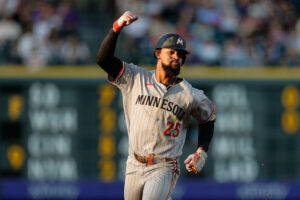
Minnesota was in contention for a decent amount of the 2025 season. They fell down the standings in the summer and pivoted into seller position ahead of the July deadline. Many expected them to do modest selling of impending free agents but they went far deeper than that. They flipped controllable relievers Jhoan Duran, Griffin Jax, Louis Varland and Brock Stewart. They also sent infielder Carlos Correa back to Houston, an effective salary dump. It was clearly financially motivated from the get-go and then the player they acquired in return, pitcher Matt Mikulski, was released in October.
After such an aggressive teardown, the expectation has been that they would continue selling this winter. Ryan, López and Buxton were all the subject of trade rumors. Buxton and López are the two highest-paid players on the team but would still be attractive to other clubs. Buxton is signed through 2028 and López 2027. Ryan isn’t expensive, as he’s still in his arbitration seasons. But with just two years of club control, he wouldn’t fit on a rebuilding club. With his modest projected salary, he likely would have had the highest trade value of the trio. Jeffers is an impending free agent and would have found lots of interest, especially considering the weak catching market.
There were at least some signs that the Twins didn’t plan for their deadline sell-off to lead to multi-year rebuilding project. Their returns in their summer trades were largely major league-ready players and upper level prospects. Across various trades, they acquired Mick Abel, Taj Bradley, Alan Roden, James Outman and Kendry Rojas, among others. The first four of those guys already had some major league experience. Rojas still hasn’t appeared in the big leagues but reached the Triple-A level prior to being acquired. If the club were planning a yearslong rebuilding effort, those would have been odd choices.
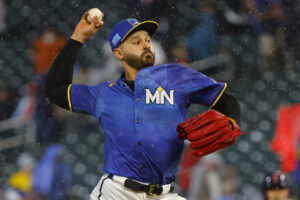
In the background of all this was the Pohlad family looking to sell the club, something they announced in October of 2024. But in August of 2025, just a few weeks after the deadline, it was announced that the family was taking the club off the market. They would instead be taking on some minority partners, whose investments would help the club deal with hundreds of millions of dollars in debt.
As the winter began, many still expected the club to be selling this winter. President of baseball operations Derek Falvey pushed back on that a bit in November, saying that he had not yet been given any directions about further lowering the payroll and that his plans would be to add to the 2026 roster until told otherwise.
None of their moves this offseason have clearly pushed them in one direction or another. They have made a few very small trades, having picked up relief pitcher Eric Orze and catcher Alex Jackson. But now it seems the club has picked a lane and will be trying to put their best foot forward in 2026.
Perhaps the heavy lifting on the financial front was accomplished at the deadline, primarily by the Correa deal. The situation with the new investors is still a bit foggy but it’s possible the debt is gone or least a much smaller concern. RosterResource projects the Twins for a payroll of $96MM next year, about $40MM below where they finished in 2025. They may not get all the way back to those 2025 levels but it doesn’t seem there’s any need to further subtract. Rosenthal’s source says the club has “mild flexibility” to make additions. The Twins already have one of the top farm systems in the league, so perhaps adding more prospects to the stockpile isn’t a high priority.
Though the Twins believe they can contend in 2026, they will have work to do. The rotation looks to be in decent shape. In addition to Ryan and López, they have Bailey Ober, Simeon Woods Richardson, Zebby Matthews, David Festa, Abel, Bradley, Rojas and others. But the lineup was subpar last year. In addition to Correa, they also traded impending free agents Harrison Bader, Ty France and Willi Castro. They traded almost their entire bullpen and will have a big to-do list there.
Before even considering the flexibility to make external additions, they will need internal improvements. In the lineup, guys like Royce Lewis, Luke Keaschall, Brooks Lee and other young players will need to either break out or return to form. It will be a similar situation for rotation options like Ober, Matthews, Festa, Abel and Bradley.
This is also a big development for other teams. Many of the other 29 clubs surely would have been calling about Ryan, López, Buxton and others if the Twins were going to continue to sell. If those players aren’t available, that could have domino effects elsewhere. Demand for the remaining free agents should increase somewhat. The same should apply for players that are available in trades, such as MacKenzie Gore of the Nationals or various players on the Cardinals.
It’s an interesting shake-up to the offseason. For the Twins, they will keep their top guys and see how things go in 2026. If they fall short in their attempt to compete, they could pivot to trading these players at the deadline. As mentioned, they have a strong farm system already, so perhaps returning to contention in 2027 would be possible even if 2026 comes up a bit short. For now, it dries up the trade market for other clubs, as the Twins will look for ways to utilize the bit of payroll flexibility they have.
Photo courtesy of Bruce Kluckhohn, Isaiah J. Downing, Imagn Images
Latest On Twins’ Offseason Direction
Following the Twins’ deadline fire sale, the widespread expectation has been that they’d continue moving veteran players this offseason. That’s not necessarily the case. President of baseball operations Derek Falvey tells Dan Hayes of The Athletic that his focus is on adding to the team, not subtracting, unless he “is told otherwise” by ownership. To this point, he has not given serious consideration to trading right-handers Pablo Lopez and/or Joe Ryan. The Pohlad family has reportedly not yet given the team’s front office a directive in terms of the budget for next season. If that eventual directive is to further lean into a rebuild, there might be another consequence: the potential acquiescence toward a trade from star center fielder Byron Buxton.
To this point, Buxton has made his desire to remain a Twin for his entire career clear. Even after this summer’s teardown of the roster, he emphasized that he had no plans to waive his no-trade clause and hoped to finish his career in Minnesota. The Twins’ offseason direction could put that loyalty to the test, as Hayes reports that Buxton might reconsider his stance if the team continues subtracting prominent players.
That’s hardly an announcement that Buxton wants out of Minnesota now, of course. It’s not impossible to see the bones of a competitive club in what the Twins still have on the roster. Lopez and Ryan are an excellent one-two combo atop the rotation. Bailey Ober had a rough 2025 season but was a quality mid-rotation arm for several years prior.
Beyond those three, Simeon Woods Richardson, Zebby Matthews, Mick Abel, Taj Bradley, and David Festa are all young starters with mid-rotation upside who were considered top-100 prospects before debuting in the majors. The viability of that group will mostly be decided by the futures of veterans like Lopez, Ryan and Ober, though.
While 2025 was disappointing for infielders Royce Lewis and Brooks Lee, no one should be surprised if the pair of former top prospects take a step forward next year and become the sort of high-end regulars Minnesota was hoping they could be when selecting each with a top-10 overall pick. Additional young talent is on the way as well, ranging from top outfield prospects Walker Jenkins and Emmanuel Rodriguez to young infielder Luke Keaschall, who impressed in 207 plate appearances this year. Ryan Jeffers is already a quality regular behind the plate. Outfielders like Matt Wallner and Alan Roden have posted huge numbers in the minors, with the former enjoying some big league success at times (but also lacking consistency). Adding a reliable bat at first base could give the Twins the makings of a decent lineup.
Last summer’s flurry of trades slashed spending enough that the Twins project for a payroll of just $95MM next year, per RosterResource, down more than $40MM from last year’s Opening Day mark. It’s fair to wonder whether those savings will be reinvested or whether further cuts will be made. If it’s the latter, or if the front office is only given minimal space to add, then Lopez (owed $21.75MM in each of the next two seasons), Ryan (arbitration-eligible through 2027) and Jeffers (arb-eligible through 2026) are natural candidates to be moved.
It would be quite an intriguing turnaround if the Twins decided to make a run at contending in 2026, though they would have to rebuild essentially the entire bullpen. Prior to the deadline, they traded away Jhoan Duran, Louis Varland, Griffin Jax, Danny Coulombe and Brock Stewart.
Should the Twins go the other way and end up dealing from that group of quality veterans, perhaps Buxton would reconsider his previously stated desire to be a Twin for life. The soon to be 32-year-old veteran will make $45MM total over the final three seasons of the extension he signed in Minnesota. He can tack on an additional $10MM of earnings each season based on plate appearances and MVP voting.
That’s a bargain for the production he provides, with a .270/.330/.540 batting line (138 wRC+), 53 home runs, 31 steals and 8.7 fWAR in 228 games the past two years. If he was available, virtually any team in baseball would have interest in bringing Buxton into the fold. Big-spending contenders like the Dodgers, Phillies, Yankees, and Mets all figure to be on the hunt for outfield help this winter, and if Buxton did decide to waive his no-trade clause he’d likely be able to have his pick of the litter in terms of destinations thanks to his favorable contract situation and excellent production.
Those big spending clubs wouldn’t be the only teams with interest if Buxton were to make himself available, and perhaps a team like the Astros or even Rays with payroll limitations but a strong commitment to winning nonetheless could get involved as well. Buxton’s commitment to the Twins over the years has shown he’s not afraid to try to win in a smaller market than New York or Los Angeles, though if he was to depart Minnesota it would surely be done with getting to the World Series firmly in mind after winning just one playoff series during his time with Minnesota.
Twins Rumors: Payroll, Ryan, Coaching Staff
The Twins are expected to listen to trade offers on several of their remaining veterans after gutting the roster — particularly the bullpen — ahead of this year’s trade deadline. Right-handers Joe Ryan and Pablo Lopez ranked prominently on MLBTR’s list of the offseason’s top 40 trade candidates, as did catcher Ryan Jeffers. The extent to which the Twins further subtract from the roster will at least in part stem from ownership’s budget for next year’s payroll. To this point, the Pohlad family has not given the baseball operations department “a clear direction” on next year’s payroll, Ken Rosenthal of The Athletic reports.
RosterResource currently projects a $95MM payroll for the Twins, which is down more than $40MM from their Opening Day mark in 2025. That doesn’t include potential subtractions from the arbitration class. Trevor Larnach, projected for a $4.7MM salary (via MLBTR contributor Matt Swartz), stands as a non-tender or trade candidate. Obviously, trades of Ryan, Lopez and/or Jeffers would further scale back spending. Lopez is earning $21.75MM in each of the next two seasons. Ryan is projected for a $5.8MM salary. Jeffers is projected to earn $6.6MM. (Center fielder Byron Buxton is guaranteed $15MM but has a full no-trade clause and has said even after the team’s summer fire sale that he won’t consider approving a trade.)
The idea of Minnesota taking that newfound payroll flexibility and reinvesting it in a series of win-now moves to complement a roster still featuring Ryan, Lopez, Buxton, Jeffers and several promising young position players (Luke Keaschall perhaps chief among them) makes at least some sense on paper, but there’s little in the Pohlads’ history of owning the club to support the notion that they’d go that route. Further subtraction still seems likely, though until the Twins tip their hand with whatever the first moves of the offseason are, perhaps fans can hold out some faint hope for a quicker-than-expected turnaround.
Assuming they indeed operate more on the sell side of things, Ryan in particular will be one of the most sought-after names on the trade market. The Twins discussed the 29-year-old righty, who has two years of affordable arbitration control remaining, with several clubs ahead of the summer trade deadline. No deal came to pass, but the Red Sox are known to have had substantial discussions regarding the right-hander, while the Yankees and Mets were among the others to at least check in.
Jeff Fletcher of the Orange County Register adds the Angels to the list of clubs that showed interest in Joe Ryan prior to the trade deadline. With the Halos set to seek pitching upgrades again this winter, it stands to reason that they could circle back and talk with the Twins this winter. The Angels’ farm system is not well regarded, though they have a fair number of young big leaguers or nearly MLB-ready arms who could pique the Twins’ interest (e.g. George Klassen, Ryan Johnson, Nelson Rada, 2025 first-rounder Tyler Bremner).
The Angels would surely face competition in any bid for Ryan. The 2025 All-Star tossed 171 innings of 3.42 ERA ball this past season, fanning 28.2% of opponents against a tidy 5.7% walk rate. He sports a career 3.79 earned run average that’s skewed a bit by an outlier 4.51 mark in 2023. Ryan has virtually no platoon split in his career, with the main blemish against him being some susceptibility to home runs (particularly in that rocky ’23 campaign). Angel Stadium, notably, has been more conducive to home runs than Minneapolis’ Target Field — both over the past three seasons and in 2025, in particular.
Much of the focus in the early stages of the offseason will be in determining exactly which direction the Twins will go and — if they indeed sell more veterans — the depth of that potential teardown. Minnesota already had a relatively well-regarded farm system prior to the deadline, and the Twins now boast one of the best minor league systems in the sport. They’re not a system that’s devoid of minor league talent, so the extent to which ownership is willing to invest in the club will be especially instructive when it comes to their 2026 outlook.
Looking beyond the roster, however, there are still some short-term decisions that need to be made in the dugout. Longtime manager Rocco Baldelli was fired at season’s end and replaced by his former bench coach from 2019, Derek Shelton. Bobby Nightengale of the Minneapolis Star-Tribune writes that the Twins initially began their search for a manager with a speculative list running around 80 names deep. They whittled that to 15, conducted Zoom interviews with seven and held in-person interviews with Shelton, Yankees hitting coach James Rowson (another former Twins staffer) and former Mariners skipper Scott Servais.
The decision, per Nightengale, ultimately came down to Shelton or Rowson. While Shelton won the job in the end, the Twins are hopeful of hiring Rowson back to the organization as Shelton’s new bench coach, Nightengale reports. The rest of the staff is largely up in the air. Dan Hayes of The Athletic reports that the Twins will retain pitching coach Pete Maki, pairing him with newly hired bullpen coach LaTroy Hawkins to oversee the staff in Minnesota.
Third base coach Tommy Watkins has already departed for Atlanta, and Hayes writes that assistant bench coach/catching coach Hank Conger and quality control coach Nate Dammann have both been dismissed. Decisions have yet to be made on hitting coaches Matt Borgschulte, Trevor Amicone and Rayden Sierra.
Twins Place Ryan Jeffers On 7-Day IL, Designate Brooks Kriske
The Twins announced that catcher Ryan Jeffers has been placed (retroactive to September 5) on the seven-day injured list for concussion-related injuries. Right-hander Brooks Kriske was designated for assignment in another move, and the two open roster spots will be filled by Triple-A call-ups Pierson Ohl and Carson McCusker.
Jeffers hasn’t played since he left Thursday’s game after taking a foul ball off his mask. The move to the seven-day IL will allow him at least a full week to recover from any lingering symptoms, and gives the Twins a bit of roster flexibility so they aren’t short-handed behind the plate. Jhonny Pereda was already called up from Triple-A on Friday, and Pereda and Mickey Gasper will assume catching duties while Jeffers is sidelined.
One of the few experienced Twins players that wasn’t dealt at the trade deadline, Jeffers has hit .262/.353/.394 with nine home runs over 442 plate appearances this season. This translates to a 111 wRC+, which ranks Jeffers sixth of the 10 catchers who have played enough in 2025 to count as qualified hitters. Jeffers’ power has dropped rather sharply over the last two seasons, yet the 2025 campaign has seen the backstop post career bests in both strikeout and walk rates.
It was just over a month ago that Kriske was claimed off the Cubs’ waiver wire, as Minnesota was looking to add some arms to a bullpen depleted by the team’s many deadline moves. Unfortunately, Kriske’s brief time in the Twin Cities didn’t yield many positive results, as he was pounded to the tune of an 11.25 ERA over 12 innings, with almost as many walks (14) as strikeouts (15). The Athletic’s Aaron Gleeman notes that Kriske posted the second-highest ERA of any Twins pitcher in franchise history with at least 10 innings pitched.
Kriske probably won’t get a chance to improve on his standing, if he is released after clearing waivers. Because teams are always in need of pitching depth, there’s a chance he could be claimed off waivers again, though Kriske’s recent results may not drum up much interest. He also has a 9.56 ERA over 37 2/3 career innings in the majors, but the right-hander posted far better numbers during his minor league career and during a two-season stint in Japan in 2022-23. Since Kriske has been outrighted before, he has the right to reject another outright assignment if he clears waivers, and instead opt for free agency.
Twins’ Ryan Jeffers Also Drew Interest At Trade Deadline
The Twins shipped out nearly 40% of their roster but could’ve been even more active. Minnesota also received interest in catcher Ryan Jeffers from multiple teams, per Jon Heyman of the New York Post, though obviously nothing came together.
Whether it was a case of the Twins not receiving a satisfactory offer or simply not having time to hammer out yet another swap involving a player controlled beyond the current season, Jeffers is still the Twins’ starting catcher — at least for now. He’s controllable only through the 2026 season, so it stands to reason that he could again be a trade candidate this winter. Perhaps if the Pohlad family can complete a sale of the team in the near future, new ownership will be more intent on keeping a competitive roster together for next season. However, as things currently stand, Jeffers seems likely to be available again in a few months’ time, given the sheer magnitude of Minnesota’s still-surprising deadline teardown.
The 28-year-old Jeffers (29 next June) is enjoying a third straight productive year at the plate, hitting .260/.345/.409 with eight homers, 22 doubles, a 9.8% walk rate and a career-low 19.3% strikeout rate. Dating back to the 2023 season, he’s a .250/.333/.441 hitter — good for a 117 wRC+ that ranks fifth among all qualified big league catchers in that time. His glovework isn’t as well regarded, but Jeffers isn’t a liability from a defensive standpoint by any means. He’s earning $4.55MM this year and will likely clear $7MM next season in his final year of club control.
It’ll be a thin market for teams seeking help behind the plate this winter, so Jeffers should hold plenty of appeal if the Twins do dangle him. The top options on the free agent market will be J.T. Realmuto, ahead of his age-35 season, and Victor Caratini, who’s never really handled a starter’s workload behind the dish. (Even this year, as Caratini is on track for a new career-high in plate appearances, he’s spent 24 games at DH and 11 at first base in addition to his 39 games behind the plate.)
There will be a few other options to consider, but this offseason’s catcher class is composed primarily of mid-30s backups and younger starters who are struggling through down years. Danny Jansen is having a sub-par year for a second straight season. Gary Sanchez will end up missing roughly one-third of the year with the PCL sprain that’s currently sidelining him. Salvador Perez can technically become a free agent, but the Royals will presumably pick up his $13.5MM club option (a net $11.5MM decision when considering the option’s $2MM buyout).
As explored at greater length by MLBTR’s Anthony Franco yesterday, Jeffers and top starter Joe Ryan headline a group of several logical offseason trade candidates who remain on the Twins’ roster after that deadline purge.
Twins More Seriously Listening To Offers On Rental Players
The Twins have stumbled out of the gate with a 1-3 record in the second half and are beginning to more seriously weigh trades of their short-term players, reports Jon Heyman of the New York Post. Utilityman Willi Castro, outfielder Harrison Bader and left-handed reliever Danny Coulombe are the team’s three most appealing free agents, but the Twins also have righty Chris Paddack, first baseman Ty France and backup catcher Christian Vazquez set to hit the market at season’s end.
[Related: Minnesota Twins Trade Deadline Outlook]
Of course, more of the focus for contending clubs will be on Minnesota’s more controllable and higher-profile talents. Top starter Joe Ryan and high-leverage relievers Jhoan Duran and Griffin Jax will draw widespread interest. Heyman notes that Twins brass won’t turn interested clubs away without hearing them out, but the they would understandably need to be bowled over to consider moving anyone from that group. All three pitchers are controlled for two additional seasons beyond the current campaign.
Among the rental players, Castro fits the broadest number of teams, given his versatility. The 28-year-old switch-hitter is enjoying a nice season at the plate, hitting .258/.350/.435 with 10 homers, 14 doubles, two triples, eight steals (ten attempts) and a career-best 10% walk rate. He’s been productive from both sides of the dish, has above-average speed (74th percentile, per Statcast) and is capable of playing second base, shortstop, third base and the outfield (although defensive metrics have panned his work at shortstop and in center). Castro is earning $6.4MM, making him affordable for virtually any contender.
Bader’s defensive excellence and bounceback year at the plate ought to garner plenty of interest as well. He’s hitting .249/.330/.438 as Minnesota’s primary left fielder, but he’s only in left because of Byron Buxton‘s presence in center. Bader still grades out brilliantly at any outfield slot, and while he’s typically showed notable platoon splits, he’s posted nearly identical numbers against righties and lefties alike in 2025. By measure of wRC+, Bader has been 15% better than average at the plate. He’s sporting his highest walk rate in a 162-game season since 2019 and hitting for more power than he has since 2021 (12 home runs, 11 doubles, .189 ISO in 282 plate appearances). He’s on a one-year, $6.25MM contract with a mutual option that obviously won’t be exercised by both parties.
Coulombe has been quietly terrific. He missed three weeks earlier in the season with a forearm strain but has shown no ill effects. His 0.65 ERA in 27 2/3 frames is the best in baseball among the 433 pitchers who’ve tossed at least 20 innings, and Coulombe has fanned 26.9% of his opponents against a 6.5% walk rate. He doesn’t throw hard (90.2 mph average fastball) and isn’t going to make it the whole season without surrendering a home run — he’s currently yet to do so — but there aren’t many better left-handed options on the market. He’s playing on a one-year, $3MM contract.
The rest of the Twins’ rental options have some track record but are in the midst of poor seasons. Paddack still has good command, but he’s sitting on a 5.14 ERA and career-worst 16.4% strikeout rate. He had a nice run from mid-April to mid-June, but Paddack has never really held up for a whole season under a starter’s workload and has been hit hard since mid-June. He looked impressive in relief when he came back from Tommy John surgery in 2023 and is making a relatively affordable $7.5MM this season, so perhaps a club might roll the dice on him as a bullpen option. Otherwise, his appeal as a fifth starter is fairly limited.
France had a nice start but has seen his role decrease and is now mired in an awful 5-for-41 slump that’s dropped his previously solid batting line to .245/.309/.348. He’s not striking out and has played a strong first base, but he’s a bat-first player who’s in his third straight down year at the plate. France’s $1MM salary is low enough that another club could well roll the dice on adding him to its bench, but he’s not going to net the Twins anything of substance in a trade.
The 34-year-old Vazquez is in the final season of a three-year, $30MM contract that hasn’t gone as hoped. He was always signed to be a glove-first catcher and remains a plus defender, but his once-passable offense has cratered and he’s been thoroughly outplayed by Ryan Jeffers, who has long since claimed the starting role in Minnesota. Vazquez’s .182/.249/.260 batting line in 159 plate appearances is among the least-productive in baseball. He’s still such a good defender that another club might take him on if the Twins ate most of the money he’s owed, but like France and Paddack, he’s not going to net a prospect of any real note.
There are other players the Twins could conceivably market. Right-handed reliever Justin Topa has pitched decently on a $1MM salary and has a cheap $2MM club option for the 2026 season. The aforementioned Jeffers is in his penultimate season of club control, but the Twins lack an heir apparent in the upper minors and starting catchers rarely change teams midseason. Trevor Larnach has been a roughly league-average bat at DH and in the outfield corners and is controlled two more seasons beyond the current one. Righty Brock Stewart has been excellent since the Twins signed him to a minor league deal a couple years back (2.44 ERA, 32.6 K% in 73 2/3 innings since 2022), but he’s frequently been injured. He’s being paid $870K and has two seasons of club control remaining. He could be a nice bullpen piece in future Twins seasons, but if a team is willing to make a decent offer, there could be some temptation to sell high as well.
One player clearly not going anywhere is Buxton. The 2025 All-Star is signed for three more seasons, has a full no-trade clause, and during last week’s All-Star break called himself a “Minnesota Twin for the rest of my life.”