
Injury Notes: Martin, Anderson, Castro, Gio
A year after a Chris Martin oblique injury altered the course of the postseason for the Braves, Martin is now potentially hobbled once again. Atlanta announced yesterday that Martin exited the season finale with a potential groin injury. Manager Brian Snitker said after the game that Martin will be in for treatment today (link via Gabe Burns of the Atlanta Journal-Constitution). Snitker said the Braves hoped to get out in front of the issue and hope it to be minor, but for the time being it sounds as though Martin is considered day-to-day. Anything more serious would be a major blow to the Braves’ bullpen, as Martin has been excellent in the first of a two-year, $14MM deal. In 18 frames, the 34-year-old righty allowed just two runs on eight hits with a 20-to-3 K/BB ratio.
A few more health situations to monitor among the game’s 16 playoff clubs…
- Brett Anderson was forced out of the Brewers‘ finale yesterday because of a blister on his left index finger, writes Adam McCalvy of MLB.com. He’d have been in line to start the third game of the Brewers’ Wild Card series, but that availability is now in question. “We’ll figure out how we’re going to line everything up over the next day or so, and we’ll go from there,” was all president of baseball ops David Stearns had to say on the status of the rotation after yesterday’s game, per McCalvy. Anderson, signed to a one-year, $5MM contract over the winter, was a steadying presence in the Milwaukee rotation. He missed time with another blister early on, but his overall 4.21 ERA and 4.38 FIP in 47 frames kept the Brewers in the majority of games he started. Anderson, as always, was a ground-ball machine with terrific control, inducing grounders on 57.7 percent of balls put in play against him and averaging just 1.9 walks per nine innings pitched. He’ll turn 33 this winter, and that performance should ensure that he gets another chance in a rotation somewhere — be it with the Brewers or with another club.
- Padres catcher Jason Castro took a foul tip the face behind the plate in yesterday’s game and has been diagnosed with a sprained jaw, per The Athletic’s Dennis Lin (Twitter link). The good news for Castro and the Friars is that the 33-year-old passed concussion protocols. The club is optimistic that he’ll be good to go when the Wild Card round begins on Wednesday. Castro’s role with the Padres might not be as large as the team envisioned when acquiring him from the Angels, as the club managed to pry Austin Nola away from the Mariners just a day after picking up Castro. The former Astros, Twins and Angels backstop has had just 30 plate appearances with his new club and batted .179/.233/.357 in the process. But Castro is a very well-regarded receiver with strong framing numbers, good patience at the plate and some pop in his bat. He hit .232/.332/.435 in 275 plate appearances with Minnesota last year.
- White Sox lefty Gio Gonzalez exited yesterday’s game with soreness in his left shoulder and will be evaluated further today, tweets Daryl Van Schouwen of the Chicago Sun-Times. Initially signed as a veteran option for the back of the rotation that would allow the Sox to ease their young starters into the mix in 2020, Gonzalez has spent more time in the ‘pen than as a starter. His last seven outings have come in relief, and although he has a 2.53 ERA in that time (three runs in 10 2/3 frames), Gonzalez has also issued nine free passes and hit two batters in that stretch. Between that shaky showing and this new bout of shoulder troubles, it’s far from certain that he’ll factor into Chicago’s postseason plans.
Previewing The 2020-21 Free Agent Class: First Basemen
We already kicked off this year’s position-by-position breakdown of the upcoming free agent class with a look at the market’s catchers. Next up is a crop of first baseman that doesn’t feature many surefire answers for clubs hoping to bolster their production at the position.
Recent Regulars
As a qualifier, there’s no clear, healthy, starting-caliber first baseman coming off a strong season in this year’s class. Due to the lack of a defined “top of the market” option, the top tier on this breakdown will simply be the few guys who have received regular reps in recent years — even if they’re all rebound candidates for one reason or another at this point.
- C.J. Cron (31): Cron mashed four quick taters to open the season before a knee injury required surgery and ended his campaign after just 13 games. From 2018-19 between the Rays and Twins, Cron batted .253/.317/.482 with 55 round-trippers in 1059 plate appearances. There’s obvious power here, and at his best, the right-handed-hitting Cron can flat-out decimate lefties while holding his own against righties. Knee surgery was a bad break, but he’s relatively young and could still be a starting first baseman if his recovery goes well.
- Yuli Gurriel (37): Gurriel hit .298/.343/.541 through 612 plate appearances in 2019 and then faceplanted with a .232/.274/.384 slash through 230 trips to the plate in 2020. He’ll face questions about his poor 2020 season, his age and his ties to the Astros’ 2017 scandal in free agency this winter as he searches for a new club. Gurriel was a superstar in Cuba and quite productive in MLB up until the current campaign. He can also play some third base and second base, though he was exclusively a first baseman/designated hitter in 2020.
- Jake Lamb (30): Shoulder injuries destroyed the end of Lamb’s career in Arizona, but he’s looked good since being released and latching on with the A’s. Lamb hit .267/.327/.556 with four homers in 49 Oakland plate appearances, although that showing still only boosted his overall 2020 line to .196/.283/.352. Lamb swatted 59 homers as the D-backs’ everyday third baseman in 2016-17 before his shoulder troubles set in. If he’s healthy, he’s young enough to reestablish himself as an everyday option at either corner infield spot. He’ll hope for a deep postseason run to continue his turnaround at the dish.
- Justin Smoak (34): The switch-hitting Smoak was better than his low batting average made it seem at first glance in 2019, but his strikeout rate rose by 10 percent in a disastrous Brewers showing in 2020. Smoak went hitless in a brief three-game look with the Giants after being released. From 2017-19, the big slugger hit .243/.350/.470 for Toronto, but this year’s woeful .176/.250/.361 batting line won’t do him many favors in free agency.
- Ryan Zimmerman (36): Zimmerman opted out of the 2020 season but made clear that he intends to play again in 2021. A persistent case of plantar fasciitis torpedoed his 2019 season and limited him to just 52 games, but Zimmerman mashed at a .289/.350/.542 clip in 899 plate appearances from 2017-18. It’s hard to envision “Mr. National” playing anywhere other than D.C. A low-cost Nationals reunion certainly makes sense.
Utility Players and Platoon Bats
- Matt Adams (32): Adams has never been able to hit lefties well, but his output against righties cratered in this year’s small sample as well (.152/.188/.261 in 48 plate appearances). He could land another minor league deal as a bench bat.
- Asdrubal Cabrera (35): Cabrera played a career-high 198 2/3 innings at first base this year, hitting .242/.305/.447 with eight dingers. He’s not a shortstop anymore, but the switch-hitter can still handle first, second and third base while providing average or better offense.
- Derek Dietrich (31): Dietrich’s transformation into a three-true-outcomes slugger continued in 2020. He hit .197/.347/.459 and saw just over half of his 75 plate appearances end with a home run (eight), walk (nine) or strikeout (21). He can also play second base, third base and the outfield corners.
- Brad Miller (31): Miller has experience at all four infield spots and in the outfield corners. He’s struggled with consistency, but he hit well in 2020 and owns a combined .247/.329/.468 line in 595 plate appearances dating back to 2018. He’s slugged 27 homers and doubles apiece in that time, tacking on four triples.
- Logan Morrison (33): LoMo rode big Spring Training and Summer Camp performances to a spot on the Brewers’ roster, but he struggled immensely through nine games in the Majors. Morrison bashed 38 home runs with the 2017 Rays, but a torn labrum in his hip wrecked his 2018 season with the Twins. He has yet to bounce back.
- Pablo Sandoval (34): The Panda revived his career with a quality 2018-19 showing in his return to the Giants, but the 2020 season was a disaster. The Braves rather stunningly added him to the roster in advance of the postseason, so perhaps he’ll get a late chance at showing some life. A minor league deal still seems likeliest.
- Neil Walker (35): Walker beat out several other veterans to win a bench spot in Philadelphia, but he hit .231/.244/.308 before he was cut loose earlier this month. The switch-hitter can handle all four corner spots and second base but is sure to be viewed as a bench piece if he keeps playing.
Players with 2021 Options
- Edwin Encarnacion, $12MM club option: Encarnacion was a lock for 30-plus homers from 2012-19 and belted 10 dingers in 2020 — maintaining a 30-homer pace. Unfortunately, he did so while batting just .157/.250/.377 on the whole. This year’s 29.8 percent strikeout rate was the worst of his career by a whopping seven percent. He’ll turn 38 in January.
- Todd Frazier, $5.75MM club option with $1.5MM buyout: The 2020 season was the worst of Frazier’s career at the plate, as he followed up a solid 2019 output with a lowly .236/.302/.382 slash. Frazier can play either corner infield spot and will turn 35 in February.
- Jedd Gyorko, $4.5MM club option with $1MM buyout: Gyorko, who turned 32 earlier this month, hit .248/.333/.504 with nine homers while logging more than 200 innings at first base. He can play all over the infield. His option would seem likely to be picked up in a normal winter, but the Brewers made some surprising option decisions a year ago, and with revenue losses throughout the league, perhaps they’ll feel that a similar skill set will be available more affordably elsewhere on the market. Many utility bats will be non-tendered or cut loose in the coming months.
- Howie Kendrick, $6.5MM mutual option with $2.25MM buyout: The 37-year-old Kendrick hit just .275/.320/.385 in 100 plate appearances with the Nats this year and voiced uncertainty about his future this weekend. It’s hard to see the Nats paying that price with Zimmerman also eyeing a comeback.
- Mitch Moreland, $3MM club option with $500K buyout: The 35-year-old raked with the Red Sox but saw his bat collapse upon a trade to the Padres, for whom he’s posted a dismal .203/.247/.362 slash in 73 plate appearances. It’s still a cheap price, and the Padres gave up some minor league talent to get Moreland, so perhaps he’s still in the 2021 plans.
- Daniel Murphy, $12MM mutual option with $6MM buyout: Huge buyout notwithstanding, the Rox probably won’t have much to think about here. The 35-year-old Murphy hit .236/.275/.333 in 132 trips to the plate in 2020, bringing his Rockies total to .269/.316/.426. That’s 23 percent worse than league average after weighting for his home park, per wRC+ (77).
- Anthony Rizzo, $14.5MM club option with $2MM buyout: It wasn’t a great season for Rizzo, whose .222 average was a career-low, but he kept getting on base and hitting for power. Rizzo popped up at a career-high rate and saw his exit velocity dip, but a correction on this year’s .218 BABIP still seems likely. It’d be a shock to see his option bought out, even coming off a down year at the plate.
- Carlos Santana, $17.5MM club option with $500K buyout: Santana has never walked at a clip better than this year’s 18.4 percent in a full season, but his power dropped to a career-low as well (.150 ISO). The $17MM net value would be steep for the Indians even if Santana had posted a terrific year, but this year’s .199/.349/.350 slash simplifies the decision.
- Eric Thames, $4MM mutual option with $1MM buyout: Thames mashed his way through a three-year stint with the Brewers in his return from a star turn in the KBO, but he hit just .203/.300/.317 in 140 plate appearances with the Nats this year. He’s likely to return to the market. His ability to play the outfield could help him a bit.
Nationals Extend Dave Martinez
SEPTEMBER 26: Washington officially announced a “multi-year” extension for Martinez.
SEPTEMBER 25: The Nationals have agreed to a contract extension with manager Dave Martinez, reports MLB Network’s Jon Heyman (via Twitter). It’s a three-year, $7.5MM contract that will take effect in 2021, Bob Nightengale of USA Today was among those to tweet. His previous three-year contract was set to expire at season’s end, and the Nats had yet to formally make a call on Martinez’s 2021 club option or on a lengthier deal. The new contract will make quite the birthday present for Martinez, who turns 56 years old tomorrow.
Typically, clubs seek to avoid having a manager or general manager navigate a season with the dreaded “lame duck” status — i.e. no contract in place for the following year — but the Nationals have repeatedly bucked that trend by waiting until the eleventh hour to make decisions one way or another on both their managers and GMs. The Nats didn’t extend general manager Mike Rizzo, whose contract didn’t even have a 2021 option, until three weeks ago.
No club in baseball has had more managerial turnover in recent years than the Nationals, but it appears that last year’s World Series win will bring about the type of continuity this current generation of Nats players has yet to see. Martinez became the sixth man to manage a Nationals game in an eight-year span (2011-18) when he was hired, and since moving to D.C., the Nats have never had a skipper last more than three seasons on the job. The Lerner family opted to replace former skipper Dusty Baker even after Rizzo reportedly fought to keep him in place, and Baker only landed with the Nats after the club alienated Bud Black with a lowball, one-year offer when he had emerged as the favorite following the interview process.
Replacing Baker with Martinez, previously the Cubs’ bench coach, has worked out for the Nationals. Despite losing Bryce Harper to free agency before 2019, the Martinez-led club won 93 games and its first title. On the other hand, this year has been a struggle for the Nationals, who saw star third baseman Anthony Rendon leave in free agency and have gone almost entirely without injured World Series MVP-wining right-hander Stephen Strasburg. At 23-34, the Nationals won’t defend their title in this year’s playoffs, but that championship was understandably enough to convince the club that Martinez is the right person for the job. Along with their World Series win, Martinez has guided the Nats to a 198-183 regular-season record during his tenure in D.C.
Latest On ONeil Cruz
SEPT. 25: Cruz’s bail has been set at RD $2MM ($34K U.S.), per Dionisio Soldevila of Periodico Hoy. He’s facing trial and up to five years in prison if convicted.
SEPT. 22, 7:55pm: Cruz was driving under the influence when the accident occurred, Enrique Rojas of ESPNDeportes reports.
11:55am: Top Pirates prospect Oneil Cruz was involved in a traffic accident in his native Dominican Republic, El Diario Libre reports. Cruz survived, but the crash tragically took the lives of the three others who were involved. Per the report, the three deceased were traveling on the highway on a single motorcycle with no lights in the same direction as Cruz, who was driving his Jeep. The two vehicles collided.
Jason Mackey of the Pittsburgh Post Gazette reports that there is no indication that alcohol was involved in the accident, adding that Cruz himself did not sustain serious physical injury. The Pirates issued the following statement:
The Pirates are aware of the tragic accident in the Dominican Republic involving Oneil Cruz. We have been in contact with Oneil and he is cooperating fully with the local authorities. We will provide an update as more information becomes available.
The loss of three lives and the unimaginable mental and emotional anguish surely felt by the 21-year-old Cruz transcend any baseball-related tint to this story. We at MLBTR offer condolences to the families, friends and loved ones of all involved in the tragic accident.
Dakota Hudson Could Require Surgery
It’s already known that Cardinals righty Dakota Hudson won’t pitch again in 2020 after being placed on the 45-day IL due to a forearm strain, but it sounds as though there’s mounting concern regarding the injury. Derrick Goold of the St. Louis Post-Dispatch reports that the Cardinals have been exploring both treatment and surgical options, and colleague Rick Hummel writes separately that surgery “seems a very probable option.”
Hudson exited his Sept. 17 start after just two innings, and while manager Mike Shildt at the time called his level of concern “very low,” additional testing has forced him to change his tune. “I would like to be able to tell you it’s fantastic news, but I can’t say that’s going to be the case,” Shildt told reporters yesterday (via Goold). Hudson was known to be seeking additional opinions on the injury this week. It’s not yet clear what type of procedure — if any at all — would be required, but the Cards figure to have an update on the right-hander’s status before too long.
The obvious hope is that Hudson will be able to avoid going under the knife. Surgery is always a last resort and typically requires months-long rehabilitation efforts. The Cards’ 2021 rotation is already a bit murky thanks to injuries elsewhere — Miles Mikolas underwent flexor tendon surgery earlier this year — and the fact that Adam Wainwright is a free agent at season’s end.
Also muddying next year’s rotation picture are the enormous struggles that Carlos Martinez has endured in 2020. The former St. Louis ace returned to the rotation after spending the ’19 season in the bullpen but has been hammered for 22 earned runs on 26 hits and 10 walks through just 20 innings of work. Martinez’s season formally came to a close this week when an oblique strain landed him on the injured list, but there have been additional health concerns at play for the righty.
Martinez, who has asthma that hospitalized him for a night late last season, went to the emergency room for IV treatment three or four times while battling the coronavirus, per MLB.com’s Anne Rogers. Shildt suggested that Martinez was “affected by COVID probably more than anybody in this league” and was at one point “concerned about his own personal well-being and livelihood.” It’s admirable that he gutted out a return to the mound but also perhaps not surprising that he struggled to this extent given the apparent severity of his symptoms.
In a best-case scenario, both Martinez and Hudson will be ready to join Jack Flaherty, Mikolas and Kwang Hyun Kim on the Cardinals’ staff early next year — if not on Opening Day. But the health concerns surrounding both hurlers should give the Cards more incentive to explore yet another reunion with Wainwright and/or pursue additional depth options on the free-agent market.
Previewing The 2020-21 Free Agent Class: Catchers
The 2020 season is already winding down, and while more than half the players in baseball are eyeing postseason bids in this year’s expanded format, free agency looms not far beyond. It’s difficult to forecast just how the market will treat free agents in the wake of the sweeping revenue losses throughout the sport. Mookie Betts still got paid like a superstar on his extension, and there’s a general expectation that top-tier talent will still be paid. Many within the sport expect this to be a frigid winter for mid-tier free agents, however, with what is expected to be an aggressive wave of non-tenders only further saturating the market.
Let’s check in on where things stand on a position-by-position basis right now, beginning with this winter’s available catchers. (Players’ age for the 2021 season is listed in parentheses.)
Top of the Class
- J.T. Realmuto (30): As has long been apparent, Realmuto stands alone atop this year’s crop of catchers. He’s been arguably the best all-around catcher in baseball over the past several seasons, and his stock has been elevated to new heights with a .272/.355/.512 slash and 11 homers in 183 plate appearances. He was hobbled by some hip problems recently but is 4-for-12 since returning this week. Realmuto’s bat has been 32 percent better than that of a league-average hitter, per wRC+. Given that the average catcher is 13 percent worse than a league-average hitter by that same measure, his offense is particularly valuable. Realmuto is also a premier defender and even ranks in the 85th percentile of MLB players in average sprint speed, per Statcast. It’d be a surprise if he didn’t command a deal worth well north of $100MM.
Other Everyday Options (based on 2020 playing time)
- James McCann (31): McCann got out to a blistering start in 2019 before his production cratered, but he’s raking again in this year’s shortened slate. Through 107 plate appearances, McCann has batted .274/.336/.495, which brings his White Sox total to .273/.330/.466 with 24 homers in 583 plate appearances. There’s some pretty good fortune on balls in play to consider (.354 BABIP), and he’s still prone to strikeouts, but McCann has emerged as an above-average offensive backstop. His framing numbers are up this year, and he’s maintained a strong caught-stealing rate.
- Yadier Molina (38): The Cardinals icon opened some eyes earlier this year when he said he planned to continue playing whether in St. Louis or elsewhere — a departure from his previous “Cardinals or bust” mentality — but it’s hard to envision him playing anywhere else. He won’t command another $20MM salary, not with a .272/.310/.375 line through 146 plate appearances, but it sounds as though he plans to continue playing.
- Austin Romine (32): After years as a backup in the Bronx, Romine got a shot as the primary catching option in Detroit. The Tigers likely hoped that last year’s .281/.310/.439 slash was pointing to better days ahead at the plate, but Romine’s .238/.260/.317 line in 2020 fell back toward his lackluster career levels. A return to a backup role seems likelier than another starting gig.
- Mike Zunino (30): Zunino has never hit for average and probably strikes out too often to ever do so. However, he also has as much raw power as any catcher in MLB and is considered a premium defender at his position.
- Jason Castro (34): Castro’s massive strikeout rates are the trade-off for his excellent walk rate and his strong defensive skills. After batting .229/.325/.390 in three seasons with the Twins, he’s hitting .194/.310/.389 in 84 plate appearances between the Halos and Padres. Castro has some pop to go along with the OBP and glove, making his low average more tolerable. He’s been relegated to backup duty since being flipped from Anaheim to San Diego, so you could argue he belongs in the next tier of this breakdown, but he’s been a starter everywhere except his brief run with the Friars.
Backup/Timeshare Candidates
- Alex Avila (34): Avila has been a “three true outcomes” backup for several years, but while the walks and whiffs are still there, he’s lost the most important outcome in 2020. Avila has homered just once in 60 plate appearances with the Twins.
- Drew Butera (37): Butera seems to find his way to the Rockies or Royals every year. The veteran backup has never hit much but has carved out an 11-year MLB career on the strength of his reputation as a receiver.
- Welington Castillo (34): Castillo was looking to rebuild his stock on a minor league deal with the Nats after a dismal two-year White Sox run, but he opted out of the season at the beginning of Summer Camp.
- Francisco Cervelli (35): In a concerning trend, Cervelli missed much of the 2020 season with yet another concussion. It’s the seventh career IL trip due to concussion symptoms for Cervelli and his sixth since 2017. When healthy, Cervelli can hit, frame and throw well, but he’s been on the IL in each of the past five seasons.
- Tyler Flowers (35): Long a premium framer who has mashed lefty pitching, the right-handed-hitting Flowers has seen his production against southpaws evaporate over the past two seasons.
- Bryan Holaday (33): Holaday boasts a career 30.7 percent caught-stealing rate, but his overall track record at the plate is poor. He’s still found his way onto a big league roster each year since 2012, so clubs clearly respect the veteran as a depth/backup option.
- Erik Kratz (41): Kratz keeps landing with the Yankees — three minor league deals in four years — which makes sense as an Eastern Pennsylvania native who still resides near the club’s Scranton affiliate. He’ll be 41 next year, but Kratz is as respected as they come in clubhouses and could get another minors pact if he wants to keep playing.
- Sandy Leon (32): Leon’s huge 2016 season with the Red Sox looks like a clear outlier, as he’s hit .194/.261/.307 in four subsequent campaigns. He’s a quality defender with great caught-stealing and framing marks.
- Jeff Mathis (38): Speaking of great defenders, Mathis has as strong a reputation with the glove as any catcher in MLB. His bat has wilted to near-historic levels over the past couple seasons, but he wants to play in ’21 and is open to a limited role as a backup/mentor with the Rangers.
- Josh Phegley (33): Phegley has nabbed nearly a third of runners who have tried to run against him in his big league career. He struggles to get on base but does have good pop against lefties.
- Rene Rivera (37): Another quality defender with a limited offensive track record, Rivera hasn’t topped 100 plate appearances since the 2017 season. His defensive reputation should land him minor league offers this winter if he wants to keep going.
- Kurt Suzuki (37): Suzuki can still swing it better than your average catcher, slashing .257/.333/.385 in 116 plate appearances. He’s not regarded as a strong defender, and his longstanding issue controlling the running game has persisted in 2020 (5-for-32).
- Matt Wieters (35): Wieters has spent two seasons as a seldom-used backup to iron man Yadier Molina in St. Louis. He’s batted .209/.268/.398 with 11 dingers in 221 plate appearances for the Cards.
Players with Contractual Options
- Robinson Chirinos, $6.5MM club option with $1MM buyout: It’s all but a formality that this will be bought out. Chirinos has received just 30 plate appearances since being traded from the Rangers to the Mets and is sitting on a woeful .169/.241/.251 slash in 2020. He’ll turn 37 next June.
- Roberto Perez, $5.5MM club option with $450K buyout: Perez will be 32 next season and is having a miserable year with the bat, but he’s an all-world defender who ripped 24 home runs in 2019. Perez leads all catchers in Defensive Runs Saved over the past three seasons — it’s not close — and his glove alone arguably makes him worth this sum even if his 2019 offense was a fluke. That’s especially true considering his deal also carries a 2022 option.
- Wilson Ramos, $10MM club option with $1.5MM buyout: Ramos’ second season in Queens has been pedestrian, at best (.241/.301/.376). The Buffalo no longer resembles the force at the plate he once was, and he’s always been more of a bat-first option behind the dish.
- Stephen Vogt: The 35-year-old is actually close to seeing this vesting option kick in — he’d need to appear in each of the team’s final three games — but that seems unlikely. The D-backs have sat Vogt in all but four games this month, and while there’s probably a direct correlation between the drop in playing time and that vesting clause, the team can point to Vogt’s .147/.234/.265 slash as clear justification for sitting him.
Greg Holland Dealing With Oblique Injury
Royals closer Greg Holland was shut down after warming up last night due to an oblique injury, tweets Jeffrey Flanagan of MLB.com. That issue could seemingly render him unavailable for the remainder of the season.
Regardless of whether Holland gets into one of Kansas City’s final three games, it’s hard to paint his 2020 season as anything other than a resounding success. The 34-year-old pitched 28 1/3 frames out of manager Mike Matheny’s bullpen and plowed through opposing lineups with a 1.91 ERA, a 2.51 FIP, 9.9 K/9, 2.2 BB/9, just one home run allowed and a career-best 51.4 percent ground-ball rate.
Holland ramped up his slider usage to a career-high 50.7 percent this year, and his 93.3 mph average fastball was his best since 2017. The final stretch of games in 2020 proved particularly impressive, as Holland rattled off 13 1/3 shutout innings with just six hits and one walk while racking up 18 strikeouts. Certainly, ending on an injury — even a non-arm injury — isn’t an ideal way to finish out the season, but for a former star who returned to his original organization on a make-good minor league pact, the season could scarcely have gone much better.
This winter isn’t expected to be particularly kind to mid-tier free agents, but Holland should easily find himself a guaranteed deal this time around and could conceivably field multi-year offers. The Royals held onto him at the trade deadline and will surely have interest in re-signing the veteran, although they have some in-house options to step into the ninth inning should he find a more enticing deal elsewhere. Josh Staumont and Kyle Zimmer have both taken substantial steps forward in 2020, while fellow righty Scott Barlow‘s secondary metrics look much more impressive than his pedestrian 4.45 ERA. Flanagan wrote earlier this week that if the Royals can’t lure Holland or Trevor Rosenthal, whom they traded to San Diego last month, back to the organization in the offseason, they’ll likely explore similar additions of bargain veterans with some upside.
MLB Designates Three Independent Leagues As Official “Partner Leagues”
Sept. 25: Both the American Association and the Frontier League have indeed been introduced as formal “partner leagues” as well, MLB has announced. The league’s press release indicates that both will “collaborate with MLB on initiatives to provide organized baseball to communities throughout the United States and Canada.”
“We welcome the American Association and Frontier Leagues as Partner Leagues, and look forward to working with them toward our shared goal of expanding the geographic reach of baseball,” Sword said in a new statement.
Sept. 23: Major League Baseball on Wednesday announced that the independent Atlantic League has been officially designated as MLB’s first “partner league.” As a partner league, the Atlantic League will “meet regularly with MLB to discuss joint marketing and promotional opportunities, including the leagues’ shared goal of providing baseball to communities throughout the United States,” per the press release announcing the partnership.
There was already an existing relationship between MLB and the Atlantic League, which has in recent years been a testing ground for experimental MLB rules such as the extra-innings runner on second base, pitch clocks, larger bases and even automated strike zones. Today’s agreement not only expands that relationship but extends the arrangement through the 2023 season.
“We are excited to extend our relationship with the Atlantic League, which provides us a unique means to push the sport forward,” MLB executive vice president of baseball economics and operations Morgan Sword said in a statement within the release. “The Atlantic League clubs and players have been great partners to us as we jointly test ways to make our game even more interesting and engaging to fans.”
The Athletic’s Evan Drellich reported this morning that MLB had been pursuing agreements not only with the Atlantic League but also with other high-profile independent leagues, including the American Association and the Frontier League. Minor league team owners who spoke with Drellich expressed trepidation that such partnerships could be used as leverage by MLB in ongoing talks with MiLB about a new Professional Baseball Agreement between the two parties.
It’s also possible that some clubs that are cut in the inevitable, broad-reaching contraction of the lower-level minor leagues could land in the Atlantic League or other newly appointed “partner leagues,” per Drellich. A timeline on additional agreements with the American Association, Frontier League or other indie circuits isn’t clear, but the PBA between Major League Baseball and Minor League Baseball expires next week.
White Sox Designate Steve Cishek, Ross Detwiler For Assignment
The White Sox on Thursday announced that they’ve designated veteran right-hander Steve Cishek and lefty Ross Detwiler for assignment. Their spots on the active and 40-man rosters will go to lefties Aaron Bummer and Carlos Rodon, who have been reinstated from the 45-day injured list.
Cishek, 34, inked a one-year, $6MM deal with the ChiSox this past winter — a pact that contained a $5.25MM salary and a $750K buyout on a $6.75MM club option for 2021 that clearly will not be picked up. Cishek’s overall numbers with the South Siders aren’t great — a 5.40ERA and 21-to-9 K/BB ratio in 20 innings — but he’s pitched pretty well since an awful start to the year. Over his past dozen outings, he’s pitched 11 2/3 innings while allowing four runs on 10 hits and five walks with 14 punchouts.
Recent uptick notwithstanding, the Sox feel that both Bummer and Rodon represent better postseason options, it seems. With four days of the regular season left, this move seems likely to put an end to Cishek’s 2020 campaign, although it’s technically feasible that he could be quickly outrighted to the Sox’ alternate site and selected back to the roster in the event of an injury.
Detwiler, 34, was an early surprise for the Sox, rattling off 12 1/3 shutout frames across his first nine appearances of the season. The well-traveled southpaw punched out 10 hitters and walked none in that time, although the complete absence of and a .138 BABIP each looked quite unsustainable. Detwiler has yielded seven runs (only five earned) on eight hits and five walks in the 7 1/3 subsequent innings — with two of those hits clearing the fence for home runs. He carries a sharp 3.20 ERA and 3.89 FIP on the season as a whole, but that’s been his only real success at the MLB level since 2014.
Both Bummer and Rodon will join the bullpen for a Sox club that has lost its grip on the AL Central lead, now sitting a half game back of a Twins team it topped thrice in last week’s best-of-four series. Healthy versions of Bummer and Rodon would surely help their cause. The former established himself as a breakout bullpen star for the Sox just last year, firing 67 2/3 frames of 2.13 ERA ball with a 60-to-24 K/BB ratio. That showing earned him a five-year, $16MM contract extension with a pair of club options over the winter.
Rodon, the former No. 3 overall draft pick, was once viewed as a foundational piece for the Sox’ rotation but has seen his career slowed by Tommy John surgery and shoulder troubles. Of Rodon’s 95 career appearances at the MLB level, all but three have been starts. However, given the missed time in 2020, it’s unlikely he could be built back up to take a rotation spot. He could conceivably be a multi-inning relief weapon for skipper Rick Renteria in the playoffs, but we’ll first see how he looks in his return to game action over the next four days.
Alex Gordon To Retire At Season’s End
Royals icon Alex Gordon is set to announce his retirement after a 14-year career at the Major League level, reports Jeffrey Flanagan of MLB.com (via Twitter). The club has confirmed Gordon’s retirement. He’ll play out the remainder of the current season before formally calling it a career.
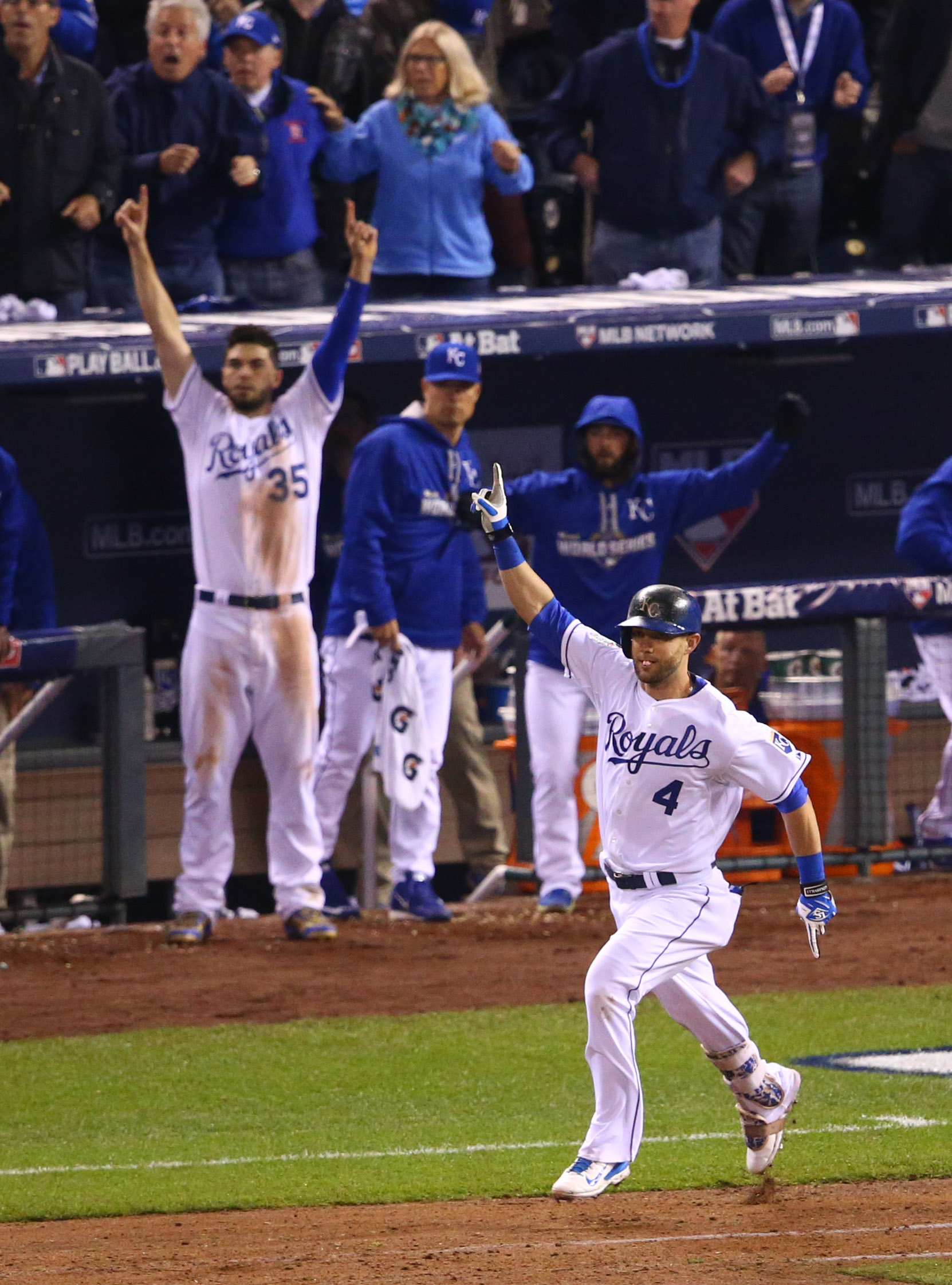
Now 36 years old, Gordon was the No. 2 overall pick by the Royals back in 2005. He spent his entire professional career in the organization, helping to stoke a baseball renaissance in Kansas City as the Royals appeared in back-to-back World Series, including their 2015 victory.
Long before Gordon was the face of the franchise, however, he was perhaps the poster child for not giving up on a top prospect after early struggles. Gordon spent just one full season in the minors before arriving in the big leagues with outlandishly high expectations in 2007. He put together a pair of solid but unspectacular seasons as the Royals’ third baseman in 2007-08 before a pair of injury-ruined campaigns in 2009-10 caused many to write the once-promising talent off at just 26 years of age. Struggles at third base had prompted the Royals to move Gordon to left field, and his .222/.319/.365 slash line in those two seasons certainly didn’t look like the savior for which Royals fans had pined after more than a decade of mediocrity.
That feels like an eternity ago, and it’s entirely due to Gordon’s remarkable mid-20s turnaround. Healthy in 2011, Gordon erupted with a .303/.376/.502 batting line, strong baserunning skills and elite left-field defense that netted him the first of an eventual seven Gold Glove Awards. From 2011-15, Gordon batted .281/.359/.450 while making three All-Star Games and totaling 26.4 wins above replacement. His breakout made him the foundational bedrock upon which the team’s young core could be built up.
Fellow homegrown talents such as Eric Hosmer, Mike Moustakas, Salvador Perez, Danny Duffy and Greg Holland joined trade acquisitions Lorenzo Cain, Alcides Escobar, James Shields and Wade Davis (among others) in fueling a brief but brilliant peak for GM Dayton Moore’s club. After a near-miss versus the 2014 Giants, the 2015 Royals ended a three-decade World Series drought. While Gordon’s overall postseason numbers — .222/.333/.398 — don’t stand out as dominant, the Royals may not have had a trophy to celebrate without his one-out, game-tying home run against Jeurys Familia in the bottom of the ninth of 2015’s Game 1 (video link).
Gordon’s breakout and the team’s revenue boost from consecutive World Series showings gave now-former owner David Glass the financial comfort to offer the three-time All-Star a franchise-record contract valued at four years and $72MM. That arrangement spanned the 2016-19 seasons, and while Gordon mulled retirement this time last year, he ultimately opted to return for one final go-around.
Certainly, Gordon wasn’t planning on doing so in the absence of the fans who hold him so dear in their hearts, but one can certainly imagine ample future opportunities for the K.C. faithful to express their gratitude. Teammate Whit Merrifield has already suggested that it’s “time to build the statue” on Instagram, and it seems there’s a good chance that Gordon will be the last Royal to ever don No. 4.
With four games yet to play, we can’t be sure of the exact totals Gordon will carry into retirement, but his overall body of work is strong. In 7237 plate appearances, all with the Royals, he’s a .257/.338/.411 hitter with 190 home runs, 113 stolen bases, 357 doubles, 26 triples, 867 runs scored and 749 runs batted in. Since he became a full-time outfielder in 2011, Gordon has the fourth-most Defensive Runs Saved of any Major League player, regardless of position, with 112.
All told, Gordon’s career has been worth 35 wins above replacement, per Baseball-Reference, although his value to the organization’s fans and the teammates who’ve followed his lead over the course of his career transcend that number. Gordon earned more than $117MM in his 14 MLB seasons and, along the way, cemented himself as a legend within the franchise’s lore — one who’ll be celebrated in Kansas City alongside greats like George Brett and Frank White for decades to come.