
Yankees Have Shown Interest In Steven Matz
Following injuries to Luis Severino and James Paxton, the Yankees have reached out to the Mets to inquire on the availability of left-hander Steven Matz, per Ken Davidoff and Mike Puma of the New York Post. SNY’s Andy Martino tweets that while there’s been contact between the two teams, however, a deal is quite unlikely.
The 28-year-old Matz has started 30 games in each of the past two seasons, pitching to a combined 4.09 ERA with 8.7 K/9, 3.1 BB/9, 1.49 HR/9 and a 48 percent ground-ball rate in 314 1/3 frames. The Mets control him through the 2021 season as an arbitration-eligible player.
A deal between the two sides coming together would indeed face numerous obstacles. The Yankees and Mets generally don’t trade with one another, and the Mets themselves have some question marks among their starting staff. Jacob deGrom, Noah Syndergaard, Marcus Stroman and Rick Porcello are locks at this point, and there’s been talk of taking a less-conventional approach to the fifth spot, using both Matz and Michael Wacha in nontraditional capacities. After that, the 40-man roster contains Stephen Gonsalves, Walker Lockett, Corey Oswalt and Franklyn Kilome, while veteran righty Erasmo Ramirez is in camp on a non-roster deal. Wacha and Porcello are already in need of their own rebounds, and a trade of Matz followed by an injury elsewhere on the starting staff would leave the Mets with a good bit of uncertainty.
From a financial vantage point, Matz’s $5MM salary for the 2020 season would cost the Yankees more than it appears at first glance. After adding Gerrit Cole to the mix and giving out arbitration raises to the likes of Paxton, Aaron Judge, Gary Sanchez, Gio Urshela, Tommy Kahnle and others, the Yankees find themselves more than $50MM north of the luxury barrier. Because they’re more than $40MM above that $208MM line and would be in luxury-tax territory for a second straight season, the Yankees would owe a 75 percent tax on any additional dollars added to the payroll. In effect, Matz would cost them $8.75MM. It’s not a backbreaking difference, but it’d certainly impact the manner in which the club determines Matz’s value and what he should cost in a theoretical trade.
Perhaps the biggest roadblock, though, is the simple fact that the Mets would covet MLB talent in return for Matz, according to the Post’s reporting. Puma and Davidoff suggest that Miguel Andujar would “likely” intrigue the Mets but that the Yankees wouldn’t be keen on such a swap.
Not long after Severino’s injury was announced, Yankees general manager Brian Cashman downplayed the possibility of making a move. “The winter marketplace this time of year, it doesn’t exist,” he said when asked about the possibility of going outside the organization for help. That’s not a declaration that he wouldn’t make any type of effort, but as the previously laid-out obstacles illustrate, making a deal this time of year (particularly in the case of these two teams) can be problematic.
The Yankees have surely asked about other starters — they’ve also scouted free agent Henderson Alvarez — but inquiring and acquiring are two very different things. There’s still a bit more than three weeks to try to pull something together before Opening Day, but it’s difficult to envision a Matz swap coming to fruition.
Steven Brault Shut Down With Shoulder Issue
The Pirates have shut left-hander Steven Brault down due to a strained muscle in his left shoulder, the team announced this morning. He’ll be reevaluated in two weeks’ time.
Brault, 27, pitched a career-high 113 1/3 innings at the Major League level in 2019 but struggled to a career-worst 5.16 ERA in that time. He averaged 8.0 strikeouts, 4.2 walks and 1.19 homers per nine innings pitched along the way.
Additional details on the injury weren’t provided, but it obviously casts doubt upon Brault’s readiness to begin the season. He’s worked both as a starter and as a reliever in the Majors and seemed likely to slot into the 2020 rotation prior to this morning’s announcement. The Bucs are thin on starting pitching options on the 40-man roster following injuries to Jameson Taillon (2019 Tommy John surgery), Chad Kuhl (2018 Tommy John surgery) and Clay Holmes (broken foot).
An absence for Brault could further open the door for non-roster southpaw Derek Holland to make the Opening Day rotation alongside Chris Archer, Joe Musgrove, Trevor Williams and Mitch Keller. The Pirates could also look to the handful of remaining free agents or pursue some alternative depth options later in camp as veterans opt out of minor league deals and as other players are exposed to waivers.
Tom Koehler Retires
Right-hander Tom Koehler, in camp with the Pirates as a non-roster invitee to Spring Training, announced his retirement from baseball on Instagram this morning. The 33-year-old Koehler says he’s looking forward to “starting [his] next chapter in the game,” whenever and whatever that may hold. For now, it seems as though he’ll take some time with his family.
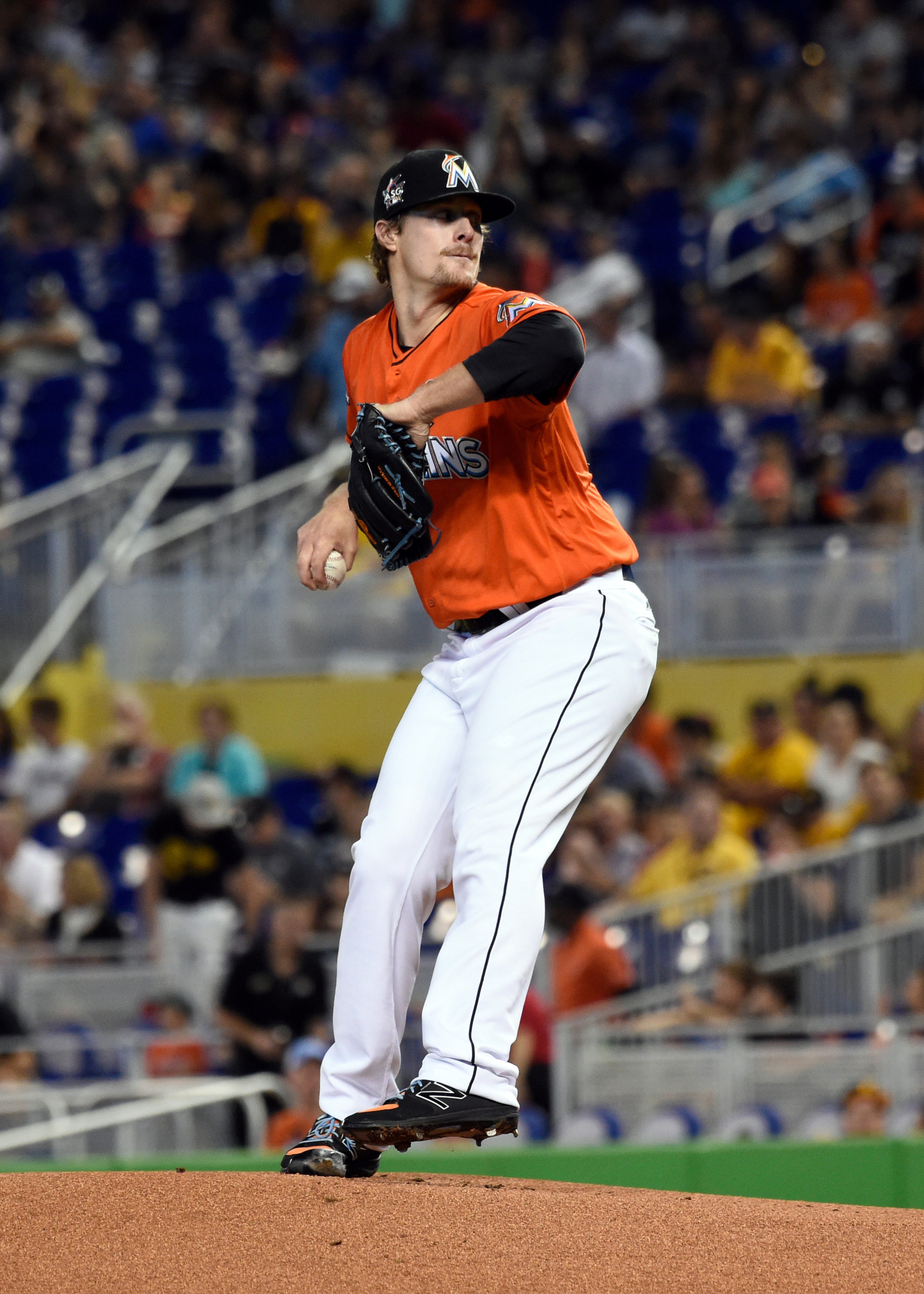
From 2013-16, Koehler was a solid and durable constant at the back of the Marlins’ rotation, averaging 30 starts per season while pitching to a 4.14 ERA with averages of 6.8 strikeouts, 3.7 walks and 1.0 home runs per nine innings pitched. He struggled early in the 2017 season and found himself traded to the Blue Jays, with whom he posted an intriguing 15-game relief stint (2.65 ERA, 18-to-6 K/BB ratio in 17 innings). That showing prompted the Dodgers to take a look at Koehler in the offseason with the hope that he could transform his career as a late-inning bullpen piece.
Instead, Koehler was beset by shoulder injuries in 2018. After spending more than half the season trying to rehab an anterior capsule strain and make his Dodgers debut, Koehler underwent surgery that ended his 2018 season. He never threw a pitch at the MLB level for the Dodgers. He signed with the Pirates both last offseason and earlier this winter but wasn’t able to get back onto the hill.
It’s a tough way to end a playing career, although as an 18th-round senior sign back in 2008, Koehler exceeded any and all expectations. The Stony Brook alum pitched in 161 Major League games, totaling 784 1/3 innings of 4.39 ERA ball along the way. Koehler’s 36-55 record is more an indictment on the sub-par Marlins rosters surrounding him for much of his career than on his own abilities on the mound. He was generally a serviceable option, twice leading the club in games started and once leading them in innings pitched. Koehler was never a household name but pitched into his arbitration years, helping him to secure more than $12MM in total salary. Best wishes to Koehler in whatever path he next pursues.
Mariners’ Matt Festa To Undergo Tommy John Surgery
Mariners right-hander Matt Festa is slated to undergo Tommy John surgery and will miss the 2020 season, tweets Ryan Divish of the Seattle Times. Festa was outrighted off the 40-man roster this winter but had been in camp as a non-roster invitee to Spring Training.
The 26-year-old Festa has pitched a total of 30 2/3 innings of relief over the past two seasons. To this point in his relatively young career, Festa has managed a 4.70 ERA with a 25-to-14 K/BB ratio and a 36.5 percent ground-ball rate in the Majors. He’ll now have to wait at least a year to for the opportunity to add to that resume.
Although Festa lost his roster spot over the winter, his absence still depletes the Mariners’ depth a bit. Based solely on his minor league results, Festa would’ve had a decent shot at eventually reemerging in the Majors in 2020. The overall sample is pretty small — Festa was drafted in 2016 and made his MLB debut in 2018 — but the right-hander has a sub-3.00 ERA in both Double-A and Triple-A and has generally posted sharp strikeout-to-walk ratios throughout his minor league tenure. In total, Festa has tossed 209 2/3 frames in the minors and compiled a 3.18 ERA with 11.0 K/9 against 2.5 BB/9.
Jose Bautista Eyeing Return As Two-Way Player
It’s been more than three months since Jose Bautista made it known that he had no plans to officially retire. There’s been virtually nothing mentioned about him since that time, but ESPN’s Jeff Passan now reports that the 39-year-old Bautista has been working out as a pitcher this winter in hopes of a return as a two-way player. Bautista plans to play for the Dominican Republic in this month’s Olympic qualifier tournament, though he might not pitch in that setting.
Bautista’s accomplishments at the plate are well known, of course. He emerged from journeyman prospect status to Blue Jays stalwart and feared All-Star slugger with a 2010 season that saw him rip a league-leading 54 homers. That kicked off a run of six straight All-Star appearances and helped to bring about the “Joey Bats” moniker that followed him throughout his career. From 2010-16, Bautista raked at a .264/.387/.542 clip, averaging 36 homers per season. His 2015 ALDS bat flip after a go-ahead, three-run homer against the Rangers stands out as one of the more iconic moments in Blue Jays franchise history.
All that said, Bautista’s production dipped sharply as he entered his late 30s. A 2017 return to the Blue Jays on a one-year, free-agent deal didn’t prove fruitful, and a followup effort split between the Braves, Mets and Phillies was better but not particularly encouraging. In a combined 1085 plate appearances between those two seasons, Bautista batted .203/.323/.371. He did not sign with a club last winter and sat out the 2019 season.
So what’s next for Bautista? He’s slated to play primarily first base in the aforementioned Olympic qualifier tournament. As for the slugger’s mound work, Passan tweets that he’s been able to run his fastball up to 94 mph. Bautista is also throwing a slider, it seems. Former Jays teammate Marcus Stroman tweeted in January that he’d been working out with Bautista and legitimately believed he could pitch in a Major League bullpen. It wasn’t clear at the time, though, that Bautista was actually working toward a spot as a potential two-way player.
Obviously, Bautista would face long odds in working his way back into the Majors — particularly as a viable pitcher. The addition of a 26th roster spot and the official two-way player designation may slightly bolster his chances of emerging as a first baseman/outfielder/reliever, but we’ve seen very few players capable of actually succeeding in a two-way role to this point. He’ll need to throw for big league scouts and would almost certainly need to be willing to take a minor league deal, but the possibility of Joey Bats becoming “Joey Sliders” should be a fun one to follow.
Yankees, Royals, Marlins Among Teams To Have Recently Scouted Henderson Alvarez
The Yankees, Royals and Marlins are among the teams that have scouted a recent throwing session from right-hander Henderson Alvarez, The Athletic’s Marc Carig reports while chronicling the 29-year-old’s latest comeback efforts. Alvarez has frequently taken to social media to post clips of his workouts and bullpen sessions, and he’s drawn at least a few speculative scouting assignments, although obviously no deal has come together yet. If or when he does sign, it’d surely be on a minor league pact.
Since being named to the NL All-Star team as a 24-year-old back in 2014, Alvarez has thrown just 37 innings in the Major Leagues and 116 1/3 innings of affiliated ball in the minors. He’s also tallied 165 1/3 frames in the Mexican League. Alvarez underwent shoulder surgery in both 2015 and 2016 — the effects of which have largely derailed what looked to be an otherwise promising career. However, he remains motivated to return to the big leagues, telling Carig: “I know I can still give more.”
Alvarez did pitch in affiliated ball last year, throwing 53 innings with the Nationals’ Triple-A club. Like most pitchers in Triple-A — the Pacific Coast League in particular — he was plagued by home runs, serving up 15 long balls en route to a 5.94 ERA. After being cut loose by the Nats, Alvarez returned to Mexico to make six starts for los Tigres de Quintana Roo. In 34 2/3 innings, he logged a 3.12 ERA with a 23-to-5 K/BB ratio and a 57.6 percent ground-ball rate. He closed out the season with a complete-game victory wherein he allowed one run.
The Yankees have lost Luis Severino for the season (Tommy John surgery) and James Paxton for more than a month of the regular season (back surgery), so it’s only natural to see them at least exploring depth additions in the rotation. At the moment, it looks as though Jordan Montgomery will take the fourth spot behind Gerrit Cole, Masahiro Tanaka and J.A. Happ. The competition for the fifth spot includes Luis Cessa, Jonathan Loaisiga, Mike King and Chad Bettis, among others.
The Royals, meanwhile, don’t have a defined fifth starter, and club decision-makers have been open about the possibility of bringing in a veteran option even as they allow their plethora of highly regarded young arms to compete for that starting job. Brad Keller, Danny Duffy, Jakob Junis and Mike Montgomery should hold down the top four spots. The competition for the team’s fifth starter presently is vast and could ultimately be a revolving door early in the year if the club opts to use an opener. Jesse Hahn, Eric Skoglund and Chance Adams are among the names on the 40-man roster vying for a look. Top prospects Brady Singer, Daniel Lynch and Jackson Kowar could all be factors eventually as well.
Rotation help isn’t as needed in Miami, where the Marlins have a wealth of controllable options with MLB experience who’ll comprise one of the game’s youngest starting staffs. Sandy Alcantara, Caleb Smith, Pablo Lopez, Jose Urena and Jordan Yamamoto have the most experience, and the wave of high-end arms immediately behind them includes the likes of Sixto Sanchez, Nick Neidert and Edward Cabrera. But Alvarez’s lone All-Star season in ’14 came as a Marlin, and a comeback with the Miami organization would make for a compelling storyline in South Florida.
Collin McHugh Cleared To Begin Throwing
10:06PM: The Blue Jays are one of the teams with some interest in McHugh, as TSN’s Scott Mitchell (Twitter link) reports that the right-hander “has been discussed internally” within Toronto’s front office.
11:03AM: Free-agent righty Collin McHugh has recently been cleared to begin a throwing program after undergoing a (non-surgical) tenex procedure on his right elbow, MLB Network’s Jon Heyman tweets. A wide range of clubs have recently checked in on his status.
The latest update on McHugh — and really the first of the offseason — indicates that he’s a ways behind pitchers who are currently in camp, so he’s not likely to be plugged into a team’s pitching staff from the outset of the season. McHugh missed about a third of the 2019 season due to ongoing discomfort in his right elbow and didn’t look like himself when he was healthy enough to take the mound. In 74 2/3 innings of work, he was hammered for a 4.70 ERA and a 4.43 FIP with 9.9 K/9, 3.6 BB/9, 1.45 HR/9 and a 38 percent grounder rate. The 32-year-old’s average fastball sat at 92.1 mph in 2018 but dipped to 90.8 mph in 2019. His swinging-strike rate, opponents’ exit velocity and opponents’ hard-hit rate all went in the wrong direction.
That said, McHugh was lights out in a bullpen setting in 2018, spinning a pristine 1.99 ERA through 72 1/3 innings with averages of 11.7 K/9, 2.6 BB/9 and 0.75 HR/9. And from 2014-17, McHugh was a quality rotation piece in Houston: 606 1/3 innings of 3.70 ERA (3.60 FIP) with 8.4 K/9 against 2.5 BB/9. He was one of the first spin-rate darlings in MLB, as the huge spin on his curve is reportedly what prompted the ‘Stros to pluck him out of the Rockies organization via a 2013 waiver claim.
It’d be easy to make the case for how McHugh could help virtually any club in baseball. The price tag on him shouldn’t be too high at this point — if he requires a big league deal at all — so it’ll be more a question of where McHugh feels comfortable and feels he’s presented with the best opportunity. That could mean signing on with a rebuilding club that’ll give him rotation innings or suiting up for a win-now club with fewer innings to offer but greater promise of a return to the postseason. Those preferences will be for McHugh and agent Mike Moye to sort out, but interest in the right-hander should be robust now that he’s able to get on a throwing program and give prospective new teams a clearer timeline for his return.
Who Else Could The Red Sox Target In Trades?
When Wil Myers‘ name surfaced in trade rumblings surrounding the Padres, Red Sox and Mookie Betts, it seemed like a fairly straightforward thought process. The Padres wanted to acquire a star (Betts), had been seeking to jettison some of Myers’ contract and didn’t want to pay both Myers’ $20MM salary and Betts’ $27MM salary. But when the Myers-to-Red Sox rumors reemerged even after Betts had been traded to the Dodgers, that was more surprising. Eventually, Alex Speier of the Boston Globe reported that the Sox’ aim in those talks was to use some of their newfound payroll space and luxury tax breathing room to effectively purchase some young pitching from the Padres. The basic premise: take on half of Myers’ contract and also acquire a pitcher such as Cal Quantrill to immediately plug into the mix at the MLB level. However, per Speier, there’s not much optimism at the moment that such a deal will come together.
But does that mean the Red Sox should abandon the strategy entirely? Well, why would they? There are dozens of undesirable contracts throughout MLB, and many clubs on the hook for those deals have pitching talent with which they could conceivably part.
However, it’s not as simple as just picking out a big-time contract and saying, “Let’s dump this on the Red Sox along with [Player X]!” Myers’ contract was something of an ideal fit for the Sox. The Padres aggressively backloaded his six-year, $83MM deal to the point that Myers earned only $7MM in salaries from 2017-19 (in addition to a weighty $15MM signing bonus). That’s notable for the Red Sox because they’re still “only” about $12-13MM shy of the luxury barrier. Taking on a bad contract with a $20MM+ annual salary over its full term — the relevant data point from a competitive balance tax perspective — would put them right back into the tax territory that ownership insisted on escaping erm, was … happy to escape as an ancillary benefit of building a competitive window … or however they choose to try to spin it.
Myers came with a $13.8MM luxury hit — and the cash the Padres would’ve included in the deal (a reported $30MM or so) would’ve essentially dropped Boston’s luxury obligation to $3.8MM. That’s an ideal balance of flexing the club’s deep pockets without running the risk of even approaching the luxury barrier. It’s easy to suggest Albert Pujols ($24MM AAV), Justin Upton ($23MM), Jason Heyward ($23MM), Chris Davis ($23MM), Matt Carpenter ($18.5MM) and plenty of others as a plausible fit, but Myers presented Boston with the rare opportunity to absorb half of a player’s remaining contract (and more than 36 percent of the total value) while only increasing their luxury payroll by about 1.9 percent. That’s not going to be the case with such high-AAV players.
Arrangements like the Myers deal are tough to find. Myers may well have been the single best target for this prospect-purchasing gambit — but he’s not the only one. Let’s take a speculative look at who else the Red Sox could inquire on in an effort to pursue a similar template but with a different trade focal point:
Rougned Odor, Rangers, 2B (three years, $36MM remaining on six-year, $49.5MM deal)
Odor’s contract only comes with an $8.25MM luxury hit in the first place, which the Red Sox could fit into their current budget even if Texas doesn’t include any cash. Add in even a few million dollars from the Rangers, and the Sox would be well shy of running into the threshold. To say the Odor extension hasn’t worked out for the Rangers would be putting things mildly; he’s hit .219/.285/.419 since putting pen to paper three years ago, and the bulk of the guarantee is yet to be paid out
The Rangers aren’t really maxed out in terms of payroll, but they’re also looking at playing one of the game’s top second base prospects in center field — surely in part due to Odor’s presence on the roster. Texas also added three starters with multiple years of control this winter (Corey Kluber, Kyle Gibson, Jordan Lyles), making it easier to absorb the blow of trading a big-league-ready arm. Maybe they wouldn’t be keen on using Kolby Allard (or someone similar) to rid themselves of the Odor contract, but if you’re the Red Sox, that’s an avenue to explore. It’s not like second base is a position of great certainty in Boston at the moment, anyhow.
Kyle Seager, Mariners, 3B (two years, $37MM remaining on seven-year, $100MM deal*)
The asterisk next to Odor’s name is necessitated by his contract’s “poison pill” — i.e. a $15MM club option that turns into a player option in the event of a trade. He’s at two years and $37MM only while donning a Mariners jersey; the moment he’s traded, that effectively becomes three years and $52MM. That wrinkle wouldn’t immediately impact his luxury tax hit though (and only minimally impacts it if/when he does trigger the option, as the current mark is $14.29MM).
The Red Sox are set at third base with Rafael Devers, but this type of trade isn’t really about positional need (and Seager could perhaps work at second base anyhow). The Mariners’ rebuild/”reimagining”/whatever they prefer to call it is nearing the point where GM Jerry Dipoto is going to want to supplement his emerging core with free agent acquisitions. Dropping a notable portion of the $19MM owed to Seager in 2020 and, perhaps more importantly, the $18MM owed to him in 2021 will aid in that effort.
Dee Gordon, Mariners, 2B/OF (one year, $14.5MM remaining on five-year, $50MM deal)
Same concept as Seager but with slightly different details. Gordon is a man without a position in Seattle and a free agent at season’s end. Gordon’s deal comes with a $10MM luxury hit that the Sox could shoehorn into their ledger without going over the barrier, but they’d have minimal breathing room. Gordon could step in as the primary second baseman with Dustin Pedroia on the shelf, pushing Jose Peraza to a more familiar utility role. And the Mariners would surely love to use that roster spot to get a look at a younger player while saving $14MM to spend on supplementing their core.
Randal Grichuk, Blue Jays, OF (four years, $43MM remaining on five-year, $52MM deal)
It’s hard not to wonder if the Jays would like a mulligan on last spring’s extension after Grichuk slashed .232/.280/.457 in 2019, effectively playing at replacement level. Then again, the Grichuk deal was a head-scratching move for most onlookers (myself included), as he didn’t appear to be a clear extension candidate. That 2019 slash looks awfully similar to Grichuk’s combined production from 2016-18 (.241/.292/.485), so perhaps the Jays are content with what he’s bringing to the table… but $43MM over the next four seasons nonetheless feels quite steep.
If the Jays are indeed looking for a way to back out of the deal, the organization is teeming with usable but unspectacular arms in the upper minors as it awaits the rise of higher-end prospects. The Sox aren’t getting Nate Pearson or anyone close to that caliber out of this deal, but paying a good chunk Grichuk’s deal in an effort to acquire a controllable fourth/fifth starter would be plenty defensible.
Ian Desmond, Rockies, INF/OF (two years, $26MM remaining on five-year, $70MM deal)
The Desmond deal has been a bust for the Rockies, who no longer even have a clear place to play one of their most highly compensated players. Charlie Blackmon, David Dahl, Raimel Tapia and Sam Hilliard are all more deserving of looks in the outfield. Garrett Hampson, Brendan Rodgers and Ryan McMahon are in the mix at second base. McMahon could also play first, where the Rockies have another underperforming veteran in Daniel Murphy (though he’s only signed through 2020).
Colorado owner Dick Monfort opened the season by declaring a lack of payroll flexibility (and, after a winter of inactivity, bizarrely proclaimed that the same Rockies club that lost 91 games in 2019 would win 94 games in 2020). The Rockies aren’t exactly teeming with high-end pitching talent — hence the 91 losses in 2019 — but they have seven or eight starters on the 40-man roster and in Triple-A behind German Marquez, Jon Gray and Kyle Freeland. This type of trade doesn’t really feel like Colorado’s style — in general, the Rockies aren’t highly active on the trade market — but if the Sox are interested in one of those back-of-the-rotation arms, it’s not hard to see the framework of a speculative deal.
—
As this exercise shows, it’s not exactly easy to structure a deal on this sort of premise — in large part because there just aren’t that many suitable contracts. And few clubs have the abundance of upper-level talent (with associated 40-man roster pressures) of the Padres. Still, the Red Sox surely will keep exploring avenues to put their wallet to work while still ducking under the luxury line.
Stephen Piscotty Questionable For Opening Day
The Athletics are shutting outfielder Stephen Piscotty down after an MRI revealed that his intercostal strain is “a little worse” than anticipated, manager Bob Melvin told reporters Friday (Twitter link via Martin Gallegos of MLB.com). The Athletics aren’t completely ruling out a scenario wherein Piscotty is ready to go on Opening Day, but his outlook is a bit uncertain at the moment.
Piscotty, 29, enjoyed a strong debut campaign with Oakland in 2018 after being traded over from the Cardinals, hitting .267/.331/.491 with 27 homers and 41 doubles. Knee and ankle troubles plagued him in 2019, though, and his ensuing .249/.309/.412 slash with 13 homers and 17 doubles marked a notable step back.
Currently, Piscotty is slated to be Oakland’s primary right fielder even in spite of the 2019 downturn. That’s in part due to his upside but also in part due to the fact that he’s being paid $7MM in 2020 under the terms of the six-year, $33.5MM extension he signed with the Cardinals back in April 2017. That deal runs through the 2022 season, paying Piscotty $7.25MM in both 2021 and 2022, and it also contains a $15MM club option for 2023 (with a $1MM buyout).
If Piscotty isn’t ready to go come Opening Day, the A’s aren’t short on alternatives. Veteran outfielder Robbie Grossman is in his final year of club control before he reaches free agency, and utilityman Chad Pinder has plenty of experience in the outfield corners as well. Should the club elect to simply elevate the role of Grossman and/or Pinder, that might help to open the door for out-of-options Jorge Mateo to make the club in a utility capacity. It’s also worth noting that the A’s have outfielders Dustin Fowler, Skye Bolt and Luis Barrera on the 40-man roster as well. Both Fowler and Bolt have big league experience.
However Piscotty progresses, it doesn’t sound at present like there’s any reason to believe that his injury is a long-term issue. Still, the A’s have three out-of-options players and a Rule 5 pick vying for their second base gig — Mateo, Franklin Barreto, Tony Kemp and Vimael Machin — so an early-season IL stint for Piscotty could create some additional time to make a decision on that group of players.
Griffin Canning’s MRI Shows “Chronic Changes” To UCL, Acute Joint Irritation
10:10am: Canning spoke with reporters about his injury and took a positive tone, suggesting that he feels the injury is little more than “normal wear and tear” and likening the issue to one that sidelined him last August (Twitter thread via Fletcher). The MRI did not reveal any tearing of the ulnar collateral ligament. Still, the “chronic changes” referenced by the team will be the subject of further testing.
February 28, 8:45am: The Angels announced that Canning’s MRI revealed “chronic changes to the UCL and acute joint irritation” in his right elbow. No immediate treatment or timetable was provided, as the organization has scheduled further tests and evaluation over the “next couple days.”
February 27: In an all-too-familiar bit of ominous news for Angels fans, manager Joe Maddon revealed today that right-hander Griffin Canning is headed for an MRI to examine his right elbow (Twitter link via Jeff Fletcher of the Orange County Register). Canning felt something abnormal during yesterday’s Cactus League outing, per Maddon, who acknowledged some organizational concern regarding the injury.
The Angels’ pitching staff has been decimated by injury in recent seasons, and that litany of pitcher injuries only makes the Canning scenario feel all the more foreboding. Canning, after all, is one of the club’s most promising young arms and has been expected to play a key role on the 2020 staff. The 23-year-old was a second-round pick out of UCLA back in 2017 and entered the 2019 campaign as a consensus top 100 prospect in the game. Canning parlayed a trio of dominant Triple-A starts into his first call to the Majors, going on to toss 90 1/3 frames with a 4.58 ERA (4.37 FIP), 9.6 K/9, 3.0 BB/9 and 1.39 HR/9. He was slowed by inflammation in his right elbow along the way, however.
The Halos entered the offseason with their sights set on adding a top-end talent to the rotation but instead signed Anthony Rendon to bolster the lineup and defense after missing out on Gerrit Cole. Anaheim did sign free agent righty Julio Teheran and acquire right-hander Dylan Bundy from the Orioles with the goal of adding that duo to a rotation mix that also included Canning, Andrew Heaney and (in mid-May) a returning Shohei Ohtani.
If Canning misses any time, though, the Angels will be looking at an Opening Day rotation consisting of Heaney, Teheran (assuming his hamstring issue does indeed prove minor) and Bundy, with little certainty beyond that. Patrick Sandoval, Jaime Barria, Dillon Peters and Jose Suarez are all on the 40-man roster and all have some MLB experience, but that’s a highly unproven quartet. Swingman Matt Andriese, acquired from the D-backs, could be stretched out for starting duties during camp as well; he spent the entire ’19 season in the Arizona bullpen but does have 49 starts at the big league level under his belt (all but one coming with the Rays).