
Oswalt Working Out, Aims To Pitch For Contender
Free agent righty Roy Oswalt is working out at Mississippi State and waiting for the right offer from a contender, agent Bob Garber of RMG Baseball tells MLBTR. Unlike a year ago, geography will not be a factor for Oswalt. Instead, he's focused entirely on pitching for a contender. Oswalt would be open to late inning relief in certain cases, though he prefers to start.
Oswalt, 35, signed with the Rangers in late May last year and pitched 59 innings without much success. Prior to 2012, Oswalt's illustrious career with the Astros and Phillies included three All-Star appearances and six seasons in which he placed sixth or better in the Cy Young voting. When asked about his client pitching for the Astros again, Garber conceded that Oswalt hopes to do so before he retires. Oswalt trails Joe Niekro by one win for the franchise record.
Garber Buys Back Agency
Longtime agent Bob Garber has successfully bought back RMG. Garber bought out his partners earlier this year, regaining control of his business. Garber retained all of his clients in the amicable sale. He represents players such as C.J. Wilson, Roy Oswalt, Mike Fiers, Craig Gentry, Collin Cowgill, Brendan Harris, Tommy Field, and J.D. Martinez, among others.
Garber had sold his company to Select Sports Group in 2010. As of 2013, he was able to buy it back without any of the lawsuits or drama that often come with this type of situation.
You can keep track of the representation for over 1,000 players with MLBTR's agency database.
Offseason In Review: New York Mets
The Mets locked up their most famous player through 2020, boldly following that move by trading the NL Cy Young winner for prospects.
Major League Signings
- Shaun Marcum, SP: one year, $4MM.
- Brandon Lyon, RP: one year, $750K.
- Total Spend: $4.75MM.
Notable Minor League Signings
- Corey Patterson, Marlon Byrd, LaTroy Hawkins, Scott Atchison, Pedro Feliciano, Aaron Laffey, Tim Byrdak, Brian Bixler.
Trades and Claims
- Acquired OF Collin Cowgill from Athletics for 3B Jefry Marte.
- Acquired C John Buck, C Travis D'Arnaud, SP Noah Syndergaard and OF Wuilmer Becerra from Blue Jays for SP R.A. Dickey, C Josh Thole and C Mike Nickeas.
- Acquired IF Brandon Hicks from Athletics for Cash Considerations.
- Claimed IF Anthony Recker off of waivers from Cubs.
- Claimed SP Kyle Lobstein from Rays in Rule 5 draft.
Extensions
- David Wright, 3B: eight years, $138MM.
Notable Losses
- R.A. Dickey, Mike Nickeas, Josh Thole, Kelly Shoppach, Scott Hairston, Andres Torres, Mike Pelfrey, Jon Rauch, Chris Young, Ramon Ramirez, Ronny Cedeno, Jefry Marte.
Needs Addressed
In early December, the Mets locked up the face of their franchise by giving third baseman David Wright seven years and $122MM in new money. Some will argue that the Mets "had" to retain Wright, unless they wanted to deal with a revolt from fans who haven't seen them finish better than fourth place since 2008. The Madoff suit had been settled prior to the season, and Wright was coming off a vintage year. This was more than just a contract extension; it was a grand gesture to fans.
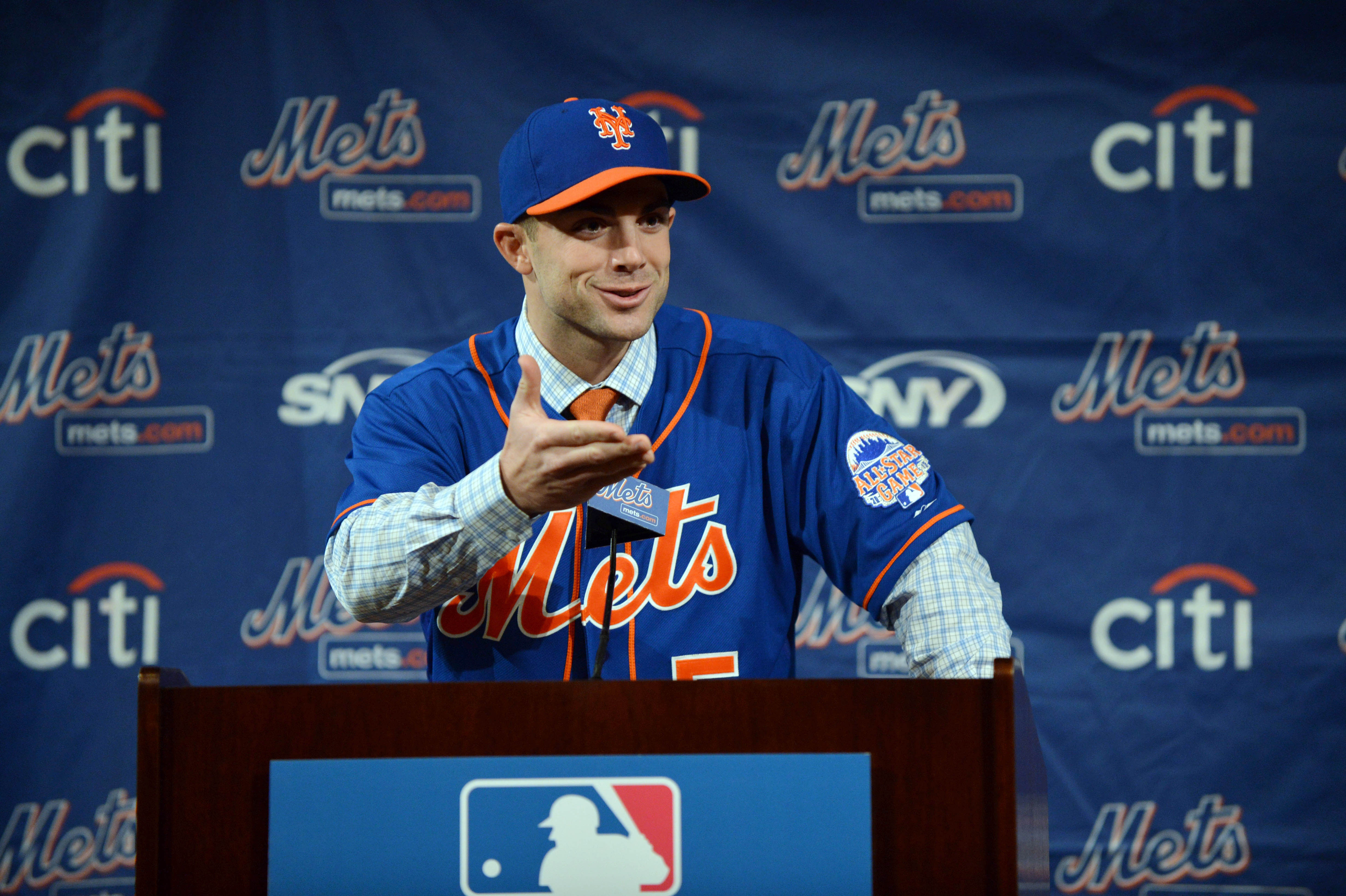
Signing Wright is certainly a decision that would require the involvement of ownership. Still, back in 2010, GM Sandy Alderson had expressed a preference to avoid "second generation" contracts, and the Wright deal qualifies as such. The extension covers his age 31-37 seasons, obviously not the ideal slice of any player's career. In the Mets' defense, at an average annual value of under $17.5MM, Wright doesn't need to be a superstar for the team to recoup value. Deferred money and a frontloaded structure are also points in the Mets' favor.
The positive P.R. from the Wright signing may have softened the blow for the team's half-hearted attempt to extend reigning Cy Young winner R.A. Dickey. The knuckleballer was already under contract for a mere $5MM for 2013, after the team exercised its club option. Dickey reportedly asked for two years and about $26MM for 2014-15, his age 39-40 seasons. That request was more than reasonable even given Dickey's age, but the Mets reportedly stopped at two years and about $20MM. The implication is that the team didn't really want to extend him, and Dickey was instead traded to Toronto.
For the Mets, the need to add a pair of blue-chip prospects outweighed the team's desire to field the best possible team in 2013. The team's farm system was ranked 26th in baseball by Baseball America prior to the trade. They added a consensus top 25 prospect in catcher D'Arnaud, plus a top 100 prospect in righty Syndergaard. The deal pushed their system into the 18-20 range overall, according to BA's Jim Callis. With Zack Wheeler, Matt Harvey, Syndergaard, and Jon Niese, the Mets could have an intriguing, affordable rotation in place by 2015.
In the shorter-term, the Mets addressed the departures of Dickey and relievers Ramirez and Rauch by adding bargain free agents Marcum and Lyon and other potentially useful veterans on minor league deals.
Questions Remaining
When will the Alderson regime start spending significant money on new players? The time to pounce could be the 2013-14 offseason, when players such as Johan Santana, Jason Bay, John Buck, and Frank Francisco come off the books. The 2014 club has only Wright and Niese under contract, plus potentially decent arbitration contracts for Ike Davis, Daniel Murphy, and Bobby Parnell. It might be appropriate to bring in a few corner outfielders and late-inning relievers.
For 2013, the team's outfield could be quite bad. The Mets could begin the season with players like Lucas Duda, Kirk Nieuwenhuis, Mike Baxter, Collin Cowgill, and Marlon Byrd holding starting positions. The silver lining is that the Mets can offer opportunity, and could find a diamond in the rough.
There's also the question of the team's bullpen, which looks mighty shaky after Parnell and Lyon. Again, the one benefit of such a shaky group is uncovering a sleeper.
Deal of Note
Alderson snagged Marcum in January for just a $4MM guarantee, much less than I would have predicted at the outset of the offseason. With one of the slowest right-handed fastballs you'll find in the Majors, Marcum came cheap after missing two months due to an elbow issue. He posted a 3.59 ERA in 396 innings over 2010-11, so he's not far removed from solid mid-rotation innings eating.
Overview
The Mets have been a sleeping giant under the Alderson regime, parting ways with their best veterans other than Wright, avoiding free agency, and allowing their attendance to slip to 17th in MLB. A decent rotation won't be enough to overcome the team's gaping holes in 2013, but perhaps the season will provide a sneak preview for the Mets' return to relevance in the coming years.
Why I Chose My Agency: Aramis Ramirez
Brewers third baseman Aramis Ramirez has received MVP votes in five different seasons. The accomplished slugger spoke to MLBTR today about why he chose his agent, Paul Kinzer of Kinzer Management Group.
On when he first came into contact with Kinzer:
After I played in the New York-Penn League in 1996, I met him in the Dominican and at the time I didn't have an agent, so he was my first agent and my only one.
On whether other agents had tried to talk to him:
A couple of guys when I was playing in the New York-Penn League in my first year in '96, they approached me, but I wasn't really into it. I was just concentrating on baseball. I wasn't worrying about an agent, I was just in A ball, so it wasn't my main thing. Then I met Paul in the Dominican and he seemed like a real honest guy and I signed with him.
On the decision to go with Kinzer, and their relationship:
He had a couple of Dominican players back then, good friends of mine, Neifi Perez and Enrique Wilson. They both told me he was great, and I trusted them. There was a Dominican guy too that worked for him, Abraham Mejia, that I knew since I was 14 or 15.
We have a real good relationship, he's like a father to me. He was the best man at my wedding. It's not a business relationship between me and Paul. It's more like a friendship, a father/son thing. We've been together for so long…he loves my family, I love his, and we always keep in touch besides business stuff.
On recommending Kinzer to other players:
I have in the past. I don't really like that, but if there is a guy that doesn't have an agent, or a young player, I recommend him. I did with [Starlin] Castro when he was coming up. I told Paul he has to go to the complex and sign this kid, he was going to be good.
On his level of involvement in multiyear contract discussions prior to free agency:
I was very involved. That was between me and Paul. Even though he was with a big company before, it was only me and him. He kept me updated every single moment, and I want to be. It was my future and I want to know what's going on.
On the contract clauses with the Cubs that allowed Ramirez to void:
That was his idea all along, and it worked out well. We did it in Chicago a couple of times and that was a good job on his part.
On Wasserman Media Group parting ways with Kinzer last year, and how that affected him:
I don't really have a relationship with them. To me Paul is my agent, and I know he was with that company, but I guess it didn't work out. I'm sticking with Paul no matter what, he's my agent. It wasn't the company — Paul is my agent, and he has been my whole career. He let me know right away when they were going through the process of separating, and I told him it was not going to affect my relationship with him.
On how the free agent process unfolded after the 2011 season:
I just let him work. I always tell him that I will do my job on the field, he's got to do his job outside the field. He kept me updated, anytime a team called, or we have to go meet somebody. When I was a free agent a year ago we had to go to L.A. and meet a couple of teams out there. He just kept me updated every single step.
Other entries in the Why I Chose My Agency Series include David Wright, Matt Holliday, Jay Bruce, Jeremy Affeldt, and Adam Wainwright.
How Much Should The Angels Have Paid Mike Trout?
Earlier this month, the Angels renewed the contract of outfield sensation Mike Trout for $510K, $20K over the league minimum. Trout, of course, had an otherworldly campaign, winning Rookie of the Year and finishing second in the AL MVP vote. Baseball's collective bargaining agreement allows teams to set salaries for players who are not yet arbitration eligible, so Trout's agent Craig Landis had no leverage to negotiate.
That didn't stop Landis from issuing a statement, in which he said Trout's salary "falls well short of a 'fair' contract." Trout's season was uncommon, but good players with less than two years of Major League service being renewed is not. This became a news story only because of Landis' statement. Ken Rosenthal of FOX Sports reported this week that Landis implied to the Angels that Trout wanted a $1MM salary, which would have topped the $900K the Phillies bestowed upon Ryan Howard after his '06 MVP season.
Some might say the Phillies were foolish for giving Howard $520K above the league minimum in '07, because that gift did not buy enough goodwill to prevent the two sides from going to an arbitration hearing a year later. The same argument could be taken by the Angels, who chose not to make an exception to their service-time based pay scale.
In contrast, a few members of today's Clubhouse Confidential panel at this week's excellent SABR Analytics conference, particularly Dave Cameron of FanGraphs, opined that the Halos should have given Trout the million dollars he reportedly sought. Cameron's stance is that the Angels could have treated the extra $510K as a worthy public relations expenditure. The Angels would have made headlines for their generosity, and setting a precedent for their future zero-to-three players would not be a concern since Trout's situation is so rare. Now, it's your turn to weigh in — choose the number that you like best.
How much should the Angels have paid Mike Trout?
-
$1MM or more 44% (7,093)
-
$510K 27% (4,380)
-
$700K 8% (1,285)
-
$800K 8% (1,278)
-
$900K 6% (1,002)
-
$600K 6% (953)
Total votes: 15,991
Offseason In Review: Miami Marlins
The Marlins have become synonymous with Major League fire sales after gutting the team once again.
Major League Signings
- Jon Rauch, RP: one year, $1MM
- Placido Polanco, 3B: one year, $2.75MM
- Juan Pierre, OF: one year, $1.6MM.
- Total Spend: $5.35MM
Notable Minor League Signings
- Casey Kotchman, Chone Figgins, Chad Qualls, Matt Downs, Kevin Slowey, Mitch Talbot, Michael Wuertz, Austin Kearns, Nick Green, John Maine, Kevin Kouzmanoff, Jonathan Albaladejo, Doug Mathis.
Trades and Claims
- Acquired SS Yunel Escobar, IF Adeiny Hechavarria, SP Henderson Alvarez, OF Jake Marisnick, C Jeff Mathis, SP Justin Nicolino and SP Anthony DeSclafani from Blue Jays for SP Josh Johnson, SP Mark Buehrle, SS Jose Reyes, IF/OF Emilio Bonifacio, and C John Buck.
- Acquired IF Derrick Dietrich from Rays for SS Yunel Escobar.
- Acquired IF Yordy Cabrera from Athletics for RP Heath Bell.
- Claimed OF Alfredo Silverio from Dodgers in Rule 5 draft.
- Claimed SP Braulio Lara from Rays in Rule 5 draft.
Notable Losses
- John Buck, Yunel Escobar, Jose Reyes, Emilio Bonifacio, Scott Cousins, Heath Bell, Chad Gaudin, Josh Johnson, Juan Carlos Oviedo, Mark Buehrle, Sandy Rosario.
Needs Addressed
Marlins owner Jeffrey Loria explained to reporters in February that the team needed to "push the restart button" after their splashy 2011-12 offseason spending binge failed to produce a winning club and the accompanying ticket sales in the inaugural season of the new ballpark. The restart process actually began in July, when the Marlins traded Anibal Sanchez, Omar Infante, Hanley Ramirez, Randy Choate, Edward Mujica, and Gaby Sanchez for younger, cheaper players. They took a step further in October, firing manager Ozzie Guillen and trading pricey reliever Heath Bell.
The team's actions up to this point were somewhat defensible. Jacob Turner, Nate Eovaldi, Brian Flynn, Rob Brantly, Zack Cox, Gorkys Hernandez, and Yordy Cabrera were acquired in those trades. The young players received had some warts, but the traded Marlins veterans were either impending free agents (Anibal Sanchez, Infante, Choate) or slipping in performance and/or overpaid (Ramirez, Gaby Sanchez, Bell, Mujica). Many teams would have chosen not to spend $95.5MM to retain the three free agents, would have welcomed the payroll flexibility gained by moving the other four, and might have deemed the Guillen experiment a failure after one year. The Red Sox, for example, pushed the restart button in a similar way by shedding Kevin Youkilis, Adrian Gonzalez, Carl Crawford, Josh Beckett, and Nick Punto and firing volatile manager Bobby Valentine.
In November, however, the Marlins made it clear that they were not just retooling to take another shot at contending in 2013. The payroll flexibility was not about reallocating money toward other players; it was about keeping the money and slicing payroll drastically. The Marlins and Blue Jays shook the baseball world with a 12-player trade, in which the Marlins sent starters Josh Johnson and Mark Buehrle, starting shortstop Jose Reyes, utility man Emilio Bonifacio, and catcher John Buck to the Blue Jays. The Marlins ditched over $160MM in contractual commitments to Johnson, Buehrle, Reyes, and Buck.
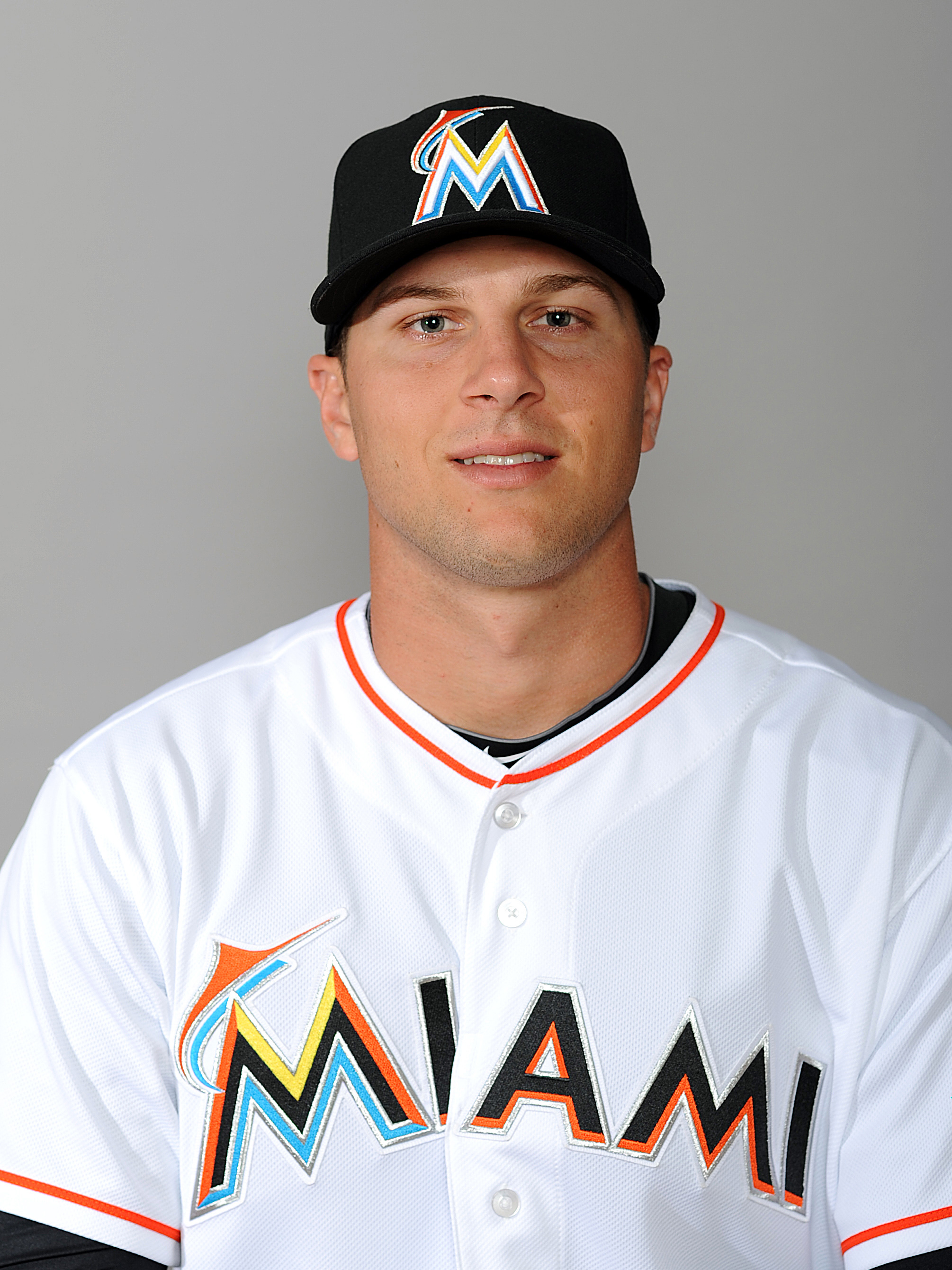
Aside from the desire to reduce their financial commitments drastically, the Marlins acquired a collection of young players to bolster their farm system. In the view of Baseball America, they acquired two top 100 prospects from the Jays in the trade: center fielder Jake Marisnick (pictured) and lefty Justin Nicolino. ESPN's Keith Law seems to feel similarly about the total value of the pair. The Marlins also acquired useful young players in Alvarez, DeSclafini, Hechavarria, and Derek Dietrich (for Yunel Escobar). However, it is clear to me that adding the best young players possible was secondary to shedding contracts, because the Marlins would have gotten more back by auctioning off Reyes, Johnson, and Bonifacio separately while showing a willingness to include a notable amount of cash with Reyes. I think they would have had a harder time unloading Buehrle and Buck had they not been bundled into the megadeal.
When the dust settled, the Marlins obviously improved their farm system. By how much is subjective. Loria was quick to suggest his team's farm system is now fifth in baseball, a nod to Baseball America's rankings, as opposed to 16th as per ESPN's Keith Law. Loria left out the fact that the team's five best prospects, as ranked by BA, were already in the organization prior to the offseason purge. Ultimately the Marlins have a couple of very good outfield prospects, four years of Giancarlo Stanton, fairly interesting young players around the infield, and an enviable collection of young pitchers. The Marlins have at least drawn praise for choosing former catcher Mike Redmond to manage these kids.
Technically we should mention the $5.35MM the Marlins spent on Rauch, Polanco, and Pierre. They're veteran placeholders, something even the cheapest rebuilding team usually acquires each offseason. At least the Marlins can be a drawing card for low-rent free agents, since the team can provide playing time. Aside from Stanton, who is hopefully part of the Marlins' plan for the future, the team is bereft of veterans with trade value. A different team might spin a good first half from Ricky Nolasco plus relief for his $11.5MM salary into a decent prospect this summer, but it's reasonable to expect the Marlins to prioritize the salary relief.
Questions Remaining
There's an argument for the Marlins' binge-and-purge model, if done right. Baseball Nation's Marc Normandin made the case in November 2011 that the Marlins had "loaded up and burned down successfully twice now," and the resulting pair of championships beat rooting for the Pirates, even if the Marlins were also hard to watch between their '97 and '03 titles. One problem is that the Marlins didn't binge all that well in the 2011-12 offseason. Bell was a clear overpay from Day 1, Buehrle was the second-best free agent starter in a weak crop, and the team opened 2012 with multiple issues.
Binging and purging on free agents has major consequences: fans hate you for it, and free agents don't want to sign with you. The Marlins have taken a desirable place to play, Miami, and made it something free agents will make a point to avoid, as they do with a few other big league cities. As for the fans, it's easier for an owner to play fast and loose with them when the prospect of moving the team is still viable. Looking only at the roster and contracts, the Marlins' purge would have made them more valuable to a potential new owner if not for one thing: the $639MM, mostly publicly-financed ballpark they had built. Because of the toxic situation the Marlins' ownership created, it might take a three-year run of success to even see if baseball has a chance in Miami. The team would be in a much better position had they never binged in the first place.
Is there still a way to lock up Stanton and win back a few fans? Loria knows he'll have to let the 23-year-old slugger play out the season, at which point a commitment over $100MM may be required. Money talks, even the Marlins' money, but it might have to be a precedent-shattering deal to convince Stanton. The counterargument is to trade him this summer, since the team still has plenty of needs and Loria's reputation can't get much worse anyway. Before you cook up a lopsided trade proposal in the comment section, though, keep in mind that Stanton is far, far more valuable on the trade market than Reyes or Johnson was.
Overview
The Marlins chose an extremely unpopular path this offseason, although at least they didn't play it safe. Nothing Loria can say will change the public's perception of him and the team. The franchise might still be saved, if Loria eventually sells. It could be a nice situation for a new owner: Loria takes the fall for the fire sale, and maybe in two or three years the Marlins will begin a sustained run of success. But for 2013, at least, this team might not crack 70 wins.
Offseason In Review: Atlanta Braves
The Braves crafted a dynamic outfield by acquiring the Upton brothers, but were weakened at third base in the process.
Major League Signings
- B.J. Upton, OF: five years, $75.25MM.
- Gerald Laird, C: two years, $3.3MM.
- Brian McCann, C: one year, $12MM. Club option exercised.
- Tim Hudson, SP: one year, $9MM. Club option exercised.
- Paul Maholm, SP: one year, $6.5MM. Club option exercised.
- Reed Johnson, OF: one year, $1.75MM. Includes $1.6MM club option for 2014 with a $150K buyout.
- Ramiro Pena, IF: one year Major League Deal
- Total Spend: $107.8MM.
Minor League Signings
Traded and Claims
- Acquired OF Justin Upton and 3B Chris Johnson from Diamondbacks for 3B Martin Prado, SP Randall Delgado, SS Nick Ahmed, SP Zeke Spruill and 1B Brandon Drury.
- Acquired RP Jordan Walden from Angels for SP Tommy Hanson.
- Claimed RP David Carpenter off waivers from Red Sox.
- Claimed OF Jordan Schafer off waivers from Astros.
Notable Losses
- David Ross, Brandon Drury, Eric Hinske, Lyle Overbay, Martin Prado, Nick Ahmed, Michael Bourn, Miguel Batista, Randall Delgado, Chad Durbin, Tommy Hanson, Jair Jurrjens, Peter Moylan, Zeke Spruill.
Needs Addressed
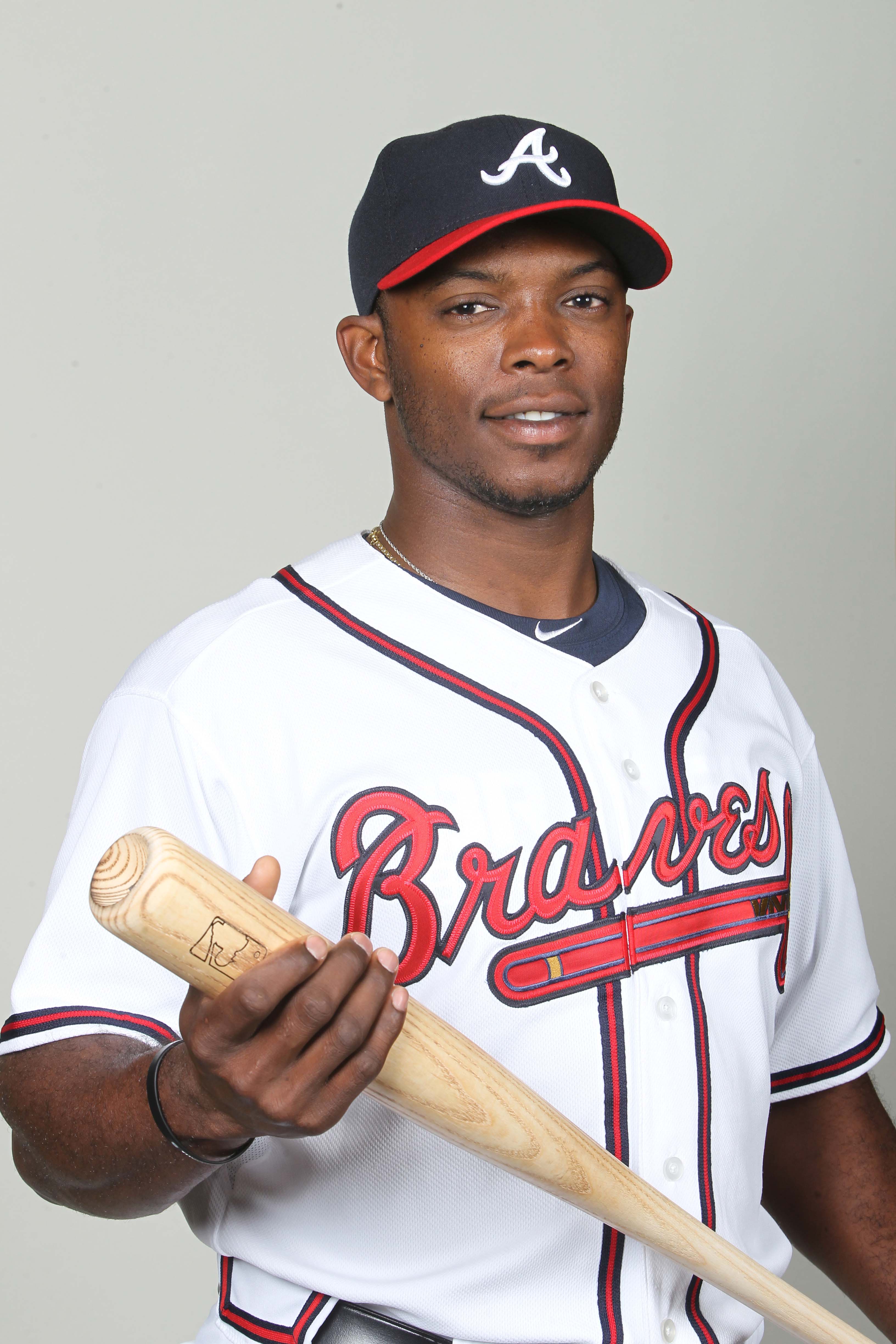
The Braves set out to secure two outfielders this offseason, and they wound up with an impressive combination in the Upton brothers. Justin (pictured) is 25 and B.J. is 28, so both players are in the prime of their careers. Justin, the first overall draft pick in 2005, has seemed on the cusp of superstardom for years. He put up big seasons in 2009 and '11, but showed disappointing power in '10 and '12. Diamondbacks GM Kevin Towers publicly acknowledged entertaining trades for Justin for the second consecutive offseason, and finally pulled the trigger this time. It had to have weighed on the player's mind. Getting out of Arizona should be a big win for him, and playing alongside his brother is the icing on the cake. B.J., drafted second overall in '02, has had a very good Major League career. He's prone to the strikeout, and the subsequent low batting averages suppress his OBP. He's also a 25-30 home run player with strong center field defense. If he finds a way to cut down on the strikeouts, he too could unlock superstar potential.
The Upton brothers both bat right-handed, complementing left-handed bats like Brian McCann, Freddie Freeman, and Jason Heyward. In Freeman, Heyward, Andrelton Simmons, and the Uptons, the Braves have secured a strong core of position players for at least the next three seasons.
The Braves' bullpen posted a 2.76 ERA and 3.06 K/BB ratio last year, so it was hardly considered a big need going into the offseason. Nonetheless, the swap of Hanson for Walden adds four years of control of another hard-throwing, intriguing reliever. With their bullpen, the Braves could shorten a lot of games. Plus, they've got depth in the event of an injury. Braves GM Frank Wren also aimed to secure quality backups at catcher and outfield, and the signings of Laird and Johnson fit the bill.
Questions Remaining
For all the excitement of acquiring the Upton brothers, is this team better in 2013? Prado had been slated to replace Jones at third base, and the Braves had to include him to acquire Justin Upton from Arizona. With Prado traded, Bourn departed for the Indians, and Jones retired, the Braves lost a third of their 2012 offense. Accounting for defense, swapping Bourn for B.J. Upton might be a wash in '13. And while Justin Upton has the higher ceiling, he and Prado could provide comparable value this year as well. Chris Johnson and Juan Francisco will man the hot corner, after Jones and Francisco took the bulk of the at-bats there in 2012. Johnson, the right-handed side of that platoon, actually hasn't hit lefties well in his career. The market for third basemen was weak this offseason, so Wren will have to be on the lookout this summer if the Johnson/Francisco plan isn't working. The team also needs a strong April return from McCann following shoulder surgery; he's entering a contract year.
After exercising club options on Hudson and Maholm, the Braves felt they had the rotation depth to deal Hanson and Delgado and cut Jurrjens loose. None of the departed starters were anything special in 2012, nor were they workhorses. Still, the team enters 2013 with no pitchers who reached 190 innings last year, a feat accomplished by 28 hurlers in the NL. Brandon Beachy should return from Tommy John surgery by July to give the rotation a boost.
Deal of Note
Though the Justin Upton trade is not a clear win for 2013 because of the loss of Prado, the latter had only one year of control remaining at the time of the deal. Upton has three, and he's still on the upswing. Delgado, considered among the top 50 prospects in the game a year ago, needs to develop into at least a mid-rotation starter for Arizona to prevent this deal from heavily favoring the Braves. It was a trade Wren had to make. No one would be surprised if Justin Upton becomes a perennial MVP candidate in his age 25-27 seasons.
Hindsight being 20/20, the loss of the 28th overall draft pick and a five-year, $75.25MM deal for B.J. Upton was a fairly steep price for someone with a .298 OBP last year. That's only true because Bourn and Swisher signed with the Indians for less than expected — Upton's contract seemed fair when it was completed in November. Plus, Upton is the youngest of those three by a long shot, and competition seemed stiffer for his services at the outset of the offseason.
Overview
The Braves should contend for the next several seasons, with a strong core of position players, good young arms in the rotation and bullpen, and a pair of top 100 pitching prospects in Julio Teheran and J.R. Graham. The Braves may not quite stack up with the Nationals on paper, but they're better off now than they were four months ago.
Rockies Sign Bobby Cassevah
The Rockies signed righty Bobby Cassevah to a minor league deal, MLBTR has learned. The 27-year-old will report to Major League camp tomorrow.
Cassevah had been outrighted off the Angels' 40-man roster on Thursday, after which he elected free agency. He spent most of 2012 at Triple-A, where he posted a 6.22 ERA, 5.4 K/9, 3.7 BB/9, and 0.58 HR/9 in 46 1/3 relief innings. Prior to the 2011 season, Baseball America ranked Cassevah 24th among Angels prospects, noting that he "may be the most extreme groundball pitcher in the minors." Indeed, he owns a 65.9% career groundball rate in the Majors to date.
Why I Chose My Agency: Jay Bruce
Reds right fielder Jay Bruce is a longtime client of Sosnick Cobbe Sports. I spoke with Jay Monday night about his agency choice.
How he first came into contact with Sosnick Cobbe Sports:
I spoke with some guys from around Beaumont, Jason Tyner and Kevin Millar, they told me I should start speaking with advisors [prior to the 2005 draft]. First guy on that list was Toby Trotter from Sosnick Cobbe Sports. And this was before all the hoopla started, all the big games and national scouting combines. They were one of the first groups to come in. I was a little bit under the radar. I met with Toby, and everything about him pretty much added up to me to a guy I wanted to work with.
On being advised by the Boras Corporation prior to Sosnick Cobbe:
I also interviewed ACES and the Boras Corporation. Everyone knows who Scott Boras is. Boras is known for having the biggest players in the game, the most heralded players in the game. Being a 17 or 18-year-old naive high school student, I went with the name. A couple of months before the draft, a lot of scouts came up to me at the Texas Scouting Association game, and told me, "We just want to let you know that you are probably cutting out a third to half of the teams in baseball by choosing Scott Boras." I started thinking about it, and I went home, talked to my parents, and they said, "You have to go with your gut. If baseball is what you really want to pursue out of high school, then you probably need to re-evaluate your choice." I thought about it, and I'm still kind of ashamed to this day, my mom called Jim Pizzolatto [his contact at the Boras Corporation] and let him know that I was going to switch agencies. I still see Jim sometimes and we're very cordial, and I don't think there's any hard feelings.
On why Boras didn't work for him:
This is no slight on Scott at all or anything that they did, because they are one of if not the best at doing their job for their players. It wasn't anything necessarily that they did wrong, but I wanted to take a different approach to the way I "marketed" myself, because they didn't want me hitting for any scouts, they didn't want me filling out any information, they were really really pushing me to go to college. Some guys, that works great for. But I wanted to give myself the chance to be drafted as highly as I could, and they didn't need to push me to go to college, because had I not gotten drafted in the first round out of high school, I was going to college. I signed a letter of intent to go to Tulane University, and I was going to honor that. I had no problem going to college.
It was just not as open of a relationship as I would have liked. They just didn't seem like the way that I wanted to represent myself, they didn't sit well with me. I like talking to people, I like really giving people the impression of myself, from myself. I like people to know what they're getting. They want to keep the distance with high schoolers, I think, between the scouts and the player. Which for a lot of guys, it works, but I just wanted to give myself the opportunity to make the best impression I could on all these people. They never did anything wrong to me, but I just decided to go back to Sosnick Cobbe. They made the best impression, and they were straightforward. It became a relationship that kind of transcended business a little bit. A lot of people don't like to mix business with friendship, but if I can trust someone that I consider a friend, I can trust them to do business.
On how Matt Sosnick retained Jay's business after Toby Trotter left the agency:
After the draft, I was in the airport going to instructional league. Toby and Matt called me up. Toby said "Hey Jay, I just want to let you know that I'm leaving the agency." He had prayed a lot about it and decided he wanted to do something else. Matt said, "I want to let you know that I am going to be the guy you deal with now." If it wasn't for Matt being on the phone, I probably would have switched agencies and been done with it.
He made me feel like I was a priority. Matt was on the phone and made it an easy decision for me, and that was the true start of what I consider a great relationship both on and off the field. That showed how Matt is as a person. That means a lot to me. He takes a genuine interest in my family and really goes beyond the job description. That's important to me, but it's not important to some people and I completely respect that. I really value my relationship with Matt, and he's also done a great job, so it works out. I definitely understand that if he didn't do a great job for me and we were friends, it would be a little tougher to move on or even have that conversation. I consider him a friend, but he does an unbelievable job with contract negotiations.
On the six-year, $51MM extension Bruce signed with the Reds in 2010:
I was interested in getting something worked out. It kind of became more of a trend, teams locking guys up. I talked to Matt, and he had pretty amicable talks with the Reds. Matt has a very good understanding as far as the numbers and comps and stuff like that. He did a good job and communicated with the Reds well and was really up front with them and let them know I wanted to get something done. The Reds were accommodating as well. Matt relayed what I wanted to them and we got the deal done.
I signed the contract extension with the Reds, and Matt provided the information that allowed me to make a decision that I felt was right. Matt does a good job of providing information that allows you to make a decision on your own, and that's something that I really like.
On Jay's relationship with Matt and the agency:
The personal side of it is as important to me as the business. I enjoy working with him as a person and I enjoy our relationship as friends, too. Anyone who has talked to Matt knows, he's an incredibly bright human being. He provides me a lot of perspective on things that otherwise I might not even really know about. I think over the years we've created a relationship with a very open line of communication. Over the years he's been an open book and so have I. There's no beating around the bush.
I wasn't just a number, and that was huge to me. That's how I conduct my life. It's an extension of yourself. If people deal with Sosnick Cobbe Sports, and they know that I deal with them, I want them to say, "Oh, that's Jay Bruce's agency. I can see why.
On big vs. small agencies:
A lot of times, the agent and the player don't have much of a relationship outside the business part of it. And if you don't have a contract, there's really not a ton the agent does. They facilitate endorsement deals, but as far as the day-to-day stuff, there's really not a ton to talk about. I never talked to Scott Boras when I had them. If you take the baseball part out of it and think about small companies vs. big corporations, there's more personal service at a small company. I think quality at the smaller agencies has probably gotten much better over the years because the information available to them now is a lot more than it was.
It's hard to go away from the big agencies. It's hard to not go with the proven names of the industry. I'm glad that I gave Matt and those guys a chance and I'm glad that they sought me out as well. I couldn't have asked for anything more.
Check out our first entry in the Why I Chose My Agency series, where Matt Holliday discussed his relationship with Boras.
GMs Advise Students With Front Office Aspirations
It's an email that lands in the MLBTR inbox often: an ambitious high school student dreams of being a Major League GM one day, and asks us for advice. I decided to ask a bunch of people who would know: current GMs and assistant GMs. Top execs from 17 teams responded to MLBTR's query: What one piece of advice would you give to a high school student who hopes to work in baseball operations one day?
Get around the game as much as you can. There's no substitute for watching and talking baseball. You've got to love the game enough to want the lifestyle that comes with it, and the family sacrifices on the back end. Play as long as you can, go to as many games at all levels as possible, talk to whomever you come across, and read what you can. The market is increasingly flooded with job applicants with analytical backgrounds. The way to differentiate yourself is your feel for the game, and your people skills — a good education and analytic skill set aren't enough. – Jon Daniels, Rangers General Manager
Play baseball until someone tears the jersey off your back. - Dan Duquette, Orioles Executive Vice President, Baseball Operations
1. Read mlbtraderumors.com daily. 2. Play as long as you can. 3. Watch as many games as you can. To tie points #2 and #3 together, I do think it is important to learn by watching and playing…not just studying the game. - Josh Byrnes, Padres Executive Vice President, General Manager
Follow your passion. As much as anything these jobs are a way of life that often require both resiliency and unconditional love of the game. In the end all types of skill sets and backgrounds work – but those that are rooted in true passion for the game are those that will last the longest. – Jerry Dipoto, Angels General Manager
Study hard! If you are a player, study the game and players. Seek out experienced coaches and managers, to learn to evaluate players and teams. Spend time with scouts to understand how they evaluate and what is important to them in their position. Study the use of analytical data to combine with your baseball knowledge. If you do not play, study the game and statistics. A statistical background will help you get in the door for an interview. In today’s front office, it’s a prerequisite. Go to as many games as possible, ask your high school coach if you can be the team assistant. Experience the game as closely as possible. You need to know the common language of the game to increase your credibility. Overall, understand that a career in baseball is a constant learning experience and the game changes. Be open-minded to learn throughout your career. - Bill Geivett, Rockies Sr. Vice President – Major League Operations
It’s like anything else in life: prepare in case the opportunity comes, but do not assume or expect anything will happen. There is no magical formula to find work in baseball operations and there are so many qualified individuals who don’t get opportunities. I think if you ask anybody who works in baseball operations they will tell you that luck, even in the form of just being in the right place at the right time, played a big part in their career. The key is to put yourself in the best position possible and be prepared so that if fortune smiles upon you that you are able to make the most of that opportunity. – John Coppolella, Braves Assistant General Manager