
This Offseason’s Mutual Options
One year ago, MLBTR's Mike Axisa asked whether mutual options were baseball's new fad, after at least a dozen were included in contracts during the 2009-10 offseason. As Mike explained, mutual options are almost never picked up by both sides. Instead, they're one way of pushing dollars onto next year's payroll, a more basic version of deferred money. The team can also avoid the buyout altogether when the player declines, in many cases. Here's a look at the eleven contracts from this offseason that included mutual options:
- Diamondbacks: Stephen Drew, Henry Blanco, Willie Bloomquist
- Nationals: Adam LaRoche, Sean Burnett
- Padres: Aaron Harang, Brad Hawpe
- Cardinals: Jake Westbrook.
- Astros: Bill Hall
- Rockies: Rafael Betancourt
- Royals: Jeff Francoeur
Francoeur's buyout is unknown, but otherwise overall the buyouts accounted for 8.7% of the total guaranteed money. At most, a mutual option is a way of pushing a million bucks onto next year's payroll to create flexibility this year.
Who’s Next For A Matt Thornton Contract?
The White Sox "jumped the market" in signing reliever Matt Thornton to a two-year, $12MM extension with a club option for 2014, in the opinion of ESPN's Buster Olney. With free agent relievers cashing in this offseason like never before, the Sox moved early on Thornton to avoid guaranteeing a third year. Olney would not be surprised to see other relievers get similar deals in the coming months; let's look at a few possibilities.
- Ryan Madson is the best candidate, as he turns 31 this year and passed on the free agent market once before despite being represented by Scott Boras. A vintage Madson season puts him in line for three years and $15MM at the least.
- Heath Bell's agent is expected to talk with the Padres during Spring Training, but it's hard to picture the team doing something even in the Huston Street range of three years, $22.5MM. Bell might need to be traded before finding a suitable extension offer.
- Matt Capps is probably only an extension candidate with the Twins if they decide to let Joe Nathan leave after the season. Three-year deals for setup men at top dollar are not the Twins' style, as they seemingly didn't consider the possibility with departing free agents Matt Guerrier and Jesse Crain.
- Jonathan Papelbon and the Red Sox have been content to go year-to-year, so this is probably his last season in Boston. If he's dealt midseason for some reason, maybe his new team would consider an extension.
- Frank Francisco might fit the criteria with a good showing, though the Jays may prefer to bring in new veterans on one-year deals.
- Jonathan Broxton could return to form this year as the Dodgers' closer. If so, the team could try to pluck him off the market early.
- Check out the relievers on our 2012 free agent list – do you see any other candidates to be locked up before the season ends?
Red Sox Notes: Adrian, Buchholz, Miller
The latest on the Red Sox, as John Lackey prepares for his second Spring Training start…
- Though Adrian Gonzalez and the Red Sox have not resumed contract talks since the weekend they traded for him, there is an understanding that a seven-year deal at around $22MM per year will get it done, writes ESPN's Buster Olney. Gonzalez has said a couple of times that there's no pre-set agreement in place, but his agent John Boggs and Sox president Larry Lucchino both expect a deal.
- Regarding a potential multiyear extension, Clay Buchholz told WEEI's Kirk Minihane, "I think we've talked a little bit about it but there's nothing." Buchholz likes the five-year, $30MM deals signed by Jon Lester, Yovani Gallardo, and Ricky Romero, but perhaps the Red Sox need to see more. Buchholz's numbers are comparable to those players, but for a team there is a lot that goes into the decision beyond the stats.
- Manager Terry Francona explained to ESPN's Gordon Edes that he's thinking about the long-term with lefty Andrew Miller (Twitter link). The Red Sox were able to get a unique contract approved for Miller with the aim of subverting the option system, with a $3MM club option that vests for 2012 if he's claimed by another team. On one hand, the Commissioner's Office allowed this clause at first pass. Still, I've spoken to a few execs who think the Red Sox won't get away with it if Miller is actually claimed.
- Red Sox players are meeting today with Players' Association executive director Michael Weiner as well as several special assistants. Jed Lowrie may have a lot to contribute; Scott Lauber of the Boston Herald says the shortstop recently finished up a political science degree from Stanford by writing a 17-page paper comparing the players' unions in MLB and the NFL.
Gregg Zaun Retires
9:59am: Zaun told MLB.com's Corey Brock his shoulder isn't where it needs to be, and he didn't want to leave the team hanging. Padres GM Jed Hoyer told Brock they'll consider both internal and external options. As we discussed with the Astros, there isn't a lot out there.
12:43am: Catcher Gregg Zaun is "set to retire from Major League Baseball," reports Sportsnet.ca. The report says to expect an announcement Monday. Zaun has served as an analyst for Sportsnet during the playoffs since 2006.
Zaun's decision comes as a surprise, as his first Spring Training start yesterday was deemed a success. He'd signed a minor league deal with the Padres and was attempting to win the backup catcher job. Zaun, 40 next month, saw his 2010 season end with June surgery to repair a torn labrum in his shoulder. Zaun contemplated retirement at that point, but told MLB.com's Corey Brock his shoulder responded well to treatment.
Zaun's retirement would clear a path for Rob Johnson to win the Padres' backup job. Johnson was acquired from the Mariners in December for a player to be named later or cash considerations.
Zaun always had a knack for drawing a walk, leading to a .252/.344/.388 line in over 4,000 plate appearances for the Orioles, Marlins, Rangers, Royals, Astros, Rockies, Blue Jays, Rays, and Brewers. He picked up a World Series ring with the '97 Marlins and earned almost $18MM in his career.
Analyzing CarGo’s Contract
In January, the Rockies accomplished a feat thought to be impossible: they locked up Carlos Gonzalez, who is represented by Scott Boras. Despite Boras providing CarGo with "actuary tables that would show Gonzalez's earning power if he would stay healthy and productive," the Rockies were able to buy out three free agent seasons at less than $18MM per year.
Gonzalez's seven-year, $80MM deal set a record for the largest deal signed by a player with between two and three years service time. The contract topped Hanley Ramirez's six-year, $70MM contract, signed nearly three years ago. Other recent deals for two-plus players include Justin Upton's six-year, $51.25MM contract and Jay Bruce's six-year, $51MM pact. A few details on the four contracts:
- Gonzalez is paid $23MM for his three arbitration years plus $53MM over the course of three free agent seasons ($17.67MM per). There are no option years, so CarGo could reach free agency at age 32 and score one more huge deal.
- Ramirez gets $23.5MM for his three arbitration years and plus $46.5MM over three free agent seasons ($15.5MM per). His deal also has no options, and he can reach free agency at age 30.
- Upton will earn $20.75MM for his three arbitration years plus $28.75MM over two free agent seasons ($14.375MM per). The deal has no options, and he can be a free agent at age 28.
- Bruce will make $25.25MM over four arbitration years plus $25.5MM guaranteed over two free agent seasons ($12.75MM per). In the likely event Bruce's 2017 club option is exercised, that's $37.5MM over three free agent seasons or $12.5MM per. If the option is exercised he'll reach free agency at age 30.
CarGo essentially matches Ramirez's arbitration earnings and tops his free agent take by a total of $6.5MM. In one sense Boras deserves credit for brokering the largest deal ever for a two-plus player, but in another Hanley's agents at WMG win since their deal came almost three years earlier.
Though the Rockies paid top dollar to do Gonzalez's extension now, the savings could still be significant. Further along in their careers, Ryan Howard and Joey Votto required $44MM and $38MM for their three arbitration years, respectively. Howard later gave up five free agent seasons at $25MM each, so paying CarGo $16MM in 2015 could be a downright bargain if he remains an elite player.
For my take on the Rockies' other huge extension, the Troy Tulowitzki contract, click here.
Astros Willing To Stretch Payroll For Catcher Addition
Though the Astros are already $2MM over their 2011 payroll target, owner Drayton McLane and GM Ed Wade met yesterday "to set financial parameters for going outside the organization" for a catcher in the wake of Jason Castro's season-ending injury, reports Steve Campbell of the Houston Chronicle.
Comments from McLane and Wade suggest any acquisition will be minor, and Wade isn't ruling out opening the season with Humberto Quintero and J.R. Towles. A few days ago, MLBTR's Mark Polishuk looked at potentially available backstops the Astros could consider.
Ryan Doumit is an obvious fit for the Astros, though in a general sense Wade said, "Even if there was a guy out there making substantial dollars available, I'm not sure we would be in the mix to be able to go do something like that." Keep in mind that the Pirates would likely assume at least half of the $5.6MM owed to Doumit. Ron Musselman of the Pittsburgh Post-Gazette has the latest from GM Neal Huntington on the near-dormant Doumit talks.
Evaluating Tulowitzki’s Extension
Troy Tulowitzki's first extension with the Rockies, a six-year, $31MM deal signed three years ago, set a precedent at the time as the largest deal ever for a player with less than two years of Major League service time. Tulowitzki had one full big league season under his belt, but the Rockies guaranteed $17.25MM for his three arbitration years and $10MM for a far-off free agent season, with a club option at $15MM for an additional free agent year. Even with Tulo's lack of service time, the risk in total dollars was minimal.
With the Rockies' first bet on Tulowitzki looking prescient, a few months ago they made another wager about four times the size by guaranteeing their shortstop's 2014 option year (plus an extra million bucks) and adding $118MM for the 2015-20 seasons. The popular question was, why now? Tulowitzki was already under team control through '14. Wouldn't the safe move be to wait at least a few more years?
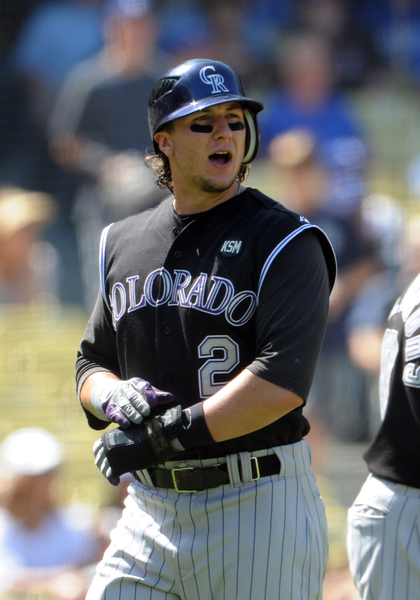
The answer is that the Rockies likely feared that the price to retain Tulowitzki for his age 30-35 seasons would increase drastically with each additional MVP-caliber season. With the new money totaling $119MM over six years, that's $19.83MM per year. The cost of Tulowitzki's age 30-35 seasons falls between the salaries of newly-signed free agent outfielders Jayson Werth and Carl Crawford, but they're poor comparables. Premium all-around up-the-middle players almost never reach free agency, with only Alex Rodriguez, Carlos Beltran, Torii Hunter, and Miguel Tejada coming to mind in recent years. With such a tiny sample of similar free agents, not to mention economic uncertainty, I can't use a formula to predict what Tulowitzki might have gotten as a free agent in 2015.
Still, it's easy to look at the player Tulowitzki is now and imagine him getting a $200MM+ contract on the open market in four years, given inflation and the rarity of elite shortstops. Since 2000, only Tulowitzki, A-Rod, Brian McCann, Grady Sizemore, Hanley Ramirez, and Joe Mauer posted a pair of 130 OPS+ seasons at age 25 or younger while playing up the middle. Take the sample back to the 90s and we add Mike Piazza, Ken Griffey Jr., and Nomar Garciaparra.
This is where I start to worry about the Rockies' gamble. Sizemore, Griffey, Nomar – in their mid-20s it sure looked like they'd still be premium players at age 30-35. Fans might have responded positively to Tulo-style extensions, unable to imagine worst case scenarios. But Griffey and Nomar saw that slice of their careers destroyed by injuries, and Sizemore currently has something to prove at age 28. Tulowitzki has already missed significant time with a broken wrist and a quad tear in his young career, but he came back strong in both cases.
To their credit, the Rockies built in slight protection by dropping Tulowitzki's base salary down to $14MM in 2020, his final guaranteed season. Performance decline isn't the main concern – even as just a good player, Tulo's contract won't look bad in his early 30s. The greater worry is that injuries will take over at that stage, perhaps due to the extra wear and tear of playing an up-the-middle position.
Offseason In Review: Seattle Mariners
The Mariners are next in our Offseason In Review series.
Major League/International Signings
- Miguel Olivo, C: two years, $7MM. $3MM club option for 2013 with a $750K buyout.
- Jack Cust, DH: one year, $2.5MM. Can be controlled for 2012 as an arbitration eligible player.
- Esteilon Peguero, SS: $1.1MM bonus.
- Erik Bedard, SP: one year, $1MM.
- Gabriel Guerrero, OF: $400K bonus.
- Total spend: $13MM.
Notable Minor League Signings
- Josh Bard, Denny Bautista, Manny Delcarmen, Gabe Gross, Charlie Haeger, Adam Kennedy, Ryan Langerhans, Nate Robertson, Jamey Wright, Fabio Castro, Justin Miller, Chris Ray, Royce Ring, Luis Rodriguez
Extensions
Trades and Claims
- Acquired SP Chaz Roe from Rockies for IF Jose Lopez
- Claimed RP Jose Flores from Indians in Rule 5 draft
- Acquired SS Brendan Ryan from Cardinals for SP Maikel Cleto
- Acquired a player to be named later or cash considerations from Padres for C Rob Johnson
- Acquired P Aaron Laffey from Indians for IF/OF Matt Lawson
Notable Losses
- Jose Lopez, Maikel Cleto, Casey Kotchman, Russell Branyan, Rob Johnson, Ryan Rowland-Smith, Ian Snell, Sean White, Matt Lawson
Summary
The Mariners "won" the 2009-10 offseason and ended up winning 61 games. Now they're in a difficult position: they're not committed to a full rebuild, but they probably don't have the talent to contend in 2011. Let's see how GM Jack Zduriencik handled this conflict within the confines of limited payroll flexibility this offseason.
Baseball America's 2011 Handbook ranked Seattle's farm system 18th in the game, and the Mariners added quality prospects by signing Peguero and Guerrero. Getting Roe for Lopez was a win in that the latter appeared headed for a non-tender. However, Zduriencik did subtract one live arm in sending Cleto to St. Louis for Ryan. The goal should be to add to the farm system while retaining players who can help the Mariners compete in 2012.
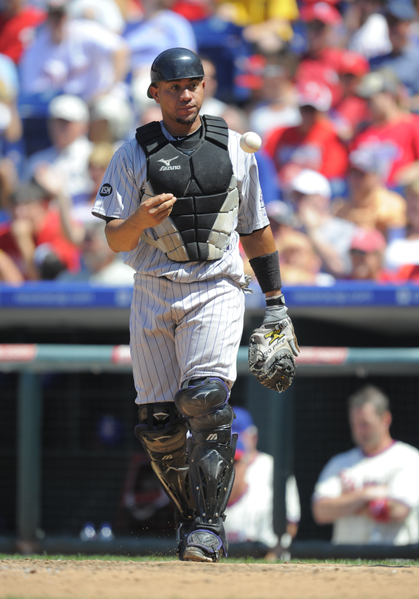
Given the importance of intangibles when evaluating catchers, free agent contracts are often difficult to assess. I don't love the Olivo signing, but the price is OK compared to John Buck and there is something to be said for having a veteran behind the plate for top prospect Michael Pineda and other inexperienced pitchers. Going entirely with youth behind the plate last year did not go well.
Cust, Bedard, and minor league signings like Delcarmen and Ray are smart moves with little downside. Perhaps with more stability Cust can post a .400 OBP over a full season. Bedard took less to remain in Seattle and says he's as healthy as he's been in years. Delcarmen and Ray will take on prominent bullpen roles, which is a risk a contending team couldn't take. Ryan did cost Cleto, but the infielder fits with the Mariners' tendency to scoop up underrated defenders. The Mariners reportedly checked in on many starters with health concerns beyond Bedard, such as Justin Duchscherer, Chris Capuano, Rich Harden, and Jeff Francis. In the end, the risk/reward equation didn't work for Seattle with these free agents.
2011 may be more of a regrouping year than a rebuilding one for the Mariners under new manager Eric Wedge. They'll be free of significant payroll commitments after '11, though Felix Hernandez's salary takes a big jump for '12. I think the Mariners intend to make more of a push toward contention for '12, after seeing what they have in Pineda, Dustin Ackley, Michael Saunders, Justin Smoak, Dan Cortes, and Josh Lueke.
Offseason In Review: Cincinnati Reds
The Reds are next in our Offseason In Review series.
Major League/International Signings
- Bronson Arroyo, SP: three years, $35MM. $15MM deferred without interest, paid through 2021.
- Ramon Hernandez, C: one year, $3MM.
- Edgar Renteria IF: one year, $2.1MM.
- Miguel Cairo, IF: two years, $2MM.
- Jonny Gomes, LF: one year, $1.75MM. Club option exercised.
- Fred Lewis, OF: one year, $900K. Can be controlled through 2013 as an arbitration eligible player.
- Total spend: $44.75MM.
Notable Minor League Signings
Extensions
- Jay Bruce, RF: six years, $51MM. $13MM club option for 2017 with a $1MM buyout.
- Joey Votto, 1B: three years, $38MM.
- Johnny Cueto, SP: four years, $27MM. $10MM club option for 2015 with a $800K buyout.
Trades and Claims: None
Notable Losses
Summary
In 2010 the Reds rode the league's best offense and an acceptable pitching staff to the NL Central crown, marking their first winning season since 2000 and first playoff appearance since '95. In the offseason that followed, GM Walt Jocketty adopted the motto, "If it ain't broke, don't fix it."
Due to payroll limitations, Jocketty's only real play to change the Reds significantly would have been through trades or by way of declining Arroyo's option. In early November Jocketty decided to exercise Arroyo's 2011 option at a hefty $13MM, as opposed to a $2MM buyout. It was a large commitment to a 34-year-old soft-tosser many teams would consider an innings eater, though six seasons in a row of 200-plus innings is a rarity. A month later Jocketty tacked on two years, coming up with a new deal heavy on deferred money. The Reds halved Arroyo's 2011 salary in the process.
Otherwise Jocketty minimized his free agent expenditures, committing under $10MM to five position players. I don't blame him; there wasn't much out there at left field or shortstop. The bullpen features enough big arms to withstand the loss of Rhodes, though an arbitration offer would not have been a bad idea for the Type A lefty. In addition to a full season of Aroldis Chapman, the Reds' 2011 pen features a sleeper in Jose Arredondo. Signed to a minor league deal a year ago, he's fully recovered from Tommy John surgery. The Reds will try Paul Janish and Renteria at shortstop with Cabrera's departure. I don't mind the plan, though I'm curious if the Reds inquired on J.J. Hardy.
The Reds' front office spent the bulk of their offseason hammering out extensions with Bruce, Cueto, and Votto, and attempting one with Edinson Volquez. Bruce's deal offers a chance at three affordable free agent seasons, and it makes sense for both sides. Cueto's contract allows for two free agent years, and is riskier by nature since he's a pitcher. But $16MM is the going rate for a good young pitcher's arbitration years in an extension, so this was a typical contract.
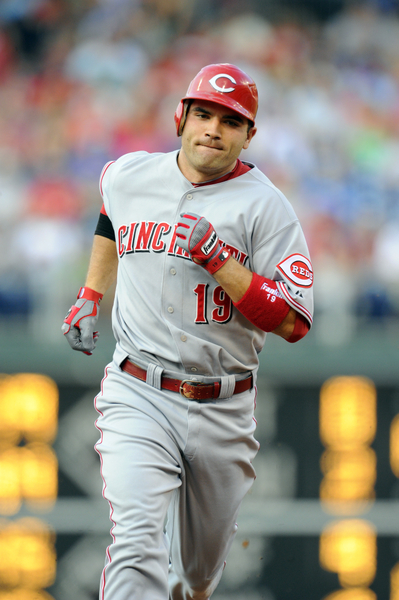
As MLBTR's Ben Nicholson-Smith outlined in January, Votto's deal was a head-scratcher from the Reds' point of view. The Reds were not able to buy out any free agent seasons, which might have cost upwards of $20MM each. At best the Reds received a mild discount of a few million dollars on Votto's first two arbitration years, compared to the year-to-year earnings of Prince Fielder.
Payroll aside, the Reds did not need to tinker much with the NL's best offense. They're bringing back a similar group, with plenty of upside for players like Bruce and Drew Stubbs. Replacing Harang with a young in-house starting pitcher is an upgrade, especially if Homer Bailey's late-season success carries over. The team is overly enamored with Arroyo and the Votto extension was player-friendly, but the painful aspects of those contracts will be realized after 2011. The 2011 Reds are short on new faces, which is a positive in their case.
Photo courtesy of Icon SMI.
Offseason In Review: Baltimore Orioles
The Orioles are next in our Offseason In Review series.
Major League/International Signings
- Kevin Gregg, RP: two years, $10MM. Includes $6MM vesting option for 2013.
- Vladimir Guerrero, DH: one year, $8MM. $3MM of salary deferred without interest, paid 2016-17.
- Derrek Lee, 1B: one year, $7.25MM.
- Koji Uehara, RP: one year, $3MM. Includes vesting option for 2012.
- Cesar Izturis, SS: one year, $1.5MM.
- Jeremy Accardo, RP: one year, $1.08MM. Can be controlled for 2012 as an arbitration eligible player.
- Justin Duchscherer, SP: one year, $700K.
- Total spend: $31.53MM.
Notable Minor League Signings
- Mark Hendrickson, David Riske, Randy Winn, Josh Rupe, Nick Green, Nick Bierbrodt, Jeff Fiorentino, Ryan Drese
Trades and Claims
- Acquired 3B Mark Reynolds and a player to be named later or cash considerations from Diamondbacks for RP David Hernandez and RP Kam Mickolio
- Acquired SS J.J. Hardy, IF Brendan Harris, and $500K from Twins for RP Jim Hoey and RP Brett Jacobson
- Claimed RP Adrian Rosario from Brewers in Rule 5 draft
Notable Losses
- Ty Wigginton, Kevin Millwood, Matt Albers, David Hernandez, Kam Mickolio, Jim Hoey, Brett Jacobson, Corey Patterson, Cla Meredith, Julio Lugo, Scott Moore, Luis Montanez,
Summary
A year ago, the Orioles committed over $30MM to short-term veteran acquisitions while also surrendering the 53rd overall draft pick to the Braves. President of baseball operations Andy MacPhail took a similar approach this offseason, adding more to the payroll but keeping his draft picks. Is the Orioles' strategy good for the long-term health of the franchise?
MacPhail's dealings mostly improved the team for 2011, though Reynolds, Gregg, and Accardo will be under control for the 2012 season. The big question is, why is MacPhail trying so hard to improve the 2011 Orioles? Is it an attempt to energize the fan base? I'm not sure these players will increase attendance significantly. Is it for the veteran leadership? That can be acquired more affordably. Is it because MacPhail truly views the Orioles as contenders? The O's don't have nearly enough starting pitching to make contention seem realistic.
One school of thought is that the money spent this offseason would be better put toward the draft and Latin America, as ESPN's Keith Law suggested in a discussion with MASN's Steve Melewski. In the team's defense, they already rank fourth in MLB in draft spending over the last three years. They haven't been aggressive in Latin America, but a lower big league payroll might not change that.
The signings of Gregg, Uehara, and Accardo may at least help the Orioles' young pitching staff. Only the Gregg signing could be considered excessive. The Blue Jays valued one draft pick more than having Gregg (or his trade value) at one year and $4.5MM or two years and $8.75MM. The Orioles again took the plunge on a pricey reliever, even with Mike Gonzalez still on the roster as a reminder. All multiyear free agent reliever deals are risky, but the gamble makes more sense for contending teams. MacPhail may have felt the need to bolster the bullpen after the subtraction of David Hernandez, who was excellent in relief last year and under team control through 2015.

The Orioles' offense is looking strong with the additions of Reynolds, Hardy, Lee, and Guerrero, assuming they stay healthy. Of course, the bar is extremely low given last year's output of 3.78 runs per game. The price for these four players was far from franchise-crippling, but there is concern the veterans will take at-bats from younger guys. Nolan Reimold and Josh Bell have something to prove in Triple-A, however, and I think the Orioles will make room if they start raking.
You'd like to see a few of the newly-added veterans flipped for interesting prospects at the trade deadline, though MacPhail wasn't able to cash in Garrett Atkins, Kevin Millwood, and Ty Wigginton last year. He's added superior players for 2011, so I think there's a better chance this time around.
This is an improved Orioles team, but to what end? Some need to see a tangible benefit before endorsing significant short-term veteran commitments for a rebuilding club. The Orioles might argue, what's the downside? If the short-term additions don't adversely affect the farm system or the development of young players, the Orioles' strategy can at least be considered neutral for the long-term health of the franchise regardless of the team's record in 2011. I expect to hear a lot of intangibles as support for MacPhail's offseason, while the more analytically-minded will focus on whether the Orioles are able to trade veterans for prospects in July.
Photo courtesy of Icon SMI.