
Check Out The Benefits Of Trade Rumors Front Office
If you’re a regular MLB Trade Rumors reader, we’d love your consideration for an ad-free subscription. MLBTR is an independently-owned website. The current benefits include:
- Removal of ads from MLB Trade Rumors, Hoops Rumors, Pro Football Rumors, Pro Hockey Rumors, and the Trade Rumors app
- Exclusive members-only online chats with Steve Adams or Connor Byrne every week
- MLBTR owner Tim Dierkes answers mailbag questions weekly
- Exclusive weekly hot stove articles from Steve Adams and Connor Byrne
- Coming soon: a subscriber discussion forum
We have monthly and annual options available. Check out a Trade Rumors Front Office subscription today!
Out Of Options 2021
The following 40-man roster players have less than five years service time and are out of minor league options. That means they must clear waivers before being sent to the minors. I’ve included players on multiyear deals. This list was compiled through MLBTR’s helpful and much-appreciated sources.
This year, option status for several players remains unresolved at present due to the nature of the 2020 season, as reported by Derrick Goold of the St. Louis Post-Dispatch. We’ll keep this list updated as new information comes in.
Angels
- Max Stassi, C
- Mike Mayers, P
- Franklin Barreto, 2B
- Jaime Barria, P
Astros
- Aledmys Diaz, 2B
- Austin Pruitt, P
- Brooks Raley, P
Athletics
- Chris Bassitt, P
- Tony Kemp, 2B
- J.B. Wendelken, P
- Nik Turley, P
Blue Jays
- Rafael Dolis, P
- Reese McGuire, C
- Breyvic Valera, 2B
Braves
- Abraham Almonte, RF
- Luke Jackson, P
- Grant Dayton, P
- Phillip Ervin, RF
- Tyler Matzek, P
Brewers
- Daniel Robertson, 3B
- Josh Lindblom, P
- Dan Vogelbach, 1B
- Derek Fisher, RF
- Adrian Houser, P
- Ray Black, P
- Billy McKinney, LF
- Jacob Nottingham, C
Cardinals
- Miles Mikolas, P
- John Gant, P
- Tyler Webb, P
- Daniel Ponce de Leon, P
- Edmundo Sosa, SS
Cubs
- Ildemaro Vargas, 2B
- Alec Mills, P
- Duane Underwood, P
- Dillon Maples, P
Diamondbacks
- Christian Walker, 1B
- Stefan Crichton, P
Dodgers
Giants
- Curt Casali, C
- Matt Wisler, P
- Darin Ruf, 1B
- Jarlin Garcia, P
Indians
- Adam Plutko, P
- Jake Bauers, LF
Mariners
- Rafael Montero, P
- Marco Gonzales, P
- Tom Murphy, C
- Casey Sadler, P
- Jose Marmolejos, 1B
- Chris Flexen, P
Marlins
- Adam Duvall, LF
- Jesus Aguilar, 1B
- Jorge Alfaro, C
- Magneuris Sierra, CF
Mets
- Miguel Castro, P
- Jacob Barnes, P
- Tomas Nido, C
Nationals
- Joe Ross, P
- Austin Voth, P
Orioles
- Pedro Severino, C
- Shawn Armstrong, P
- Jorge Lopez, P
- Cesar Valdez, P
Padres
- Dan Altavilla, P
- Taylor Williams, P
- Austin Adams, P
- Pierce Johnson, P
- Javy Guerra, P
- Jorge Mateo, SS
Phillies
- David Hale, P
- Roman Quinn, CF
Pirates
- Michael Feliz, P
- Erik Gonzalez, SS
- Chris Stratton, P
- Jacob Stallings, C
- Carson Fulmer, P
- Anthony Alford, CF
- Dustin Fowler, CF
Rangers
- Mike Foltynewicz, P
- Ronald Guzman, 1B
- Joely Rodriguez, P
Rays
- Ji-Man Choi, 1B
- Cody Reed, P
- Brett Phillips, RF
Red Sox
- Austin Brice, P
- Nick Pivetta, P
- Christian Arroyo, 3B
Reds
- Noe Ramirez, P
- Amir Garrett, P
- Jeff Hoffman, P
- Lucas Sims, P
- Sal Romano, P
Rockies
- Elias Diaz, C
- Carlos Estevez, P
- Antonio Senzatela, P
- Jairo Diaz, P
- Robert Stephenson, P
- Raimel Tapia, LF
- Yency Almonte, P
- Yonathan Daza, LF
Royals
Tigers
- Matthew Boyd, P
- Buck Farmer, P
- Jeimer Candelario, 3B
Twins
- Max Kepler, RF
- Tyler Duffey, P
- Jorge Polanco, SS
White Sox
- Evan Marshall, P
- Jose Ruiz, P
Yankees
- Gary Sanchez, C
- Luis Cessa, P
- Gio Urshela, 3B
- Mike Tauchman, CF
- Kyle Higashioka, C
Giants Sign Aaron Sanchez
FEBRUARY 21: The deal has been made official. The incentive structure breaks down as follows (per Maria Guardado of MLB.com): $250K apiece for reaching 16 and 18 starts, $500K each for starting 20, 22, 24 and 26 games.
FEBRUARY 17: The Giants have reached an agreement to sign righty Aaron Sanchez, reports Susan Slusser of the San Francisco Chronicle. It’s a $4MM deal with another $2.5MM in incentives, adds Slusser. Sanchez is represented by the Boras Corporation.
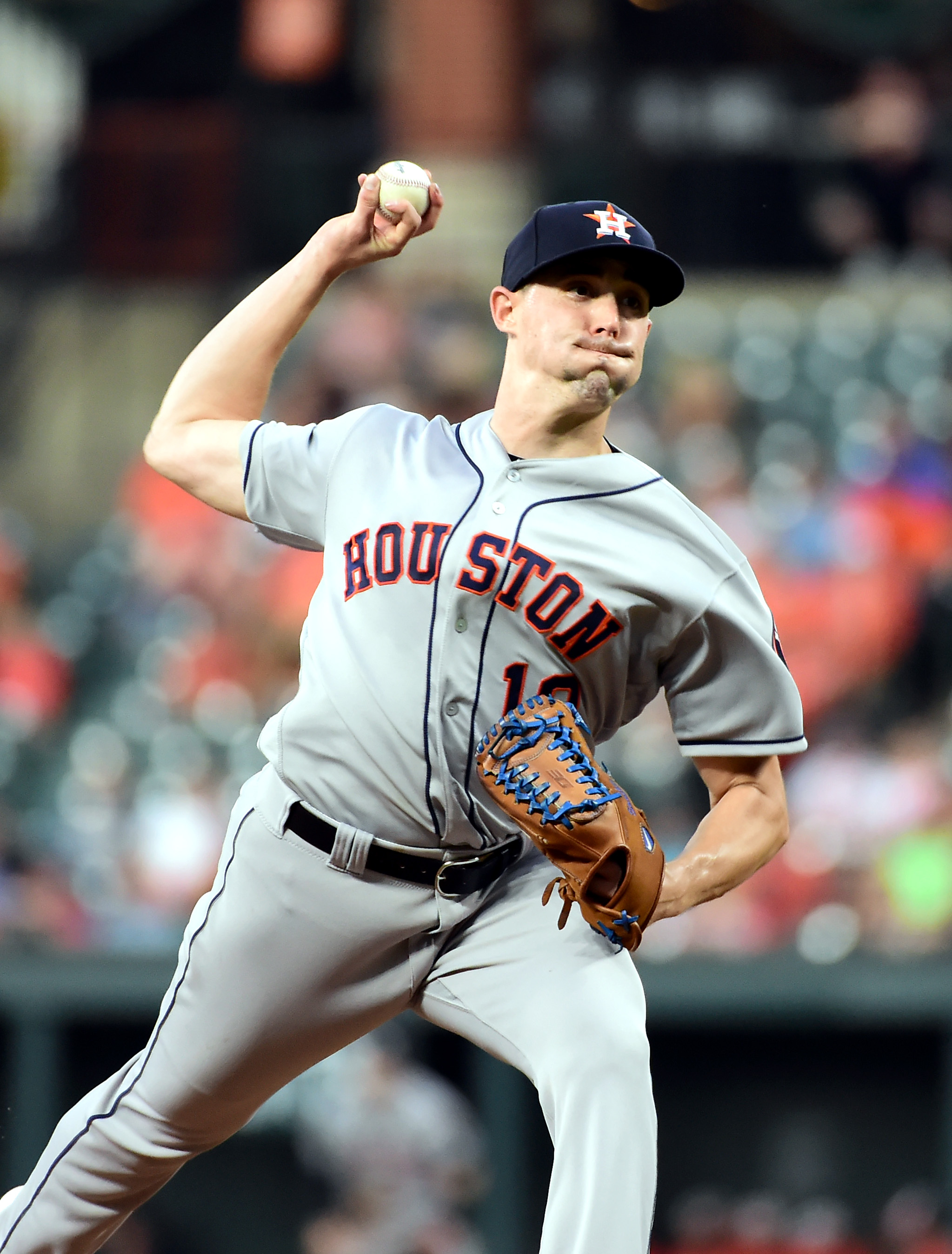
Sanchez, 28, was drafted 34th overall out of high school by the Blue Jays back in 2010 as a supplemental pick for the loss of free agent Marco Scutaro. He was still a few weeks shy of his 18th birthday upon being drafted. Sanchez’s path from Barstow, California to being drafted by the Jays was chronicled in this excellent read from Stephen Brunt of Sportsnet.ca a few years back.
Sanchez’s prospect status climbed as he ascended through the minors, with Baseball America praising his “premium velocity with an effortless delivery.” The Blue Jays eased Sanchez into the Majors in 2014 via the bullpen, and he even picked up three saves in his 24 appearances that year.
Marcus Stroman‘s unfortunate ACL tear paved the way for Sanchez to make the Jays’ rotation out of camp in 2015, but after a summer lat strain that year he returned to the ‘pen. The following year Sanchez again won the team’s fifth starter job out of spring training, and this time he ran with it. 2016 still stands as the best year of Sanchez’s career, as he posted a 3.00 ERA in 192 innings, making the All-Star team and finishing seventh in the AL Cy Young voting. In a year where the average starting pitcher managed a 20.2 K% and 7.7 BB%, Sanchez fell right around those marks at a 20.4 K% and 8.0 BB%. He did succeed in limiting exit velocity and keeping the ball on the ground. Despite concerns about Sanchez’s workload, which wound up increasing more than 100 innings over the prior year, the Blue Jays couldn’t bring themselves to pull him from the rotation despite a yearlong flirtation with the idea.
Sanchez would be limited to just eight starts in 2017 due to a blister/split fingernail that required four separate IL stints. Further finger issues held him to 20 starts in 2018, culminating in season-ending surgery. Sanchez battled through similar issues in 2019, making 27 starts on the season but averaging fewer than five innings per turn. Sanchez was not able to replicate his previous success, posting a 5.45 ERA, lackluster 18.6 K%, and unfortunate 11.7 BB% across 2018-19. By the 2019 trade deadline, the Blue Jays had seen enough, trading Sanchez to the Astros with Joe Biagini and Cal Stevenson for Derek Fisher. Fisher’s Jays story coincidentally came to an end this week with a trade to the Brewers.
While it was thought that the Astros might work magic with Sanchez’s curveball and its 91st percentile spin rate, especially after his debut for the club was the first six innings of a combined no-hitter, the righty quickly went down for shoulder surgery and was non-tendered after the 2019 season. Sanchez wasn’t heard from again until October 2020, when he held a showcase for 20 teams in Miami. Agent Scott Boras would go on to boast of a 2,700-2,800 RPM fastball, speaking of Sanchez’s intent to work as a starter in 2021. Sanchez must have shown well at a second showcase held this month, given the $4MM contract with the Giants. Indeed, Slusser notes that “the Giants have been paying attention to [Sanchez] all off season and took especial notice last week, when Sanchez hit 98 mph in a bullpen session.” Here’s the proof of that from Sanchez’s Instagram.
After another reclamation project gone well, Kevin Gausman, accepted his $18.9MM qualifying offer, the Giants went to work on their rotation this winter by adding Anthony DeSclafani for $6MM (a teammate of Sanchez’s on the 2012 Lansing Lugnuts) and Alex Wood at $3MM on one-year free agent contracts. While Sanchez will presumably round out the team’s starting five, no team is getting by with five starters – not this year, and not with this group. The club also added Nick Tropeano on a minor league deal today, and Logan Webb figures to be in the mix as well. Tyler Beede is expected to become an option around May after recovering from Tommy John surgery.
With pitchers and catchers already starting to report to spring training, there are still several rotation-worthy starting pitchers on the free agent market, including Jake Odorizzi, Taijuan Walker, Rick Porcello, Cole Hamels, and Mike Leake. It’s been an odd winter for starting pitching. Aside from Trevor Bauer, who signed for three years and $102MM, no starting pitcher has landed as much as $20MM. The last time fewer than three starting pitchers received a $20MM guarantee in an offseason was 2009-10, when only John Lackey and Randy Wolf achieved it.
Why Subscribe To Trade Rumors Front Office?
Trade Rumors Front Office is our subscription service, which removes ads from the website and app and gets you a bunch of exclusive MLB chats and articles. You can check out the full benefits here, and I’ve got more on the way this year. But rather than tell you myself why Trade Rumors Front Office provides great value, I thought I’d share another batch of real quotes from current subscribers!
The Trade Rumors Front Office subscription service is a must have for baseball fans! The exclusive chats are always informative and I always get my questions answered! MLBTR also has great content exclusive to the subscription, with my personal favorite being the projection of possible trades. I highly recommend! – Alex
Very fair price for the ad-free and the extras. Highly recommended. – Rocco
So I signed up initially to support these guys during the pandemic. I wasn’t sure what to expect. I think they were trying to figure it out too.. And they have.. Among other benefits, Tim Dierkes’ mailbag is damn good. He is giving some very in-depth answers to questions that you don’t get on the free site. Steve Adams has done some great synopses on what the Padres have done as well as the crazy couple of weeks when there were a flurry of moves. – Marc
MLBTR is a business – and just like many others businesses during these trying times – they’ve had to improvise. The result of their improvising was Trade Rumors Front Office. TRFO is a subscription based service that allows for more personalized content between the users and the MLBTR staff with subscriber exclusive mailbags, live chats, and articles. All for the yearly price of $29.89 or the monthly price of $2.99. – Daniel
The Trade Rumors Front Office subscription is a huge value to me. The subscription allows me to quickly take in all the news, notes and transaction details from my #1 baseball news site without having to visually hurdle any unwanted ads. I strongly recommend joining the Front Office!! – David
Subscribing to the most-complete baseball news website was a no-brainer! Beyond the free content, there is a lot more. The insider mail call and chats are great, especially with the increased access to insiders. I’m thrilled to support MLBTradeRumors. After all I’ve taken from it over the years, it’s a pleasure to give back! – Doug
MLBTR was already my favorite site for all my baseball intel before the Front Office subscription made me a fan for life. If you love our national pastime like I do then it’s a great value that I would suggest everyone invest in!! Great insights and writing. Thank you MLBTR! – Sean
I would recommend signing up for the Front Office plan simply because it allows more access to information. My questions are answered during the chats and the overall experience feels a lot more personalized. For any person who visits the website/app daily then I recommend the Front Office plan as you will have more personalized content and interactions that you are looking for when coming to the site. – Nick
If you’re nuts about baseball, like I am, you’ll want to SERIOUSLY consider getting the MLB Rumors subscription service. For a few bucks a month you not only get the website (ad free), you get continual surprises in your email – great information, invitations to participate and top of the line excellent analysis. Great stuff – and FUN. Season’s right around the corner. Hop aboard!! – Andy
I’ve been visiting MLBTR daily since 2008 and can’t emphasize enough how much additional, thoughtful content I receive daily as a Front Office subscriber. Money exceptionally well spent! – Aaron
I enjoy coming to MLB Trade Rumors daily for up to date information on rumors, but since signing up for an add free subscription –
I have become an insider
I get emails to ask questions
I get private chats with some of the staff
It’s not just reading information it’s being part of it.
It’s the best investment I made for my entertainment in a long time – Tommy
The subscription service pays for itself when we have our weekly personal chats and the chances of asking a question and getting it answered is extremely high and the added plus of no ads on the Trade Rumors page is great. – Ed
I chose to subscribe a year ago and I’m really grateful for, the extra features, such as live chats and the absence of ads, are really worth it, and have helped me enjoy and gain knowledge about the sport. – Nicholas
Trading A Cy Young-Caliber Starting Pitcher
Less than three months after their first-round playoff defeat to the Marlins, the Cubs traded second place NL Cy Young finisher Yu Darvish to the Padres. This occurred after the Cubs won their division with a .567 winning percentage, which would have extrapolated to about 92 wins in a full season. I looked back through the last 20 years, and this has never been done: winning teams simply do not trade top-2 Cy Young finishers.
As you might expect, teams prefer not to trade top-2 Cy Young finishers at all. In the past 20 years, it’s only been done twice in the offseason: the Mets traded 38-year-old R.A. Dickey to the Blue Jays after the 2012 season, and the Diamondbacks dealt 41-year-old Randy Johnson to the Yankees after Arizona’s abysmal 2004 campaign. Let’s see if the more recent Dickey trade bears any similarities to what the Cubs did.
December 17, 2012: Mets trade Cy Young winner R.A. Dickey with Mike Nickeas and Josh Thole to the Blue Jays for Noah Syndergaard, Travis d’Arnaud, John Buck, and Wuilmer Becerra.
The 2012 Mets finished with a 74-88 record, good for fourth place in the NL East. Dickey, a knuckleballer, had quietly signed a minor league deal with the Mets after an uninspiring 2009 season out of the Twins’ bullpen. He flourished in the Mets’ rotation, finding another gear in 2012 en route to a 2.73 ERA over 233 2/3 innings. That effort resulted in 20 wins and the Cy Young award for the 38-year-old. At that point, the Mets had one year of control left on Dickey at an affordable $5MM.
Dickey hoped to stay longer. In May of his Cy Young-winning season, he told Mike Puma of the New York Post, “I like it here and I want to be here. I feel like the team is moving in the right direction, and I want to be a part of the solution. Now it’s up to them. If I’m in those plans, [addressing the contract] is one way to make it known.” As late as September of 2012, GM Sandy Alderson spoke of his intent to retain Dickey as well as David Wright long-term. They were the clear bright spots on the 2012 team. By November, however, a significant gap had emerged in contract talks between the Mets and Dickey, with the righty reportedly seeking a two-year extension worth $26MM.
Once the Mets succeeded in locking up Wright, the PR hit of potentially trading Dickey diminished, and the trade rumors began in earnest. In 2021, the Cubs’ nod to the negative PR of the departures of Darvish and Theo Epstein, among others, seems to be the nostalgia signing of Jake Arrieta. Not quite on par with the Wright extension, though the Cubs do have Anthony Rizzo, Javy Baez, and Kris Bryant as extension candidates given their impending free agency.
The Mets reportedly discussed Dickey with eight different teams at the Nashville Winter Meetings in 2012, ultimately reaching an agreement with the Blue Jays pending a contract extension for the pitcher. The Jays hammered out a two-year, $25MM deal – only $5MM more than the Mets had offered – and the deal was done. Alderson explained the Mets’ approach:
“One of the reasons the negotiations were prolonged is we began to see forces of supply and demand at work, frankly. On the one hand, we saw the value of starting pitching go up in terms of compensation. At the same time, we saw the supply start to go down in terms of availability. And so because we were proceeding on two tracks, at some point we had to wait and see what the value might be.”
Much like the 2021 Cubs after trading Darvish, Alderson talked about how the Mets weren’t giving up on the 2013 season, saying, “No. 1, we have made this trade, and we feel a number of the players that we’ve acquired — John Buck, certainly — and probably Travis d’Arnaud will make contributions in 2013. We can’t quantify those at the moment. But we do have expectations about that. In addition, there’s a lot of time between now and when we report to spring training. So we do expect to do some other things. We do expect to acquire some other players. We recognize we have holes to fill — that we may have created a hole in our rotation, but we will address those. We certainly are not punting on 2013.”
What were those “other things?” The rest of the Mets’ offseason consisted of signing Shaun Marcum for $4MM and adding some veterans on minor league deals. I didn’t expect much from the 2013 Mets, writing, “The Mets have been a sleeping giant under the Alderson regime, parting ways with their best veterans other than Wright, avoiding free agency, and allowing their attendance to slip to 17th in MLB. A decent rotation won’t be enough to overcome the team’s gaping holes in 2013, but perhaps the season will provide a sneak preview for the Mets’ return to relevance in the coming years.” The Mets wound up treading water in 2013, putting up the same 74 wins they had in 2012.
Then-Blue Jays GM Alex Anthopolous talked about the Mets’ leverage in the negotiations:
“Sandy clearly had the option to sign the player back. Everyone knew that. That was made aware. And the player wanted to stay. I think Sandy, when d’Arnaud was on the table, he was probably on the table for 10 days. And it really didn’t move anywhere. There was no traction. There was no dialogue. It just was not enough from his standpoint, as much as we valued Travis.” Anthopoulos would go on to tell reporters that Syndergaard was the last player the Mets insisted on acquiring.
Having recently added Jose Reyes, Josh Johnson, and Mark Buehrle in a blockbuster deal with the Marlins, Anthopoulos pulled the trigger on Dickey and gave up two major prospects in d’Arnaud and Syndergaard. How were the prospects perceived at the time?
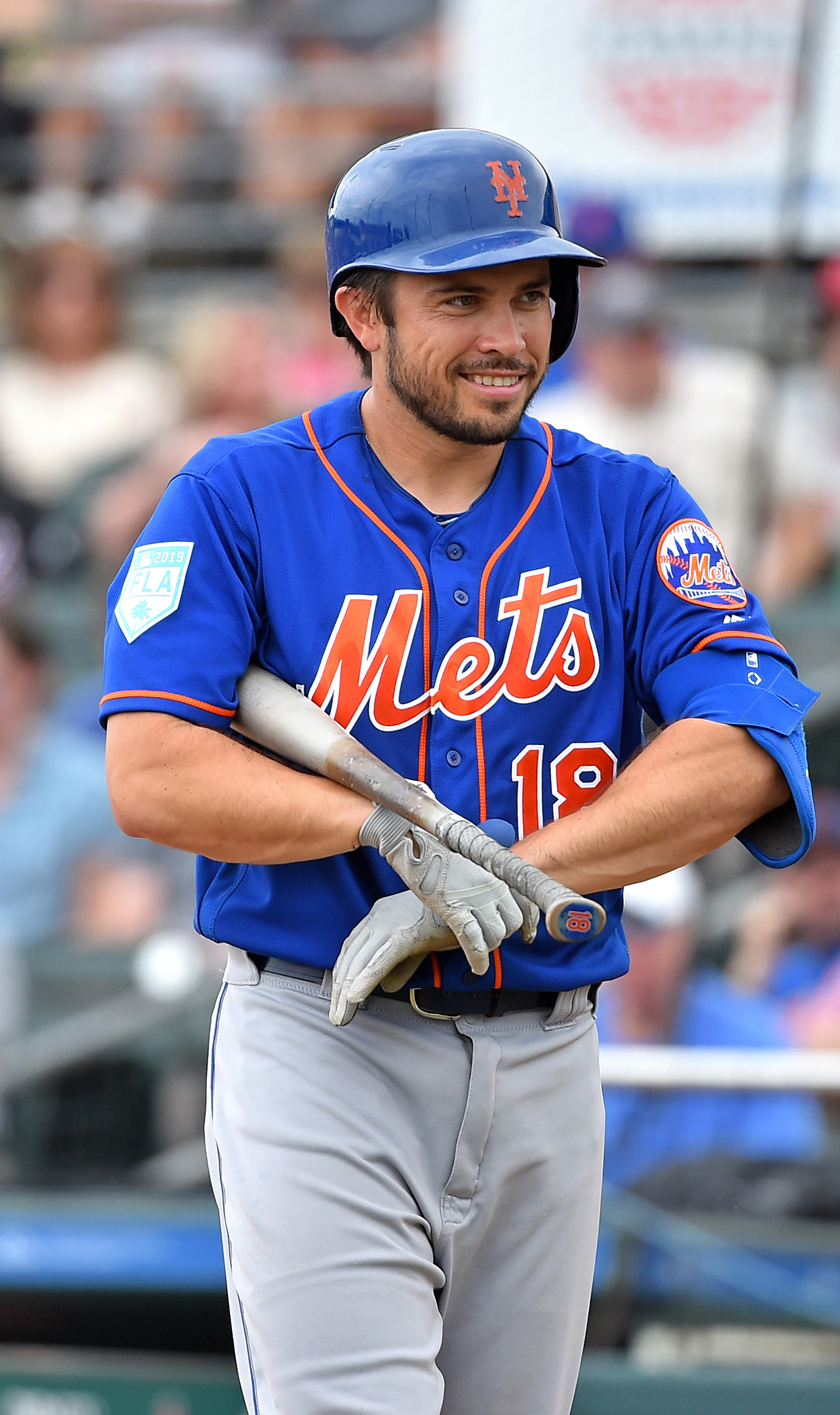
In d’Arnaud, the Mets landed an MLB-ready prospect ranked 23rd in baseball in early 2013, according to Baseball America. It would be similar to acquiring Luis Patiño in the present day, who happens to be the main piece the Padres sent to the Rays for Blake Snell last December. Baseball America slapped a 60 grade on d’Arnaud at the time, generally assigned to “first-division regulars.” D’Arnaud was said to have the ability to become an All-Star catcher, “if he can stay healthy.”
Though d’Arnaud played well in 2014-15, accumulating 6.2 WAR over 175 games, his Mets career was mostly marked by a litany of injuries, and he was released in May 2019. D’Arnaud has had a resurgence since then, with a 120 wRC+ over 550 plate appearances. He took home his first Silver Slugger award with the 2020 Braves and is entering the last year of a two-year, $16MM free agent contract.
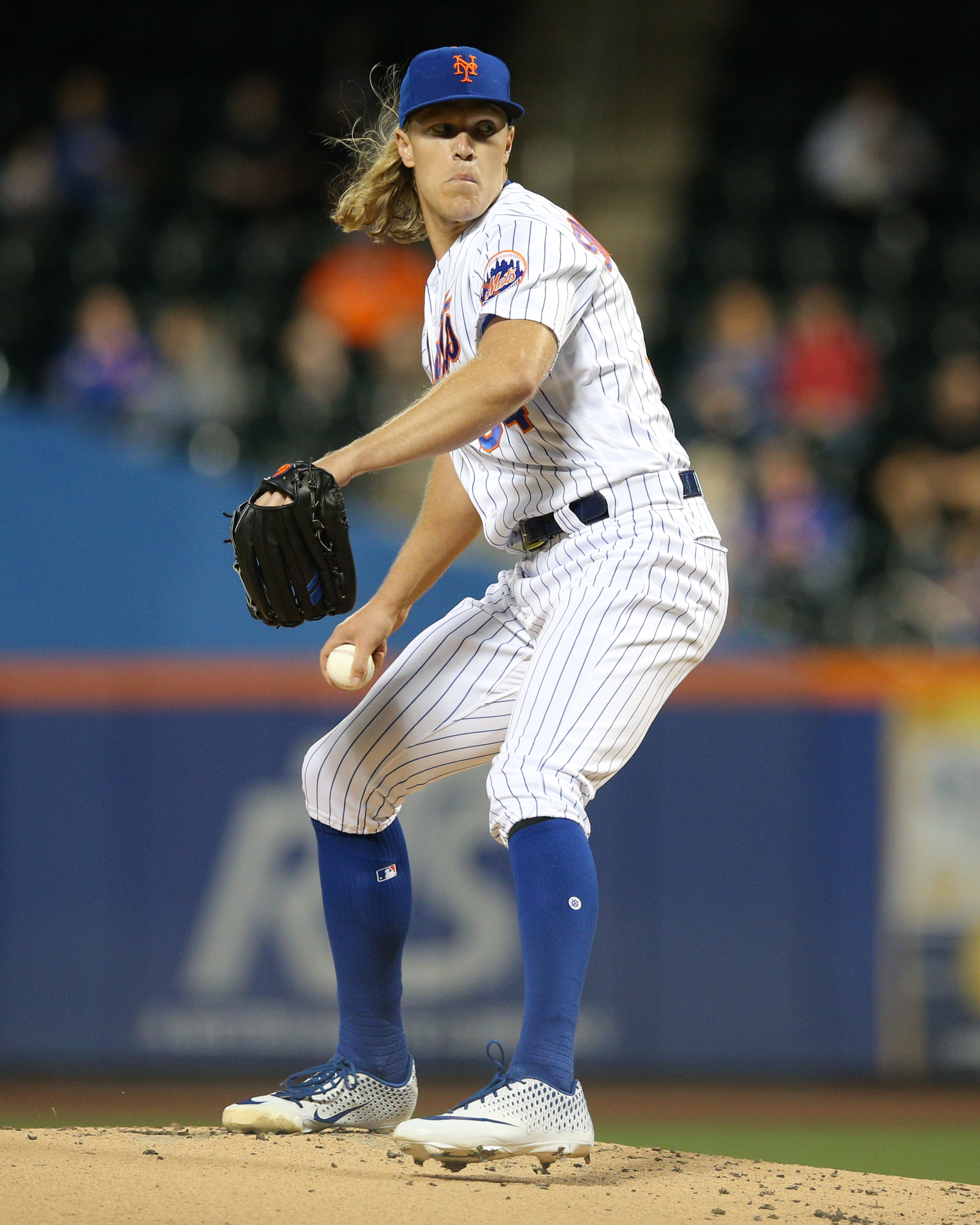
Syndergaard, meanwhile, landed 54th on BA’s top 100 back in 2013. He, too, was assigned a 60 grade, with “the ceiling of a frontline starter.” Syndergaard, who had been drafted out of high school, was a 20-year-old who had yet to pitch above low-A, but he was considered a polished pitcher at the time. He ascended quickly to top-15 prospect status, reaching the Majors in 2015 and finishing fourth in the Rookie of the Year voting. He pitched well for the Mets in their 2015 run to the World Series and finished eighth in the 2016 NL Cy Young voting.
Though Syndergaard missed most of the 2017 season with a lat injury and all of 2020 due to Tommy John surgery, he’s tallied 18.8 WAR for the Mets and should be a factor in 2021 before becoming eligible for free agency.
While Buck and Becerra didn’t pan out for the Mets and d’Arnaud fell short of expectations, the acquisition of Syndergaard alone made the Dickey trade a resounding success for the Mets and Alderson. The chances of the Cubs having landed a player of Syndergaard’s caliber in the Darvish deal are remote, but we’ll have to check back in five years or so.
With Dickey seeking a reasonable two-year extension, a suitor could have expected to control him for three years in total, which is what the Blue Jays wound up getting. Dickey would only need to be paid $30MM over the three-year term, in an offseason where Zack Greinke landed a six-year, $147MM contract and Anibal Sanchez signed for five years and $80MM. Dickey would be paid just 40% of the AAV the market’s top pitcher received in free agency, on a much shorter term. In 2021, Trevor Bauer signed for three years and $102MM, an average annual value of $34MM. With the Cubs picking up $3MM of Darvish’s tab, the Padres got him for $59MM over three years – a $19.67MM AAV that is about 58% of Bauer’s. Bauer’s contract could easily become $85MM over two years assuming he opts out of the final year, however, and then Darvish’s AAV would be about 46% of Bauer’s.
It’s not a perfect parallel, and both Dickey and Darvish came with some risks, but it’s fair to say the Cubs weren’t offering quite the same payroll-friendly ace the Mets were – especially with teams reeling from the pandemic. The Cubs surely would have upped their return had they been willing to include more cash or take on a bad contract. Talent-wise, Dickey was a 38-year-old knuckleballer who had never shown strikeout potential prior to 2012. Darvish, on the other hand, made four All-Star teams prior to 2020 and consistently rates among the top strikeout pitchers in the game. Darvish seems more likely to deliver ace-caliber seasons for his new team than Dickey was, though he poses a greater health risk. As it turned out, Dickey never reached 2 WAR in any of his four seasons with the Blue Jays.
Like the Mets in 2012, the Cubs didn’t have any real urgency to make a deal this offseason, and should have held out unless they were bowled over. The Padres had already traded the aforementioned Patiño, the game’s #23 prospect, but still had prospects ranked #10, #11, #36, #76, and #85. The Cubs received none of them. Though the Cubs threw in a credible backup catcher in Victor Caratini, their return was one year of righty Zach Davies, plus prospects Reginald Preciado, Owen Caissie, Ismael Mena, and Yeison Santana. None of the four prospects are near the Majors, and all of them received 45 grades from MLB.com. Santana, who recently turned 20, is the oldest of the bunch. We’ll let future Hall of Famer Clayton Kershaw take it from here, in his interview with Jorge Castillo of the L.A. Times:
“There’s a lot of smart guys in front offices. Figure something out that’s easier to do than trading away a [star]. Just, for example, a potential Cy Young [Award winner] in [Yu] Darvish, who has been one of the top five pitchers in baseball for a year and a half, for prospects that could potentially be good but they’re 17, 18 years old. And [Zach] Davies is a great pitcher, but to me, that’s just not . . . For the Chicago Cubs to do that, it’s not good. It’s just not good.”
Kershaw would know. He’s finished in the top two for Cy Young voting five times, and his big-market employer never entertained trading him immediately thereafter.
So then, why do the deal if you’re the Cubs? A mandate from ownership to reduce payroll is the likely answer, as the Cubs removed $59MM of Darvish’s $62MM commitment from the books. Darvish carries a $21MM CBT payroll hit for 2021, yet the Cubs added $31.33MM back to the payroll in Davies, Joc Pederson, Jake Arrieta, Andrew Chafin, Trevor Williams, Jake Marisnick, Austin Romine, Jonathan Holder, and Kohl Stewart. The new acquisitions project to 6.1 WAR, while Darvish projects for 3.8 by himself. This sequence of moves represents a clear step back, as the Cubs could have easily kept Darvish’s 3.8 WAR out of one roster spot, while adding all the same supplementary help aside from Davies.
The 2021 Cubs currently carry a CBT payroll of about $170MM, more than $45MM shy of where they sat last year. They project as roughly a .500 team, and fit in well in a division where most of the teams aren’t really pushing for the title.
The Luxury Tax Boogeyman
The competitive balance tax has been an insidious force against the players. Back in 1996, in the wake of the ’94 strike, a new collective bargaining agreement was reached and healing between the teams and players could begin. As Jon Pessah wrote in his book The Game, “[Union head Donald] Fehr finally said yes to a luxury tax — the first time the union agreed to any form of payroll restraint since free agency changed everything in 1976.” I don’t think anyone anticipated what the luxury tax would become.
In that CBA, which covered 1997-2001, the luxury tax was to cover only the 1997-1999 seasons, sort of an experiment. Opening the door to the luxury tax in that 1996 deal wasn’t perceived as a major hit to the players. Pessah wrote, “This labor war was a huge victory for Fehr and the union…The owners never got their salary cap or any changes to free agency or salary arbitration.”
Fast forward to 2021, and it’s clear that most major market teams use the base tax threshold of $210MM as something of a soft salary cap. It’s a limitation MLB likes having in place, as it helps keep free agent salaries down. If MLB wanted the luxury tax removed, they could do so easily, as they did when it was decided the tax would not be collected in 2020.
Here’s the chart for tax rates (link for app users):
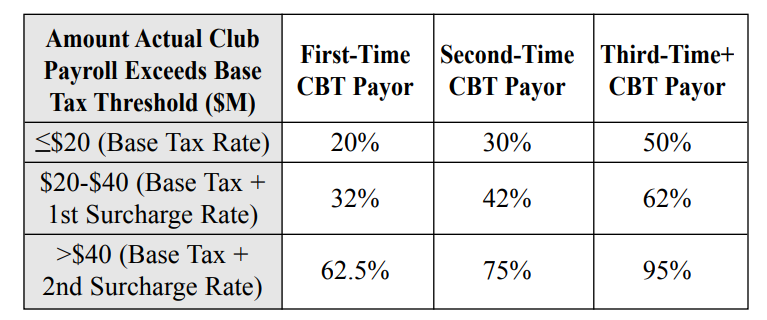
The tax brackets for 2021 are $210-$230MM, $230-250MM, and $250MM and beyond.
In their extrapolated 2020 payrolls, the Yankees, Astros, and Cubs exceeded that year’s $208MM base tax threshold. It’s notable that while MLB did not make these three teams actually pay tax in 2020, they still didn’t give them a free reset. That’s why the Yankees sit around $200MM right now – they’re in that third column of the chart, and they want to move back into the first for 2022. It’s all about the reset, not the actual tax amount if they slightly exceed $210MM in 2021.
The Cubs are trying to avoid the third-time CBT payor column as well, and they’ve accomplished that goal and then some in getting Yu Darvish, Jon Lester, Tyler Chatwood, Jose Quintana, and Kyle Schwarber off the books. They’re only around $170MM for 2021, a full $40MM shy of the threshold. The Astros are sitting around $196MM, so they have wiggle room as well. The machinations of these three teams, particularly the Yankees, assume that the luxury tax system will remain similar in a new CBA, and there actually is a reason to reset in 2021. If the union succeeds in drastically increasing the thresholds, which should be a major priority for them, all three clubs could have easily reset in 2022 anyway.
The one club that didn’t get the memo about treating $210MM as a soft cap is the Dodgers. The Dodgers pulled off their reset in 2018 and have stayed below the base tax threshold since, putting them in the first-time payor column for 2021 after the signings of Trevor Bauer, Justin Turner, and Blake Treinen. With a projected CBT payroll of $254.4MM currently, they’re looking at a tax penalty of about $13MM for 2021. If a third-time payor spent $254.4MM, their tax penalty would be over $26MM. In any case, exceeding $250MM places another tax: the club’s highest available pick moves back 10 spots in the next draft. That’s why the Dodgers will likely find a way to get below $250MM this year.
It’s worth asking: if you’re not the Yankees, Astros, or Cubs, why are you so scared of the $210MM boogeyman? None of the other 27 teams need to reset – they’re already in the first-time CBT payor column. That includes the Red Sox, sitting around $204MM and letting the Blue Jays pass them up. The Angels are around $191MM. The Mets are around $187MM. The Phillies are around $196MM. The Nationals are around $194MM. That makes five teams this winter that seem to have some deference to the $210MM base tax threshold. What would be so bad about spending, say, $220MM? The tax penalty would be $2MM, exactly the price of one year of Hansel Robles.
So the Reset Club includes the Yankees, Astros, and Cubs. And then five additional teams – the Red Sox, Angels, Mets, Phillies, and Nationals – belong to the Soft Cap Club. For the other 22 teams, the luxury tax simply has no bearing, which will only be underlined if the thresholds go up significantly in the next CBA. It’s possible the eight luxury tax avoiders have grand plans for the 2021-22 free agent class – check it out – and want to be first-time payors after they go big next winter. Otherwise, it’s hard to understand why a Soft Cap Club forms every offseason.
Which Players Will Have The Largest Change In Performance In 2021?
FanGraphs’ 2021 playoff odds are out. If you’re into forecasting, it’s fun to look at something like this. At this moment in time, FanGraphs projects the Yankees, Twins, Astros, Mets, Cardinals, and Dodgers as the six division winners. Their projections have the White Sox, Blue Jays, Padres, and Braves as the wild card teams.
For FanGraphs’ playoff odds to have any meaning, you have to consider the many underlying assumptions. FanGraphs’ Ben Clemens explains how it’s done here. Most importantly, team projections require forecasts for both performance and playing time. I’m going to assume that the site’s Depth Charts player projections, described as ” a combination of ZiPS and Steamer projections with playing time allocated by our staff,” are similar to what fuels their playoff odds.
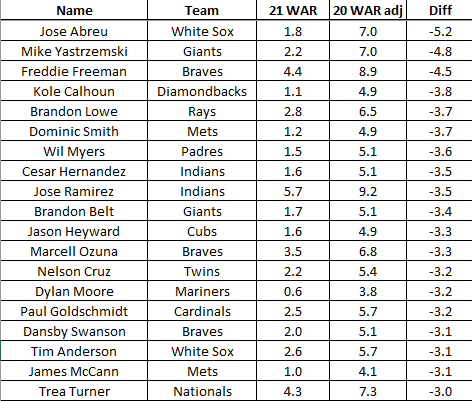
One thing that’s easy to forget when talking about which teams have improved the most over the offseason is that we cannot assume the performance of holdover players will be constant. Take AL MVP Jose Abreu, for example. Abreu was worth 2.6 WAR in last year’s 60-game season, so with a simple multiplier of 2.7, that extrapolates to about 7 WAR over a full season. In other words, for 60 games, Abreu played like a 7-WAR player.
FanGraphs’ blended ZiPS/Steamer projections do not predict anything close to a 7 WAR season for Abreu in 2021. Instead, they predict a 1.8 WAR campaign, the same as Abreu produced in 2019. A 1.8 WAR Abreu is basically what’s baked into FanGraphs’ projection of 88.2 wins for the 2021 White Sox. Their projection is that Abreu will be the 11th best player on the 2021 White Sox.
Here’s a look at the position players FanGraphs expects to lose the most WAR in 2021, compared to the player’s extrapolated full season 2020 production (link for app users):
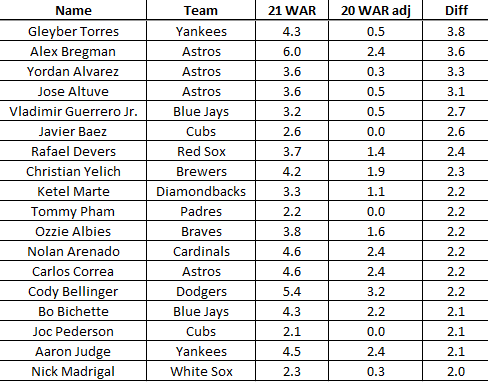
On the flip side, many who struggled in 2020 are expected to bounce back. I’ve replaced negative 2020 WARs with zero for the table below, as I don’t think it makes sense to extrapolate J.D. Martinez‘s -1.0 WAR to -2.7. With that in mind, here are the biggest projected gainers for position players (link for app users):
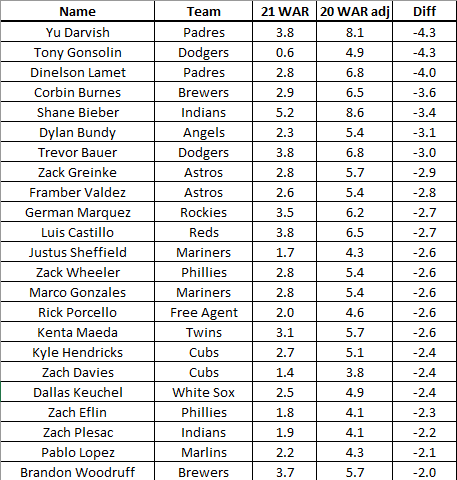
On to the starting pitchers. Here are the biggest projected dropoffs (link for app users):
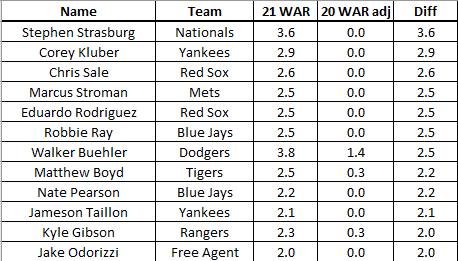
And here are the biggest projected gains for starting pitchers. As you’d expect, the biggest gains are projected for pitchers who missed all of 2020 due to injury or opting out (link for app users):
What do you think? Which players will experience the biggest change from their 2020 performance?
Testimonials From Trade Rumors Front Office Subscribers
An ad-free subscription to MLBTR costs just $2.99 per month or $29.89 per year. Check out the full benefits here. I’ve rounded up a new batch of testimonials from current Trade Rumors Front Office subscribers for your consideration:
Front Office has been well worth the cost and then some. To not only have the up-to-the-minute news but also the ability to ask questions and hear directly from the experts, the subscription has provided amazing value. These guys put their heart and soul into MLBTR. The least we can do is help them out along the way. The emails, chats and Q&A are icing on the cake. Keep up the great work guys!!! – Zack
I read the testimonials from other MLBTR readers who signed up for the Front Office subscription, and thought I’d give it a try. Whether you check out the site occasionally or hit refresh several times a day, it’s well worth the very small investment. Aside from no ads (!), the in-depth chats and behind-the-scenes mailbags are beyond what I was expecting and way more than I get from any other subscription site. Frankly, I don’t know why they don’t charge more. It’s a must have. You won’t regret it. – Jake
I look forward to subscriber mailbags and exclusive on-line chats, where it is not only easier to get your question answered but the writers answer in paragraphs, not single sentences. I initially subscribed just to show my support for this great site, but I got a lot more than I bargained for. – Jack
Tim, I subscribed to Trade Rumors Front Office initially to simply support your site. I enjoy the site and I did not want to see you “tank” ala cut back on staff or articles. [I also felt a little guilty using the site so much and not contributing]. The subscription includes private chats, emails w/you, etc. I unsubscribed to all that. I did not need more content, I was happy… Well for whatever reason I re-subscribed. Turns out the emails w/you answering questions is now what I like most about the site. That is what I look most forward to every week. Thank you. – Nick
It’s worth signing up. I love the exclusive chats and emails that “regular” folks don’t get. I signed up the moment subscription was available and have never looked back. You want more in depth baseball happenings and rumors for a few cents you probably spend on beer, anyway…go for it! – Stevie
Happy to support one of the sites I visit most. Great content available to subscribers. Also, loving the democratization of content associated with the mailbag questions. – Joel
I am glad I subscribed. Special emails arrive weekly. There are opportunities to ask questions that actually … wait for it … get answered! It’s a must subscription for the MLB fan. Take away my first and second round draft choices, but don’t take away my MLBTR subscription! Come join us. – James
I check MLB Trade Rumors every day, looking for new content. There are obvious benefits of a Front Office subscription (more information and insights), but signing up also is a way to demonstrate appreciation for product and group of writers that I value. – Steven
As a fan since 1957 and a former MLB certified player agent, I can’t imagine a more informative site than Trade Rumors Front Office. The small subscription fee pays for days, weeks, and months of news and insights beyond what the already terrific MLBTR provides us for free. If you love baseball, you’ll love TR Front Office. – Bruce
I have been a big fan of MLBTR since it hit the scene. It is the one place I could always go and catch up throughout the day. By subscribing and eliminating the ads, it is even easier and faster to catch up! MLBTR is my first stop when looking for baseball news and the site became even better when I subscribed! – Dean
MLBTR is one of the top 5 essential baseball sites, with content worth every penny of the subscription price. It’s an evident labor of love and passion, dedicated to making us all more informed, and it deserves your support. – Eric Van, former Red Sox Baseball Ops consultant, Chair of SABR’s Science and Baseball Committee
As someone who reads MLBTR on a daily basis, the website is extremely valuable to me in my work to stay abreast of current activities in the game. The writers work diligently to provide important information throughout the day while supporting that effort with a wide variety of helpful resources like the agency database, the free agent and arbitration trackers, and the salary arbitration projections. It is a go-to source. I particularly encourage you to become a Front Office subscriber because it shows your appreciation for their daily effort and it provides a stable revenue source that is critical to MLBTR’s financial health. You will not regret becoming a Front Office subscriber. – Ed
Why I Don’t Use WHIP
In an article in early January, I explained the pitching stats we use regularly here at MLBTR. At the end, I briefly noted that I don’t use WHIP outside of fantasy baseball. Several commenters inquired about that choice, so I decided a separate article might be helpful.
If you’re reading this, you probably already know that WHIP is (walks + hits) / innings pitched. Hit-by-pitches aside, WHIP is a measure of baserunners allowed by a pitcher per inning. In 2020, Zac Gallen allowed 25 walks and 55 hits in 72 innings for a 1.11 WHIP. The calculation: (25 + 55) / 72 = 1.11.
In briefly researching how WHIP came to be, I found this fun Wall Street Journal article from 2009 by Nando Di Fino. WHIP was conceived in 1979 by Daniel Okrent, better known as the man who invented fantasy baseball. Okrent originally called the stat IPRAT – “Innings Pitched Ratio.” It was later renamed to the catchier WHIP. Though in his 11-year-old article Di Fino wrote that WHIP “is generally accepted as a legitimate baseball statistic,” he also quotes then-Rays director of baseball operations Dan Feinstein explaining why the team did not use the stat. In Di Fino’s words, this is “mostly because pitchers often can’t control the amount of hits that they give up.”
Sometimes, jamming together a couple of different stats into one can improve its usefulness. I don’t feel that’s the case with WHIP, because of that hit component. I’d rather see info about pitcher’s walks and hits allowed separately, because those are two very different things.
A pitcher’s ability to avoid walking batters is a real skill, and that’s why we cite BB% here at MLBTR. For pitchers with at least 100 innings in a season from 2015-19, the year-to-year correlation of BB% was 0.598. Knowing a starting pitcher’s walk rate in 2018 gave you a decent idea of what his walk rate would be in 2019.
Strikeout rate is even more of a concrete skill. K% has a year-to-year correlation of 0.753. If we know a pitcher’s K% and BB%, then almost everything else was a ball in play. So let’s talk about batting average on balls in play, or BABIP. Pitchers control BABIP to a small extent, and for a starting pitcher the year-to-year correlation is just 0.179. There isn’t that much variation pitcher-to-pitcher in BABIP skill. (As an aside, home run prevention matters as well, which is why we talk about groundball rate as a skill).
Going back to WHIP, its year-to-year correlation is 0.445. To the degree that WHIP is repeatable, that is mostly owed to the repeatability of K% (since a K is never a hit) and BB% (half of WHIP). The repeatability of WHIP is negatively affected by the hit component.
In my opinion, there isn’t a convincing reason to use WHIP. Resident stat expert Matt Swartz sums it up this way: “If the question is how a pitcher performed retrospectively, actual ERA is the more logical stat to use. If the question is how a pitcher will perform prospectively, WHIP doesn’t correlate that well with future ERA, and you can get to a better picture by looking at components.”
So, we’ll talk about what a player already did on a the field, and hits allowed are a big part of that. Trevor Bauer gave up 41 hits in 73 innings in 2021, and it’s a big reason he posted a 1.73 ERA. I’d rather see his walk rate (6.1%) and BABIP (.215) separated out, because I find that more informative both in considering what he already did and what he will do in the future. If I simply told you he had a 0.79 WHIP, that would be less informative.
My goal in this post is simply to explain why I personally don’t use WHIP to evaluate pitchers, and those are the same reasons you’ve rarely seen it on MLBTR in our 15 years. We’re all here because we love baseball. The stats you look at should be whichever ones increase your enjoyment of the game. Whether WHIP, WAR, wins, or something else does that for you, there’s no wrong answer.
How To Keep Track Of MLB Free Agent Signings
The MLB free agent market has finally started to pick up, and many players have landed with new teams in recent days. Here are the various ways you can stay on top of everything here at MLBTR:
- 2020-21 Top 50 Free Agents list – Every time one of our Top 50 free agents signs, I add that info in red below his blurb in our list. I also update our Honorable Mentions with teams and contracts, plus I list guys who signed for $5MM+ who didn’t make either list. Bonus: you can use this post to see how our predictions panned out. We published the post on November 2nd, and a lot has changed since then.
- Our mobile-friendly MLB free agent tracker showing all free agents, signed and unsigned
- Signed players ranked by total contract amount
- Unsigned players in our free agent tracker with the ability to filter by position
- Basic post listing all remaining 2020-21 MLB Free Agents by position
- Up-to-date list of players who will be free agents after the 2021 season
- Current leaderboard for the MLBTR Free Agent Prediction contest. MLBTR reader Oddvark produced a cool chart showing the predictions participants made, which you can find here.
- Please note: DJ LeMahieu was said to be nearing an agreement on a six-year, $90MM deal with the Yankees on January 15th, but we’re still waiting for that one to become official.