
Quick Hits: NPB, Harvey, Astros
Japan’s Nippon Professional Baseball is set to open its regular season June 19. Initially, games will be played without fans in attendance, but that may not be the case the entire summer. Former MLB reliever Frank Herrmann, now a member of NPB’s Chiba Lotte Marines, tells David Laurila of Fangraphs the league has discussed allowing some number of fans into ballparks as soon as July 10, with hopes of incrementally increasing attendance moving forward if safety permits. The NPB plans to run a 120-game condensed season, down from its typical 143-game schedule.
Turning our attention to the United States…
- As we approach the ten-year anniversary of the 2010 MLB entry draft, Ken Davidoff and Dan Martin of the New York Post look back at the Mets’ selection of Matt Harvey. Then-GM Omar Minaya credits former scouting director Rudy Terrasas for staying on the right-hander even as he slumped through a difficult sophomore season at the University of North Carolina. Minaya says the club had scouts in attendance for every one of Harvey’s starts as a junior, allowing them to feel comfortable enough to select him seventh overall when his performance rebounded that season. The story of Harvey’s meteoric rise to stardom and his equally rapid fall from that peak has been told many times. Nevertheless, Mets’ fans in particular will want to check out the full piece for an entertaining look back at the caliber of player Harvey was in his prime.
- Astros GM James Click tells Brian McTaggart of MLB.com that this year’s shortened, five-round draft forces teams more than ever to draft the best prospects on their board, rather than worrying about balancing out their minor-league systems. That’s particularly true for Houston, who lost their first and second round picks this season (and next) as punishment for their sign-stealing violations. “Even if you end up drafting four very similar players, you should be able to find playing time for them at some place and at some point,” Click tells McTaggart. Even in a typical season, MLB teams almost always select the player whom they believe to be the best available talent (subject to signability) in the early rounds of the draft. Drafting for need doesn’t make the same impact in baseball, where prospects are often years away from the majors and face high rates of attrition along the way, as it might in sports like football or basketball.
Latest On Teams’ Plans For Minor League Pay
3:14pm: The Astros will also pay their minor leaguers through August, Chandler Rome of the Houston Chronicle tweets. The Red Sox will do the same, Julian McWilliams and Alex Speier of the Boston Globe write. The Reds will pay theirs through Sept. 7, the end of the scheduled minor league season, per C. Trent Rosecrans of The Athletic.
2:16pm: As teams throughout the league make sweeping releases at the minor league level, neither the Twins nor the Royals plan on cutting any players, per ESPN’s Jeff Passan and MLB Network’s Jon Heyman (Twitter links). The Twins and Royals will also commit to paying all of their minor league player the current $400 weekly stipend through Aug. 31 — the would-be end of the minor league season — while providing full benefits. The Twins are also committing to front-office and baseball ops staff through at least the end of June, Do-Hyoung Park of MLB.com tweets.
To this point, no other clubs in the league have made such a commitment. The Marlins, Padres and Mariners all agreed to pay their minor leaguers through season’s end, although none of that bunch is known to be entirely avoiding minor league releases. Seattle, in fact, reportedly cut 50 minor league players this week already. The volume of players being released around the league is jarring — the D-backs cut a reported 64 players — although it should be noted that many of the releases would’ve come at the end of Spring Training under normal circumstances anyhow.
That doesn’t detract from the gesture made by the Twins or Royals, of course. It’s a stark contrast to an organization such as the Athletics, who informed minor league players earlier this week that they’ll no longer be paid after May 31. As MLB.com’s Jim Callis observes (on Twitter), the decision made by the Twins and Royals could quite likely prove beneficial in recruiting undrafted players who are selecting among teams while capped at a $20K signing bonus this summer.
Did The Mets Rob The Astros?
Mets general manager Brodie Van Wagenen has come under fire at times since the team hired the former agent after the 2018 season, but BVW has nonetheless had his high points atop their front office. One of his best decisions in New York came in January 2019, when he acquired a player who’s now among the Mets’ most valuable hitters in a trade with the Astros.
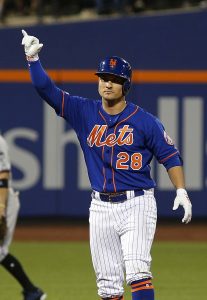
Sixteen months ago, Van Wagenen and then-Astros GM Jeff Luhnow worked out a swap that sent infielder/outfielder J.D. Davis and INF Cody Bohanek to the Mets for the trio of second baseman Luis Santana, outfielder Ross Adolph and catcher Scott Manea. Nobody from that quintet looked like a high-end asset at the time, and Davis was the only member of the group with major league experience.
Davis, a third-round pick of the Astros in 2014, hit a miserable .194/.260/.321 in 181 plate appearances in their uniform from ’17-18. However, Davis did have his way with Triple-A pitchers, against whom he slashed .335/.400/.589 with 22 home runs in 450 trips to the plate.
Davis’ success at the highest level of the minors impressed the Mets, who now look as if they acquired a terrific hitter at a low price. Davis got his first extensive look in the majors last season, his age-26 campaign, and ran with it.
Across 453 PA, Davis batted a strong .307/.369/.527 (136 wRC+) with 22 home runs in his Mets debut. The righty swinger showed no vulnerability against either same-handed or southpaw pitchers in the process, and his Statcast numbers don’t suggest his success was fluky. On the contrary, Davis finished in the league’s 80th percentile or better in barrels, exit velocity, expected slugging percentage, hard-hit rate, expected weighted on-base average and expected batting average. His xwOBA (.383) outdid an already impressive real-life mark of .373 and ranked 21st in the league, placing him among a slew of big names.
As great as Davis’ offense was last season, defensive woes tamped down his value. He lined up at third and in left field, where he combined for minus-20 Defensive Runs Saved and a minus-6.3 Ultimate Zone Rating. Still, thanks to his offensive breakout, the overall package was worth an above-average 2.4 fWAR. That’s especially good for someone who looked like a lottery ticket when the Mets got him, and for someone who made a minimum salary in 2019. Davis won’t be eligible to reach free agency until after 2024, which means he could be an important piece of New York’s offense for several more years (perhaps especially if the NL adds a DH).
Unlike Davis, Bohanek hasn’t shown a ton of potential so far, and the 24-year-old turned in fairly nondescript numbers at the High-A level last season. The Astros don’t seem as if they’ll miss him, but what about their return? Here’s how it has panned out through one season…
- Luis Santana: The Mets’ 19th overall prospect at MLB.com when the trade occurred, Santana’s now the outlet’s 22nd-ranked Astros farmhand. The 20-year-old hit just two homers last season, batting .267/.339/.352 in 186 Low-A attempts and .228/.333/.263 in 66 PA at the Double-A level.
- Ross Adolph: The 23-year-old outfielder combined for a .228/.357/.366 line with seven homers in 460 PA between Single-A and High-A ball last season. Eric Longenhagen and Kiley McDaniel recently wrote for FanGraphs that he could amount to a role player in MLB.
- Scott Manea: The 24-year-old offered a .235/.347/.387 line with 12 HRs and 389 PA at the High-A level last season. He’s not regarded as a notable prospect.
This looks like anything but a can’t-miss package for the Astros, though it’s still way too early to throw dirt on the careers of anyone they picked up. The Mets, meanwhile, can’t be anything but thrilled with what they’ve gotten from Davis.
Photo courtesy of USA Today Sports Images.
The Rangers’ New-Look Rotation Has Big-Time Upside
Historically, pitching has not been a strength of the Texas Rangers. The franchise has consistently found itself sorely lacking true aces; outside of Nolan Ryan, there aren’t really any iconic pitchers that come to mind when you think of the Rangers. Kenny Rogers, anyone?
That trend held true once again last year, with the Rangers posting an overall 5.09 ERA that ranked seventh-worst in baseball. That said, Lance Lynn and Mike Minor anchored the top of the rotation admirably, each garnering Cy Young consideration and holding the staff intact during the hot Texas summer.
But when the 2020 season boots up, Lynn and Minor will have some help, and starting pitching may indeed be a strength for this year’s iteration of the team. GM Jon Daniels and company made a concerted effort in the winter to acquire starting pitchers—and they did so at relatively little cost, meaning that a bit of short-term ambition likely won’t impeach on the franchise’s future plans.
Corey Kluber is the big-name addition, and the two-time Cy Young winner should do plenty to bolster the Rangers’ staff. Even so, the team didn’t mortgage the future to bring him aboard: Kluber is only guaranteed a contract for this year, with a vesting option that could keep him in Texas through 2021. Coming off a season in which he could pitch in just seven games, he was acquired in exchange for Delino DeShields and Emmanuel Clase, a move that was widely praised at the time and looks even worse for Cleveland in light of Clase’s PED suspension.
But the smaller-scale signings of Kyle Gibson and Jordan Lyles, while not deserving of the same attention as the acquisition of a decade-defining pitcher like Kluber, could together have just as great an impact on the Rangers’ success as Kluber. In the offseason, Lyles signed on with a two-year, $16MM deal, while Gibson earned himself a three-year contract worth $28MM. Together, they’ll make $19MM in 2020, just a hair more than Kluber’s salary.
Lyles has been around forever, it seems, breaking in as a young arm with the Astros and Rockies, but it took until his age-28 season for him to put it all together as a starter. After a slow start with the Pirates earned him a trade to Milwaukee, he put up career-best numbers, striking out 146 batters in 141 innings, an unprecedented rate for Lyles.
How come? The simple version is that Lyles began relying less and less on his sinker, a staple in his repertoire throughout the early stages of his career. His sinker usage dropped to a minuscule 1.7% last year while he threw four-seam fastballs 50.2% of the time, more than he ever had before. The curveball also became a more important weapon in his pitch mix.
That isn’t too unlike the formula that Lance Lynn rode to his career-best 2019 season. Just like Lyles, Lynn’s sinker usage hit a career low last year, replaced almost entirely by four-seam fastballs—largely in the upper part of the strike zone. This isn’t unique to the Rangers—the Astros’ unparalleled pitching brilliance hinges on this philosophy—and it’s a trend that has redefined the way we look at pitching in MLB.
It’s an approach that worked for the Rangers last year, Lynn’s first in Texas, and perhaps Daniels is confident that his staff can use it to produce similar results with Lyles and Gibson this year. Sure enough, the sinker has been Gibson’s most-used pitch through his first five years as a big-leaguer. Sound familiar? Granted, Gibson’s four-seamer hasn’t been a great pitch for him, but throwing fewer sinkers could in turn lead to a jump in his slider usage, a high-spin pitch that may be a hidden gem.
Still, pitching at the MLB level is not as simple as flipping a switch and saying, “sinker bad, four-seam good.” That approach can’t be uniformly applied to every pitcher in baseball with the same results; there’s a reason careers have been forged around the sinker. And yet, the proliferation of the high fastball in MLB lends credence to its value, and the Rangers may have pursued the likes of Gibson and Lyles with that style in mind.
But that’s only half the battle; the burden then falls on the coaching staff and players themselves to accept and implement adjustments. It’s why we still play the games when there’s such a wealth of knowledge out there. So we’ll anxiously await the 2020 season to see whether the on-field results look as good as the ideas that underpin them.
Altuve & Bregman Dominate Astros’ Long-Term Payroll
2020 salary terms are set to be hammered out in the coming days. But what about what’s owed to players beyond that point? The near-term economic picture remains questionable at best. That’ll make teams all the more cautious with guaranteed future salaries.
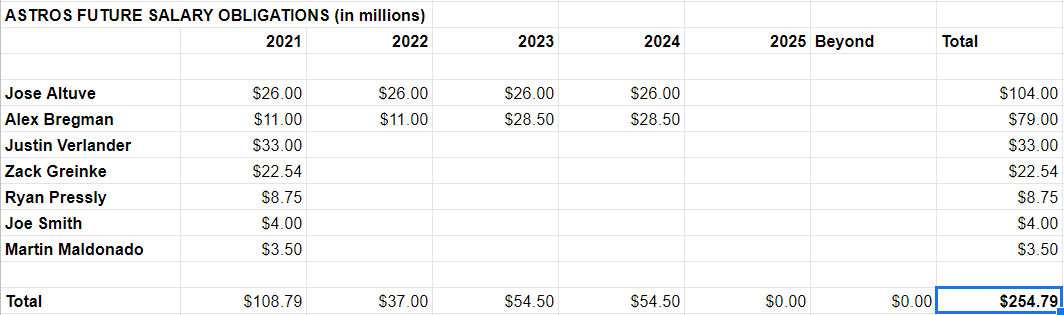
Every organization has some amount of future cash committed to players, all of it done before the coronavirus pandemic swept the globe. There are several different ways to look at salaries; for instance, for purposes of calculating the luxury tax, the average annual value is the touchstone, with up-front bonuses spread over the life of the deal. For this exercise, we’ll focus on actual cash outlays that still have yet to be paid.
We’ll run through every team, with a big assist from the Cot’s Baseball Contracts database. Next up is the Astros:
(click to expand/view detail list)
Astros Total Future Cash Obligation: $254.79MM
*includes buyouts of club options
*excludes remaining obligation to Zack Greinke retained by Diamondbacks
Latest On MLB Teams’ Plans For Employees
A variety of MLB teams have already revealed plans for the year for non-player employees. Some have instituted furloughs and/or pay cuts while others have committed to carry employees through the fall. Still other teams are taking things on a month-to-month basis, with several revealing their latest plans in recent days.
At least three teams have decided to continue paying employees in full through at least the end of June. The Cardinals are one such team, Derrick Goold of the St. Louis Post-Dispatch reports on Twitter. The Twins are also in that camp, Jeff Passan of ESPN.com tweets. And the White Sox are adjusting work hours but not take-home pay, per Ken Rosenthal of The Athletic (via Twitter).
Elsewhere in the central divisions, there were some cuts. The Cubs are keeping their full slate of employees at full-time capacity, but are instituting some salary reductions, Jeff Passan of ESPN.com reported on Twitter. And though the Pirates will not draw down their baseball operations staff, they will reduce pay in that arena while furloughing some business employees, as Jason Mackey of the Pittsburgh Post-Gazette reports.
Out west, the Giants will retain their entire full-time staff but will be trimming pay for those earning over $75K, Henry Schulman of the San Francisco Chronicle reports. Part-timers have been furloughed.
The Astros have committed to maintaining full pay and benefits for full-time employees, but only through June 5th, Chandler Rome of the Houston Chronicle reports. Whether some action could occur beyond that point remains to be seen. The Orioles are also still in flux, but the organization appears to be leaning towards keeping staff as usual through June, per Dan Connolly of The Athletic (via Twitter).
Zack Greinke’s Great Hot Stove Adventure
Every player that reaches the majors has a hot-stove tale to tell. They’re drafted or signed into the pro ranks to start out. Quite a few are traded or move via free agency even before reaching the bigs. You have to be selected or signed onto a 40-man roster before you can put on a uniform in a MLB contest. And then there’s the inevitable moment when it all goes away … whether through retirement at the end of a lengthy career or, in many cases, a trip into DFA limbo.
All of these stories are etched on the pages of MLBTR. Some are more interesting than others. A few of these transactional career arcs touch upon many major elements of the hot stove league — the front office game that shapes the underlying sport that we watch on TV.
The transactional saga of Zack Greinke, the venerable right-hander whose latest stop is the Houston Astros, is certainly among the most notable in recent memory …
Professional Entry
- The Royals took Greinke, an unusually polished high-school hurler, with the sixth overall pick of 2002 draft.
Prospect Status
- Greinke quickly emerged as one of the game’s top prospects.
- Baseball America rated Greinke 54th overall ahead of the 2003 season and 14th overall in advance of 2004.
Early Career
- At just 20 years of age, Greinke turned in in 24 starts of 3.97 ERA ball in his debut season of 2004. But he struggled badly in his sophomore season.
- Greinke battled mental health issues and was ultimately diagnosed with depression and social anxiety disorder. At the time, his outlook as a professional baseball player was of secondary concern. SI.com’s John Donovan wrote: “Greinke’s tortured story is, on the one end, a sad one, but on this side there is hope that it may yet turn out well.”
Extension
- Greinke reemerged in 2007, then turned in a breakout 2008 season.
- The Royals signed Greinke to a four-year, $38MM extension in advance of the 2009 season, adding two years of team control. He won the American League Cy Young Award in the ensuing campaign.
2010 Blockbuster
- The Royals decided to entertain trade offers on Greinke, by then regarded as one of the game’s best pitchers, in the 2010-11 offseason. Greinke later indicated his desire to be traded.
- A monumental set of Winter Meetings trade talks ensued. Royals Review has exhaustively documented the contemporaneous rumor mill. Greinke reportedly indicated he would exercise his no-trade rights to block a deal to the Nationals.
- The Brewers eventually acquired Greinke and Yuniesky Betancourt, and $2MM from the Royals for Lorenzo Cain, Alcides Escobar, Jeremy Jeffress, and Jake Odorizzi.
- Greinke ended his tenure with the Royals with a 3.82 ERA in 1,108 innings over seven seasons.
2012 Trade Deadline Swap
- Greinke continued to perform well in Milwaukee, but the Brewers stumbled.
- In July of 2012, the Angeles acquired Greinke for Jean Segura, Ariel Pena and John Hellweg.
- Greinke ended his tenure with the Brewers with a 3.67 ERA in 294 2/3 innings over two seasons.
2012-13 Free Agency
- Greinke entered the market as the top player available and drew interest from numerous big-market teams.
- During the Winter Meetings, the Dodgers signed Greinke to a six-year, $147MM contract.
- Greinke ended his tenure with the Angels with a 3.53 ERA in 89 1/3 innings over one season.
2015-16 Free Agency
- Greinke opted out of his contract after a 2015 season in which he led the National League with a 1.66 ERA.
- Expectations were that he would re-sign with the Dodgers, but the Diamondbacks suddenly entered the market with a massive offer.
- The Diamondbacks signed Greinke to a six-year, $206.5MM contract, setting a new record for average annual value ($34.42MM).
- Greinke ended his tenure with the Dodgers with a 2.30 ERA in 602 2/3 innings over three seasons.
2019 Trade Deadline Swap
- After a rough initial season in Arizona, Greinke continued to produce excellent results even as he entered his mid-thirties.
- In a last-minute agreement consummated just before the trade deadline, the Astros acquired Greinke for Corbin Martin, J.B. Bukauskas, Seth Beer, and Joshua Rojas.
- Greinke ended his tenure with the Diamondbacks with a 3.40 ERA in 714 2/3 innings over four seasons.
Future
- Greinke’s contract runs through 2021. The Astros took on $53MM of the remaining salary obligations.
- With the Astros, Greinke has a 3.02 ERA in 62 2/3 innings over one season.
From Released To Elite
J.D. Martinez did not start his major league career in auspicious fashion, but as a 20th-round pick in 2009, it’s remarkable that the outfielder even made his way to the bigs. Houston took Martinez in the draft, and though he was highly productive in the organization’s system through 2011, he was unable to transfer that success to the bigs from the get-go. Martinez amassed 975 plate appearances as an Astro from 2011-13, but he hit a subpar .251/.300/.387 with 24 home runs during that time. Houston gave up on Martinez after that.
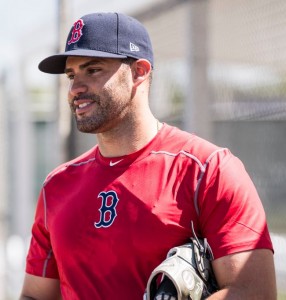
On March 22, 2014, the Astros said goodbye to Martinez, releasing him a half-decade after drafting him. However, Martinez has been on a rampage since then. Thanks to the help of hitting coaches Craig Wallenbrock and Robert Van Scoyoc, Martinez has turned into one of the best offensive players in baseball over the past several years.
The Tigers signed Martinez to a minor league contract in March 2014, and it proved to be a brilliant move for the club. Martinez became a star that year, in which he posted a line of .300/.361/.551 (145 wRC+) in 1,886 plate appearances. But Detroit, not expecting to be able to sign the soon-to-be free agent before 2018, traded him to Arizona in July 2017 in a deal that netted them infield prospects Dawel Lugo, Sergio Alcantara and Jose King.
Unfortunately for Detroit, no one from the Lugo-Alcantara-King trio has given the team any value at the major league level thus far, and nobody from the that group is among MLB.com’s top 30 prospects for the Tigers right now. The D-backs probably don’t have any regrets, then, even though Martinez didn’t last long in their uniform. Over 257 PA in the desert, Martinez batted an incredible .302/.366/.741 (170 wRC+) with 29 homers, helping lead Arizona to a wild-card berth. The Diamondbacks got past that round against the Rockies, but they couldn’t overcome the Dodgers in the NLDS. That proved to be the end of the line for Martinez as part of the club.
After a drawn-out trip to free agency in the ensuing winter, the Red Sox signed Martinez to a five-year, $110MM guarantee in late February of 2018. There’s a narrative that players decline once they get a large payday, but that’s not the case for Martinez. Since he signed with Boston, Martinez has gone to a pair of All-Star Games, helped the Red Sox to a World Series championship (2018) and batted .317/.392/.593 (154 wRC+) with 79 homers in 1,306 PA. It’s obvious at this point that Martinez, now 32 years old, is among the premier hitters in baseball. Not bad for someone whom a team once gave up on in exchange for nothing.
Photo courtesy of USA Today Sports Images.
Which 15 Players Should The Astros Protect In An Expansion Draft?
In a few weeks, we’ll be running a two-team mock expansion draft here at MLBTR. Currently, we’re creating 15-player protected lists for each of the existing 30 teams. You can catch up on the rules for player eligibility here.
So far, we’ve done the Twins, Royals, Tigers, Indians, White Sox, Rays, Yankees, Red Sox, Blue Jays, and Orioles. The Astros are next.
We’ll start by removing free agents George Springer, Michael Brantley, Josh Reddick, Yuli Gurriel, and Brad Peacock from consideration. Next, we’ll lock in Zack Greinke, Justin Verlander, and Jose Altuve due to their no-trade clauses. We’ll also protect Forrest Whitley, as he’s a Baseball America Top 100 prospect with a 2020 ETA. I’m also going to protect Alex Bregman, Yordan Alvarez, Carlos Correa, Roberto Osuna, Ryan Pressly, and Kyle Tucker. So we’ll take up ten spots with this group:
Zack Greinke
Justin Verlander
Jose Altuve
Alex Bregman
Yordan Alvarez
Carlos Correa
Roberto Osuna
Ryan Pressly
Kyle Tucker
Forrest Whitley
That leaves five spots remaining for these 20 players:
Bryan Abreu
Rogelio Armenteros
Joe Biagini
Chris Devenski
Aledmys Diaz
Dustin Garneau
Josh James
Martin Maldonado
Francis Martes
Jack Mayfield
Lance McCullers Jr.
Cionel Perez
Austin Pruitt
Joe Smith
Cy Sneed
Myles Straw
Garrett Stubbs
Abraham Toro
Jose Urquidy
Framber Valdez
With that, we turn it over to the MLBTR readership! In the poll below (direct link here), select exactly five players you think the Astros should protect in our upcoming mock expansion draft. Click here to view the results.
Alex Bregman Seeking New Representation
3:00pm: Chandler Rome of the Houston Chronicle points out that Bregman’s departure from Klutch coincides with last week’s announcement that Uninterrupted, a film production company co-founded by fellow Klutch client LeBron James, is creating a documentary exploring the Astros’ sign-stealing scandal in 2017. Bleacher Report’s Tyler Conway has more on the forthcoming docuseries.
12:56pm: Star Astros third baseman Alex Bregman is seeking new representation, according to MLB.com’s Mark Feinsand (via Twitter). Once a change is made, it’ll be reflected in MLBTR’s Agency Database.
This is an interesting move for a variety of reasons (no, not related to trashcan-banging schemes). For one thing, while player movement between agencies is hardly unusual, it’s rare that we see reporting of a “free agent” in search of a new rep.
Bregman is not just any ballplayer, either. The 26-year-old has just kept improving and was undeniably one of the best in the sport in 2019.
Other teams won’t have a chance to lure the Houston stalwart for some time. Bregman is under contract through 2024 under the deal worked out by his now-former agent, Brodie Scoffield, which covered five seasons (beginning in 2020) and guaranteed $100MM. At the time of the pact, Scoffield had recently left the Legacy Agency to form his own outfit, Tidal Sports Group. He brought Bregman and other major clients with him. Legacy was later acquired by GSE Worldwide.
Bregman was the crown jewel of the client list when hoops powerhouse Klutch Sports bought Tidal earlier this year, although there’s been a good bit of turmoil surrounding that firm in recent weeks. MLB Network’s Jon Heyman tweeted recently that an arbitrator ruled Klutch/Scoffield will be required to split agent fees 50-50 with GSE for not only Bregman but other clients including Marcus Stroman, Kevin Gausman and Keston Hiura over the next five years.
The role that said arbitration hearing played in Bregman’s departure from the firm isn’t known at this time. Regardless, he’s sure to be pursued widely by virtually every agency in the game. Even though he’s currently signed through 2024, Bregman will still be up for a new contract in advance of the 2025 campaign — his age-31 season. And so long as he maintains his all-around excellence, the Astros may eventually hold some degree of interest in hammering out another long-term deal to retain him into his mid-30s.