
AL Notes: Yankees, Angels, Indians, Twins, Rays
The Yankees’ rotation took a serious shot Wednesday when it was announced that they’ll go without left-hander James Paxton for three to four months on account of back surgery. General manager Brian Cashman discussed the news with Joel Sherman of the New York Post, saying Paxton first complained of back discomfort in his final regular-season outing Sept. 27. That didn’t stop Paxton from making three playoff appearances, though, and Cashman noted surgery was a “last resort.” The timing of the procedure’s not ideal, but the Yankees didn’t want to rush into a decision, according to Cashman.
One of Paxton’s fellow Yankees lefties, J.A. Happ, was a trade candidate earlier this offseason, but Cashman revealed Paxton’s injury “certainly” played a part in the team’s decision to keep him. However, there was trade interest in Happ, Cashman told Sherman. “There was a lot of knocking on our door about it,” he said.
Here’s more from the American League…
- Angels infielder Luis Rengifo appears to be on the verge of going to the Dodgers in a trade for outfielder Joc Pederson. It’s not the first time Rengifo’s name has come up in trade talks this offseason, though. Rengifo was part of the discussions between the Angels and Indians when the two teams were weighing a Corey Kluber swap back in December, per Paul Hoynes of cleveland.com. The two clubs couldn’t come to an agreement, and the Indians ended up trading Kluber to the Rangers a few days later.
- Twins righty Jake Odorizzi decided to forgo free agency this offseason in favor of the team’s $17.8MM qualifying offer. Odorizzi may have done better on the open market – MLBTR predicted a three year, $51MM payday – but he doesn’t regret his choice to stick with Minnesota on a short-term deal. “Not a bit,” he told Phil Miller of the Star Tribune. “I made my decision based on the best knowledge we had at the time. Money started flying around pretty quick, and the market got pretty hot, but nobody predicted that.” Indeed, there has been far more money distributed in free agency than many anticipated when the offseason began. Odorizzi’s now left to hope the cash will continue flowing next winter if he gets to free agency, though Miller writes that he remains “open to” a long-term pact with the Twins.
- Rays outfield prospect Josh Lowe underwent right shoulder debridement surgery in November and “likely” won’t return to action until late May, Marc Topkin of the Tampa Bay Times writes. The 22-year-old Lowe, a 2016 first-round pick and the younger brother of Rays first baseman Nate Lowe, ranks as the team’s 11th overall prospect at MLB.com. Josh Lowe enjoyed a strong season at the Double-A level last year, when he slashed .252/.341/.442 with 18 home runs and 30 stolen bases in 519 plate appearances.
MLBTR Video: Dodgers Acquire Betts & Price; Twins Get Maeda
A franchise-altering three-team blockbuster was struck, as the Dodgers acquired Mookie Betts and David Price, the Twins got Kenta Maeda, and the Red Sox received Alex Verdugo and Brusdar Graterol. But wait, there’s more! The Angels are expected to acquire Joc Pederson, the Giants signed Wilmer Flores, and the Mets’ sale to Steve Cohen is in jeopardy! MLBTR’s Jeff Todd runs through a wild day for the MLB hot stove in today’s video.
Grading The Mookie Betts Trade
In case you missed it — which, c’mon, you call yourself a MLBTR reader?! — the Red Sox have agreed to send superstar outfielder Mookie Betts to the Dodgers in a deal that also involves the Twins in a significant fashion.
Betts may be a rental player, but he’s an awfully good one, making this is a true blockbuster. Accordingly, it’s imperative that we get the consensus grades from the MLBTR readership — yes, long before we know what will become of the young players included in this deal. (It’s pretty easy to grade trades after the fact, right?)
Let’s set forth each club’s side of the deal, with a corresponding poll:
Los Angeles Dodgers
Give: RHP Kenta Maeda ($12MM through 2023 with significant performance incentives); OF Alex Verdugo (1.078 years MLB service; controllable at least through 2024)
Get: OF Mookie Betts ($27MM in 2020); SP David Price (approximately $48MM through 2022)
Grade:
[Poll link for app users]
Grade the Dodgers' Side of the Swap
-
A 62% (28,677)
-
B 27% (12,311)
-
C 8% (3,588)
-
D 2% (910)
-
F 2% (843)
Total votes: 46,329
Boston Red Sox
Give: OF Mookie Betts ($27MM in 2020); SP David Price (approximately $48MM through 2022)
Get: OF Alex Verdugo (1.078 years MLB service; controllable at least through 2024); SP/RP Brusdar Graterol (0.029 years MLB service; controllable at least through 2025)
Grade:
[Poll link for app users]
Grade the Red Sox' Side of the Swap
-
C 30% (13,573)
-
B 27% (11,980)
-
D 18% (7,929)
-
A 13% (5,891)
-
F 12% (5,613)
Total votes: 44,986
Minnesota Twins
Give: SP/RP Brusdar Graterol (0.029 years MLB service; controllable at least through 2025)
Get: RHP Kenta Maeda ($12MM through 2023 with significant performance incentives)
Grade:
[Poll link for app users]
Grade the Twins' Side of the Swap
-
B 42% (17,771)
-
A 25% (10,418)
-
C 21% (8,715)
-
D 8% (3,364)
-
F 4% (1,745)
Total votes: 42,013
Dodgers To Acquire Betts, Price In Three-Team Trade; Twins To Acquire Maeda
The Mookie Betts saga has reached its conclusion, and the result is a stunning three-team blockbuster that’ll massively alter the fortunes of all three clubs. The Dodgers are reportedly set to acquire Betts, David Price and significant cash considerations in a deal that will sent young outfielder Alex Verdugo to Boston and right-hander Kenta Maeda to the Twins. Minnesota, meanwhile, will send flamethrowing young righty Brusdar Graterol to the Red Sox to complete the swap.
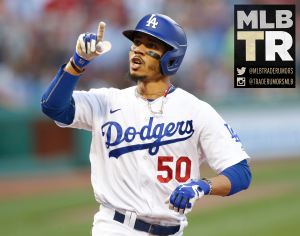
In making this move, Boston bids adieu to one of its most popular and productive players of the current generation. Betts, the 2018 AL MVP and a career .301/.374/.519 hitter, has cemented himself as one of baseball’s truly elite talents. However, he has also candidly stated time and time again that he intends to test the open market as a free agent.
That lack of interest in an extension left the recently restructured Red Sox front office to weigh trading him for controllable talent now versus simply netting a draft pick in the event that he rejects a qualifying offer and signs elsewhere next winter. The prospect of losing him for that level of minimal return, coupled with ownership’s clear goal of dipping south of the $208MM luxury tax barrier, ultimately led rookie chief baseball officer Chaim Bloom to orchestrate tonight’s mega-deal.
The Dodgers, meanwhile, will land perhaps the greatest consolation prize in history. After missing out on top target Gerrit Cole earlier this winter, they’ve now acquired one of the game’s best all-around players, Betts, in addition to a high-profile starter who can still contribute to their rotation — even if his halcyon days are in the past.
Betts, still only 27, now joins an outfield that’ll feature Cody Bellinger and A.J. Pollock, with the versatile Chris Taylor and Enrique Hernandez playing complementary roles as well. While Betts didn’t quite replicate his 2018 MVP production in 2019, his .295/.391/.524 slash was still elite by measure of both wRC+ and OPS+ (both 135). He’s now been at least 35 percent better than an average hitter in three of the past four seasons by those same measures.
The bat alone would make Betts a coveted player, but he’s also among baseball’s best baserunners and an all-world defender in the outfield. Betts has won a Gold Glove in each of the past four seasons, and his 98 Defensive Runs Saved in that time lead all Major League players, regardless of position, by a whopping 13 runs. His aversion to signing a long-term deal means he has to be viewed as a pure rental player, but if you’re going to rent any player on the planet, renting one whose 30.7 fWAR over the past four seasons trails only Mike Trout for the MLB lead is certainly a good way to go. Betts will earn a $27MM salary after avoiding arbitration for the final time this winter — a record salary for an arb-eligible player.
At 34 years old, Price probably won’t be winning any more Cy Young Awards in his career, but this past season’s 4.28 ERA, 10.7 K/9, 2.7 BB/9, 1.26 HR/9 and 41 percent grounder rate were all quite sound. That ERA undersells the season that Price had, too; he was plagued by a career-worst .336 average on balls in play, and fielding-independent metrics were more bullish on his efforts (3.62 FIP, 3.73 xFIP, 3.85 SIERA).
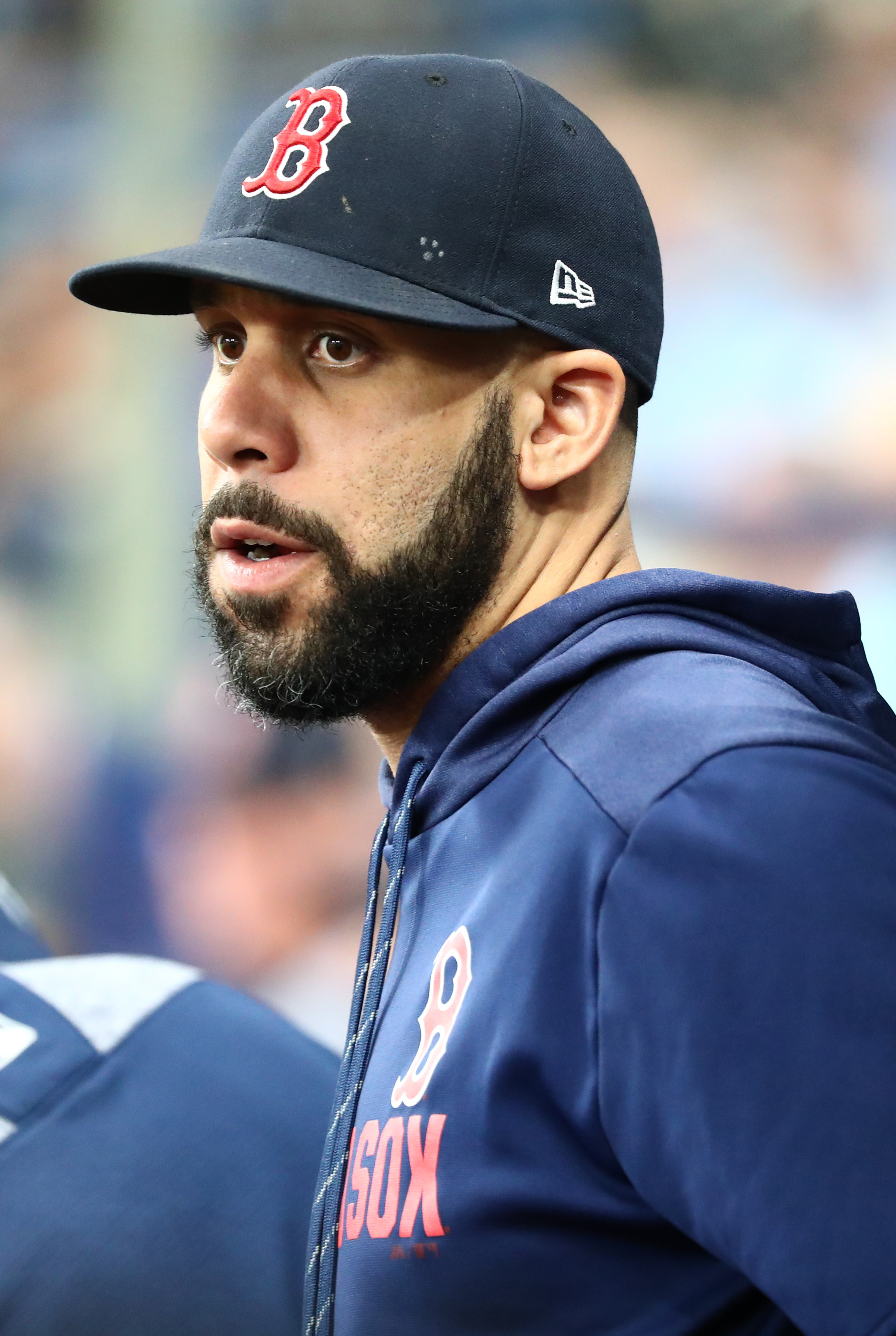
In fact, Price carried a terrific 3.16 ERA and 3.00 FIP through his first 17 starts and 88 1/3 innings with the Red Sox in 2019. Things began to go south in July as he tried to pitch through a cyst in his left wrist, and he eventually went on the injured list for more than a month while dealing with the issue. He returned in early September but made only one appearance before being shut down and undergoing surgery to alleviate the issue. Price is still owed $96MM under the then-record $217MM contract he signed prior to the 2016 season, but the Red Sox will pay a substantial portion of that sum to lessen the sting for the Dodgers.
Acquiring Betts and Price will cost Los Angeles a hefty five years of control over Verdugo and four more years of the talented Maeda, and there’s another major ripple effect, as the Dodgers have reportedly struck a separate trade sending outfielder Joc Pederson to the Angels in exchange for young infielder Luis Rengifo. Between the cash the Red Sox are sending to cover some of Price’s contract, the subtraction of Maeda and now the subtraction of Pederson’s final arbitration salary, it seems likely that the Dodgers will have managed to stay beneath the luxury tax threshold.
Not to be lost in the shuffle, the Twins are adding a quality arm to a rotation that looked to be in need of augmentation. In Maeda, they land an accomplished 31-year-old starter (32 in April) who prefers to work out of the rotation but was frequently moved to the bullpen for short stints — perhaps in part due to the massive incentives package in his eight-year contract.
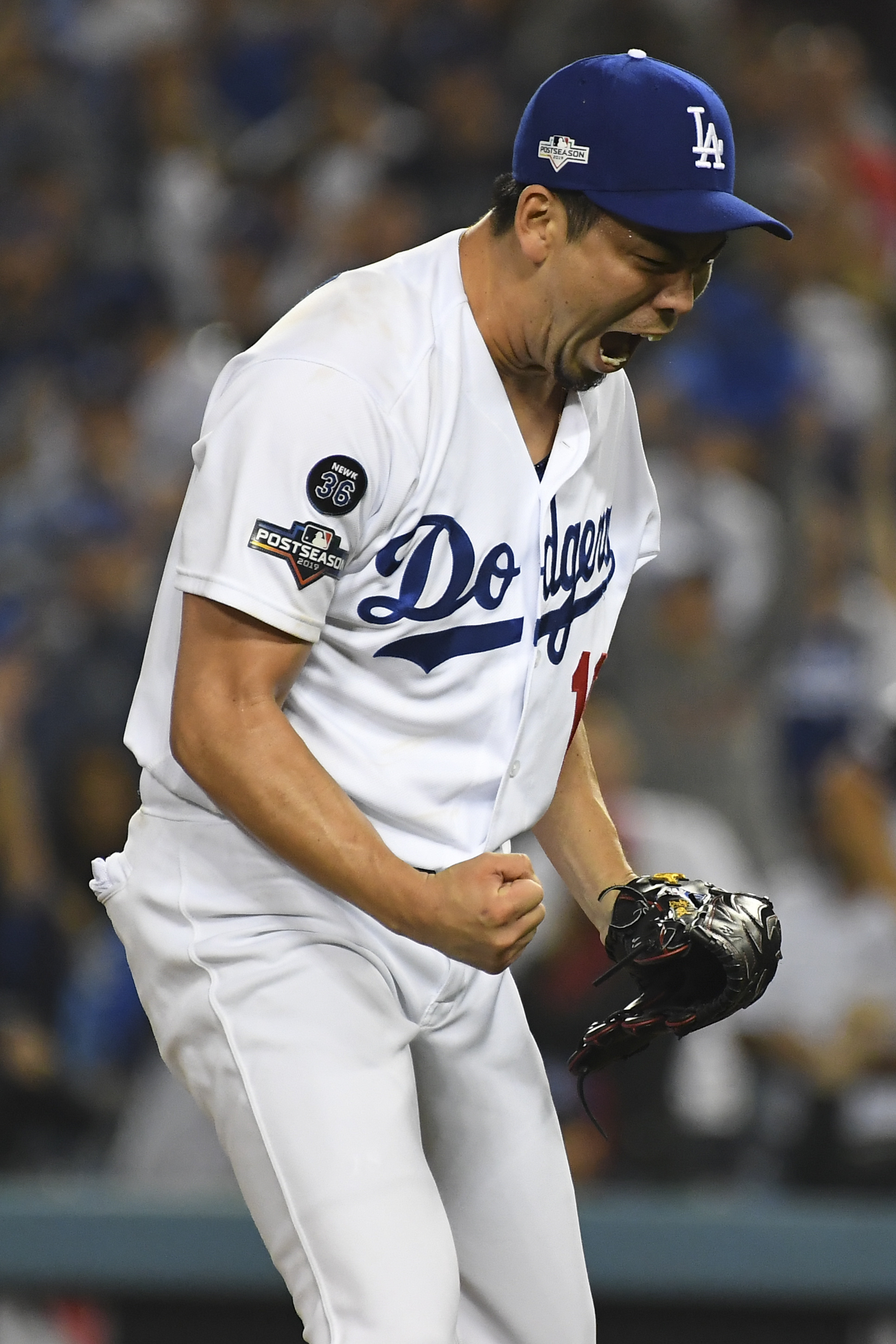
Whether the Dodgers deliberately manipulated Maeda’s rotation work to suppress his earnings can’t be known, but his deal contains only a $3MM annual base with a whopping $10MM in annual bonuses based on games started and innings pitched. With the Twins, he’ll all but certainly be viewed as a rotation piece and be given every opportunity to max out those additional payments. Maeda is signed through the 2023 season, and his contract calls for a $1MM assignment bonus in the event of a trade, so he can tack that onto his career earnings.
In 589 career innings, Maeda has a 3.87 ERA with 9.8 K/9, 2.7 BB/9, 1.18 HR/9 and a 40.9 percent ground-ball rate. That he’s more of a fly-ball pitcher bodes well for his fortunes in Minnesota, as the Twins have significant questions about their middle-infield defense but a high-quality group of outfield defenders led by Byron Buxton and Max Kepler. Maeda has racked up 32 2/3 career postseason innings as well, pitching to a 3.31 ERA in that time. He might not be the ace Twins fans hoped to net early this winter, but he’ll bump one of two rookies — southpaw Devin Smeltzer or right-hander Randy Dobnak — from the rotation and provide a clear boost.
In 2020, Maeda will step into a rotation that’ll be fronted by Jose Berrios and Jake Odorizzi. The Twins also re-signed Michael Pineda to a two-year contract earlier this winter, but he’ll be out through mid-May as he serves a reduced 60-game suspension for taking a banned substance. Veteran Homer Bailey will also be a part of the Twins’ starting staff after signing a one-year pact on the heels of a healthy season, and Maeda will eventually be reunited with former Dodgers teammate Rich Hill. The veteran southpaw inked a one-year deal this winter but will be out until the summer as he recovers from primary revision surgery.
Looking beyond the 2020 campaign, Maeda is all the more important for the Twins. Odorizzi, Bailey and Hill are all slated to become free agents next winter, so prior to this trade, Berrios and Pineda were the only proven starters Minnesota controlled beyond the upcoming campaign. Maeda gives them a solid mid-rotation presence to help anchor the staff and does so at an affordable rate that’ll allow the Twins to continue to be aggressive in free agency next year if they choose to double down on this winter’s surprising Josh Donaldson splash.
As for the Red Sox, today is presumably one of the most difficult days in franchise history for a number of the team’s longest-tenured executives. Luxury tax aside, Sox ownership recognizes that trading Betts will be a wildly unpopular move. John Henry and Co. surely didn’t think they’d be in this position just 16 months ago when celebrating a World Series victory, but injuries and some ill-fated expenditures brought about a mediocre 2019 season and a slew of tough choices. It’s easy to argue that a team with such considerable financial resources at its disposal should simply have kept Betts and paid up for him, but even their detractors can agree that there’s likely little joy in trading away a generational player.
The 2020 Red Sox are unquestionably worse having made this move, but they were a long shot to topple the Yankees anyhow and now acquire a pair of potential building blocks. The 23-year-old Verdugo is a longtime top prospect who enjoyed a strong 2019 season and will step right into the void left by Betts. He’s fresh off a .294/.342/.475 slash with a dozen home runs, 22 doubles and two triples in 377 plate appearances with Los Angeles and should see his playing time soar to full-time levels in 2020 and beyond.
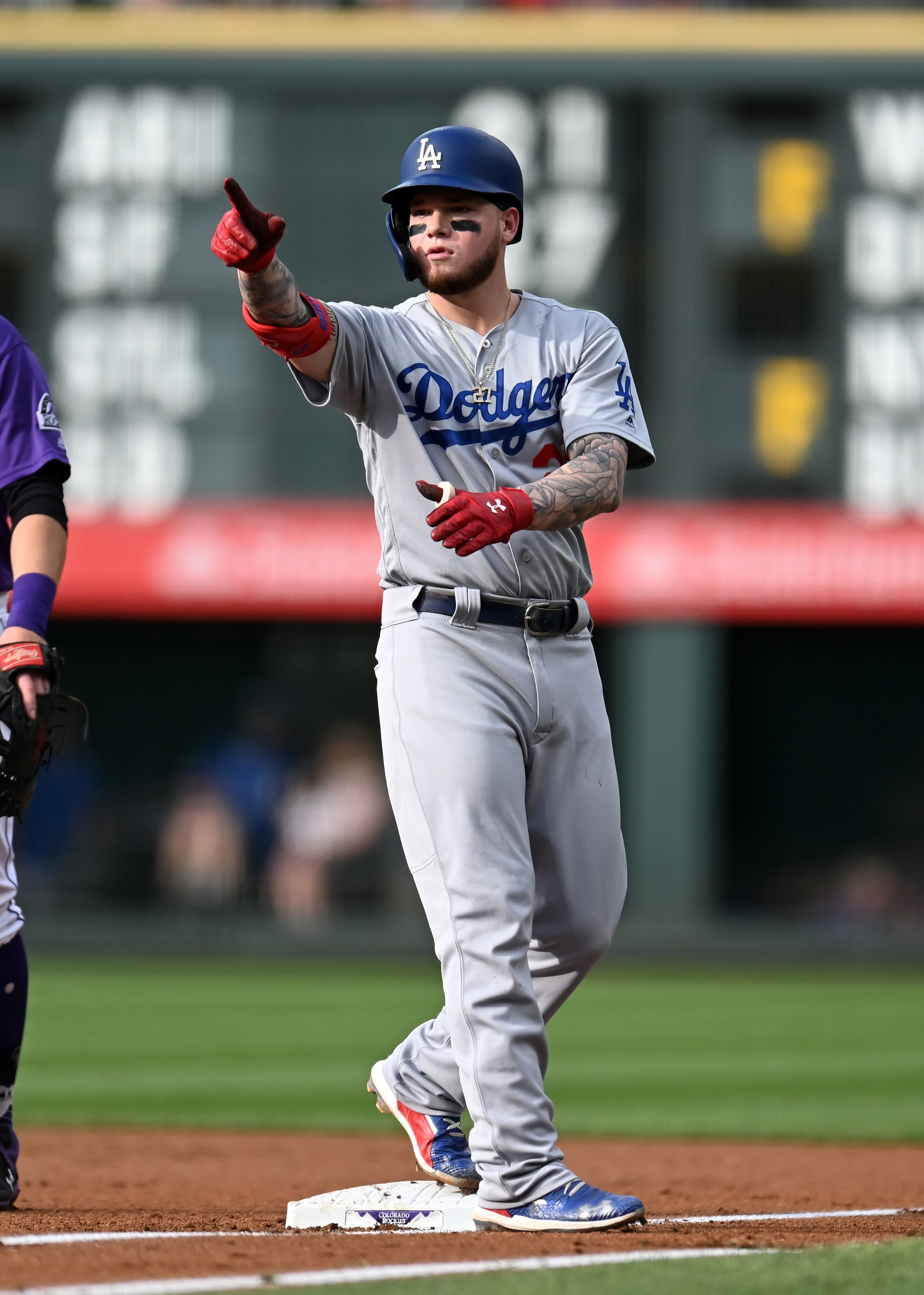
Verdugo has excellent bat-to-ball skills and rarely strikes out (13.7 percent in his career). And while he’s no Betts with the glove — no one is — he racked up 13 DRS in 2019 and is capable of handling all three outfield positions. He’s the Red Sox’ right fielder of the future, and unlike many young players who are acquired for stars, that future will start right away; Verdugo should be in the Opening Day lineup and give Sox fans an immediate look at his potential.
The 21-year-old Graterol is less certain to open the year with the Sox, but he’s an electric and exciting talent — albeit one with more volatility than Verdugo. Injuries have plagued Graterol throughout his minor league career — he’s already undergone Tommy John surgery and has battled shoulder troubles, too — but pitchers with his type of velocity and upside are rare. The massive 6’1″, 255-pounder boasts a fastball that sits just under 100 mph and can reach as high as 103 mph, and he’s utterly dominated in the minors when healthy.
Graterol owns a career 2.48 ERA with 9.7 K/9 against 2.7 BB/9 in 214 minor league frames, and he skyrocketed across multiple levels to make his MLB debut in 2019. There’s some concern that his future is in the bullpen, but the Red Sox will likely give him every opportunity to prove that he can be a difference-maker in their rotation.
Graterol was a consensus Top 100 prospect a year ago and remains on those oft-cited rankings. Eric Longenhagen of FanGraphs has already moved Graterol to the top of Boston’s prospect rankings, noting the big righty’s potential to either function as a high-end starter or, if he moves to the ‘pen, an elite reliever.
Although there are myriad high-profile players whose name will still be bandied about the trade market, there’s a chance that the Betts/Price/Maeda blockbuster will serve as the finishing touch on what has been a riveting offseason — on that hearkened back to the pre-labor-tension days that seem far longer ago than just two or three years. And in some respects, it’s merely an interesting prelude to a 2020-21 offseason that will quite likely see Betts set out into the free-agent market in search of the largest contract in MLB history. Trades of this magnitude are of the utmost rarity — and virtually unprecedented this time of year — and there’s a good chance that come October we’ll look back at Feb. 4 as a day that majorly impacted multiple division races and postseason outcomes.
ESPN’s Jeff Passan reported (via Twitter) that a deal was in place after MLB Network’s Jon Heyman and the Boston Globe’s Alex Speier reported that talks had become “advanced.” Speier reported the inclusion of a third team (Twitter link). SKOR North Radio’s Darren Wolfson first suggested the Twins’ potential involvement (Twitter link), and USA Today’s Bob Nightengale tweeted that the Twins were indeed the third team. Rosenthal reported the basic framework of the deal, tweeting that Betts and Price would head to L.A., Maeda would go to Minnesota and that Verdugo and Graterol were headed to Boston.
Twins Have Interest In Taijuan Walker
The Twins added veteran starter Jhoulys Chacin on a minor league deal over the weekend but might not be through adding experienced arms to their spring rotation mix. Phil Miller of the Minneapolis Star Tribune writes that the club could yet add right-hander Taijuan Walker to the fray; Miller’s colleague, La Velle E. Neal III, also mentioned Minnesota’s interest in the righty in a previous notebook column.
Walker, 27, once rated as one of the game’s 15 best overall prospects and looked to be putting things together following a trade from Seattle to Arizona. In 2017, his age-24 campaign, Walker tossed 157 1/3 frames of 3.49 ERA ball in Arizona, averaging 8.4 K/9, 3.5 BB/9, 0.97 HR/9 and a 48.9 percent ground-ball rate.
However, the former No. 43 overall draft pick (Mariners, 2010) wound up undergoing Tommy John surgery in 2018, and a sprained shoulder capsule the following May prolonged his absence while creating additional health concerns. Walker was only able to make it back to a big league mound for one inning in 2019, when he served as an opener in the Diamondbacks’ final game of the year. Arizona non-tendered him in December rather than pay a third-time arbitration salary that would’ve likely matched last year’s $5.025MM rate.
In all, Walker has totaled just 14 innings over the past two seasons thanks to that torn elbow ligament and sprained shoulder capsule, which have understandably combined to limit his earning power. Neal implied that the Twins have hoped to land Walker on a non-roster deal, though the lack of an agreement suggests that he’s perhaps holding out for a guaranteed contract.
It’s easy enough to see Walker’s appeal for the Twins, whose 2020 rotation is currently the weakest area on the club. Jose Berrios and Jake Odorizzi will be back to lead the staff, and Minnesota added right-hander Homer Bailey on the heels of his healthiest season since 2013. Michael Pineda, too, will return in 2020 — but not until he finishes up a reduced 60-game suspension for taking a banned substance. That punishment will keep him shelved until mid-May. Lefty Rich Hill, signed the same day as Bailey, will be out until at least June after undergoing primary repair surgery on his left elbow this winter.
The Twins currently appear likely to rely on right-hander Randy Dobnak (1.59 ERA, 23-to-5 K/BB ratio in 28 1/3 innings in 2019) and left-hander Devin Smeltzer (3.86 ERA, 38-to-12 K/BB in 49 innings) to round out their rotation early in the season. The weekend addition of Chacin gives them another option, should he look more like his 2018 self than his 2019 self this spring. Aussie southpaw Lewis Thorpe and top prospect Brusdar Graterol could also be in the mix.
Walker, though, would add an intriguing wild card to that rotation competition if the two sides are ultimately able to strike up a deal. He has five-plus year of service time under his belt, meaning there are no future arbitration years of which to gain control, but he’s looked like one of the market’s more intriguing short-term dice rolls since the day he was non-tendered two months ago.
Twins To Sign Jhoulys Chacin
The Twins have reached an agreement to sign free-agent right-hander Jhoulys Chacin, according to Robert Murray. Chacin, who is represented by GSE Worldwide, will join the team on a minor league contract with an invite to big league camp, as MLB Network’s Jon Heyman confirms. Per Daniel Alvarez of El Extrabase, Chacin will earn $1.6MM with an additional $1.5MM in incentives if he makes the Major League team.
Although Chacin, 32, is coming off a dreadful season that resulted in his release from the Brewers, he is only a year removed from a solid 2018 season in which he anchored the Milwaukee rotation. And while a minor league deal doesn’t guarantee anything, Chacin seems like a solid bet to crack the Twins’ opening day roster. The Minnesota club has made it known that they set out this offseason to bolster the rotation, but after striking out on top-tier arms like Hyun-Jin Ryu and Madison Bumgarner, they’ve had to settle for the more modest combination of Rich Hill and Homer Bailey.
But there’s no way around the fact that Chacin ranked as one of the worst starters in baseball last year. He only managed a 6.01 overall ERA, and a brief tryout with the Red Sox didn’t yield much better results than his Brewers tenure. For what it’s worth, he did see an uptick in his strikeouts during his stint in Boston: in 14 2/3 innings, he struck out 21 batters, good for an average of 12.9 K/9. If there’s a silver lining, it’s that Chacin may have been one of the unluckiest pitchers in baseball when it came to home runs, which account for much of his dropoff from 2018 to 2019. Indeed, among pitchers with at least 100 innings pitched, Chacin’s 21% HR/FB rate ranked as the eighth-highest, meaning that we might expect some of those home runs to turn into mere flyouts next year.
Despite the ugly on-field results, Chacin’s slider still graded as a solidly positive offering last year, and it’s the most important pitch in Chacin’s arsenal: its increased usage coincided with his 2018 breakout. Opponents did most of their damage against his sinker and four-seam fastball, so it should come as no surprise that Chacin has decreased his usage of those pitches each of the last two years. If he can rediscover his 2018 form, expect Chacin to push hard for a spot at the back end of the Minnesota rotation, which will be missing the suspended Michael Pineda for some time and currently has the inexperienced combination of Randy Dobnak and Devin Smeltzer penciled in to round out the starting staff.
Minor MLB Transactions: 1/29/20
Checking in on a few minor moves…
- Rob Whalen walked away from the game last February, but the right-hander has returned to professional baseball less than a year later. He announced Wednesday on Twitter that he has joined the Mets on a minor league contract. This will be the second go-around with the Mets for the 25-year-old Whalen, who broke into the pro ranks as a 12th-round pick of the club in 2012. He wound up pitching in the majors with the Braves and Mariners from 2016-18, but battles with anxiety and depression played a part in his decision to briefly step away from the game.
- The Royals announced that they’ve outrighted hurler Heath Fillmyer to Triple-A Omaha. The club designated Fillmyer Jan. 22 to clear a roster spot for the re-signed Alex Gordon. Fillmyer hasn’t been outrighted before, nor does he have the service time to elect free agency, so he’ll stay with the KC organization. Notably, Wednesday’s the two-year anniversary of the Royals acquiring Fillmyer from the Athletics in a trade that also included Ryan Buchter, Brandon Moss and Jesse Hahn. Fillmyer performed reasonably well in his first year as a Royal (4.26 ERA/4.75 FIP with 6.23 K/9 and 3.5 BB/9 in 82 1/3 innings), but his numbers went south at the major league and Triple-A levels last season. The 25-year-old righty spent the majority of 2019 in Omaha, where he pitched to a 5.11 ERA/5.72 FIP and logged 9.3 K/9 against 4.74 BB/9 over 49 1/3 frames.
- The Twins have signed righty Chris Rowley to a minors deal, per Nate Rowan, the director of communications for their Triple-A affiliate in Rochester. The 29-year-old, a former standout at West Point, saw a bit of major league action with the Blue Jays from 2017-18. Rowley spent last season in Triple-A ball as a member of the San Diego organization, though, and injuries helped limit him to 16 1/3 innings. Rowley gave up a whopping 20 earned runs on 27 hits and nine walks (with 11 strikeouts) in that span.
Nationals Acquire Ryne Harper
The Nationals announced today that they have acquired righty Ryne Harper from the Twins. Young righty Hunter McMahon goes to Minnesota in return.
This Harper should not be confused with former Nats’ minor-leaguer Bryan Harper, who’s also a 30-year-old right-hander. The Nationals’ incoming hurler was acquired after he was designated for assignment recently by the Twins.
The Nationals obviously faced some competition to bring in Harper, as they parted with a recent ninth-round draft pick to get him. McMahon, 21, signed an at-slot deal to join the D.C. farm system. He impressed in his first 12 2/3 professional innings, racking up an 18:2 K/BB ratio and allowing just one earned run in the low minors.
It seems there’s a good chance we’ll see another Harper uniform in D.C. While Bryan never made it past Triple-A, big brother Bryce was rather a notable player with the team for a stretch.
The Nats’ newest Harper isn’t exactly a high-ceiling player but could be quite a useful asset. He reached the bigs for the first time in 2019, spinning 54 1/3 innings of 3.81 ERA ball with 8.3 K/9, 1.7 BB/9, and 1.16 HR/9 while leaning on his excellent control and heavily utilized breaking ball. If he can repeat something along those lines, the still-optionable Harper would be well worth his non-guaranteed, league-minimum salary.
As for McMahon, the 21-year-old was the Nationals’ ninth-round pick just this past summer in the 2019 draft. The Texas State product allowed one run in 12 2/3 innings of relief with an 18-to-2 K/BB ratio in his brief professional debut.
Twins Announce Several Minor League Signings
The Twins organization has agreed to seven more minor league deals with free agents, Triple-A Rochester director of communications Nate Rowan announced Tuesday. Right-handers Juan Minaya, Austin D. Adams, Casey Lawrence, Parker Bridwell, Alec Asher and Joey Krehbiel all agreed to deals with the Twins, as did infielder Calten Daal.
Minaya, 29, spent the past four seasons with the division-rival White Sox and logged significant innings in each of the past three. From 2017-19, Minaya pitched to a 3.89 ERA (4.19 FIP) with 10.4 K/9, 4.7 BB/9 and 1.1 HR/9 in 118 innings of relief for the South Siders. His average heater was down about a mile per hour in 2019, sitting at 93.4 mph, but Minaya has a steady track record of missing bats while displaying sub-par control.
Adams, 33, made a pair of appearances with the Twins and tallied 14 frames with the Tigers but allowed 13 runs in 16 2/3 frames overall. He struggled in Triple-A as well, but this will be his third stint in the Twins organization, so the club’s decision-makers clearly see something they feel they can work with even if his recent results have been poor.
Bridwell, 28, pitched 121 innings of 3.64 ERA ball with the 2017 Angels, although his secondary numbers never really supported that mark. The righty averaged just 5.4 K/9 against 2.2 BB/9 with an elevated 1.41 HR/9 rate and 38.1 percent ground-ball rate in ’17, causing FIP (4.84), xFIP (5.07) and SIERA (5.06) to view him in a less favorable light. Bridwell has an ERA north of 8.00 in a pair of injury-shortened Triple-A seasons since that time.
The 32-year-old Lawrence had a rough season in Japan in 2019 and returns to affiliated ball after just one year overseas. He spent 2017-18 in Seattle, where he soaked up 78 2/3 innings in a long relief/spot-starting role but limped to a 6.64 ERA along the way. Lawrence does have a respectable 3.73 ERA with 7.0 K/9 against 1.7 BB/9 in 262 2/3 Triple-A innings in his career.
Asher has just three MLB innings since 2017 and, in total, has a 5.42 ERA in 119 2/3 innings between the Phillies, Orioles and Brewers. The former Rangers prospect went to the Phils as part of the Cole Hamels deal several years ago, but he’s yet to find success in the bigs while serving mostly as a fifth starter/long reliever. The 28-year-old spent most of 2019 with the Atlantic League’s Long Island Ducks, working to a 3.12 ERA in 37 1/3 frames.
Krehbiel, meanwhile, has just three big league innings to his name but has averaged just under 11 strikeouts per nine innings in his minor league career. Daal, 26, is a middle infielder who never cracked the Majors after seven seasons in the Reds organization. He’s consistently posted solid batting averages but limited on-base percentages and well below-average power numbers.
Teams That Gained Or Lost Draft Picks Via Qualifying Offer Free Agents
Now that Marcell Ozuna has signed, all 10 of the players who were issued a one-year, $17.8MM qualifying offer in November have settled on teams for the 2020 season. Of that group, two (Jose Abreu of the White Sox and Jake Odorizzi of the Twins) accepted their qualifying offers and returned to their clubs — Abreu, in fact, topped off his QO by signing a contract extension that will run through the 2022 season. Stephen Strasburg also isn’t changing uniforms, as the longtime Nationals ace rejected the club’s qualifying offer but eventually re-signed with Washington on a seven-year, $245MM deal.
That leaves us with seven QO players who will be playing on new teams in 2020, and as such, the draft compensation attached to those seven players has also now been allotted. Under the rules of the Collective Bargaining Agreement, the same compensation was handed out to all six teams who lost those players, as the entire sextet fell under the same financial criteria. The Mets, Cardinals, Braves, Giants, Nationals, and Astros all aren’t revenue-sharing recipients, nor did they exceed the luxury tax threshold in 2019, so all six teams will receive a compensatory draft pick between Competitive Balance Round B and the third round of the 2020 draft.
Here is how the so-called “Compensation Round” breaks down. The order of the picks is determined by worst record-to-best record from the 2019 season.
68. Giants (for Madison Bumgarner)
69. Giants (for Will Smith)
70. Mets (for Zack Wheeler)
71. Cardinals (for Marcell Ozuna)
72. Nationals (for Anthony Rendon)
73. Braves (for Josh Donaldson)
74. Astros (for Gerrit Cole)
San Francisco now possesses five of the first 87 picks in next June’s draft. With the Giants still in the NL wild card race last summer, president of baseball operations Farhan Zaidi opted to hang onto Bumgarner and Smith rather than trade either player, a decision that led to some criticism since San Francisco was widely considered to be closer to rebuilding than truly contending. The critics’ judgement grew even harsher after the Giants went 22-32 record in August and September and fell well short of the postseason. Still, given that teams were reluctant to part with top-flight young talent for even controllable players (let alone rentals like Bumgarner and Smith) at the trade deadline, Zaidi clearly felt that the two picks he could recoup from the qualifying offer process were more valuable than anything offered for the two Giants pitchers last July.
It’s worth noting that the 74th overall pick will be Houston’s first selection of the 2020 draft, after the Astros lost both their first- and second-highest selections in both 2020 and 2021 as part of their punishment for the sign-stealing scandal. Since the Red Sox are also under league investigation for their own alleged use of electronics to steal opponents’ signs in 2018, Boston could also potentially lose at least one pick in this year’s draft, so we can’t yet say that the 2020 draft order is finalized. Of course, the order could be further muddled if more trades occur involving picks from the two Competitive Balance Draft rounds, which are the only types of draft picks that can be traded. We’ve already seen the Rays and Cardinals swap their picks in Rounds A and B as part of the multi-player trade that sent Jose Martinez and Randy Arozarena to Tampa Bay earlier this month.
Let’s now look at the six teams who signed the seven QO-rejecting free agents, and see what those clubs had to give up in order to make the signings.
Yankees, for signing Gerrit Cole: Since New York exceeded the luxury tax threshold in 2019, they gave up their second- and fifth-round picks in the 2020 draft (a.k.a. their second- and fifth-highest selections). The Yankees also gave up $1MM in funds from their international signing bonus pool.
Diamondbacks, for signing Madison Bumgarner: As a team that didn’t exceed the luxury tax threshold and was a revenue-sharing recipient, the D’Backs had to give up their third-highest draft choice to sign Bumgarner. This ended up being Arizona’s second-round selection — the team’s first two picks are their first-rounder (18th overall) and their pick in Competitive Balance Round A (33rd overall).
Twins, for signing Josh Donaldson: Minnesota also received revenue-sharing and didn’t exceed the luxury tax threshold, so signing Donaldson put the Twins in position to give up their third-highest draft selection. However, the Twins are actually giving up their fourth-highest pick in the 2020 draft, which is their third-round selection. The Twins’ actual third selection is their pick in Competitive Balance Round B, but those picks aren’t eligible to be forfeited as compensation for QO free agent signings.
Angels, for signing Anthony Rendon: Since the Halos didn’t receive revenue-sharing funds and also didn’t pay any luxury tax money, they had to give up their second-highest draft pick (their second-rounder) and $500K in international bonus funds to sign Rendon.
Phillies, for signing Zack Wheeler: The Phillies surrendered their second-highest selection (their second-round pick) and $500K of their international bonus pool, since they were another team that didn’t exceed the luxury tax line and didn’t receive revenue-sharing money.
Braves, for signing Will Smith and Marcell Ozuna: The dual signings put Atlanta in line for a dual penalty. The Braves didn’t exceed the luxury tax threshold and also didn’t receive revenue-sharing money, so they gave up their second-highest draft pick (their second-rounder) and $500K of international bonus money for Smith. In landing Ozuna, the Braves then had to also forfeit their third-round pick (their third-highest selection) and another $500K from their international bonus pool.
Losing two draft picks and $1MM in international pool money isn’t nothing, though these particular sanctions had less impact on the Braves than on other teams, which undoubtedly influenced their decisions. First of all, the compensatory pick Atlanta received for Donaldson is higher in the draft order than their third-round pick, so the net loss is only a second-round pick. Secondly, the Braves’ movement in the international market is still limited by the punishment handed out by Major League Baseball in November 2017 for Atlanta’s past international signing violations. Part of that punishment included the Braves’ pool for the 2020-21 international market being reduced by 50 percent — being so handcuffed in the international market anyway, the Braves probably felt $1MM in pool money was no great loss.