
Jake Peavy Retires
Right-hander Jake Peavy last pitched professionally in 2016, and though he was angling to return to the majors last summer, that attempt has come to an end. Recent reports from Peter Abraham of the Boston Globe and Scott Miller of Bleacher Report indicate the 37-year-old Peavy has decided to hang up his cleats.
Peavy spent his final two-plus seasons in San Francisco, but his peak came as the ace of NL West rival San Diego’s staff. In a move that ranks among the wisest in franchise history, the Padres used a 15th-round pick in 1999 on Peavy, who debuted in 2002. Just two years later, he emerged as one of the majors’ premier pitchers.
During a 1,050-inning run in San Diego from 2004-09, Peavy pitched to a 3.02 ERA/3.16 FIP with 9.44 K/9 against 2.74 BB/9 and helped the Padres to their two most recent playoff berths (2005-06). He also earned a pair of All-Star nods and twice led the National League in both ERA and strikeouts in that period, during which he accumulated the majors’ fifth-highest fWAR among starters (26.4). Only luminaries Johan Santana, CC Sabathia, Roy Oswalt and Roy Halladay outdid Peavy in that category.
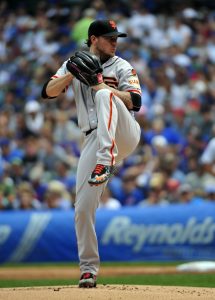
In the crowning personal achievement of his career, Peavy beat out Oswalt and others for the NL Cy Young Award in 2007, when he fired 223 1/3 innings of 2.54 ERA/2.84 FIP ball, amassed 240 strikeouts and led all big league pitchers in fWAR (6.7). It was the third straight season of at least 200 innings for Peavy, who exceeded that mark twice more later in his career.
Peavy was unquestionably the Padres’ most valuable player during his seven-plus years in their uniform. However, his reign in San Diego came to an end in August 2009 when the non-contenders traded him to the White Sox for Clayton Richard, Aaron Poreda, Dexter Carter and Adam Russell.
Save for Richard, who had a long but unspectacular run in San Diego, no one from that group panned out for the Padres. Meanwhile, despite Peavy’s presence, the White Sox never secured a playoff berth during his stint with the franchise. It didn’t help that Peavy often battled injuries throughout his tenure as a member of the White Sox, with whom his numbers declined. Still, he did log a respectable 4.00 ERA/3.70 FIP in 537 2/3 frames with the Pale Hose and pick up his third and final All-Star appearance with the club in 2012.
In July 2013, a year after his last truly great season, Peavy changed Sox when Chicago dealt him to Boston in a three-team, seven-player trade that also included Detroit. Peavy wasn’t any kind of rotation savior by then, but he was still a solid starter whose acquisition paid dividends for the Red Sox during their run to a World Series championship that season. However, Boston couldn’t defend its title in 2014, a season in which it nosedived in the standings and ended up dealing Peavy to the Giants for pitchers Edwin Escobar and Heath Hembree.
For the second straight season, Peavy was a midsummer acquisition for a franchise that went on to a championship. Peavy gave the 2014 Giants the vintage version of himself in terms of run prevention over 78 2/3 regular-season innings (2.17 ERA), and he helped the club to NLDS and NLCS victories. Although Peavy struggled in both of his World Series starts, a pair of losses to the Royals, the Giants nonetheless triumphed in a seven-game classic. They then brought back Peavy on a two-year, $24MM contract, which will go down as the last deal of his career. While Peavy pitched well in the first of those seasons, injuries held him to 110 2/3 innings. He was only able to manage another 118 2/3 frames in 2016, a career-worst campaign that included a demotion to the Giants’ bullpen.
Although Peavy’s time in the majors didn’t end on a high note, he enjoyed a prolific career that most pitchers would sign up for without a second thought. Along with his personal and team awards, Peavy registered a 152-126 record, 2,207 strikeouts and a 3.63 ERA/3.65 FIP in 2,377 innings en route to 44.1 fWAR/37.5 rWAR and upward of $127MM in earnings. MLBTR congratulates Peavy on an outstanding career and wishes him the best in his post-playing days.
Photo courtesy of USA Today Sports Images.
Corey Kluber Placed On Injured List With Fractured Forearm
May 3: The Indians announced today that Kluber has been placed on the 10-day injured list. Right-hander Jon Edwards is up from Triple-A Columbus in his place.
At the moment, it’s not believed that Kluber’s arm will require surgical repair. While that’s surely a sigh of relief for Cleveland fans, Kluber still looks to be facing a sizable absence. He’ll be reevaluated after three to four weeks without throwing (Twitter link via Tom Withers of the Associated Press). There’s no guarantee he’ll be ready to resume throwing at that point, though, and even if that were the case, he’d surely require a rehab assignment to build arm strength.
May 1: The Indians have suffered another injury in the rotation, as two-time AL Cy Young winner Corey Kluber was diagnosed with a non-displaced fracture in his right ulna tonight, per a team announcement. The injury occurred when Kluber was struck on the right arm by a 102 mph comeback line-drive off the bat of the Marlins’ Brian Anderson. Kluber will be reevaluated Thursday when the team returns to Cleveland, at which point a timetable for his return will become clear.
Kluber, 33, was off to one of the worst starts of his excellent career in 2019, having posted a dismal 5.80 ERA with 9.6 K/9, 3.8 BB/9 and a 40 percent ground-ball rate in 35 2/3 innings of work (including tonight’s truncated outing). Those struggles notwithstanding, the injury is a devastating blow to an Indians rotation that is already without Mike Clevinger for what figures to be more than two months due to a rather significant teres major strain. Kluber had been haunted by a .380 average on balls in play and an abnormally low 64.5 percent strand rate so far in 2019, and fielding-independent metrics pegged him as a rebound candidate moving forward.
Now that Kluber is sidelined, the once-formidable Indians rotation suddenly looks quite top-heavy. Trevor Bauer and Carlos Carrasco remain premium rotation horses (despite one disastrous outing from the latter earlier this year), and young righty Shane Bieber carries plenty of promise. But the fourth and fifth spots in the rotation will likely be entrusted to inexperienced righties Jefry Rodriguez and Adam Plutko — neither of whom has enjoyed sustained success at the MLB level to this point in his career.
Cleveland already trails the Twins by two games in the American League Central (2.5 games if the Minnesota bullpen can hold its current 5-0 lead over Houston for one more inning). While there’s certainly plenty of season left, the pitching staff — and the rotation, in particular — was supposed to be the lifeblood of a roster that currently ranks 25th in the Majors in runs scored and 28th in wRC+.
Reds Promote Nick Senzel
The Reds announced that they have selected the contract of Nick Senzel, making the promotion of one of baseball’s premier prospects official. Senzel will join the active roster in place of right-hander Matthew Bowman, who has been optioned to Triple-A Louisville. In order to open a spot on the 40-man roster, Cincinnati transferred Scooter Gennett from the 10-day injured list to the 60-day injured list. Senzel is in today’s lineup, batting second.
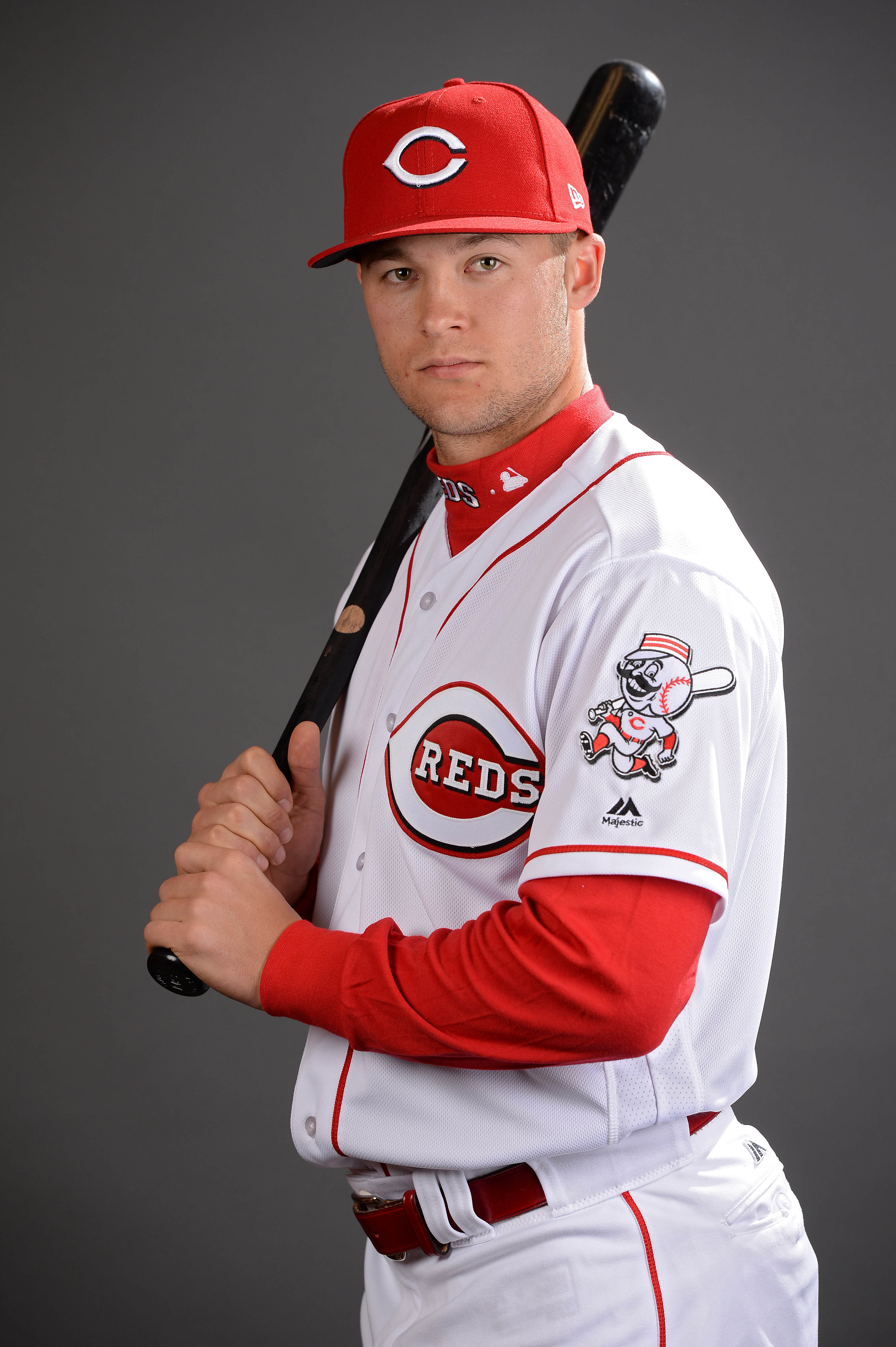
There’s been a sense that this move was coming since earlier in the week when MLB Network’s Jon Heyman reported the possibility, which has built a steady sense of anticipation among Reds fans in recent days. Senzel, the No. 2 overall pick in 2016, entered the season ranked as one of the top 10 overall prospects in baseball and has sufficiently recovered from the late-March ankle injury that sidelined him. He’s not off to a blistering start in Triple-A by any means, hitting .257/.316/.371, but he’s generally been viewed as an MLB-ready bat despite that tiny eight-game sample.
Drafted as an infielder, he’s moved to the outfield in order to fast-track his arrival on the MLB roster, and he should step directly into the Reds’ everyday center field role, hopefully jump-starting what has been a stagnant offensive unit of outfielders. Scouting reports on Senzel laud his potential for above-average tool across the board, including a 65- or even 70-grade hit tool. He’s walked at a solid clip throughout his minor league career and has never had a major issue with strikeouts over a large sample, suggesting that he has the discipline to complement that hit tool and serve as a middle-of-the-order bat for years to come.
A career .312/.388/.508 hitter with 28 homers and 40 steals in 239 minor league games, Senzel should provide an upgrade over Scott Schebler in center, as the 28-year-old Schebler has slumped to a woeful .127/.258/.228 slash to open the season. There will be some growing pains on the defensive side of things, as Senzel only began playing the outfield in game settings this spring and has been sidelined for a bit this year. He was originally slated to get his feet wet in center field during the Arizona Fall League last year, but he instead required surgery to remove a pair of bone spurs from his left (non-throwing) elbow. That capped off a frustrating, injury-filled year for Senzel, who also missed time due to vertigo symptoms and a fractured finger.
The Reds has already reassigned Senzel to minor league camp when he incurred the aforementioned ankle injury, meaning he was destined for Triple-A to start the year. However, the ankle issue sidelined him long enough that there was never any question about whether he’d accrue enough service time in 2019 to reach free agency as quickly as possible. Senzel can’t earn more than 151 days of MLB service in 2019, meaning the Reds effectively control him for seven years rather than six. Assuming he’s in the big leagues for good, Senzel will be arbitration-eligible as a Super Two player following the 2021 season and won’t be a free agent until the 2025-26 offseason.
It remains to be seen just how the Senzel promotion will impact playing time for the rest of the Reds’ outfielders. Jesse Winker is the only one of the incumbent bunch who has been at all productive to this point in the season (.224/.315/.490), while each of Schebler, Matt Kemp and Yasiel Puig has struggled. Puig still figures to see the lion’s share of at-bats in right field, given his age and track record, which could largely relegate Kemp and Schebler to pinch-hitting and occasional starts based on platoon matchups.
A.J. Pollock To Undergo Elbow Surgery
Dodgers outfielder A.J. Pollock will undergo surgery to remove the metal hardware that was inserted in his the growth plate of his right elbow back in a 2016 procedure, manager Dave Roberts announced Wednesday (Twitter links via Ken Gurnick of MLB.com and Pedro Moura of The Athletic).
Mike DiGiovanna of the L.A. Times tweets that the Dodgers feel the fact that the metal can be removed entirely, rather than replaced is “relatively” good news, as it means Pollock’s growth plate has healed sufficiently, though obviously the loss is a blow to the club. There’s no timeline on a return, though Roberts noted that Pollock is expected back this season.
The Dodgers were well aware of the injury risks associated with Pollock when signing him to a four-year contract this offseason. The 31-year-old is an undeniably talented all-around player, but he’s topped 500 plate appearances just once in his big league career. Pollock averaged just 101 games played and 402 plate appearances per season dating back to 2014.
Most notably, Pollock was limited to only a dozen games back in 2016 after suffering a fractured elbow while sliding headfirst on a play at the plate — the injury that necessitated the surgery that ultimately led to this new procedure. It’s been a slow start to the season for Pollock, likely in part due to this infection, as he’s hit just .223/.287/.330 through 115 PAs — including just three hits in his past 29 trips to the plate.
With Pollock sidelined indefinitely, it stands to reason that Alex Verdugo will see an increased role in the outfield. Chris Taylor, too, could see an increase in playing time. Beyond that pair of center-field options, the Dodgers have Cody Bellinger and Joc Pederson as options, and versatile Enrique Hernandez is plenty experienced there. The team could get another option to add back into the mix eventually as well; Roberts also indicated that Andrew Toles has reported to the team’s Spring Training facility in Arizona and is beginning to work toward a return to the club (Twitter link via DiGiovanna).
Note: An earlier version of this post inaccurately indicated that the hardware in Pollock’s elbow had been dislodged. That is not the case. My apologies on the error.
2019-20 MLB Free Agent Power Rankings
Since we last checked in on the 2019-20 free agent class, seven more potential free agents came off the board: Chris Sale, Paul Goldschmidt, Xander Bogaerts, Justin Verlander, Matt Carpenter, Khris Davis, and Ryan Pressly. This came after Sonny Gray, Miles Mikolas, Aaron Hicks, and Nolan Arenado had already decided to eschew free agency. Meanwhile, pitchers Dallas Keuchel and Craig Kimbrel are still without teams, serving as a warning for those thinking of testing the market.
In theory, the open market should always generate the best offers, even if the potential loss of a draft pick enters the equation. Still, for many players it isn’t worth enduring a potentially brutal free agency process in an attempt to squeeze out that last $20MM at the risk of a Keuchel/Kimbrel debacle, when you’re signing for generational money regardless. That’s why this list keeps getting less and less impressive each time we do it. As always, these players are ranked by my estimate of their 2019-20 open market earning power. To view the entire list of 2019-20 MLB free agents, click here.
1. Gerrit Cole. Cole jumps to the top of this list simply by virtue of the Red Sox locking down Sale and Bogaerts. Cole, 28, has been homer-prone in his first six starts, but it’s really just one rough outing in Texas that has thrown off his ERA. Sale is a comparable worth considering. Sale’s new contract takes him through the age of 35, one year short of David Price, Max Scherzer, and Jon Lester and two years short of Zack Greinke. Cole’s argument is that he, too, should require a commitment through age 35, which would necessitate a seven-year deal. For all that went wrong for free agents in the 2018-19 offseason, Patrick Corbin still got a strong six-year contract with a shorter track record than Cole. In the end, Cole needs a good old-fashioned bidding war to develop, and teams have become increasingly reluctant to enter into those. Ken Rosenthal of The Athletic wrote on March 22nd that the Astros were discussing extensions with both Cole and rotation-mate Justin Verlander, and shortly after that they inked Verlander to a two-year, $66MM extension. I’d say that decreases the chances of the Astros extending Cole.
2. Anthony Rendon. Rendon, 28, got off to a blazing start this year for the Nationals before a Jose Urena fastball struck his elbow on April 20th and ended a 17-game hitting streak. He’s played in one game since that HBP but seems to have avoided significant injury. Jose Altuve‘s five-year, $151MM extension with the Astros, signed about a year ago, lines up well with Rendon. Nolan Arenado’s deal further cemented the idea that teams are mostly willing to pay through age 34 rather than 35. The x-factor might be Paul Goldschmidt, a player perhaps inferior to Rendon who was extended through age 36 by the Cardinals. So look for Rendon to try for a six-year deal, though he could end with five. The last we heard on extension talks with the Nationals was from MLB Network’s Jon Heyman on April 18th, who tweeted that “there’s believed to be a decent-sized gap remaining” between the two sides.
3. Marcell Ozuna. Ozuna, 28, fell short of expectations last year after the Cardinals acquired him from the Marlins. It’s possible shoulder soreness was to blame, with Ozuna undergoing surgery to address the issue after the season. The shoulder doesn’t seem to be affecting his hitting early on in 2019, as Ozuna has 10 home runs in his last 79 plate appearances. With a season more like Ozuna’s 2017 campaign, he should have a good chance at a five-year deal. It’s worth noting that the three potential free agents currently topping this list are all clients of the Boras Corporation.
4. Madison Bumgarner. Despite a 4.30 ERA across six starts, Bumgarner’s early results for the Giants have been promising. After last year’s career-worst walk rate, he’s issuing free passes to a career-best 3.3% of batters in the small 37 2/3 inning sample. A vintage 200 inning campaign from Bumgarner should set him up nicely for a strong four-year deal in free agency. He’ll also be one of the best trade chips on the market in July, and a trade would remove the qualifying offer issue that has partially plagued Keuchel.
5. Zack Wheeler. Wheeler, 29 in May, has come on strong in his last three starts after a seven-walk outing on April 7th. The hard-throwing righty is now four years removed from Tommy John surgery, though he did go two and a half years between MLB starts as he recovered. The goal has to be a five-year deal through age 34, but he may have to settle for four. It’s all about staying healthy for these next 25 starts. The Mikolas/Nathan Eovaldi deals, at four years and $68MM, could be a marker for Wheeler. Unlike Eovaldi, Wheeler may be dealing with a qualifying offer.
6. Didi Gregorius. Gregorius is currently recovering from October Tommy John surgery. His recovery is going smoothly, though there’s no public timetable on his return. In the meantime, it’s mostly been Gleyber Torres holding down the fort at shortstop for the Yankees after Troy Tulowitzki strained his calf on April 3rd. With Bogaerts off the board, Gregorius will be the best available shortstop if the Yankees don’t lock him up prior to free agency. A four-year deal seems plausible if he comes back strong, though Gregorius will likely receive a qualifying offer.
7. J.D. Martinez. Martinez has been one of the game’s best hitters over the last two years. He’s off to a strong start this year, though he’s missed a few games of late due to back spasms. Martinez is, of course, limited in that he primarily serves as a designated hitter. The players union continues to advocate for the National League to get the DH, so we’ll see whether the owners agree in the near future and vastly open up Martinez’s market. Later this year, Martinez will be 32 when he’ll be faced with deciding whether to opt out of the remaining three years and $62.5MM remaining on his contract. The safe move is to just stick with his current deal, especially since the Red Sox could saddle Martinez with a qualifying offer if he opts out.
8. Josh Donaldson. After an injury-marred 2018 season, Donaldson signed a hefty one-year, $23MM deal with the Braves. A 30 home run, 80 walk type season in the middle of the Braves’ lineup would likely result in some solid multiyear offers for the former MVP. However, Donaldson will turn 34 in December, so the offers may top out at two years with a strong AAV. Another complication is that Donaldson could receive a qualifying offer from the Braves.
9. Yasmani Grandal. Like Donaldson, Grandal inked a significant one-year deal in free agency this past winter. However, Grandal turned down multiyear offers from the Mets, White Sox, Twins, and Angels, according to Robert Murray of The Athletic. The catcher explained in January at his Brewers press conference, “I had a lot of good deals. One of my responsibilities as a player is also to respect the guys going through this process before me like Brian McCann, Russell Martin, Yadier Molina, to mention a few of them.” Grandal reportedly turned down a four-year offer from the Mets in excess of $50MM before ultimately landing his one-year, $18.25MM deal with Milwaukee. If Grandal’s strong start to the season continues, his gambit just might pay off, as even something like three years and $42MM would get him past $60MM for 2019-22. This time around, he won’t be saddled with a qualifying offer.
10. Yasiel Puig. In the first month of his Reds career, Puig has lived up to his Wild Horse nickname by, as Deadspin described it, attempting to “fight all of Pittsburgh.” He’s here on this list because of his abilities as a hitter, which have decidedly not manifested themselves through 96 plate appearances. His strikeout and walk rates are career worsts in the early going, but he has five months to turn it around and earn a multiyear contract in free agency.
Honorable mentions: Nicholas Castellanos, Rick Porcello, Kyle Gibson, Michael Pineda, Cole Hamels
Ervin Santana Elects Free Agency
April 29: Santana has elected free agency, per an announcement from the White Sox. Daryl Van Schouwen tweets that the decision relievers the ChiSox from any further financial obligations regarding Santana, which seems to suggest that the veteran righty agreed to a 45-day advance consent clause as part of his contract.
Players with more than five years of service time earn the right to retain their salary even after being released or rejecting an outright assignment in favor of free agency. The 45-day advance consent clause, however, gives teams the option of cutting loose a veteran with six-plus years at any point within the season’s first 45 days (barring an injury) without being on the hook for the remainder of his salary. (Trade Rumors’ Zach Links examined 45-day advance consent clauses in depth a few years ago.)
April 26: The White Sox announced this morning that they’ve designated veteran right-hander Ervin Santana for assignment. His spot on the active roster will go to Eloy Jimenez, who has been reinstated from the bereavement list.
Santana’s stay with the Sox proved to be brief, as he made only three starts before the team shifted course today. The 36-year-old righty pitched just 13 1/3 innings for the Pale Hose, allowing 14 runs on 19 hits and six walks with only five strikeouts.
Chicago inked Santana to a minor league contract with a rather hefty $4.3MM guarantee at the MLB level in hopes that he could bounce back from an injury-ruined 2018 season. Santana underwent surgery to repair a tendon in his pitching hand in February of 2018, and lingering effects from that procedure limited him to just 24 2/3 ineffective innings with the Twins. Following that injury shortened campaign, Minnesota declined a $14MM option on the righty.
Prior to that injury, however, Santana was not only durable for the Twins but quietly one of the league’s more effective starters. Santana turned in 392 2/3 innings of 3.32 ERA ball with 7.2 K/9 against 2.6 BB/9 for the Twins from 2016-17. The 2017 campaign saw Santana toss five complete games — a rare feat in this era of baseball — including three shutouts. From 2010-17, Santana avoided any absences due to injury and averaged 30 starts and 192 innings per season (despite an 80-game PED suspension at the onset of the 2015 season).
It’s now uncertain whether Santana can reestablish himself as a viable rotation piece at the big league level, although given his track record and the sheer number of teams that could use rotation reinforcements, one would imagine that he’ll get the opportunity to do so. He’ll first have to clear release waivers — it’s unlikely that the Sox find a trade partner for the righty — but once he does, he can sign with any club on either a minor league contract or an MLB deal worth the prorated league minimum.
As for the Sox, they’ll look to internal options to help right the ship in what has been an awful rotation to begin the year. While Carlos Rodon has performed well through the season’s first month, each of Lucas Giolito, Reynaldo Lopez, Ivan Nova and Santana have pitched poorly. Dylan Covey, Jordan Stephens and top prospect Dylan Cease are all looming in Triple-A as potential options, or the team could simply plug Manny Banuelos into the fifth spot in the rotation moving forward. Some type of spot starter will likely need to be recalled in the coming days, however, as Giolito is on the shelf with a hamstring injury at the moment.
Mets Designate Travis d’Arnaud
The Mets have designated catcher Travis d’Arnaud for assignment, per a team announcement. His 25-man roster spot will go to fellow catcher Tomas Nido, whom the Mets recalled from Triple-A Syracuse.
This decision figures to conclude what has largely been a disappointing New York tenure for d’Arnaud, a Met since they acquired him in a 2013 blockbuster with the Blue Jays. Then among baseball’s elite prospects, d’Arnaud was one of the key pieces of the Mets’ return for knuckleballer R.A. Dickey, who also netted them right-hander Noah Syndergaard. Unlike Syndergaard, though, d’Arnaud hasn’t blossomed into a high-end major leaguer.
While d’Arnaud impressed early as a Met, combining for 6.1 fWAR and a .252/.317/.442 line with 25 home runs in 689 plate appearances from 2014-15, his numbers have fallen off since then. Dating back to 2016, d’Arnaud has slashed .239/.292/.381 with 21 HRs and 2.6 fWAR in 693 PA, thanks in part to a slew of injuries. The 30-year-old has missed at least 50 games in each of his seasons, including all but four contests in a 2018 campaign that was ruined by Tommy John surgery on his right elbow.
On the heels of that procedure, the Mets and rookie general manager Brodie Van Wagenen turned elsewhere for a starting catcher this past offseason. The club signed Wilson Ramos to a two-year, $19MM contract, which could have made d’Arnaud expendable on a team that also had Nido and the since-traded Kevin Plawecki at the time. The Mets kept d’Arnaud around at a now-guaranteed $3.515MM salary in his final year of arbitration eligibility, though, but decided to cut him after he opened the season with just two hits (both singles) in 25 plate appearances.
The Mets will owe d’Arnaud approximately $2.955MM if someone doesn’t take him off their hands, Joel Sherman of the New York Post notes, though it’s possible a trade will come together if his potential tantalizes a club. After all, d’Arnaud was reasonably productive during his previous season, 2017, and has earned solid marks behind the plate during his career.
Brewers Sign Gio Gonzalez
APRIL 27: The Brewers have announced the signing, adding that they’ll make a corresponding move later today.
APRIL 24: The Brewers have agreed to a deal with lefty Gio Gonzalez, according to Ken Rosenthal of The Athletic (via Twitter). He’ll earn $2MM for his work the rest of the season with up to $2MM more in available incentives.
The incentives package reflects changes in modern pitching usage. It’s a points-based system, as Jon Heyman of MLB Network first tweeted. Gonzalez can earn two points every time he makes an appearance of three or more innings and one point for all other appearances. He’ll receive $333,333 upon accumulating his 25th, 30th, 35th, and 40th points and then $333,334 with his 45th and 50th, Robert Murray of The Athletic explains on Twitter.
Gonzalez, who recently moved to CAA Baseball, triggered an opt-out clause in the minor-league deal he signed late in camp with the Yankees. When the New York club declined to add him to its MLB roster, Gonzalez returned to the open market. While his new contract won’t come with the same amount of upside that was available in the prior one, it will put him back in the majors and provide some guaranteed earnings.
Gonzalez should be ready to step right into the Brewers’ rotation. He worked 15 innings over three starts with the Yankees organization, allowing ten earned runs but posting a solid 19:6 K/BB ratio. The Brew Crew obviously liked what it saw well enough to commit some resources to adding Gonzalez to its staff.
It’s a nice move at this stage of the season for the Brewers, who’ve had several rotation issues crop up early. Gonzalez is assuredly not the pitcher he once was at 33 years of age, but has still been capable of solid mound work in recent years. He’s also one of the game’s most durable starters. While he’s not exactly known for his inning-to-inning steadiness, Gonzalez is a good bet to make his scheduled starts and eat up some frames.
Gonzalez has taken the ball 283 times since the start of the 2010 season, a track record bettered by only a few other starters. Over seven seasons with the Nationals, Gonzalez turned in over twelve hundred innings of 3.62 ERA pitching with 8.7 K/9 against 3.5 BB/9. His best seasons came earlier in his tenure, though he did slip in one final gem of a year in 2018 — overcoming the underwhelming peripherals that suggested some good fortune and regression in the ensuing season.
While he did indeed take a step back in 2018, Gonzalez was still capable of 171 frames of 4.21 ERA ball. He was particularly effective in his final five outings, which came with Milwaukee, turning in 25 1/3 innings over which he allowed just six earned runs on 14 base hits with a 22:10 K/BB ratio.
Photo courtesy of USA Today Sports Images.
Blue Jays Promote Vladimir Guerrero Jr.
April 26: The Blue Jays have made Guerrero’s promotion official. His contract has been formally selected from Triple-A Buffalo, per a team announcement. Infielder Richard Urena was optioned to Triple-A to open a spot on the active roster.
April 24: It’s celebration time in Toronto. Blue Jays manager Charlie Montoyo announced to reporters following today’s game that the organization will promote uber-prospect Vladimir Guerrero Jr. to the Major Leagues on Friday (Twitter link via Ben Nicholson-Smith of Sportsnet). He’ll make his Major League debut in Friday’ series opener against the visiting Athletics.
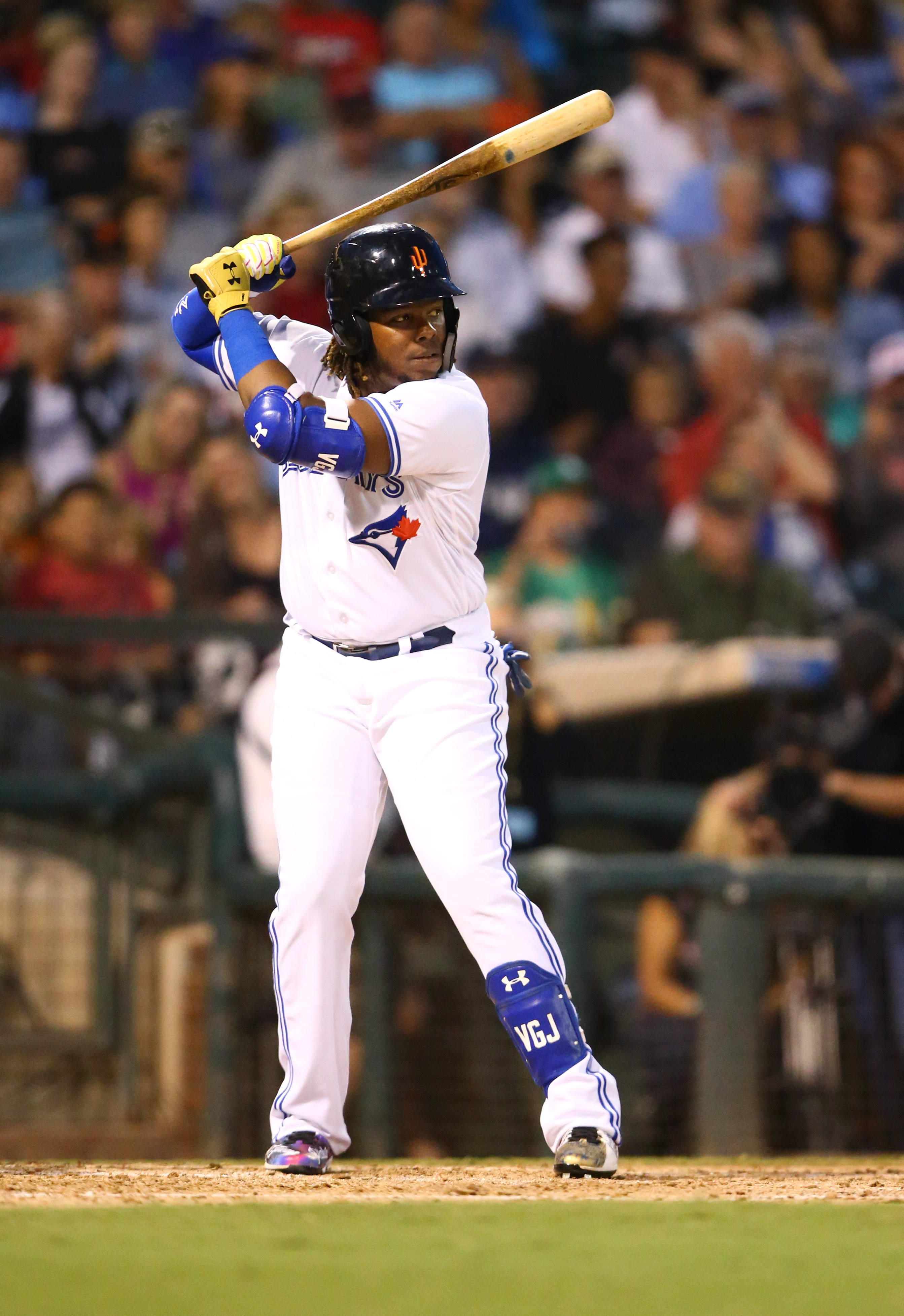
The promotion for Guerrero comes after nearly a year of anticipation. Outcry for the organization to promote the vaunted young slugger began last year when he was utterly laying waste to Double-A pitching as a 19-year-old. Guerrero logged a laughable .402/.449/.671 slash in 266 plate appearances at the Double-A level before moving up to Triple-A where he posted a similarly ridiculous .336/.414/.564 slash. That otherworldly performance, at such a young age, unsurprisingly made Guerrero the No. 1 overall prospect on the rankings of Baseball America, MLBPipeline.com, Fangraphs and Baseball Prospectus.
Toronto, however, has been determined to push back Guerrero’s free agency as far as is reasonably possible. For Guerrero, that meant being passed over for a September call-up despite a dominant season in the upper minors, and it surely would have meant he’d open the season at Triple-A even were it not for an oblique injury that serendipitously gave the Jays an actual reason to keep him off the Opening Day roster.
Along the way, Jays leadership made the standard-issue vague claims about how Guerrero needed to work on his defense, his baserunning and learning to be the “best possible teammate” he could be while dodging persistent questions about manipulating Guerrero’s service time. It wasn’t even two months ago that general manager Ross Atkins made the questionable claim that he simply did “not see him as a Major League player” yet. (Guerrero, it seems, learned a lot in the 11 minor league contests he played this year.)
To be clear, the Blue Jays aren’t doing anything nefarious or against the rules; they’re exploiting a system that encourages them to make just this type of business-driven move in a year they’re not expecting to compete. The Cubs took this route with Kris Bryant, the Braves did so with Ronald Acuna Jr., and numerous other young stars have seen their arrival in the big leagues pushed back for similar reasons. It’s not a universal tactic, as evidenced by Eloy Jimenez, Pete Alonso and Fernando Tatis Jr., but it’s certainly a common one. Such service time machinations will continue to be a storyline so long as the current service time/arbitration system remains in place, though it’s possible that the league and the MLBPA will explore alterations as they work toward a new collective bargaining agreement beginning prior to the 2022 season.
Service time considerations aside, the promotion of Guerrero marks the beginning of a new era in Toronto. The majority of the core that brought the Jays to the ALCS in both 2015 and 2016 has since departed. Edwin Encarnacion, Jose Bautista, Josh Donaldson, David Price, Kevin Pillar, R.A. Dickey, Mark Buehrle, Marco Estrada and J.A. Happ have all landed elsewhere, and it’s likely that the Jays will look into moving each of Justin Smoak, Marcus Stroman and Aaron Sanchez this summer.
However, Guerrero is a potential cornerstone piece for the organization — one who’ll eventually be followed by the likes of Bo Bichette, Nate Pearson, Cavan Biggio and others as Toronto looks to lay a new foundation in the ever-competitive AL East. Other potential pieces of that puzzle have already begun to get a taste of the Majors, with Rowdy Tellez, Danny Jansen and Lourdes Gurriel Jr. all receiving some experience at the game’s highest level.
The position played by Guerrero in the long term is far from set in stone. While the claim that Guerrero’s need for defensive improvement was the reason for keeping him in the minors was never legitimate, questions about his glovework are valid. Scouting reports have long pegged him as a sub-par option at third base, and it’s possible he’ll have to slide across the diamond to first base or even settle in as a primary designated hitter at some point in his early or mid 20s. The Jays surely hope that his defense can improve with some help from the big league coaching staff and continued reps in the Majors, but the 6’2″, 250-pound Guerrero may simply not be a long-term option at his natural position. Regardless of his defensive upside (or lack thereof), though, Guerrero’s prodigious bat should quickly establish him as one of the game’s brightest young stars.
Given the timing of his promotion, Guerrero will be under control for the Blue Jays through at least the 2025 season, although it’s possible that the Jays will explore the same type of early-career extension the White Sox were able to achieve with Jimenez (if they haven’t already begun to do so). Guerrero will be a slam-dunk Super Two player, assuming he’s not optioned back to the minors at any point, as he’ll finish out the 2019 campaign with 158 days of service.
Nationals Promote Carter Kieboom
April 26: The Nats have formally announced the move. Righty Koda Glover was transferred from the 10-day injured list to the 60-day injured list to open a spot on the 40-man roster.
April 25, 5:59pm: Infielder Jake Noll is in the lineup for the Nationals’ Triple-A affiliate tonight, indicating that he’ll be a corresponding 25-man roster move. The Nats will still need to clear a 40-man roster spot for Kieboom.
4:52pm: The Nationals will promote top infield prospect Carter Kieboom prior to Friday’s series opener against the Padres, reports Jesse Dougherty of the Washington Post. Kieboom, a top 50 league-wide prospect in the eyes of Baseball America, MLB.com, Baseball Prospectus, Fangraphs and ESPN, is not on the Nationals’ 40-man roster. A corresponding move to fit him onto the roster will be necessary.
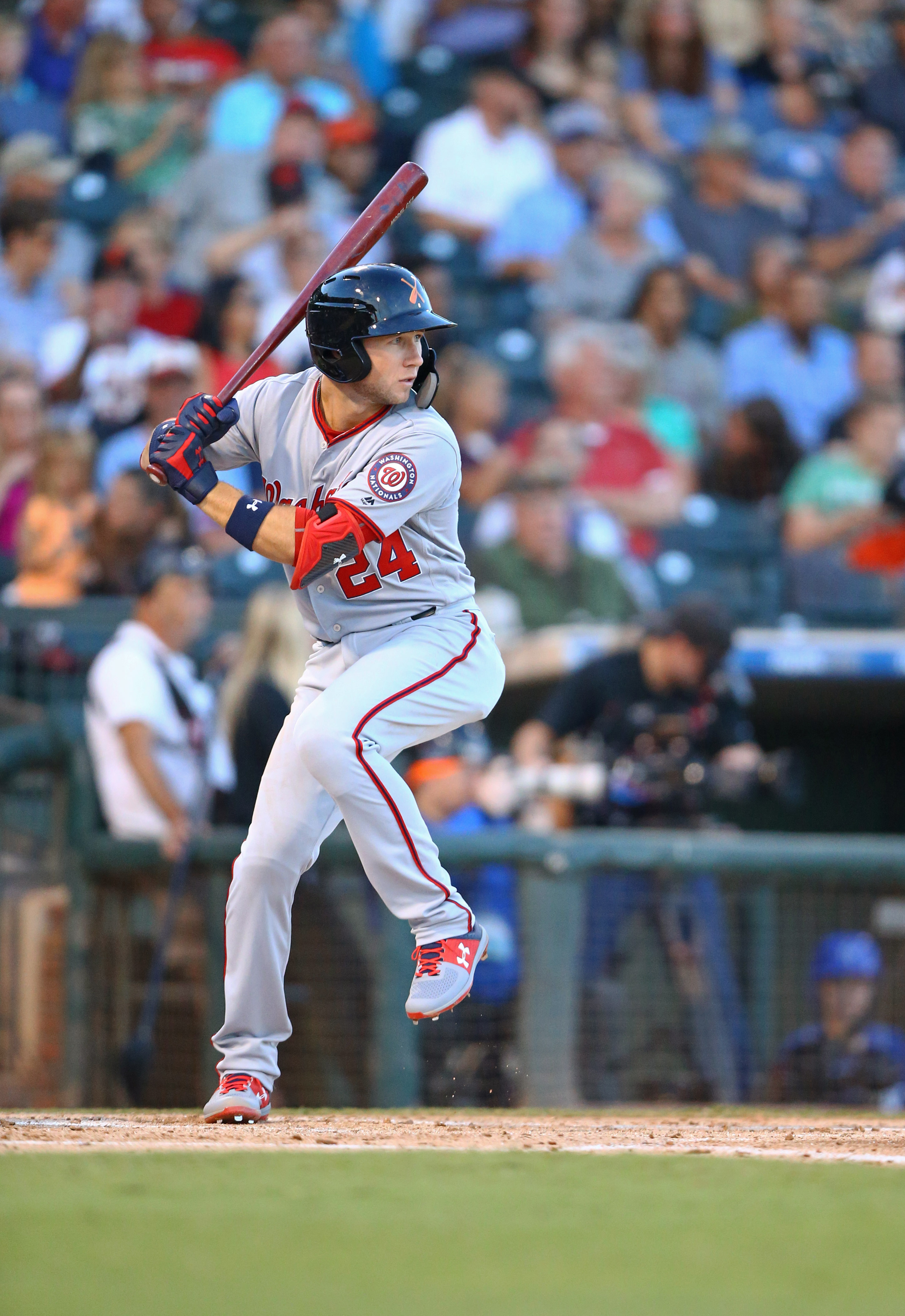
Kieboom, 21, was Washington’s top pick (No. 28 overall) in the 2016 draft. He’s hit at every level throughout his quick ascension to the big leagues, though the torrid start he’s enjoyed thus far in his first exposure to Triple-A pitching is his best work yet. Through 83 plate appearances, Kieboom has crushed opponents with a .379/.506/.636 batting line, three homers, six doubles and a triple. Since being drafted, Kieboom is a combined .286/.373/.471 hitter across all levels at which he’s played — despite the fact that he has consistently been hitting against older, more experienced pitchers.
The exact manner in which the Nationals will utilize Kieboom is not yet clear, but it stands to reason that if the Nats are calling him up this early, the plan is for him to get regular at-bats. Kieboom is a shortstop by trade but has split his time between both middle-infield positions this season. The Nats are without Trea Turner for what figures to be another couple of weeks and have been starting the light-hitting Wilmer Difo in his place, but third baseman Anthony Rendon has also been banged up and out of the lineup for a few days. Offseason signee Brian Dozier has yet to hit much, but he’ll presumably be given a longer leash to get things right.
Though the Nationals’ infield is crowded with veterans when at full strength, they’ve shown a willingness to promote prospects early in the past and carry them for the duration of the season — as was the case with Rookie of the Year runner-up Juan Soto last season. Kieboom has a long way to go before forcing the organization’s hand in that same manner, but if he’s up in the big leagues for good, the Nationals would be able to control him through the end of the 2025 season (though he’d be a slam dunk Super Two player in arbitration).