
Clayton Kershaw Likely Out Four To Six Weeks
July 24: The initial prognosis on Kershaw is that he’ll be sidelined for the next four to six weeks, reports Ken Rosenthal of FOX Sports (via Twitter). He still is set to receive another opinion before a final determination is made.
While that’s obviously a disheartening development for the Dodgers, that timeline would still give Kershaw time to return and get back up to full strength well in advance of the postseason. And, with a 10.5-game lead on the NL West, the Dodgers can weather the storm even without Kershaw for a month or a bit more.
July 23: Dodgers ace Clayton Kershaw exited today’s game in the second inning due to lower back tightness, and manager Dave Roberts told reporters (including J.P. Hoornstra of the Southern California News Group) that Kershaw’s issue “is a DL situation.”
Despite the likely DL placement, Roberts felt this injury wasn’t similar to the herniated disk that cost Kershaw over two months of the 2016 season. This bout of back tightness didn’t involve any shooting pains in Kershaw’s leg, for instance, as Andy McCullough of the L.A. Times notes (Twitter links). More information will be known tomorrow when Kershaw is examined by the Dodgers’ team doctor.
Given Kershaw’s past history with back problems, one can’t fault the team for being as careful as possible with their superstar left-hander, even if this DL stint ends up ultimately being precautionary in nature. With the best record in baseball and a 10.5-game lead in the NL West, the Dodgers can afford to give Kershaw perhaps even more time than required to fully heal up.
This being said, another DL placement due to a back problem is an ominous sign for both the team and the player. Despite that large lead, the Dodgers obviously need Kershaw to make a World Series run, and an extended absence for their ace could have a big impact on the team’s deadline plans. L.A. has mostly been linked to bullpen upgrades on the rumor mill, though the team has been exploring all options, including checking in on starters like Yu Darvish and Justin Verlander.
The Dodgers have enjoyed great success from their rotation and team as a whole despite a staggering number of injuries. As MLB.com’s Ken Gurnick tweets, Kershaw would be the 24th different player the Dodgers have placed on the disabled list this season. That list includes all five members of their current rotation (Kershaw, Alex Wood, Rich Hill, Kenta Maeda and Brandon McCarthy, who is about to begin another DL stint), as well as Scott Kazmir and Hyun-Jin Ryu, who also currently sidelined. If L.A. was looking at rotation help even before Kershaw’s injury, the search will only intensify, possibly even towards a headline name like Darvish.
Kershaw is enjoying yet another tremendous season, with a 2.04 ERA, 10.7 K/9, 1.53 BB/9 and 47.4% grounder rate over 141 1/3 innings. One minor wrinkle is that Kershaw’s 15.7% home run rate is over twice his career average, plus he is getting more BABIP (.251) and strand rate (90.2%) luck than usual, which is why his ERA predictors (2.94 FIP, 2.73 xFIP) are significantly above his real-world ERA. Of course, these numbers are still pretty outstanding, which says something about Kershaw’s body of work that 2017 could technically be considered something of “a down year” by his standards.
Giants Sign Pablo Sandoval
SATURDAY, 7:08pm: Sandoval’s contract includes 2018-19 club options for the major league minimum, but he’ll become a free agent at the end of this season if he isn’t on the Giants’ roster, reports Henry Schulman of the San Francisco Chronicle (Twitter links).
1:43pm: The deal is now official, Alex Pavlovic of NBC Sports Bay Area tweets. Sandoval will head to Class A+ San Jose, then on to Triple-A Sacramento.
Here’s a statement from Sandoval about his return to the Giants in which he apologies for disparaging comments he made about the organization as he was in the process of leaving.
“I have always loved and appreciated the Giants organization, my Giants teammates and the fans of San Francisco. I have so many great memories and I want to thank the organization for giving me another chance to come back here. When I left the Giants in 2014, my comments were emotional, insensitive and misguided and I truly regret and apologize for my actions. I am committed to working hard to contributing to the success of the Giants.”
8:07am: Sandoval will, in fact, sign with the Giants, Heyman writes (Twitter links). The Royals and others were in fact in consideration, but Sandoval ultimately opted to head back to San Francisco.
FRIDAY: The Royals are another team with interest in Sandoval, FanRag Sports’ Jon Heyman reports (Twitter link), though the third baseman is still expected to land with the Giants.
WEDNESDAY, 8:38pm: Sandoval says he’s “waiting for Friday to make a decision,” with the Giants being “one of [the] options,” per ESPN.com’s Marly Rivera.
7:17pm: The Giants have agreed to a minors deal with third baseman Pablo Sandoval, according to MLB.com’s Jesse Sanchez (via Twitter). Sandoval was released earlier today by the Red Sox, though the deal will not be formally entered until his contract has passed through waivers — which (all but certainly) will occur on Friday, Evan Drellich of CSNNE.com tweets.
While the match had been rumored, and is rather unsurprising on paper, it’s still quite a notable reunion for a player who was once one of San Francisco’s most visible stars. Both Sandoval and the Giants have had seasons to forget thus far. The former was released by his most recent organization after a third-straight season marred by injury and underperformance. And the latter currently sits five games back of the Padres in the NL West cellar.
Sandoval, now thirty years of age, was a popular and productive player for seven seasons with the Giants. Over his 3,533 plate appearances, Sandoval slashed a robust .294/.346/.465 and compiled about twenty wins above replacement. That performance earned him a five-year, $95MM contract with the Red Sox, who’ll pay the vast majority of the nearly $50MM remaining (less any prorated portion of the league minimum for time Sandoval spends in the majors from now through 2019).
The Giants tried to keep the affectionately nicknamed Panda, but extension talks never materialized and he spurned the organization in free agency — suggesting in comments at the time that he was happy to be moving on. But Sandoval never found his footing in Boston. His longstanding battle with weight was again an issue, and Sandoval missed all of 2016 with a shoulder injury. He got into shape and showed well this spring, but endured a DL stint for a knee problem and struggled both at the bat (.212/.269/.354) and with the glove (-6 DRS; -8.6 UZR/150 innings) over his 32 games in 2017.
It’ll be interesting to see whether Sandoval can jump start his career in the place he once thrived. First, though, he’ll have to earn his way back to the big leagues. It’s important to bear in mind that the sides won’t be committed to one another for very long even if things go well. Unless the deal provides the club with an option of some kind — and it is fair to note that Jose Reyes agreed to such terms with the Mets while the Rockies were paying his contract — then Sandoval will return to the open market at season’s end. That said, it’s possible to imagine an extended reunion if things go well, as the Giants don’t yet have a clear plan for the 2018 season at third base.
Athletics Sign Chris Carter
FRIDAY: The A’s officially announced the signing.
WEDNESDAY: The Athletics have agreed to sign free-agent slugger Chris Carter, according to Jon Heyman of Fan Rag (via Twitter). It’s a minor-league deal for the veteran first baseman/DH.
Oakland knows what it’s getting in the lumbering Carter, who broke into the majors there back in 2010. But he took only 384 trips to the plate with the A’s before he was shipped to the Astros (along with now-flourishing righty Brad Peacock and catcher Max Stassi) in the deal that brought Jed Lowrie and Fernando Rodriguez to the bay.
Carter has continued to produce home runs and strikeouts at prodigious rates ever since. Last year, which he spent with the Brewers, there were enough of the former to make up for the latter; Carter led the National League in both categories. But things weren’t working with the Yankees, who signed Carter after he was non-tendered but received only a .201/.284/.370 batting line over his 208 plate appearances.
Clearly, the veteran is never going to shed the swing and miss. He’ll always hit for a ghastly average (.217 lifetime). But despite those flaws, he has typically been a productive overall hitter, due not just to his power but also his ability to draw walks at a better-than-league-average rate (11.5% for his career).
While the A’s currently employ a productive first baseman in Yonder Alonso, he is expected to be in another uniform by the end of the month. That could open an opportunity for Carter to ascend once more to the majors, giving the organization a near-term fill-in while affording him a chance to set himself up for another foray into free agency at the end of the year.
Rangers Discussing Yu Darvish With Rival Clubs
The Rangers are putting out feelers with other organizations to gauge interest in star righty Yu Darvish, according to Jeff Passan of Yahoo Sports. While Texas isn’t yet ready to pursue a trade, per the report, it seems the club’s recent skid has put that option firmly on the table.
While there’s still plenty of uncertainty, the news is still notable. Darvish, after all, would represent the only clear impact rental starter on the market. Other top potentially available arms on expiring contracts include Trevor Cahill, Marco Estrada, Jhoulys Chacin, Jeremy Hellickson, and Jaime Garcia (who may be en route to the Twins).
If the 30-year-old is indeed made available, the Rangers would surely command a rather steep price. He wouldn’t be eligible for a qualifying offer from an acquiring team, so there’s no real value beyond the present season (apart from laying some groundwork for a possible free-agent pursuit), but Darvish could significantly impact an organization’s run to and through the postseason.
Over his 125 1/3 innings this year, Darvish has delivered a 3.45 ERA with 9.4 K/9 and 3.0 BB/9. That’s not the kind of elite performance he delivered prior to undergoing Tommy John surgery, but still represents top-level performance — particularly in the current run-scoring environment.
Darvish is throwing as hard as ever and generating swinging-strikes at near-typical levels. Any long-term health concerns are out the window. And with just $11MM owed to him over the course of the season, he’s quite affordable for his performance level.
Presumably, just about any organization currently seeking rotation help would need to consider the Japanese ace. Some clubs will still prefer controllable hurlers, most notably Sonny Gray, but the market is otherwise starved for top-end starters that would be expected to represent significant upgrades for a hypothetical postseason rotation.
2017-18 Qualifying Offer Expected To Be Worth Roughly $18MM
Major League teams have been informed that the 2017-18 qualifying offer will be in the range of $18MM, reports ESPN’s Buster Olney (via Twitter). More specifically, Olney notes that the exact value could end up being $18.1MM.
That figure would represent a $900K spike from last year’s $17.2MM qualifying offer value and, paired with changes to the qualifying offer system, would make it more difficult to extend such an offer to borderline free agents. The QO is calculated each year by determining the mean salary of the league’s top 125 players.
Under the 2012-16 collective bargaining agreement, any player who rejects a qualifying offer would then cost a new team its top unprotected draft pick upon signing. (The first 10 selections of the draft were protected on a yearly basis.) The team that lost the free agent would then receive a compensatory pick immediately following the first round.
The QO system has changed under the 2017-21 CBA, however, as the new default rule calls for the compensatory pick to land after the completion of Competitive Balance Round B. However, there are two exemptions to the rule:
- If the team that lost said free agent paid the luxury tax in the preceding season, its compensation pick would fall in the after the completion of the draft’s fourth round.
- Conversely, if the team that lost said free agent received revenue sharing in the preceding season and saw the free agent sign a contract worth a guaranteed $50MM or more, the compensation pick would be moved to the end of the first round.
The penalties that a club pays upon signing a player that rejected a QO have changed as well:
- Any team that paid the luxury tax in the preceding season will forfeit its second- and fifth-highest draft selections in next year’s draft as well as $1MM of its international bonus pool in the upcoming period.
- A team that did not exceed the luxury tax threshold but contributes to revenue sharing would forfeit its second-highesr draft pick as well as $500K of its upcoming international bonus pool.
- A team that didn’t exceed the luxury tax and also received revenue sharing in the preceding season would forfeit only its third-highest pick in the next year’s draft.
The newly bargained agreement also stipulates that a player may receive a qualifying offer once and only once in his career, so any player that has previously received the QO is exempt, regardless of whether he accepted or rejected his first QO. Players that were traded or signed midseason also remain exempt from receiving a qualifying offer.
The increasing size of the qualifying offer will likely further limit the number of players that receive such an offer this winter, though there are certainly still a number of candidates. Yu Darvish is the easiest call among impending free agents (assuming he isn’t traded), while others such as Eric Hosmer, Mike Moustakas, Lorenzo Cain and Greg Holland all stand out as logical candidates (once Holland turns down his $15MM player option). Depending on the way in which their season finishes, players like Masahiro Tanaka and Jay Bruce could also emerge as considerations (though Bruce could well be traded, thus negating the issue).
Mariners Acquire David Phelps
12:02pm: The trade is now official, as the Marlins and Mariners have announced the swap.
10:40am: The Mariners and Marlins have reportedly agreed to a trade that will send right-handed setup man David Phelps from Miami to Seattle in exchange for a package of four prospects. Center field prospect Brayan Hernandez is the headliner, while the other names in the deal reportedly include right-handers Brandon Miller, Pablo Lopez and Lukas Schiraldi.
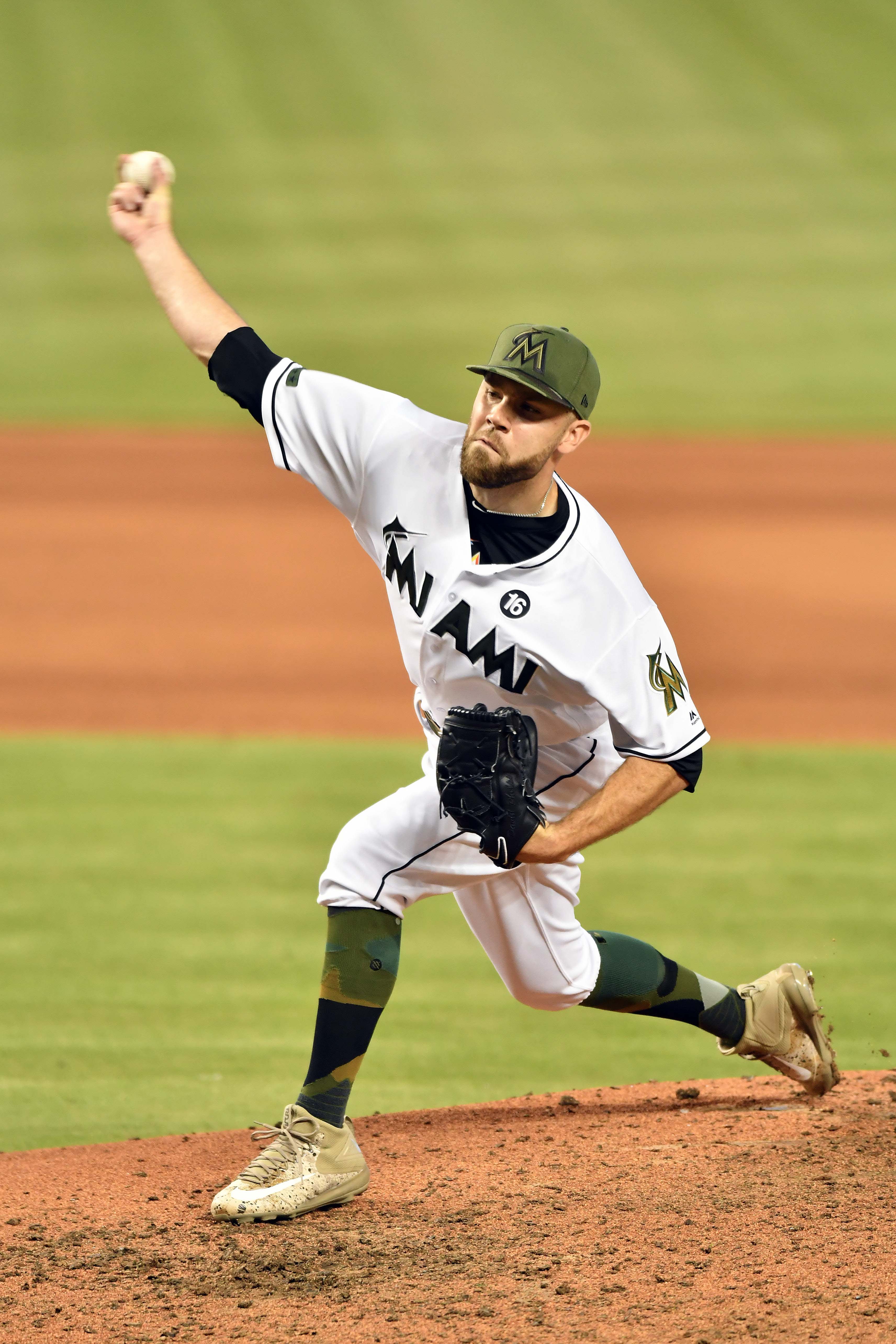
Seattle has been playing well of late, getting back to the .500 mark and drawing within 1.5 games of an American League Wild Card spot. However, the Mariners are also 15.5 games back from the Astros in the AL West, which has reportedly led them to look for assets that can be controlled beyond the current season, as their best playoff hope in 2017 is a one-game playoff.
[Related: Updated Seattle Mariners and Miami Marlins depth charts]
The 30-year-old Phelps fits the bill, in that sense, as he’s controlled through the 2018 campaign via arbitration. He’s earning $4.6MM in 2017, with about $1.86MM of that sum yet owed to him through season’s end.
The former Yankee initially went to Miami alongside Martin Prado as part of the trade that sent Nathan Eovaldi to New York. After spending much of his career as a starter and long reliever, Phelps’ career took off with a 2016 move to a late-inning role. The righty’s velocity ticked from the low 90s to an average in the 93-94 mph range, and he’s dramatically upped his strikeout rate while pitching in a setup capacity.
Dating back to Opening Day 2016, Phelps has worked to a 2.69 ERA with 11.1 K/9, 4.0 BB/9 and a 46.4 percent ground-ball rate through 133 2/3 innings. His strikeout rate is “down” in 2017, but he’s still averaging 9.8 punchouts per nine innings pitched. His arm will be a boost to a Mariners relief corps that currently ranks 13th in baseball with a 4.05 ERA but carries more troubling marks in both FIP (4.44) and xFIP (4.45). Those ERA alternatives come in at 25th and 21st in baseball, respectively, indicating that the Mariners are perhaps fortunate to have gotten the results they have out of their bullpen to date. (Then again, Seattle boasts a superlative defense, particularly in the outfield, so perhaps it should be expected that their pitchers would outperform fielding-independent metrics.)
The Seattle ‘pen is currently anchored by sophomore closer Edwin Diaz, who has been inconsistent in 2017 but can overpower opposing lineups with a triple-digit fastball and one of baseball’s best strikeout rates. Nick Vincent has also been brilliant in Seattle, working to a 2.04 ERA in 39 2/3 innings, while southpaw James Pazos has averaged nearly 11 strikeouts per nine innings en route to a 3.68 ERA. Former Mariners closer Steve Cishek represents another right-handed option, but health has been an issue for him in recent years as his numbers have declined.
Beyond that, Seattle has seen some of its anticipated setup men, particularly right-hander Dan Altavilla, take a step back in 2017. Phelps figures to pick up some of that slack and will join Diaz, Vincent, Pazos, Cishek, Tony Zych and Marc Rzepczynski in the Mariner bullpen.
Hernandez is the big get for the Marlins in the deal. The 19-year-old ranked as one of the 10 best international free agents in the 2014-15 crop and inked a $1.85MM bonus with Seattle at the time. Hernandez split the 2016 season between the Dominican Summer League and the Rookie-level Arizona League, hitting a combined .278/.325/.425, and he’s off to a .252/.306/.408 start with the Mariners’ short-season Class-A affiliate.
Jim Callis and Jonathan Mayo of MLB.com rank Hernandez as Seattle’ No. 6 prospect, noting that he flashes all five tools but is still projection over performance at the moment. He received 60 grades on his speed and arm from Callis and Mayo with a 55 on his glove, and their report notes that his overall offensive development will determine if he can reach his ceiling as an everyday center fielder. Baseball America rated him 16th among Seattle farmhands this past winter, agreeing that the defensive tools are impressive and praising his “solid, consistent contact” but also questioning his ability to generate power now or in the future.
The 22-year-old Miller has spent the season with the Mariners’ Class-A affiliate in the Midwest League, working to a 3.65 ERA with 8.4 K/9, 2.0 BB/9 and a 46.8 percent ground-ball rat in 101 innings/18 starts at that level. Callis and Mayo list his heater at 90-93 mph with good command of the pitch and give him credit for a plus slider, though reports indicate that he lacks an average third offering and could be destined for a bullpen role. He ranked 16th among Mariners prospects, per MLB.com, while BA pegged him 25th among Seattle prospects this offseason. Both reports tout his fastball’s exceptional spin rate. If all breaks right, Miller could pan out as a back-of-the-rotation starter.
Lopez is a 21-year-old starter that has spent the year in Class-A Advanced. While his 5.02 ERA through 100 innings doesn’t look appealing, he’s posted an excellent 89-to-13 K/BB ratio with a 49 percent ground-ball rate, creating some optimism that he’s been hit with some poor luck. (A .341 BABIP lends further credence to that notion.) MLB.com placed him 22nd in Seattle’s system and gave him three average offerings (fastball, curveball, changeup) but no plus pitch. He was 31st on BA’s offseason rankings, and their report notes that he has a 2014 Tommy John surgery in his history but is a “supreme strike-thrower” with impressive ground-ball tendencies.
Schiraldi comes from good baseball genes, as his father, Calvin, played in the Majors for parts of eight seasons with the Mets, Red Sox, Padres, Cubs and Rangers. The younger Schiraldi didn’t crack any Mariners top prospect rankings but has a gaudy 15.2 K/9 rate in 37 1/3 innings of work at Class-A Advanced. However, he’s also not particularly young for the level at 23 years of age, and he’s worked to a 4.58 ERA with a 6.5 BB/9 rate.
Ultimately, the Marlins will secure four players in exchange for a year and a half of a quality setup man while also saving a bit of cash for the remainder of the 2017 season. While it’s tempting to look at the sheer volume of players and wonder how this will impact the market for other relievers — especially those that are controlled beyond the 2017 season, such as Brad Hand and Zach Britton — it’s also worth emphasizing that Seattle’s farm system is generally regarded as weak. That bit of context should absolutely be considered when debating the value of other relief arms, and it seems unlikely that the volume of the Phelps deal “raises the bar” for other relievers throughout the league.
MLB.com’s Mark Feinsand first reported that the Mariners were in talks to acquire a reliever and that Phelps was the target. MLB.com’s Jon Morosi termed the deal “fairly close,” and Yahoo’s Jeff Passan pushed it further to “imminent.” FanRag’s Jon Heyman tweeted that the trade was indeed finalized, while Joel Sherman of the New York Post tweeted that Seattle was sending multiple minor leaguers to Miami. Passan and Heyman added a bit more detail on the return (Twitter links), with Passan ultimately reporting Hernandez as the headliner. Sherman broke news of the other three players in the deal.
Photo courtesy of USA Today Sports Images.
Red Sox Release Pablo Sandoval
July 19: The Red Sox announced that Sandoval has been released.
July 14: The Red Sox announced that they have activated struggling third baseman Pablo Sandoval from the disabled list and designated him for assignment.
Sandoval is midway through the third season of a five-year, $95MM contract that proved to be a fatal misstep for the organization. Signed on the heels of a six-and-a-half-year span during which he posted a very strong .294/.346/.465 batting line through 3533 plate appearances with the Giants (to say nothing of his terrific postseason work), Sandoval flopped in year one of the pact, hitting just .245/.292/.366 with 10 homers in 505 plate appearances. He made just seven plate appearances in 2016 before undergoing shoulder surgery, and his 2017 work has resulted in a dismal .212/.269/.354 slash through 108 PAs.
Boston will now be on the hook for the remaining $49.8MM that Sandoval is owed through the end of the 2019 season. With a trade effectively unfathomable, Sandoval can either be outrighted to Triple-A (if he accepts the assignment) or released, at which point any club will be eligible to sign him for the pro-rated portion of the league minimum.
Further exacerbating the pain that Sandoval has caused the Red Sox is the fact that his presence likely factored into the team’s thinking when it came to trading Travis Shaw to the Brewers this past offseason. Shaw, meanwhile, has broken out and been one of baseball’s most productive third baseman in his first half season with the Brewers.
For the time being, the Sox are deploying a makeshift platoon of Deven Marrero and Tzu-Wei Lin at the hot corner, and while that pairing leaves plenty to be desired from an offensive standpoint, it undoubtedly provides more defensive value than Sandoval brought to the table. Nonetheless, the Sox figure to be heavily linked to all of the third basemen that will be available on this summer’s trade market in the 17 days between now and the non-waiver trade deadline.
Of course, Boston also has a rapidly rising in-house option in the form of top prospect Rafael Devers, who ranks among the game’s five to 10 best overall prospects on most midseason rankings (No. 3 per ESPN’s Keith Law, No. 6 per Baseball America, No. 5 per Baseball Prospectus). Devers has yet to take an at-bat at the Triple-A level, and the team has said that he’ll head to Pawtucket before being promoted. That said, Devers has the potential to come up and impact the playoff race at some point in the season’s second half — particularly if president of baseball operations Dave Dombrowski and his staff don’t acquire a more established option at the hot corner.
Carlos Correa Out Six To Eight Weeks With Torn Thumb Ligament
July 19: Correa announced today (via Instagram) that he’s undergone surgery to repair the ligament and that the operation was successful.
July 18,5:18pm: Jake Kaplan of the Houston Chronicle tweets that Gonzalez is likely to see the bulk of playing time at shortstop, though Bregman could play there on days when Gonzalez is needed elsewhere on the field. Gonzalez can play first base, second base and in the corner outfield as well. Regardless, that combination will likely allow the ‘Stros to cover Correa’s absence for the next month and a half or so.
3:12pm: The Astros announced devastating injury news today, revealing that shortstop Carlos Correa is expected to miss the next six to eight weeks with a torn ligament in his left thumb. Astros field reporter Julia Morales tweets that the injury will require surgery. Infielder Colin Moran has been recalled to replace Correa, who suffered the injury on a swing in last night’s game.
“Losing a player of Carlos’ caliber for an extended period is a big blow to our club, but I believe we have the roster to persevere and continue to win games,” said GM Jeff Luhnow in a press release announcing the news. “We do expect Carlos to return to the club in September and be ready to contribute down the stretch.”
That injury is the same ailment from which fellow AL West superstar Mike Trout just returned. Trout ultimately missed about six and a half weeks, although no two injuries are created equal, and we obviously don’t know if the extent of the tear is the same in each instance. But, that does serve as somewhat of a rough benchmark for Correa’s return to activity.
The Astros, meanwhile, will soldier on without one of the American League’s foremost MVP candidates for a significant stretch of time. On the plus side, Houston has a 15.5 game lead on the division, so the ‘Stros aren’t really at risk of ceding the division to one of their rivals. Furthermore, Houston has a deep roster, with both Alex Bregman and Marwin Gonzalez capable of stepping in to play shortstop on a consistent basis. As such, a trade for someone such as Cincinnati’s Zack Cozart doesn’t seem particularly likely — especially not with Correa expected back well before season’s end.
White Sox Promote Yoan Moncada
The White Sox announced following tonight’s blockbuster trade that they will promote minor league infielder Yoan Moncada to the Majors tomorrow. Acquired in the team’s offseason trade of Chris Sale, Moncada is widely regarded as one of the game’s top overall prospects and ranks as MLB’s No. 1 prospect according to Baseball America, MLB.com and Baseball Prospectus.
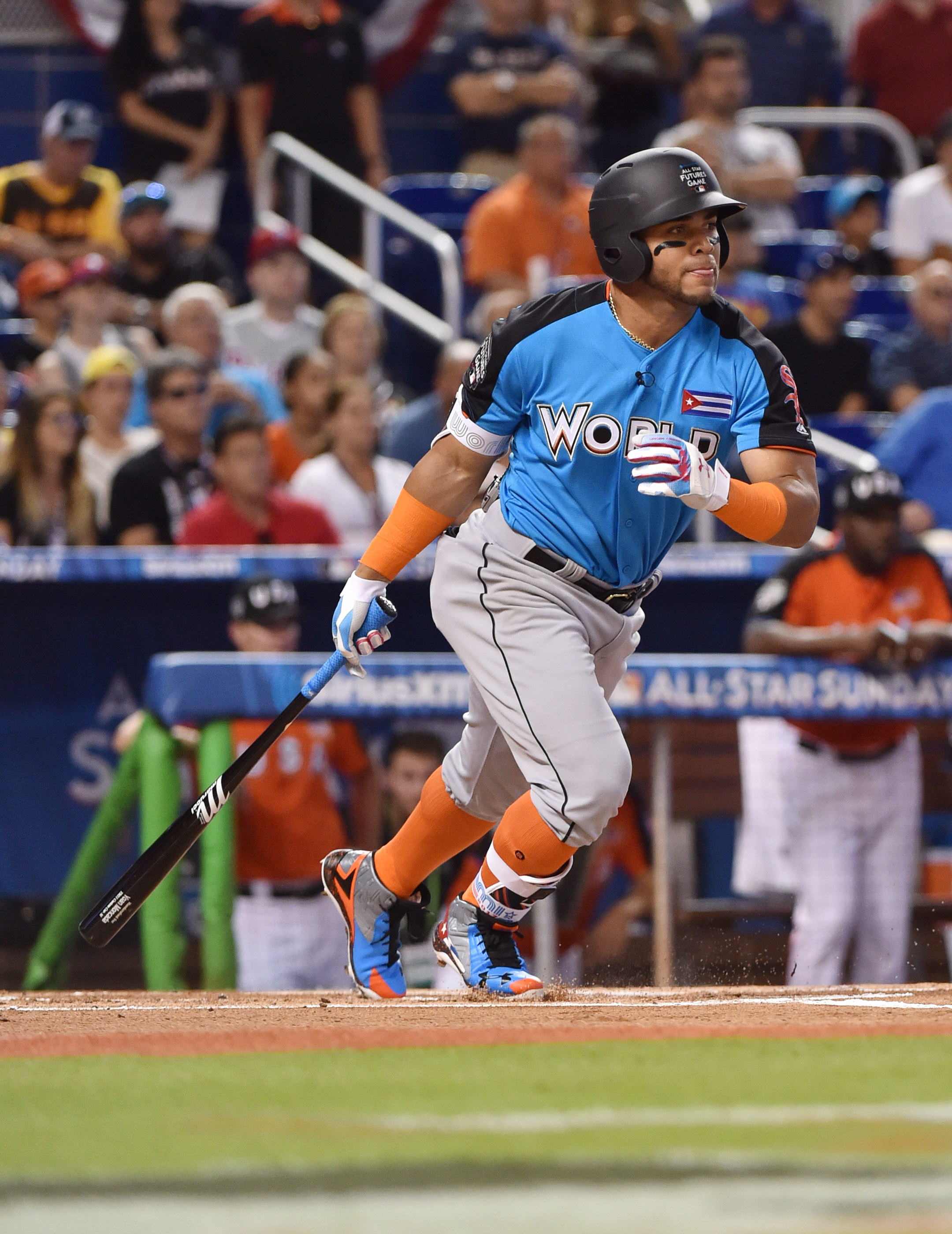
Moncada, 22, is off to an excellent start in Triple-A Charlotte, hitting .285/.381/.452 with a dozen homers, nine doubles, three triples and 17 steals (in 24 attempts). He should get everyday at-bats for the Sox at second base, where he’s played exclusively thus far in Triple-A this season.
This won’t be Moncada’s first exposure to the Majors, as he appeared with the Red Sox late in the 2016 campaign but looked overmatched by big league pitching at the time. In a tiny sample of 20 plate appearances, Moncada was able to notch four hits but also struck out a whopping 12 times. Strikeouts remain an issue for Moncada in Triple-A, though he’s made modest improvements in both his strikeout and walk rates this season.
Reports on the switch-hitting Moncada tout him as a potential five-tool player — one who can hit for high average with power, speed, and above-average defense at second base for years to come. His left-handed swing has drawn comparisons to that of Robinson Cano. Baseball America’s report on Moncada marvels at his athleticism, touting that he “possesses the size and strength of a linebacker and he runs like a runaway locomotive.”
If there are any questions about Moncada, they’re largely about his hit tool, though not to the point where many evaluators are too concerned about his future. ESPN’s Keith Law isn’t quite as high on Moncada, but even as a slightly more skeptical observer, he pegged him as baseball’s No. 13 overall prospect earlier this month. Law writes that Moncada still profiles as an above-average regular at second even if his discipline never fully comes around.
Moncada entered the season with just 31 days of Major League service time, and given the timing of his promotion, there aren’t enough days left on the calendar for him to reach the requisite 172 days of service to notch his first full year. The best he can do is wrap up the season with 106 days of service, which would eventually leave him shy of Super Two status after the 2019 campaign (assuming no further demotions to alter his service time trajectory). Moncada, then, wouldn’t be eligible for arbitration until after the 2020 season and wouldn’t qualify as a free agent until the 2023 season wraps up.
Of course, financial considerations aren’t necessarily as great a concern for Moncada as they are for most young players. After leaving Cuba, Moncada signed with the Red Sox for a record-shattering $31.5MM signing bonus (that came with a full dollar-for-dollar penalty, meaning he cost Boston $63MM).
Photo courtesy of USA Today Sports Images.
Yankees Acquire Todd Frazier, David Robertson, Tommy Kahnle In Seven-Player Deal
The White Sox and Yankees have agreed to a blockbuster deal that will send Todd Frazier, David Robertson and Tommy Kahnle to New York in exchange for outfield prospect Blake Rutherford, left-handed pitching prospect Ian Clarkin, outfield prospect Tito Polo and veteran right-hander Tyler Clippard. The White Sox have formally announced the deal.
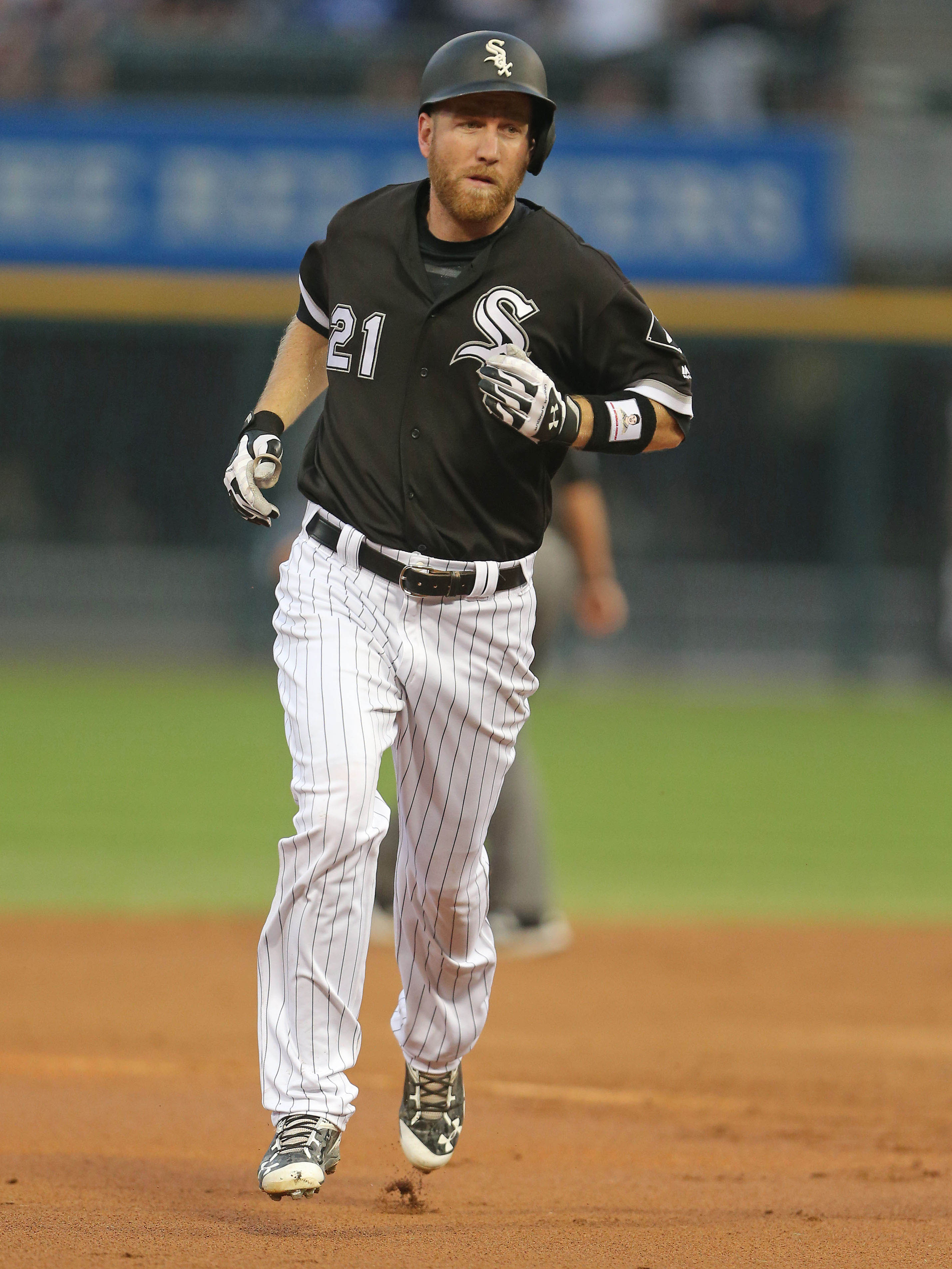
While Frazier has been primarily a third baseman in his career, he does bring 740 innings of experience at first base to the table. That’s a clear area of need for the Yankees, who have seen injuries ruin the seasons of Greg Bird and Tyler Austin, while offseason acquisition Chris Carter has been twice designated for assignment and now cut loose back to the open market. The Yankees could deploy Frazier at first base with regularity or put him at third and slide Chase Headley across the diamond, where even his modest production would be an upgrade.
The 31-year-old Frazier is set to hit free agency at season’s end, and while his production this year hasn’t been up to par, he’s turned things on since the the calendar flipped to June. Over his past 37 games, Frazier has batted .234/.361/.508 with nine homers and eight doubles. For a Yankees team that has seen its first basemen bat a collective .208/.295/.391, even Frazier’s overall .207/.328/.432 batting line represents a marked improvement, but if he can sustain his recently increased production, it’ll be a particular boon for manager Joe Girardi’s lineup.
And, in fact, there are plenty of signs that point to some positive regression for Frazier. The slugger has upped his walk rate to a career-high 14.3 percent in 2017 while also cutting his strikeout rate by more than three percent — from 24.5 percent in 2016 to 21.2 percent in 2017. Beyond that, Frazier has cut his infield-fly rate and seen increases in his line-drive and hard-contact rates. As such, it stands to reason that he could continue to improve upon a .214 batting average on balls in play that is currently the second-worst mark among all qualified Major League hitters. Frazier is earning $12MM in 2017, and there’s about $4.92MM of that sum remaining on his contract.
[Related: Updated New York Yankees depth chart and Chicago White Sox depth chart]
Robertson, of course, is a known commodity to the Yankees. The righty spent the first seven years of his career in the Bronx, working to an excellent 2.81 ERA with 12.0 K/9 against 3.8 BB/9. Most of his career in New York was spent setting up for future Hall of Famer Mariano Rivera, but Robertson thrived in the ninth-inning spotlight in his final season with the Yanks (following Rivera’s retirement), setting him up to sign a four-year, $46MM contract that was at the time one of the five largest contracts ever inked by a reliever.
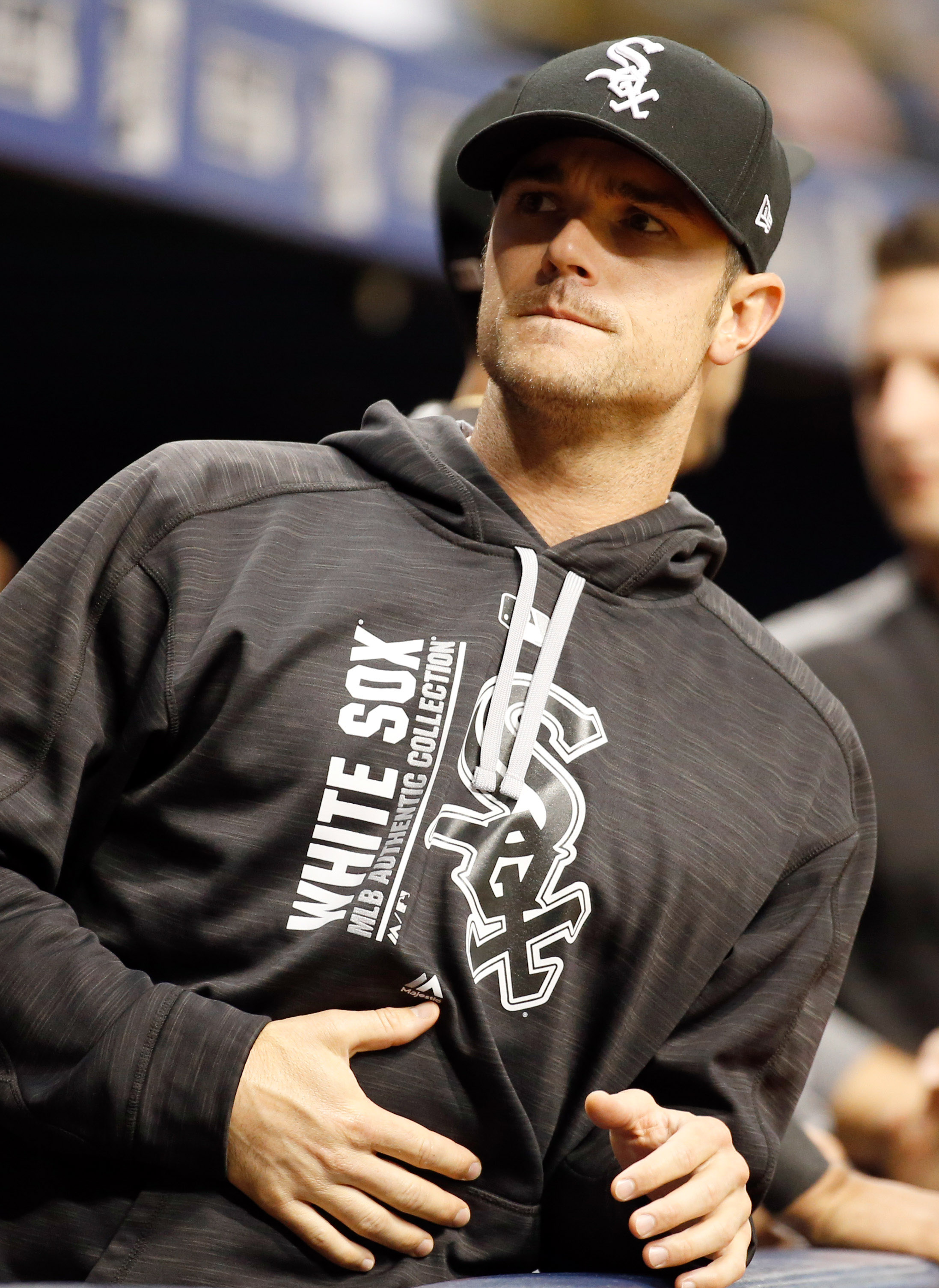
Now 32 years of age, Robertson is halfway through the third year of that contract and is in the midst of his best season with the Sox. Through 33 1/3 innings on Chicago’s South Side, Robertson has worked to a 2.70 earned run average with 12.7 K/9, 3.0 BB/9 and an even 40.0 percent ground-ball rate. Like Frazier, Robertson is still owed $4.92MM of a $12MM salary this season. He, however, is signed through next year and is set to earn $13MM in 2018.
As for Kahnle, the 27-year-old was also once property of the Yankees, having risen through their minor league ranks before eventually making his big league debut in Colorado. The flamethrowing righty has long displayed a propensity for missing bats, but he’s taken that skill to new heights in 2017 while also dramatically slashing his walk rate. Through 36 innings in 2017, Kahnle has posted a ridiculous 15.0 K/9 rate to go along with a 41.1 percent grounder rate. The resulting 2.50 ERA looks impressive on its own, but metrics like FIP (1.47), xFIP (1.63) and SIERA (1.62) all feel that he may actually be unfortunate to be sporting an ERA even that high.
Further adding to Kahnle’s value is that he very much comes with long-term potential. If this proves to be a breakout rather than an aberration, he’d be controllable through the 2020 season via the arbitration process. Kahnle entered the year with just over two years of big league service time, so he’ll wrap up the 2017 campaign with three-plus years of service and be arbitration-eligible for the first time.
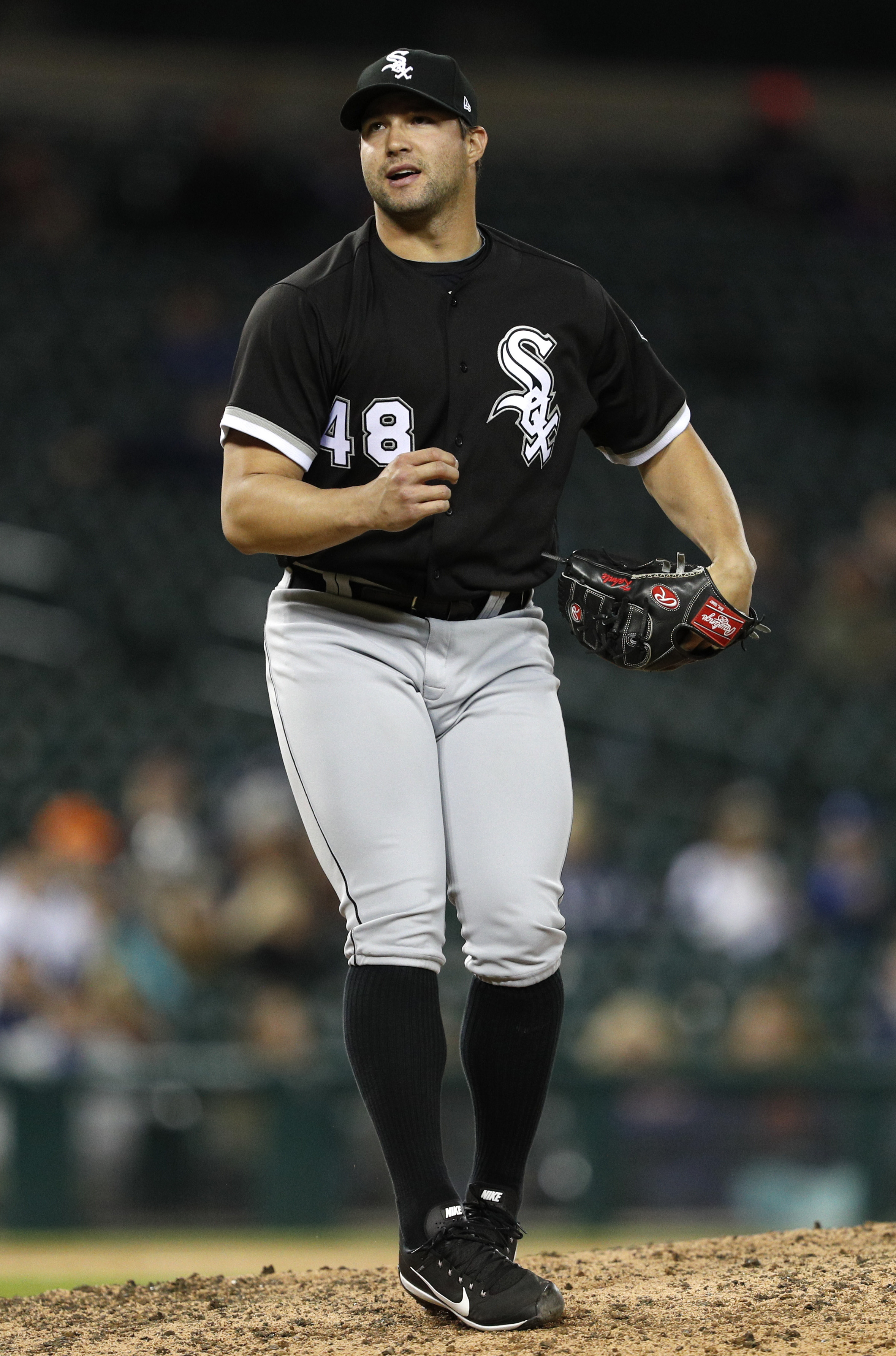
Adding Robertson and Kahnle to a bullpen that already features both Aroldis Chapman and Dellin Betances gives the Yankees a powerhouse relief corps to work with not only in 2017 but also through at least 2018, after which Robertson will be eligible for free agency. That group will be joined by an excellent multi-inning weapon in the form of Adam Warren as well as 26-year-old Chad Green, who is in the midst of his own breakout season — one that closely resembles that of Kahnle (1.75 ERA, 12.3 K/9, 2.5 BB/9 in 36 innings). Chasen Shreve is in the midst of a solid season and seems likely to stick as a left-handed option.
Clippard’s inclusion in this deal is primarily a means of offsetting some of the salary that the Yankees are taking on. Signed to a two-year, $12.25MM deal prior to the start of the 2016 season (by the D-backs), Clippard was a solid midseason pickup for New York last year but has struggled to a 4.95 ERA this year thanks to a recent spike in his home run rate. He’s still owed about $2.5MM of this season’s $6.125MM salary, so his inclusion will negate about a quarter of the $9.85MM that the Yankees are adding to their 2017 payroll in acquiring Frazier and Robertson. He’ll also give the ChiSox a veteran option at the back of a very inexperienced bullpen.
Clippard’s inclusion may have helped sway the Yankees into parting with a bit more in a what is essentially a three-player package that is headlined by Rutherford. The 20-year-old Rutherford was New York’s first-round pick in 2016 (No. 18 overall) and is off to a .281/.342/.391 start with Class-A Charleston. While those numbers don’t immediately jump out, he ranked as the game’s No. 36 overall prospect on Baseball America’s midseason update less than two weeks ago.
Rutherford entered the year as MLB.com’s No. 30 overall prospect, though his unspectacular start to the season may well cause that ranking to dip a bit. (He did not, for instance, rank on the midseason Top 50s of ESPN’s Keith Law or Baseball Prospectus.) Jim Callis and Jonathan Mayo noted that he has the potential to hit for average and power, though their report notes that he’s likely to end up in an outfield corner — probably left field due to an arm that is more average than great.
The Yankees dealt from an area of depth in moving Rutherford, as Aaron Judge has cemented himself in right field, while Clint Frazier is doing his best to cement himself as a big leaguer right now. Beyond that, Aaron Hicks is controlled through 2019, Jacoby Ellsbury and Brett Gardner both remain under contract, and the team is obviously hoping for a full recovery from Dustin Fowler, who suffered a severe knee injury in his MLB debut.
Clarkin, meanwhile, ranked 19th in a stacked Yankees farm system this winter, per Callis and Mayo, while ESPN’s Keith Law had him 13th. peg him as a possible mid-rotation starter if all goes according to plan, praising a fastball that sits 90-93 mph and reaches 95 mph. Clarkin commands the pitch well, and Baseball America gives him a chance to have an above-average curveball. He’s repeating Class-A Advanced and has impressed with a 2.61 ERA, 7.1 K/9, 3.1 BB/9 and a 53.7 percent ground-ball rate. With 175 1/3 innings under his belt in High-A, the former first-round pick (No. 33 overall, 2013) could conceivably be in line for a promotion to Double-A this summer.
Polo, 22, is hitting .298/.358/.446 with five homers, 13 doubles, seven triples and 25 steals through 316 plate appearances between Class-A Advanced and Double-A this season. The former Pirates farmhand went to the Yankees as part of last season’s Ivan Nova trade with Pittsburgh but didn’t crack the team’s top 30 prospects this offseason.
Bruce Levine of CBS Chicago first tweeted that the Yankees were the “closest” team to landing this trio. Jon Heyman of FanRag Sports said a deal was “very close” (on Twitter). USA Today’s Bob Nightengale reported that Rutherford was the headliner (on Twitter). Joel Sherman of the New York Post reported that Clarkin was in the deal (Twitter link). MLB.com’s Mark Feinsand reported that the White Sox would take back Clippard and his contract (also via Twitter). Sherman added that there was no additional cash changing hands. Levine tweeted that there was a fourth player in the deal.
Photos courtesy of USA Today Sports Images.