
Latest On Potential MLB Rule Changes
6:54pm: It now appears there will be one big change in 2017: MLB will switch to a dugout signal for intentional walks, team and union sources informed Howard Bryant of ESPN The Magazine (Twitter link).
6:12pm: Clark has responded to Manfred’s comments (via FOX Sports’ Ken Rosenthal):
“Unless your definition of ‘cooperation’ is blanket approval, I don’t agree that we’ve failed to cooperate with the Commissioner’s office on these issues.”
“Two years ago we negotiated pace of play protocols that had an immediate and positive impact. Last year we took a step backward in some ways, and this off season we’ve been in regular contact with MLB and with our members to get a better handle on why that happened.”
“I would be surprised if those discussions with MLB don’t continue, notwithstanding today’s comments about implementation. As I’ve said, fundamental changes to the game are going to be an uphill battle, but the lines of communication should remain open.”
“My understanding is that MLB wants to continue with the replay changes (2min limit) and the no-pitch intentional walks and the pace of Game warning/fine adjustments.”
4:01pm: Major League Baseball proposed some notable rule changes to the MLBPA earlier this month, but none of those will take effect in 2017, commissioner Rob Manfred announced Tuesday. A frustrated Manfred explained to various reporters, including Bill Shaikin of the Los Angeles Times, that the union’s “lack of cooperation” will prevent the adjustments from coming to fruition this year (Twitter link).
Manfred, who cited the need to improve “pace and action” of games, revealed that the league and the union discussed implementing a pitch clock, introducing automatic intentional walks, changing the strike zone and cutting down on mound visits (Twitter link via Yahoo Sports’ Jeff Passan). Placing a runner on second base during major league games which go to extra innings didn’t come up, and nor will it, as Manfred said that rule’s only use will be in “developmental leagues” (Twitter link via Bill Plunkett of the Orange County Register).
While it will be business as usual with big league rules this year, that won’t be the case in 2018. The collective bargaining agreement enables owners to make changes unilaterally, and Manfred indicated that they will next year (Twitter link via Shaikin). Even though the owners and the union agreed to a new CBA back in December, MLBPA executive director Tony Clark said it’s not yet official. However, the sides are “in the process” of finalizing it and “everything has been agreed to with respect to the big moving pieces” (via Evan Drellich of the Boston Herald).
After touching on potential rule changes, Manfred mentioned a desire for each franchise to have a “major league-quality stadium” and opined that the Diamondbacks’ 19-year-old facility, Chase Field, “needs work” (via Nick Piecoro of the Arizona Republic, on Twitter).
“It’s absolutely clear from the material that has been made available to me there are serious maintenance needs that need to be met with respect to the stadium,” he continued. “Unfortunately, they have not been able to reach a consensual agreement on how that was going to happen.”
The Diamondbacks’ goal to land a new stadium came to the fore nearly a year ago, and the team brought a lawsuit against Maricopa County, which owns Chase Field, last month. While there’s no indication the D-backs plan to leave Arizona, Manfred did note that the league might eventually consider placing a team in Las Vegas, saying that “it could be a viable market” (Twitter link via Passan). He also brushed off the notion that the city’s status as the gambling capital of the United States would be a deterrent.
Hoops Rumors: The Best Source For NBA Trade Deadline Coverage
The NBA trade deadline is just three days away, and our sister site Hoops Rumors is on top of all the latest news and rumors for each of the league’s 30 teams.
It has already been an eventful February in the NBA, with the Raptors acquiring Serge Ibaka from the Magic, and the Kings agreeing to trade All-NBA center DeMarcus Cousins to the Pelicans. Sacramento had insisted for months that Cousins wasn’t available, so the team’s abrupt about-face came as a surprise, and it may not be the last unexpected move of the week. With three more days to go until the deadline, will contenders like the Celtics, Clippers, Rockets, or Wizards add reinforcements? Will lottery-bound teams like the 76ers, Lakers, Suns, and Nets sell off pieces and look toward the future?
For the latest updates on those stories and many more, visit Hoops Rumors today and follow us on Twitter @HoopsRumors!
Padres Sign Jered Weaver
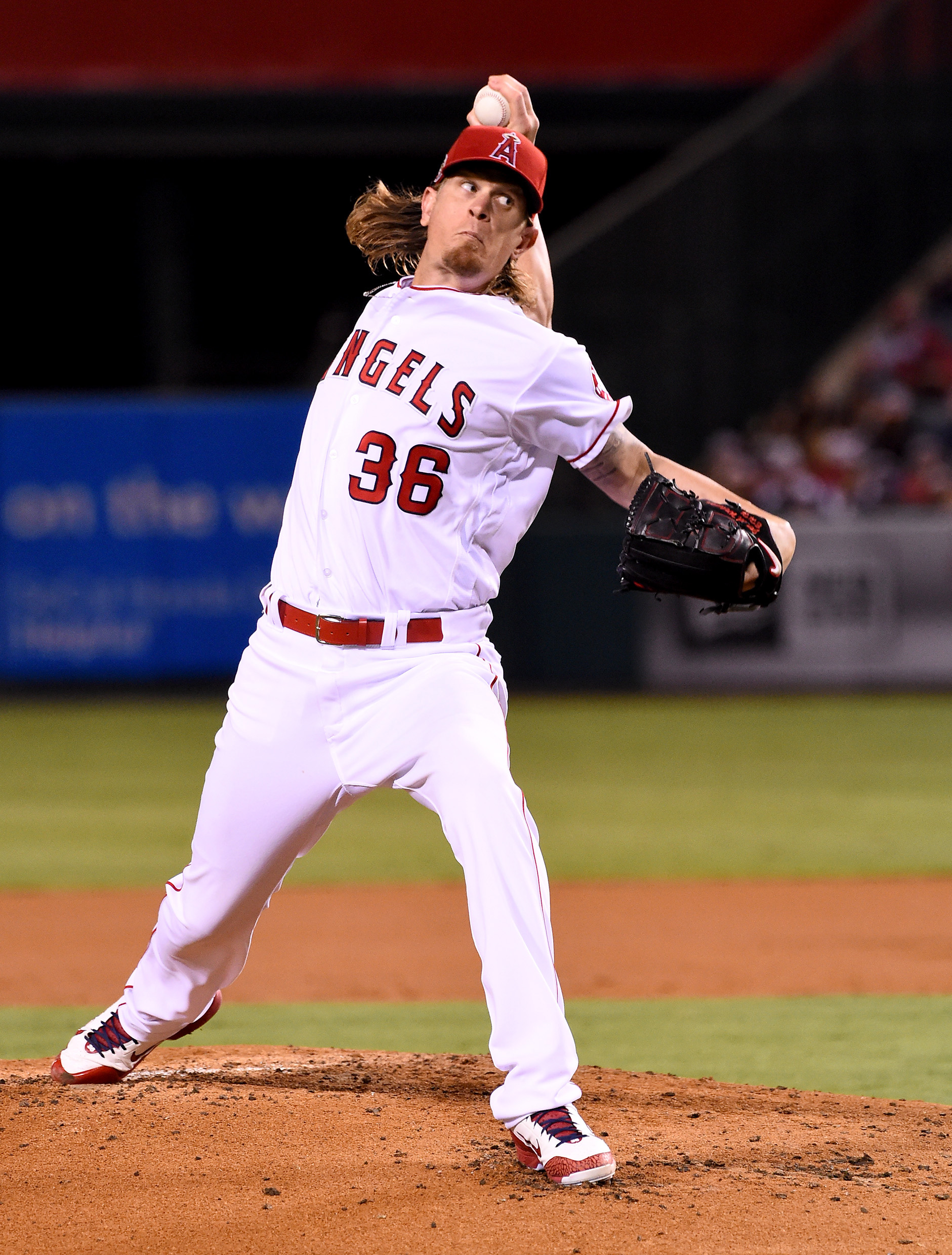
SUNDAY: The Padres have announced Weaver’s signing. To make room for Weaver, the club has placed righty Colin Rea on the 60-day disabled list. Rea underwent Tommy John surgery in November and won’t pitch this year.
SATURDAY: The Padres have agreed to terms with veteran righty Jered Weaver to a one-year deal, Fan Rag’s Jon Heyman tweets. USA Today’s Bob Nightengale was the first to tweet a deal was close. Weaver will receive $3MM, as Heyman tweets and SB Nation’s Chris Cotillo confirms. Weaver can also receive a $250K assignment bonus. Weaver is a client of the Boras Corporation.
[Related: Updated San Diego Padres Depth Chart]
The Padres were repeatedly connected to Weaver this winter as the team aimed to remake its rotation. After parting ways with Andrew Cashner and James Shields in trades last season and then non-tendering Tyson Ross, the Padres’ starting pitching corps looked extremely thin. The team has since added veterans Jhoulys Chacin, Clayton Richard and Trevor Cahill to eat innings, and it appears Weaver will be another arm to add to that mix.
Weaver has pitched his entire career to this point a short drive up Interstate 5 in Anaheim, and his new deal with the Padres allows the Southern California native to stay in familiar environs. The 34-year-old has generally been a reliable workhorse throughout his career, but he’s undergone a long decline in the past several seasons that culminated in a very disappointing 2016 in which he posted a 5.06 ERA, 5.2 K/9 and 2.6 BB/9 while averaging just 83 MPH with his fastball. ERA estimators suggested he was even worse than that 5.06 ERA suggested, with a 5.64 xFIP and 5.44 SIERA. His ground ball rate also continued to drop to just 28.8%, and he led the AL in home runs allowed, with 37. A big-league deal for him is a small coup for Boras at this point.
Even as Weaver’s velocity and strikeout rate have diminished in recent years, however, he still managed to pitch 178 innings last season, and his ability to take the ball has value. He could be an asset for a Padres staff that could struggle to get through games in 2017.
Photo courtesy of USA Today Sports Images.
Dodgers Re-Sign Chase Utley
FEBRUARY 18, 8:21pm: In addition to Utley’s $2MM salary, his deal comes with $600K in incentives for plate appearances and games played, per Heyman (Twitter link).
10:34am: The Dodgers have announced the signing. They have released Darin Ruf, who is set to play in Korea next season, to clear space on their roster for Utley.
FEBRUARY 12: Utley’s contract is believed to include a $2MM salary plus incentives, tweets FanRag’s Jon Heyman.
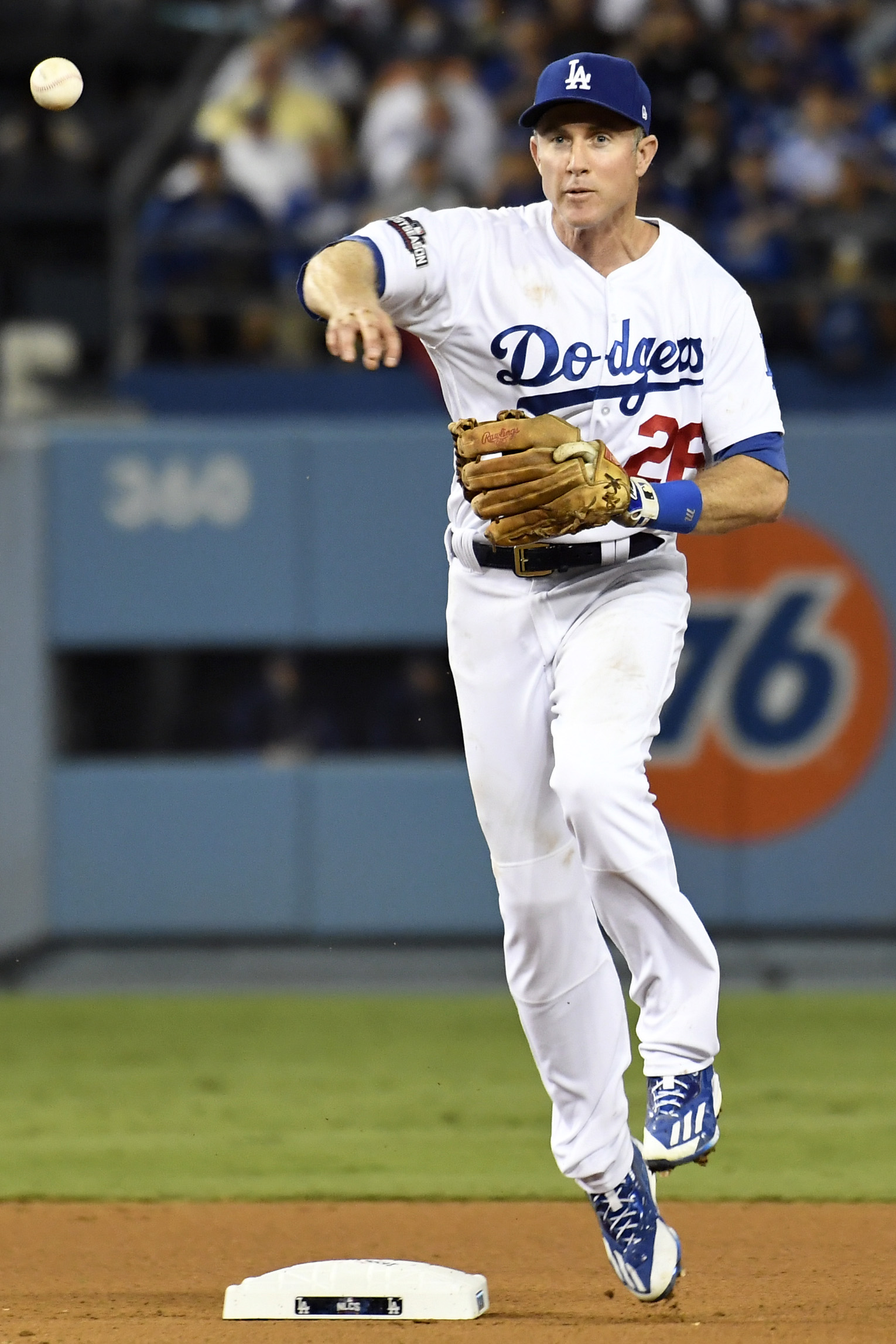
FEBRUARY 10: The Dodgers have agreed to a one-year deal to bring back infielder Chase Utley, according to Andy McCullough of the Los Angeles Times (via Twitter). Financial terms are not known at this time.
This represents Utley’s third go-round with the Dodgers. He was first acquired via trade during the 2015 season and then re-signed last year for one year and $7MM. MLBTR rated Utley the 49th-best free agent entering the offseason, predicting he’d land an $8MM deal.
Los Angeles already struck a deal today with another veteran player, outfielder Franklin Gutierrez, to occupy a part-time platoon role. Bringing Utley back on board seems driven by much the same purpose. In the latter case, it seems likely that Utley will share time at second and perhaps also third base.
[RELATED: Updated Dodgers Depth Chart]
Of course, the Dodgers already spent big — in cash and prospects — to fill those two positions, which are currently slated to be manned respectively by righty hitting Logan Forsythe and Justin Turner. But Utley, a left-handed hitter, will allow the club to find added platoon opportunities while also helping to keep those regular players fresh over the course of the season. While L.A. did have at least one southpaw-swinging alternative on hand in 28-year-old recent signee Jose Miguel Fernandez, he has yet to suit up at the major league level and has been out of action for quite some time while attempting to transition out of Cuba.
In the 38-year-old Utley, the Dodgers have brought back one of the game’s elder statesman. But there’s certainly more to the move than securing his veteran grit; he proved in 2016 that there’s still something left in the tank. Over 565 plate appearances, Utley posted a .252/.319/.396 batting line that fell just below league average in terms of total, park-adjusted output. He still rates as an approximately average defender and baserunner, and managed 2.0 WAR while being asked to handle near-everyday duties.
Always a somewhat better performer against right-handed pitching, Utley did exhibit a troubling downturn in his work against lefties. Indeed, he posted an anemic .154/.206/.264 batting line when hitting without the platoon advantage. But given the Dodgers’ roster alignment, that doesn’t figure to pose much of an issue.
Dropping Utley and Gutierrez into an already crowded mix seems to foretell some intense competition for what appears to be just one remaining bench spot — if there isn’t some movement to pare down the ranks before camp opens. Barring a trade or an injury, it’s difficult to imagine now that the team will carry more than one of Darin Ruf, Scott Van Slyke, Trayce Thompson, Brett Eibner, Enrique Hernandez, and Chris Taylor, all of whom hit from the right side and occupy 40-man spots. Ruf, who’s out of options, could compete with Van Slyke if the club prefers a power bat on the bench. Excepting Eibner, Thompson is the least experienced player. Both dealt with injuries late in 2016, but have shown real promise in the upper minors and, in Thompson’s case, at the game’s highest level. Hernandez and Taylor, meanwhile, offer added versatility — including the ability to play shortstop. Yet another righty hitting utility option, Charlie Culberson, will also be in camp after agreeing to a minor-league deal to return to the organization.
Photo courtesy of USA Today Sports Images.
Nick Swisher Retires
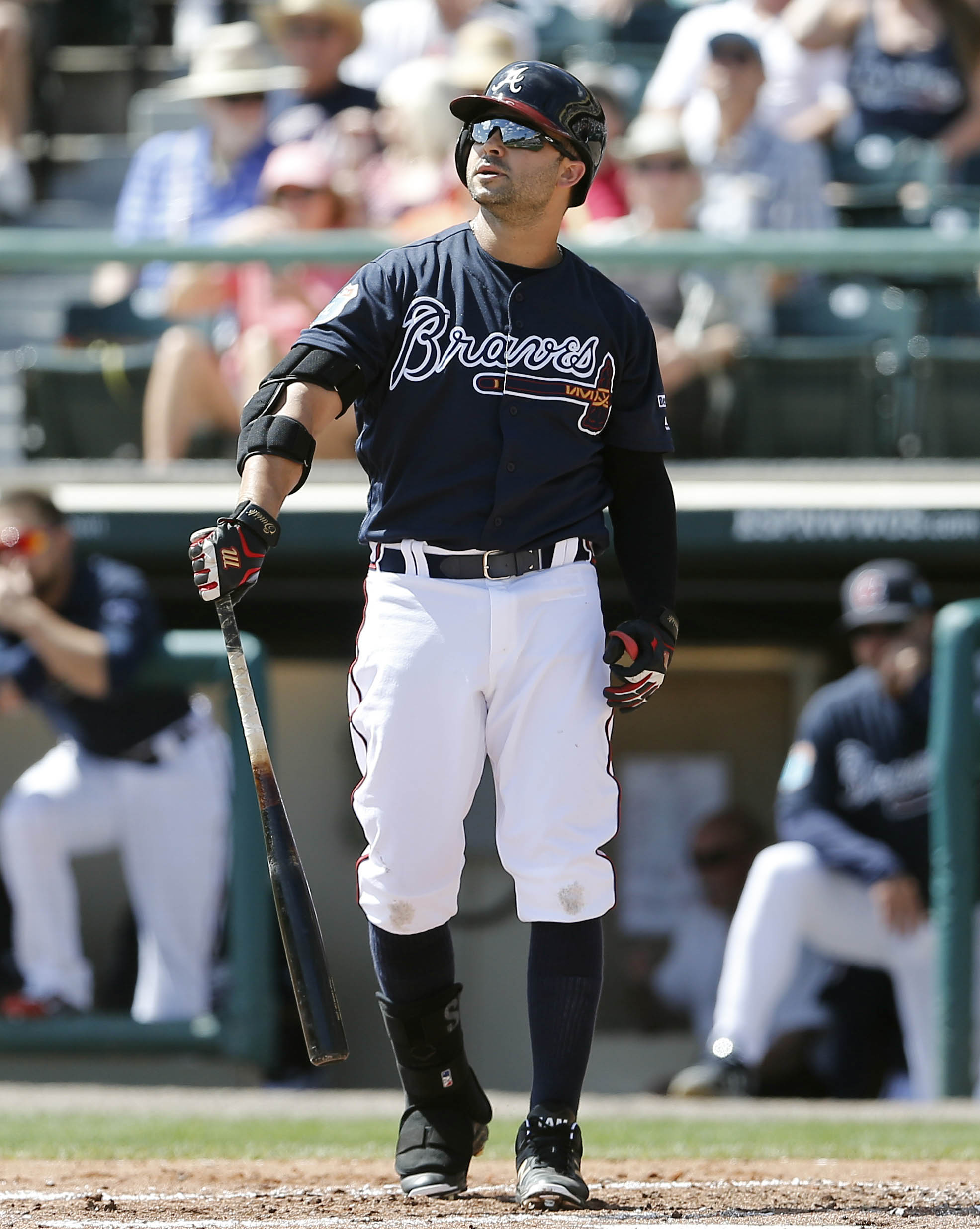
Long-time MLB outfielder Nick Swisher has announced his retirement in a post at the Player’s Tribune. The 36-year-old will join FOX Sports as a studio analyst — in addition to spending time at home with his kids, he writes.
Swisher, one of the game’s most jubilant personalities, was a first-round pick by the Athletics out of Ohio State. The switch hitter made it up to the majors in his third professional season, and went on to play in a dozen MLB campaigns.
Over his four years in Moneyball-era Oakland, Swisher provided the team with nearly 2,000 plate appearances of .251/.361/.464 hitting. Renowned for his plate discipline, he took 260 walks against 404 strikeouts in that span.
Despite signing an extension with the A’s, Swisher was dealt to the White Sox early in 2008. The deal sent Gio Gonzalez and others back to the Oakland. But Swisher fell shy of expectations in Chicago, and was flipped at season’s end to the Yankees.
In New York, Swisher thrived once again. He compiled 2,501 plate appearances there, slashing a robust .268/.367/.483 and swatting 105 home runs over four campaigns. Swisher was a model of consistency with the Yanks, taking over 600 plate appearances in every season and posting OPS+ marks between 120 and 129.
After declining a qualifying offer following the 2012 season, Swisher hit the open market for the first time entering his age-32 season. He ultimately landed a four-year, $56MM pact with the Indians. While the first year went reasonably well — Swisher hit .246/.341/.423 in 634 trips to the plate — that represented the end of his productivity in the majors.
Swisher endured an injury-plagued 2014 season that ended with double knee surgery. He made it back the following year, but was ultimately dealt to the Braves along with Michael Bourn in a salary-swapping deal that sent Chris Johnson to Cleveland. While he showed a bit of life late in 2015 with Atlanta — he hit just .195 and didn’t hit for power, but drew 27 walks and posted a .349 OBP — Swisher was cut loose late in camp in 2016 and never made it back to the bigs after inking a minor-league pact with the Yankees.
While he was never much of a defender or baserunner, Swisher managed to contribute 25.4 fWAR and 21.7 rWAR over his career. At his best, between 2006 and 2013, he was a steady 3-to-4 win player. Swisher’s sole All-Star berth came in 2010.
MLBTR wishes Swisher a pleasant retirement and the best of luck with his new gig.
Photo courtesy of USA Today Sports Images.
Nationals Sign Adam Lind
FEBRUARY 16: The mutual option is valued at $5MM, SB Nation’s Chris Cotillo tweets. Lind can also earn up to $1.125M in incentives, Jon Heyman of Fan Rag adds on Twitter. That includes $150K if he plays in 80 games, $200K each upon reaching 90 and 100 games; $250K for hitting 110 and then 120 appearances; and another $200K if he logs his 130th contest.
FEBRUARY 13: The Nationals have struck a one-year deal with first baseman Adam Lind that includes a mutual option for a second season, the team announced on Wednesday, confirming previous reports.
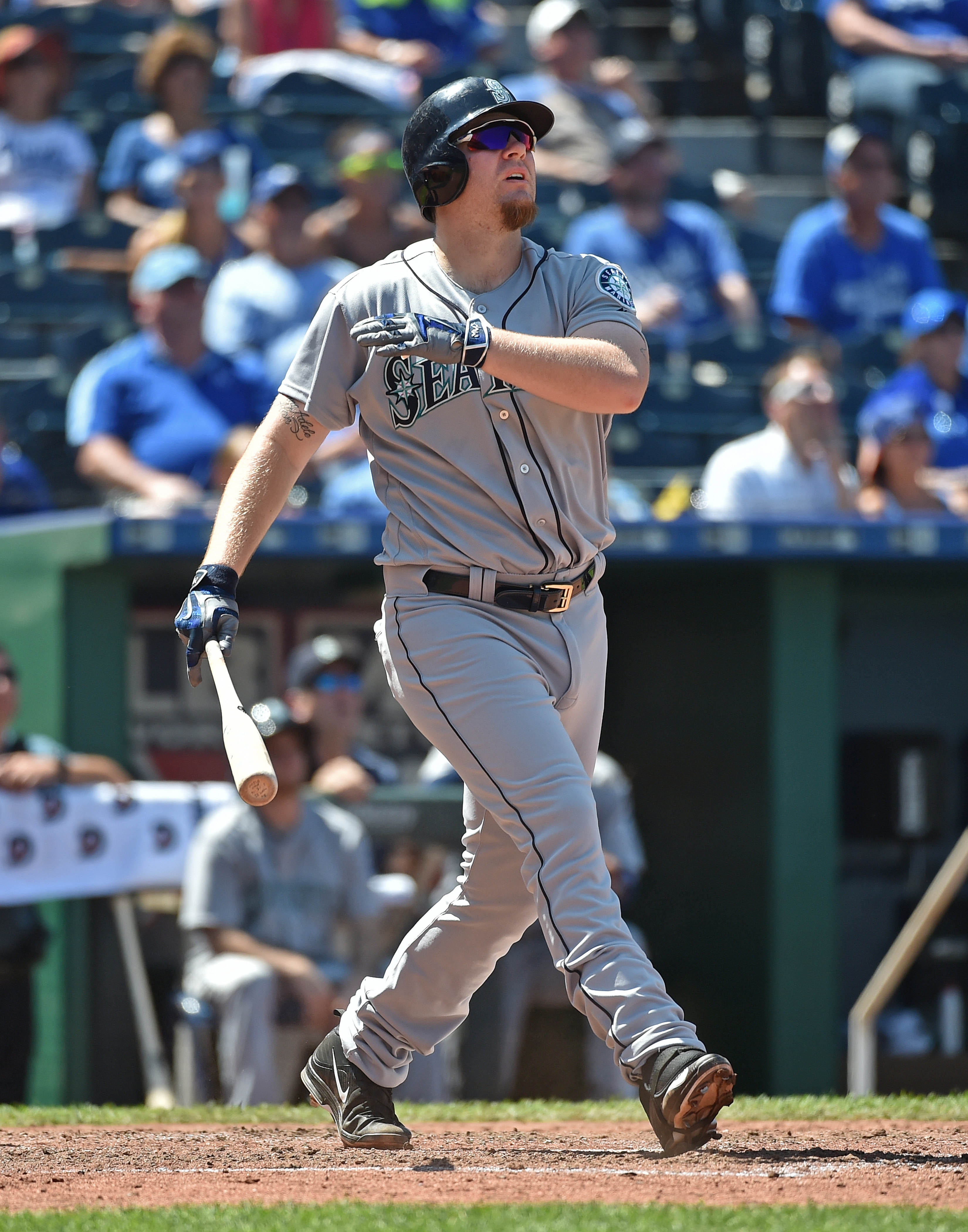
Lind, a client of ISE Baseball, will reportedly be guaranteed $1.5MM. That comes in the form of a $1MM salary for the 2017 season and a $500K buyout on the 2018 option.
Entering the winter, Washington faced questions regarding the composition of its bench, and the quality of the reserve unit has remained in question as the offseason draws to a close. Lind himself is hardly a sure thing after a down season, though he surely wouldn’t otherwise have been available at such an affordable rate. As Chelsea Janes of the Washington Post notes (on Twitter), the organization’s trio of bench additions — Lind, Stephen Drew, and Chris Heisey (the latter two re-signed) — will cost just a shade more than what would have been owed to the traded-away Danny Espinosa, who no longer had a path to regular at-bats in D.C.
Lind still showed plenty of pop last year with the Mariners, driving twenty home runs in 430 plate appearances and posting a .192 isolated slugging mark. But the 33-year-old slashed just .239/.286/.431 as he swung more often and made less contact than he had in recent years. Lind’s 6.0% walk rate was his lowest since 2011, and his 20.7% strikeout mark was his worst since 2010. There was likely some misfortune in his .259 batting average on balls in play, though Lind also made more soft contact (19.7%) than ever before.
Clearly, the Nats will be hoping for a bounceback, though the club isn’t staking much on the possibility. If things break right, Lind could well represent a bargain. Over the three preceding campaigns, he slashed a robust .291/.364/.478 while contributing 49 long balls over 1,411 plate appearances. Even at his best, there are limitations. Lind is dreadful historically against left-handed pitching, though he has tuned up opposing righties with a lifetime .287/.347/.502 batting line.
That platoon split likely won’t trouble the Nationals, who will surely plan to utilize Lind as a late-inning bench bat and complement to right-handed-hitting first baseman Ryan Zimmerman. He’ll also function as an emergency plan if Zimmerman’s frequent injury issues arise. It seems that Lind will more or less step into the role that Clint Robinson has occupied over the past two seasons. Robinson struggled quite a bit in 2017, slashing just .235/.305/.332 in part-time play, and seems likely to lose his roster spot at some point (if not when this signing is announced) as he’s out of options.
While Washington likely would have preferred to sign a lefty bat that was also a viable option in the outfield, it seems the organization wasn’t quite willing to spend what was needed to do so. The club reportedly checked in on Brandon Moss before he landed with the Royals, though he signed for $12MM over two years. Lind does have some experience on the grass, but it’s been six full seasons since he roamed left field with the Blue Jays, and he never graded out as a quality defender there. Now 33 years of age, Lind seems like a stretch to spell the right-handed-hitting Jayson Werth in left for any significant amount of time, though he could theoretically draw an occasional start in place of Werth against right-handed pitching or in the event of an injury.
The Nats figure to have alternative alignments available when they elect to rest Zimmerman and/or Werth. Michael Taylor and Brian Goodwin will both compete for reserve outfield roles, and either could bump Adam Eaton to left field on occasion. Likewise, the righty hitting Heisey could give Werth some off days. But if the Nats really want to load up on power, left-handed bats, they’ll also at least have the option of fielding Lind in the corner, playing Drew at second, and bumping Daniel Murphy to first in place of Zimmerman.
Jim Bowden of ESPN and MLB Network Radio on SiriusXM first reported a deal was close (via Twitter). FanRag’s Jon Heyman tweeted that a deal was in place, pending a physical. FOX’s Ken Rosenthal tweeted the years, while Chelsea Janes of the Washington Post reported the money and option-year detail (Twitter links).
Photo courtesy of USA Today Sports Images.
Rangers Sign Mike Napoli
Mike Napoli is back for a third tour with the Rangers. Texas announced today that it has signed the slugging first baseman/designated hitter to a one-year contract that includes a club option for the 2018 season. The deal will reportedly guarantee Napoli $8.5MM in the form of a $6MM 2017 salary and a $2.5MM buyout on an $11MM option for the following season. Napoli is represented by Brian Grieper of Paragon Sports. The Rangers have an open spot on the 40-man roster after placing both Prince Fielder and Jake Diekman on the 60-day disabled list this week.

[Related: Updated Texas Rangers Depth Chart]
Napoli spent 2016 with the American League-winning Indians, who signed him to a one-year, $7MM pact last January. The well-regarded clubhouse presence went on to mash 34 home runs and post an overall line of .239/.335/.465 in 645 plate appearances. As is the case with fellow 2016-17 free agent Chris Carter, Napoli brings an enticing power/patience mix to the plate, but both his tendency to strike out (he fanned 30.1 percent of the time last season) and issues on the base paths detract from his offensive value. Plus, the normally respectable defender is coming off a rough year at first, where he logged career worsts in Defensive Runs Saved (minus-4) and Ultimate Zone Rating (minus-4.4) over 859 1/3 innings.
Although flawed, the lifetime .252/.352/.480 hitter gives the Rangers an established first base/DH, which is an obvious need. The reigning AL West champions have been lacking at each position since Mitch Moreland and Carlos Beltran departed in free agency earlier this winter. In-house options to fill those spots include two 24-year-olds with limited major league track records — Jurickson Profar and Joey Gallo — as well as an unspectacular group of veterans consisting of Ryan Rua, James Loney and former superstar Josh Hamilton.
Napoli, of course, is hardly a foreign commodity for Rangers GM Jon Daniels and the Texas front office. The postseason veteran spent the 2011-12 seasons in Texas and hit quite well — slashing .275/.379/.552 in 221 total games before going on to spend most of the next three seasons in Boston. The Red Sox traded him back to Texas in August 2015, and Napoli will now return for yet another stint with the reigning AL West champions.
FanRag’s Jon Heyman reported that talks between the two sides were escalating (Twitter links). Jeff Wilson of the Fort Worth Star-Telegram first reported the one-year agreement (Twitter link). Evan Grant of the Dallas Morning News added some context on the size of the eventual contract (Twitter links). Jim Bowden of ESPN and MLB Network Radio on SiriusXM reported the $8.5MM guarantee and the inclusion of an option (Twitter link). FOX’s Ken Rosenthal added details on the annual breakdown of the deal (Twitter link).
Photo courtesy of USA Today Sports Images.
Dodgers Sign Sergio Romo
FEB. 16: FanRag’s Jon Heyman tweets that Romo would also earn $125K for making each his 50th and 60th appearance of the season.
FEB. 15: The Dodgers have added some experience to the back of their bullpen, announcing a one-year deal with veteran right-hander and longtime division rival Sergio Romo. The contract reportedly guarantees Romo, a client of Meister Sports, $3MM and affords him a chance to add to that total via incentives. To make room for Romo, right-hander Yimi Garcia was placed on the 60-day disabled list. Garcia is recovering from Tommy John surgery last October.
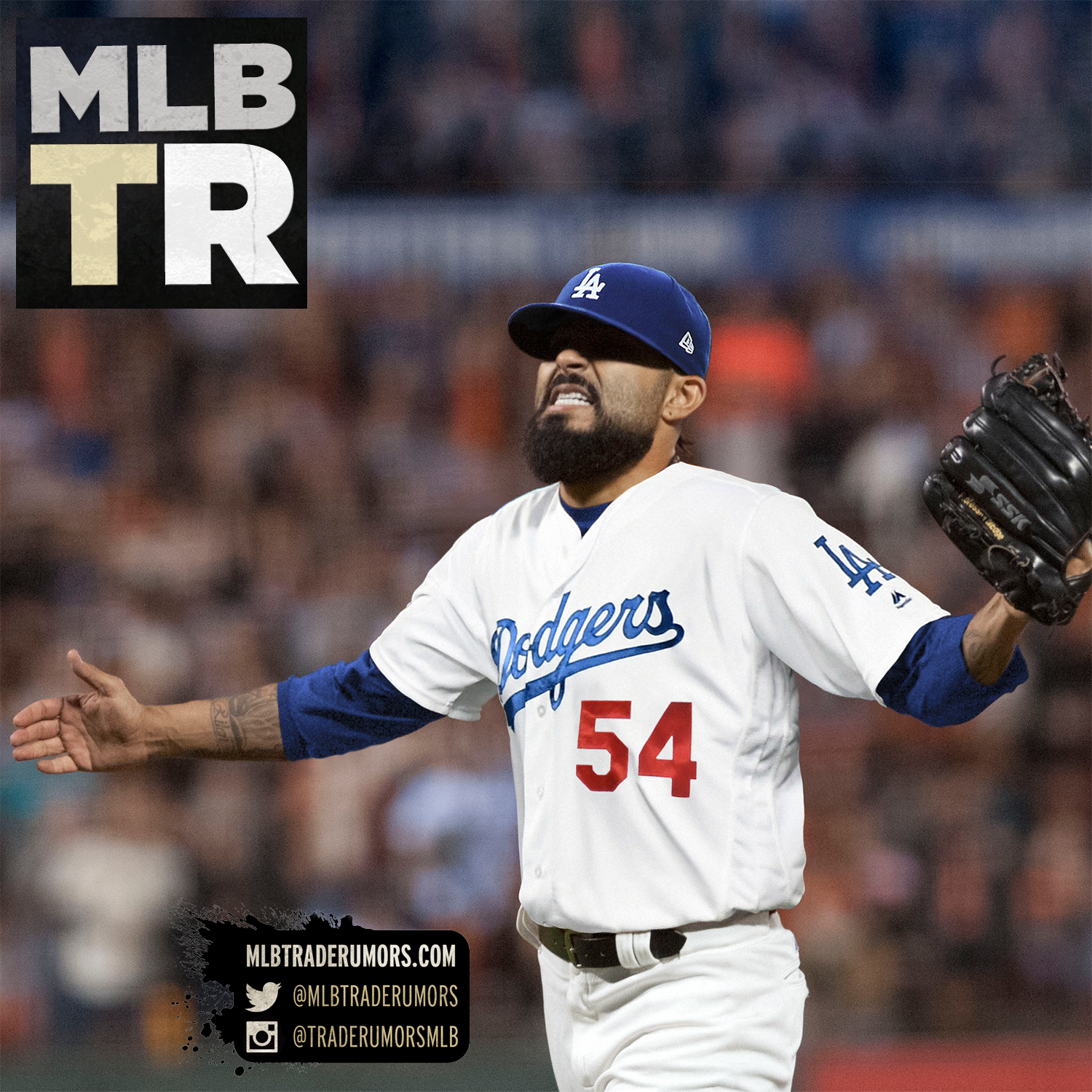
Romo, 33, is no stranger to Los Angeles; he has been a mainstay of the NL West-rival Giants for the past nine seasons. The right-hander’s familiarity with the NL West and his southern California roots seems to have impacted his decision, as the Nationals and others were said to be interested, but he took a reportedly smaller guarantee than other clubs had offered in order to pitch for the Dodgers.
In over 400 career innings with San Francisco, Romo has compiled an excellent 2.58 ERA with a sparkling 10.2 K/9 against 1.8 BB/9. Though he’s a soft-tosser, he has long beguiled hitters with his slider, helping to produce a lifetime 14.2% swinging-strike rate.
It was much the same in 2016, even as Romo lost about 1.5 mph on his fastball offerings as well as the vaunted slider. He also goes to a change-up at times, though it’s a little-used pitch. While the Giants’ 2016 club will long be remembered for its inability to finish out close games, Romo steadily produced results and did not actually record any of the team’s league-leading thirty blown saves. (Of course, he went on to have two unsuccessful appearances in the NLCS, including one in which he did record a blown save.)
The loss of velocity represents one area of potential concern moving forward. And Romo did spend some time on the DL in 2016, with a flexor tendon strain limiting him to forty total appearances — breaking a run of six-straight seasons in which he had made taken the ball at least 64 times. He also benefited from a lofty 92.3% strand rate and coughed up 1.47 home runs per nine innings, providing some context for his excellent results.
[RELATED: Updated Dodgers Depth Chart]
Still, it seems that Los Angeles did well to land Romo on a one-year commitment. Last time he hit the market, he landed back with the Giants for two years and $15MM. MLBTR had predicted much the same this winter, pegging Romo for another two year pact at a $7MM annual rate. (While that appears to have been off, MLBTR’s Tim Dierkes did correctly guess the landing spot.)
Romo presumably slot in with Pedro Baez as part of the righty setup unit in front of closer Kenley Jansen. The move deepens a unit that could also be bolstered by whatever pitchers fail to crack a rotation that’s exceedingly deep — albeit also filled with a number of pitchers who come with health questions.
Jon Morosi of MLB Network first reported the agreement (via Twitter). MLB.com’s Jesse Sanchez reported that it’d be a one-year pact (via Twitter). FanRag’s Jon Heyman reported the guarantee and said Romo turned down larger offers (Twitter link).
Photo courtesy of USA Today Sports Images.
Potential Loria Ambassadorship Could Compromise Marlins Sale Negotiations
Last week, Mike Ozanian of Forbes reported that Marlins owner Jeffrey Loria had a “handshake agreement” in place to sell the team to a New York-based real estate developer, which was later reported (by Steven Wine of the Associated Press) to be Joshua Kushner — the brother of Jared Kushner, who serves as a senior advisor to his father-in-law, president Donald Trump.
In a new and fairly astonishing wrinkle to the story, Daniel Halper of the New York Post reports that White House Chief of Staff Reince Priebus pushed for and received sign-off to name Loria the United States ambassador to France. The decisions were made without the approval of Secretary of State Rex Tillerson, sources tell Halper, despite the fact that Tillerson was promised a say in the appointment of ambassadors.
In response to this story, the the Kushner group issued a statement to the press suggesting that it will not pursue the purchase of the Marlins if Loria is indeed a nominee or appointee to that post. Via Maggie Haberman of the New York Times (on Twitter):
“Our family has been friends with Jeff Loria for over 30 years, been in business together, and even owned an AAA baseball team together. Although the Kushners have made substantial progress in discussions for us to purchase the Marlins, recent reports suggest that Mr. Loria will soon be nominated by the President to be Ambassador to France. If that is true, we do not want this unrelated transaction to complicate that process and will not pursue it. The Kushners remain interested in purchasing a team and would love to buy the Marlins at another time.”
The potential appointment of Loria is just the latest complication in the potential sale. The initial report of the agreement noted that the Kushner group does not currently have enough liquid assets to meet the $1.6 billion price point that the two sides have reportedly agreed upon. Beyond that, Charles Kushner — Joshua’s father — served a two-year prison sentence last decade, which could have proved problematic when the Kushner group sought ownership approval from the office of Major League Baseball commissioner Rob Manfred. Furthermore, the commissioner’s office released a statement shortly after the initial wave of reports which indicated that it had “not heard directly or indirectly of any conversation involving Charles Kushner.”
Wine’s report indicated that the deal between Loria and Joshua Kushner was made independently of Charles or Jared Kushner, though certainly one would imagine that the Manfred’s approval process would’ve nonetheless been extensive given the circumstances.
Royals Sign Travis Wood
FEBRUARY 15: Wood’s signing is official, with K.C. also announcing that the pact includes a mutual option for the 2019 season. He’ll earn $4MM in 2017 and $6.5MM in 2018, Heyman tweets. There’s a $1.5MM buyout on the option, which can be exercised at $8MM. Wood can also earn $1MM in incentives (either as a starter or as a reliever) in each year of the deal.
FEBRUARY 13, 5:07pm: Wood will receive a $12MM guarantee, per Heyman (via Twitter).
4:12pm: The Royals have agreed to a deal with free-agent lefty Travis Wood, according to ESPN.com’s Jerry Crasnick (Twitter links). The Frontline client will receive a two-year guarantee, per Jon Heyman of Fan Rag (Twitter link). Financial terms remain unreported.
[RELATED: Updated Royals Depth Chart]
Wood, 30, is expected to receive a chance to compete for a rotation job in Kansas City, though it seems he won’t be guaranteed a particular role entering camp. The organization recently signed righty Jason Hammel to take the spot that opened with the tragic death of Yordano Ventura. The staff already included Danny Duffy, Ian Kennedy, and Jason Vargas, and the Royals added Nate Karns to the mix earlier in the winter. Presumably, Wood and Karns will battle for the final rotation slot with veteran Chris Young, with the others heading to the bullpen. (In Karns’s case, he could also open at Triple-A.)
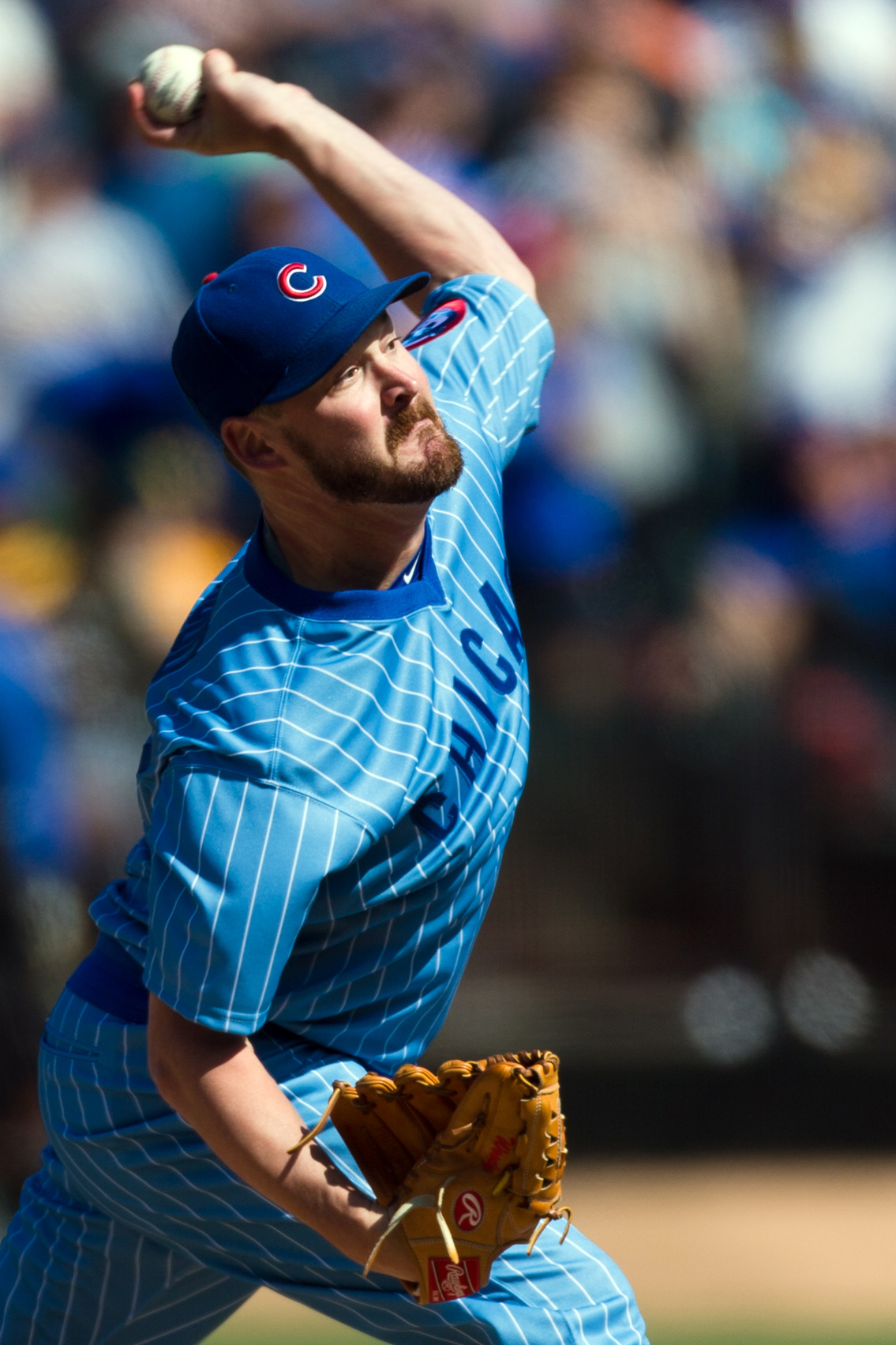
With this latest move, Royals GM Dayton Moore has perhaps largely completed an interesting offseason in which he sought to balance salary limitations, a large slate of core players on the brink of free agency, and the unimaginable loss of Ventura. Moore and his staff engineered deals that shipped out quality, short-term assets (Wade Davis and Jarrod Dyson) in exchange for controllable MLB players who come with upside but aren’t yet fully established (Jorge Soler and Karns). With the unexpected need to move on Hammel, the club has already driven its payroll right up to its record-setting 2016 level, and the signing of Wood will seemingly push it past that previous high-water mark.
Though he waited quite a while to sign, Wood drew strong interest throughout the winter. Clubs were seemingly intrigued by his ability to provide quality innings out of the pen or return to the rotation. Last year, he ran up a 2.95 ERA in his 61 frames for the Cubs — an exact match for his earned run average when working out of the pen in the prior year, when he made the transition after scuffling early as a starter. Of course, the real advance that Wood showed in 2015 was a leap in his swinging-strike (9.8%) and strikeout (10.6 K/9) rates. Both were easily career highs, but Wood fell back to typical numbers in his most recent season (6.5%; 6.9 K/9).
There’s little question that Wood was fortunate last year in the batted ball department, too, as opposing batters reached base on just .215 of the balls they put in play. And he still coughed up a few too many walks (3.5 BB/9) while generating a pedestrian groundball rate (37.4%). But there were some positives beyond the bottom-line results. In particular, as MLBTR’s Connor Byrne has noted, Wood exceeded his typically strong performance in generating infield pop-ups, posting one of the game’s best rates (17.8%). He also averaged just over 90 mph with his fastball, which is an unremarkable number in its own right but matched a career high for the soft-tossing southpaw. And Wood continued to baffle opposing lefties, who have compiled a paltry .206/.276/.316 slash against him over 949 total plate appearances.
Wood’s history as a starter likely contributed just as much to his value on the market. To be sure, it has been some time since he turned in a fully productive season out of the rotation, and his excellent 2013 season (exactly 200 innings of 3.11 ERA ball) looks more like an aberration than any kind of reasonable expectation going forward. But Wood has demonstrated an ability to churn out useful innings from the rotation, and seems to be a good bet to continue his strong health record over the two years of his new contract.
Photo courtesy of USA Today Sports Images.